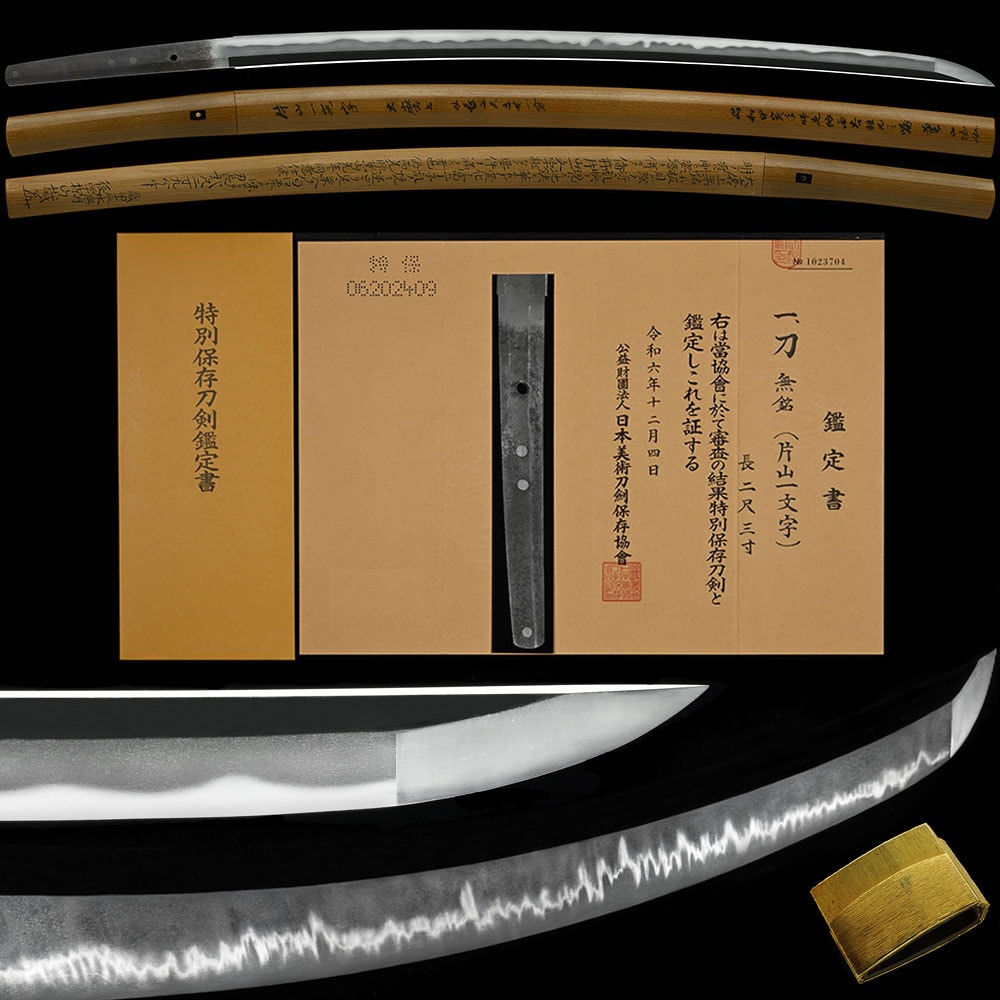
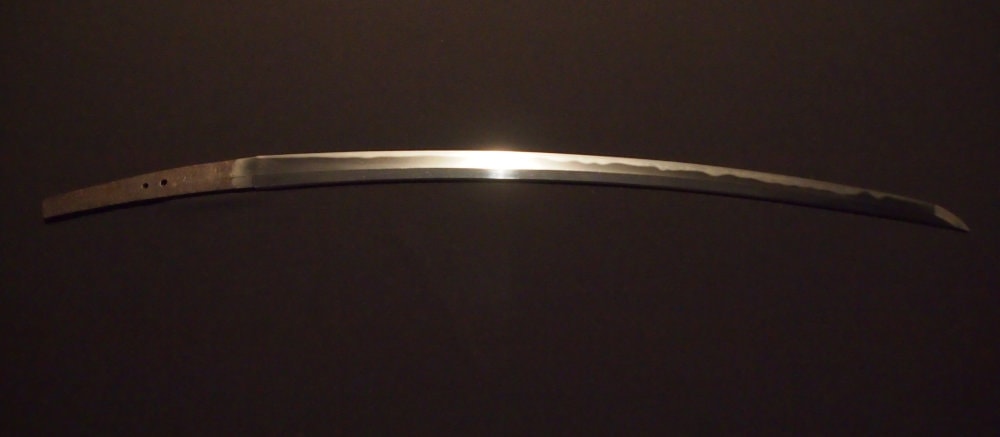
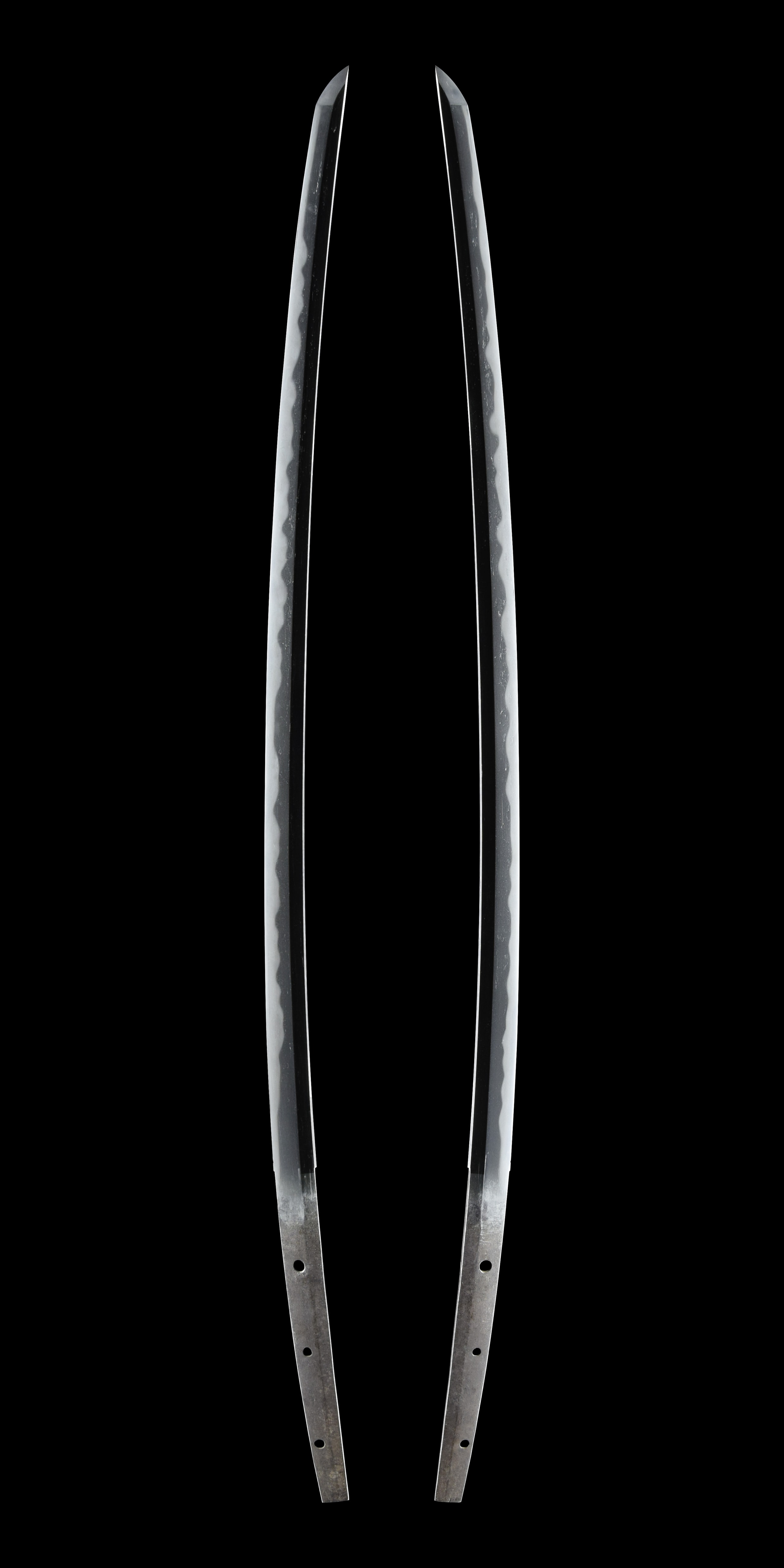
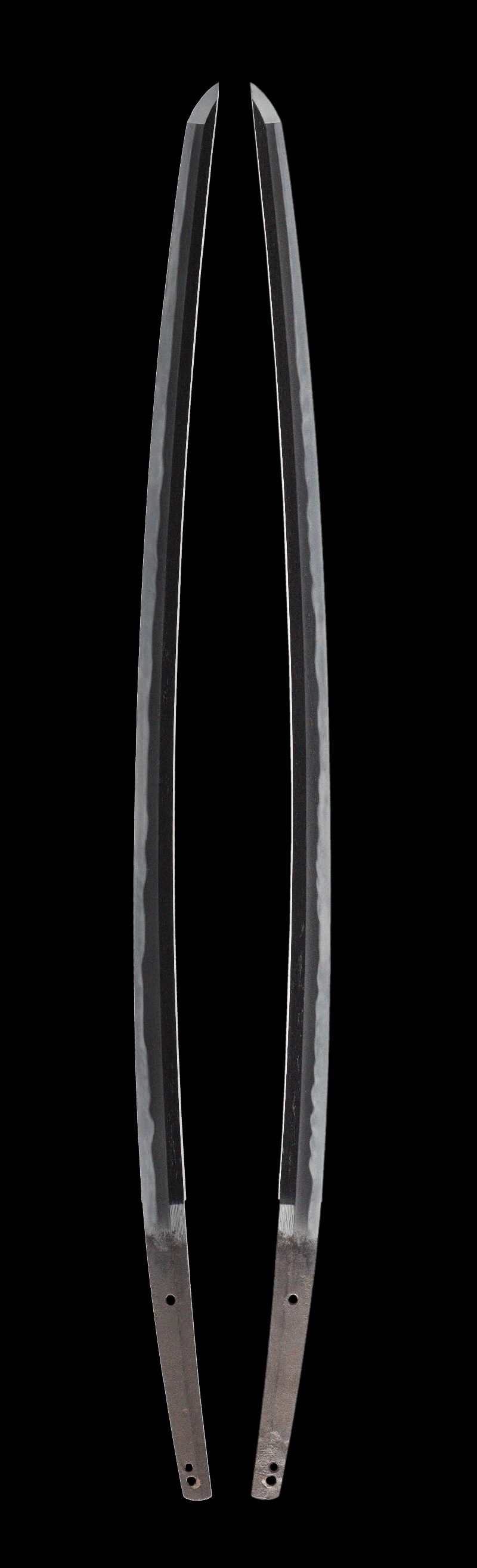
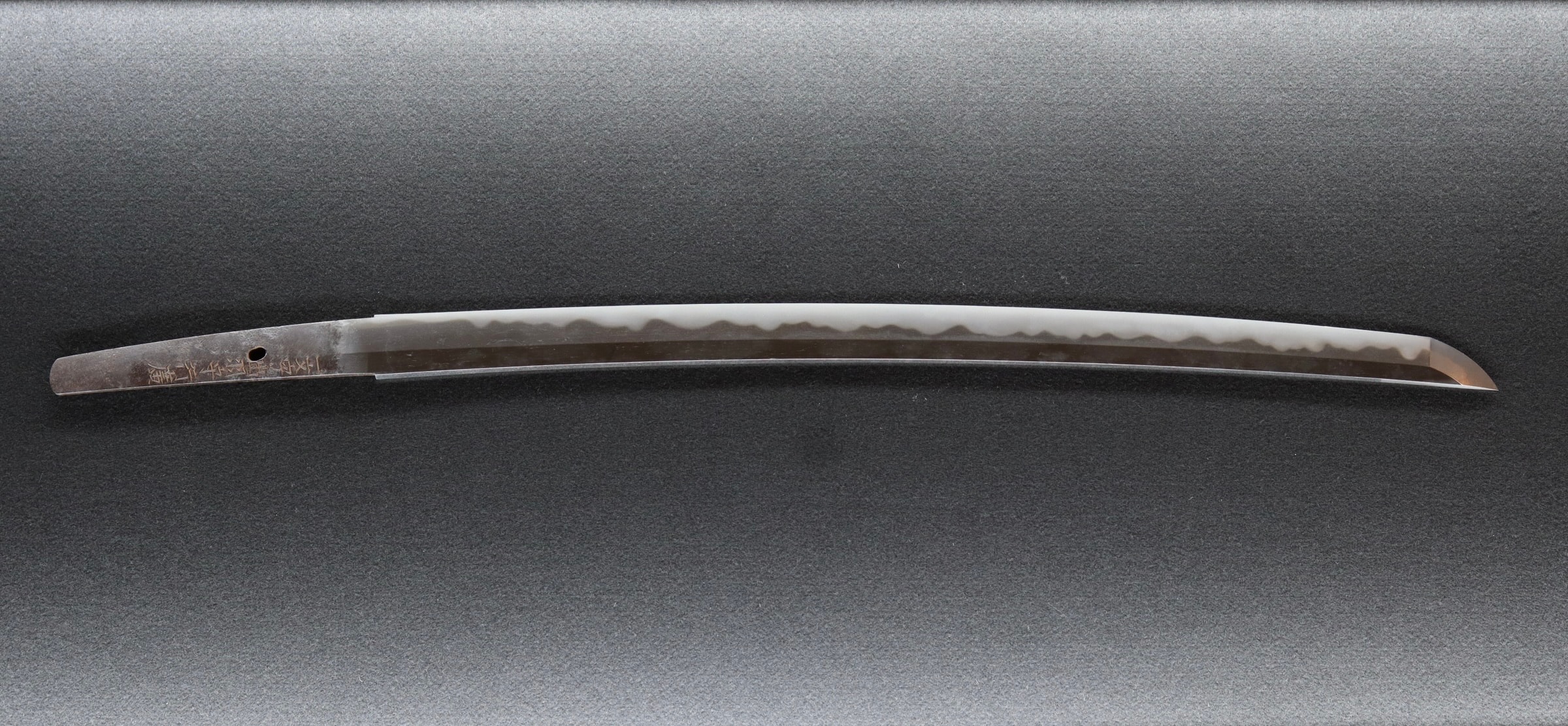
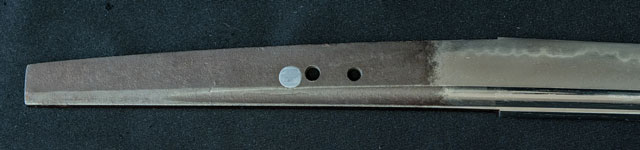
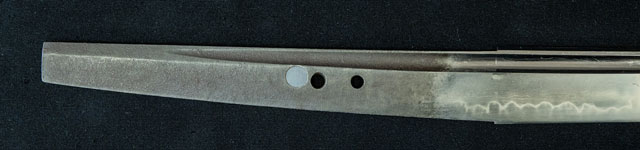
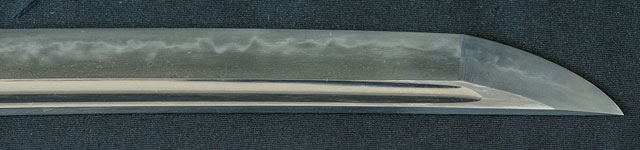
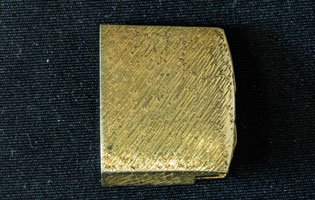
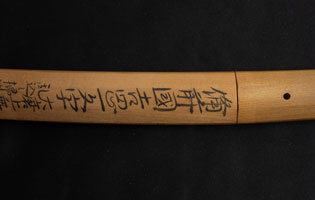
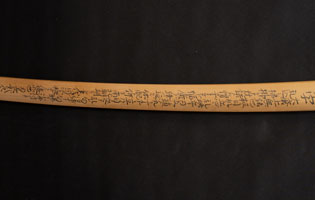
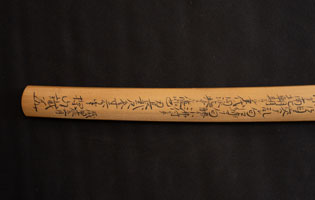
Tokubo Katana Mumei Den Yoshioka Ichimonji Item Number 31-2506 Katana Den Yoshioka Ichimonji Province / Era Bizen, Mid-Kamakura period Koshirae included Nagasa 70.8cm (2 shaku 3 sun 7 bu) Sori 1.8cm (6 bu - rin) Motohaba 3.25cm Sakihaba 2.73cm Motokasane 6.3mm Sakikasane 5.2mm Toshin Weight Hadakami 710g Excluding Saya - g Nakago Suriage Mekugi-ana 3 Hamon Choji Price 5,500,000 Yen (Tax included) Yoshioka Ichimonji flourished from the mid to late Kamakura period. The jigane is itame-hada with midare-utsuri appearing; the hamon is choji-ba mixed with gunome, with a tight nioiguchi and small nie attached. Sugata: o-boshi, midare-komi with hakikake, ending in yakizume. Given the wide mihaba and o-boshi, it is likely a work from the late Kamakura period. This is a masterpiece that was used in the headquarters' kankoshikai (appreciation meeting) and is an item capable of challenging for Juyo status.
 NihontoWatch
mumei · Ichimonji · Koto · nagasa 70.8cm · sori 1.8cm





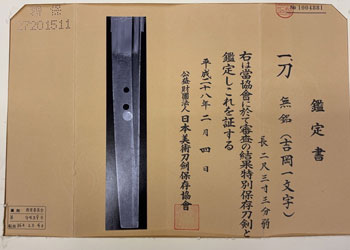
A Hozon-certified blade judged to show notably superior workmanship and a better state of preservation. The bar is higher: re-tempered blades and most unsigned Muromachi/Edo works are excluded.
The NBTHK (Nihon Bijutsu Tōken Hozon Kyōkai, the Society for the Preservation of Japanese Art Swords) is a public-interest incorporated foundation founded in 1948 and supervised by Japan’s Agency for Cultural Affairs (Bunkachō); it is based at the Japanese Sword Museum in Tokyo. Its expert panels physically examine each submitted work (shinsa) and issue a certificate (kanteishō) ranking it by artistic and historical merit. NBTHK papers are the most widely recognized standard of authentication for Japanese swords and fittings.
NBTHK official sitePlease request cooling-off within 8 days of the item's arrival. Items that have been altered cannot be handled. Return shipping is the customer's responsibility. If the destination is overseas, returns and refunds are not available.
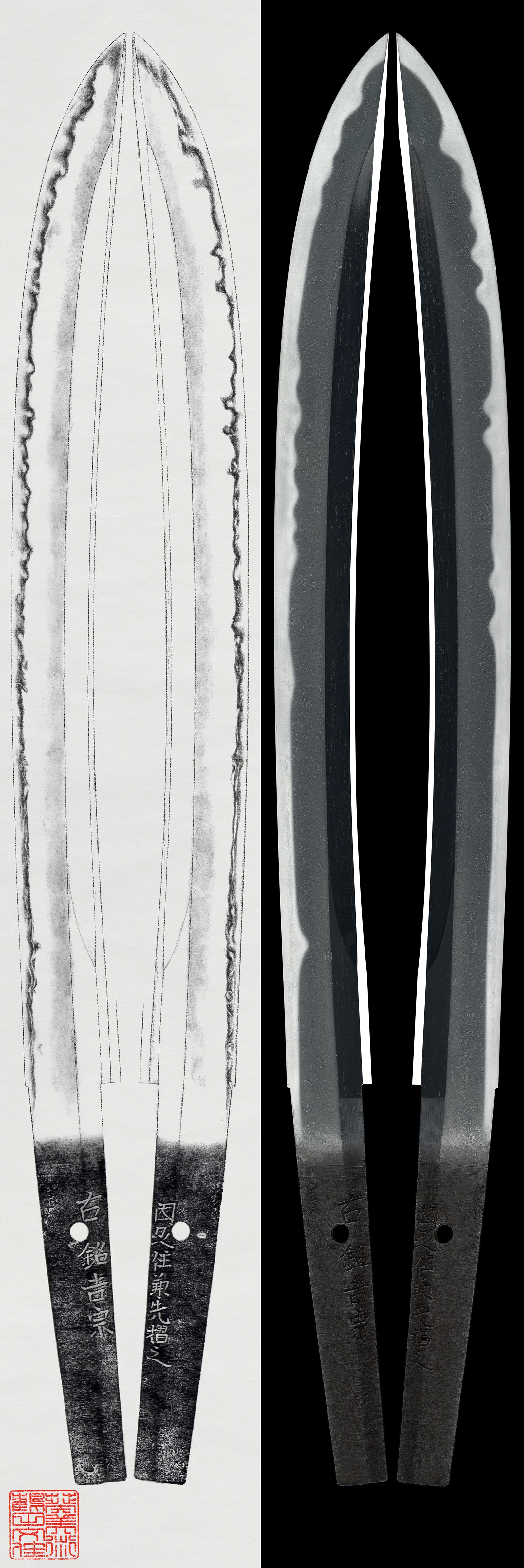
Tokubo Katana Mumei Den Yoshioka Ichimonji Item Number 31-2506 Katana Den Yoshioka Ichimonji Province / Era Bizen, Mid-Kamakura period Koshirae included Nagasa 70.8cm (2 shaku 3 sun 7 bu) Sori 1.8cm (6 bu - rin) Motohaba 3.25cm Sakihaba 2.73cm Motokasane 6.3mm Sakikasane 5.2mm Toshin Weight Hadakami 710g Excluding Saya - g Nakago Suriage Mekugi-ana 3 Hamon Choji Price 5,500,000 Yen (Tax included) Yoshioka Ichimonji flourished from the mid to late Kamakura period. The jigane is itame-hada with midare-utsuri appearing; the hamon is choji-ba mixed with gunome, with a tight nioiguchi and small nie attached. Sugata: o-boshi, midare-komi with hakikake, ending in yakizume. Given the wide mihaba and o-boshi, it is likely a work from the late Kamakura period. This is a masterpiece that was used in the headquarters' kankoshikai (appreciation meeting) and is an item capable of challenging for Juyo status.
NihontoWatchmumei · Ichimonji · Koto · nagasa 70.8cm · sori 1.8cm
A Hozon-certified blade judged to show notably superior workmanship and a better state of preservation. The bar is higher: re-tempered blades and most unsigned Muromachi/Edo works are excluded.
The NBTHK (Nihon Bijutsu Tōken Hozon Kyōkai, the Society for the Preservation of Japanese Art Swords) is a public-interest incorporated foundation founded in 1948 and supervised by Japan’s Agency for Cultural Affairs (Bunkachō); it is based at the Japanese Sword Museum in Tokyo. Its expert panels physically examine each submitted work (shinsa) and issue a certificate (kanteishō) ranking it by artistic and historical merit. NBTHK papers are the most widely recognized standard of authentication for Japanese swords and fittings.
NBTHK official sitePlease request cooling-off within 8 days of the item's arrival. Items that have been altered cannot be handled. Return shipping is the customer's responsibility. If the destination is overseas, returns and refunds are not available.