 NihontoWatchNihontoWatch
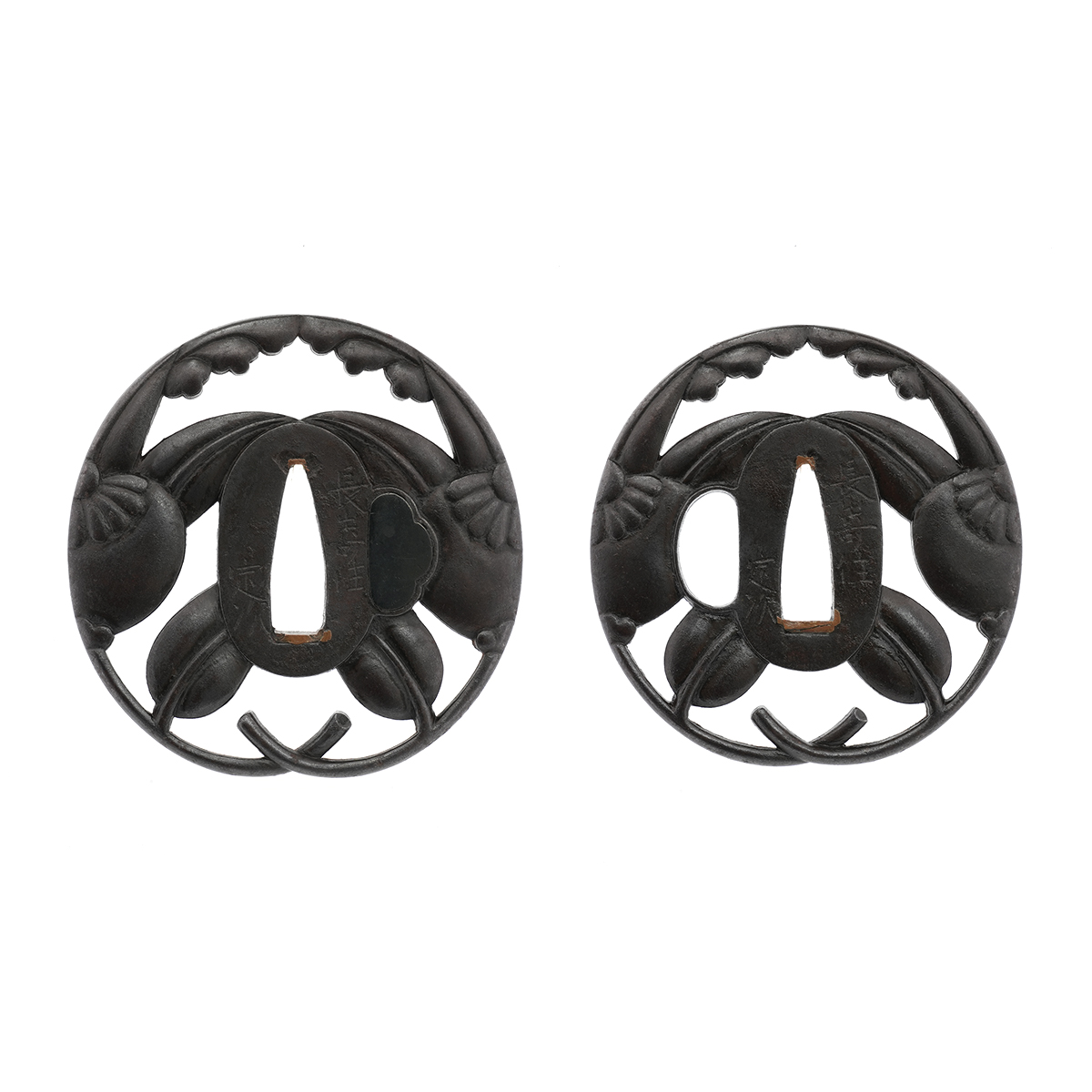
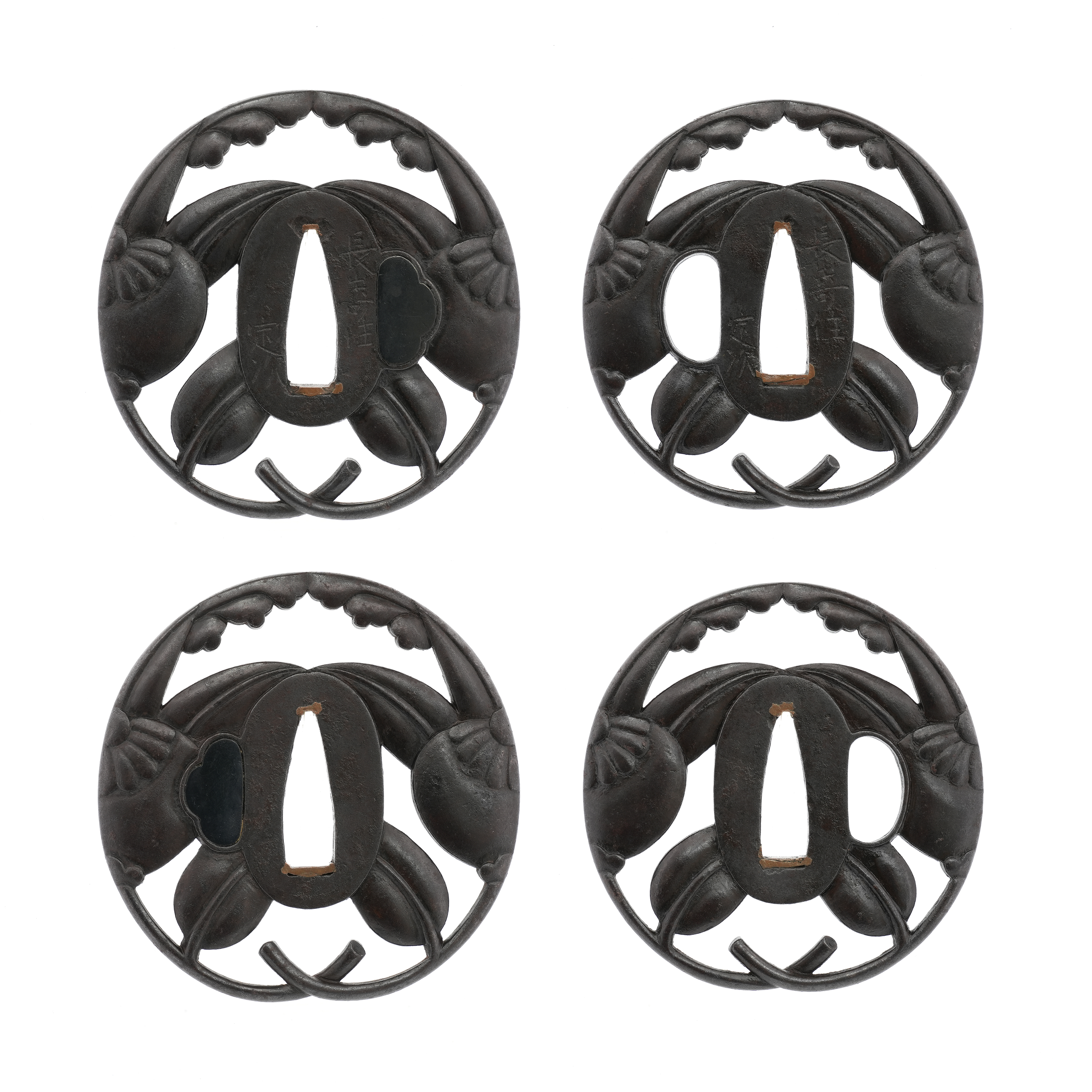
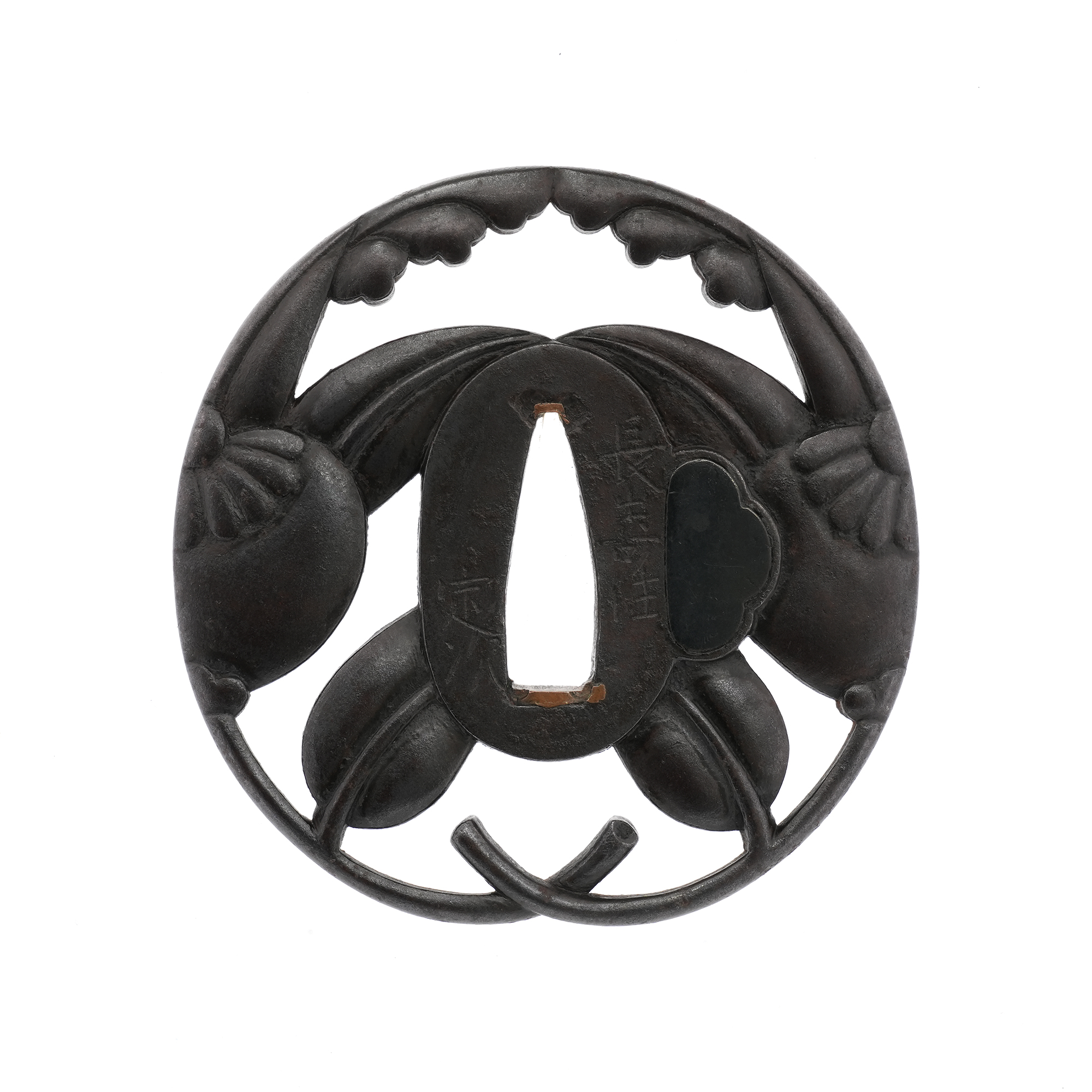
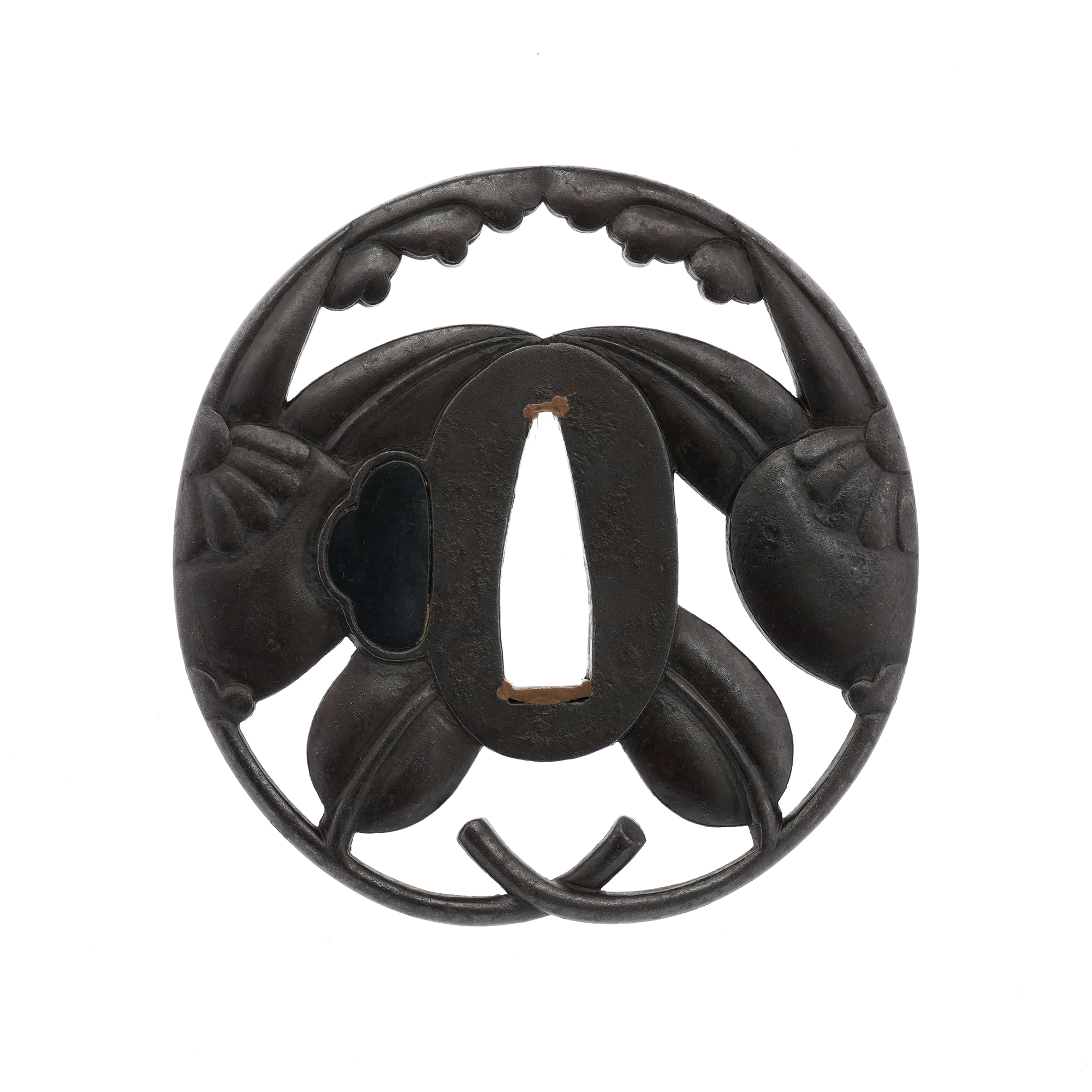
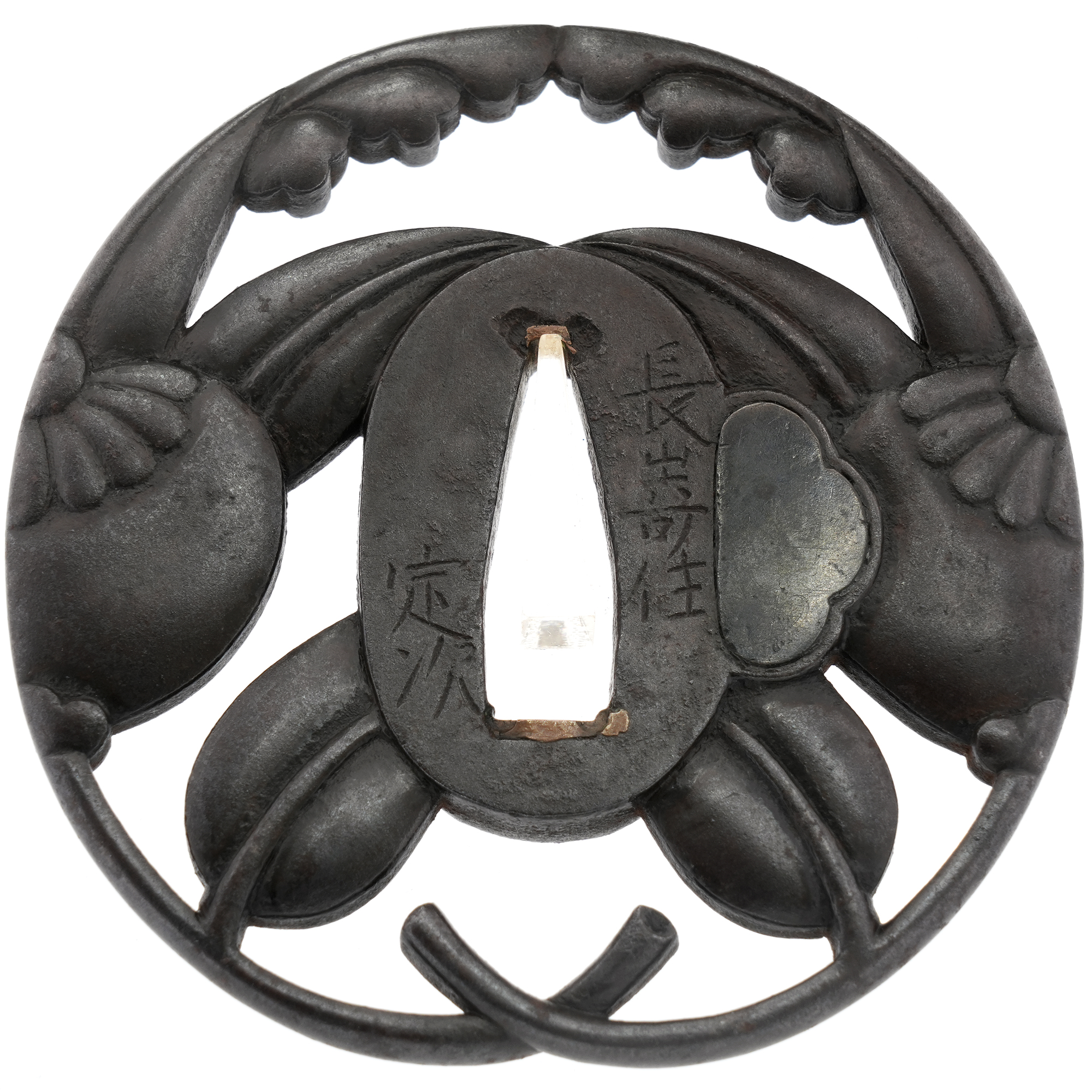
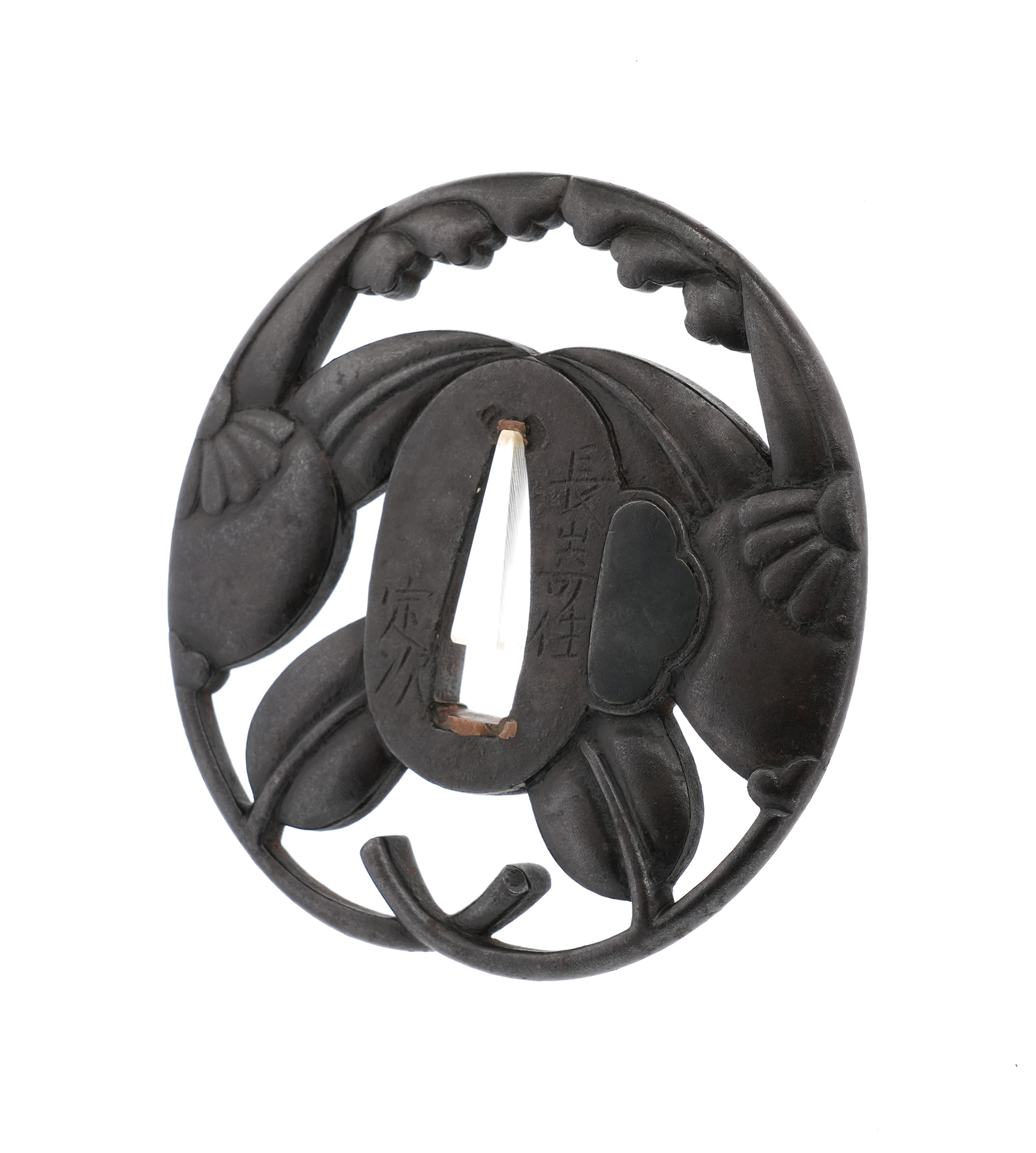
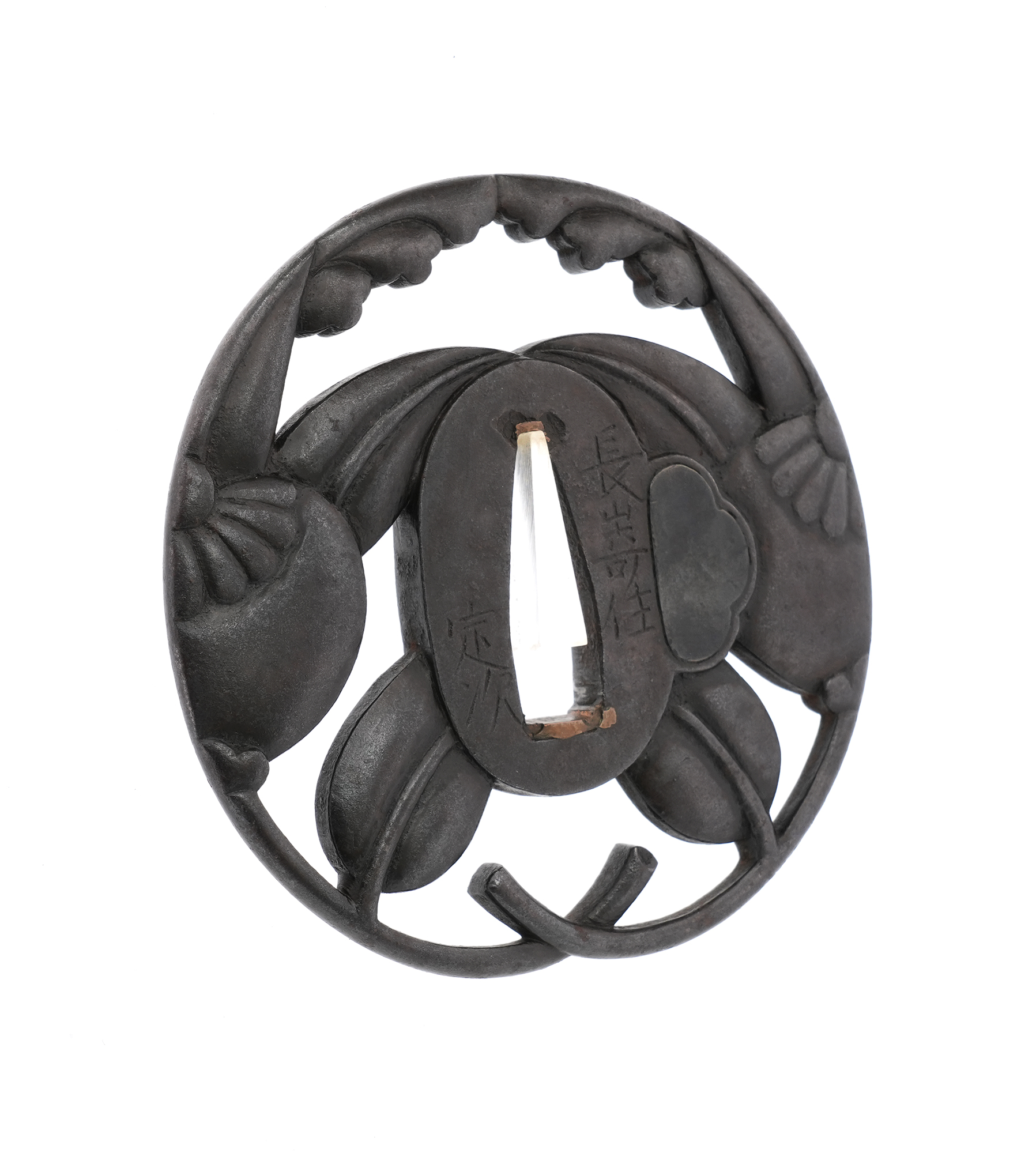
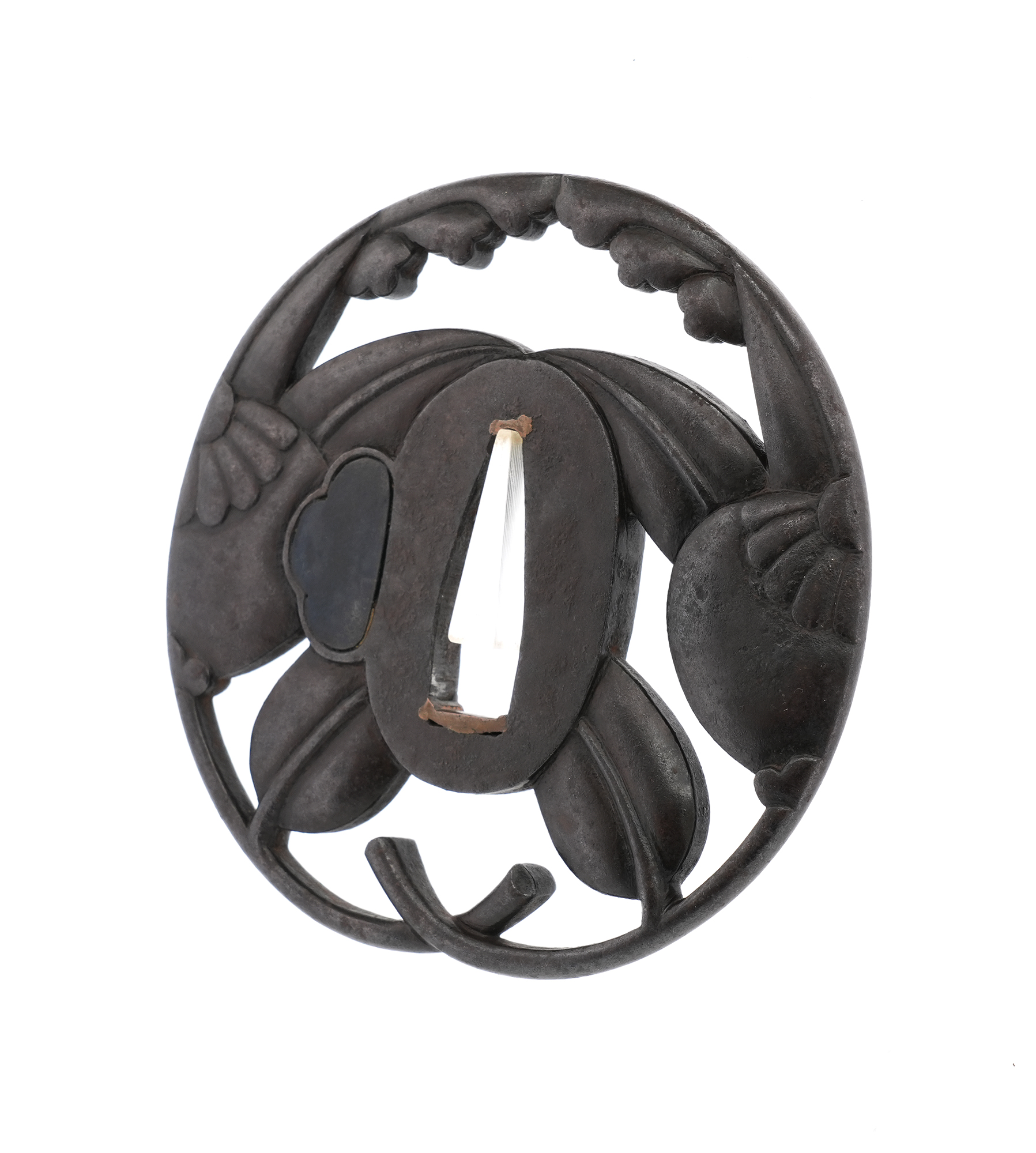
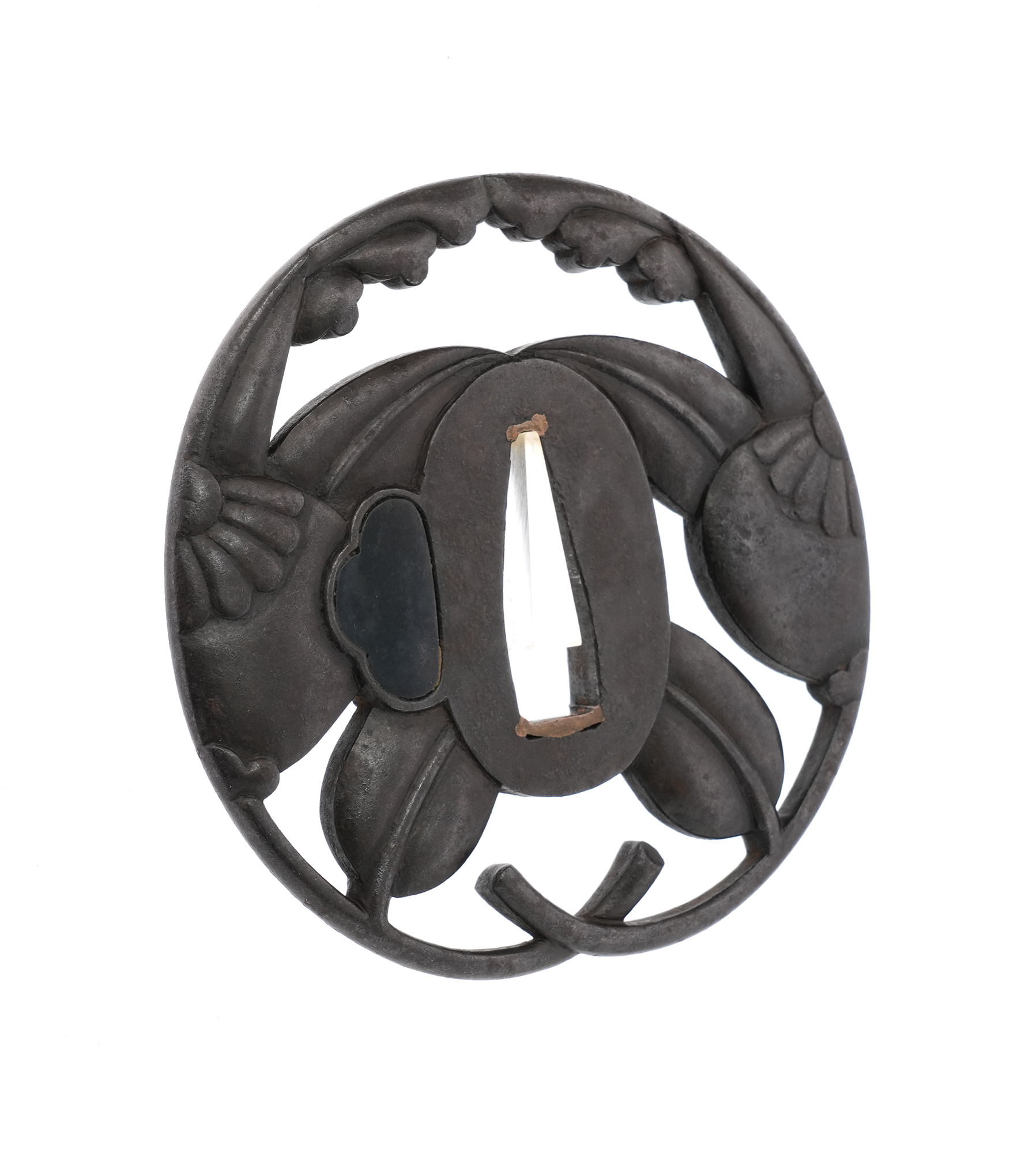
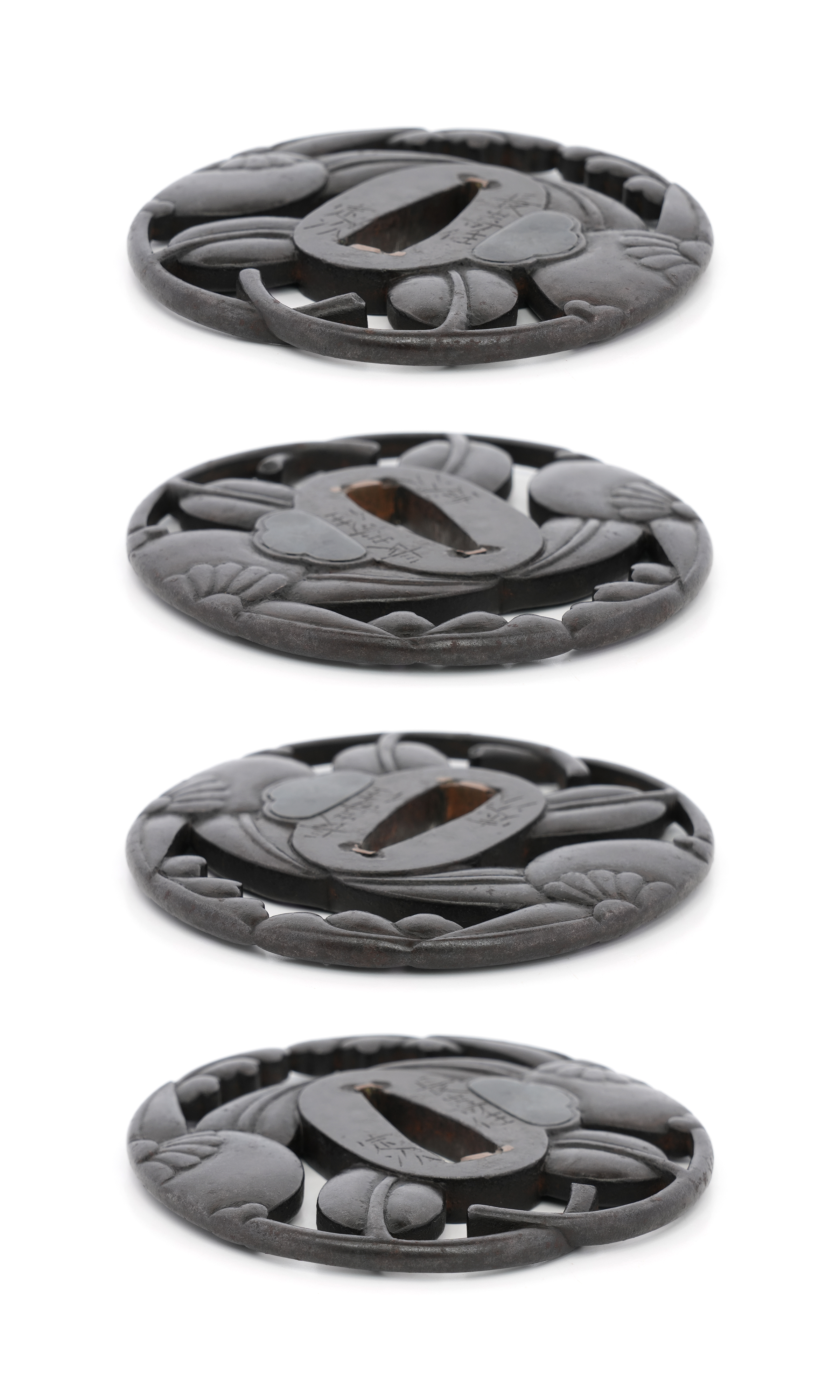
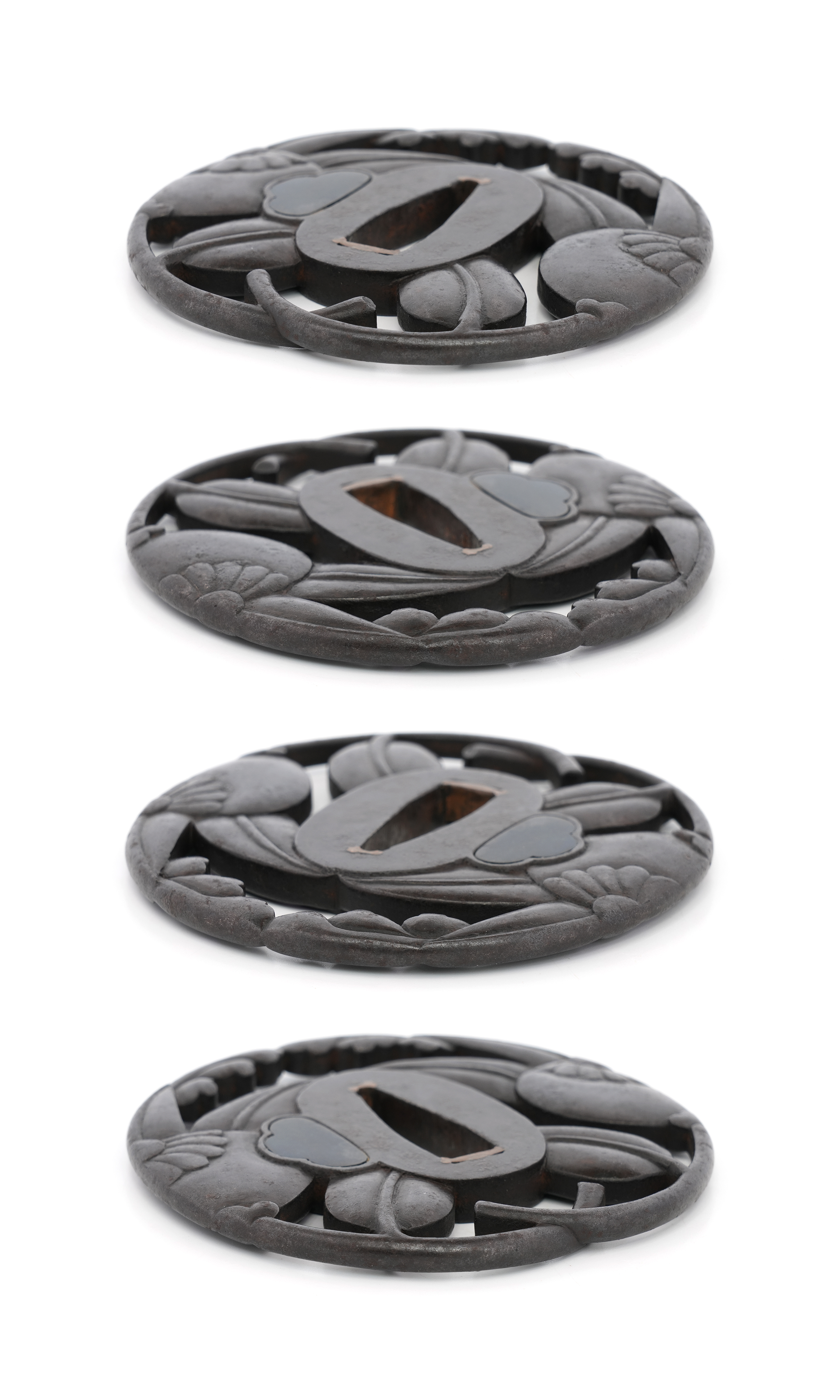
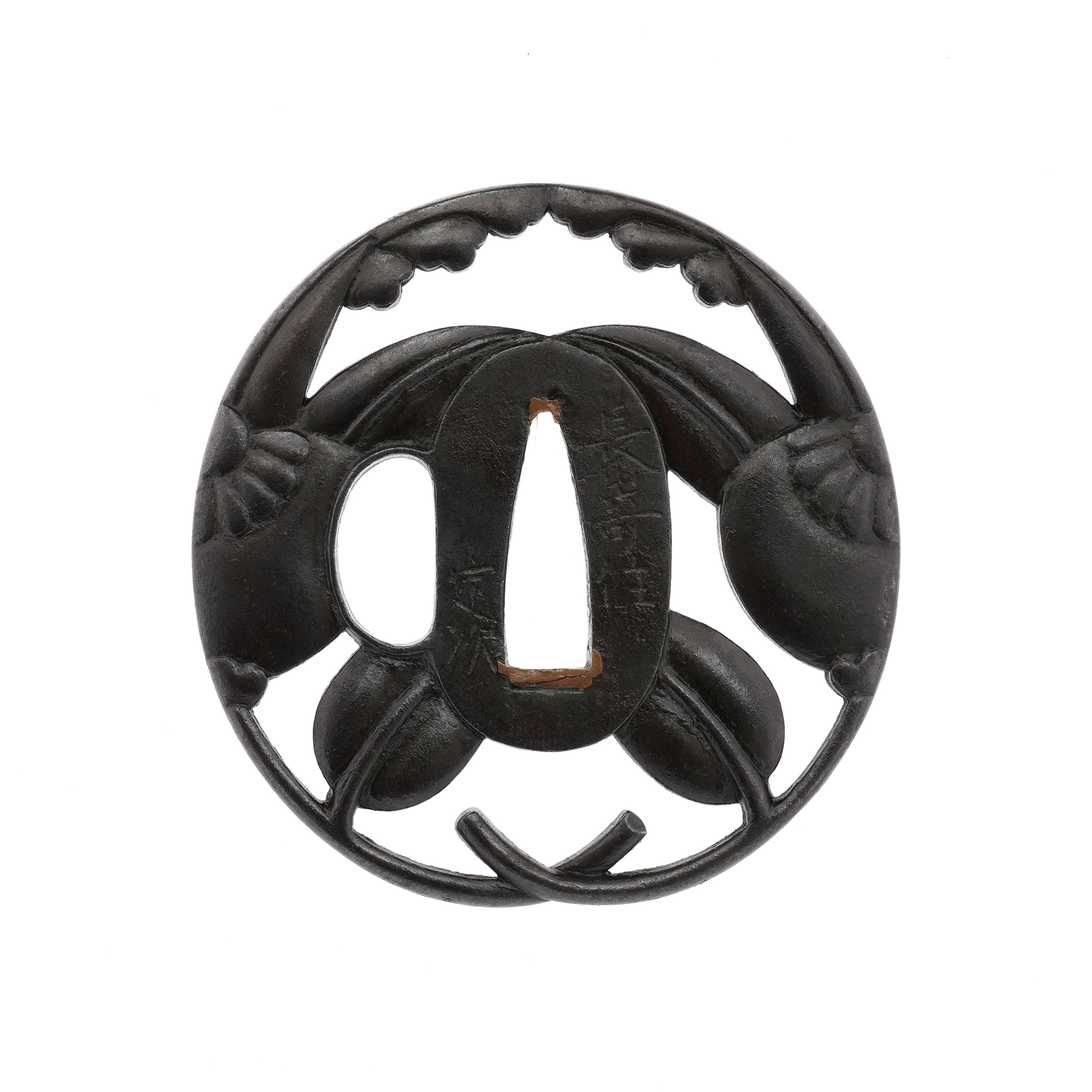
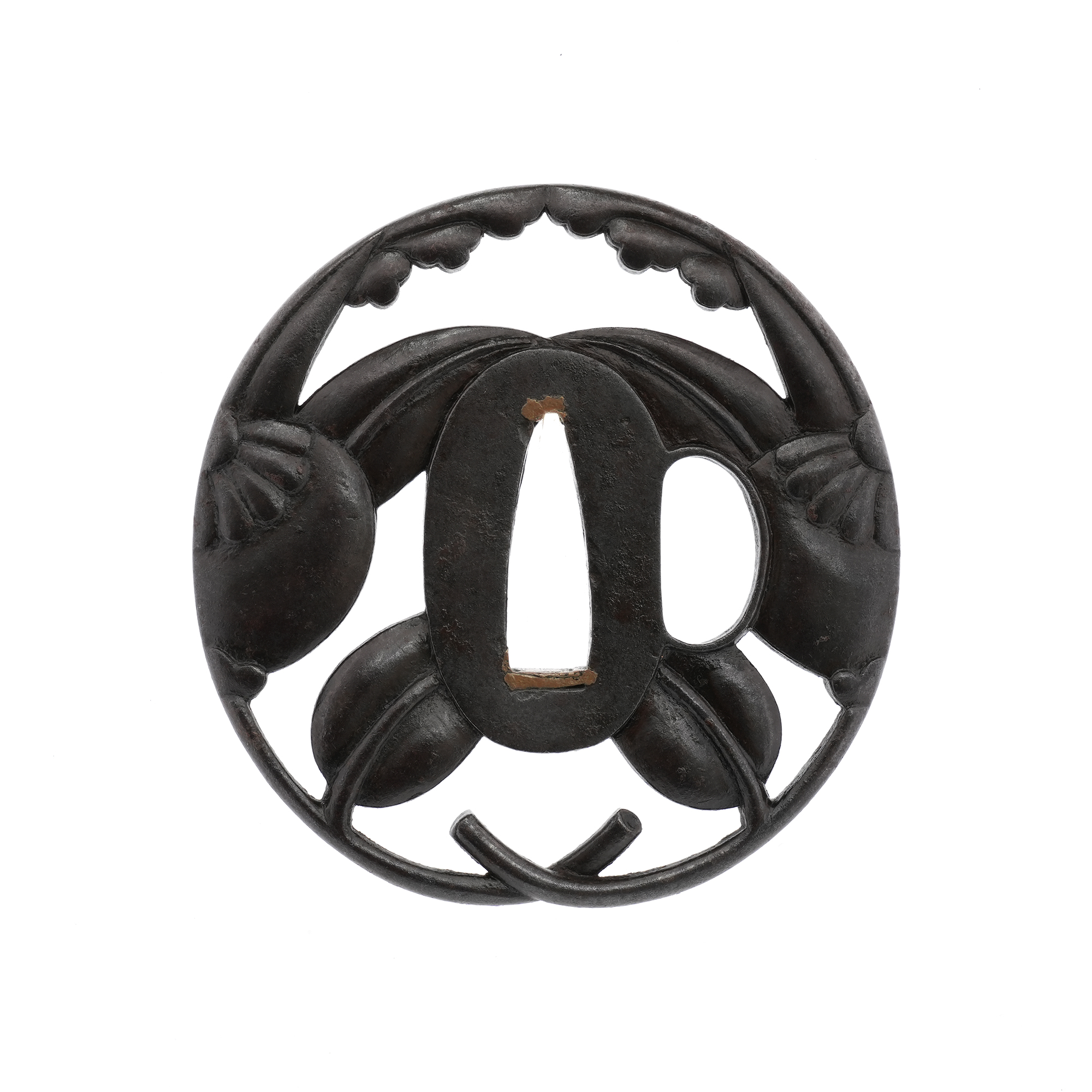
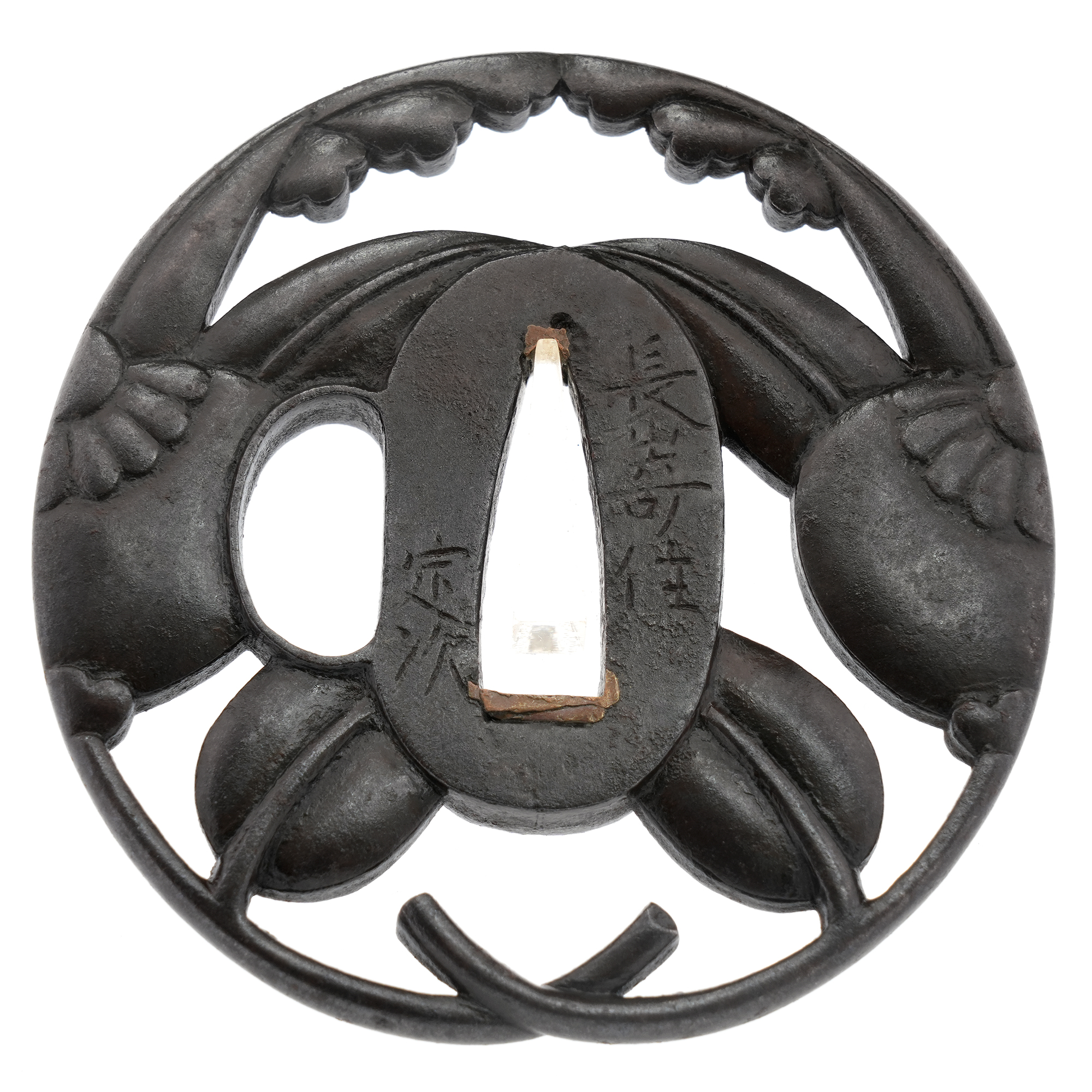
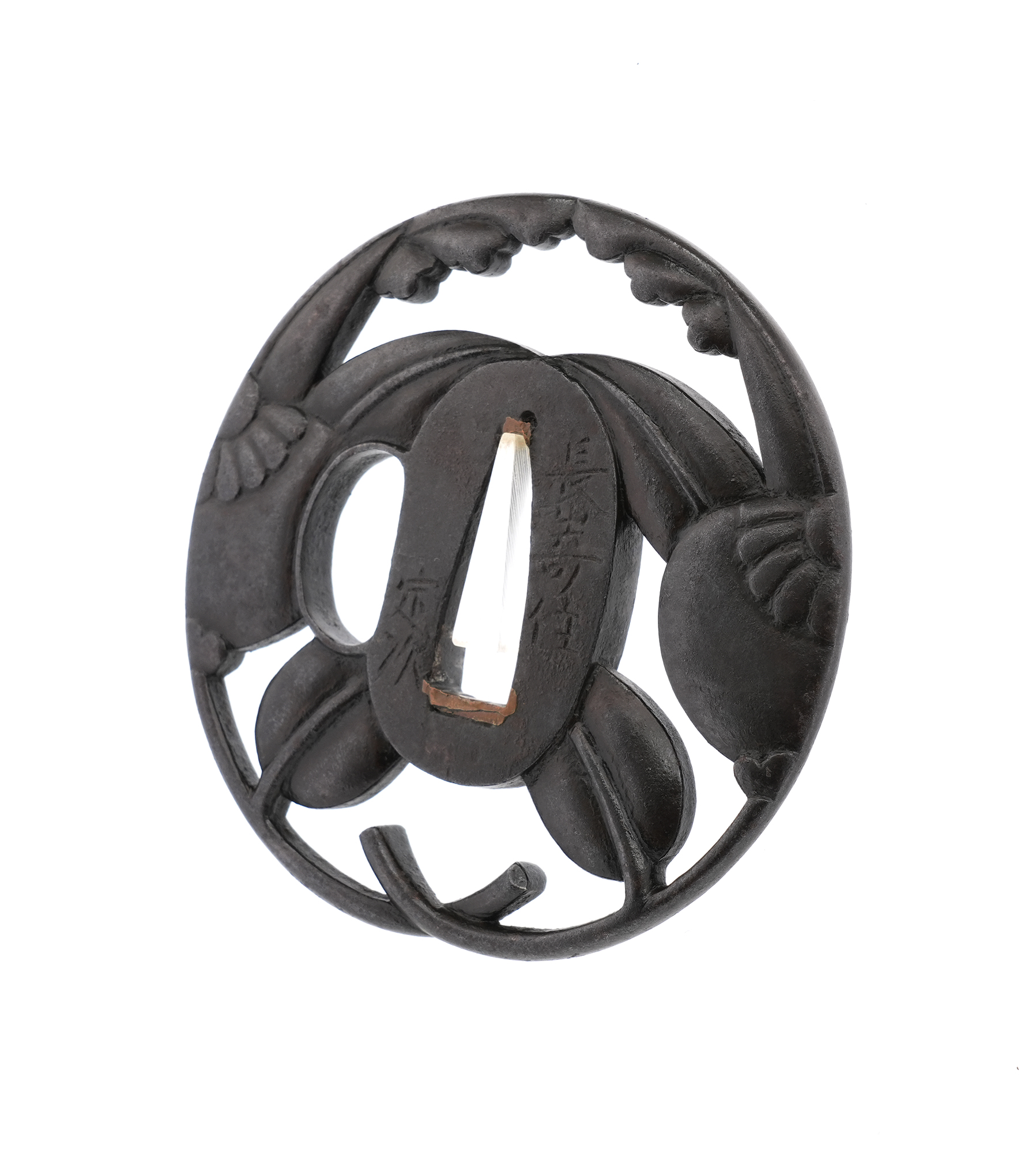
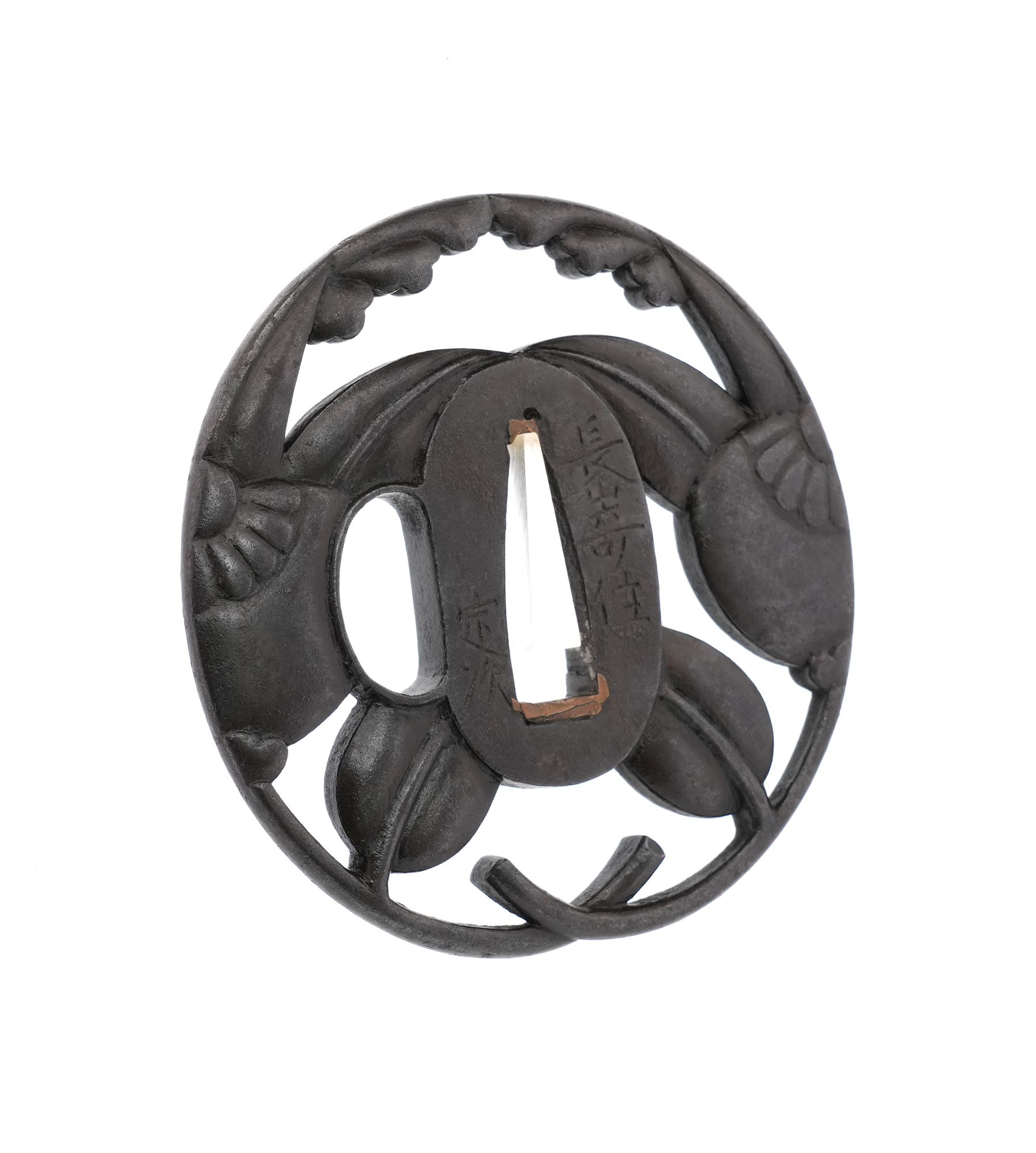
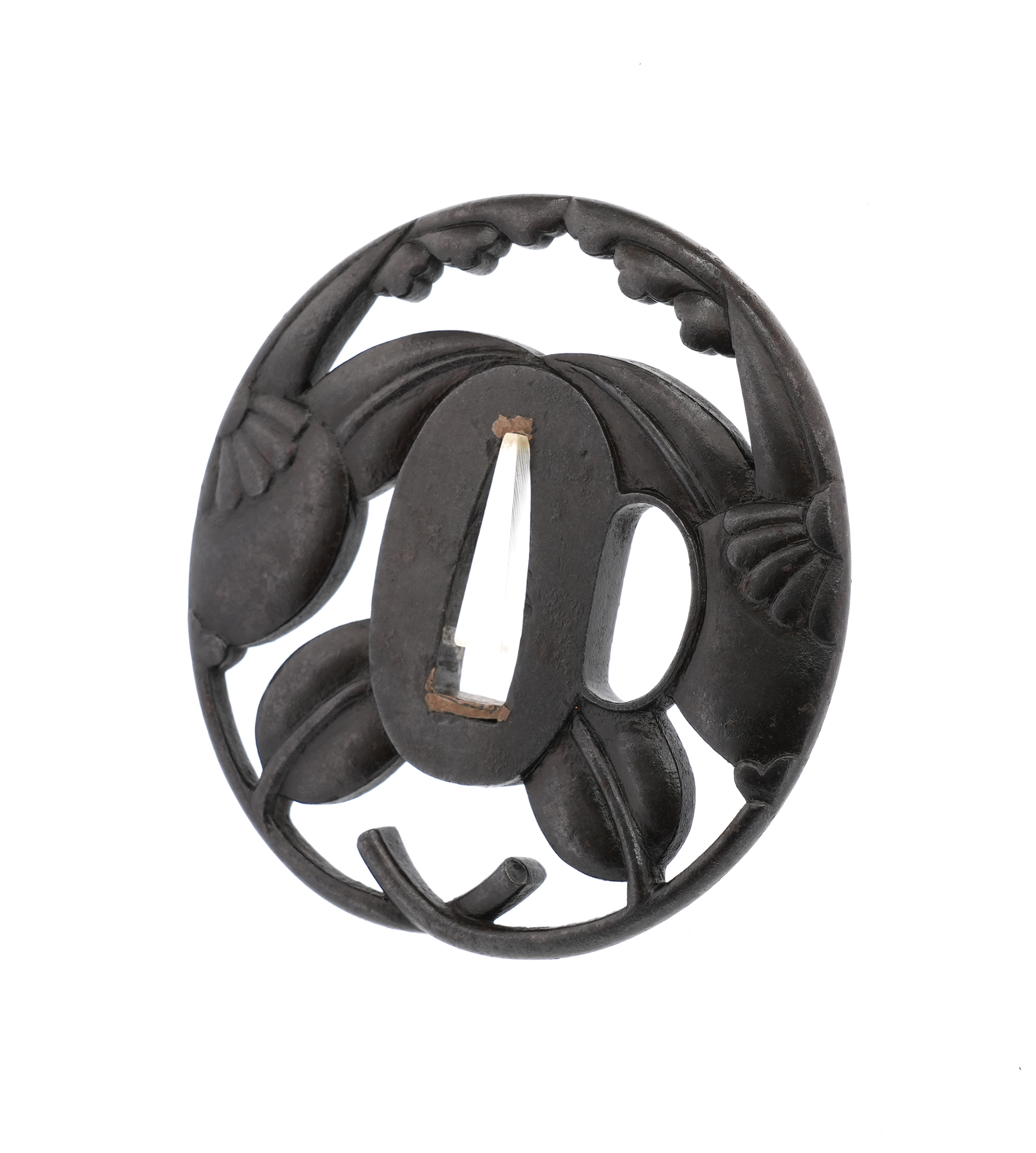
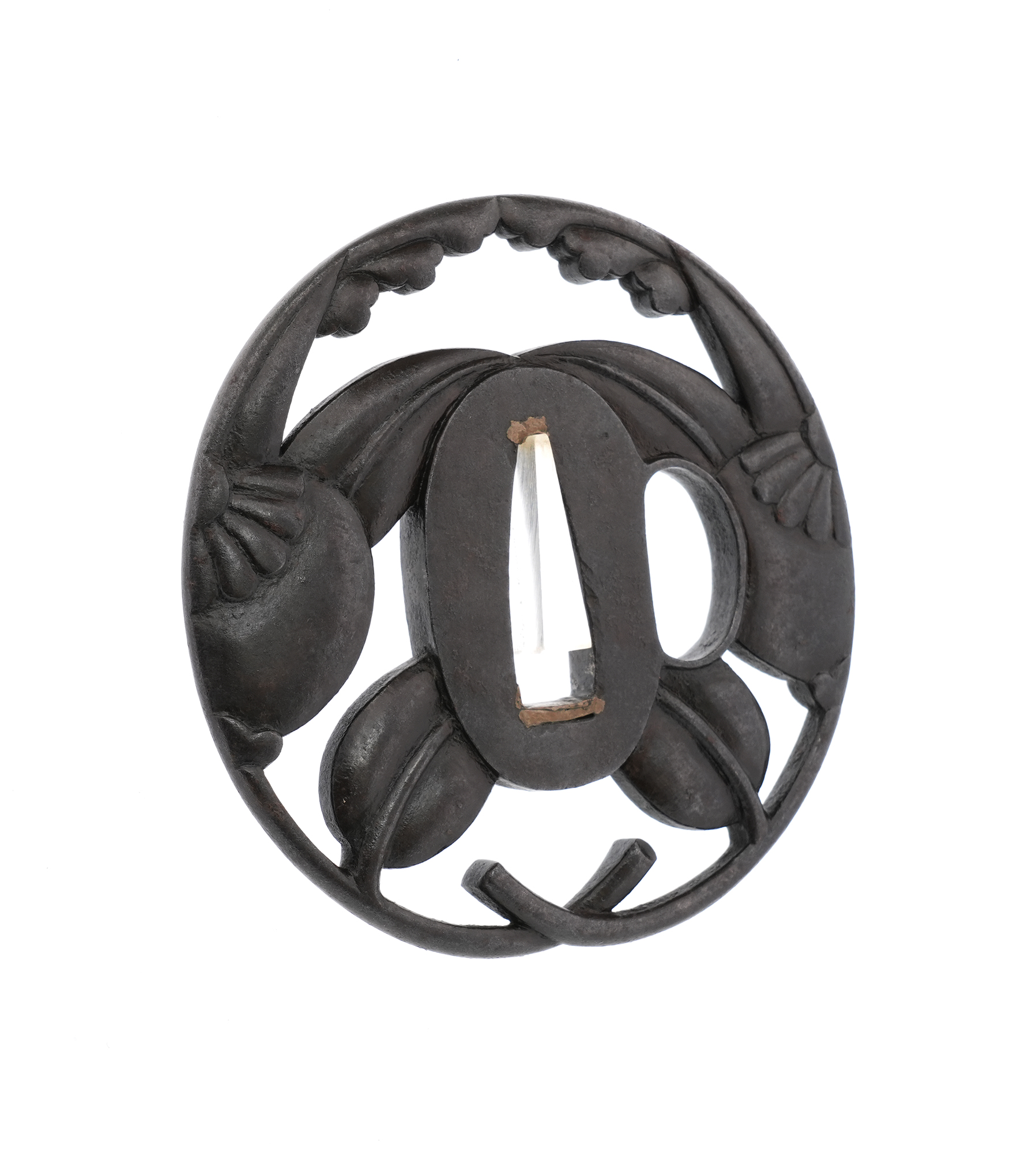
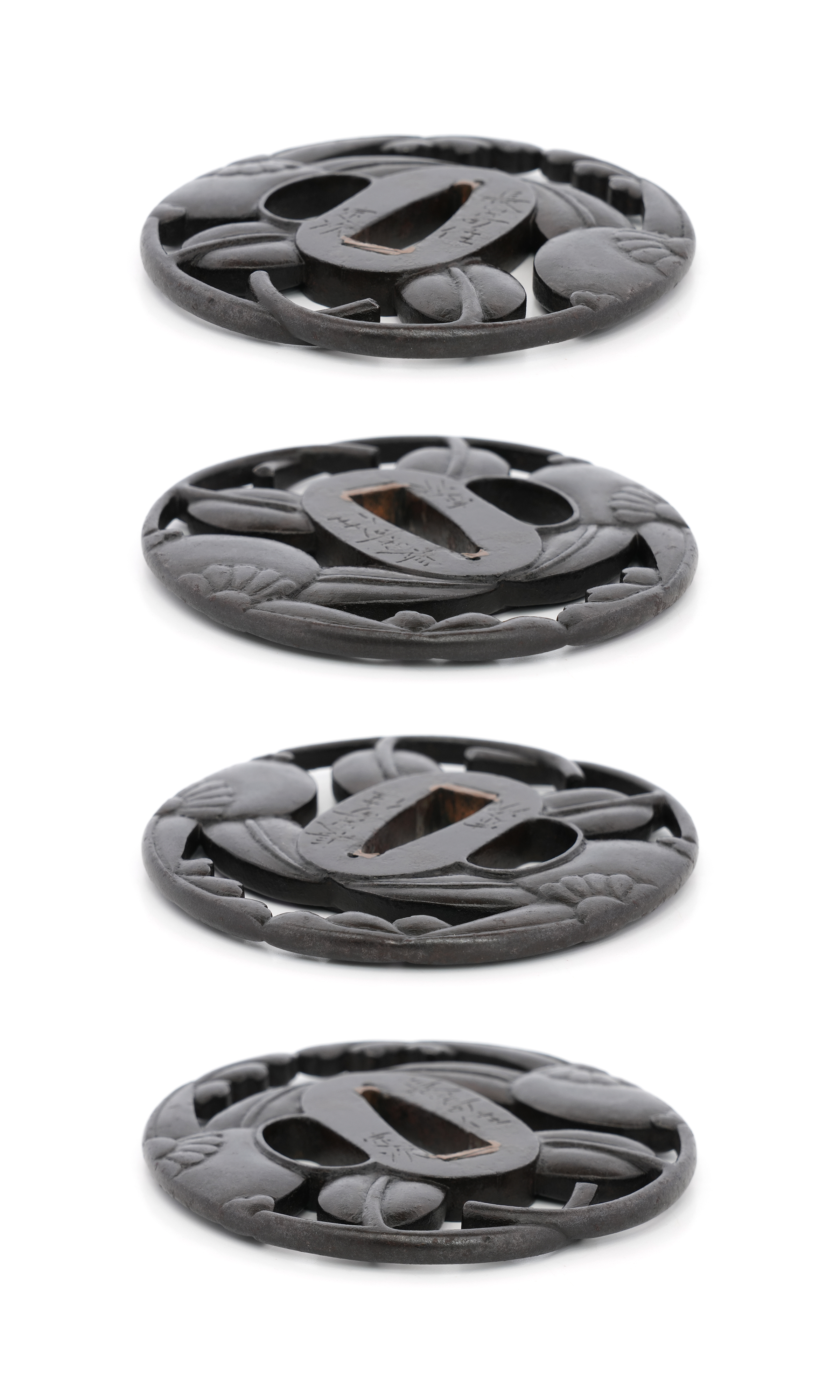
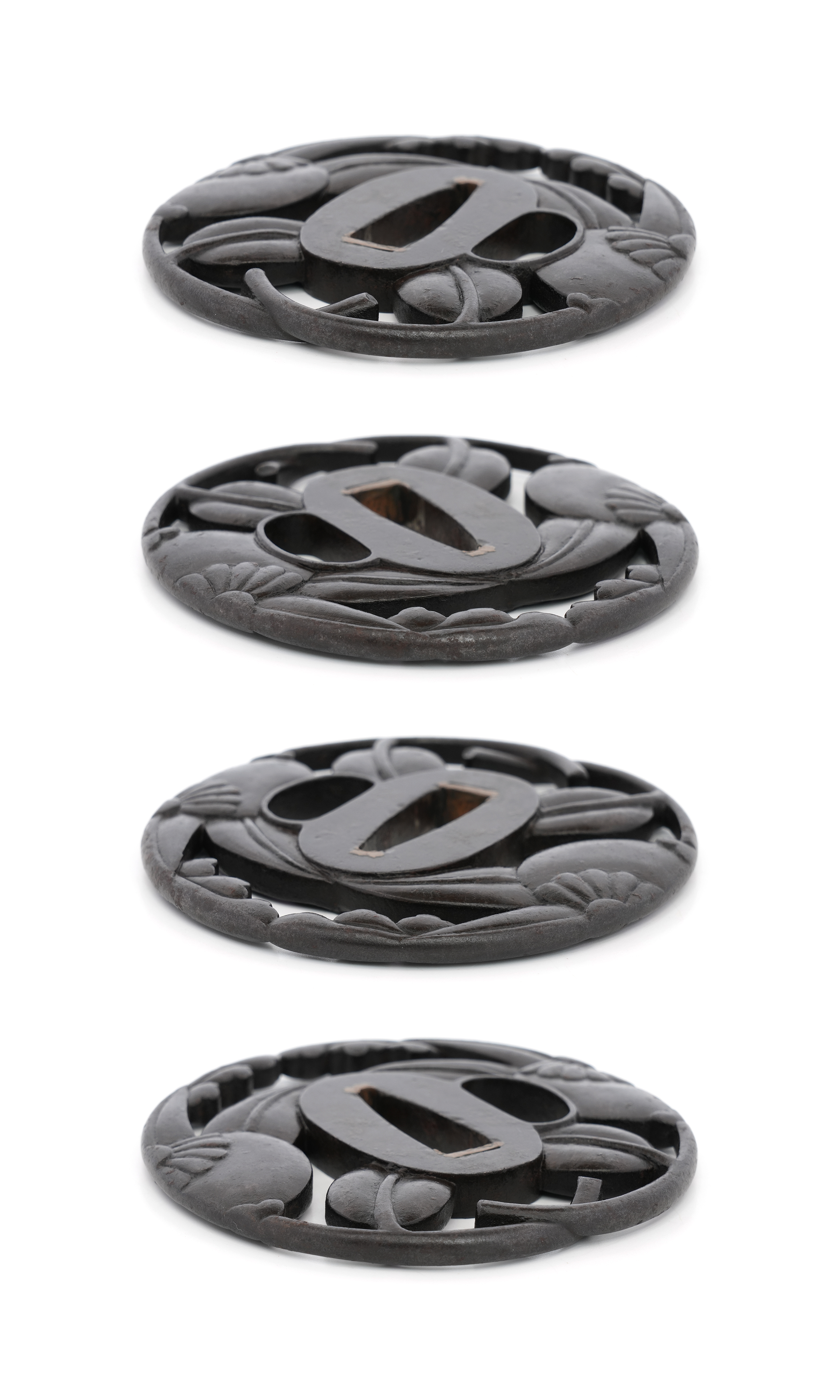
Sadatsugu is recorded in the meikan as a tsuba craftsman living in Nagasaki, Hizen province during the late Edo period, and he signs his mei as "Nagasaki-ju Sadatsugu". In this work, where the mei is placed on the seppa-dai of both the dai and sho, the composition of the pair is arranged with large sukashi of tachibana fruits and leaves while making use of the calm, black flavor of the iron; the formative power that developed the same design across two pieces of different dimensions and weights without any collapse catches the eye even before picking them up. The tachibana is an auspicious design that has been entrusted with wishes for unchanging prosperity and longevity as an evergreen tree that maintains its green leaves even in winter. In both the dai and sho, the tachibana fruits are arranged to face each other on the left and right across the seppa-dai, with leaves and branches encircling them above and below, making the iron lines continuing to the mimi correspond with the large open spaces; while expressing the richness of the harvest, the overall appearance is clean and tightened. While giving roundness to the fruits and adding lines to the leaves to express a tense form, the thinly extending branches connect the fruits and leaves naturally, and the more one follows the outline of the sukashi, the more the lively movement of the plant can be felt. The undulations moving from the thick seppa-dai to the fruits, leaves, and mimi are also a highlight; from the front, the composition of the tachibana stands out clearly, and when viewed from an angle, the volume of the iron and the depth of the carving stand out even more. Although the dai-tsuba and sho-tsuba share the same design, there is the pleasure of comparing the slightly different arrangement of branches and leaves and the intervals of the sukashi, and when the two are lined up, the beauty unique to a dai-sho ichigu appears, with the black tetsu-gashira, plump fruits, and the tone of the lines running to the mimi all in harmony. Sekigane can be seen in the nakago-ana of both, and in their appearance, which suggests they have been used together in a dai-sho koshirae, the provenance and flavor as tosogu reside. Entrusting the auspicious nature of the tachibana to clear sukashi, this item features a composition that does not make the thick iron ji look heavy, three-dimensional fruits and leaves, and a well-settled iron flavor; it is a set that allows one to enjoy a dai-sho pair not found in a single tsuba. If matched with worn swords, it neatly connects the dai-sho mounting with the same theme, and if provided for appreciation, it is an item rich in the joy of collecting that makes one want to repeatedly confirm the carving and iron expression of each of the two pieces.
Offered by Toushin
We couldn’t find current papers for this piece. Ask the dealer whether it has been, or can be, submitted to shinsa. — Hoshi

Machine translation of the shop's Japanese ·
Machine translation from the shop's Japanese · may contain errors ·
We could not find an authenticity certificate on the seller’s listing. Japanese swords and fittings are normally papered by the NBTHK (or the NTHK). Without one, the attribution is the seller’s own assessment and has not been independently verified — treat it with caution and ask the dealer about certification before buying.
As a rule we do not accept returns, except when we have sent a different item from the one ordered or when there is a significant discrepancy between the description and the item. If you wish to return an item, please contact us within 3 days of its arrival and then send it back.
¥550,000