 NihontoWatchNihontoWatch
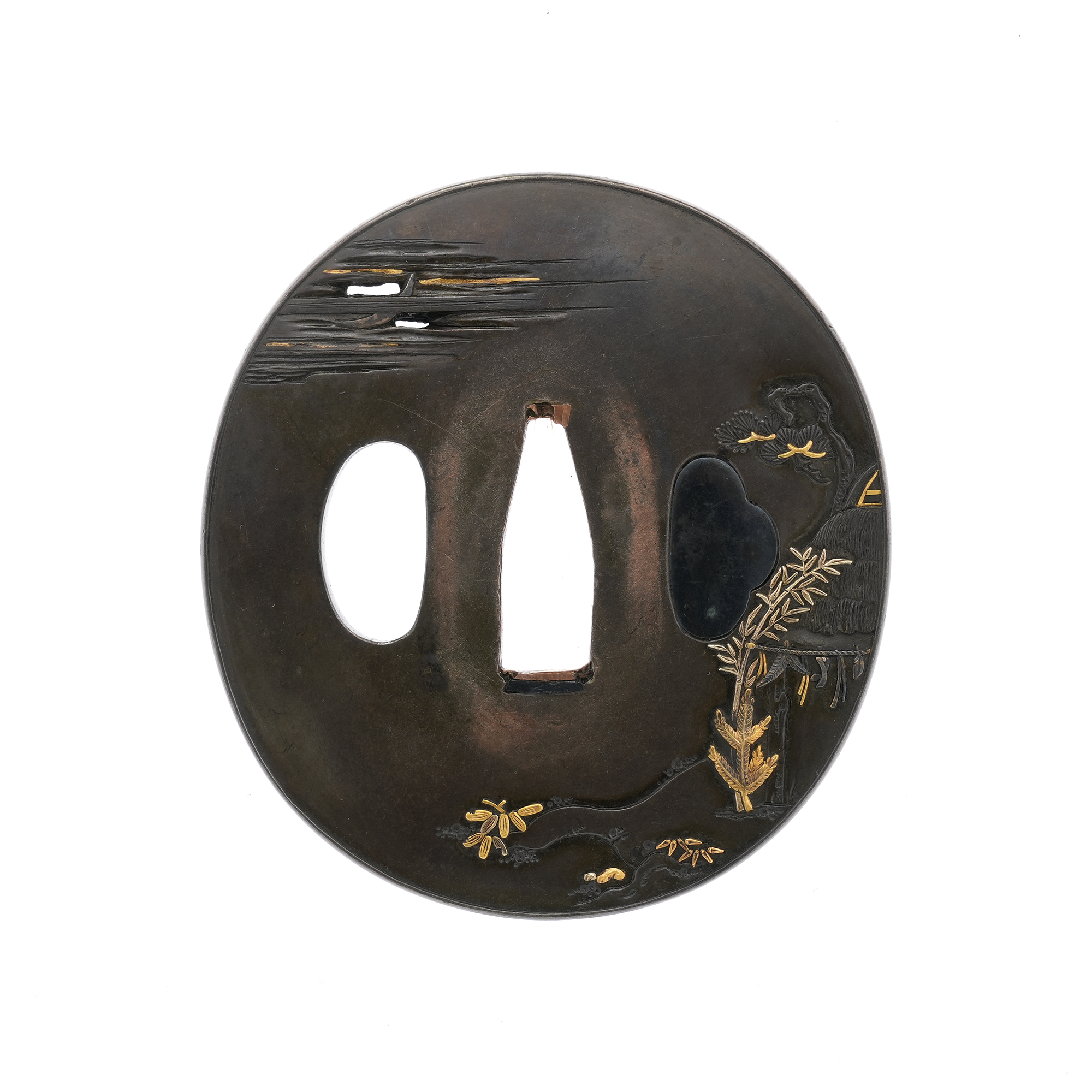
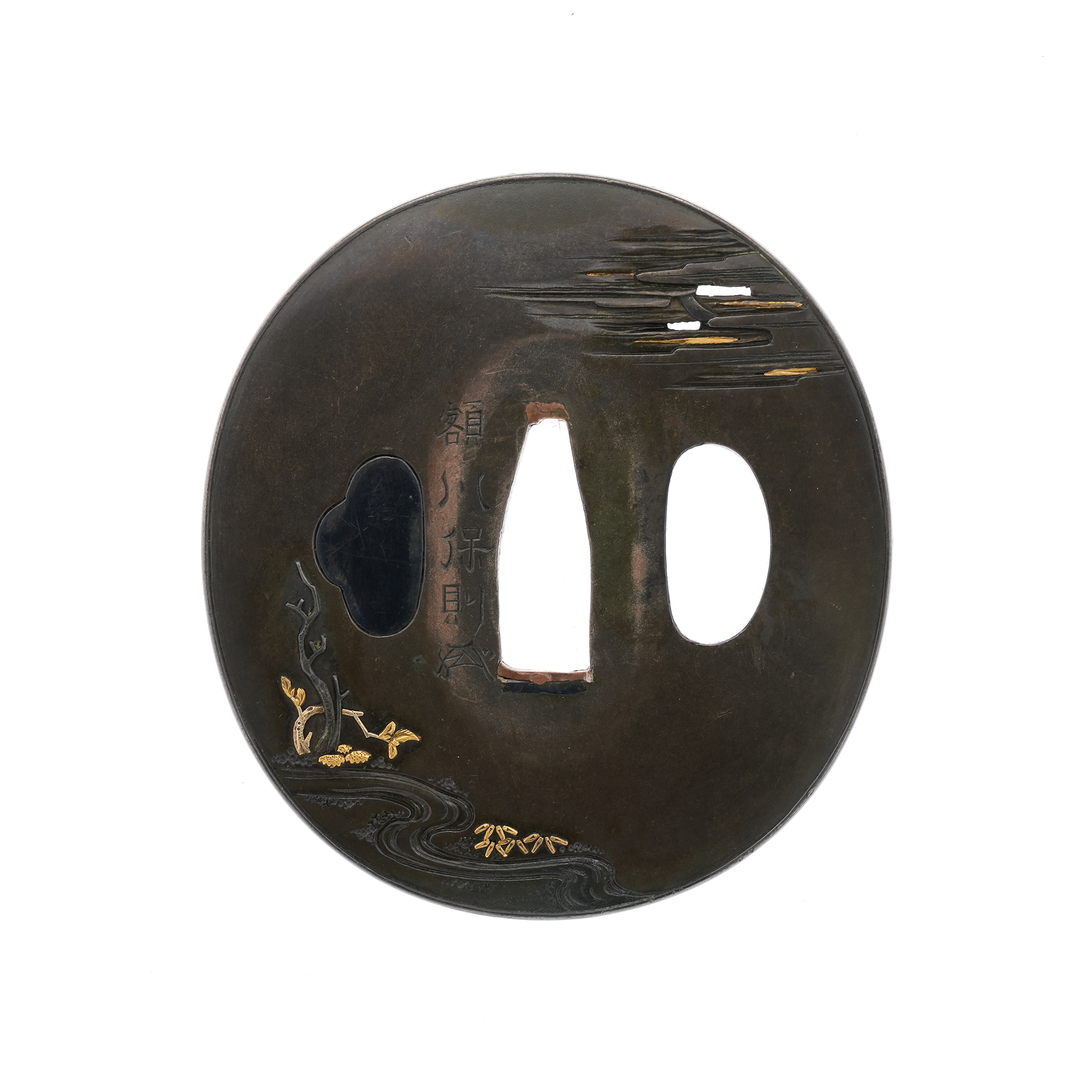
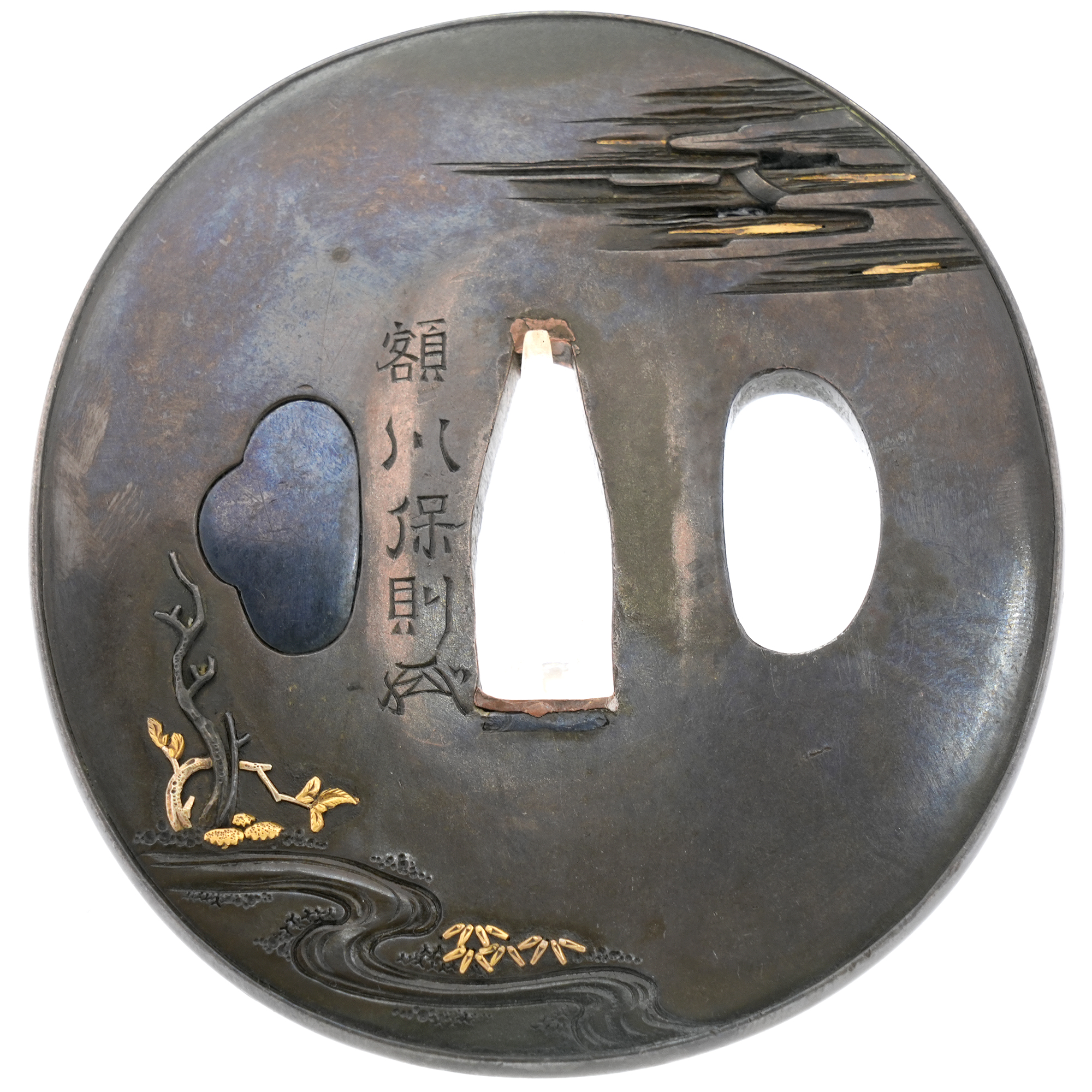
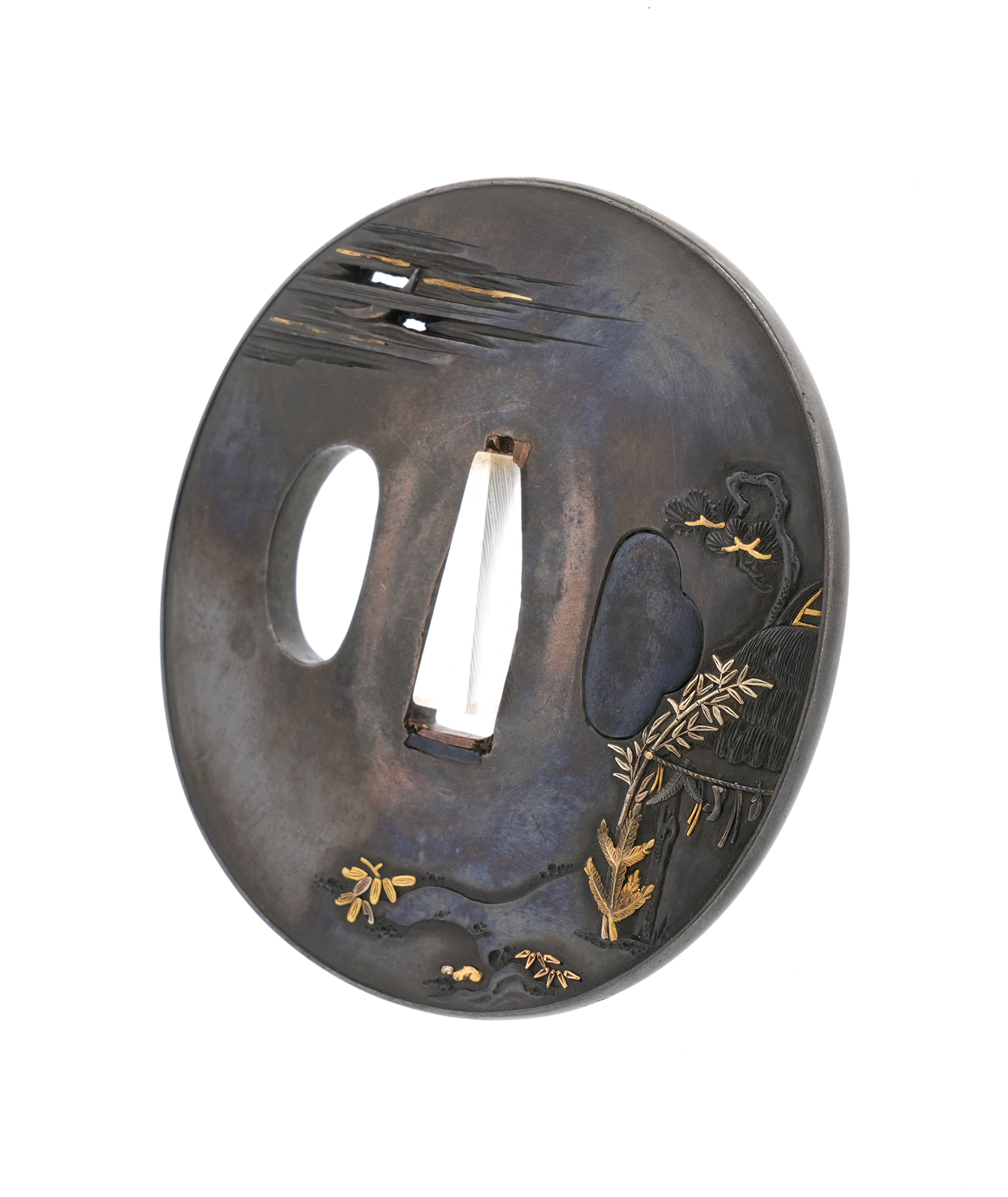
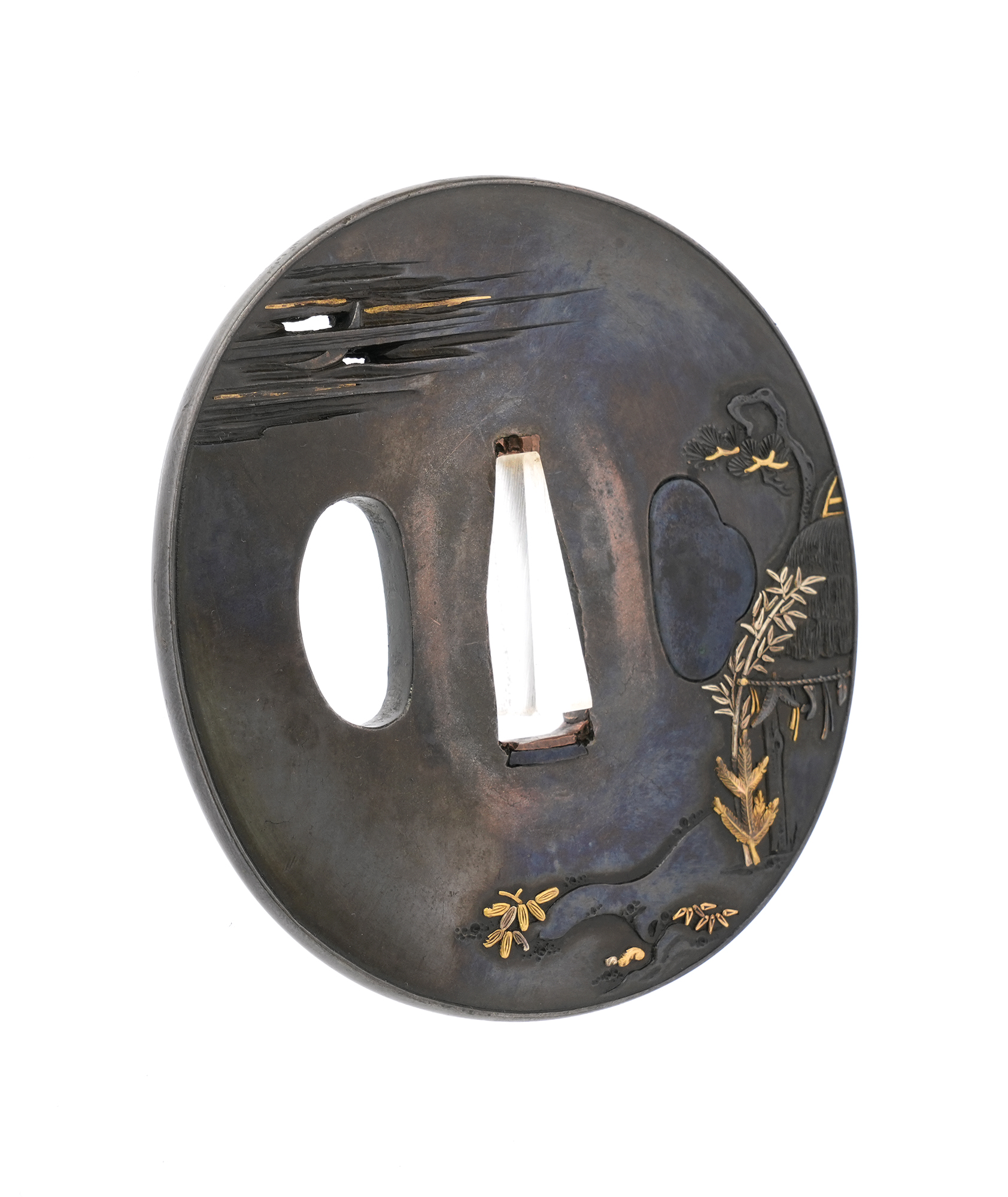
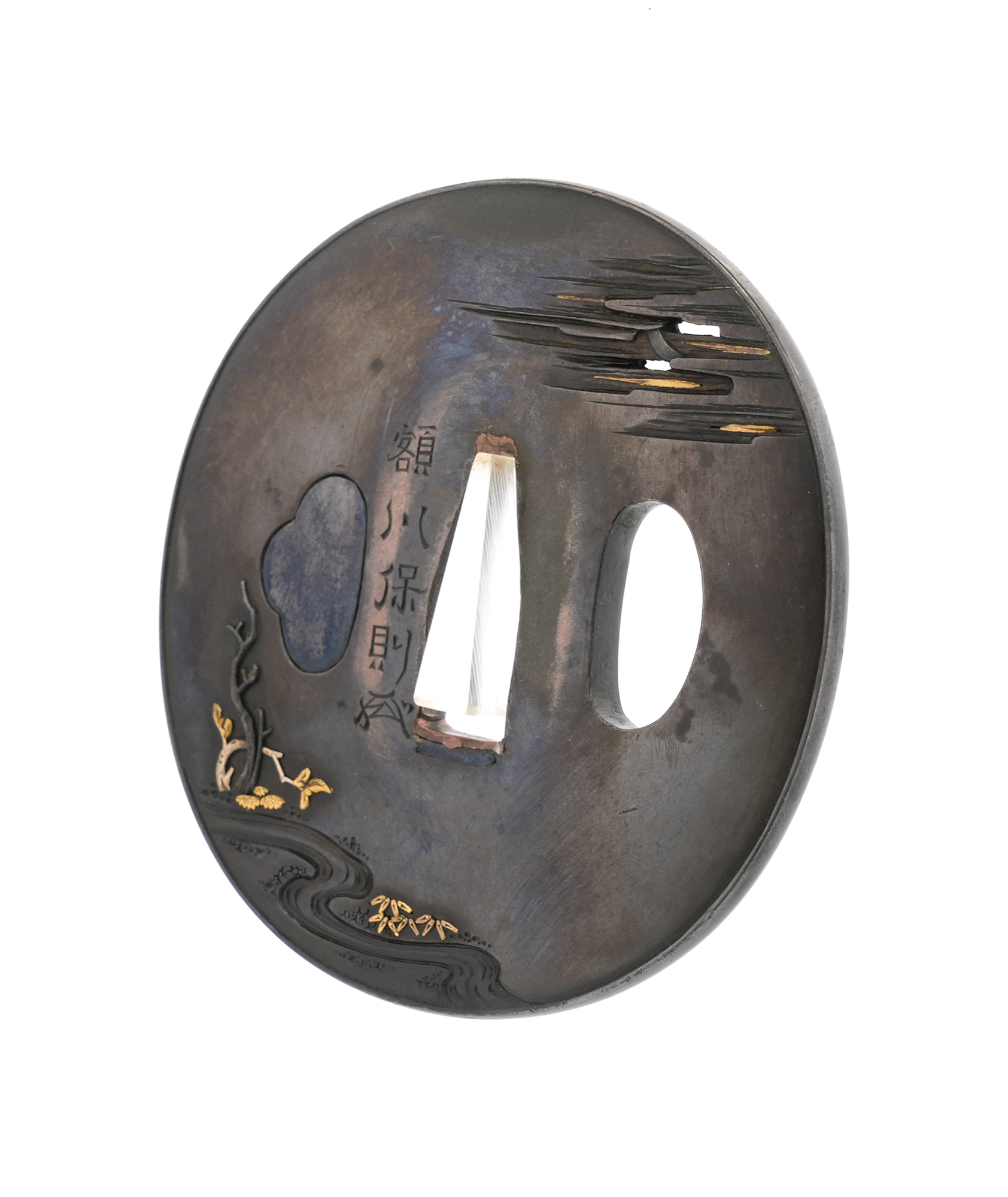
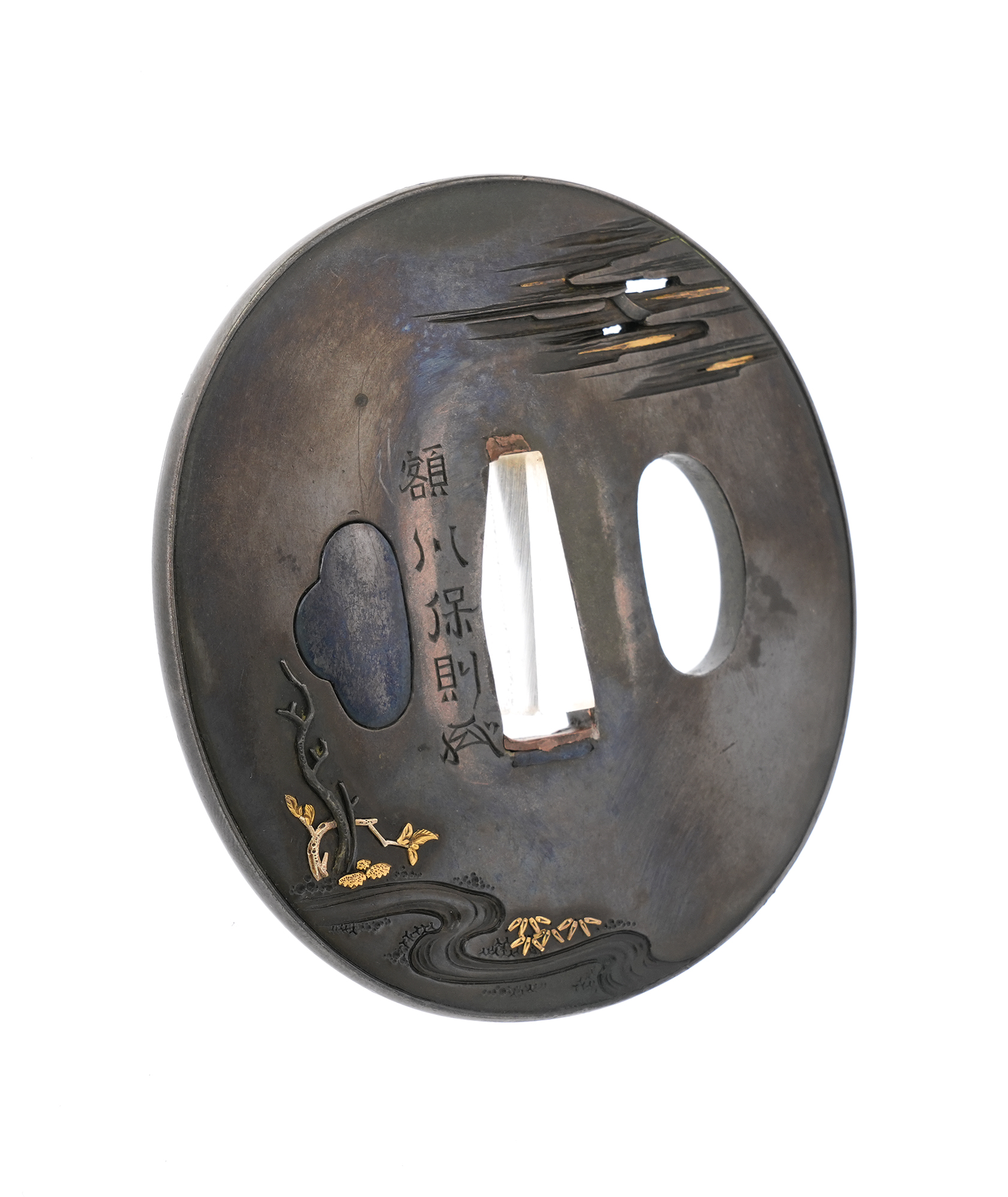
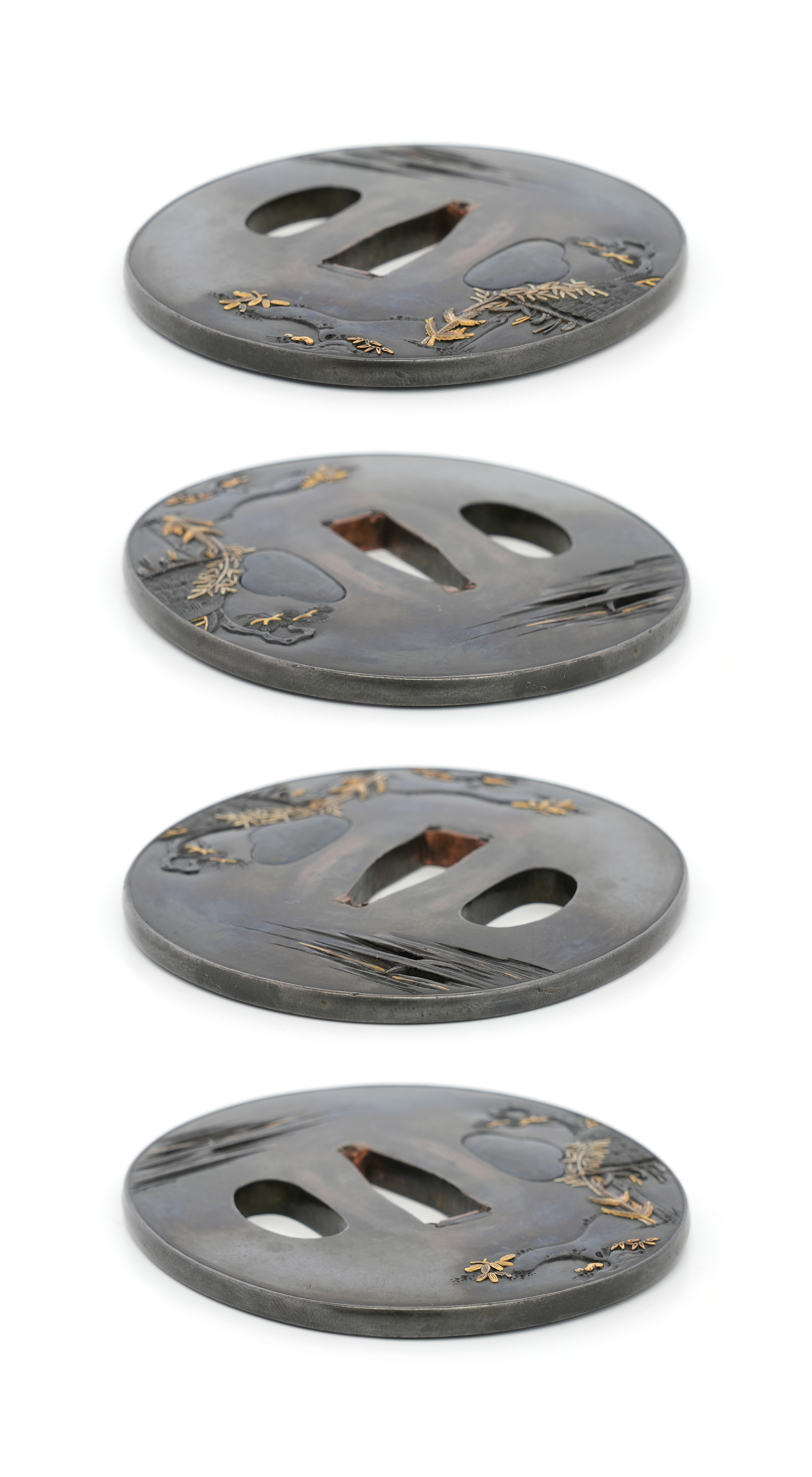
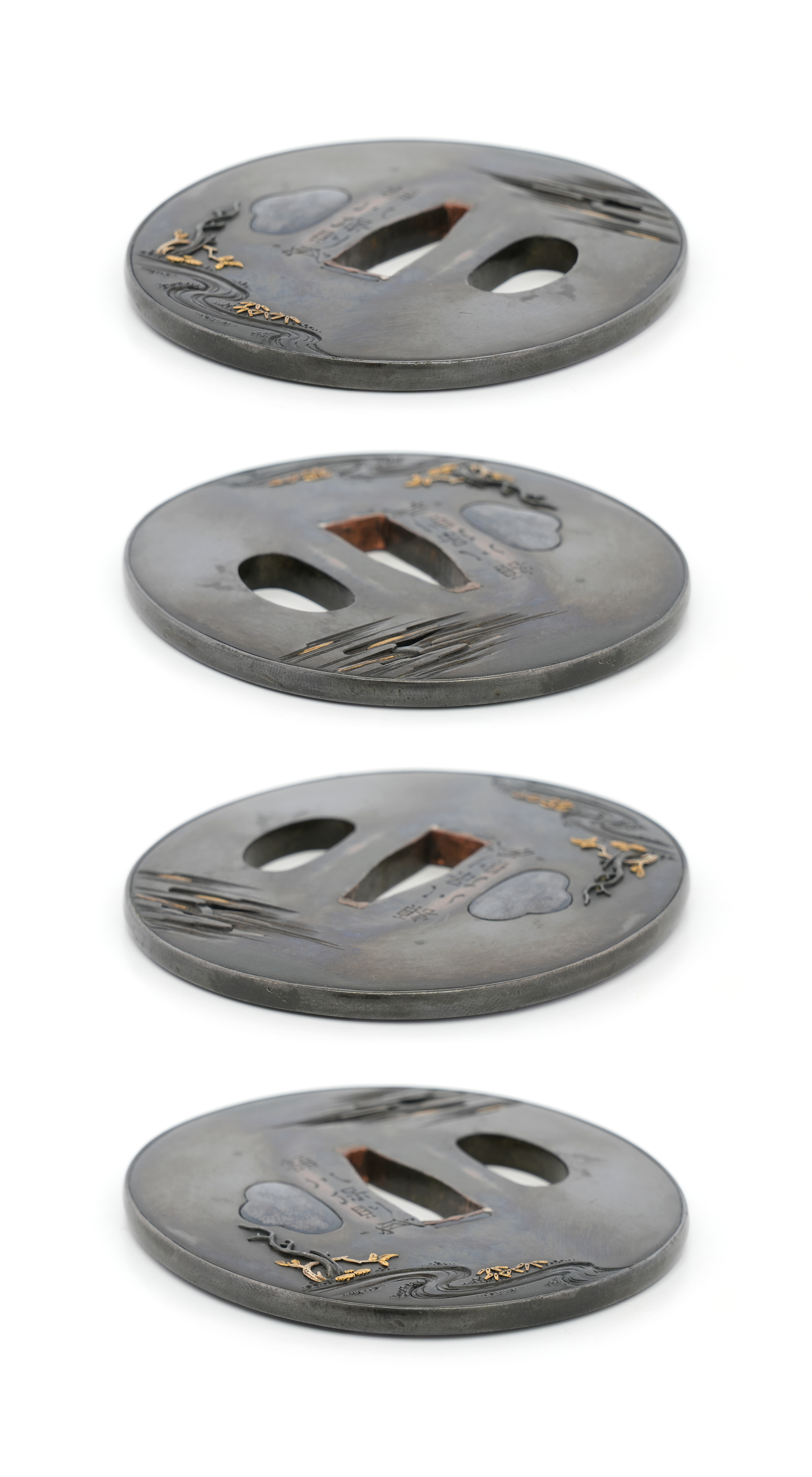
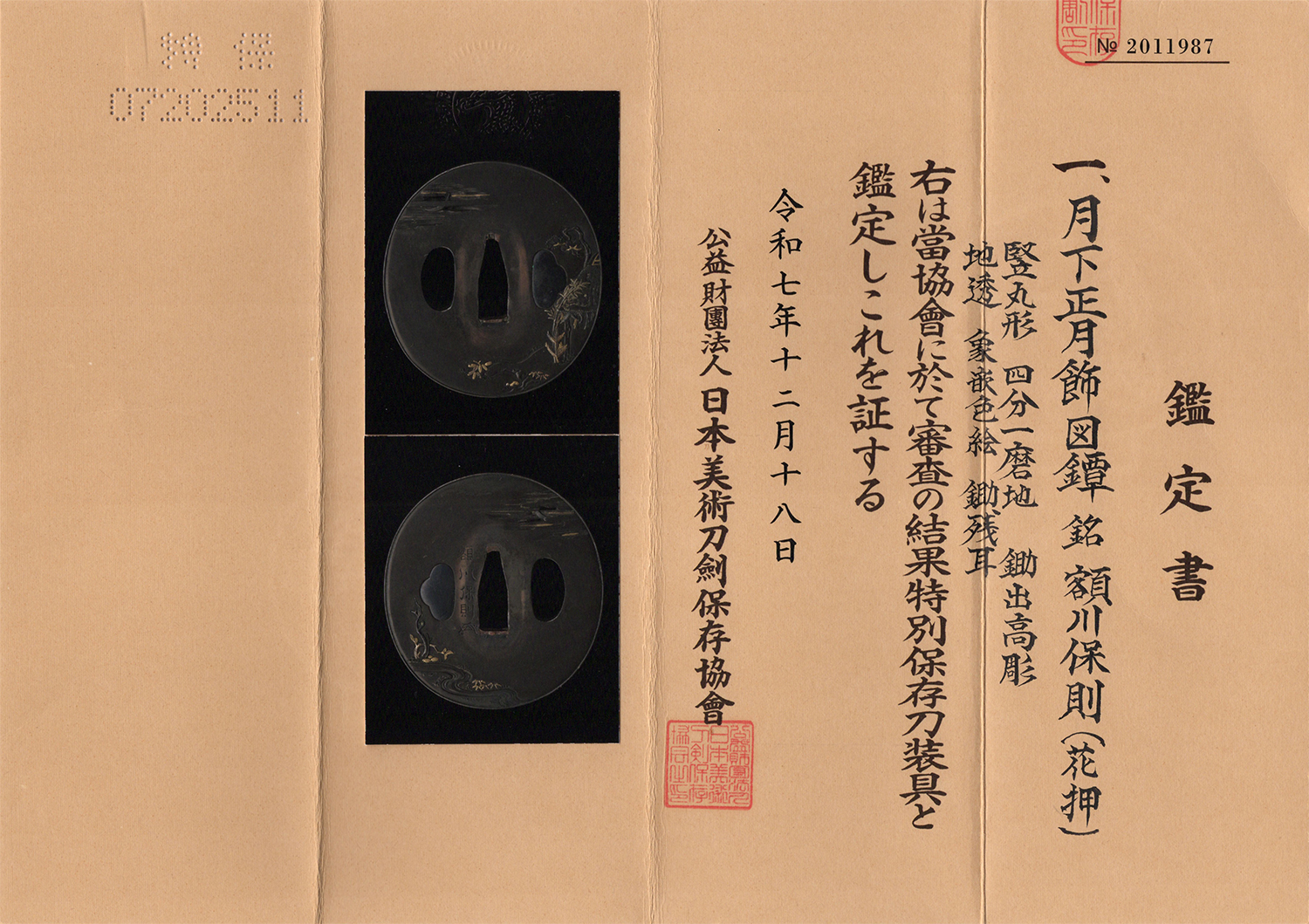
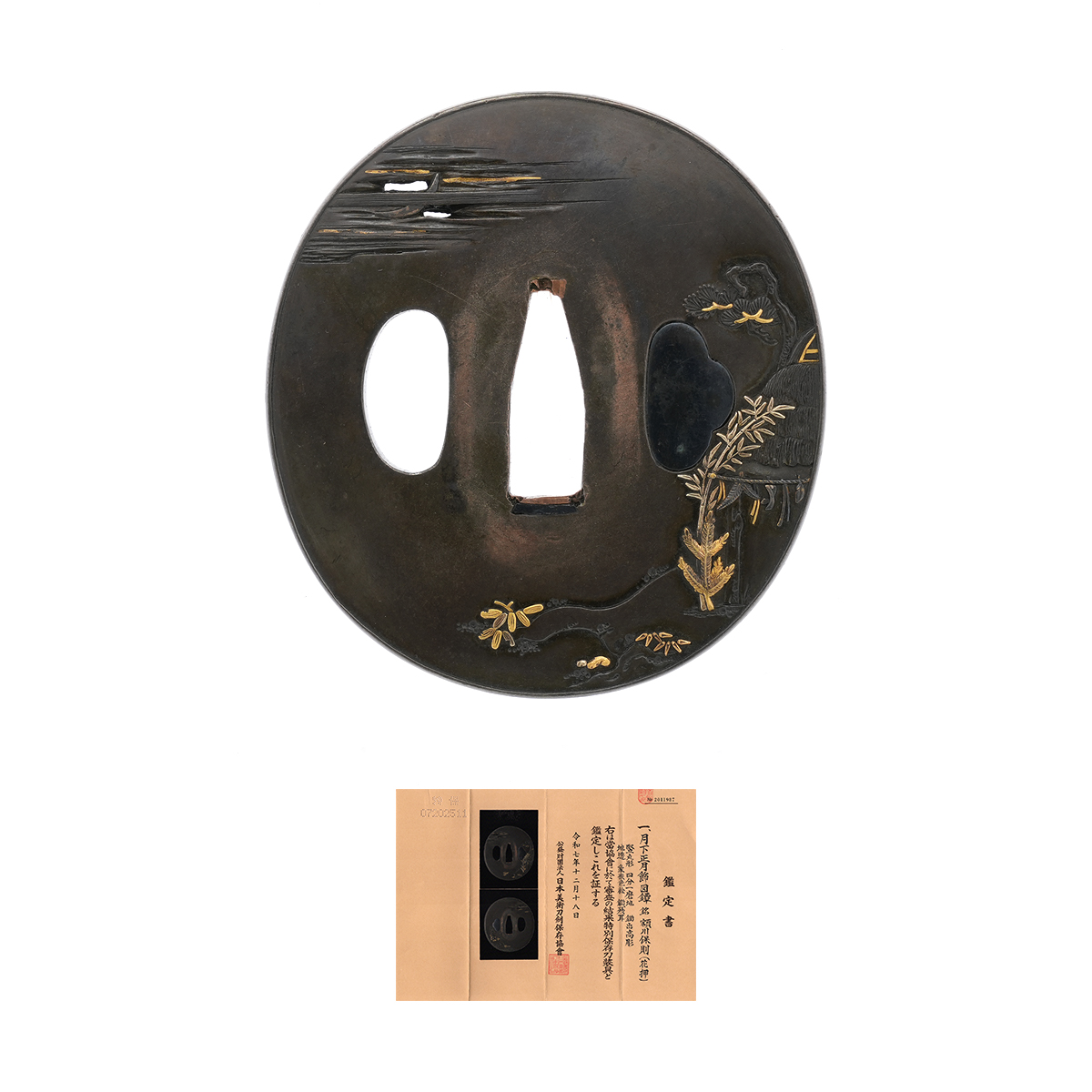
Nukagawa Yasunori was a Mito kinko active in the middle of the Edo period who used the go Keiyaisai, leaving behind works that applied sukidashibori, takabori, and kebori to shibuichi and iron jigane, skillfully combining irokane such as gold, silver, shakudo, and suaka. He excelled at composing landscapes, figures, and flowers and birds like a painting within the limited surface of a tsuba, and his carvings, which extend to the finest details, and his arrangement of colors clearly display the characteristics of Mito kinko, combining realism and decorativeness. This piece bears the mei of "Nukagawa Yasunori" and a kao, and is a work where one can appreciate Yasunori's authentic style, having been issued a Tokubetsu Hozon Tosogu Kanteisho by the Nihon Bijutsu Token Hozon Kyokai. The theme is an elegant one, depicting New Year decorations prepared to welcome the new year beneath a crescent moon peeking through clouds. As pine and bamboo maintain their green even in harsh winters, they symbolize longevity, integrity, and prosperity, and the decorations accompanied by shimenawa and urajiro carry the meaning of welcoming the Toshigami and praying for the safety of the household and happiness in the new year. In a composition that conveys the atmosphere of the early spring through a house on a quiet moonlit night and New Year decorations rather than directly depicting bustling figures or festivities, one can feel the refinement unique to Edo kinko who valued the emotional essence of the seasons. The tatemaru-gata shibuichi migaki-ji exhibits a calm grayish-brown ground color and a soft luster; on the upper left of the surface, trailing misty clouds are expressed in sukidashibori, with a thin crescent moon peeking through the gaps. By layering the clouds with carvings of varying depths and adding gold to key points, the appearance of distant, faint moonlight illuminating the clouds is expressed, and a house with a deeply projecting roof is placed on the right side of the composition, with gold applied to part of the roof to place a small brilliance within the night scenery. Beside the house, bamboo expressed in silver grows, with a shimenawa stretched across its trunk and New Year decorations such as urajiro carved in detail. Next to the bamboo, a pine with needles expressed in gold is arranged, creating a high-standard scene where the silver bamboo and gold pine complement each other against the quiet color tones of the shibuichi ground. Gold is also used for the bamboo grass leaves growing on the ground, and without neglecting the details of the low-flowing landscape or the grass, the composition naturally guides the viewer's gaze from the New Year decorations in the foreground to the clouds and moon in the distance. The kogai-hitsu-ana is carefully plugged with shakudo, and its deep blackness balances the color-rich scenery on the right side, producing an effect that tightens the composition even when used on an actual koshirae. On the ura, a small stream gently curving toward the lower left is depicted, with a leafless tree standing beside it. By using silver, gold, and shakudo for the trunk and branches and adding gold to the bamboo grass leaves, the presence of life welcoming the early spring is hidden within the winter-withered scenery, and a portion of the misty clouds and crescent moon, continuing from the omote, is placed at the upper right so that the space of the same moonlit night is not interrupted even when the tsuba is turned over. In contrast to the brilliant foreground on the omote featuring the house and New Year decorations, the ura provides a quiet lingering memory through the stream and trees, and the ability to appreciate a single moonlit landscape through both the omote and ura is a great charm of this piece. The wide margins of the shibuichi migaki-ji, the undulations of the clouds and landscape created by sukidashibori, and the restrained color scheme of gold, silver, and shakudo harmonize well, highlighting the auspicious nature of the New Year decorations through the stillness of the margins rather than relying solely on flashiness. In addition to the rare motif of a night in early spring enveloped in moonlight, the fact that it is a zaimei work by the Mito kinko Nukagawa Yasunori and is accompanied by a Tokubetsu Hozon Tosogu Kanteisho enhances its value for collection. When tilted in the hand, the hues of the shibuichi ground and the brilliance of the irokane shift gently; it is a superior work combining dignity and sentiment, where one can appreciate the seasonal story when displayed and the author's meticulous tagane work in the details.
Yasunori保則
Offered by Toushin

Machine translation of the shop's Japanese ·
Machine translation from the shop's Japanese · may contain errors ·
Hitachi
3 pieces on the market now
A Hozon-certified fitting of notably superior craftsmanship and condition, often with signature or workmanship of high reference value.
The NBTHK (Nihon Bijutsu Tōken Hozon Kyōkai, the Society for the Preservation of Japanese Art Swords) is a public-interest incorporated foundation founded in 1948 and supervised by Japan’s Agency for Cultural Affairs (Bunkachō); it is based at the Japanese Sword Museum in Tokyo. Its expert panels physically examine each submitted work (shinsa) and issue a certificate (kanteishō) ranking it by artistic and historical merit. NBTHK papers are the most widely recognized standard of authentication for Japanese swords and fittings.
NBTHK official siteAs a rule we do not accept returns, except when we have sent a different item from the one ordered or when there is a significant discrepancy between the description and the item. If you wish to return an item, please contact us within 3 days of its arrival and then send it back.
¥660,000