The Shintō era was largely invented in Kyōto: Umetada Myōju’s workshop trained the movement, Horikawa Kunihiro raised a generation, and the Hon’ami appraisers, who held no forge, governed the meaning of famous blades.
 NihontoWatchNihontoWatch
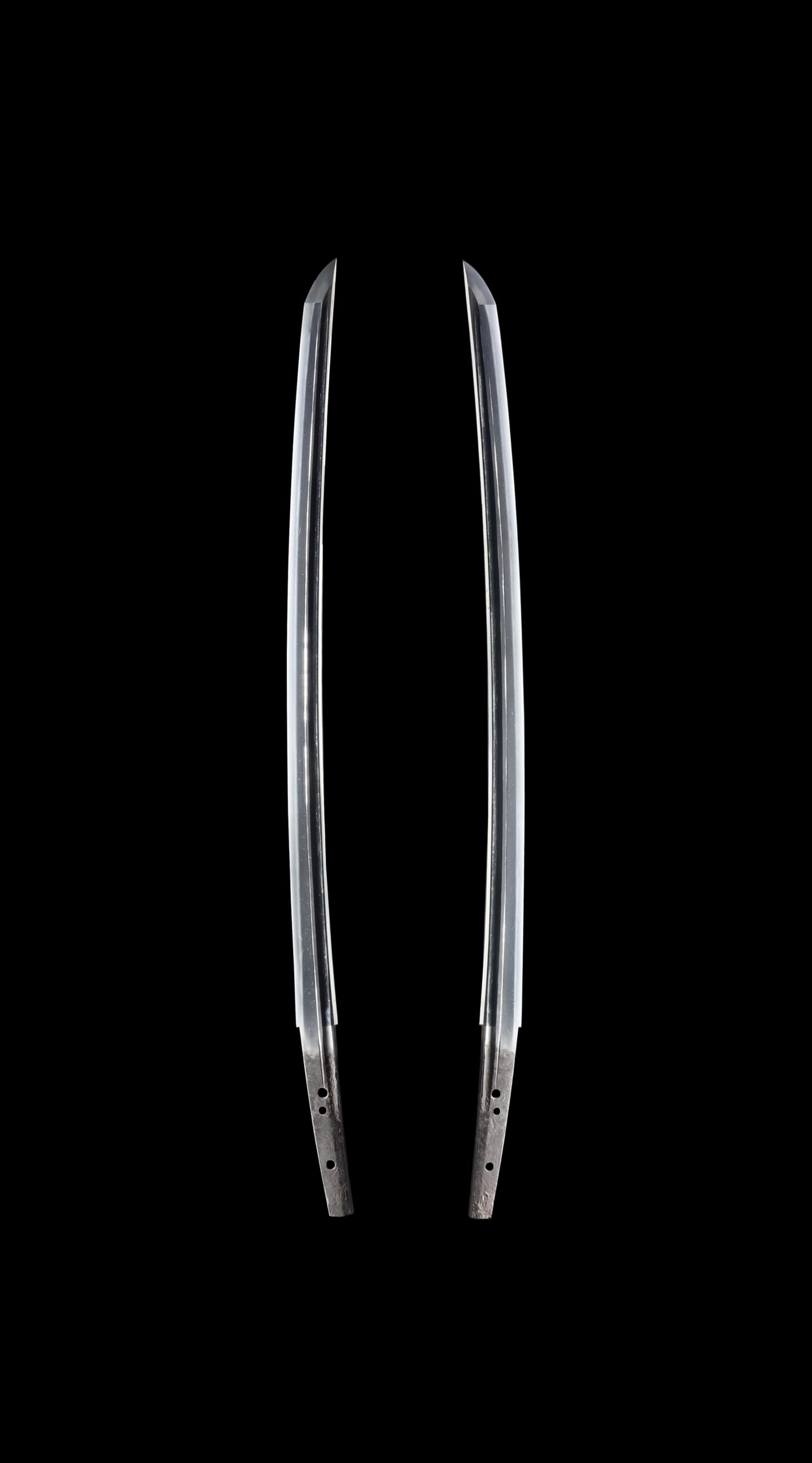
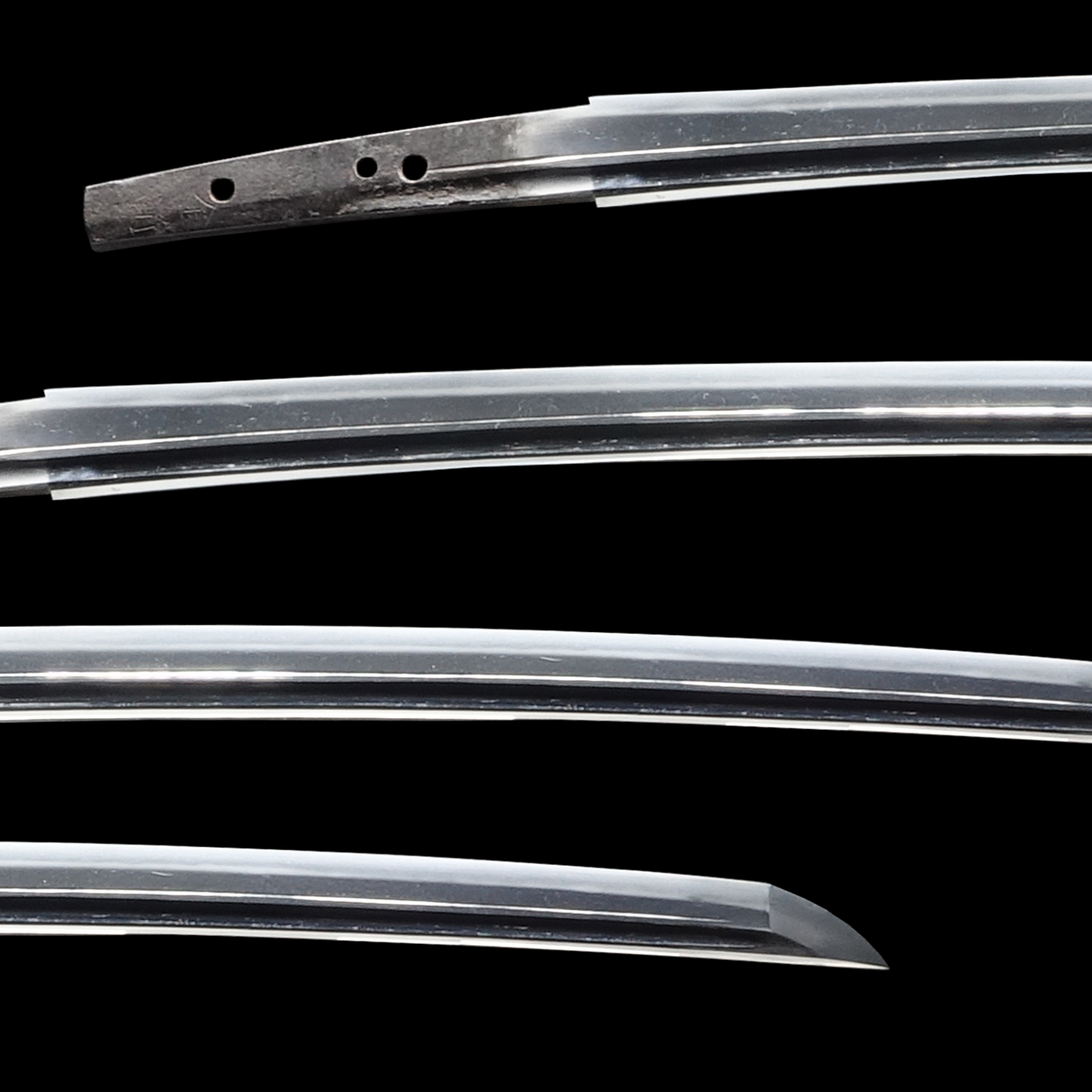
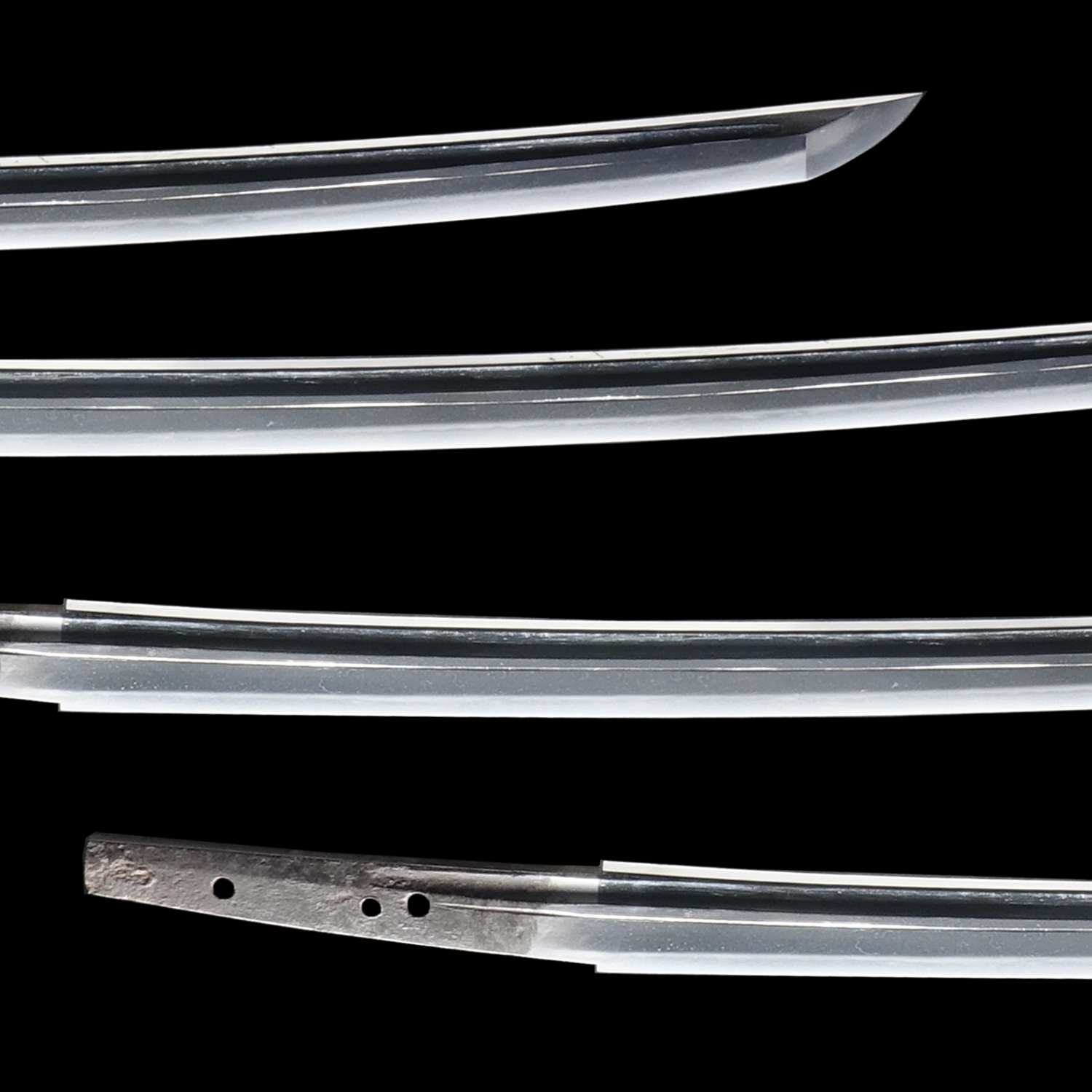
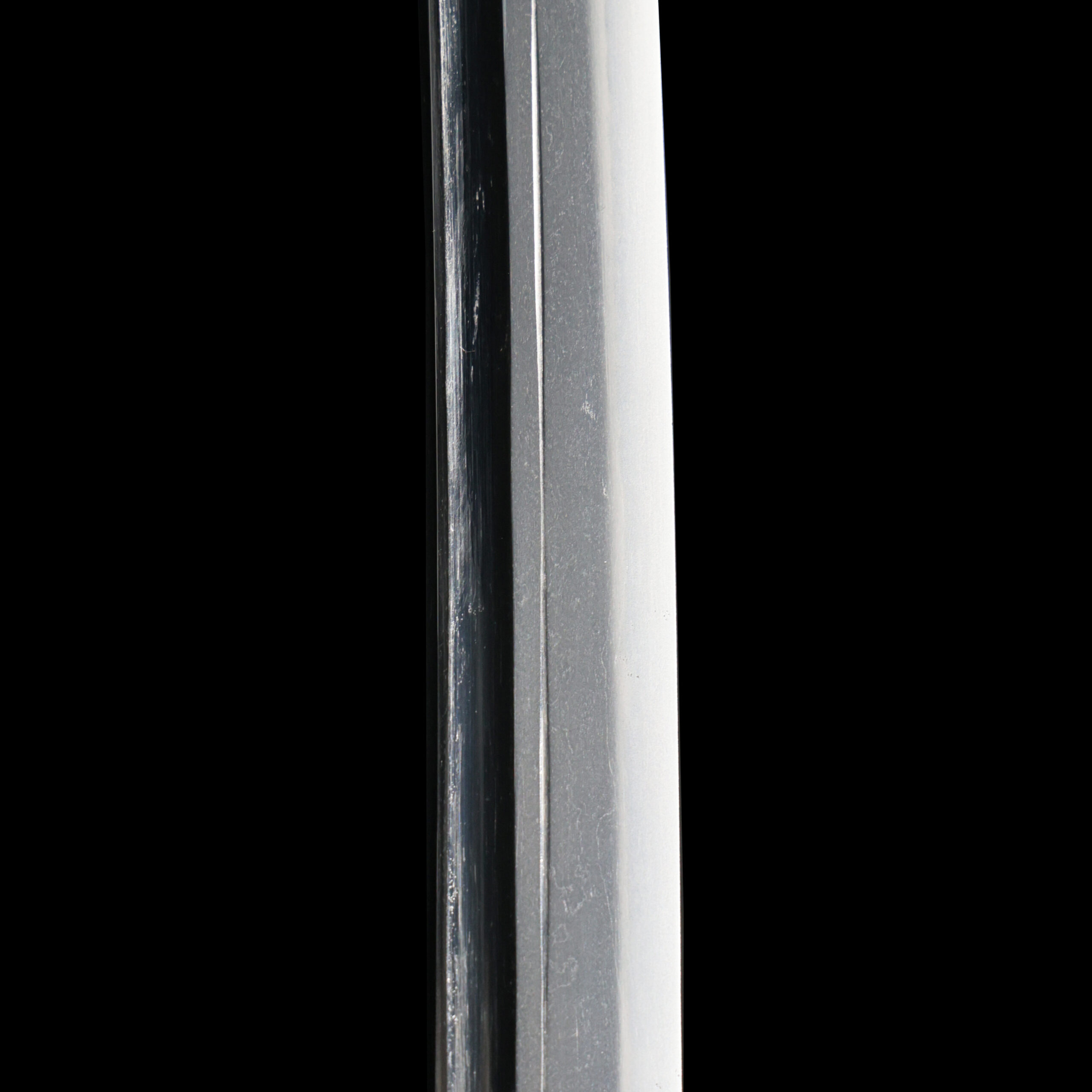
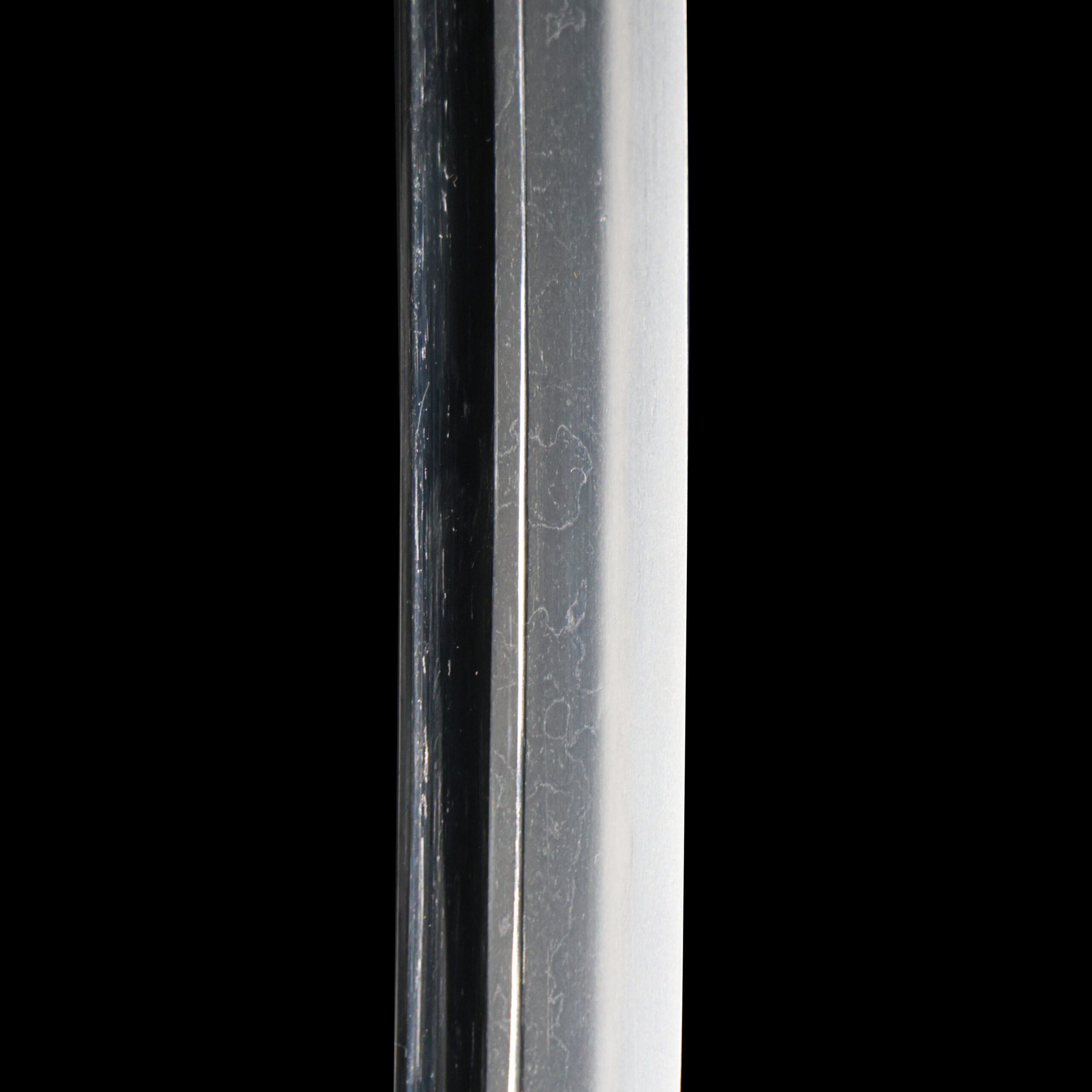
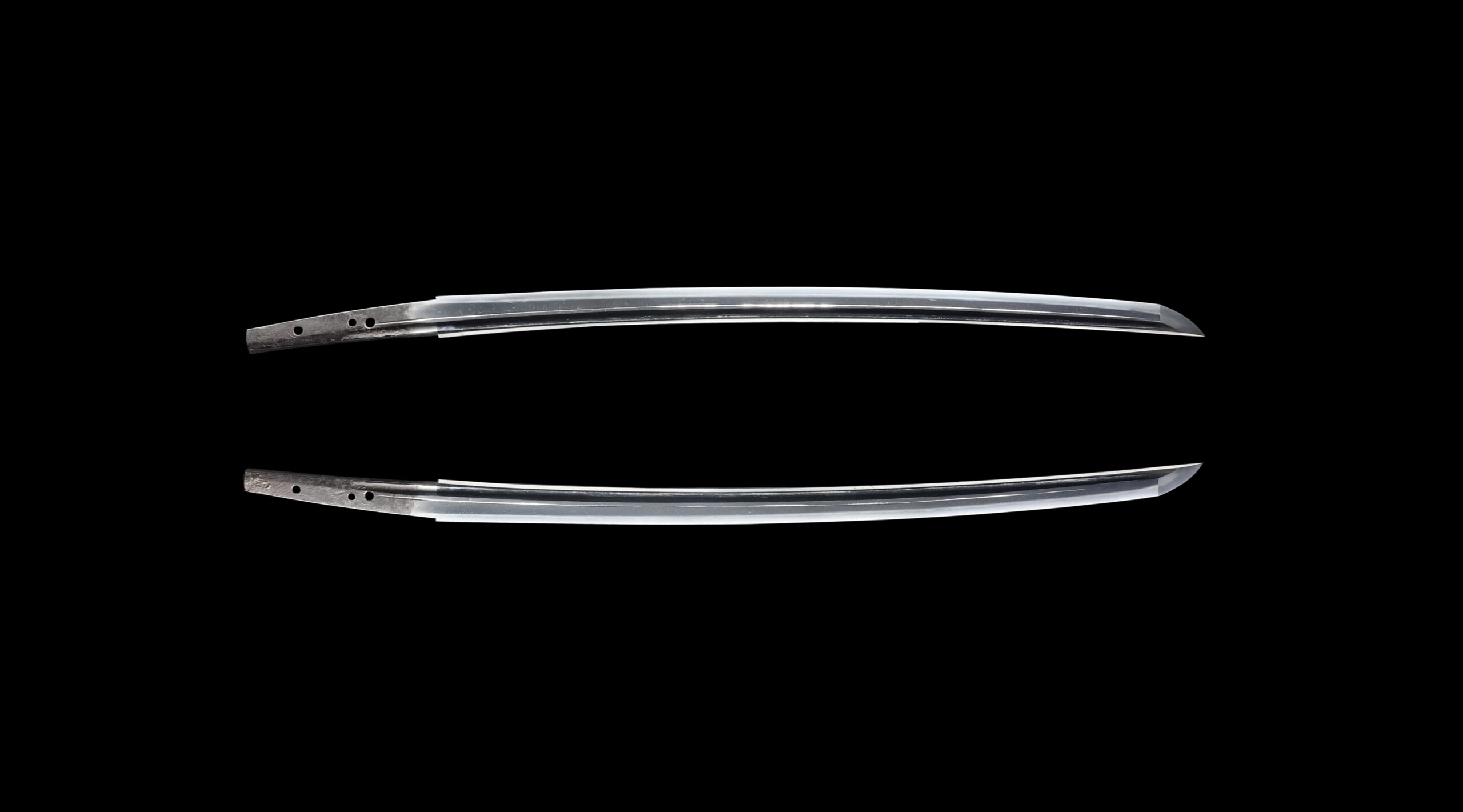
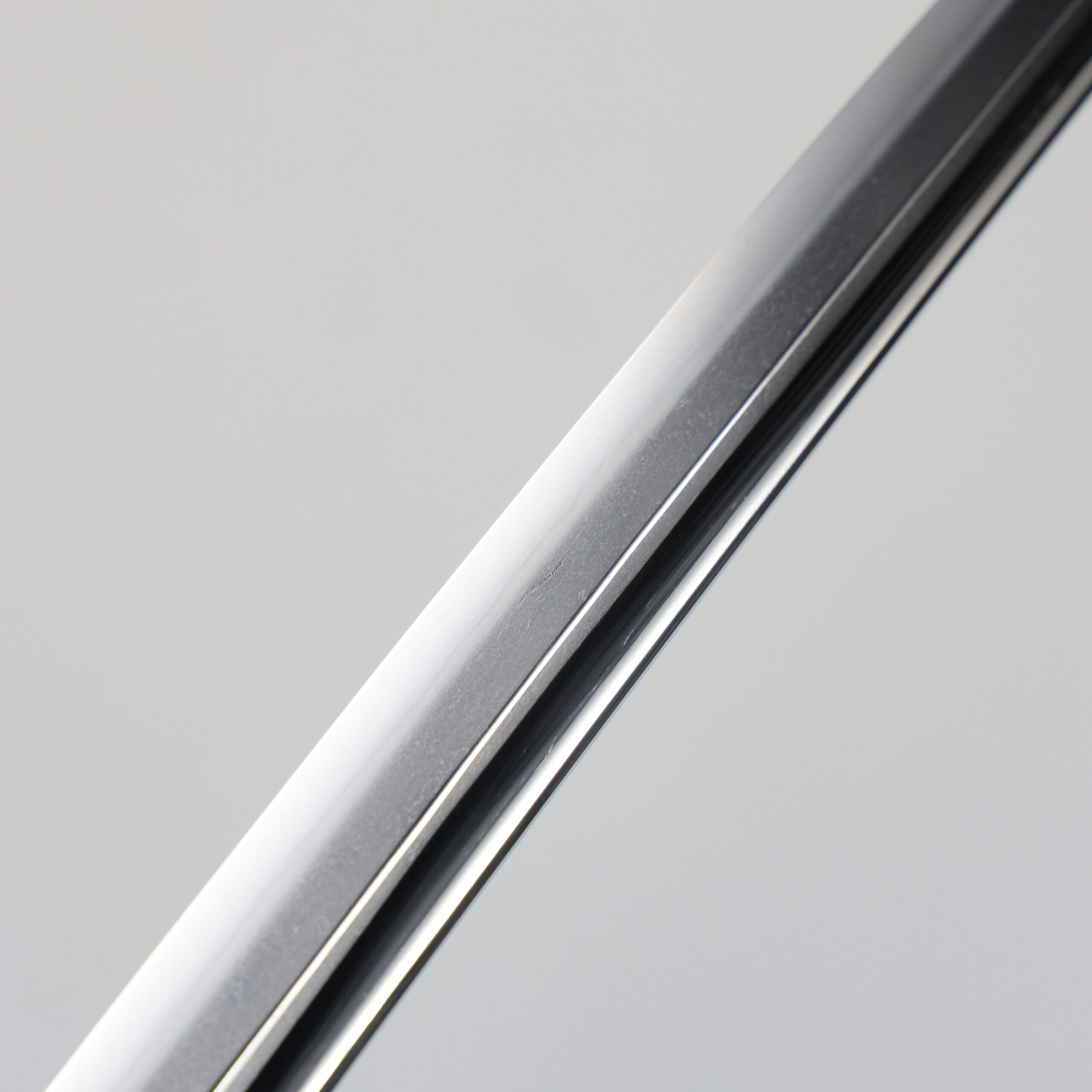
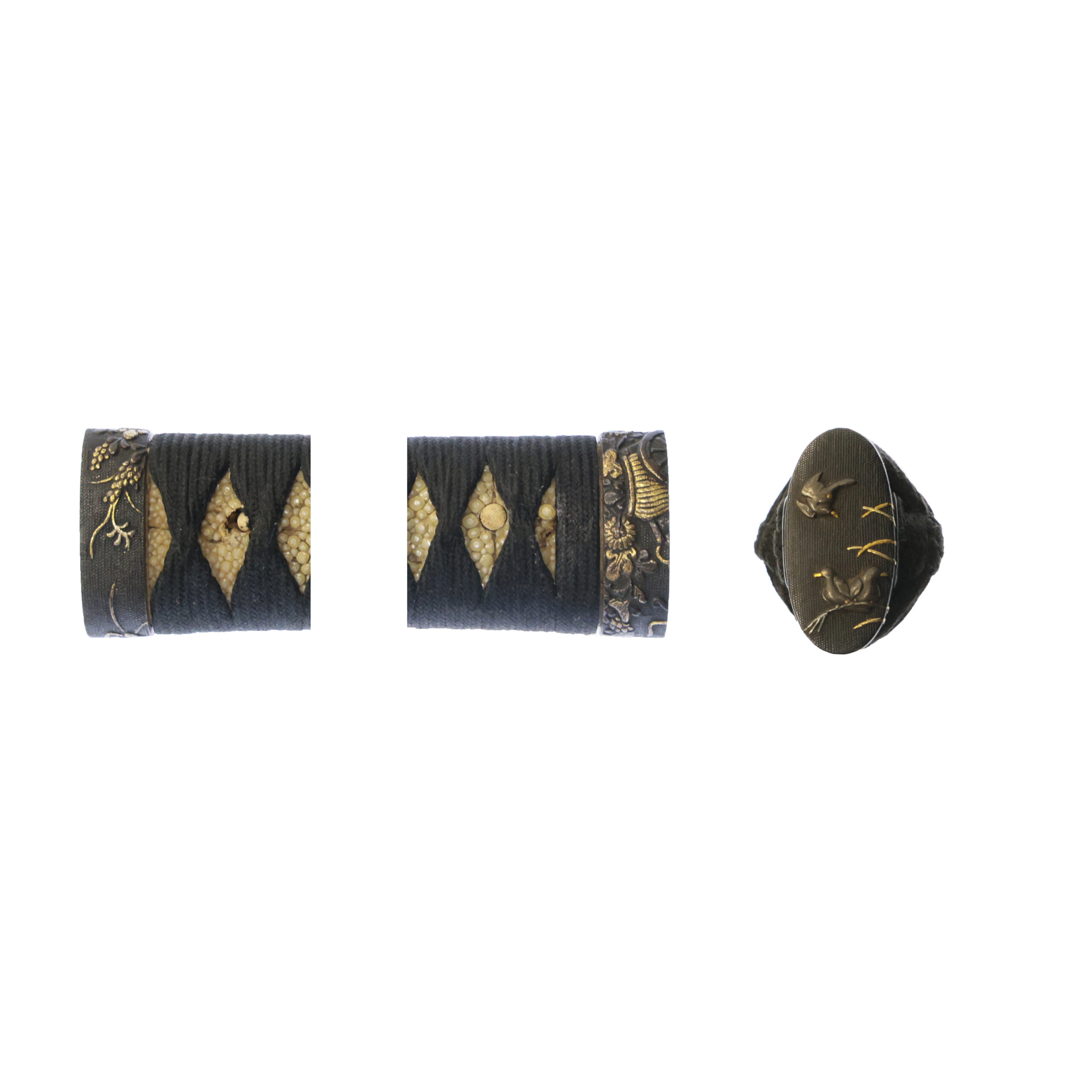
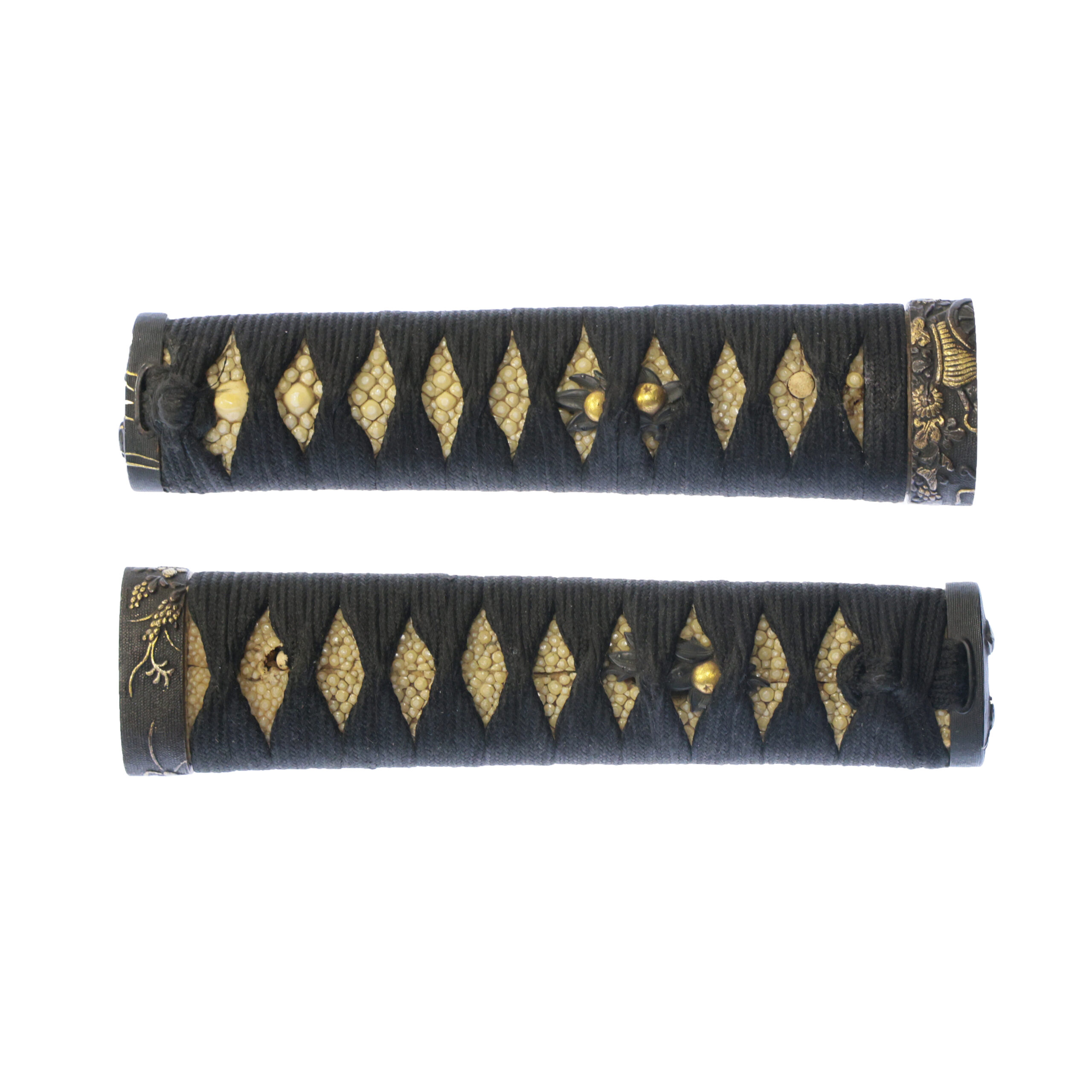
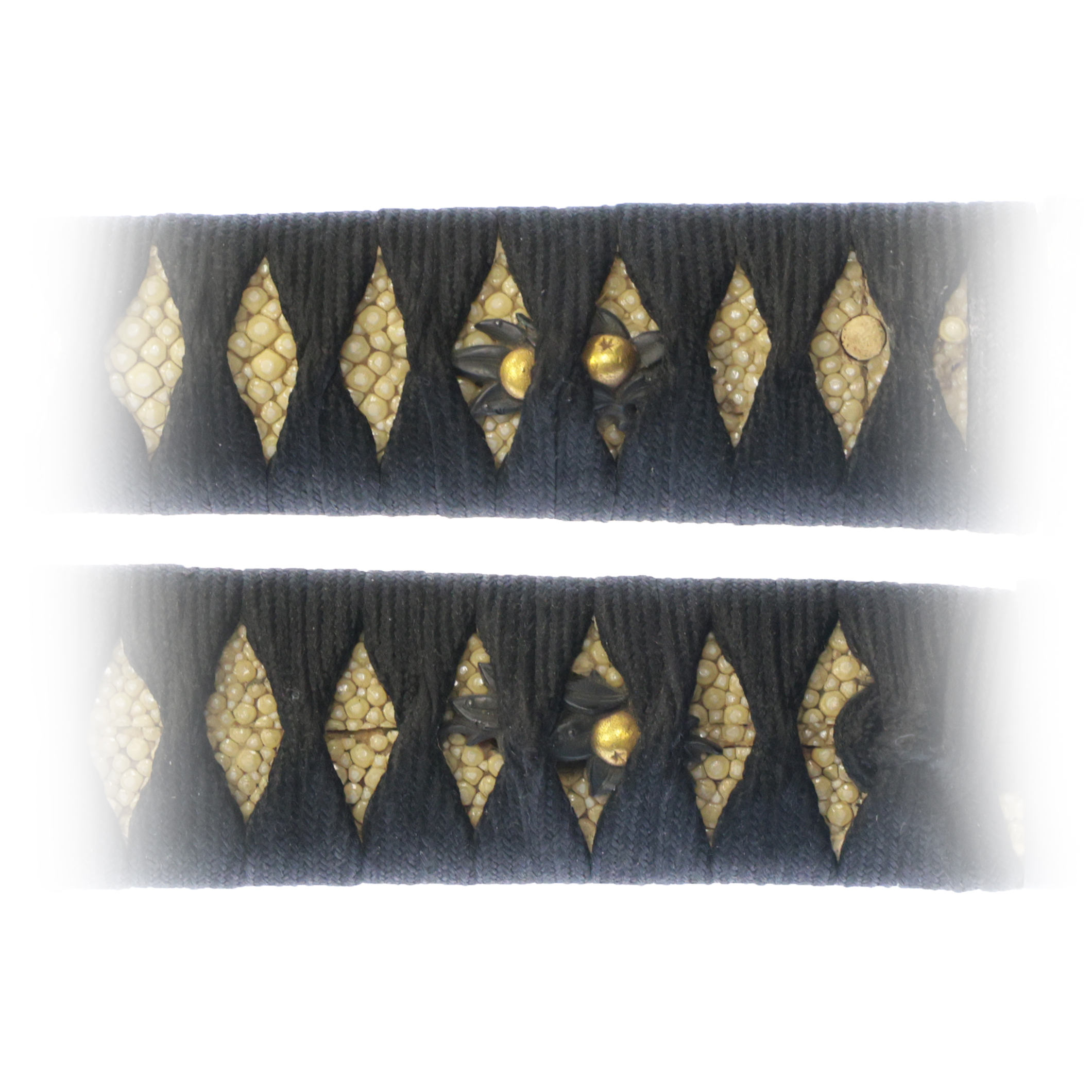
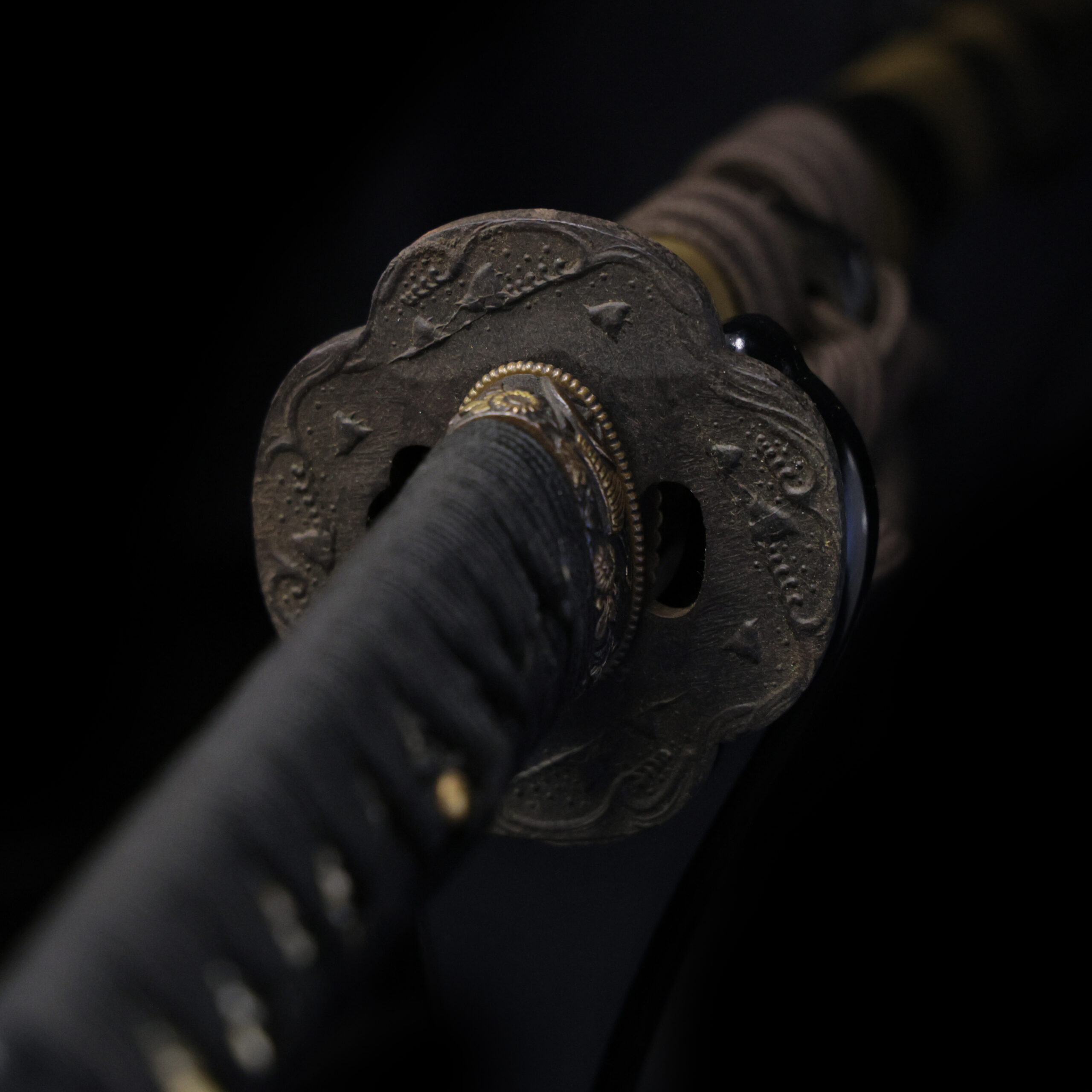
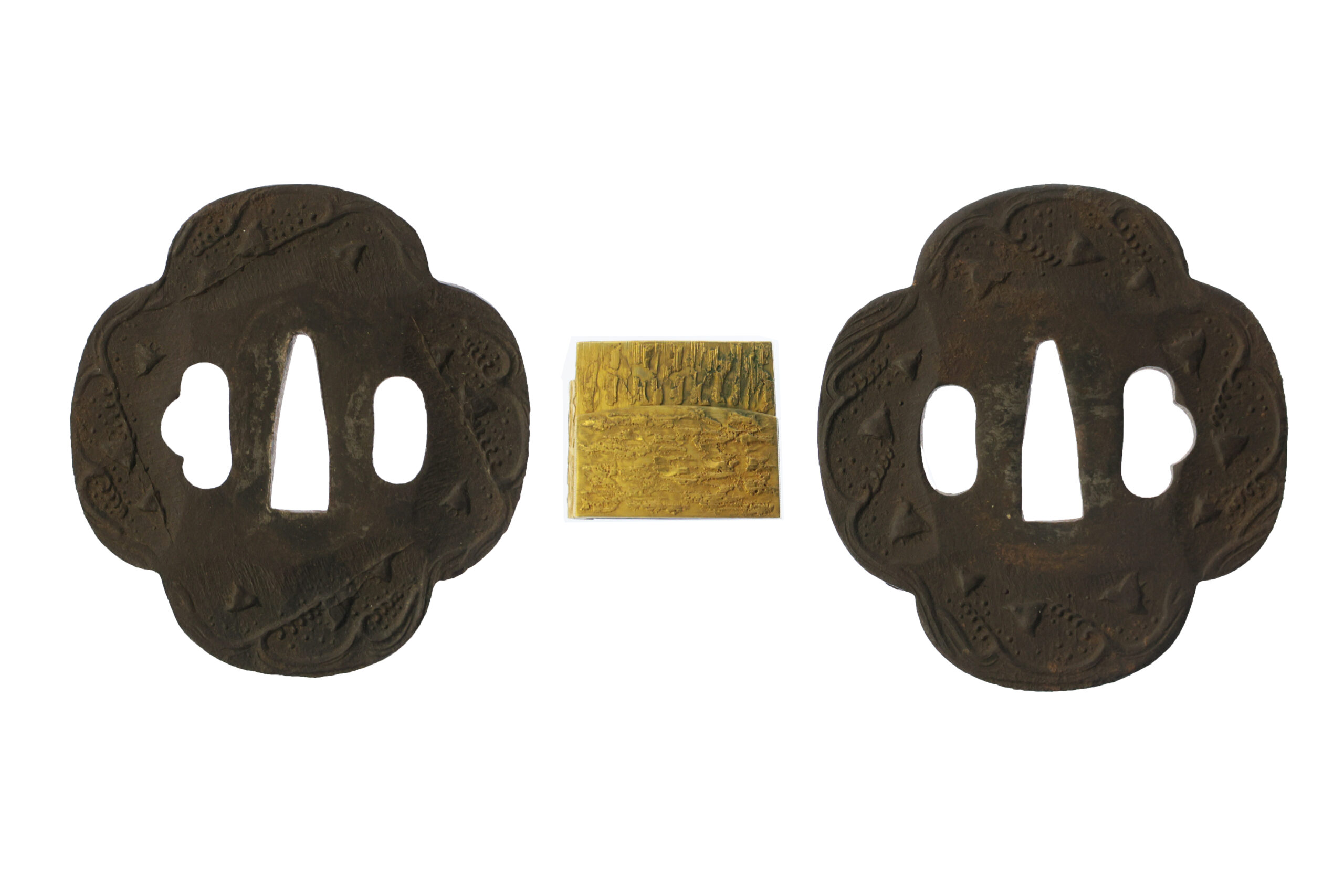
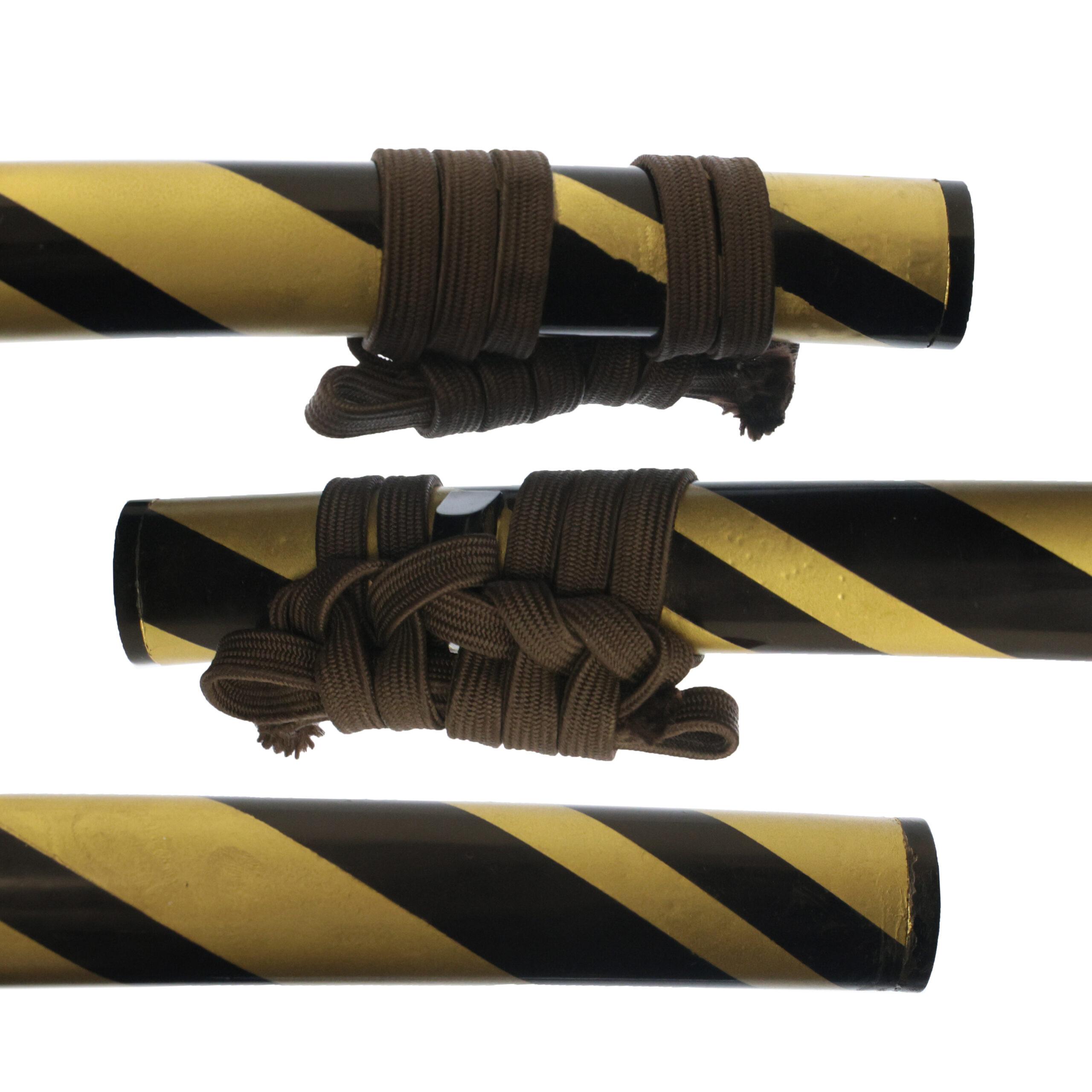
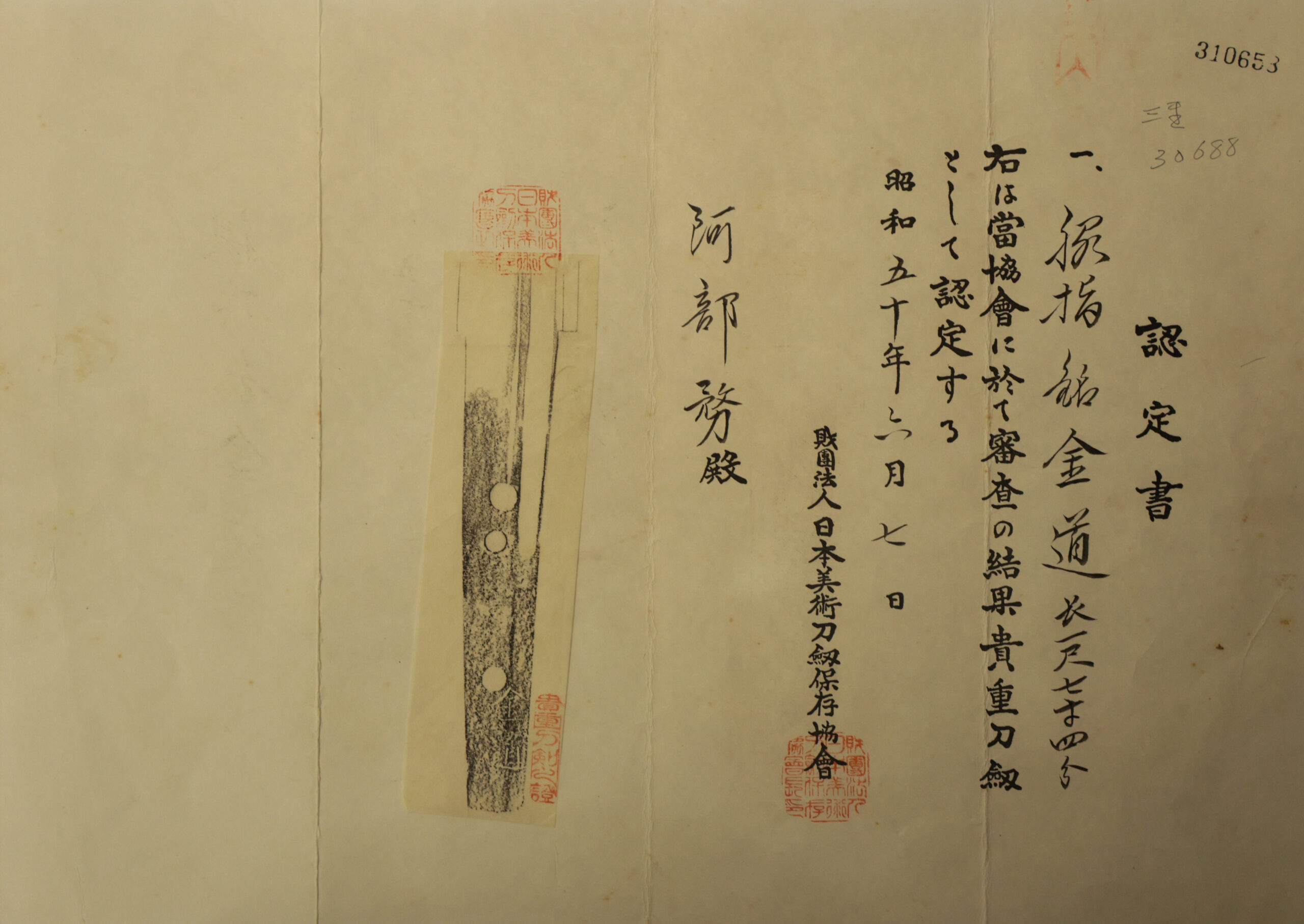
This blade bears the two-character signature Kinmichi (金道) . Its exact date is unknown, but we believe it was probably forged during the Shintō, or “New Sword,” period (approximately 1596–1780). Several generations of swordsmiths in two related Kyoto families used the name Kinmichi. The signature alone does not tell us which branch or generation produced this blade. The Mishina school of Kyoto (三品派) The two branches shared a common founder, Kanemichi (兼道), a swordsmith from Seki in Mino Province, in present-day Gifu Prefecture. According to family tradition, Kanemichi traced his ancestry back nine generations to the medieval swordsmith Shizu Saburō Kaneuji (志津三郎兼氏). In the late sixteenth century, Kanemichi moved to Kyoto with his four sons and established a workshop near the intersection of Nishinotōin and Ebisugawa streets. His sons were Iga no Kami Kinmichi, Izumi no Kami Kinmichi, Tanba no Kami Yoshimichi, and Etchū no Kami Masatoshi. Their family became known as the Mishina school and flourished alongside the Kyoto workshops of Umetada Myōju and Horikawa Kunihiro. It was the two eldest brothers who passed the name Kinmichi down through their respective families. The elder brother’s line — Iga no Kami Kinmichi (伊賀守金道) The eldest son received the honorary title Iga no Kami, meaning “Governor of Iga.” He worked in Kyoto, and the provincial title became part of the name by which he and his successors were known. The family’s standing extended beyond the forge. Beginning with the second generation, its heads held the title Nihon Kaji Sōshō (日本鍛冶宗匠), roughly “Master of Japan’s Swordsmiths.” In that role, they helped other swordsmiths petition the imperial court for honorary titles of their own. The Iga line continued for eleven generations, carrying the Kinmichi name into the late Edo period. The younger brother’s line — Izumi no Kami Kinmichi and Rai Kinmichi (和泉守金道・来金道) The second son, Izumi no Kami Fujiwara Kinmichi (和泉守藤原金道), founded a separate branch of the same Mishina family. Like his elder brother, he received an honorary provincial title, in his case Izumi no Kami, or “Governor of Izumi.” His successors became known as Rai Kinmichi (来金道), and their work is documented through at least five generations. One surviving example is a tachi, a traditional Japanese long sword, bearing the fuller signature Izumi no Kami Rai Kinmichi (和泉守来金道). In 1715, retired Emperor Reigen presented it to the Inner Shrine at Ise to mark the rebuilding of Uji Bridge. The shrine’s museum associates the sword with the third generation based on the shape of its engraved chrysanthemum crest and the way the smith cut his signature. Such details help distinguish individual makers within a family that used the same name for generations. *Please keep in mind that there are a couple of black rust and Kitae Kizu on this blade. Fuchi-Kashira These fuchi-kashira, the metal fittings at either end of the sword’s hilt, feature two distinct motifs. The fuchi, the collar next to the sword guard, depicts a flower cart, while the kashira, the cap at the opposite end of the hilt, depicts a wild goose. The flower cart, or hanaguruma (花車), is a stylized oxcart laden with flowers. Traditionally associated with welcoming deities, it is an auspicious motif that expresses a wish for happiness. Each flower in the arrangement can also carry a symbolic meaning of its own. The wild goose, or kari (雁), has long been a symbol of autumn in Japan. Wild geese arrive from the north in autumn, spend the winter in Japan, and fly north again in spring. Their distinctive calls announce their return, and tradition casts them as messengers bringing good tidings from afar. Their familiar silhouettes appear on sword fittings and in Japanese family crests. Tsuka and Menuki This menuki appears to depict a persimmon (kaki, 柿). Persimmon trees have served many purposes in Japan since ancient times, and their fruit was traditionally associated with the gods. During the Edo period (1603–1867), select varieties were prized as delicacies and presented as gifts to the shogunate and the imperial court. With its rich orange color and distinctive flavor, the ripe persimmon remains one of Japan’s most familiar symbols of autumn. Tsuba and Habaki The theme of this Mokkō shape Tsuba’s design is the Nami ni Chidori (波に千鳥, Plovers over Waves), a traditional Japanese design deeply rooted in classical aesthetics. Frequently depicted in paintings, poetry, and decorative arts, this motif symbolizes harmonious relationships and domestic safety, as plovers are often shown flying together over enduring waves. Through wordplay, chidori (千鳥) can also be read as “sen-tori” (千取り), meaning “to seize a thousand,” and thus the motif is also associated with victory, success, and the achievement of goals. For this reason, it has long been favored as an auspicious design in kimono, Noh costumes, textiles, lacquerware, and ceramics. Saya This saya (scabbard) features hirumaki-nuri (蛭巻塗), a lacquer finish in which bands of gold and black spiral around the scabbard. The name hirumaki comes from the pattern’s resemblance to a leech (hiru, 蛭) coiled around an object. Authentication Paper They authenticated the blade on June 7th in the 50th year of Showa (1975). They appraised the Katana as a Kicho Touken, an old form of the certificate. The purchaser will receive the original certificate as well.
Offered by Samurai Museum
Its only papers are older green Kichō papers, which the NBTHK largely disavows today. Ask the dealer whether it has passed current shinsa. — Hoshi

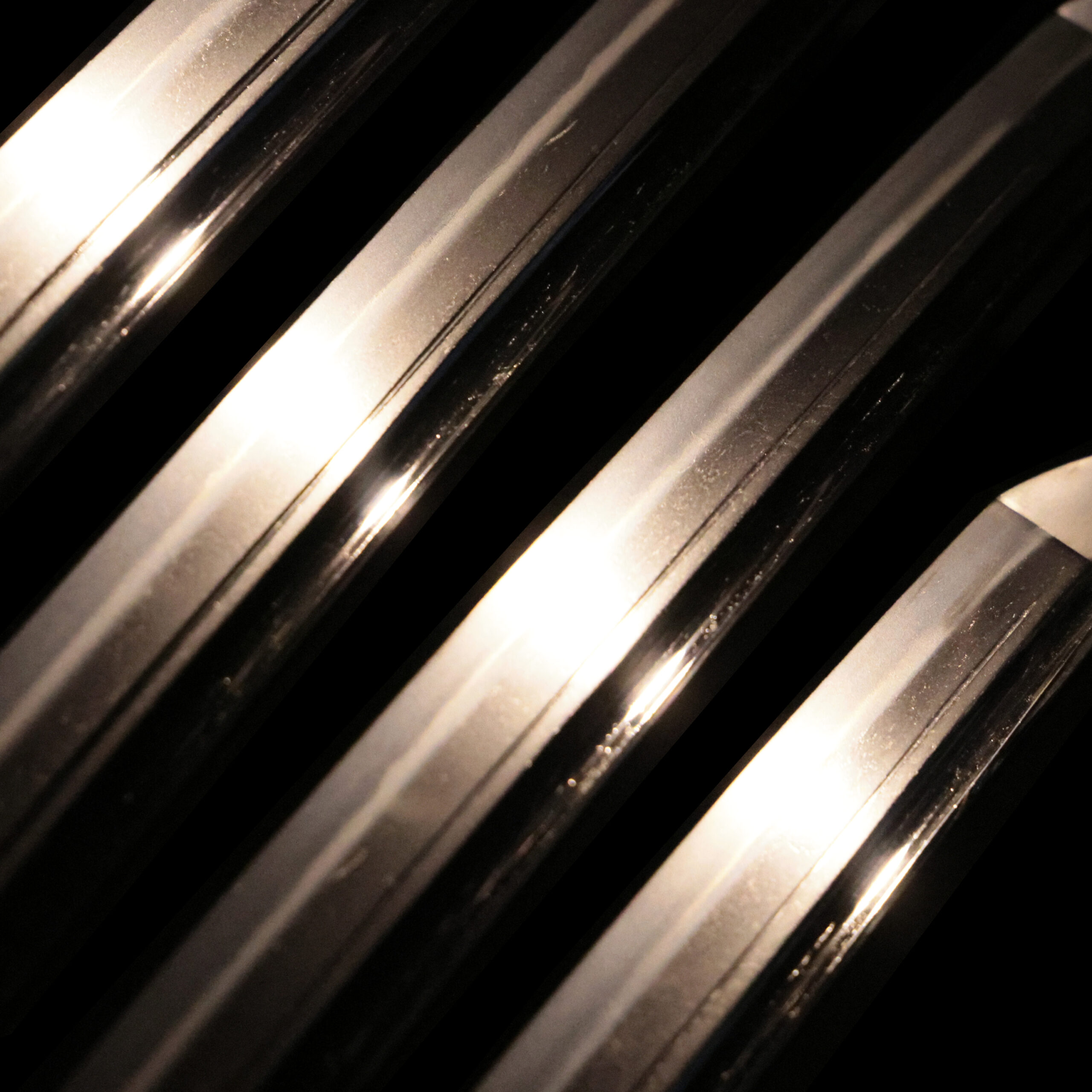
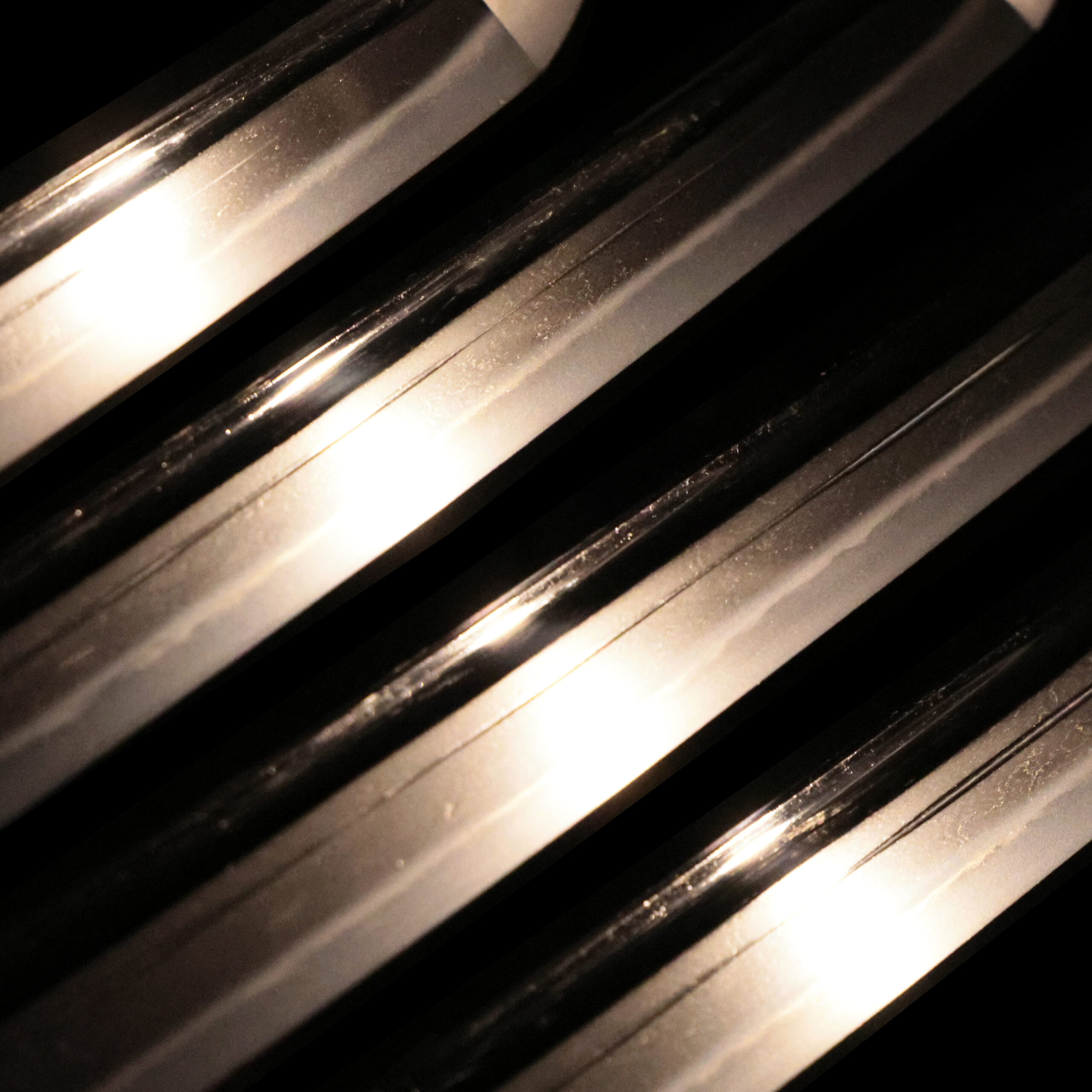
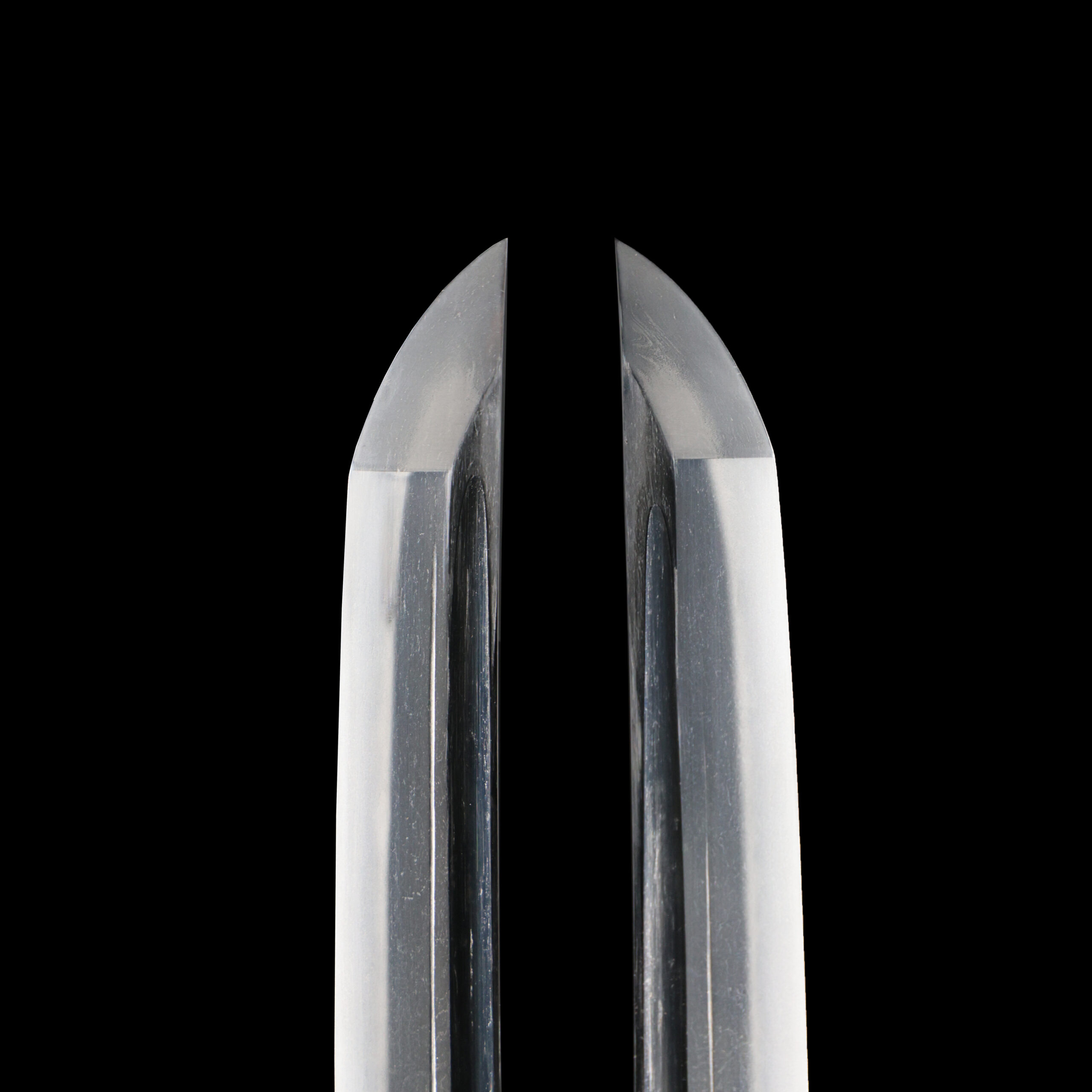
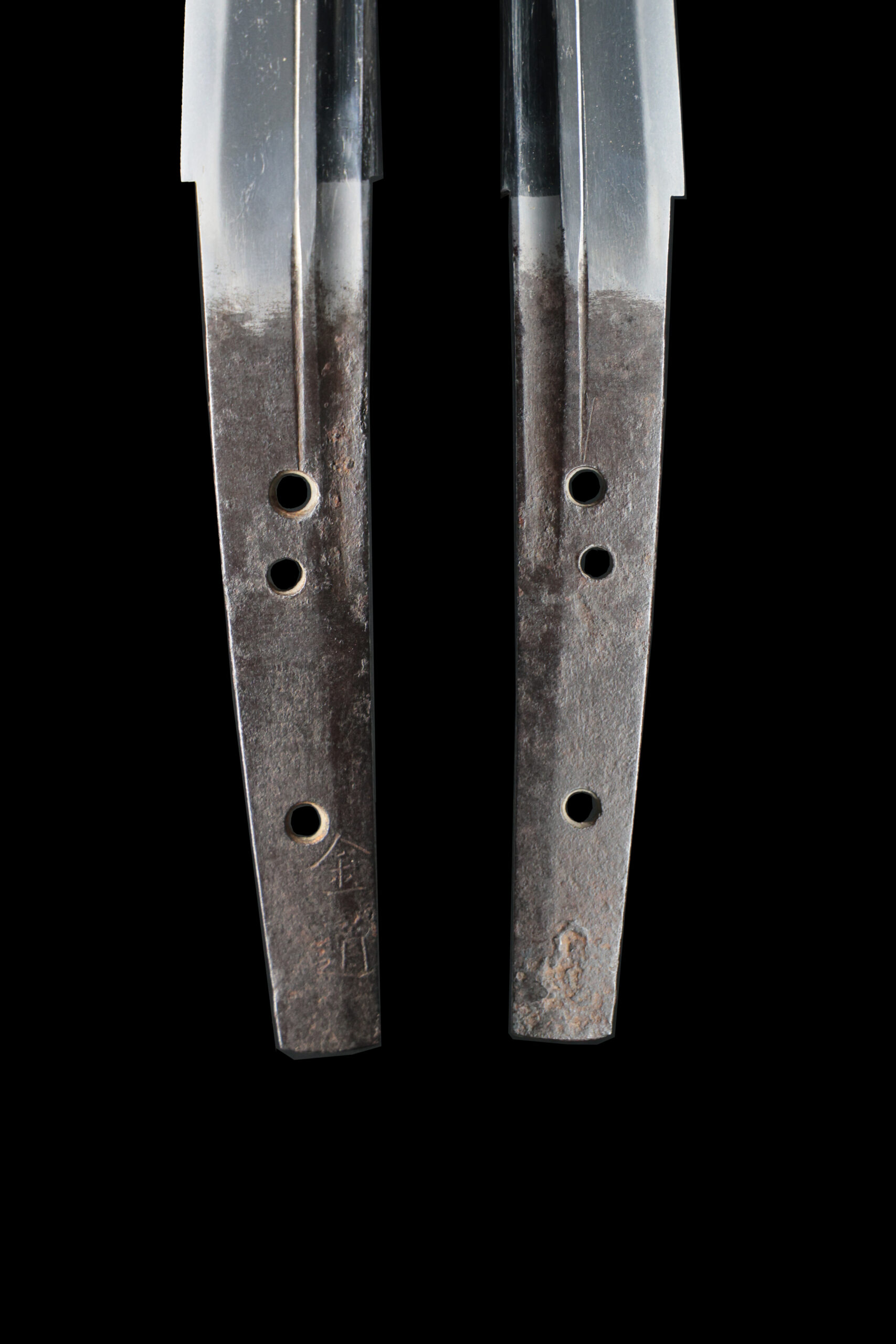
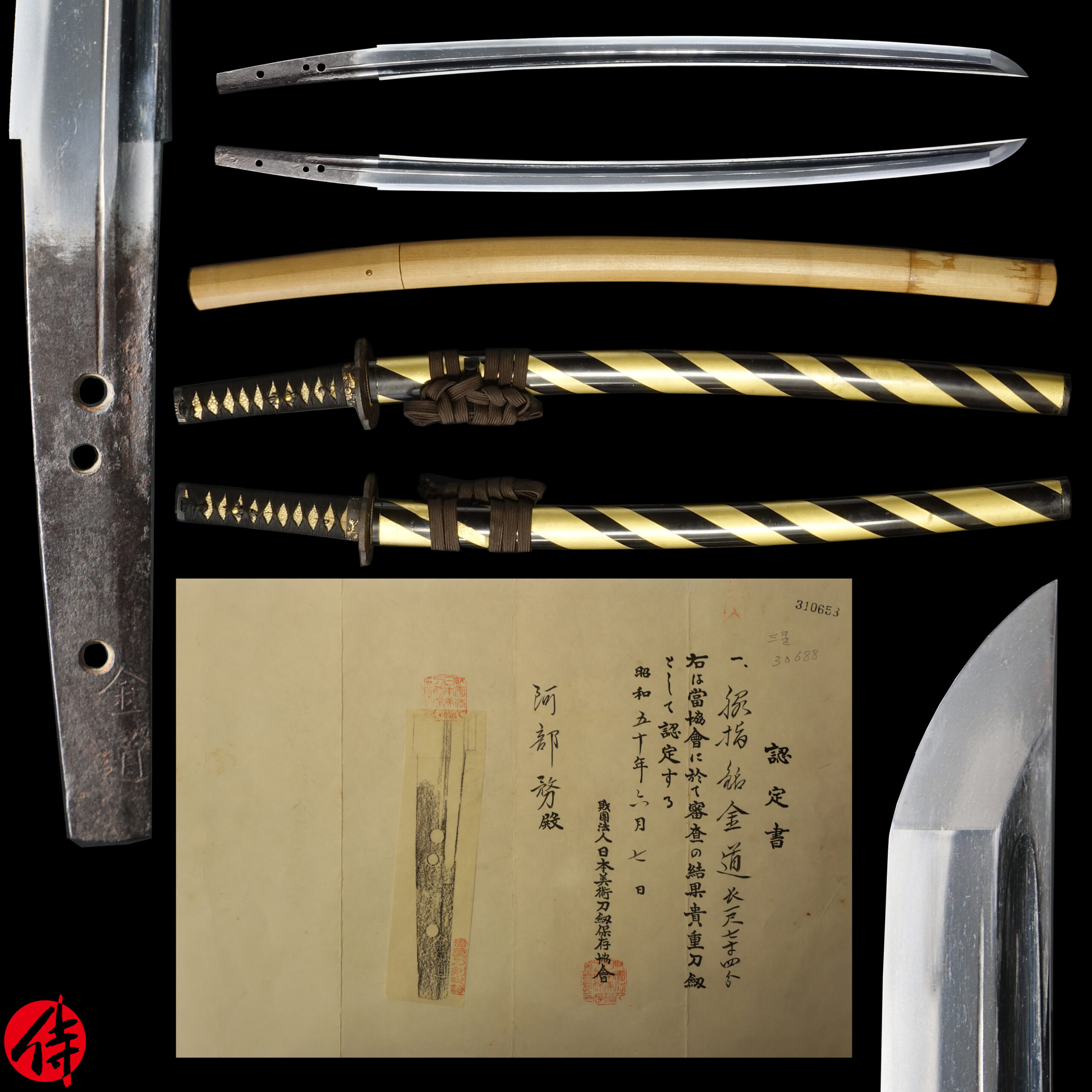
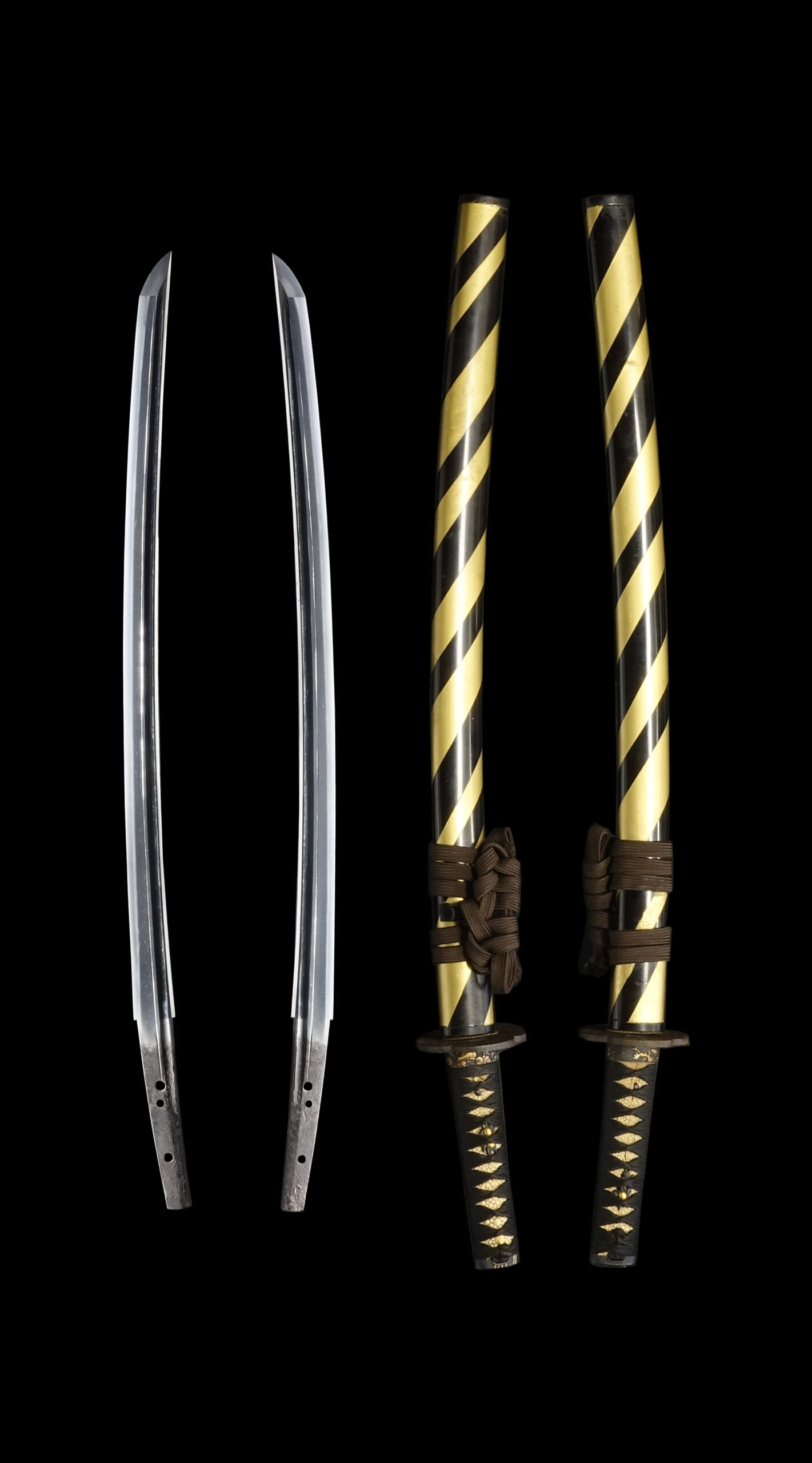
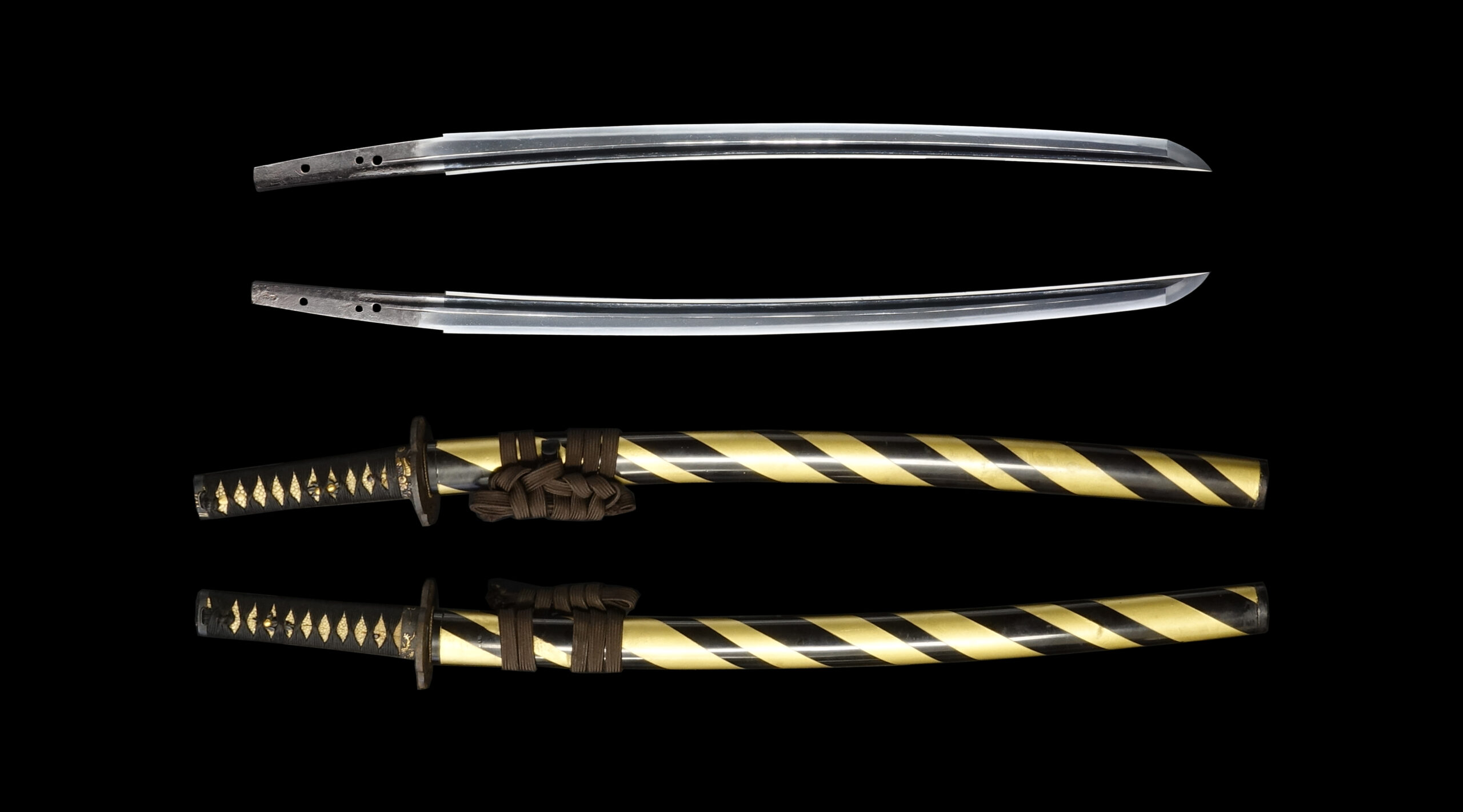
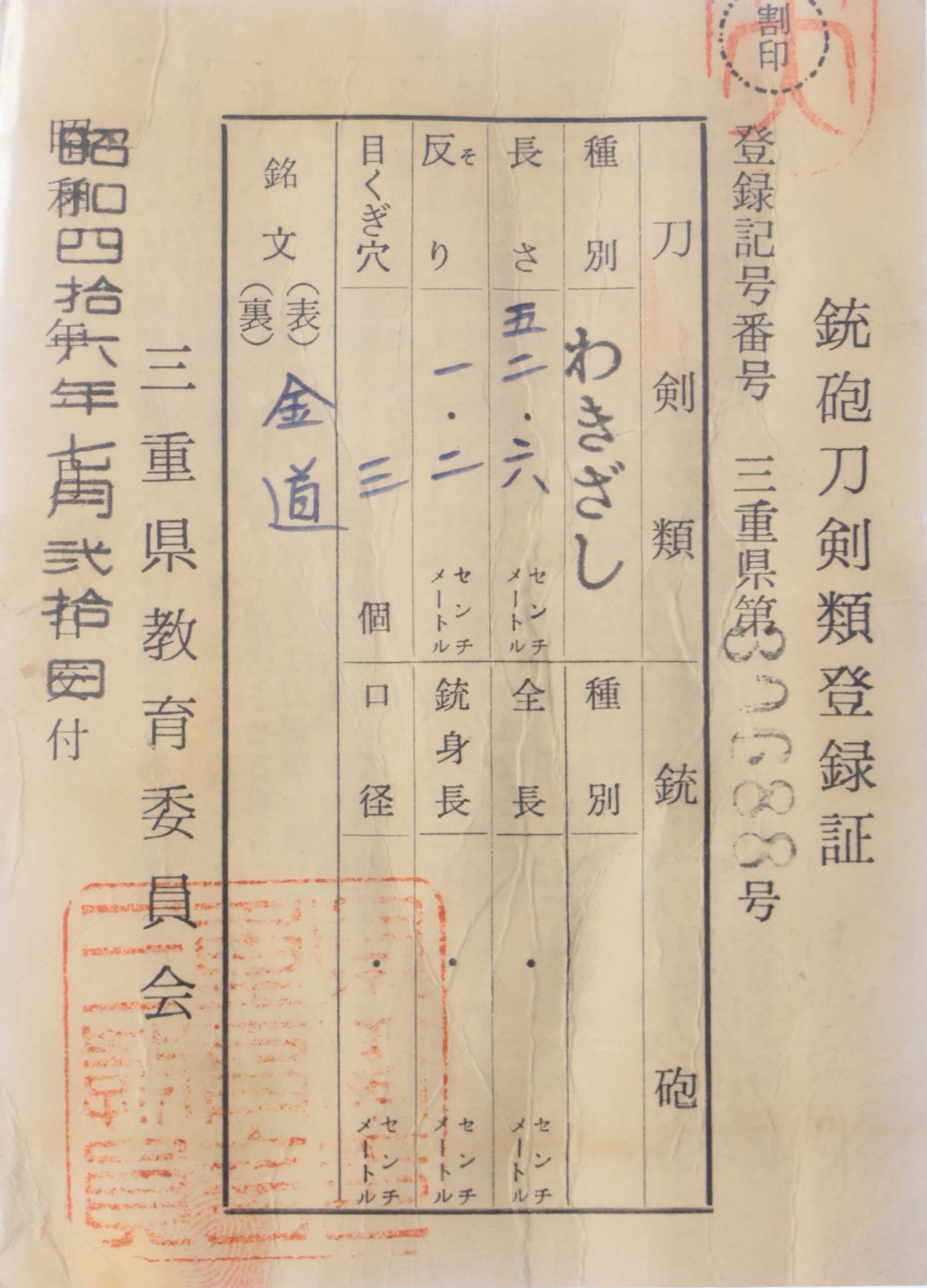
Machine translation of the shop's Japanese ·
Shinto · Yamashiro
58 pieces on the market now
The Mishina school (三品), one of the two dominant smithing groups of early Edo Kyoto beside the Horikawa, grew from the late-Mino workshop of Kanemichi of Seki, whose dated blades run through the Tenbun, Eiroku, and Tenshō eras. During the closing decades of the sixteenth century Kanemichi came up to the capital with his four sons and settled at Nishinotōin Ebisugawa, where the eldest, Iga no Kami Kinmichi, is recorded as having greatly raised the name of the line. The brothers, Kinmichi together with Izumi no Kami Rai Kinmichi, Tanba no Kami Yoshimichi, and Etchū no Kami Masatoshi, became known collectively as the Sanpin (三品) makers, and the published sources count Kinmichi head of the Kyō go-kaji, the five Kyoto smiths. From the second generation the house held a hereditary right to recommend smiths to the court for their titles and added that by-line to its signatures. The name continued under the same appellation to the end of the Tokugawa period, throwing off branches that included the Tango no Kami line working at Ōsaka into the Genroku years, though the published record consistently holds the founding generation the most outstanding of the line. Beneath every branch lies a shared vocabulary carried up from Mino-Seki. The jigane is the constant: an itame mixed with mokume that flows into nagare-hada and tends toward masame near the mune, the grain standing, with thick fine ji-nie and frequent chikei. Over it the Mino-derived gunome and togariba are refined toward a Kyoto manner, the nie strong and at times coarse, gathering unevenly, kinsuji and vigorous striped sunagashi running throughout. Two tells bind the house. The first is the Mishina bōshi, a notare or midare run-in pointed at the tip and swept with vigorous hakikake, the form Masatoshi shows at its clearest, described as if drawn from a picture. The second is sudareba, the bamboo-blind temper in which layered sunagashi and yubashiri stripe into parallel bands; Tanba no Kami Yoshimichi devised it, and the first-generation hand keeps it a free, semi-cursive disorder where his heirs would regularize it into a fixed lattice.
The lines diverge from that common ground. Kinmichi and his younger brother Masatoshi both excelled in a Shizu manner, the large midare of Mino grafted onto Sōshū nie, with Masatoshi the most versatile, ranging across Shizu, Mino sanbon-sugi, Yamato suguha, and Sōshū hitatsura. The later Ōsaka Tanba branch held to the sudareba alone, opening from a straight yakidashi, while the second Tango no Kami Kanemichi cast off the family chōji for a flamboyant tōran-style large gunome in alternating two-joined and three-joined groups, and a deep-nioi suguha read in the manner of Inoue Shinkai. To kantei Mishina is to read these two house marks first. The pointed, hakikake-swept bōshi and the striped sudareba, set over a standing itame that flows to masame, place a blade within the line before any signature is weighed; the sunagashi, far heavier than on a Bizen ji, is the very material from which the temper is built. Within the house the founding generation sets the standard. Fujishiro grades Kinmichi and Masatoshi Jō-jō saku, the Ōsaka Tanba shodai Jō-saku, and the second Tango no Kami Chū-jō saku, the sources judging the later Kyoto and Ōsaka generations markedly inferior to the founders as the manner thinned toward a single uniform pattern. Provenance on record runs through samurai and collector hands rather than great museums: a Kinmichi katana among the cherished swords of Tani Tateki, a Yoshimichi katana made for Naitō Kuroemon and another now in the Kyoto National Museum, Masatoshi blades passing through Oda Urakusai and the Imperial household, and a second Tango no Kami katana descending from the Aoyama wardens of Ōsaka castle. The brothers' blades are signed and knowable, dated examples rare, so the manner of the mei joins the workmanship in placing them; for the Ōsaka and Kyoto branches the cut of the character 守 separates one hand from the next. Most designated work is held rather than traded, so a signed founding-generation Mishina blade comes to light only from time to time, and with it the temper in which one of the most recognizable hamon of the Shintō era was first being worked out. Learn more →
| Smith | Era | Designated |
|---|---|---|
| Kinmichi金道 | 1596-1615 | 25 |
| Yoshimichi吉道 | 1596-1615 | 36 |
| Masatoshi正俊 | 1596-1615 | 29 |
| Kanemichi兼道 | 1681-1704 | 5 |
| Eisen来栄泉 | 1673-1688 | 3 |
Kyōto: the revival workshop
The Shintō era was largely invented in Kyōto: Umetada Myōju’s workshop trained the movement, Horikawa Kunihiro raised a generation, and the Hon’ami appraisers, who held no forge, governed the meaning of famous blades.
This work carries older NBTHK “Kichō”-era papers, which the NBTHK no longer issues and largely disavows today. To confirm the attribution, submission to an official Japanese examination body (such as the NBTHK or NTHK) for modern certification could be considered.
Returns/exchanges limited to defects caused by shipping (except willful misconduct or gross negligence by the company); customers must contact within 72 hours of receiving the product.
¥500,000