Edo was the sword’s age of connoisseurship: the Hon’ami appraisers, the shogunal register of famous blades of 1719, and a thriving literature turned the sword into an object of study even as it ceased to be drawn in war.
 NihontoWatchNihontoWatch
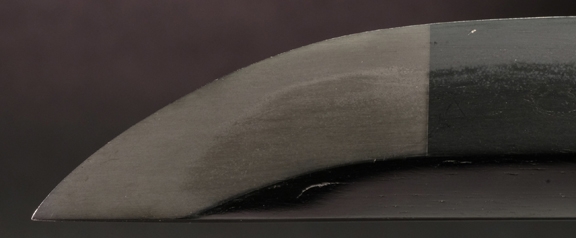
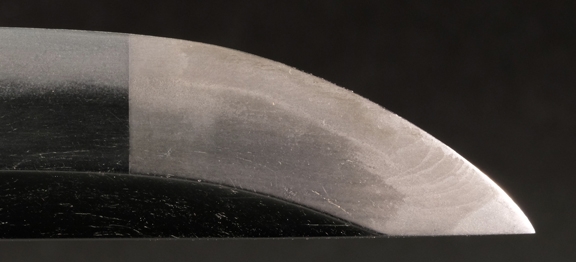
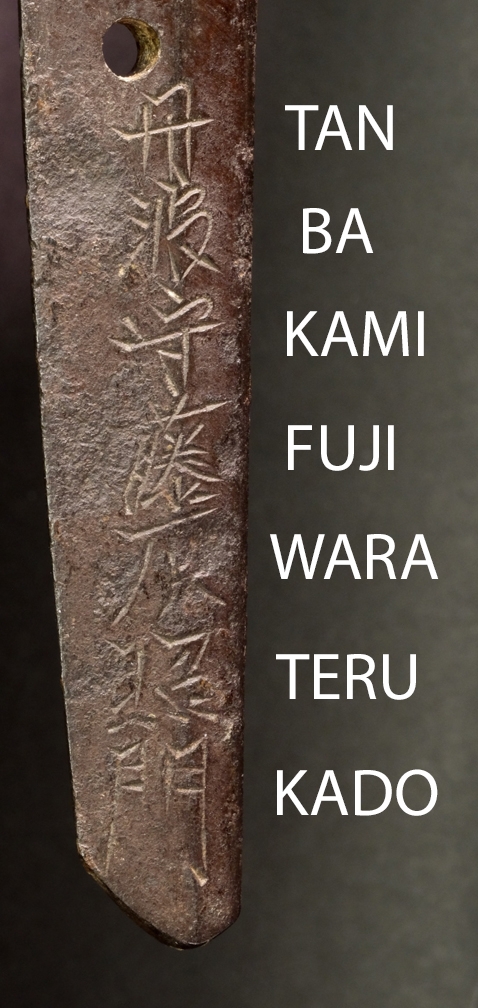
TERUKADO / TANBA NO KAMI / TERUKADO, TANBA NO KAMI MEI: TANBA NO KAMI TERUKADO DATE: NONE RATED: CHUJO-SAKU NAGASA: 52.387cm (20.625′′) OVERALL: 67.31cm (26.5′′) MIHABA: 2.857cm (1.125′′) KASANE: 0.63cm (0.25′′) SORI: 1.27cm (0.5′′) NAKAGO: UBU MEKUGI ANA: ONE YASURIME: SUJIKAI MUNE: IORI HADA: ITAME HAMON: KO-GUNOME BOSHI: KO-MARU HORIMONO OMOTE: NONE HORIMONO URA: NONE HABAKI: 1 PC. COPPER SHIRASAYA CHUJO-SAKU From Sesko’s Index of Japanese Swordsmiths , 2015 TERUKADO (照門), Manji (万治, 1658-1661), Mino – “Kanekado” (兼門), “Zenjō Fujiwara Kanekado” (善定藤原兼門), “Tanba no Daijō Fujiwara Terukado” (丹波大掾藤原照門), “Tanba no Kami Fujiwara Terukado” (丹波守藤原照門), “Tanba no Kami Terukado” (丹波守照門), “Nōshū Seki no jū Tanba no Kami Fujiwara Terukado saku” (濃州関之住濃州丹波守藤原照門作), “Nōshū Tanba no Kami Fujiwara Terukado” (濃州丹波守藤原照門), real name Mitsui Sō ́emon (三井惣右衛門), he is also listed with the first name Sōkurō (宗九郎), Zenjō school, he signed first with Kanekado (兼門), after receiving the honorary title Tanba no Kami (丹波守) in the second year of Manji (1659) he changed his name to Terukado (照門), when the Ujifusa lineage (氏房) moved to Nagoya (名古屋) in Owari province, the local honorary title Seki-kaji-tōryō (関鍛冶頭領, lit. “master of all Seki smiths”) was transferred to the lineage of Kanekado, his successors did not continue the name Terukado but returned to Kanekado, dense ko-itame with fine ji-nie mixed with masame and masame along the shinogi-ji, suguha-hotsure or ō-gunome-midare mixed with angular hako- midare in nie-deki with a wide nioiguchi, interpretations in midare begin with a sugu-yakidashi, during his early years – i.e. around Manji – he applied thick and prominent sujikai-yasurime, they become finer over the years and appear as katte-sagari in his later years, first he applied a distinctive iriyamagata-jiri which becomes later a ha-agari kurijiri, he also worked in Ise ́s Kuwana (桑名) and in Edo and also worked with nanban-tetsu. His work is rated chūjō-saku. Shodai Kaneyosh
NihontoWatchOffered by Yakiba
This piece has sold
Get an email when a new Terukado piece hits the market.










Mino · around 1658-1661
Fujishiro Jo saku · Tōken Taikan top 63%
1 piece on the market now
The Edo period (1615 to 1868)
Edo was the sword’s age of connoisseurship: the Hon’ami appraisers, the shogunal register of famous blades of 1719, and a thriving literature turned the sword into an object of study even as it ceased to be drawn in war.
All swords sold for $5000 USD or less are considered final! Swords above the $5000 range may be returned for any reason within 48 hrs. Buyer will receive a full refund minus shipping/handling, insurance and or any fees incurred in shipping or sale.