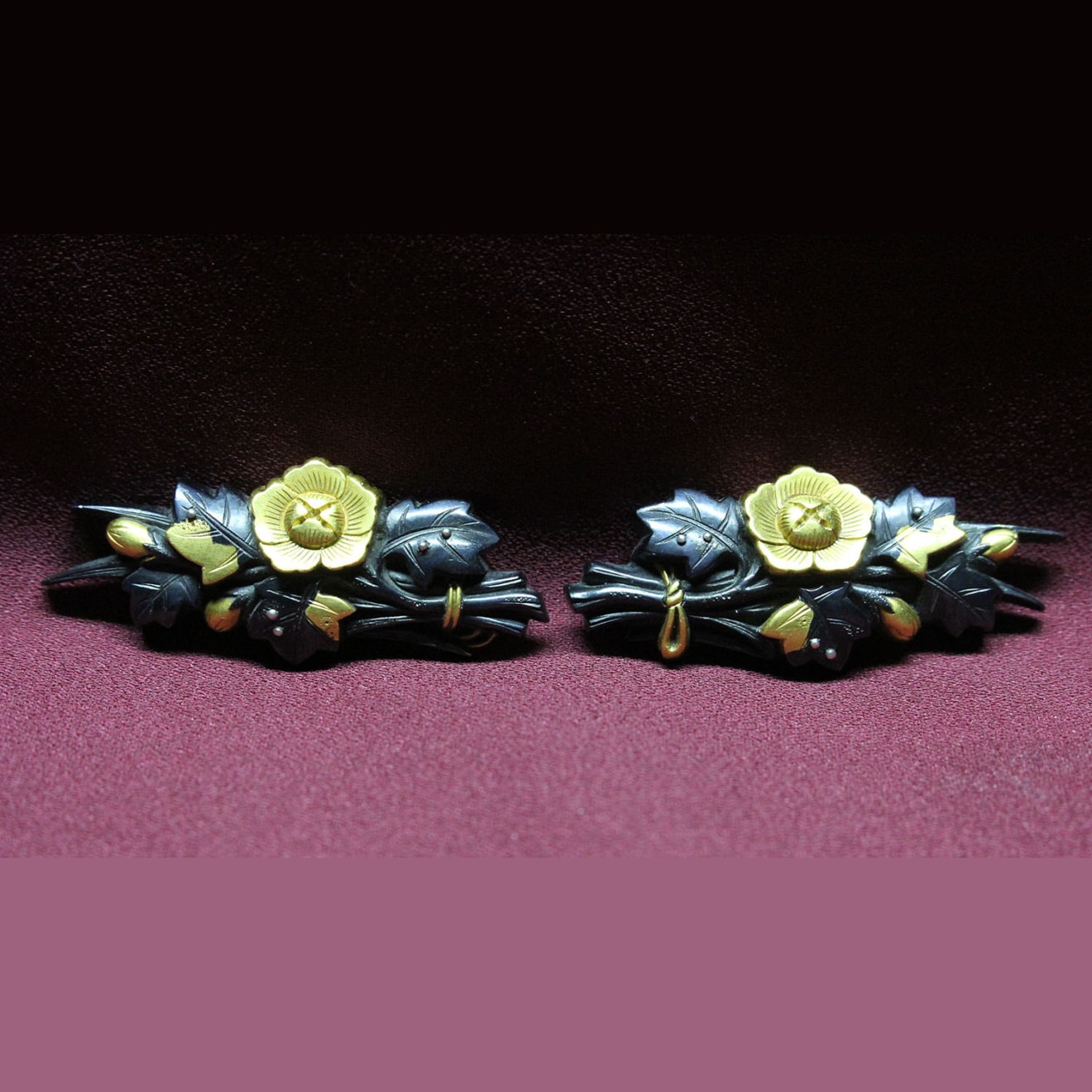
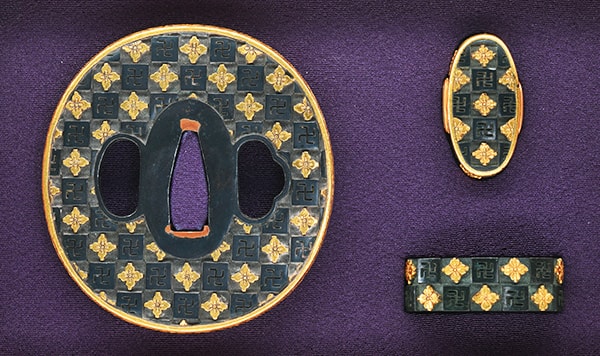
This is a katana made by smith Chikakazu. The blade's school, province, and era are not specified in the provided text. Further details about its features and condition would require additional information.
 NihontoWatch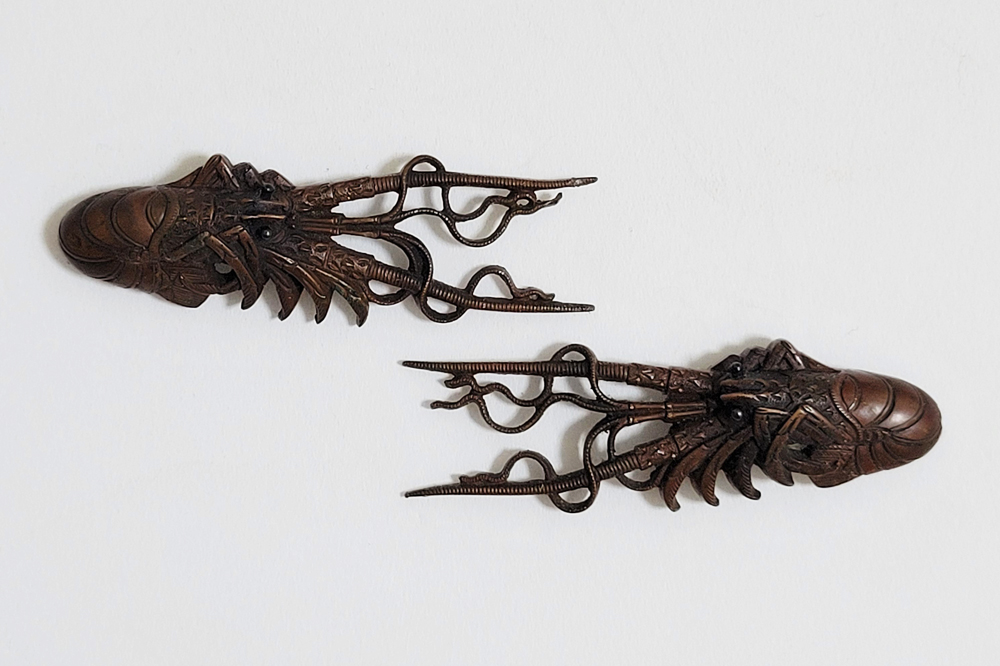
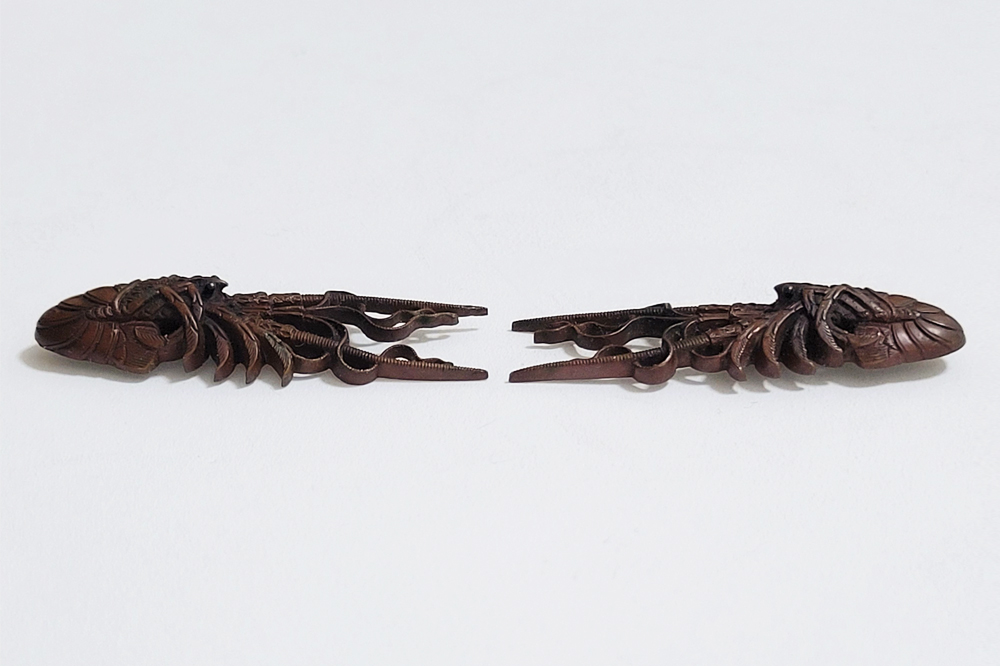
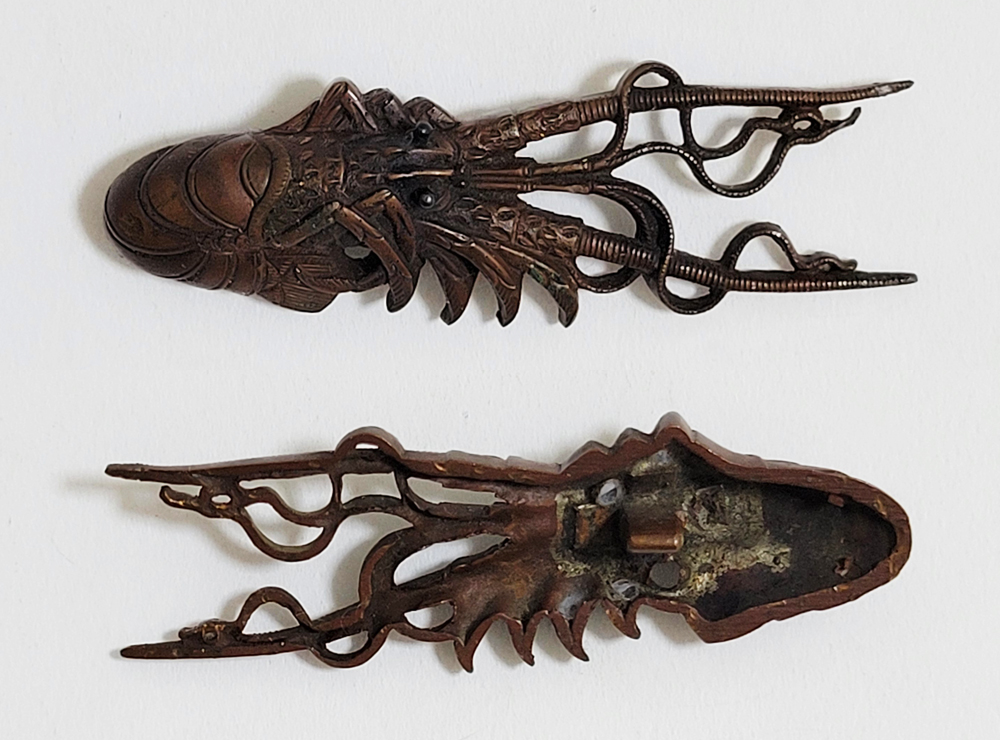
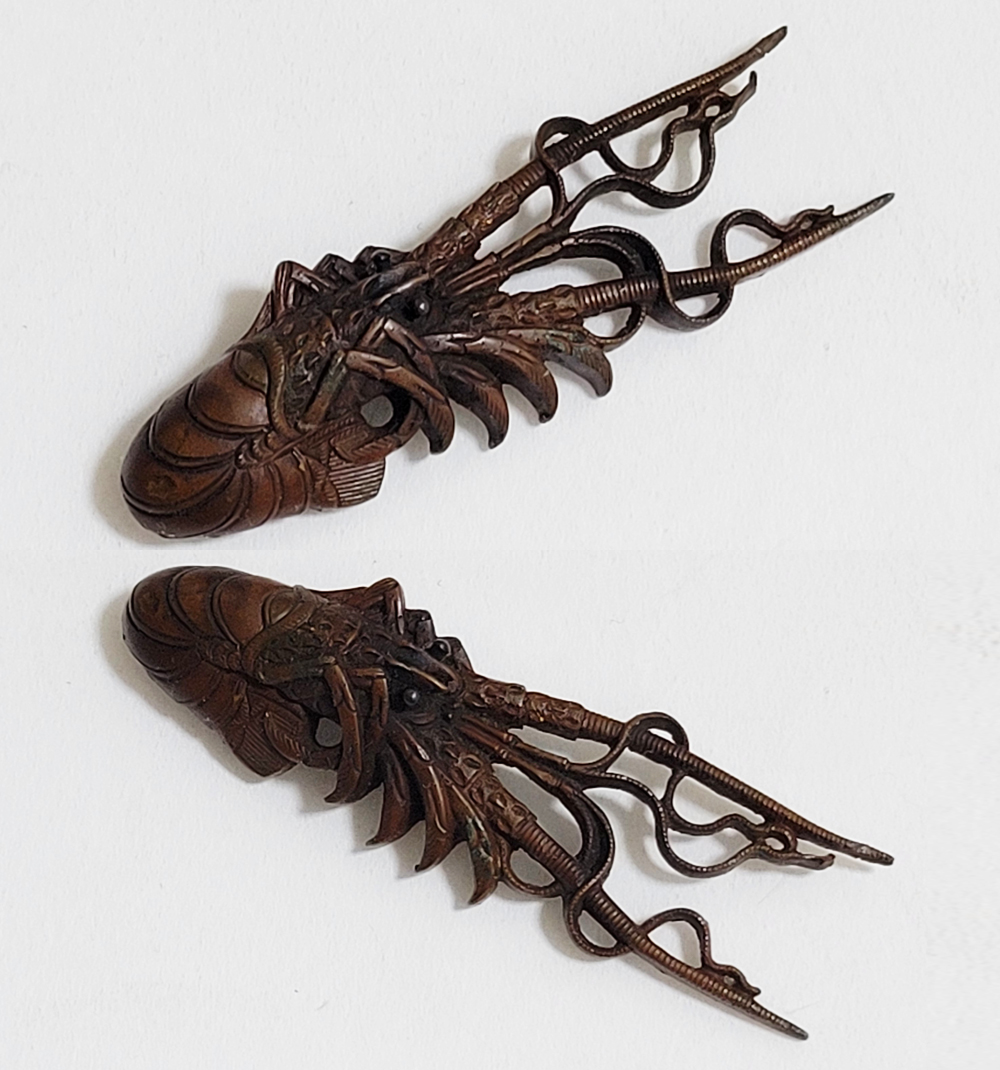
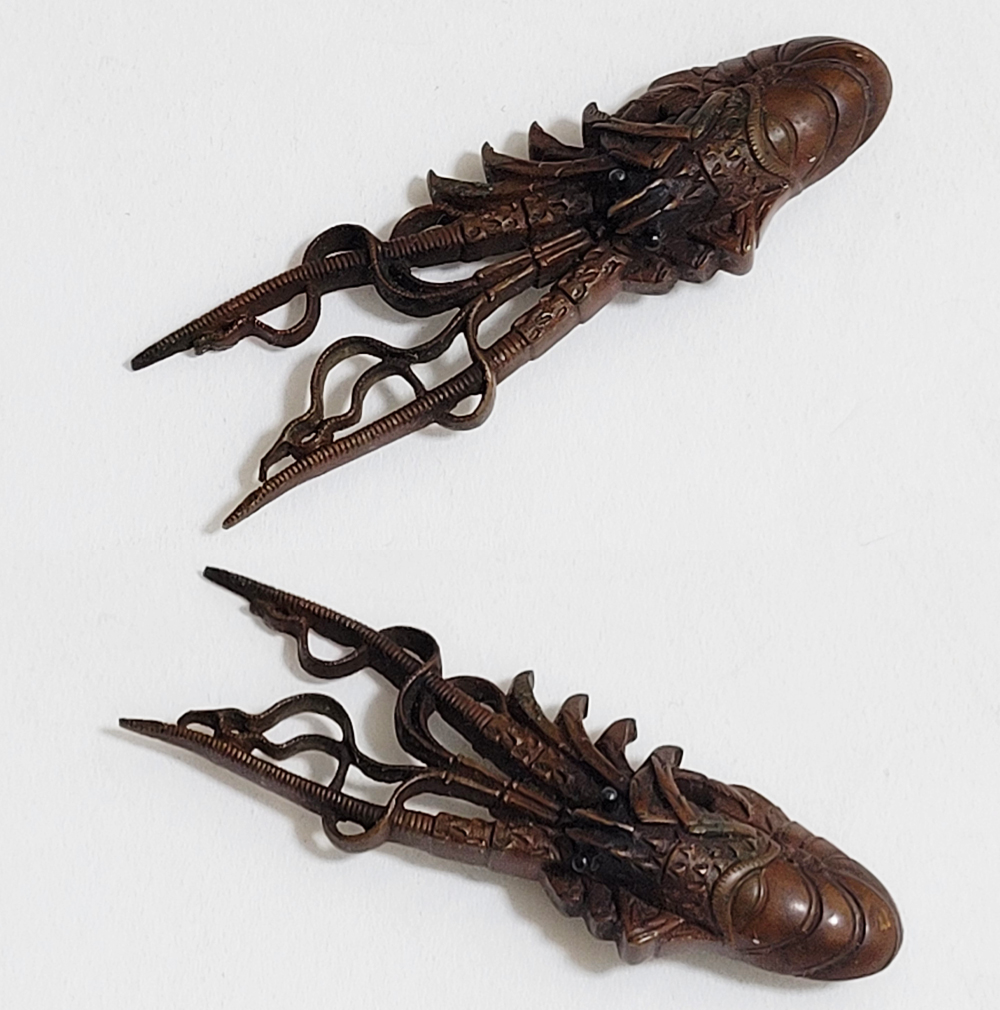
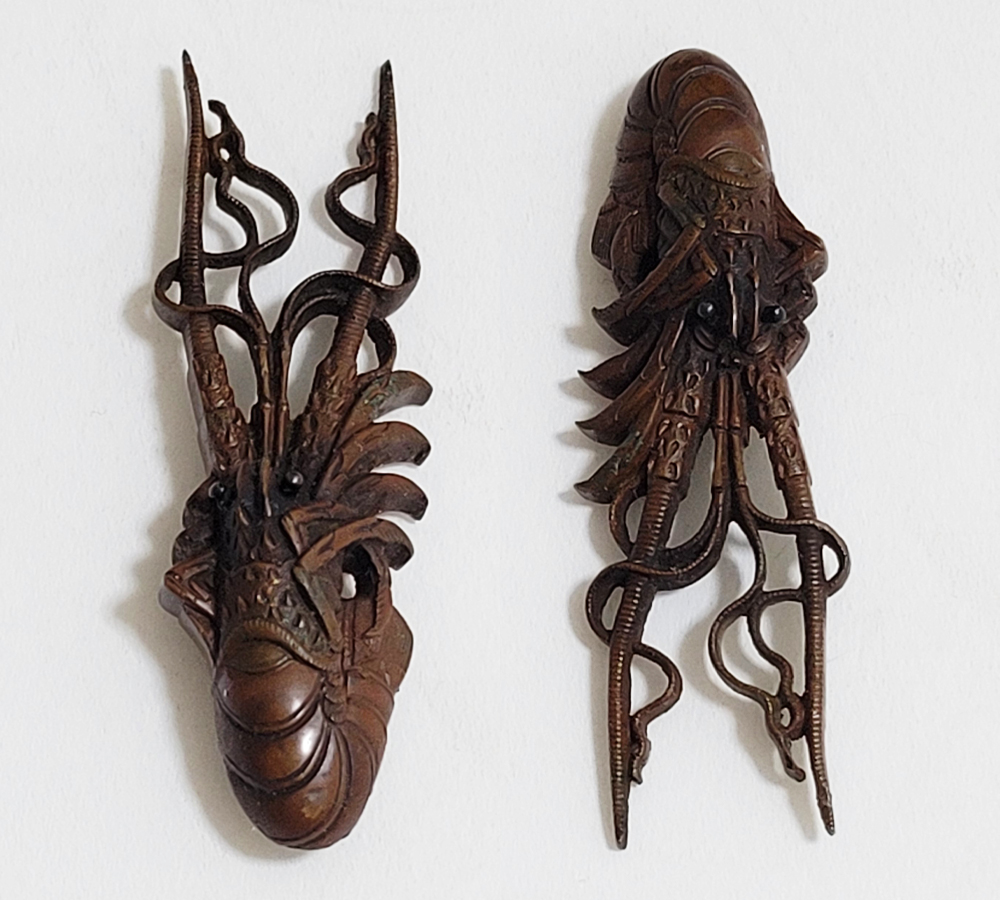
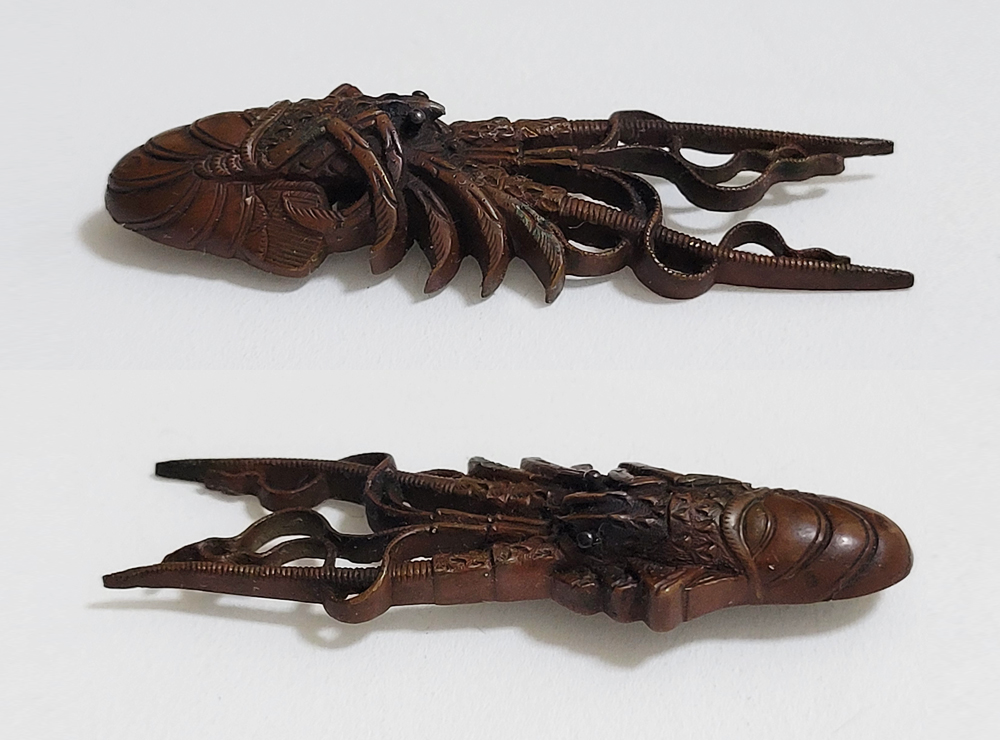
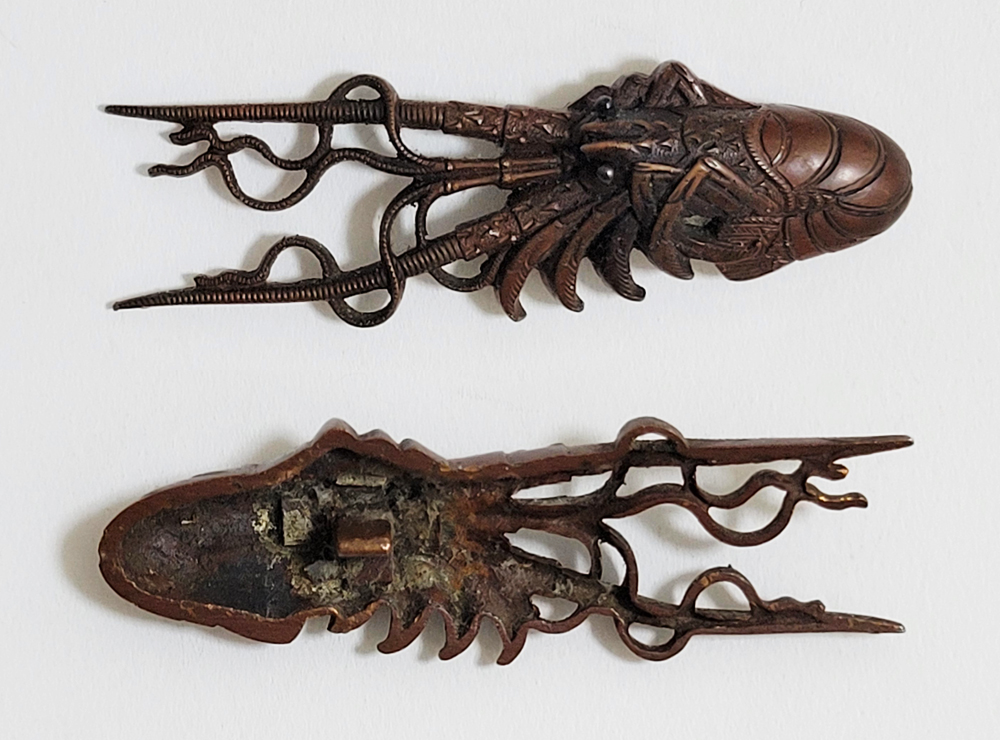
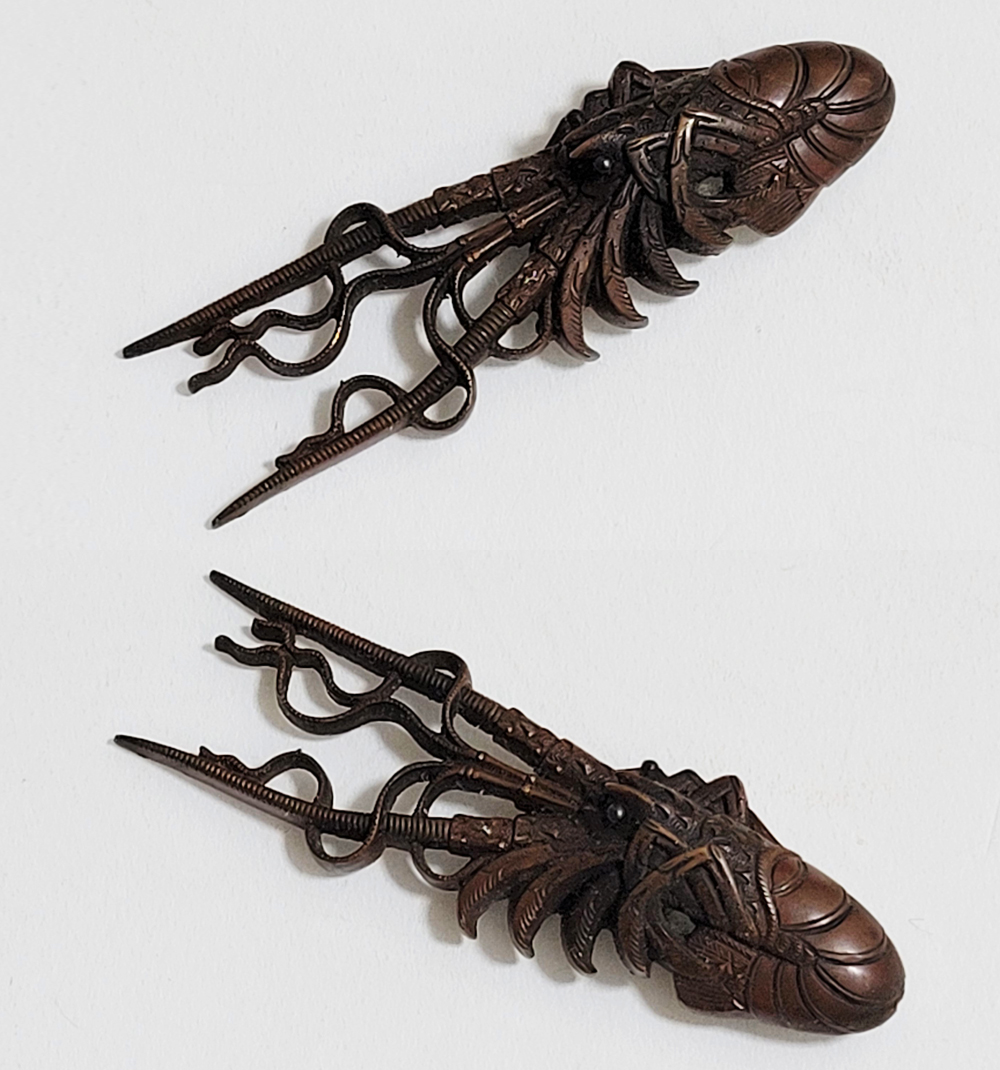
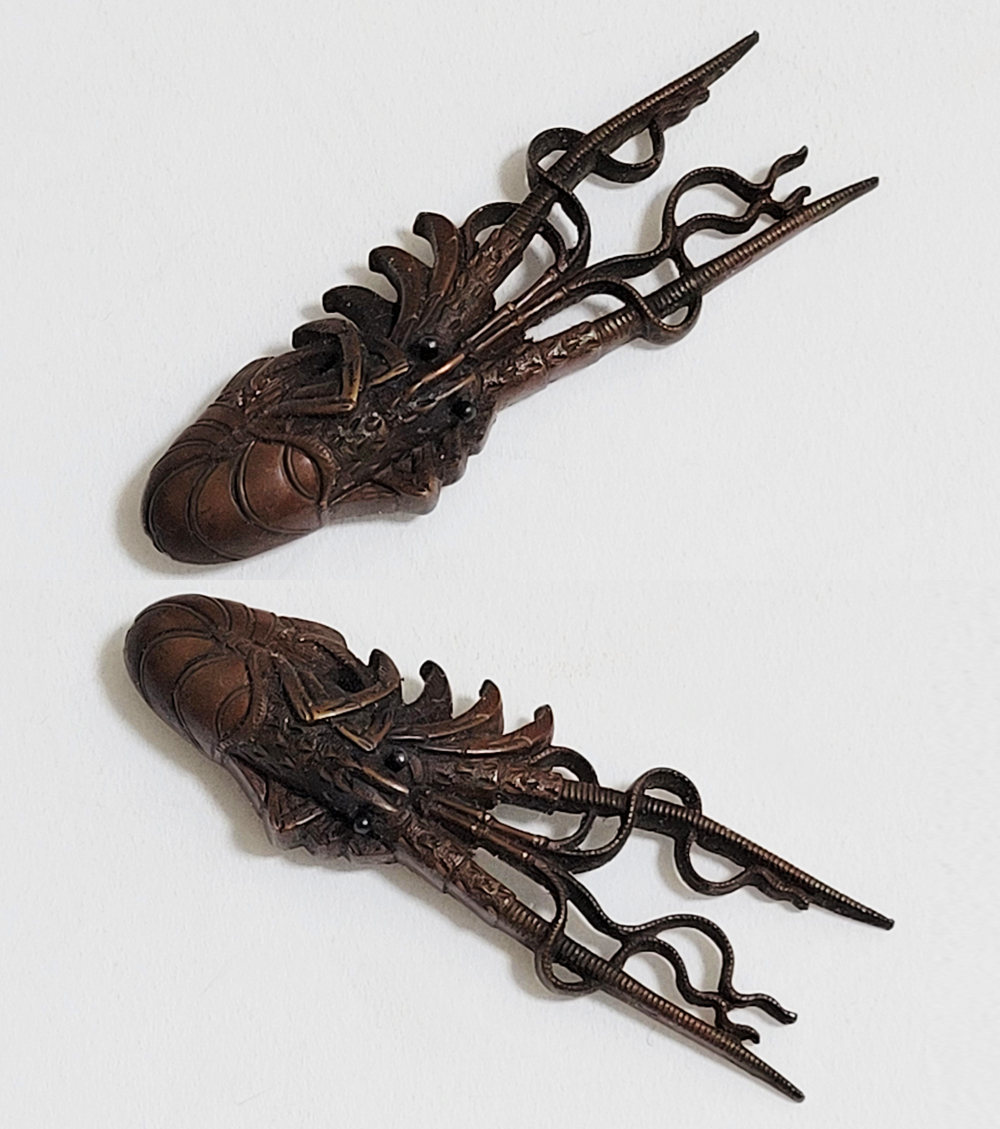
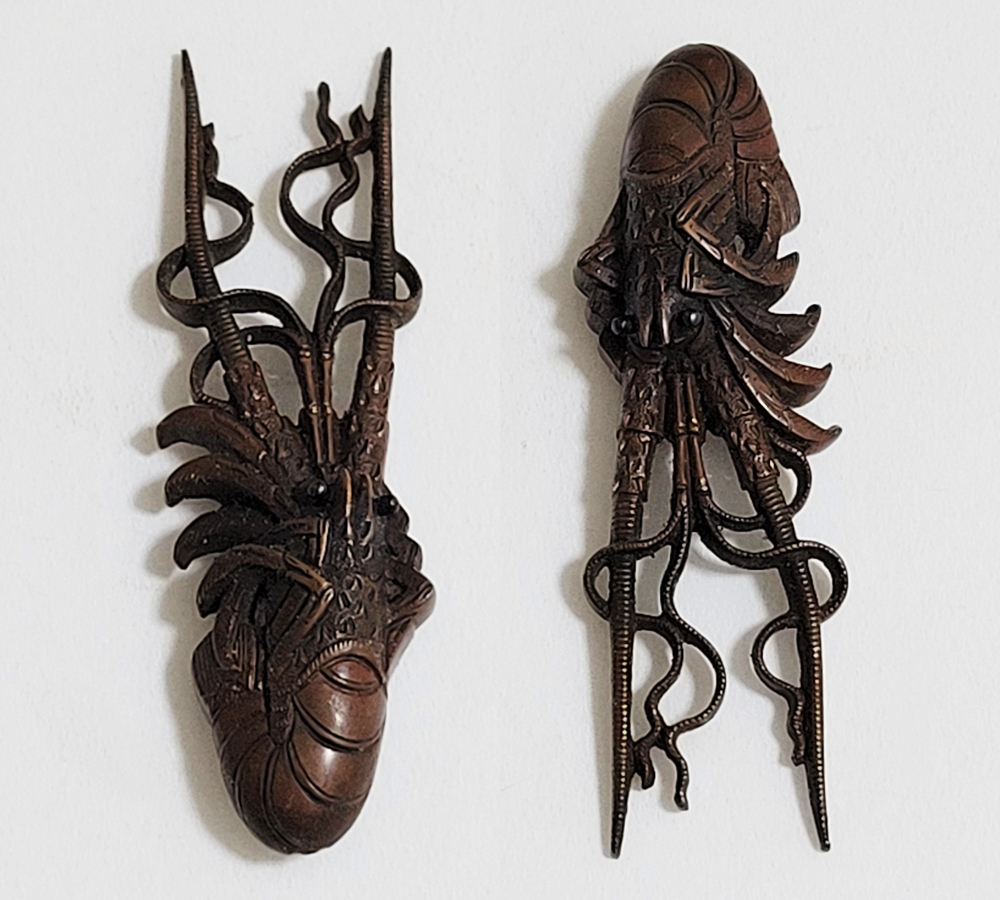
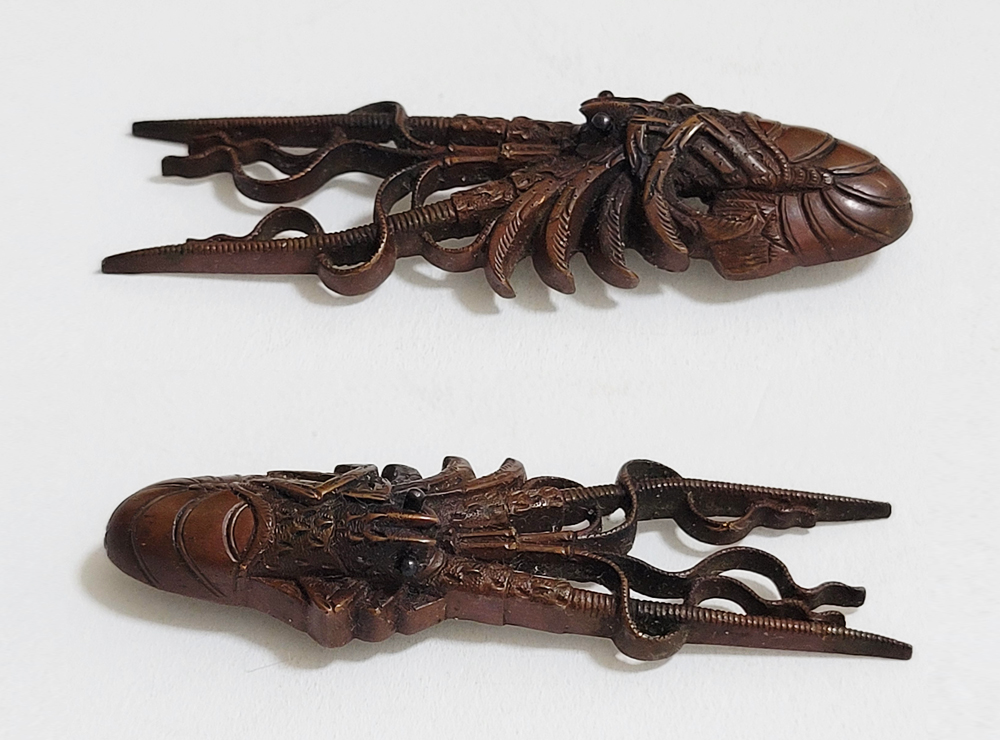
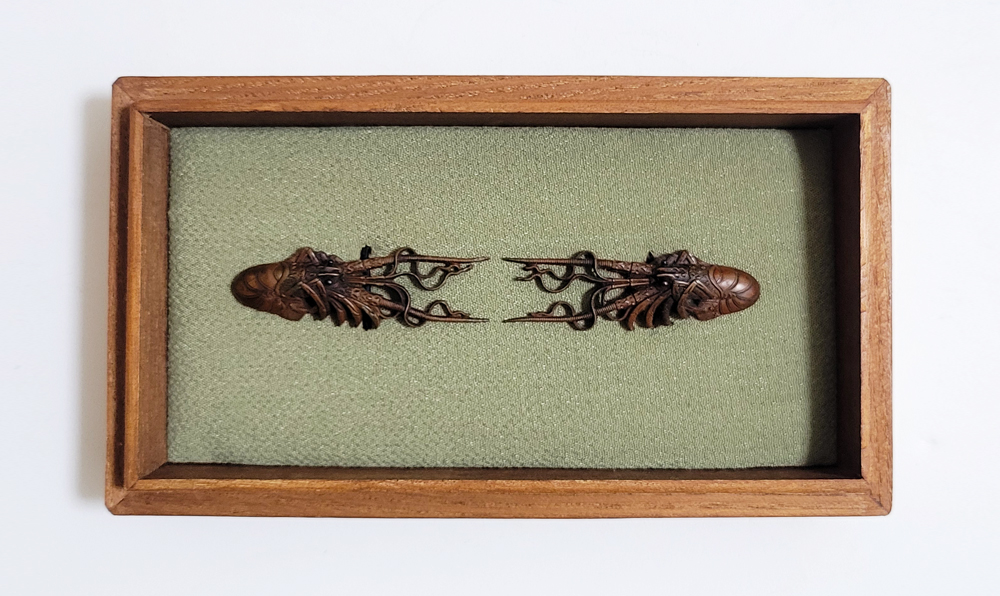
Nomura School
Signed
Kinko
6 pieces on the market now
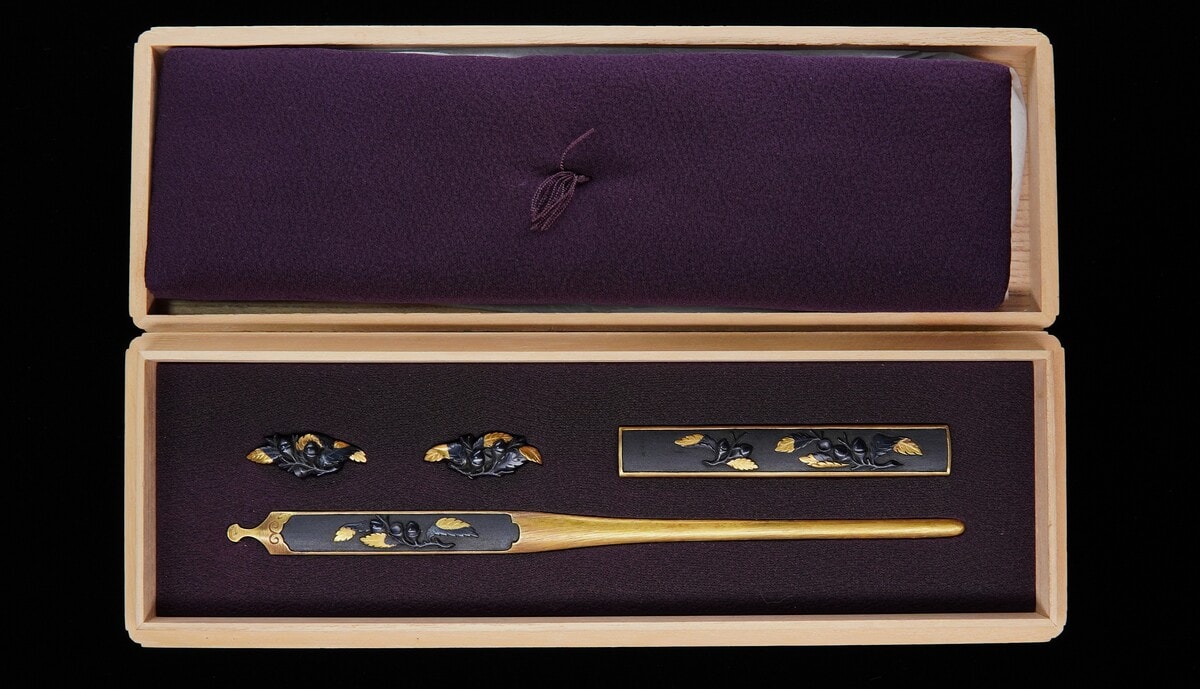
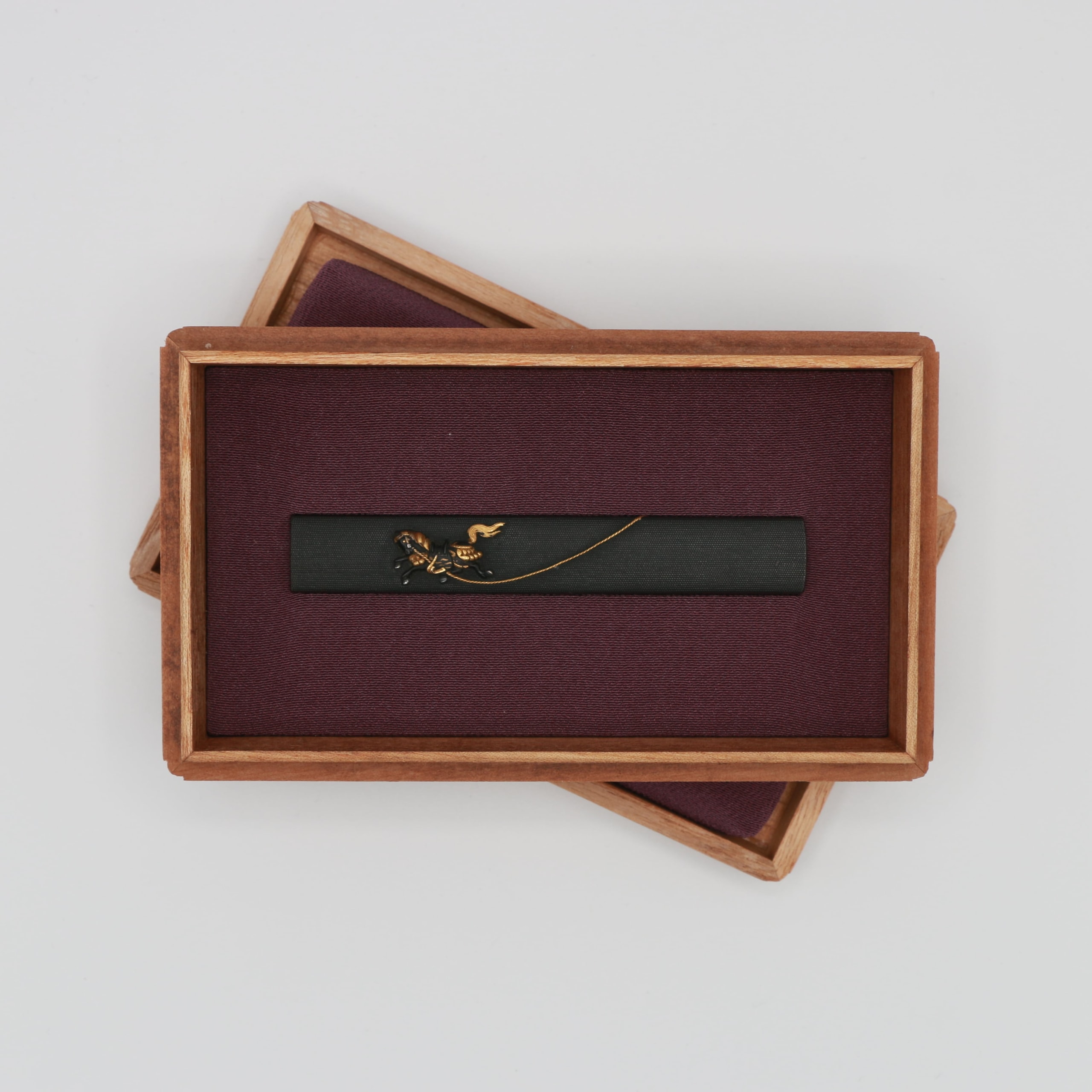
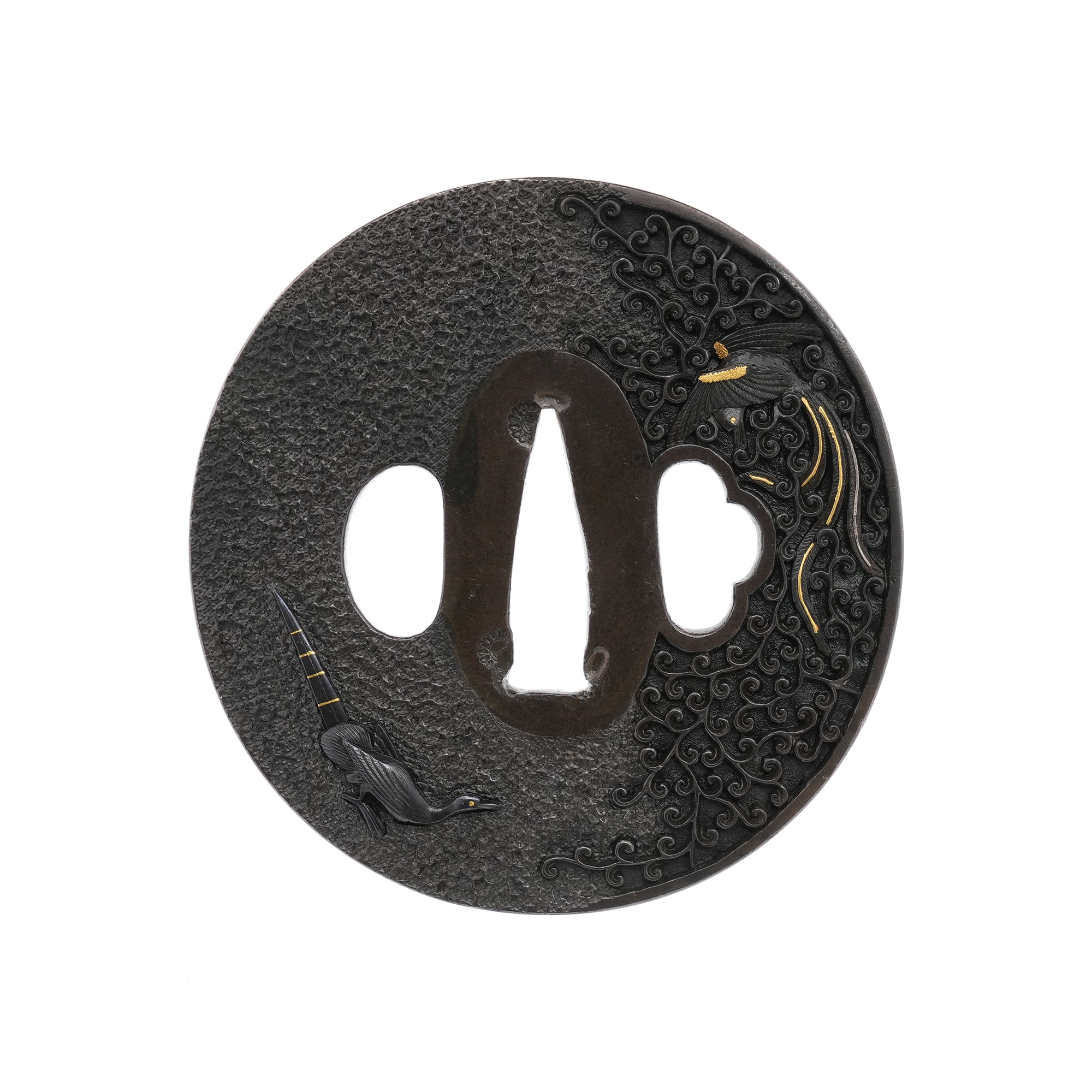
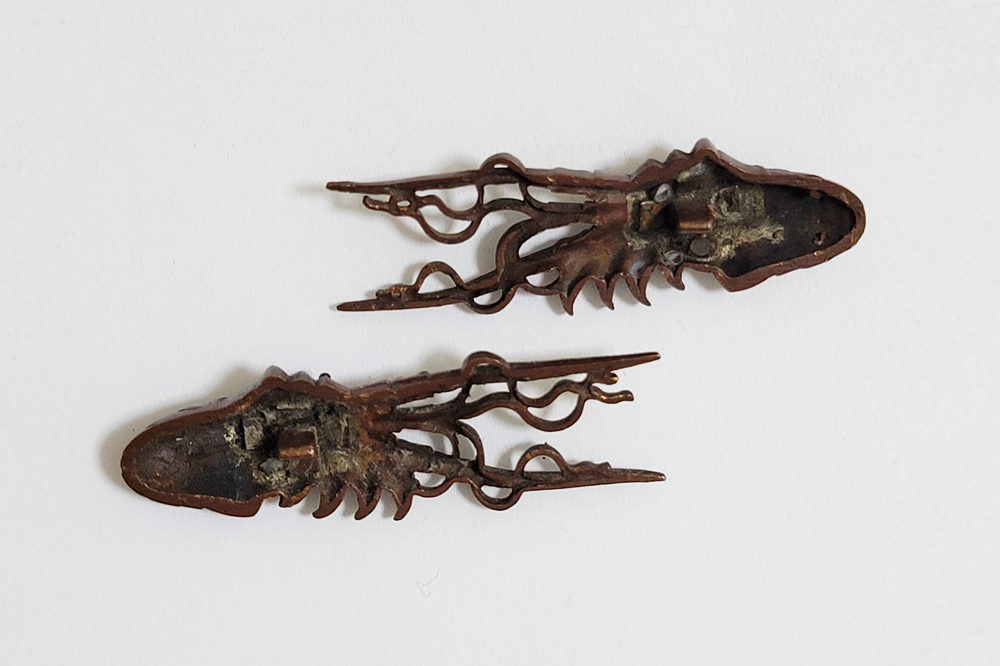
The Nomura school (野村) is a lineage of kinko (金工) metalworkers based in Edo, active from the mid-Edo period. The school's eponymous tradition is anchored by Nomura Masahide (野村正秀), recorded in the NBTHK setsumei as "a highly skilled artist of the Edo Nomura school," and by Nomura Masamichi (野村正道), also known as Nomura Shodo, who served as the principal teacher of the school's most prolific designated member, Tsu Jinpo (津尋甫). Jinpo, whose personal name was Otsu Hachizaemon[[c:1]], is documented as having lived in the vicinity of Ginza in Edo and as having been active from Kyoho 7 (1722) until his death in Horeki 12 (1762). The teacher-pupil axis from Masamichi to Jinpo constitutes the core documented lineage of the school, situating it firmly within the broader Edo-period kinko milieu. The collective style of the Nomura school is defined by a rigorous commitment to realism and by a distinctive technical vocabulary rooted in shakudo (赤銅) nanako-ji (魚子地) grounds worked in takabori (高彫, high relief). This combination of deep-black shakudo surface with precisely punched nanako and boldly sculptural relief carving is the school's signature idiom, recurring across virtually every designated work. Motifs are drawn overwhelmingly from the natural world: raptors poised on oak trees (kashiwa, 柏), lilies (yuri, 百合), shrimp (ebi, 海老), and small birds amid branches.
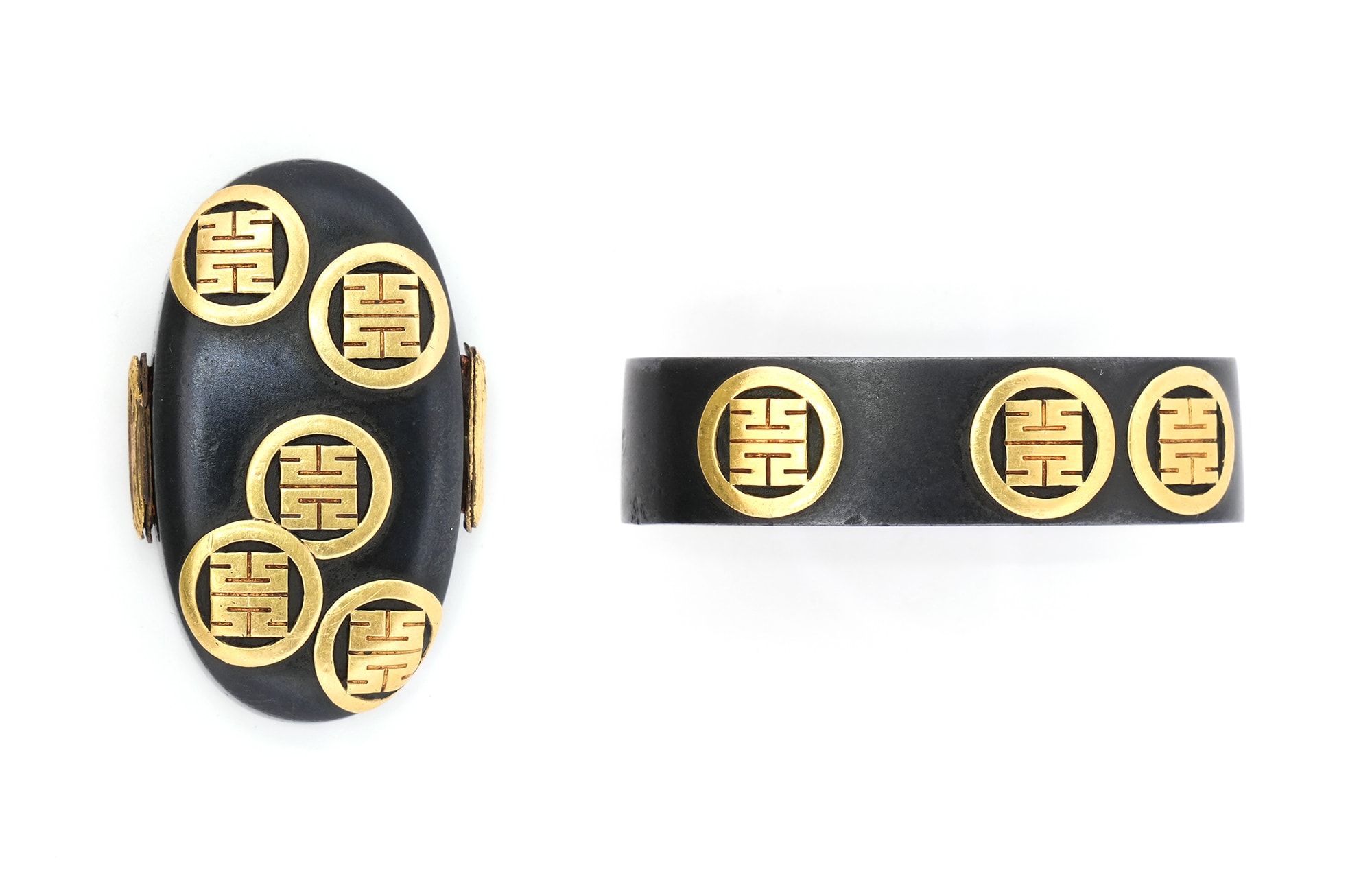
" Polychrome enrichment through iroe (色絵) and kin-iroe (金色絵), as well as applied motifs in gold and suaka (素銅), lends chromatic depth to the relief compositions. Several works also demonstrate the influence of the Goto house tradition, exhibiting what the setsumei describe as "Goto-like dignity of style" alongside "a power and freshness distinctive to" the Nomura lineage. " Fuchi-kashira (縁頭) constitute the predominant format, followed by tsuba, kozuka, and mitokoromono (三所物) sets. The Nomura school occupies a distinctive position within the Edo-period kinko canon as a lineage that channeled the formal discipline of the Goto tradition into an intensely naturalistic mode of expression. While the school drew on Goto prototypes, particularly in nanako technique and in certain mitokoromono compositions modeled after "early Goto masterworks," the Nomura idiom is distinguished by a sculptural forcefulness and a commitment to observed nature that the setsumei consistently single out. Among Jinpo's fuchi-kashira, designs of raptors alighting upon oak branches are described as possessing "an extremely forceful impact," with "masterpieces" among them, while his lily subjects are noted as a particular strength. The school's legacy, as attested across the designated corpus, resides in this synthesis of technical rigor, vivid realism, and the bold relief carving that constitutes its most recognizable hallmark. Learn more →
| Smith | Era | Designated |
|---|---|---|
| Tsu Jinpo津尋甫 | — | 7 |
| Masayoshi正芳 | — | 0 |
| Masahide正英 | — | 0 |
| Masatsugu正次 | — | 0 |
| Masamichi正道 | — | 0 |
We could not find an authenticity certificate on the seller’s listing. Japanese swords and fittings are normally papered by the NBTHK (or the NTHK). Without one, the attribution is the seller’s own assessment and has not been independently verified — treat it with caution and ask the dealer about certification before buying.
Domestic: items may be returned within 7 days in original condition for a full refund (buyer covers transport). Overseas orders: no-refunds, no-returns.