Nagasone Kotetsu was originally an armorer from Echizen, and around Meireki 2, when he was about fifty years old, he moved to Edo and turned to swordsmithing. It is said that he was commonly known as Sannojo and went by the name Okisato, but after becoming a monk he was called "Kotetsu Nyudo." At first, he used the characters for "old iron," later he applied the characters for "tiger iron," and from August of Kanbun 4, he used the characters for "Kotetsu." Among his dated works, Meireki 2 is the earliest, and the final one is Enpo 5. His style is characterized by strong jigane and bright, clear ji and ha. Many of his swords have a yakidashi, and his style in the early period includes what is called a hyotan-ba, where large and small gunome are connected, while in the later period, there is not much change in the rise and fall of the tempering, and he tempered a unique gunome midare called juzu-ba, where round-headed gunome are linked, and his skill is highly evaluated.
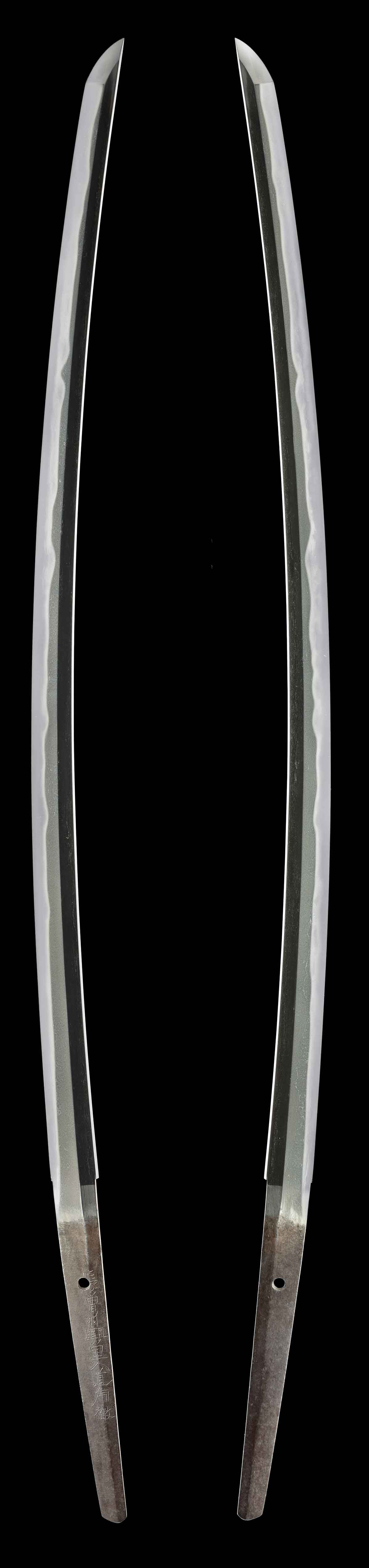
This sword has a kitae of itame that is generally tight, mixed with moku, with ji-nie that is fine and thick, and thick chikei that is well-embedded. The hamon shows a sugu yakidashi, and above that, based on a shallow ko-notare, it is mixed with gunome-tsure, ko-gunome, and pointed-style blades, with thick ashi well-embedded, deep nioi, abundant nie, and in places it is strongly muradachi, with sunagashi appearing, prominent kinsuji, and a nioiguchi that is bright and clear, showing an excellent workmanship. It is a work from his later period, that is, the "Hako-Tora" period. As mentioned above, the work of this period is characterized by his specialty of tempering juzu-ba, and this piece also exhibits a juzu-ba style. Compared to typical works of this kind, it has a style where the nie is strong and wild, and the activities such as chikei and kinsuji are prominent, finishing in a style that is bold and rich in rustic charm. It is a masterpiece by Kotetsu where both the ji and ha are bright and clear, and the true essence of the smith is displayed without reservation. Although there is no date, judging from the mei-buri, it is probably considered to be a work from around Kanbun 7.
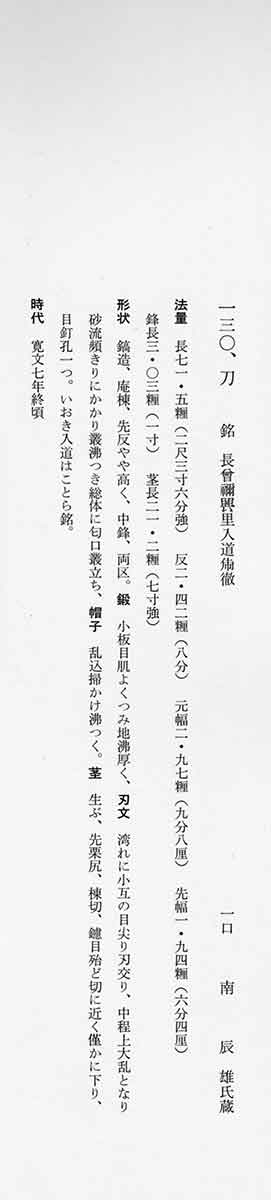
In the Kotetsu Taikan, Sato Kanzan sensei wrote the following. Shape: shinogi-zukuri, iori-mune, saki-zori is slightly high, chu-kissaki, both machi. Kitae: ko-itame-hada well-tightened with thick ji-nie. Hamon: notare mixed with ko-gunome and togari-ba, becoming o-midare in the middle and upper sections with frequent sunagashi, mura-nie, and the overall nioiguchi is muradachi. Boshi: midare-komi, hakikake, with nie. Nakago: ubu, saki-kurijiri, mune-kiri, yasurime is nearly kiri and slightly katte-sagari, one mekugi-ana. Ioki Nyudo wa Kotora mei. Period: around the end of Kanbun 7.
Shinto Saijo-saku
Saijo O-wazamono
Details from the shop
Papers
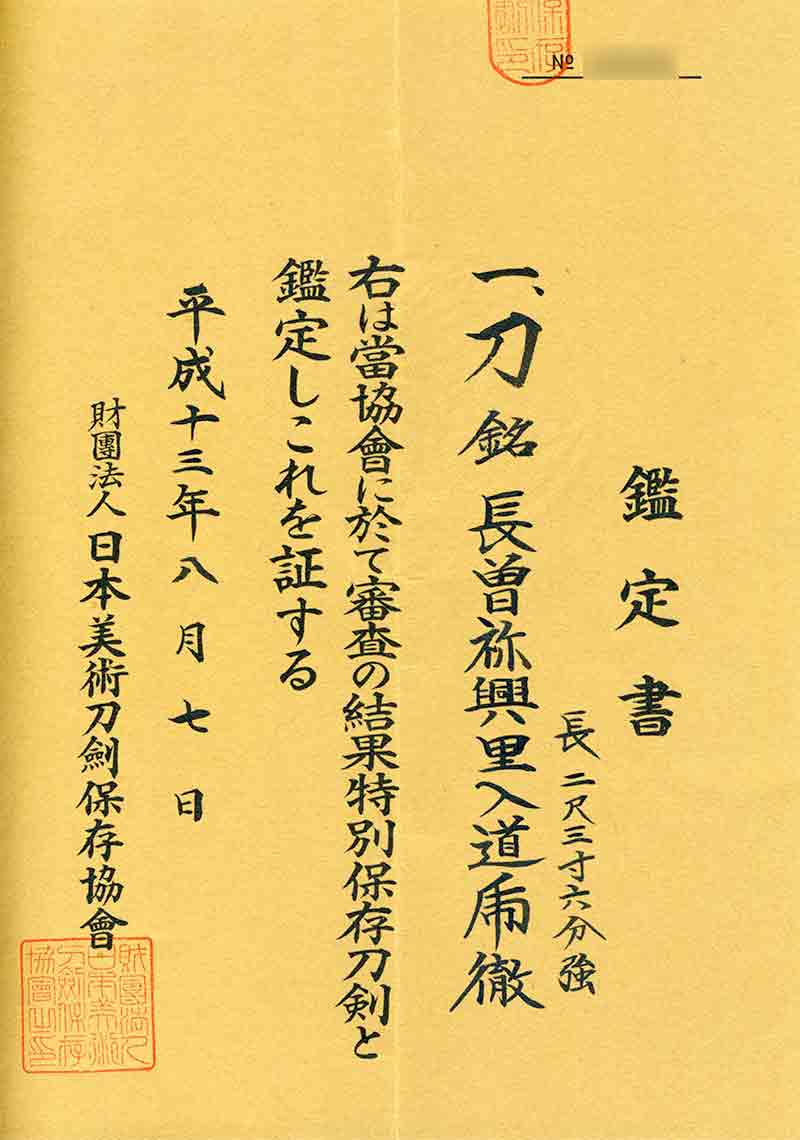
NBTHK Tokubetsu Hozon Paper
No.
F00310
Accessories
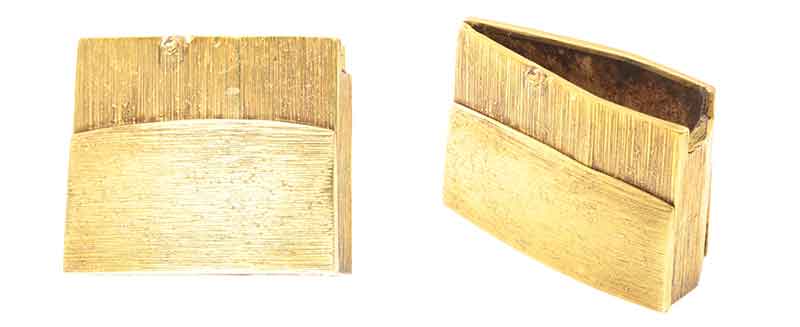
Shirasaya, gold-foiled double habaki
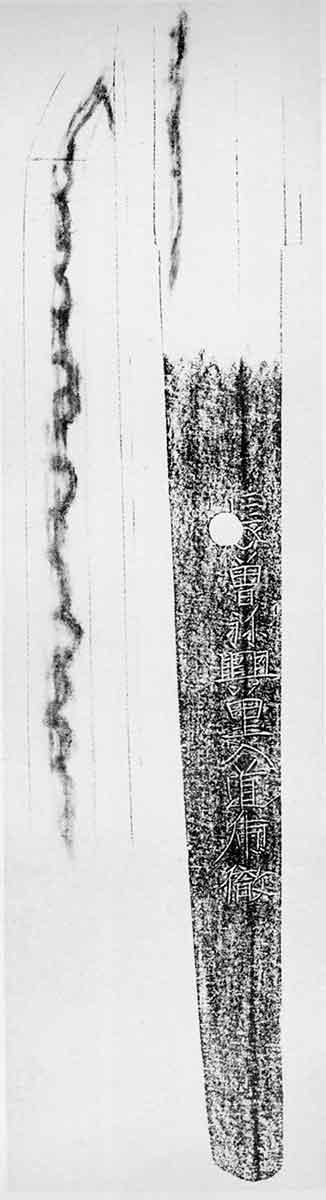
Published in "Kotetsu Taikan"
Shirasaya, gold-foiled double habaki
Published in "Kotetsu Taikan"
Saki-kasane
0.5cm
Registration
Osaka Prefecture Board of Education
December 7, Showa 29
Mei
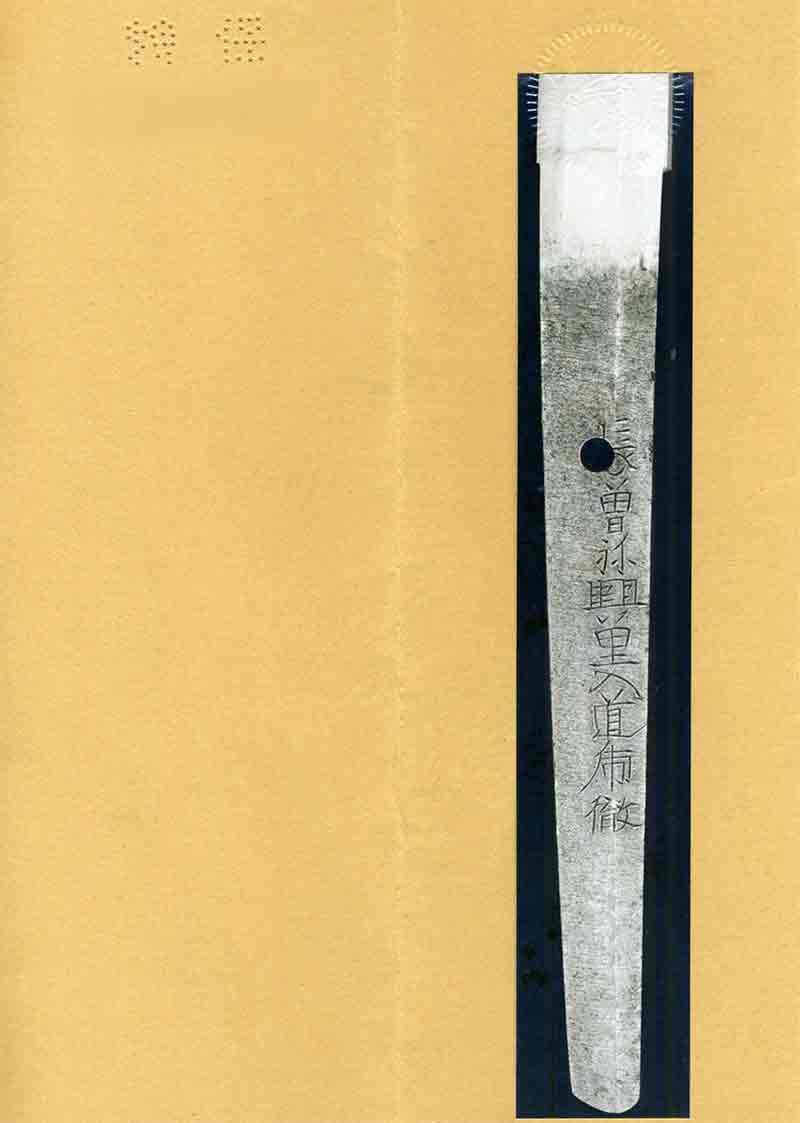
Nagasone Okisato Nyudo Kotetsu
Shape
Shinogi-zukuri, iori-mune, motohaba and kasane are standard, with some width at the base and point, high saki-zori, chu-kissaki.
Jigane
Itame, generally dense, with a little mokume mixed in, ji-nie is fine and thick, chikei is thick and well-integrated, the steel is clear.
Hamon
Starts with a straight yakidashi, above which is a base of shallow ko-notare, mixed with gunome-tsure, ko-gunome, and pointed-style hamon, ashi is thick and well-integrated, nioi is deep, nie is well-applied, with strong unevenness in places, sunagashi appears, kinsuji is prominently visible, nioiguchi is bright and clear.
Bōshi
Straight to komaru, both with vigorous hakikake.
Horimono
None
Nakago
Ubu, saki-kurijiri, yasurime sujikai, one mekugi-ana.
Machine translation of the shop's Japanese ·
Description from Tsuruginoya
Machine translation from the shop's Japanese · may contain errors ·
Nagasone Kotetsu was originally an armorer from Echizen, and around Meireki 2, when he was about fifty years old, he moved to Edo and turned to swordsmithing. It is said that he was commonly known as Sannojo and went by the name Okisato, but after becoming a monk he was called "Kotetsu Nyudo." At first, he used the characters for "old iron," later he applied the characters for "tiger iron," and from August of Kanbun 4, he used the characters for "Kotetsu." Among his dated works, Meireki 2 is the earliest, and the final one is Enpo 5. His style is characterized by strong jigane and bright, clear ji and ha. Many of his swords have a yakidashi, and his style in the early period includes what is called a hyotan-ba, where large and small gunome are connected, while in the later period, there is not much change in the rise and fall of the tempering, and he tempered a unique gunome midare called juzu-ba, where round-headed gunome are linked, and his skill is highly evaluated.
This sword has a kitae of itame that is generally tight, mixed with moku, with ji-nie that is fine and thick, and thick chikei that is well-embedded. The hamon shows a sugu yakidashi, and above that, based on a shallow ko-notare, it is mixed with gunome-tsure, ko-gunome, and pointed-style blades, with thick ashi well-embedded, deep nioi, abundant nie, and in places it is strongly muradachi, with sunagashi appearing, prominent kinsuji, and a nioiguchi that is bright and clear, showing an excellent workmanship. It is a work from his later period, that is, the "Hako-Tora" period. As mentioned above, the work of this period is characterized by his specialty of tempering juzu-ba, and this piece also exhibits a juzu-ba style. Compared to typical works of this kind, it has a style where the nie is strong and wild, and the activities such as chikei and kinsuji are prominent, finishing in a style that is bold and rich in rustic charm. It is a masterpiece by Kotetsu where both the ji and ha are bright and clear, and the true essence of the smith is displayed without reservation. Although there is no date, judging from the mei-buri, it is probably considered to be a work from around Kanbun 7.
In the Kotetsu Taikan, Sato Kanzan sensei wrote the following. Shape: shinogi-zukuri, iori-mune, saki-zori is slightly high, chu-kissaki, both machi. Kitae: ko-itame-hada well-tightened with thick ji-nie. Hamon: notare mixed with ko-gunome and togari-ba, becoming o-midare in the middle and upper sections with frequent sunagashi, mura-nie, and the overall nioiguchi is muradachi. Boshi: midare-komi, hakikake, with nie. Nakago: ubu, saki-kurijiri, mune-kiri, yasurime is nearly kiri and slightly katte-sagari, one mekugi-ana. Ioki Nyudo wa Kotora mei. Period: around the end of Kanbun 7.
Shinto Saijo-saku
Saijo O-wazamono
Historical context
The Edo period (1615 to 1868)
›
For two and a half centuries of peace the sword was the warrior’s legal badge rather than his weapon. Each great city developed its own manner, Edo’s tested strength against Ōsaka’s polished brilliance, until demand thinned in the era’s last decades.
A Hozon-certified blade judged to show notably superior workmanship and a better state of preservation. The bar is higher: re-tempered blades and most unsigned Muromachi/Edo works are excluded.
About the NBTHK›
The NBTHK (Nihon Bijutsu Tōken Hozon Kyōkai, the Society for the Preservation of Japanese Art Swords) is a public-interest incorporated foundation founded in 1948 and supervised by Japan’s Agency for Cultural Affairs (Bunkachō); it is based at the Japanese Sword Museum in Tokyo. Its expert panels physically examine each submitted work (shinsa) and issue a certificate (kanteishō) ranking it by artistic and historical merit. NBTHK papers are the most widely recognized standard of authentication for Japanese swords and fittings.
Please exercise cooling-off within 8 days of the item's arrival.
(1) We cannot accept items that have been altered or worked on in any way (e.g. test cutting, polishing or other work, display at viewing meetings, photography, taking oshigata rubbings, use for appreciation, copying of books).
(2) Return shipping is at the customer's expense.
(3) Costs other than the item price (bank transfer fees, cash-on-delivery fees, installment fees, etc.) cannot be refunded.
(4) For cash-on-delivery and similar payments, the refund is made after the payment has reached us.
(5) We cannot accept a return when a trade-in item is involved.
(6) Items delivered overseas cannot be returned or refunded (because of the time involved and, for swords, the surrender of the registration certificate and other circumstances).
Shinogi-zukuri, iori-mune, motohaba and kasane are standard, with some width at the base and point, high saki-zori, chu-kissaki.
Jigane
Itame, generally dense, with a little mokume mixed in, ji-nie is fine and thick, chikei is thick and well-integrated, the steel is clear.
Hamon
Starts with a straight yakidashi, above which is a base of shallow ko-notare, mixed with gunome-tsure, ko-gunome, and pointed-style hamon, ashi is thick and well-integrated, nioi is deep, nie is well-applied, with strong unevenness in places, sunagashi appears, kinsuji is prominently visible, nioiguchi is bright and clear.
Bōshi
Straight to komaru, both with vigorous hakikake.
Horimono
None
Nakago
Ubu, saki-kurijiri, yasurime sujikai, one mekugi-ana.




 NihontoWatch