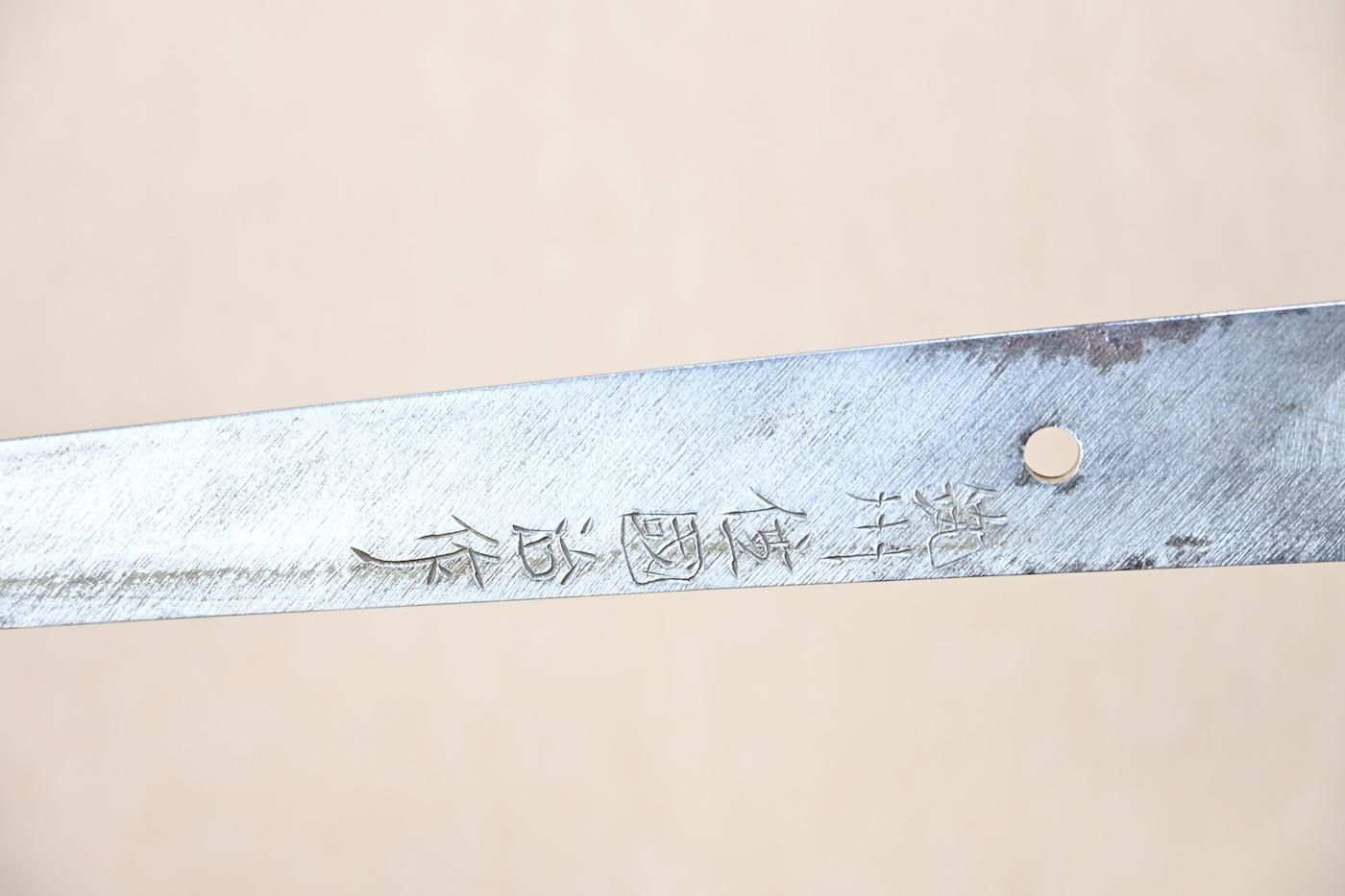
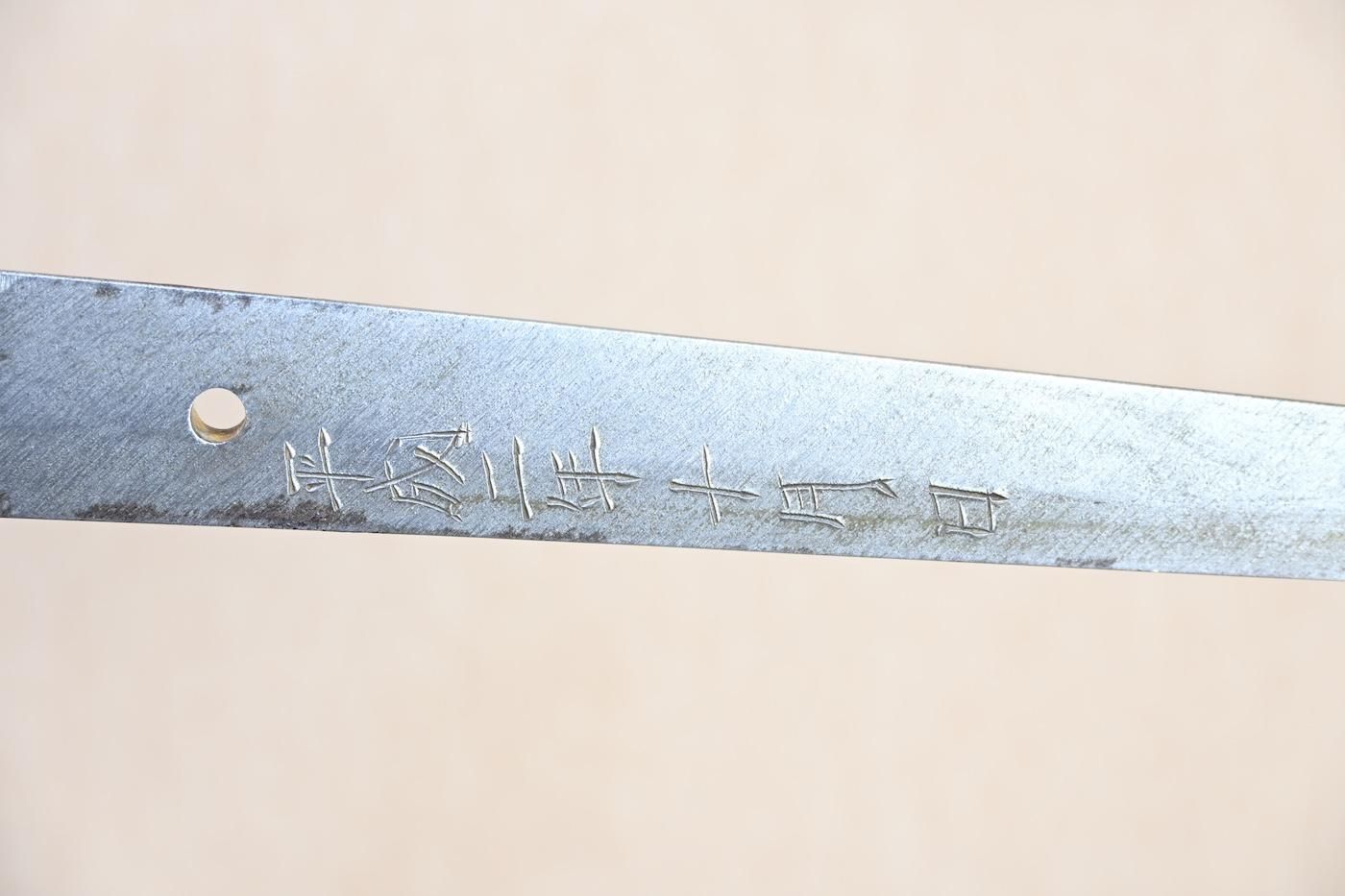
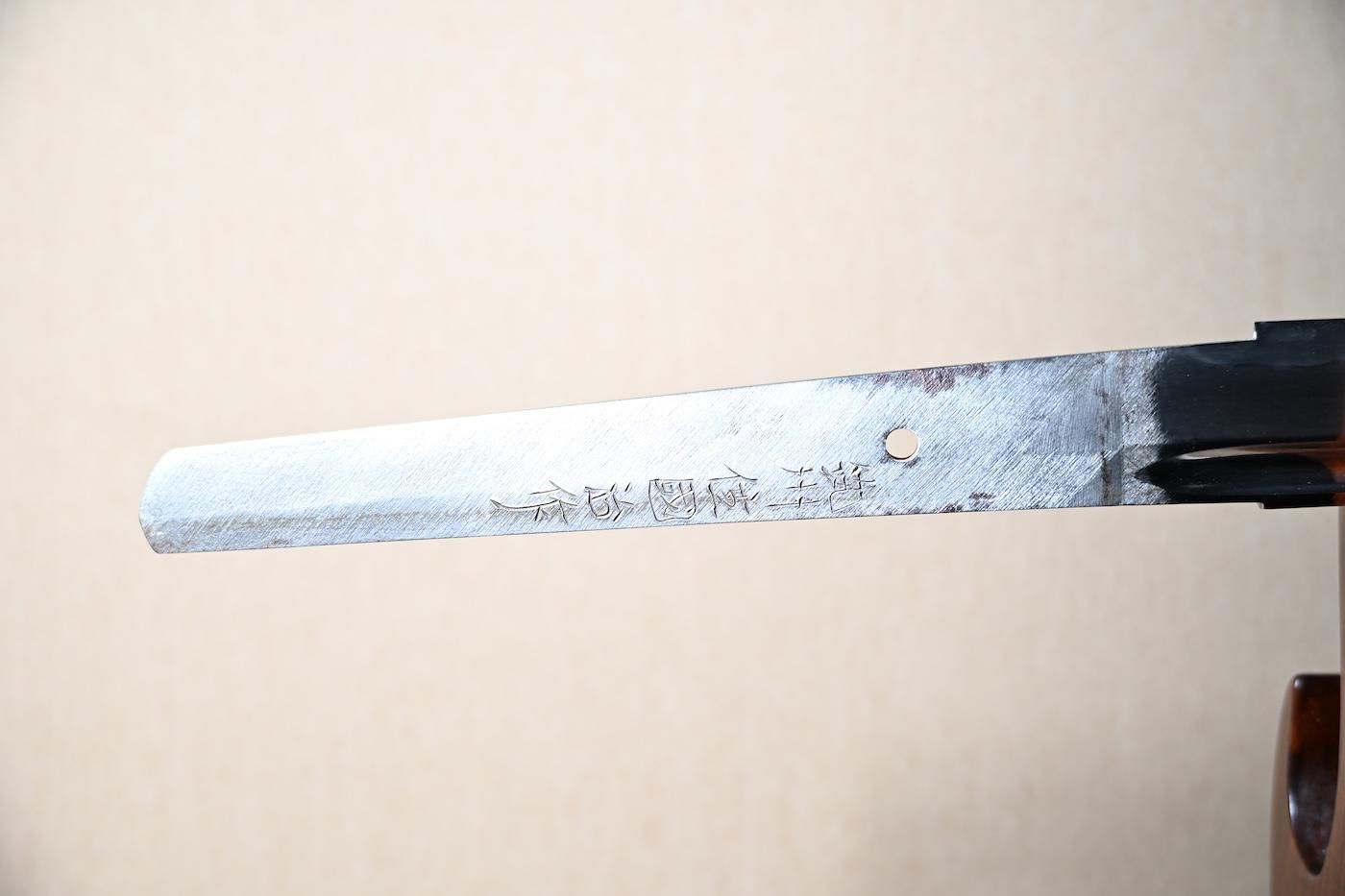
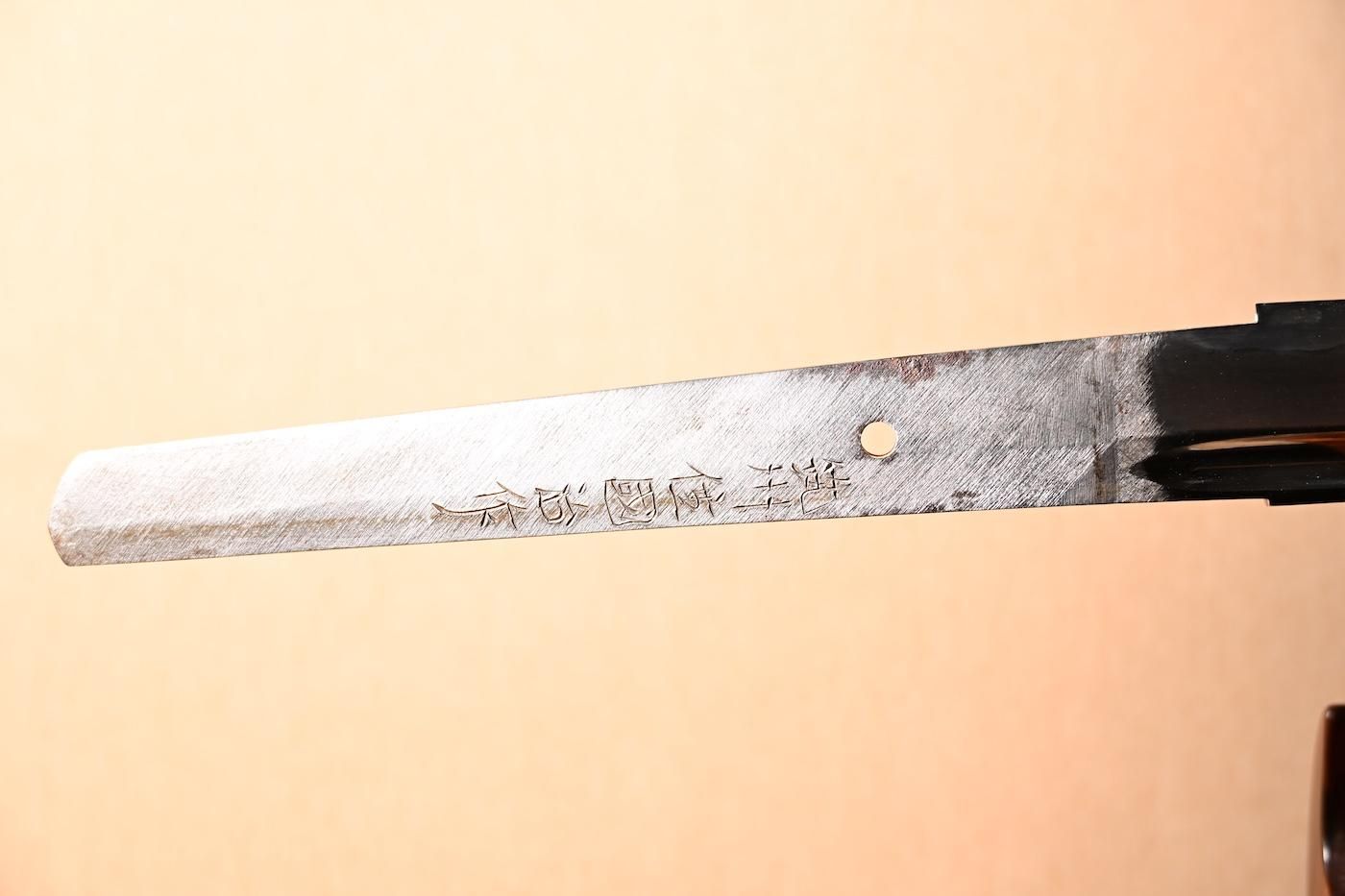
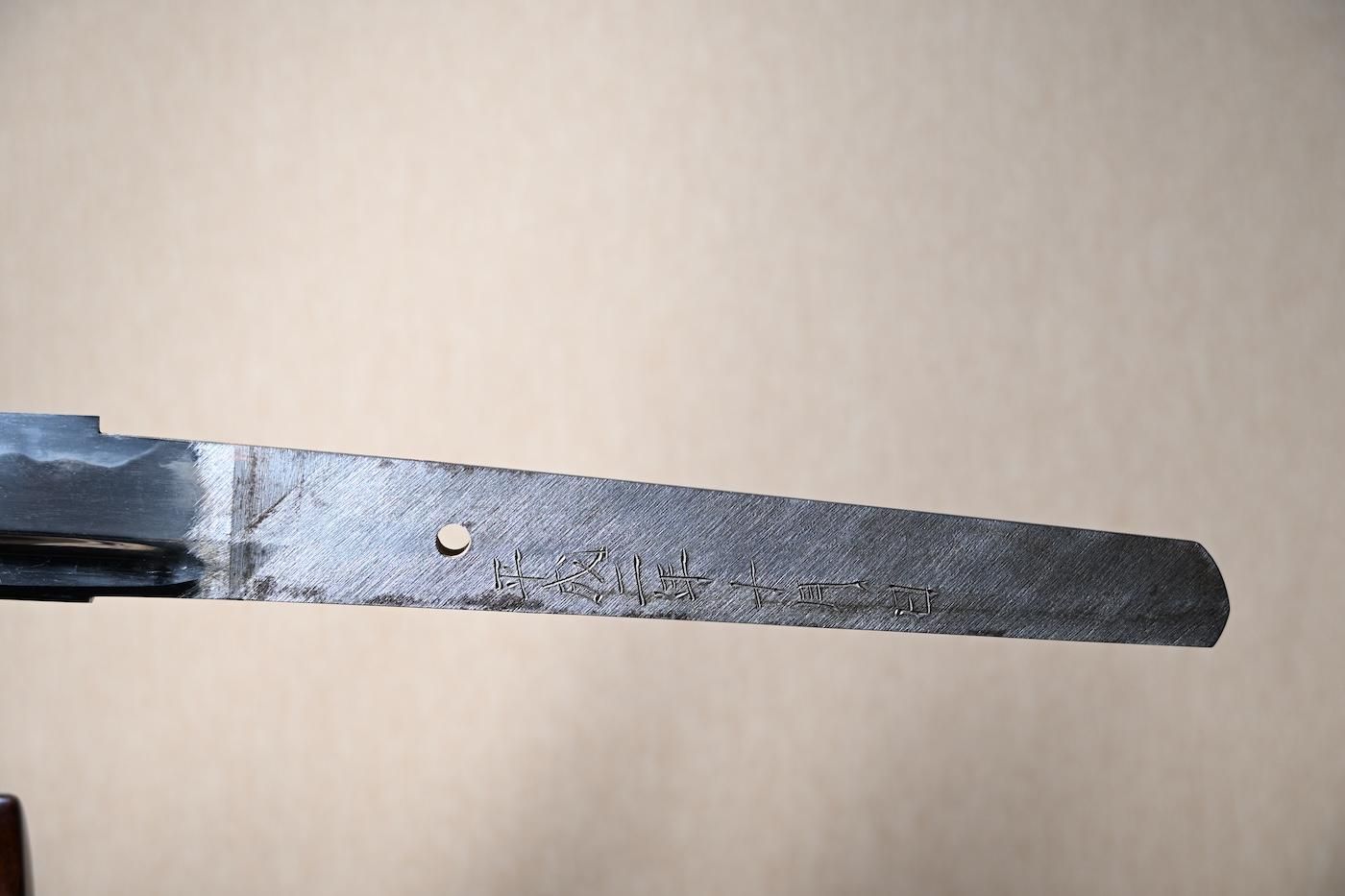
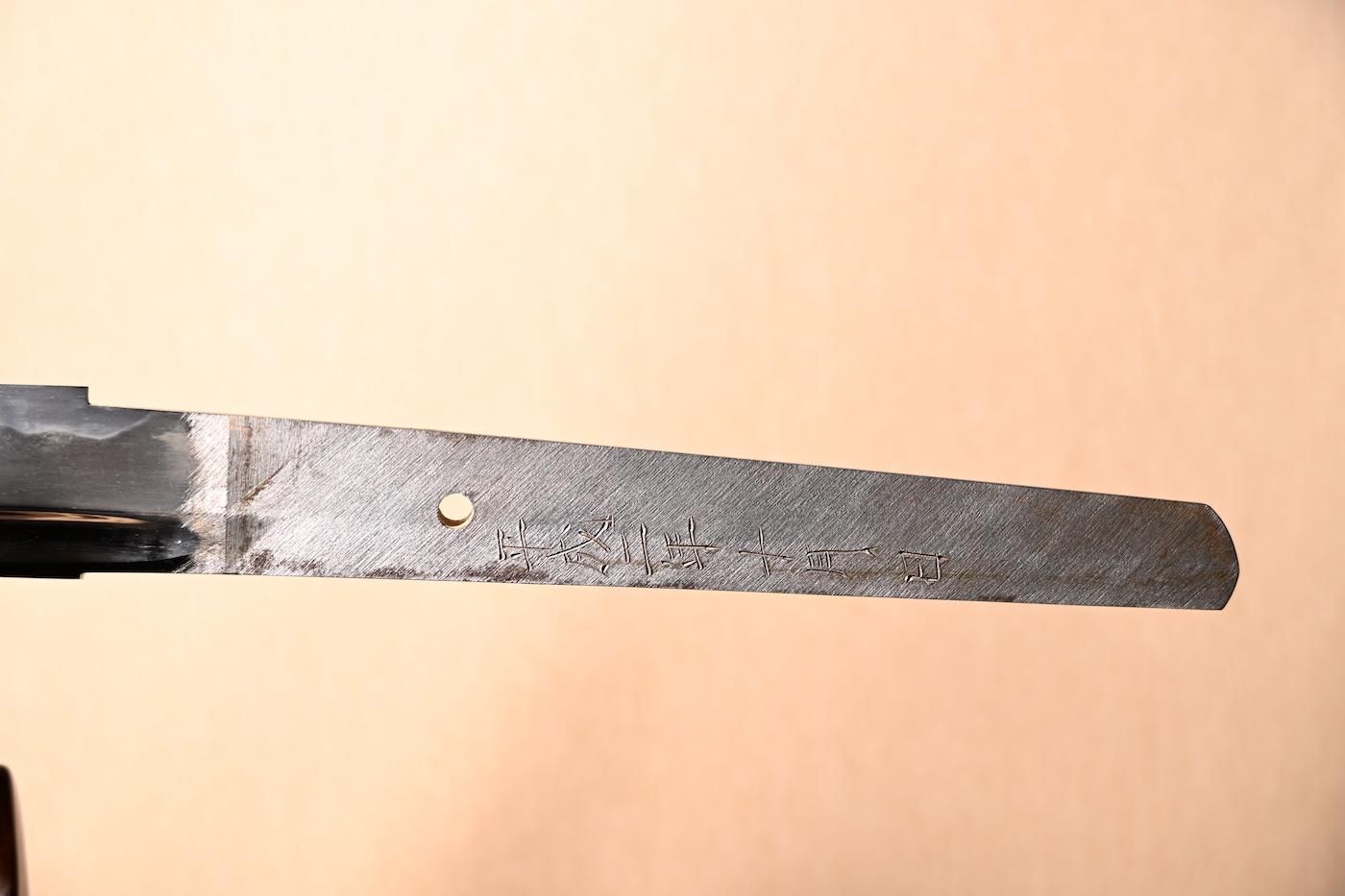
Real name Komiya Kuniharu. Born in Showa 4. Resides in Omuta City, Fukuoka Prefecture. He is the second son of the first Shiro Kunimitsu, who was famous as a Showa-era wazamono. He began forging swords under his father (Shiro Kunimitsu) from April of Showa 16. Since then, he has continued to forge swords through the three eras of Showa, Heisei, and Reiwa, up to the present Reiwa era. Member of the Zen Nihon Tosho Kai. He is one of the modern master smiths who has received the Dai Nihon Tosho Kai Silver Cup and numerous other awards. The Komiya family is a lineage of swordsmiths. The Komiya school follows the tradition of Miike Tenta Mitsuyo, served as the official swordsmiths for the Tachibana family, lords of the Chikugo Yanagawa domain during the feudal era, and is a prestigious family whose name is even listed in the Suishinshi Masahide monjinchō. Furthermore, when a sword cutting test was conducted in Showa 14, it was said to have the most excellent sharpness, surpassing even Kotetsu, and was praised and called "Ima Kotetsu" (the modern Kotetsu). Nakayama Hakudo sensei also praised it as having a sharpness that was at least equal to, if not better than, Nagasone Kotetsu, and the name of the Komiya school spread across the country in an instant.
■ Sword blade condition
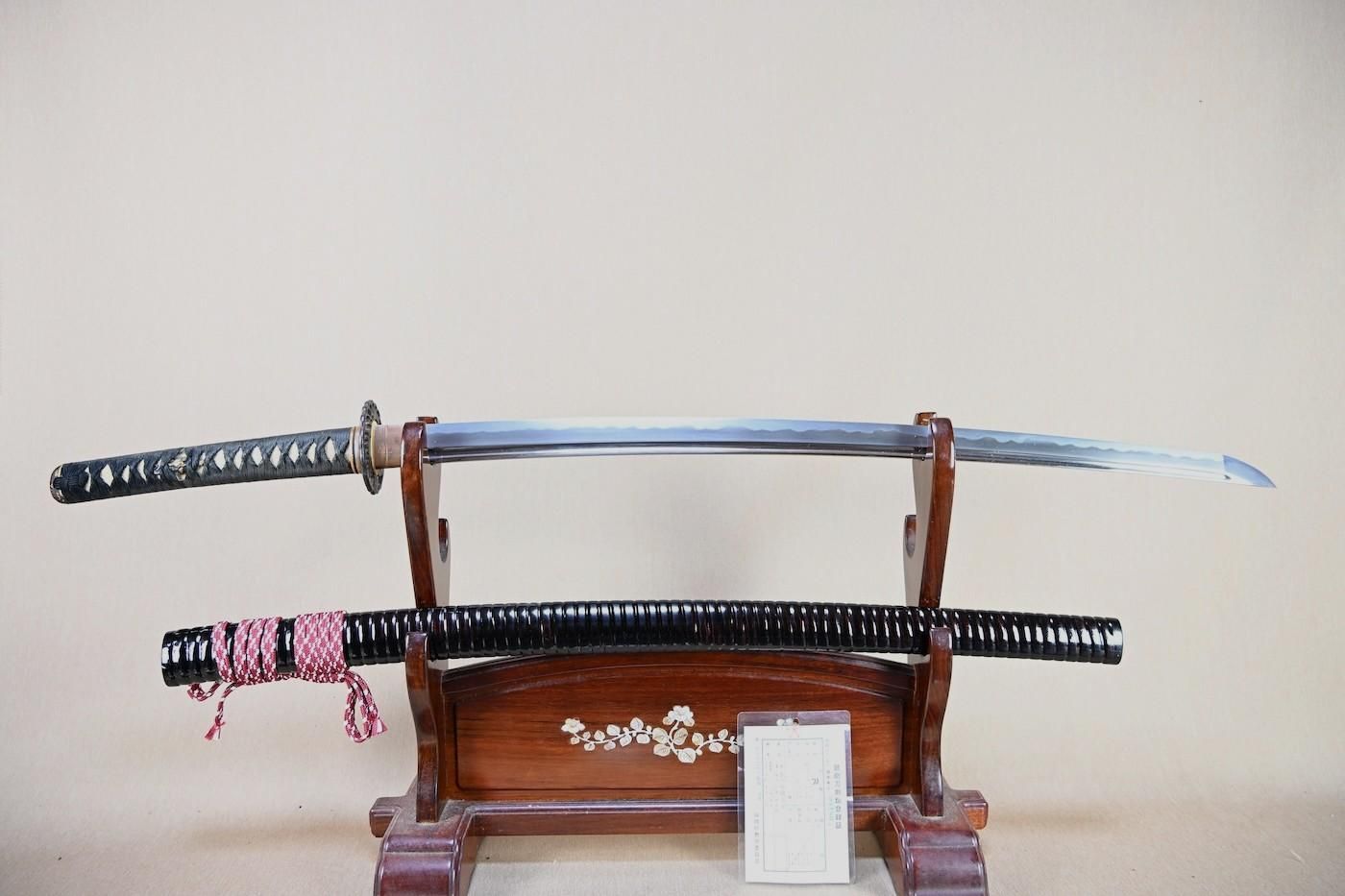
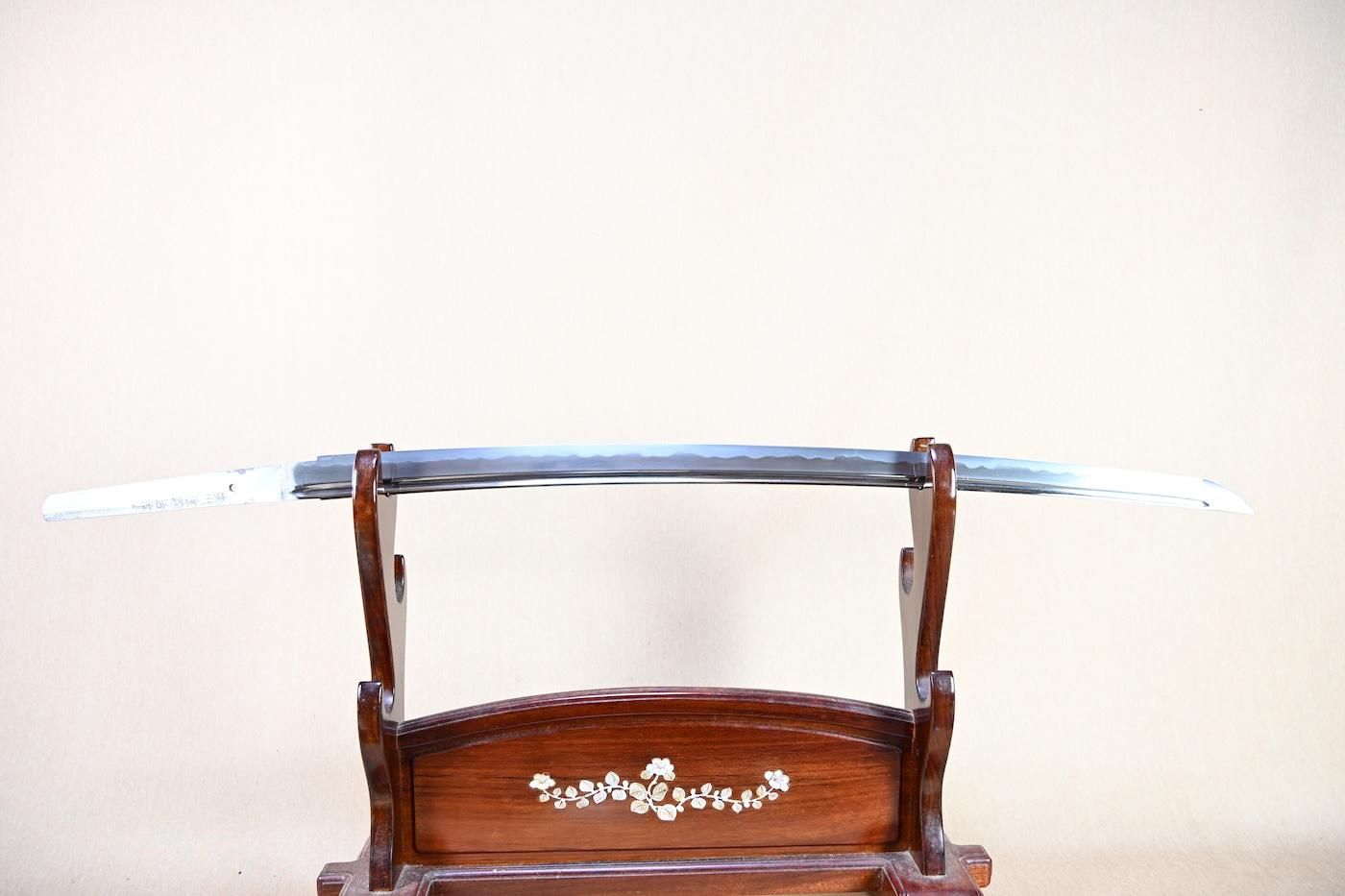
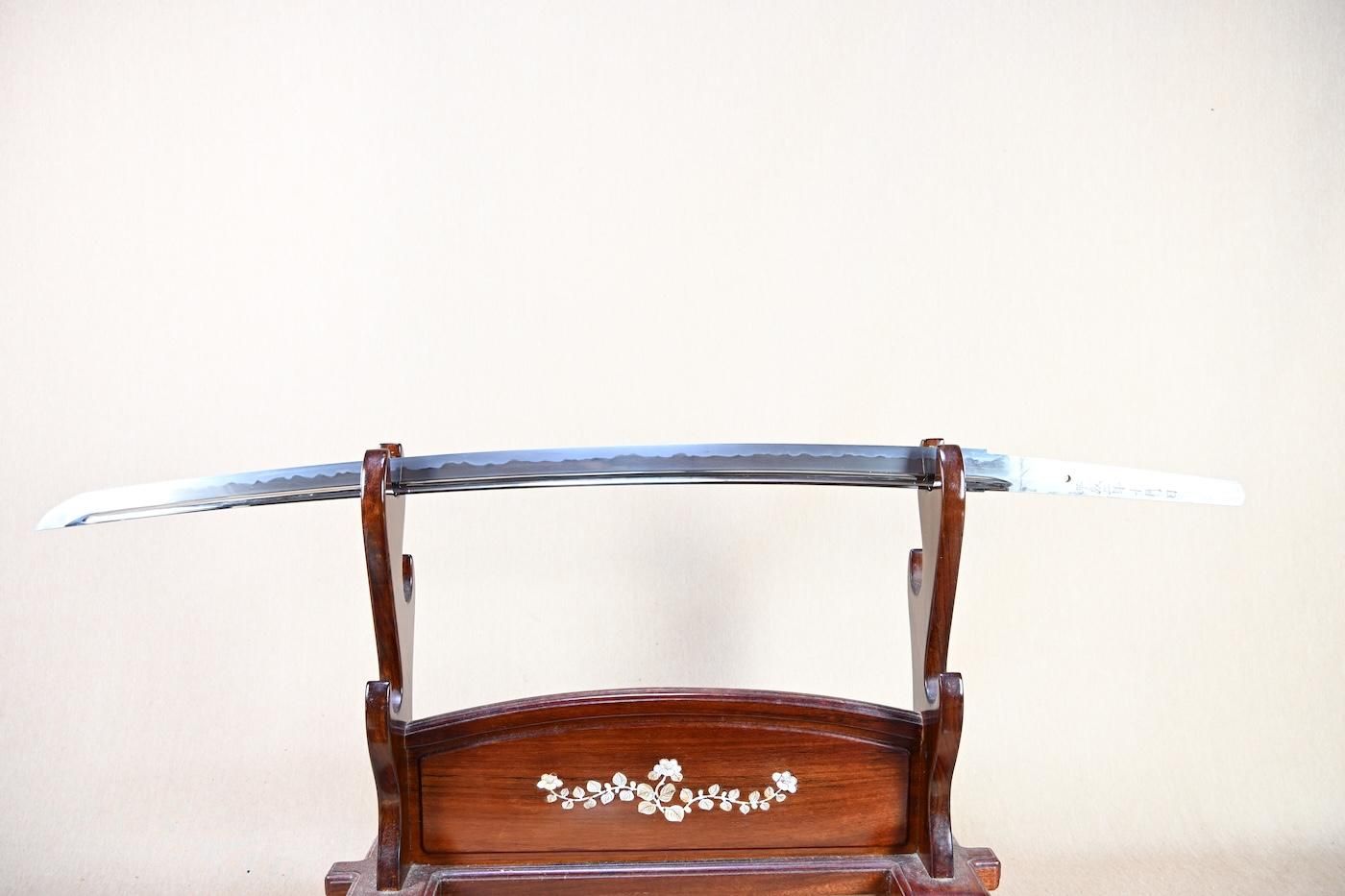
A magnificent figure with a wide mihaba and a wide hi, the jitetsu is forged in a moist, tightly packed muji-fu style.
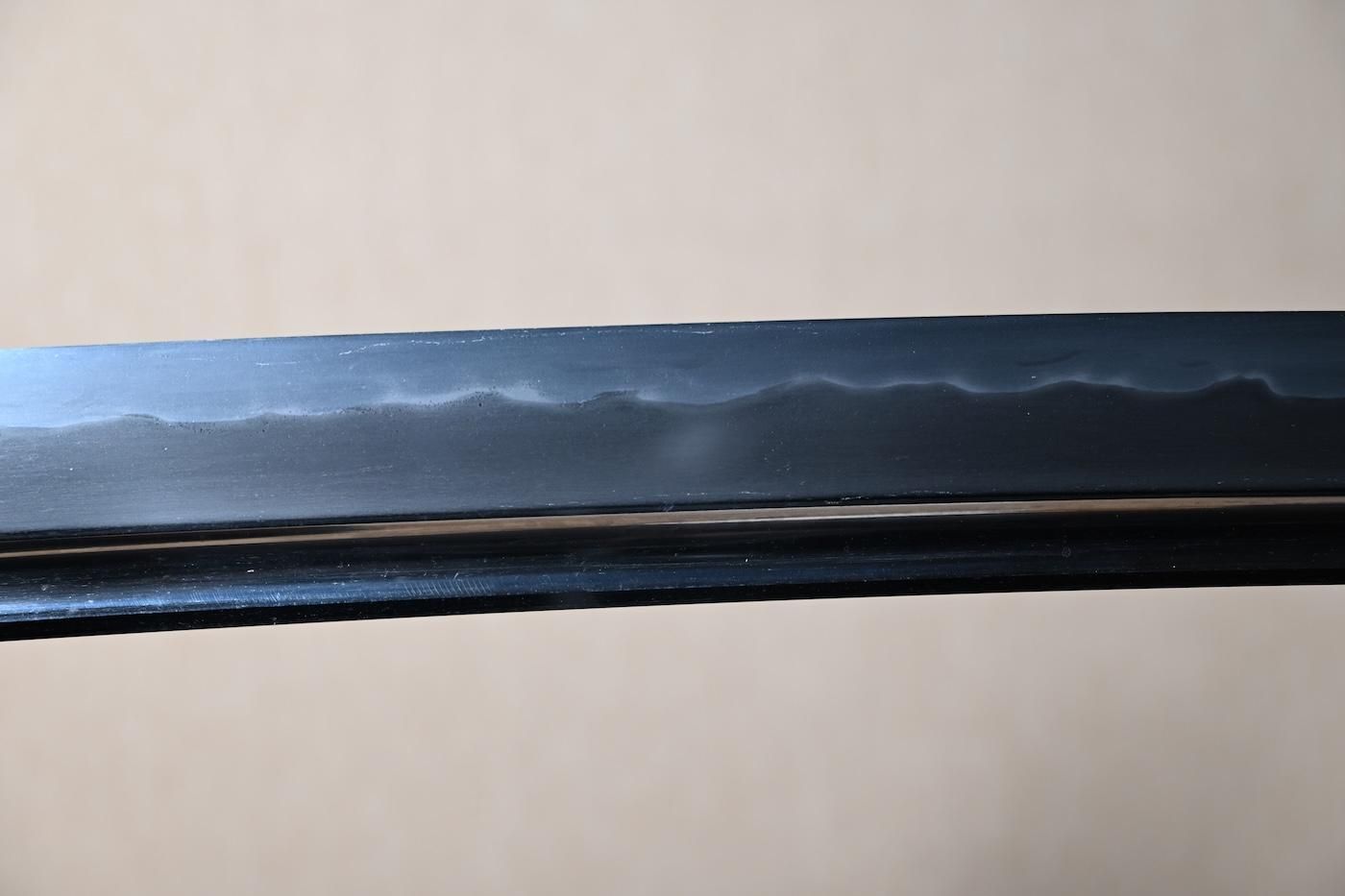
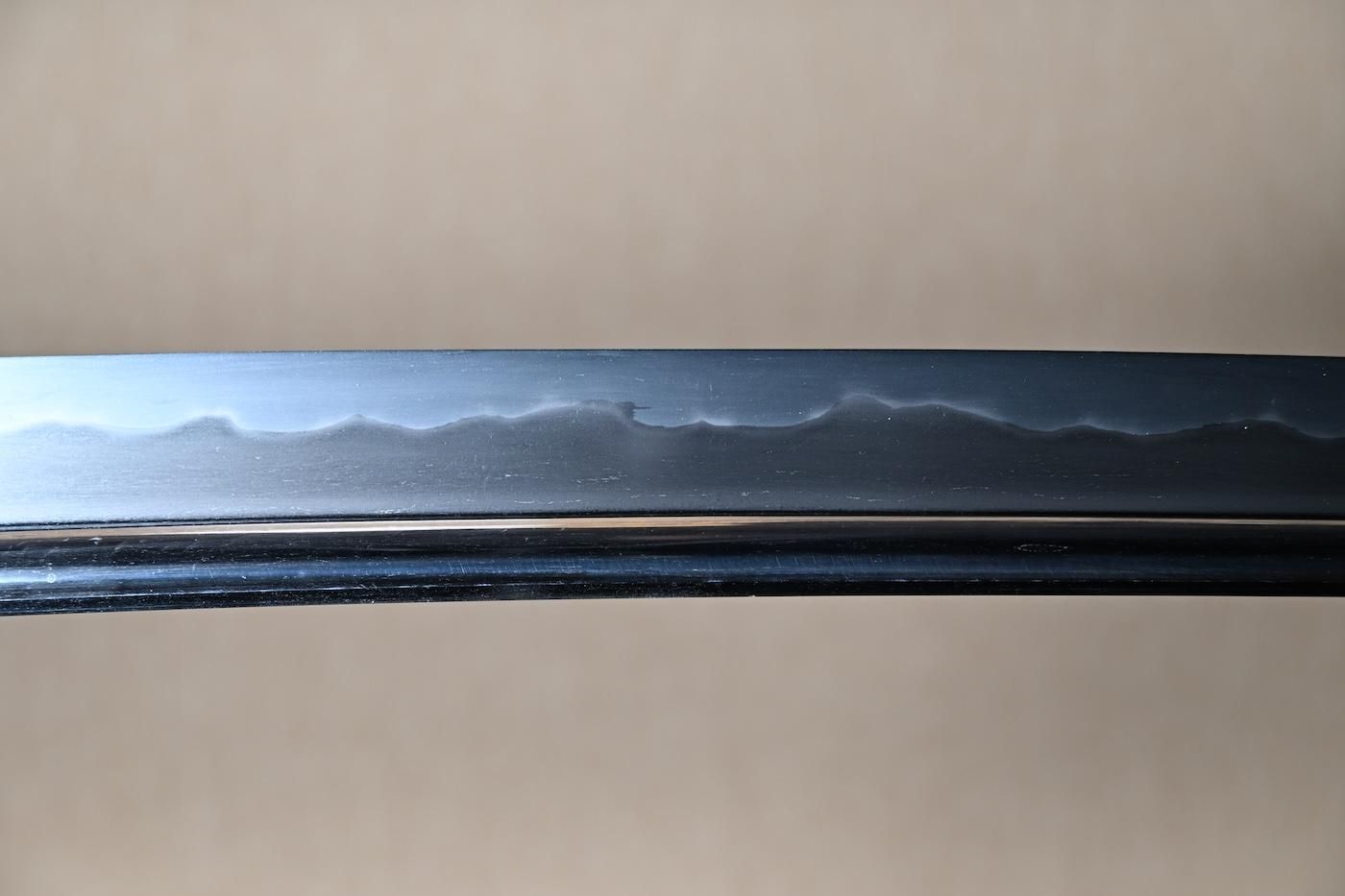
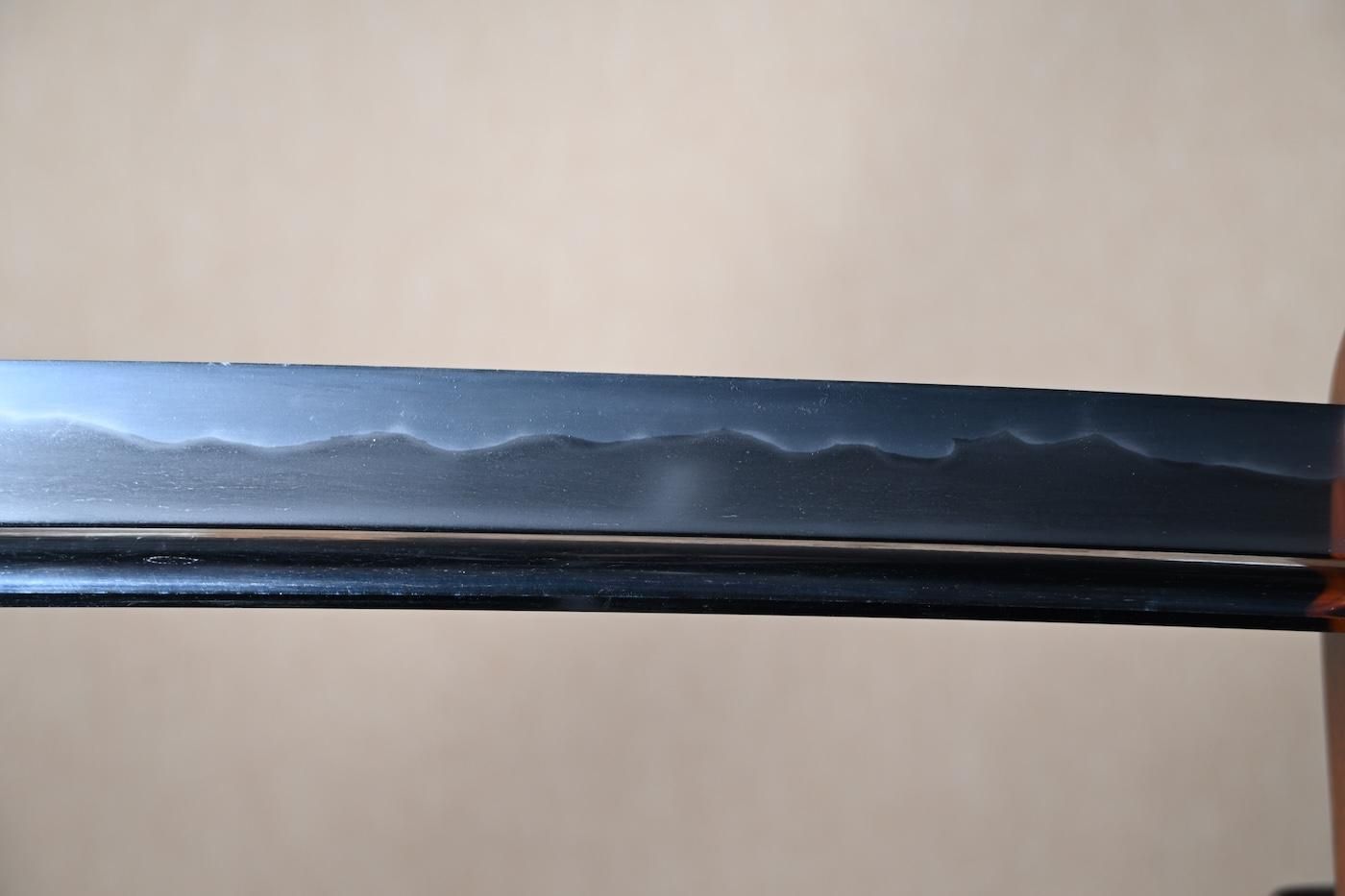
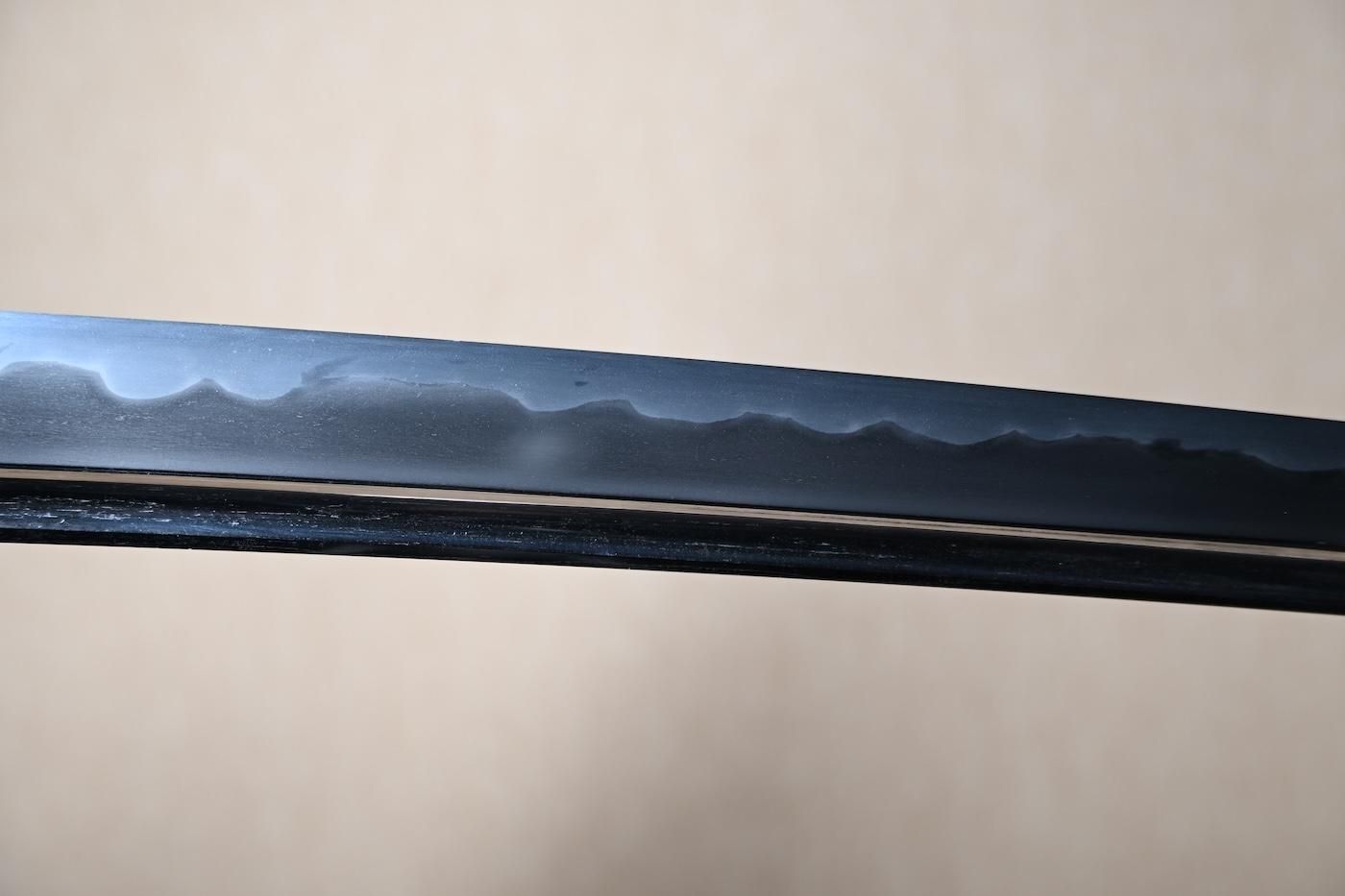
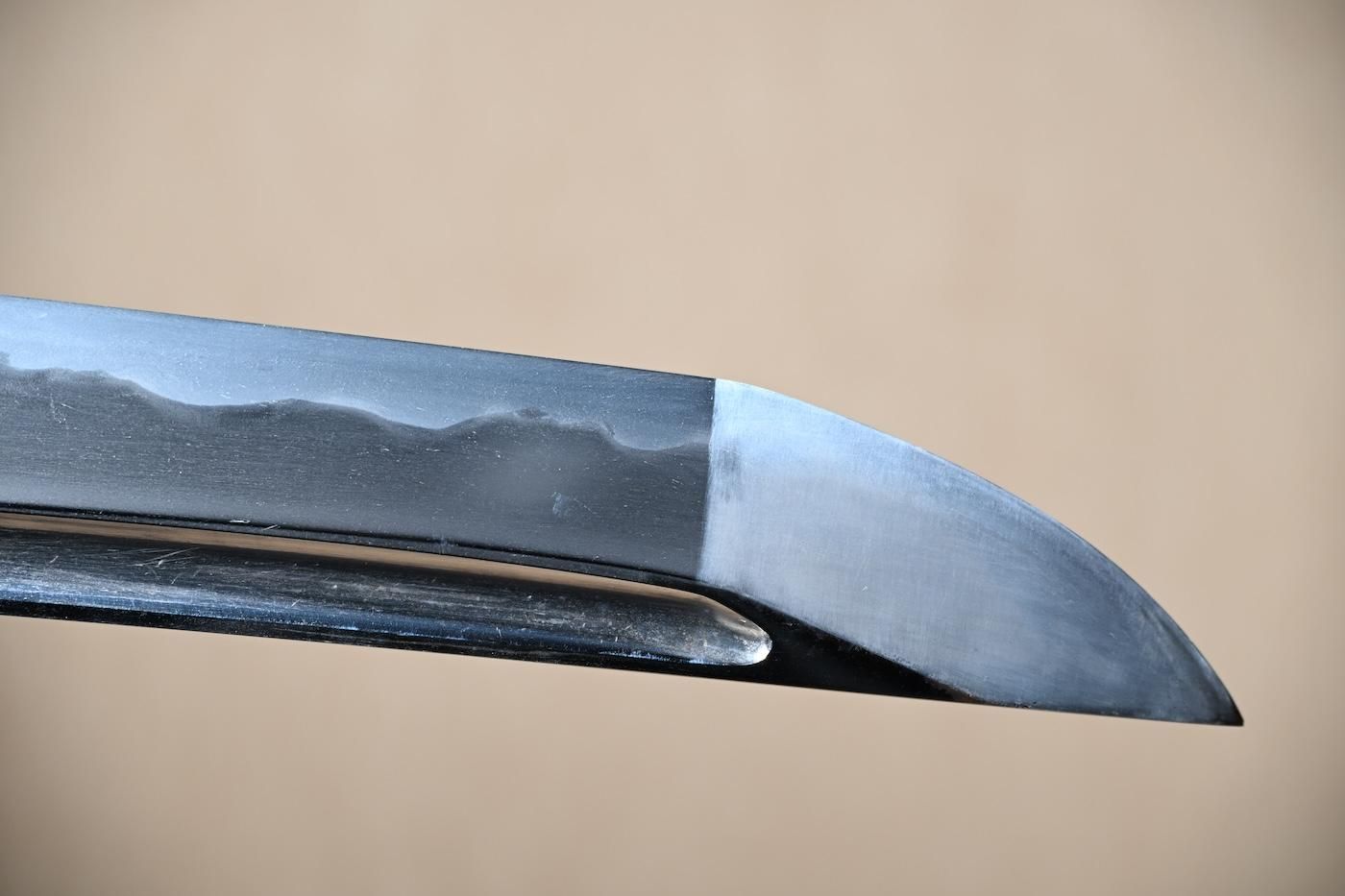
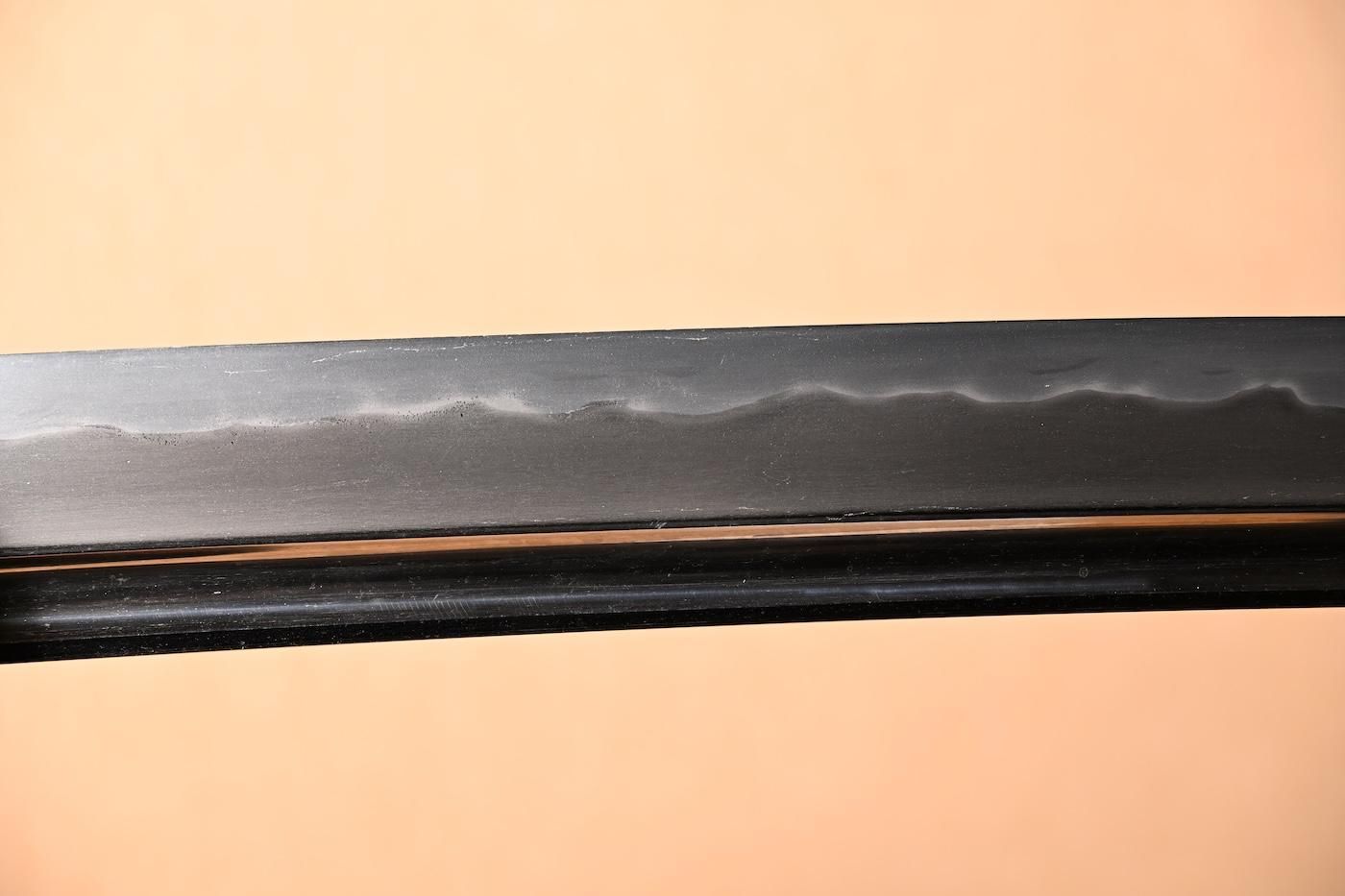
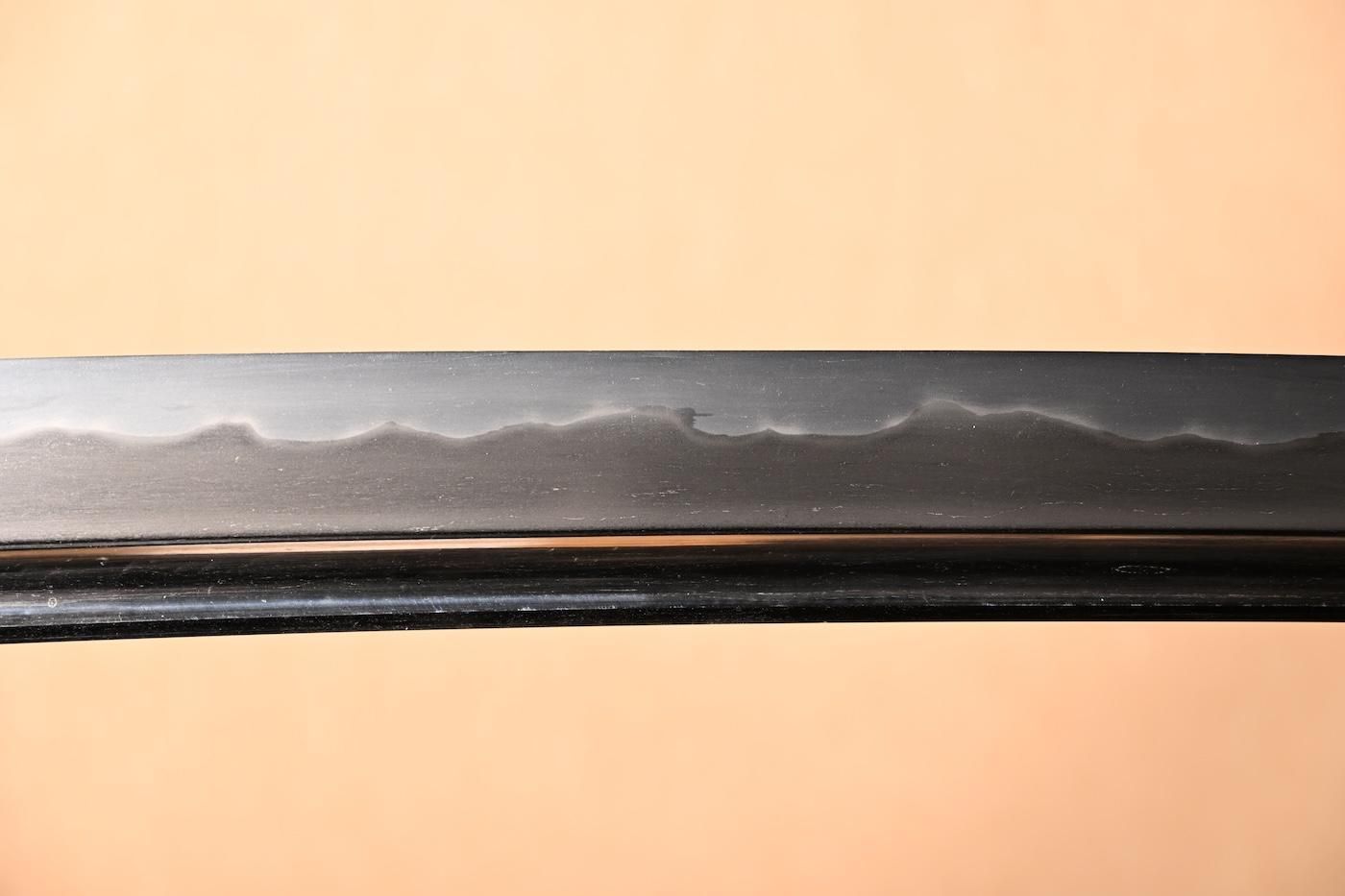
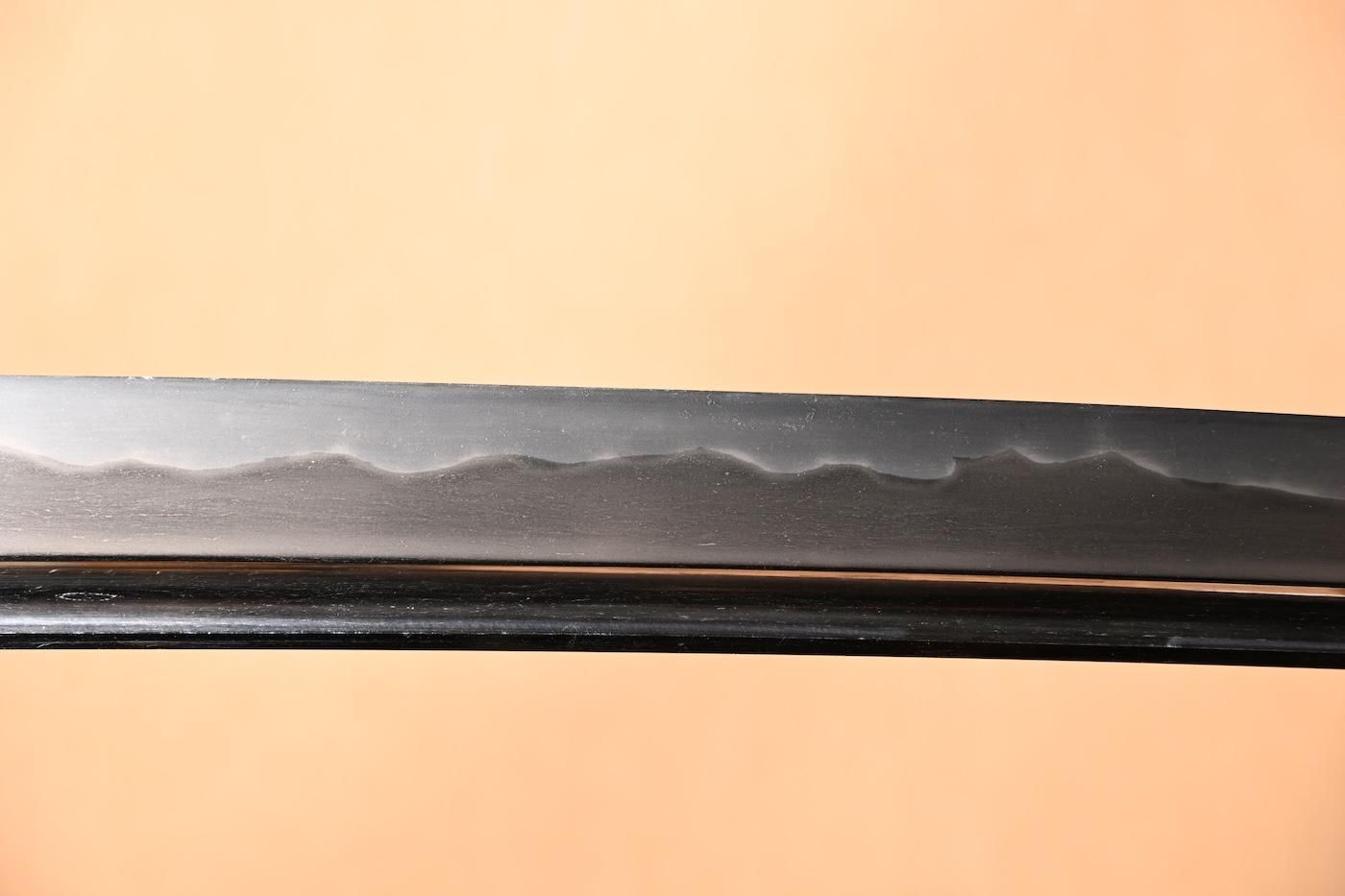
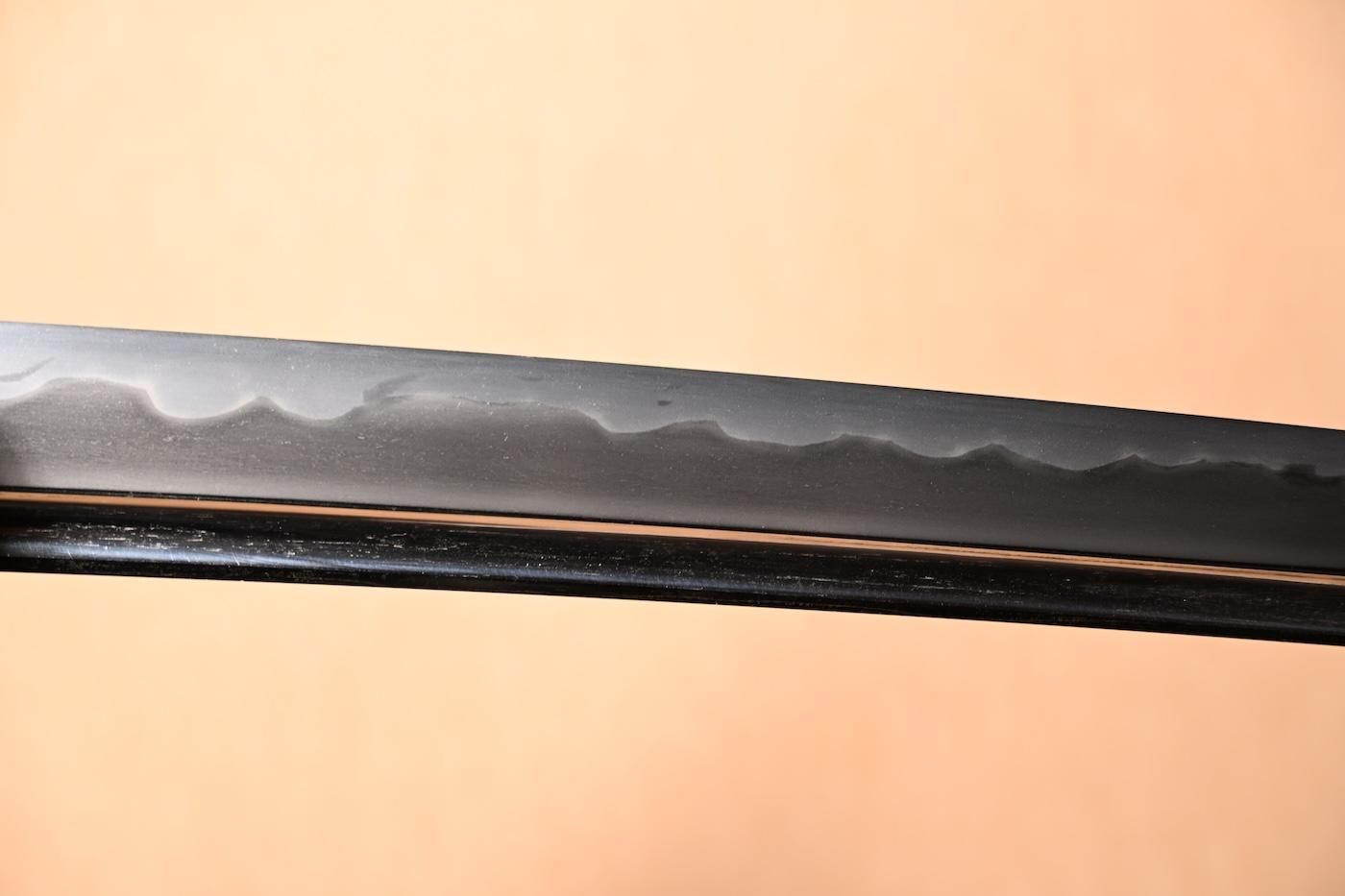
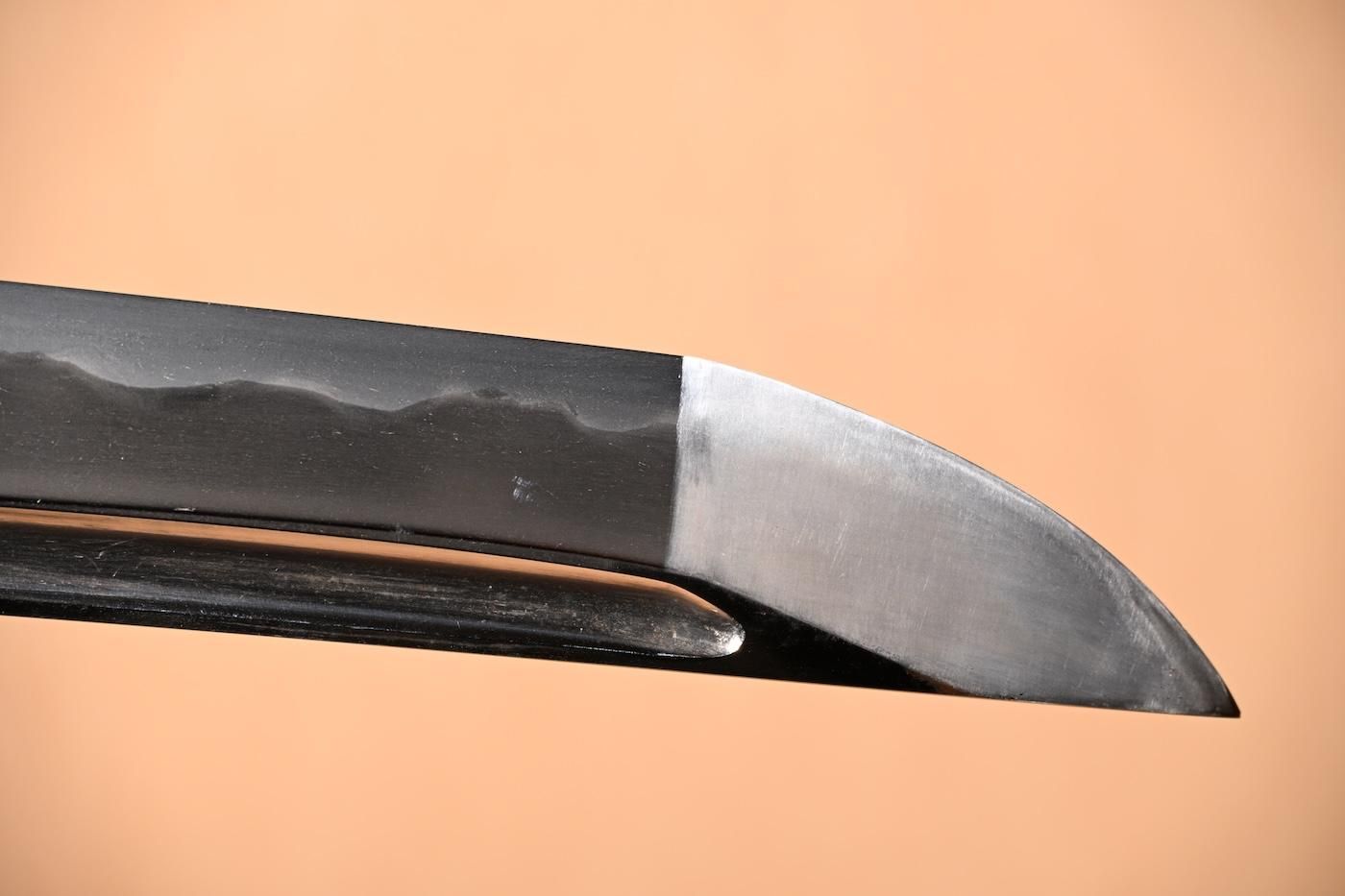
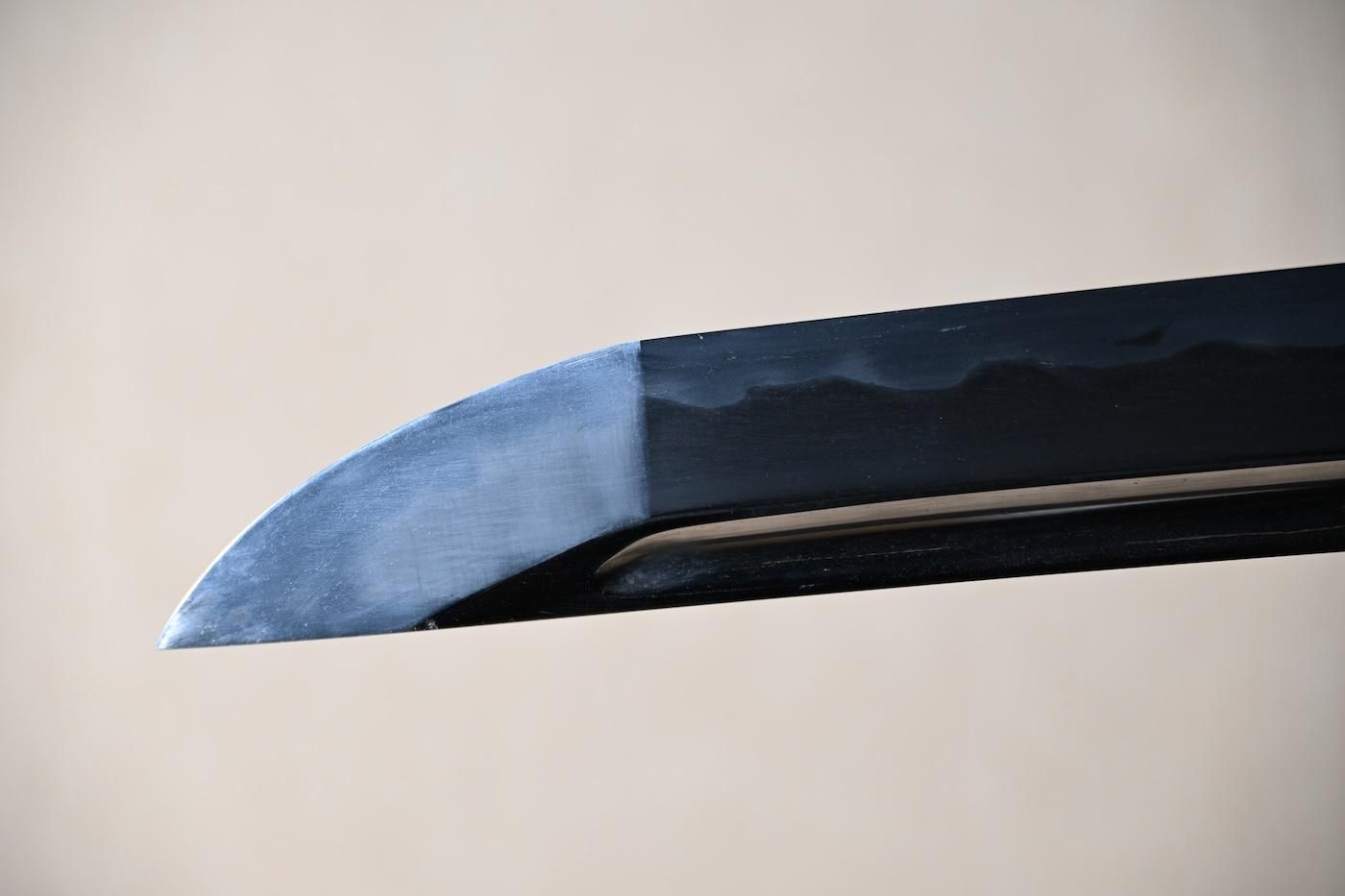
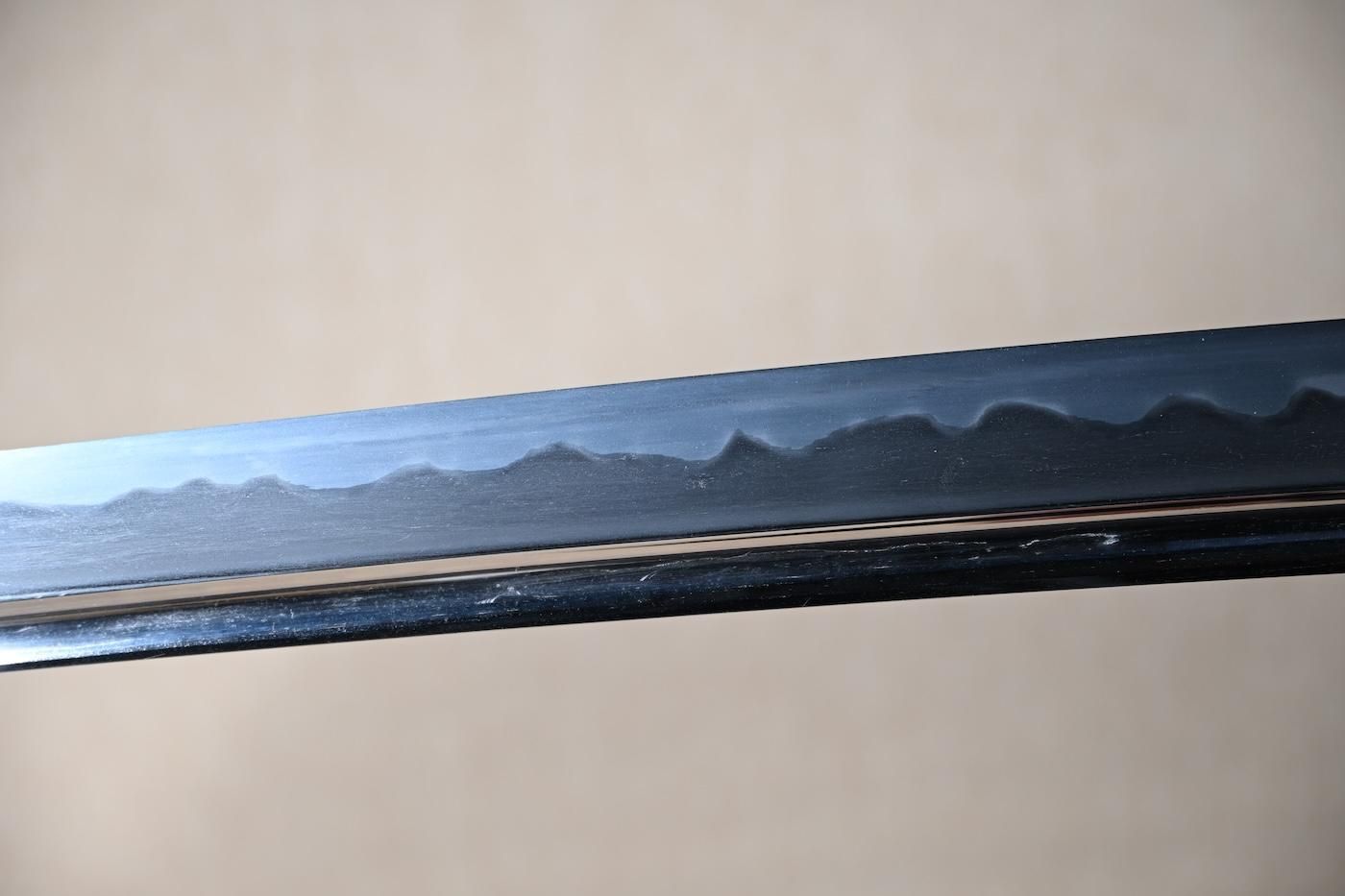
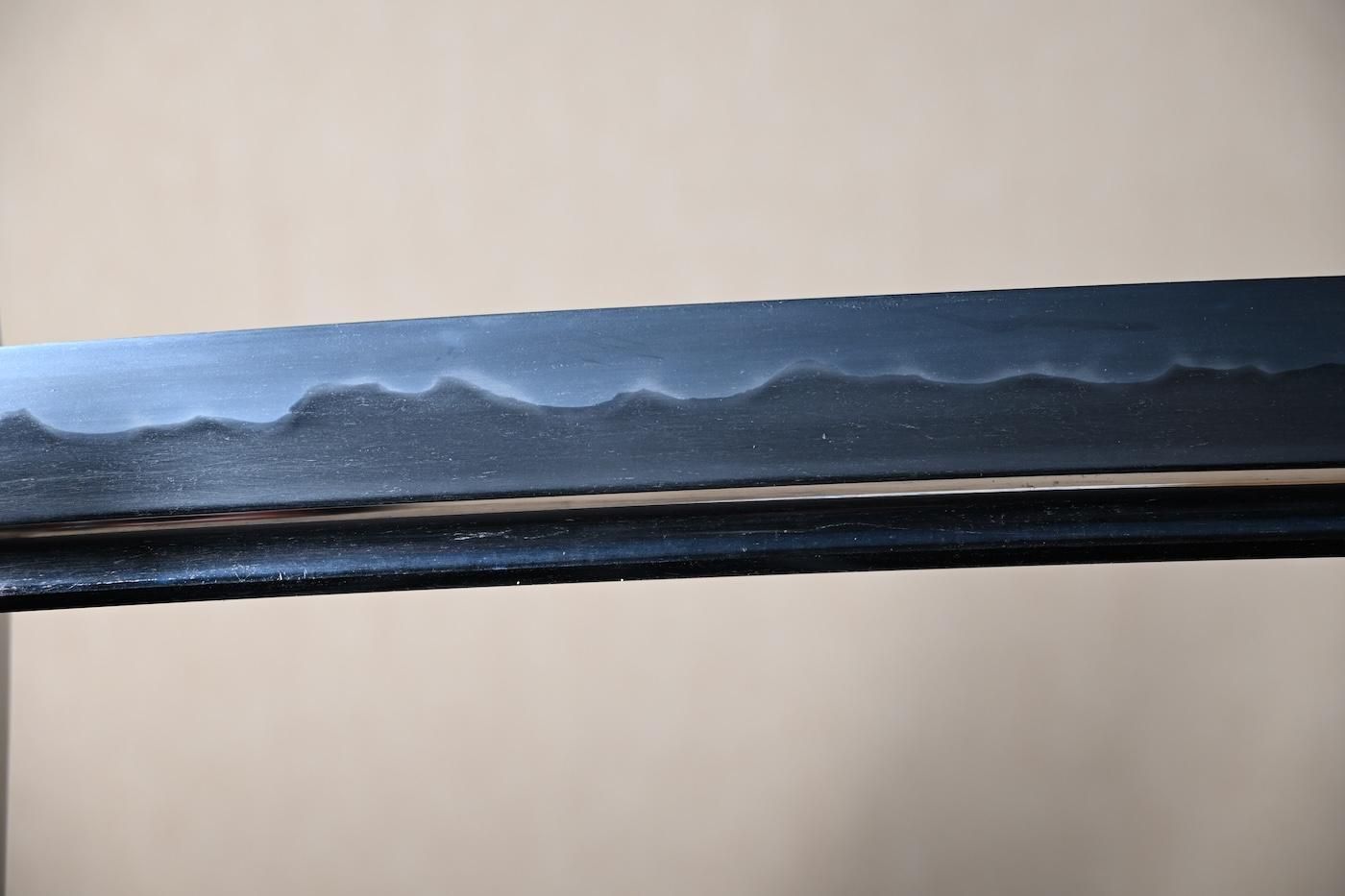
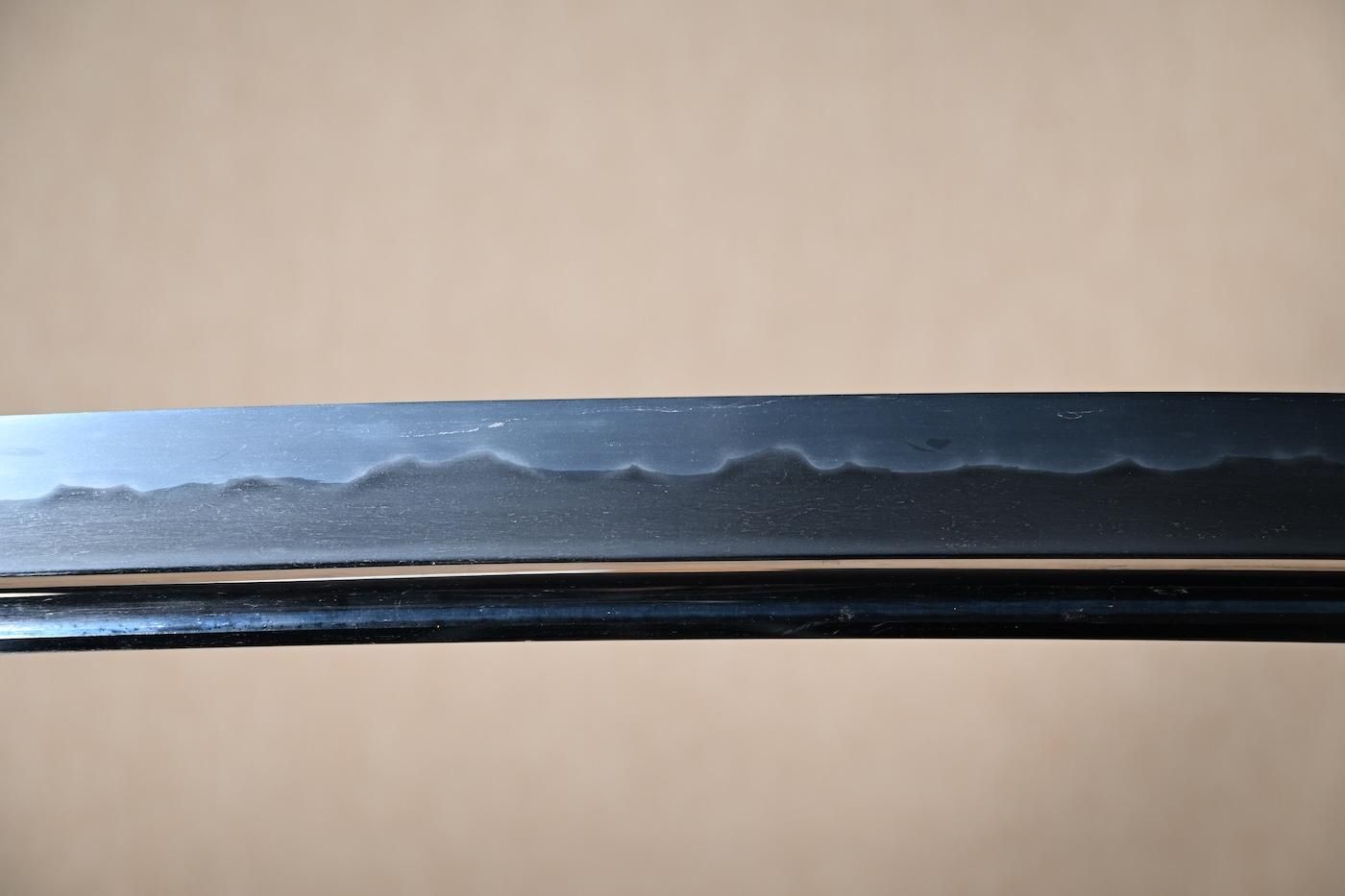
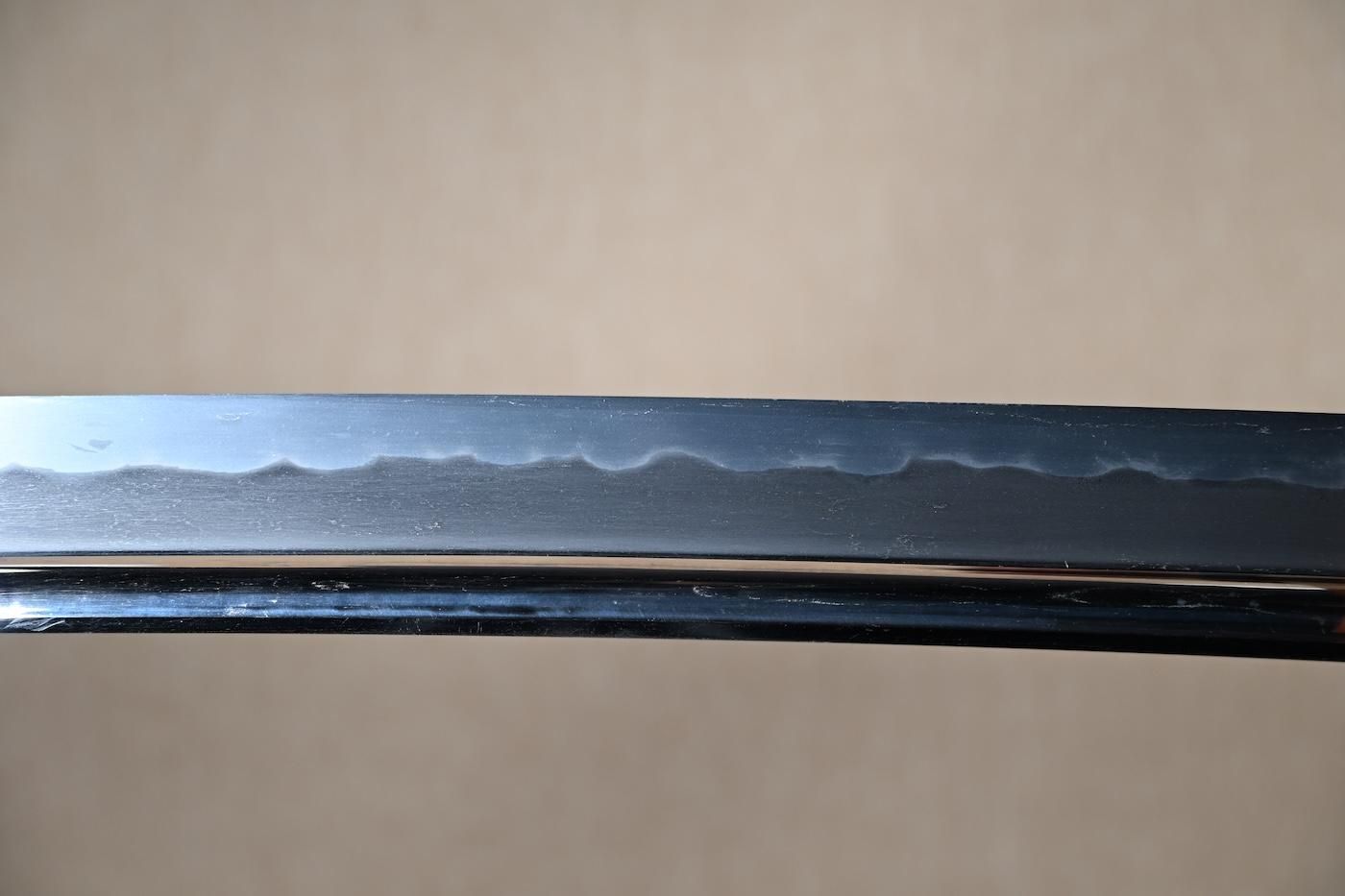
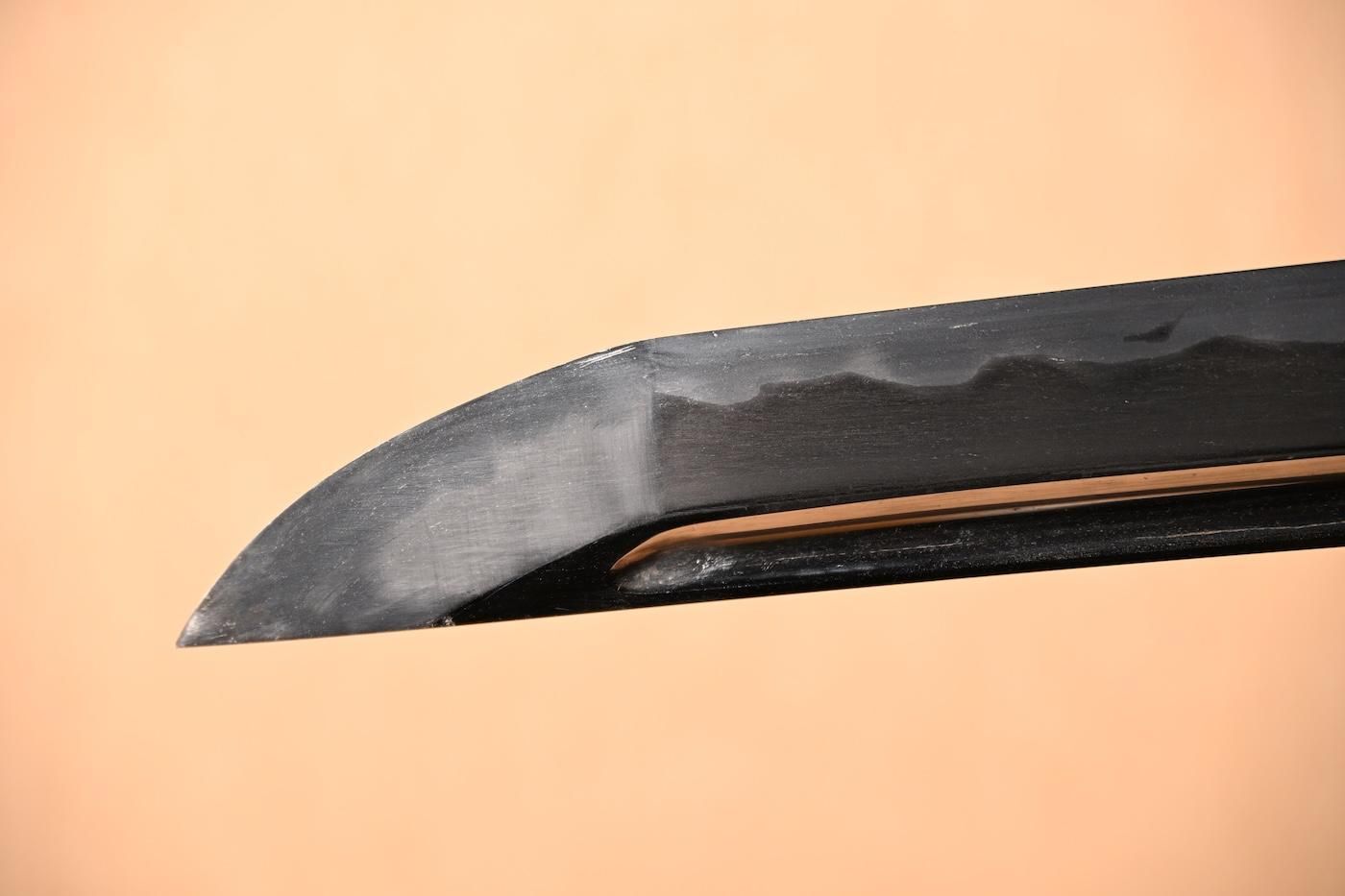
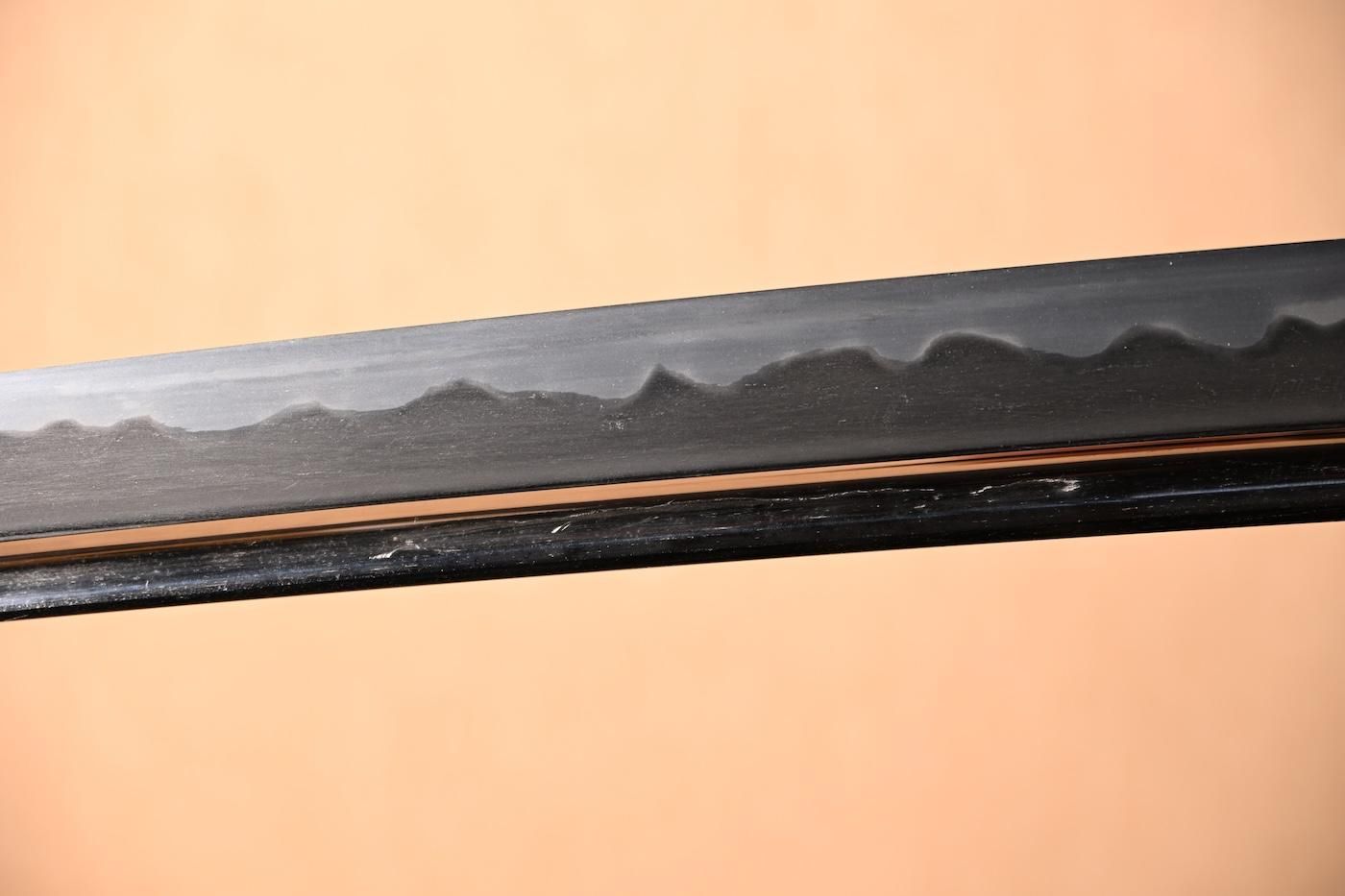
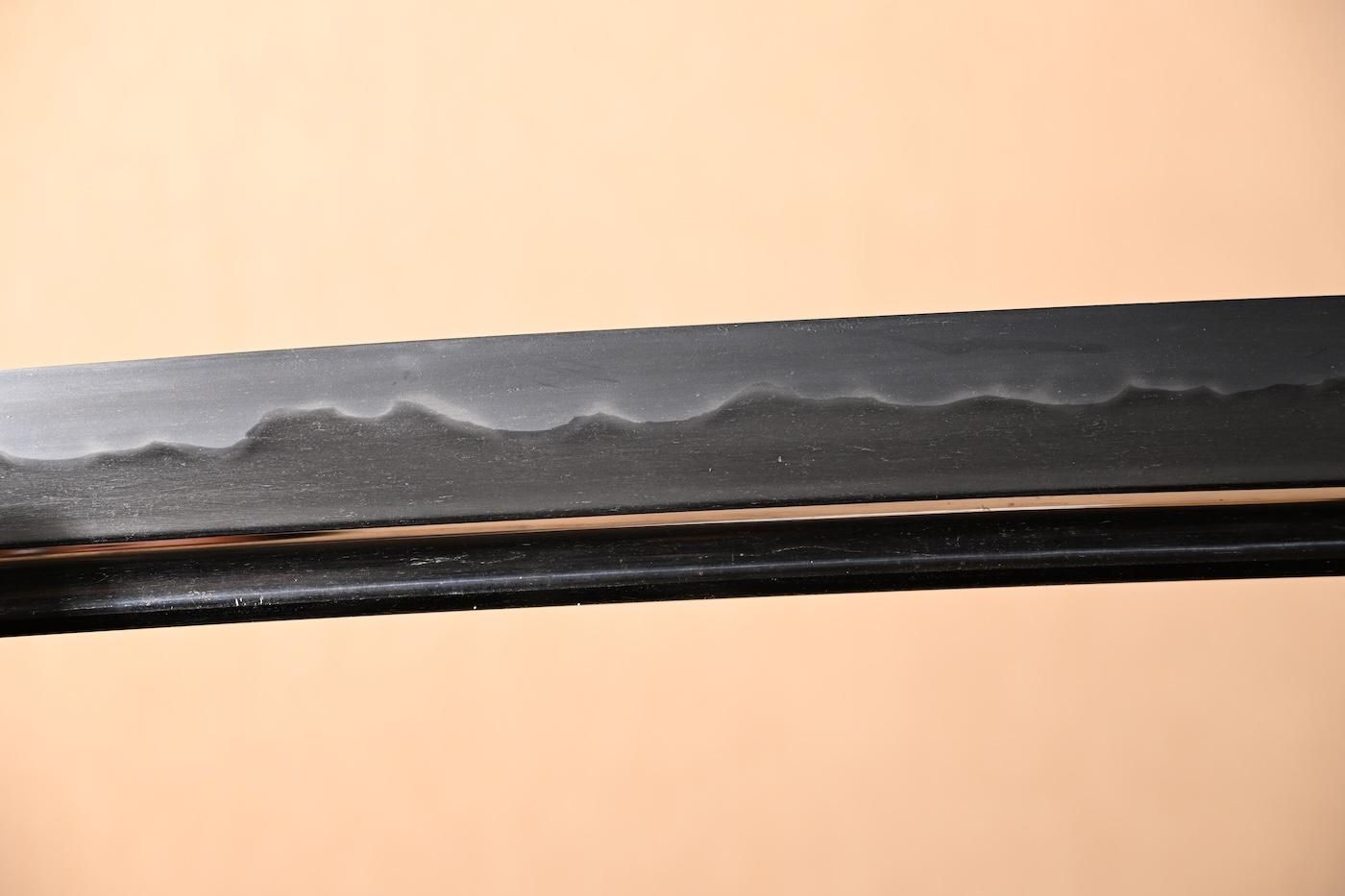
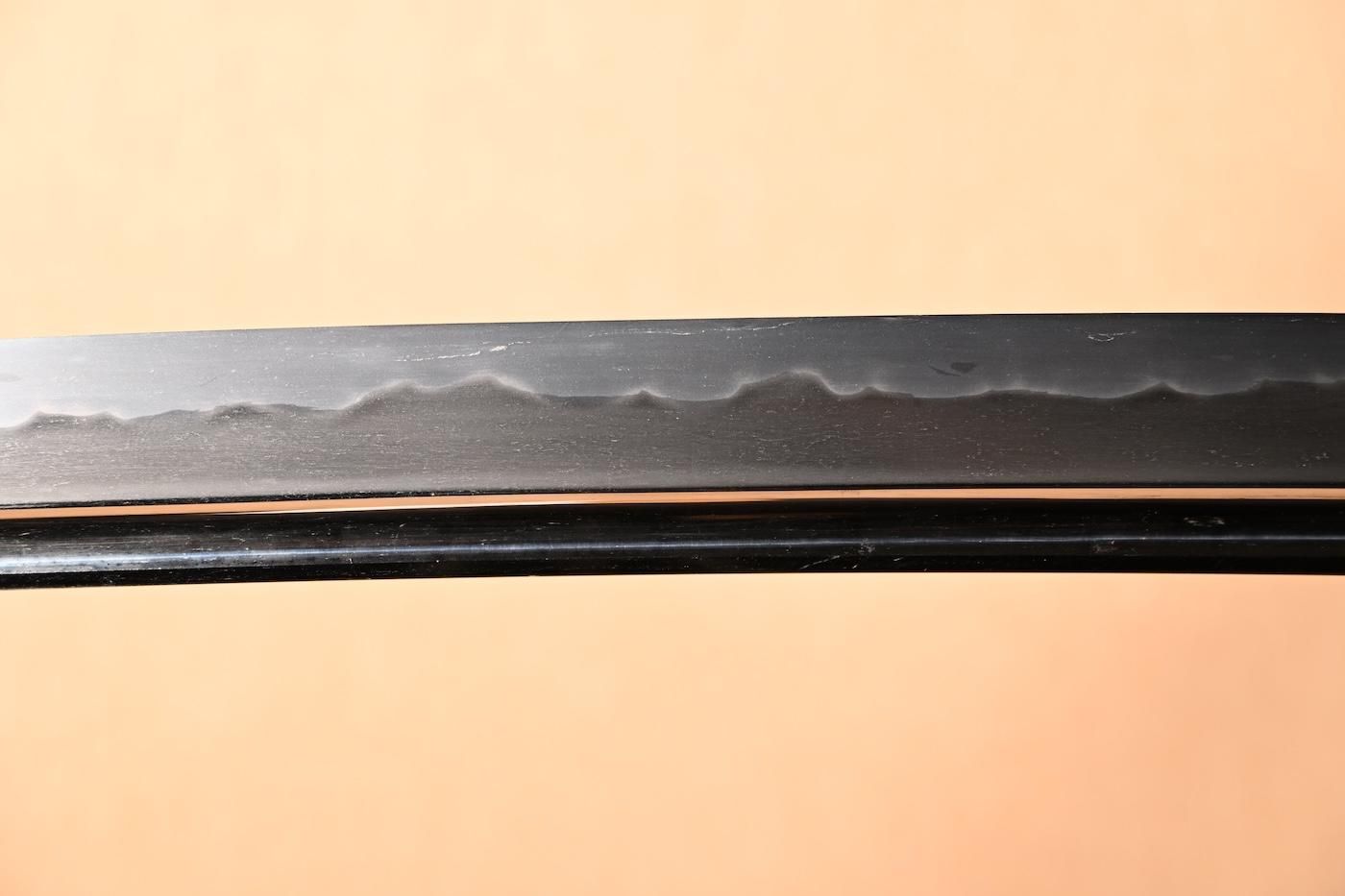
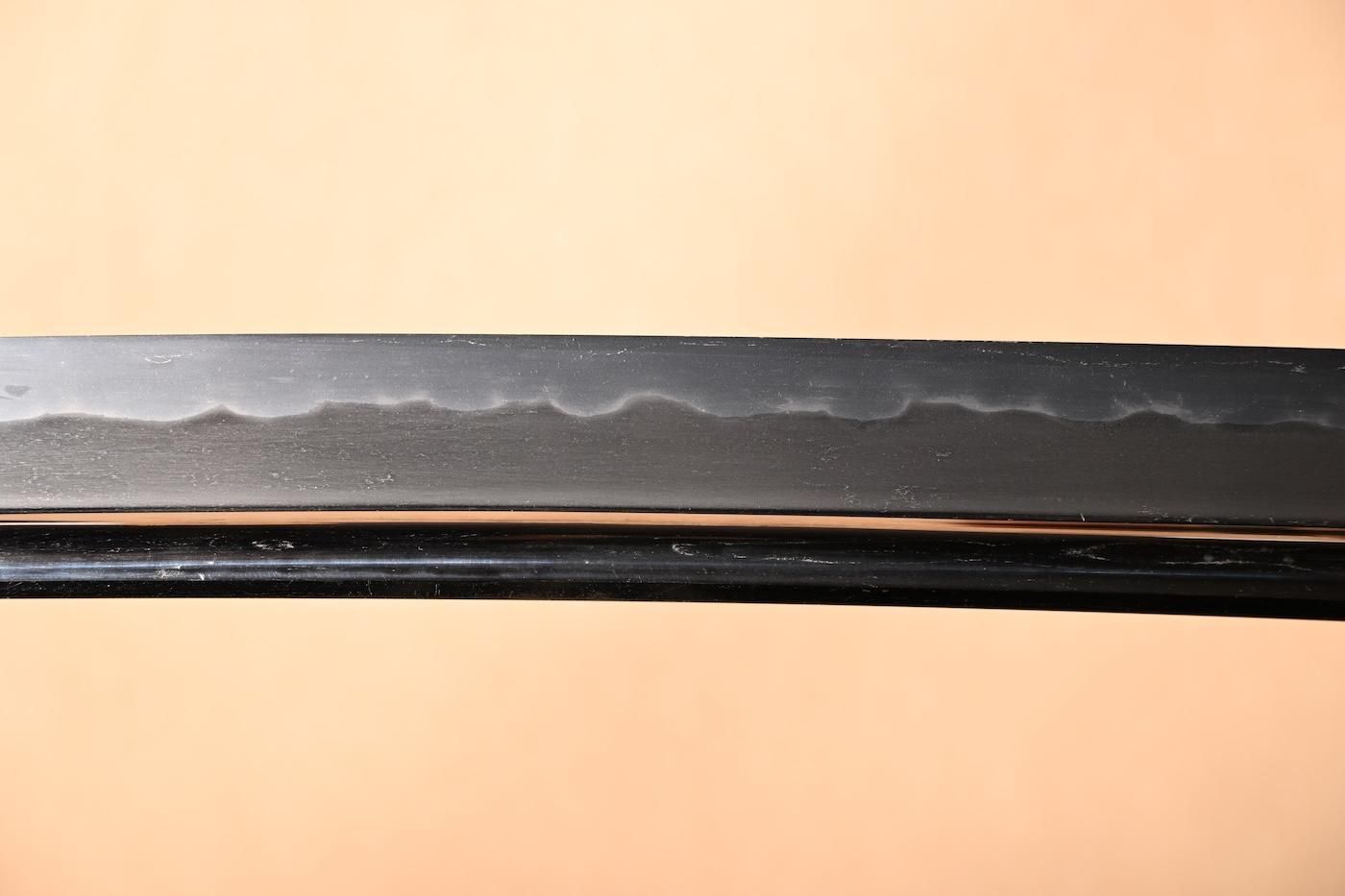
The hamon is a well-executed gunome in nioi-deki with a tight ha-buchi, and the kissaki is slightly elongated with a midare-komi boshi that turns back; it is a fine work that has been carefully forged.
The blade, which has a relatively good balance with its wide mihaba and deeply carved hi to reduce weight,
has a good hi-nari, is visually impressive, and the edge is well-defined. This is a sword recommended for iai.
■ Koshirae
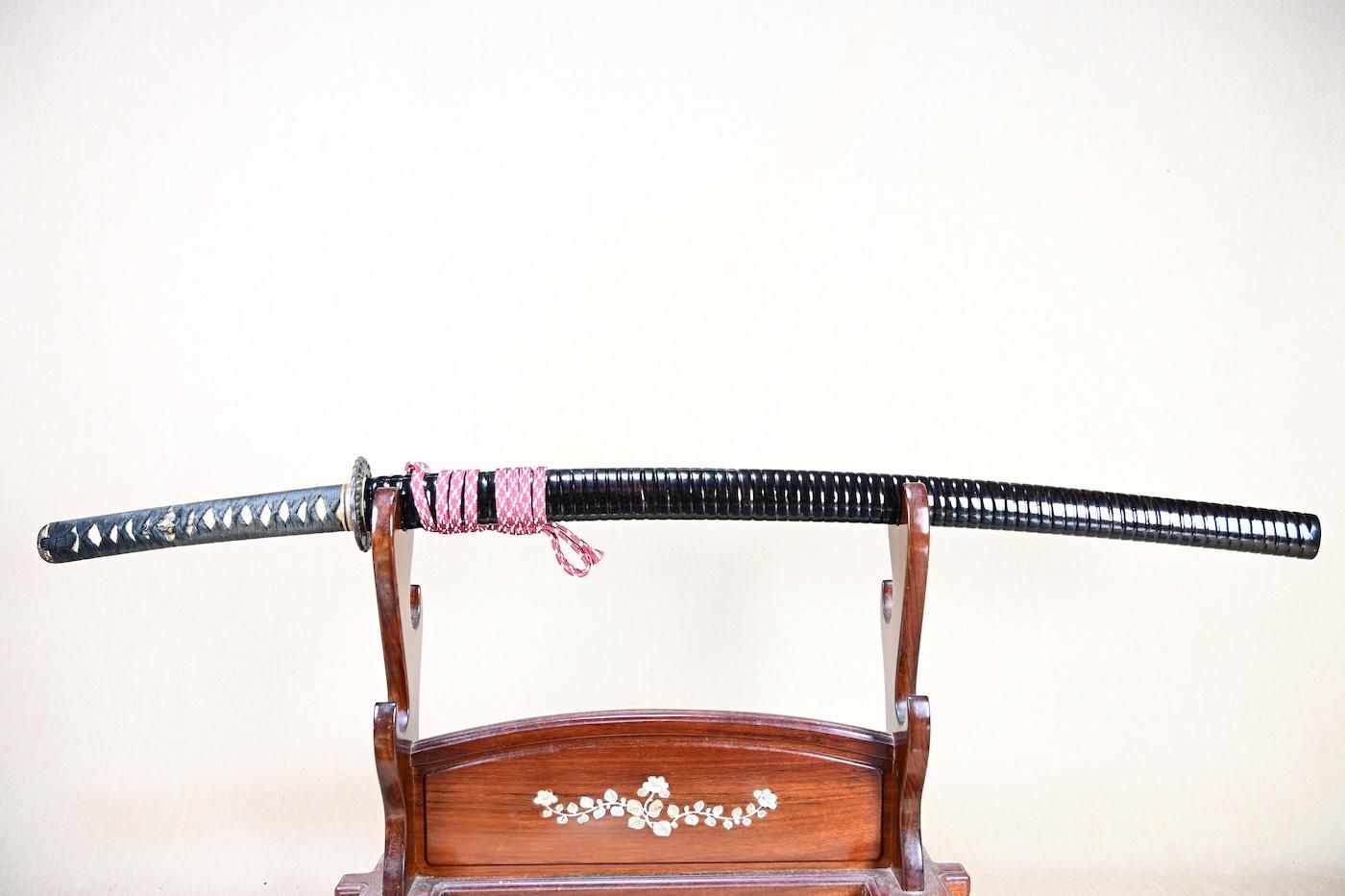
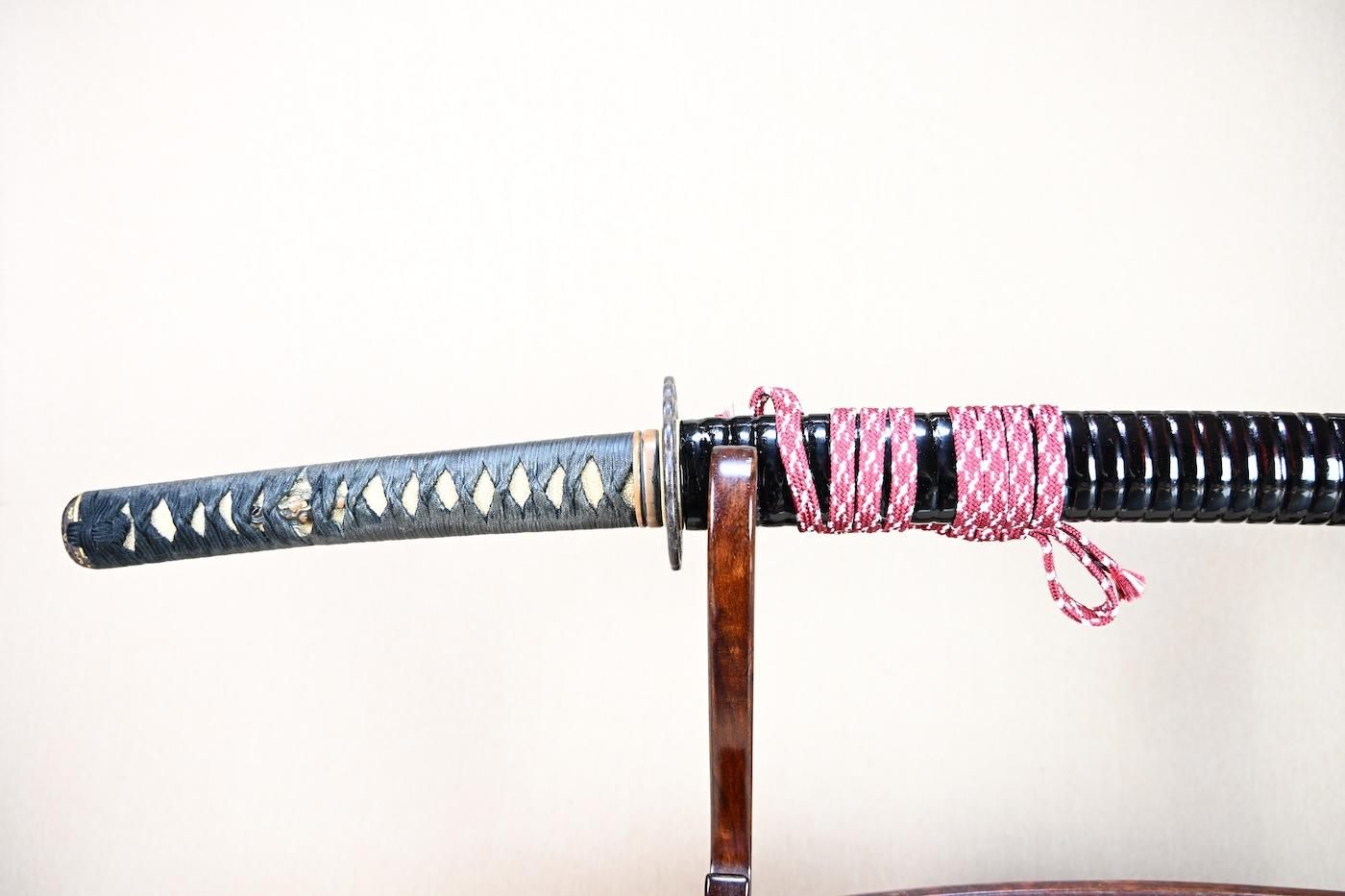
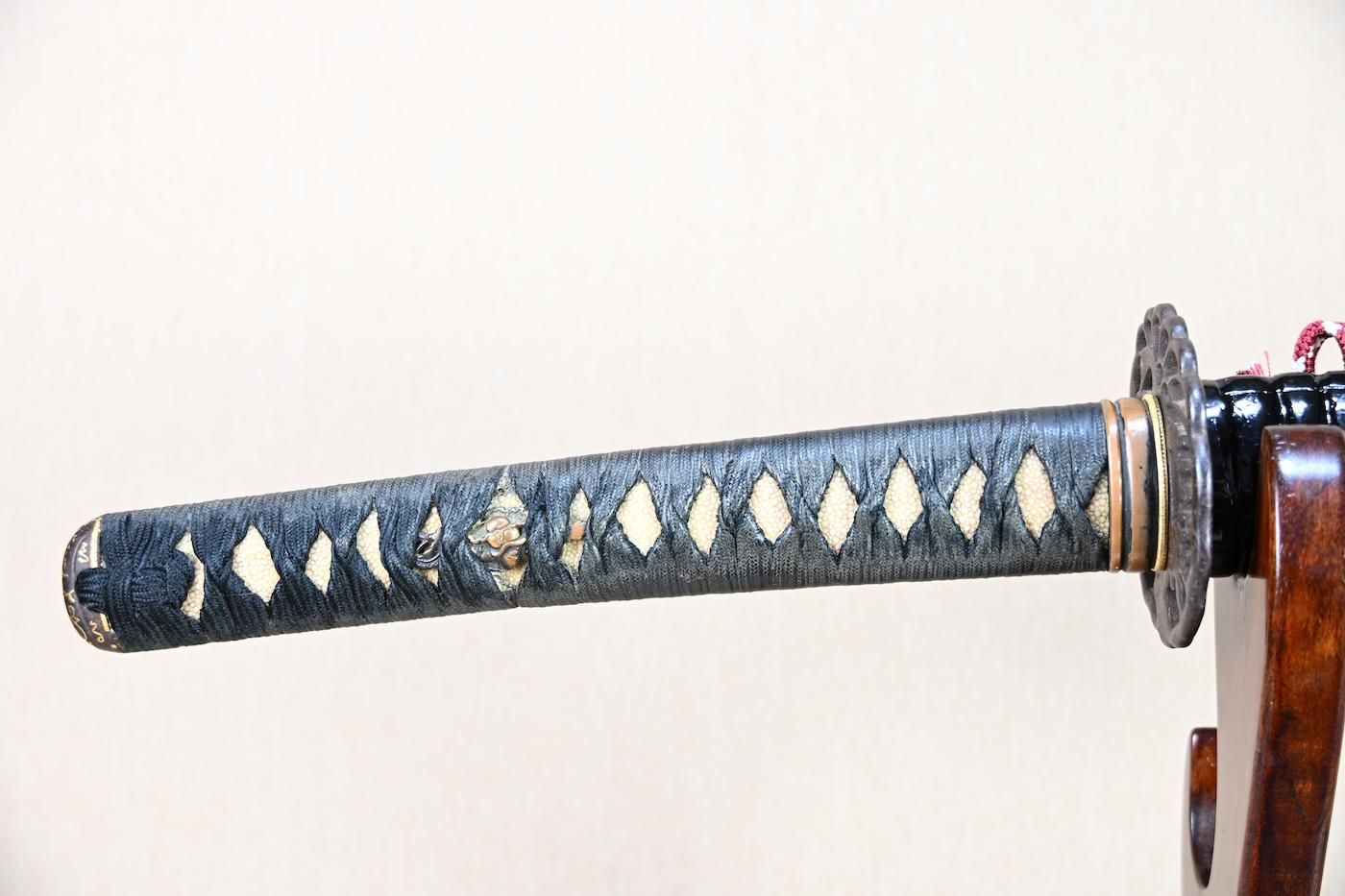
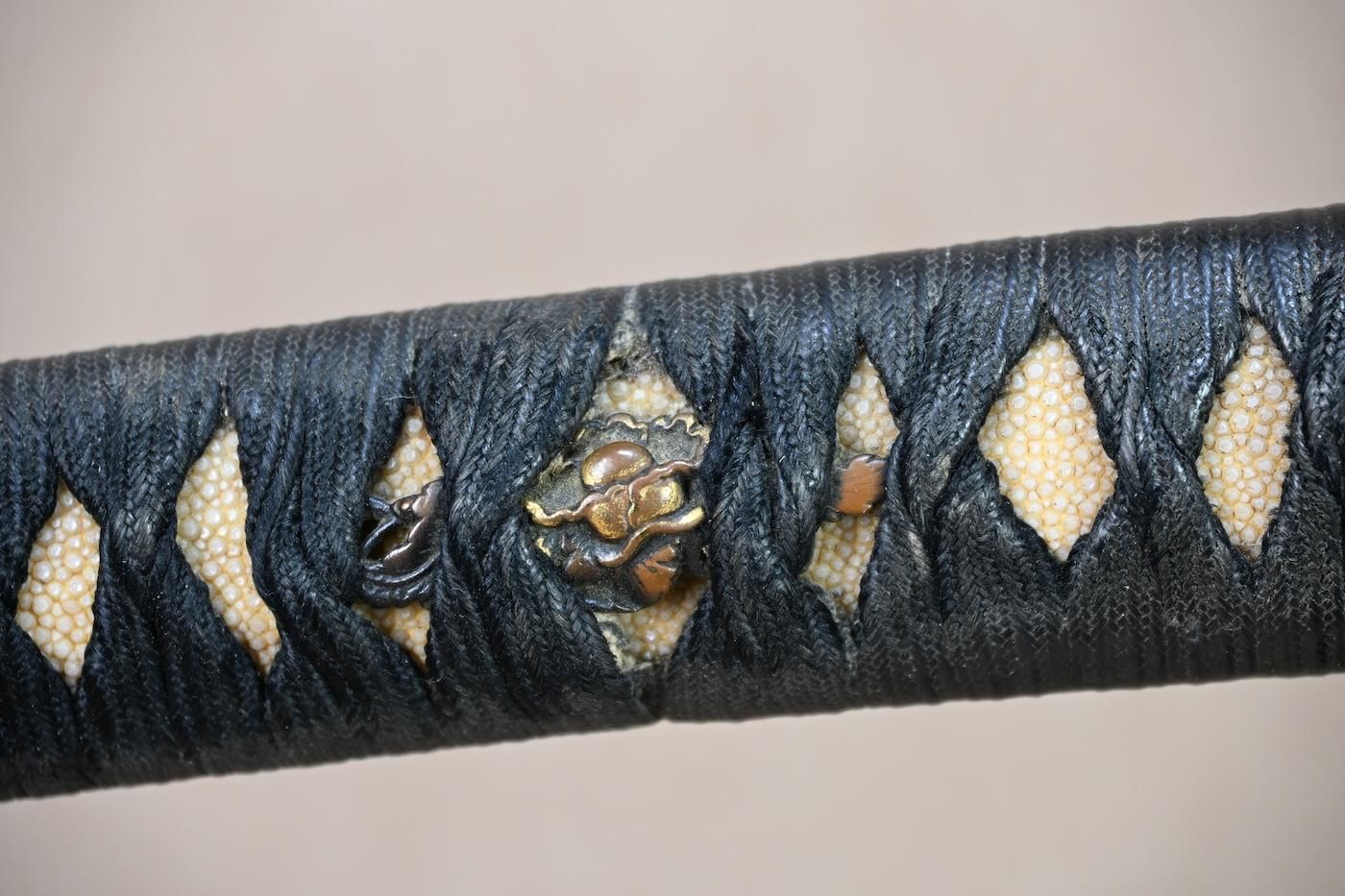
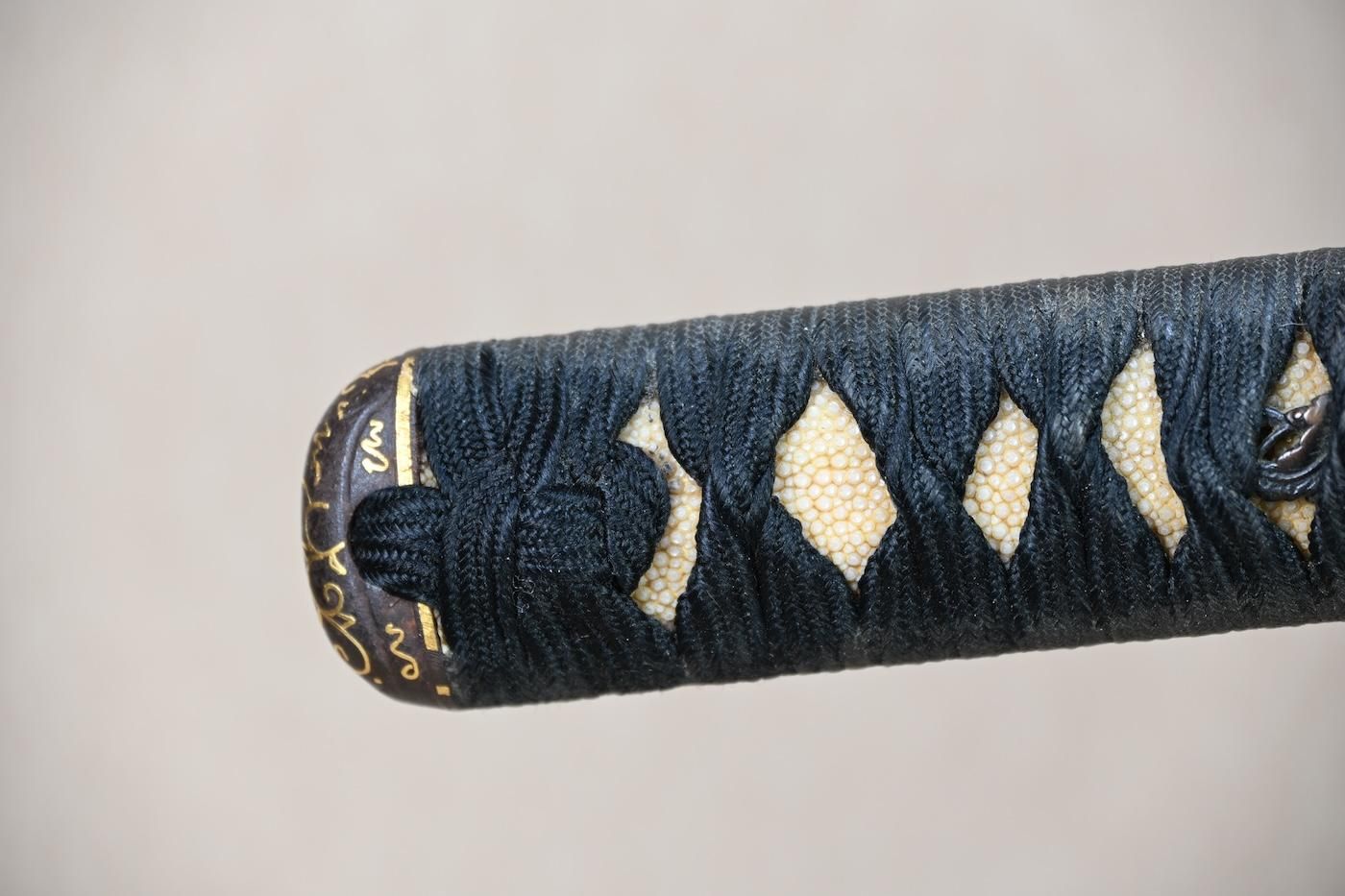
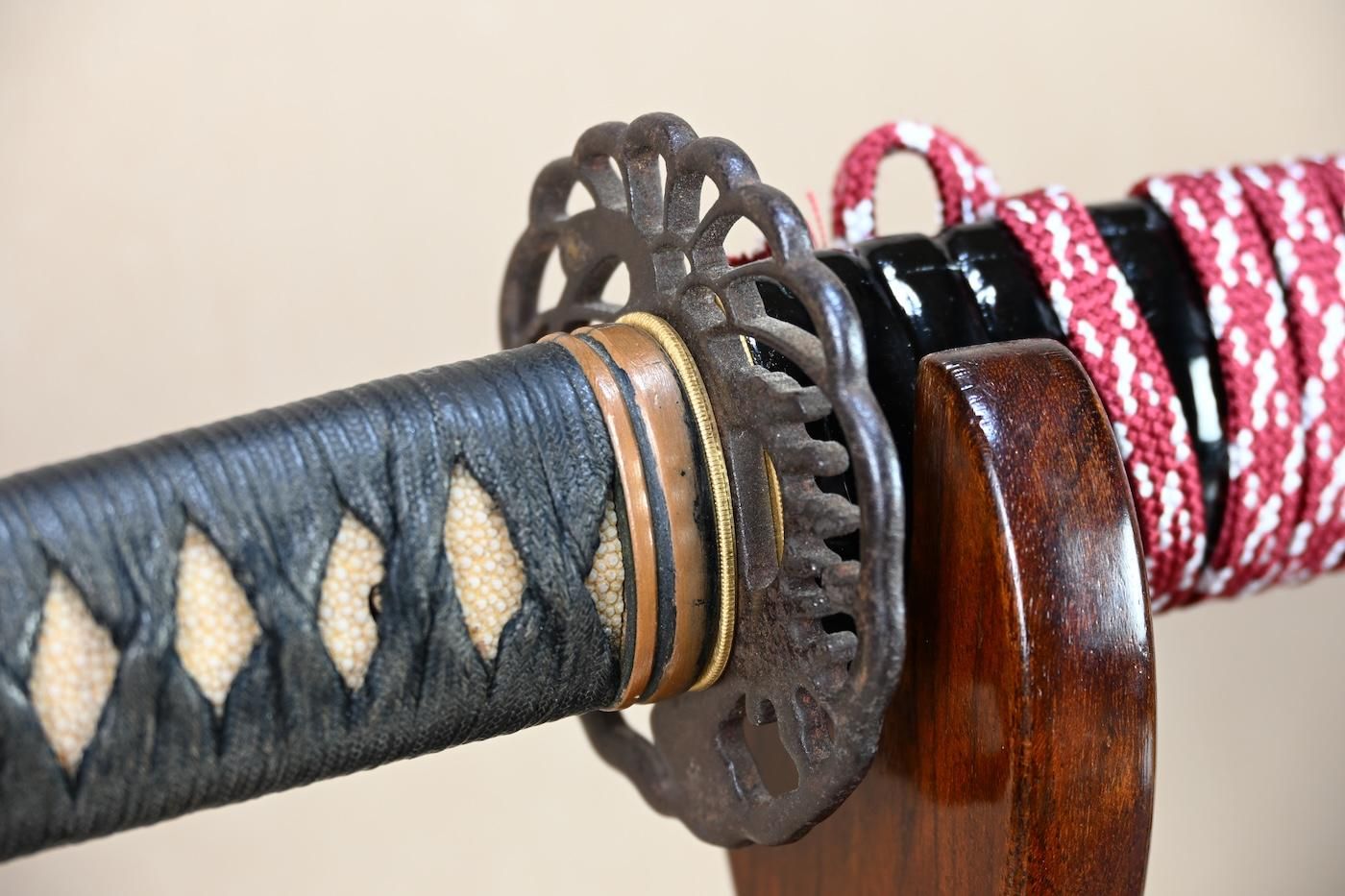
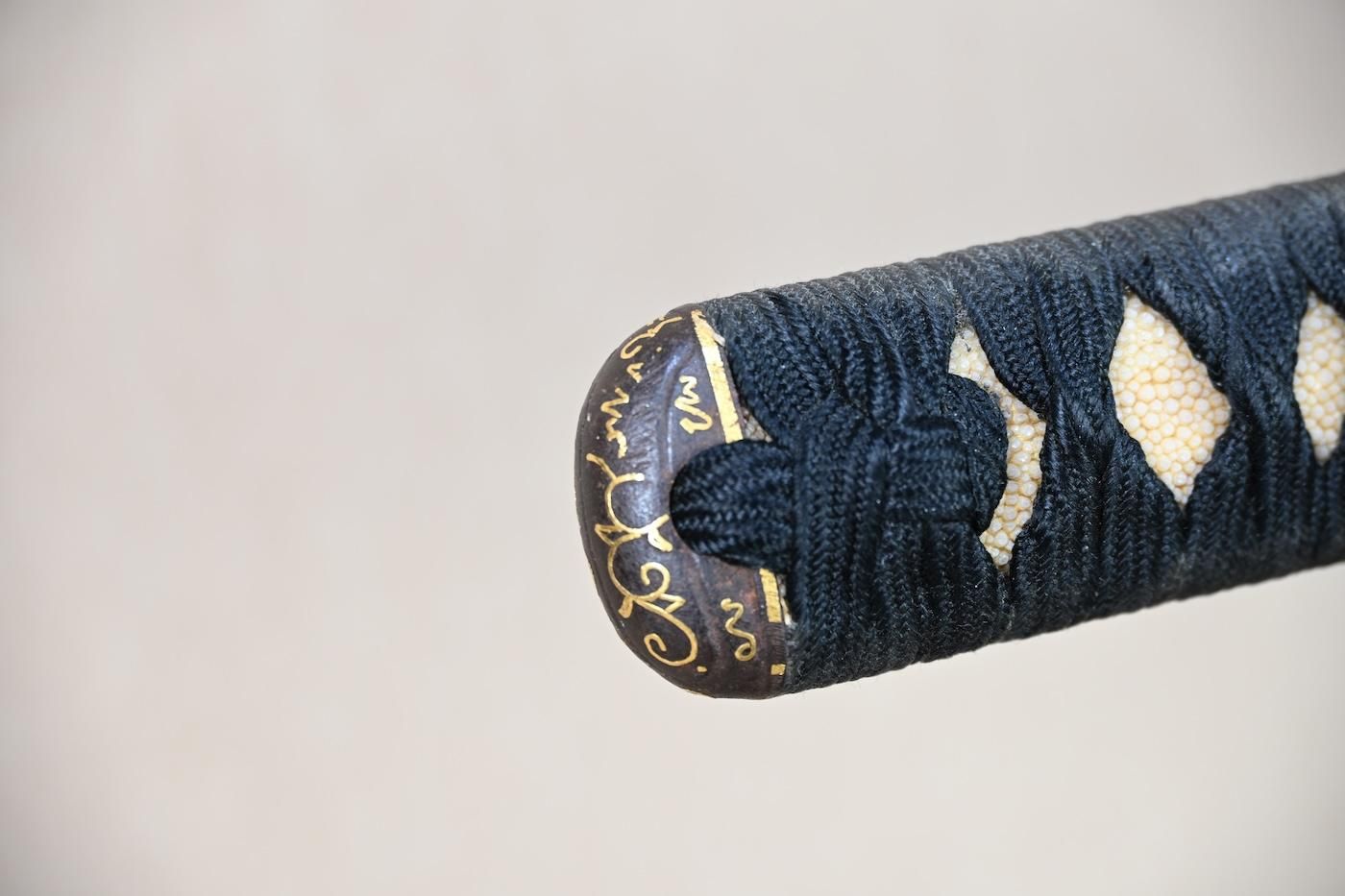
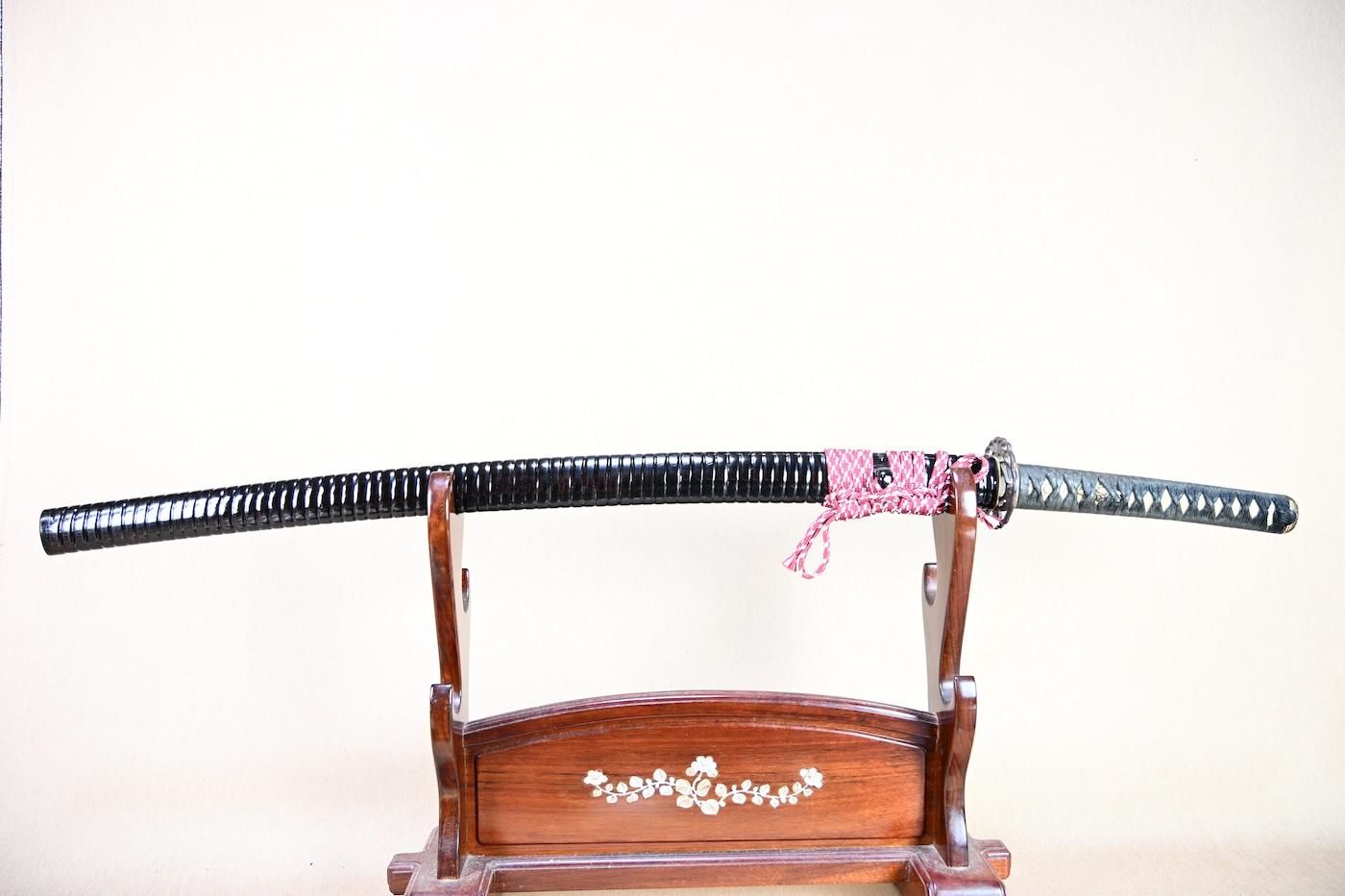
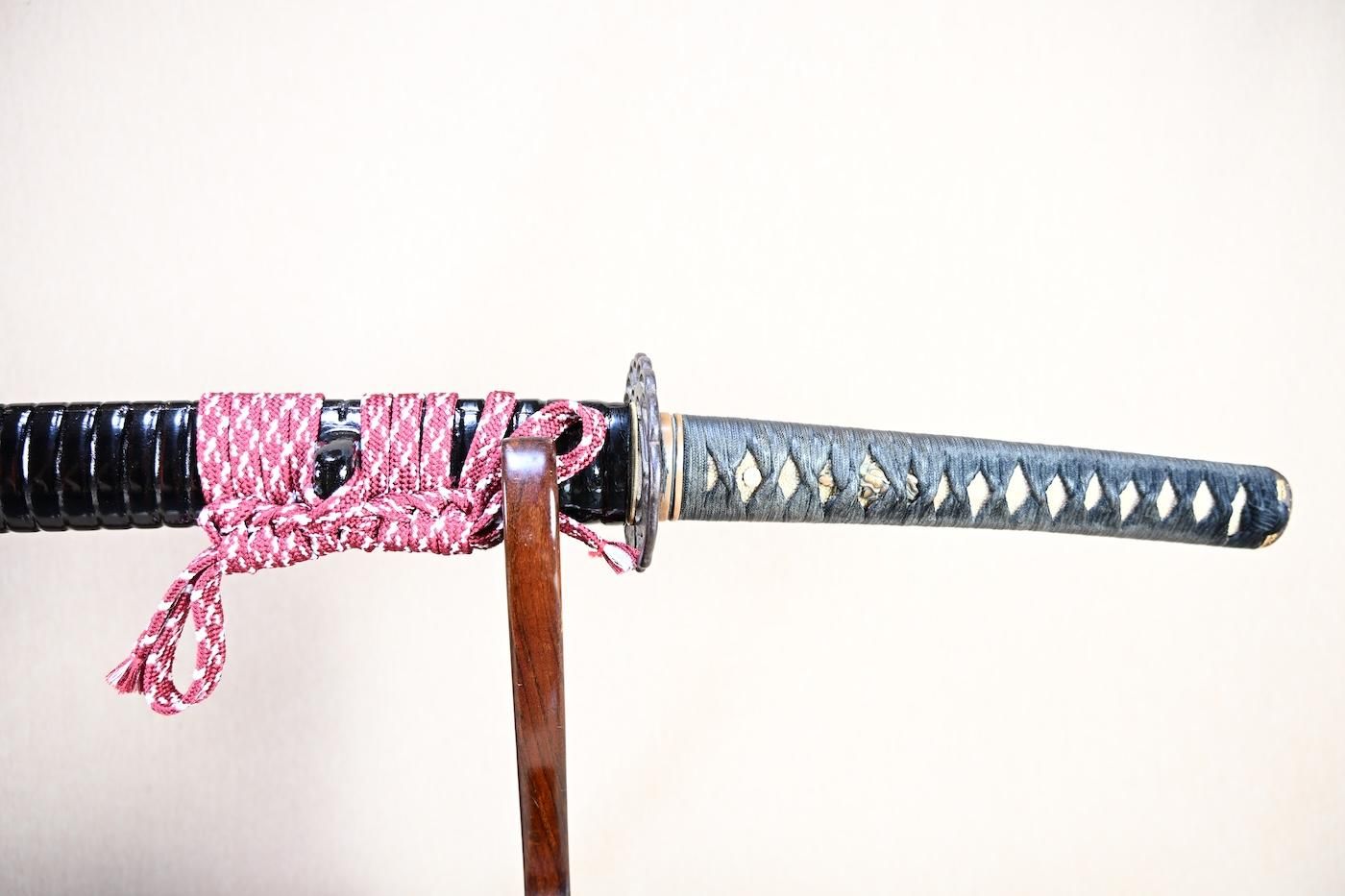
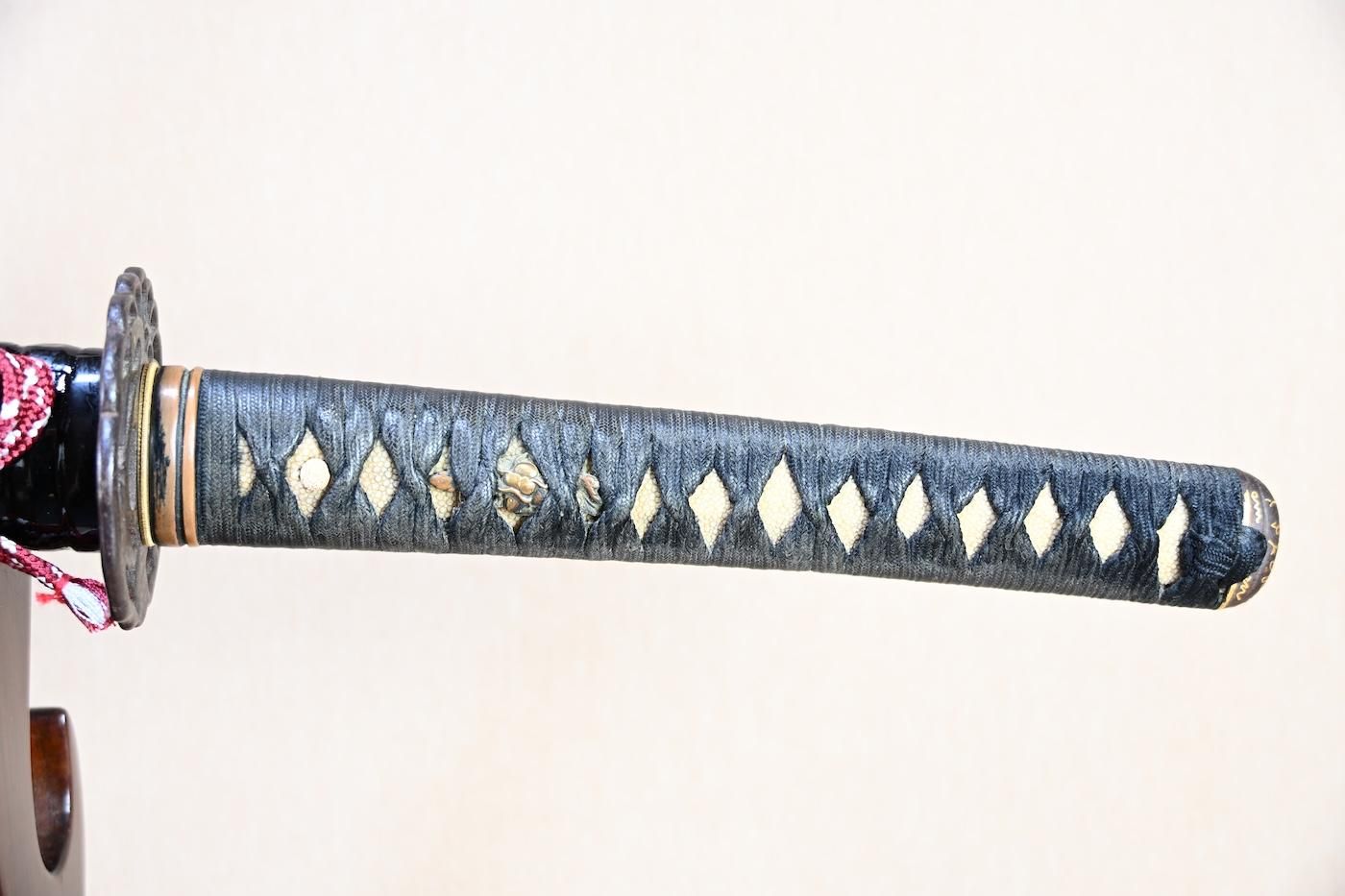
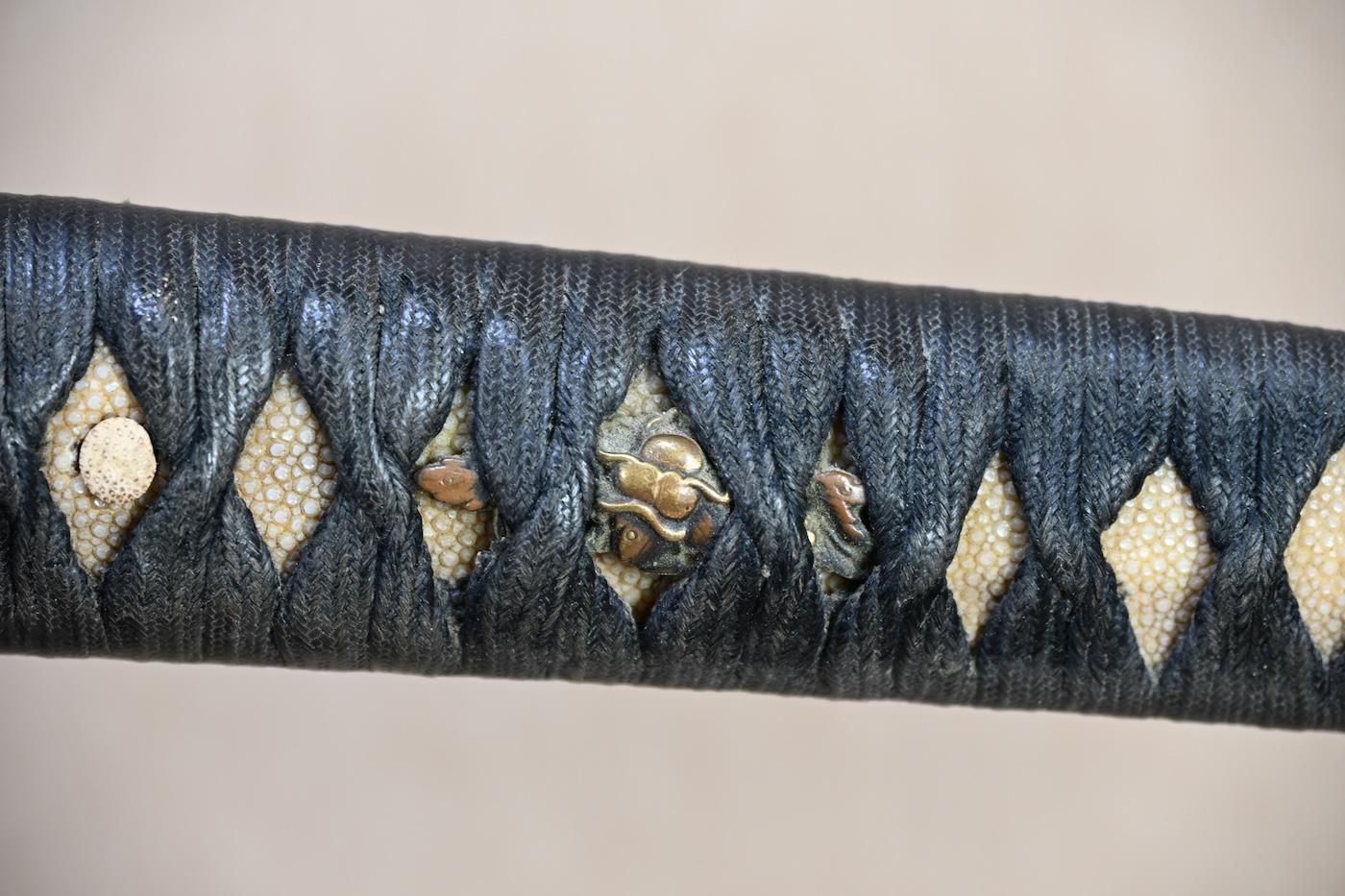
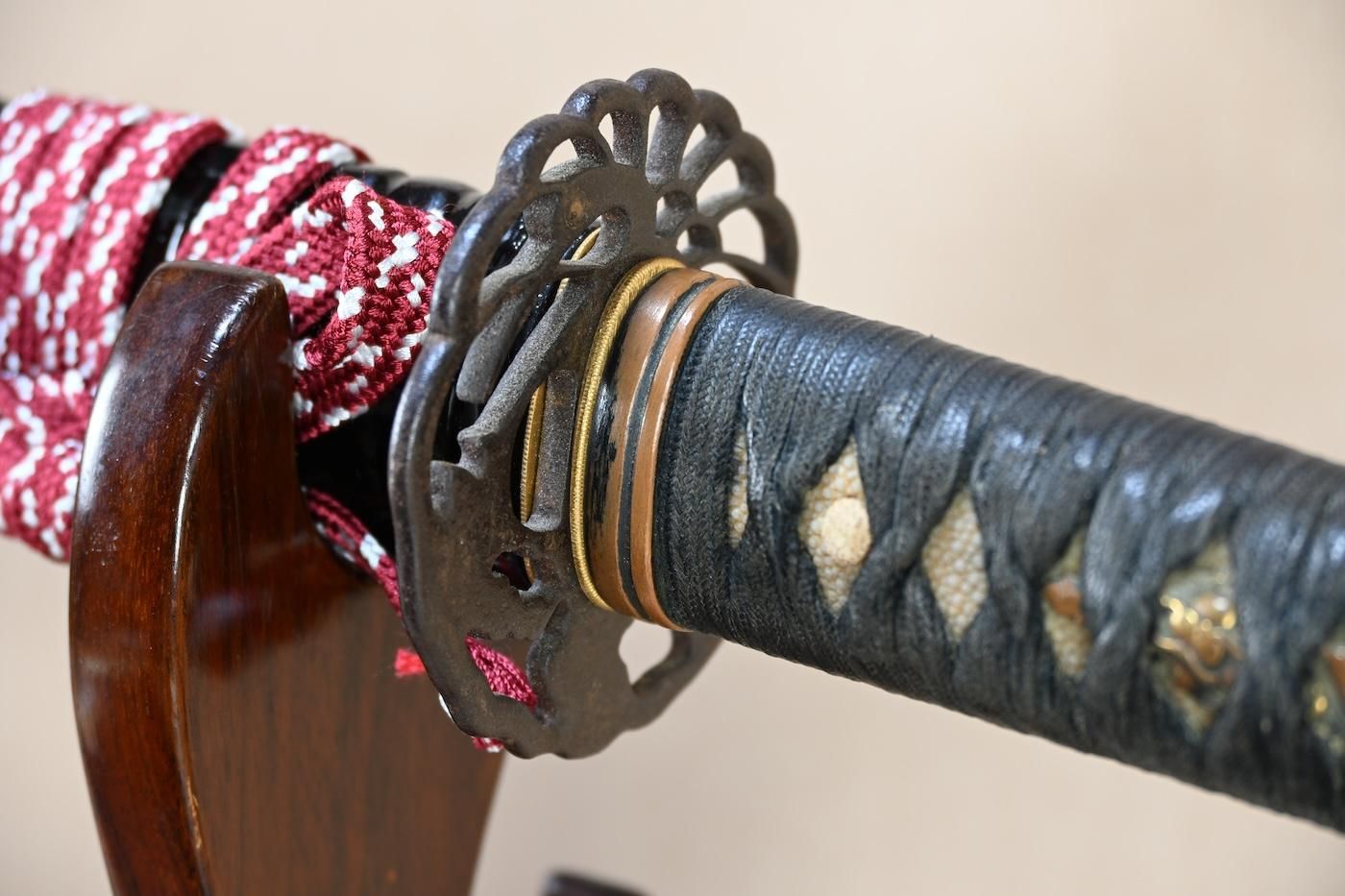
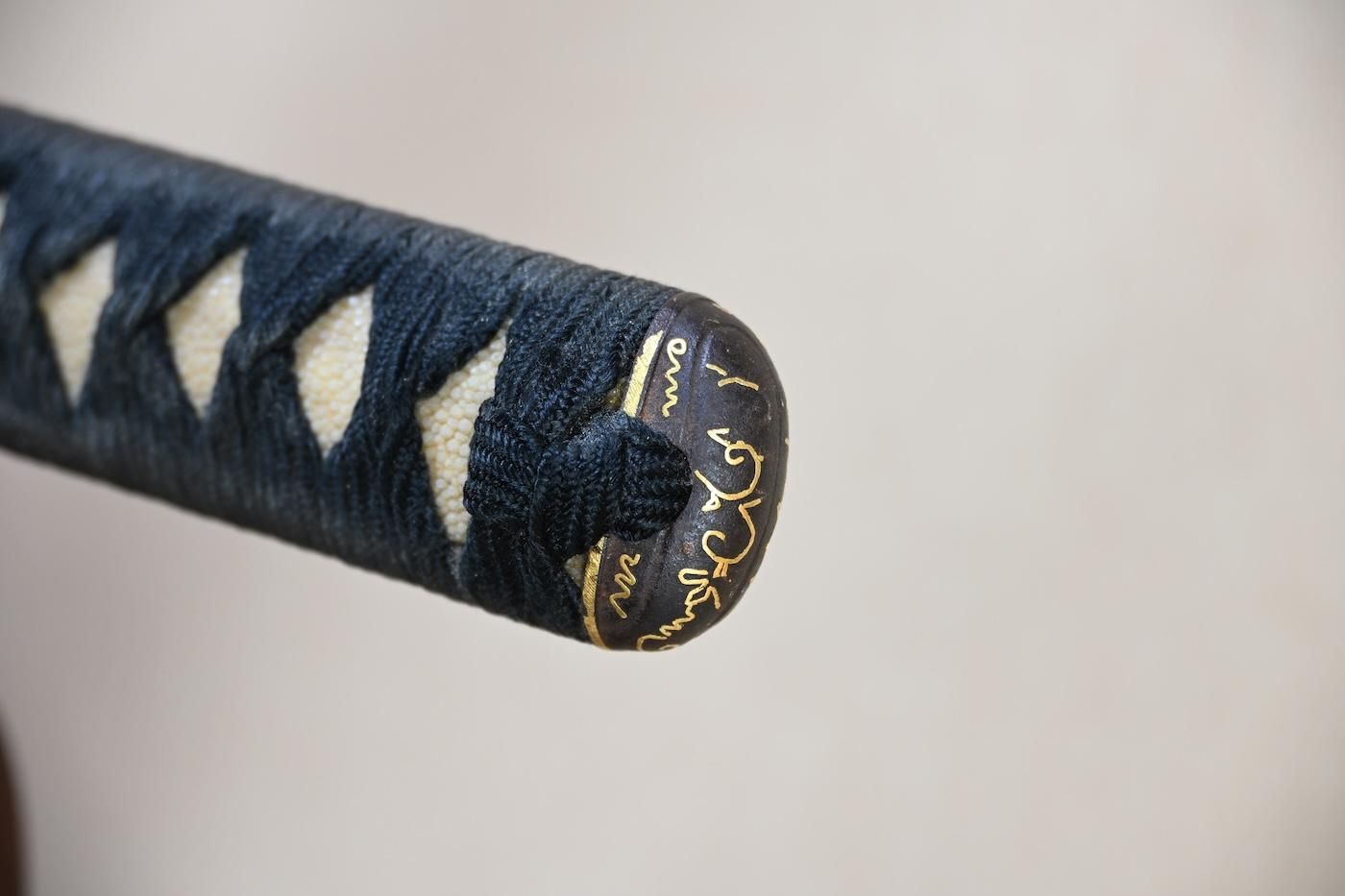
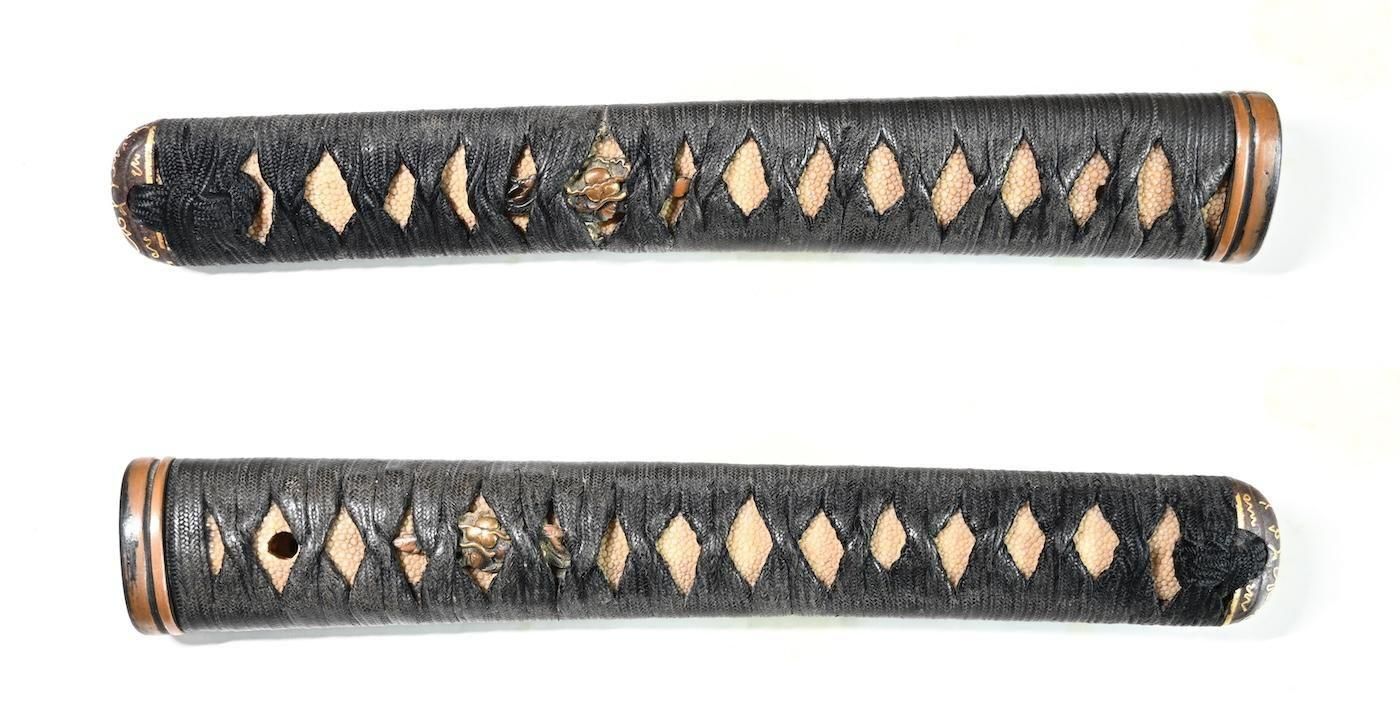
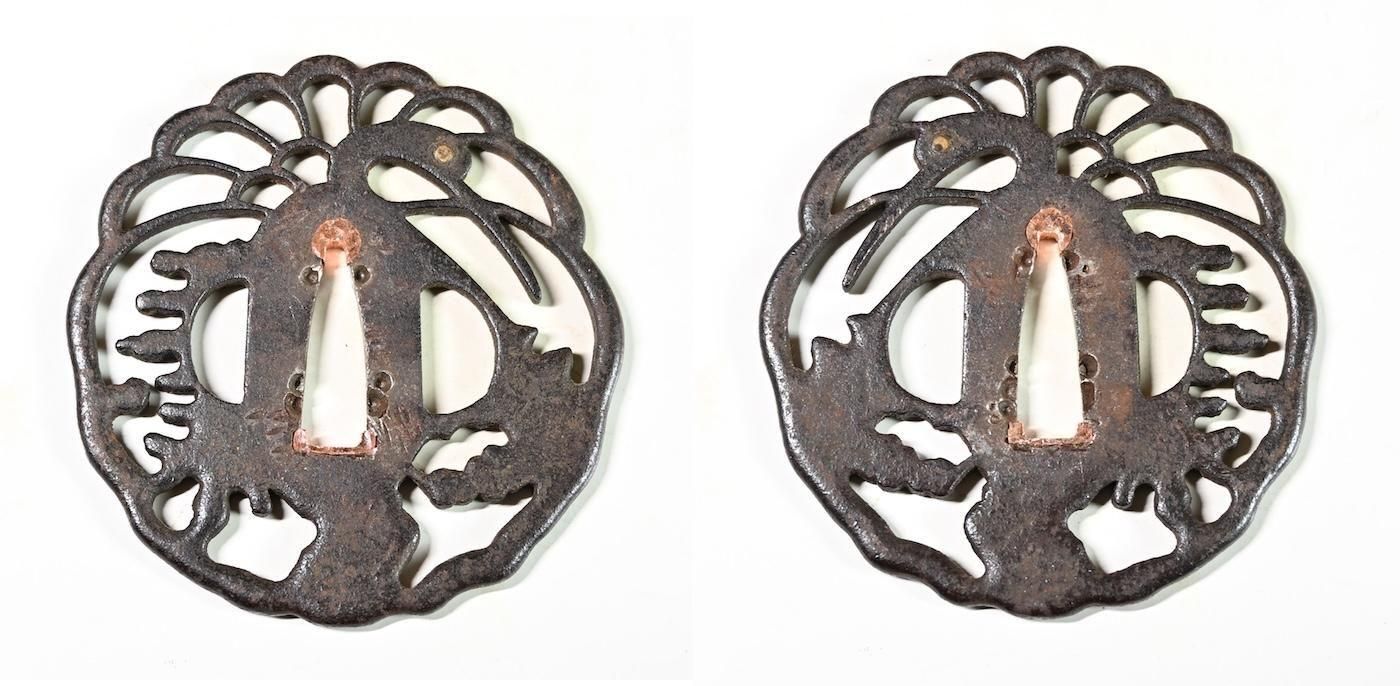
This koshirae uses modern kanagu, with a tsuka made slightly long and of a suitable thickness, fitted with a tsuru (crane) sukashi tsuba,
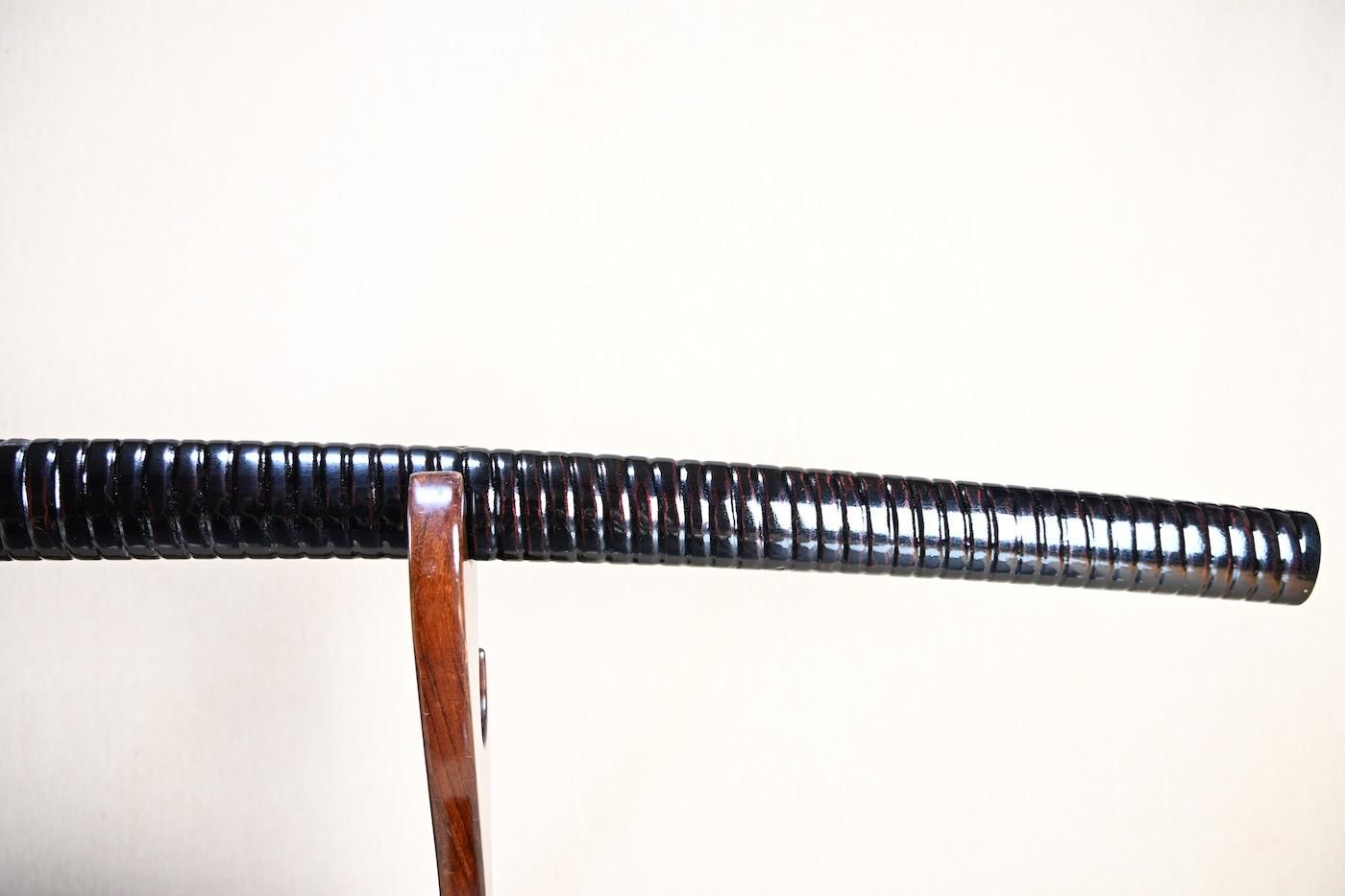
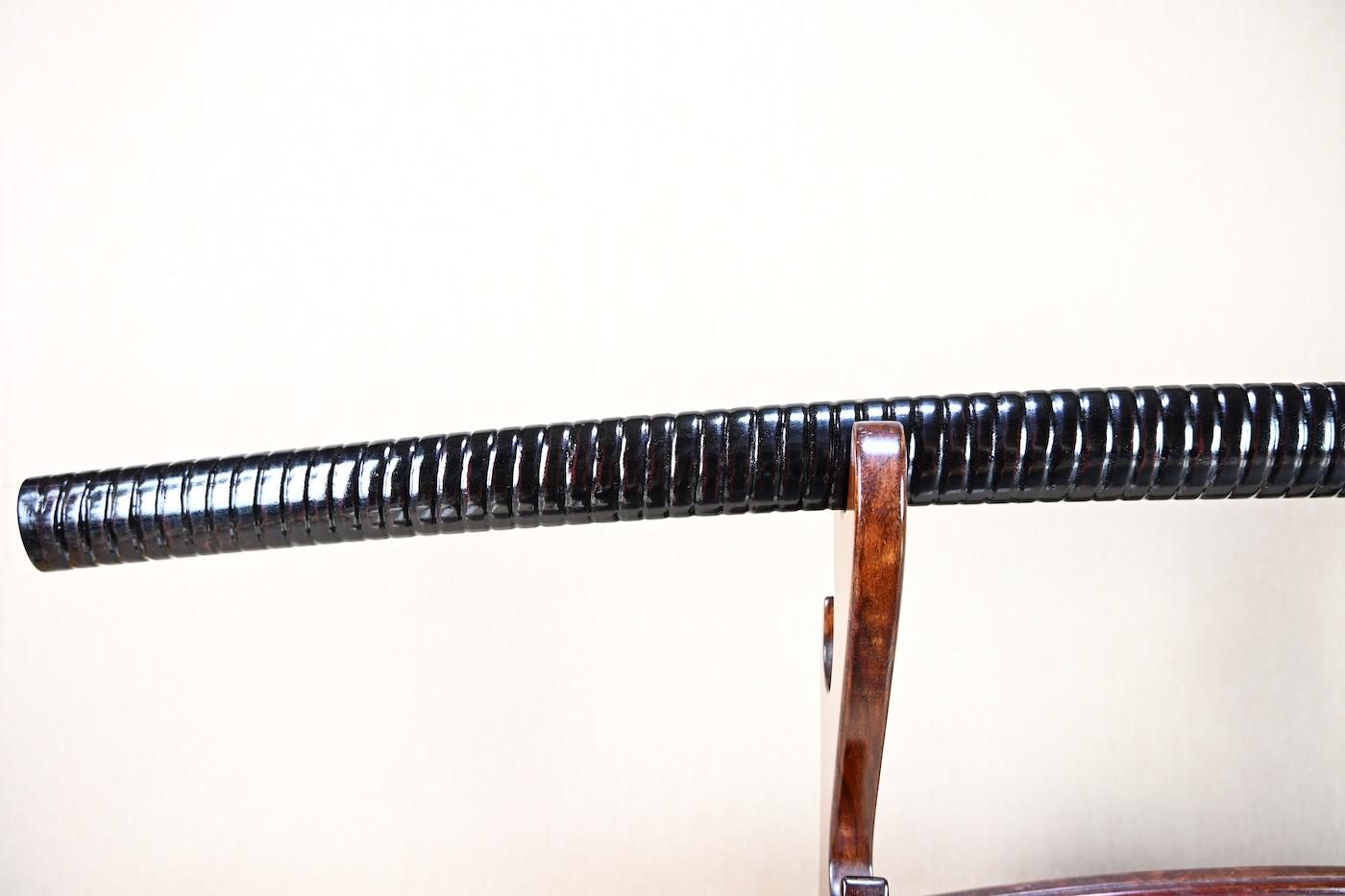
and is housed in a sendan saya.
Machine translation from the shop's Japanese · may contain errors ·
Real name Komiya Kuniharu. Born in Showa 4. Resides in Omuta City, Fukuoka Prefecture. He is the second son of the first Shiro Kunimitsu, who was famous as a Showa-era wazamono. He began forging swords under his father (Shiro Kunimitsu) from April of Showa 16. Since then, he has continued to forge swords through the three eras of Showa, Heisei, and Reiwa, up to the present Reiwa era. Member of the Zen Nihon Tosho Kai. He is one of the modern master smiths who has received the Dai Nihon Tosho Kai Silver Cup and numerous other awards. The Komiya family is a lineage of swordsmiths. The Komiya school follows the tradition of Miike Tenta Mitsuyo, served as the official swordsmiths for the Tachibana family, lords of the Chikugo Yanagawa domain during the feudal era, and is a prestigious family whose name is even listed in the Suishinshi Masahide monjinchō. Furthermore, when a sword cutting test was conducted in Showa 14, it was said to have the most excellent sharpness, surpassing even Kotetsu, and was praised and called "Ima Kotetsu" (the modern Kotetsu). Nakayama Hakudo sensei also praised it as having a sharpness that was at least equal to, if not better than, Nagasone Kotetsu, and the name of the Komiya school spread across the country in an instant.
■ Sword blade condition
A magnificent figure with a wide mihaba and a wide hi, the jitetsu is forged in a moist, tightly packed muji-fu style.
The hamon is a well-executed gunome in nioi-deki with a tight ha-buchi, and the kissaki is slightly elongated with a midare-komi boshi that turns back; it is a fine work that has been carefully forged.
The blade, which has a relatively good balance with its wide mihaba and deeply carved hi to reduce weight,
has a good hi-nari, is visually impressive, and the edge is well-defined. This is a sword recommended for iai.
■ Koshirae
This koshirae uses modern kanagu, with a tsuka made slightly long and of a suitable thickness, fitted with a tsuru (crane) sukashi tsuba,
and is housed in a sendan saya.
The twentieth century nearly killed the craft twice: wartime distortion, then the occupation ban. The NBTHK’s founding in 1948 and licensed forging from 1953 rebuilt the sword as an art, crowned by Living National Treasures and the mukansa rank.
Please contact us promptly after the item's arrival. Except where the item is defective, we cannot accept returns. For returns due to customer circumstances, the cost is the customer's responsibility. In the case of a defective item, we bear the cost.
 NihontoWatch