Modern sword, Chikusyu ju Kuniharu saku/ Iai sword
The blade is light and well-balance.
Then this is a most suitable sword for a Iaido.
Taihai
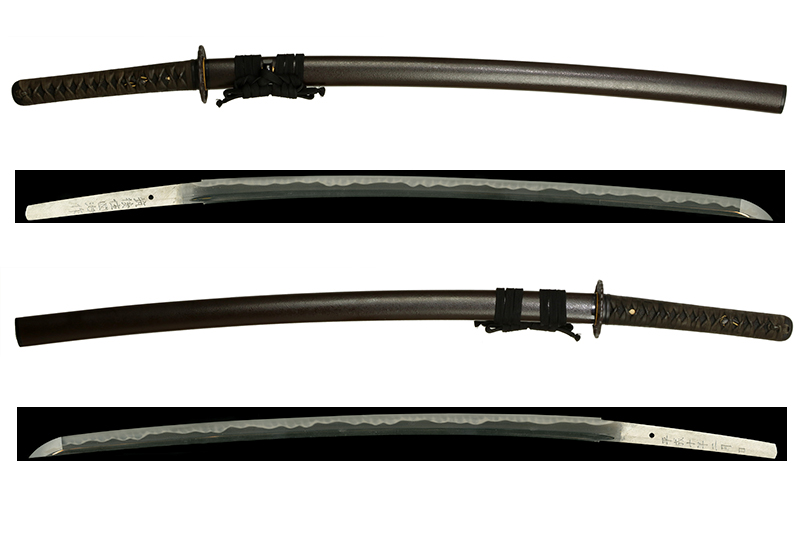
Shinogi-zukuri, iori-mune, mihaba and kasane are standard, torii-zori, and chu-kissaki. The nakago is ubu with kesho-yasuri, and the nakago-jiri is kurijiri.
The horimono consists of a kata-chiri bo-hi that runs off under the habaki.
Jitetsu
The jigane is itame-hada mixed with masame, with fine ji-nie throughout, and fine chikei appears.
Hamon
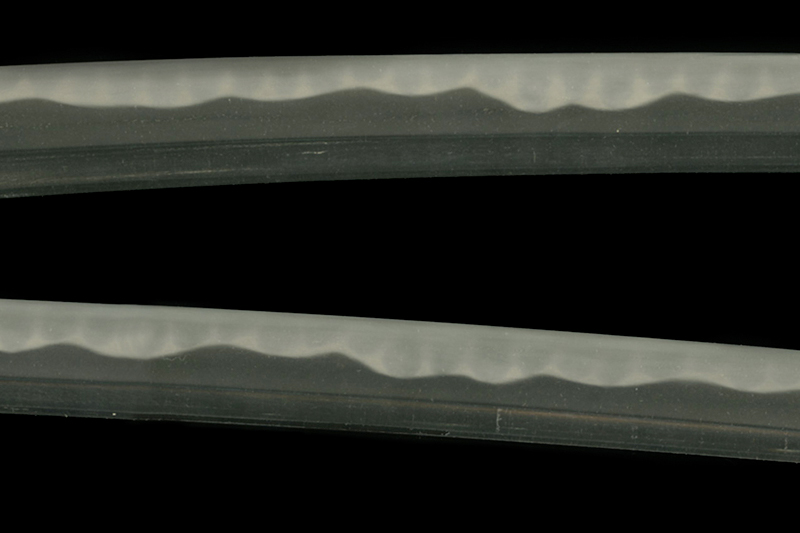
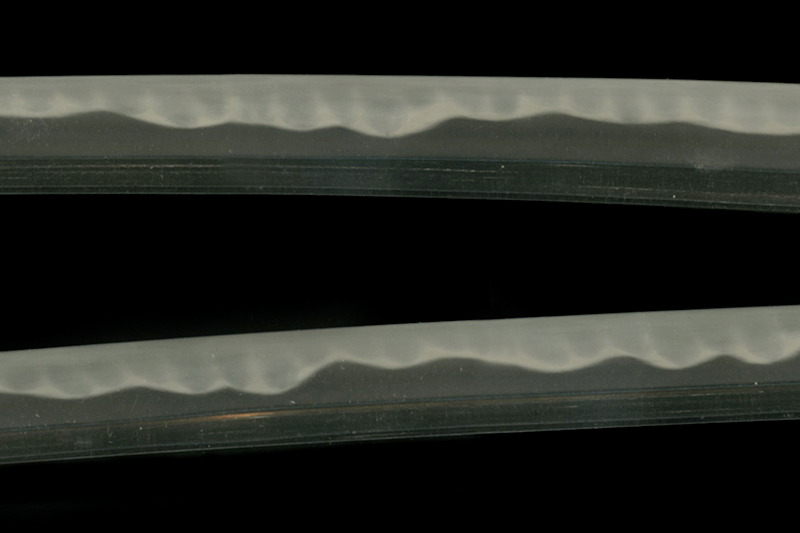
Gunome-choji, the nioiguchi is deep with good nie, and ashi enters. Within the ha, kinsuji glisten and sunagashi appears. The boshi follows the hamon and turns back in komaru.
Tokucho
Chikusyu ju Kuniharu, real name Komiya Kuniharu, second son of Komiya Shiro Kunimitsu, residing in Omuta City, Fukuoka Prefecture. He was a senior figure among the Shiro Kunimitsu school and continued to forge swords even after the age of 80. His mature swords possess a flavor that cannot be replicated by his sons, swordsmith Kunitada, swordsmith Yasumitsu, and swordsmith Kunimitsu, or his grandson, swordsmith Kuniten.
Judging from the condition of the yokote-suji and the presence or absence of hike, I believe the blade is in a freshly polished state.
The condition of the koshirae is good, and it is a light, well-balanced sword, making it ideal for iaido.
Koshirae
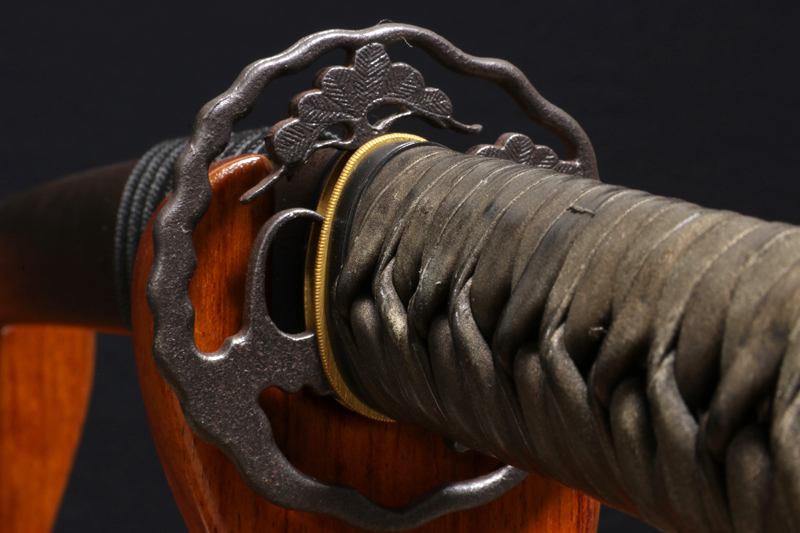
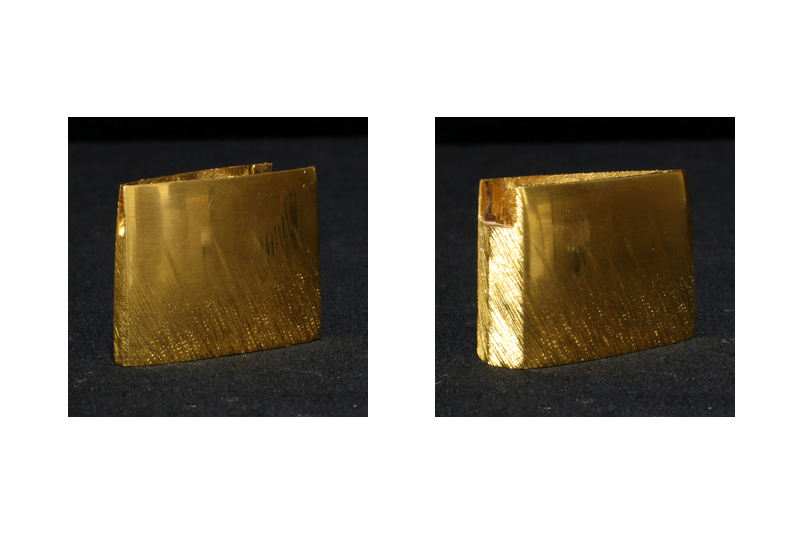
Habaki: Solid silver single-piece koshi-yujo with gold plating.
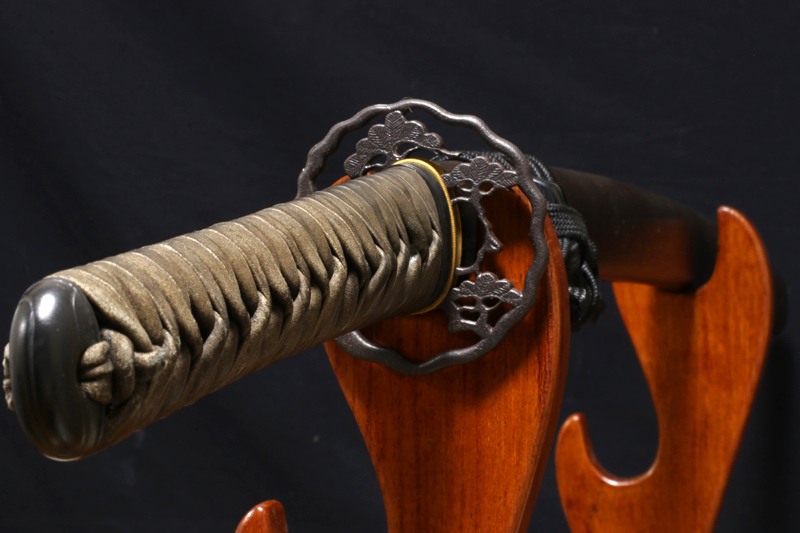
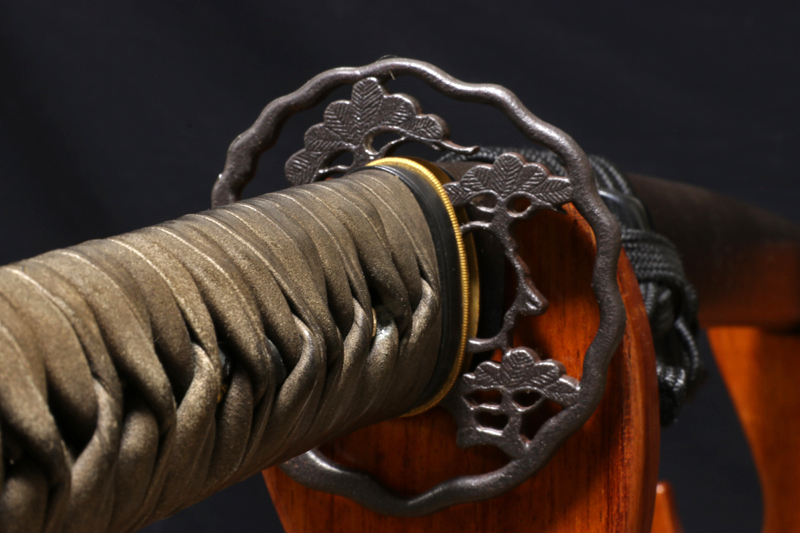
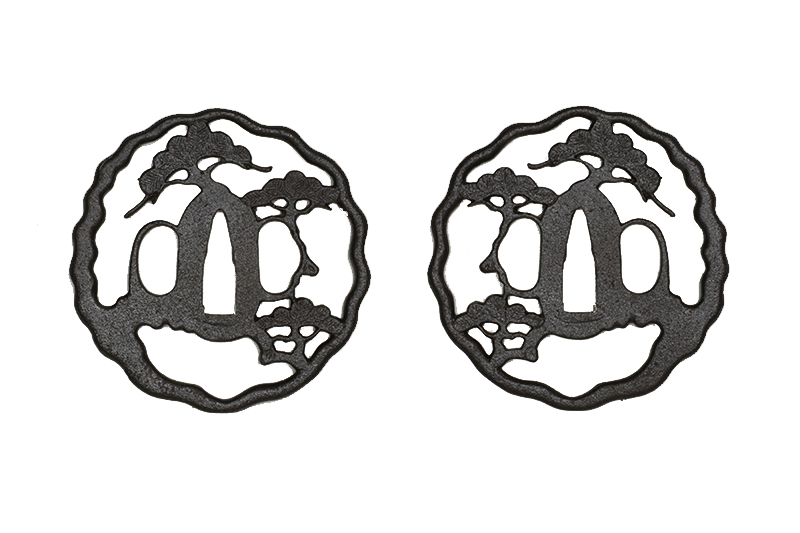
Tsuba: Higo iron base with pine tree sukashi.
Fuchi-kashira: Higo iron base with yamamichi design.
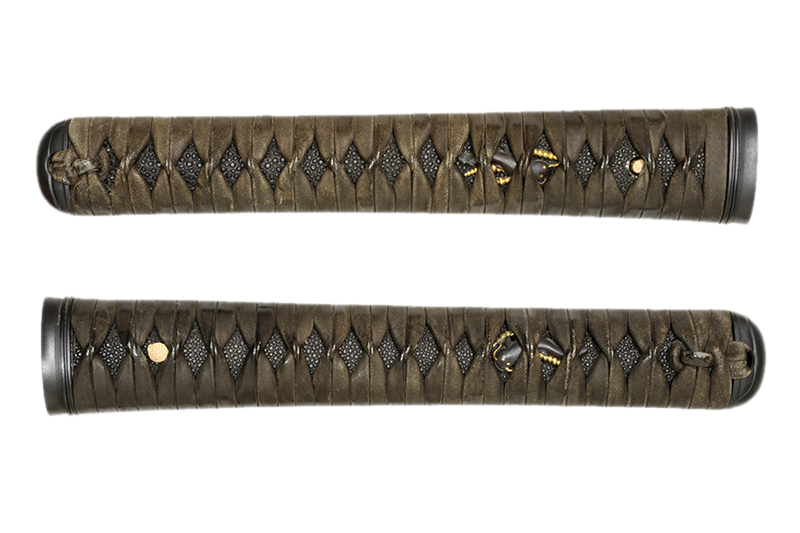
Menuki: Catfish design.
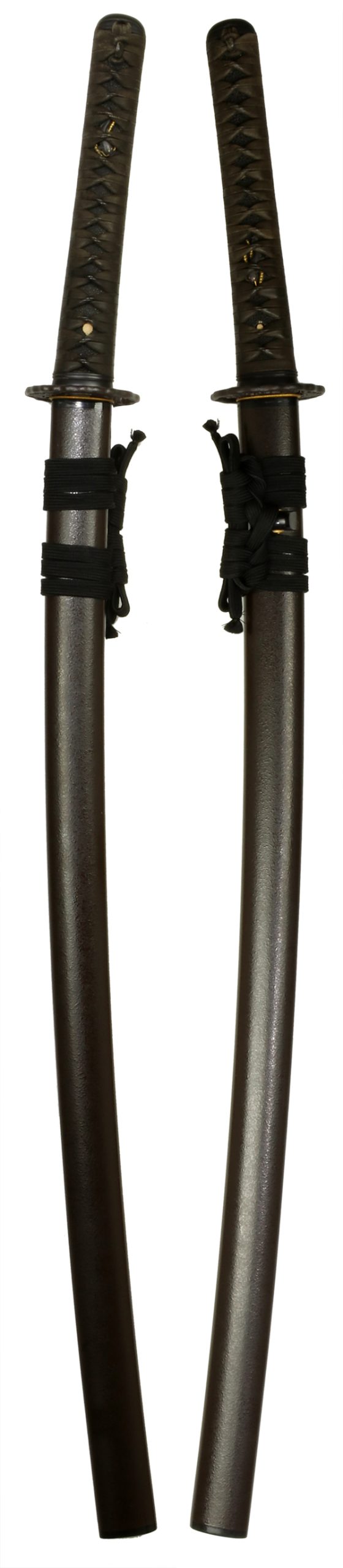
Tsuka: The samegawa is dyed black, and the tsukamaki is cowhide leather in moro-hineri-maki.
Saya: Dark brown ishime.
Token no jotai
Polishing: Excellent.
Flaws: There are no flaws that would be considered defects.
Machine translation from the shop's Japanese · may contain errors ·
Modern sword, Chikusyu ju Kuniharu saku/ Iai sword
The blade is light and well-balance.
Then this is a most suitable sword for a Iaido.
Taihai
Shinogi-zukuri, iori-mune, mihaba and kasane are standard, torii-zori, and chu-kissaki. The nakago is ubu with kesho-yasuri, and the nakago-jiri is kurijiri.
The horimono consists of a kata-chiri bo-hi that runs off under the habaki.
Jitetsu
The jigane is itame-hada mixed with masame, with fine ji-nie throughout, and fine chikei appears.
Hamon
Gunome-choji, the nioiguchi is deep with good nie, and ashi enters. Within the ha, kinsuji glisten and sunagashi appears. The boshi follows the hamon and turns back in komaru.
Tokucho
Chikusyu ju Kuniharu, real name Komiya Kuniharu, second son of Komiya Shiro Kunimitsu, residing in Omuta City, Fukuoka Prefecture. He was a senior figure among the Shiro Kunimitsu school and continued to forge swords even after the age of 80. His mature swords possess a flavor that cannot be replicated by his sons, swordsmith Kunitada, swordsmith Yasumitsu, and swordsmith Kunimitsu, or his grandson, swordsmith Kuniten.
Judging from the condition of the yokote-suji and the presence or absence of hike, I believe the blade is in a freshly polished state.
The condition of the koshirae is good, and it is a light, well-balanced sword, making it ideal for iaido.
Koshirae
Habaki: Solid silver single-piece koshi-yujo with gold plating.
Tsuba: Higo iron base with pine tree sukashi.
Fuchi-kashira: Higo iron base with yamamichi design.
Menuki: Catfish design.
Tsuka: The samegawa is dyed black, and the tsukamaki is cowhide leather in moro-hineri-maki.
Saya: Dark brown ishime.
Token no jotai
Polishing: Excellent.
Flaws: There are no flaws that would be considered defects.
The twentieth century nearly killed the craft twice: wartime distortion, then the occupation ban. The NBTHK’s founding in 1948 and licensed forging from 1953 rebuilt the sword as an art, crowned by Living National Treasures and the mukansa rank.
Within 3 days of the item's arrival, we offer a refund or an exchange. Return shipping and the bank transfer fee for the refund are at the customer's expense.


 NihontoWatch