 NihontoWatchNihontoWatch
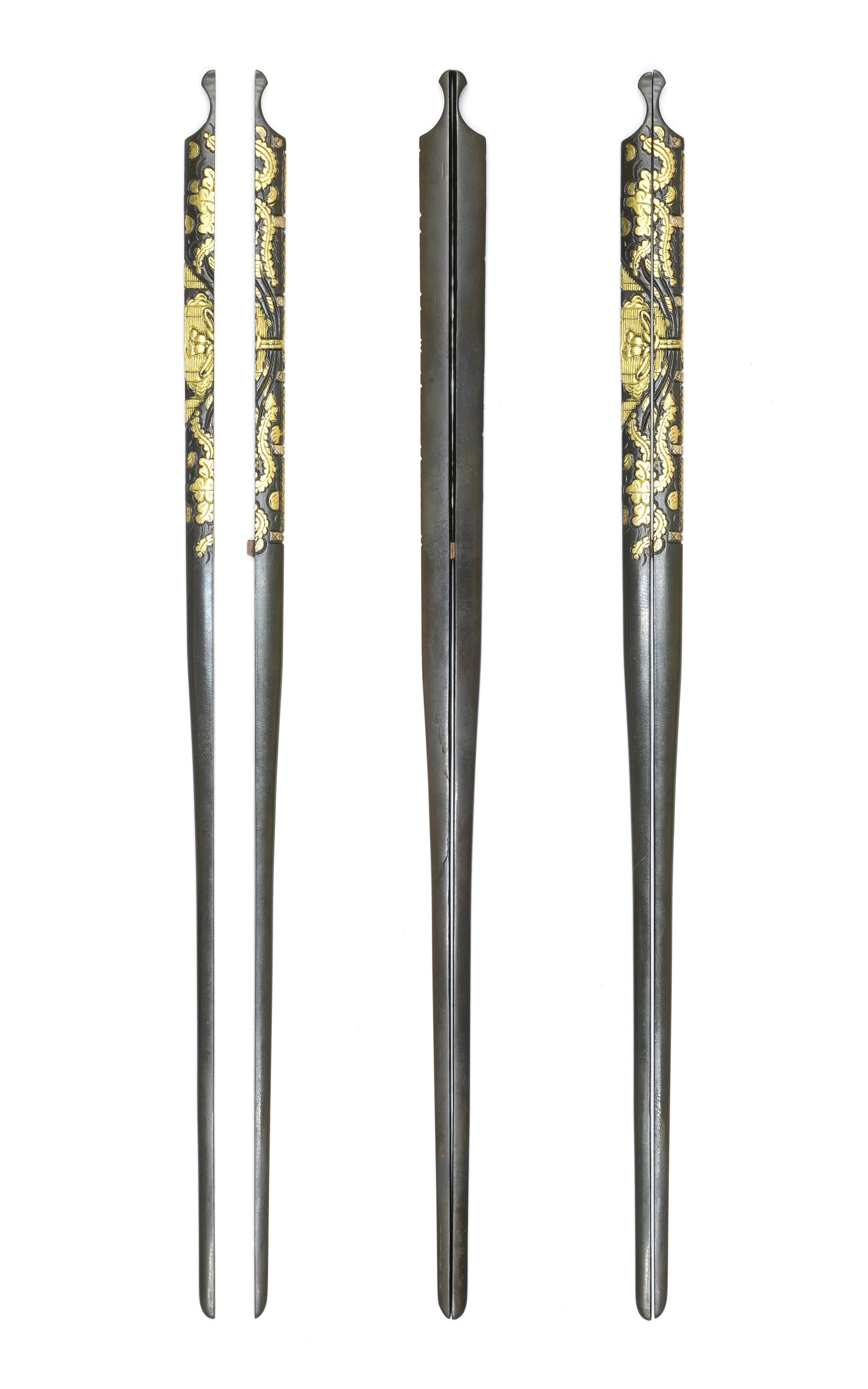
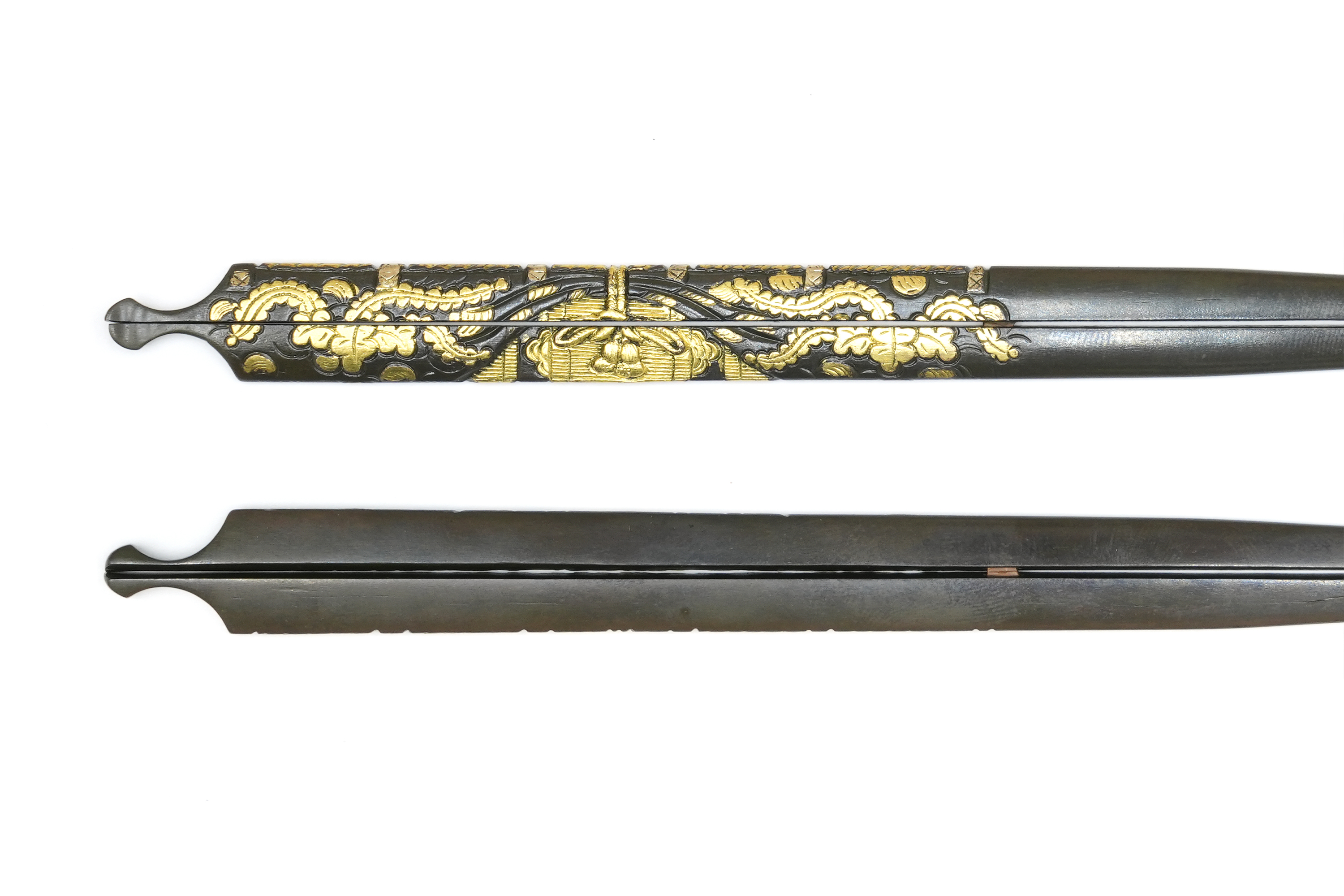
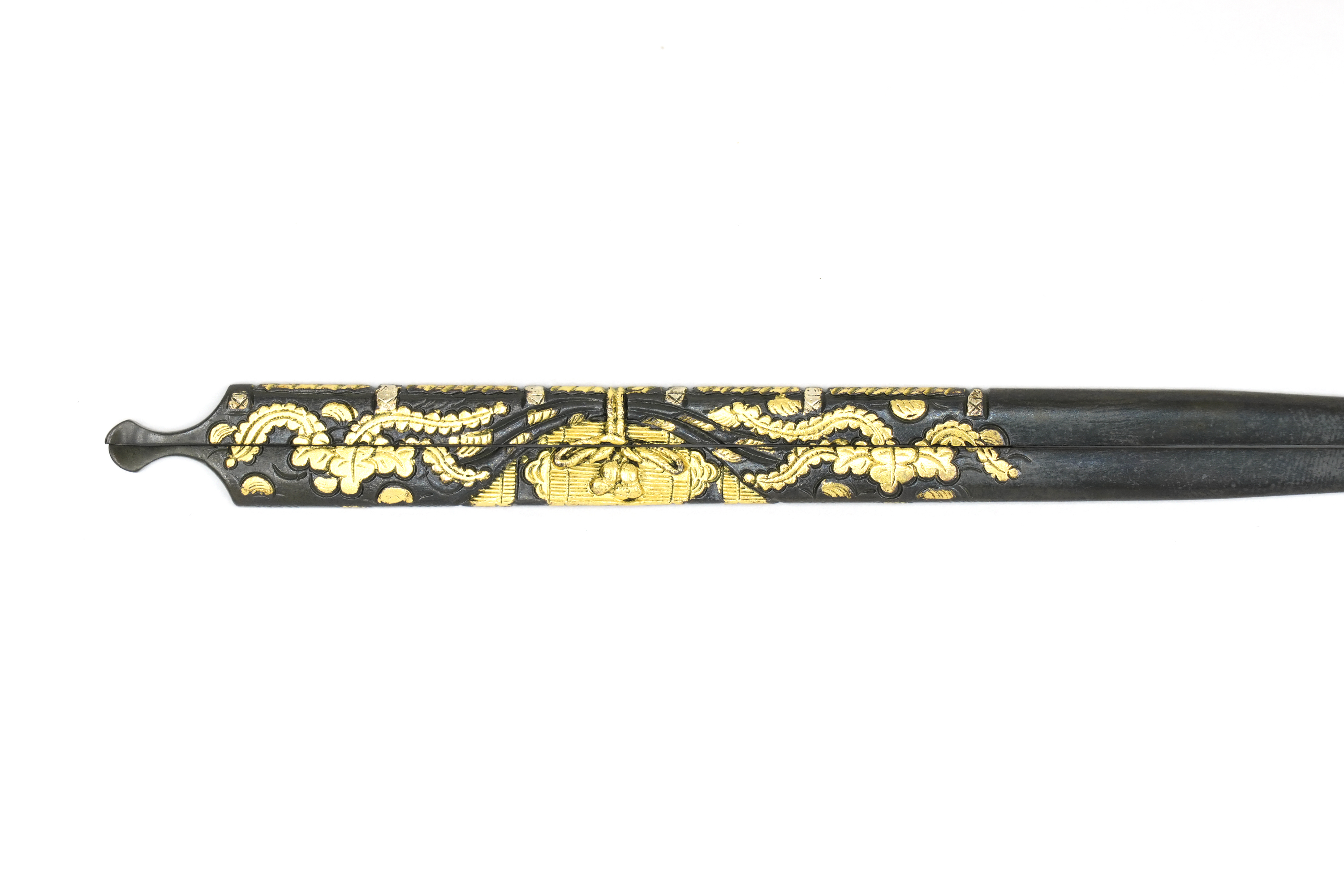
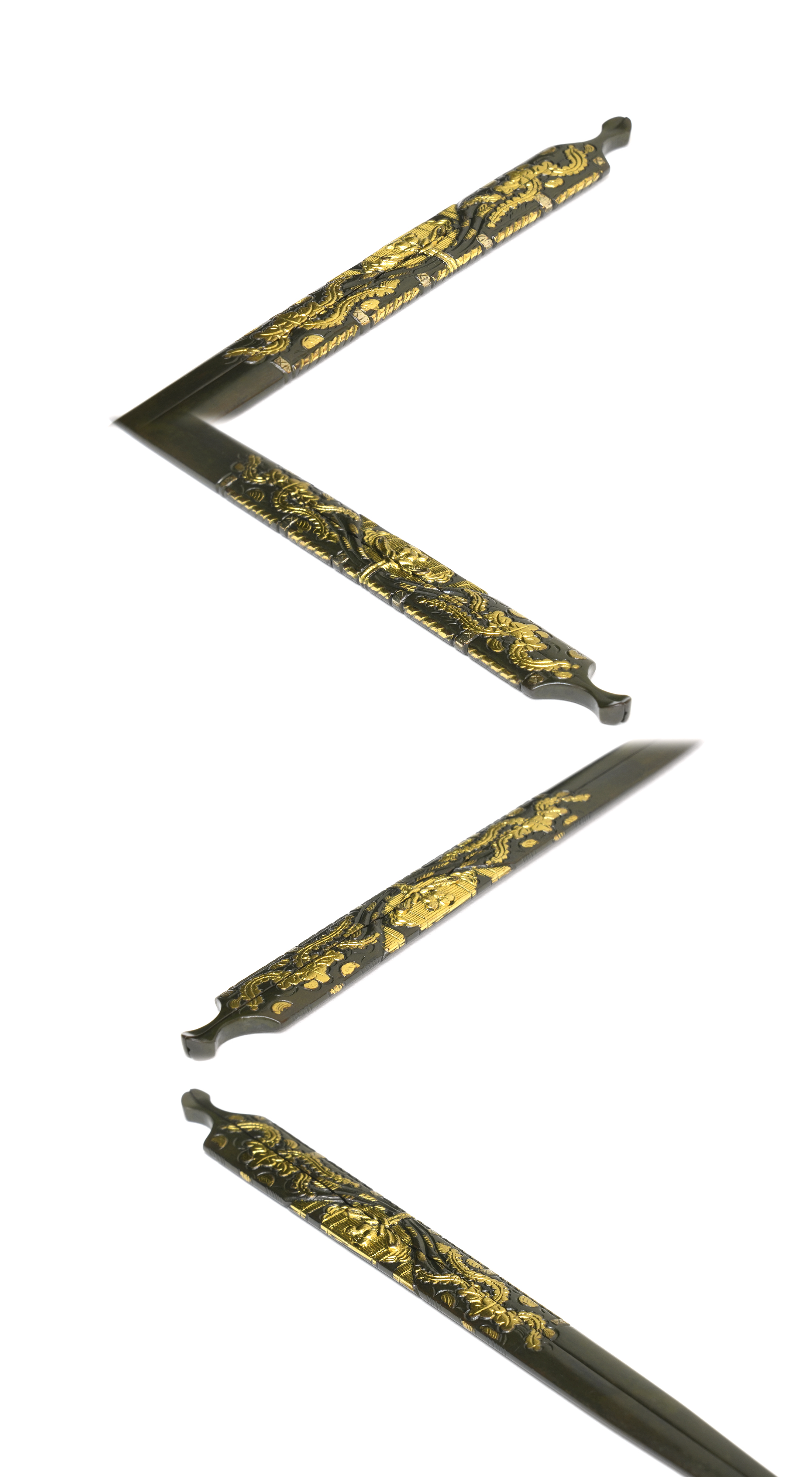
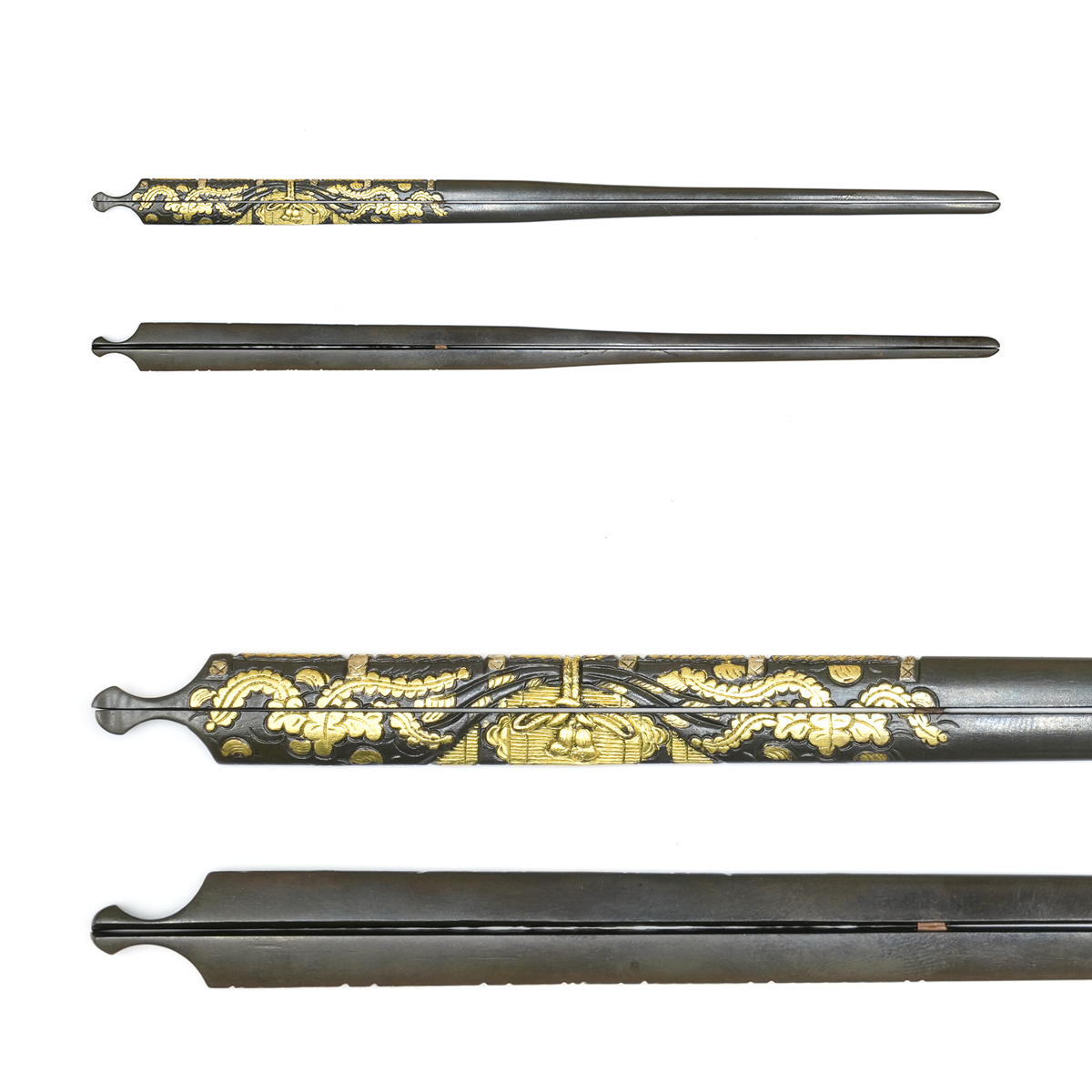
The paulownia is considered an auspicious tree where the phoenix dwells, and its rich flower clusters and wide-opening leaves have been widely used in crests and crafts as designs symbolizing prosperity and nobility. Misu are furnishings that indicate the residences of the imperial court or the upper class, and when combined with botanical motifs, they become an elegant theme that evokes the dynastic space extending inside and outside the blinds. This work is a warikogai that densely depicts paulownia leaves and flower clusters, along with linear designs reminiscent of misu and their borders, in kin-iroe upon a stage of shakudo-ji exhibiting a deep black tone. While dividing the greatly curving leaves, overlapping flower clusters, and slender extending branches between the left and right pieces, it is composed so that when the two are joined, they cross the central boundary to complete a single magnificent pattern, creating a vivid contrast between the organic curves of the plants and the regular lines of the misu. The paulownia flowers and leaves are not merely outlined in gold; tagane work has been applied down to the overlapping petals, leaf veins, and details connecting the flower clusters, and by moderately leaving the black ground, the golden patterns are arranged so as not to become overcrowded. A design reminiscent of knots and tassels is placed in the center, creating a focal point for the long composition while connecting the upper and lower botanical motifs, providing a rich rhythm to the gaze moving from the mimikaki side toward the sao. The reverse side is simply finished, leaving a wide area of the deep black tone of the shakudo-ji, which further accentuates the brilliance of the kin-iroe concentrated on the front. From the completed composition when the two are joined, to the craftsmanship appearing on each side when separated, and the smooth contours continuing to the long sao, the highlights are continuous; from a distance, the prestigious color scheme of black and gold draws the viewer in, while at hand, the fine lines of the flowers, leaves, and misu captivate. Possessing an elegant theme evocative of dynastic culture and a dense decorativeness, this is a beautiful piece that radiates a strong presence when displayed and adds splendor to a warikogai collection.
NihontoWatchOffered by Toushin
We couldn’t find current papers for this piece. Ask the dealer whether it has been, or can be, submitted to shinsa. — Hoshi

Edo
Unsigned
As written by the shop
Machine translation from the shop's Japanese · may contain errors ·
We could not find an authenticity certificate on the seller’s listing. Japanese swords and fittings are normally papered by the NBTHK (or the NTHK). Without one, the attribution is the seller’s own assessment and has not been independently verified — treat it with caution and ask the dealer about certification before buying.
As a rule we do not accept returns, except when we have sent a different item from the one ordered or when there is a significant discrepancy between the description and the item. If you wish to return an item, please contact us within 3 days of its arrival and then send it back.
¥220,000