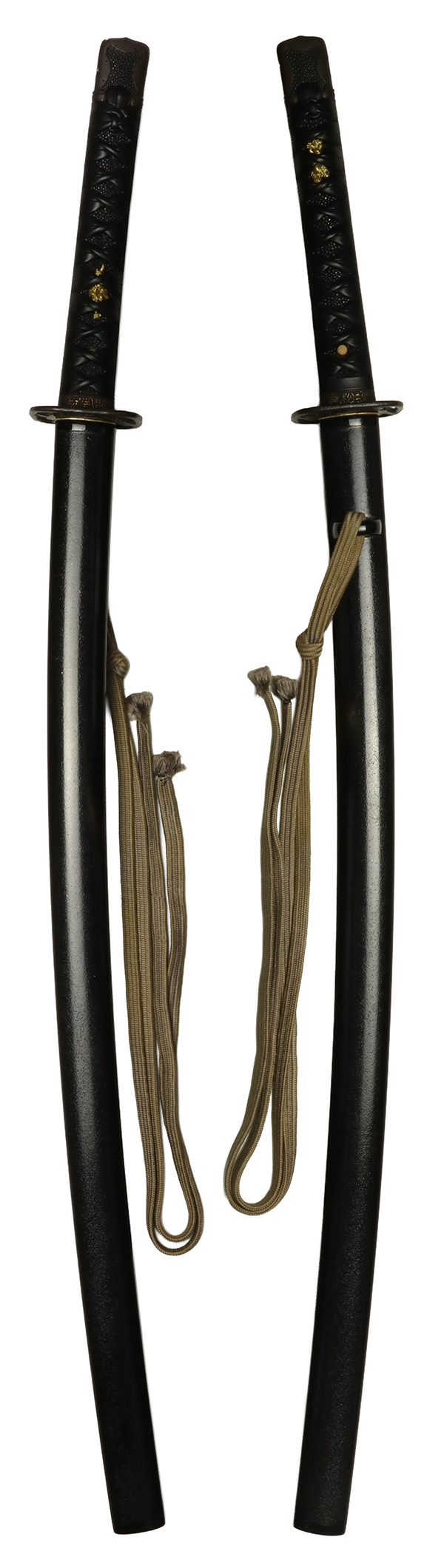
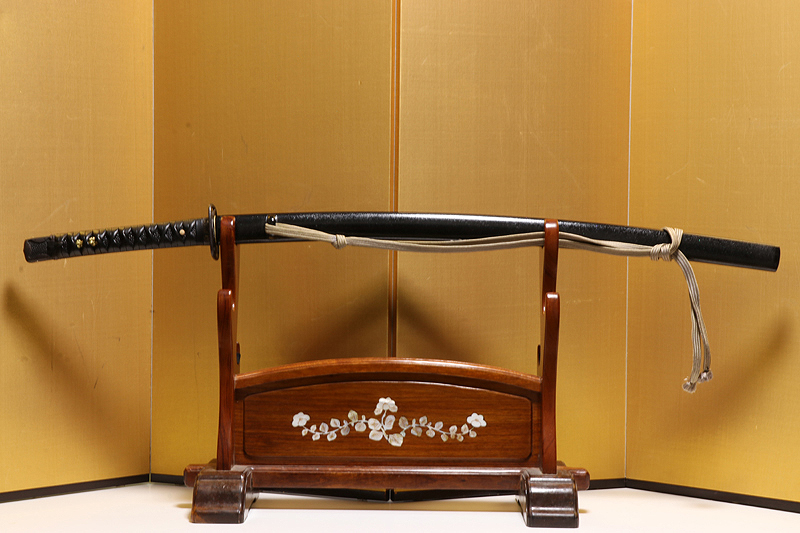
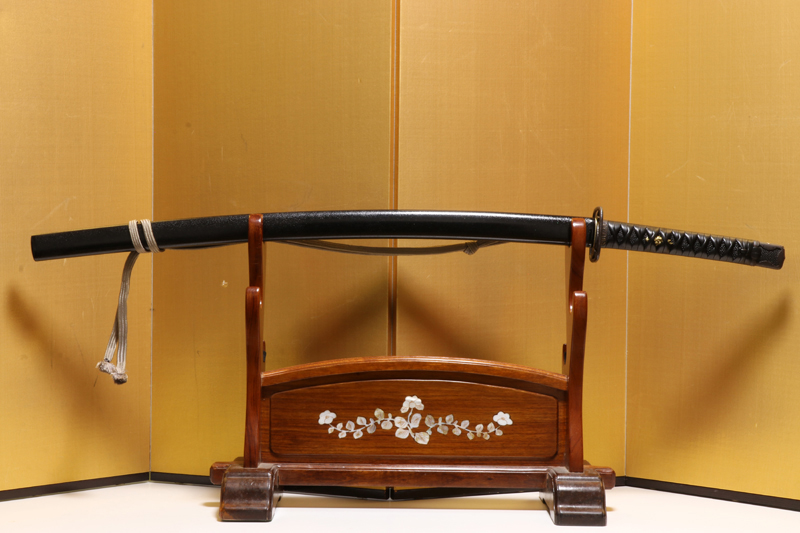
Modern sword Aokage Kazumune with Koshirae.
Kazumune is a highly skilled swordsmith with numerous selections at the Shinsaku Meito Exhibition.
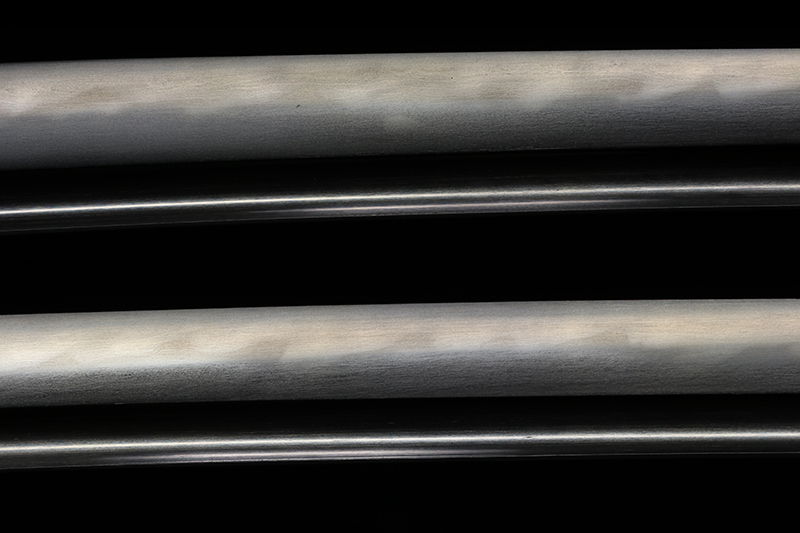
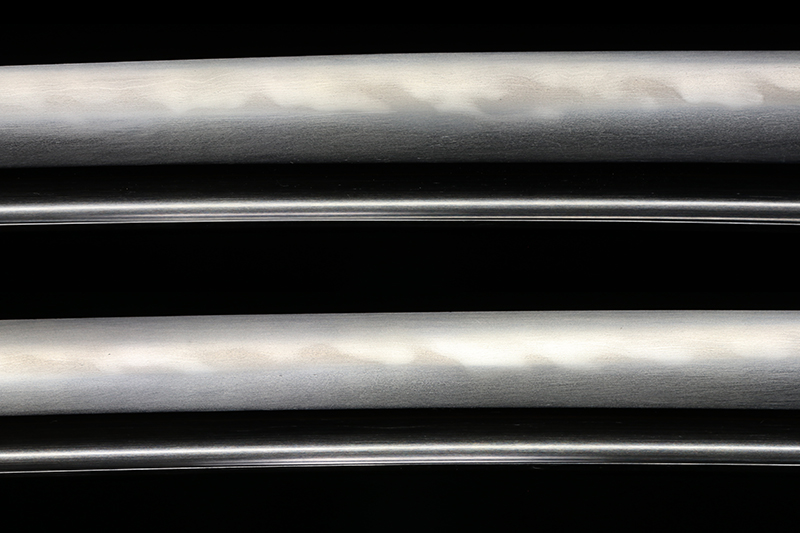
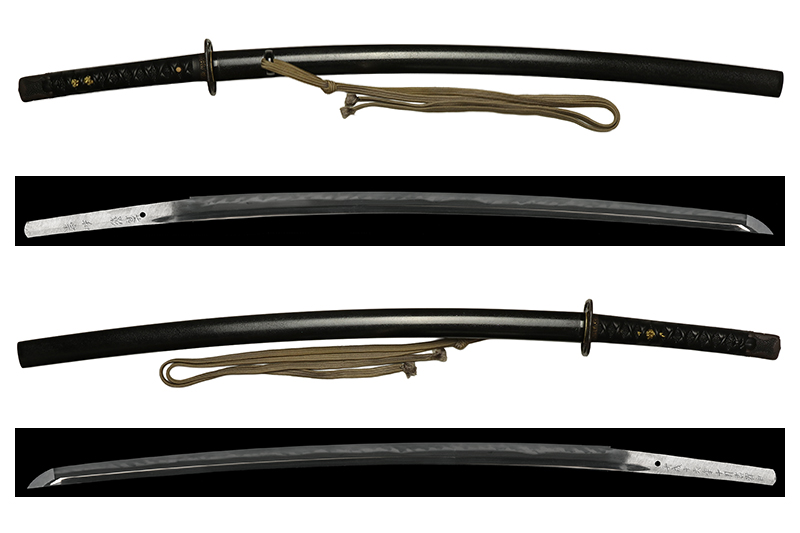
This sword appears to have been custom-made for Iaido, featuring a tightly forged ko-itame hada and a magnificent reverse gunome hamon.
Weighing an astonishingly light 825g without fittings, it offers exceptional balance and excellent hi-nari.
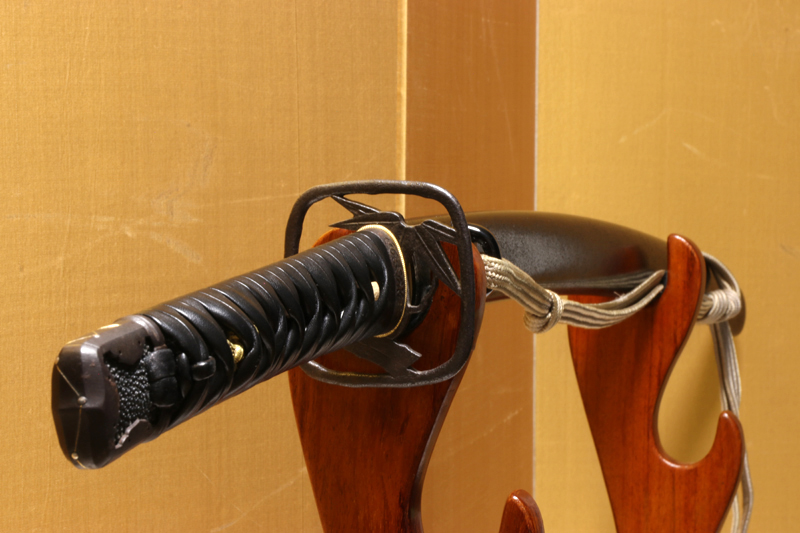
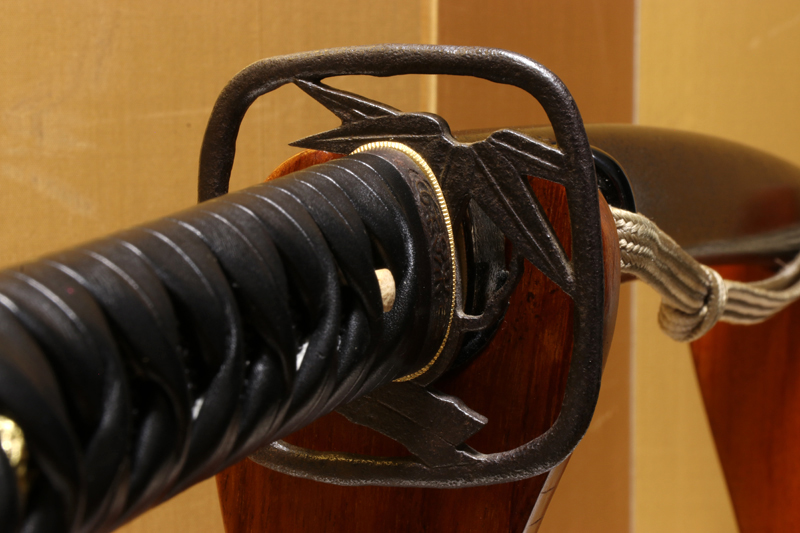
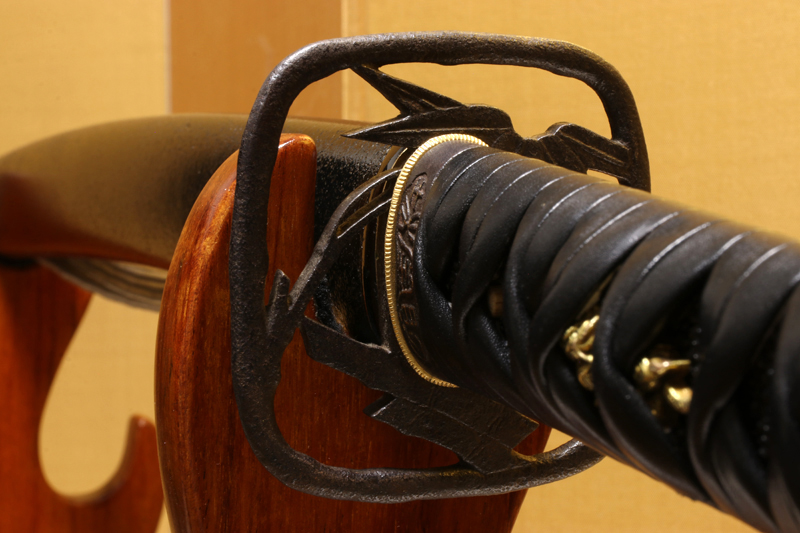
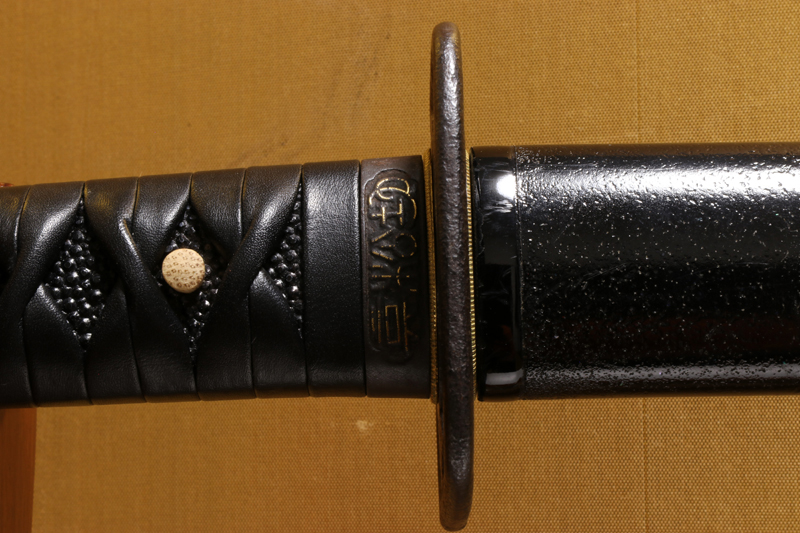
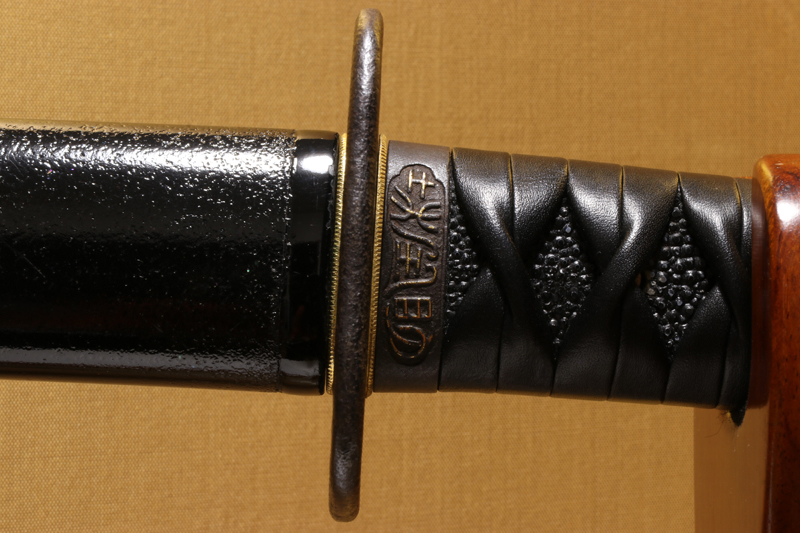
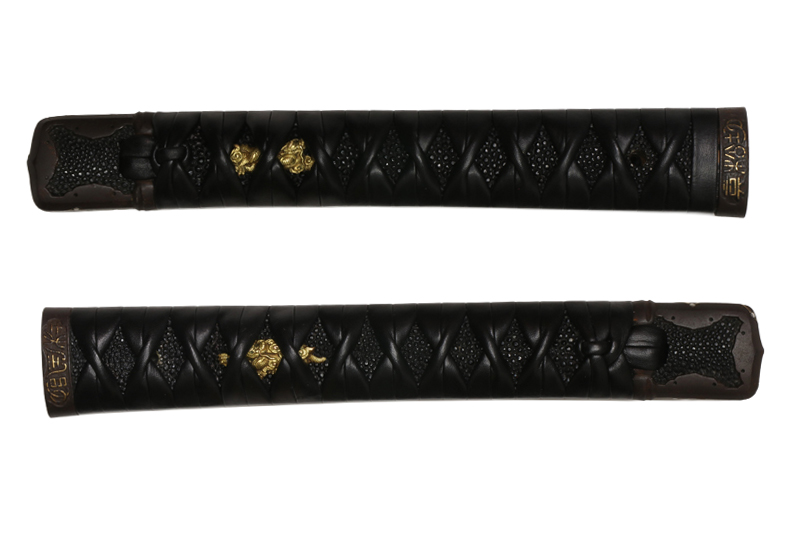
The tsuka has been rewrapped in black cowhide leather. Equipped with high-quality Edo period fittings, both the blade and koshirae are in excellent condition, and it can be used for Iaido immediately.
[sugata]
Shinogi-zukuri, iori-mune. Mihaba and kasane are ordinary, sori is moderate torii-zori, and the kissaki is chu-kissaki. The nakago is ubu with sujikai yasurime. The nakago-jiri is kurijiri.
[carving]
The carving is a kata-chiri bo-hi extending to the mekugi-ana in kaki-nagashi style.
[jigane]
The jigane is a tightly forged ko-itame with shirake-utsuri and ji-nie.
[hamon]
The hamon is reverse gunome showing tobiyaki, the nioiguchi is bright, and inside the ha, yo and kinsuji are active. The boshi is midare-komi turning back in ko-maru.
[detailed]
The swordsmith Kazumune (real name Okamoto Katsuhiro) is a swordsmith residing in Kamo-gun, Gifu Prefecture, and is a skilled smith with numerous selections at the Shinsaku Meito Exhibition. Furthermore, for some reason, many of this swordsmith's works are seen with original registrations from Aichi Prefecture.
According to the memoirs of the swordsmith Kazumune, when he was in the 3rd grade of elementary school, he was hospitalized for appendicitis, and when he was invited by the second son of the hospital director to explore his home, he cut bamboo on the mountain behind the house with a gunto he found, which reportedly became the catalyst for his interest in nihonto. He says that after that, he was fascinated by the beauty of nihonto and proceeded down the path of a swordsmith.
This work appears to be a sword custom-made for Iaido. It is an excellent piece with a well-forged ko-itame hada and a magnificent reverse gunome hamon. In addition to the astonishing lightness of just 825g without fittings, the balance is outstanding, and the hi-nari resonates pleasantly. The condition of the blade is also good.
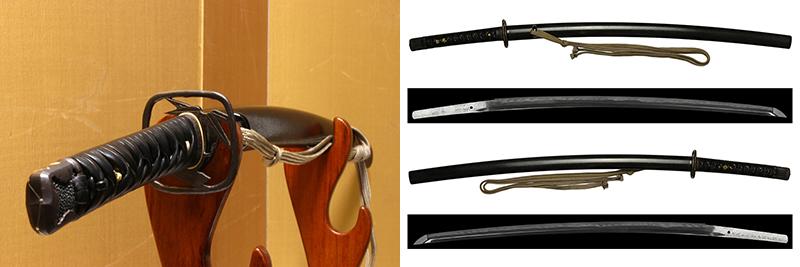
As for the koshirae, the tsuka has been rewrapped with black cowhide leather. Edo period fittings are used for the fuchi-kashira and tsuba, and the kashira in particular is a magnificent masterpiece representing the Big Dipper in gold and silver zogan. The state of preservation for the entire koshirae is also good.
A shinken for Iaido that is this lightweight and excellent in balance is extremely rare. The tasteful, high-quality koshirae is also an attraction, and it is a recommended blade that can be used for Iaido immediately after purchase.
[koshirae]
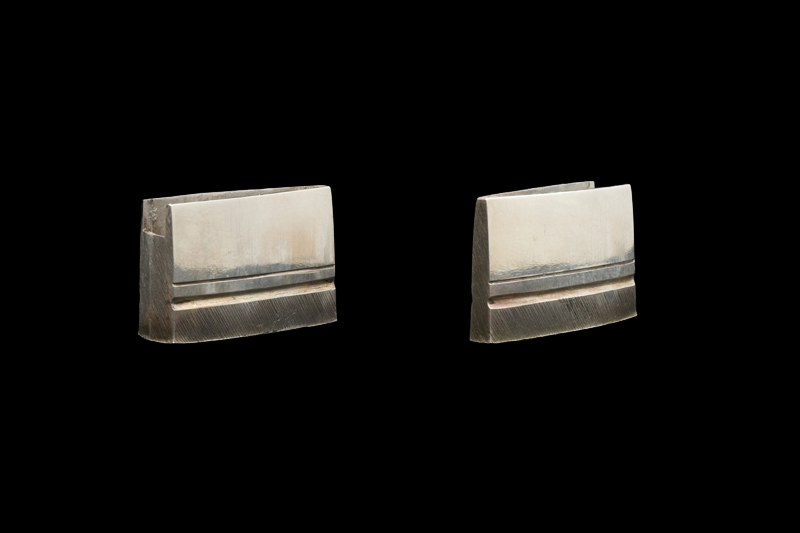
Habaki: Solid silver single Shonai habaki.
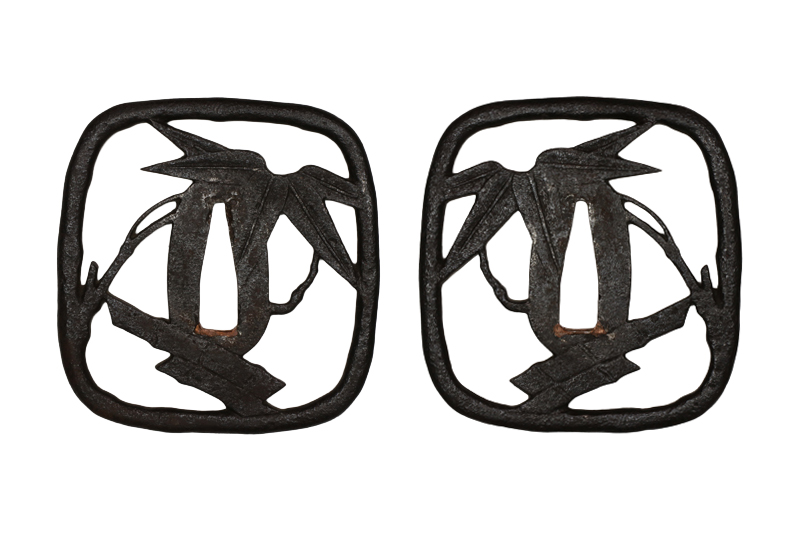
Tsuba: Iron ground, kaku-maru shape with a design of bamboo grass.
Fuchi-kashira: Iron ground fuchi-kashira. Kanji characters are on the fuchi, and the Big Dipper is zogan in gold and silver on the kashira.
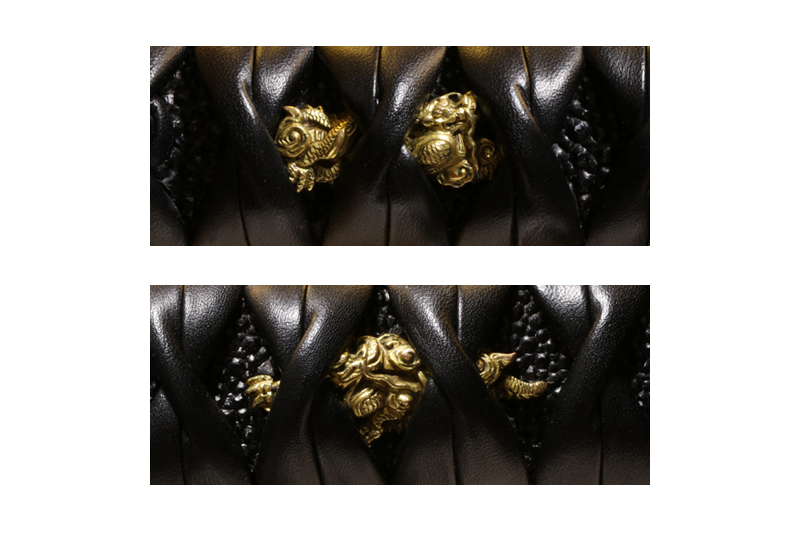
Menuki: Gold ground with a design of a dragon.
Tsuka: The samekawa is dyed black with an oyatsubu and is maki-same. The tsuka-ito is cowhide leather in katate-maki style.
Saya: Kai-chirashi saya with a thin coating of kuro-urushi.
[condition of blade]
Togi: Good.
Kizu: There are no flaws that would be considered defects.
Machine translation from the shop's Japanese · may contain errors ·
Modern sword Aokage Kazumune with Koshirae.
Kazumune is a highly skilled swordsmith with numerous selections at the Shinsaku Meito Exhibition.
This sword appears to have been custom-made for Iaido, featuring a tightly forged ko-itame hada and a magnificent reverse gunome hamon.
Weighing an astonishingly light 825g without fittings, it offers exceptional balance and excellent hi-nari.
The tsuka has been rewrapped in black cowhide leather. Equipped with high-quality Edo period fittings, both the blade and koshirae are in excellent condition, and it can be used for Iaido immediately.
Kazumune is a highly skilled swordsmith with numerous selections at the Shinsaku Meito Exhibition.
This sword appears to have been custom-made for Iaido, featuring a tightly forged ko-itame hada and a magnificent reverse gunome hamon.
Weighing an astonishingly light 825g without fittings, it offers exceptional balance and excellent hi-nari.
The tsuka has been rewrapped in black cowhide leather. Equipped with high-quality Edo period fittings, both the blade and koshirae are in excellent condition, and it can be used for Iaido immediately.
[sugata]
Shinogi-zukuri, iori-mune. Mihaba and kasane are ordinary, sori is moderate torii-zori, and the kissaki is chu-kissaki. The nakago is ubu with sujikai yasurime. The nakago-jiri is kurijiri.
[carving]
The carving is a kata-chiri bo-hi extending to the mekugi-ana in kaki-nagashi style.
[jigane]
The jigane is a tightly forged ko-itame with shirake-utsuri and ji-nie.
[hamon]
The hamon is reverse gunome showing tobiyaki, the nioiguchi is bright, and inside the ha, yo and kinsuji are active. The boshi is midare-komi turning back in ko-maru.
[detailed]
The swordsmith Kazumune (real name Okamoto Katsuhiro) is a swordsmith residing in Kamo-gun, Gifu Prefecture, and is a skilled smith with numerous selections at the Shinsaku Meito Exhibition. Furthermore, for some reason, many of this swordsmith's works are seen with original registrations from Aichi Prefecture.
According to the memoirs of the swordsmith Kazumune, when he was in the 3rd grade of elementary school, he was hospitalized for appendicitis, and when he was invited by the second son of the hospital director to explore his home, he cut bamboo on the mountain behind the house with a gunto he found, which reportedly became the catalyst for his interest in nihonto. He says that after that, he was fascinated by the beauty of nihonto and proceeded down the path of a swordsmith.
This work appears to be a sword custom-made for Iaido. It is an excellent piece with a well-forged ko-itame hada and a magnificent reverse gunome hamon. In addition to the astonishing lightness of just 825g without fittings, the balance is outstanding, and the hi-nari resonates pleasantly. The condition of the blade is also good.
As for the koshirae, the tsuka has been rewrapped with black cowhide leather. Edo period fittings are used for the fuchi-kashira and tsuba, and the kashira in particular is a magnificent masterpiece representing the Big Dipper in gold and silver zogan. The state of preservation for the entire koshirae is also good.
A shinken for Iaido that is this lightweight and excellent in balance is extremely rare. The tasteful, high-quality koshirae is also an attraction, and it is a recommended blade that can be used for Iaido immediately after purchase.
[koshirae]
Habaki: Solid silver single Shonai habaki.
Tsuba: Iron ground, kaku-maru shape with a design of bamboo grass.
Fuchi-kashira: Iron ground fuchi-kashira. Kanji characters are on the fuchi, and the Big Dipper is zogan in gold and silver on the kashira.
Menuki: Gold ground with a design of a dragon.
Tsuka: The samekawa is dyed black with an oyatsubu and is maki-same. The tsuka-ito is cowhide leather in katate-maki style.
Saya: Kai-chirashi saya with a thin coating of kuro-urushi.
[condition of blade]
Togi: Good.
Kizu: There are no flaws that would be considered defects.
Historical context
Shōwa to the present: destruction and revival
›
The twentieth century nearly killed the craft twice: wartime distortion, then the occupation ban. The NBTHK’s founding in 1948 and licensed forging from 1953 rebuilt the sword as an art, crowned by Living National Treasures and the mukansa rank.
Within 3 days of the item's arrival, we offer a refund or an exchange. Return shipping and the bank transfer fee for the refund are at the customer's expense.


 NihontoWatch