 NihontoWatchNihontoWatch
Without needing to cite examples like Ieyasu or Nobunaga, those in power favored falconry. Falconry, much like the makigari of Yoritomo's era, was nothing other than military training, and falconry equipment was also a type of weaponry; as part of a samurai's preparation, it was an essential motif for the decoration of kozuka and kogai. Against a background of aged shakudo nanako-ji, the design is carved out clearly with a rich sense of volume, the takabori sections are treated with narrowed edges, and the surfaces of the objects are finished with chiseling, employing the uttori technique of covering parts with thin gold plates to create a dignified composition.
NihontoWatchOffered by Choshuya

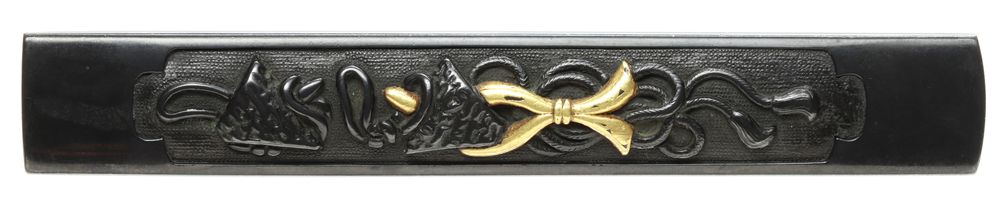


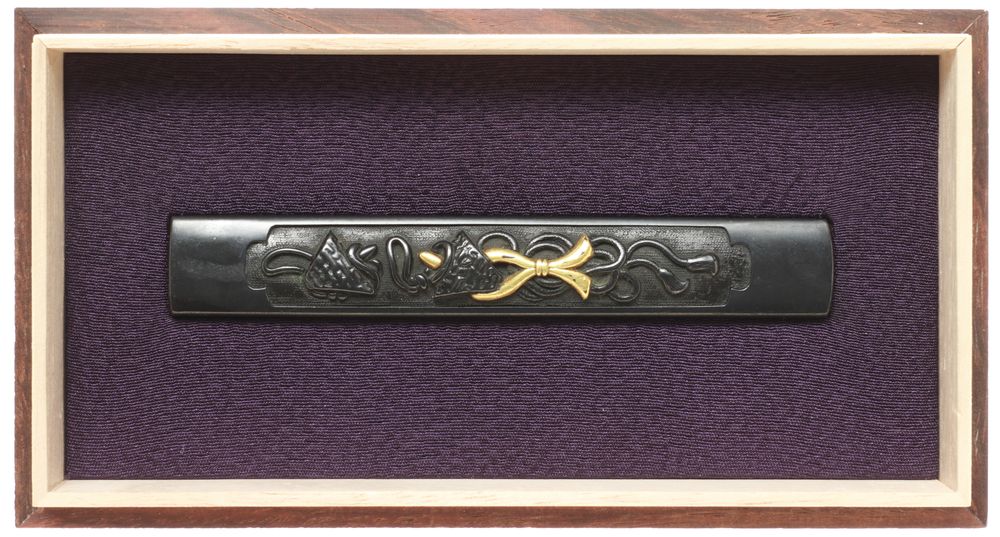
Pre-Edo
Unsigned
Tokuho (NBTHK)
Machine translation from the shop's Japanese · may contain errors ·
A Hozon-certified fitting of notably superior craftsmanship and condition, often with signature or workmanship of high reference value.
The NBTHK (Nihon Bijutsu Tōken Hozon Kyōkai, the Society for the Preservation of Japanese Art Swords) is a public-interest incorporated foundation founded in 1948 and supervised by Japan’s Agency for Cultural Affairs (Bunkachō); it is based at the Japanese Sword Museum in Tokyo. Its expert panels physically examine each submitted work (shinsa) and issue a certificate (kanteishō) ranking it by artistic and historical merit. NBTHK papers are the most widely recognized standard of authentication for Japanese swords and fittings.
NBTHK official siteIf, due to our fault, the item differs significantly from its proper condition, the item may be returned. Cooling-off is within one week of the item's arrival.
¥185,000