




The twentieth century nearly killed the craft twice: wartime distortion, then the occupation ban. The NBTHK’s founding in 1948 and licensed forging from 1953 rebuilt the sword as an art, crowned by Living National Treasures and the mukansa rank.
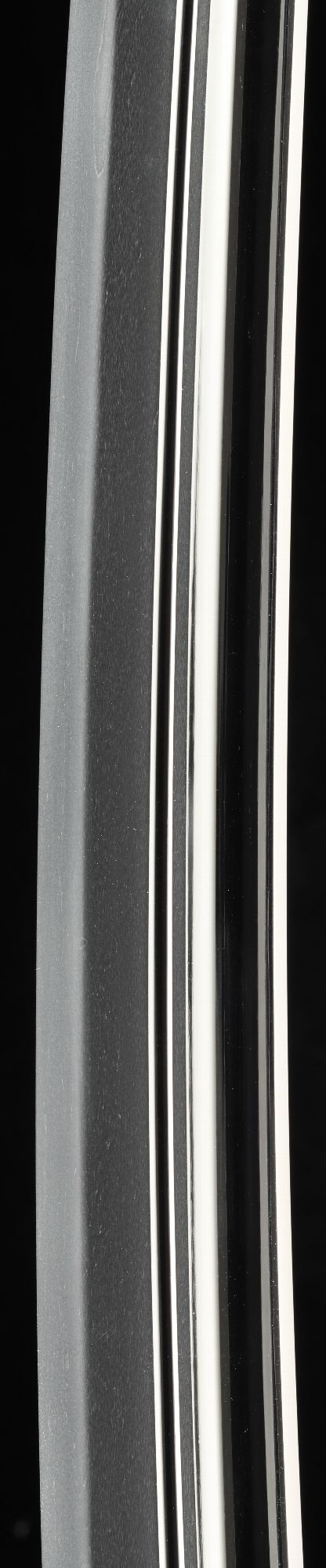
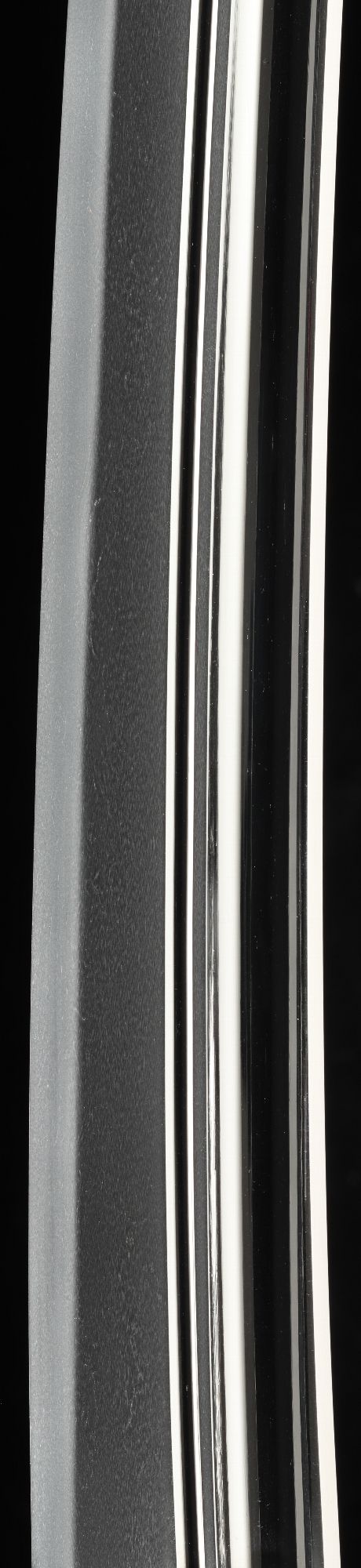
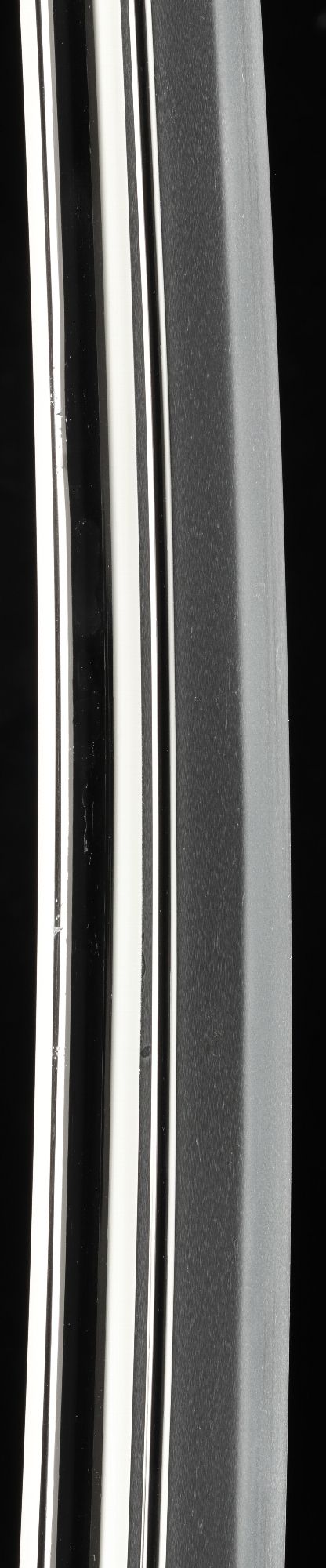
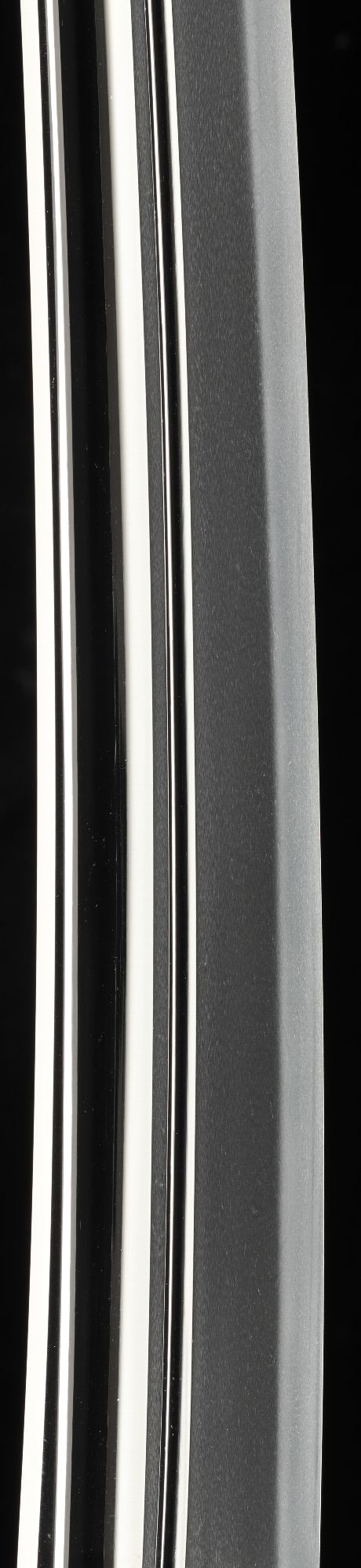
Isobe MITSUHIRO (Born:AD.1915, Taisho 4) Moto-haba (Width at Ha-machi) approx. 3.73cm Saki-haba(Width at Kissaki) approx.2.65cm Engraving: "Bo-hi" kaki-nagashi and "Soe-hi" on the both sides A work by the swordsmith Isobe Ikkansai Mitsuhiro, who resided in Shizuoka Prefecture, viewed the "Sohaya no Tsurugi"—a beloved sword of Ieyasu held by the Kunozan Toshogu Shrine—many times, and left behind works that approach its true essence. Mitsuhiro was born in Taisho 4. He was a monjin of Ikkansai Tsunetoshi, of the lineage of Miyaguchi Ikkansai Shigeyoshi who studied under Hamabe Toshinori and Ozaki Suketaka in the late Edo period. His range of work was broad, including elegant tachi modeled after Bizen Nagamitsu and Kanemitsu of the Kamakura period, and swords with o-gunome deki like those of Sukehiro and Shinkai from the early Edo period; he is also widely known for his production of the Sohaya no Tsurugi, which is attributed to the work of Miike Denta.
Offered by Choshuya
This piece has sold
Get an email when a new Mitsuhiro piece hits the market.


Machine translation from the shop's Japanese · may contain errors ·
Shizuoka · around 1926-1989
4 pieces on the market now
Shōwa to the present: destruction and revival
The twentieth century nearly killed the craft twice: wartime distortion, then the occupation ban. The NBTHK’s founding in 1948 and licensed forging from 1953 rebuilt the sword as an art, crowned by Living National Treasures and the mukansa rank.
If, due to our fault, the item differs significantly from its proper condition, the item may be returned. Cooling-off is within one week of the item's arrival.