The twentieth century nearly killed the craft twice: wartime distortion, then the occupation ban. The NBTHK’s founding in 1948 and licensed forging from 1953 rebuilt the sword as an art, crowned by Living National Treasures and the mukansa rank.
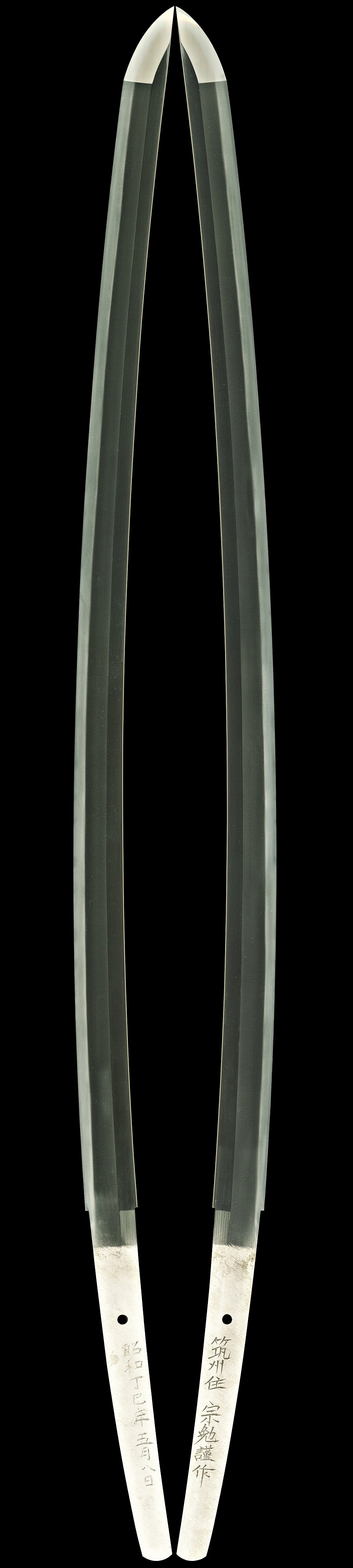
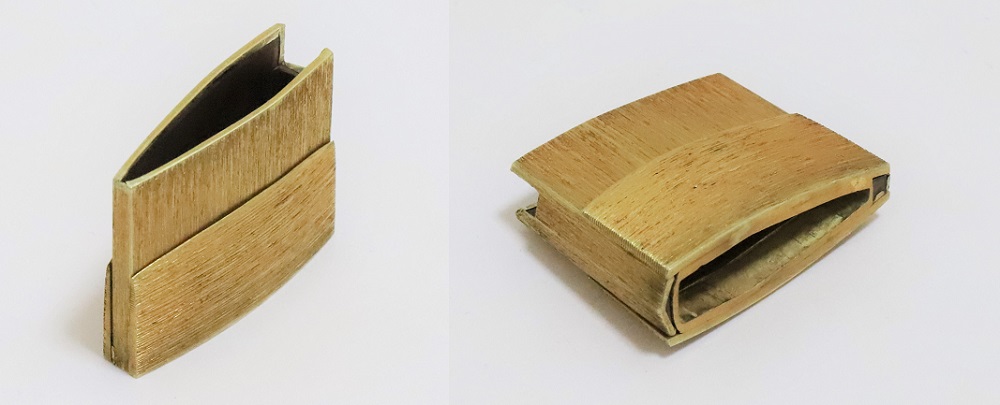
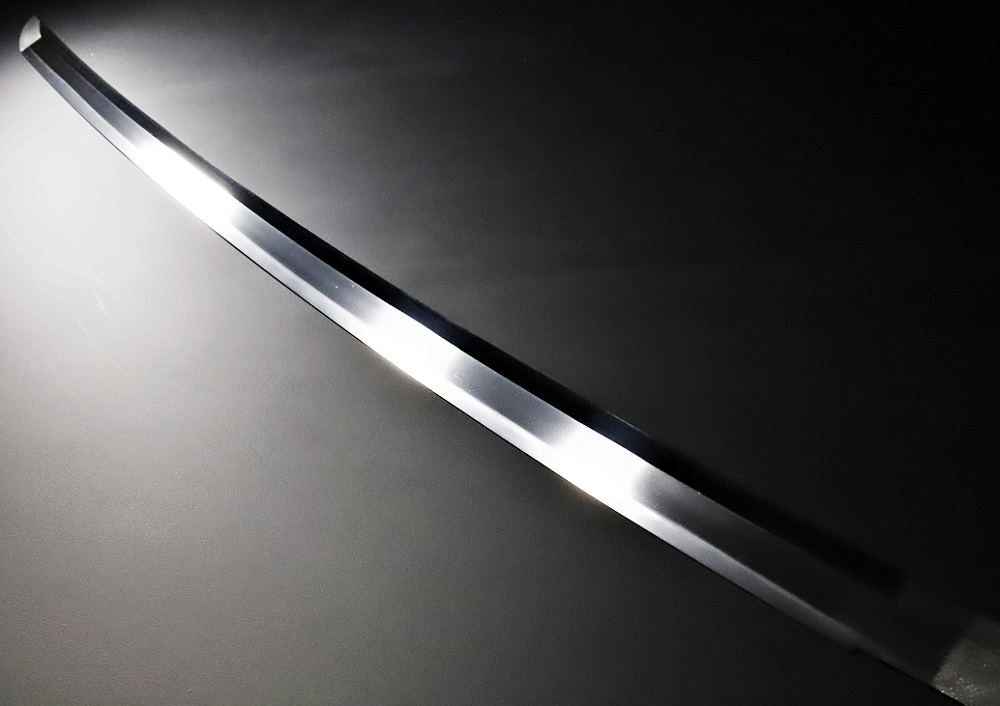
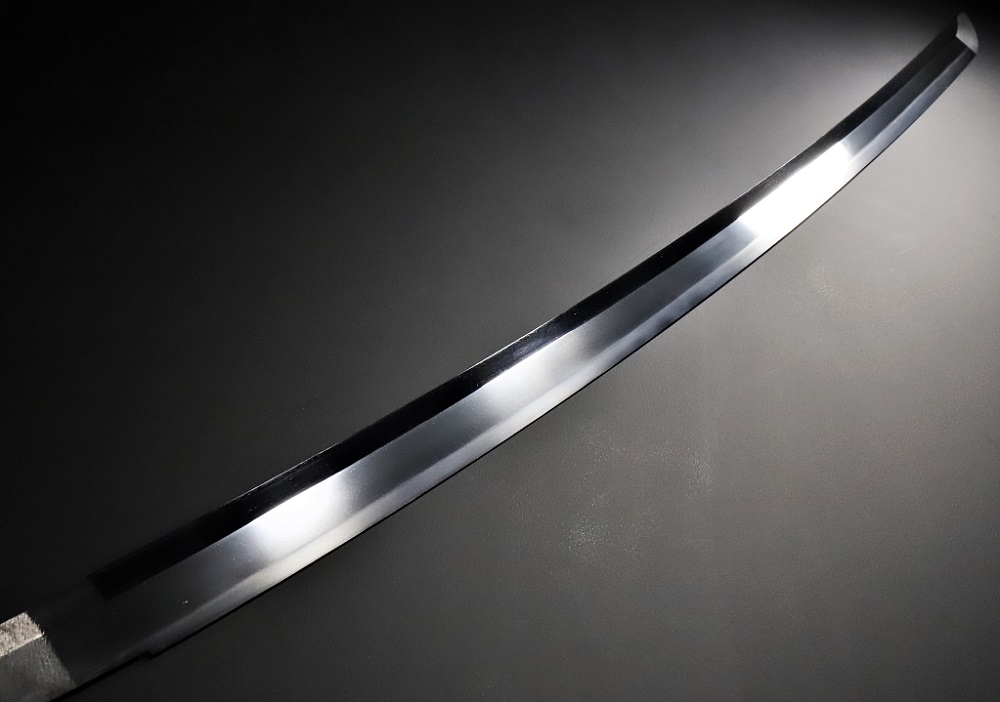
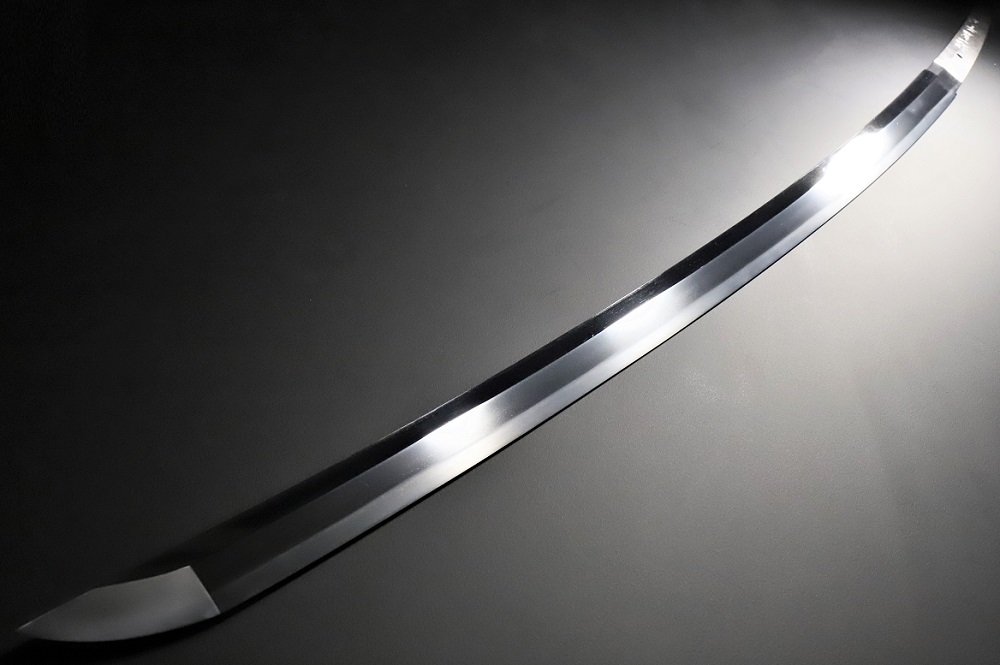
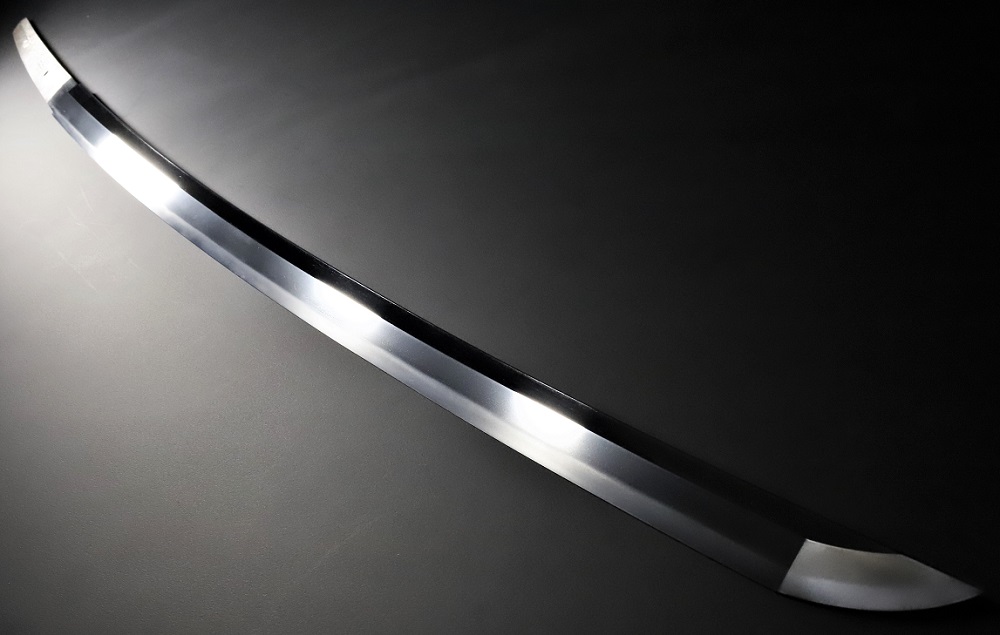
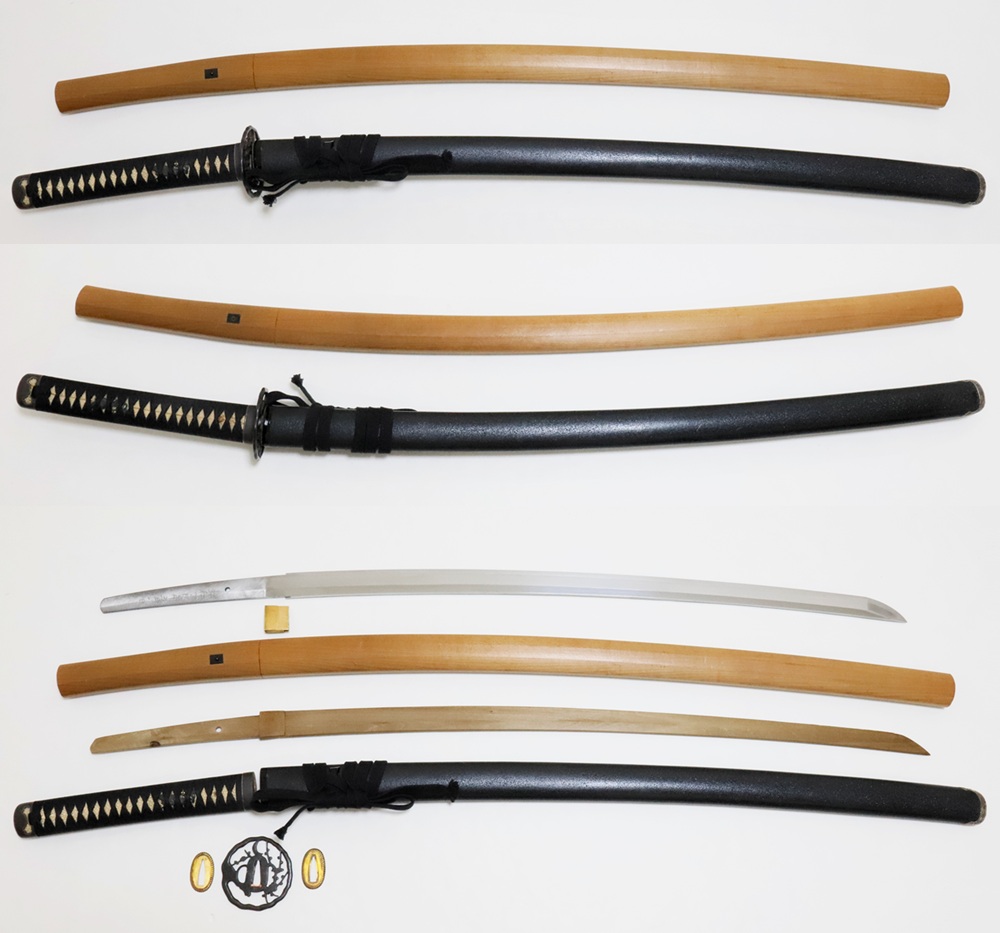
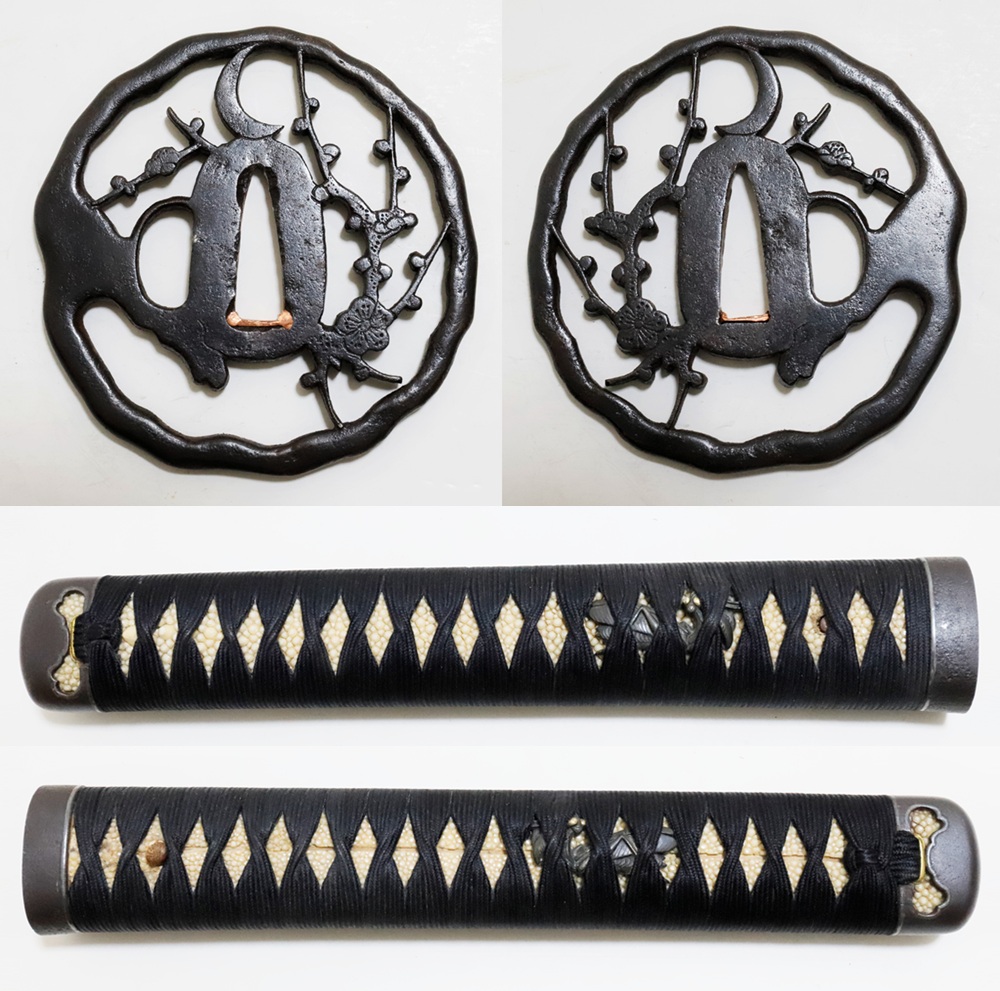
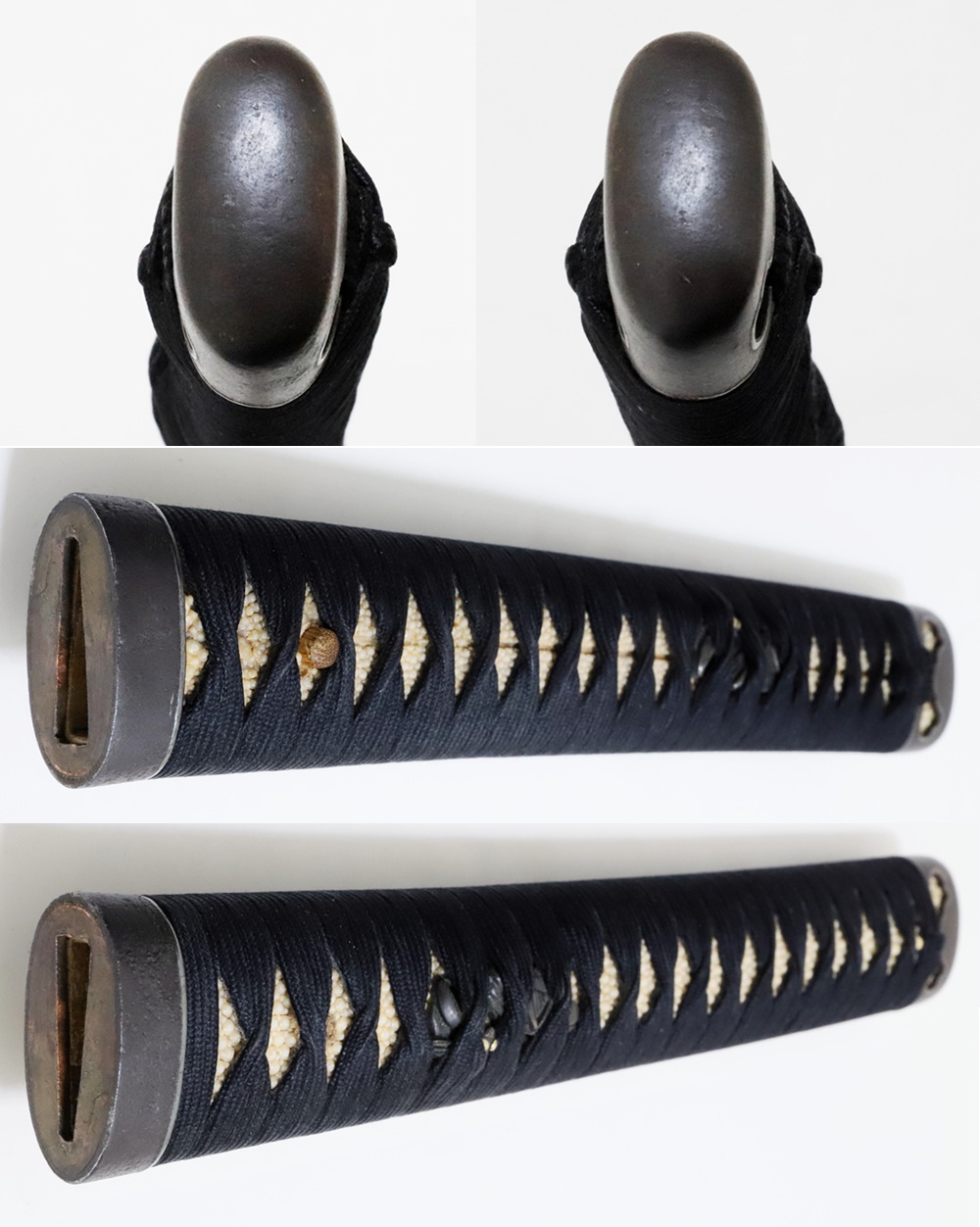
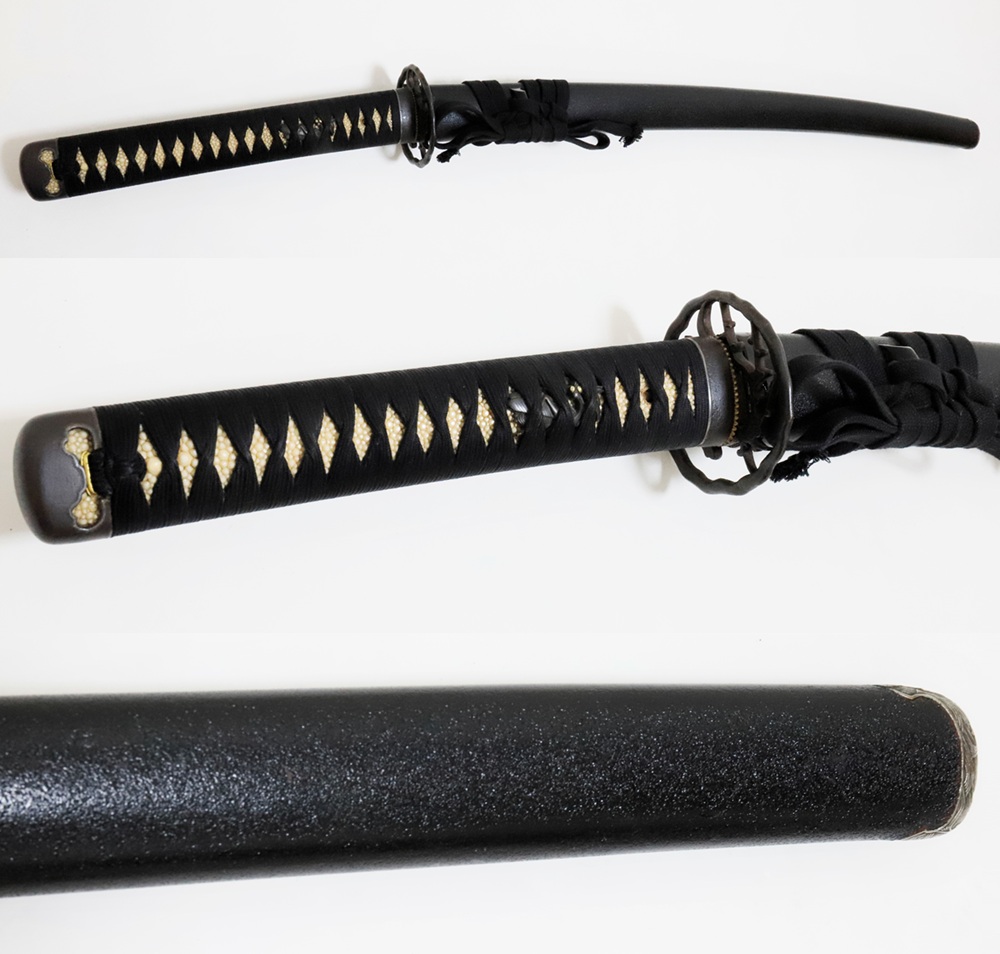
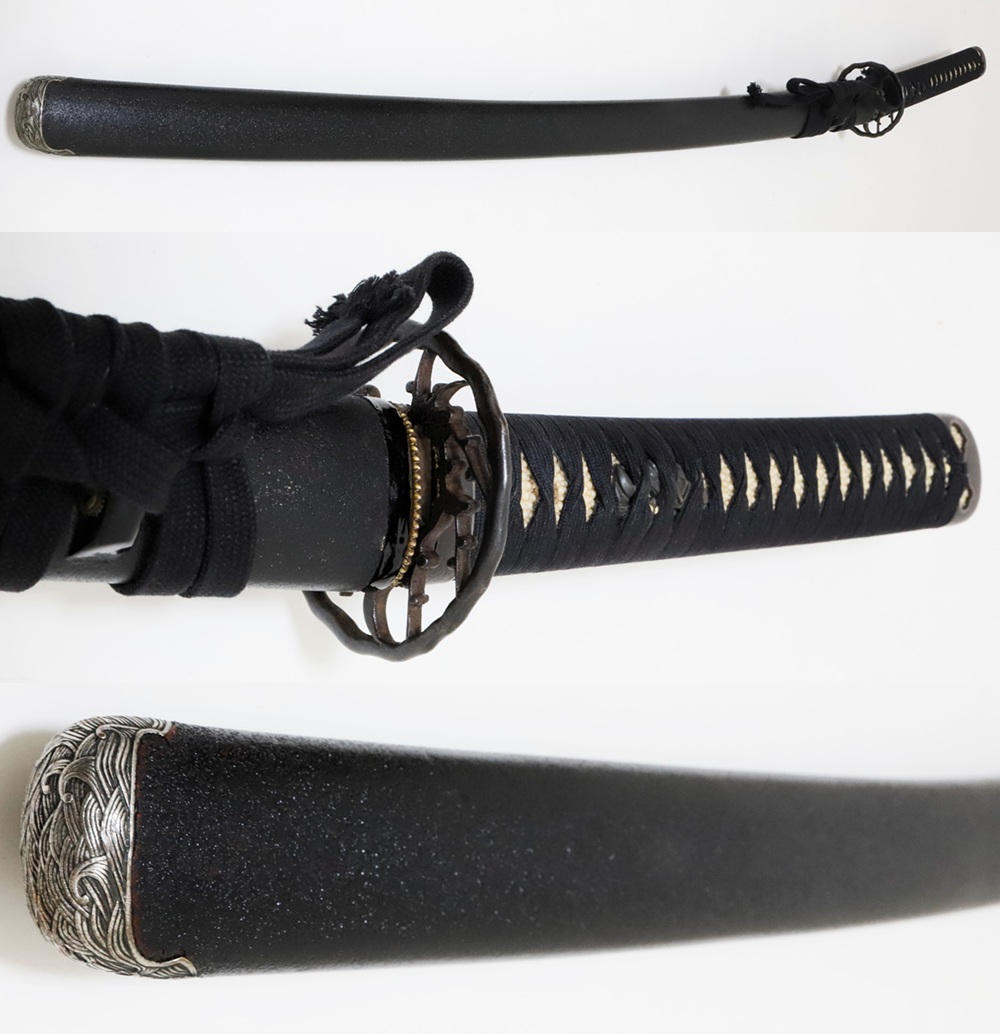
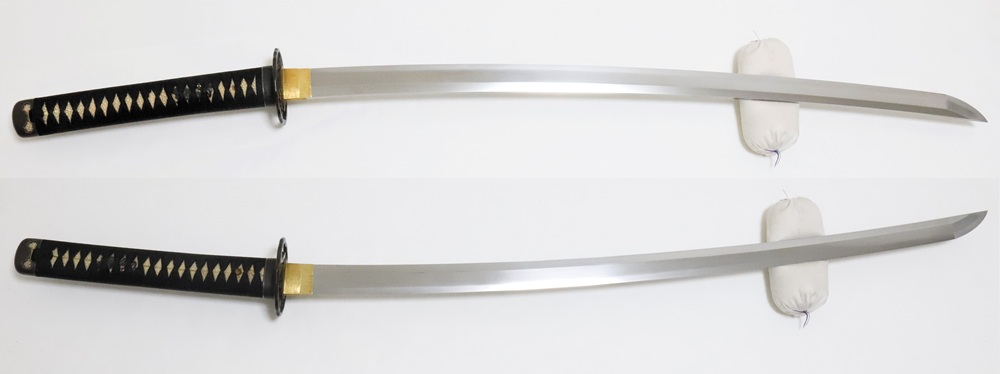
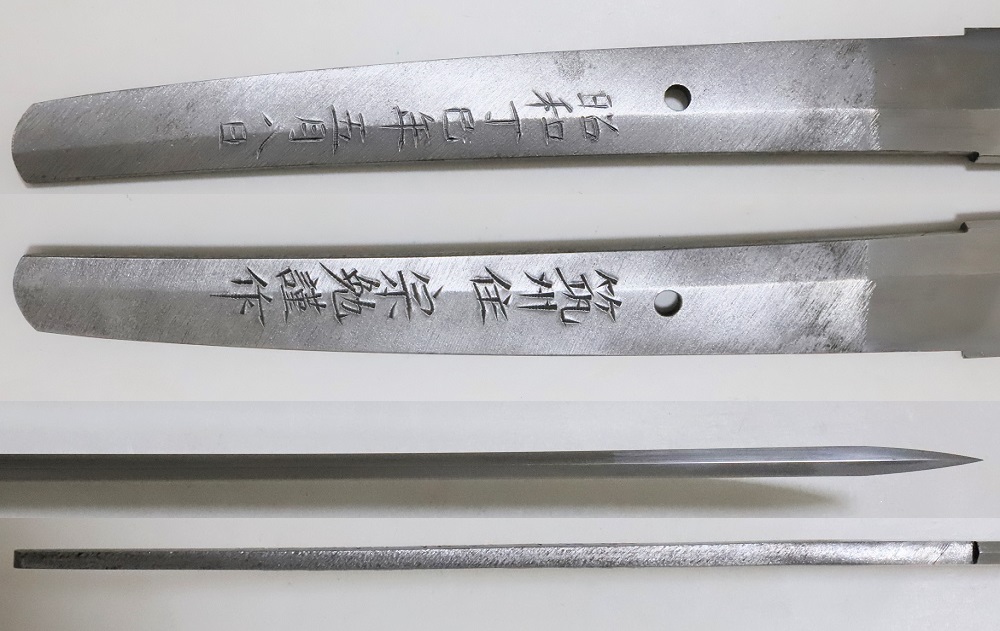
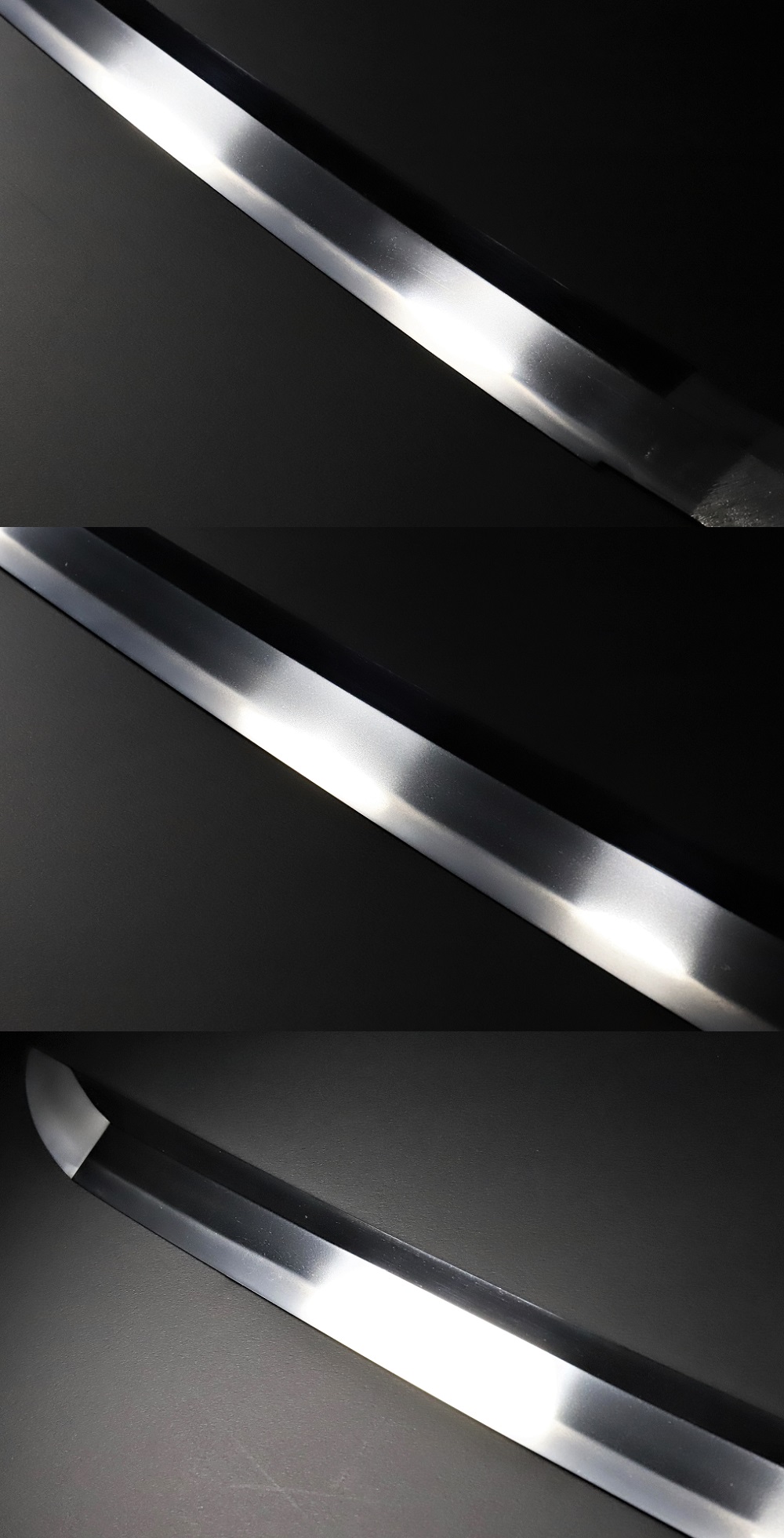
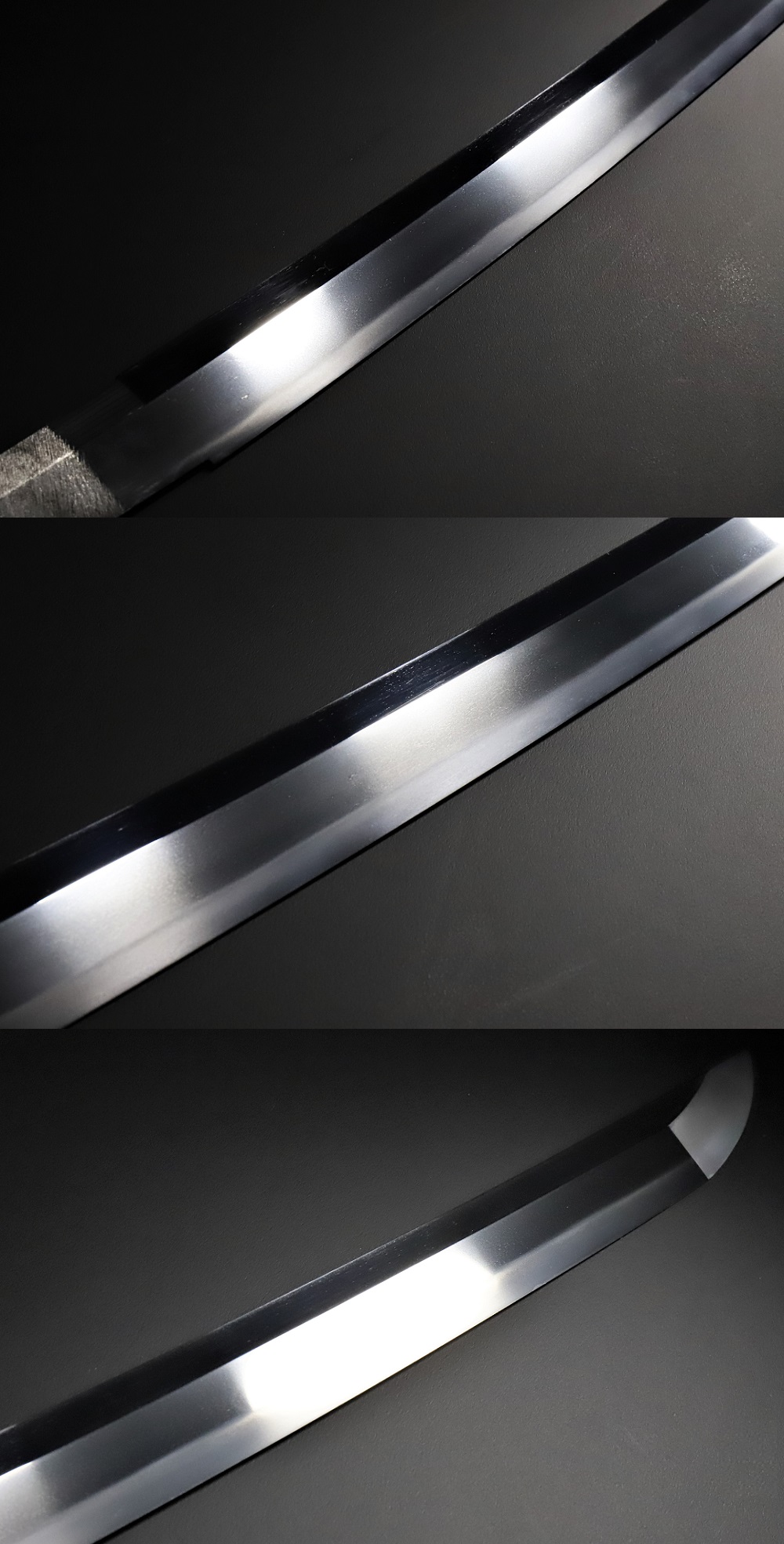
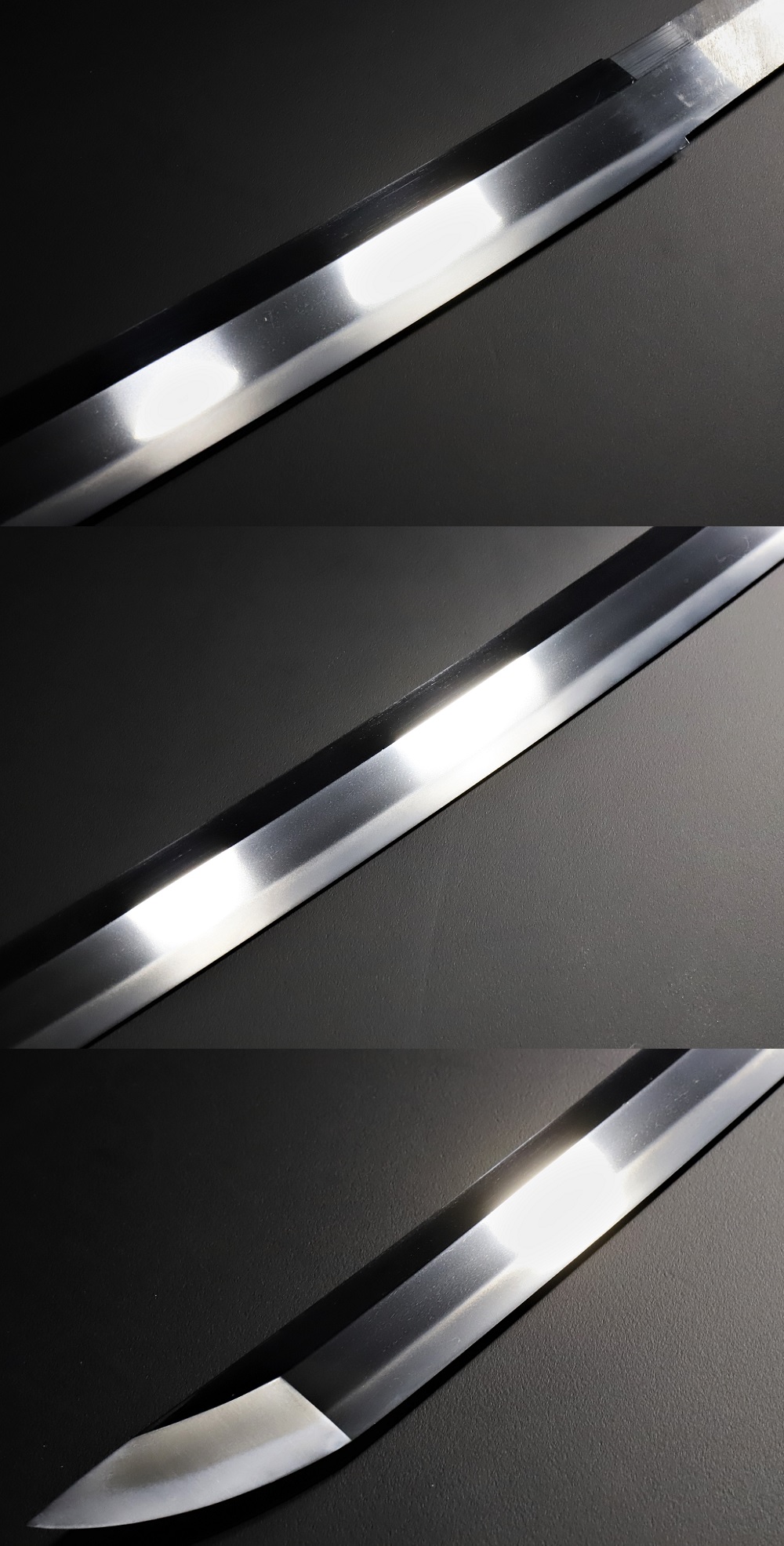
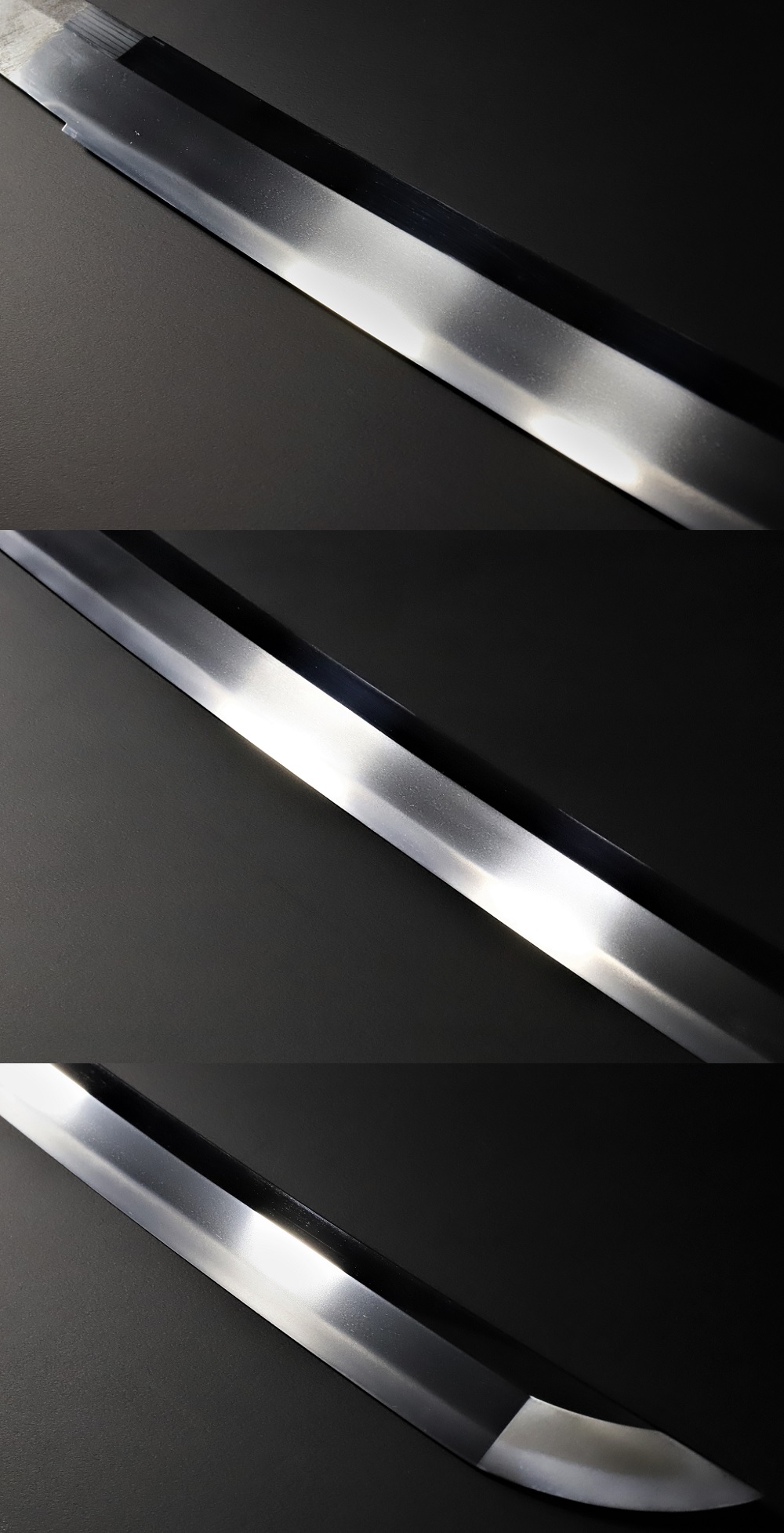
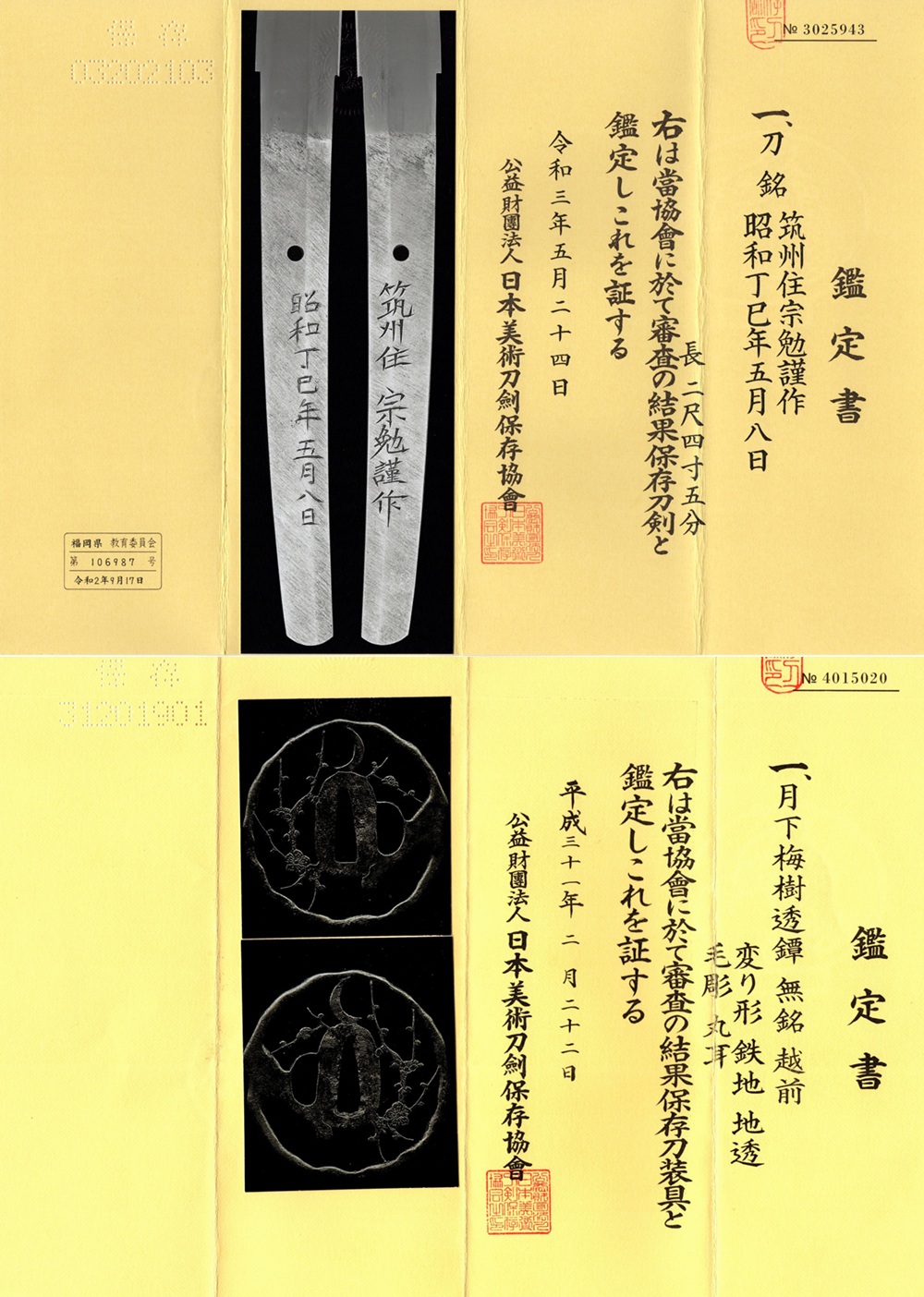
So Tsutomu was born in Showa 2 (1927) in Fukuoka Prefecture. He studied under his father, the swordsmith Munehiro (first mei Masamitsu), received approval to manufacture swords in Showa 30 (1955), and exhibited in the Shinsaku Meito Ten. He excelled in the Soshu-den and left behind excellent works, particularly through his research into the style of the Bakumatsu master Minamoto Kiyomaro. He received numerous special prizes such as the Commissioner for Cultural Affairs Award, the Kunzan Award, and the Takamatsunomiya Award, and was recognized as a Mukansa swordsmith in Heisei 2 (1990). He is one of the master smiths representing the modern era. He passed away in Heisei 27 (2015). This work was made in Showa 52 (1977), when So Tsutomu was 50 years old. With a nagasa of 2 shaku 4 sun 5 bu, a chu-kissaki slightly extended, a wide mihaba and thin kasane, it is a grand and elegant sugata with a tachi-mei. It is a suguha, which is rare for this smith who often produced o-midare, and it is a superior work demonstrating high skill with a deep nioiguchi and moist jigane that one would not think is a gendaito. It is accompanied by an uchigatana koshirae with a kuro-ishimeji nuri-saya and a gekka baiju sukashi tsuba. It passed the Hozon Token shinsa in Reiwa 3 (2021).
Offered by Touken Matsumoto


As written by the shop
Machine translation from the shop's Japanese · may contain errors ·
Shōwa to the present: destruction and revival
The twentieth century nearly killed the craft twice: wartime distortion, then the occupation ban. The NBTHK’s founding in 1948 and licensed forging from 1953 rebuilt the sword as an art, crowned by Living National Treasures and the mukansa rank.
Certifies a genuine blade worth preserving: a signature confirmed correct, or, if unsigned, an era, province, and school that the NBTHK can reliably identify.
The NBTHK (Nihon Bijutsu Tōken Hozon Kyōkai, the Society for the Preservation of Japanese Art Swords) is a public-interest incorporated foundation founded in 1948 and supervised by Japan’s Agency for Cultural Affairs (Bunkachō); it is based at the Japanese Sword Museum in Tokyo. Its expert panels physically examine each submitted work (shinsa) and issue a certificate (kanteishō) ranking it by artistic and historical merit. NBTHK papers are the most widely recognized standard of authentication for Japanese swords and fittings.
NBTHK official siteReturns within 7 days of the item's arrival. Returns are not possible if (1) the item has been altered, or (2) for overseas transactions.
¥1,250,000