Edo was the sword’s age of connoisseurship: the Hon’ami appraisers, the shogunal register of famous blades of 1719, and a thriving literature turned the sword into an object of study even as it ceased to be drawn in war.
 NihontoWatchNihontoWatch
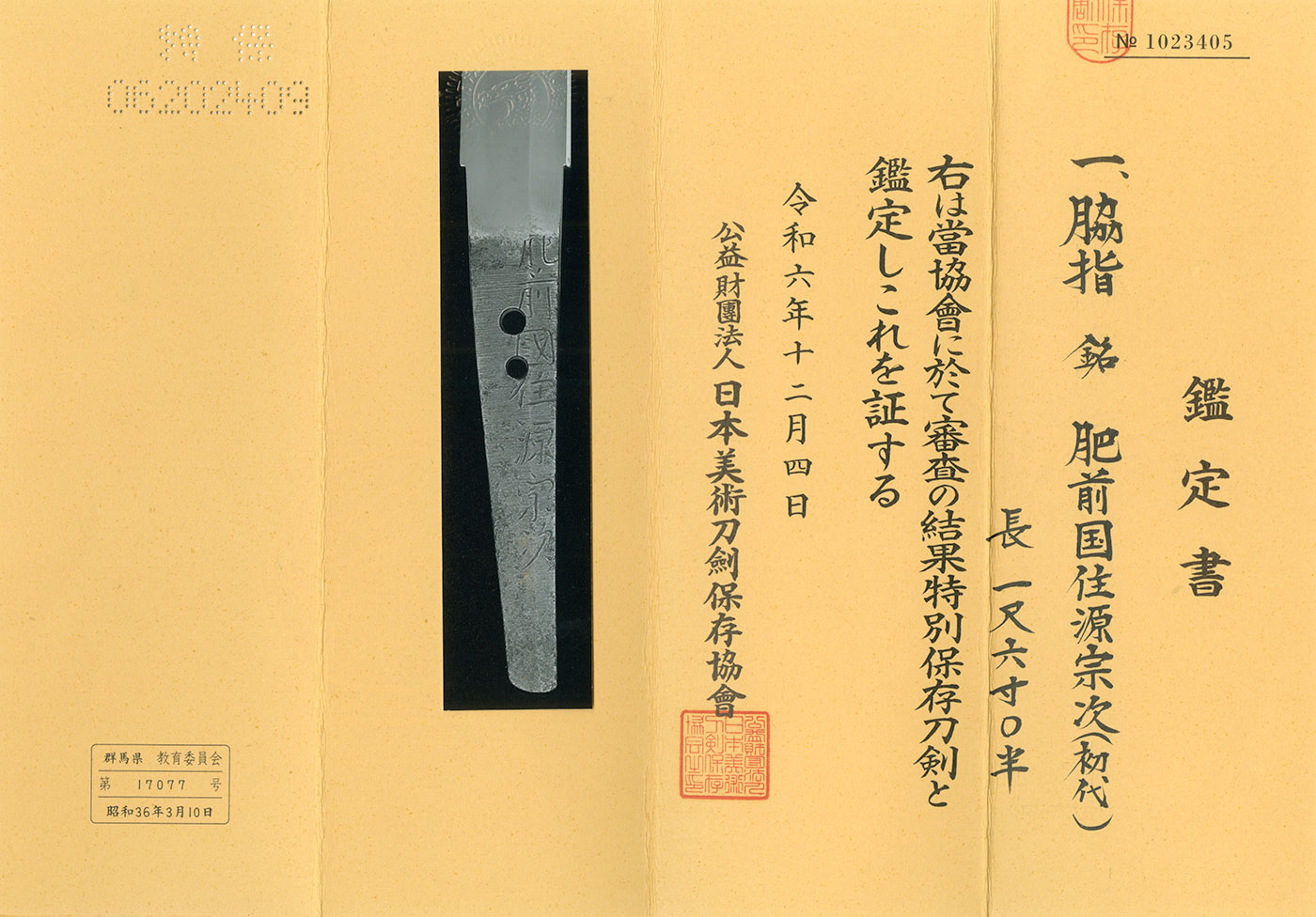
Wakizashi in Shirasaya with Koshirae (NBTHK Tokubetsu Hozon Token) March 3, 1961. Inscribed by Kishida Toan. (We divide 4 sections for each sword as Saijyo Saku, Jyojyo Saku, Jyo Saku and Regular Saku). This blade is ranked as Jyojyo Saku among the works of Hizen no Kuni Ju Minamoto Munetsugu. Shape: A beautifully proportioned wakizashi with a relatively wide mihaba, deep curvature, and an elongated kissaki. Jigane: Beautifully refined and well-forged jigane displaying fine ko-nuka hada, characteristic of Hizen swords. Hamon: Nie-deki gunome-midare. The boshi displays a midare-komi pattern. Features: Hizen no Kuni Ju Minamoto Munetsugu (1st Generation) was a swordsmith from present-day Saga Prefecture whose personal name was Sakai San'emon. In 1606 (Keicho 11), he received the honorary title of Iyo no Jo and was later granted the higher title of Iyo Daijo. He was active as a swordsmith in the service of the Saga domain. Historical Background: The Kan'ei era (1624–1644) of the Edo period largely coincided with the reign of Tokugawa Iemitsu, the 3rd Tokugawa shogun. It was an extremely important period during which the political and administrative structure of the Edo shogunate, known as the bakuhan system, became firmly established. During these years, Japan experienced major political reforms, devastating disasters, and the flourishing of sophisticated cultural traditions. The shogunate strengthened its control over the daimyo and the Imperial Court while introducing increasingly restrictive foreign policies that eventually developed into the system commonly known as sakoku (national seclusion). Mandatory Sankin-kotai (Alternate Attendance System, 1635): In 1635, the shogunate revised the Buke Shohatto (Laws for the Military Houses), making the sankin-kotai system compulsory for daimyo throughout Japan. Under this system, feudal lords were required to alternate their residence between their domains and Edo. The substantial financial burden of maintaining residences and traveling between them helped prevent rebellion while contributing to the economic prosperity of Edo. Gradual Implementation of the Sakoku Edicts (1633–1639): Between 1633 and 1639, the shogunate issued a series of restrictive decrees intended to suppress Christianity and regulate foreign trade. In 1635, Japanese subjects were prohibited from traveling overseas or returning from abroad. In 1639, Portuguese ships were banned from entering Japan, completing the principal framework of the sakoku system. The Shimabara-Amakusa Rebellion (1637–1638): This was one of the largest uprisings in Japanese history. It took place in the Shimabara and Amakusa regions of Kyushu, where local inhabitants rebelled against oppressive taxation and the persecution of Christianity by their feudal rulers. The shogunate faced considerable difficulties suppressing the rebellion. Following its suppression, the government intensified its efforts to eliminate Christianity, including the widespread use of fumie (religious images that suspected Christians were required to step on). *Please note there is a small chippign on the Monouti area. NBTHK Tokubetsu Hozon Token.
Offered by Aoi Art

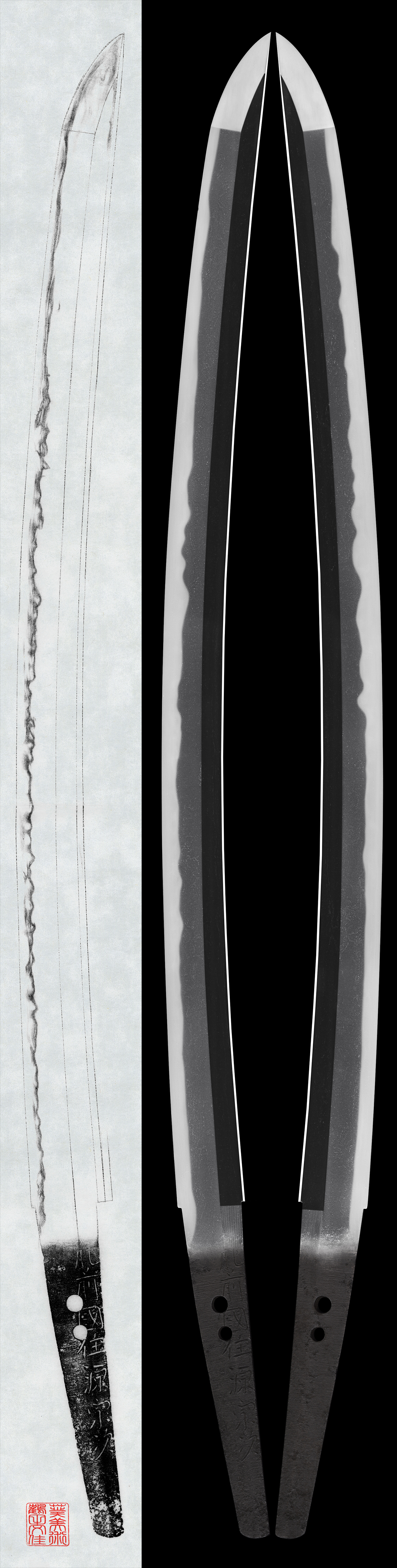
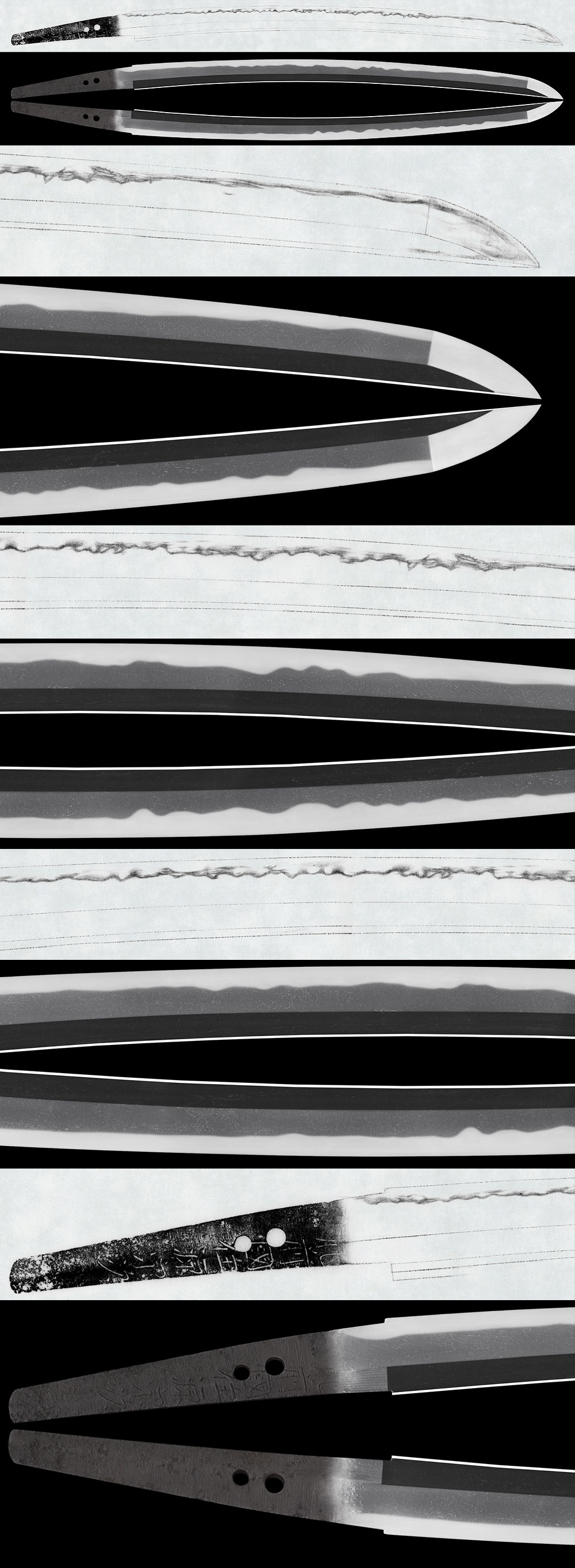
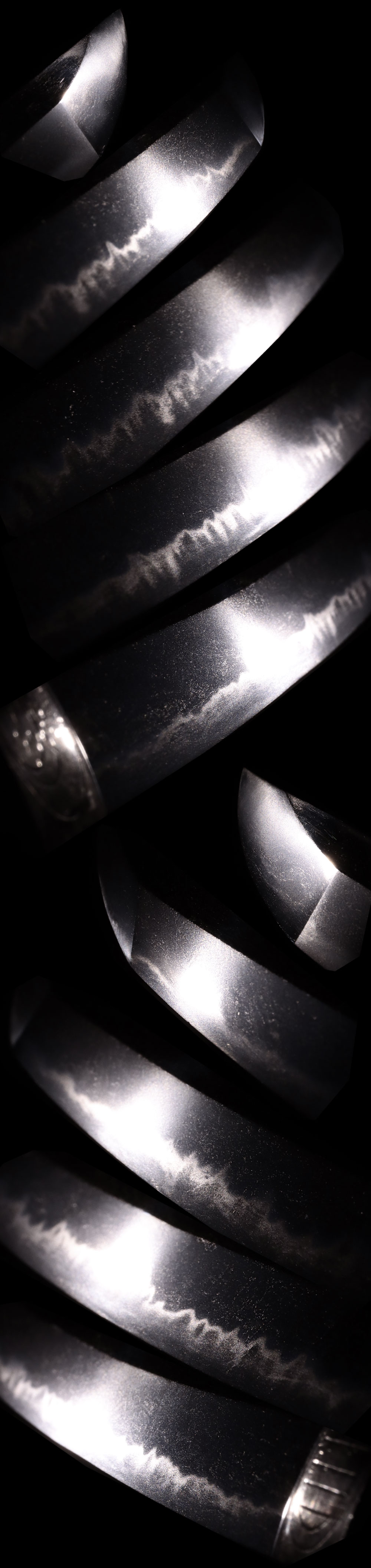

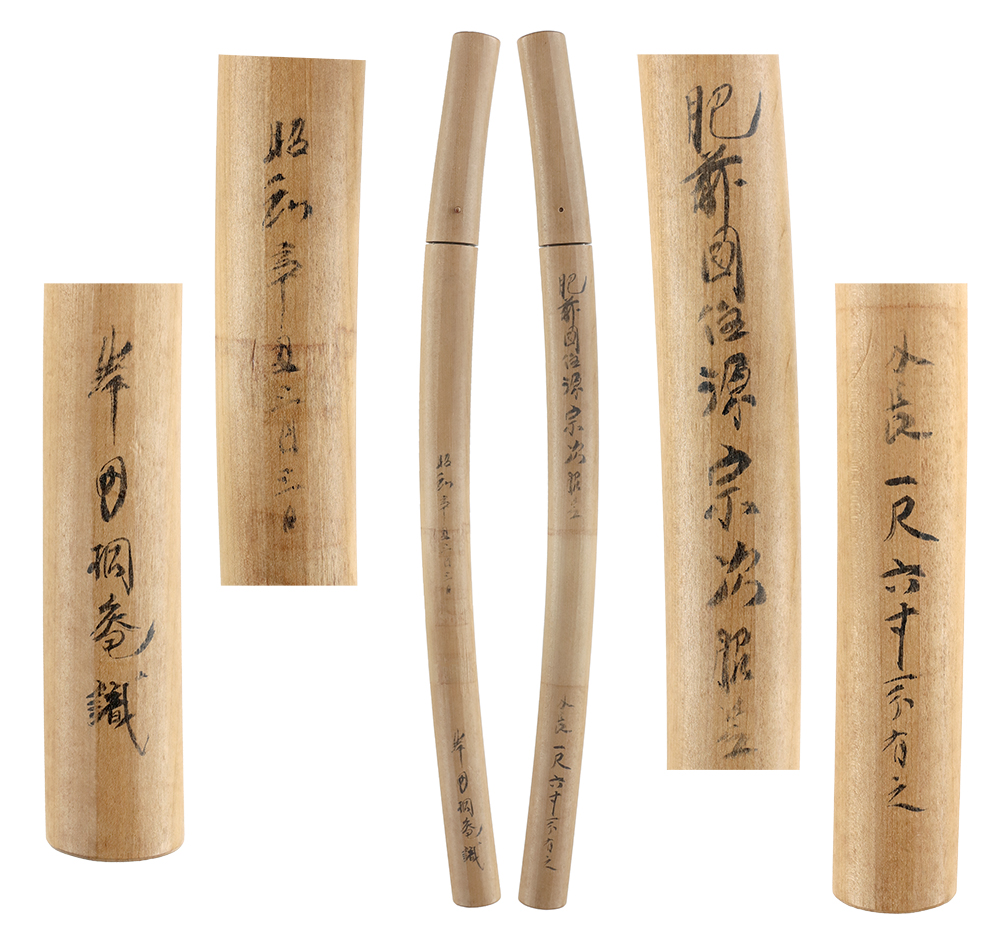
As written by the shop
The Edo period (1615 to 1868)
Edo was the sword’s age of connoisseurship: the Hon’ami appraisers, the shogunal register of famous blades of 1719, and a thriving literature turned the sword into an object of study even as it ceased to be drawn in war.
A Hozon-certified blade judged to show notably superior workmanship and a better state of preservation. The bar is higher: re-tempered blades and most unsigned Muromachi/Edo works are excluded.
The NBTHK (Nihon Bijutsu Tōken Hozon Kyōkai, the Society for the Preservation of Japanese Art Swords) is a public-interest incorporated foundation founded in 1948 and supervised by Japan’s Agency for Cultural Affairs (Bunkachō); it is based at the Japanese Sword Museum in Tokyo. Its expert panels physically examine each submitted work (shinsa) and issue a certificate (kanteishō) ranking it by artistic and historical merit. NBTHK papers are the most widely recognized standard of authentication for Japanese swords and fittings.
NBTHK official siteIf you wish to return an item, please notify us within 3 days of receipt. After this period we cannot accept cancellations. Please ship the return to us within 5 business days. Cancellation is conditional on the item being kept in the same condition as at the time of sale, so please handle it with care.
Auction status: live on sword-auction.com.