 NihontoWatchNihontoWatch
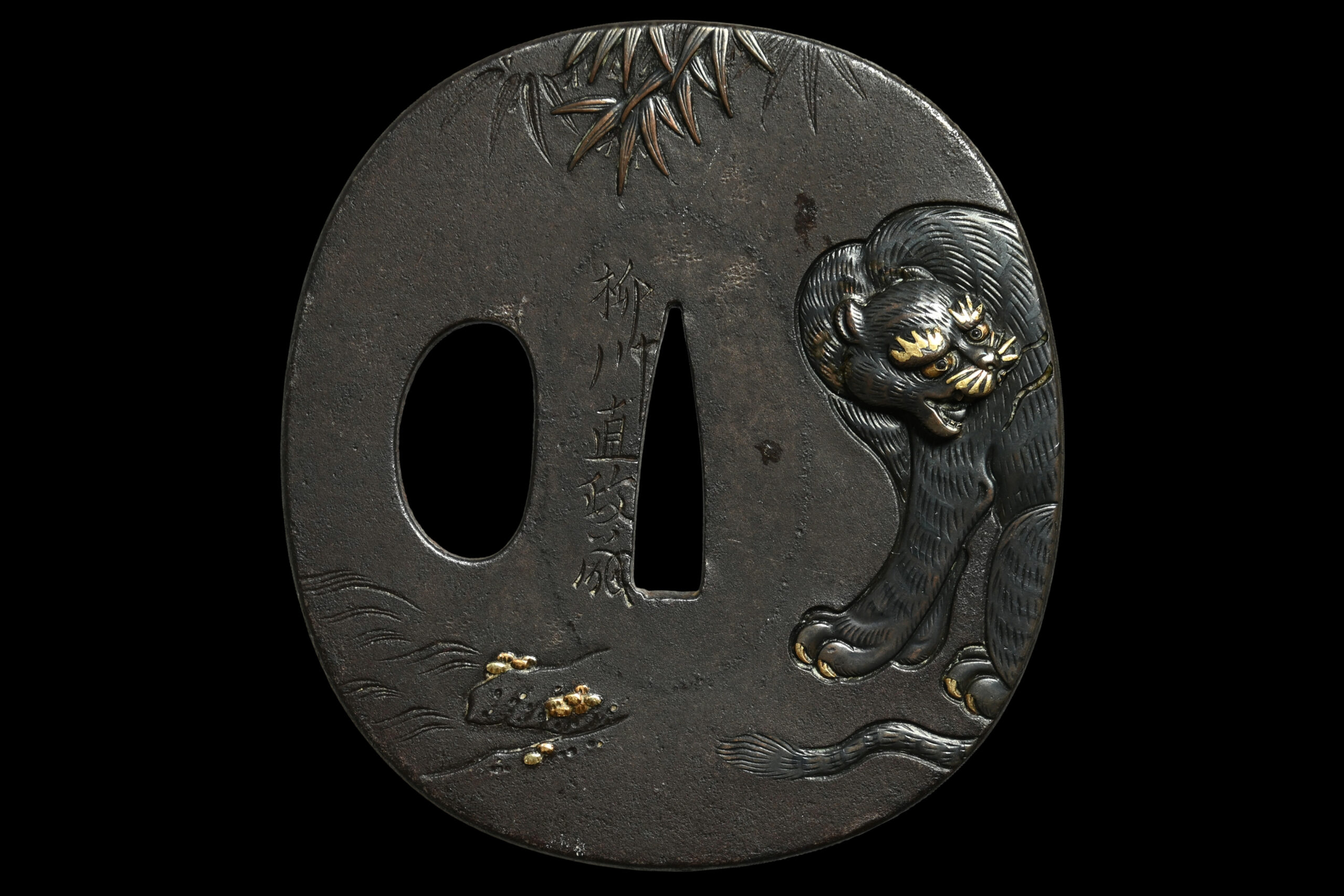
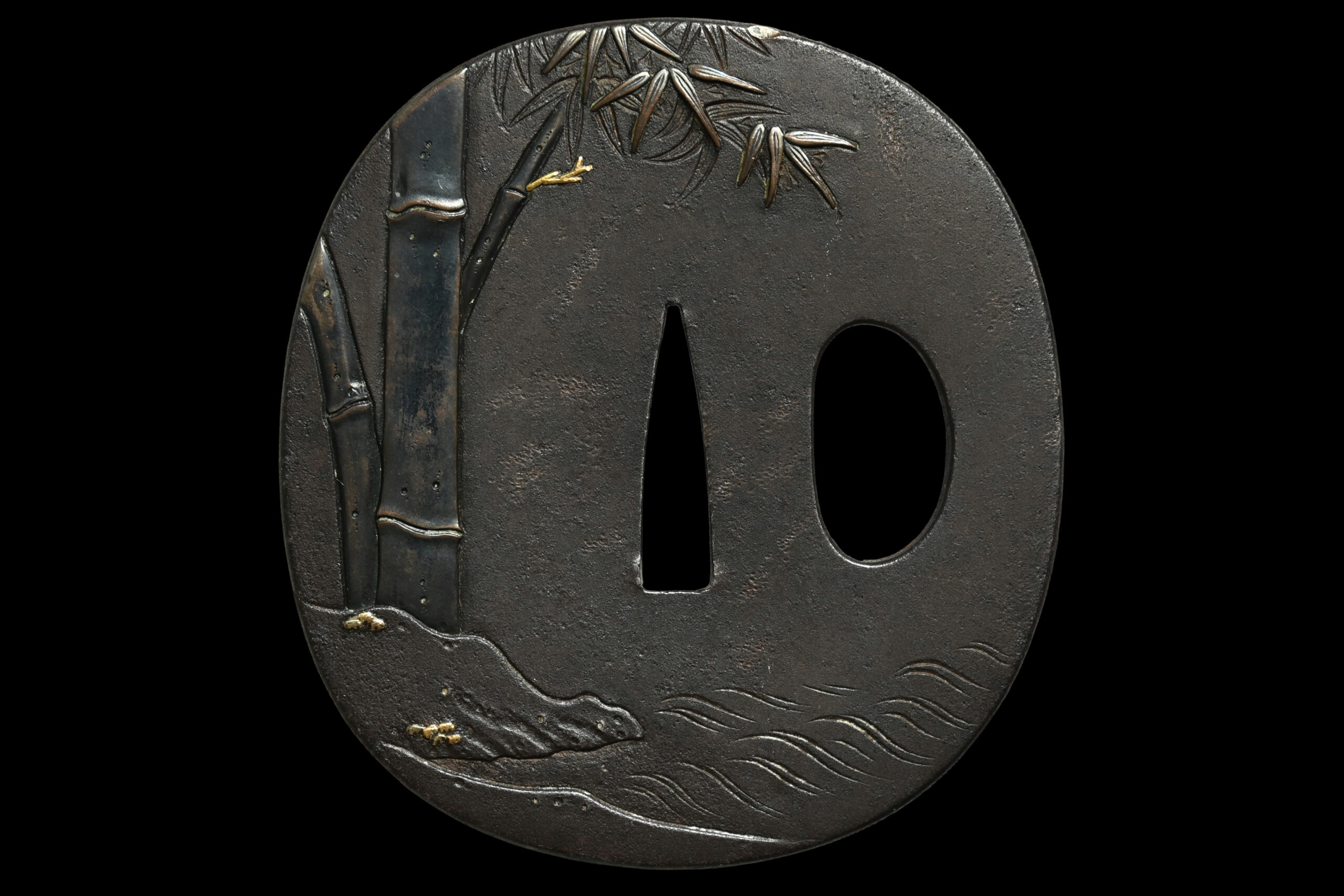
Front Side (Omote) Motif: Features a powerful, dynamic tiger carved in high relief (takabori) in shakudo and shibuichi descending from the right. The tiger exhibits intricate surface detailing showing muscular definition and fur texture. It arches over a rushing stream depicted at the base. Upper & Background Details: Arching bamboo leaves extend gracefully from the top rim. Inlays & Highlights: Gold inlays (kinzōgan) highlight key details, including the tiger’s eyes, teeth, sharp claws, and foam/water droplets along the stream. Signature (Mei): Chiseled to the left of the nakago-ana: 柳川直政 (Yanagawa Naomasa) + Kōa (Kaō) Hitsu: One oval-shaped kozuka-hitsu-ana (opening for the auxiliary knife) on the left Reverse Side (Ura) Motif: Completes the environment depicted on the front side by featuring thick, sturdy bamboo trunks (shakudo/shibuichi) rising from a rocky bank along the stream on the left side. Details & Craftsman Technique: The bamboo culms and nodes are rendered in low-to-medium relief (chōkoku) with high realism. Fine gold accents (kinzōgan) adorn small sprouts and water spray along the embankment. Softly carved wave patterns depict flowing water along the bottom. Composition: The reverse side maintains a quiet, atmospheric balance that harmonizes with the fierce energy of the front design. Symbolism & Artistry The pairing of Tiger and Bamboo (Take ni Tora) is a classic motif in Japanese art. The tiger represents raw power and protection against evil spirits, while the bamboo represents flexibility, endurance, and strength. Together, they represent balance and harmony within nature. This piece highlights the masterful relief-carving and mixed-metal decoration characteristic of the Yanagawa tradition.
NihontoWatchOffered by Nihon Collection

We couldn’t find current papers for this piece. Ask the dealer whether it has been, or can be, submitted to shinsa. — Hoshi

We could not find an authenticity certificate on the seller’s listing. Japanese swords and fittings are normally papered by the NBTHK (or the NTHK). Without one, the attribution is the seller’s own assessment and has not been independently verified — treat it with caution and ask the dealer about certification before buying.