 NihontoWatchNihontoWatch
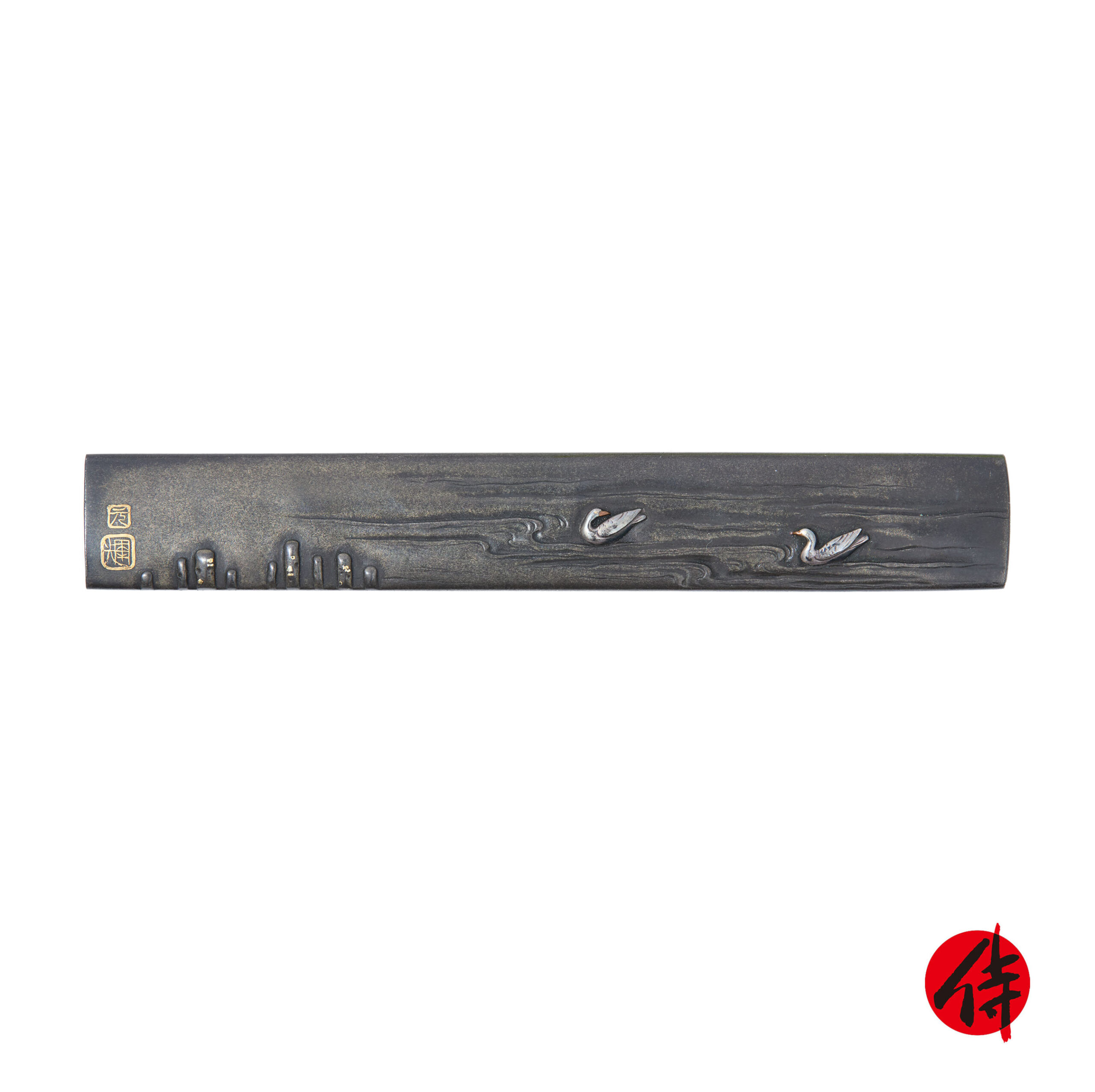
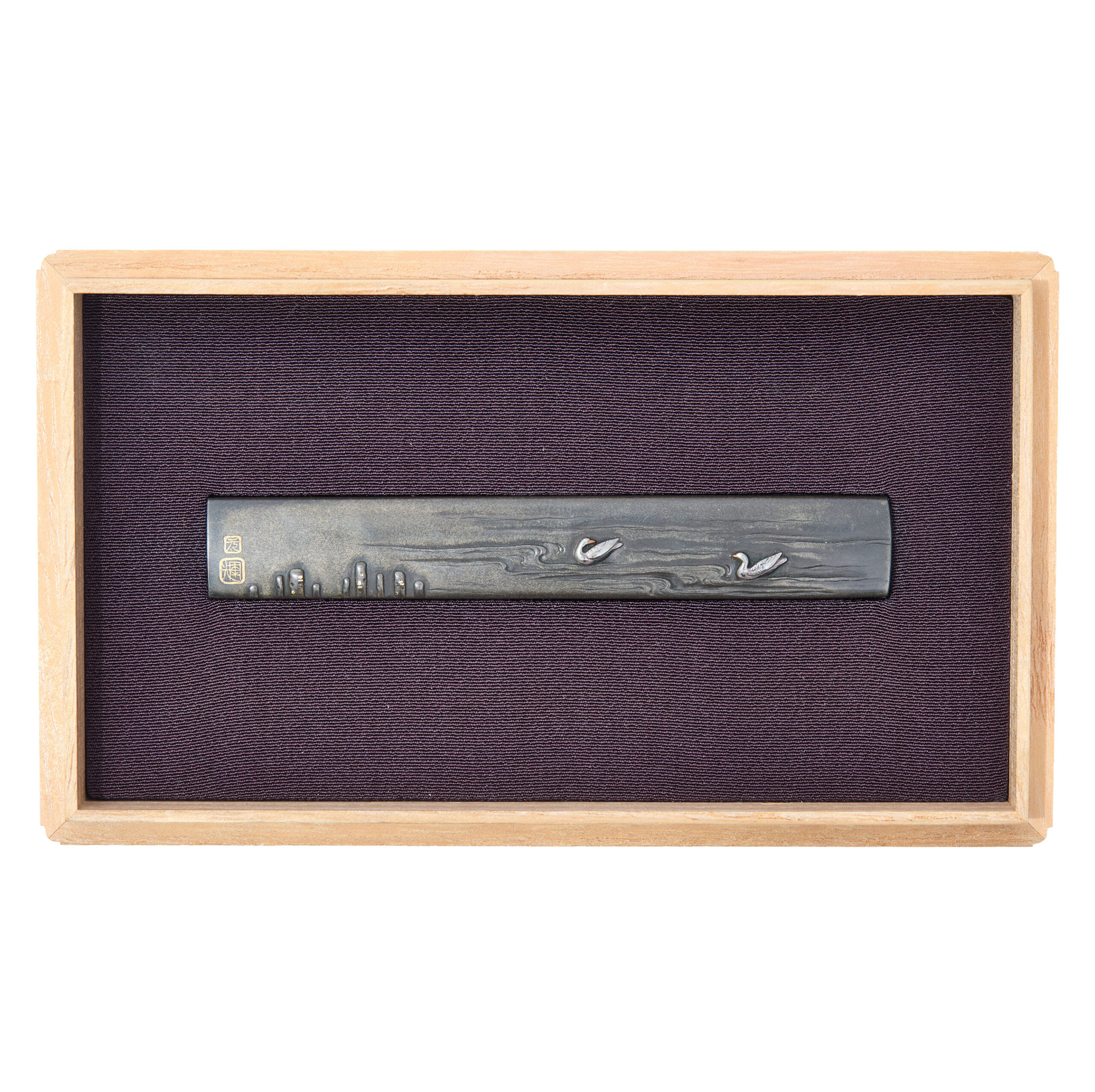
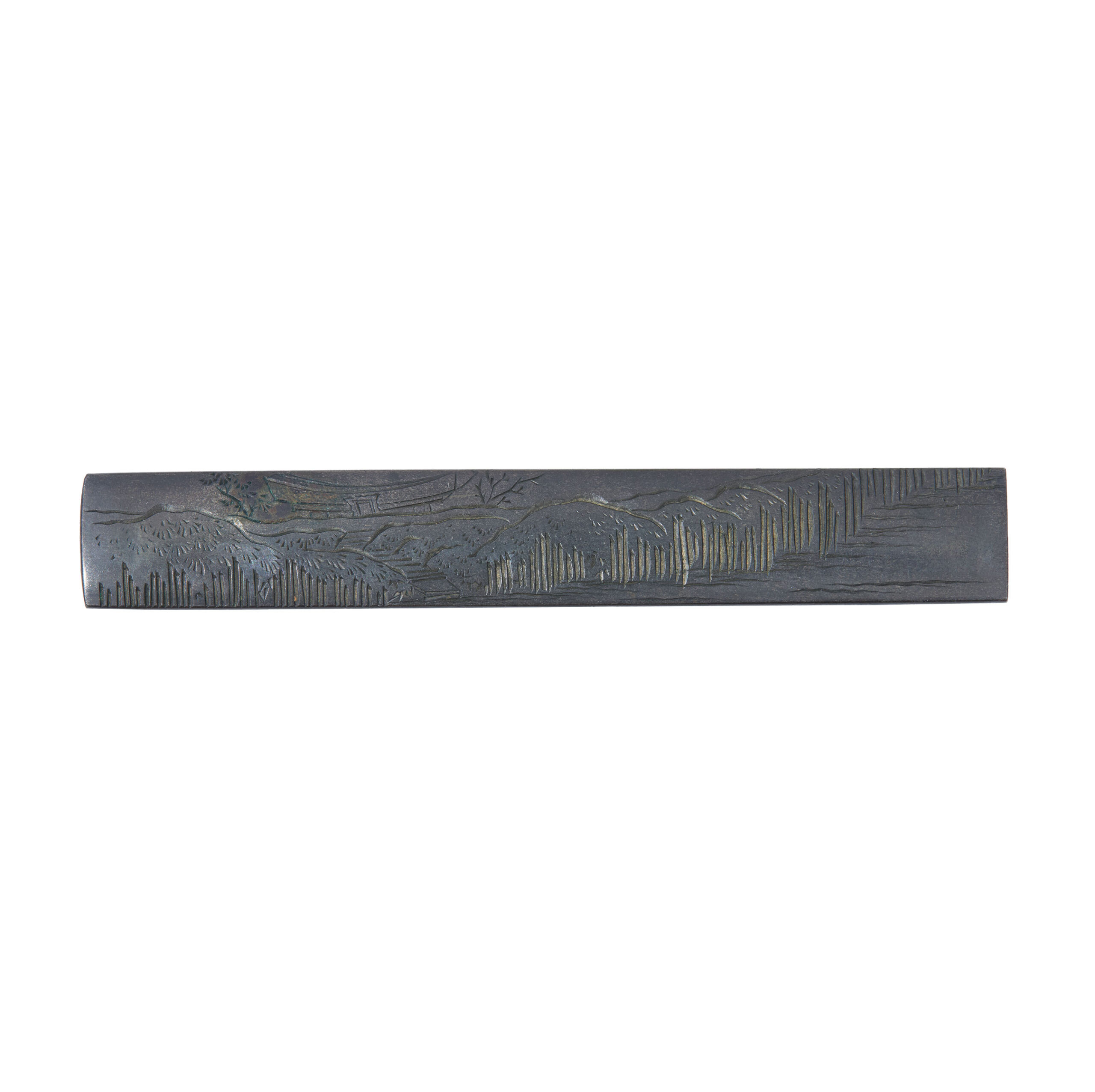
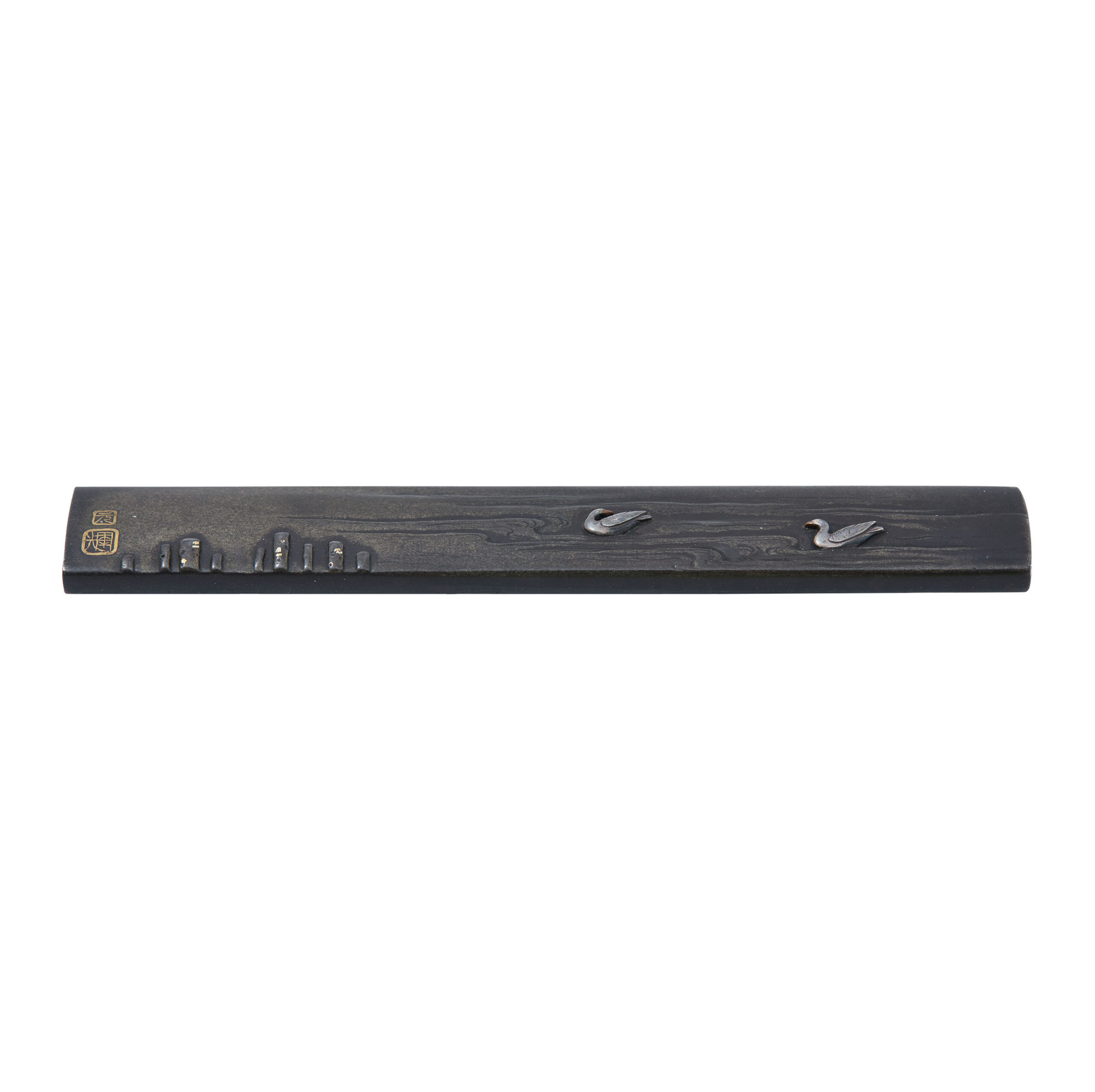
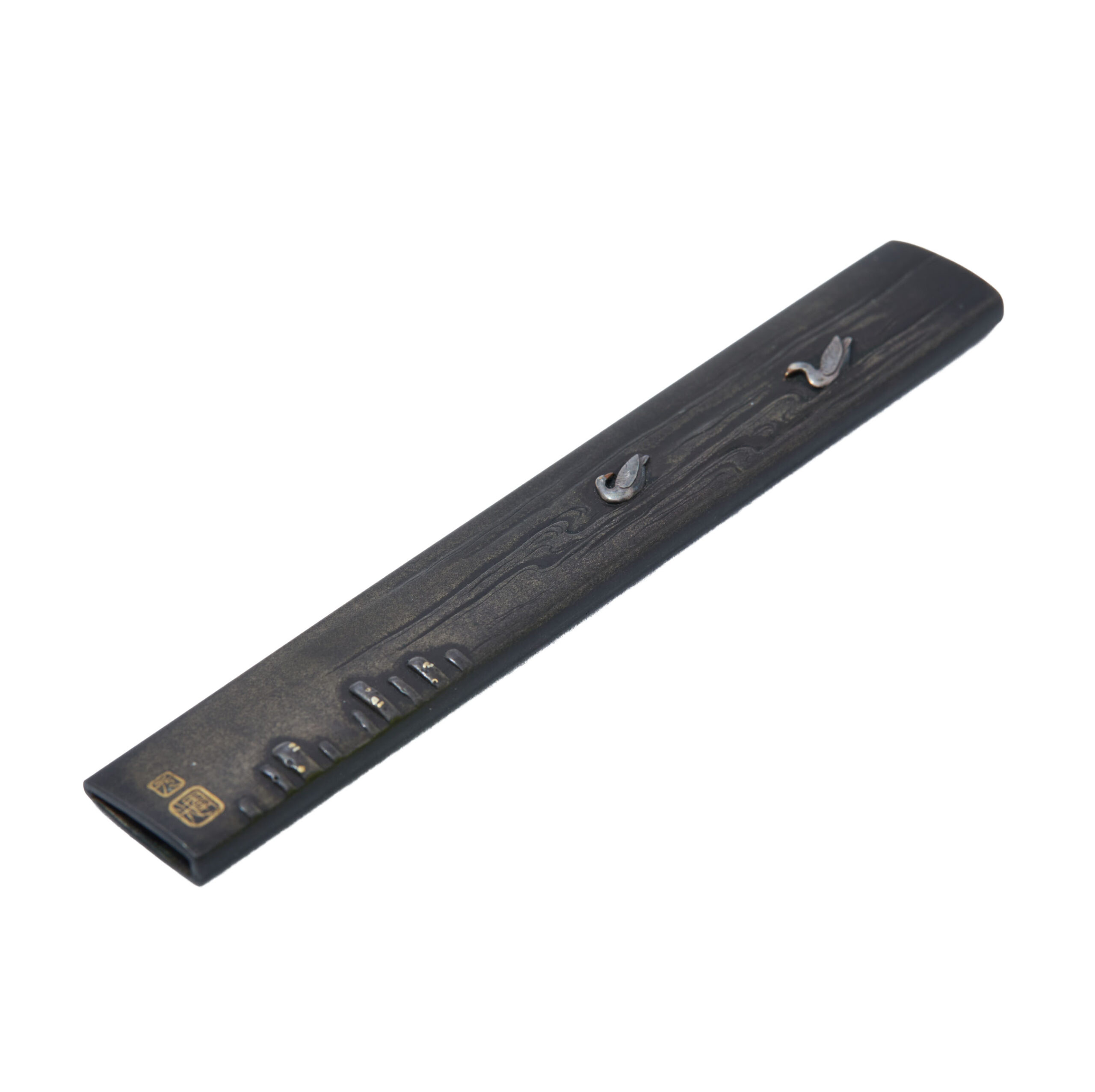
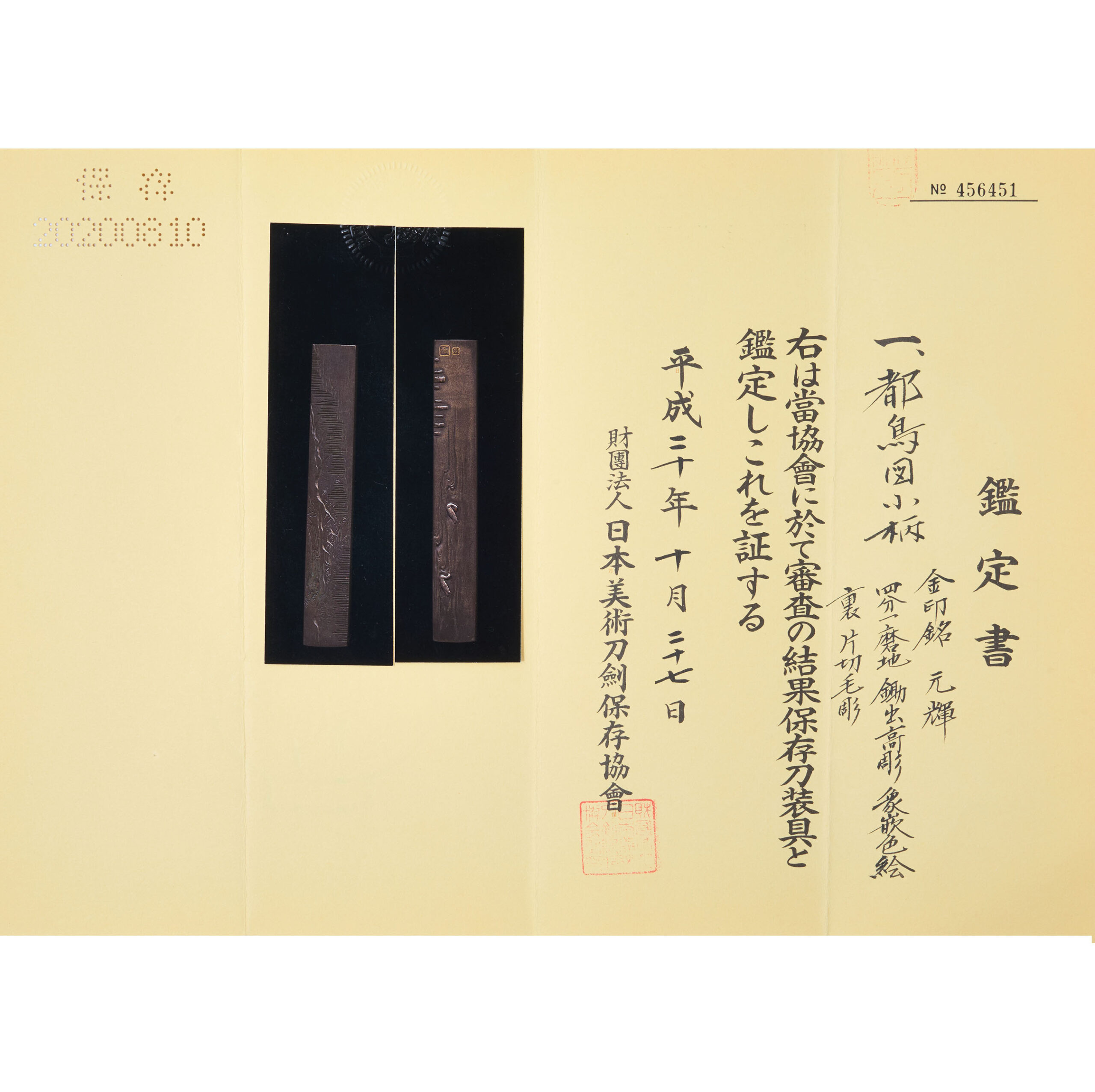
This kozuka features a Miyako-dori-zu (都鳥図), depicting miyako-dori, birds that have long appeared in classical Japanese poetry and painting as symbols of elegance and nostalgia. The kozuka is made of shibuichi (四分一), a traditional Japanese alloy composed mainly of copper and silver. The birds are rendered in takabori (高彫, high-relief carving) and delicately embellished with zōgan (象嵌, metal inlay) and iroe (色絵, colored-metal decoration). According to the NBTHK appraisal, this kozuka bears the signature of Genki (元輝), a metalworker active during the Edo period. Surviving works attributed to him include refined depictions of birds and hazy moonlit scenes, demonstrating the same delicate use of metal inlay and colored-metal decoration seen in this piece. Authentication Paper They authenticated the Kozuka on October 27th in the 20th year of Heisei (2008). They appraised it as Hozon Tousougu, the Kozuka worth preserving for Japanese society.
NihontoWatch
Mototeru
Edo
Signed
Hozon (NBTHK)
Hitachi
1 piece on the market now
Certifies a genuine fitting worth preserving: a correct signature, or, if unsigned, an identifiable era and school, with recognized artistic and craft value.
The NBTHK (Nihon Bijutsu Tōken Hozon Kyōkai, the Society for the Preservation of Japanese Art Swords) is a public-interest incorporated foundation founded in 1948 and supervised by Japan’s Agency for Cultural Affairs (Bunkachō); it is based at the Japanese Sword Museum in Tokyo. Its expert panels physically examine each submitted work (shinsa) and issue a certificate (kanteishō) ranking it by artistic and historical merit. NBTHK papers are the most widely recognized standard of authentication for Japanese swords and fittings.
NBTHK official siteReturns/exchanges limited to defects caused by shipping (except willful misconduct or gross negligence by the company); customers must contact within 72 hours of receiving the product.
¥180,000