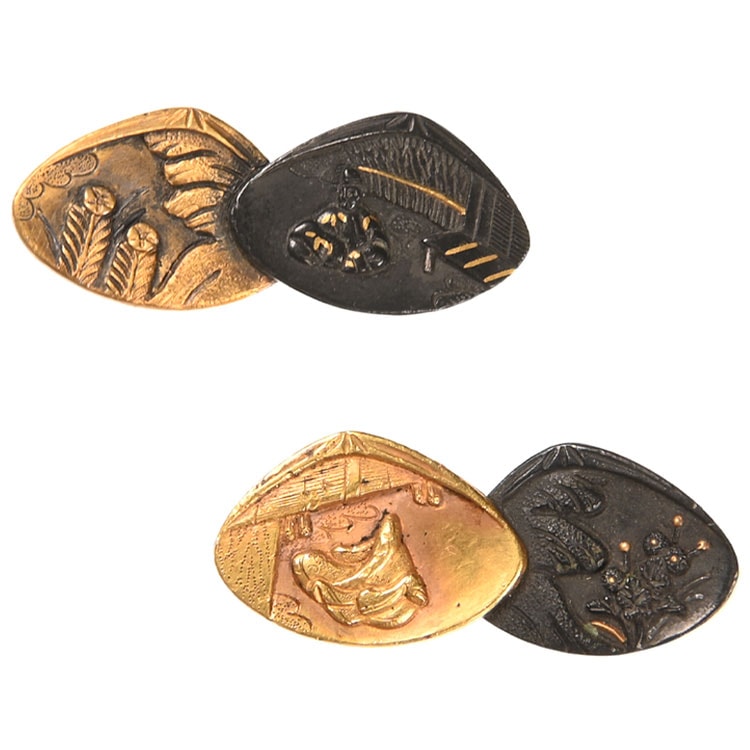
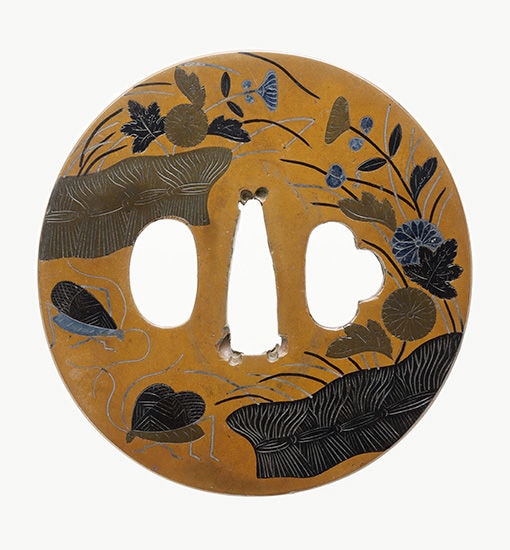
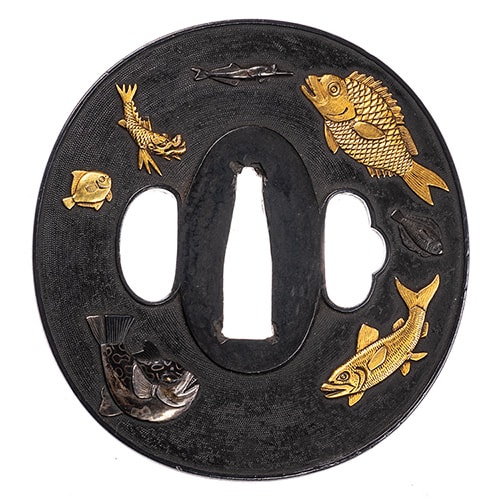
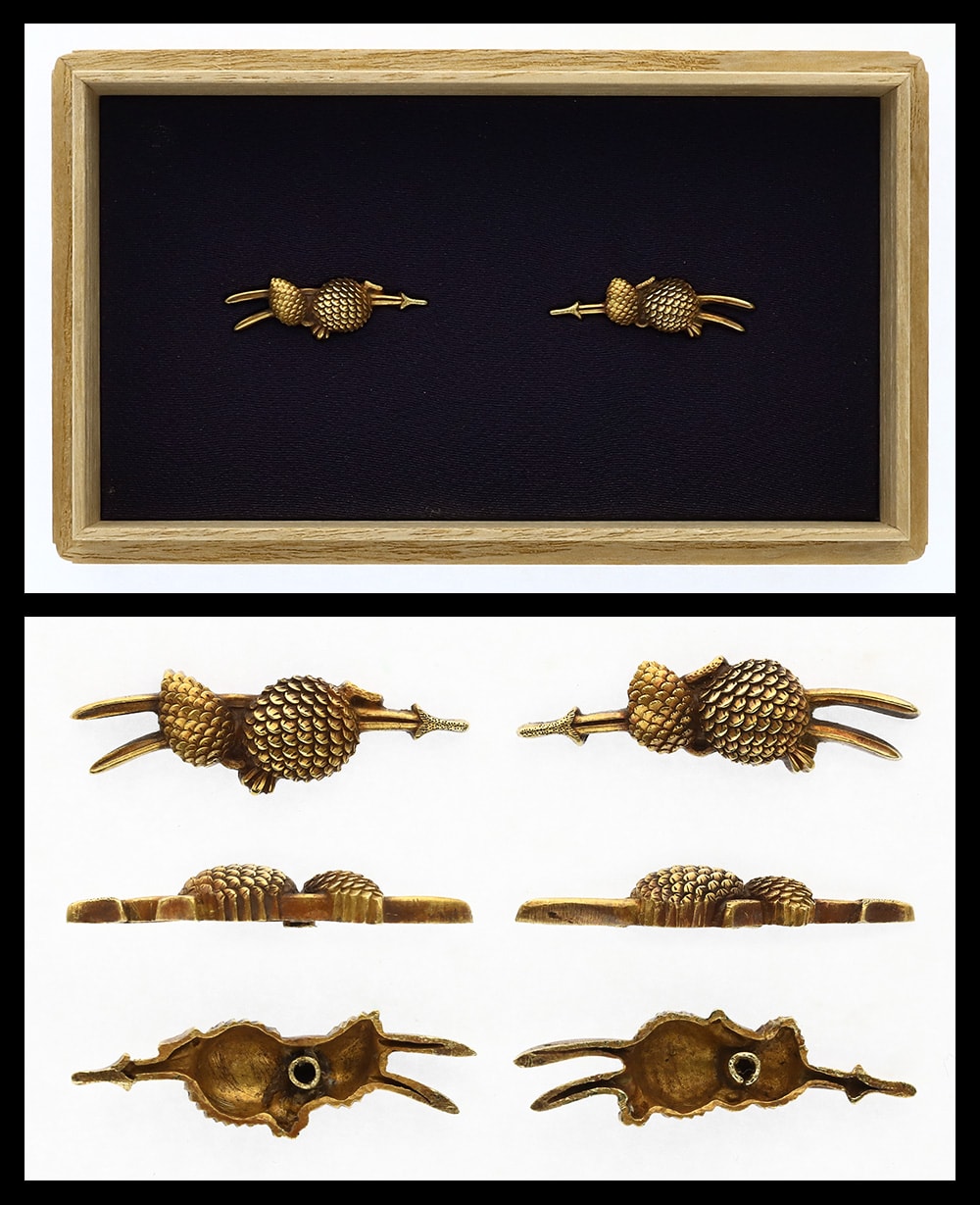
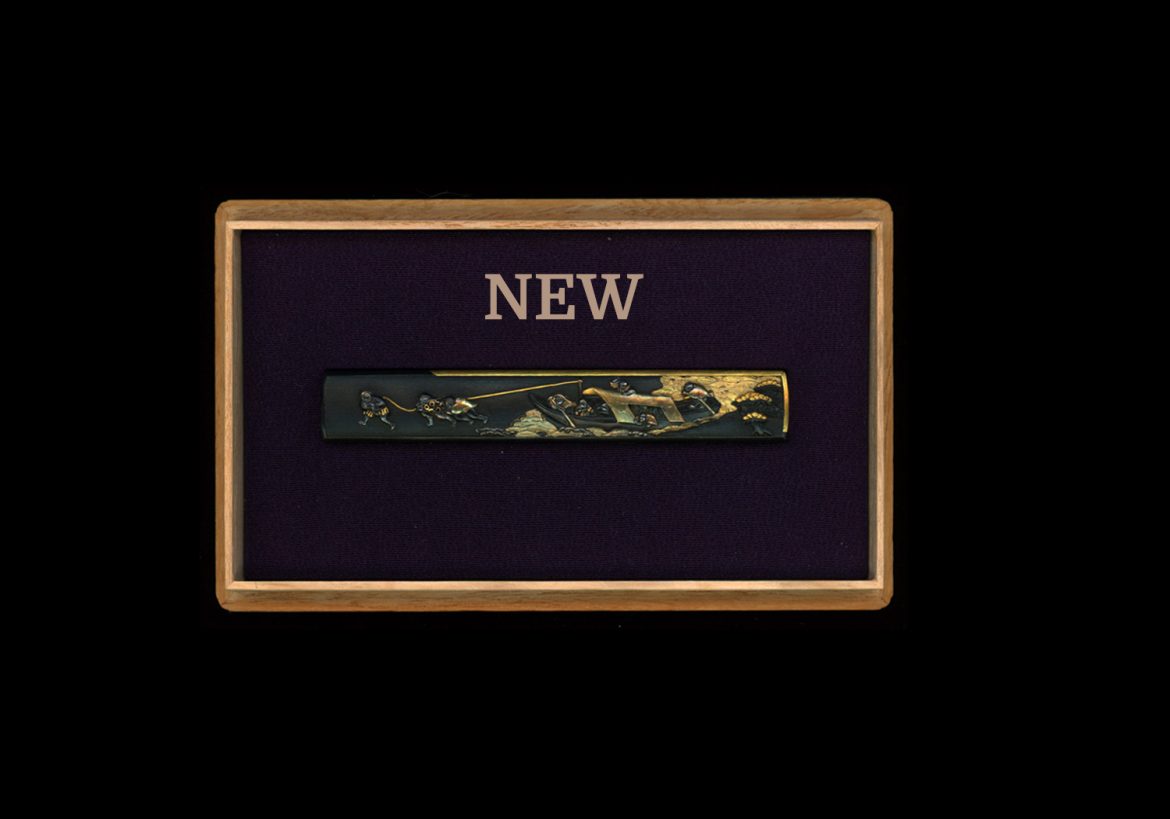
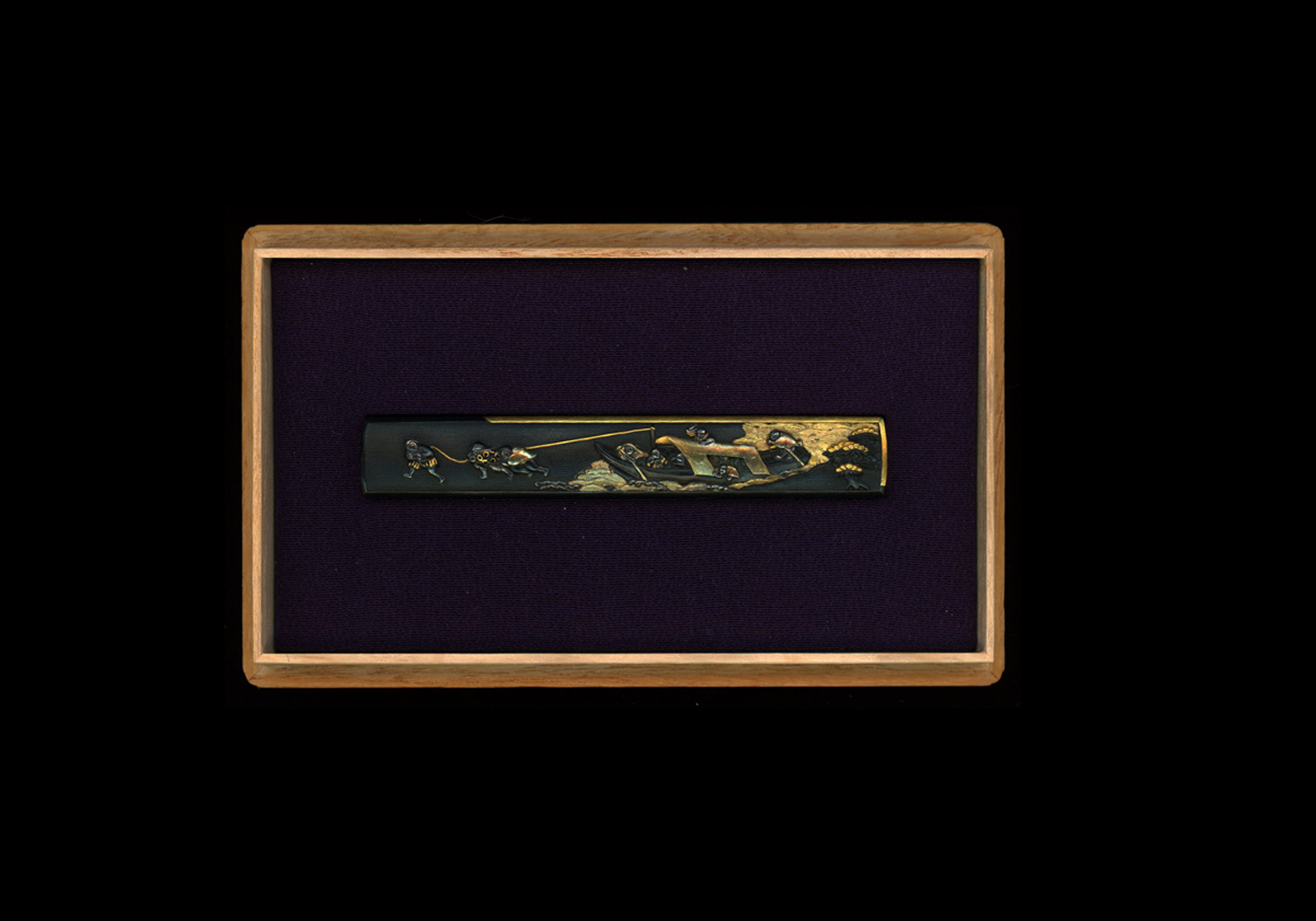
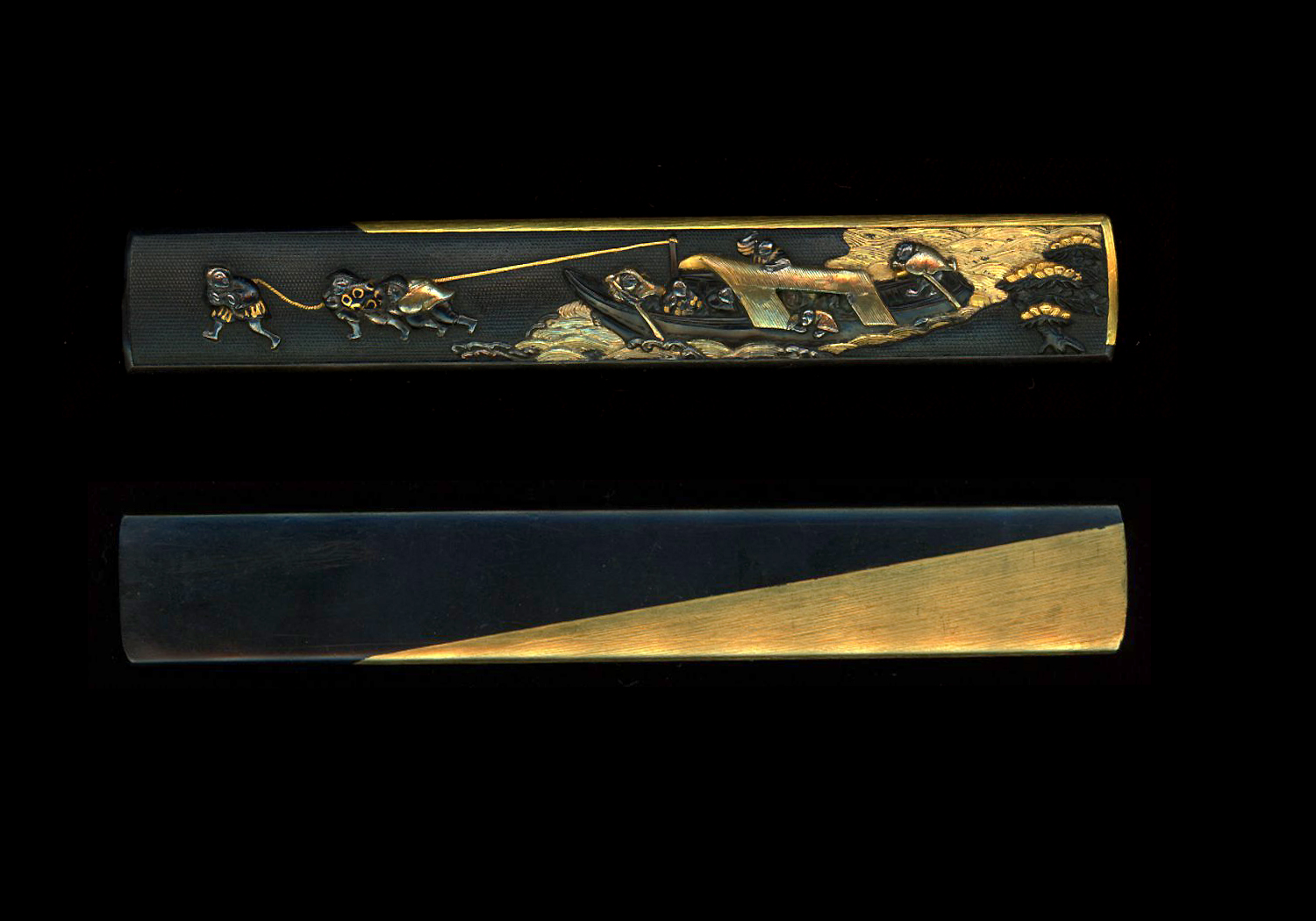
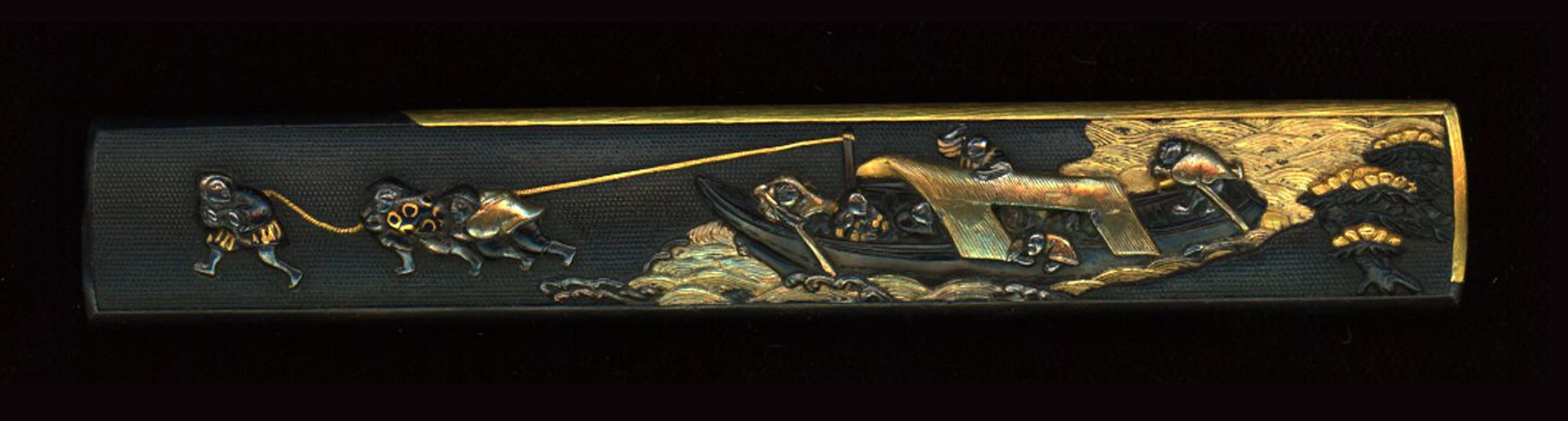
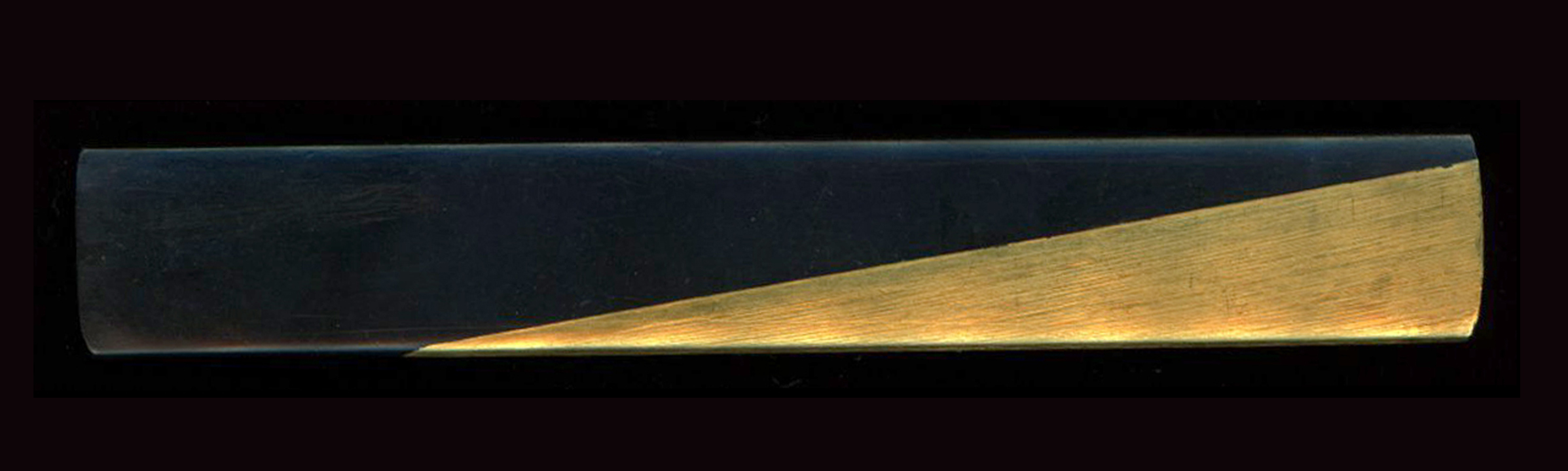
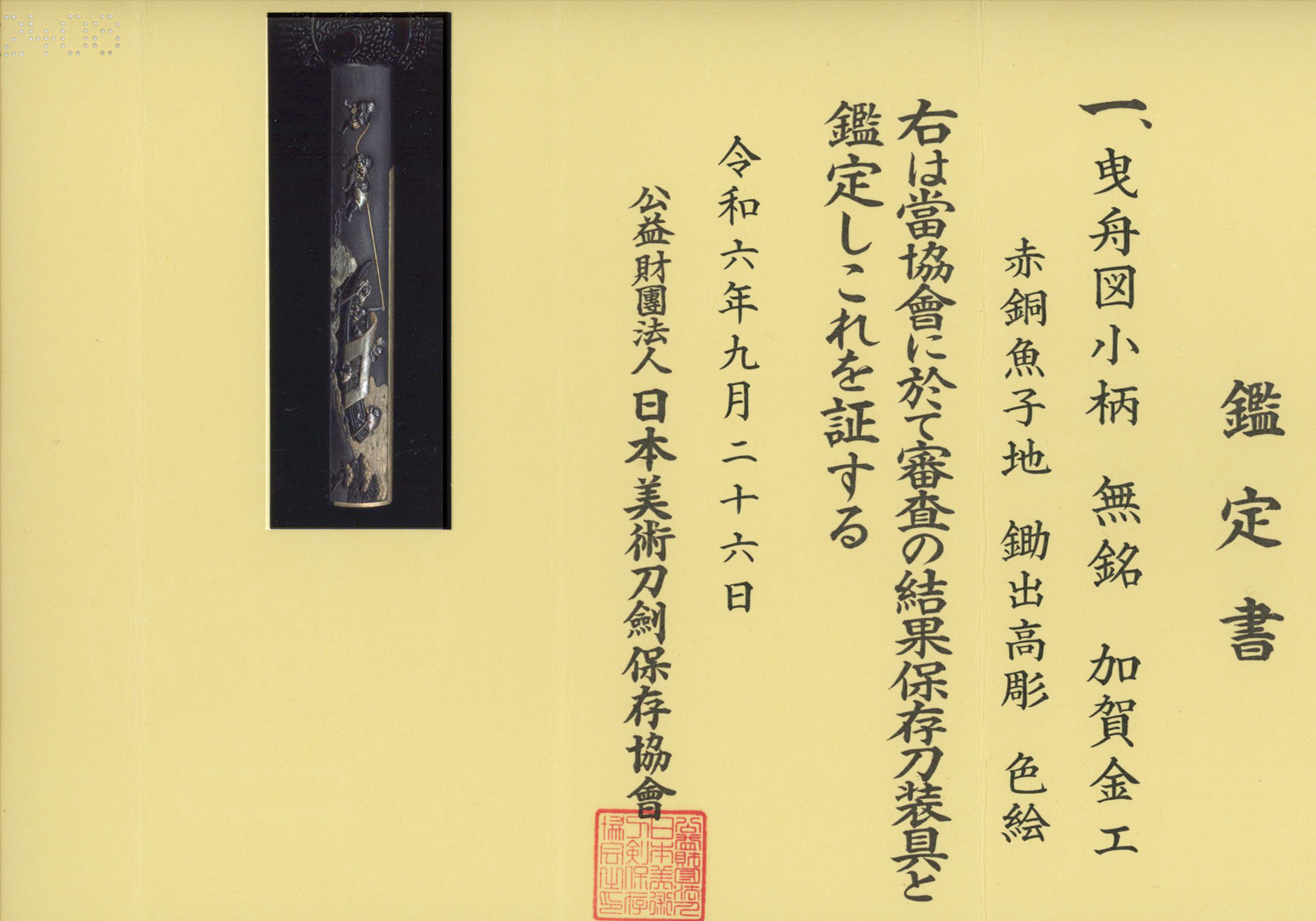
This is a lovely Edo period kozuka from the Kaga-kinko school, featuring an exquisitely crafted shakudo nanako background. The design depicts three men pulling a boat with five men and cargo up a river, detailed in shakudo, silver, and gold. The reverse side has a thick gold inlay seamlessly blended with the shakudo base, framing the obverse design beautifully.
Certificate reading — 無銘(加賀金工)
 NihontoWatch
Kaga-Kinko · Edo
Kaga-kinko School
Edo
Kaga
Hozon (NBTHK)
Kinko · Kaga
21 pieces on the market now
The Kaga metalworking tradition (加賀金工) encompasses the broader community of artisans who practiced their craft under the patronage of the Maeda lords of Kaga Province, centered on Kanazawa. '" Craftsmen's families such as Kuwamura, Tsuji, Katsuki, and Koichi are said to have migrated from Kyoto to Kaga around the Kan'ei and Joo eras, where they prospered. Learn more →
| Smith | Era | Designated |
|---|---|---|
| Ujitada氏忠 | — | 0 |
| Kiyonaga清永 | — | 0 |
| Katsuhisa克久 | — | 0 |
| Genroku源六 | — | 0 |
| Katsuhisa克久 | — | 0 |
Certifies a genuine fitting worth preserving: a correct signature, or, if unsigned, an identifiable era and school, with recognized artistic and craft value.
The NBTHK (Nihon Bijutsu Tōken Hozon Kyōkai, the Society for the Preservation of Japanese Art Swords) is a public-interest incorporated foundation founded in 1948 and supervised by Japan’s Agency for Cultural Affairs (Bunkachō); it is based at the Japanese Sword Museum in Tokyo. Its expert panels physically examine each submitted work (shinsa) and issue a certificate (kanteishō) ranking it by artistic and historical merit. NBTHK papers are the most widely recognized standard of authentication for Japanese swords and fittings.
NBTHK official siteThree-day inspection period and seven-day return period; buyer notifies by email within three days of receipt, no reason needed; full refund once item returned undamaged and unaltered.
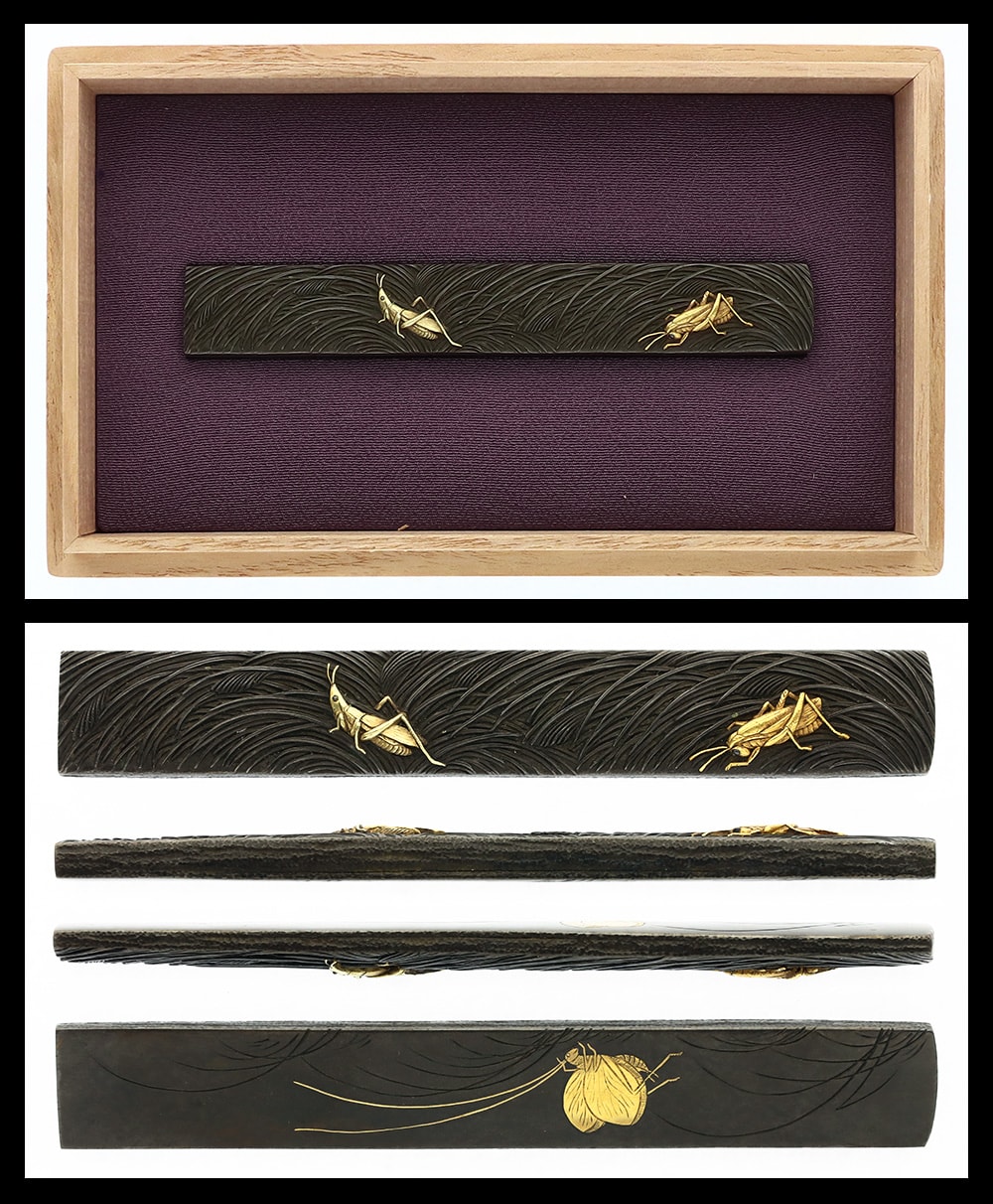
This is a lovely Edo period kozuka from the Kaga-kinko school, featuring an exquisitely crafted shakudo nanako background. The design depicts three men pulling a boat with five men and cargo up a river, detailed in shakudo, silver, and gold. The reverse side has a thick gold inlay seamlessly blended with the shakudo base, framing the obverse design beautifully.
Certificate reading — 無銘(加賀金工)
NihontoWatchKaga-Kinko · Edo
Kaga-kinko School
Edo
Kaga
Hozon (NBTHK)
Kinko · Kaga
21 pieces on the market now
The Kaga metalworking tradition (加賀金工) encompasses the broader community of artisans who practiced their craft under the patronage of the Maeda lords of Kaga Province, centered on Kanazawa. '" Craftsmen's families such as Kuwamura, Tsuji, Katsuki, and Koichi are said to have migrated from Kyoto to Kaga around the Kan'ei and Joo eras, where they prospered. Learn more →
| Smith | Era | Designated |
|---|---|---|
| Ujitada氏忠 | — | 0 |
| Kiyonaga清永 | — | 0 |
| Katsuhisa克久 | — | 0 |
| Genroku源六 | — | 0 |
| Katsuhisa克久 | — | 0 |
Certifies a genuine fitting worth preserving: a correct signature, or, if unsigned, an identifiable era and school, with recognized artistic and craft value.
The NBTHK (Nihon Bijutsu Tōken Hozon Kyōkai, the Society for the Preservation of Japanese Art Swords) is a public-interest incorporated foundation founded in 1948 and supervised by Japan’s Agency for Cultural Affairs (Bunkachō); it is based at the Japanese Sword Museum in Tokyo. Its expert panels physically examine each submitted work (shinsa) and issue a certificate (kanteishō) ranking it by artistic and historical merit. NBTHK papers are the most widely recognized standard of authentication for Japanese swords and fittings.
NBTHK official siteThree-day inspection period and seven-day return period; buyer notifies by email within three days of receipt, no reason needed; full refund once item returned undamaged and unaltered.