 NihontoWatchNihontoWatch
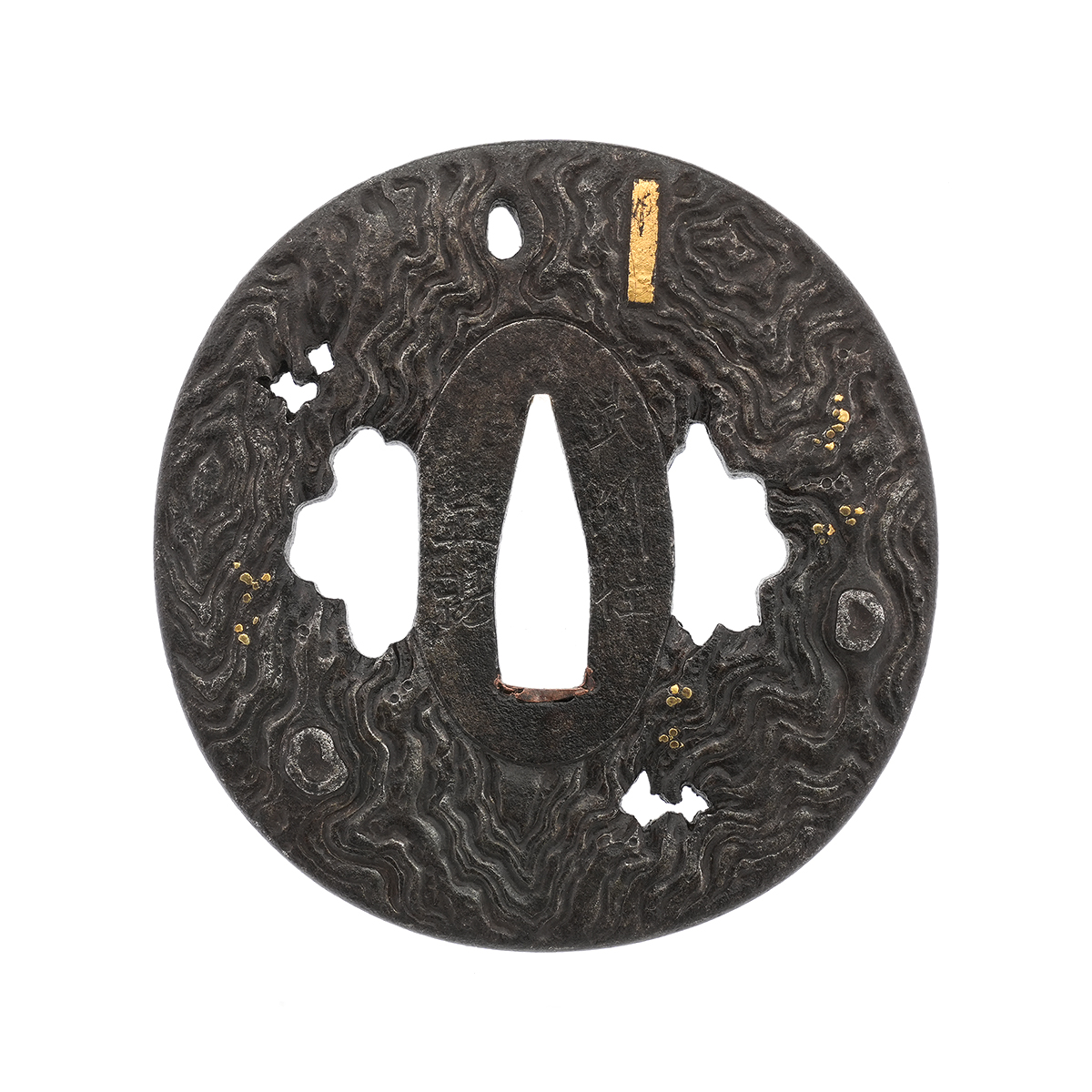
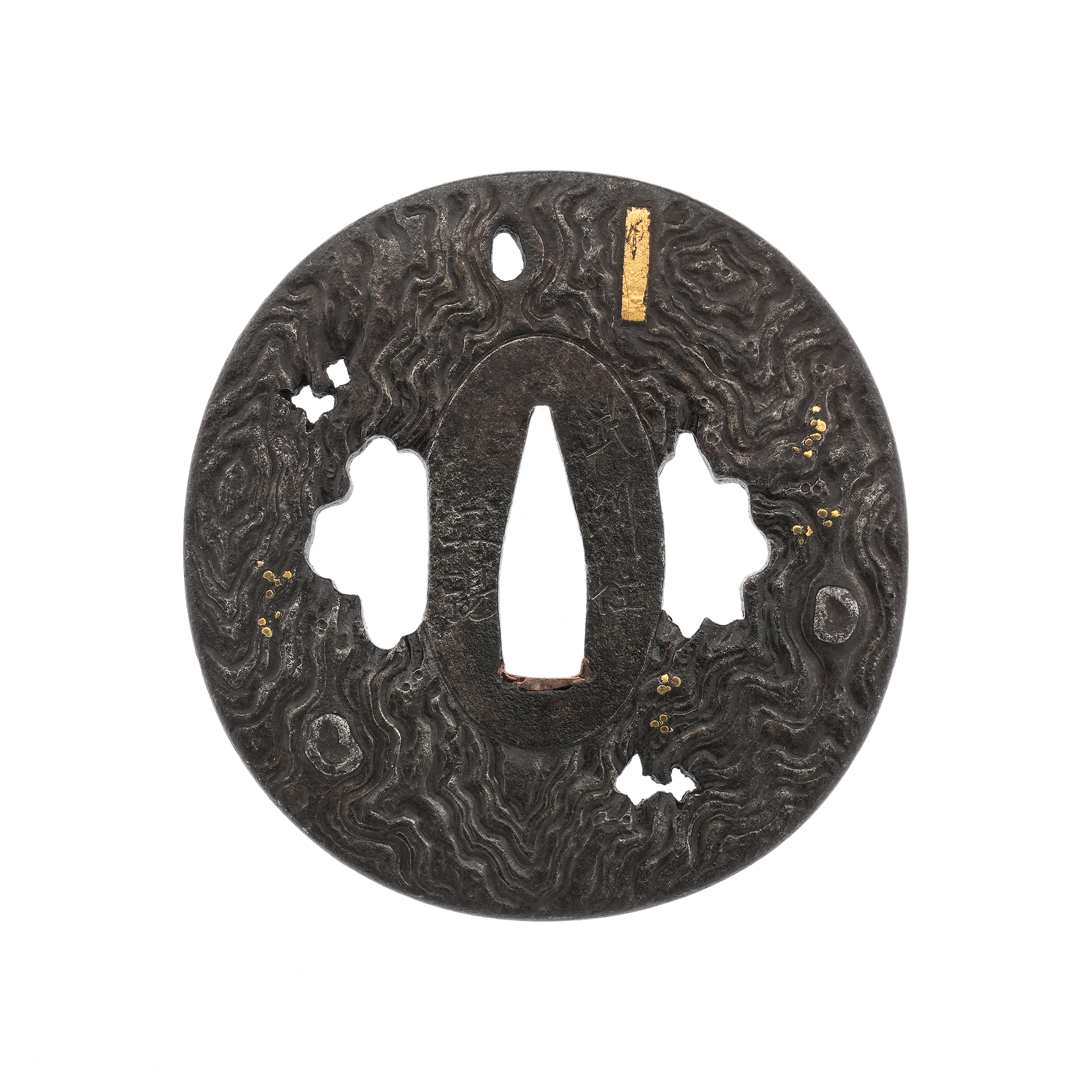
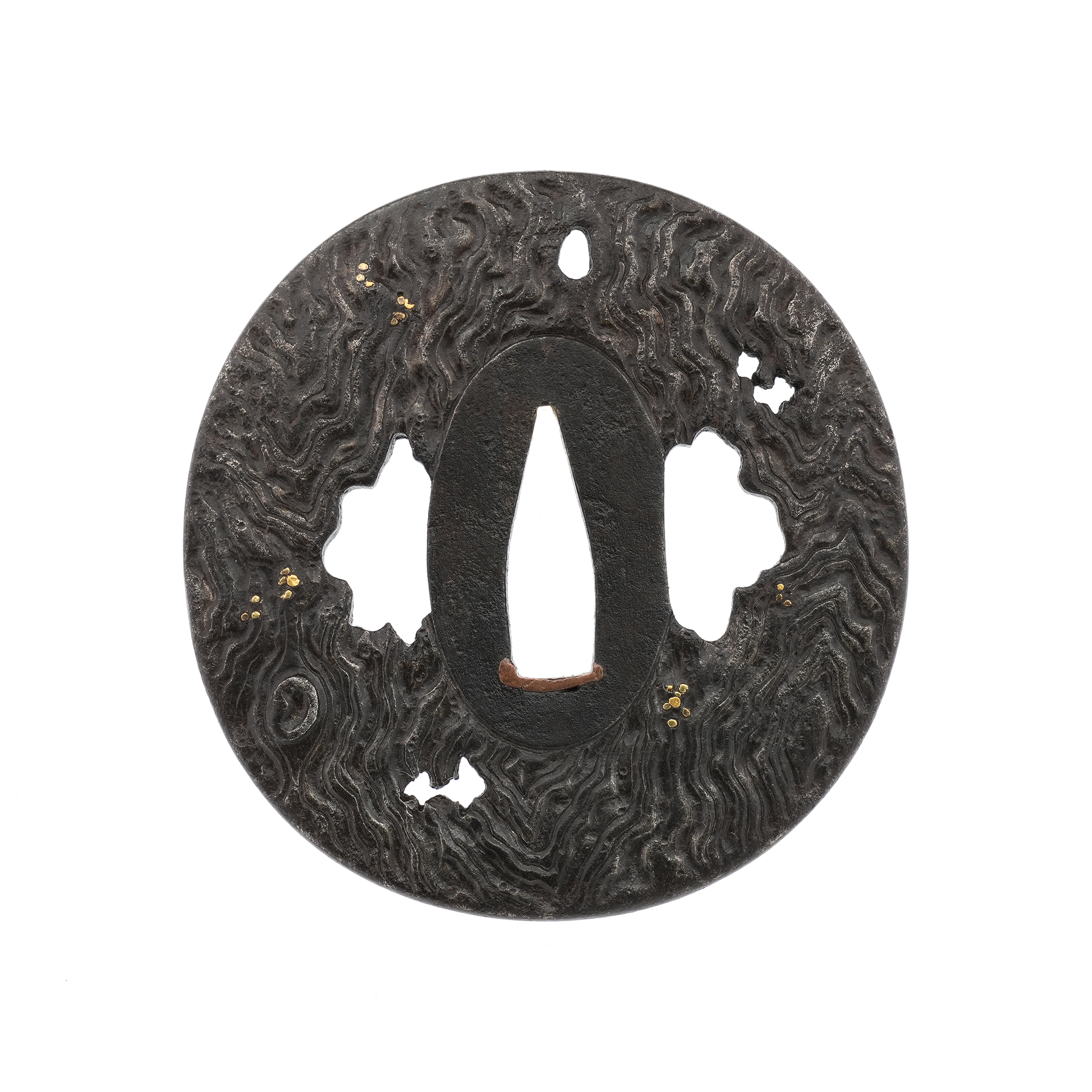
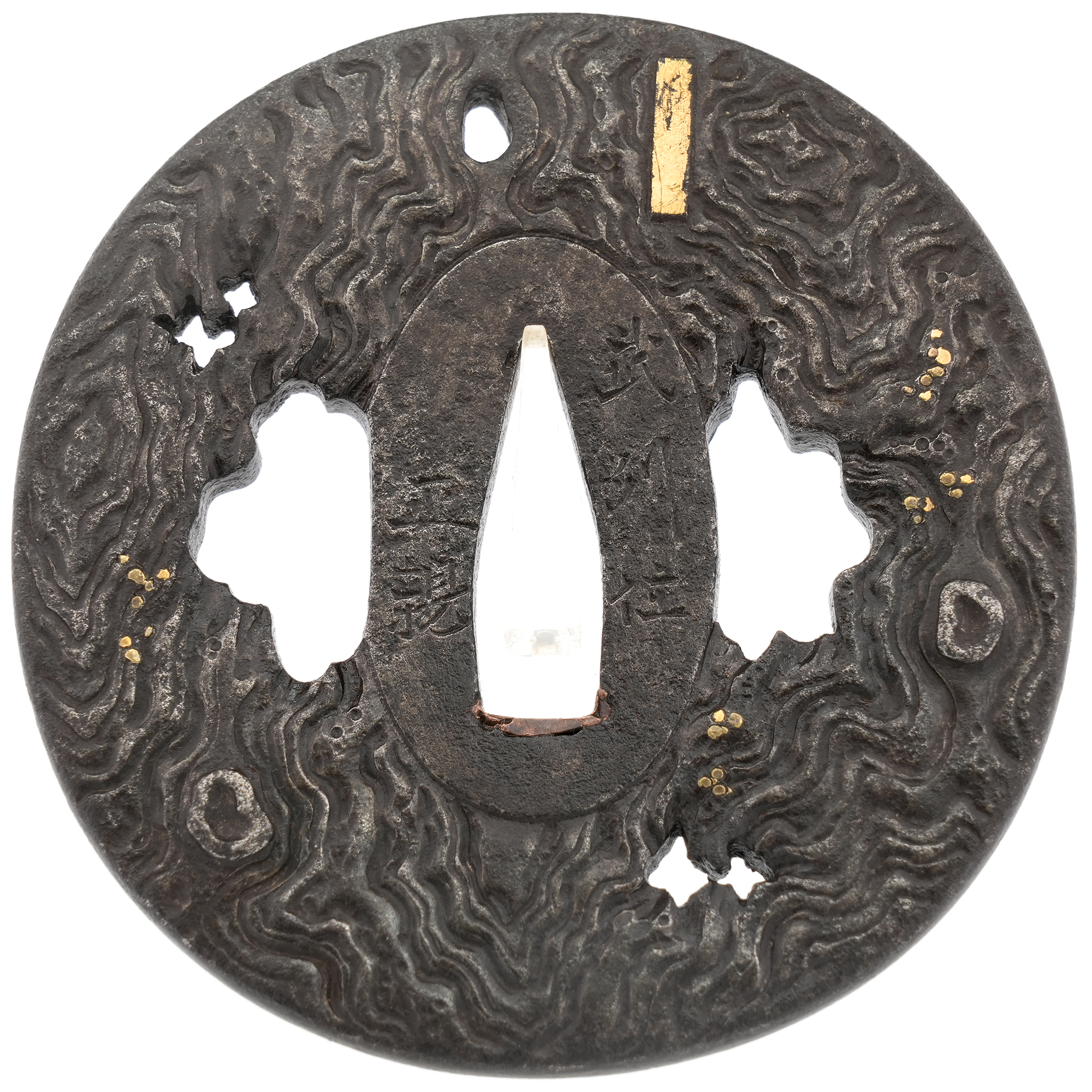
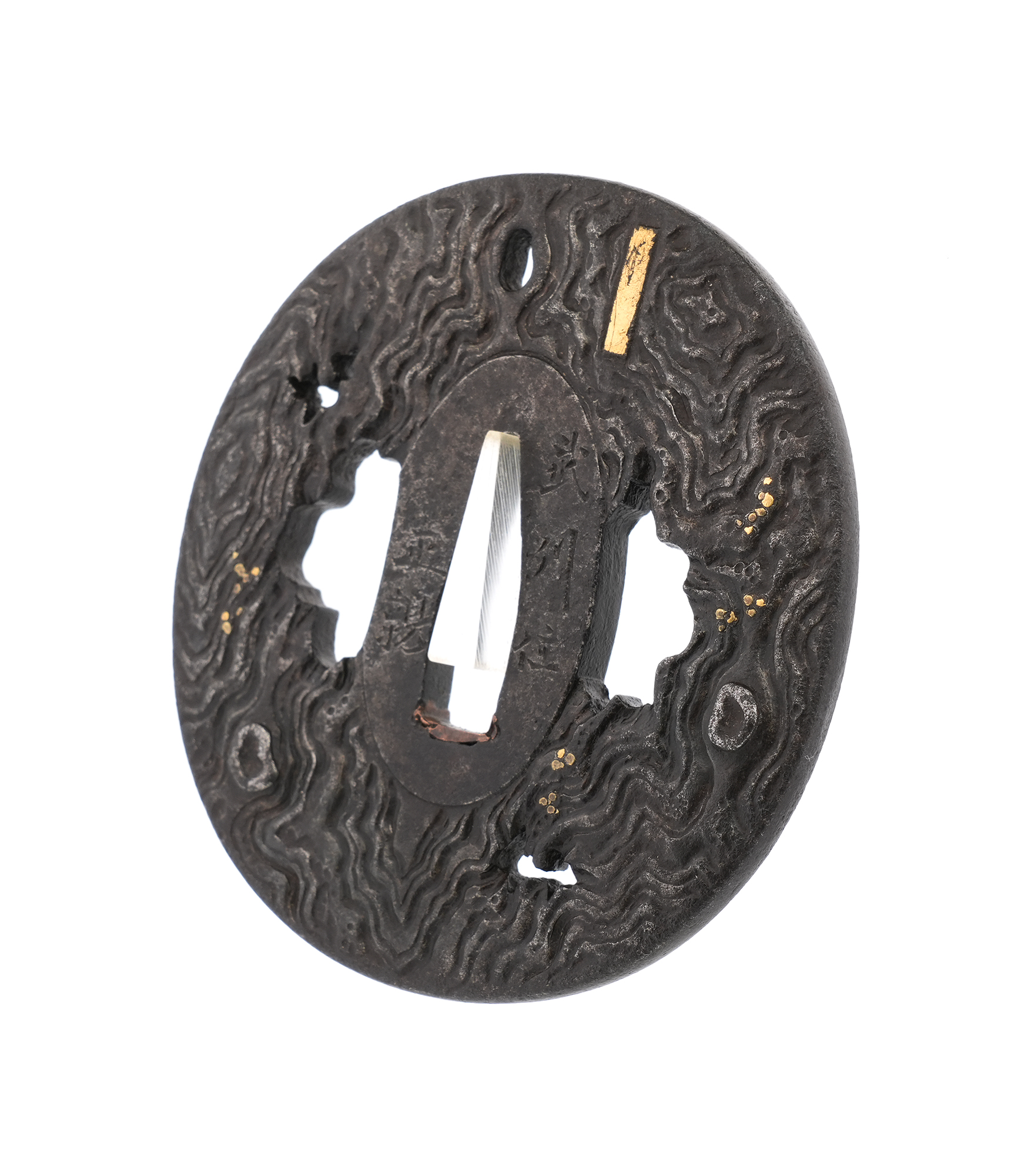
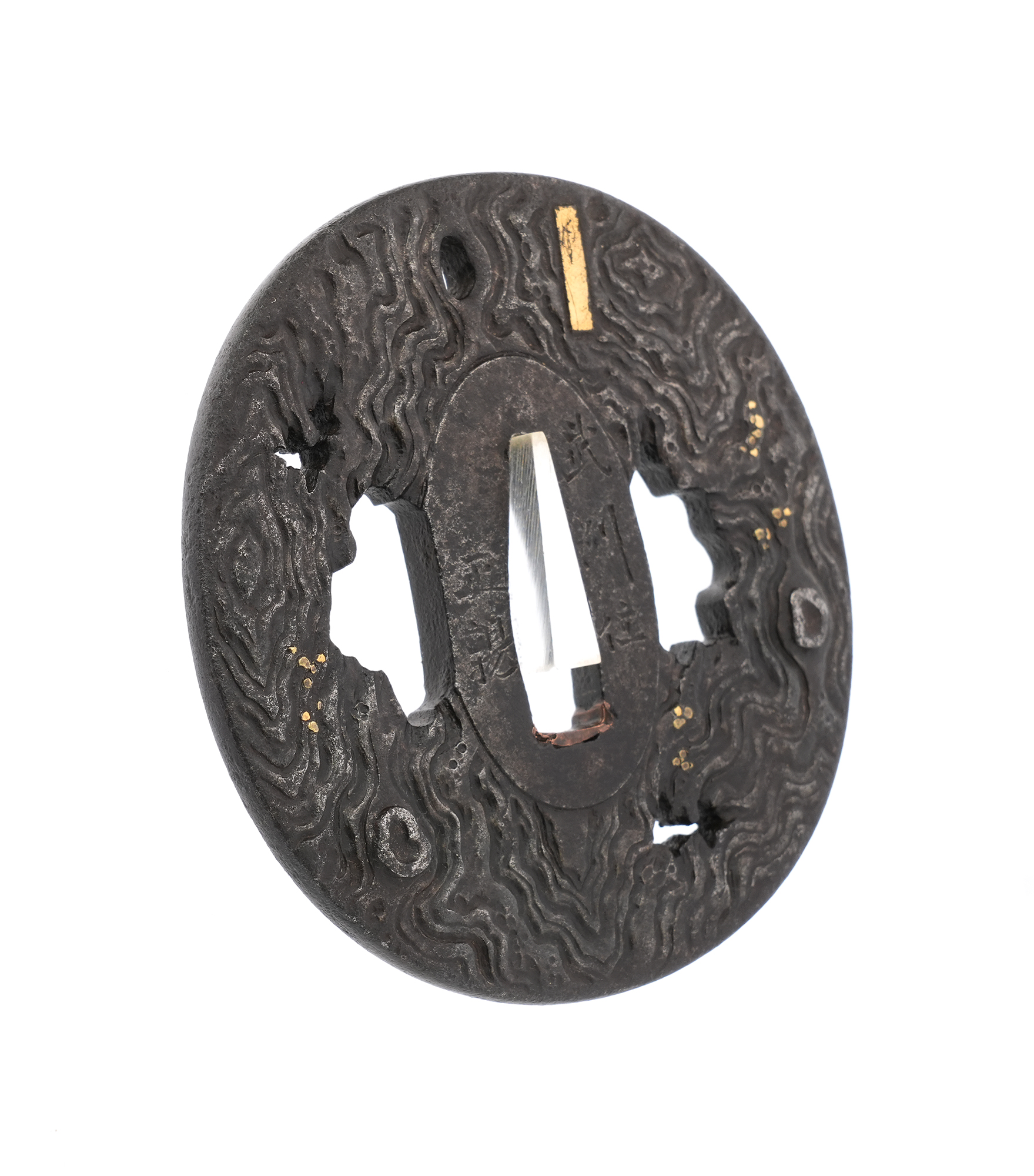
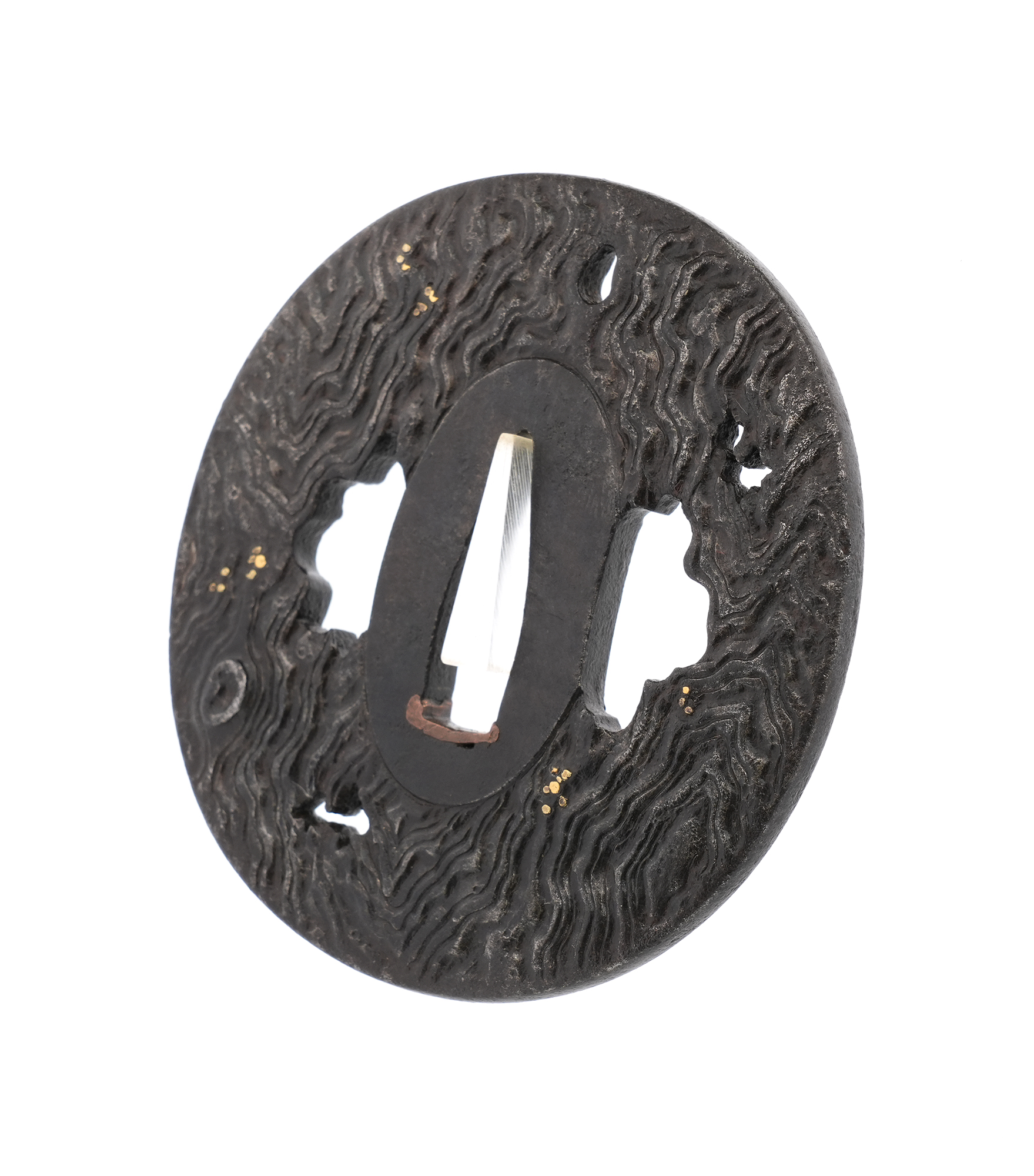
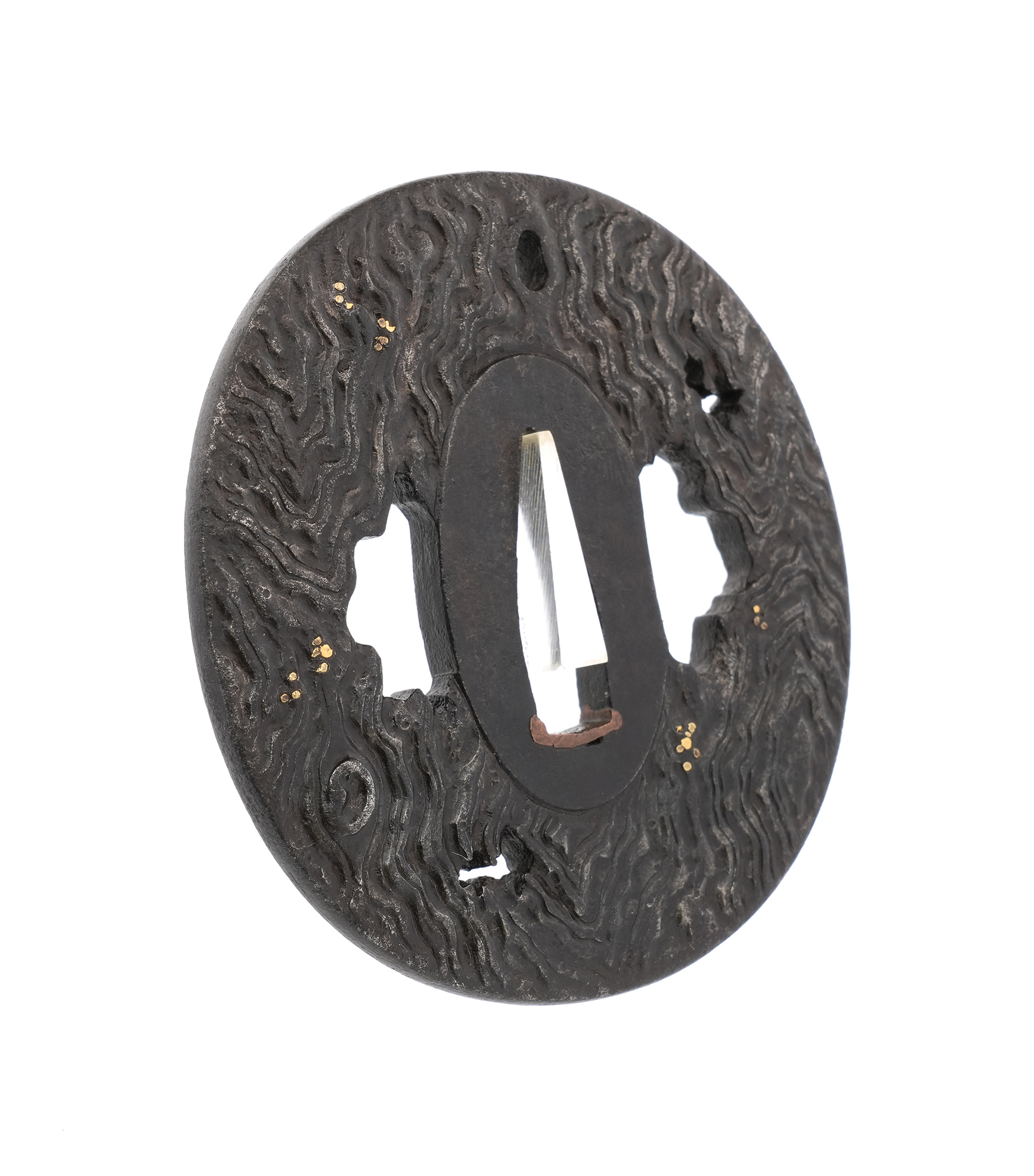
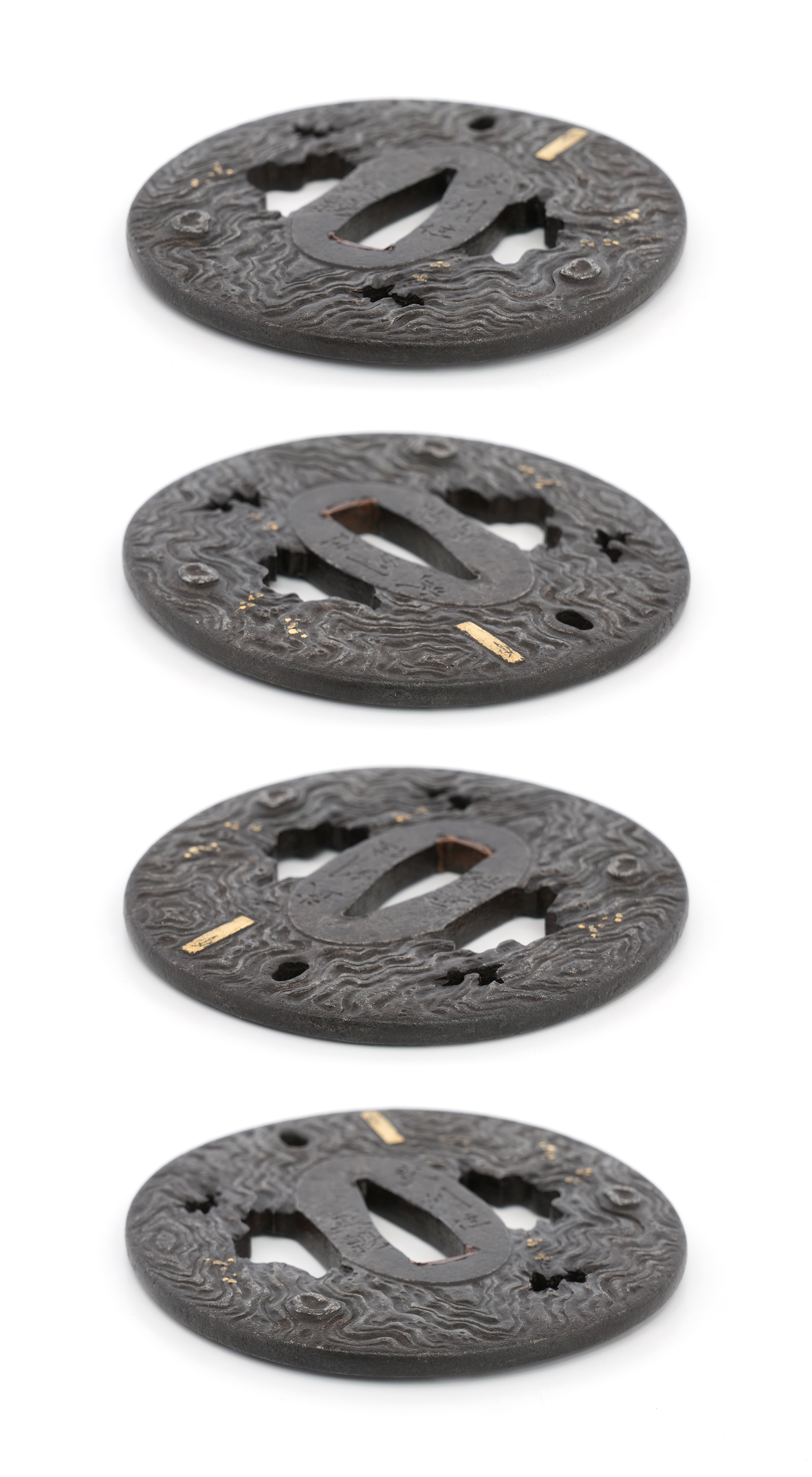
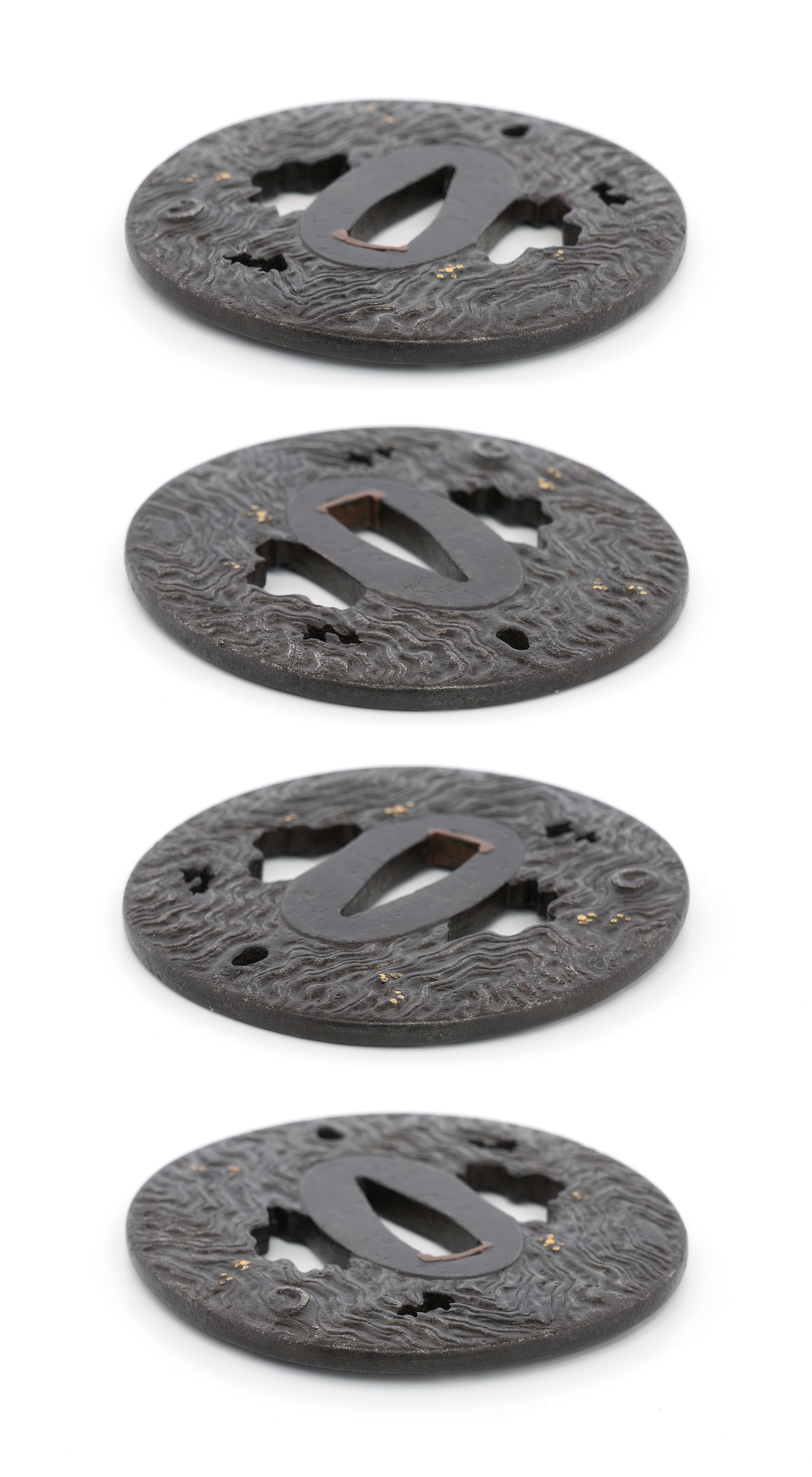
Masaichika, whose family name was Kitani and common name was Tomizo, was a metalworker of the Bushu Ito school who was born in Enkyo 3 (1746) and was active until around Kansei 9 (around 1797). He studied under Ito Masatsune and is known as a craftsman who lived in Hottawara, Asakusa, Edo, and signed his mei as "Bushu Ju Masaichika". Among his extant works, tsuba featuring voluminous sukidashibori on tetsu-ji effectively combined with kin-zogan have been confirmed, and both the mei of this piece and the expression of placing the carving of the tetsu-ji as the main focus while restrictively arranging gold match his style well. Old trees are a motif that overlays meanings of longevity and fortitude onto the appearance of surviving many years while enduring wind and snow; since the knots, hollows, and twisting wood grain themselves become the scenery, they are suited to bringing out the strength and deep color tones of iron. Rather than depicting a full view of a tree, this piece employs a bold design that likens the tsuba itself to a single piece of old wood, with complexly undulating wood grain carved over almost the entire surface of the front and back; the flow of the annual rings envelops the seppa-dai and hitsu-ana, and knots appearing in places provide powerful variation and the flavor of passing years to the wood surface, which tends to become monotonous. The wood grain is not arranged mechanically at equal intervals, but is carved as a natural flow that densifies while avoiding knots, diverges, and merges again, while star-shaped and irregularly shaped ko-sukashi create shadows reminiscent of insect damage or decayed hollows. Small grains of kin-zogan are scattered along the wood grain in various places, adding a modest light to the deep blackish-brown tetsu-ji, while a tanzaku-shaped kin-nunome-zogan is placed only on the upper part of the front surface, adding neat straight lines into the fluid wood grain to vividly tighten the composition. On the back surface, this tanzaku-shaped zogan is not used, and the expression of the old wood is shown through the wood grain, knots, ko-sukashi, and scattered kin-zogan, allowing one to enjoy the difference in design by turning it over. The mei "Bushu Ju Masaichika" is carved on the seppa-dai, and the wood grain and knots deeply carved into the voluminous tetsu-ji, along with the sense of color that accurately utilizes a small amount of gold, demonstrate a deep understanding of iron and a refined compositional power characteristic of a Bushu Ito school metalworker. In addition to the interesting concept of transforming the entire tsuba into a piece of old wood, the height of the carving and the brilliance of the zogan shift every time the angle of light changes, and new scenery appears the closer one looks; it is an attractive work that combines the author's individuality with high appreciation value.
Offered by Toushin

We couldn’t find current papers for this piece. Ask the dealer whether it has been, or can be, submitted to shinsa. — Hoshi

As written by the shop
Machine translation from the shop's Japanese · may contain errors ·
Iron-tsuba · Musashi
3 pieces on the market now
Iron-tsuba · Musashi
53 pieces on the market now
The Ito school (伊藤派) was a prolific kinkō lineage based in Kanda, Edo, in Musashi province. The line was established by Masanaga (正長, d. 1727), who received appointment as official tsuba maker (kōgi o-kakae tsubashi) to the Tokugawa Shogunate following an audience with Shogun Ienobu in 1710. Successive heads bore the character 正 (Masa-) in their art names, producing ten recorded generations from the Genroku era through the Meiji period. The second-generation master Masatsune (正恒) developed ito-sukashi (糸透かし), the school's signature technique of extremely fine saw-cut openwork. The tenth and final head, Itō Katsumi (伊藤勝見, 1829--1910), originally named Masataka (正隆), entered the school of Tanaka Seiju (田中清寿) at twelve, was adopted into his master's household at seventeen, and received the rank of Hōkyō (法橋) while still young, together with the art name Tōryūsai (東竜斎). After parting ways with Seiju, Katsumi studied maki-e under Shibata Zeshin (柴田是真), and in Man'en 1 (1860) was adopted into the Itō Masahiro family, becoming the tenth-generation head. This dual formation -- kinkō discipline under the Tanaka lineage and lacquer refinement under Zeshin -- profoundly shaped the school's late output.
The Ito school's collective style is characterised by mastery of zōgan (象嵌, inlay) and iroe (色絵, polychrome metalwork) deployed with what the setsumei repeatedly describe as precision and accuracy. Works are executed on plates of iron, shibuichi (四分一), oboro-gin (朧銀), or shakudō (赤銅), frequently with nanako-ji (魚子地) grounds. The technical repertoire encompasses takabori (高彫, high relief), sukidashi takabori (鋤出高彫), katakiribori (片切彫), fine kebori (毛彫, hairline engraving), suemon-zōgan (据文象嵌), and nunome-zōgan (布目象嵌), often combined within a single composition. Masatsune's work employs shippō (七宝, cloisonné enamel) on iron plate, as seen in a unified uchigatana koshirae signed "Bushū-jū Masatsune" whose tsuba, fuchi-kashira, kurikata, and kaerizuno are coordinated as a single aesthetic programme[[c:1]] with raden (螺鈿, mother-of-pearl) and gold uchikomi (打込) work. Katsumi's mature output favours figural and narrative subjects: the Frog Battle after the celebrated Chōjū-giga scrolls attributed to Toba Sōjō, Gama Sennin with his toad beneath a willow, and Daisē Fudō Myōō realised with emphatic devotional presence. "[[c:6]] The Ito school occupies a distinctive place in the tsuba canon as a Musashi-based lineage that sustained high-level production across the entire Edo period. Its works were widely disseminated through the sankin-kōtai system, as samurai from all provinces acquired Ito tsuba during their attendance in Edo. "[[c:7]] That his tsuba depicting the Chōjū-giga Frog Battle is described as a "forceful work from his later years"[[c:5]] whose "composition, which successfully preserves the spirit of the original painting, is outstanding" confirms the school's enduring capacity to unite pictorial invention with metalworking virtuosity. Learn more →
| Smith | Era | Designated |
|---|---|---|
| Katsumi勝見 | — | 4 |
| Sadatsune貞恒 | — | 0 |
| Masayoshi正備 | — | 0 |
| Masatsune正常 | — | 0 |
| Masakane正金 | — | 0 |
We could not find an authenticity certificate on the seller’s listing. Japanese swords and fittings are normally papered by the NBTHK (or the NTHK). Without one, the attribution is the seller’s own assessment and has not been independently verified — treat it with caution and ask the dealer about certification before buying.
As a rule we do not accept returns, except when we have sent a different item from the one ordered or when there is a significant discrepancy between the description and the item. If you wish to return an item, please contact us within 3 days of its arrival and then send it back.
¥198,000