Around 1800 Suishinshi Masahide argued in his writings that the craft must return to the old masters’ methods: the fukkotō revival. His greatest successor Naotane worked convincingly in Bizen and Sōshū manners that had been dead for centuries.
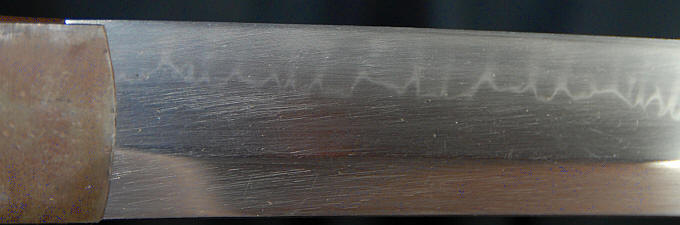
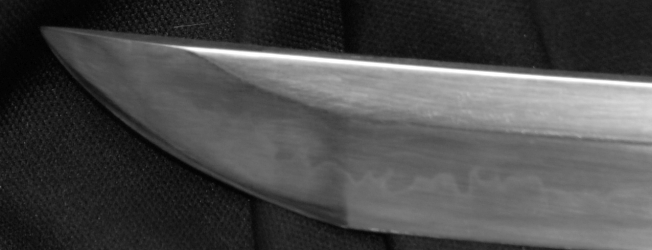
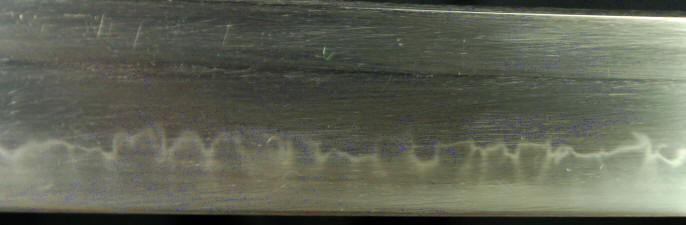
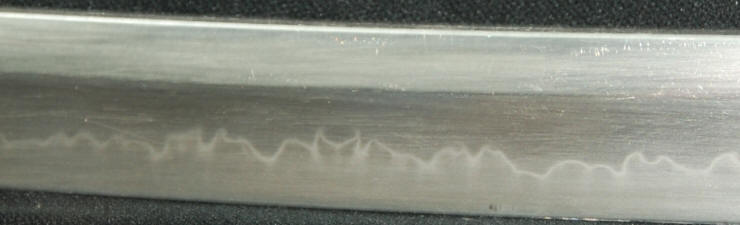
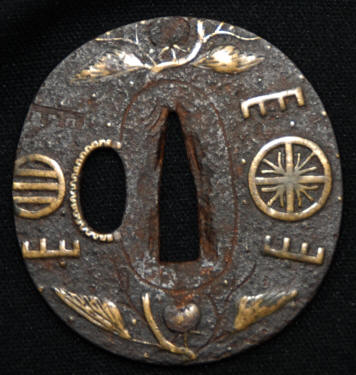
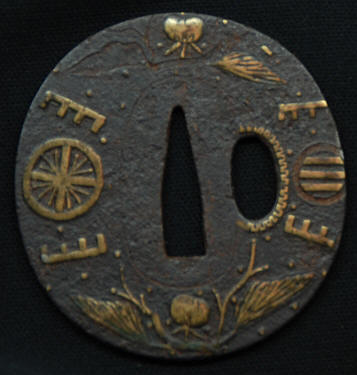
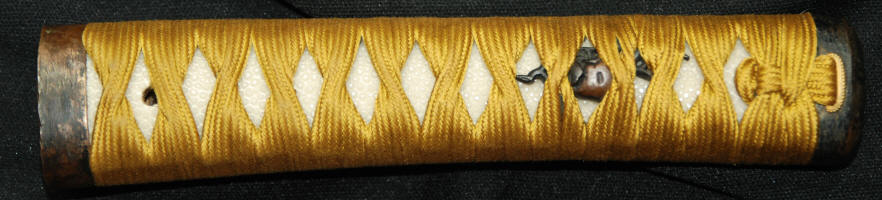
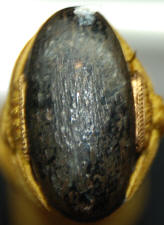
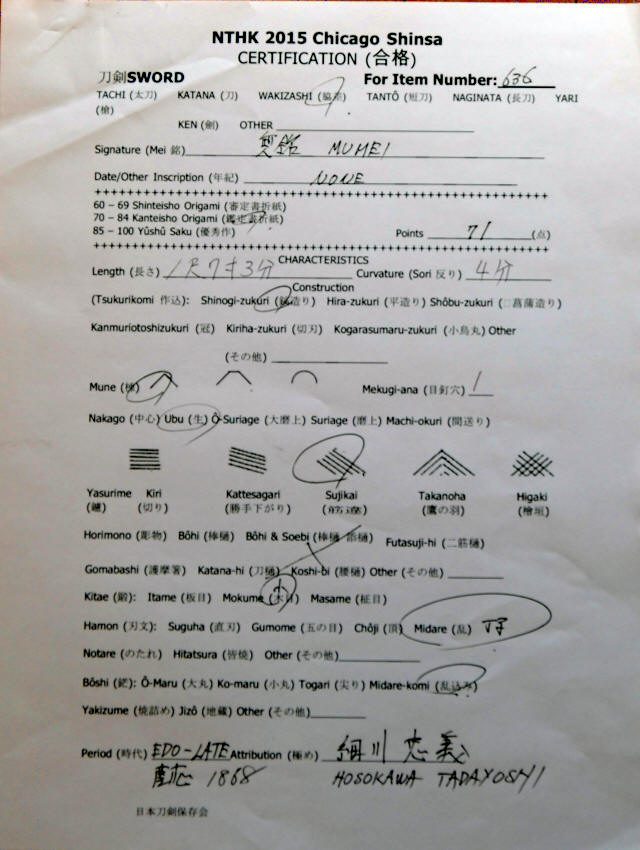
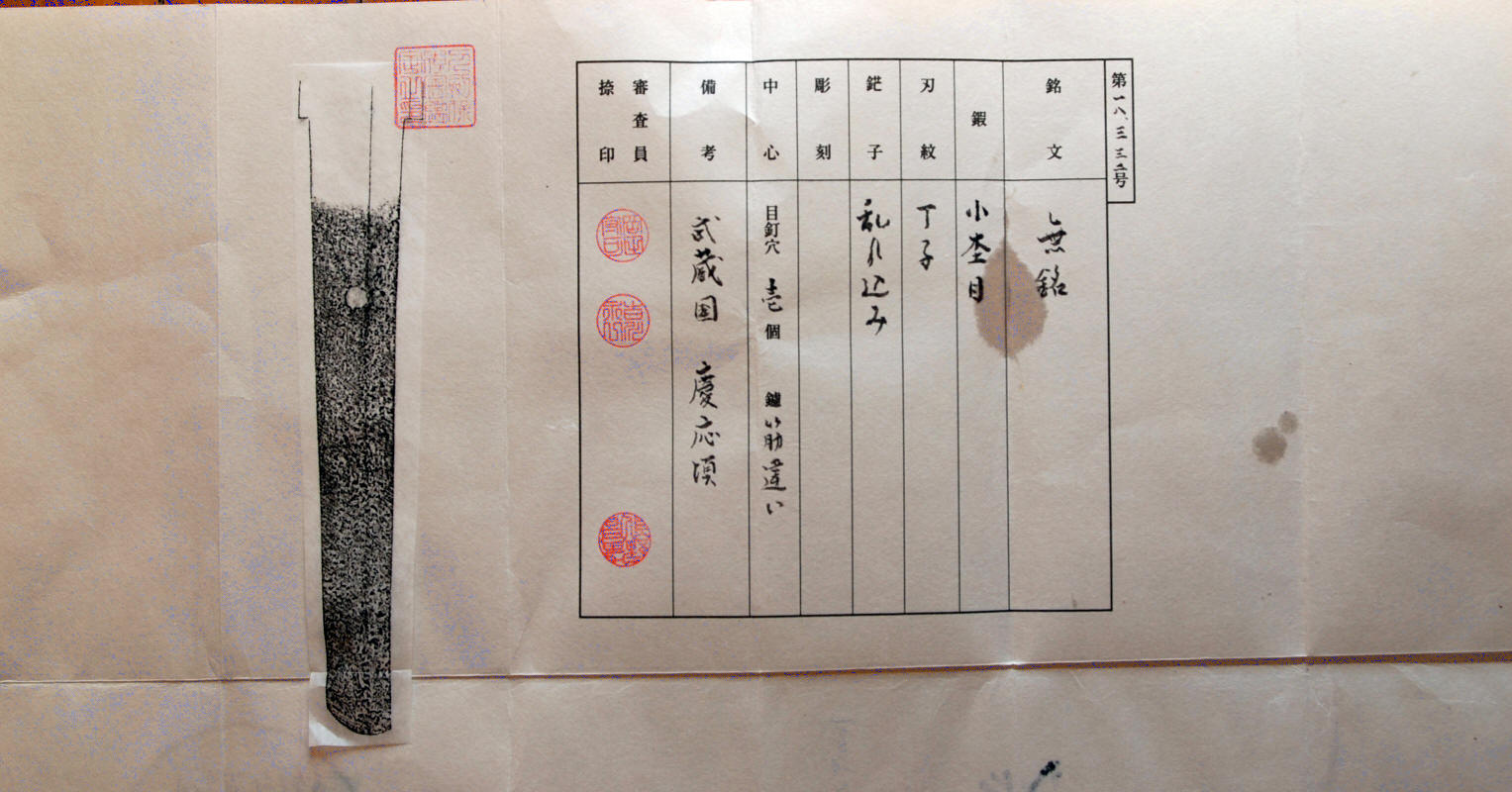
An ubu mumei stout wakizashi of undetermined age. Hawatare 1 shaku 7 sun 1 bu 9 rin. (52.1 cm / 20.51") Motohaba: 3.312 cm. Sakihaba: 2.666 cm. Kasane: 7.21 mm. Shinogizukure, slightly extended chukissaki, iroi mune. There is ububa. Hiri o-choji gunome haku midare ashi iri in nioi deki, nado The hamon pattern continues into the boshi ending in a komaru with a long narrow kaeri. The hada is tight itame. My apologies for the quality of the pictures. The overall scratching doesn't help get good resolution. The fuchi-kashira are shakudo, the fuchi isplain, the kashira textured. Menuki are shakudo leaves and a copper fruit. The tsuba (6.94 cm x 6.653 cm x 2.77 mm) is an early Onin obviously cut down from a larger plate. Plain copper habaki. The black saya appears to be a single coat has some flaking, My thought when I bought this was Muromachi Bizen, and paid accordingly. There are NTHK papers to a shinshinto smith, Horikawa Tadayoshi, dating it at 1868, although the Meikan has him working between 1850 and 1865. . Were the blade in polish, and my mind sharper, I might be able to determine which is correct. However,Having a couple of items needing to go to polish, and another in process, I think it better to just move this along.
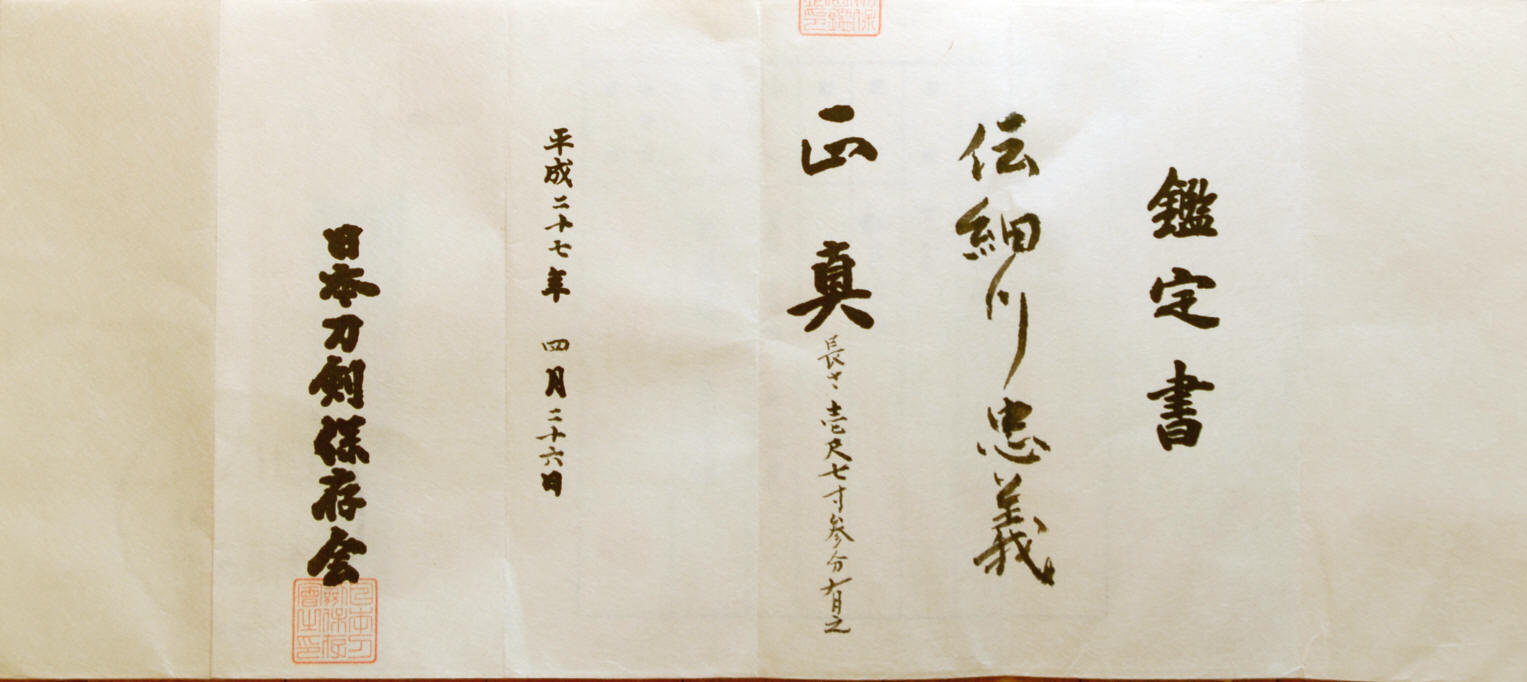
Certificate reading — 無銘(細川忠義)
Offered by Nihonto US


Satsuma · around 1781-1912
1 piece on the market now
The Shinshintō revival
Around 1800 Suishinshi Masahide argued in his writings that the craft must return to the old masters’ methods: the fukkotō revival. His greatest successor Naotane worked convincingly in Bizen and Sōshū manners that had been dead for centuries.
The NTHK’s principal certificate, issued for a blade of considerable quality. It confirms a genuine signature, or, for an unsigned (mumei) work, records the judges’ attribution to a smith or school. The paper carries a detailed worksheet with a numerical point score.
The NTHK (Nihon Tōken Hozon Kai, the Society for the Preservation of the Japanese Sword) is the oldest of Japan’s sword-appraisal bodies, founded in 1910, decades before the NBTHK. After the death of its long-serving head it divided into two successor societies, the NTHK and the NTHK-NPO, both of which continue to hold shinsa. NTHK blade certificates are known for a detailed worksheet that records a numerical point score alongside the judges’ written opinion (fitting papers carry the judges’ opinion without a point score), and the society is especially respected for its attribution of unsigned (mumei) work.
Three day, no penalty, inspection on every item. Returns must be in the same condition as shipped. Actual costs will be charged on returned items. No restocking fee. If you did not like the item is a good enough reason for return.
$1,650