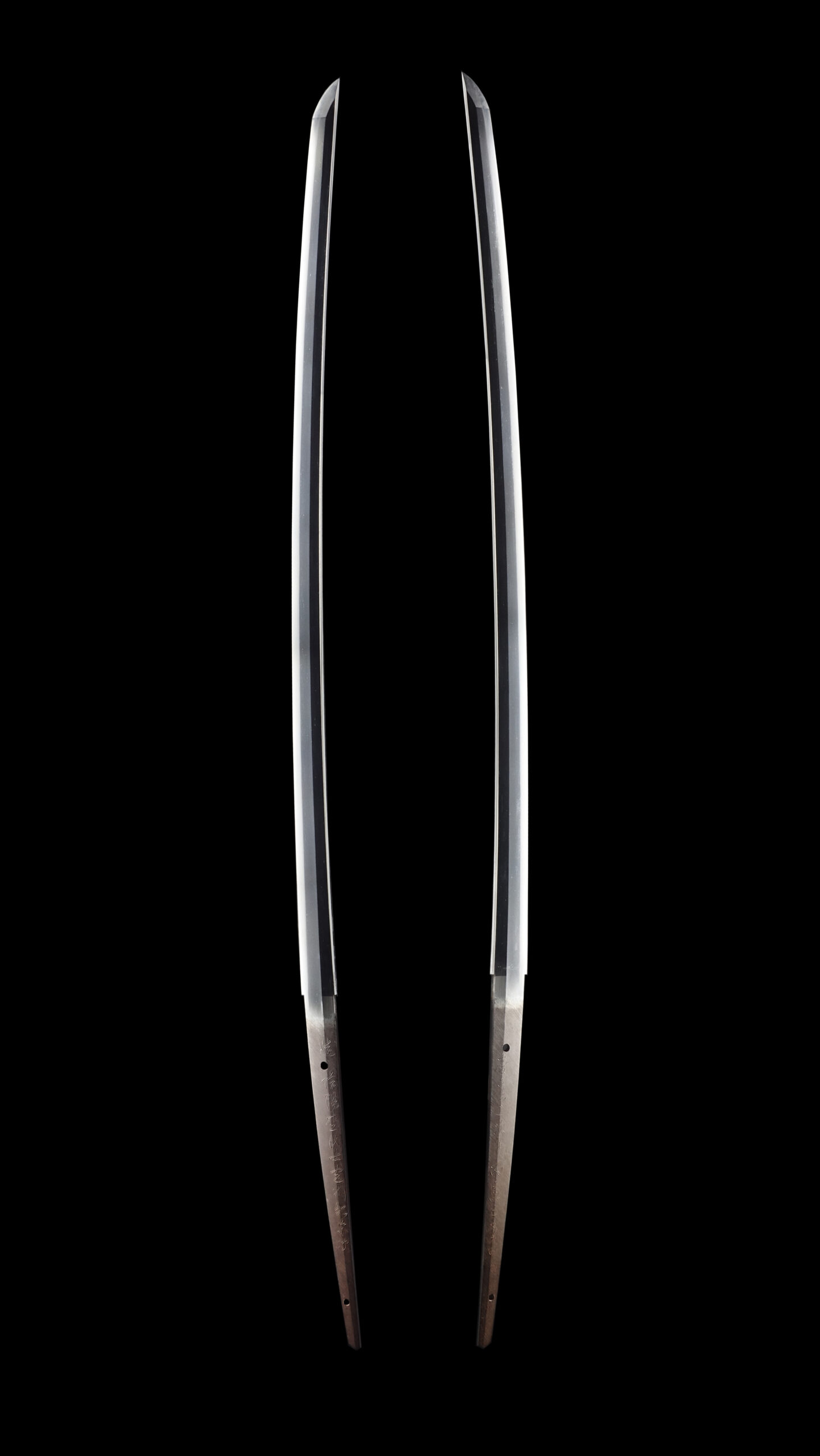
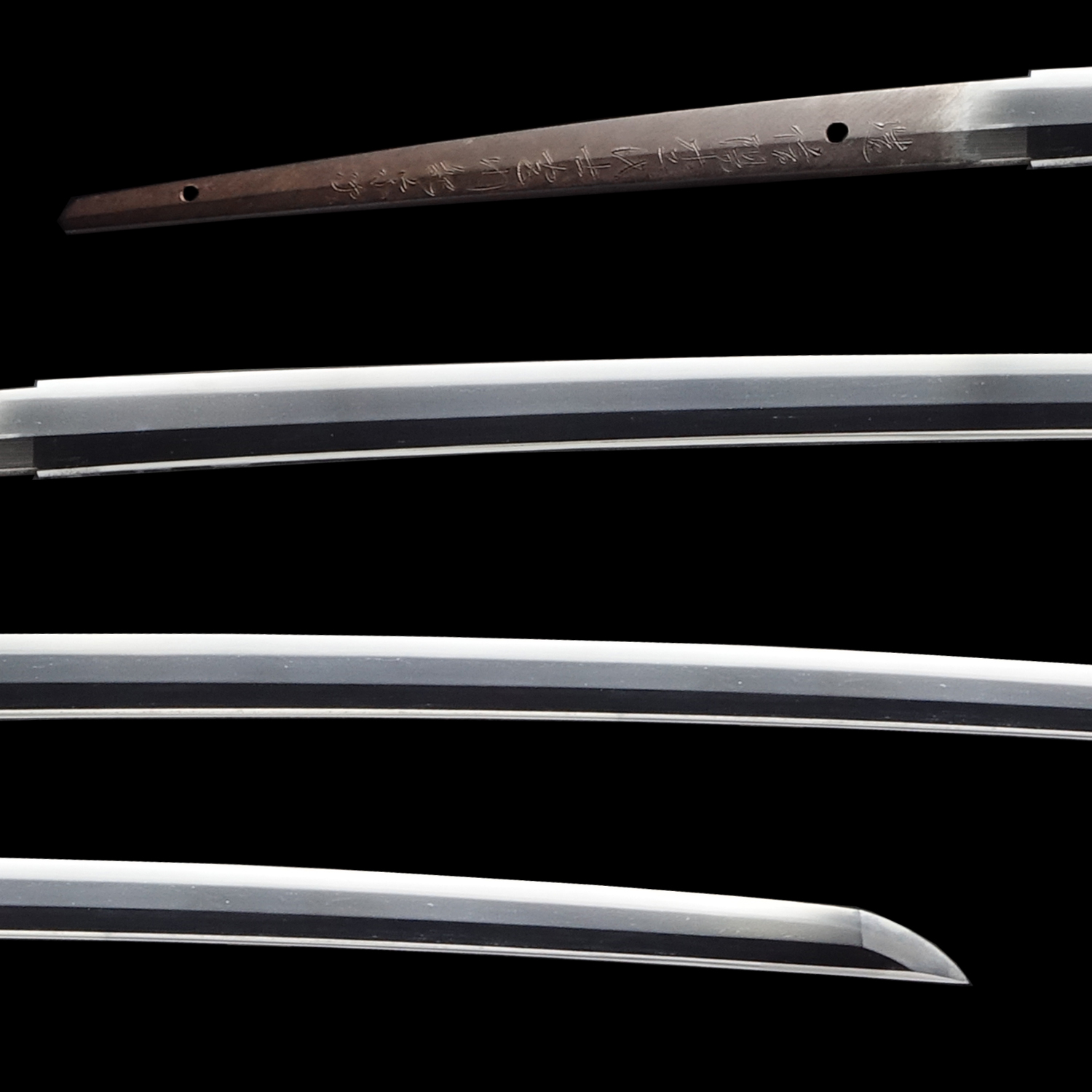
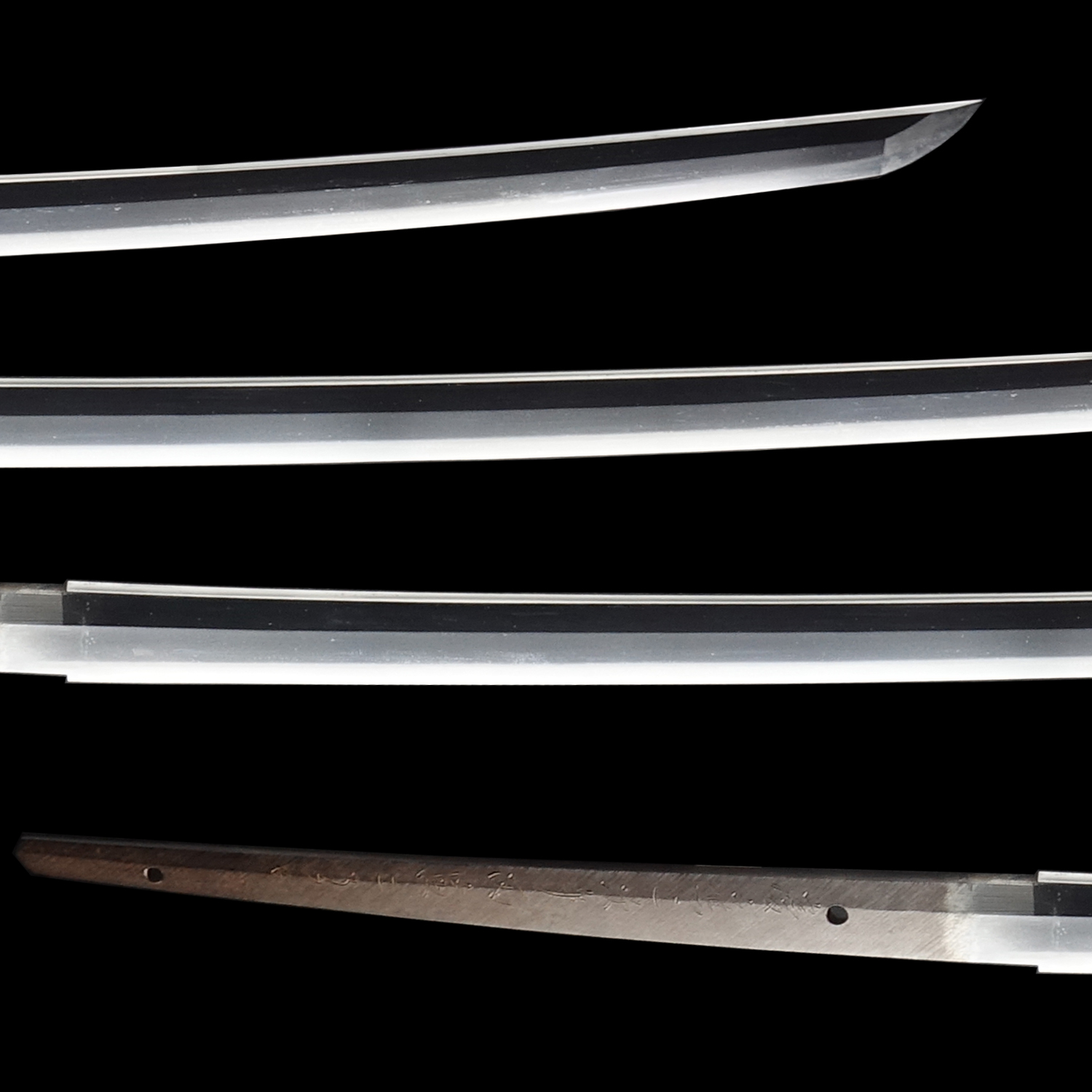
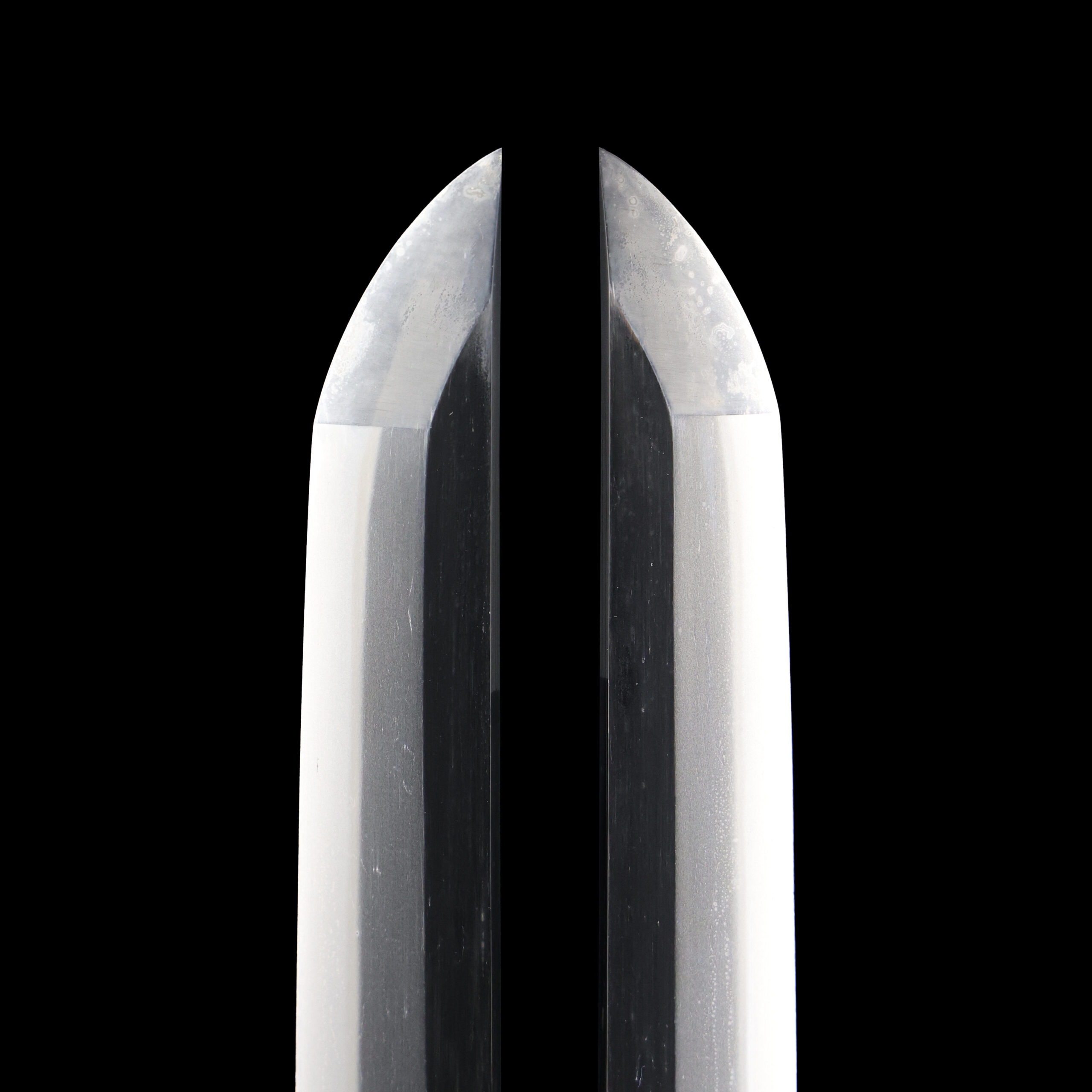
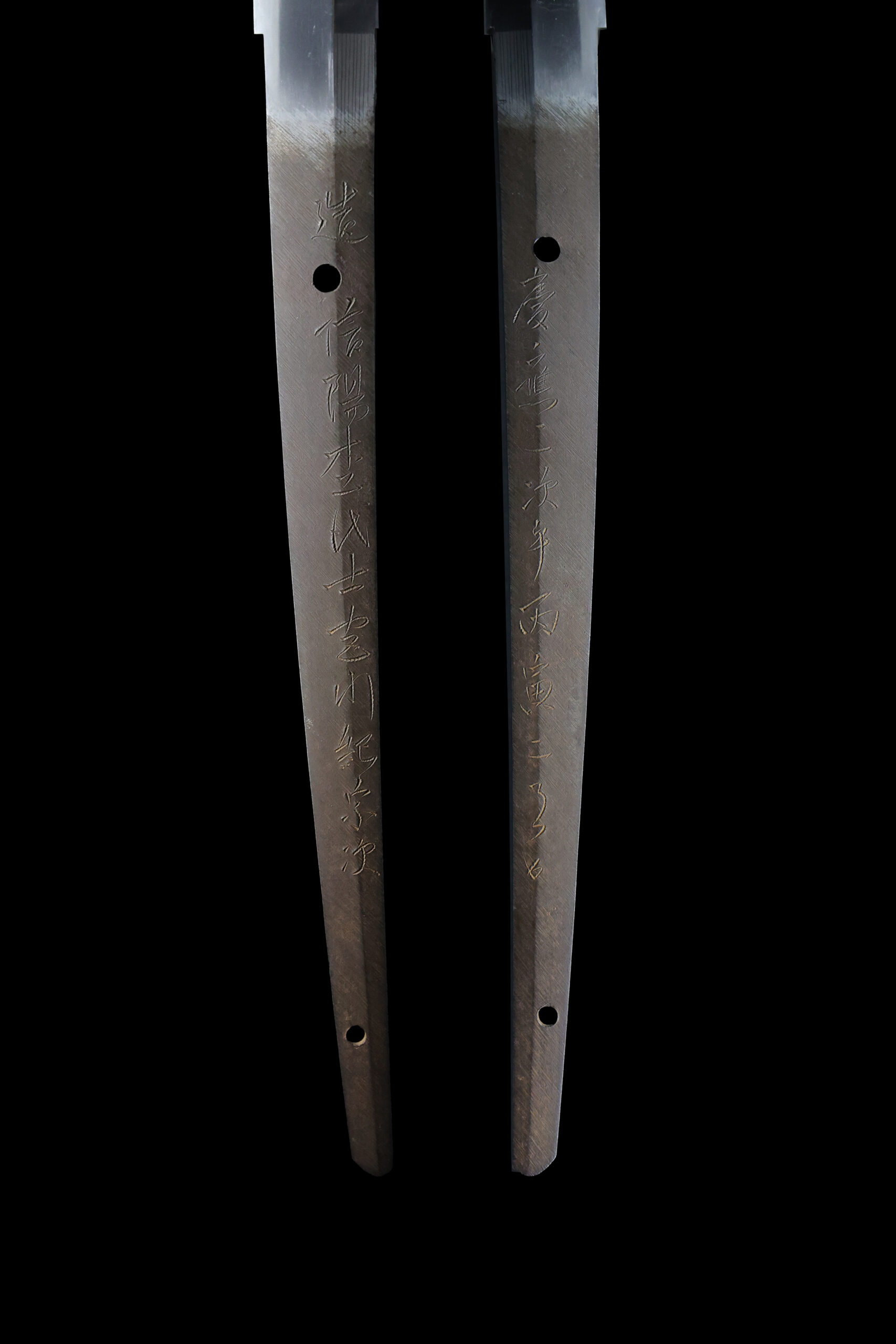
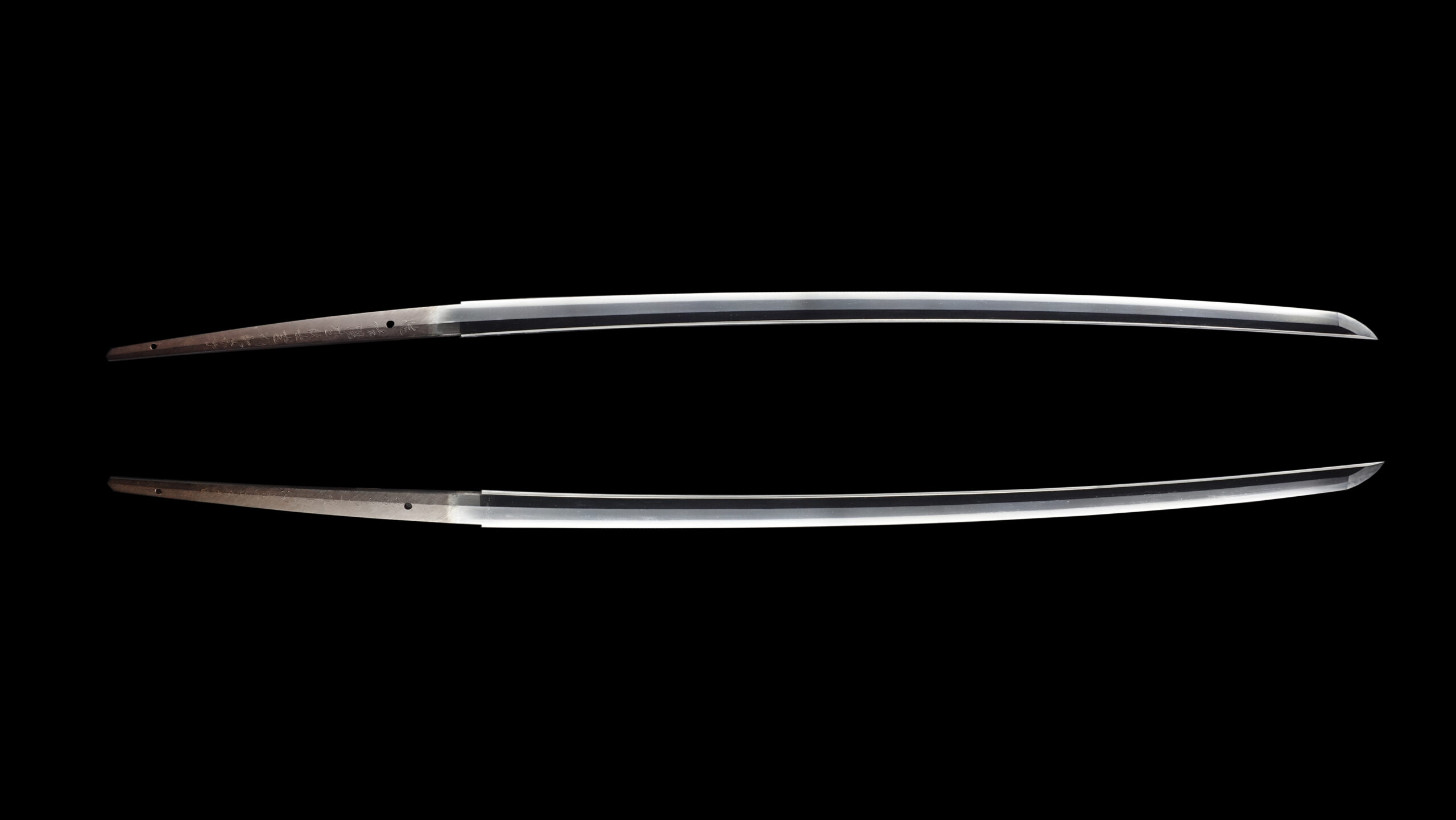
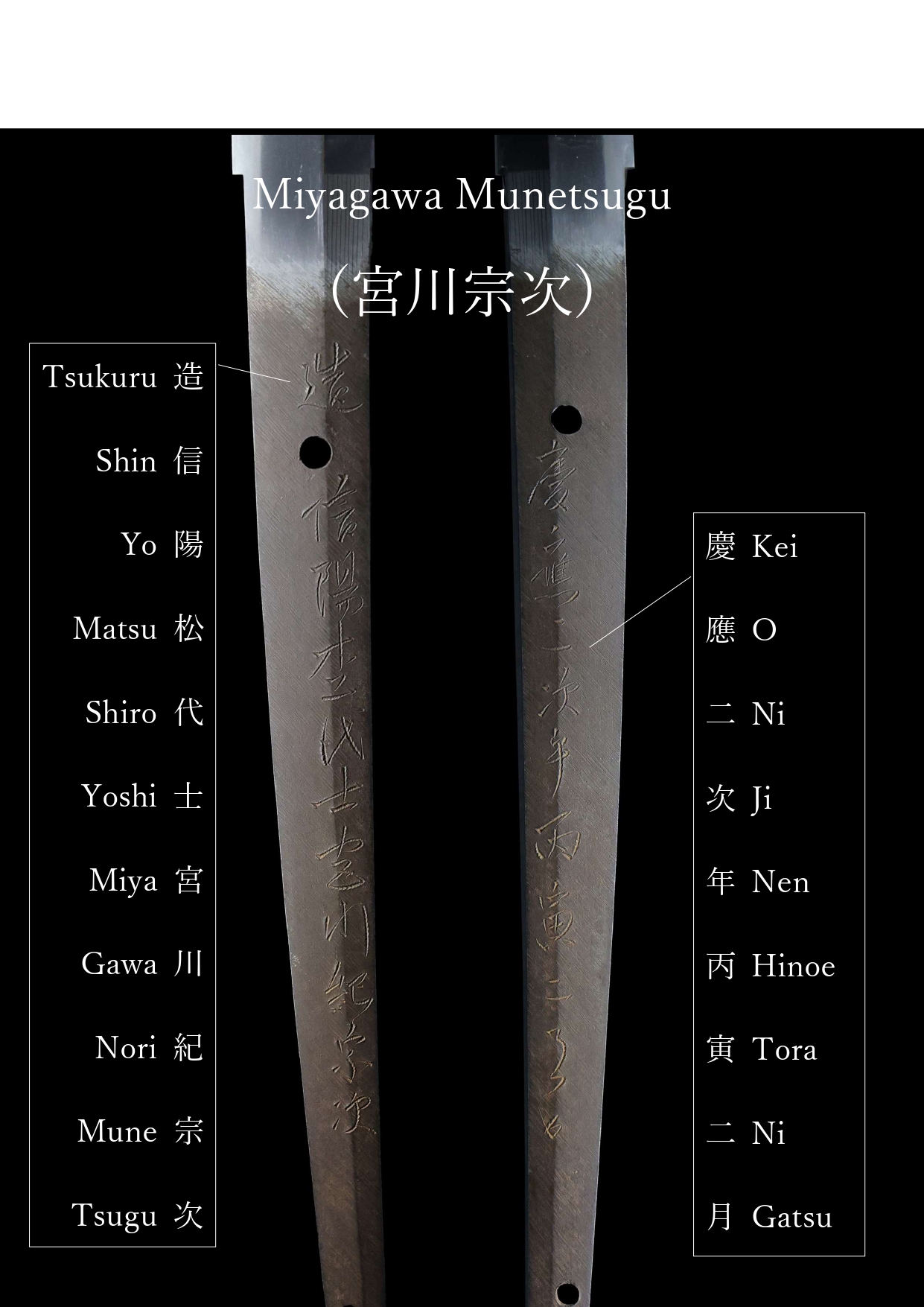
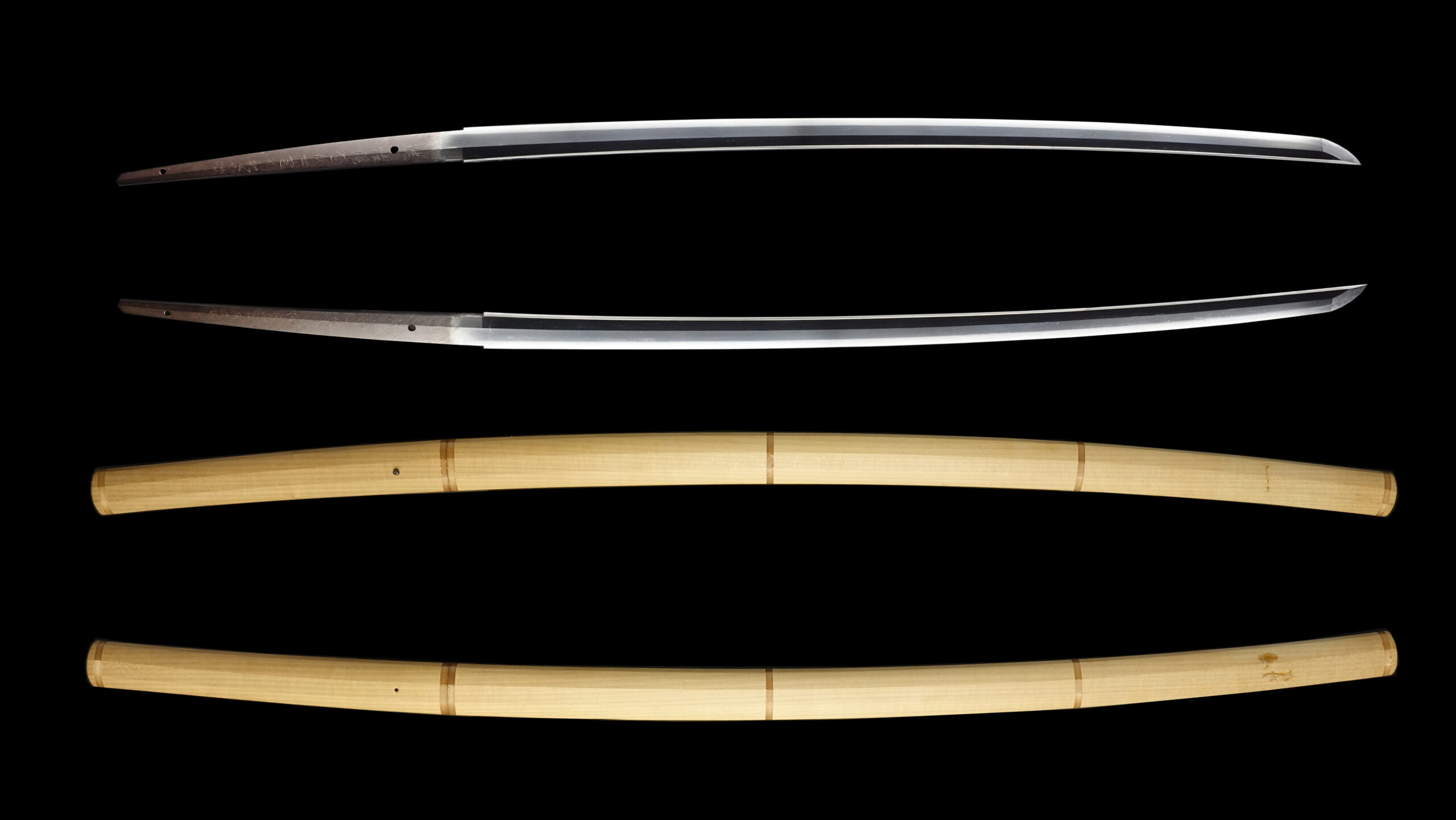
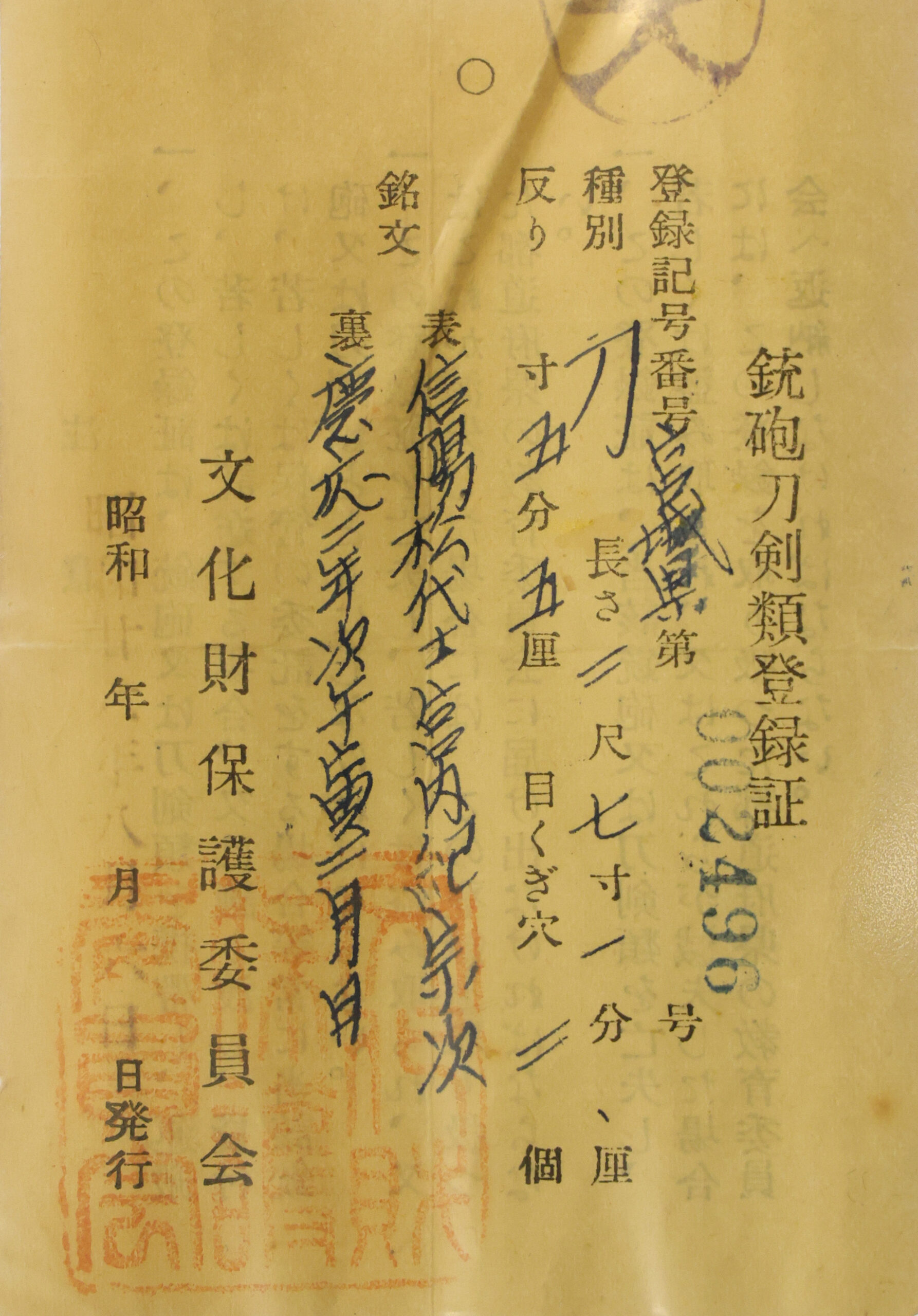
This blade was forged in August 1866 (Keio 2) by Munetsugu in Matsushiro, Shinano Province (today’s Matsushiro, Nagano City, Nagano Prefecture).
The swordsmith Miyagawa Munetsugu, originally known as Munetsugu (宗次), was active during the Shinshinto period of the Bakumatsu era as a swordsmith of the Matsushiro Domain. He studied under Yamaura Saneo, the elder brother of the renowned master swordsmith Minamoto Kiyomaro (源清麿), often referred to as the “Masamune of Yotsuya (四谷政宗).” Saneo was himself a disciple of Kawamura Toshitaka and served as an official swordsmith to several domains, including Komoro, Ueda, and Matsushiro, forging swords throughout his life in his native Shinano.
Munetsugu trained under Saneo in Shinano and inherited the refined forging traditions of the Yamaura lineage, known for its beautiful jihada and well-controlled hamon. During the Keiō era, he received the honorary court title Chikuzen no Kami, at which time he changed his name from Munetsugu (宗次) to Munetsugu (宗継). Like his master, he is highly regarded for combining aesthetic refinement with outstanding technical skill and practical combat performance.
Matsushiro flourished as a major castle town with a stipend of 100,000 koku, making it the largest domain in Shinano Province. It was also one of the regions with the highest concentration of samurai, resulting in strong demand for swords intended for actual battlefield use. Swordsmiths working in Matsushiro were therefore expected to produce blades of exceptional durability, reliability, and functional strength.
The period in which this sword was forged corresponds to the late Edo period, a time of growing political instability. In 1866, the historic Satsuma–Choshu Alliance was formed—an alliance famously brokered by Sakamoto Ryoma (坂本龍馬)—which marked a decisive step toward the fall of the Tokugawa shogunate. Against this turbulent historical backdrop, swords emphasizing strength, dependability, and real-world combat functionality were especially valued, qualities that are clearly reflected in this blade.
Background – Late Edo period
This sword was forged in Keiō 2 (慶応二年, 1866), during the Bakumatsu (幕末)—the turbulent final years of the Tokugawa shogunate. For samurai across Japan, this was a time of growing uncertainty, as loyalty to the shogunate, allegiance to individual domains, and support for the imperial court increasingly divided the warrior class.
In 1866, the Satsuma and Chōshū domains formed an alliance in Kyoto with the assistance of Sakamoto Ryōma (坂本龍馬), helping reshape Japan’s political balance. That same year, the shogunate’s second military campaign against Chōshū ended in failure, weakening its authority. Meanwhile, the Shinsengumi (新選組) continued to serve the shogunate in Kyoto, becoming closely associated with the struggles of its final years. These events formed the wider historical backdrop against which Miyagawa Munetsugu forged this blade in Shinano.
Even as firearms changed the nature of warfare during these turbulent years, the Japanese sword remained both a weapon carried by samurai and a treasured symbol of their status and pride. Preserved to this day, this blade offers a tangible connection to the world of the samurai at a pivotal moment in Japan’s history.
Shin-Shin-To
The Japanese swords made after the mid-Edo period towards the end of the Edo period are called Shin-Shin-To in Japanese. Shin-Shin-To were likely to be made more practical and robust. The Shin-Shin-To movement initially took place when Suishinshi Masahide began to bring back the old-school Japanese swords forged around the mid-to-late Kamakura period. Their swords rapidly gained popularity as the Edo regime had fallen into an unstable political state. As opposed to most swords of the previous era that were essentially more like luxury properties, the Shin-Shin-To spoke louder to the Samurais’ minds mourning the sad state of Edo.
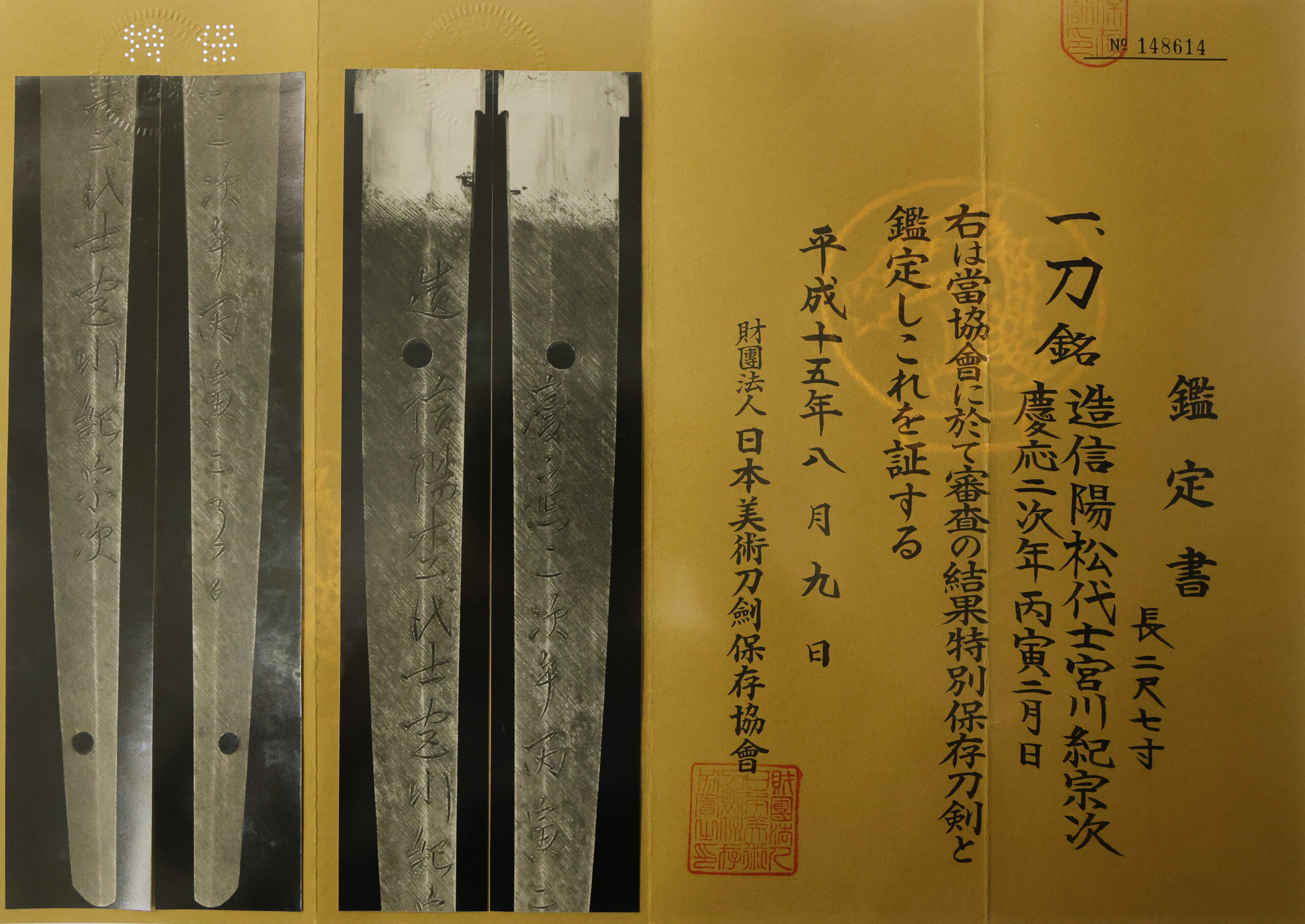
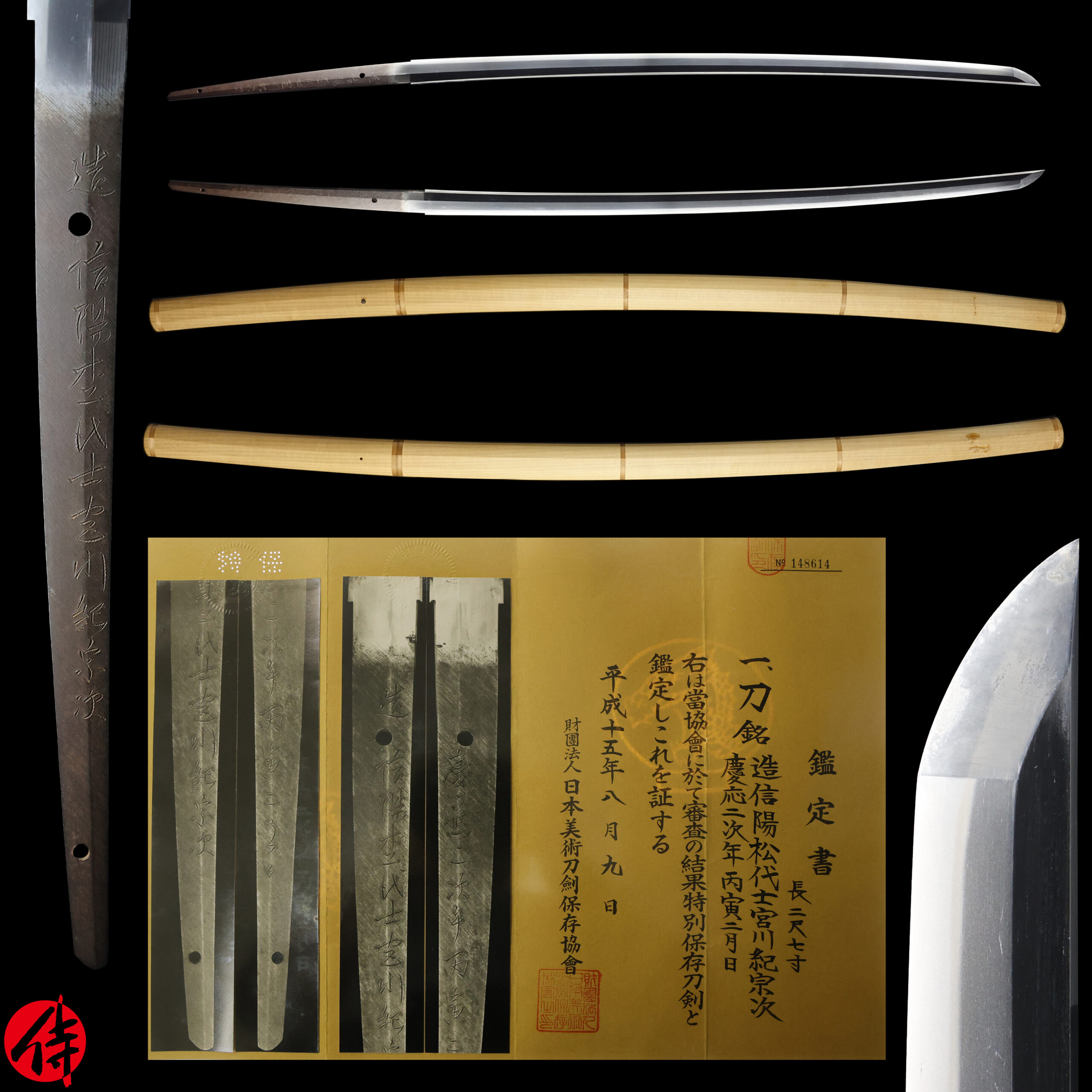
It is appraised as a Tokubetsu Hozon Token (特別保存刀剣) issued by NBTHK (Nihon Bijutsu Touken Hozon Kyokai:日本美術刀剣保存協会).
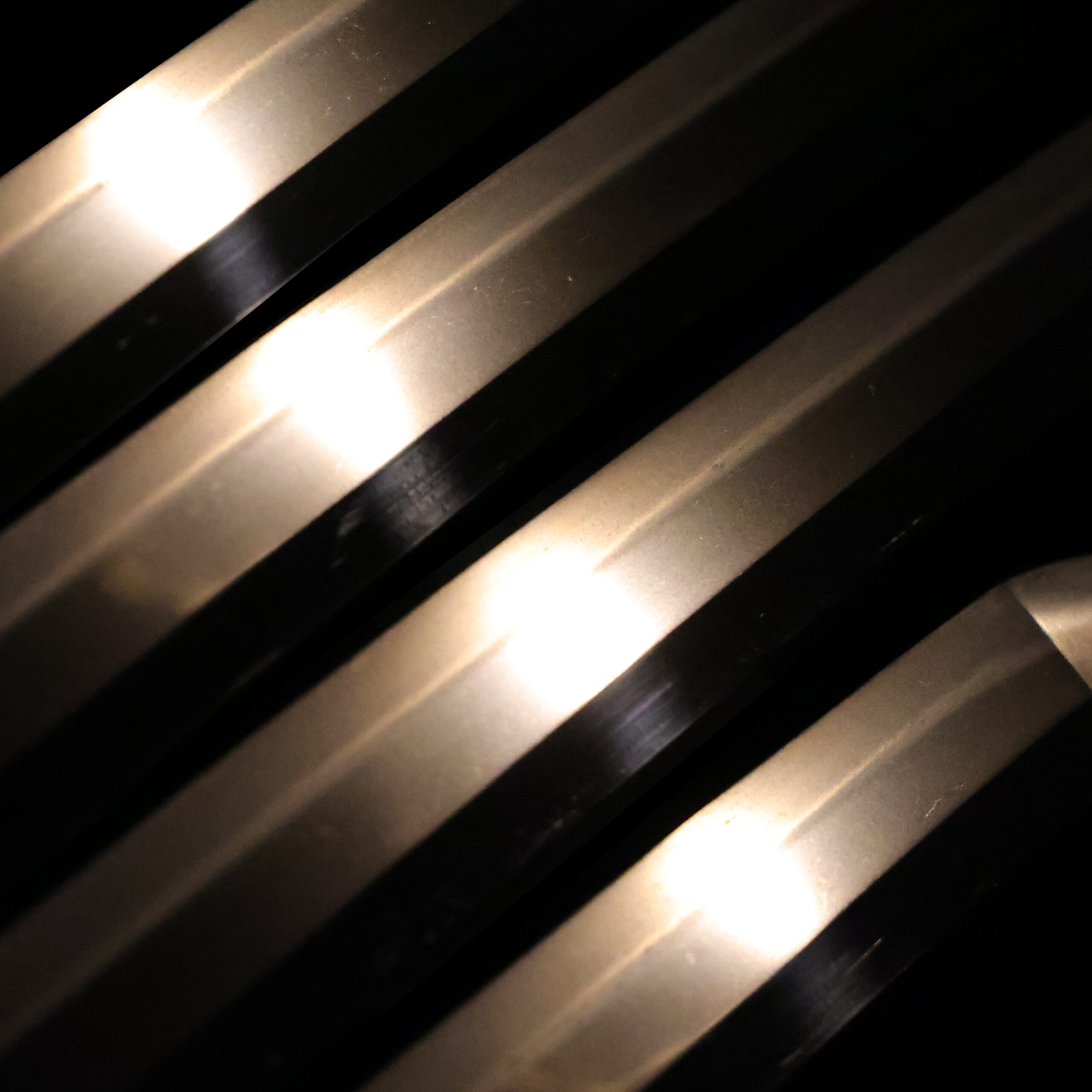
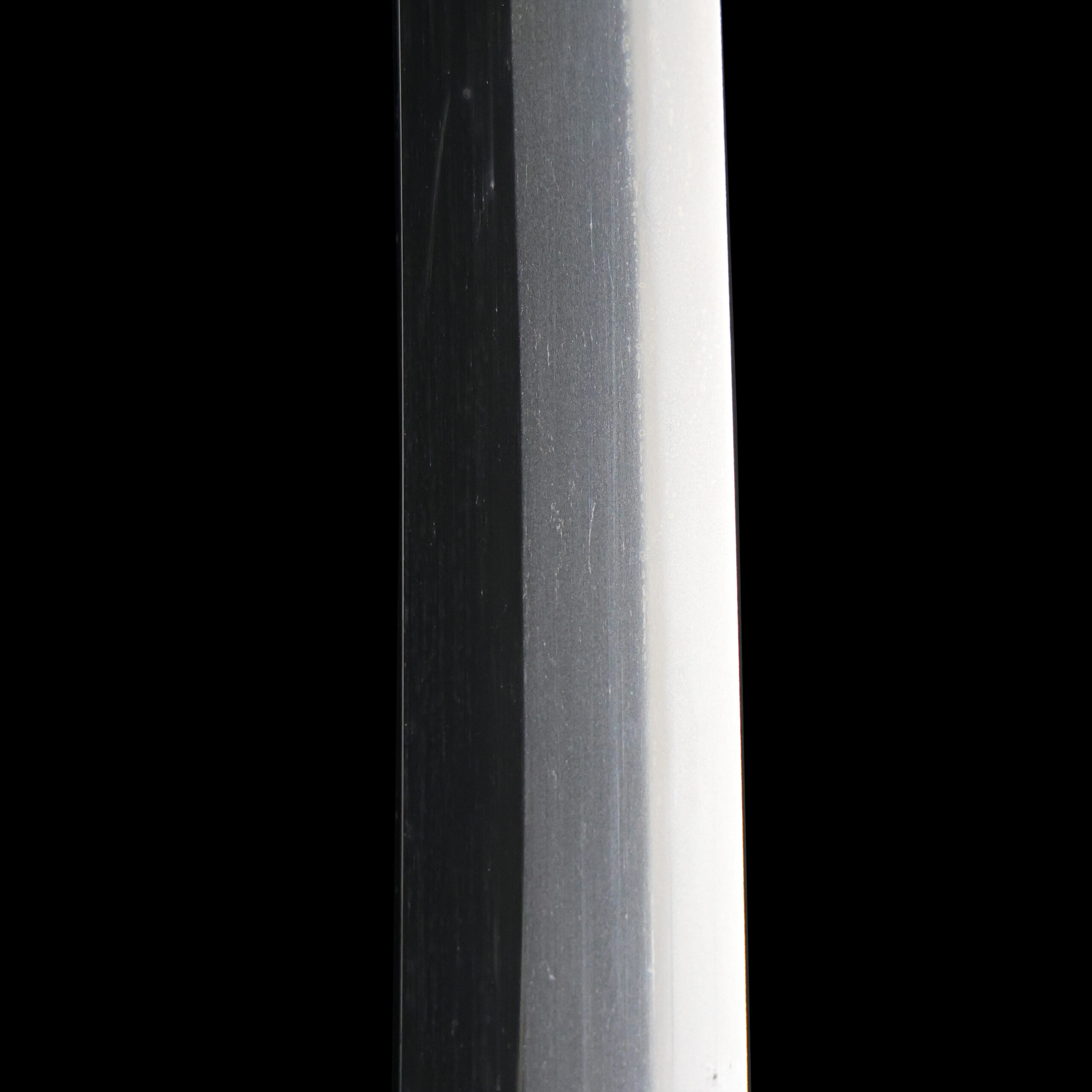
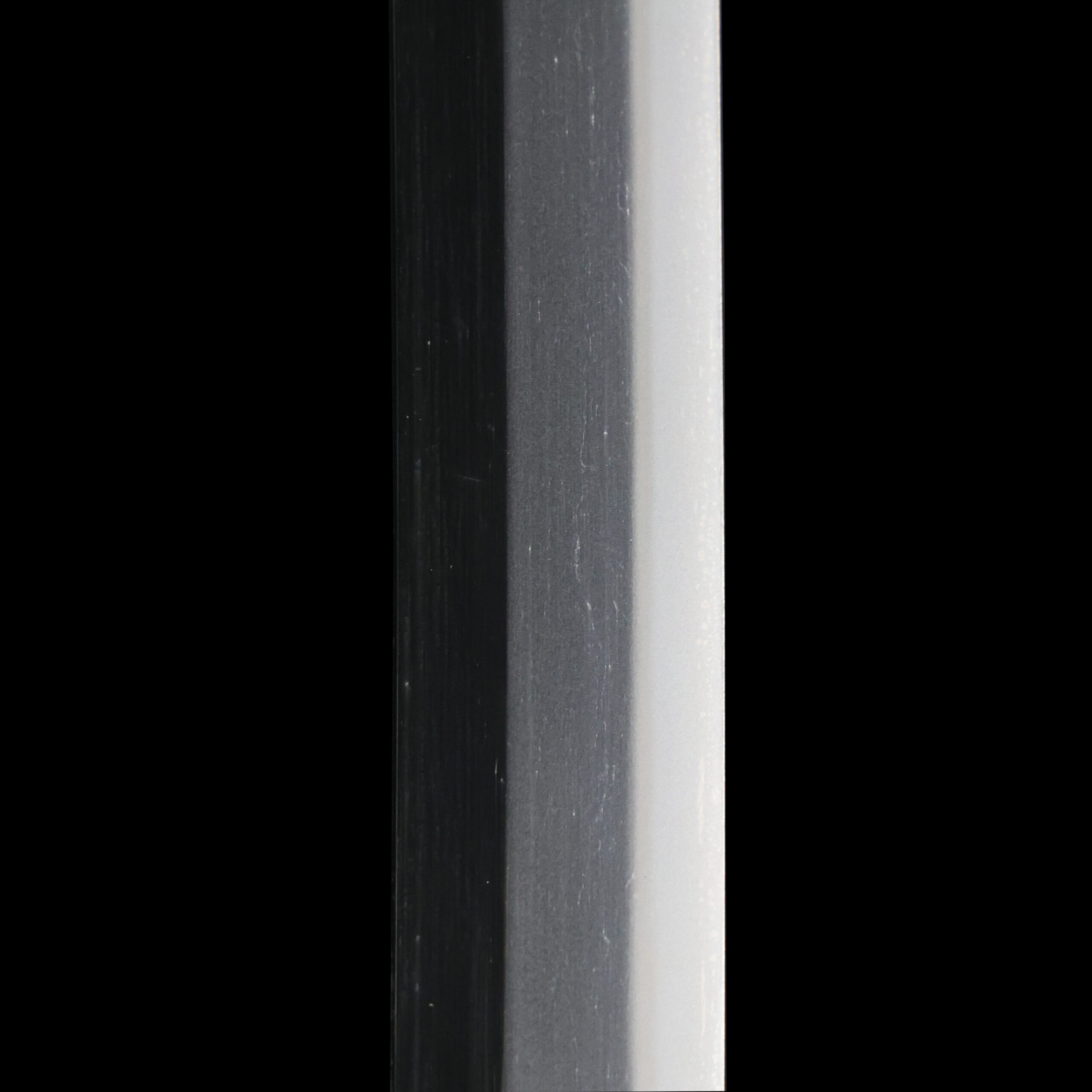
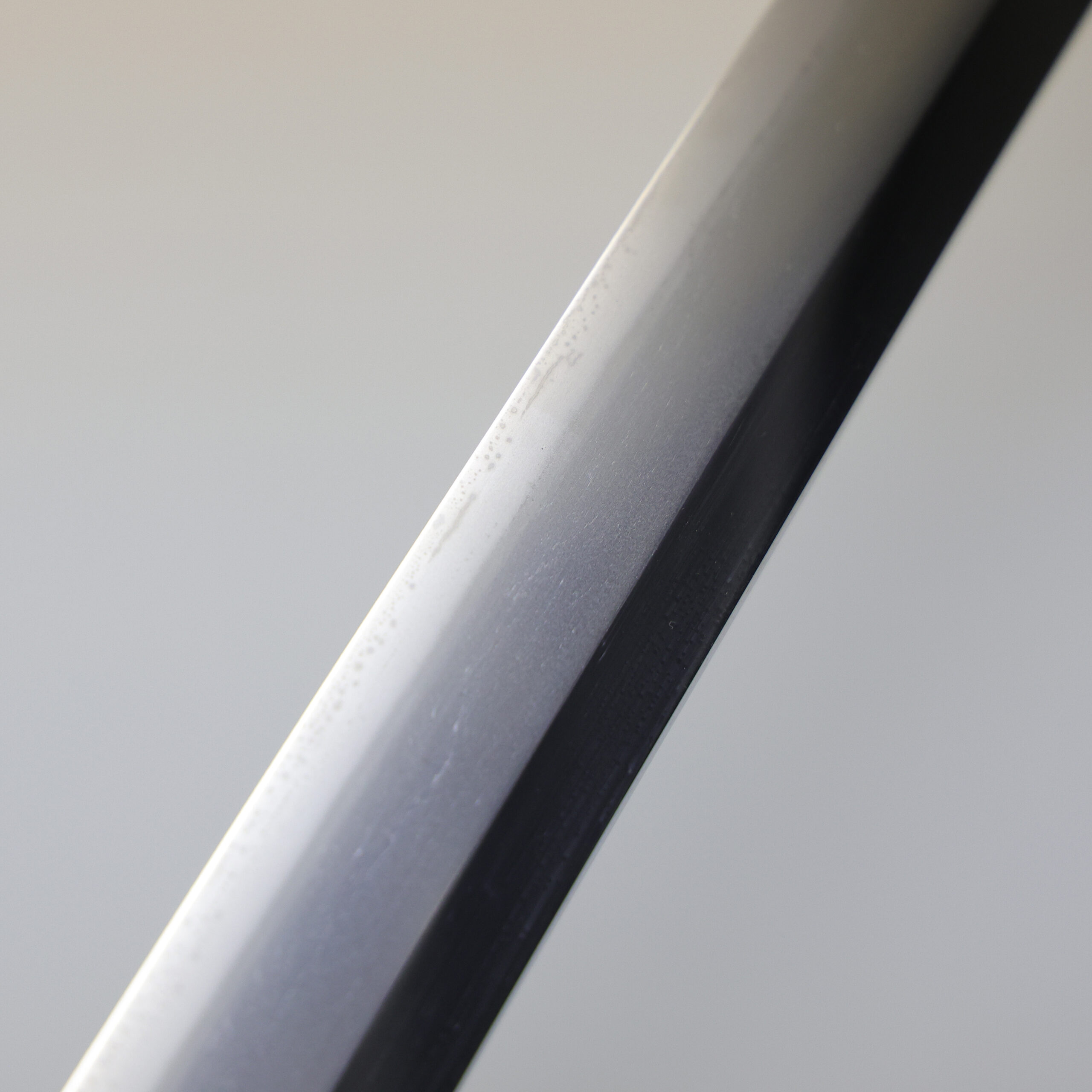
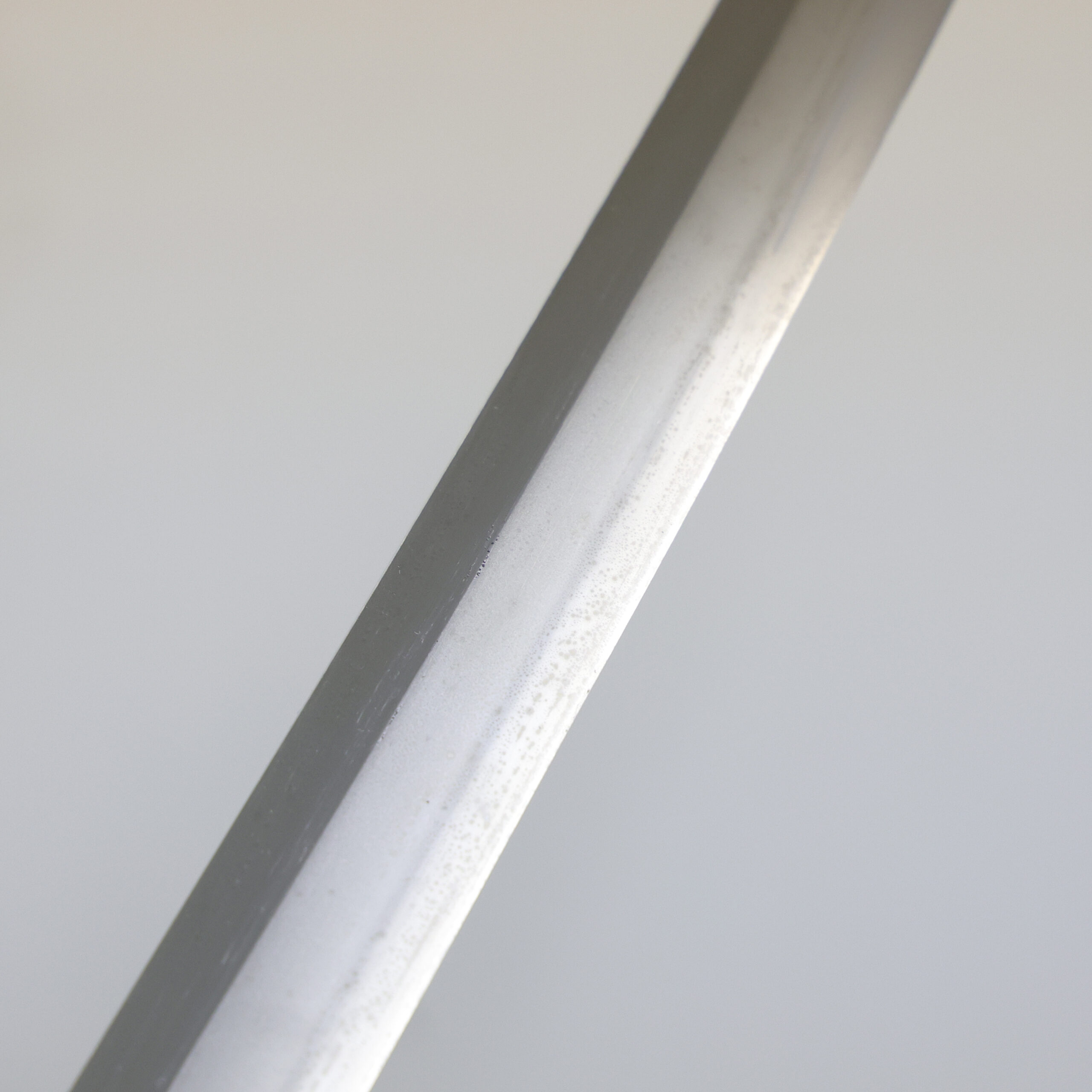
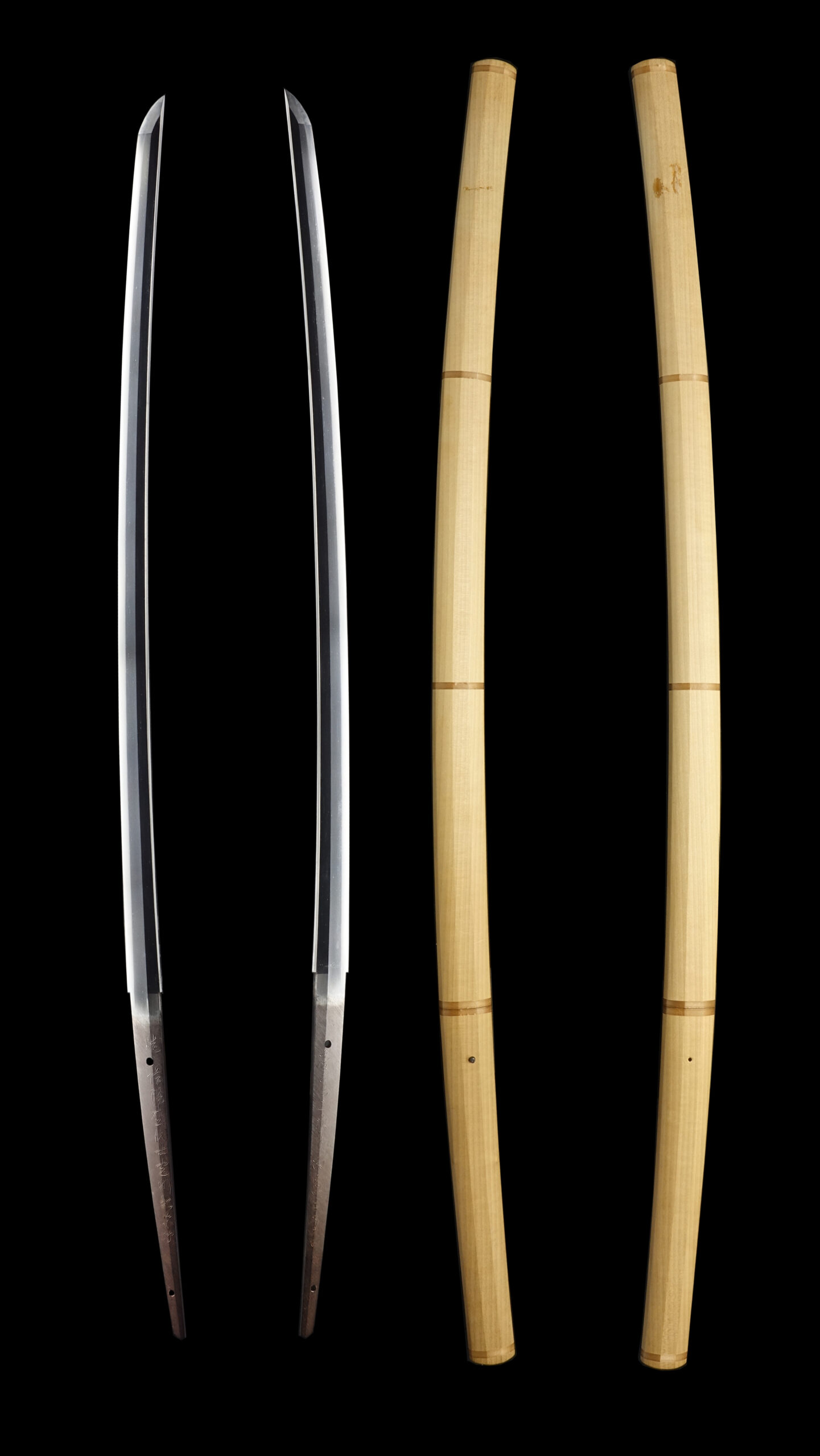
*Please note that there are a few light rust spots on the blade. If you would like more detailed information regarding the condition, please feel free to contact us.
Authentication Paper
They authenticated the blade on August 9th in the 15th year of Heisei (2024). They appraised it as Tokubetsu Hozon Touken, the blade especially worth preserving for Japanese society.


 NihontoWatch
