
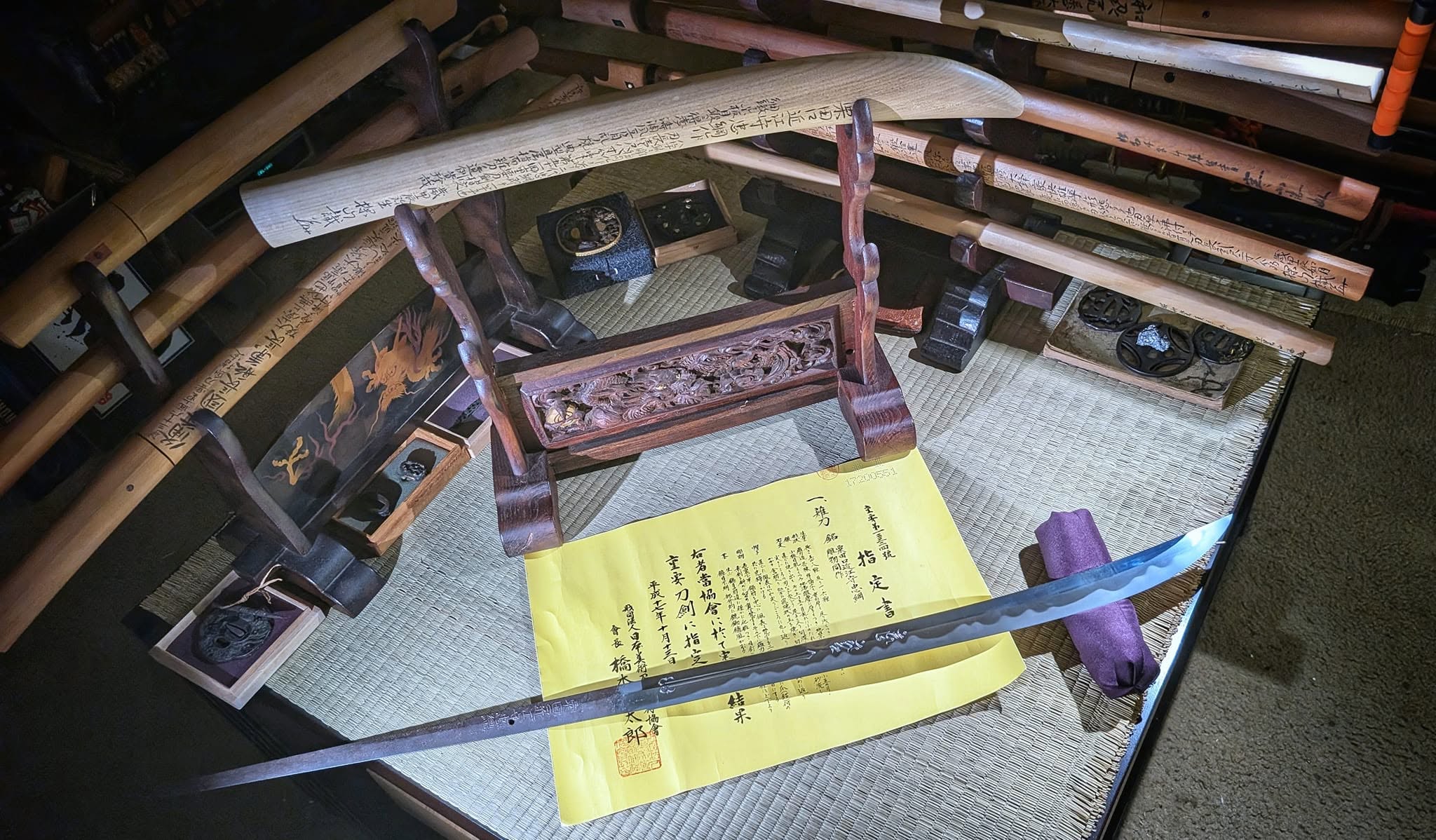

-, 51st Session — Designated October 13, 2005
, : Ōmi no Kami Tadatsuna (粟田口近江守忠綱)
Measurements 54.8 cm, 1.6 cm, 2.85 cm, 47.85 cm ( with slight inward curve)
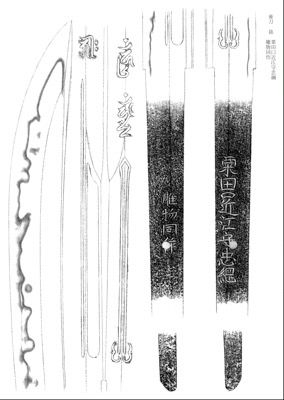
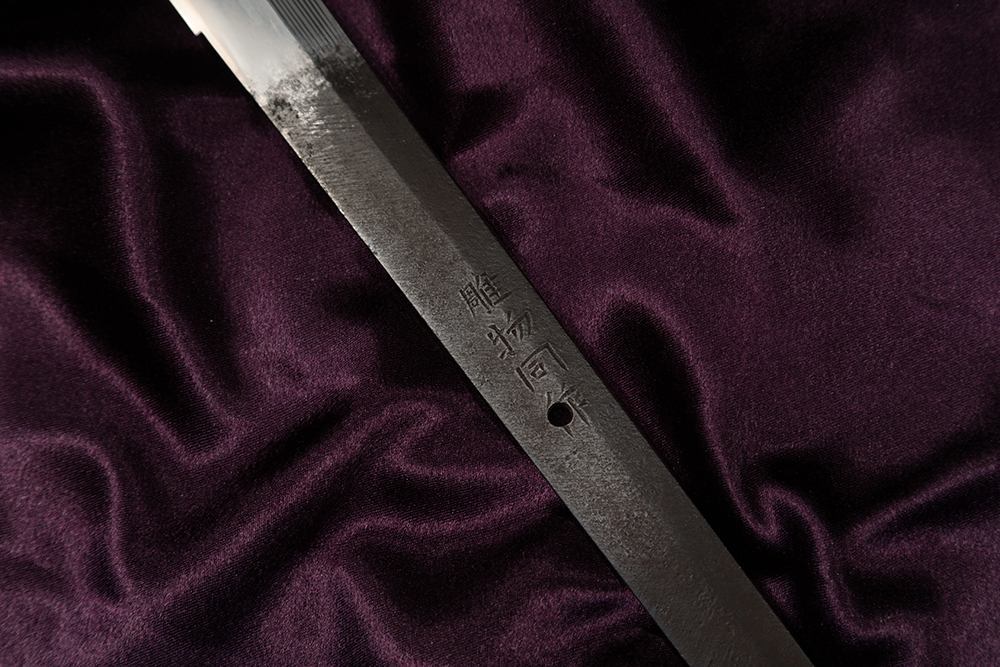
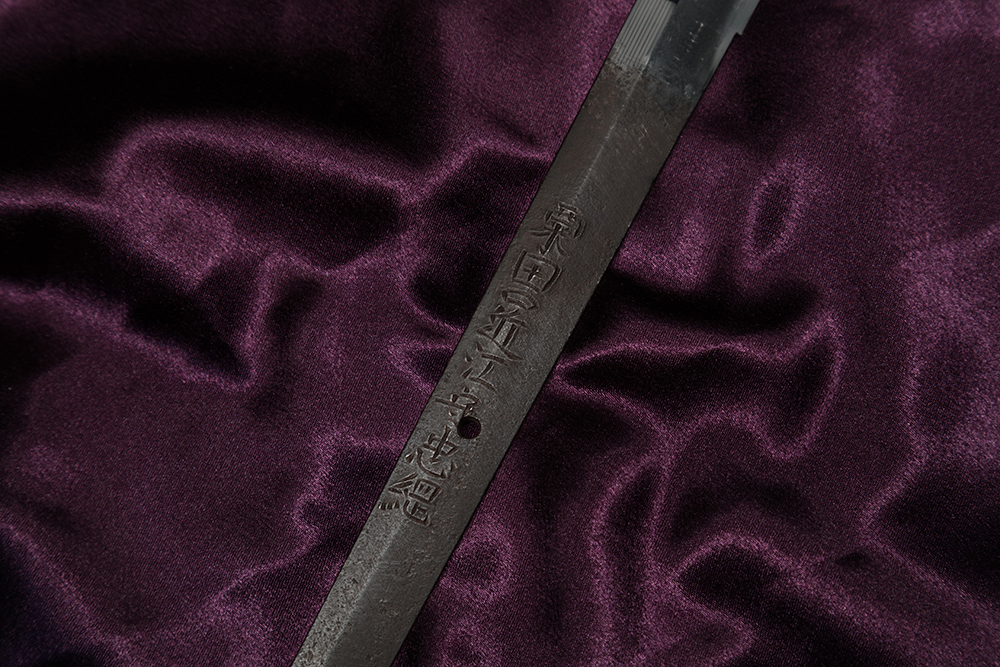
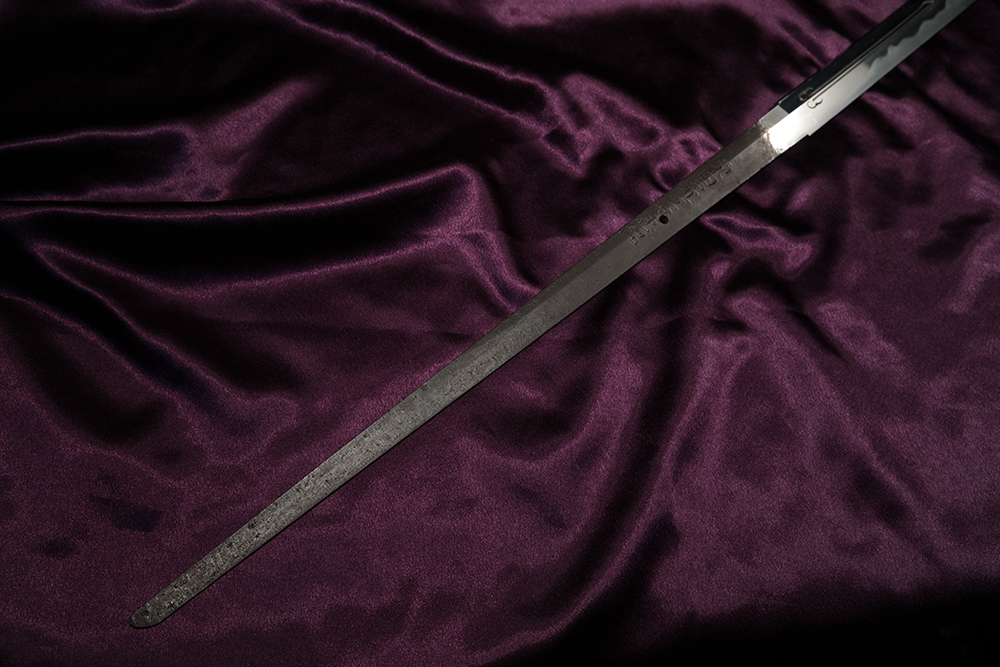
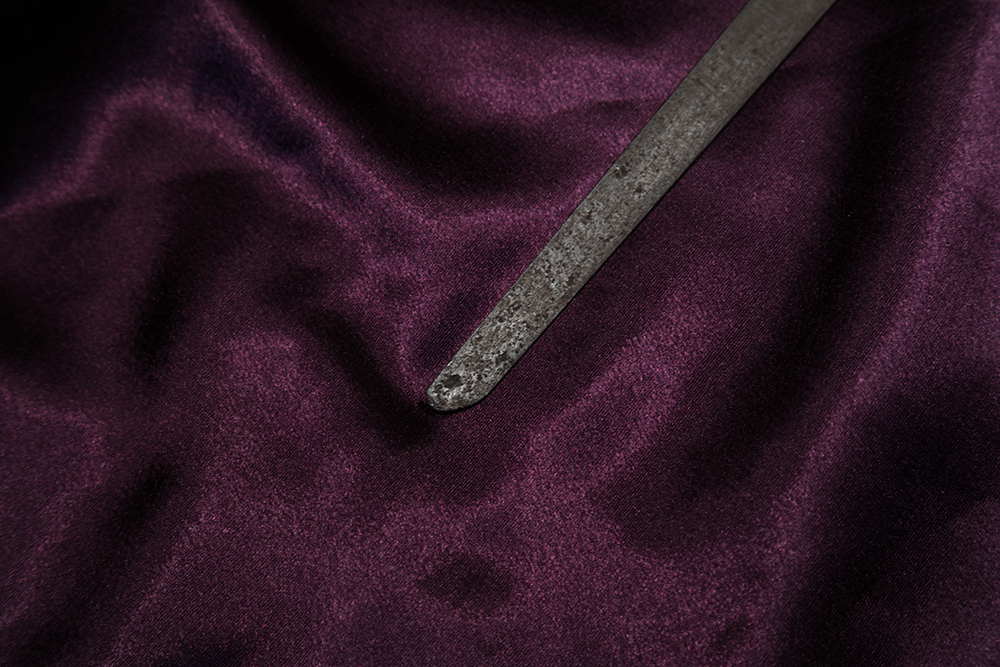
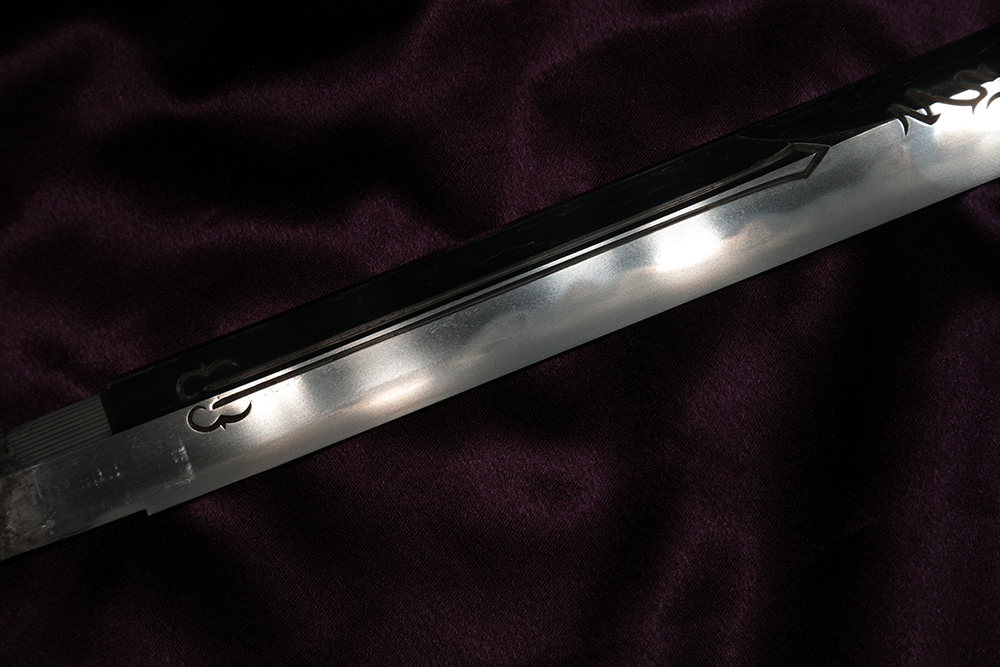
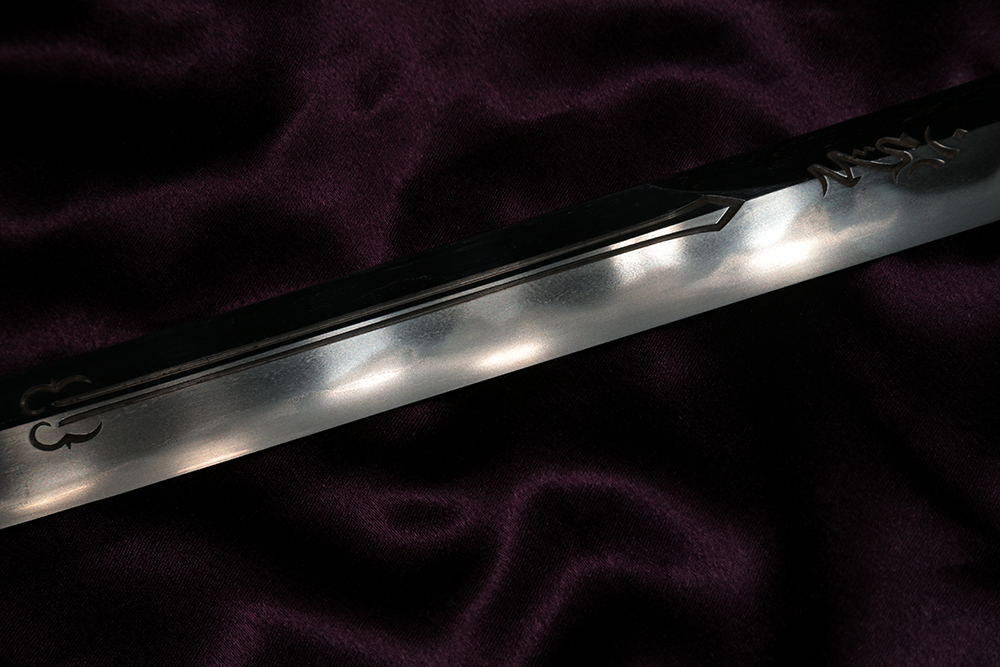
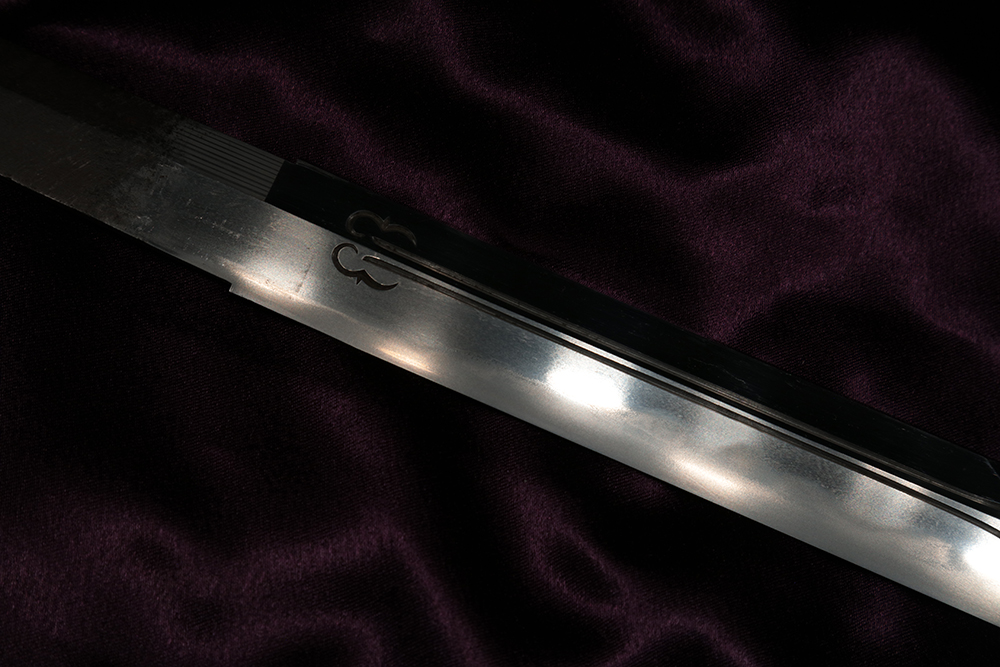
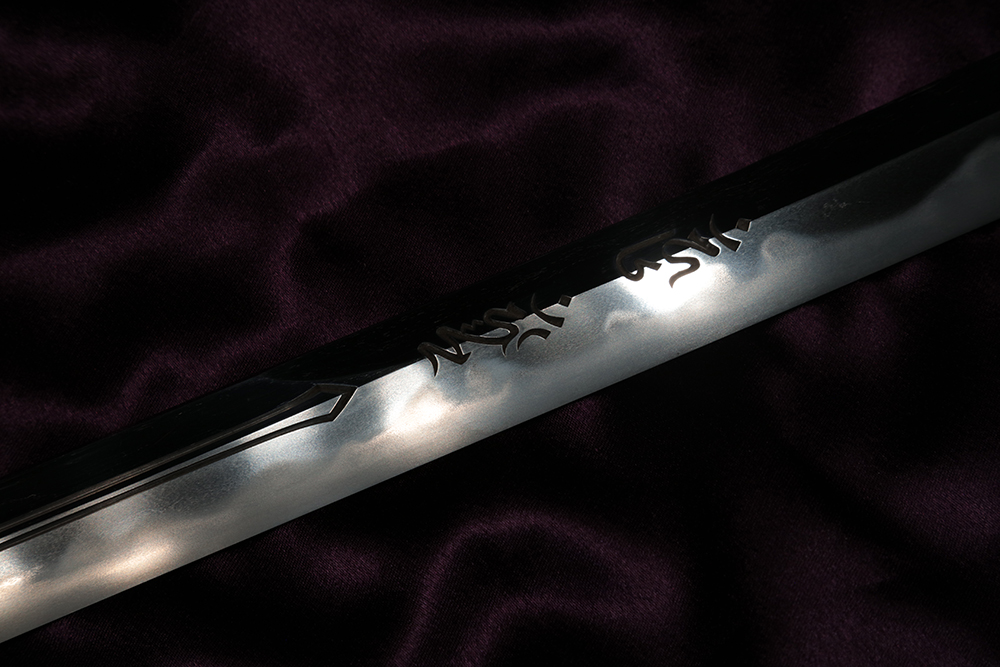
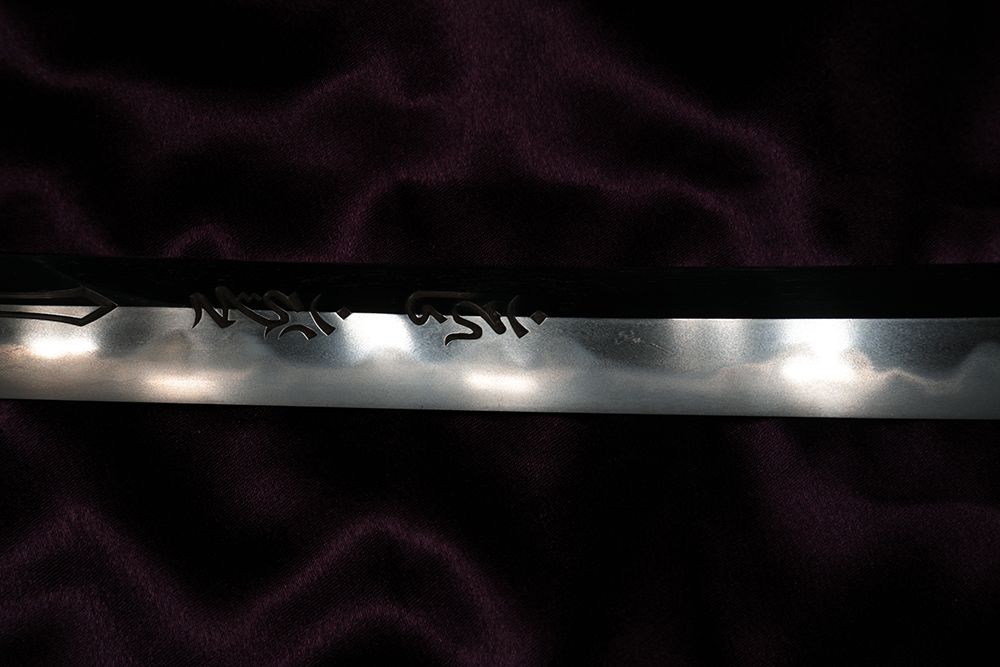
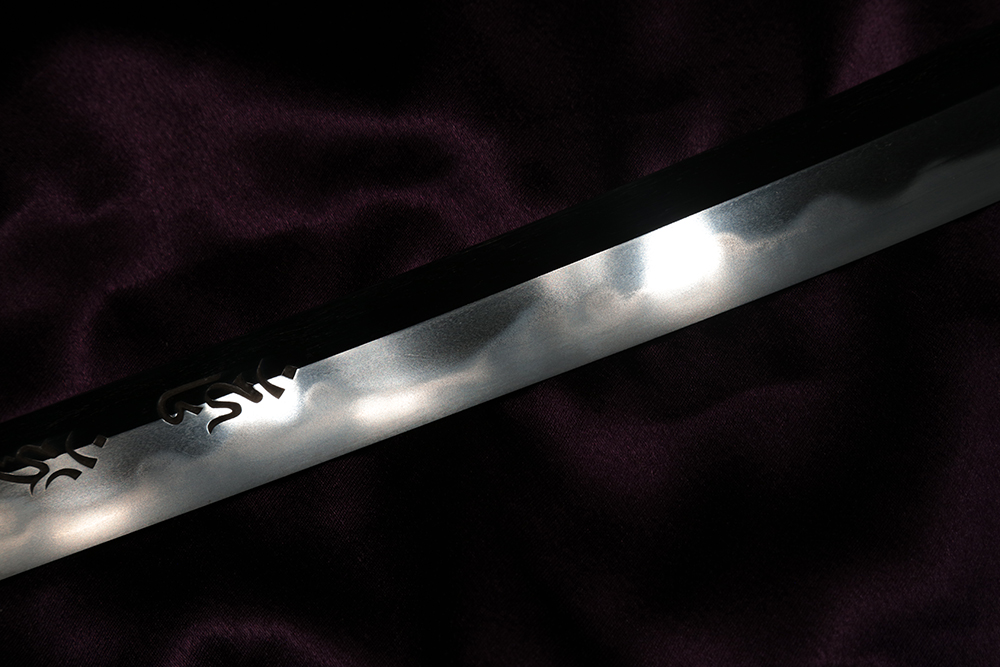
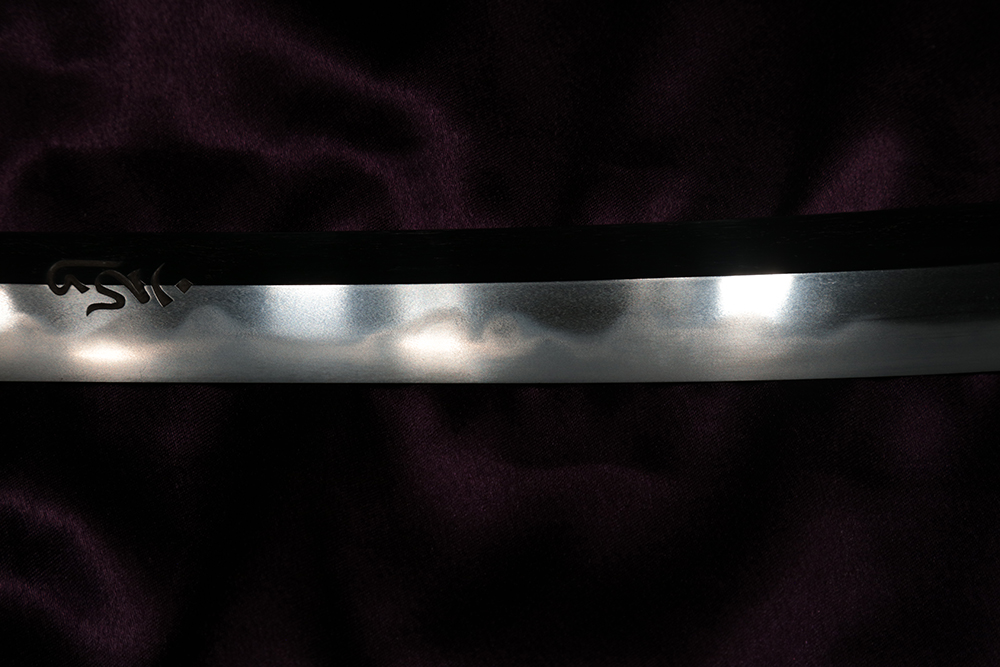
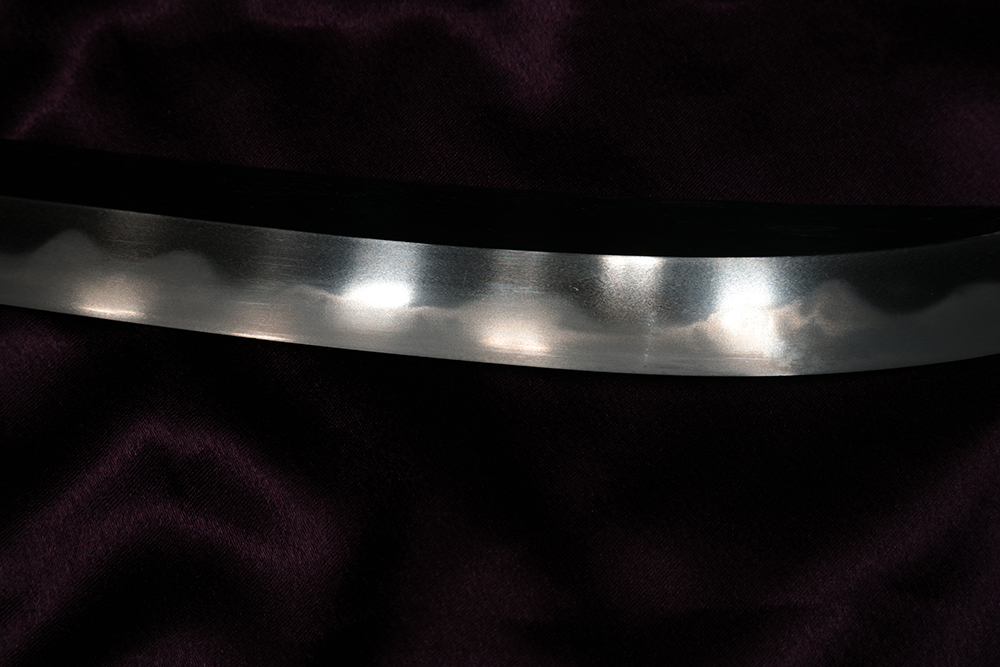
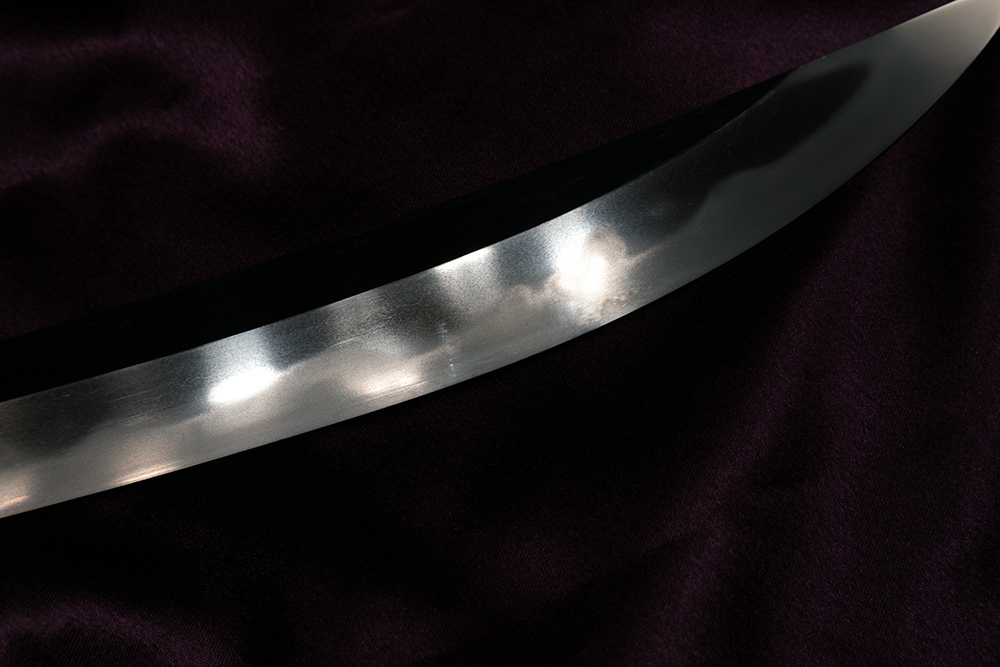
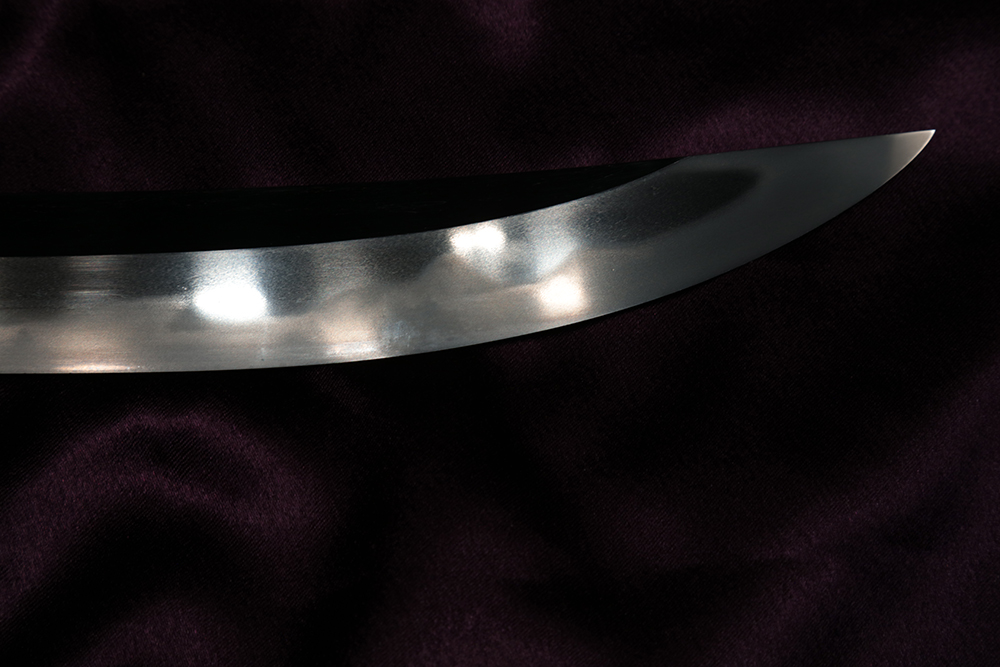
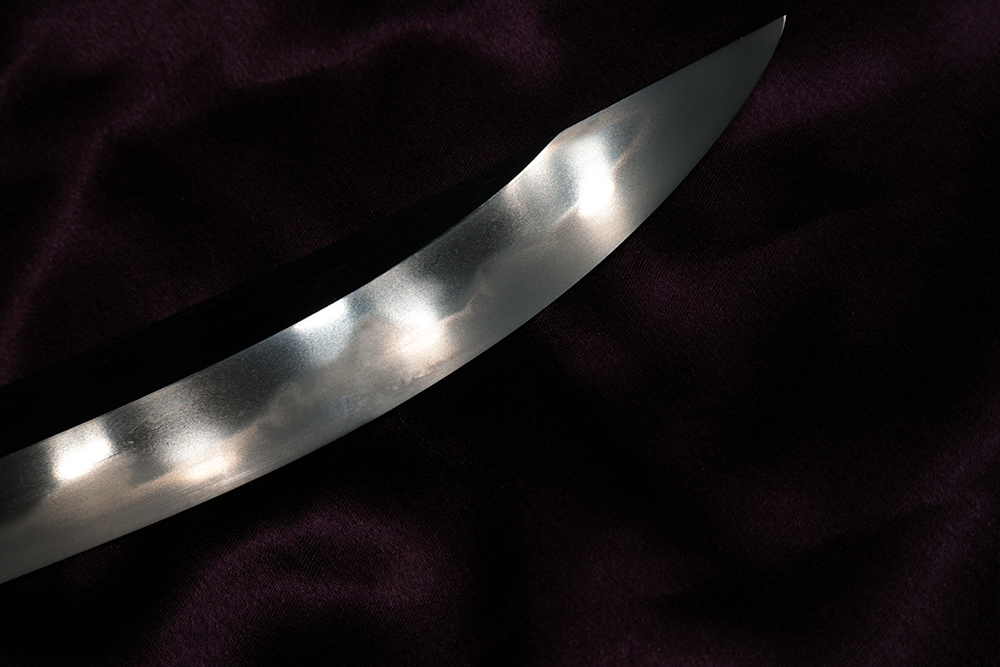
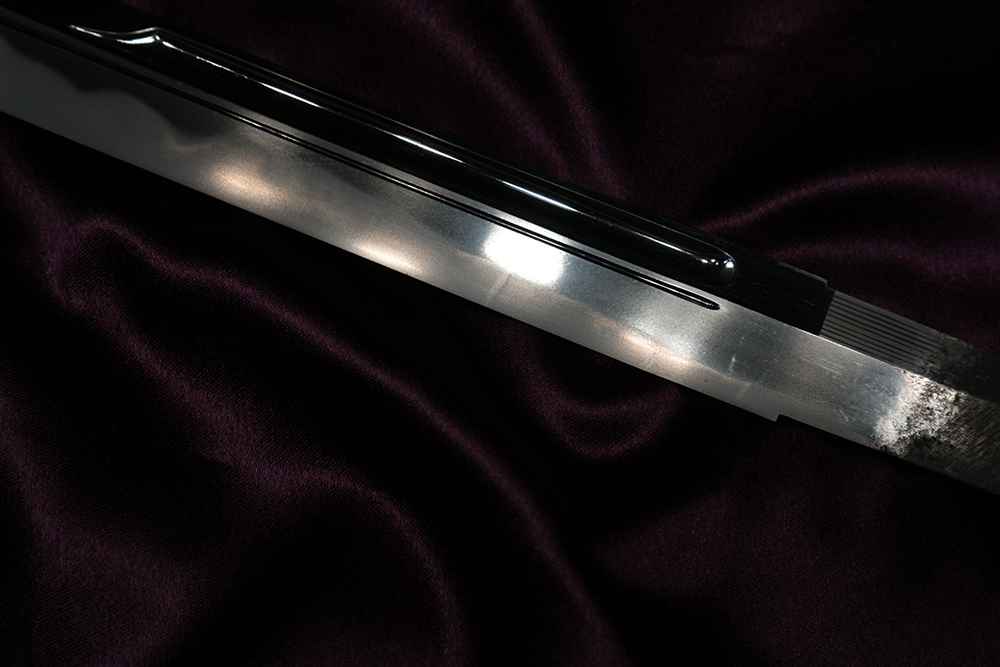
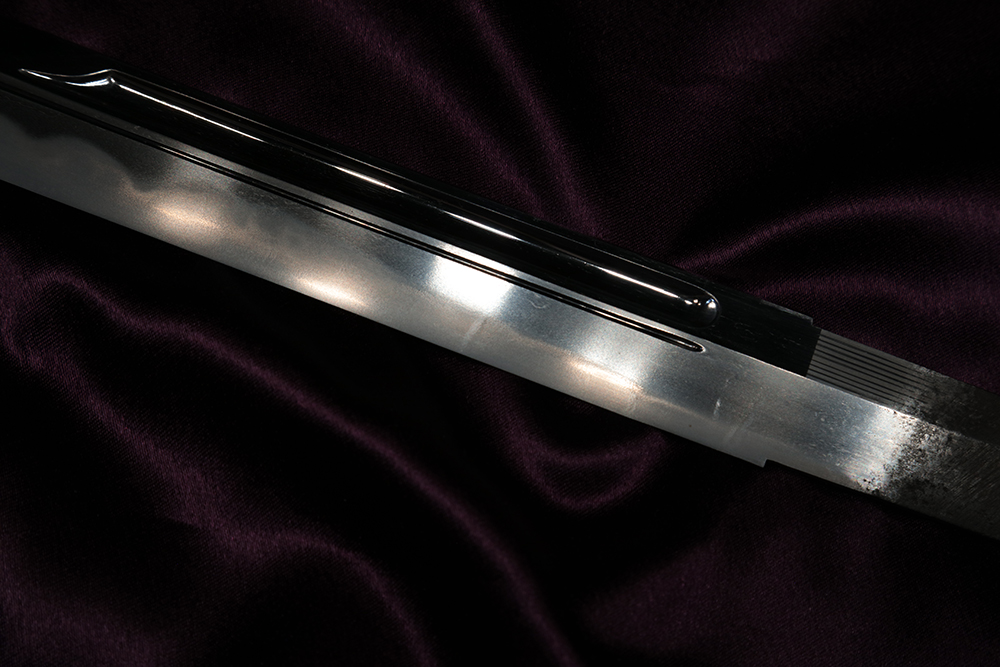
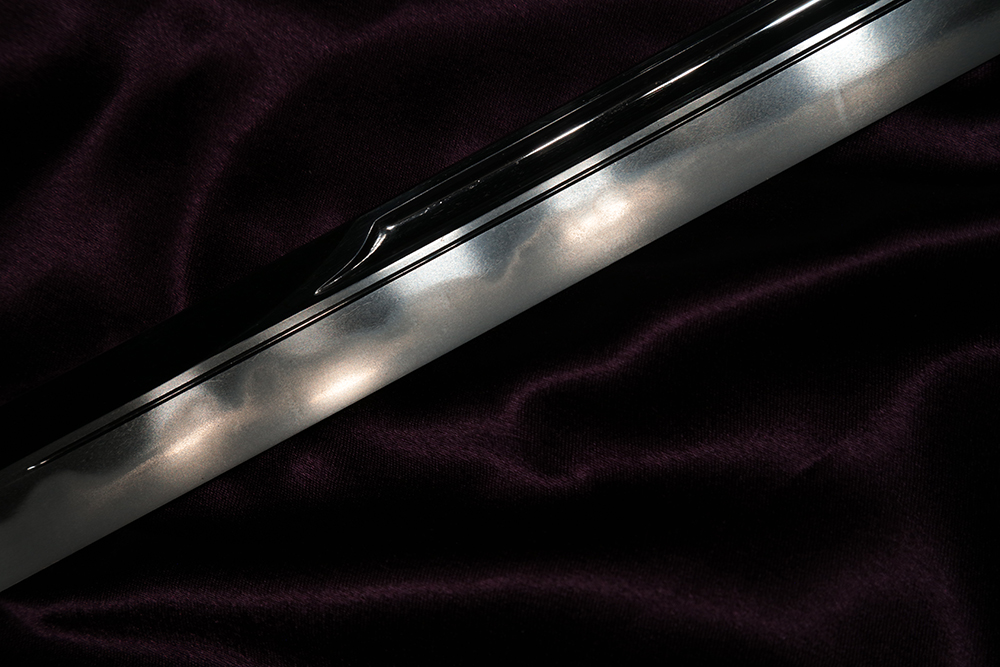
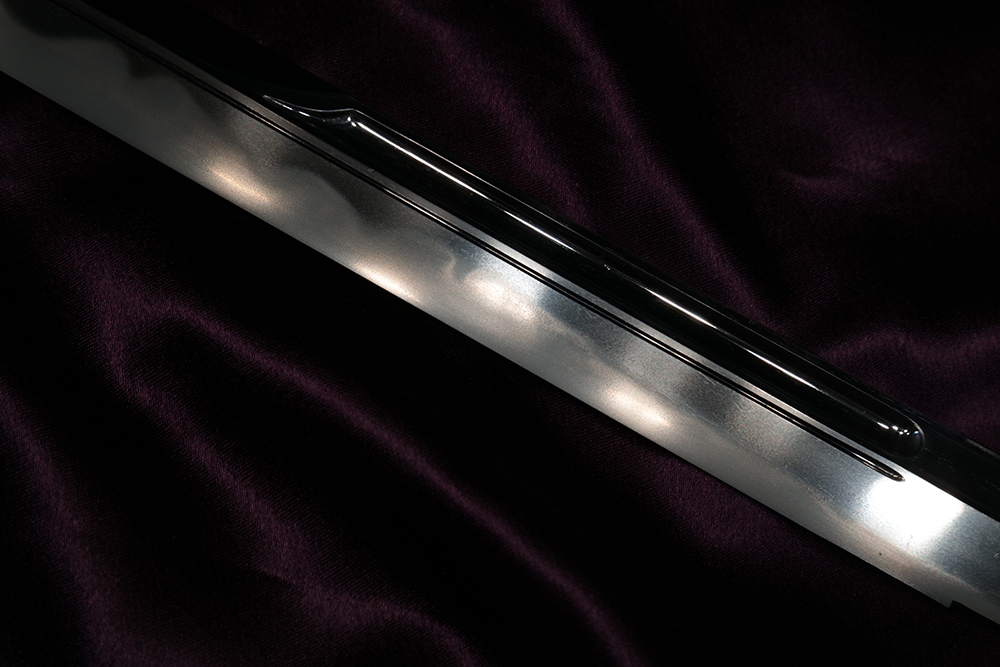
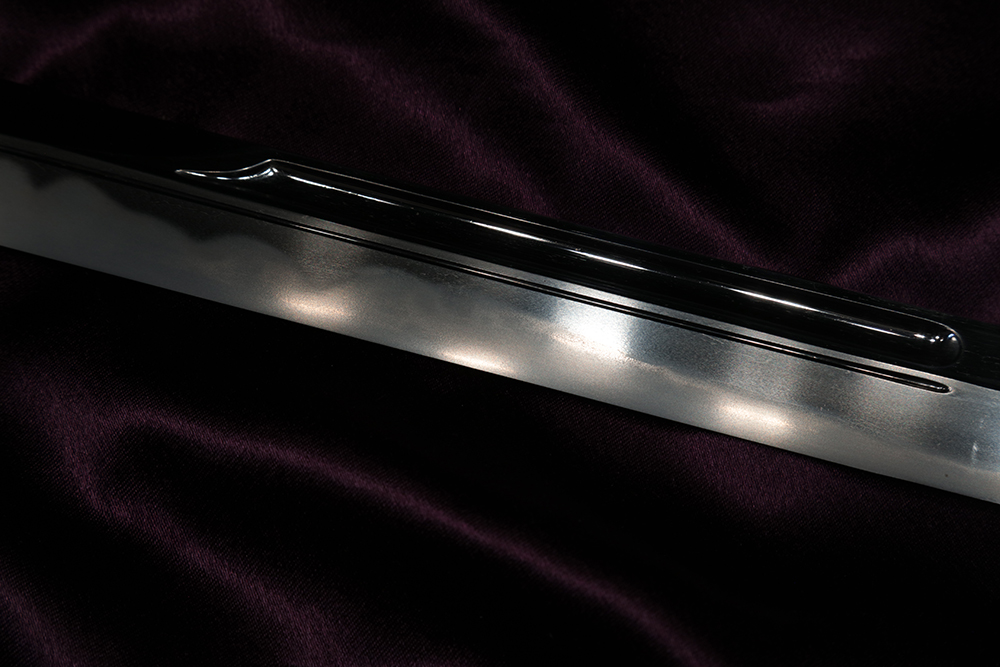
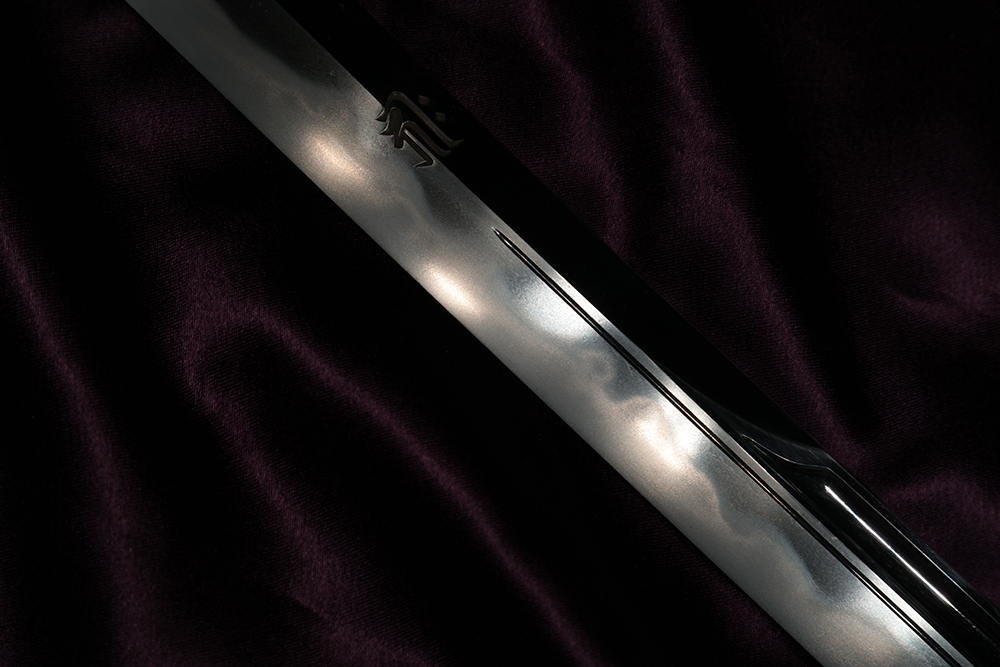
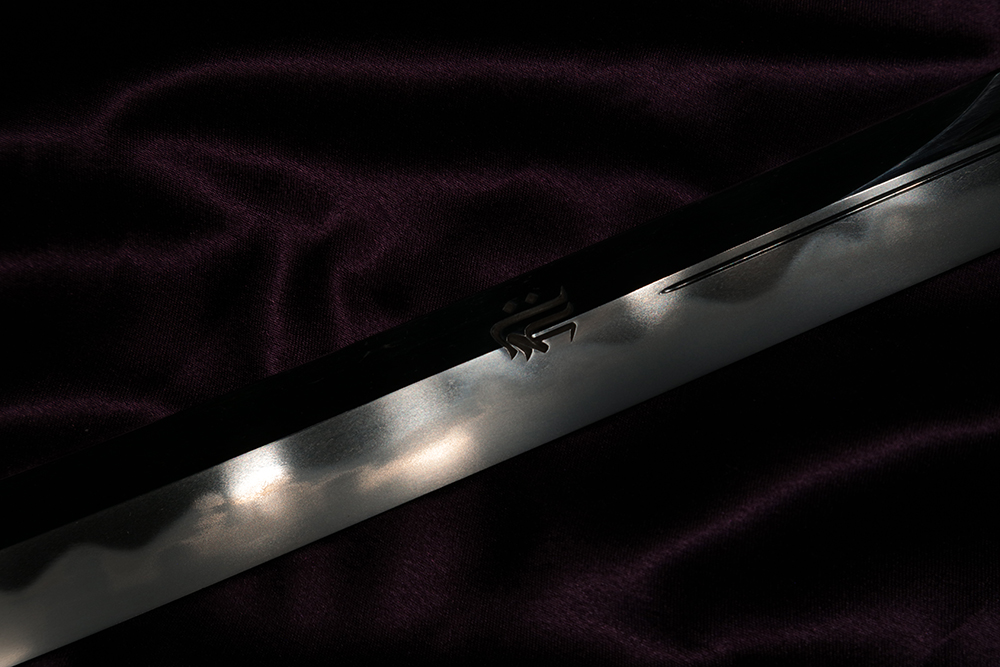
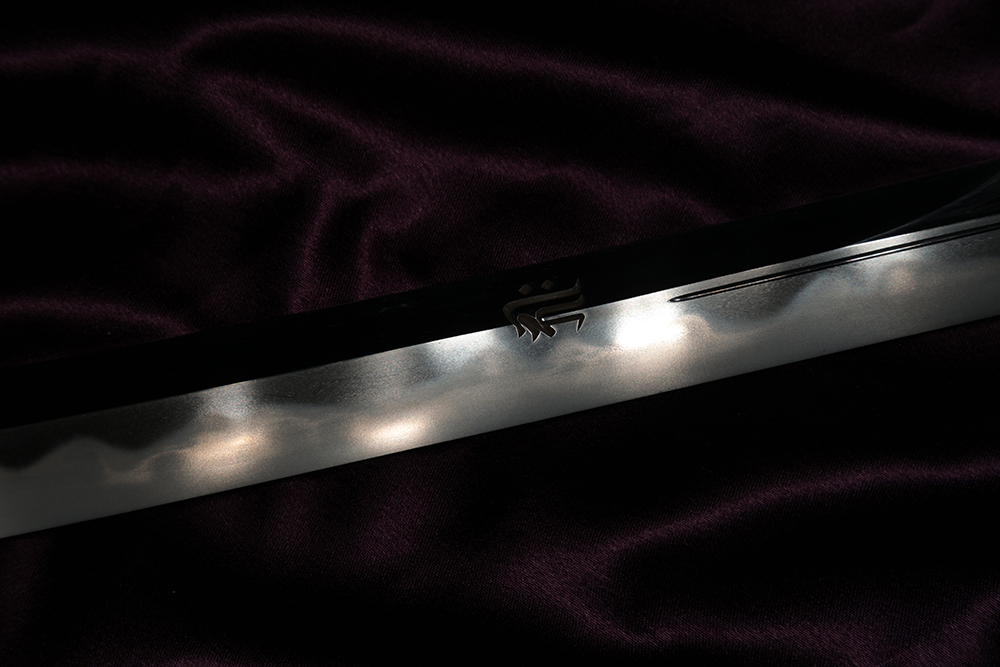
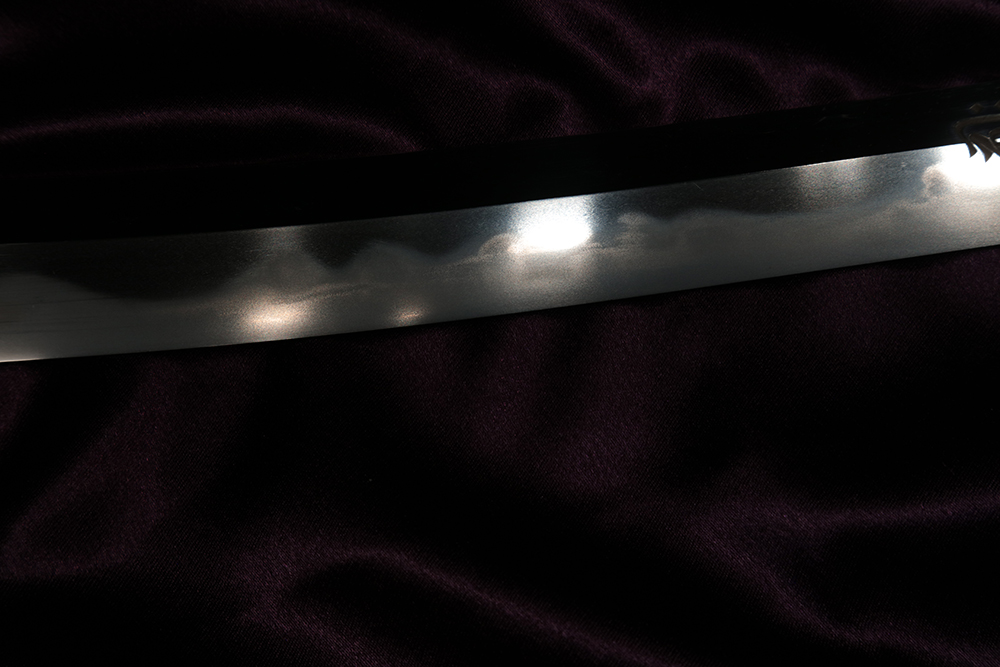
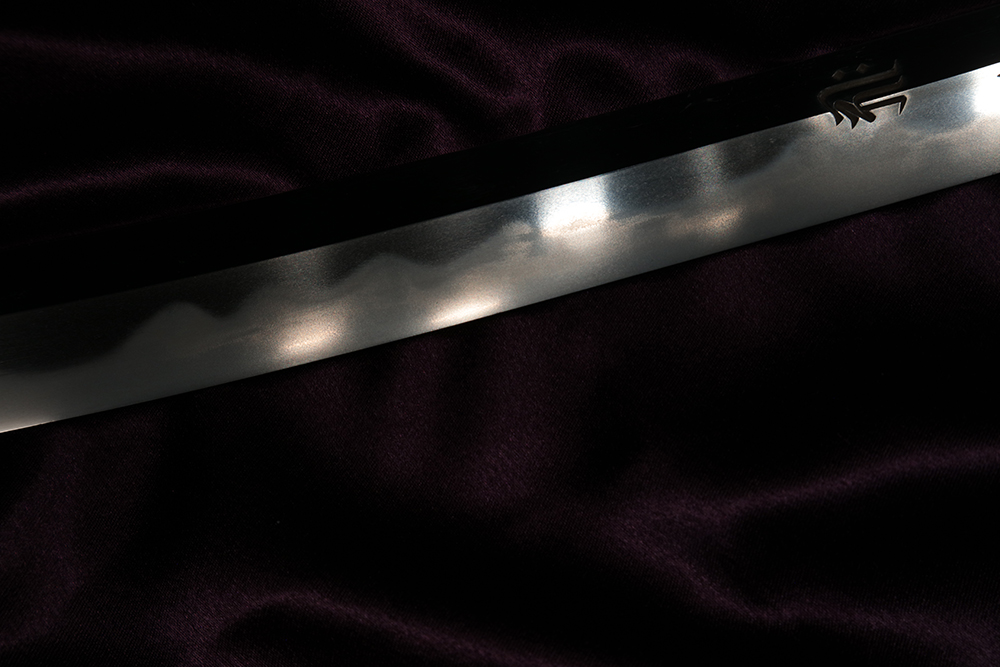
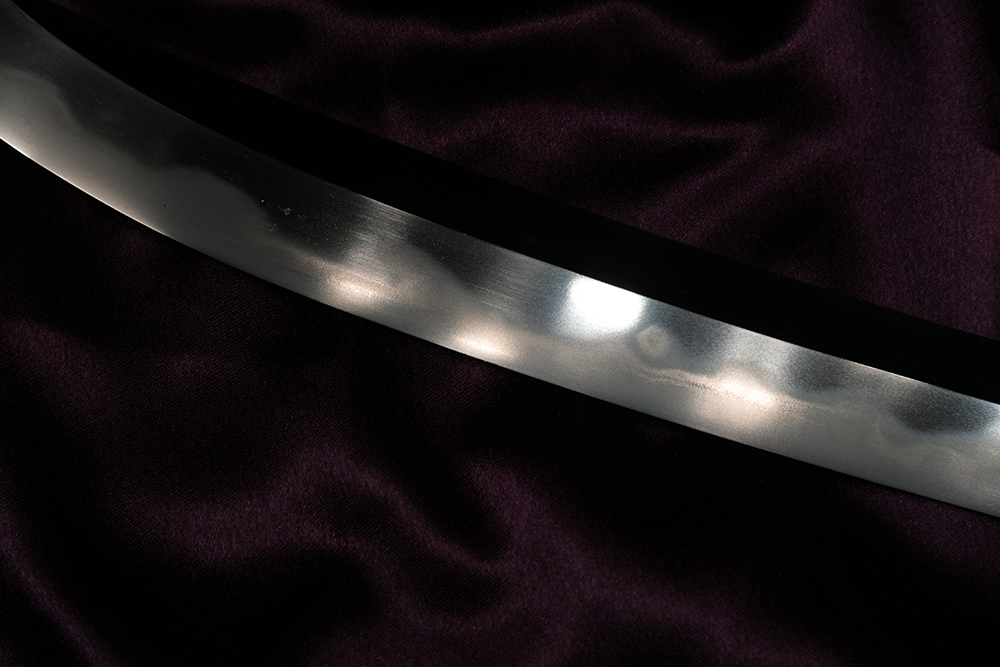
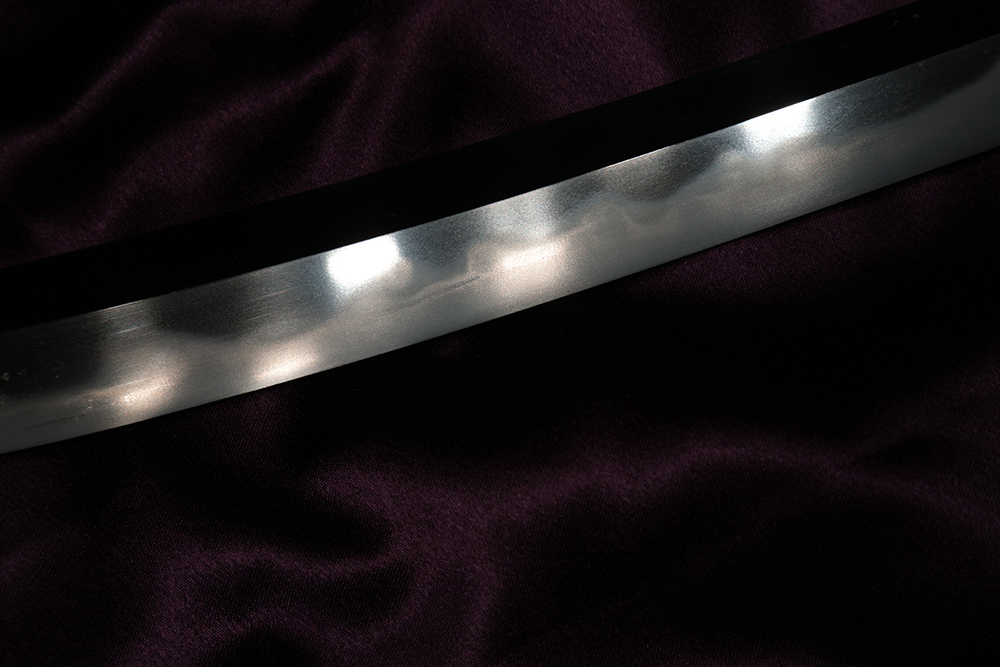
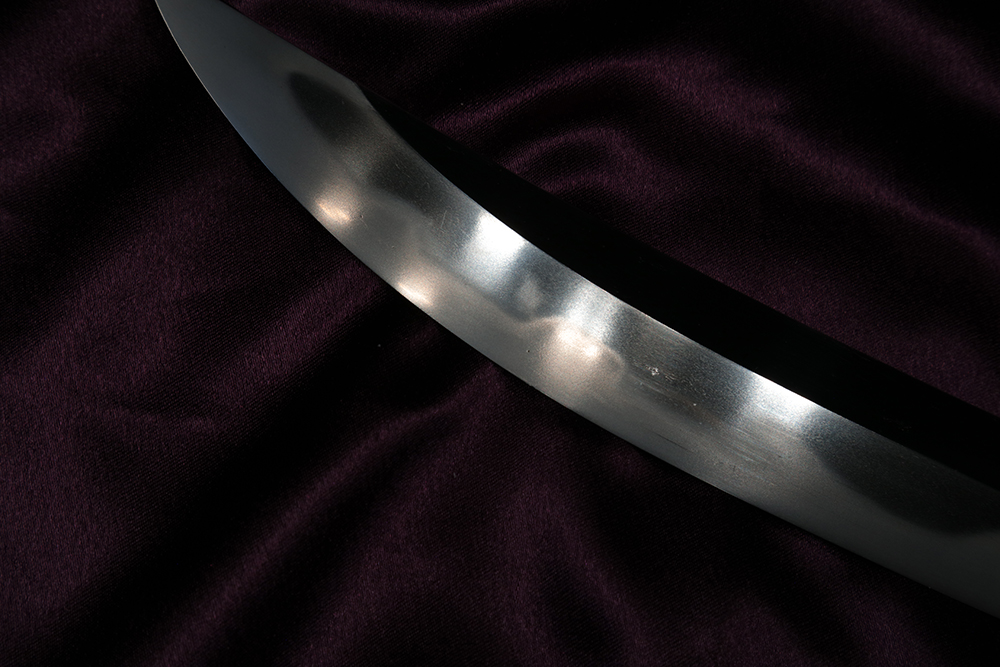
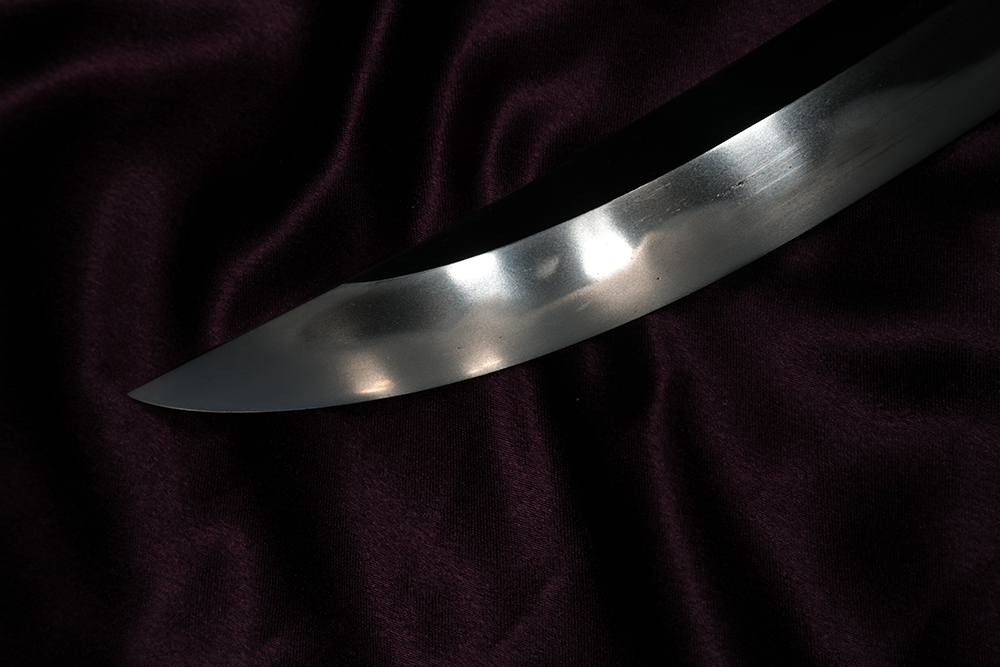
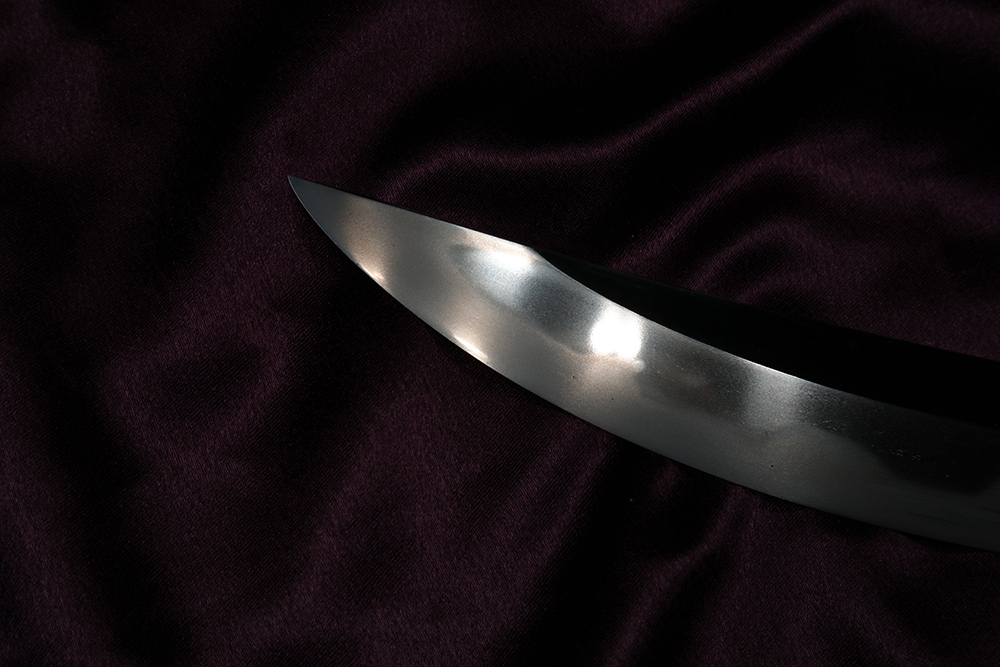
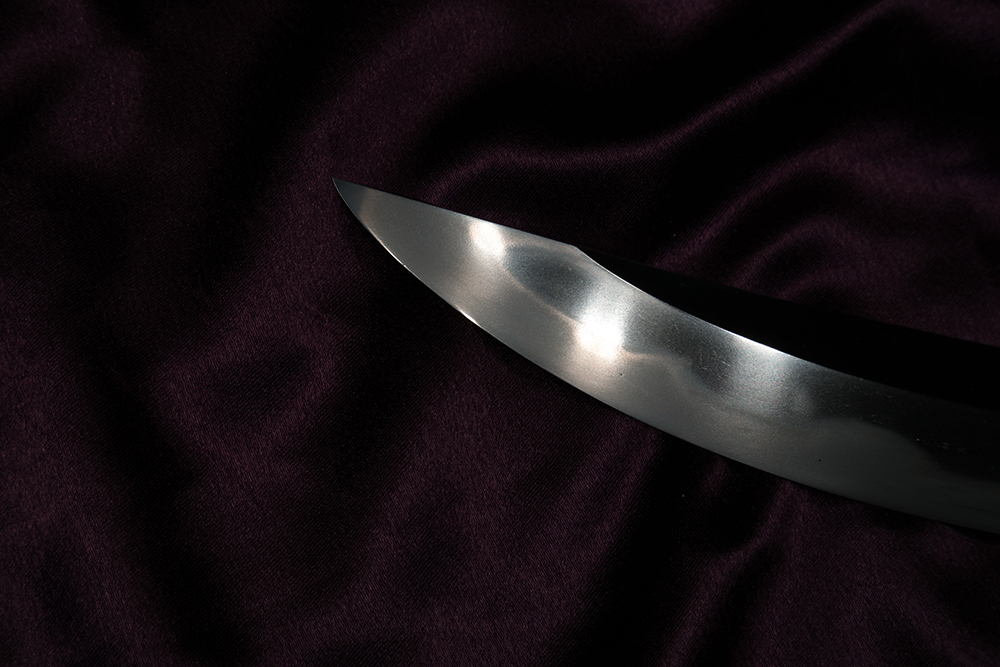
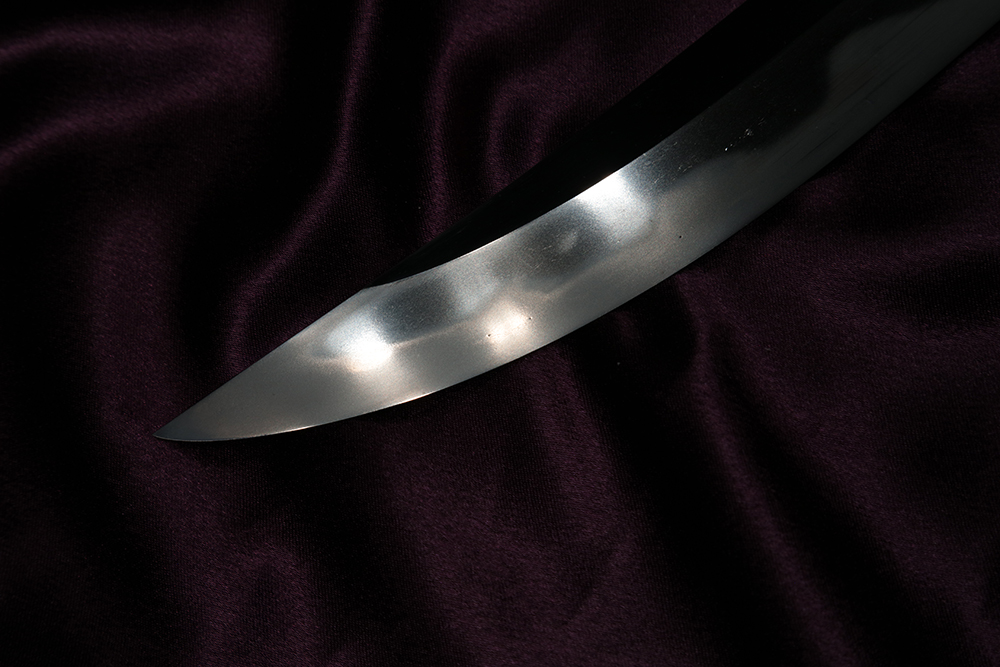
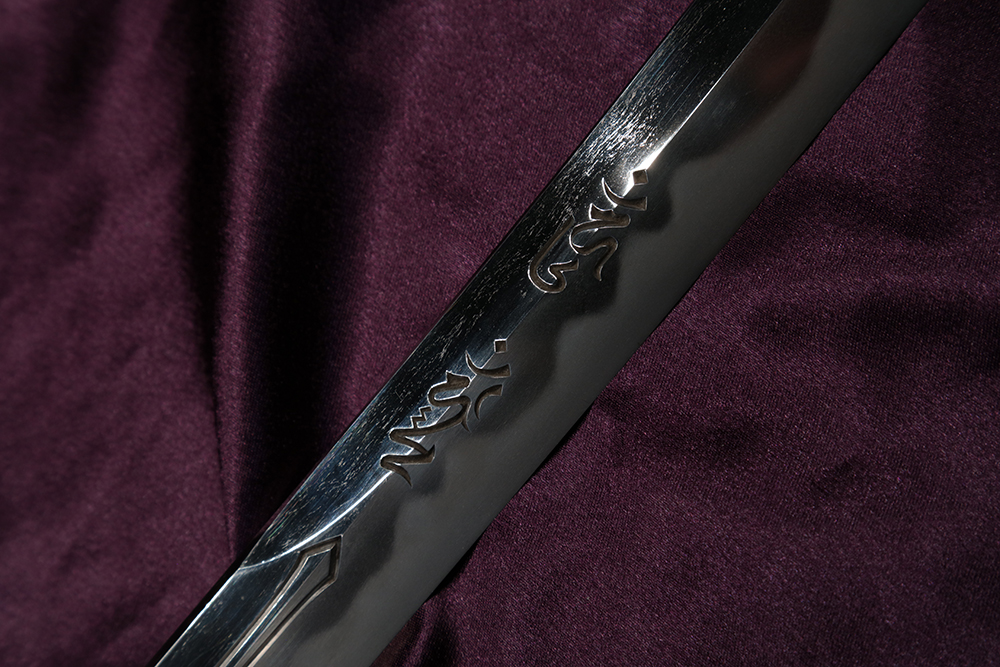
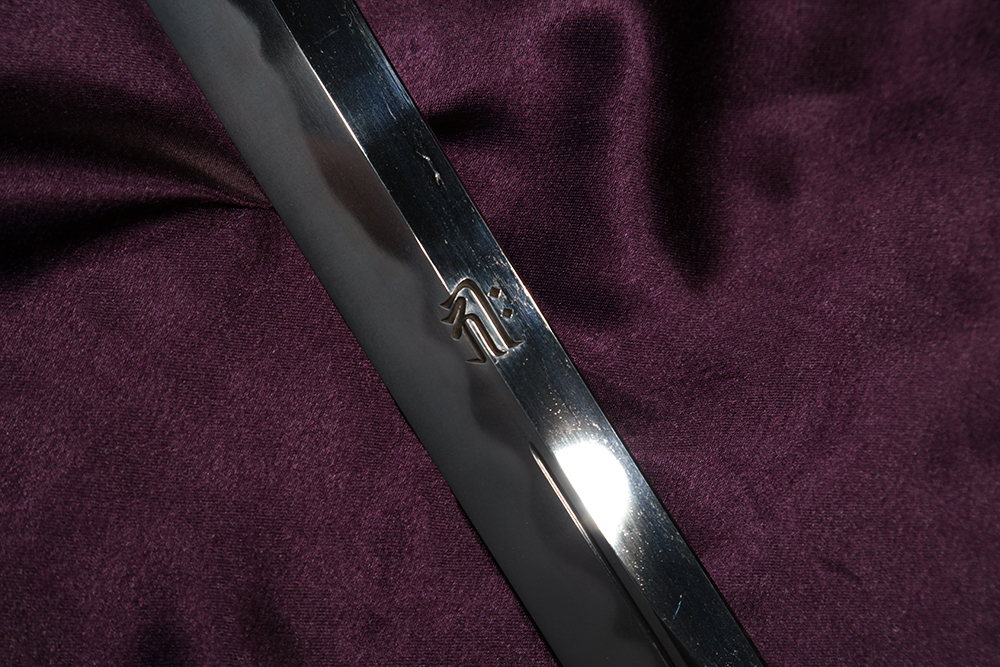
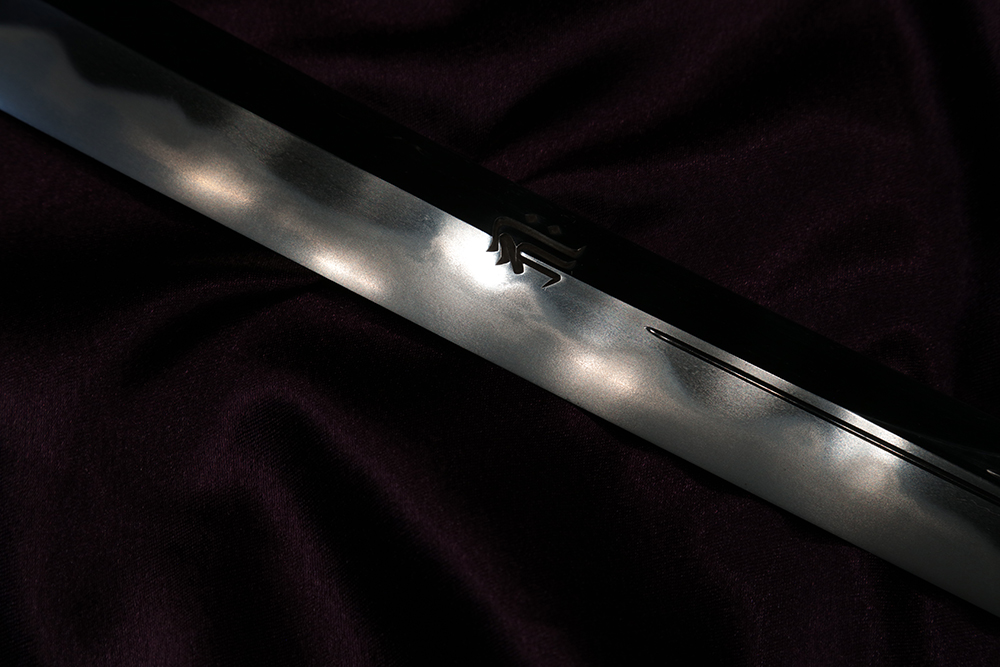
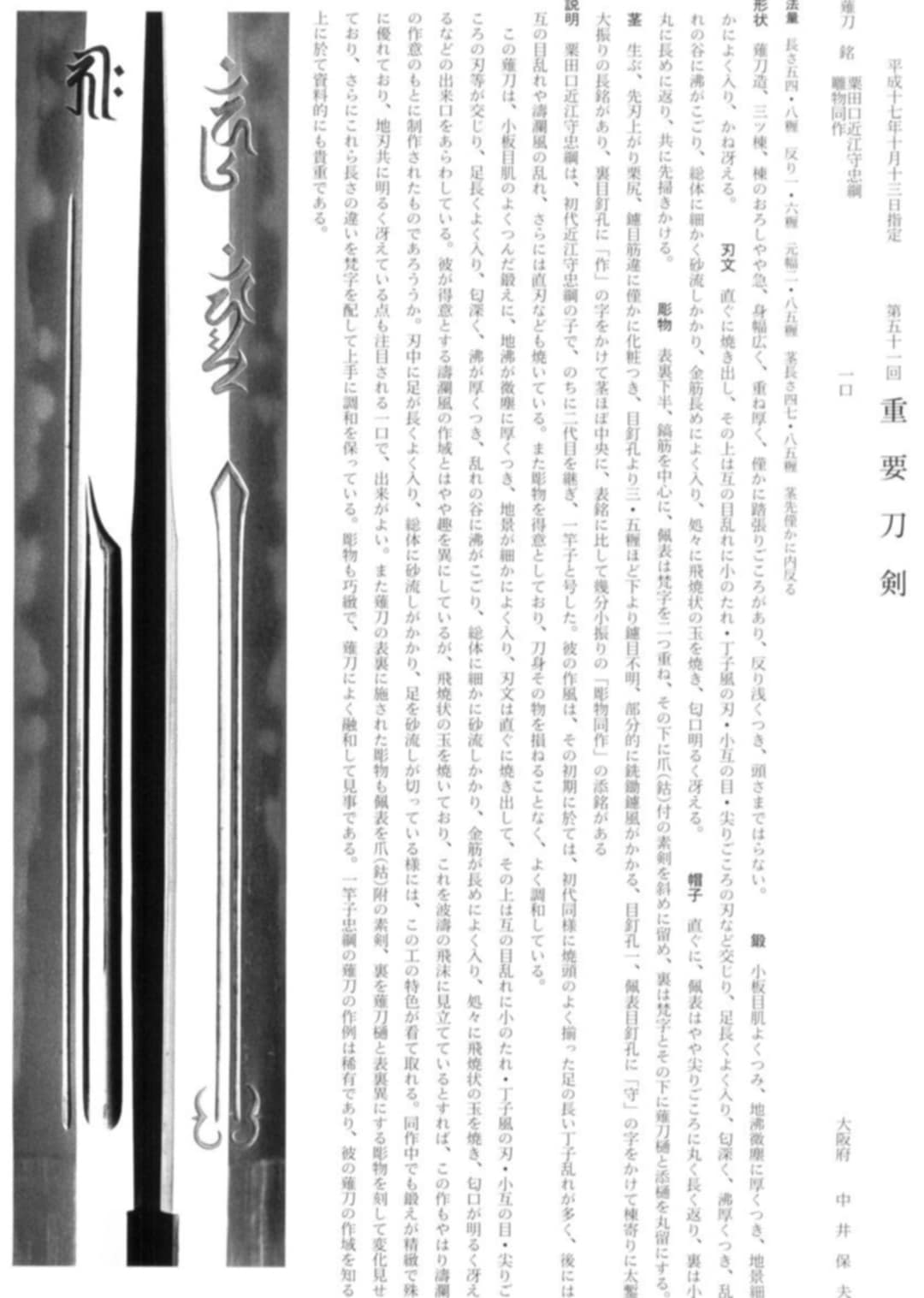
Description : with ; the ’s drop () is somewhat steep; wide , thick , with a slight suggestion of ; shallow ; the tip does not swell toward the point. : Tight ; forms finely and thickly; fine enter well; the steel is clear (). : , above which is mixed with , -flavored elements, , and slightly pointed () forms; long enter well; the is deep; adheres thickly; congeals in the valleys of the undulations; fine runs overall; long enter well; in places -like “jewel” () patches are hardened; the is bright and clear. : ; on the it turns back in a somewhat pointed tendency with a rounded form and a long return; on the it returns in with a rather long return; both ends show . : On both sides in the lower half, centered on the : on the , two arranged one above the other, beneath which a plain sword () with a clawed kō (-kō) is cut and set diagonally; on the , a , beneath which are a and accompanying , both finished in . : ; ; are with slight ; from about 3.5 cm below the downward the file marks become unclear, and in places a sen-suki yasuri-like finish is seen; one . The long signature is cut in bold, thick chisel strokes, large in scale, placed toward the side and crossing the character “守” over the ; on the , a smaller addendum reading “彫物同作” is cut approximately at the center of the tang, crossing the character “作” over the .
Artisan Ōmi no Kami Tadatsuna (粟田口近江守忠綱), nidai, also known as Ikkanshi
Era period
Explanation Ōmi no Kami Tadatsuna was the son of the Ōmi no Kami Tadatsuna; later he succeeded as the nidai and styled himself Ikkanshi. In his early manner, like the , he often produced with well-unified and long . Later, he also tempered , tōran-style undulations, and even . He further excelled at , which are executed so as not to impair the blade itself and are well harmonized with it.
This displays a tightly forged in which fine forms thickly and fine enter well. The begins with , and above this presents mixed with , -like elements, , and slightly pointed forms; long enter well; the is deep; adheres thickly; congeals in the valleys; fine runs overall; long enter well; and in places -like “jewel” patches are hardened, while the is bright and clear—altogether revealing a notably accomplished workmanship.
Although this differs somewhat in flavor from the tōran-style domain for which he is especially known, it includes -like “jewel” patches; if these are regarded as sprays of sea-surf, then this work too may be understood as having been produced under the same tōran conception. The long within the and the overall presence of —appearing as though cutting through the —are features that distinctly reveal this maker’s characteristic manner.
Among his works, the forging here is particularly meticulous and outstanding; moreover, the point that both and are bright and clear is noteworthy, and the piece is of good workmanship. The carved on both faces of the also display variation—on the a clawed , on the a —and by skillfully placing in relation to these differing lengths, an effective harmony is maintained. The carvings are also exquisitely executed, harmonizing with the weapon and producing an impressive effect. Examples of by Ikkanshi Tadatsuna are rare indeed, and this piece is also precious as documentary material for understanding his range in work.