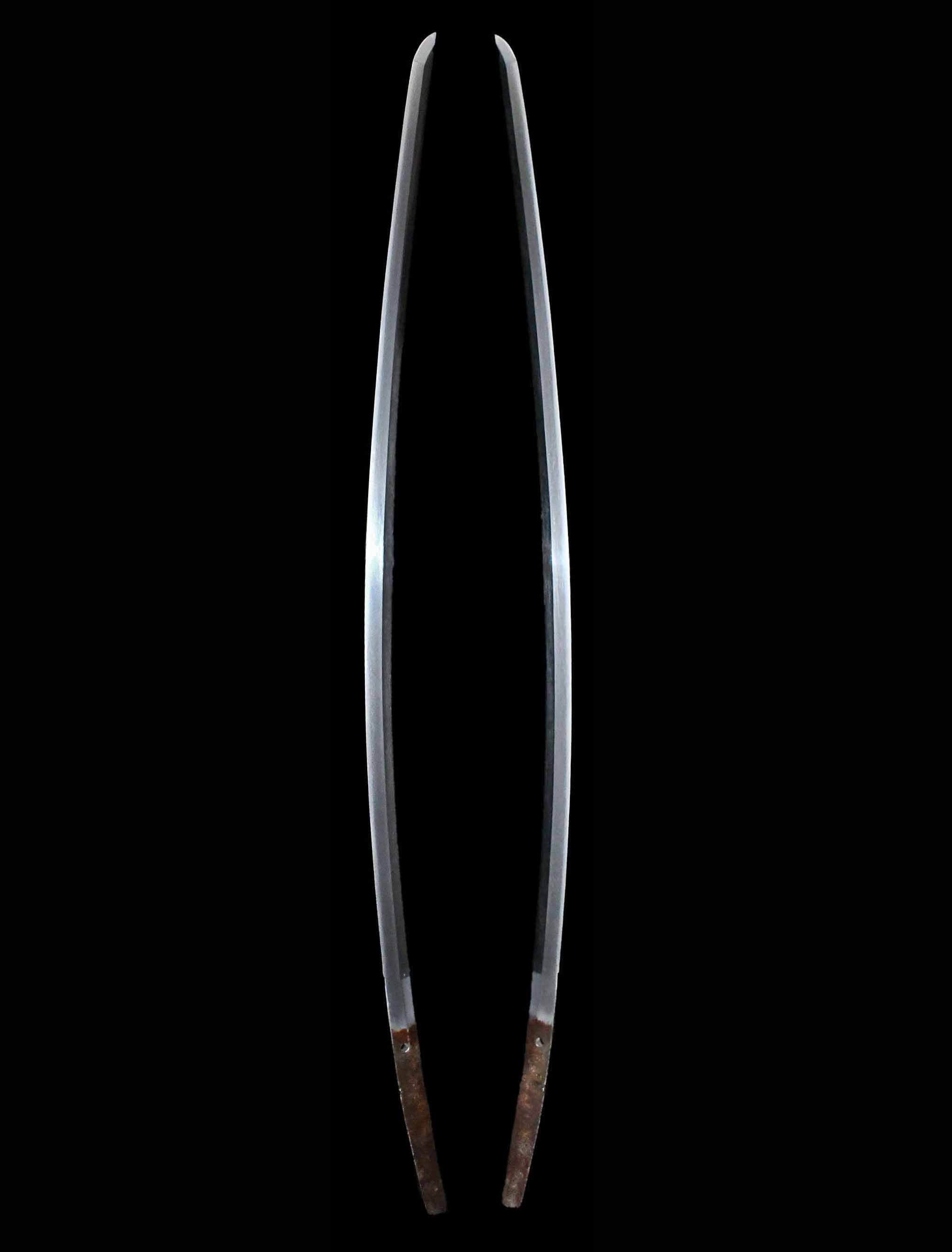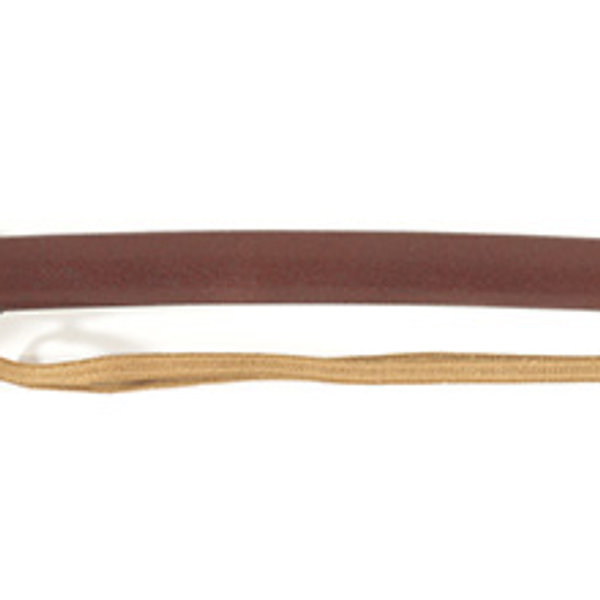
This is a han-dachi koshirae in the Higo style, featuring a red ishime-ji nuri saya (scabbard) and a red lacquered tsuka (handle). All the metal fittings are made of iron with nunome-zogan (cloth-pattern inlay) in the Higo tradition, displaying a unique aesthetic. The tsuba is an otafuku-shaped iron plate with a faint color tone, featuring a flower-paulownia design with scattered Genji-ko patterns on the reverse, highlighted by gold nunome-zogan.


We could not find an authenticity certificate on the seller’s listing. Japanese swords and fittings are normally papered by the NBTHK (or the NTHK). Without one, the attribution is the seller’s own assessment and has not been independently verified — treat it with caution and ask the dealer about certification before buying.
If, due to our fault, the item differs significantly from its proper condition, the item may be returned. Cooling-off is within one week of the item's arrival.
This is a han-dachi koshirae in the Higo style, featuring a red ishime-ji nuri saya (scabbard) and a red lacquered tsuka (handle). All the metal fittings are made of iron with nunome-zogan (cloth-pattern inlay) in the Higo tradition, displaying a unique aesthetic. The tsuba is an otafuku-shaped iron plate with a faint color tone, featuring a flower-paulownia design with scattered Genji-ko patterns on the reverse, highlighted by gold nunome-zogan.


We could not find an authenticity certificate on the seller’s listing. Japanese swords and fittings are normally papered by the NBTHK (or the NTHK). Without one, the attribution is the seller’s own assessment and has not been independently verified — treat it with caution and ask the dealer about certification before buying.
If, due to our fault, the item differs significantly from its proper condition, the item may be returned. Cooling-off is within one week of the item's arrival.