 NihontoWatchNihontoWatch
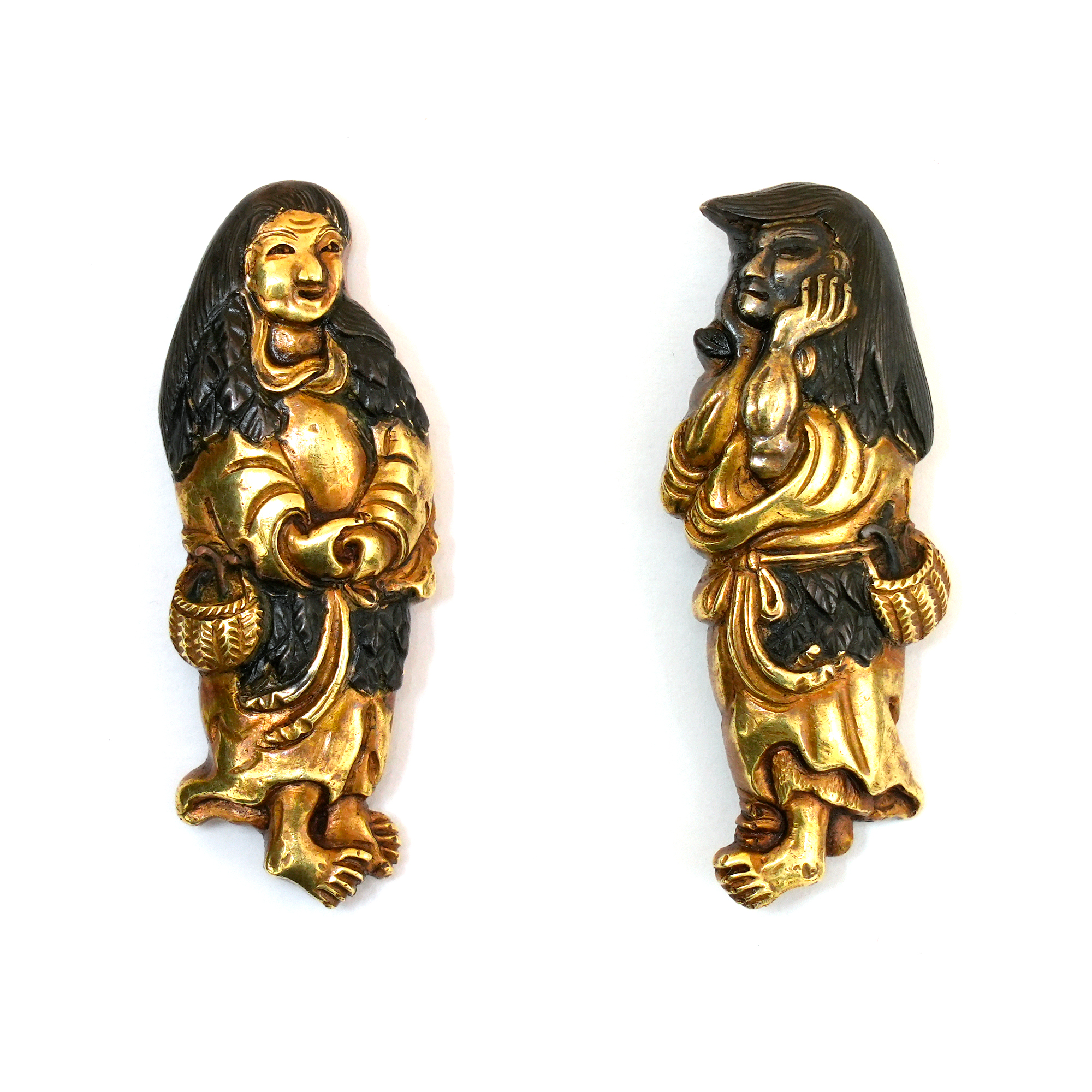
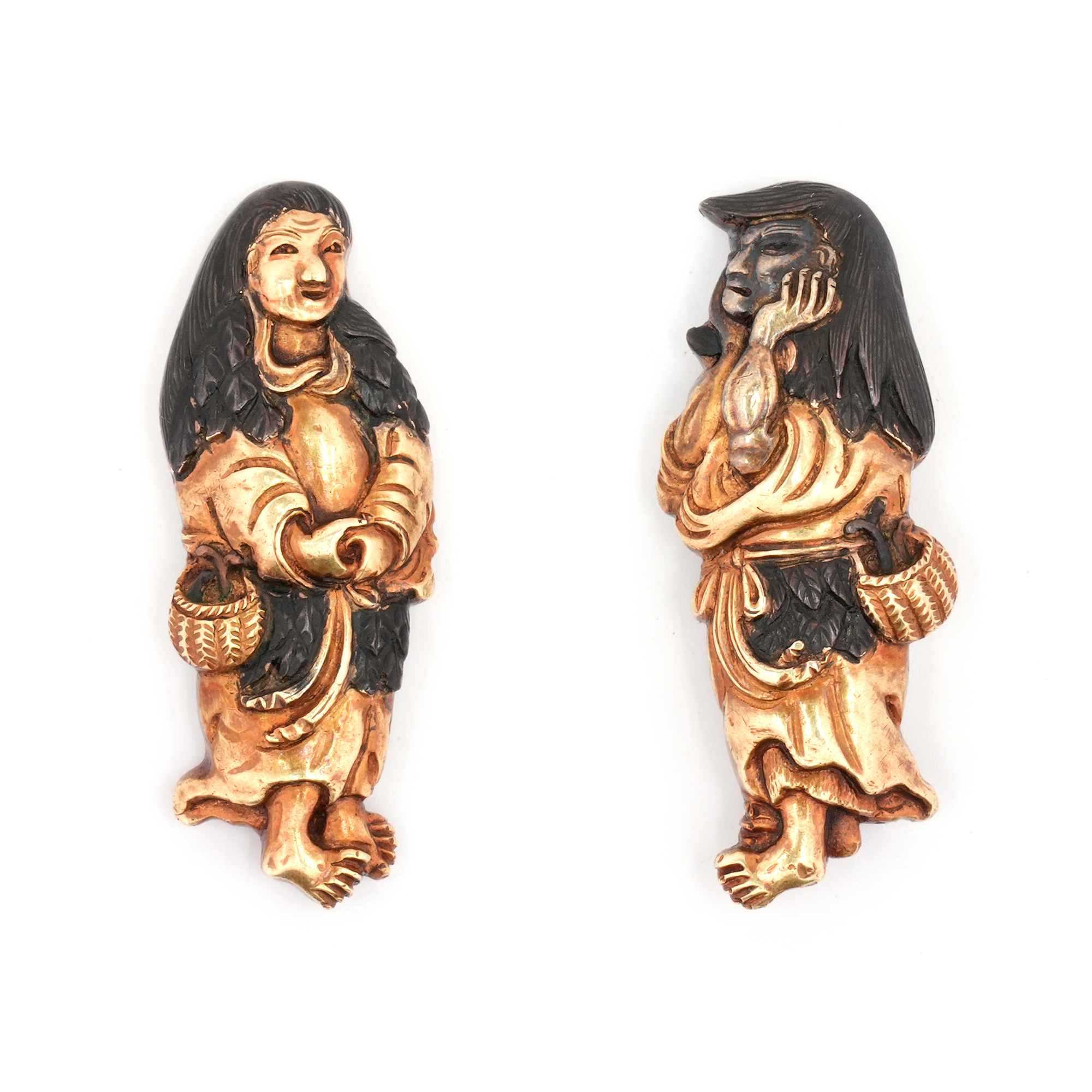
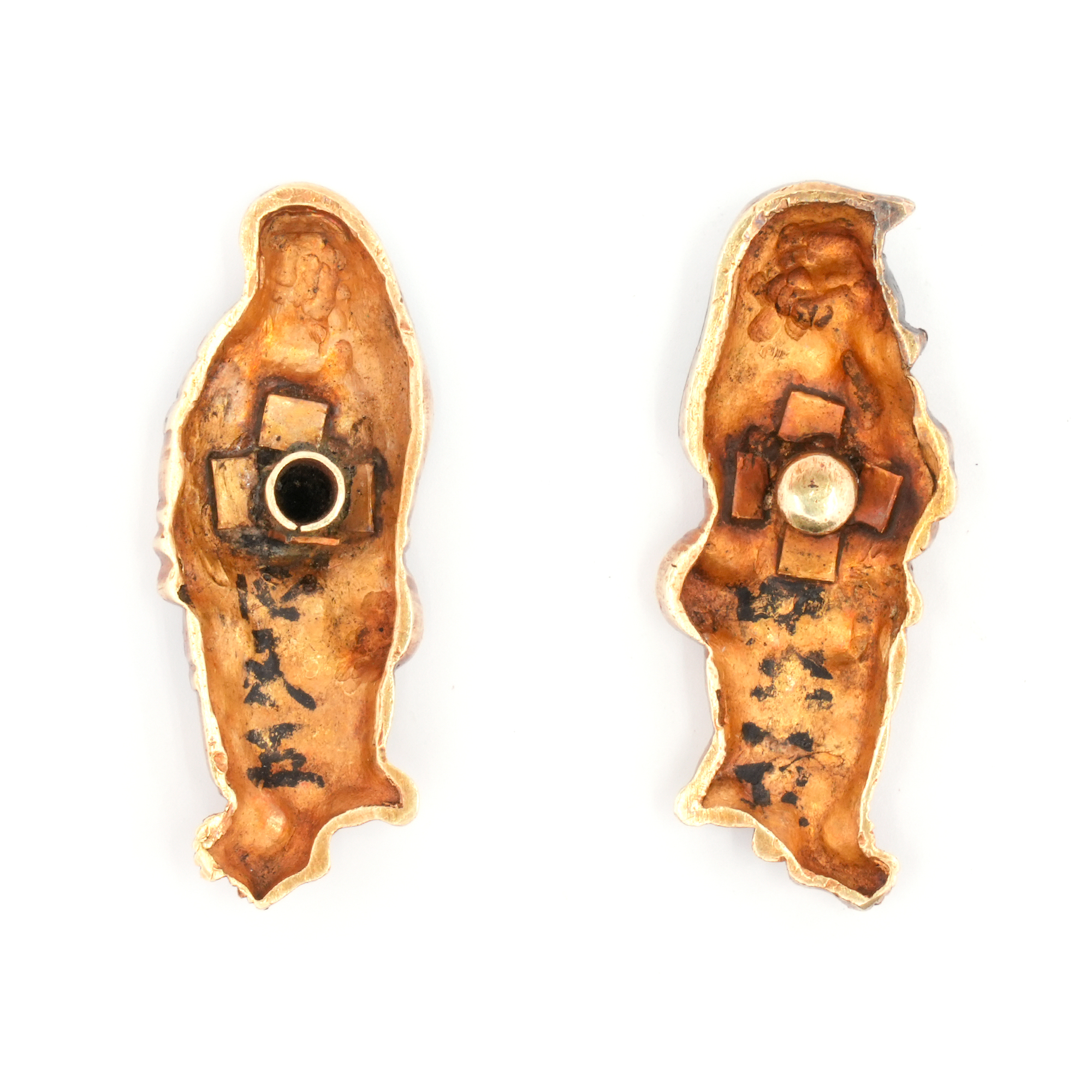
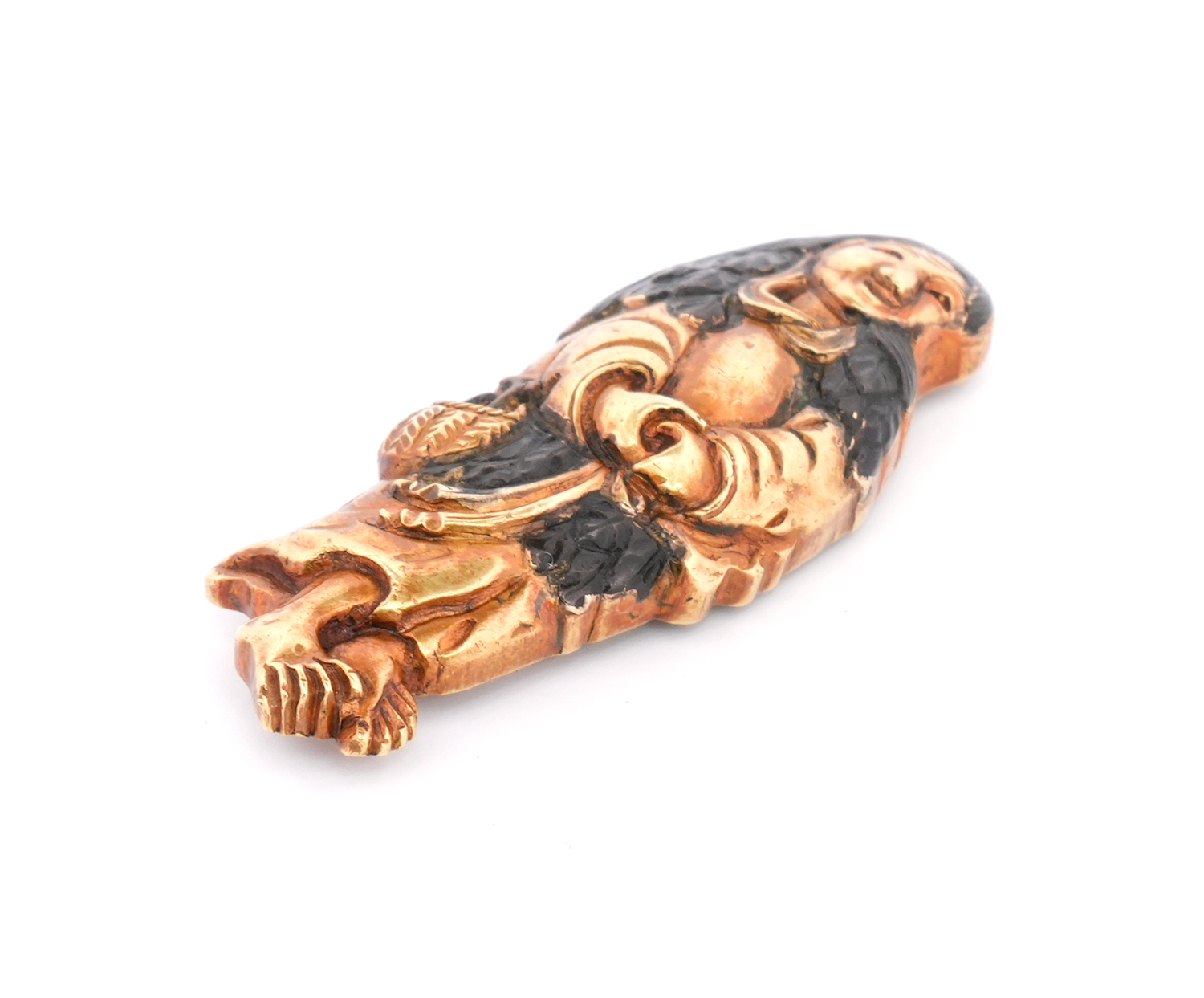
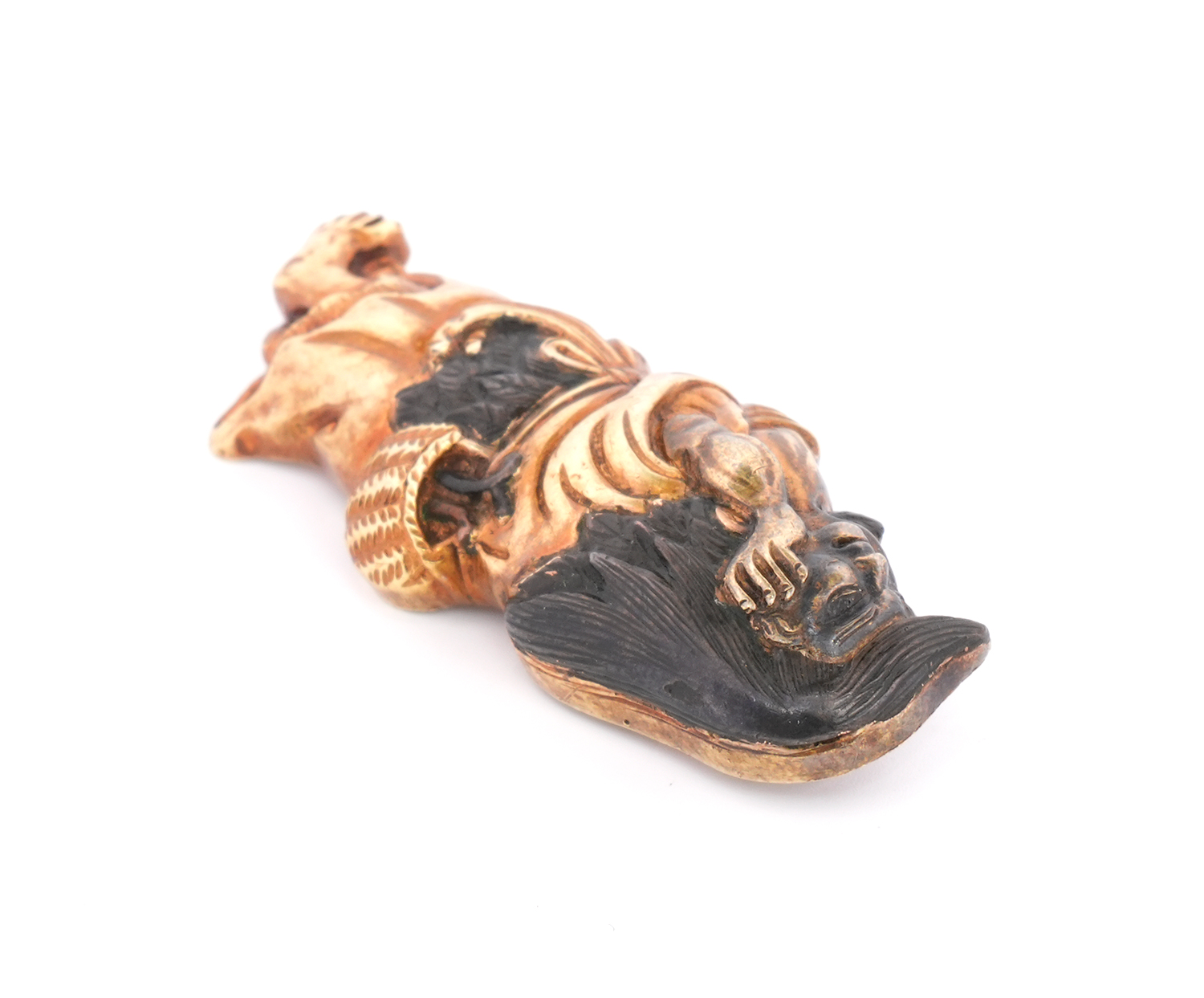
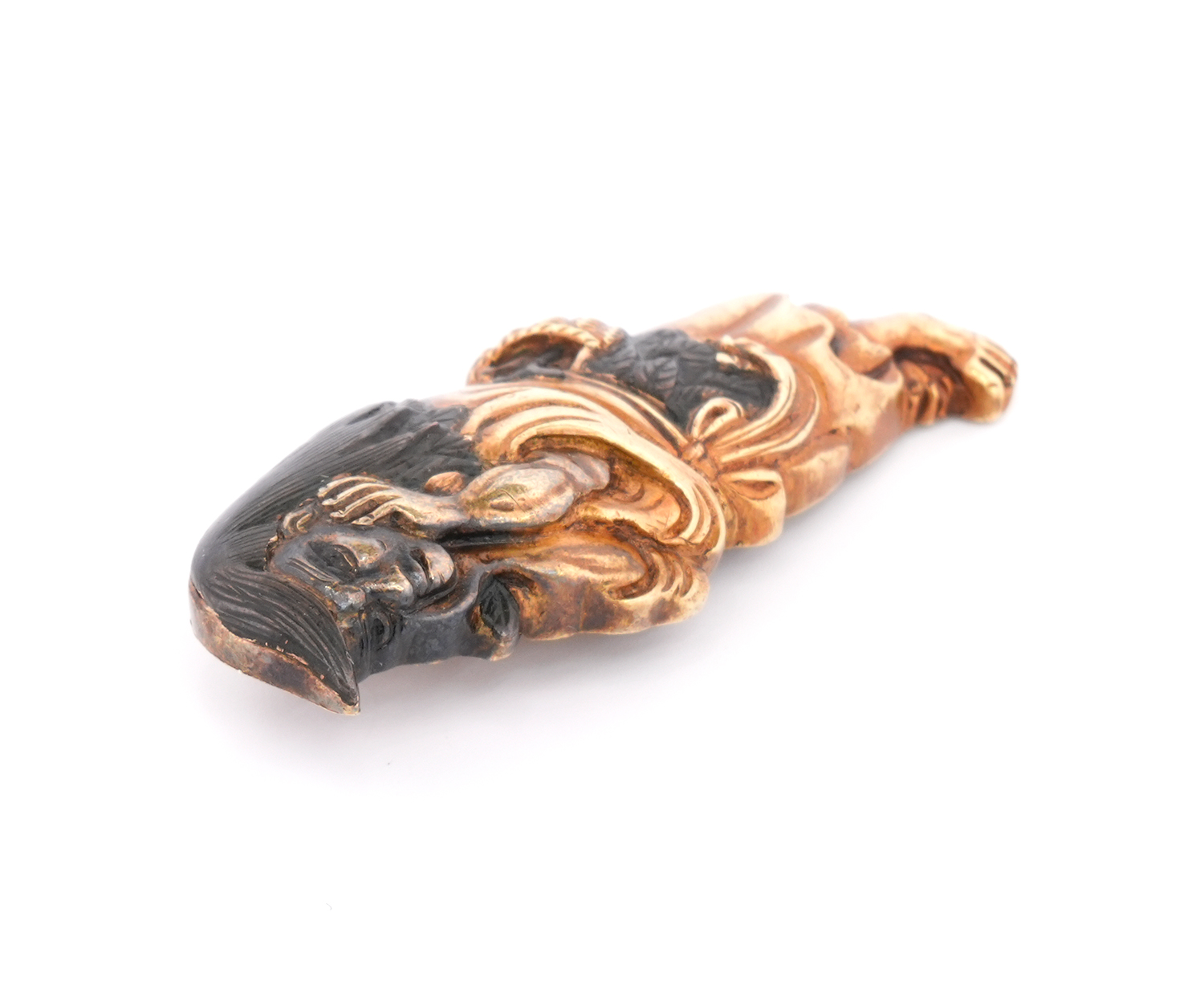
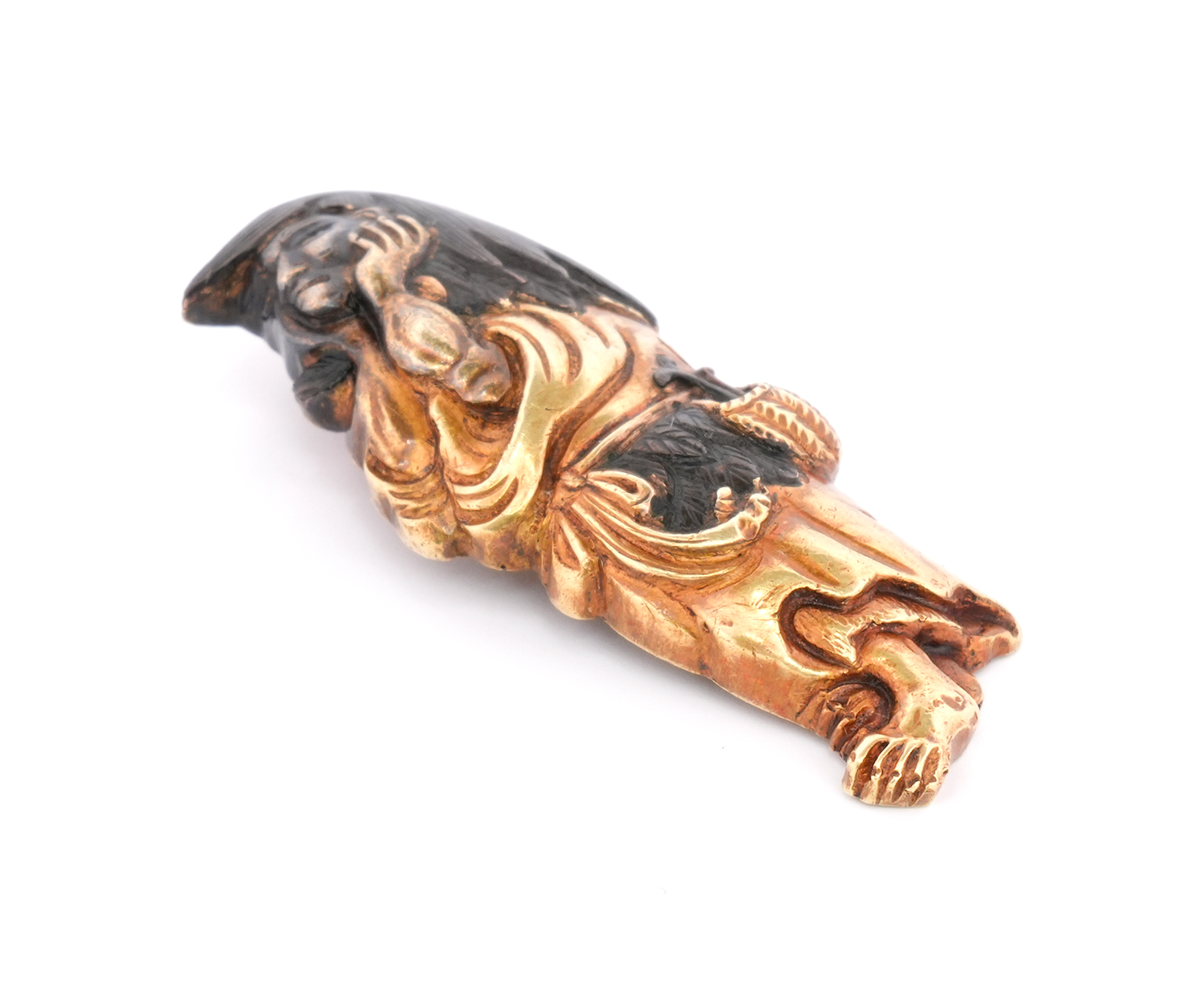
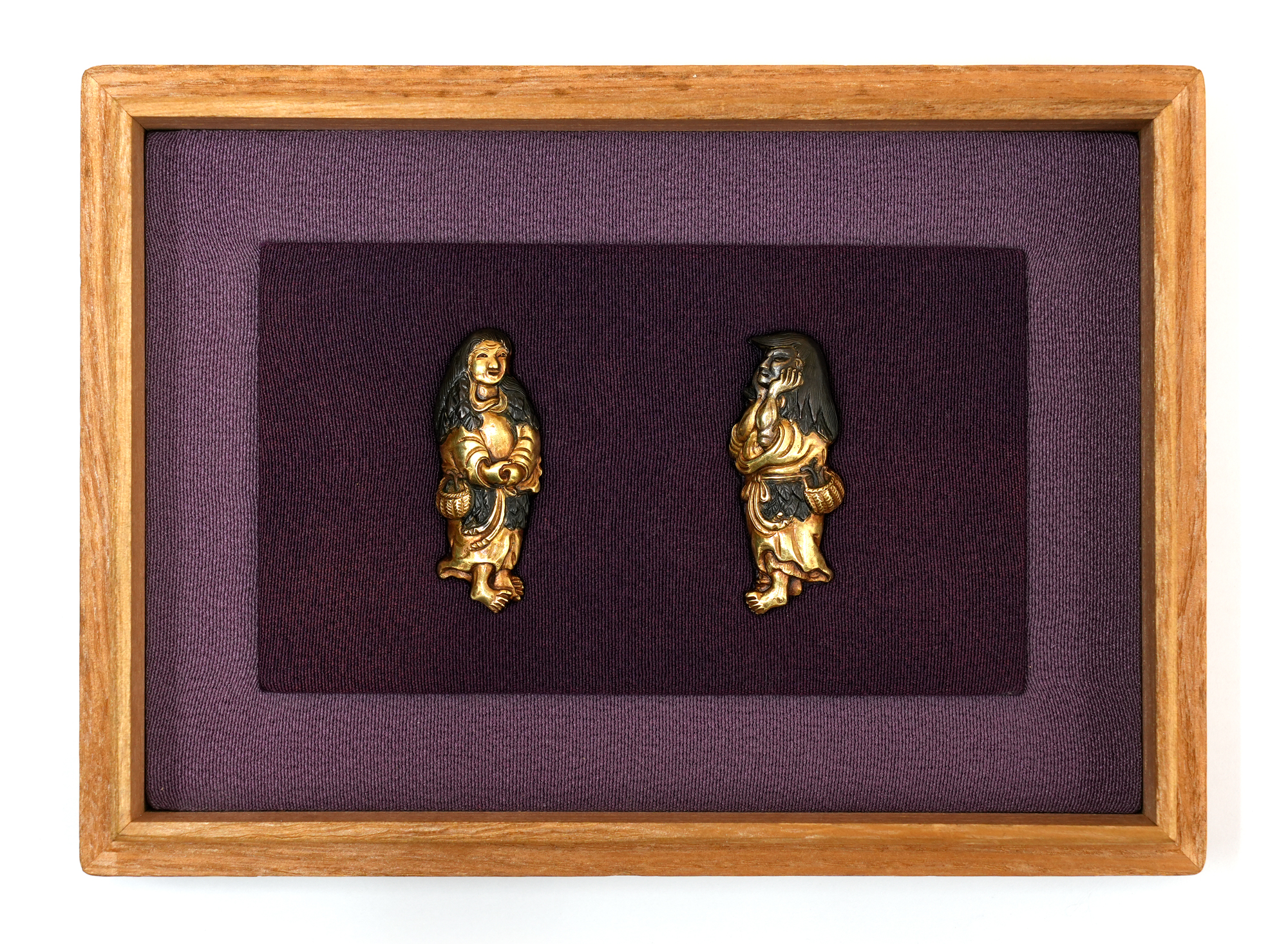
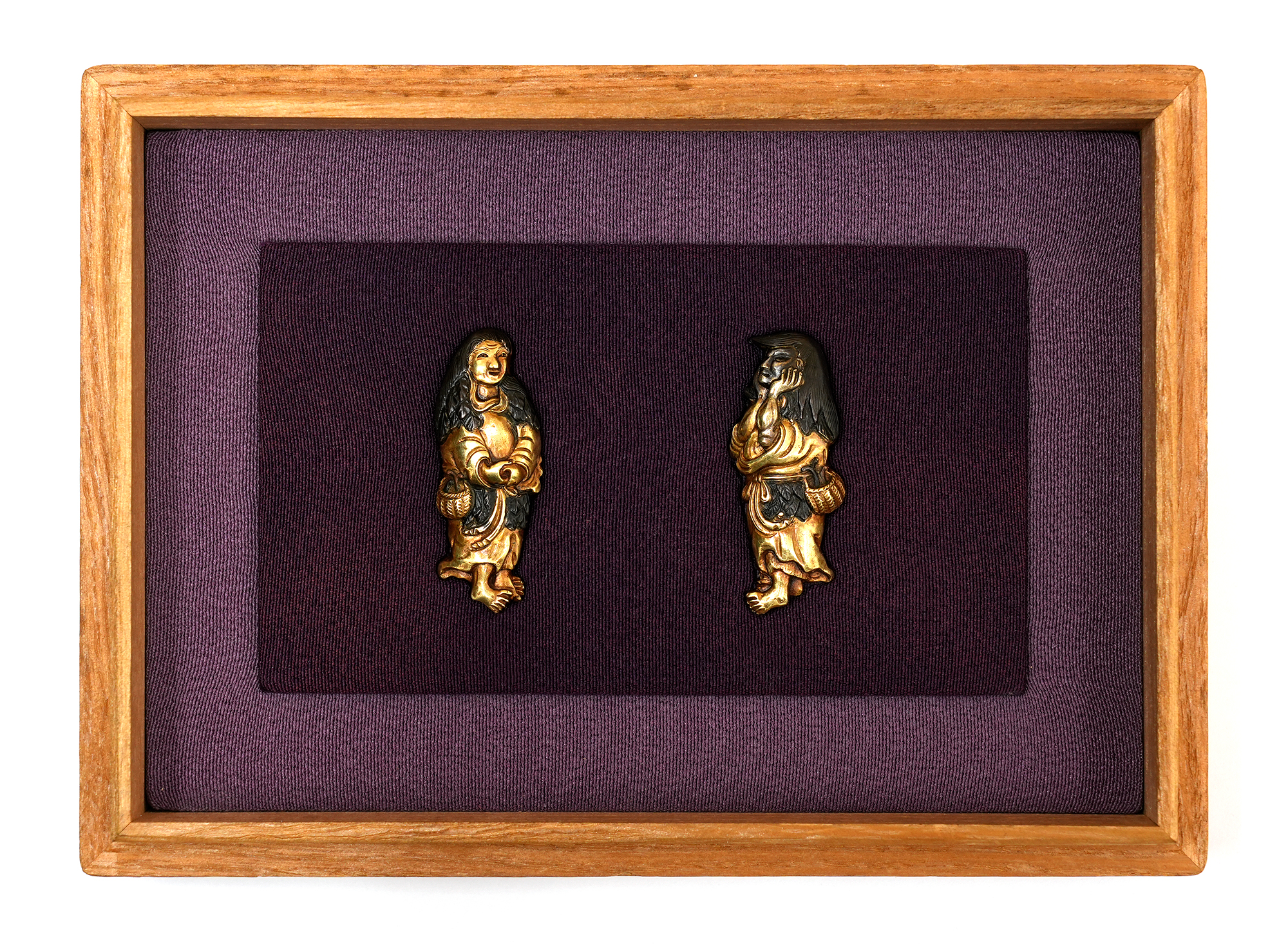
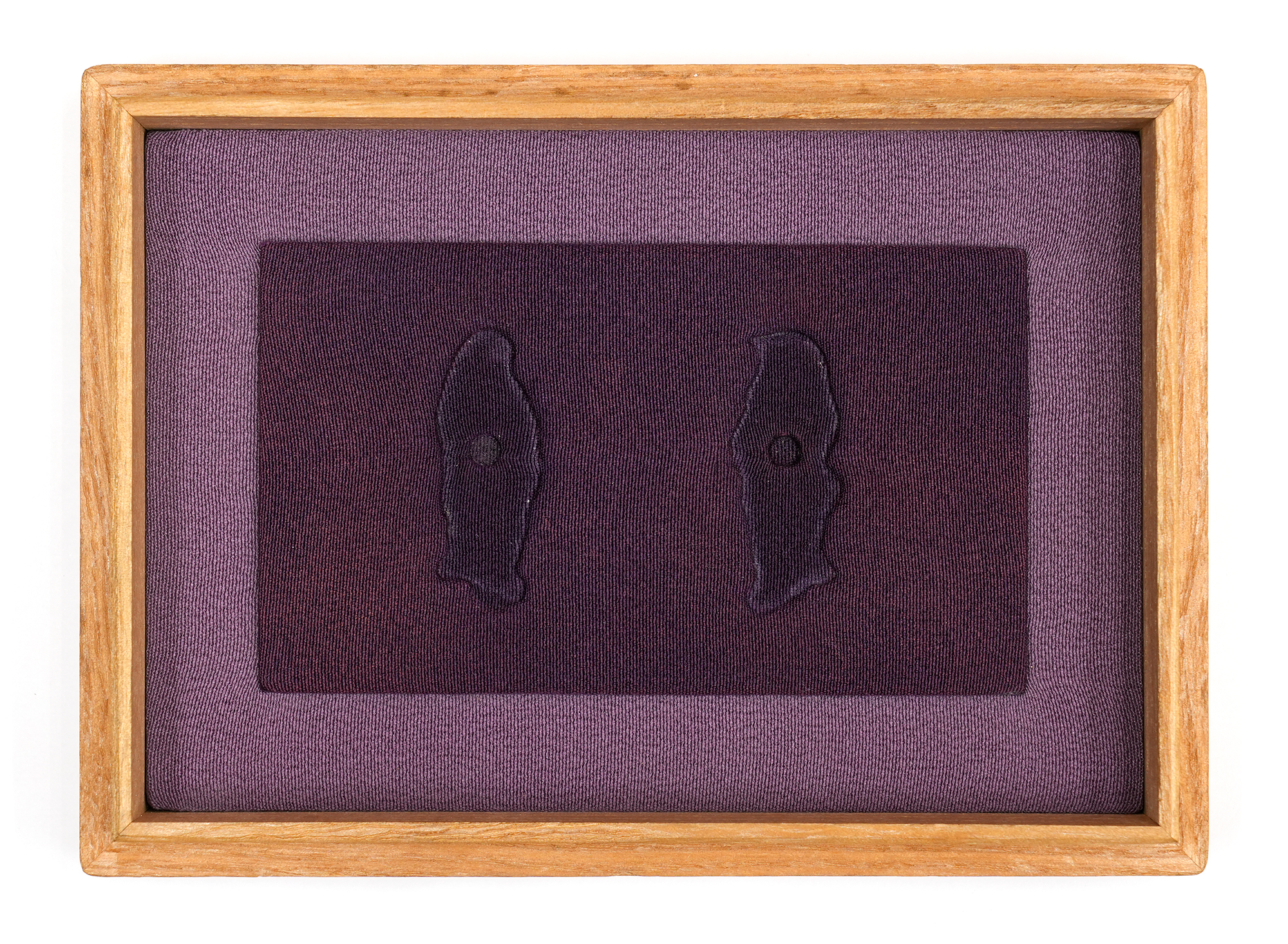
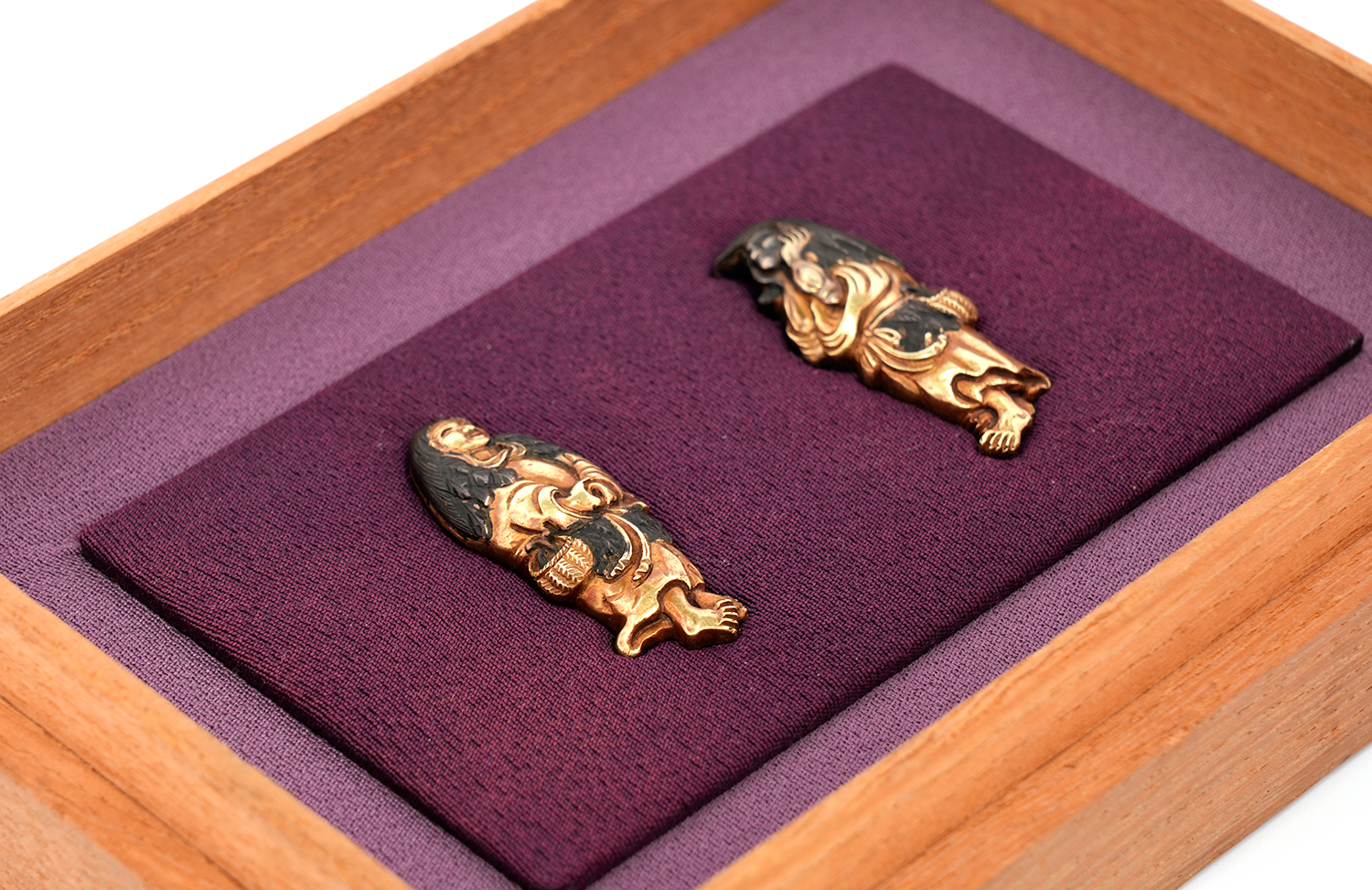
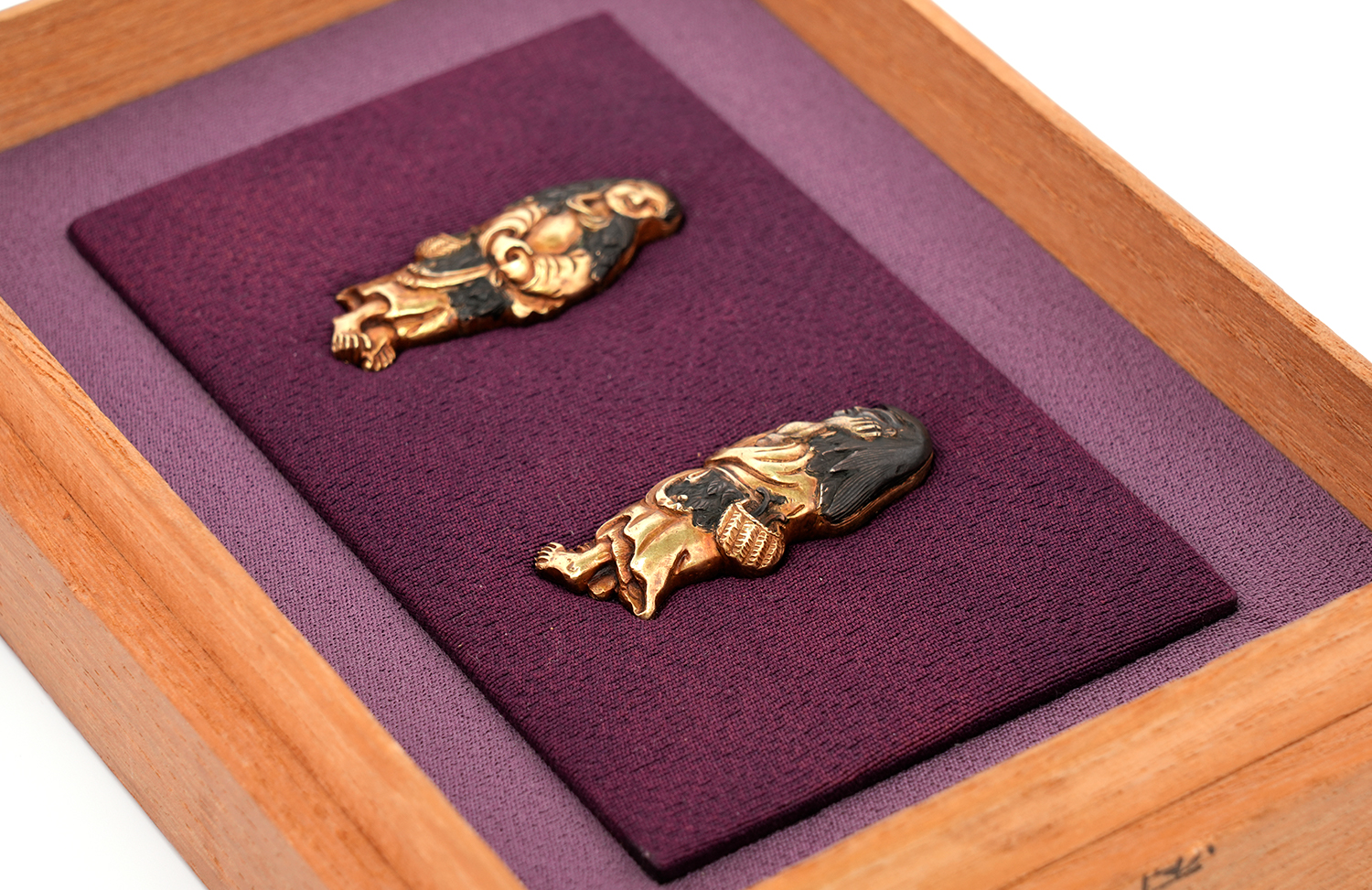
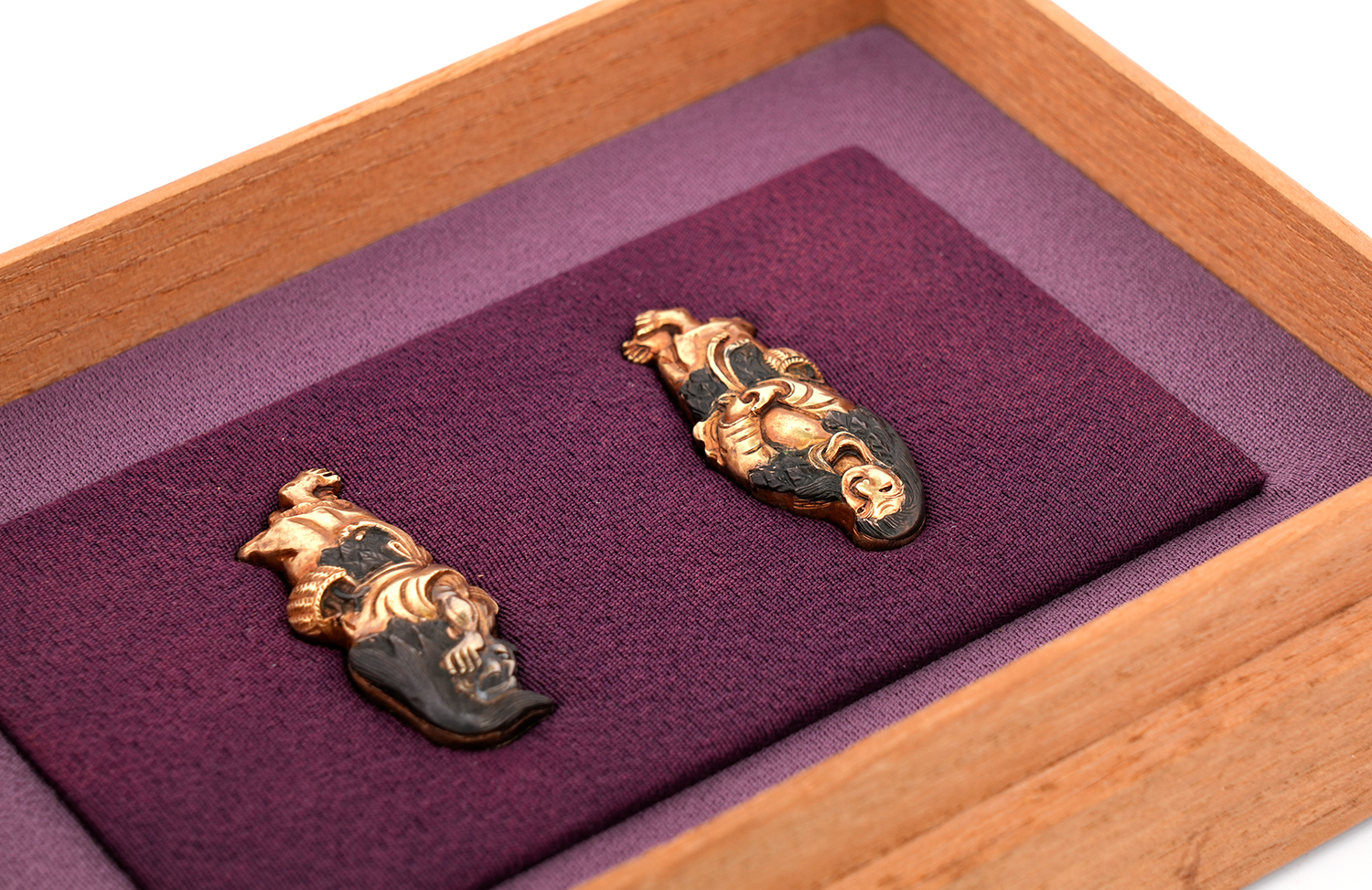
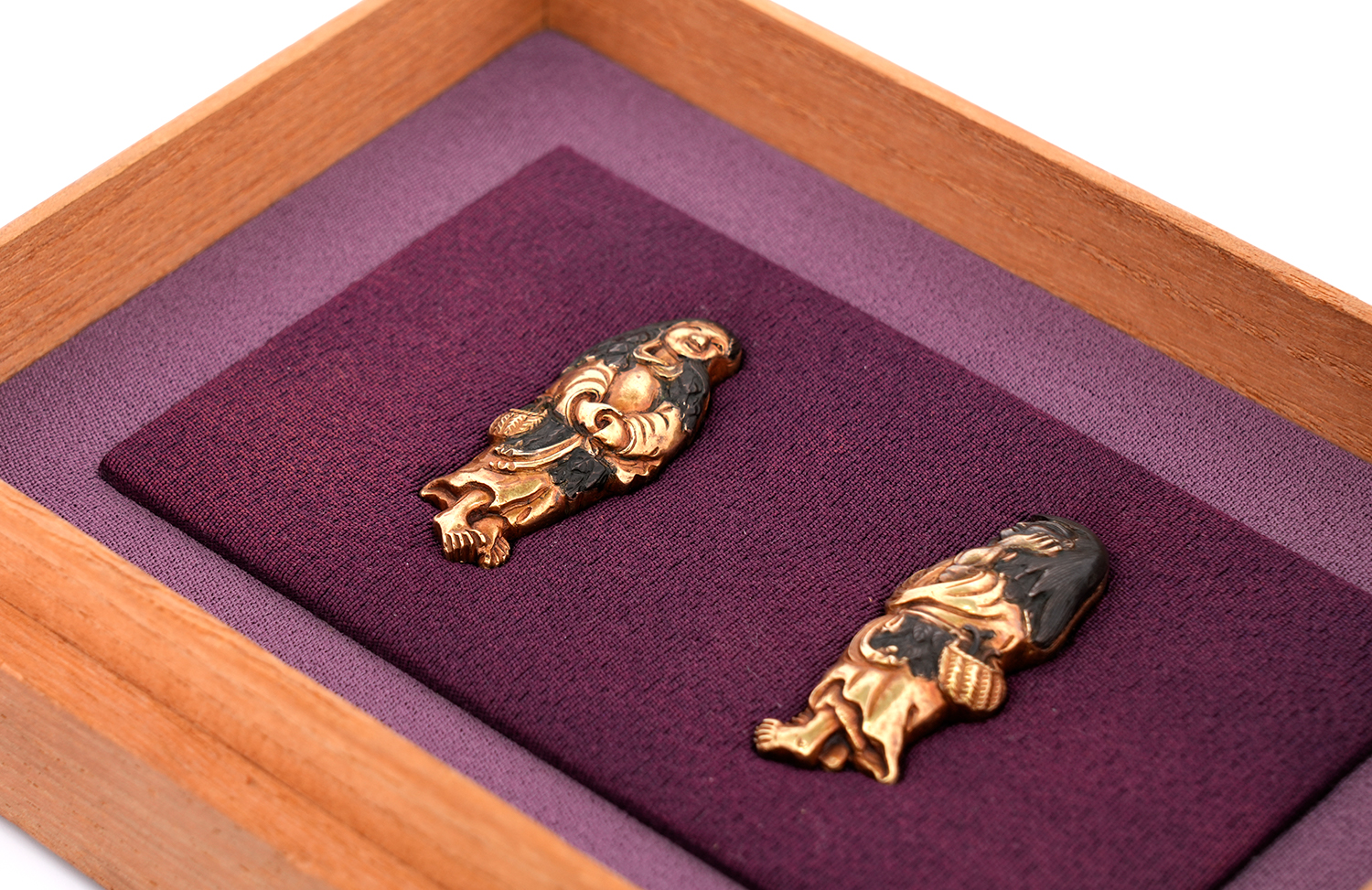
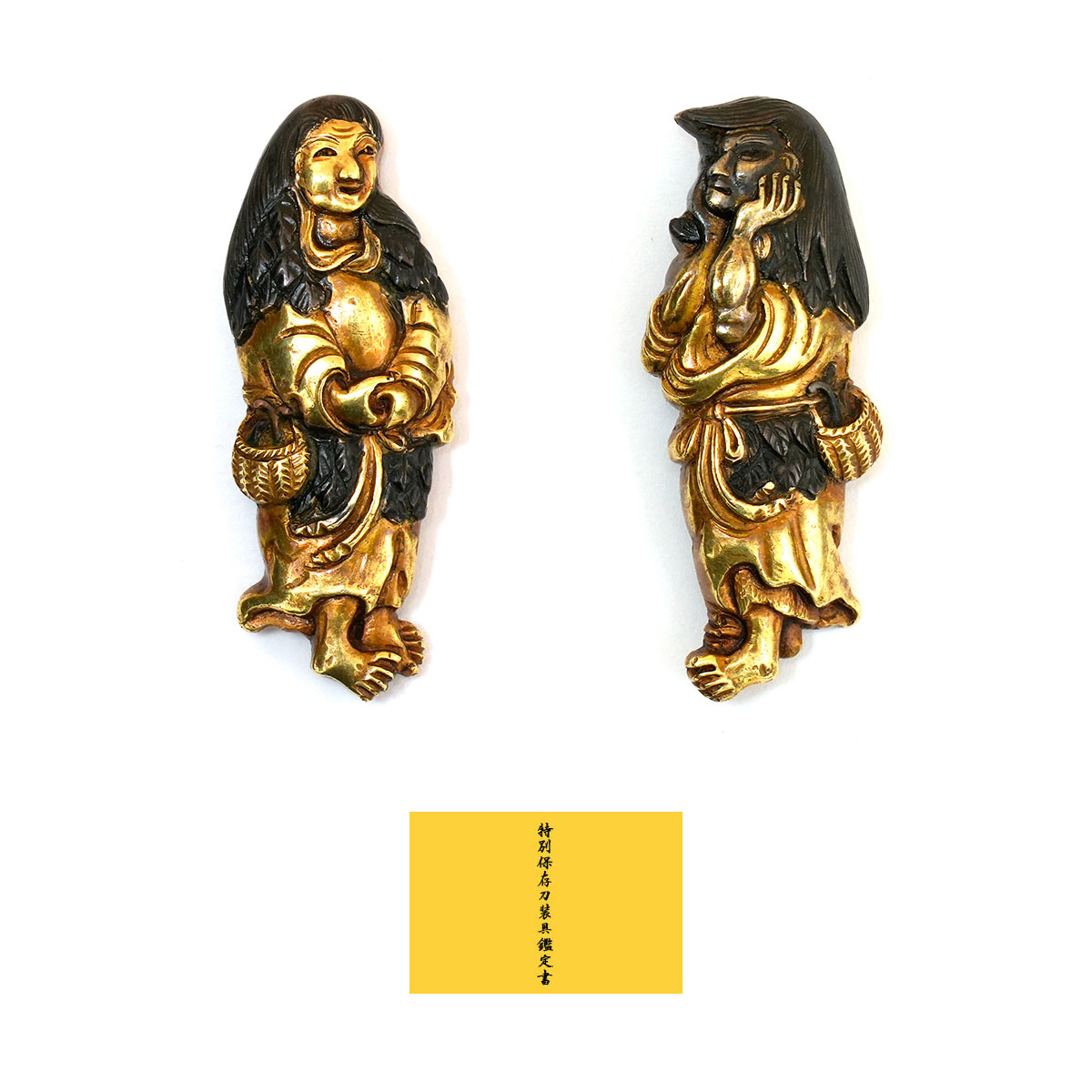
Kyo Kinko is a designation used in the appraisal of tosogu for mumei metalwork produced in Kyoto that is not attributed to a specific maker or school, but is instead identified as the work of Kyoto-based smiths. Many excellent metalworkers, starting with the Goto family, were active in Kyoto, and from this long tradition, tosogu featuring refined designs and exquisite carving techniques were born. Among extant menuki with Kyo Kinko kiwame, works such as those made of shakudo with katachibori and kin-iroe are confirmed, and gorgeous, meticulous examples skillfully utilizing irogane have been handed down. This work is a pair of menuki depicting the brothers Hakui and Shukusei, who are famous in ancient China as men of integrity and fidelity. According to the "Biographies of Hakui and Shukusei" in the Shiki, the two were sons of the ruler of the state of Kochiku; after their father's death, they both abdicated the throne to each other and left the country, later admonishing King Wu of Zhou against attacking the Yin dynasty. It is said that even after the Zhou ruled the world, they refused to accept its stipends, hid in Mount Shuyo, ate ferns they gathered, and eventually starved to death. Because of this story, Hakui and Shukusei have been revered by later generations as figures who maintained their righteousness without yielding to power or gain. The greatest highlight of this work is, above all, the point that it lavishly uses kin-muku metal and three-dimensionally models the figures of Hakui and Shukusei themselves through katachibori with rich nikudori. It possesses a grand weight of 17.0 grams for the pair, and fine tagane work is applied from the facial features, hair, limbs, and overlapping folds of the robes to the baskets hanging from their waists; by placing irogane such as shakudo on parts of the hair and clothing, it is finished in a tight, high-class appearance while maintaining a golden base color. The fact that the two are not treated as a repetition of the same pose also demonstrates the metalworker's excellent sense of modeling. One is depicted standing calmly, while the other is shown in a posture as if contemplating with a hand to his cheek, providing variation in their respective facial expressions and body movements. Not only the rich expressions when viewed from the front, but also the thickness and nikudori that stand out when viewed from the side are worth seeing; it is a pair where one can fully appreciate the carving skills of Kyo Kinko, concentrating the presence of the human figures within the limited space of small menuki. On the reverse side, it features clear in-yo-ne, with one having a tube-shaped kage-ne and the other a pillar-shaped yo-ne, and petal-shaped chikara-gane are carefully arranged around them. In-yo-ne are often seen on old menuki including those of the early Goto family, and are a structure inherited as a traditional form even after the Momoyama period; since the antique-style urayuki remaining on this item, the voluminous katachibori, and the work combining irogane three-dimensionally show a flavor consistent with 17th-century Kyoto metalwork, it is appropriate to view the production period as the early Edo period, and the ability to enjoy the magnificent expression of figures from the front and the structural beauty characteristic of old works from the back is also a great attraction. Possessing the luxurious material of 17.0 grams of kin-muku, katachibori rich in three-dimensionality, meticulous work with skillfully placed irogane, and a high-class theme symbolizing fidelity, this is a masterpiece suitable for appreciation as a pair of small metalwork pieces housed in a specially made otoshikomi kiribako.
Offered by Toushin

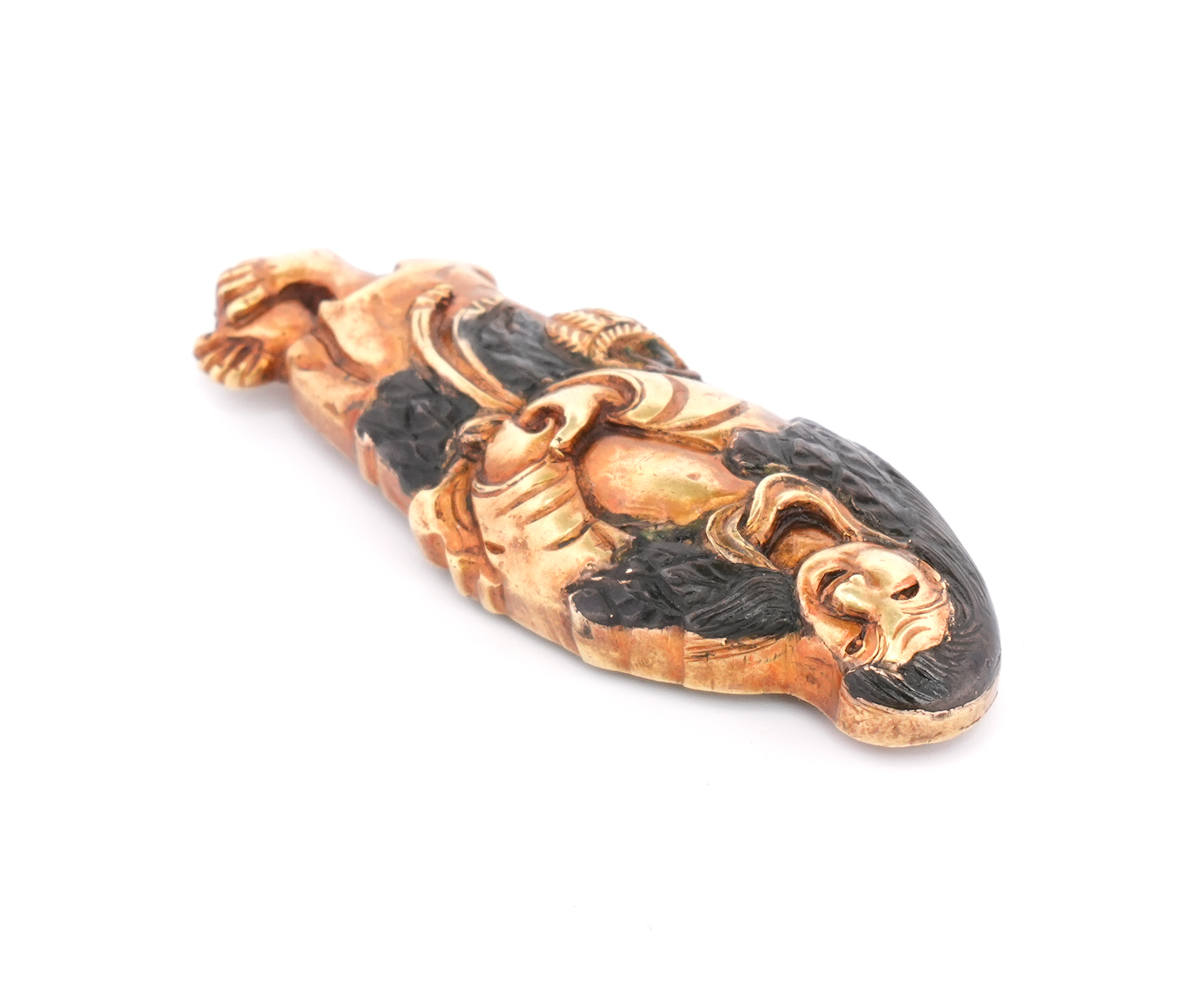
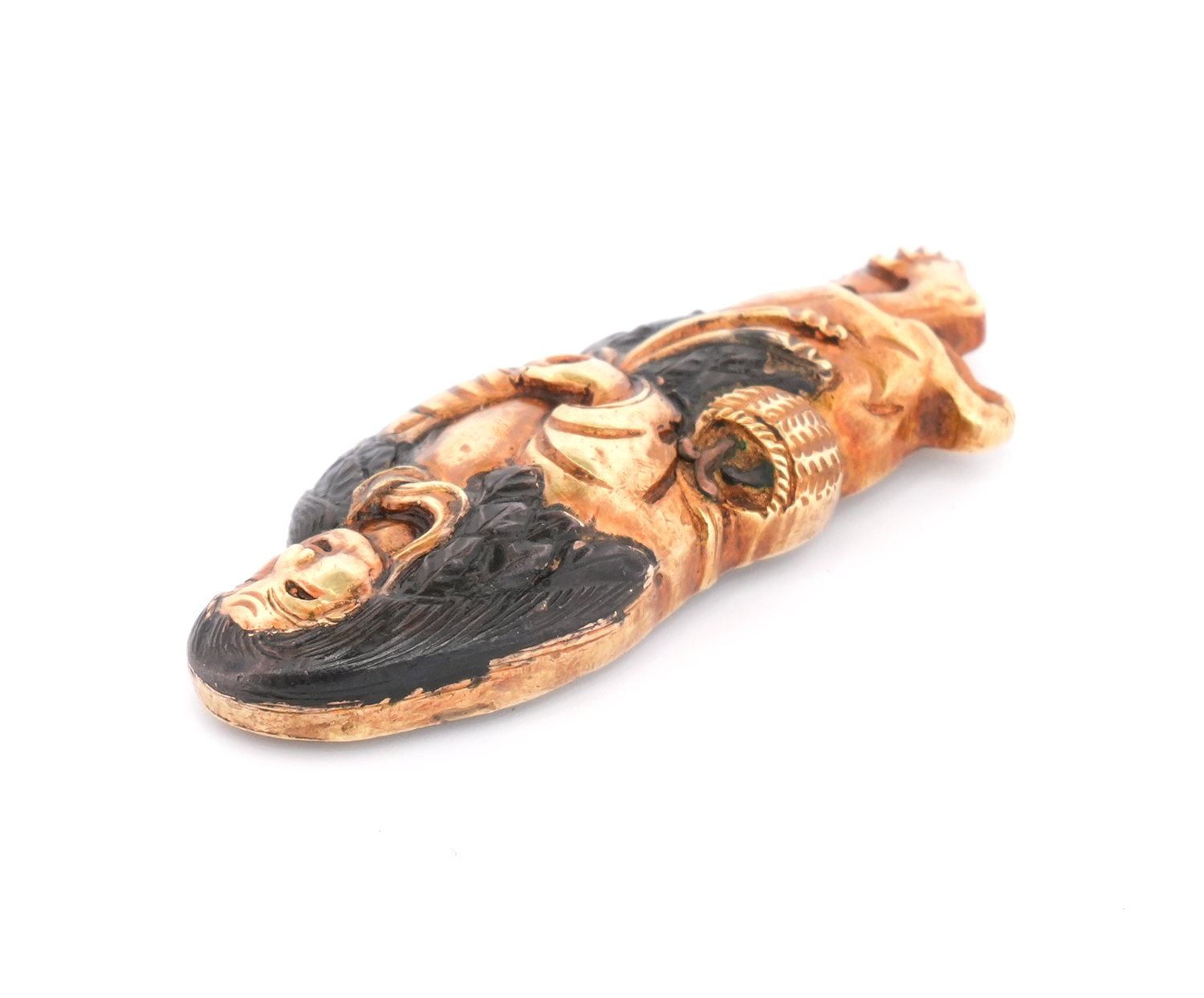
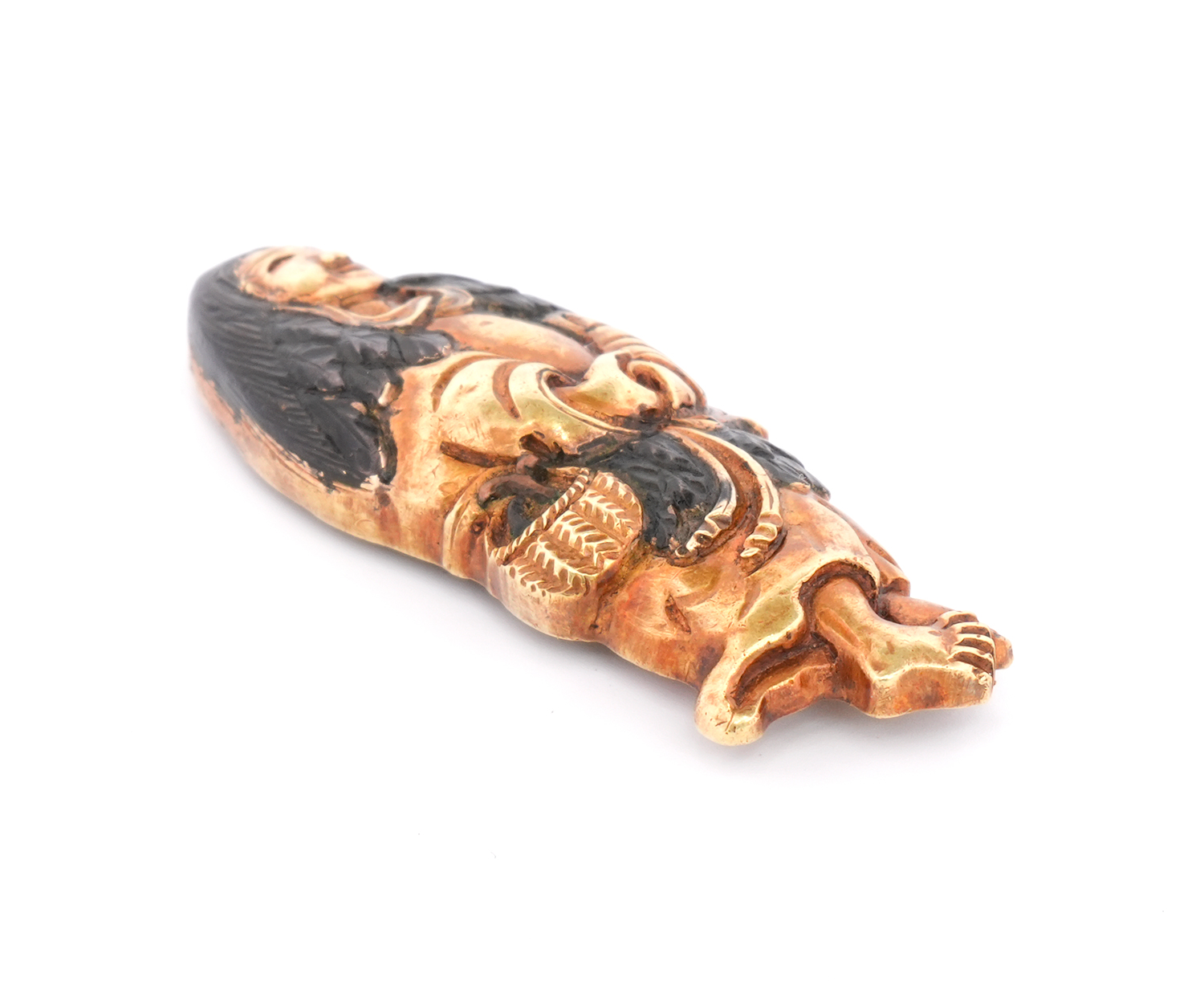
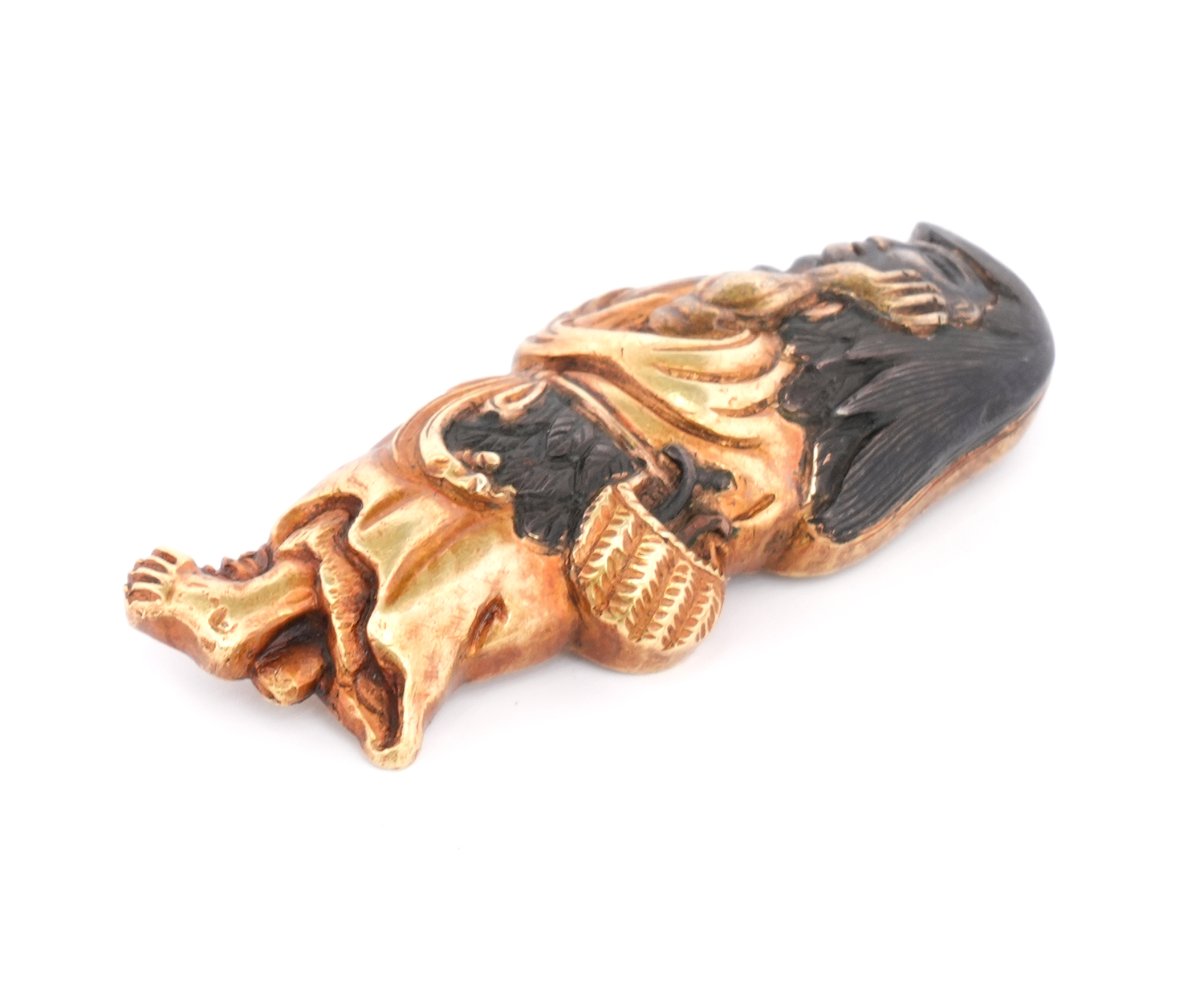
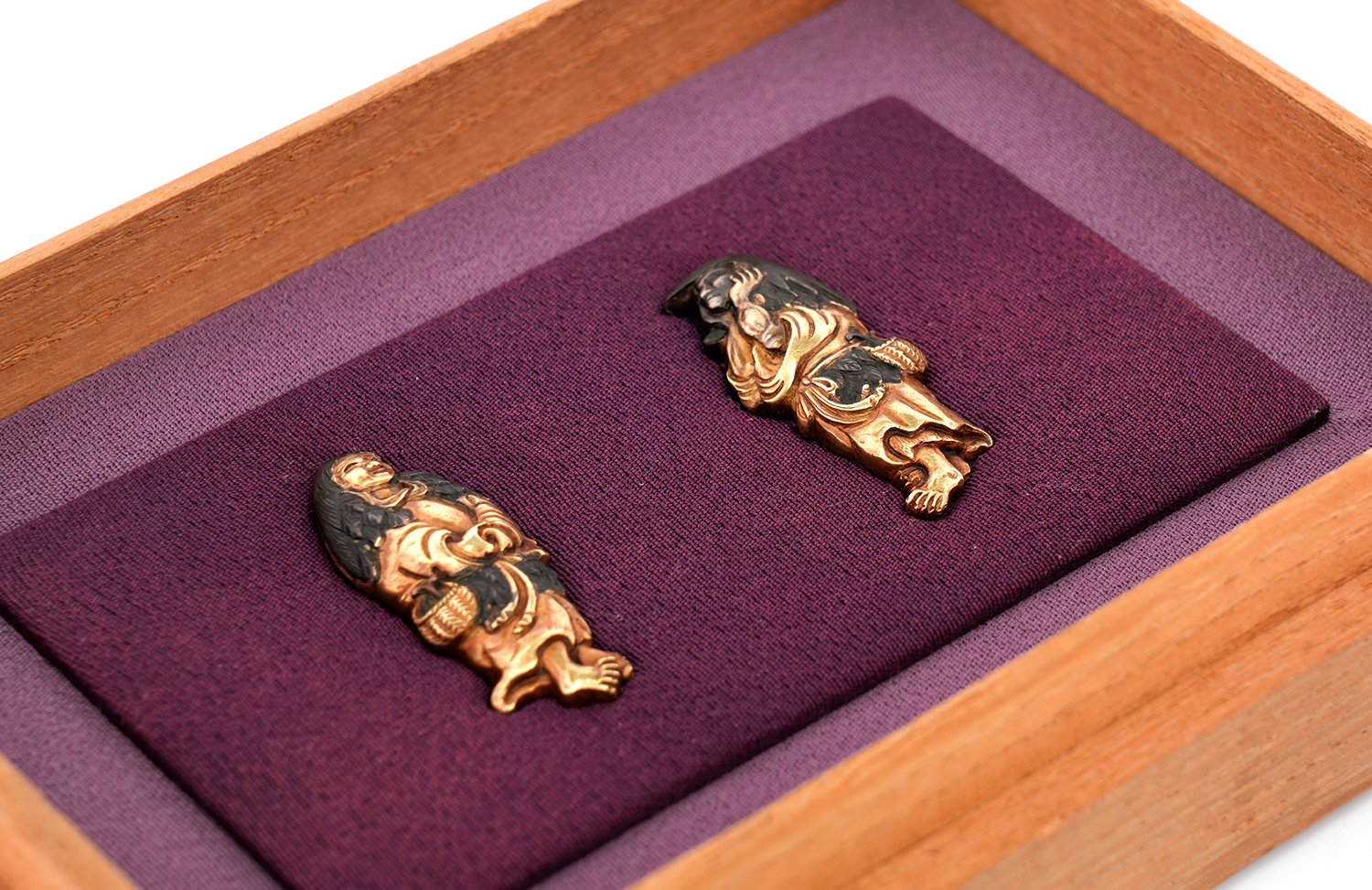
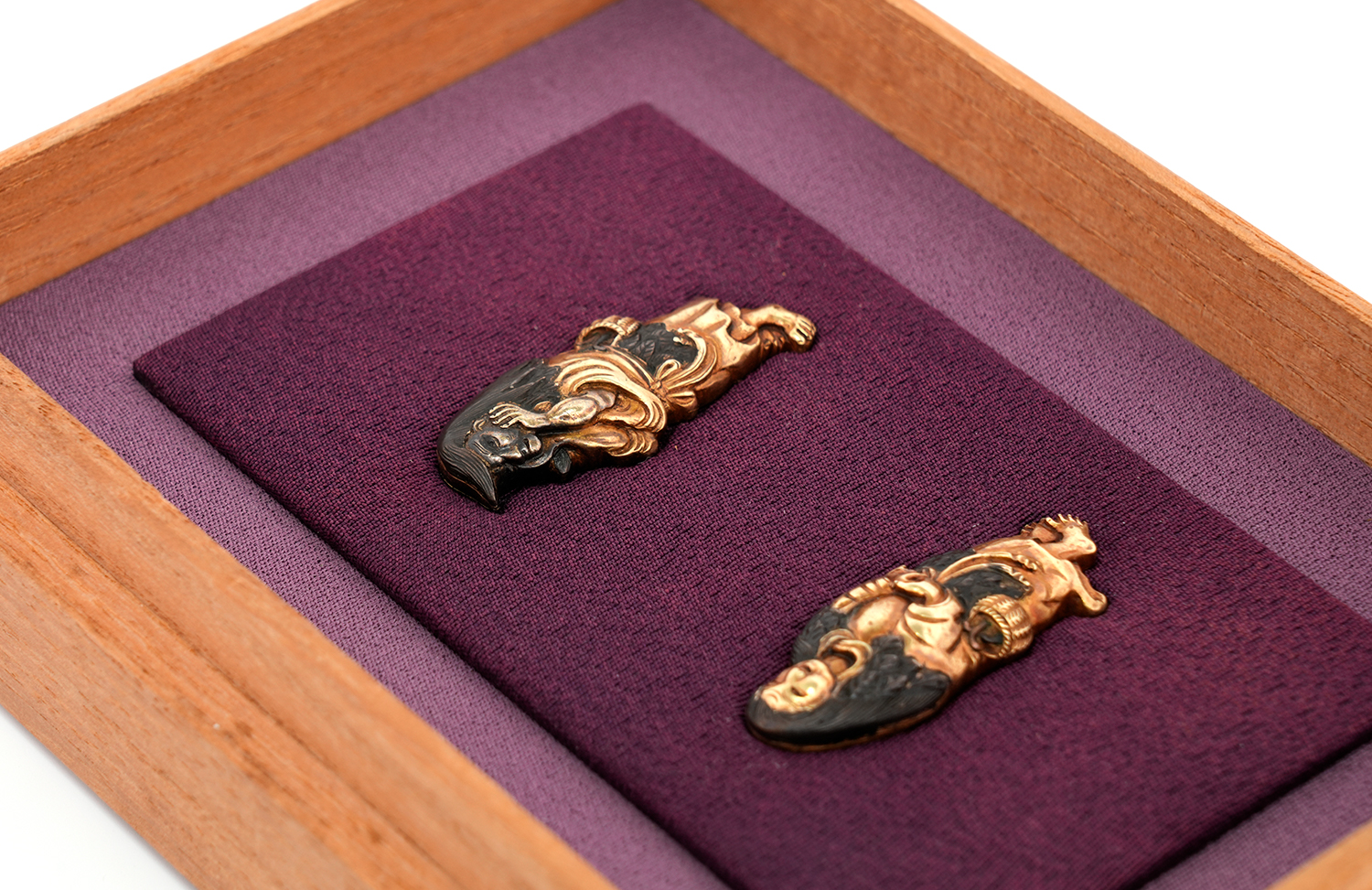
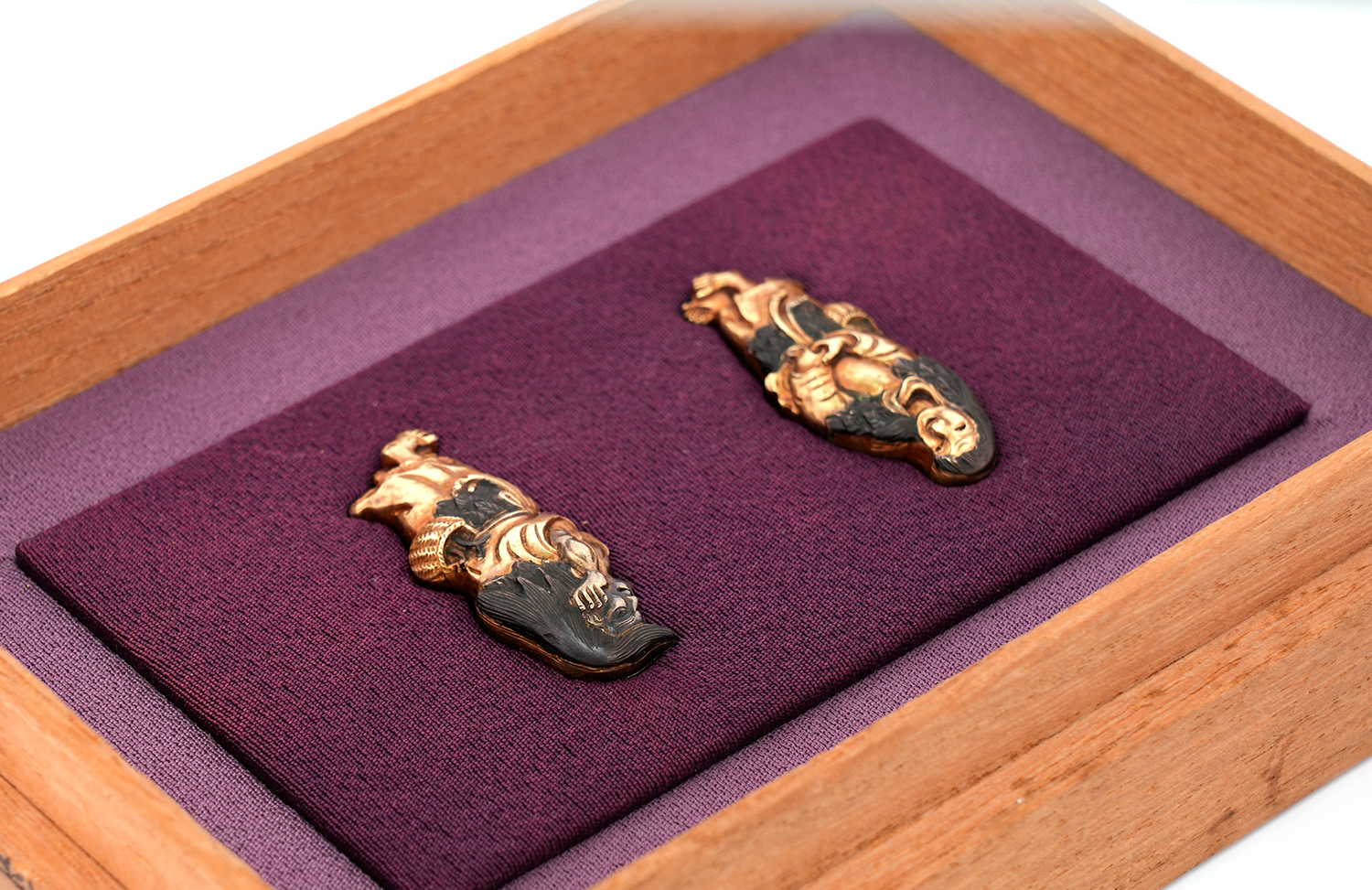
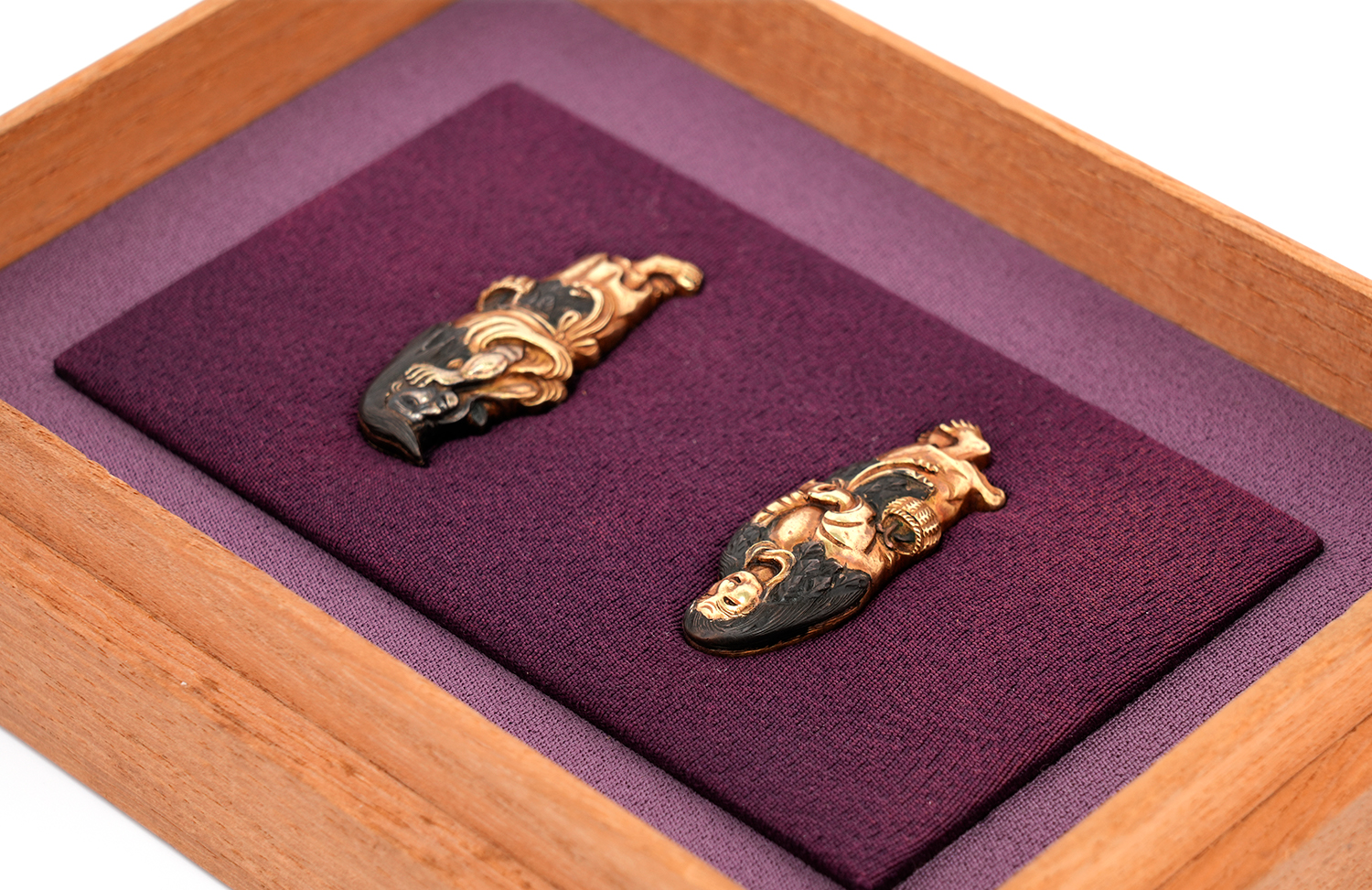
Edo
Yamashiro
Unsigned
Tokuho (NBTHK)
As written by the shop
Machine translation from the shop's Japanese · may contain errors ·
A Hozon-certified fitting of notably superior craftsmanship and condition, often with signature or workmanship of high reference value.
The NBTHK (Nihon Bijutsu Tōken Hozon Kyōkai, the Society for the Preservation of Japanese Art Swords) is a public-interest incorporated foundation founded in 1948 and supervised by Japan’s Agency for Cultural Affairs (Bunkachō); it is based at the Japanese Sword Museum in Tokyo. Its expert panels physically examine each submitted work (shinsa) and issue a certificate (kanteishō) ranking it by artistic and historical merit. NBTHK papers are the most widely recognized standard of authentication for Japanese swords and fittings.
NBTHK official siteAs a rule we do not accept returns, except when we have sent a different item from the one ordered or when there is a significant discrepancy between the description and the item. If you wish to return an item, please contact us within 3 days of its arrival and then send it back.
¥990,000