1800年前後、水心子正秀は著述をもって、鍛刀は古作の法に立ち返るべしと説いた。復古刀の運動である。最大の後継者直胤は、数百年絶えていた備前伝と相州伝を確信をもって再現した。
 NihontoWatchNihontoWatch
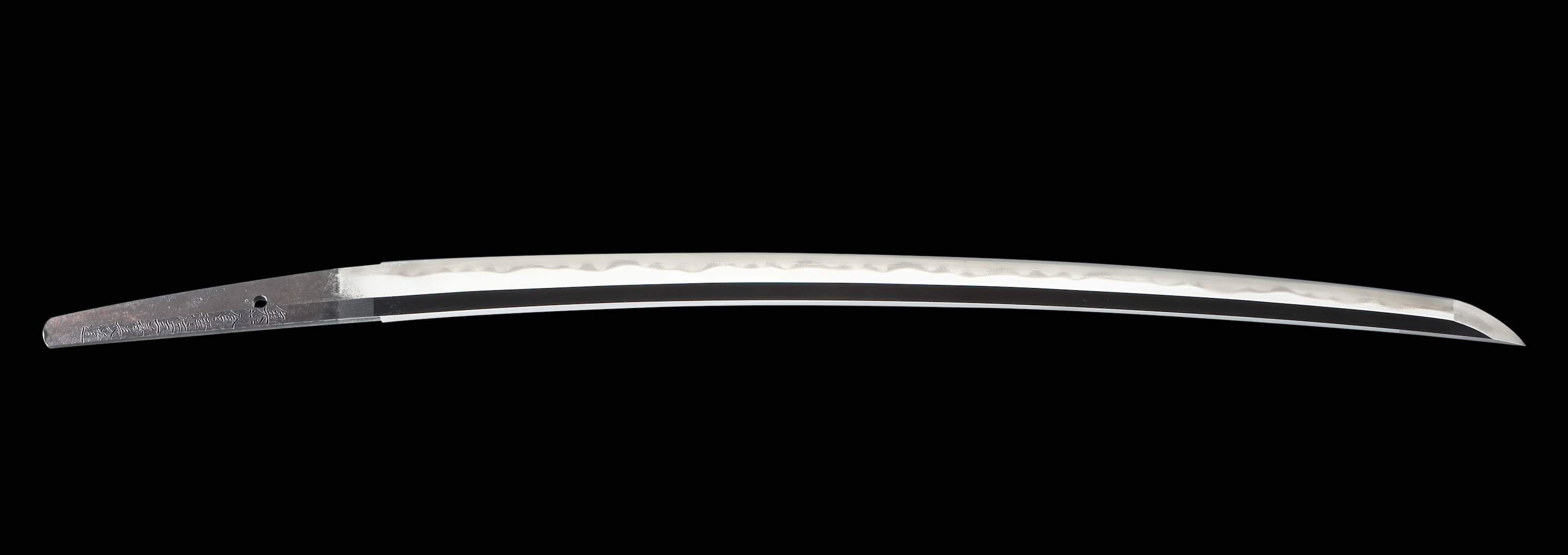
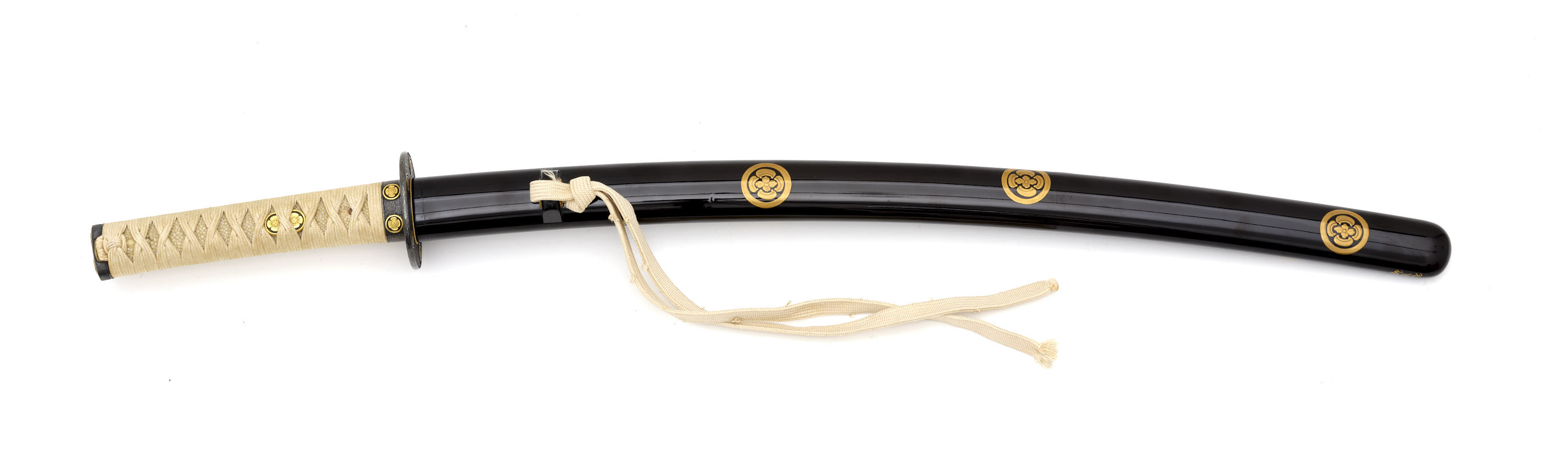
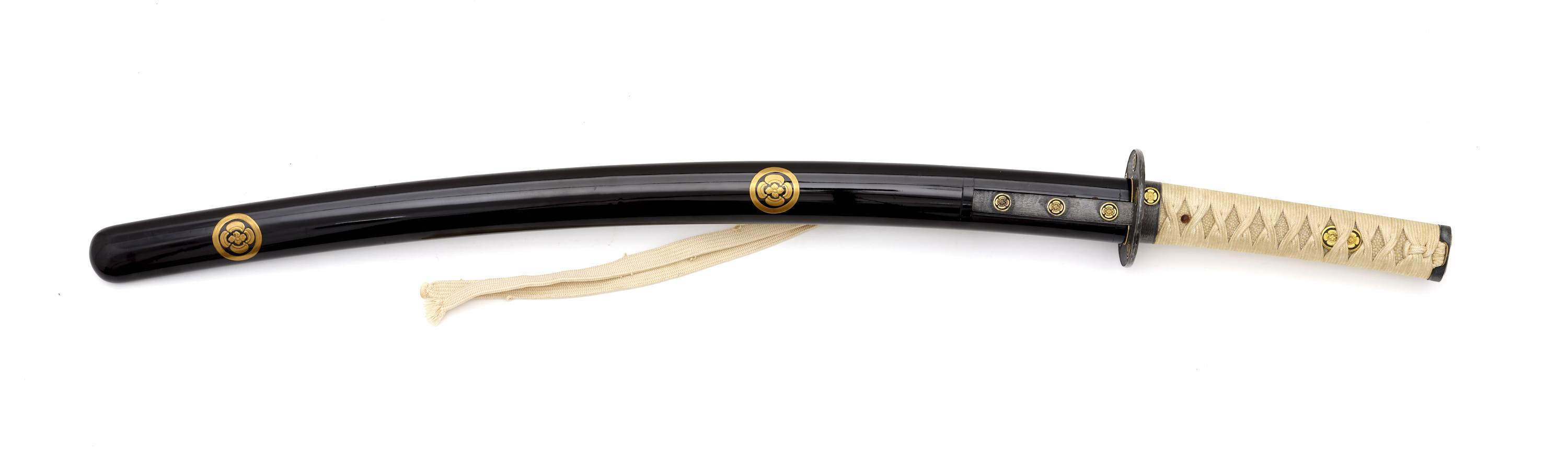
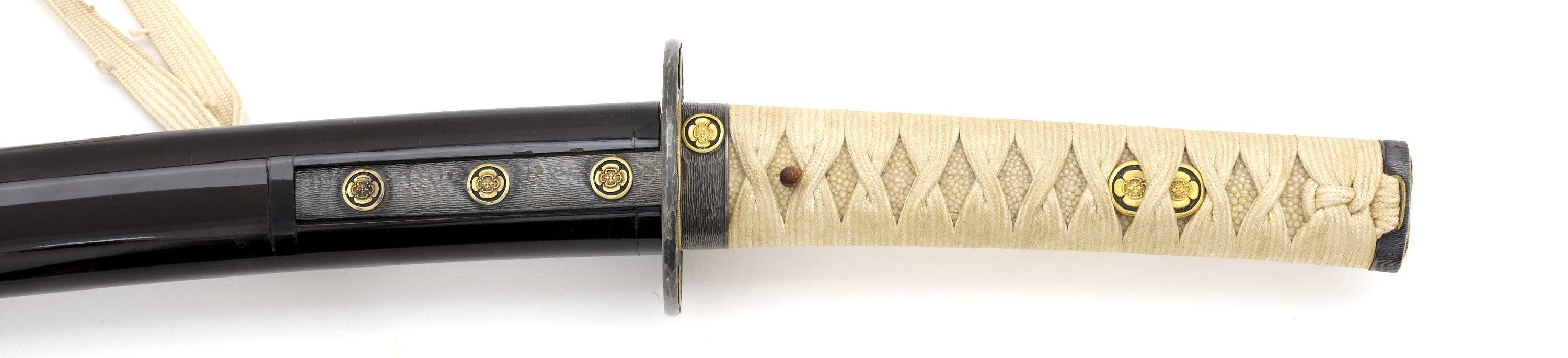
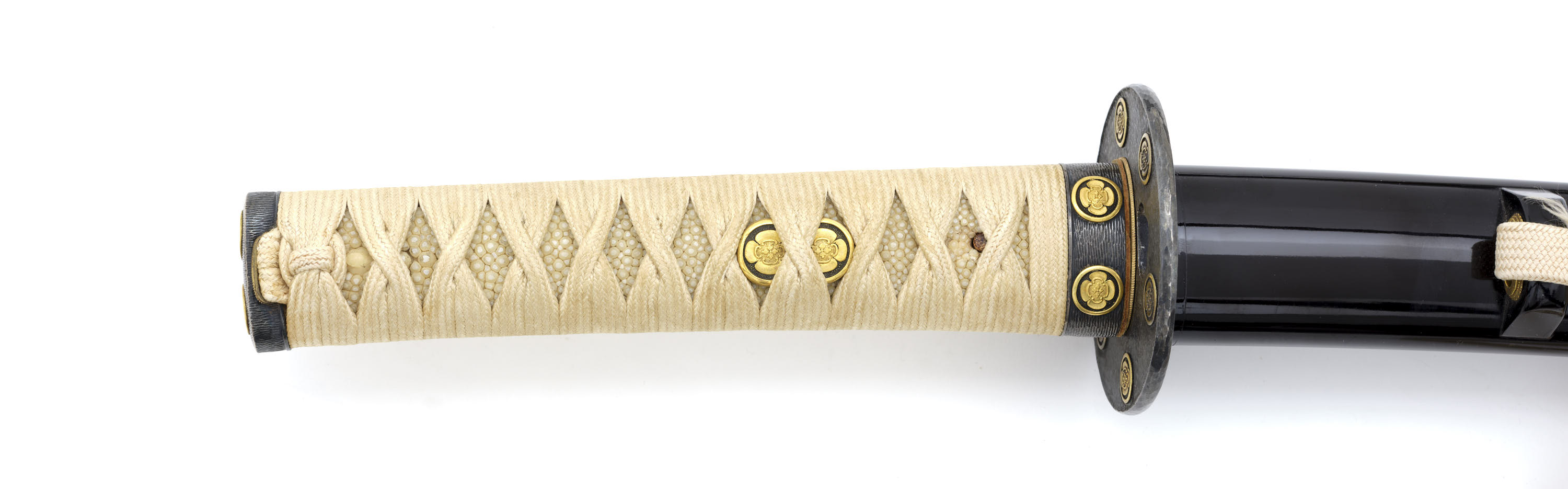
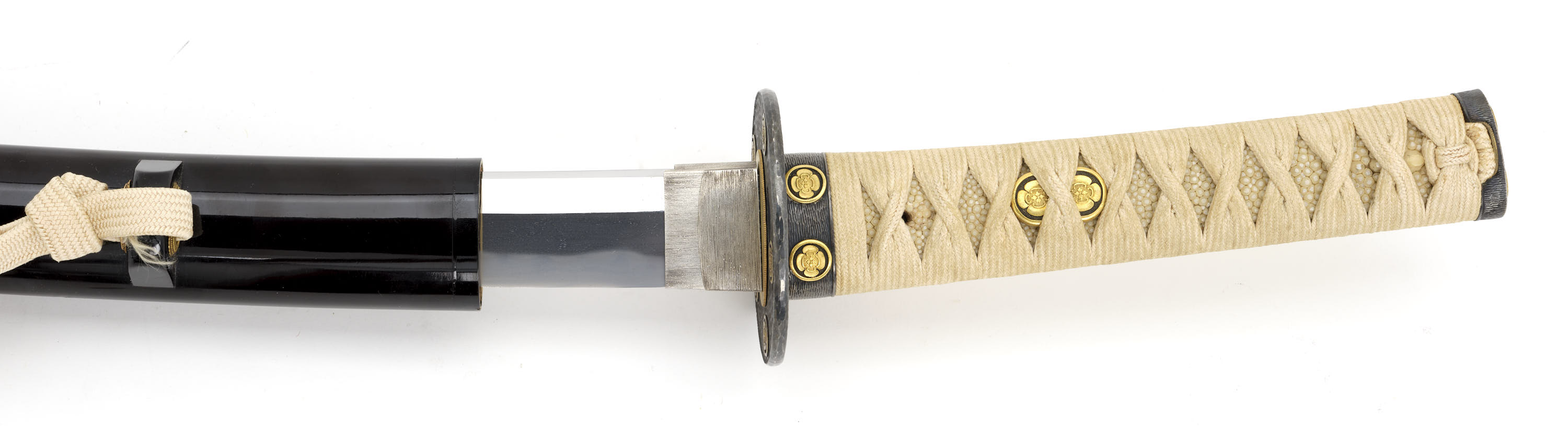
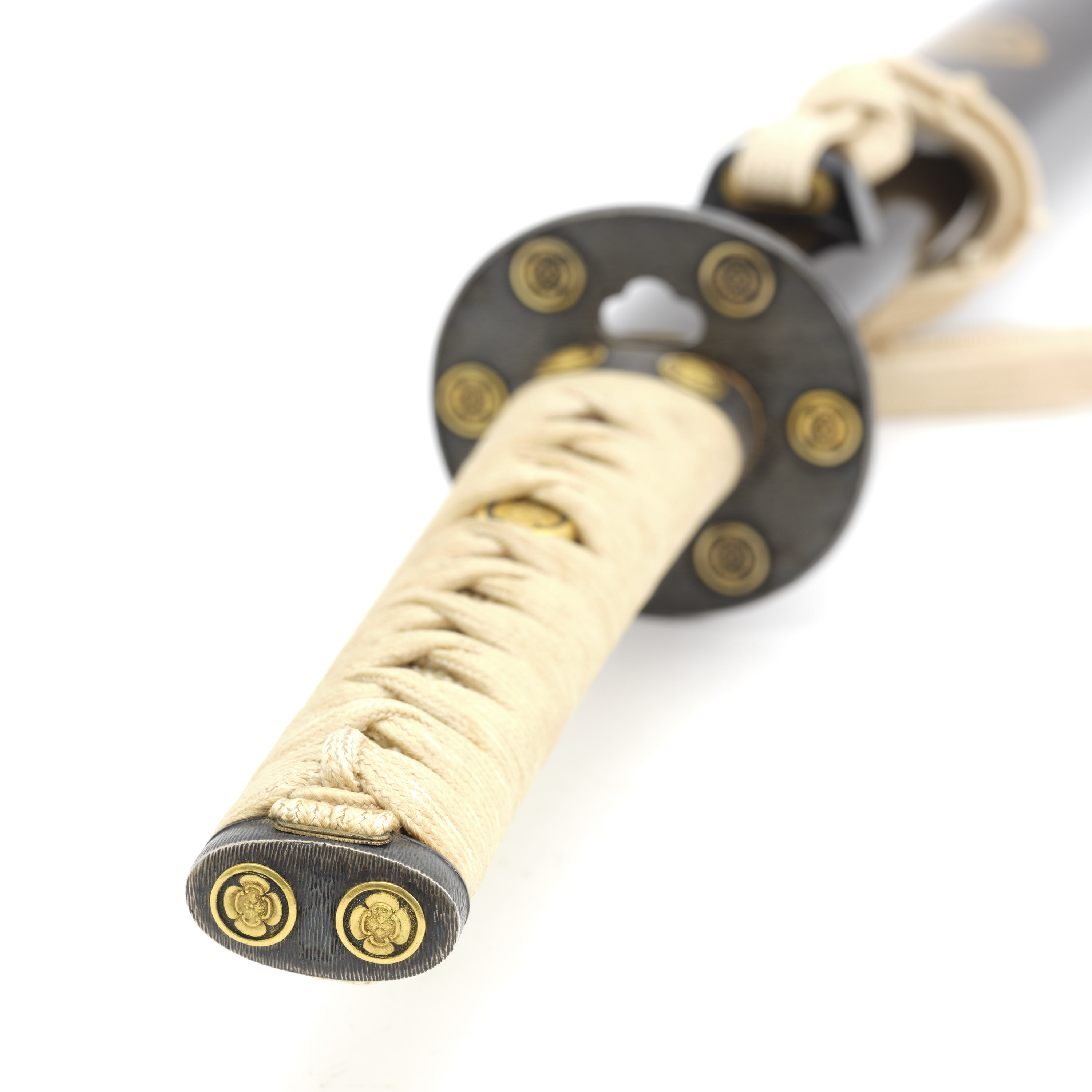
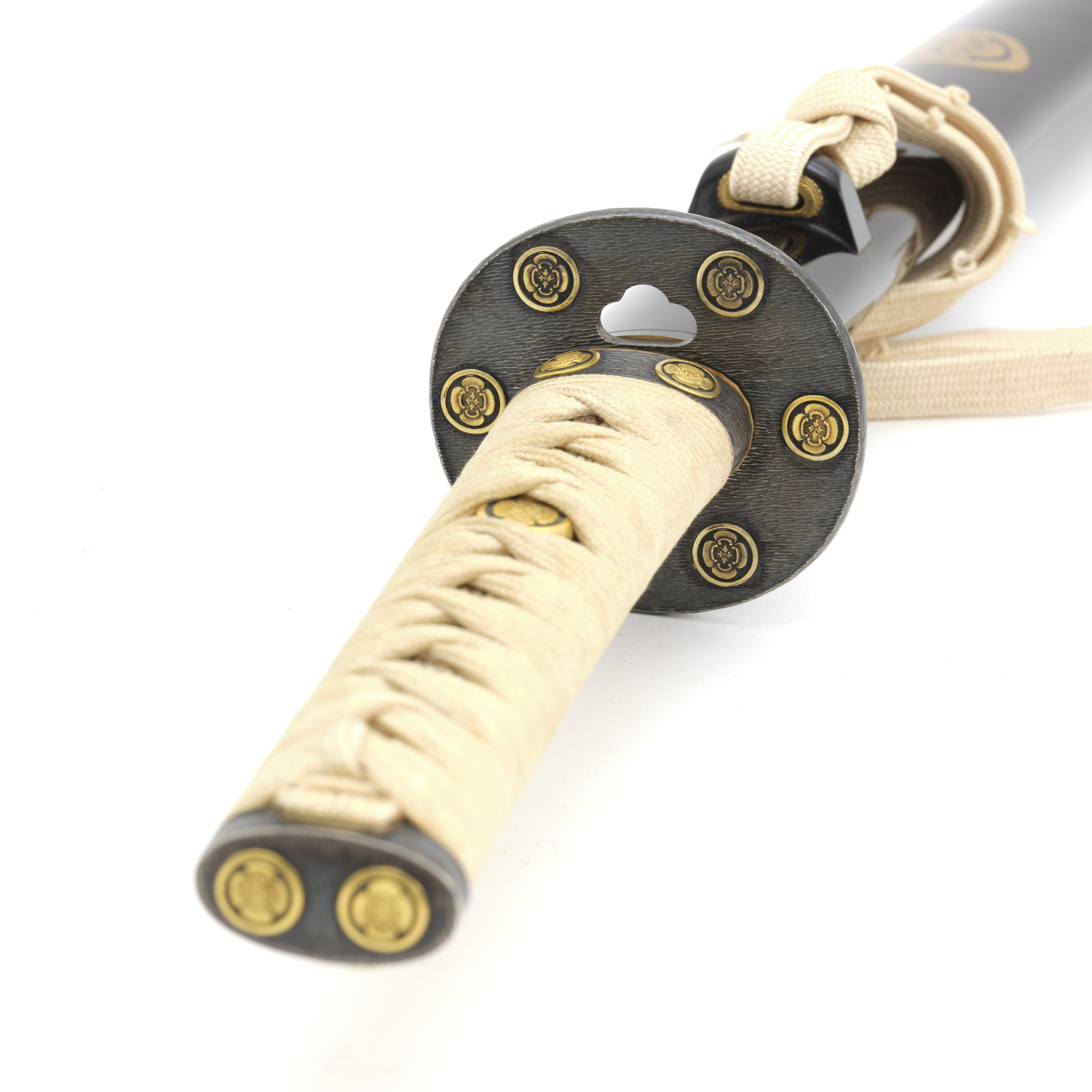
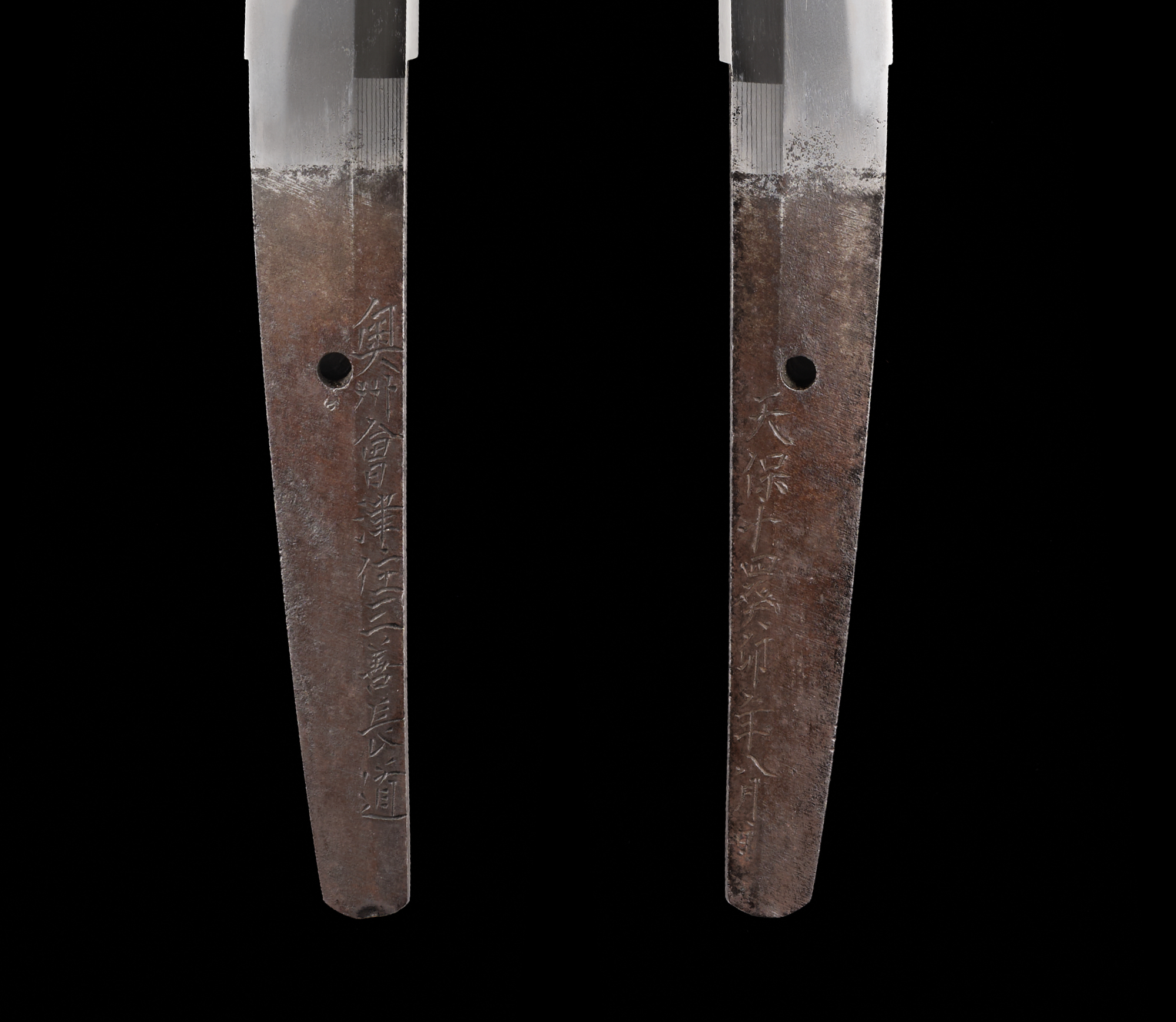
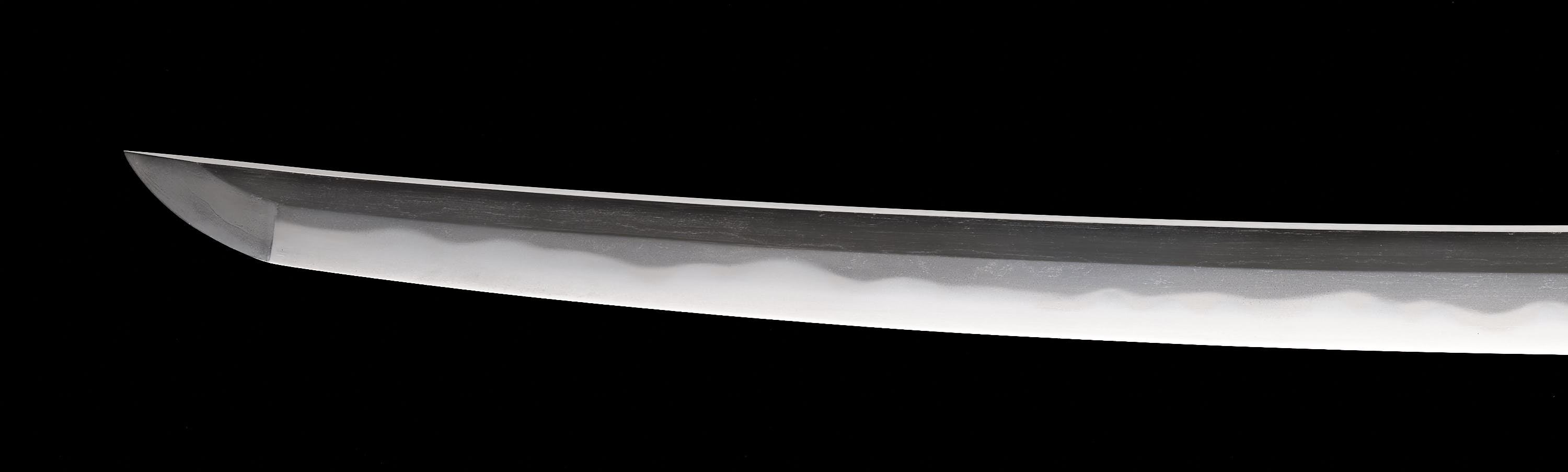
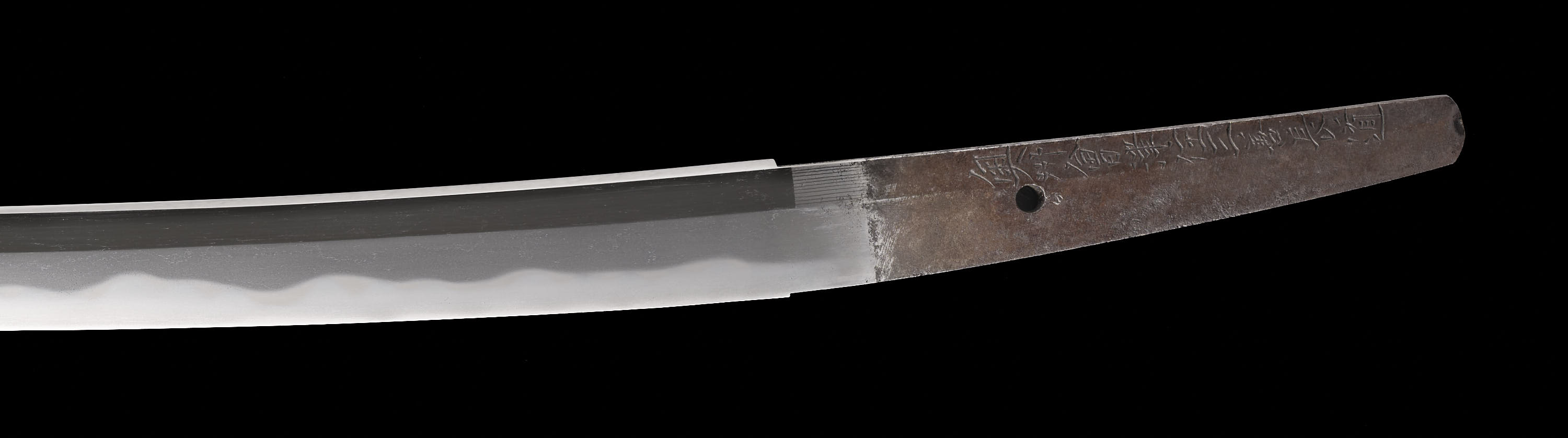
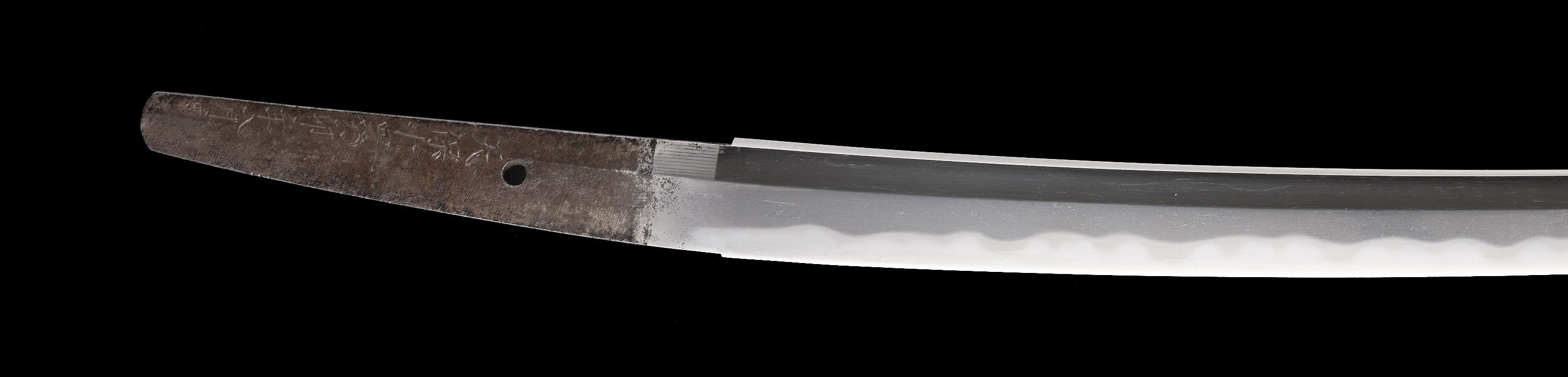
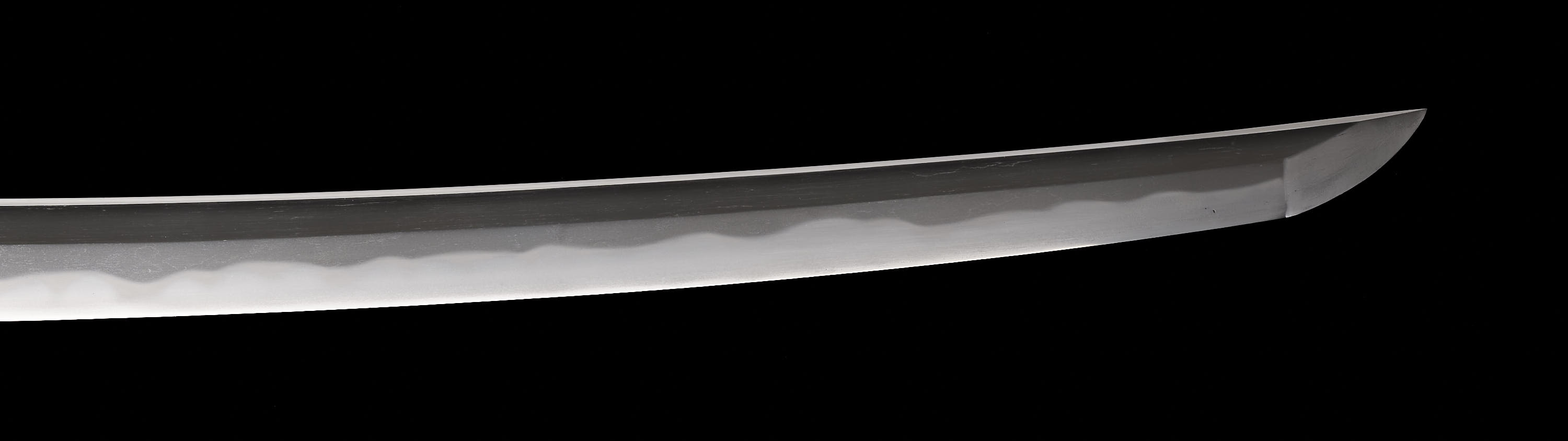
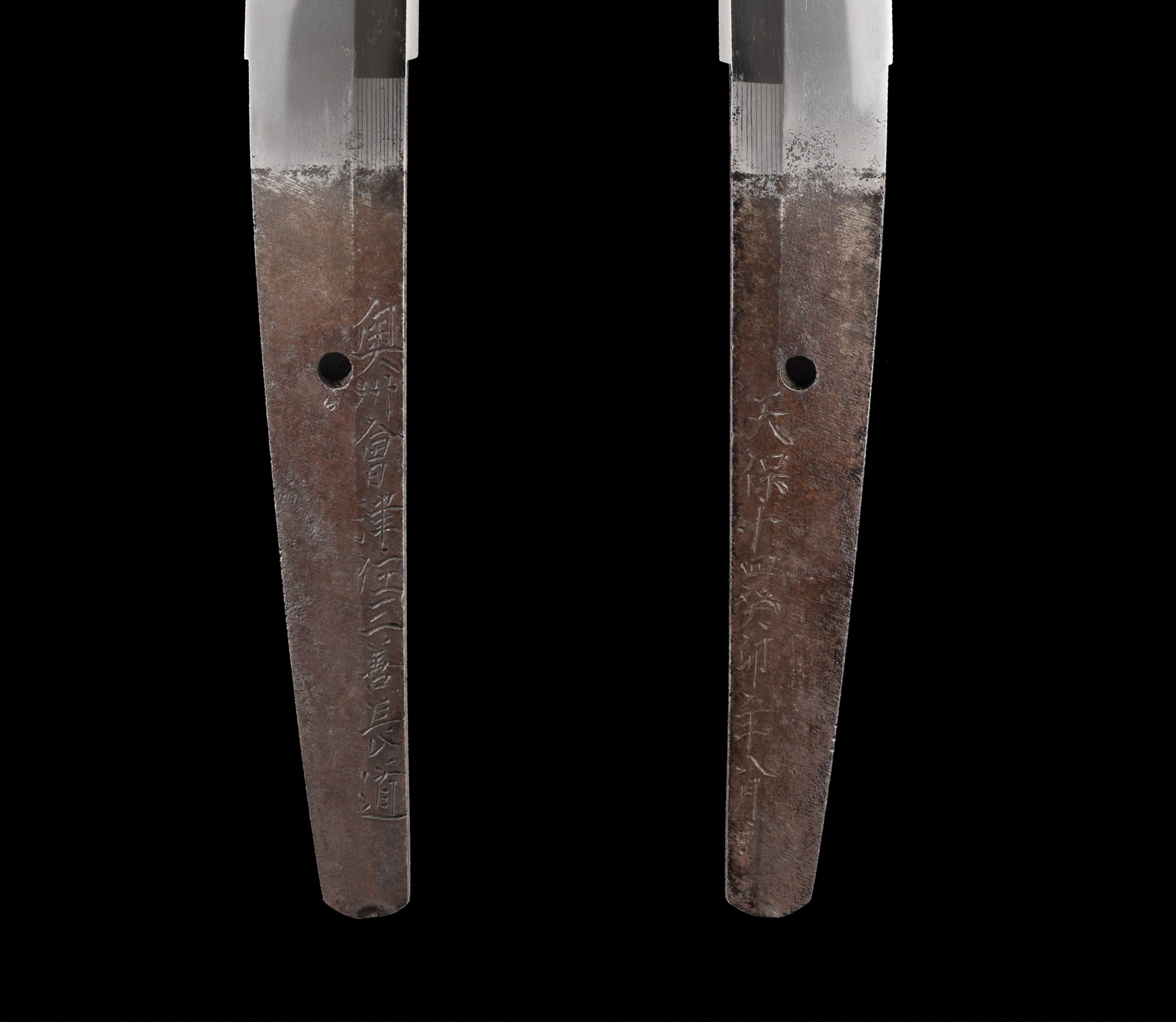
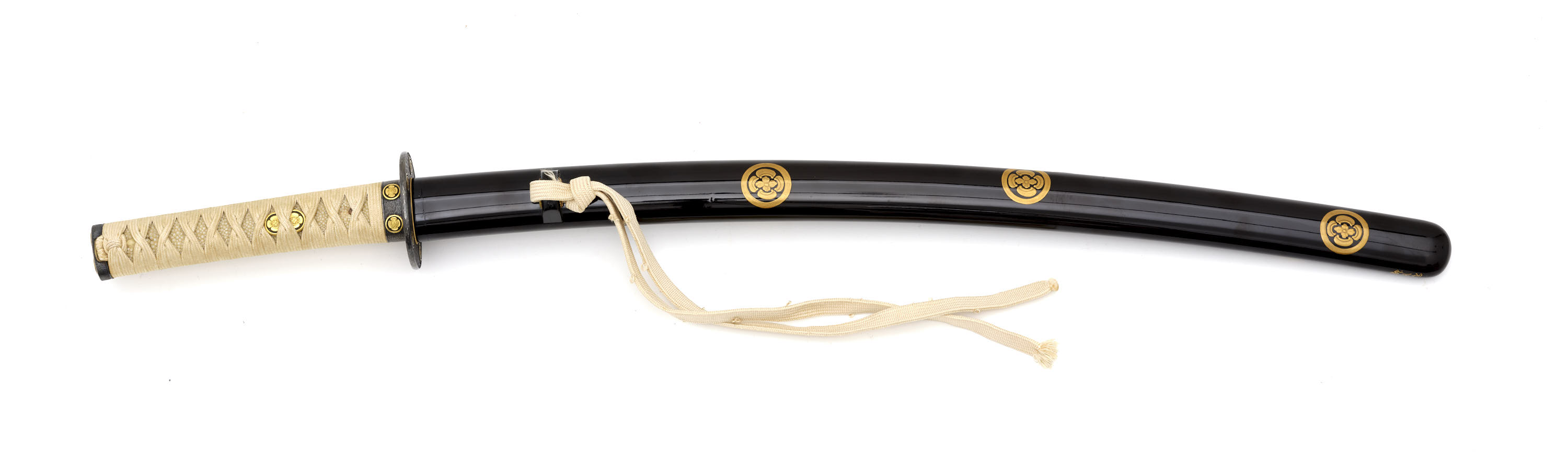
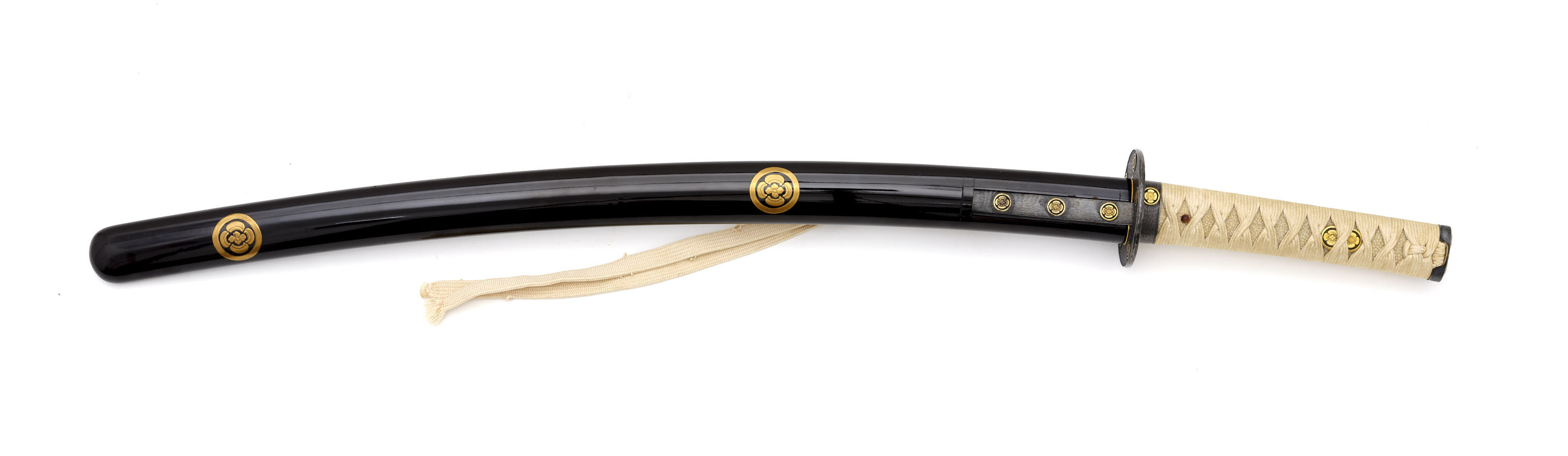
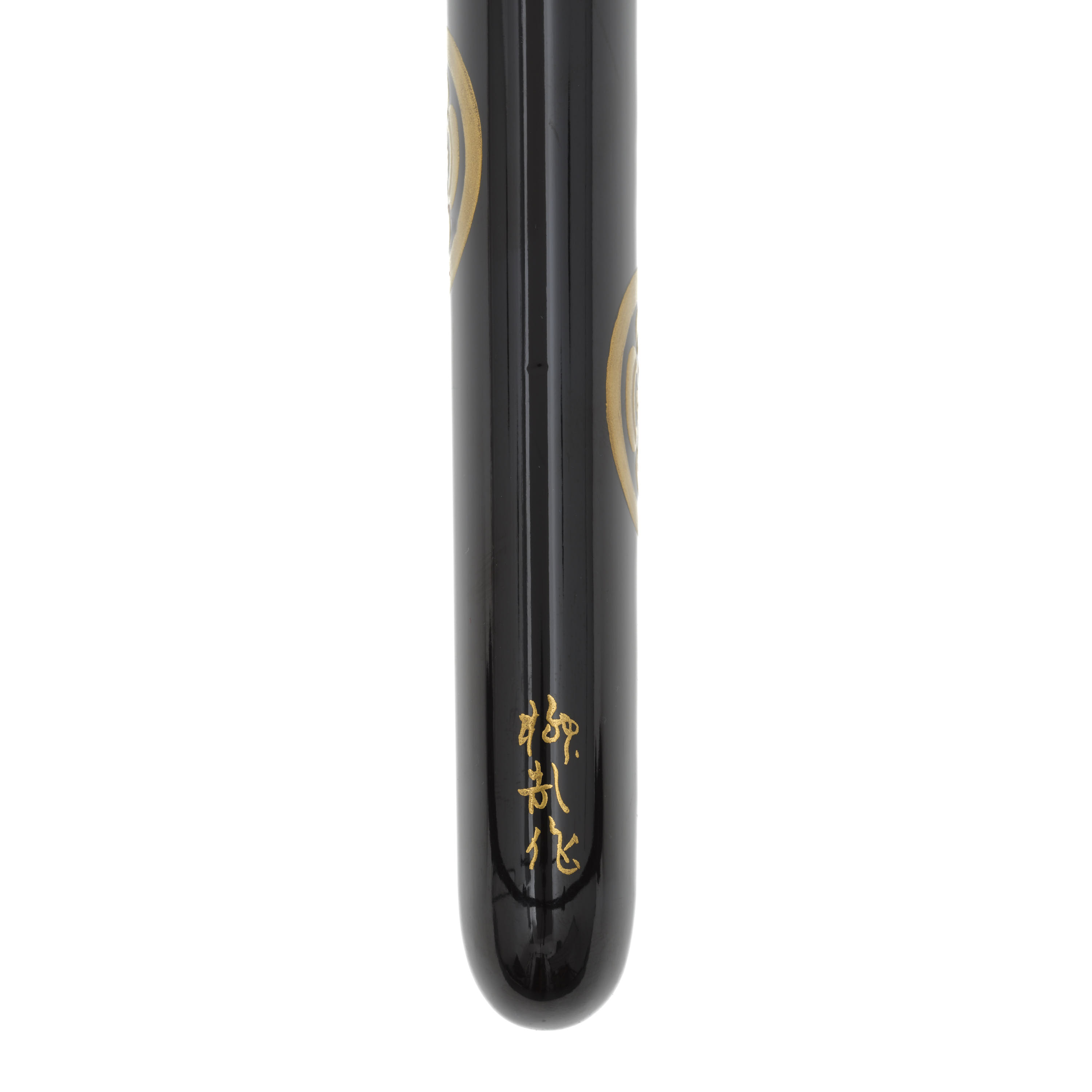
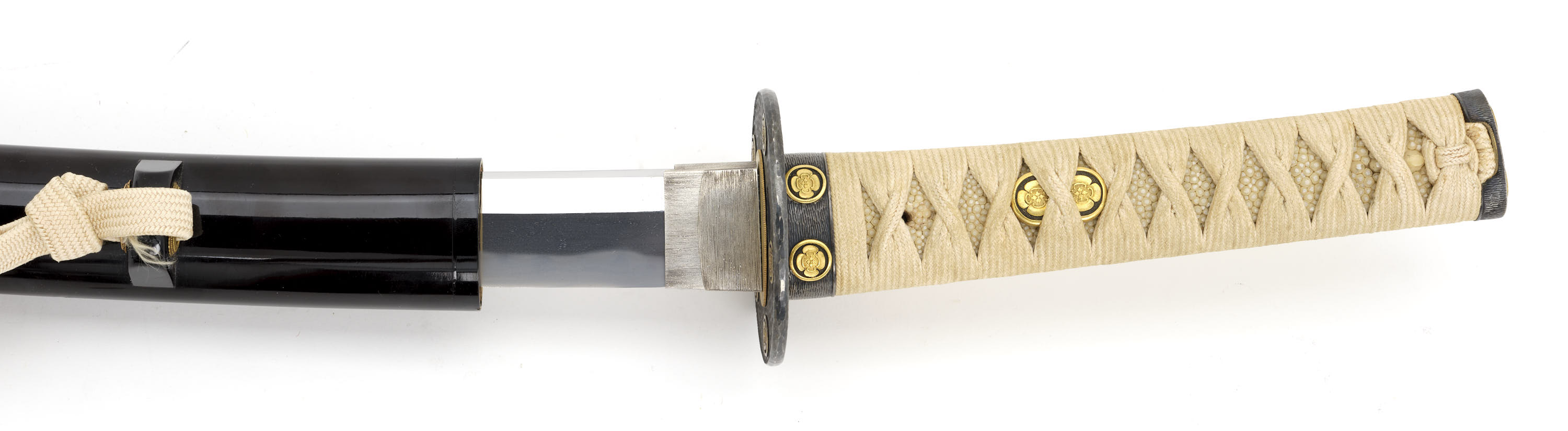
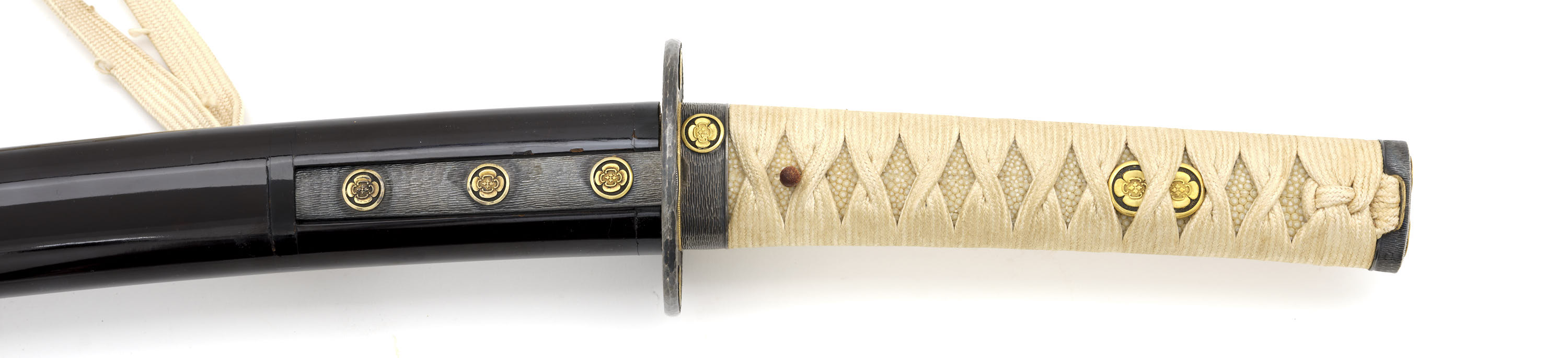
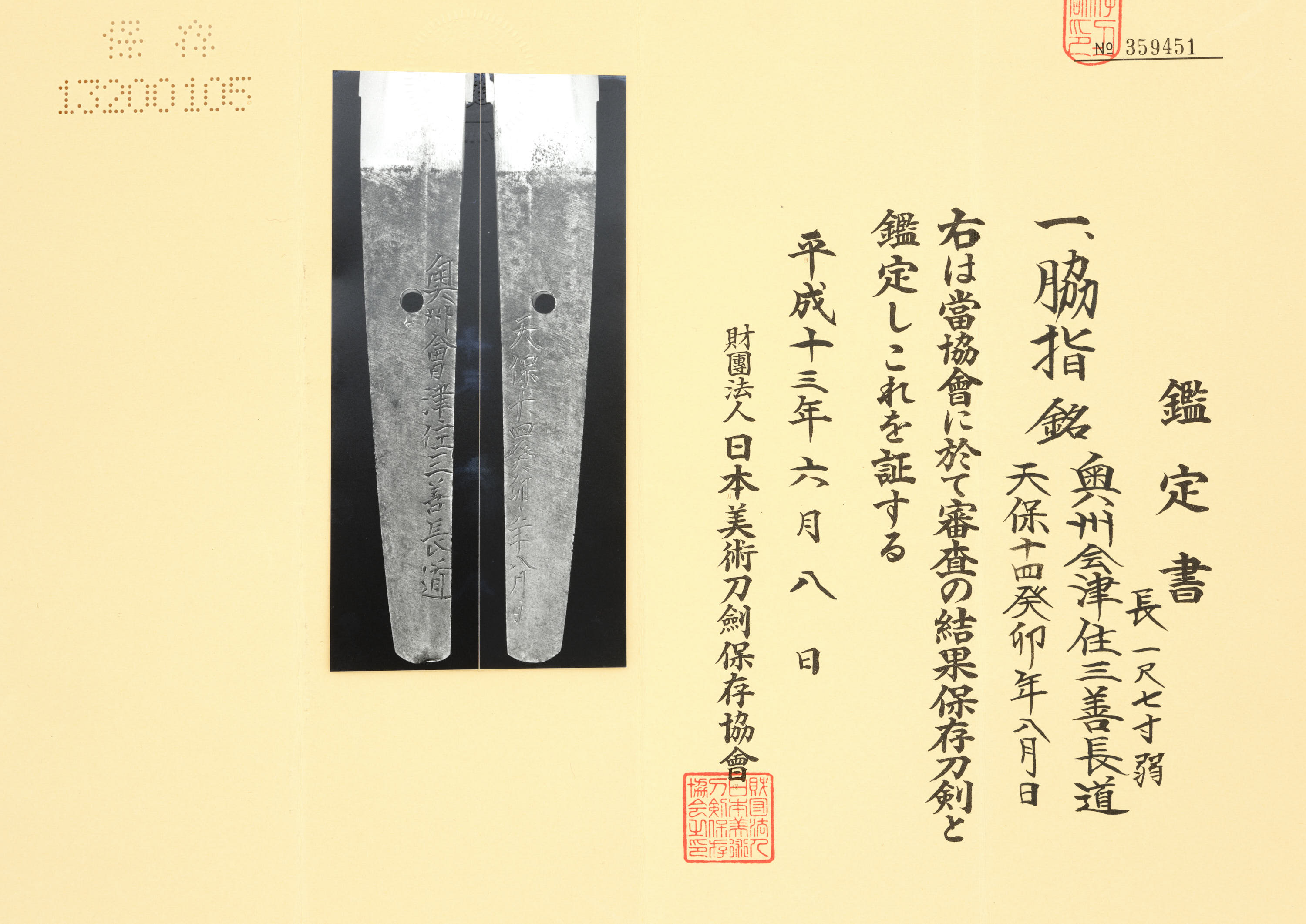
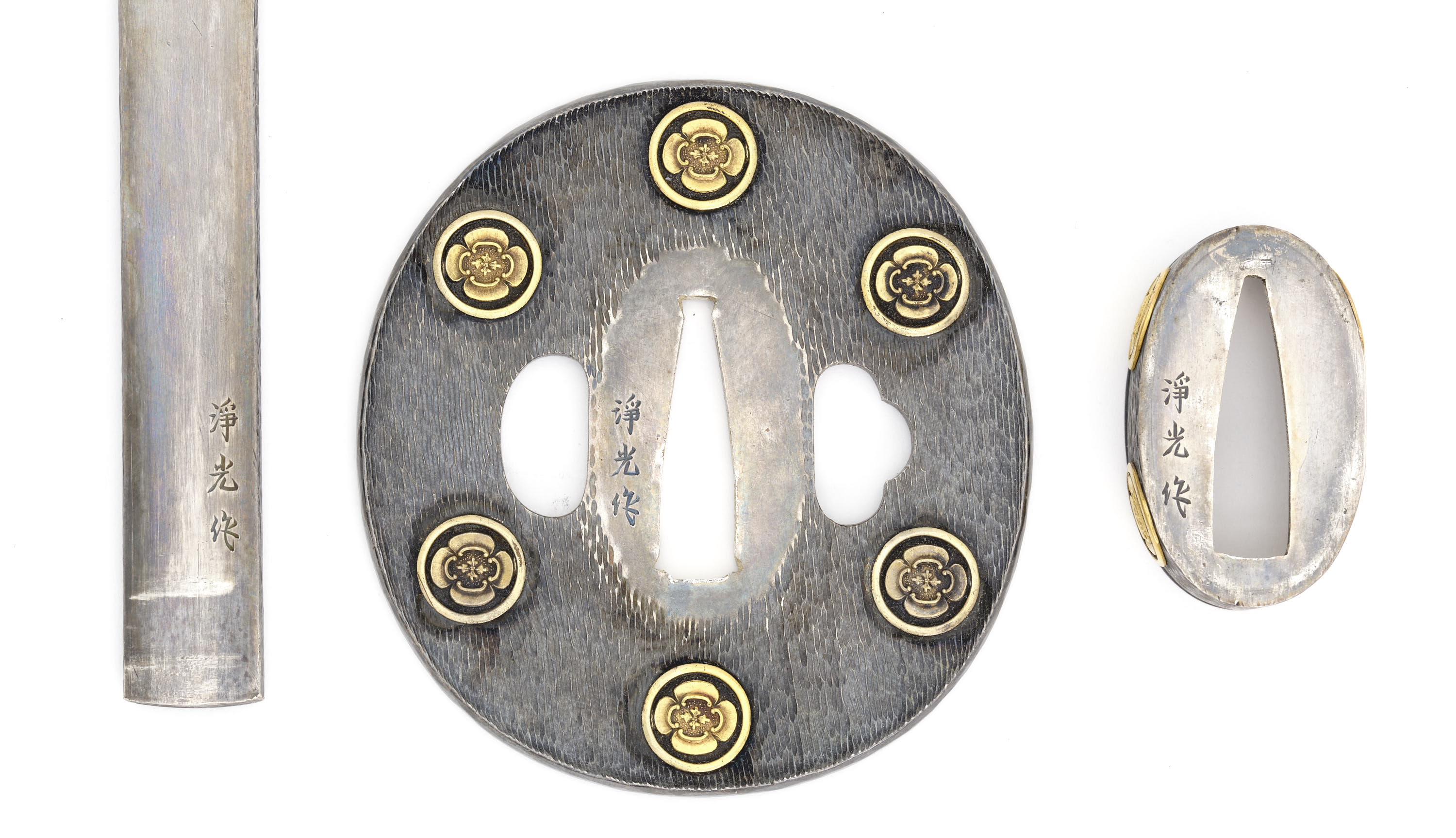
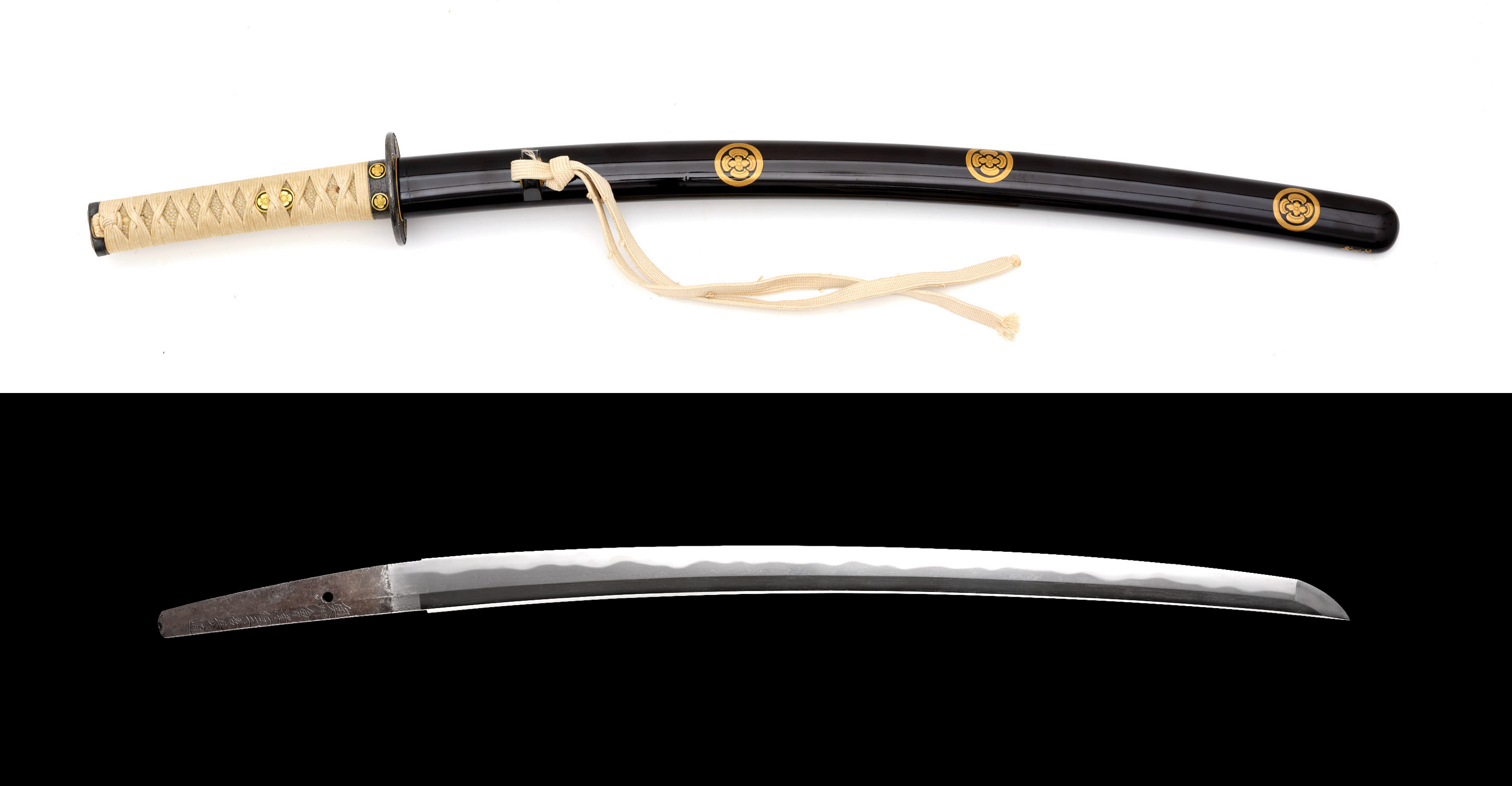
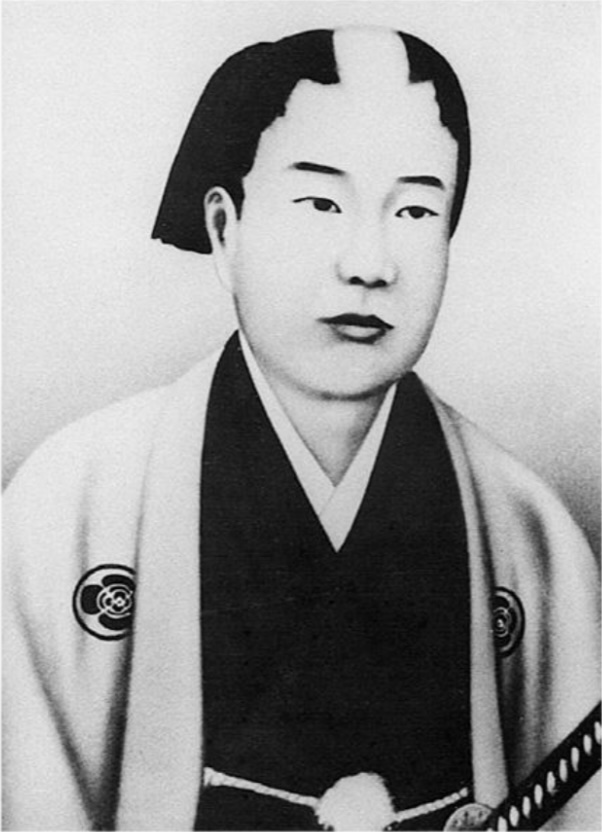
Description A signed and dated shinshintō era wakizashi in formal samurai koshirae with golden mokko-mon (gourd crests). The combination of the Aizu fief smith and the mokko crests provides some interesting historical background that may link the sword to the Shinsengumi, a special police force made up of expert swordsmen. More on that later, as first we focus on the sword and its mountings. Blade attributes (In plain English below) Sugata: shinogi zukuri, iori mune, torii sori (Shape: ridged cross-section, ridged spine, even curvature) Kissaki: chu-kissaki (Tip: medium-sized tip) Hada: ko-itame (Forging structure: small dimensioned wood grain) Hamon: gunome-choji midare with sunagashi, kinsuji and izuma in nie-deki (Temperline: wavy with roundish and clove-shaped elements, executed in large dimensioned martensite crystals, arranged in lines like flowing sand) Bōshi: midare o-maru with hakkikake (Temperline in tip: wavy with large round turn and sweeping lines of martensite crystals) Nakago: ubu, katte sagari yasurime, kurijiri (Tang: unaltered, with slanting left-hand file marks and a chestnut-shaped bottom) Signature Facing side: 奥州会津住三善長道 Ōshū Aizu ju Miyoshi Nagamichi "Resident of Ōshū in Aizu, Miyoshi Nagamichi" Reverse: 天保十四癸卯年八月日 Tenpō Jyu Shi Mizunoto U Nen Hachi Gatsu Hi "One day in the 8th month of of Tenpō 14" (August 1843) 8th generation Miyoshi Nagamichi (1795-1865) Personal name Miyoshi Gonpachi (三善長道), he later changed his name to Tōshirō (藤四郎). He received the local honorary title Aizu-kaji tōryō (会津鍛冶棟梁) or "head of all Aizu smiths." He also seems to have been a samurai retainer himself, as he signed some of his blades with: 東奥会陽臣三善長道 Tōoku Eyō-shin Miyoshi Nagamichi “Miyoshi Nagamichi, retainer of the Aizu fief of the eastern Ōshū region” His father the 7th generation also jointly forged blades with 10th-generation Kanesada, indicating they both worked for the Aizu-Matsudaira clan who kept close ties to the shōgun. In fact, the Aizu daimyō was appointed Kyoto Military Commissioner in 1862. Papers The blade was awarded Hozon ("worthy of preservation") by the NBTHK in 2001. Koshirae The sword comes with a koshirae in the formal samurai style of dark, near-black lacquer decorated with family crests in gold. By regulation, such pieces had no other decoration than the family crests and for the wakizashi, the scabbard tip had to be rounded as seen here. The metal mounts are made of solid silver with a gushed finish on the flats and deliberate hammer marks on the rim of the tsuba. Each mount is decorated with mokka-mon. The tsuba, kozuka and fuchi are signed, which can be read in three ways: 淨光作 Kiyomitsu saku / Jōkō saku / Seikō saku "Made by Kiyomitsu" / "Made by Jōkō" / "Made by Seikō" I have not been able to find the maker in the standard reference works such as Haynes and Wakayama. Interestingly, the name means "Pure Light" and there is a temple by that name in Aizu and kettle makers in Kyoto but both may be unrelated. The kozuka has no blade. The scabbard is also signed by the lacquerer, quite rare: 柳哉作 Ryūsai saku "Made by Ryūsai" The name Ryūsai was used by several lacquer workers active from the late Edo through Meiji and Taishō periods. I've not been able to narrow it down to a single make. An inrō signed with this name in a similar style was sold by Zacke in 2023. The two-piece habaki (collar piece) is made of copper, covered in silver foil with "cat scratch" chiseled surfaces. An Aizu sword blade with maru-ni-mokko themed kosirae The blade was made in Aizu, by a smith who at the time of forging worked for daimyō Matsudaira Katataka (1806-1852). The mountings are in the formal shōgunal style, as expected to be worn by samurai on duty: the only decoration allowed in such a case were family crests. The crests in this case are mokko (quince) crests, a relatively common family crest used by several branches of samurai families.1 This particular variety is the maru-ni-mokko ( 丸に木瓜) "circle with quince" with four sides, and the flower arranged horizontally. Here it gets interesting: this exact crest was used by Okita Sōji, a Japanese samurai and captain of the first unit of the Shinsengumi, headed by: the Aizu daimyō. Notes 1. According to the list at kishimotoyoshinobu.com, based on records dating from 1818-1829, other options are the Kisai (騎西), Saito (斎藤) and Chisato (千里) clans of Aizu. The Shinsengumi Nearing the end of the Edo period, Japan was heavily divided over its future. Kyoto attracted rōnin (unemployed samurai) of varying allegiances. Those from the Chōshū, Tosa and Higo clans were heavily influenced by the sonnō jōi ("revere the Emperor, expel the foreign barbarians") philosophy and supported forcibly removing all Western influences from Japan. Emperor Kōmei and the Aizu and Satsuma clans preferred a unification of the shogunate and the imperial court. When Matsudaira Katataka, daimyō of Aizu, passed, he was succeeded by his adopted son Matsudaira Katamori. Katamori was appointed Kyoto Military Commissioner in 1862 to deal with these tensions in the capital. The next year he founded the Shinsengumi (新選組, "Newly Selected Corps"), a small secret police organization. They were an elite group of swordsmen drawn from the various sword schools of Edo, charged with arresting or killing the sonnō jōi. They gained fame in some notable clashes. Their demand for swords was largely filled by the Aizu fief, and many came from smiths employed by them. The favourite sword of Hijikata Toshizō (土方歳三, 1835-1869), the vice-commander of the Shinsengumi, was a work by another Aizu smith, the 11th generation Kanesada. It is still preserved within the Hijikata family.1 Okita Sōji Not only was he captain, he was also one of the best swordsmen of the group. A prodigy of the Tennen Rishin-ryū school, he attained the license of total transmission around the age of eighteen and became its an instructor at age nineteen. He passed away, possibly from tuberculosis, in 1868 at age 24-26.2 One of his most notable clashes was on July 8, 1864, when he was involved in the Ikedaya Inn incident where 34 swordsmen of the Shinsengumi clashed with 40 anti-foreign sonnō jōi, resulting in the deaths of 8 and the arrest of 23 of the latter.3 Portrait of Okita Sōji, notable swordsman and captain of the Shinsengumi. This wakizashi koshirae with the same mokko crests. August 20, 1864 he was involved in the Hamaguri Gate Rebellion where a 3.000 strong Chōshū army attacked the shogun's forces in Kyoto. The Shinsengumi fought on the shogun's side alongside some 50.000 men resulting in 400 losses on the Chōshū side and 60 on the shogun's side. In 1868 he also fought in the Boshin war on the shogun's side, an event popularized by the movie The Last Samurai.4 His brother-in-law, Inoue Rintarō (1826-1883), was adopted into the family and became Okita Rintarō. He was also a respectable swordsman of the Tennen Rishin school and commander of the Shinchōgumi which was the Shinsengumi counterpart in Edo. He served the Shōnai daimyō of the Sakai clan and also fought in the Boshin War.5 While his brother-in-law undoubtedly used the same family crest, Okita Sōji was under the command of the daimyō of the Aizu fief -where the blade was made- which makes it more likely the sword was related to him. Notes 1. Markus Sesko; Nihon Shinshinto Shi (The History of the shinshintō Era of Japanese Swords). Lulu, 2013. Page 170. 2. Wikipedia article: Okita Sōji. 3. Ibid. 4. Ibid. 5. Wikipedia article: Okita Rintarō. More photos Due to time constraints, I did not include full photography of the blade (yet). For serious buyers, they are available upon request.
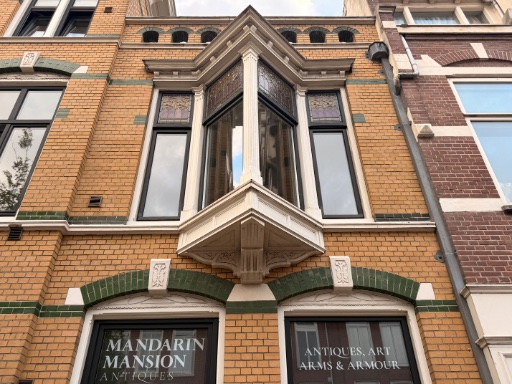
取扱店 Mandarin Mansion
写真に鑑定書が写っていますが、当サイトの記録にはまだありません。私たちが第三者による確認として頼りにしているのは、現在有効な日刀保・日本刀剣保存会の審査の鑑定書です。鑑定書の鮮明な写真を刀剣商にお求めになるとよいでしょう。 — Hoshi
販売中 4点






販売店の記載のまま
(翻訳なし)
新刀 · Iwashiro
現在4点販売中
会津三善は、岩代会津に興った新刀の一門で、三善長道とその系をいう。説示が伝えるところによれば、長道は三好藤四郎と称し、伊予松山に住した長国の孫にあたる。長国は加藤嘉明に抱えられた工で、寛永四年に加藤家が伊予から奥州会津へ移封となった際、これに従って会津へ移り、長道の父政長もまた長国と共に会津へ移った。長道は寛永十年に会津で生まれ、長国の門に学んで初め道長と銘し、万治の頃に陸奥大掾を受領して名を長道と改め、貞享二年に五十三歳で歿している。藩主家の移封に随伴した一門が会津の地に根を下ろし、長道に至って会津新刀の事実上の祖と目されるに至った経緯が、説示の各所に共通して記される。なお一説に津田助広の門とする伝えも見えるが、説示はその作柄をもっぱら江戸の長曽祢虎徹に引き寄せて述べている。 作風は、説示が繰り返し記すところでは、のたれに互の目を交え、高低のある乱れ刃を本領とする。多くは直ぐ調に短く焼き出し、その上は焼幅を広くとって小のたれや大互の目に互の目を交え、処々で互の目が二つ連れて瓢箪刃風を呈する点が、ほぼ全作に共通する特色である。足は長くよく入り、匂深く、沸が厚くつき、荒めの沸やむら沸を交えることもあり、砂流しがかかって金筋が入り、匂口は明るく冴える。鍛えは板目に杢や流れ肌を交え、地沸が微塵に厚くつき、地景が細かによく入る。帽子は直ぐ調あるいは浅くのたれて小丸に返り、先を掃きかけるものが多く、説示はこれを虎徹の帽子に相似すると評する。総じて、江戸の長曽祢虎徹のハネトラ時代の作柄に近いとされ、見分けの要点もこの虎徹に通う乱れ刃と瓢箪刃風、厚い沸の働きに置かれる。 伝承の面では、生ぶ茎に栗尻、鑢目は勝手下がりを常とし、指表棟寄りに長銘を切る作例が伝わる。截断銘を伴う作が少なくなく、山野勘十郎久英の金象嵌截断銘や、神谷源次可朋の試し銘を裏に添えるものが説示に挙げられている。伝来として名高い一口は、池田屋事件の功により会津藩主松平容保から新撰組の近藤勇が賜ったと伝え、のちに谷干城将軍の蔵に帰し、さらに土佐山内家へ伝来したものである。年紀のある作も資料として重んじられ、ことに貞享二年紀の刀は長道歿年にあたることから最晩年の作と理解され、資料的にも貴重とされる。鑑定にあたっては、瓢箪刃風を交えた高低ある乱れ刃と虎徹に通う帽子、厚くついた沸と砂流し・金筋の働きが手がかりとなり、長道の最も得意とした作域を示す出来こそ、この一門を見定める拠りどころとなる。 詳しく見る →
新々刀 復古の運動
1800年前後、水心子正秀は著述をもって、鍛刀は古作の法に立ち返るべしと説いた。復古刀の運動である。最大の後継者直胤は、数百年絶えていた備前伝と相州伝を確信をもって再現した。
刀剣商の出品ページで鑑定書を確認できませんでした。日本刀および刀装具は通常、NBTHK(または NTHK)の鑑定を受けます。鑑定書がない場合、極めは刀剣商の見解にとどまり、第三者による確認は行われていません。ご購入前に刀剣商へ鑑定書の有無をお問い合わせのうえ、慎重にご判断ください。
当サイトでご注文いただいた商品が、掲載されている画像や説明と異なる場合、返品を承ります。返品をご希望の際は、商品到着後7日以内にメールにてご連絡ください。返金額は、購入代金から送料、銀行手数料、および通貨換算にかかる費用を差し引いた金額となります。分割払いで購入された商品、および現物を確認された商品の返品・交換は一切お受けできません。
€12,000