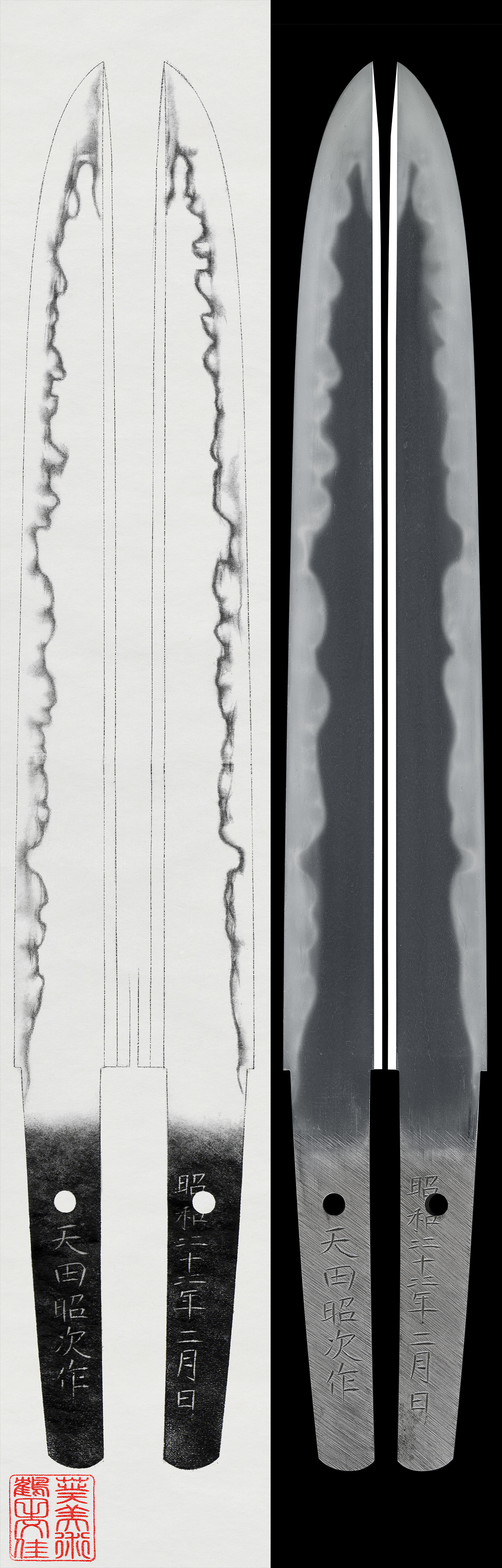
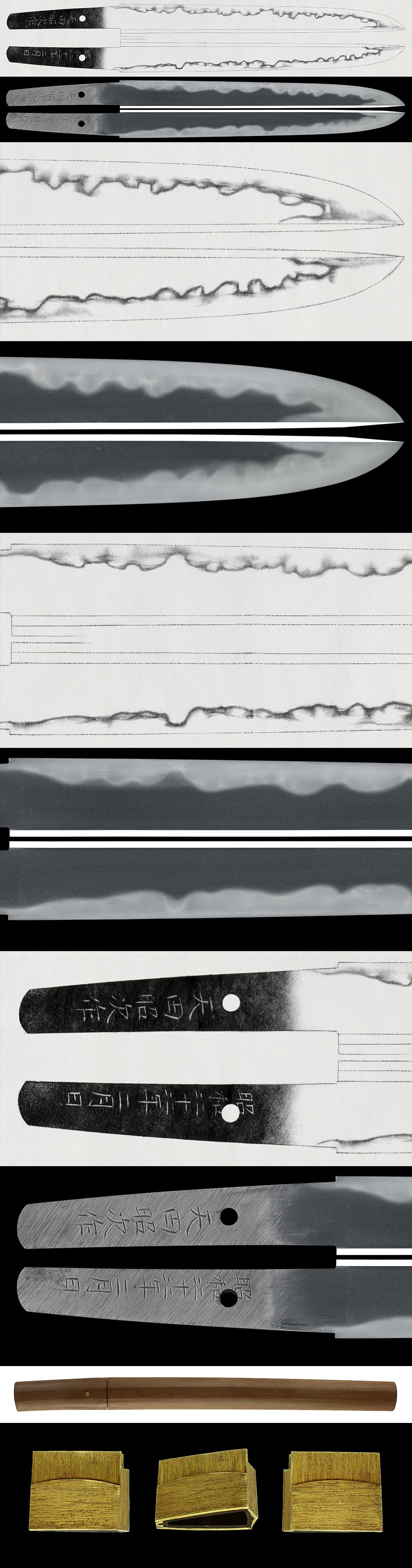
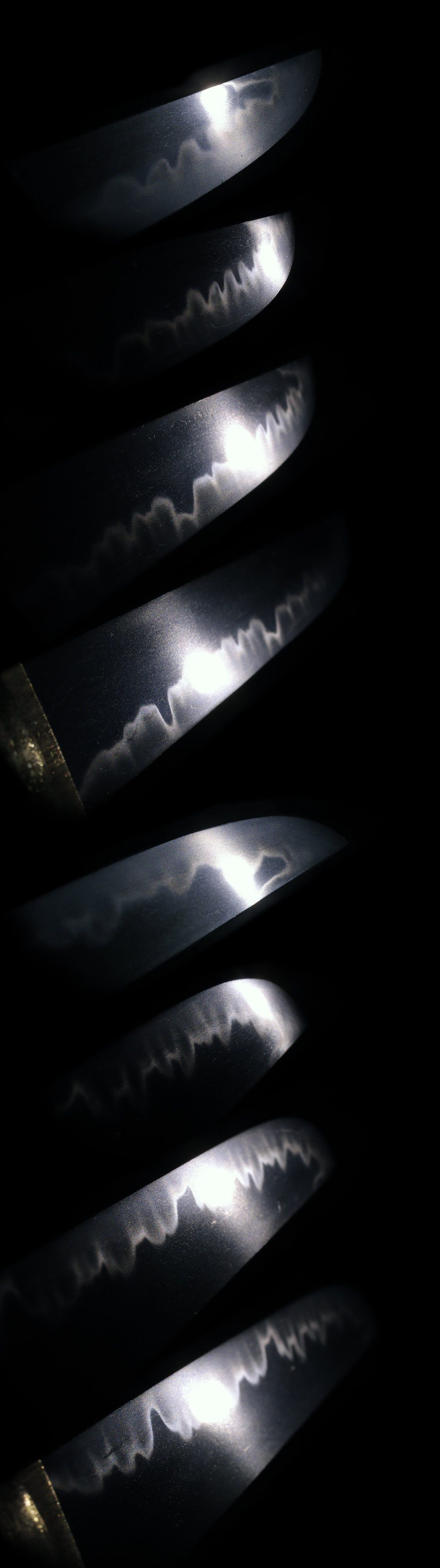
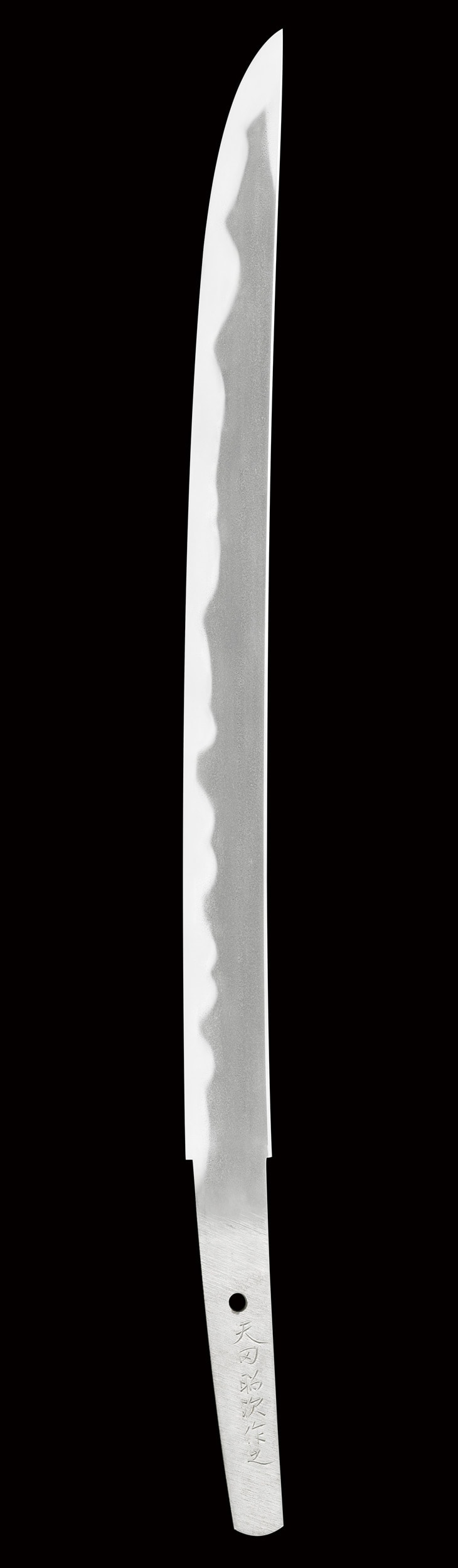
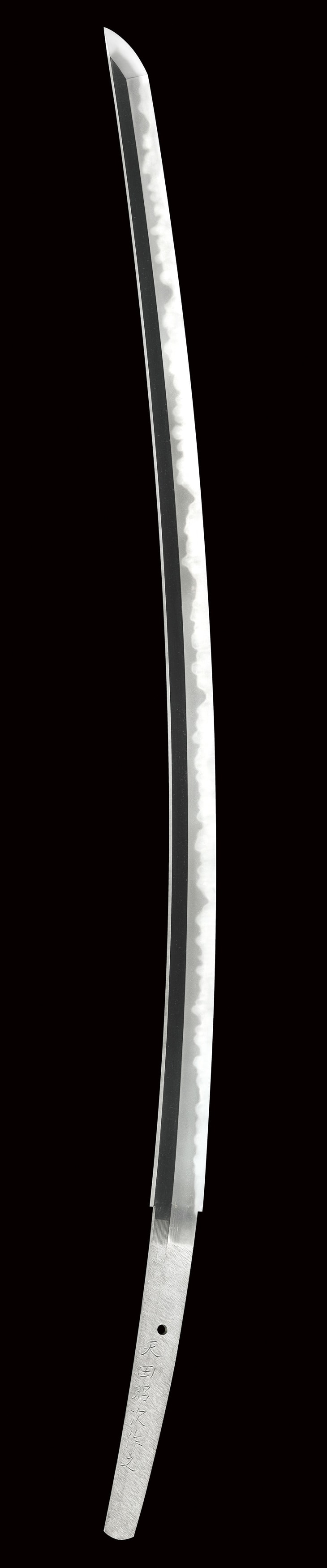
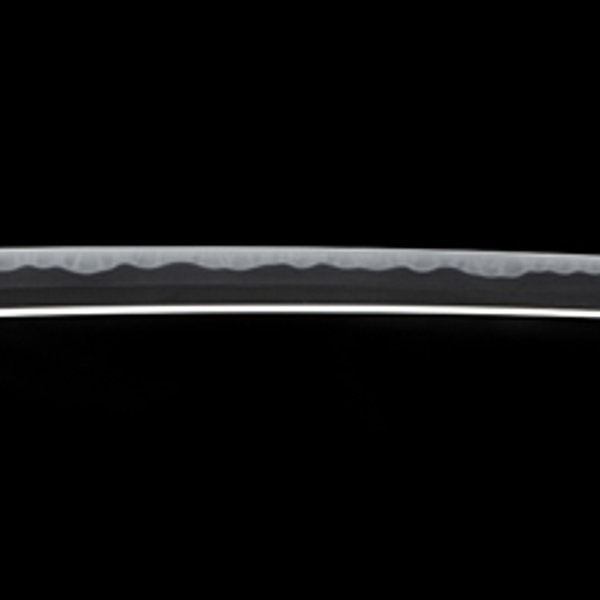
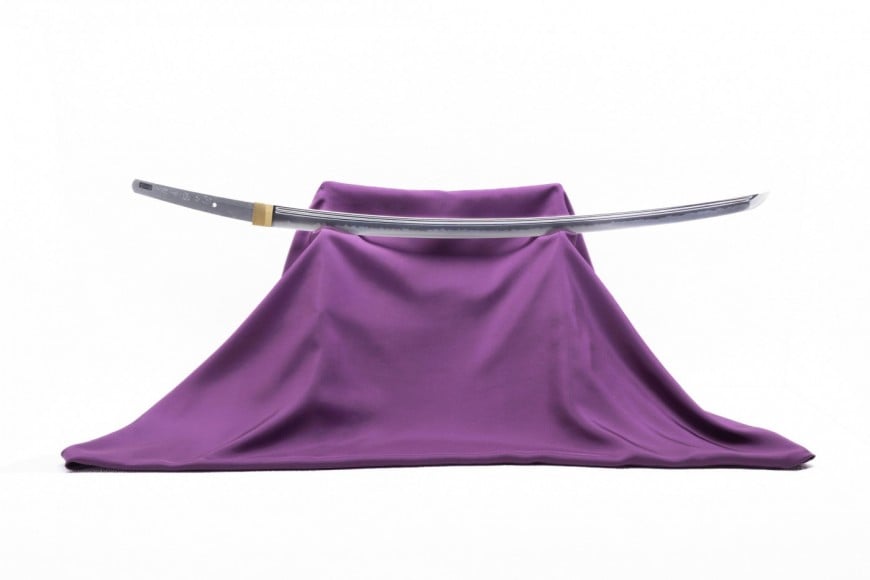
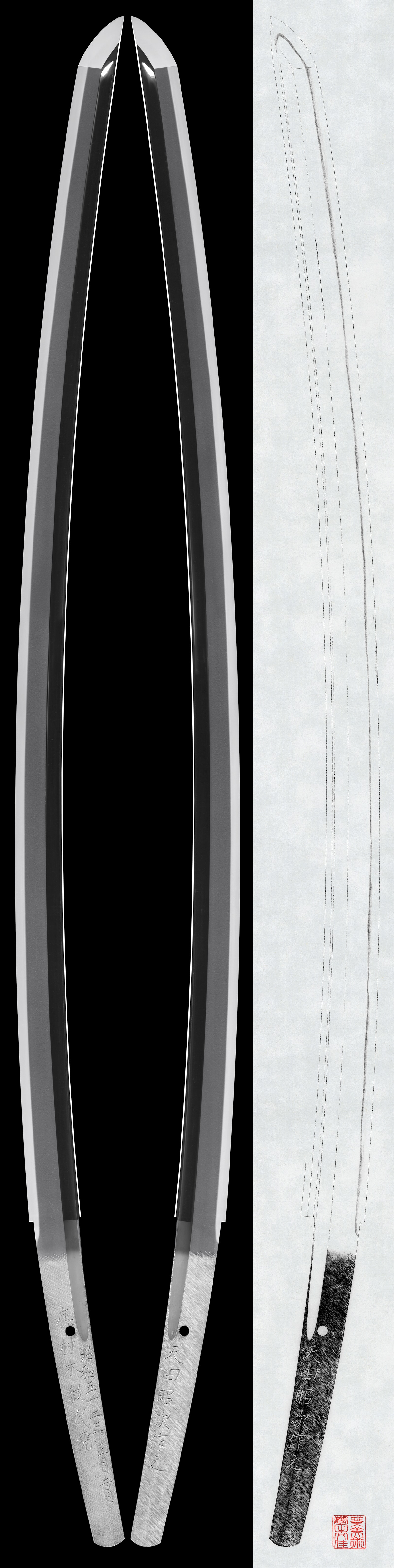
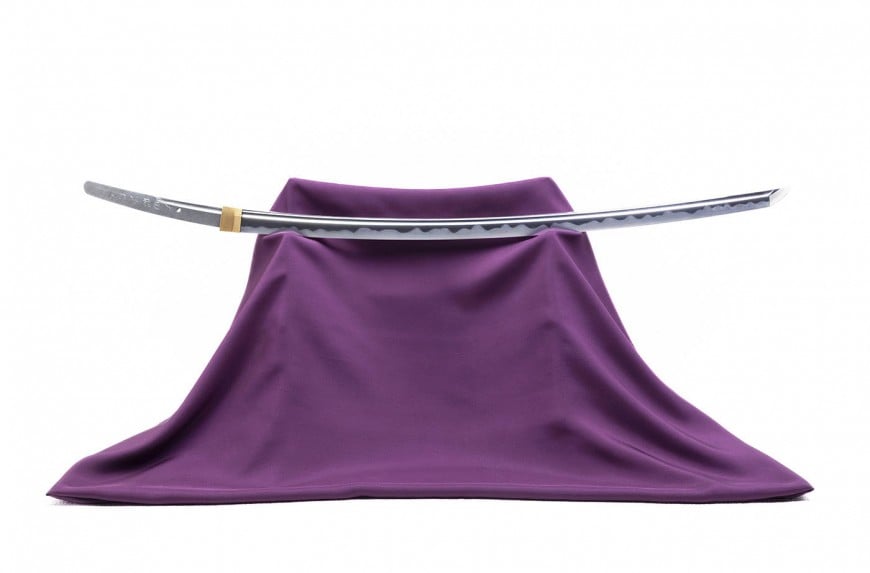
Ordering number:23537Tanto: in Shirasaya (NBTHK Tokubetsu Hozon Token)Signature: Amada Akitsugu (Living National Treasure, Important Intangible Cultural Property)Showa 44 Nen 2 Gatsu Hi (February 1969)天田昭次作(人間国宝・無形文化財)昭和四十四年二月日We divide 4 sections for each sword as Saijyo Saku, Jyojyo Saku, Jyo Saku and Regular Saku.This work is ranked as Saijyo Saku for Amada Akitsugu.Polished.Habaki: Gold-plated double habaki.Blade Length: 28.1 cm (11.06 in)Curvature: 0 cm (0 in)Mekugi Hole: 1Width at Base: 2.66 cm (1.05 in)Width at Tip: 2.78 cm (1.09 in)Thickness: 0.61 cm (0.24 in)Sword Weight: 205 grams (7.23 oz)Era: February 1969Shape: The blade is wide with a thick kasane, maintaining a healthy condition with ubuha.Jigane: Ko-itame mixed with mokume, creating a beautiful jigane with ji-nie.Hamon: Starts with ko-gunome, resembling the style of Muramasa, with matching patterns on both sides. The boshi is rounded and returns in ko-maru.Features: The hamon features ko-nie deki with gunome-midare, which becomes larger, with well-functioning ashi, a soft nioiguchi, and a rounded boshi. The blade shows activity such as sunagashi and kinsuji.Aoi Art’s Comment: Amada Akitsugu, whose real name is Seiichi, was born as the eldest son of Amata Sadayoshi in Niigata Prefecture, known for its steel industry. He learned sword forging from his father. Akitsugu trained at the Japanese Sword Forging Training Center but had to cease swordmaking after World War II. After the war, in 1954, he was authorized to forge swords and won the Excellent Award at the first Sword Forging Technology Presentation. He subsequently won the Masamune Prize three times and dedicated swords to the Ise Shrine three times, becoming a Living National Treasure (Important Intangible Cultural Property) in 1997. His work includes various styles such as Bizen, Yamato, and Yamashiro traditions. He passed away in 2013 at the age of 85. Unlike Muramasa, whose hamon can become notable with flaws, this tanto is mostly pristine and
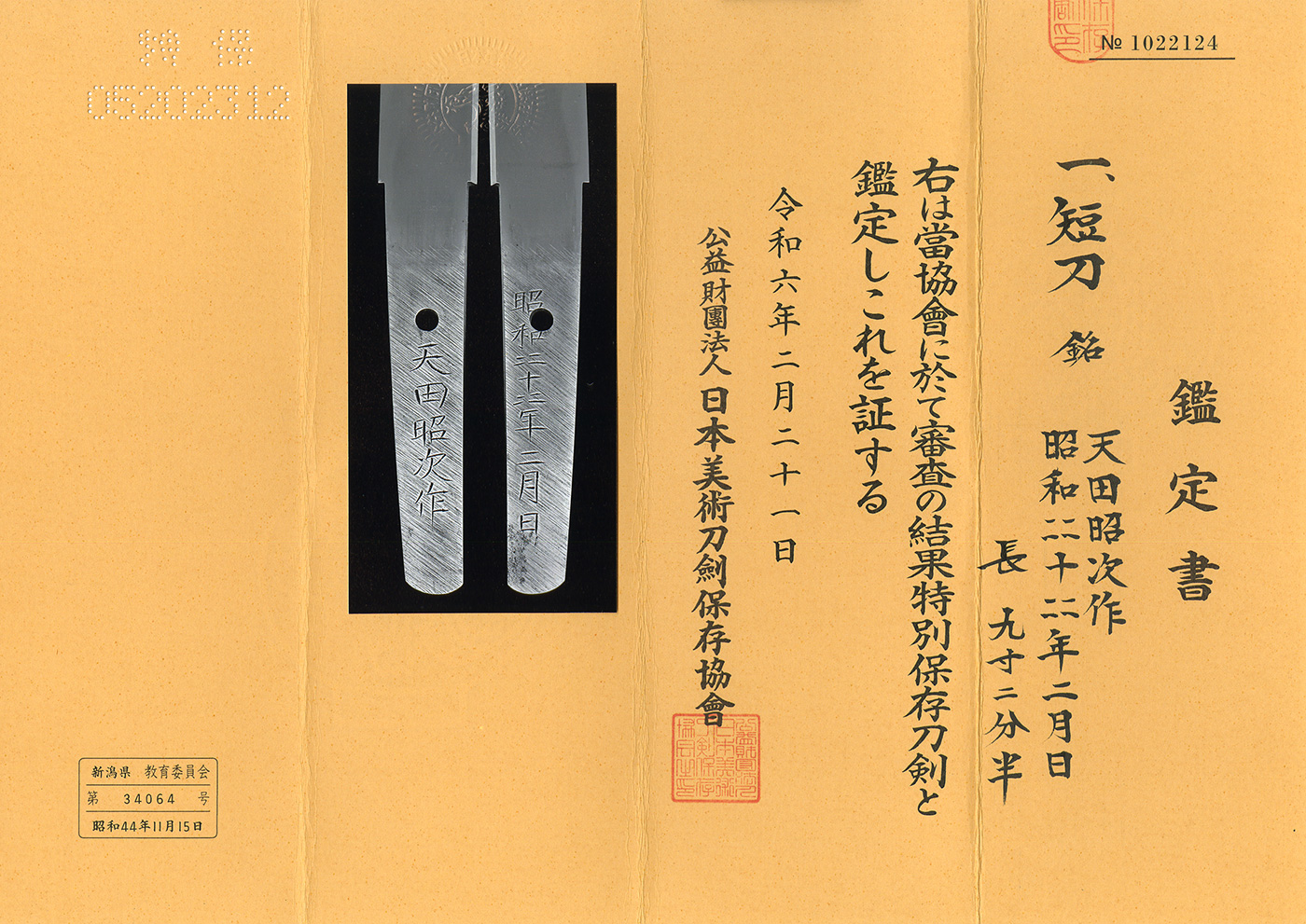
Certificate reading — 銘 天田昭次作 昭和二十二年二月日
在銘 · Showa (1926-1989) · 長さ 28.1cm


Niigata · 1926-1989頃
刀剣大鑑 上位87%
現在7点販売中
保存刀剣のうち、出来が一層優れ、保存状態も良好と認められたものです。再刃や、室町・江戸期の多くの無銘作は対象外となり、保存刀剣より高い基準が課されます。
日本美術刀剣保存協会(NBTHK)は、1948年に設立され、文化庁の監督を受ける公益財団法人で、東京・刀剣博物館に本部を置きます。専門の審査員が出品作を直接審査し、美術的・歴史的価値に応じた鑑定書を発行します。NBTHKの鑑定書は、日本刀および刀装具の真正性を示す最も広く認知された基準です。
NBTHK公式サイト返品をご希望の場合、お客様が受領されてから3日以内にお知らせください。この期間を過ぎますとキャンセルはお受けできかねますので何卒ご了承ください。なお当社へのご返送は、5営業日以内の発送をお願いしております。なおキャンセルは販売した当時の状態がそのまま保持されている事が条件となりますのでお取り扱いには十分ご注意下さい。
Ordering number:23537Tanto: in Shirasaya (NBTHK Tokubetsu Hozon Token)Signature: Amada Akitsugu (Living National Treasure, Important Intangible Cultural Property)Showa 44 Nen 2 Gatsu Hi (February 1969)天田昭次作(人間国宝・無形文化財)昭和四十四年二月日We divide 4 sections for each sword as Saijyo Saku, Jyojyo Saku, Jyo Saku and Regular Saku.This work is ranked as Saijyo Saku for Amada Akitsugu.Polished.Habaki: Gold-plated double habaki.Blade Length: 28.1 cm (11.06 in)Curvature: 0 cm (0 in)Mekugi Hole: 1Width at Base: 2.66 cm (1.05 in)Width at Tip: 2.78 cm (1.09 in)Thickness: 0.61 cm (0.24 in)Sword Weight: 205 grams (7.23 oz)Era: February 1969Shape: The blade is wide with a thick kasane, maintaining a healthy condition with ubuha.Jigane: Ko-itame mixed with mokume, creating a beautiful jigane with ji-nie.Hamon: Starts with ko-gunome, resembling the style of Muramasa, with matching patterns on both sides. The boshi is rounded and returns in ko-maru.Features: The hamon features ko-nie deki with gunome-midare, which becomes larger, with well-functioning ashi, a soft nioiguchi, and a rounded boshi. The blade shows activity such as sunagashi and kinsuji.Aoi Art’s Comment: Amada Akitsugu, whose real name is Seiichi, was born as the eldest son of Amata Sadayoshi in Niigata Prefecture, known for its steel industry. He learned sword forging from his father. Akitsugu trained at the Japanese Sword Forging Training Center but had to cease swordmaking after World War II. After the war, in 1954, he was authorized to forge swords and won the Excellent Award at the first Sword Forging Technology Presentation. He subsequently won the Masamune Prize three times and dedicated swords to the Ise Shrine three times, becoming a Living National Treasure (Important Intangible Cultural Property) in 1997. His work includes various styles such as Bizen, Yamato, and Yamashiro traditions. He passed away in 2013 at the age of 85. Unlike Muramasa, whose hamon can become notable with flaws, this tanto is mostly pristine and
Certificate reading — 銘 天田昭次作 昭和二十二年二月日
在銘 · Showa (1926-1989) · 長さ 28.1cm


Niigata · 1926-1989頃
刀剣大鑑 上位87%
現在7点販売中
保存刀剣のうち、出来が一層優れ、保存状態も良好と認められたものです。再刃や、室町・江戸期の多くの無銘作は対象外となり、保存刀剣より高い基準が課されます。
日本美術刀剣保存協会(NBTHK)は、1948年に設立され、文化庁の監督を受ける公益財団法人で、東京・刀剣博物館に本部を置きます。専門の審査員が出品作を直接審査し、美術的・歴史的価値に応じた鑑定書を発行します。NBTHKの鑑定書は、日本刀および刀装具の真正性を示す最も広く認知された基準です。
NBTHK公式サイト返品をご希望の場合、お客様が受領されてから3日以内にお知らせください。この期間を過ぎますとキャンセルはお受けできかねますので何卒ご了承ください。なお当社へのご返送は、5営業日以内の発送をお願いしております。なおキャンセルは販売した当時の状態がそのまま保持されている事が条件となりますのでお取り扱いには十分ご注意下さい。