売切れ
Hozon売切れ
Edo period antique Tsuba for Samurai Sword with NBTHK Hozon Certificate (T-358)
売却済
世界81社の刀剣商を横断追跡 · 価格履歴 · 売却アーカイブ
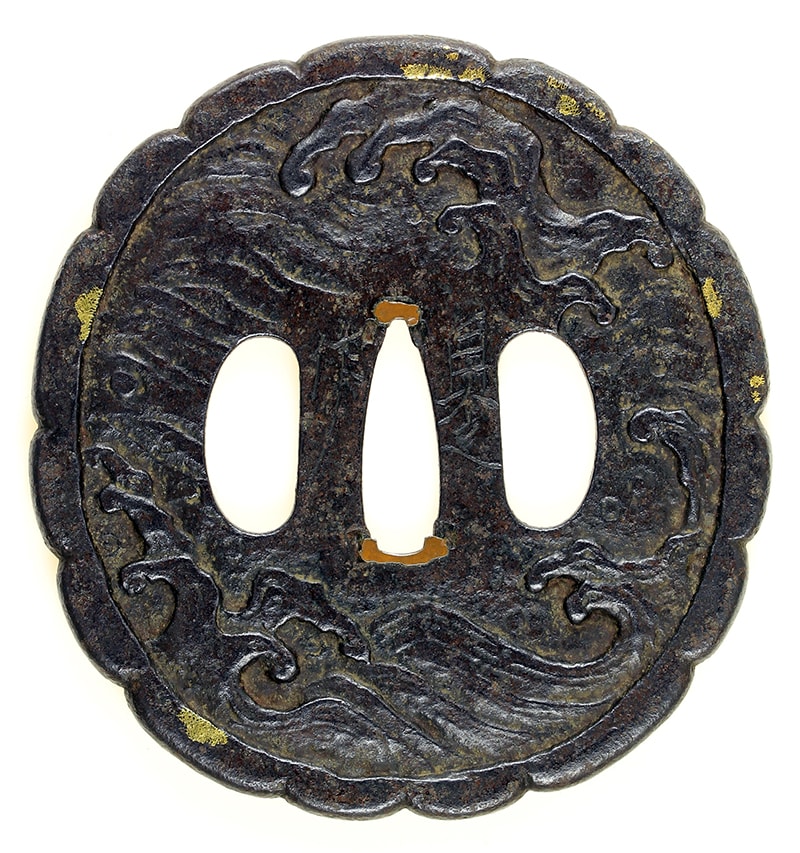
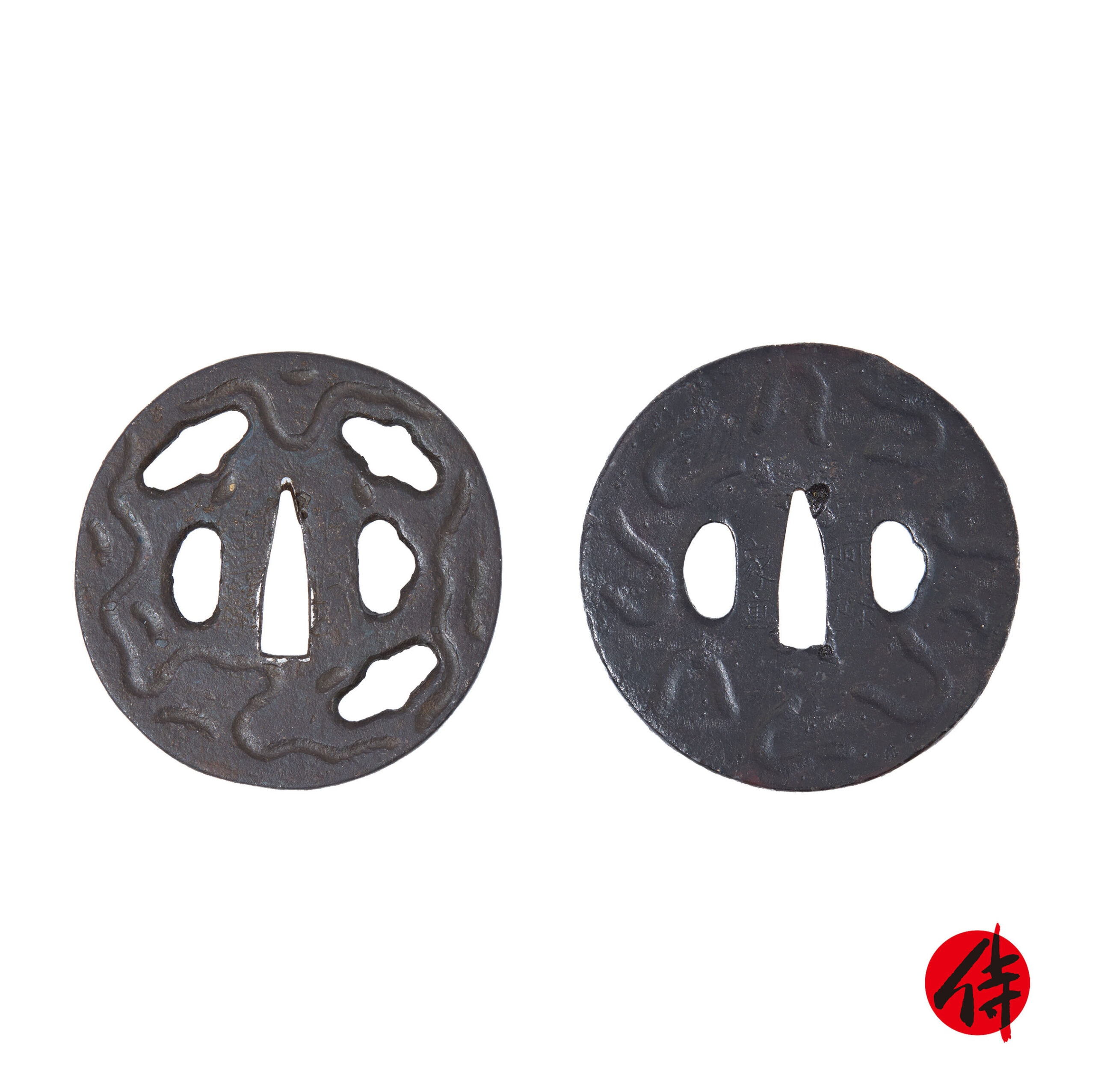
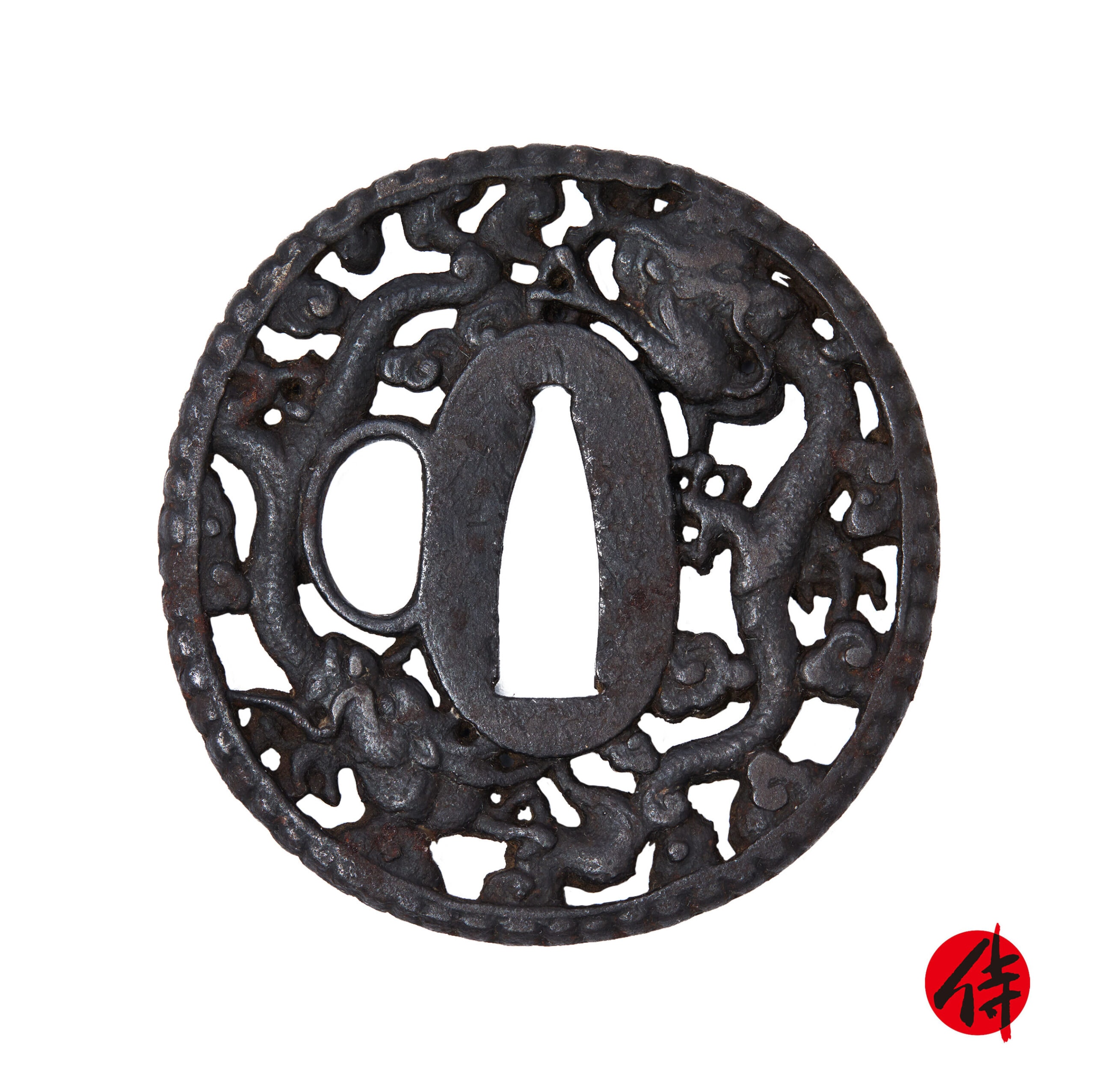
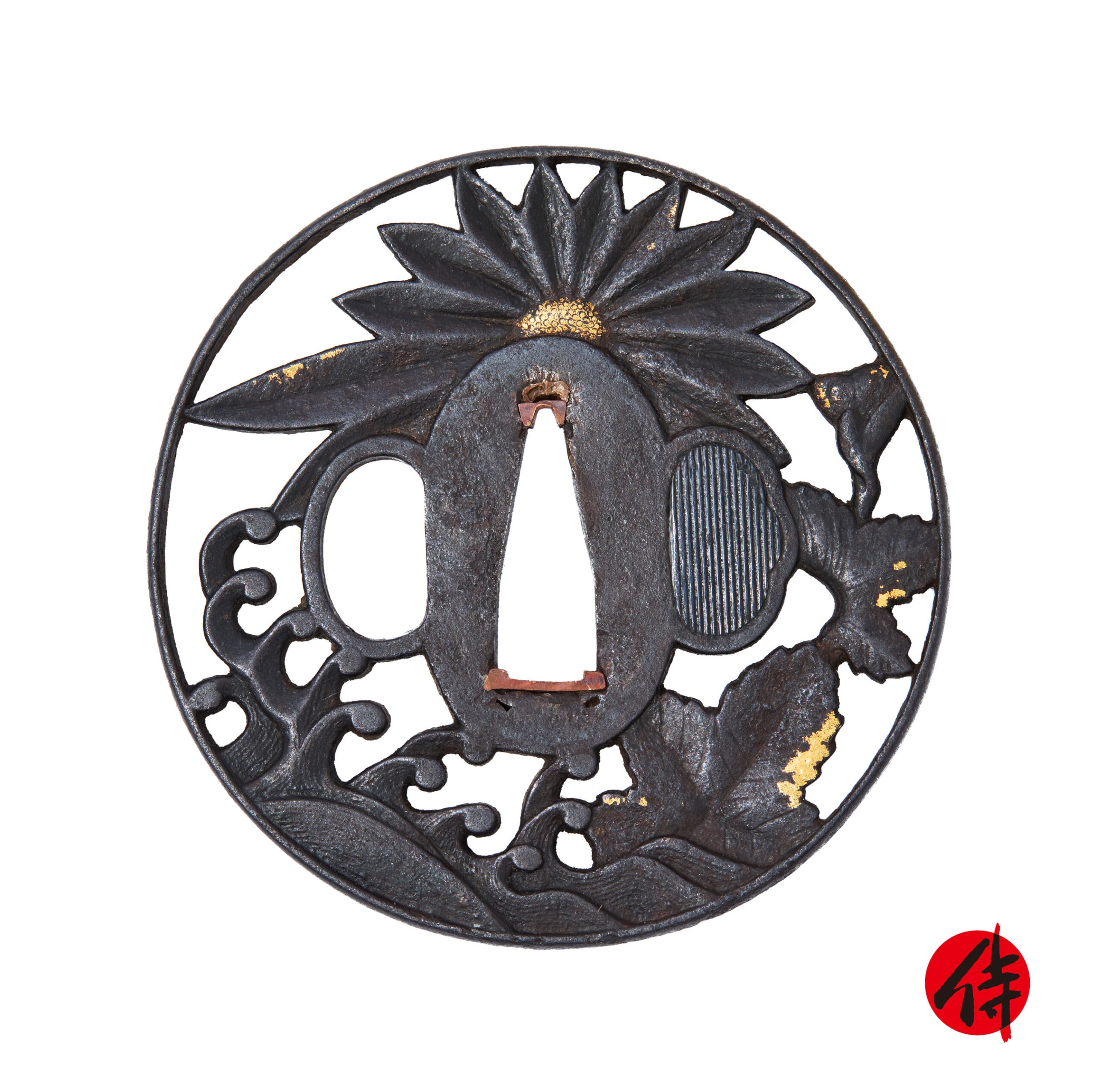
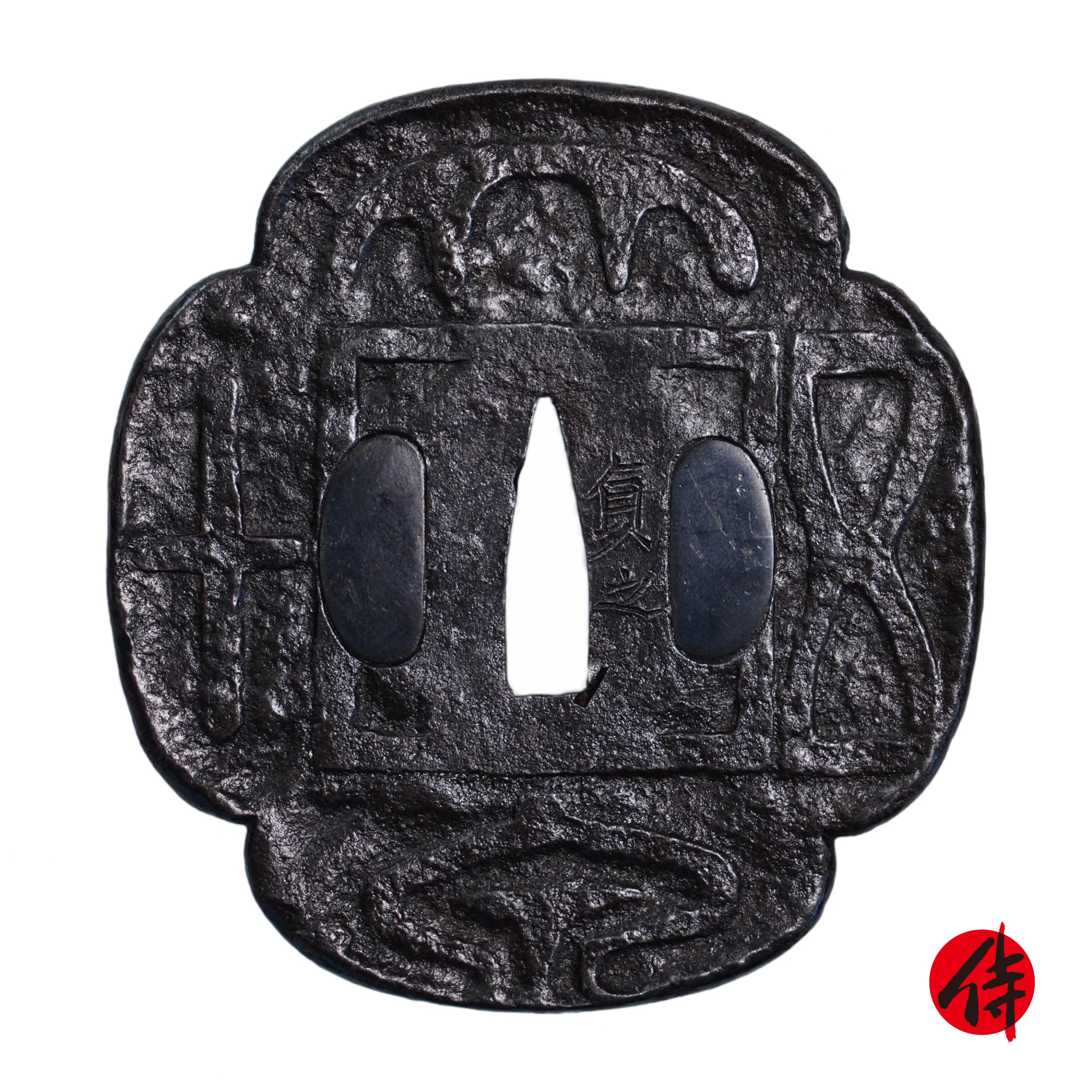
Title: Kiri-Mon Karakusa Kosen Zu Description Mokkou (木瓜)-shaped Tsuba made from iron. Mokkou shape, its origin is a shape of eggs that are rest in a nest. When a quince (it is written 木瓜 in Japanese) is cut into round slices, its cross-section looks similar to this shape; therefore, it was named Mokkougata Tsuba. Yotsu-Mokkougata (a combination of four Mokkou shapes) Tsuba is often seen as this Tsuba. The Gosan-no Kiri (五三の桐) pattern is designed. The Kiri (桐, paulownia) pattern is composed of three standing straight inflorescences and three leaves. The number of blooming flowers at each inflorescence represents the ranks of this design. For instance, the Goshichi-no Kiri (五七の桐) pattern has five-seven-five flowers for inflorescences. So that this is a more high-ranked design than Gosan-no Kiri (three-five-three flowers) pattern, this motif is known as the symbolic design of the Japanese government. It is also famous that one of the most popular Samurais in Japan: Toyotomi Hideyoshi used the Kiri pattern for his family crest. This plant pattern was once used by the imperial family and national leaders of the time. The Karakusa (唐草) pattern is a design in which stems and leaves of vines are twined and make curves. Since ivy has a strong vitality and grows up without interruption, people regarded this design as a symbol of prosperity and longevity. This Tsuba is recognized by The Society for Preservation of Japanese Art Swords, which is known as NBTHK. According to its certificate, this Tsuba’s maker is Sadayuki (貞之). You could find his signature if you focus on the right side of the Nakago hole (茎穴, center hole). Since this Tsuba does not have ornamental decoration such as gold or silver inlay, we hope that you would enjoy the texture of its material iron itself. *As this item is an antique, please check each photo and ensure its condition. What is Tsuba? Tsuba is the hand-guard of the Japanese sword. High-class Samurai wore his katana sword with its beautiful sword mountings such as Tsuba. Tsuba’s front design tends to be more decorative as this part was often seen by other Samurais when he was walking on the streets. Why is it that the sword mounting was important for Samurai? The sword mountings of the Japanese sword have many kinds of decorations such as handguards (Tsuba), sword hilt (Menuki), pommel (Fuchi Kashira). The Japanese sword worked as a weapon and as an object to show who he was. For example, it shows their personalities and beliefs. You could say that it is like decorations for smartphones today. We recommend you zoom in on the pictures of the sword fittings. When you do so, you can see the skill of Japanese metal engraving techniques. They are mainly made of iron and copper with inlays of gold, silver, and bronze. When it comes to handguard (Tsuba), each one has a different outline and weight. These sword fittings that have lived with Japanese swords of the same age might be worth as much as the Japanese swords. They are inconspicuous parts of the Japanese sword. Nevertheless, if you are knowledgeable or particular about it, you will become a connoisseur of the Samurai. Authentication Paper : NBTHK Hozon Certificate NBTHK, also known as Nihon Bijutsu Touken Hozon Kyokai (the Society for the Preservation of the Japan Art Sword), is one of the oldest Japanese sword appraising organizations in modern-day Japan. They authenticated the Tsuba on Jan 19th in the 29th year of Heisei (2017). They appraised it as Hozon Tousougu, the Tsuba worth preserving for Japanese society. The purchaser will receive this original certificate as well. We can also translate what is written into English and make a PDF file for your record if you request. 【About us】 Samurai Museum is located in Tokyo, Japan, exhibiting antique artifacts related to the Samurai history. Samurai Museum Shop is the place for those who are interested in Japanese culture and craftsmanship. We deal with antique Samurai swords/armor, traditional crafts made in J
 NihontoWatchBETA
売却済
世界81社の刀剣商を横断追跡 · 価格履歴 · 売却アーカイブ
Title: Kiri-Mon Karakusa Kosen Zu Description Mokkou (木瓜)-shaped Tsuba made from iron. Mokkou shape, its origin is a shape of eggs that are rest in a nest. When a quince (it is written 木瓜 in Japanese) is cut into round slices, its cross-section looks similar to this shape; therefore, it was named Mokkougata Tsuba. Yotsu-Mokkougata (a combination of four Mokkou shapes) Tsuba is often seen as this Tsuba. The Gosan-no Kiri (五三の桐) pattern is designed. The Kiri (桐, paulownia) pattern is composed of three standing straight inflorescences and three leaves. The number of blooming flowers at each inflorescence represents the ranks of this design. For instance, the Goshichi-no Kiri (五七の桐) pattern has five-seven-five flowers for inflorescences. So that this is a more high-ranked design than Gosan-no Kiri (three-five-three flowers) pattern, this motif is known as the symbolic design of the Japanese government. It is also famous that one of the most popular Samurais in Japan: Toyotomi Hideyoshi used the Kiri pattern for his family crest. This plant pattern was once used by the imperial family and national leaders of the time. The Karakusa (唐草) pattern is a design in which stems and leaves of vines are twined and make curves. Since ivy has a strong vitality and grows up without interruption, people regarded this design as a symbol of prosperity and longevity. This Tsuba is recognized by The Society for Preservation of Japanese Art Swords, which is known as NBTHK. According to its certificate, this Tsuba’s maker is Sadayuki (貞之). You could find his signature if you focus on the right side of the Nakago hole (茎穴, center hole). Since this Tsuba does not have ornamental decoration such as gold or silver inlay, we hope that you would enjoy the texture of its material iron itself. *As this item is an antique, please check each photo and ensure its condition. What is Tsuba? Tsuba is the hand-guard of the Japanese sword. High-class Samurai wore his katana sword with its beautiful sword mountings such as Tsuba. Tsuba’s front design tends to be more decorative as this part was often seen by other Samurais when he was walking on the streets. Why is it that the sword mounting was important for Samurai? The sword mountings of the Japanese sword have many kinds of decorations such as handguards (Tsuba), sword hilt (Menuki), pommel (Fuchi Kashira). The Japanese sword worked as a weapon and as an object to show who he was. For example, it shows their personalities and beliefs. You could say that it is like decorations for smartphones today. We recommend you zoom in on the pictures of the sword fittings. When you do so, you can see the skill of Japanese metal engraving techniques. They are mainly made of iron and copper with inlays of gold, silver, and bronze. When it comes to handguard (Tsuba), each one has a different outline and weight. These sword fittings that have lived with Japanese swords of the same age might be worth as much as the Japanese swords. They are inconspicuous parts of the Japanese sword. Nevertheless, if you are knowledgeable or particular about it, you will become a connoisseur of the Samurai. Authentication Paper : NBTHK Hozon Certificate NBTHK, also known as Nihon Bijutsu Touken Hozon Kyokai (the Society for the Preservation of the Japan Art Sword), is one of the oldest Japanese sword appraising organizations in modern-day Japan. They authenticated the Tsuba on Jan 19th in the 29th year of Heisei (2017). They appraised it as Hozon Tousougu, the Tsuba worth preserving for Japanese society. The purchaser will receive this original certificate as well. We can also translate what is written into English and make a PDF file for your record if you request. 【About us】 Samurai Museum is located in Tokyo, Japan, exhibiting antique artifacts related to the Samurai history. Samurai Museum Shop is the place for those who are interested in Japanese culture and craftsmanship. We deal with antique Samurai swords/armor, traditional crafts made in J
NihontoWatchBETA売却済
世界81社の刀剣商を横断追跡 · 価格履歴 · 売却アーカイブ