売切れ
Hozon売切れ
Edo period antique Shoami Tsuba for Samurai Sword with NBTHK Hozon Certificate (T-682)
売却済
世界81社の刀剣商を横断追跡 · 価格履歴 · 売却アーカイブ
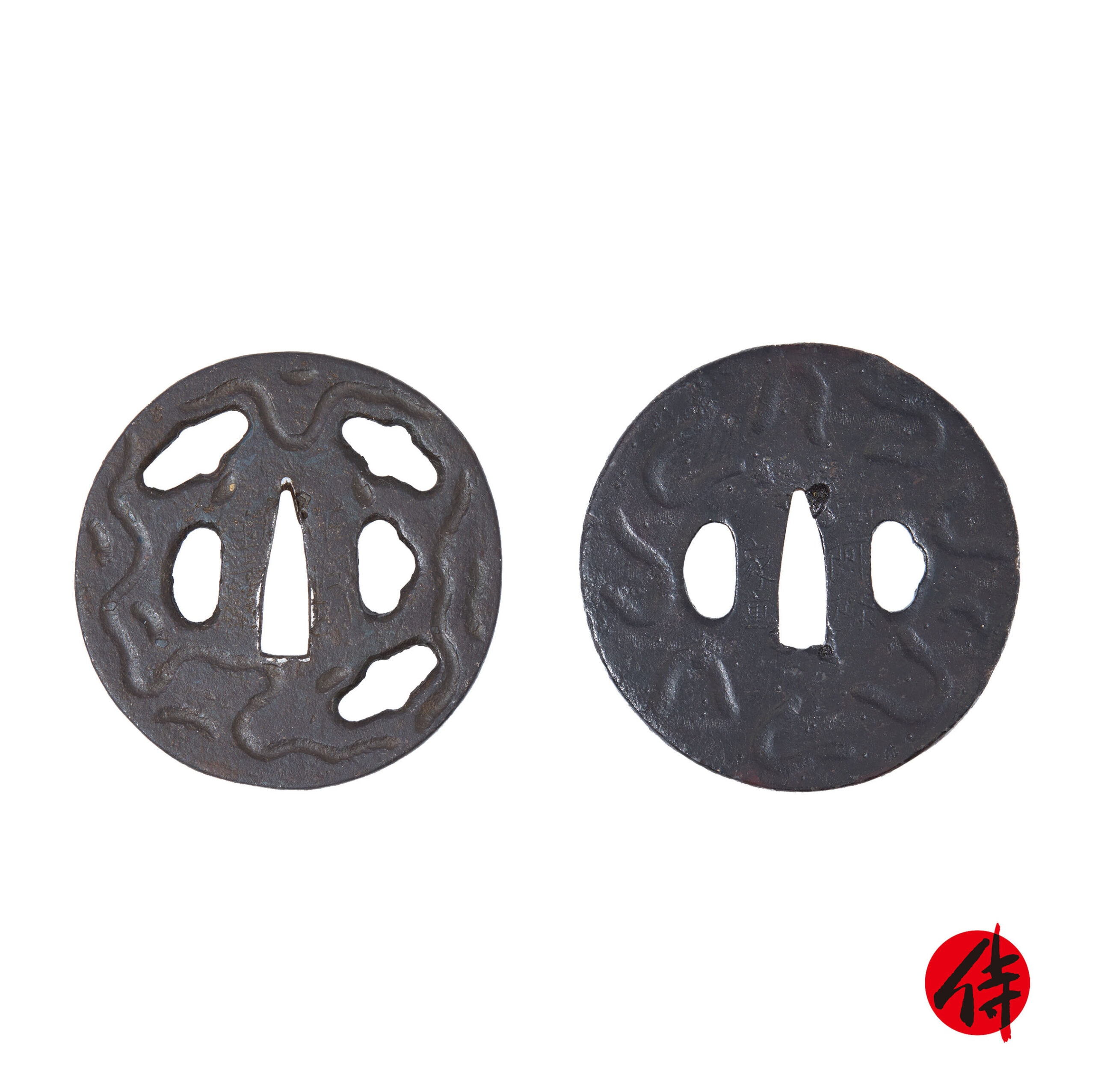
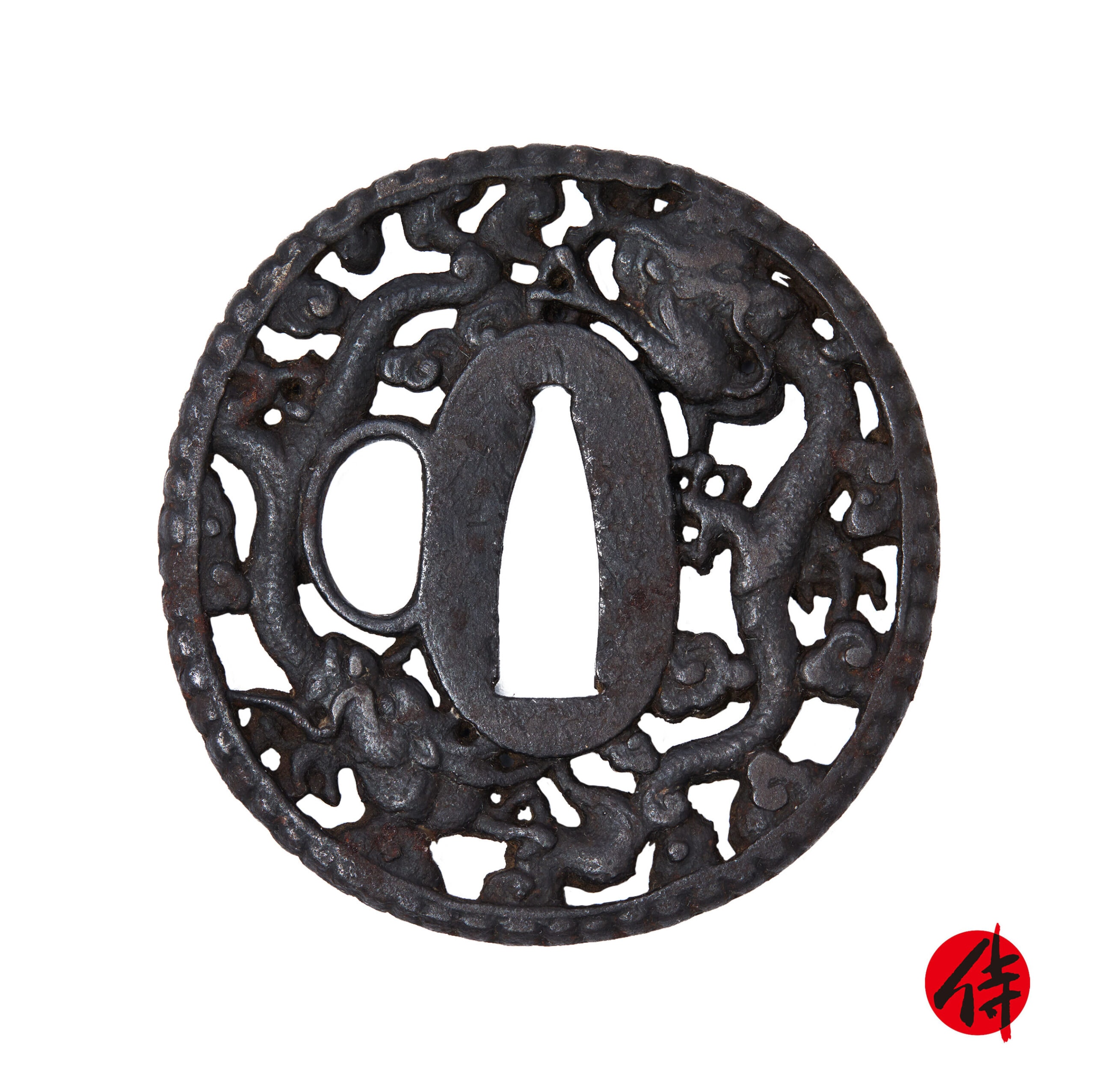
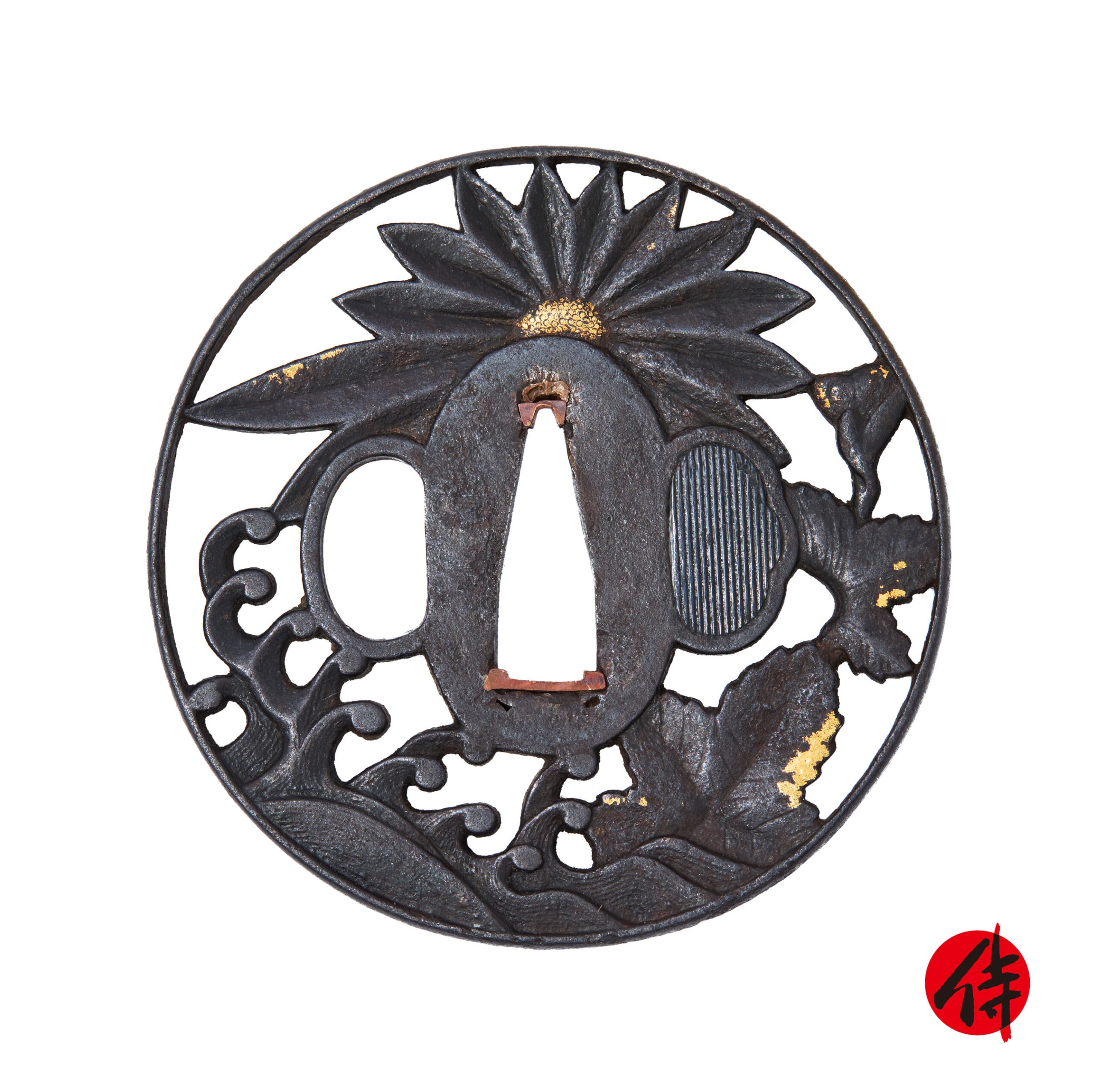
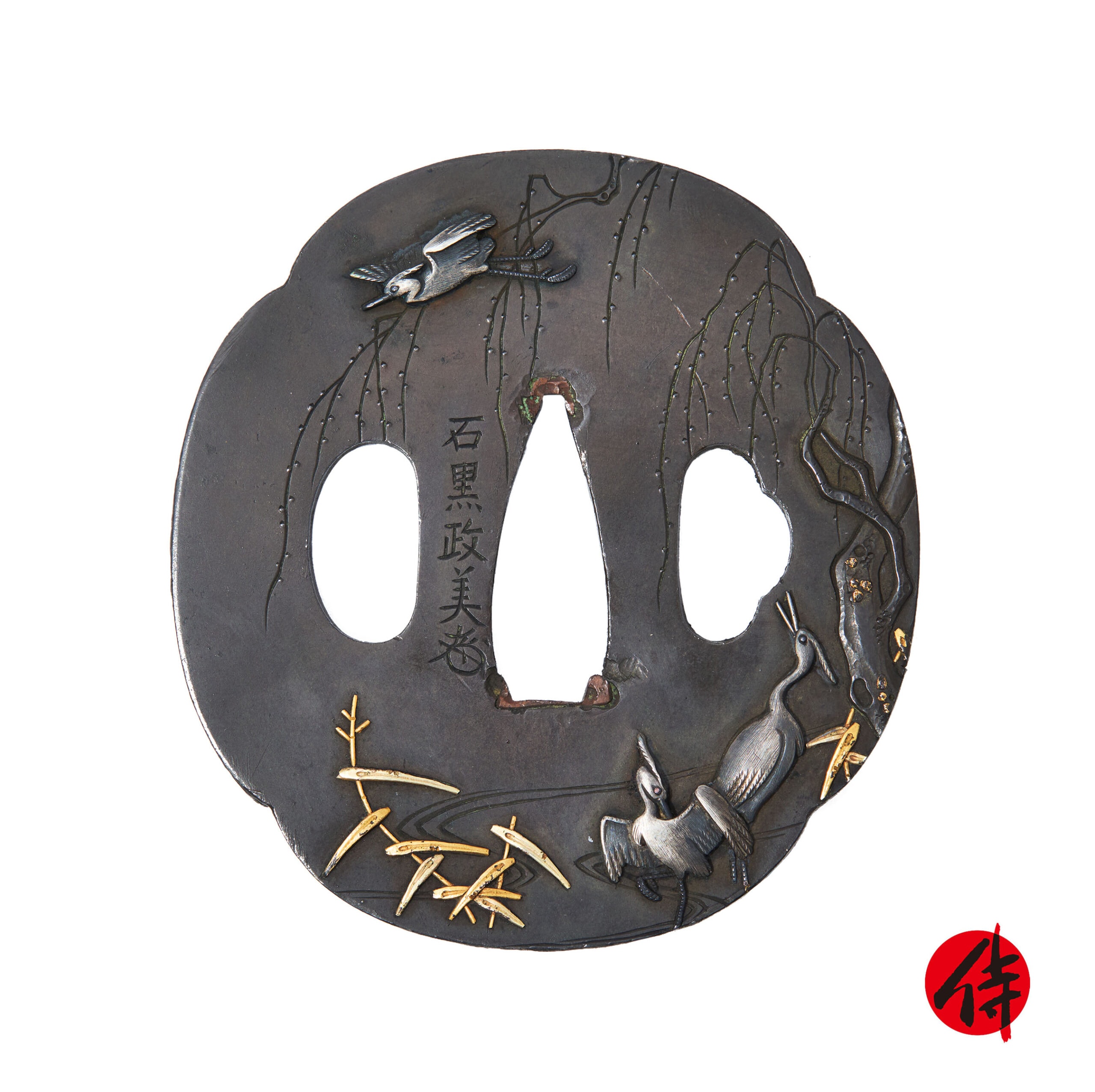
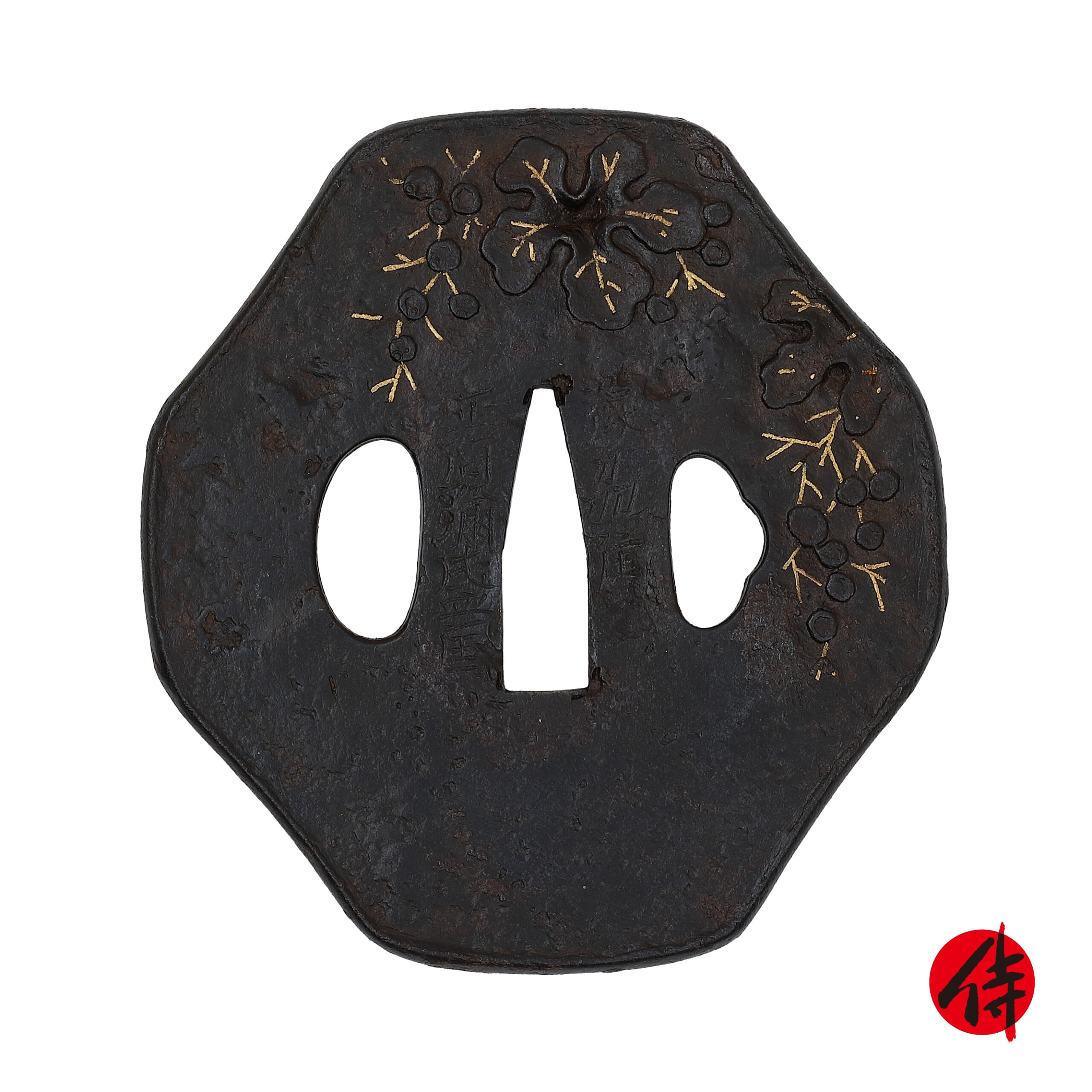
Title: Shoami-style, Budou Zu Tsuba Description This Tsuba is recognized by The Society for Preservation of Japanese Art Swords, which is known as NBTHK. According to the certificate, this Tsuba was made by Yoshu Sho-ami Morikuni (予州正阿弥盛国), who was said to be active during the mid – late Edo period in Iyo province (Today’s Ehime prefecture). The Shoami is the school’s name and this Tsuba is categorized as Shoami Tsuba. It is said that the production of the Shoami style’s Tsubas continued from the Muromachi period (1336-1573) to the Edo period. A theory says the Shoami school originated in Kyoto prefecture, and in various places and each era, there were many craftsmen who called themselves the Shoami school. The Akita (秋田) Shoami, the Aizu (会津) Shoami, and the Iyo (伊予, today’s Ehime prefecture) Shoami exceedingly prospered in this school. In other words, this Tsuba is one of the metalworks born in the area where Tsuba production flourished. This school was a prestigious family that served the Ashikaga (足利) shogunate. Now, please focus on this Tsuba’s design. You would find some leaves and fruits of a tree. This tree is the grape tree (葡萄: Budou). The branches of the tree and veins of the leaves are painted gold. A theory says the grape pattern represents fertility, good health, and longevity. People treat this motif as an auspicious design. In Japanese, there is the word Budou (武道) which means martial arts. As Budou (葡萄, grape) has the same pronunciation of this word, it is considered that grape pattern shares some underlying ideas with Bushido (武士道, Japanese chivalry). That is why many Samurai appreciated the grape motif. Especially the combination of grape and squirrel patterns was widespread, as you see in the second Tsuba in this category. The squirrel is a familiar animal to people since ancient times. According to a theory, this motif was brought to Japan in the Muromachi period (1336-1573). The Budou Risu (葡萄栗鼠, combination of squirrel and grape) pattern became famous and started to be applied to porcelains or sculptures. Since squirrels resemble mice that is a fertile animal, people regarded squirrels as the symbol of the prosperity of descendants. *As this item is an antique, please check each photo and ensure its condition. What is Tsuba? Tsuba is the hand-guard of the Japanese sword. High-class Samurai wore his Katana sword with its beautiful sword mountings such as Tsuba. Tsuba’s front design tends to be more decorative as this part was often seen by other Samurais when he was walking on the streets. Why is it that the sword mounting was important for Samurai? The sword mountings of the Japanese sword have many kinds of decorations such as handguards (Tsuba), sword hilt (Menuki), pommel (Fuchi Kashira). The Japanese sword worked as a weapon and as an object to show who he was. For example, it shows their personalities and beliefs. You could say that it is like decorations for smartphones today. We recommend you zoom in on the pictures of the sword fittings. When you do so, you can see the skill of Japanese metal engraving techniques. They are mainly made of iron and copper with inlays of gold, silver, and bronze. When it comes to handguard (Tsuba), each one has a different outline and weight. These sword fittings that have lived with Japanese swords of the same age might be worth as much as the Japanese swords. They are inconspicuous parts of the Japanese sword. Nevertheless, if you are knowledgeable or particular about it, you will become a connoisseur of the Samurai. Authentication Paper : NBTHK Hozon Certificate (No. 4019032) NBTHK, also known as Nihon Bijutsu Touken Hozon Kyokai (the Society for the Preservation of the Japan Art Sword), is one of the oldest Japanese sword appraising organizations in modern-day Japan. They authenticated the Tsuba on Sep 17th in the 3rd year of Reiwa (2021). They appraised it as Hozon Tousougu, the Tsuba worth preserving for Japanese society. The purchaser will receive this origin
 NihontoWatchBETA
売却済
世界81社の刀剣商を横断追跡 · 価格履歴 · 売却アーカイブ
Title: Shoami-style, Budou Zu Tsuba Description This Tsuba is recognized by The Society for Preservation of Japanese Art Swords, which is known as NBTHK. According to the certificate, this Tsuba was made by Yoshu Sho-ami Morikuni (予州正阿弥盛国), who was said to be active during the mid – late Edo period in Iyo province (Today’s Ehime prefecture). The Shoami is the school’s name and this Tsuba is categorized as Shoami Tsuba. It is said that the production of the Shoami style’s Tsubas continued from the Muromachi period (1336-1573) to the Edo period. A theory says the Shoami school originated in Kyoto prefecture, and in various places and each era, there were many craftsmen who called themselves the Shoami school. The Akita (秋田) Shoami, the Aizu (会津) Shoami, and the Iyo (伊予, today’s Ehime prefecture) Shoami exceedingly prospered in this school. In other words, this Tsuba is one of the metalworks born in the area where Tsuba production flourished. This school was a prestigious family that served the Ashikaga (足利) shogunate. Now, please focus on this Tsuba’s design. You would find some leaves and fruits of a tree. This tree is the grape tree (葡萄: Budou). The branches of the tree and veins of the leaves are painted gold. A theory says the grape pattern represents fertility, good health, and longevity. People treat this motif as an auspicious design. In Japanese, there is the word Budou (武道) which means martial arts. As Budou (葡萄, grape) has the same pronunciation of this word, it is considered that grape pattern shares some underlying ideas with Bushido (武士道, Japanese chivalry). That is why many Samurai appreciated the grape motif. Especially the combination of grape and squirrel patterns was widespread, as you see in the second Tsuba in this category. The squirrel is a familiar animal to people since ancient times. According to a theory, this motif was brought to Japan in the Muromachi period (1336-1573). The Budou Risu (葡萄栗鼠, combination of squirrel and grape) pattern became famous and started to be applied to porcelains or sculptures. Since squirrels resemble mice that is a fertile animal, people regarded squirrels as the symbol of the prosperity of descendants. *As this item is an antique, please check each photo and ensure its condition. What is Tsuba? Tsuba is the hand-guard of the Japanese sword. High-class Samurai wore his Katana sword with its beautiful sword mountings such as Tsuba. Tsuba’s front design tends to be more decorative as this part was often seen by other Samurais when he was walking on the streets. Why is it that the sword mounting was important for Samurai? The sword mountings of the Japanese sword have many kinds of decorations such as handguards (Tsuba), sword hilt (Menuki), pommel (Fuchi Kashira). The Japanese sword worked as a weapon and as an object to show who he was. For example, it shows their personalities and beliefs. You could say that it is like decorations for smartphones today. We recommend you zoom in on the pictures of the sword fittings. When you do so, you can see the skill of Japanese metal engraving techniques. They are mainly made of iron and copper with inlays of gold, silver, and bronze. When it comes to handguard (Tsuba), each one has a different outline and weight. These sword fittings that have lived with Japanese swords of the same age might be worth as much as the Japanese swords. They are inconspicuous parts of the Japanese sword. Nevertheless, if you are knowledgeable or particular about it, you will become a connoisseur of the Samurai. Authentication Paper : NBTHK Hozon Certificate (No. 4019032) NBTHK, also known as Nihon Bijutsu Touken Hozon Kyokai (the Society for the Preservation of the Japan Art Sword), is one of the oldest Japanese sword appraising organizations in modern-day Japan. They authenticated the Tsuba on Sep 17th in the 3rd year of Reiwa (2021). They appraised it as Hozon Tousougu, the Tsuba worth preserving for Japanese society. The purchaser will receive this origin
NihontoWatchBETA売却済
世界81社の刀剣商を横断追跡 · 価格履歴 · 売却アーカイブ