Edo period antique Tsuba for Samurai Sword with NBTHK Hozon Certificate (T-648)
売却済
世界81社の刀剣商を横断追跡 · 価格履歴 · 売却アーカイブ
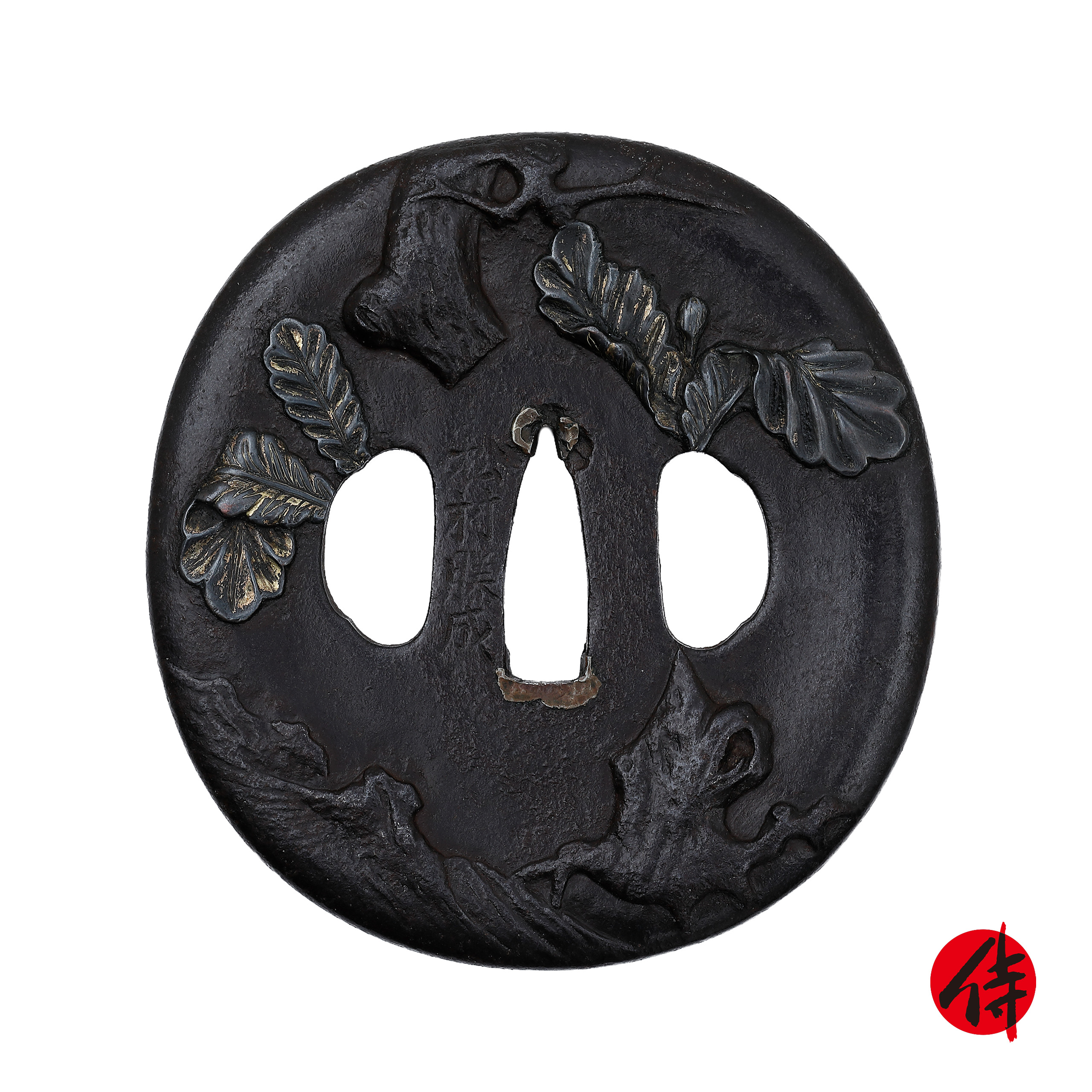
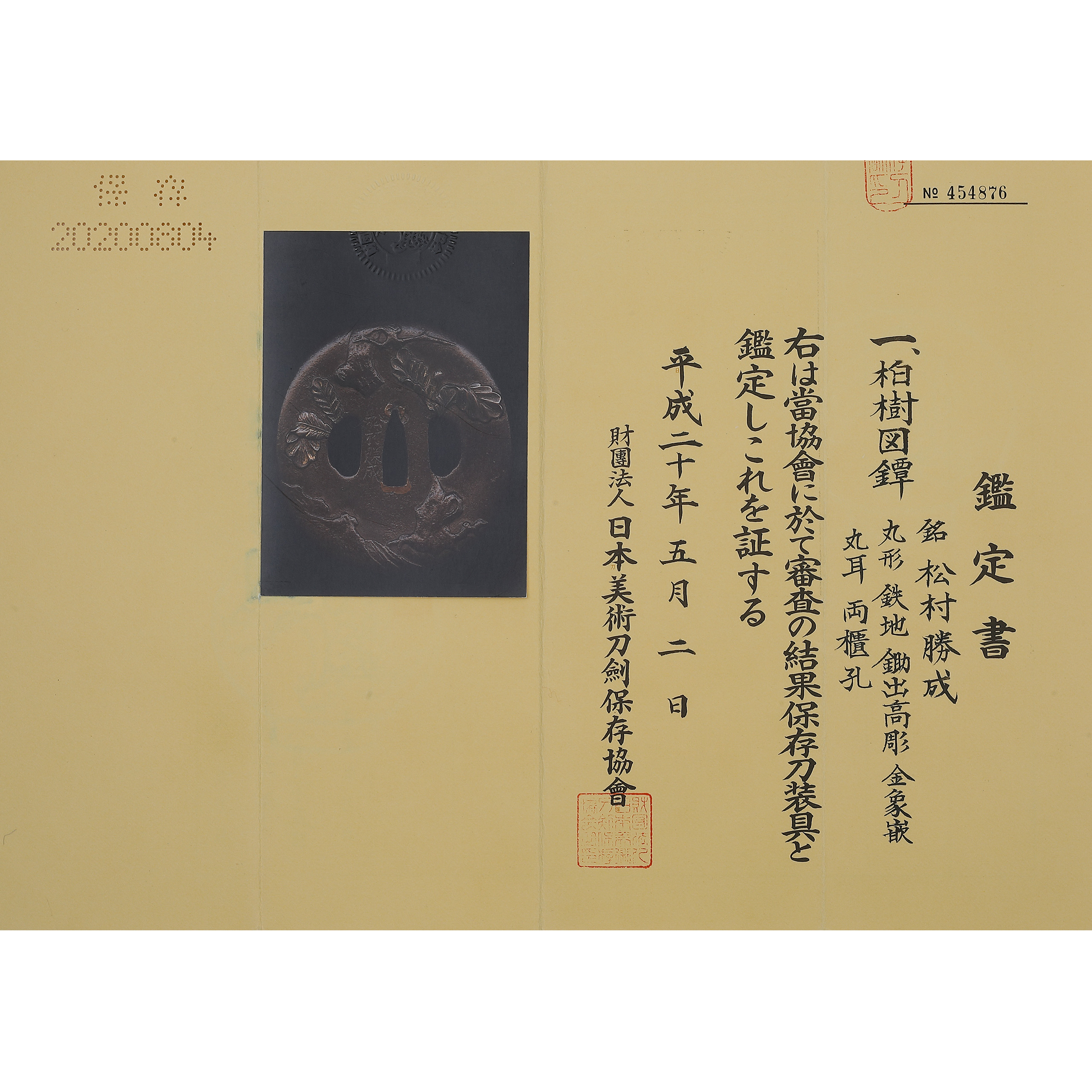
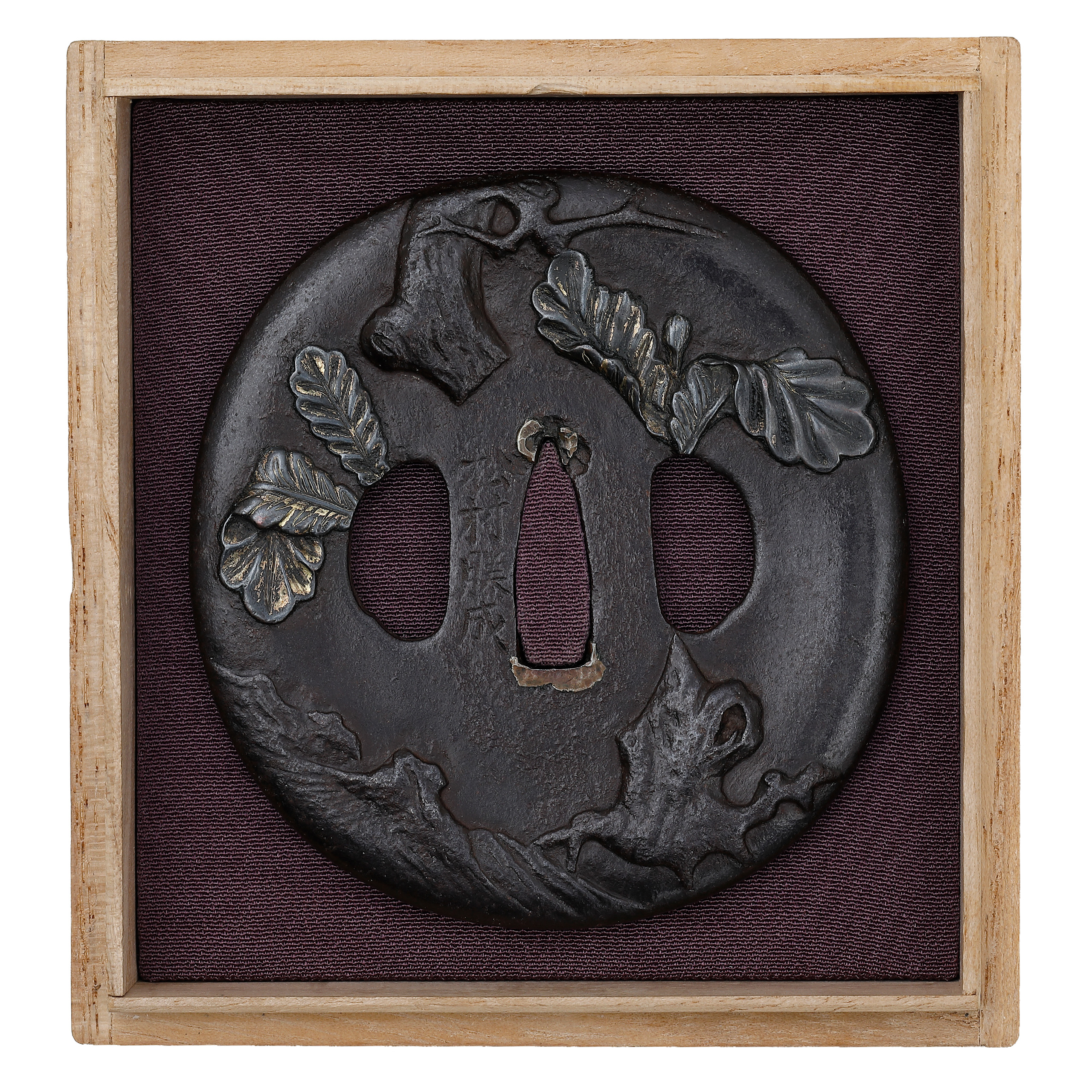
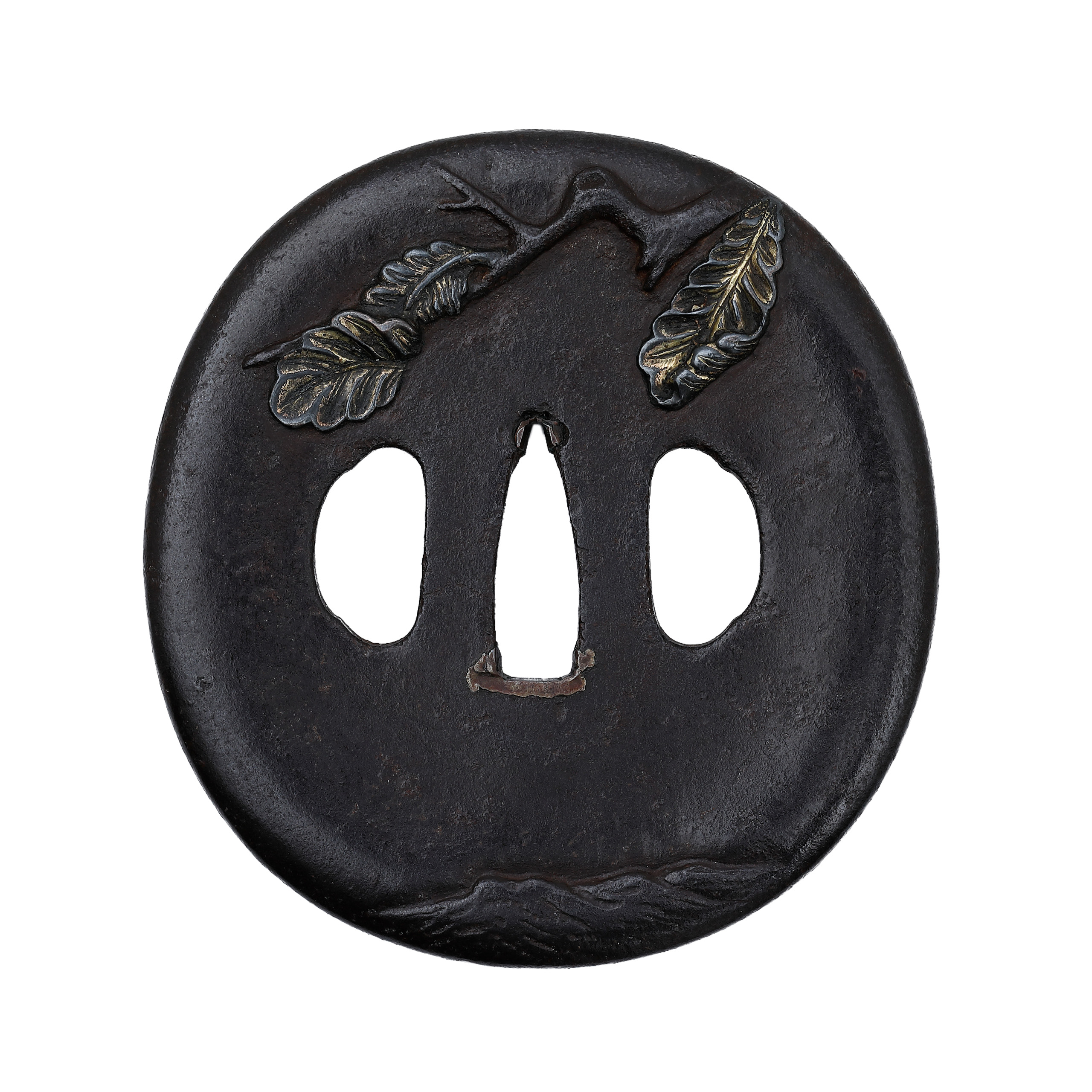
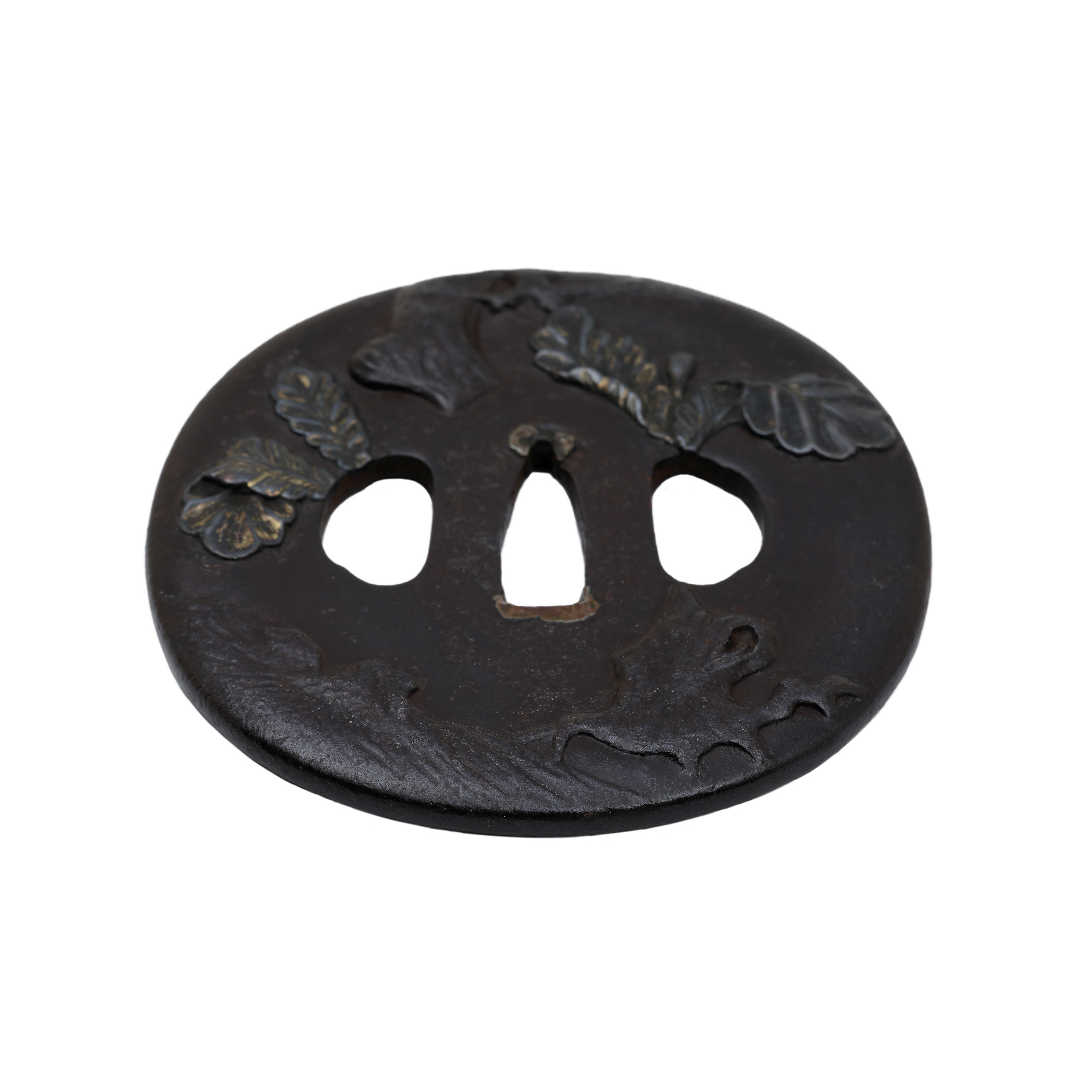
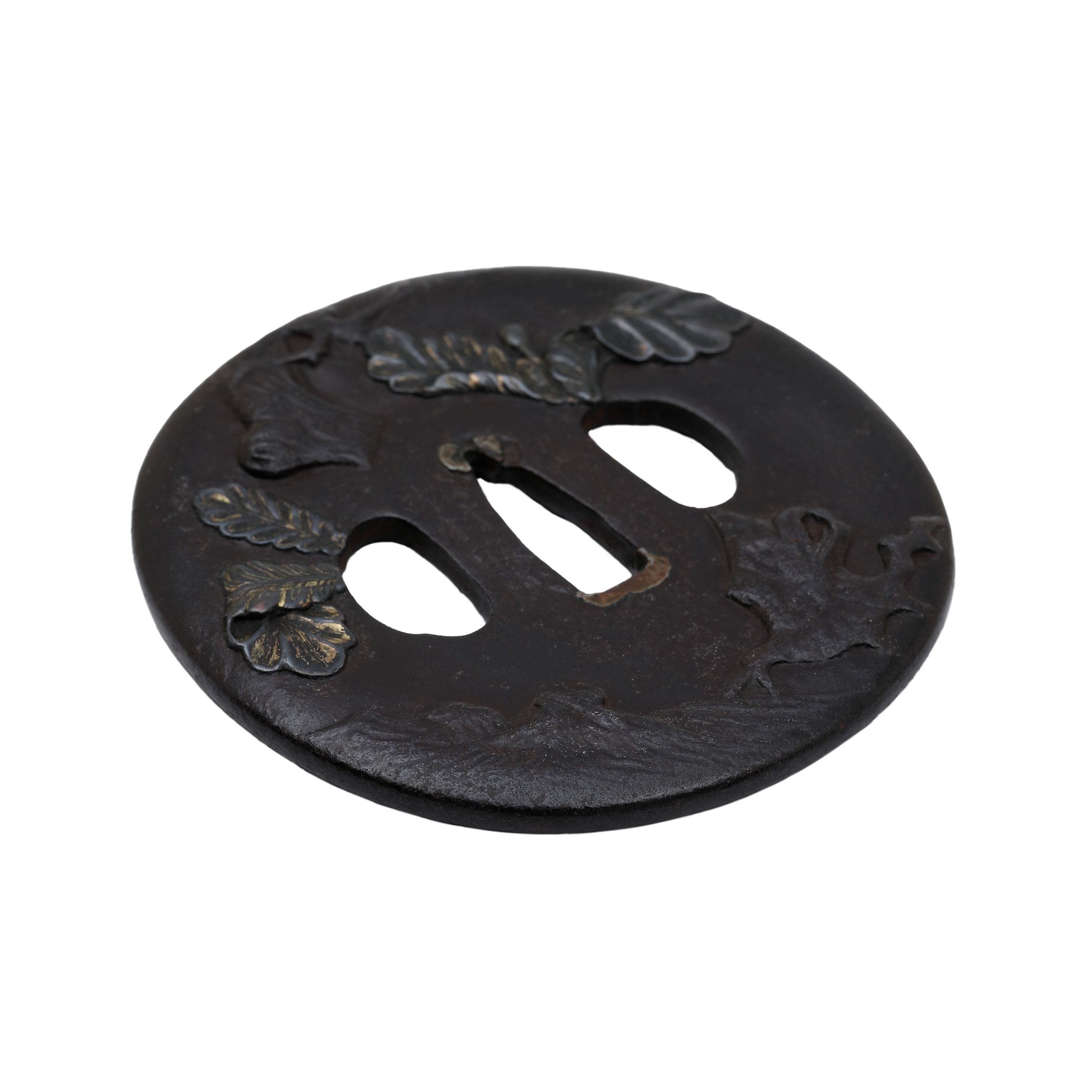
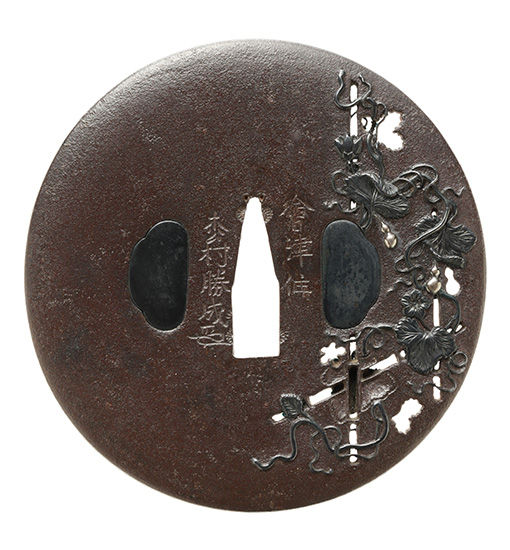
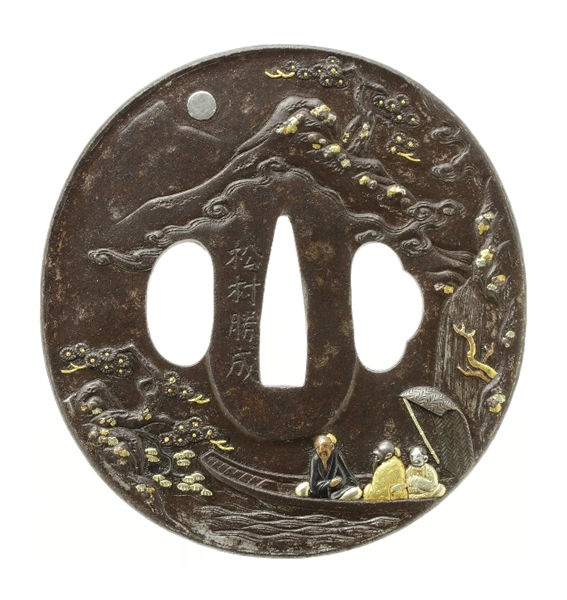
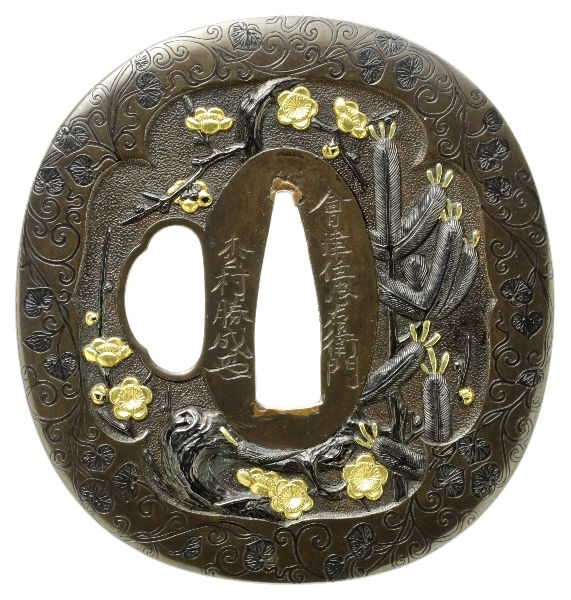
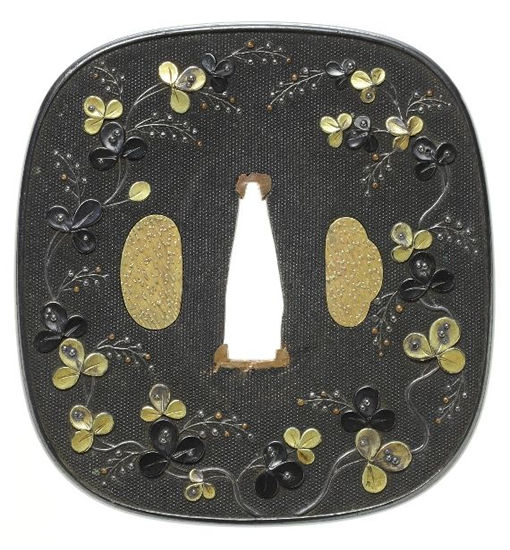
Title: Saotome-style, Kukuri Zaru Sukashi Tsuba Description This Tsuba is recognized by The Society for Preservation of Japanese Art Swords, which is known as NBTHK. According to the certificate, Matsumura Katsunari (松村 勝成) made this Tsuba. You could find his Mei (銘, engraved inscription) at the center part of this Tsuba. The plant motif designed on this Tsuba is the Kashiwa (柏, daimyo oak). Its tree and leaves are engraved on this Tsuba with a powerful touch that makes us feel the power of life. While most of colorings have already faded, we could see the traces of golden paint on Kashiwa leaves. This plant pattern is famous as one of the Judai Kamon (十大家紋, ten widely used family crests in Japan). Here, we would like to introduce the relationship between this plant and the Japanese people to you. In the past, Japanese people used oak leaves as vessels for serving food (tableware). This plant is familiar to ancient Japanese people since it is related to food, an essential element in daily life. These lifestyle habits also have a significant impact on the field of faith. Religions at that time arose spontaneously from people’s everyday lives and worshiped “nature” (the sun, mountains, rivers, oceans), which greatly influenced survival. It had a straightforward and primitive structure in which “one prays by making a Kumotsu (供物, offering) to the object.” Leaves of plants such as oak were used as containers for offerings, which is considered to reflect the lifestyle of the time. These customs were passed on to the Shinto (神道), which developed from this primitive religion, and oak leaves are still used today as vessels for offerings at Shinto rituals. Perhaps due to this background, a sense of value that finds “sacredness” and “auspiciousness” in oak leaves seems to have developed. In this way, oak had a certain degree of familiarity with aristocratic society, and from an early stage, it was turned into patterns and used to decorate clothing and furniture. As mentioned above, Shintoism has a strong connection with oak. Hence, the Kashiwa emblem was initially particularly popular as a crest for a shrine or its enshrined deity or as a family emblem for shrine families. The Kashiwa crest gradually spread to Samurai families; however, this is thought to have been through objects of worship or relationships with Shinto forces. In addition, oak leaves have a habit of not losing old leaves until new ones replace them, so it is said that “generations are uninterrupted” and “transfer of supremacy” (using the word 葉 “leaf” as 覇 “hegemony”). People favored this plant pattern because it was found to be a good luck carrier, such as not causing trouble due to the change of generations. In the Edo period, family crests began to spread to the ordinary people. It could be said that the fact that it was one of the popular family crests that gained much support from the ordinary people who had new family crests has led to the widespread adoption of the Kashiwa crest today. In this way, the Kashiwa has been a familiar plant for the Japanese for a long time. It is understandable that it was incorporated into the designs of sword mountings. *As this item is an antique, please check each photo and ensure its condition. What is Tsuba? Tsuba is the hand-guard of the Japanese sword. High-class Samurai wore his Katana sword with its beautiful sword mountings such as Tsuba. Tsuba’s front design tends to be more decorative as this part was often seen by other Samurais when he was walking on the streets. Why is it that the sword mounting was important for Samurai? The sword mountings of the Japanese sword have many kinds of decorations such as handguards (Tsuba), sword hilt (Menuki), pommel (Fuchi Kashira). The Japanese sword worked as a weapon and as an object to show who he was. For example, it shows their personalities and beliefs. You could say that it is like decorations for smartphones today. We recommend you zoom in on the pictures of the sword fittings

売却済
世界81社の刀剣商を横断追跡 · 価格履歴 · 売却アーカイブ
Title: Saotome-style, Kukuri Zaru Sukashi Tsuba Description This Tsuba is recognized by The Society for Preservation of Japanese Art Swords, which is known as NBTHK. According to the certificate, Matsumura Katsunari (松村 勝成) made this Tsuba. You could find his Mei (銘, engraved inscription) at the center part of this Tsuba. The plant motif designed on this Tsuba is the Kashiwa (柏, daimyo oak). Its tree and leaves are engraved on this Tsuba with a powerful touch that makes us feel the power of life. While most of colorings have already faded, we could see the traces of golden paint on Kashiwa leaves. This plant pattern is famous as one of the Judai Kamon (十大家紋, ten widely used family crests in Japan). Here, we would like to introduce the relationship between this plant and the Japanese people to you. In the past, Japanese people used oak leaves as vessels for serving food (tableware). This plant is familiar to ancient Japanese people since it is related to food, an essential element in daily life. These lifestyle habits also have a significant impact on the field of faith. Religions at that time arose spontaneously from people’s everyday lives and worshiped “nature” (the sun, mountains, rivers, oceans), which greatly influenced survival. It had a straightforward and primitive structure in which “one prays by making a Kumotsu (供物, offering) to the object.” Leaves of plants such as oak were used as containers for offerings, which is considered to reflect the lifestyle of the time. These customs were passed on to the Shinto (神道), which developed from this primitive religion, and oak leaves are still used today as vessels for offerings at Shinto rituals. Perhaps due to this background, a sense of value that finds “sacredness” and “auspiciousness” in oak leaves seems to have developed. In this way, oak had a certain degree of familiarity with aristocratic society, and from an early stage, it was turned into patterns and used to decorate clothing and furniture. As mentioned above, Shintoism has a strong connection with oak. Hence, the Kashiwa emblem was initially particularly popular as a crest for a shrine or its enshrined deity or as a family emblem for shrine families. The Kashiwa crest gradually spread to Samurai families; however, this is thought to have been through objects of worship or relationships with Shinto forces. In addition, oak leaves have a habit of not losing old leaves until new ones replace them, so it is said that “generations are uninterrupted” and “transfer of supremacy” (using the word 葉 “leaf” as 覇 “hegemony”). People favored this plant pattern because it was found to be a good luck carrier, such as not causing trouble due to the change of generations. In the Edo period, family crests began to spread to the ordinary people. It could be said that the fact that it was one of the popular family crests that gained much support from the ordinary people who had new family crests has led to the widespread adoption of the Kashiwa crest today. In this way, the Kashiwa has been a familiar plant for the Japanese for a long time. It is understandable that it was incorporated into the designs of sword mountings. *As this item is an antique, please check each photo and ensure its condition. What is Tsuba? Tsuba is the hand-guard of the Japanese sword. High-class Samurai wore his Katana sword with its beautiful sword mountings such as Tsuba. Tsuba’s front design tends to be more decorative as this part was often seen by other Samurais when he was walking on the streets. Why is it that the sword mounting was important for Samurai? The sword mountings of the Japanese sword have many kinds of decorations such as handguards (Tsuba), sword hilt (Menuki), pommel (Fuchi Kashira). The Japanese sword worked as a weapon and as an object to show who he was. For example, it shows their personalities and beliefs. You could say that it is like decorations for smartphones today. We recommend you zoom in on the pictures of the sword fittings

売却済
世界81社の刀剣商を横断追跡 · 価格履歴 · 売却アーカイブ