売切れ
Tokuho売切れ
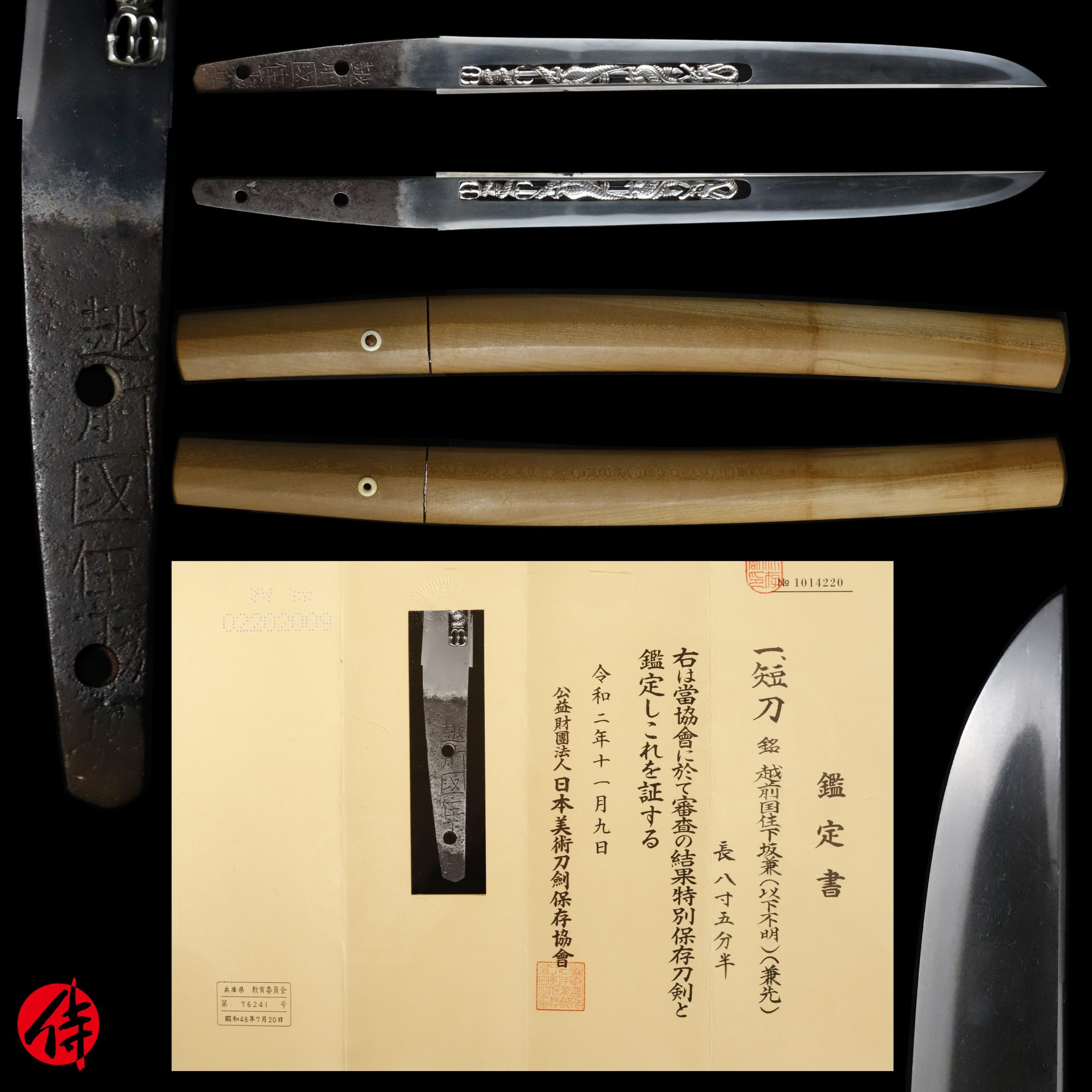
Antique Japanese Sword Tanto Signed by Shimosaka NBTHK Tokubetsu Hozon Certificate
売却済
世界81社の刀剣商を横断追跡 · 価格履歴 · 売却アーカイブ
仕様
長さ
25.9 cm
反り
0.2 cm
Antique Japanese Sword Tanto Signed by Shimosaka with NBTHK Tokubetsu Hozon Certificate 【Description】 This blade was forged by one of Shimosaka’s swordsmiths according to the signature and NBTHK’s appraisal. It also suggested that this blade was most likely to be forged by Echizenkoku Jyu Shimosaka Kanesaki(越前国住下坂兼先). Supposed that Kanesaki forged this blade as NBTHK suggested, it must have been around the Keisho era(1596-1615: early Edo period). You can find the signature of Echizenkoku Jyu Shimosaka Kane but Saki part was cut due to shortening the blade in the past. The founder of Shimosaka school was the first-gen, Yasutsugu. It was initially founded in Shimosaka town in Shiga prefecture at the end of the Muromachi period(Late 16 century ). During the early Edo period, Yuki Hideyasu, the second son of Tokugawa Ieyasu, ordered Yasutsugu and his apprentices to move to Kitanosho castle town in Echizen to organize the school. Echizen Province was famous for forging razor-sharp, practically-designed swords. The Edo government, run by the Tokugawa clan, ordered many blades from the swordsmiths in this province during the Edo period(1603-1868). There were so many swordsmiths originally from the Mino province(Gifu prefecture) in Echizen province, which is known as one of the five great Japanese sword styles MINO-DEN. There is a beautiful engraving on this blade. Its technique is Ranma Sukashibori, a traditional openwork technique. If you were to order this kind of engraving from a Japanese engraver today, it would cost approximately 10,000 USD. We assume whoever owned this blade in Samurai times must have been wealthy enough to order such intricate design on the blade.] Kurikara Ken, which is the weapon Fudo Myo-o carried, is engraved on this blade. Fudo Myo-o is one of the objects of worship in Buddhism. According to a theory, it is the incarnation of Dainichi Nyorai (大日如来, Mahāvairocana, the principal image of esoteric Buddhism). You would also find a dragon. It is called Kurikara Ryu (倶利伽羅龍); the figure in which a dragon wraps around the sword that Fudo Myo-o holds in his right hand to cut evil. Fudo My o-o’s sword has been considered to punish sin, cut off worldly desires, and achieve goals. Fudo Myo-o is a motif with miraculous virtues. While there is a small crack in the Ranma Sukashi part and tiny black rust on Shinogi Ji, this blade was appraised as Tokubetsu Hozon Token. This authentication paper was only given to Japanese swords, especially worth preserving by Nihon Bijutsu Touken Hozon Kyokai(the Society for the Preservation of the Japan Art Sword). We will have this black rust polished before sending this Tanto to you. A small crack won’t be considered a serious defect to appreciate this blade. 【 Blade】 Cutting Edge Length(Nagasa) : 25.9 cm (10.2 inches) Curvature(Sori) : 0.2 cm( 0.08 inches) Hamon : The crystalline structure which forms along the cutting edge of a blade as a result of the hardening process Jimon(Jihada) : visible steel surface pattern created by folding and hammering during forging process Nakago : Nakago is the tang of the Japanese sword. Japanese swordsmiths left the black rust on the tang because it prevents red rust while the tang is in its handle. And the discoloration of the tang was created over time, and it is a great indicator for a Japanese sword specialist to estimate when the sword was forged. Horimono: Horimono is an inscription or sculpture on Japanese swords. Habaki : Habaki is the equipment to make the blade not touch its scabbard inside. It prevents the blade from getting rusty and chipped. Authentication Paper : NBTHK TOKUBETSU Hozon Certificate for the blade& Tokubetsu Kicho Certificate NBTHK , also known as Nihon Bijutsu Touken Hozon Kyokai (the Society for the Preservation of the Japan Art Sword), is one of the oldest Japanese sword appraising organizations in modern-day Japan. They authenticated the blade on Feb 19th in the second year of Reiwa(2020). They appraised it as Tokubet
 NihontoWatchBETA
売却済
世界81社の刀剣商を横断追跡 · 価格履歴 · 売却アーカイブ
25.9 cm
0.2 cm

Antique Japanese Sword Tanto Signed by Yokoyama Sukenaga NBTHK Tokubetsu Hozon Certificate
$7,441

Antique Japanese Sword Tanto Signed by Osafune Kiyomitsu NBTHK Hozon Certificate
$4,829
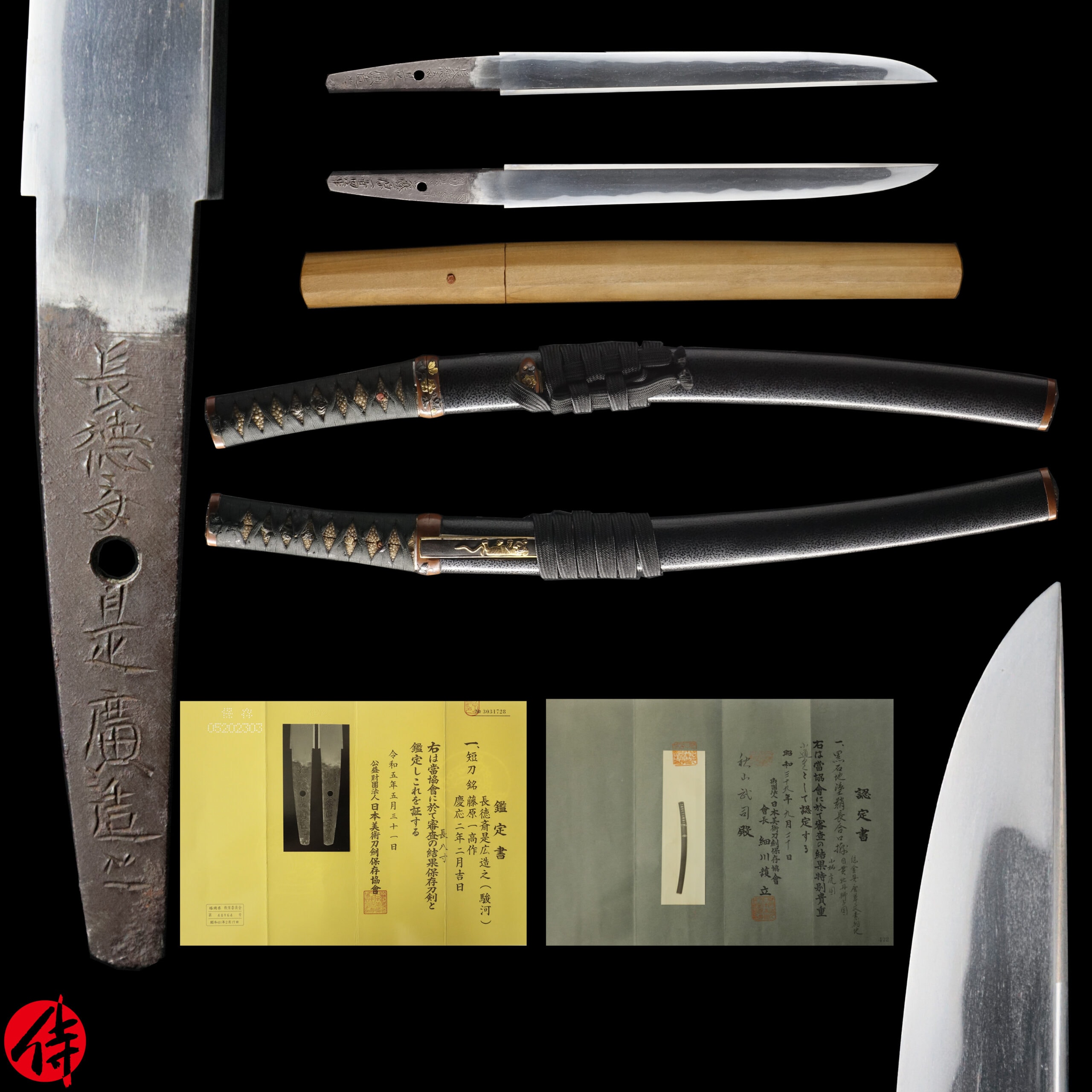
Antique Japanese Sword Tanto Signed by Korehiro NBTHK Hozon Certificate and Tokubetsu Kicho for the Koshirae
$4,333
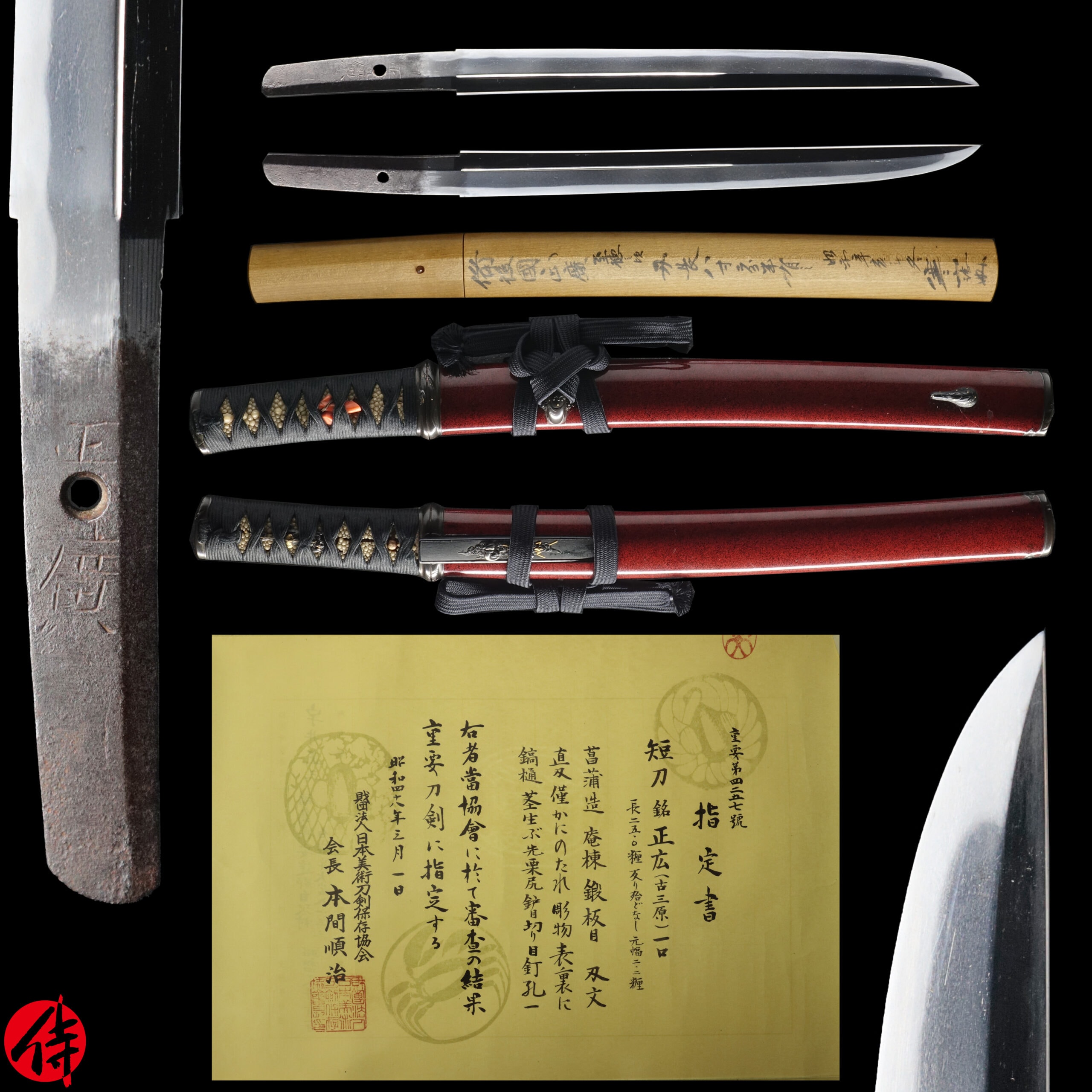
Antique Japanese Sword Tanto Signed by Masahiro NBTHK JUYO TOKEN Certificate
$23,524
Antique Japanese Sword Tanto Signed by Shimosaka with NBTHK Tokubetsu Hozon Certificate 【Description】 This blade was forged by one of Shimosaka’s swordsmiths according to the signature and NBTHK’s appraisal. It also suggested that this blade was most likely to be forged by Echizenkoku Jyu Shimosaka Kanesaki(越前国住下坂兼先). Supposed that Kanesaki forged this blade as NBTHK suggested, it must have been around the Keisho era(1596-1615: early Edo period). You can find the signature of Echizenkoku Jyu Shimosaka Kane but Saki part was cut due to shortening the blade in the past. The founder of Shimosaka school was the first-gen, Yasutsugu. It was initially founded in Shimosaka town in Shiga prefecture at the end of the Muromachi period(Late 16 century ). During the early Edo period, Yuki Hideyasu, the second son of Tokugawa Ieyasu, ordered Yasutsugu and his apprentices to move to Kitanosho castle town in Echizen to organize the school. Echizen Province was famous for forging razor-sharp, practically-designed swords. The Edo government, run by the Tokugawa clan, ordered many blades from the swordsmiths in this province during the Edo period(1603-1868). There were so many swordsmiths originally from the Mino province(Gifu prefecture) in Echizen province, which is known as one of the five great Japanese sword styles MINO-DEN. There is a beautiful engraving on this blade. Its technique is Ranma Sukashibori, a traditional openwork technique. If you were to order this kind of engraving from a Japanese engraver today, it would cost approximately 10,000 USD. We assume whoever owned this blade in Samurai times must have been wealthy enough to order such intricate design on the blade.] Kurikara Ken, which is the weapon Fudo Myo-o carried, is engraved on this blade. Fudo Myo-o is one of the objects of worship in Buddhism. According to a theory, it is the incarnation of Dainichi Nyorai (大日如来, Mahāvairocana, the principal image of esoteric Buddhism). You would also find a dragon. It is called Kurikara Ryu (倶利伽羅龍); the figure in which a dragon wraps around the sword that Fudo Myo-o holds in his right hand to cut evil. Fudo My o-o’s sword has been considered to punish sin, cut off worldly desires, and achieve goals. Fudo Myo-o is a motif with miraculous virtues. While there is a small crack in the Ranma Sukashi part and tiny black rust on Shinogi Ji, this blade was appraised as Tokubetsu Hozon Token. This authentication paper was only given to Japanese swords, especially worth preserving by Nihon Bijutsu Touken Hozon Kyokai(the Society for the Preservation of the Japan Art Sword). We will have this black rust polished before sending this Tanto to you. A small crack won’t be considered a serious defect to appreciate this blade. 【 Blade】 Cutting Edge Length(Nagasa) : 25.9 cm (10.2 inches) Curvature(Sori) : 0.2 cm( 0.08 inches) Hamon : The crystalline structure which forms along the cutting edge of a blade as a result of the hardening process Jimon(Jihada) : visible steel surface pattern created by folding and hammering during forging process Nakago : Nakago is the tang of the Japanese sword. Japanese swordsmiths left the black rust on the tang because it prevents red rust while the tang is in its handle. And the discoloration of the tang was created over time, and it is a great indicator for a Japanese sword specialist to estimate when the sword was forged. Horimono: Horimono is an inscription or sculpture on Japanese swords. Habaki : Habaki is the equipment to make the blade not touch its scabbard inside. It prevents the blade from getting rusty and chipped. Authentication Paper : NBTHK TOKUBETSU Hozon Certificate for the blade& Tokubetsu Kicho Certificate NBTHK , also known as Nihon Bijutsu Touken Hozon Kyokai (the Society for the Preservation of the Japan Art Sword), is one of the oldest Japanese sword appraising organizations in modern-day Japan. They authenticated the blade on Feb 19th in the second year of Reiwa(2020). They appraised it as Tokubet
NihontoWatchBETA売却済
世界81社の刀剣商を横断追跡 · 価格履歴 · 売却アーカイブ
25.9 cm
0.2 cm
Antique Japanese Sword Tanto Signed by Yokoyama Sukenaga NBTHK Tokubetsu Hozon Certificate
$7,441
Antique Japanese Sword Tanto Signed by Osafune Kiyomitsu NBTHK Hozon Certificate
$4,829
Antique Japanese Sword Tanto Signed by Korehiro NBTHK Hozon Certificate and Tokubetsu Kicho for the Koshirae
$4,333
Antique Japanese Sword Tanto Signed by Masahiro NBTHK JUYO TOKEN Certificate
$23,524