二世紀半の泰平のあいだ、刀は武器である以上に武士の身分の標章であった。江戸の実証と大坂の華やぎのように都市ごとの作風が育ち、時代の末には需要も細っていく。
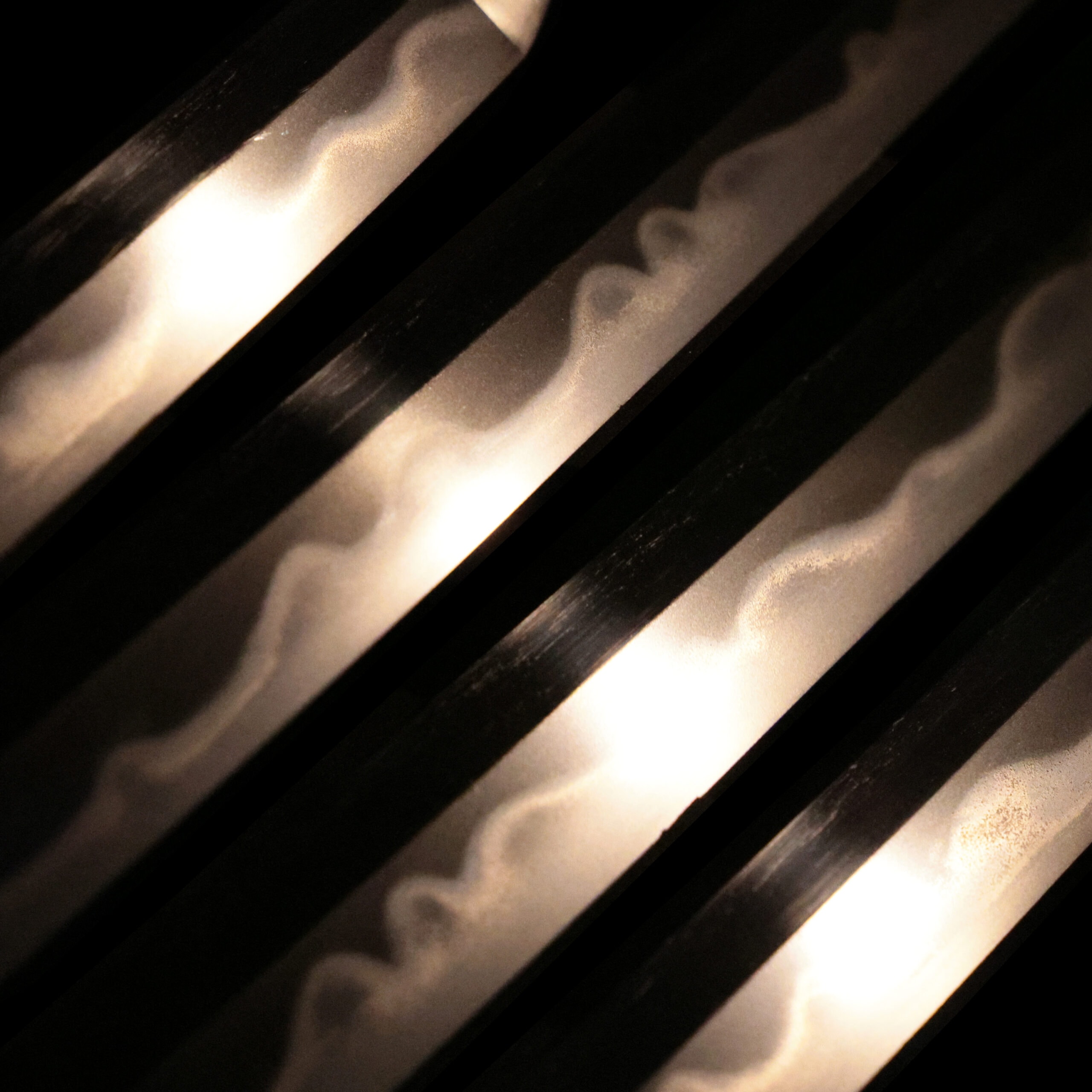
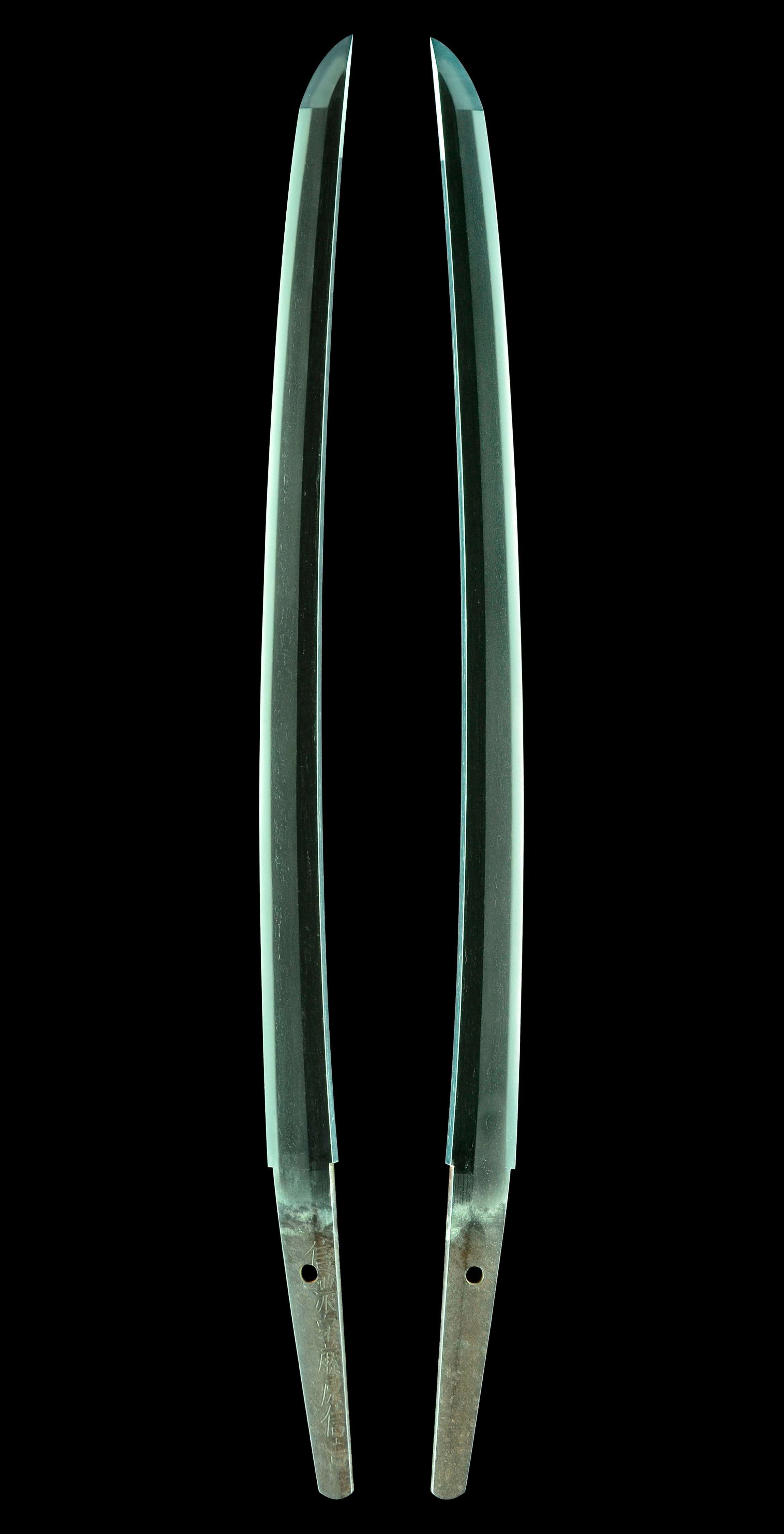
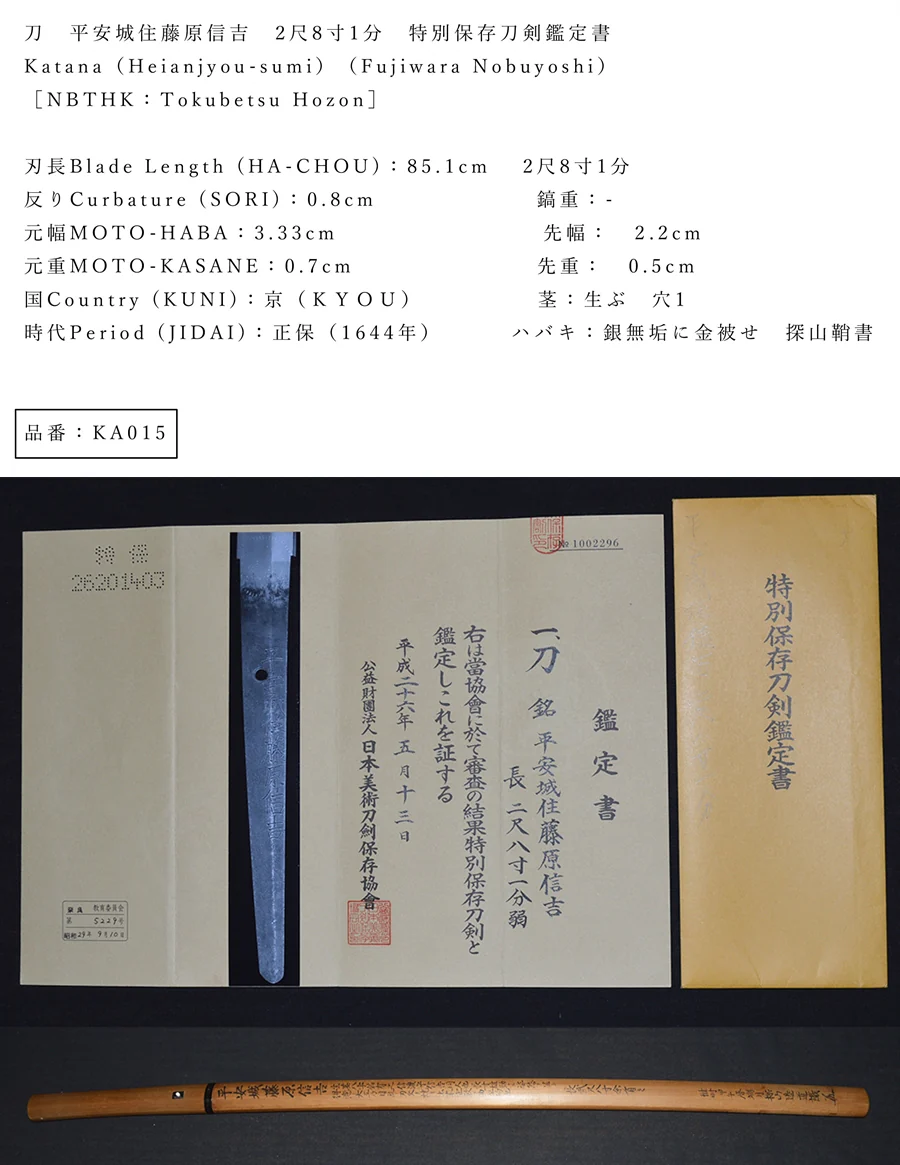
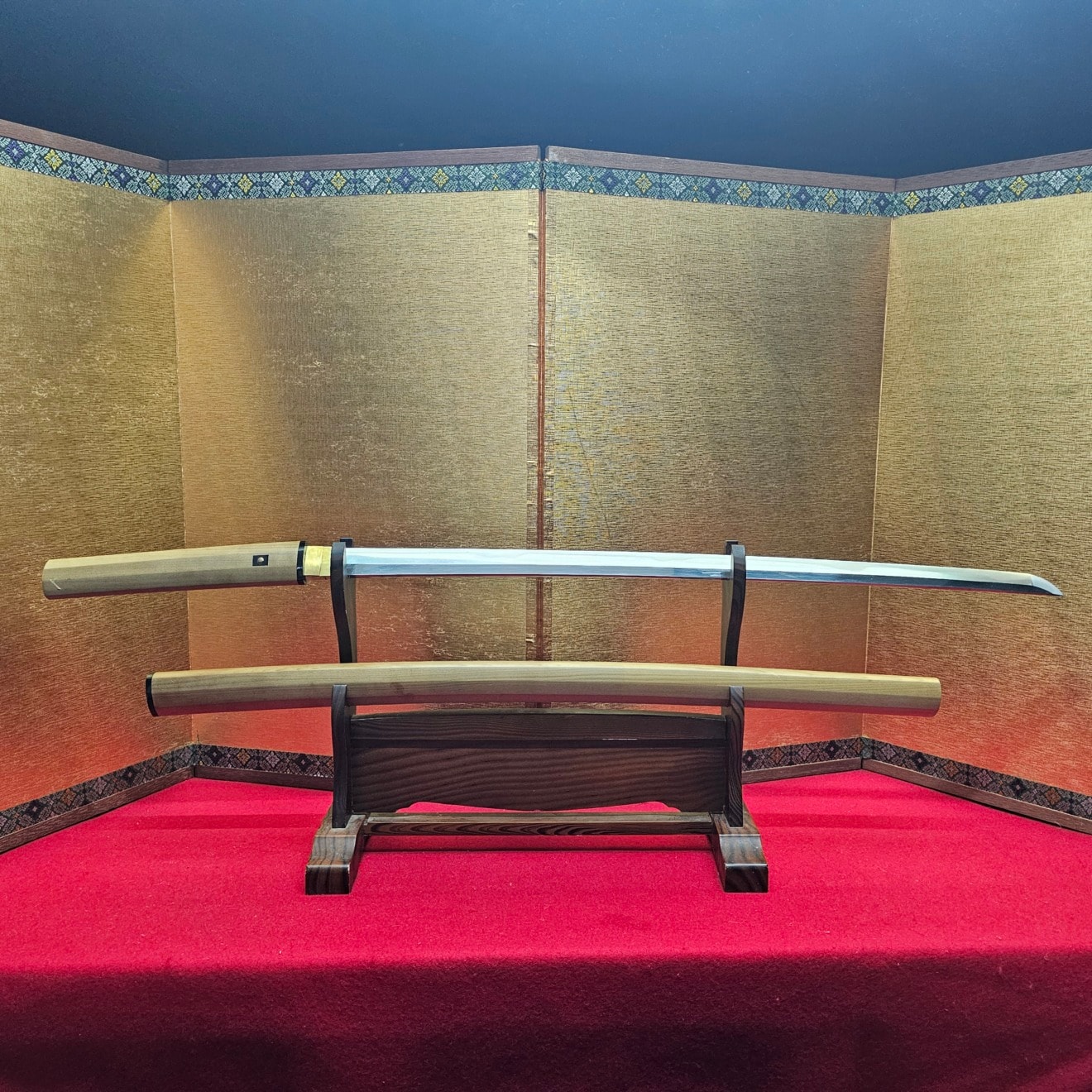
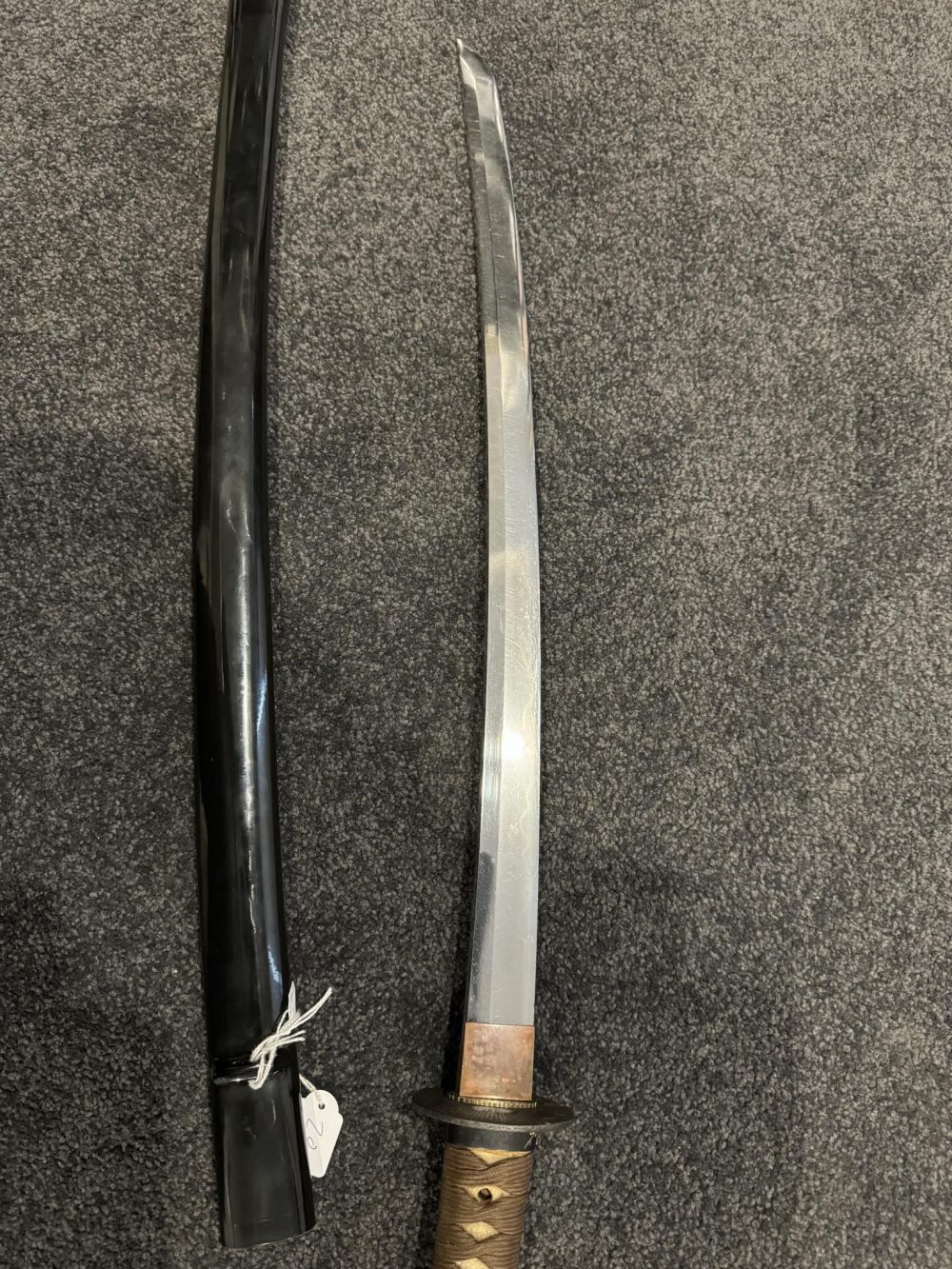
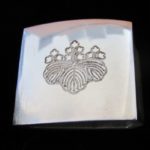
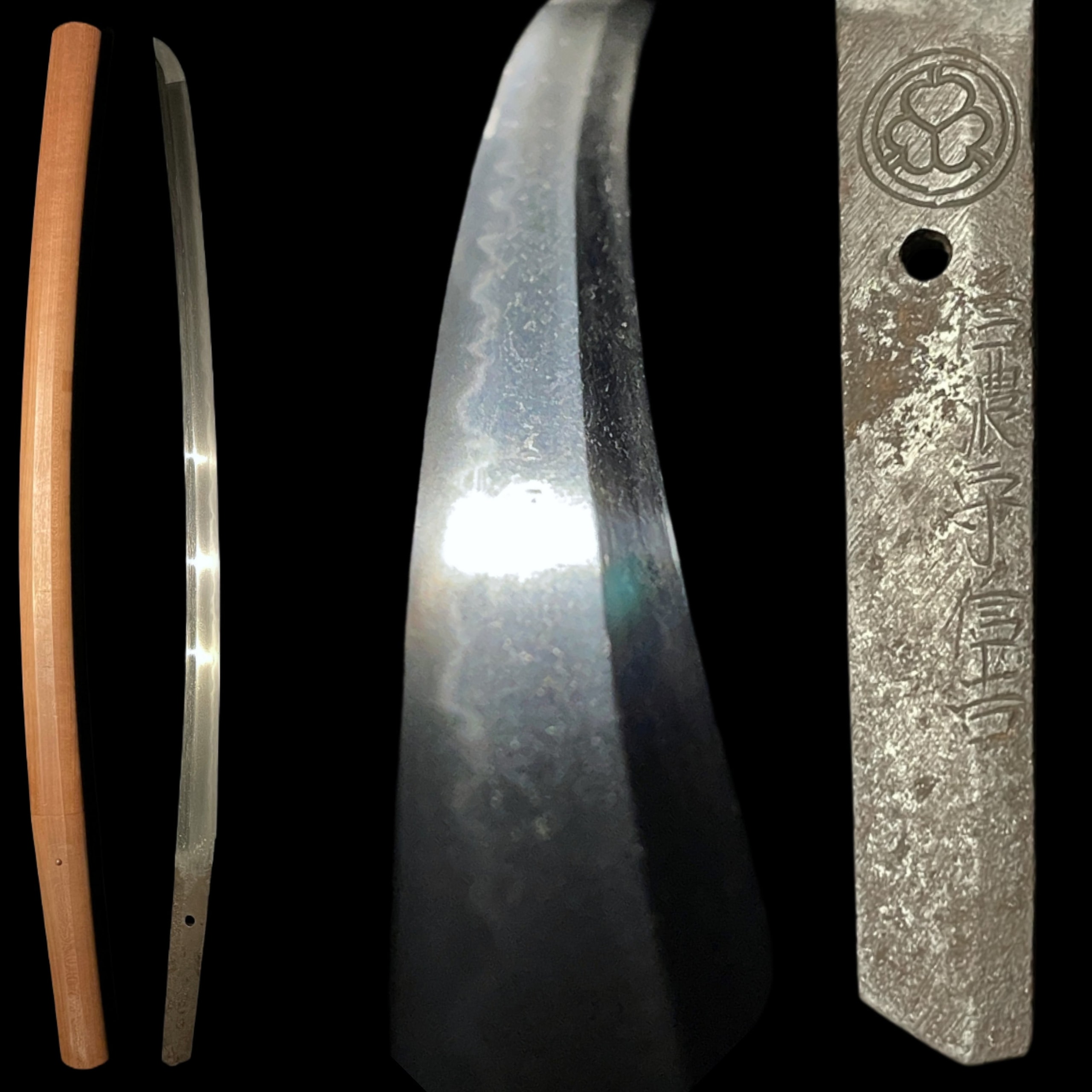
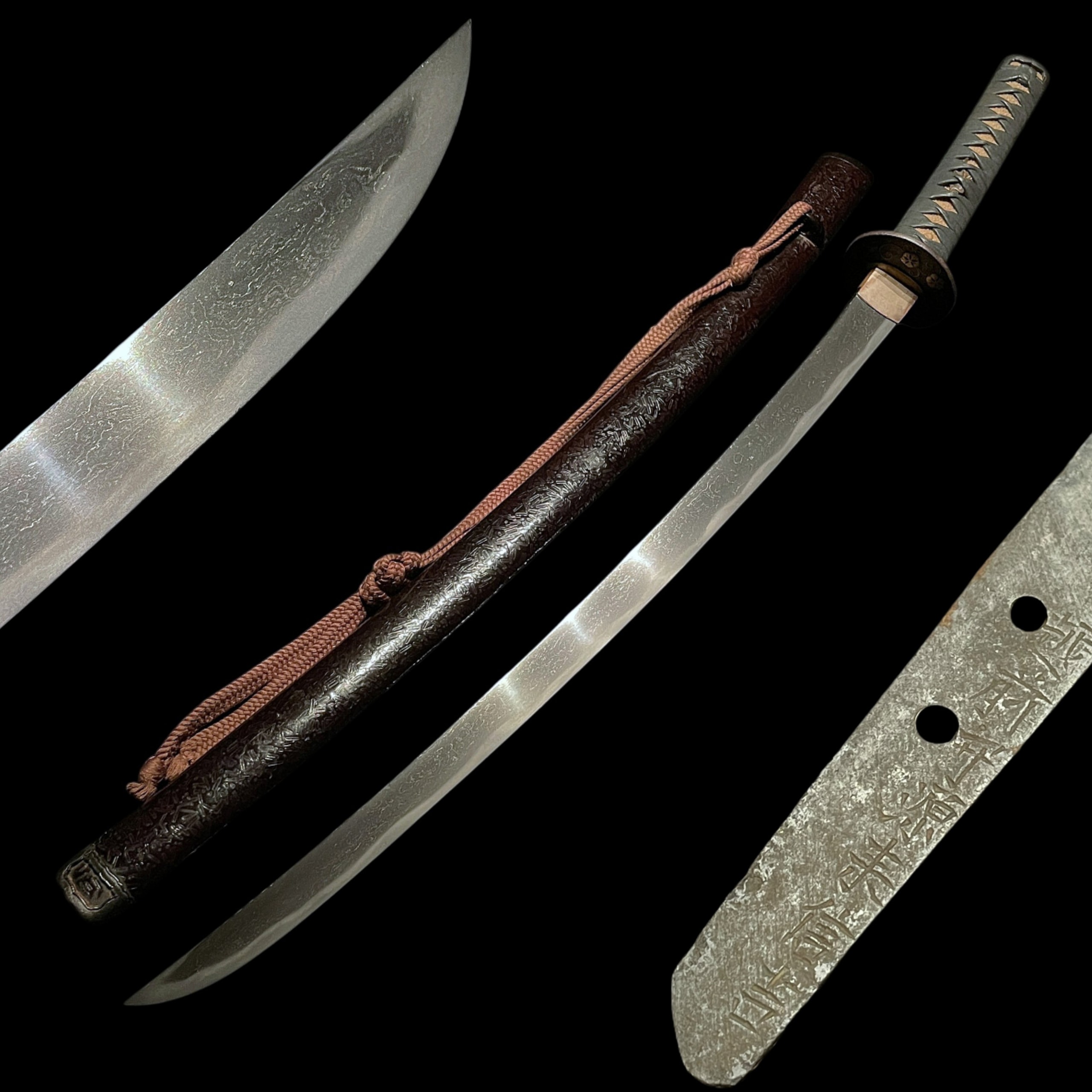
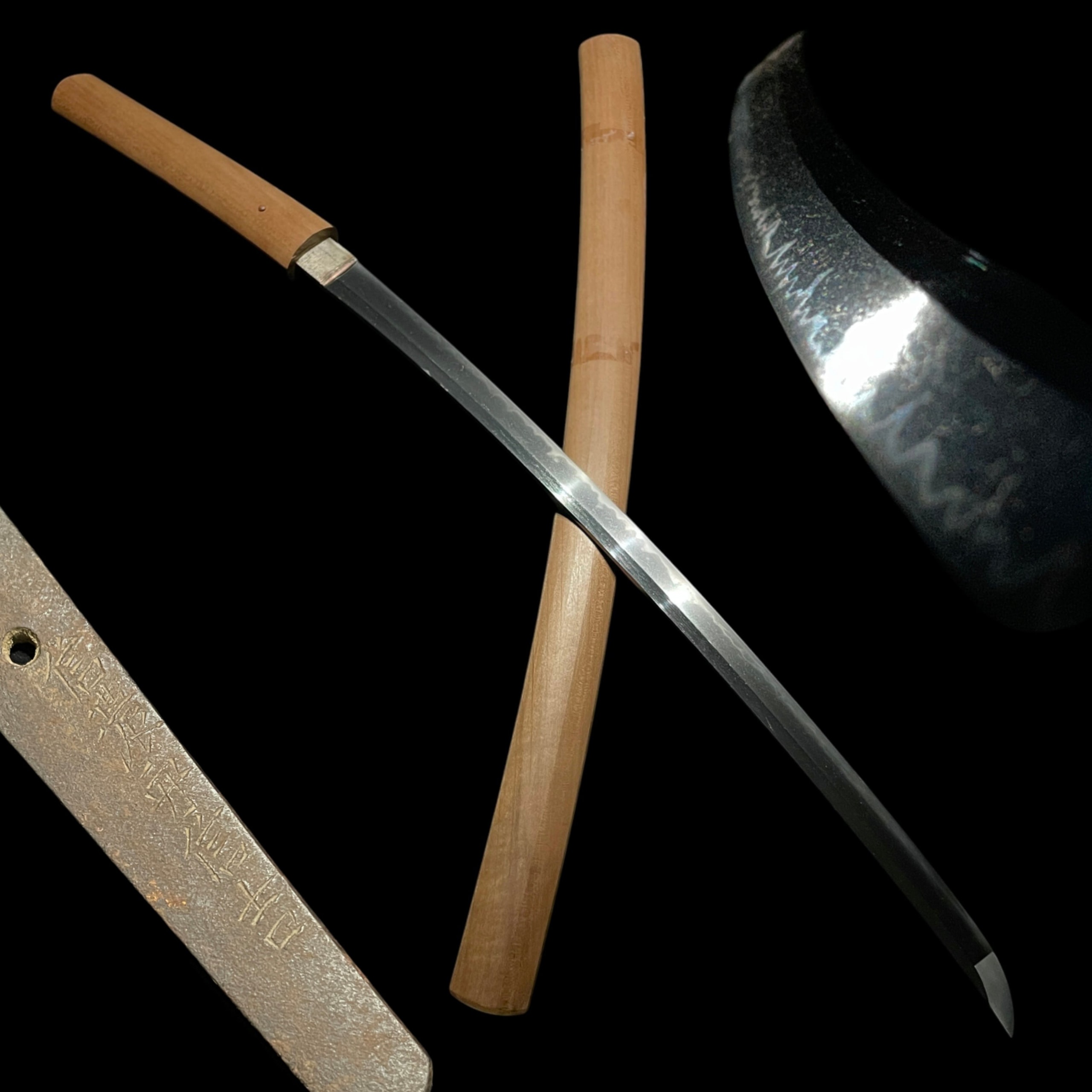
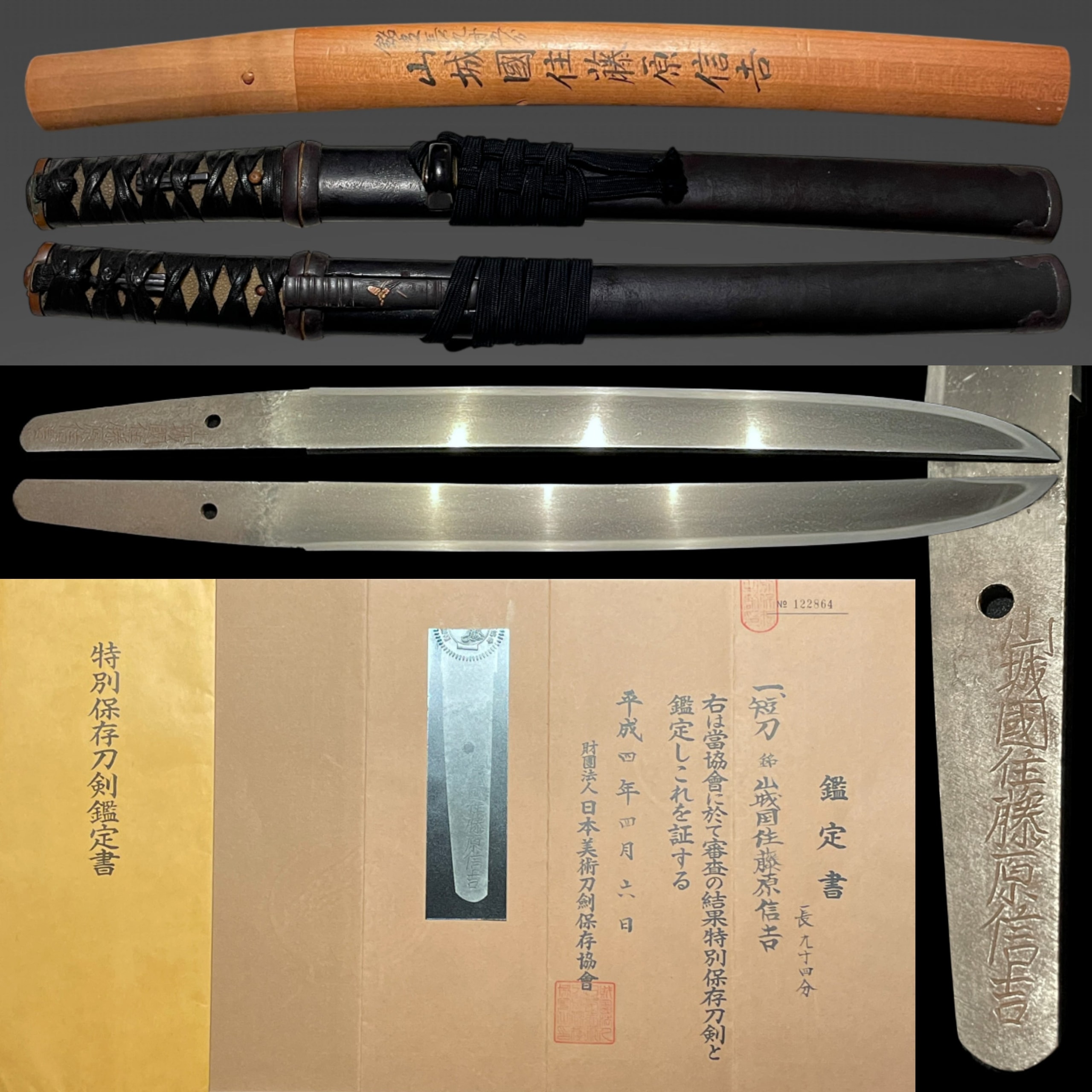
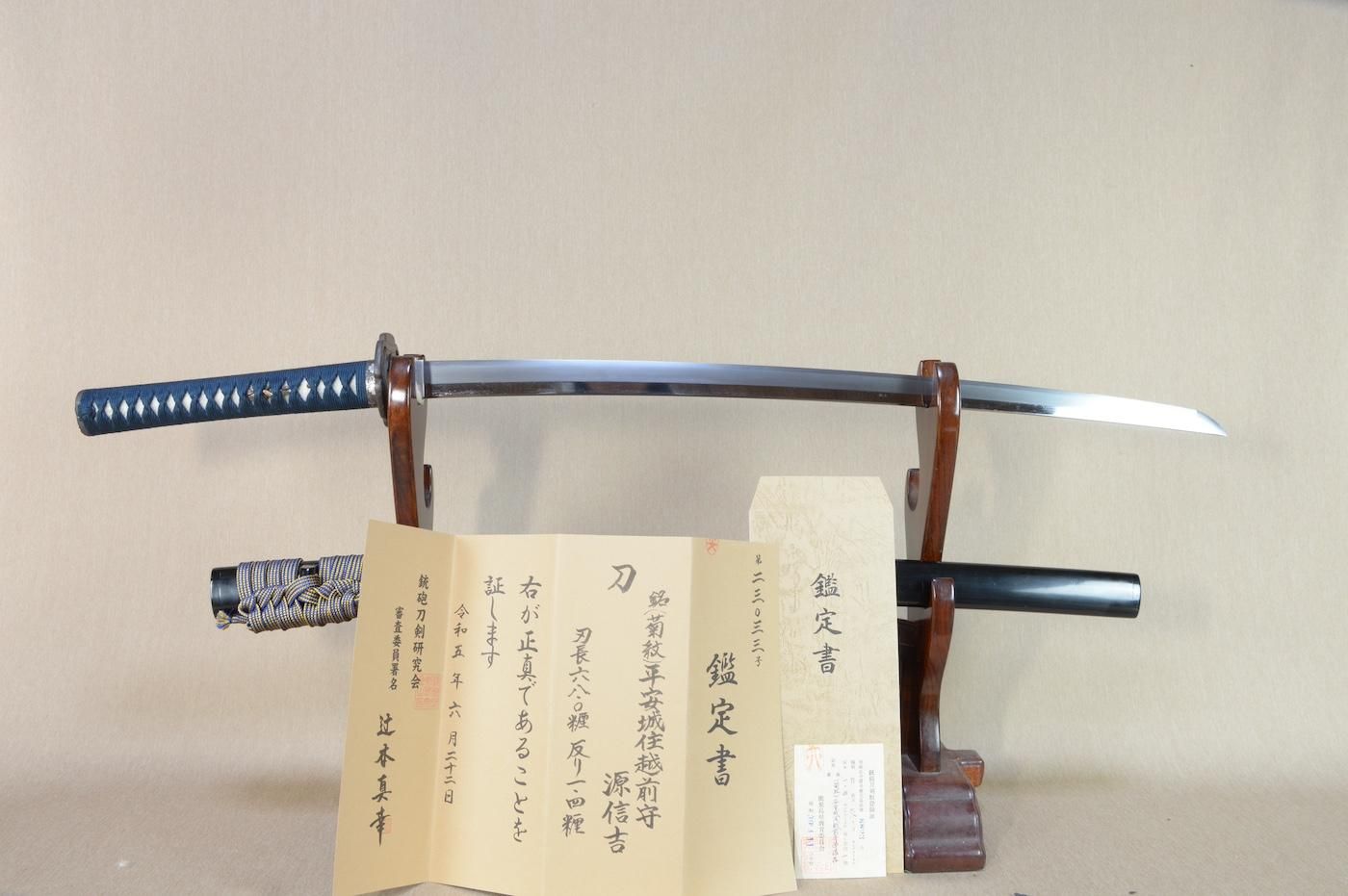
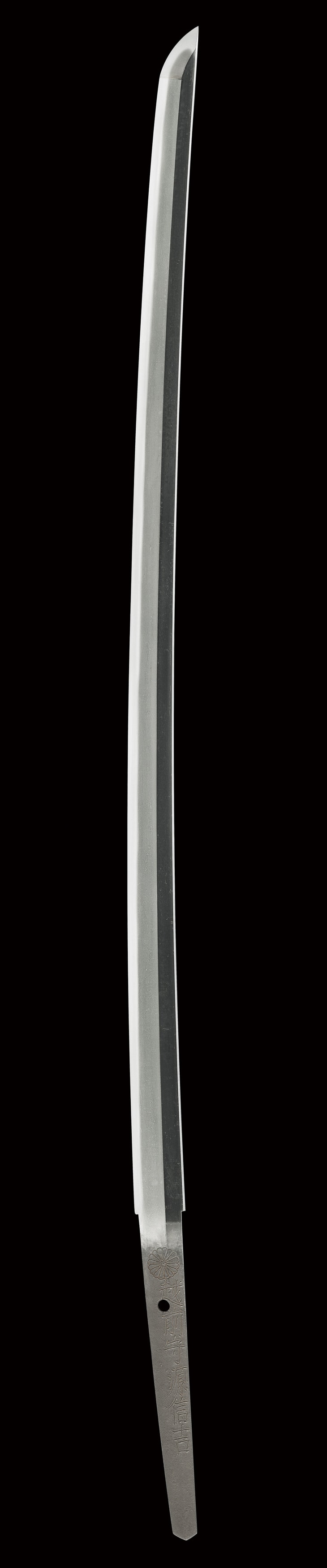
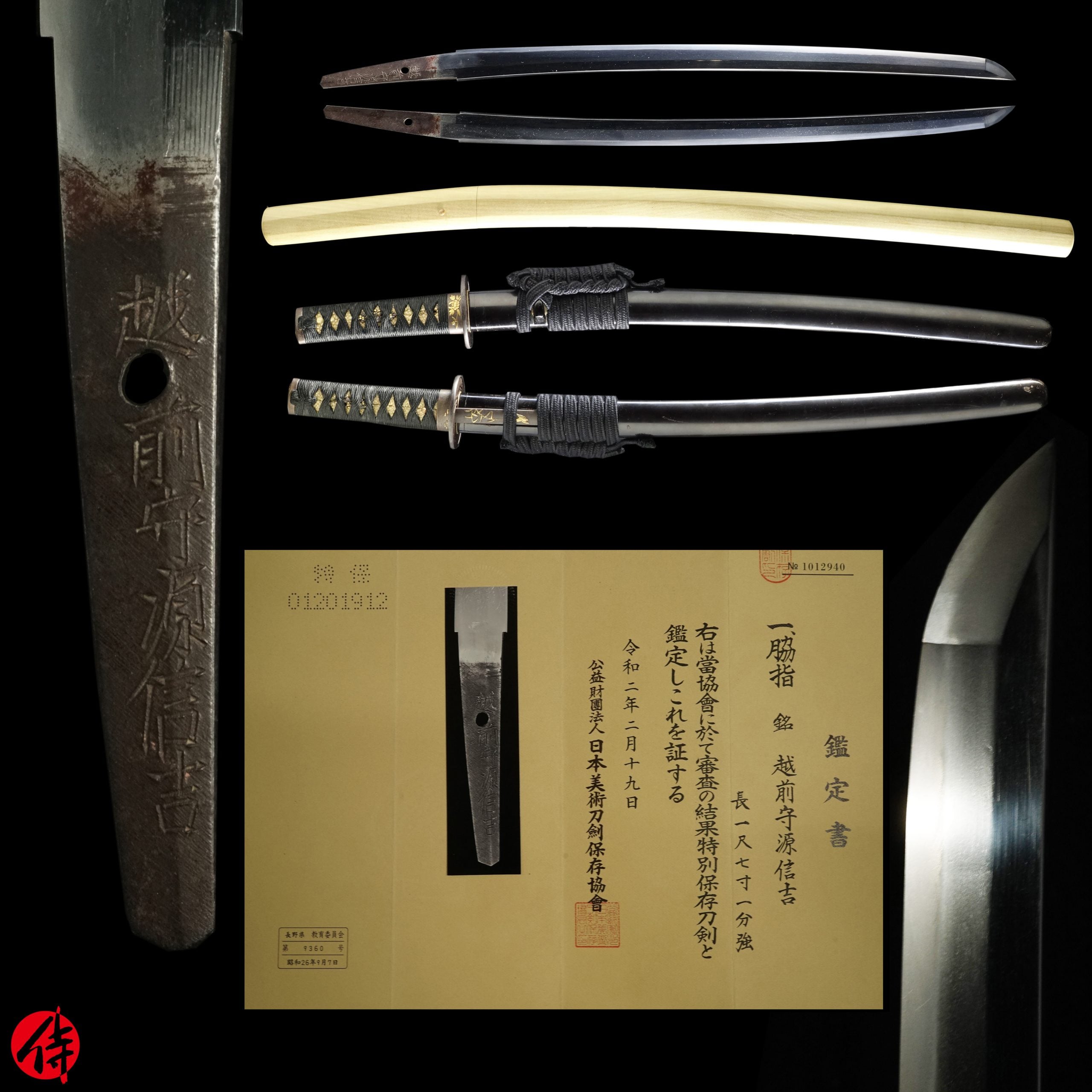
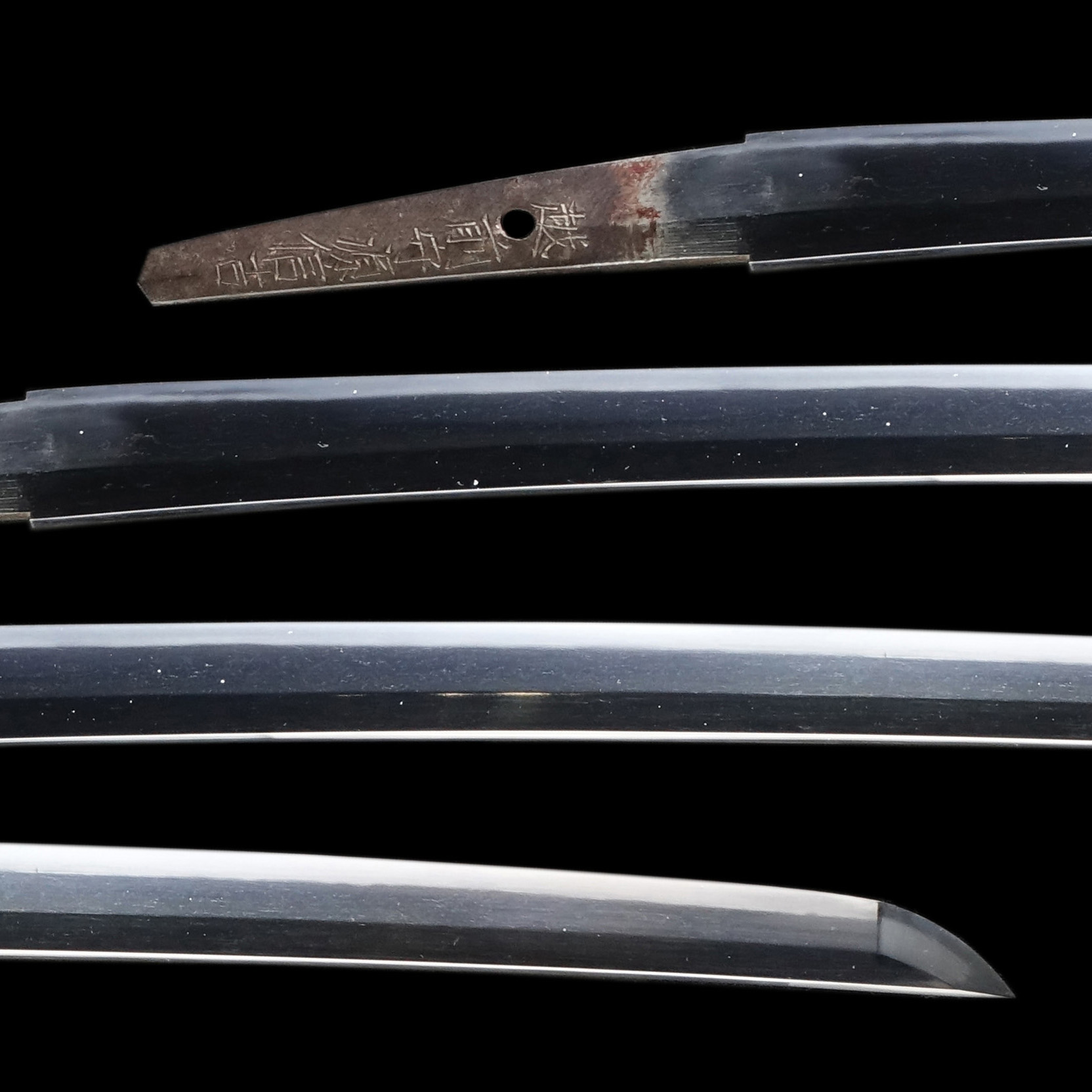
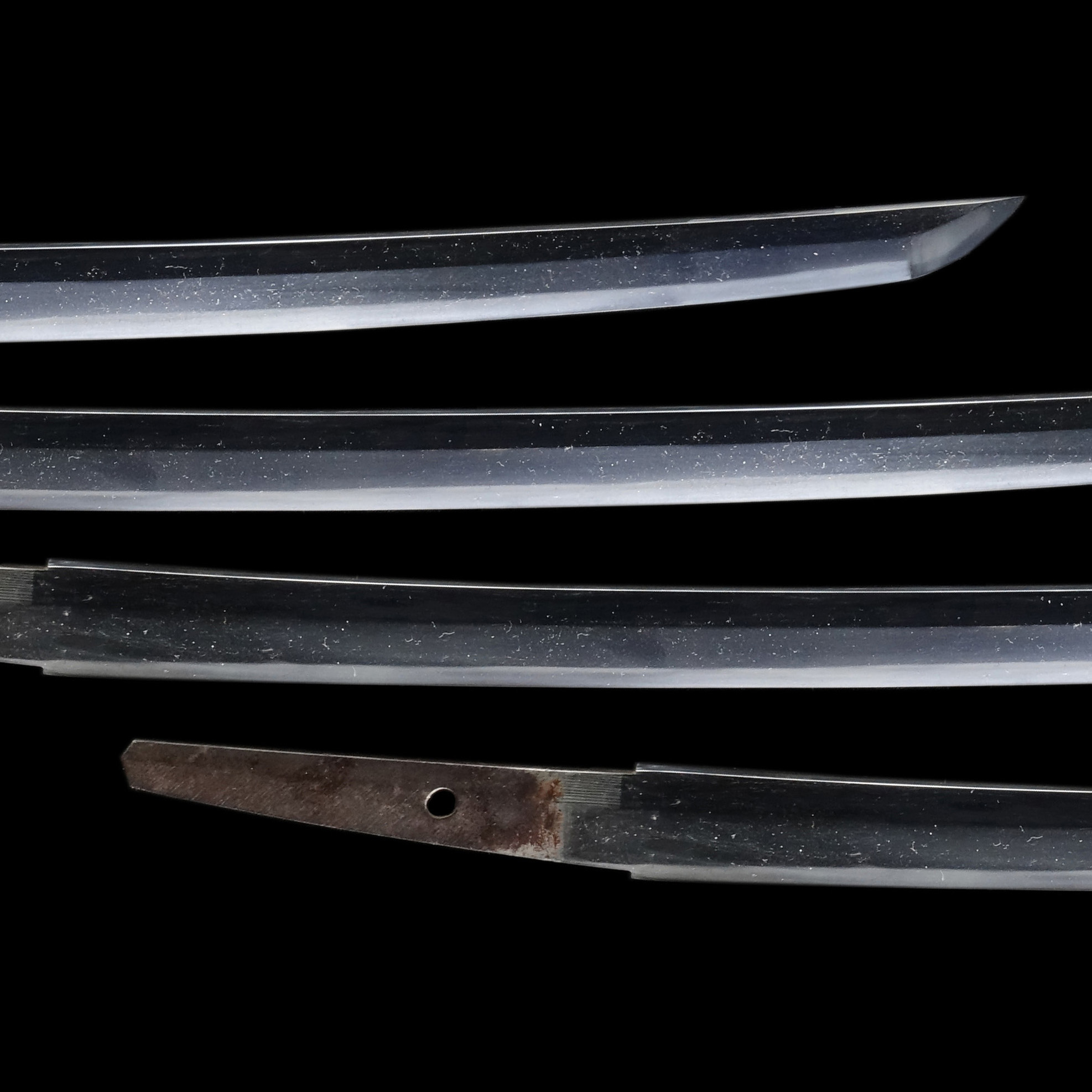
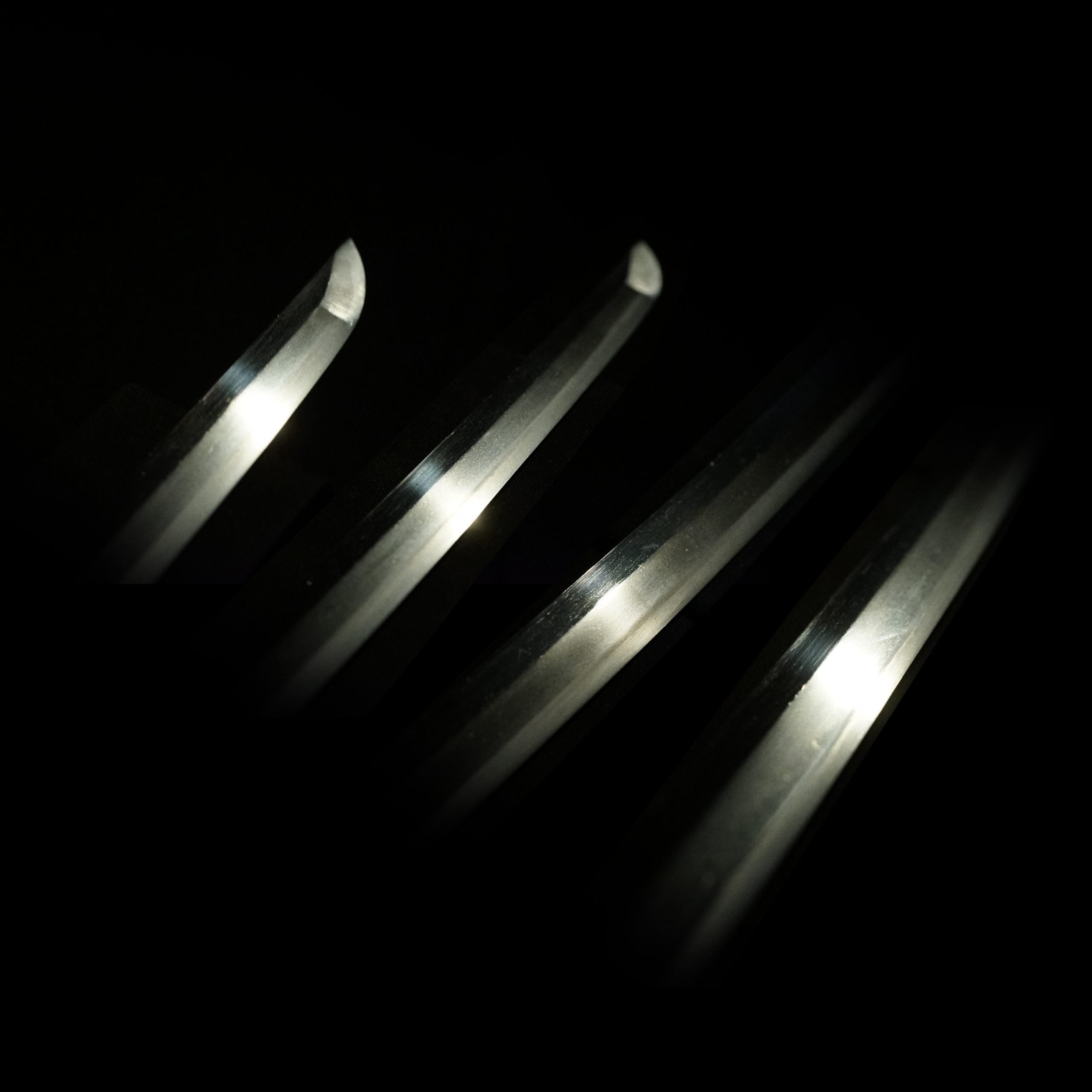
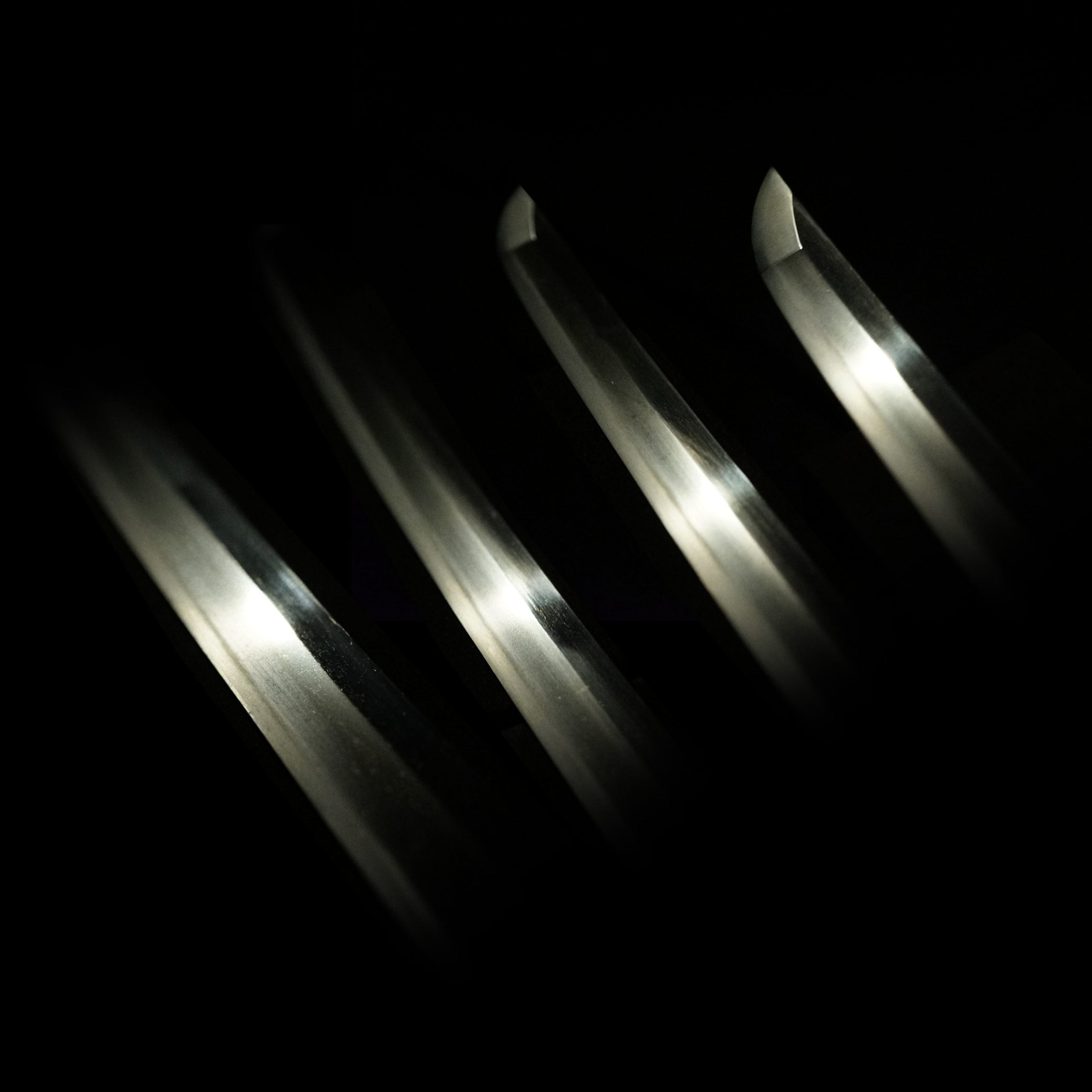
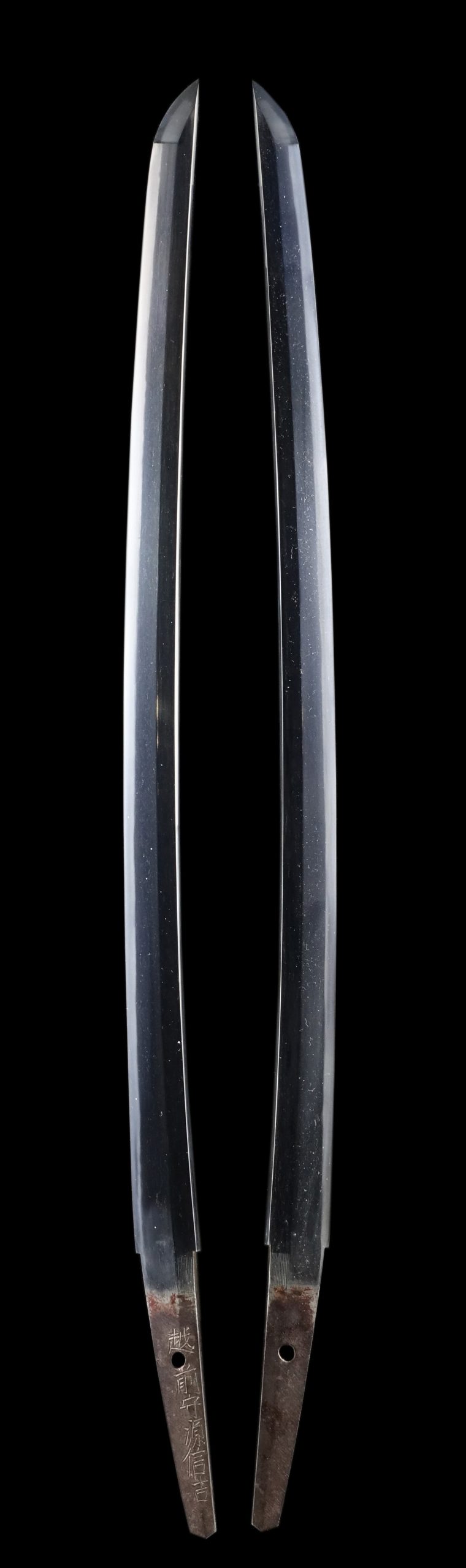
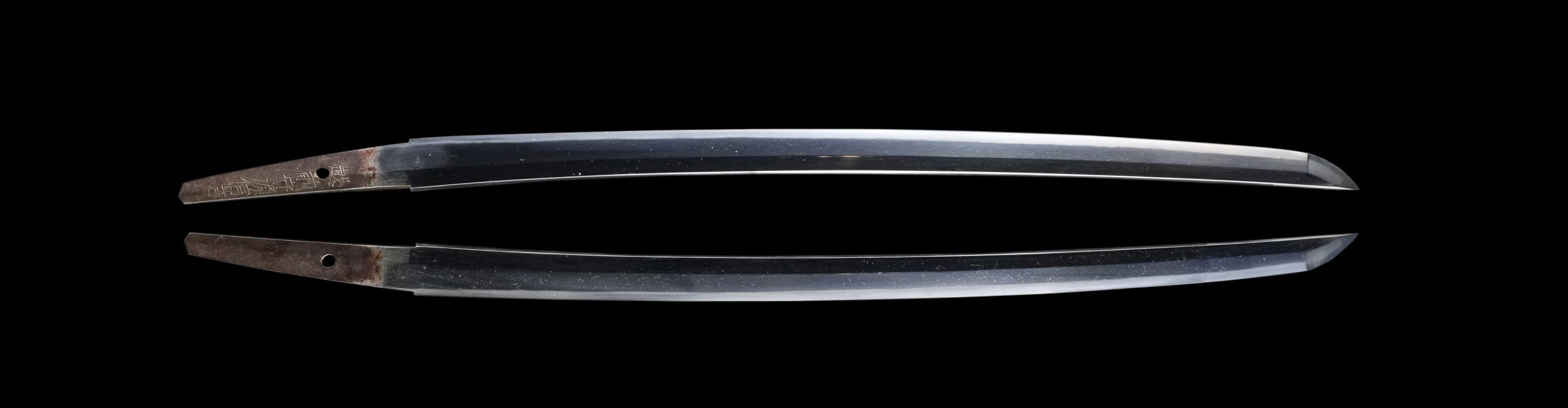
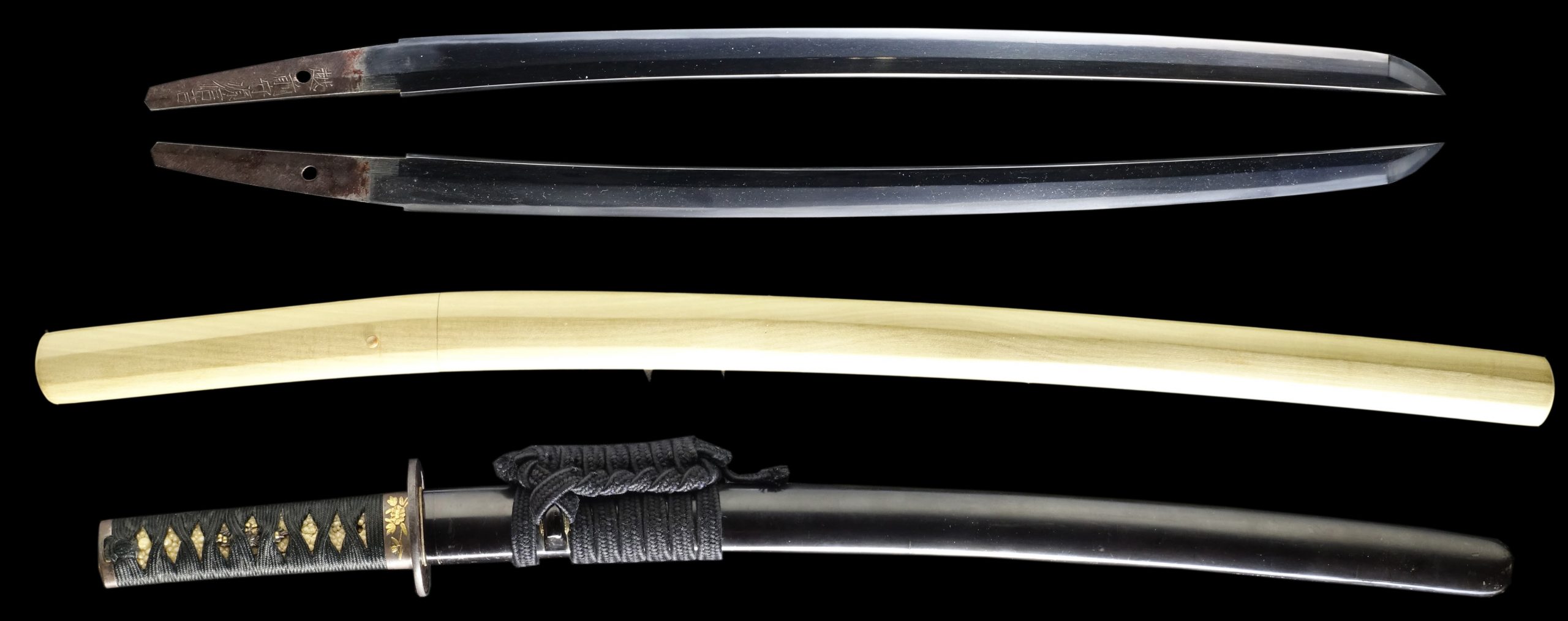
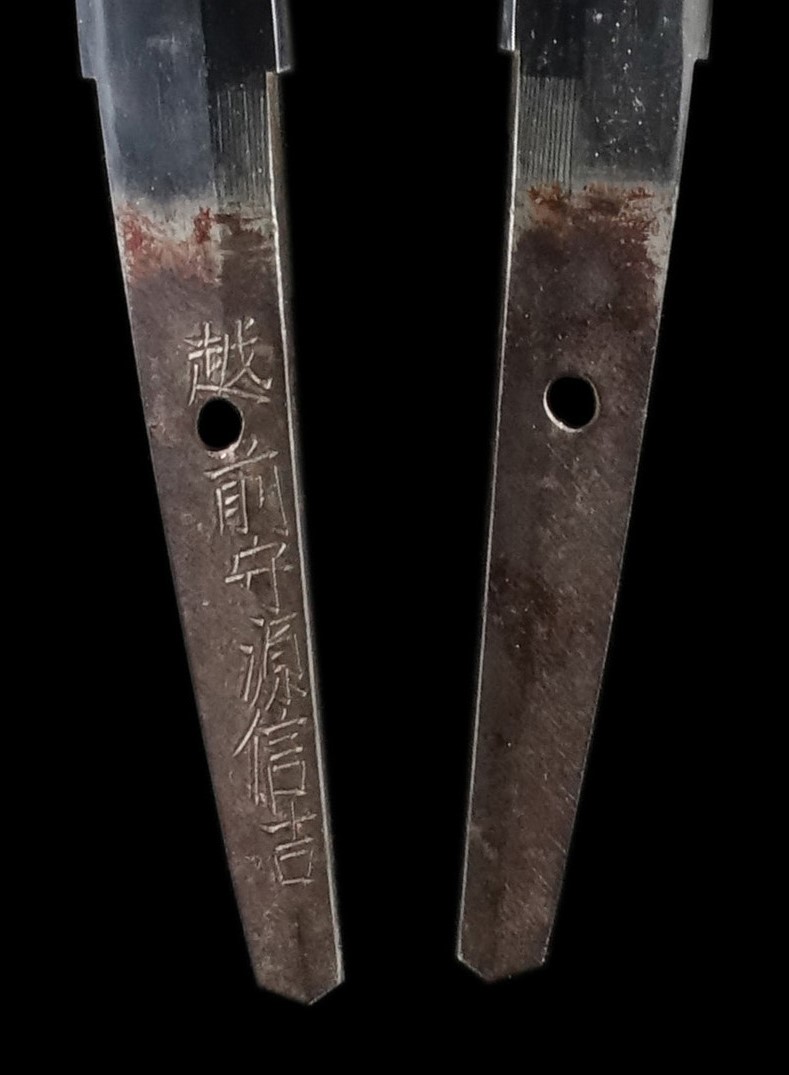
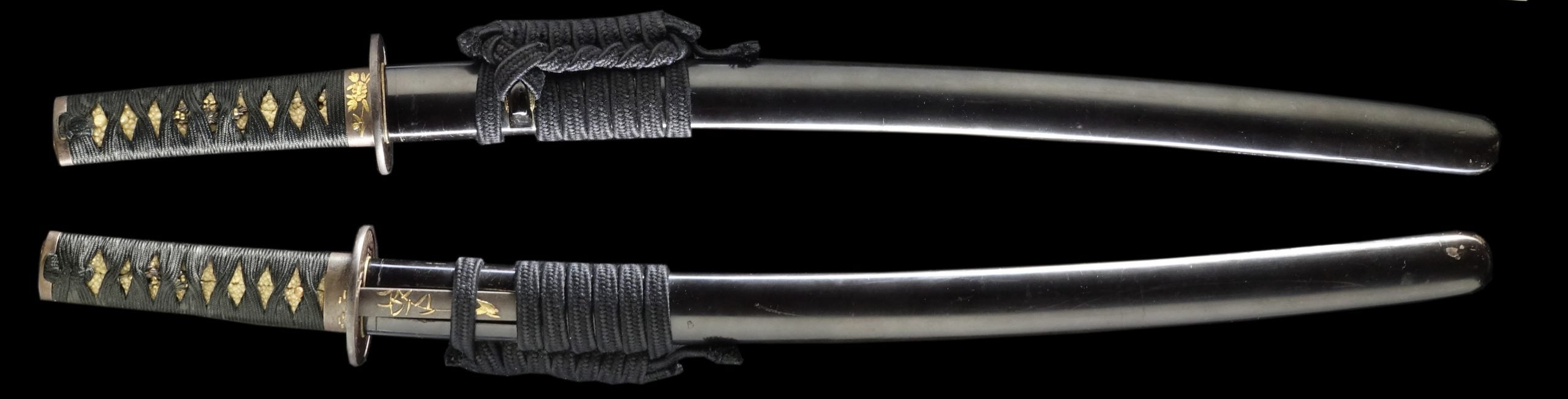
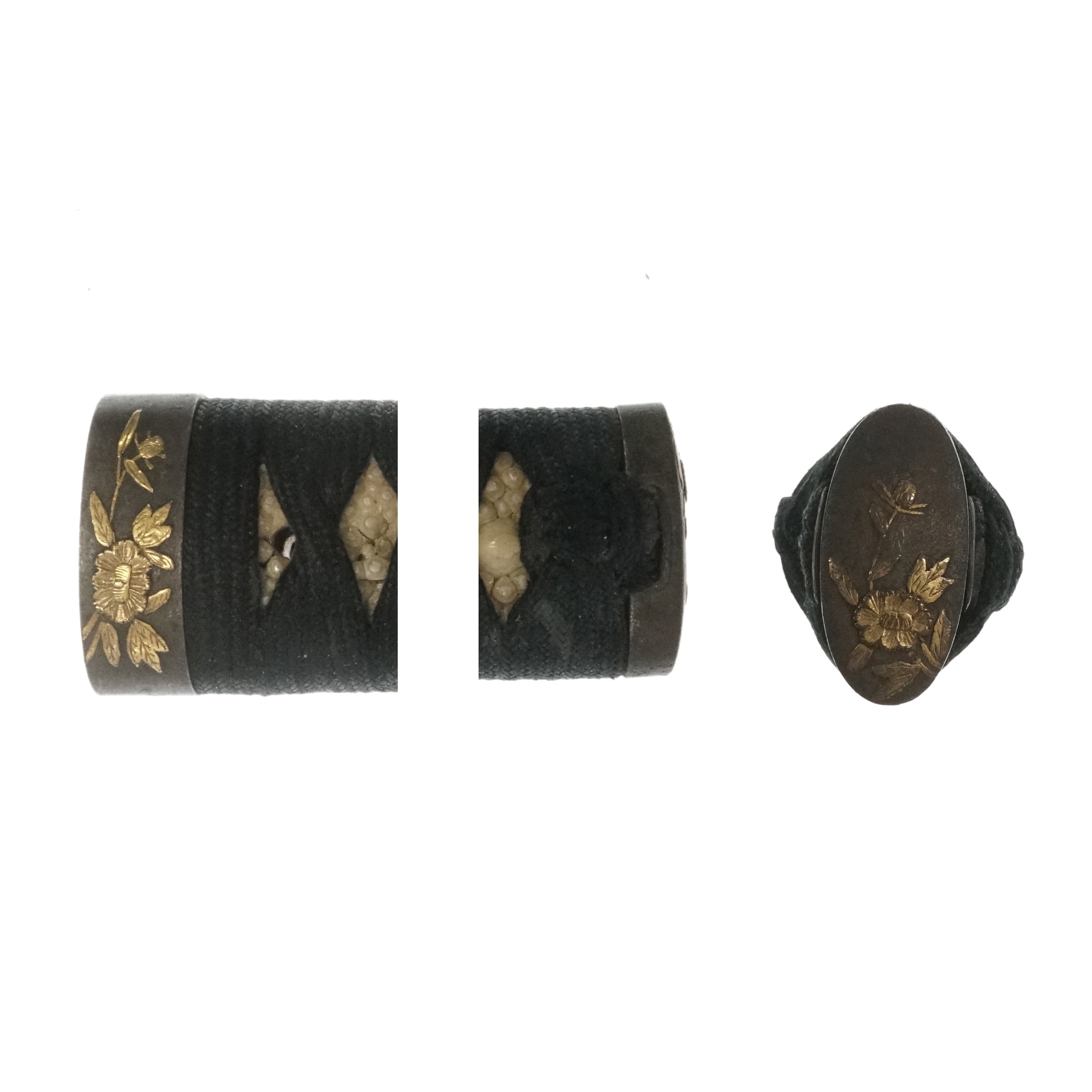
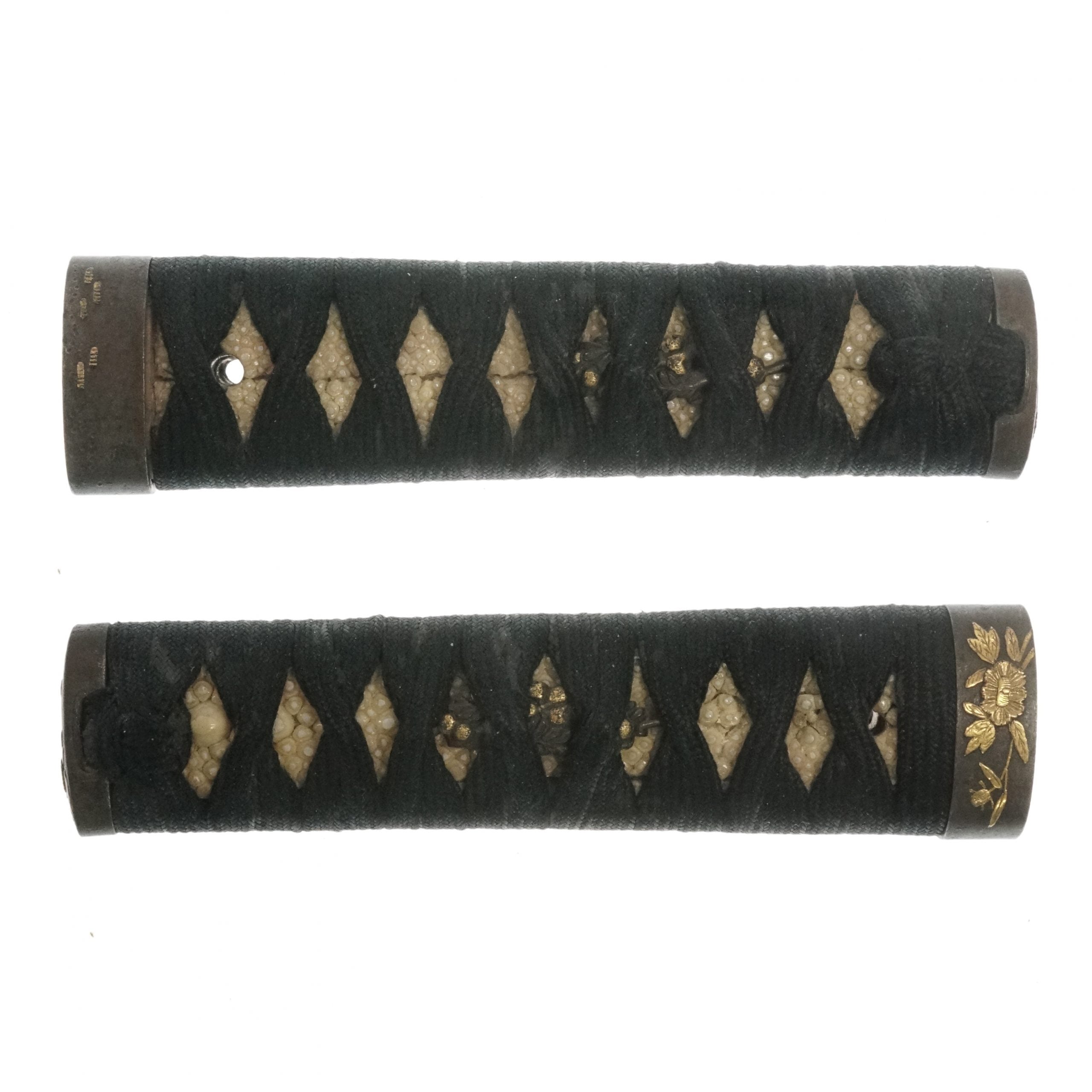
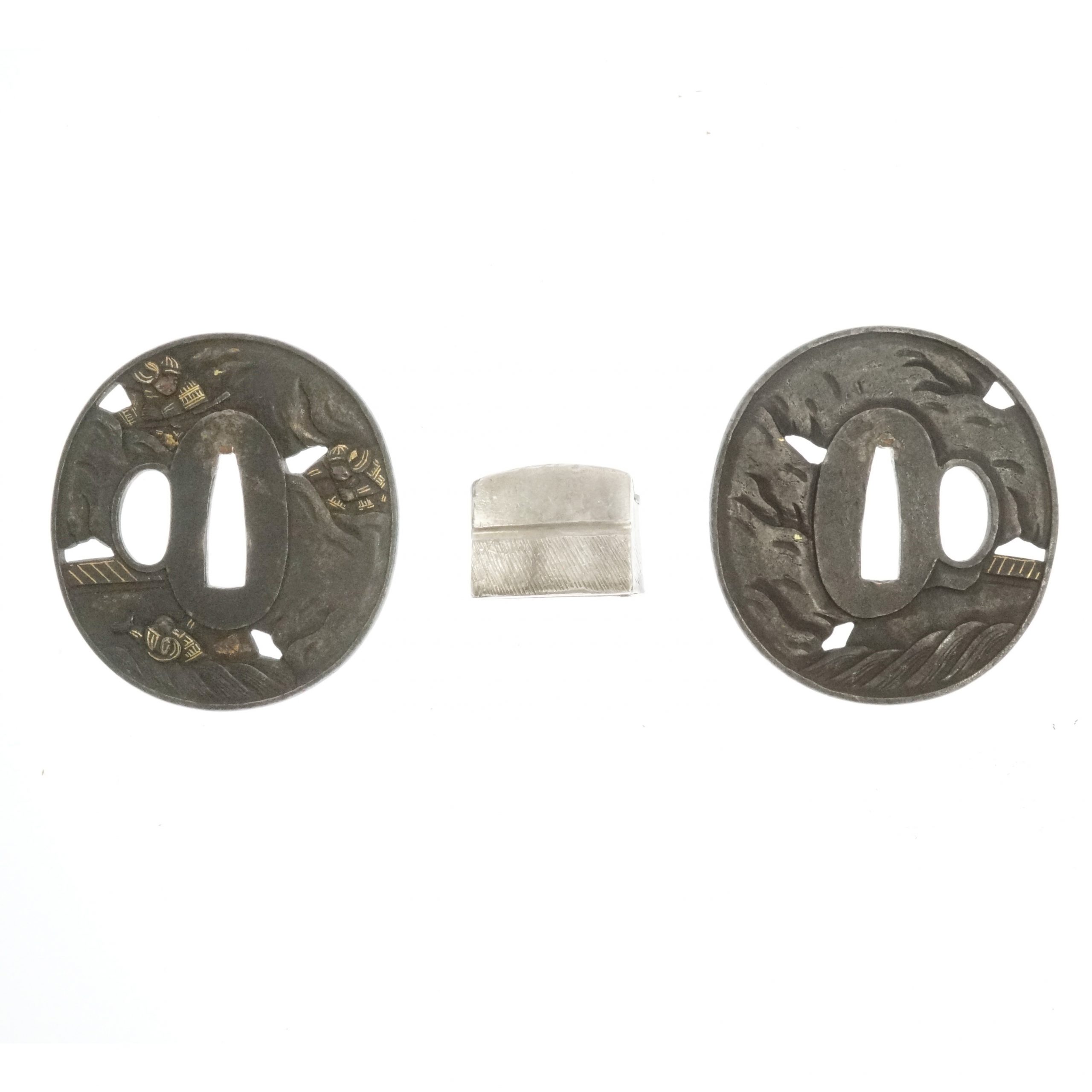
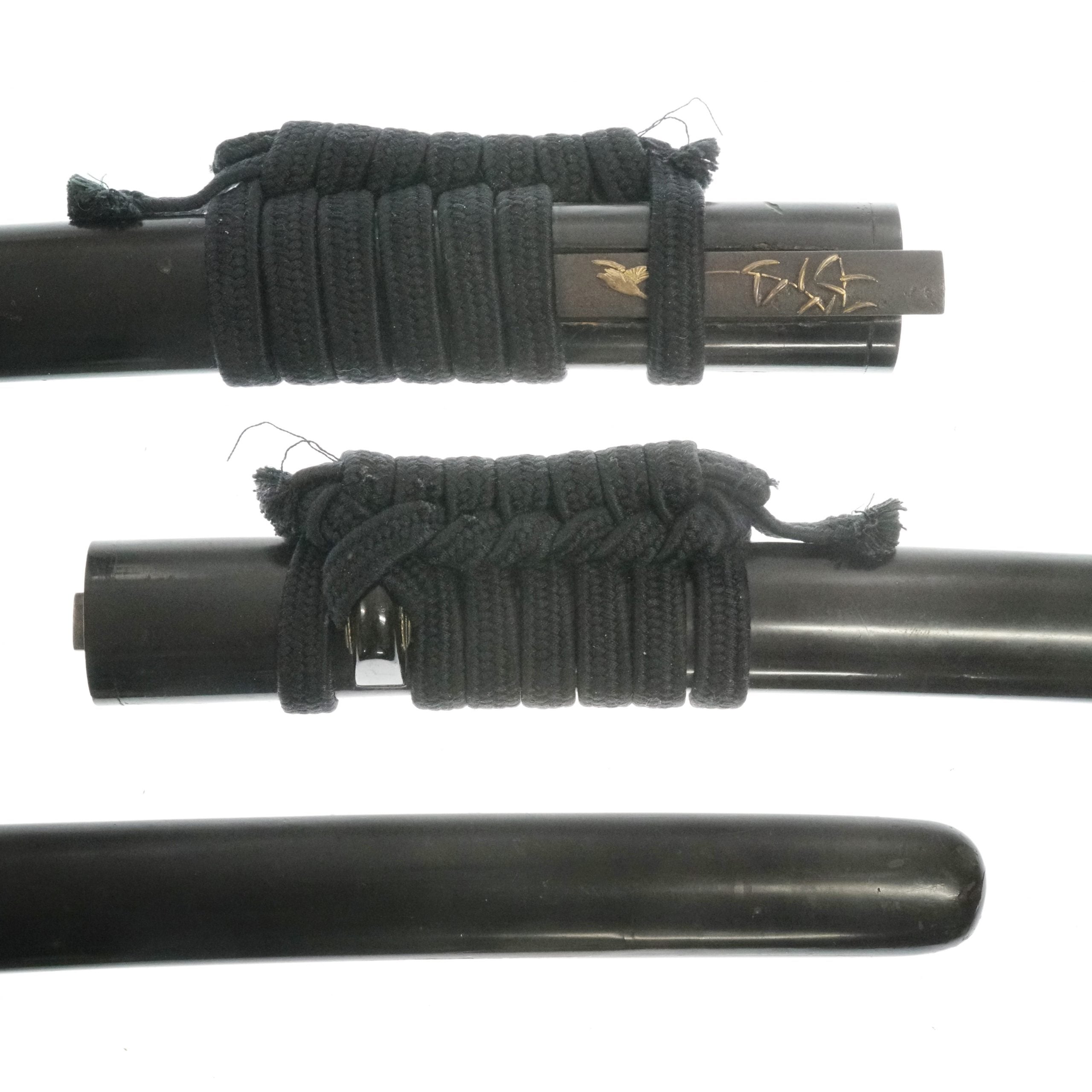
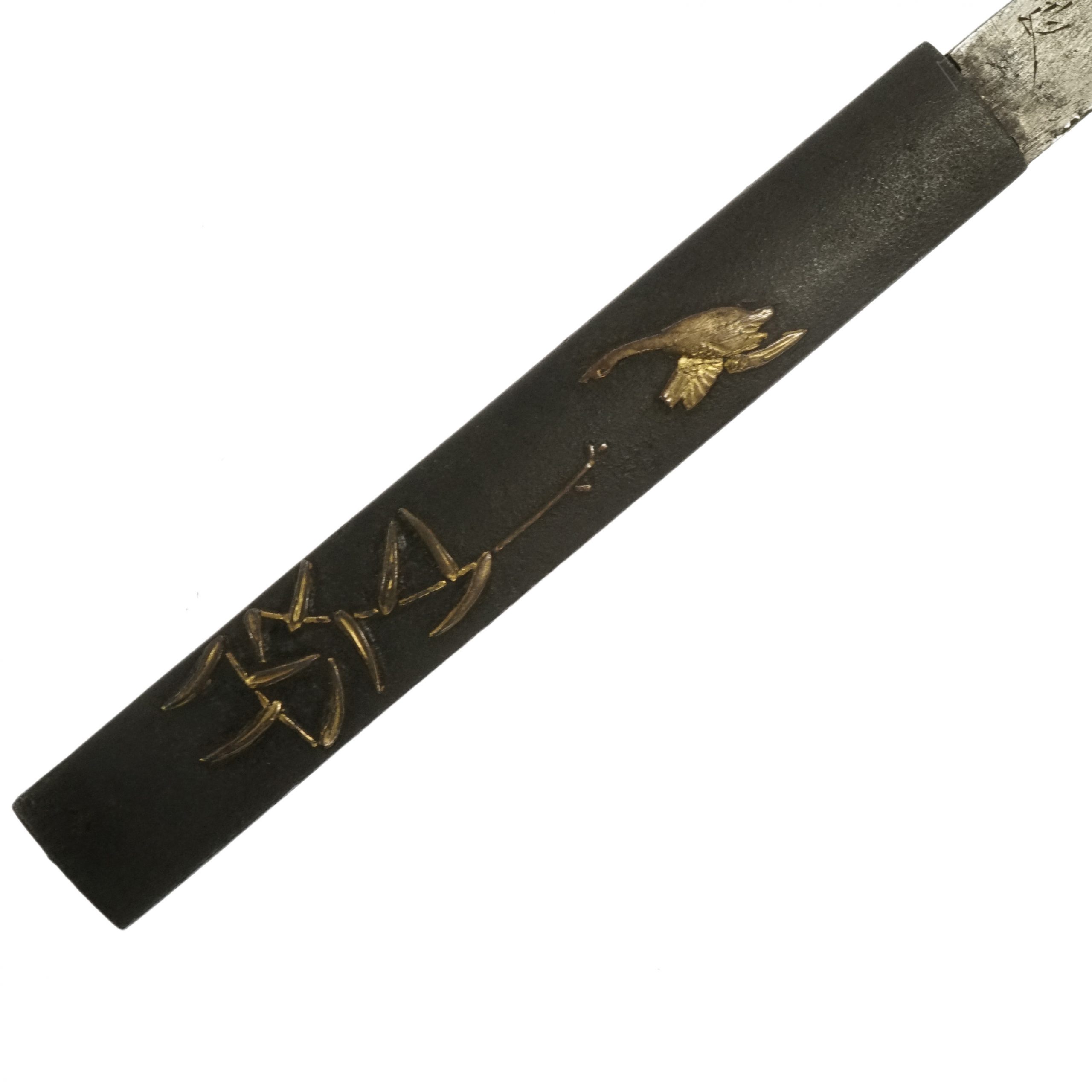
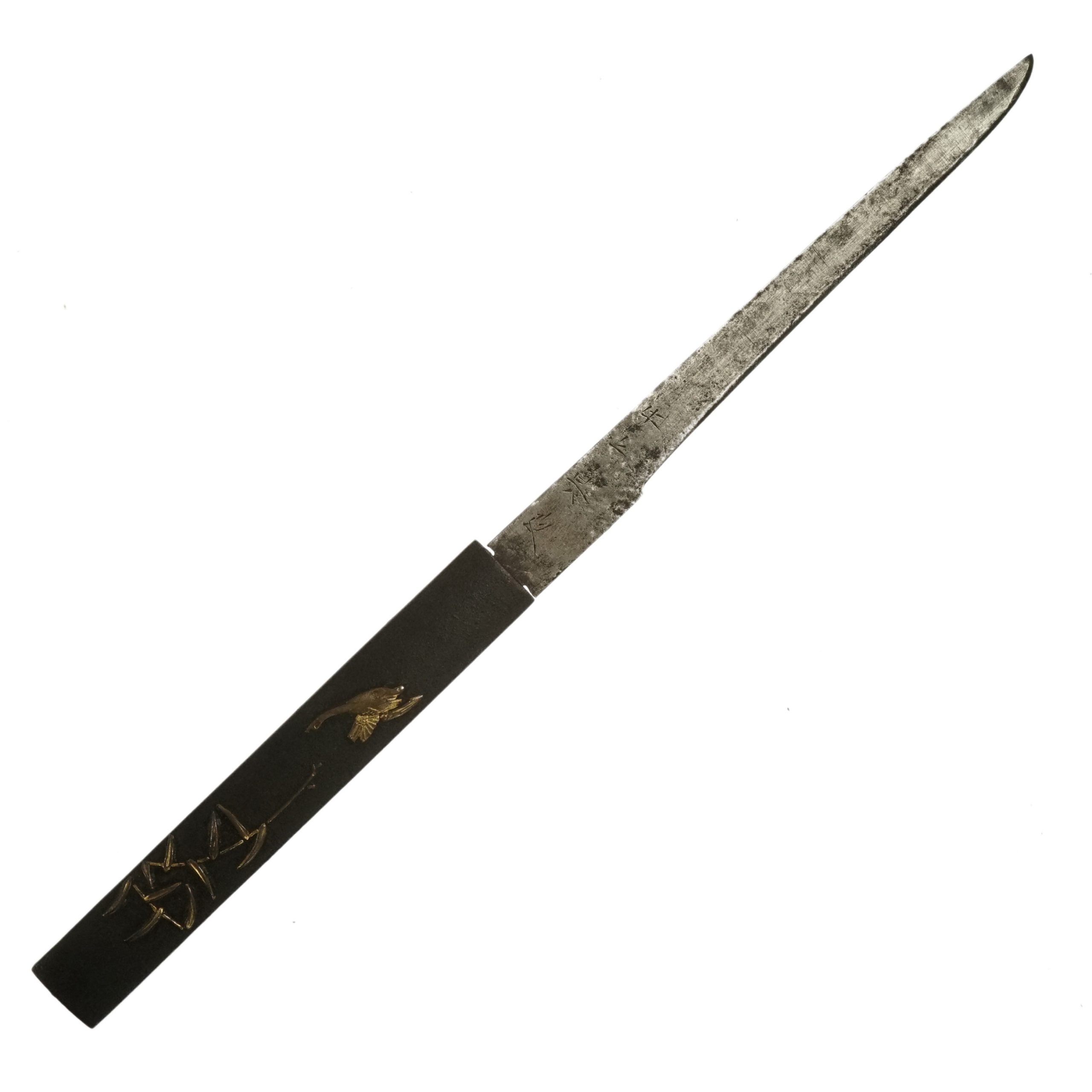
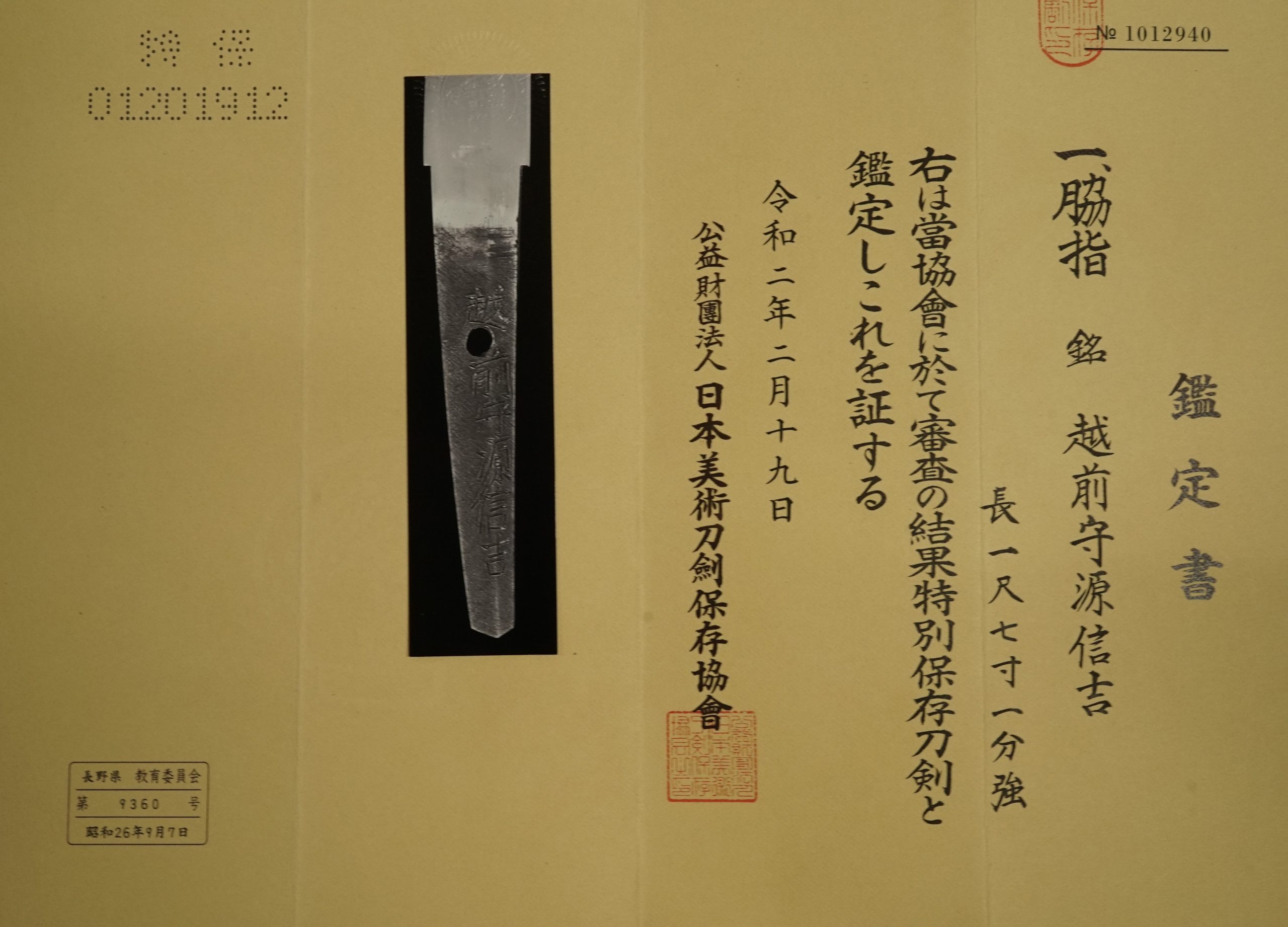
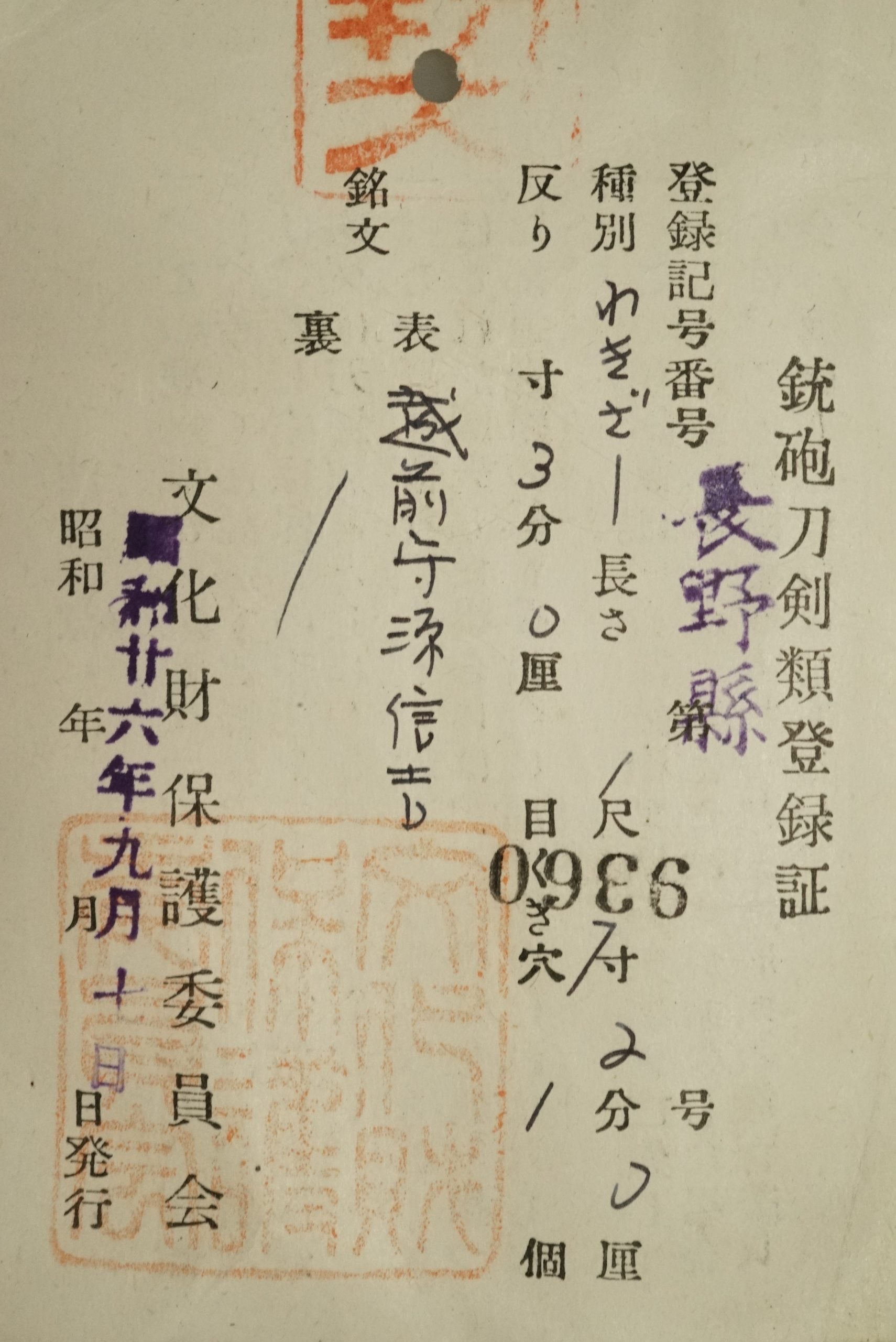
Antique Japanese Sword Wakizashi Signed by Nobuyoshi with NBTHK Tokubetsu Hozon Certificate 【Description】 Echizen no Kami Minamoto Nobuyoshi(越前守源信吉) was the third son of the first-gen Shinano Kami Nobuyoshi(信濃守信吉), who served as one of Gokaji, five most prestigious swordsmiths in Kyoto. Minamoto Nobuyoshi is said to have forged this blade during the mid-Edo period(Late 17th century). He mostly created his work in Yamashiro(Kyoto area) but moved to Osaka city at the end of his career. He was allowed to inscribe a chrysanthemum emblem, which is the symbol of the Japanese emperor. His sword forging technique was so great that the emperor allowed him to use this emblem, which was quite honorable for any swordsmiths. This blade has a Tokubetsu Hozon certificate issued by NBTHK. This authentication paper was only given to Japanese swords, especially worth preserving by Nihon Bijutsu Touken Hozon Kyokai(the Society for the Preservation of the Japan Art Sword). This sword has beautiful Suguha(straight tempering line) and Jigane. It comes with a black lacquered scabbard and intricate sword fittings. 【 Blade】 Cutting Edge Length(Nagasa) : 52.1 cm (20.5 inches) Curvature(Sori) : 0.9 cm(0.35 inches) Hamon: The crystalline structure which forms along the cutting edge of a blade as a result of the hardening process Jimon(Jihada): visible steel surface pattern created by folding and hammering during forging process Nakago : Nakago is the tang of the Japanese sword. Japanese swordsmiths left the black rust on the tang on purpose to prevent red rust while the tang is in its handle. And the discoloration of the tang was created over time, which is a great indicator for a Japanese sword specialist to estimate when the sword was forged. Koshirae: Koshirae is the mounting of the Japanese sword. There are several parts that consist of Koshirae such as Saya(Sabbard), Tsuka( Handle), Tsuba(Handguard). Fuchi-Kashira : A pair of matching sword fittings that cover the upper and bottom parts of its sword hilt. Botan (牡丹, peony) pattern is designed for this Fuchi Kashira. Peony represents happiness, wealth, nobleness, and gorgeousness. This flower pattern has been treated as a kind of good-omen motifs that become a rich harvest sign. When we write this flower’s name in Japanese, its second letter, “丹” has the meaning: medicine of mountain hermit that would give us eternal youth. Based on the meaning of this letter, the peony pattern symbolizes eternal youth and longevity. Tsuka and Menuki : Tsuka is the handle of the Japanese sword and Menuki is its decoration. It is challenging to judge this Menuki’s motif; it might be a kind of plant that bears fruit. Tsuba and Habaki : Tsuba is the handguard for the Japanese Sword and Habaki is the equipment to make the blade not touch its scabbard inside.It prevents the blade from getting rusty and chipped. Oval-shaped Tsuba made from iron. Samurais who are fighting against enemies are engraved. The rough sea is depicted at the backside. It seems this Tsuba shows a scene of a battle on the sea. This design might have adopted to encourage Samurai who is leaving for the battlefield. Saya : Saya is the scabbard for the Japanese sword. Please keep in in mind that there is a little scratch on this scabbard. If you like to know the detail, please contact us. Kozuka : Kozuka is a small knife stored in Kozuka Hitsu(groove of the sheath of the Japanese sword). Kogatana (small knife) is stored in Kozuka (case for the small knife). A crane and leaves are designed. Cranes live a long life so that this bird pattern has been considered the symbol of longevity since a long time ago. Also, as cranes make compatible couples, its design represents happy marriage. Due to its pure white feathers and dignified appearance, it was favorably used as a good omen design for various ornaments or furnishings such as Kimono (traditional Japanese costume) or Obi (belt for Kimono). Authentication Paper : NBTHK TOKUBETSU Hozon Certificate for the b
 NihontoWatch
在銘 · 延宝 · 長さ 52.1cm · 反り 0.9cm
山城 · 1673-1695頃
藤代 Chu-jo saku · 刀剣大鑑 上位37%
現在4点販売中
信吉の位置づけを、日本刀全体および伝統・時代・時期ごとに示します。各位(随一・屈指・有数・著名)は、NBTHK および文化庁による指定に加え、三作や名物帳などの歴史的栄誉を加味したものです。
各項目を選ぶと評価方法が表示されます。
在銘年紀作が示す、確実に活動していた年代
江戸時代
二世紀半の泰平のあいだ、刀は武器である以上に武士の身分の標章であった。江戸の実証と大坂の華やぎのように都市ごとの作風が育ち、時代の末には需要も細っていく。
保存刀剣のうち、出来が一層優れ、保存状態も良好と認められたものです。再刃や、室町・江戸期の多くの無銘作は対象外となり、保存刀剣より高い基準が課されます。
日本美術刀剣保存協会(NBTHK)は、1948年に設立され、文化庁の監督を受ける公益財団法人で、東京・刀剣博物館に本部を置きます。専門の審査員が出品作を直接審査し、美術的・歴史的価値に応じた鑑定書を発行します。NBTHKの鑑定書は、日本刀および刀装具の真正性を示す最も広く認知された基準です。
NBTHK公式サイトReturns/exchanges limited to defects caused by shipping (except willful misconduct or gross negligence by the company); customers must contact within 72 hours of receiving the product.
Antique Japanese Sword Wakizashi Signed by Nobuyoshi with NBTHK Tokubetsu Hozon Certificate 【Description】 Echizen no Kami Minamoto Nobuyoshi(越前守源信吉) was the third son of the first-gen Shinano Kami Nobuyoshi(信濃守信吉), who served as one of Gokaji, five most prestigious swordsmiths in Kyoto. Minamoto Nobuyoshi is said to have forged this blade during the mid-Edo period(Late 17th century). He mostly created his work in Yamashiro(Kyoto area) but moved to Osaka city at the end of his career. He was allowed to inscribe a chrysanthemum emblem, which is the symbol of the Japanese emperor. His sword forging technique was so great that the emperor allowed him to use this emblem, which was quite honorable for any swordsmiths. This blade has a Tokubetsu Hozon certificate issued by NBTHK. This authentication paper was only given to Japanese swords, especially worth preserving by Nihon Bijutsu Touken Hozon Kyokai(the Society for the Preservation of the Japan Art Sword). This sword has beautiful Suguha(straight tempering line) and Jigane. It comes with a black lacquered scabbard and intricate sword fittings. 【 Blade】 Cutting Edge Length(Nagasa) : 52.1 cm (20.5 inches) Curvature(Sori) : 0.9 cm(0.35 inches) Hamon: The crystalline structure which forms along the cutting edge of a blade as a result of the hardening process Jimon(Jihada): visible steel surface pattern created by folding and hammering during forging process Nakago : Nakago is the tang of the Japanese sword. Japanese swordsmiths left the black rust on the tang on purpose to prevent red rust while the tang is in its handle. And the discoloration of the tang was created over time, which is a great indicator for a Japanese sword specialist to estimate when the sword was forged. Koshirae: Koshirae is the mounting of the Japanese sword. There are several parts that consist of Koshirae such as Saya(Sabbard), Tsuka( Handle), Tsuba(Handguard). Fuchi-Kashira : A pair of matching sword fittings that cover the upper and bottom parts of its sword hilt. Botan (牡丹, peony) pattern is designed for this Fuchi Kashira. Peony represents happiness, wealth, nobleness, and gorgeousness. This flower pattern has been treated as a kind of good-omen motifs that become a rich harvest sign. When we write this flower’s name in Japanese, its second letter, “丹” has the meaning: medicine of mountain hermit that would give us eternal youth. Based on the meaning of this letter, the peony pattern symbolizes eternal youth and longevity. Tsuka and Menuki : Tsuka is the handle of the Japanese sword and Menuki is its decoration. It is challenging to judge this Menuki’s motif; it might be a kind of plant that bears fruit. Tsuba and Habaki : Tsuba is the handguard for the Japanese Sword and Habaki is the equipment to make the blade not touch its scabbard inside.It prevents the blade from getting rusty and chipped. Oval-shaped Tsuba made from iron. Samurais who are fighting against enemies are engraved. The rough sea is depicted at the backside. It seems this Tsuba shows a scene of a battle on the sea. This design might have adopted to encourage Samurai who is leaving for the battlefield. Saya : Saya is the scabbard for the Japanese sword. Please keep in in mind that there is a little scratch on this scabbard. If you like to know the detail, please contact us. Kozuka : Kozuka is a small knife stored in Kozuka Hitsu(groove of the sheath of the Japanese sword). Kogatana (small knife) is stored in Kozuka (case for the small knife). A crane and leaves are designed. Cranes live a long life so that this bird pattern has been considered the symbol of longevity since a long time ago. Also, as cranes make compatible couples, its design represents happy marriage. Due to its pure white feathers and dignified appearance, it was favorably used as a good omen design for various ornaments or furnishings such as Kimono (traditional Japanese costume) or Obi (belt for Kimono). Authentication Paper : NBTHK TOKUBETSU Hozon Certificate for the b
NihontoWatch在銘 · 延宝 · 長さ 52.1cm · 反り 0.9cm
山城 · 1673-1695頃
藤代 Chu-jo saku · 刀剣大鑑 上位37%
現在4点販売中
信吉の位置づけを、日本刀全体および伝統・時代・時期ごとに示します。各位(随一・屈指・有数・著名)は、NBTHK および文化庁による指定に加え、三作や名物帳などの歴史的栄誉を加味したものです。
各項目を選ぶと評価方法が表示されます。
在銘年紀作が示す、確実に活動していた年代
江戸時代
二世紀半の泰平のあいだ、刀は武器である以上に武士の身分の標章であった。江戸の実証と大坂の華やぎのように都市ごとの作風が育ち、時代の末には需要も細っていく。
保存刀剣のうち、出来が一層優れ、保存状態も良好と認められたものです。再刃や、室町・江戸期の多くの無銘作は対象外となり、保存刀剣より高い基準が課されます。
日本美術刀剣保存協会(NBTHK)は、1948年に設立され、文化庁の監督を受ける公益財団法人で、東京・刀剣博物館に本部を置きます。専門の審査員が出品作を直接審査し、美術的・歴史的価値に応じた鑑定書を発行します。NBTHKの鑑定書は、日本刀および刀装具の真正性を示す最も広く認知された基準です。
NBTHK公式サイトReturns/exchanges limited to defects caused by shipping (except willful misconduct or gross negligence by the company); customers must contact within 72 hours of receiving the product.