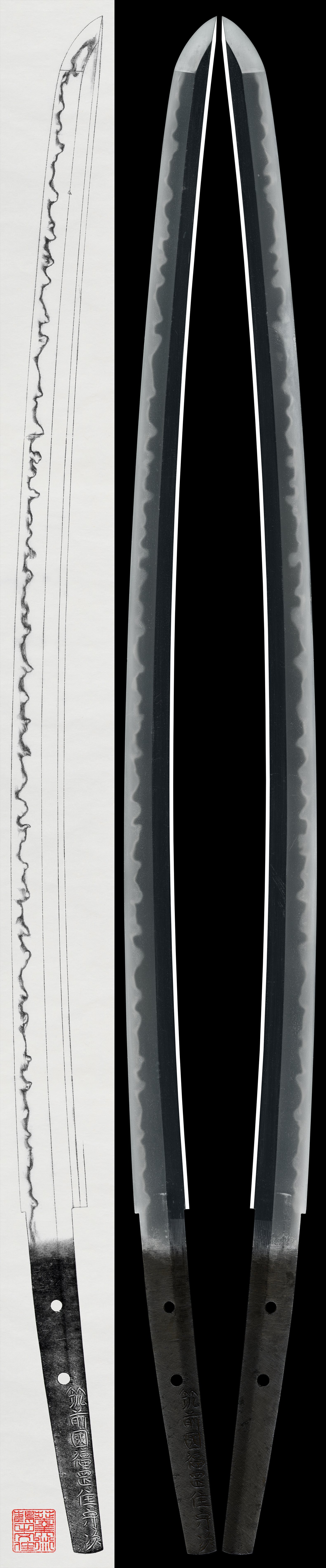
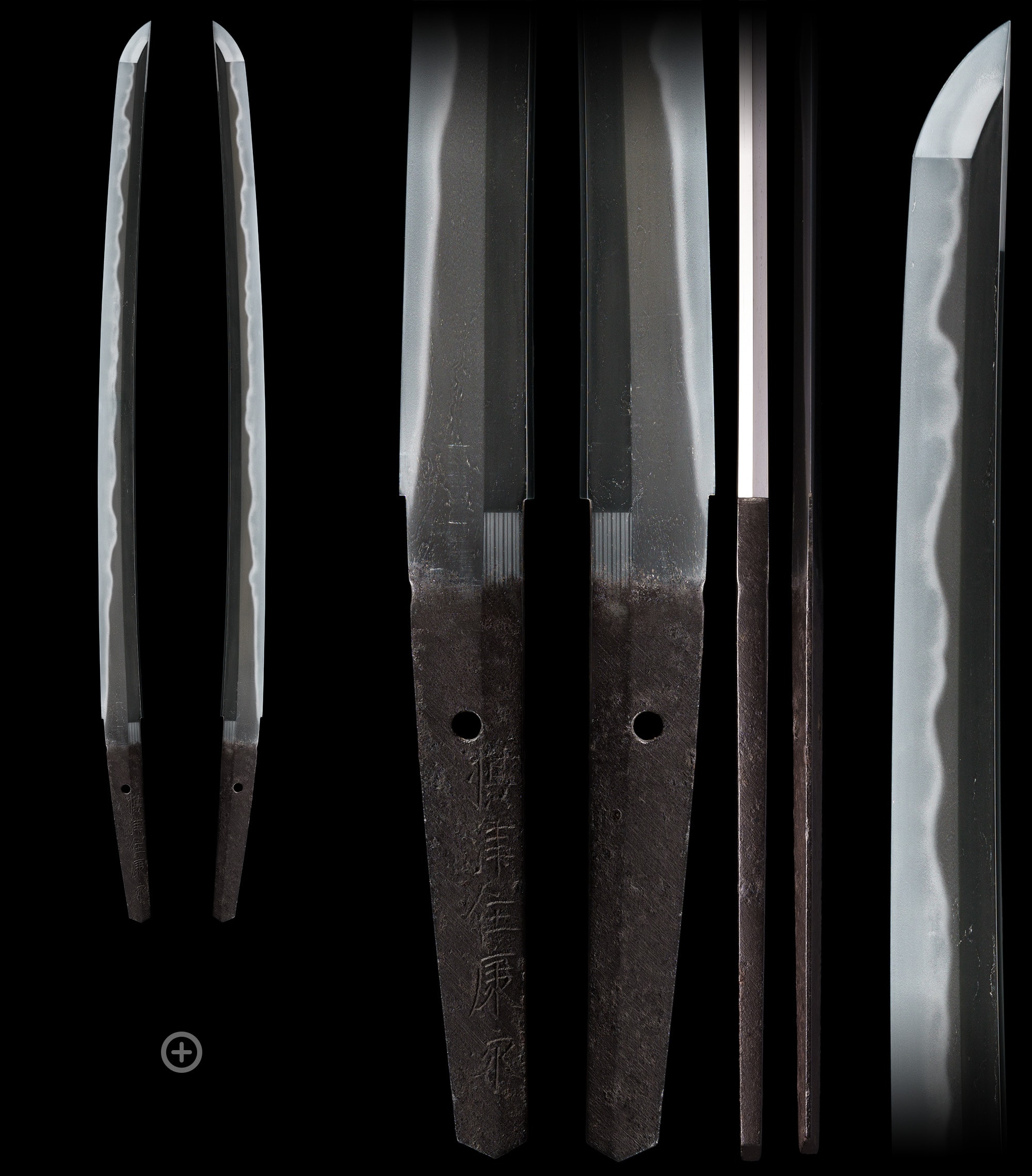
参勤交代が集めた日本最大の帯刀人口が江戸にあった。御用鍛冶康継は茎に葵紋を許され、虎徹の刀は截断銘の金象嵌を帯びる。この町では、証こそが物を言った。
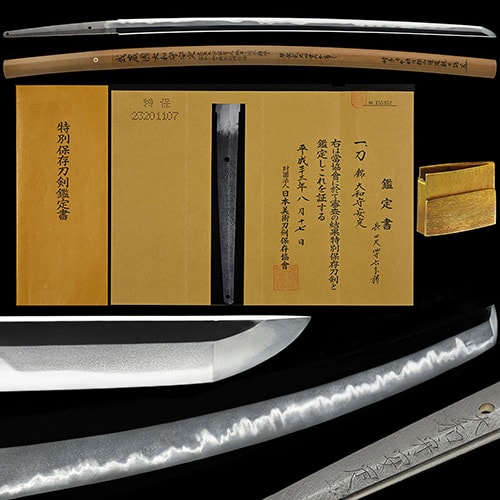
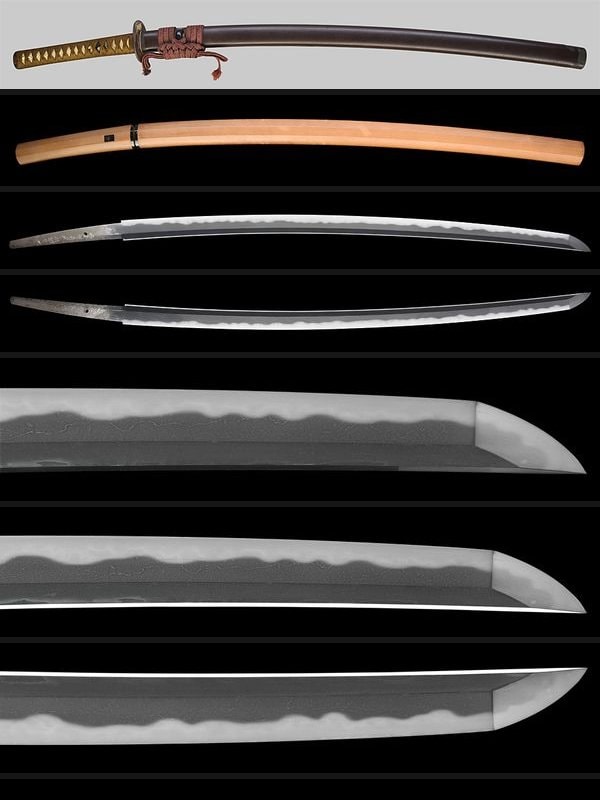
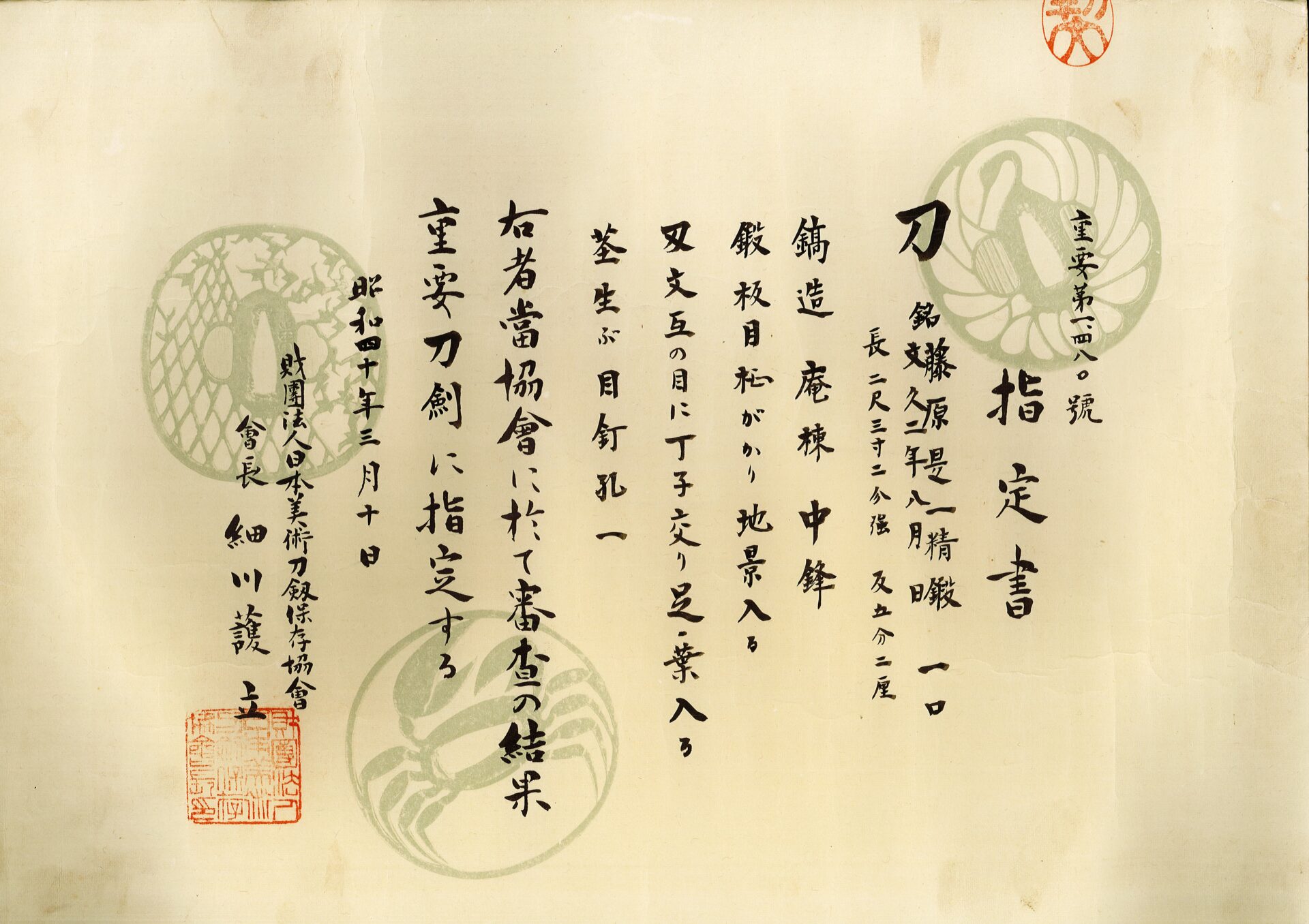
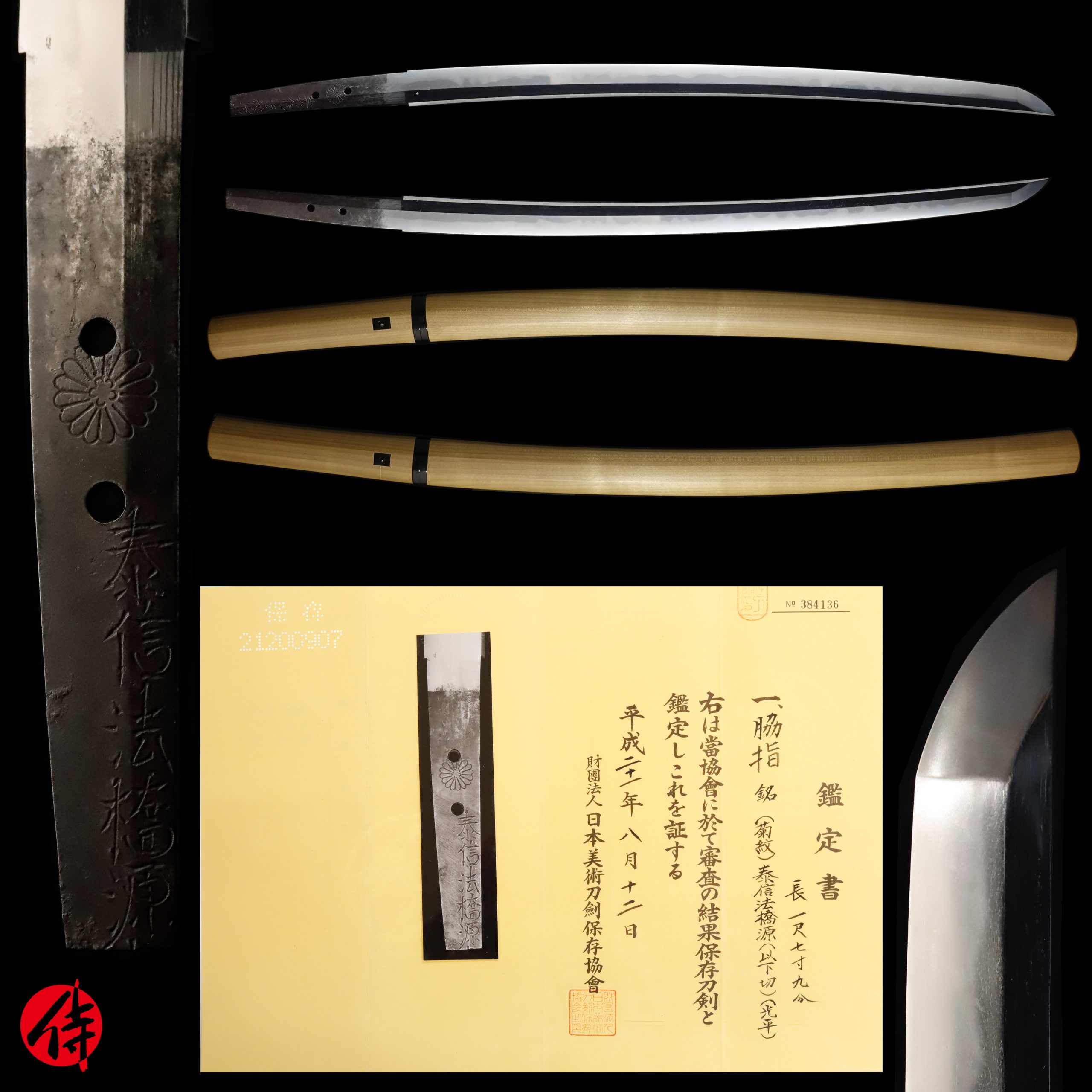
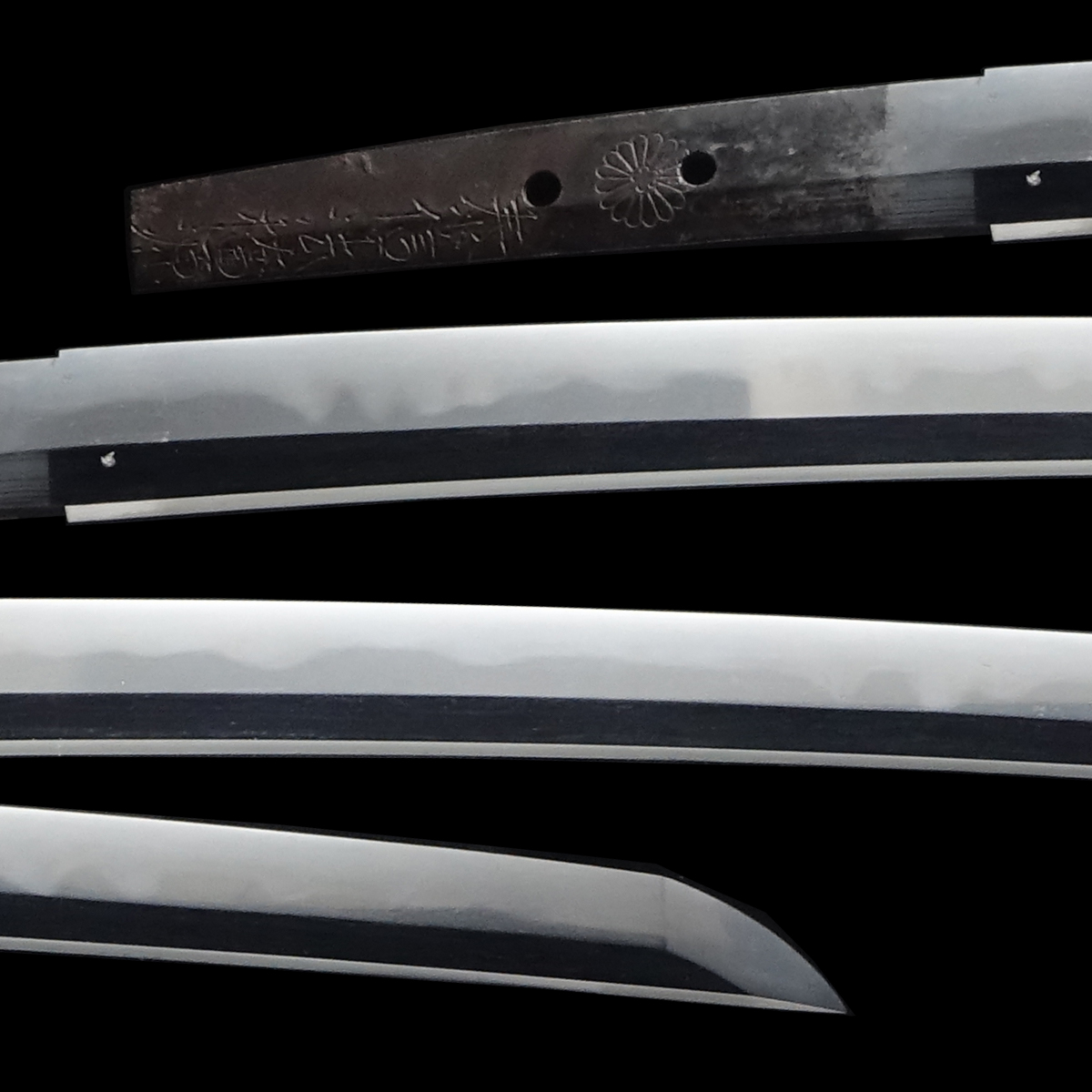
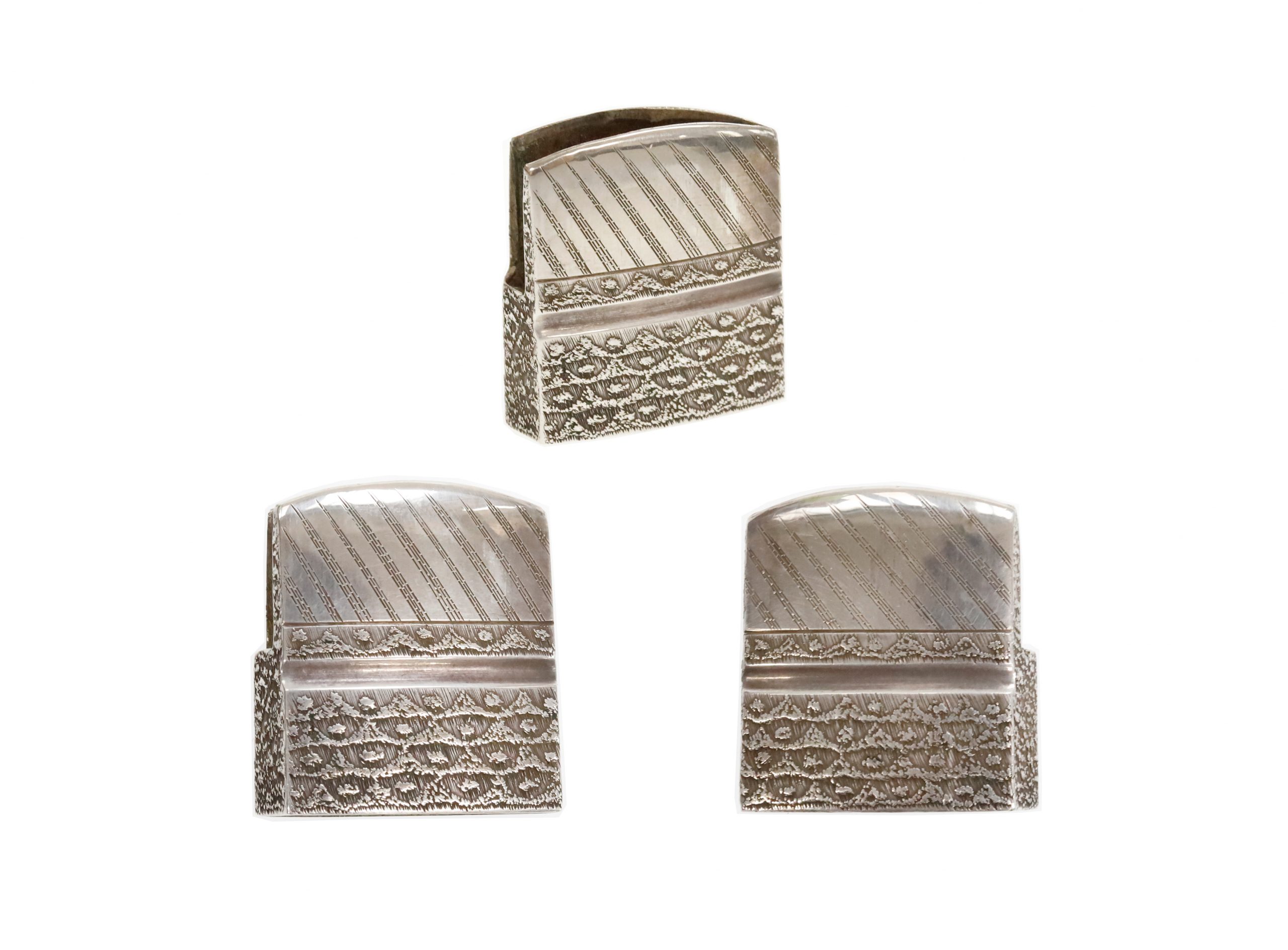
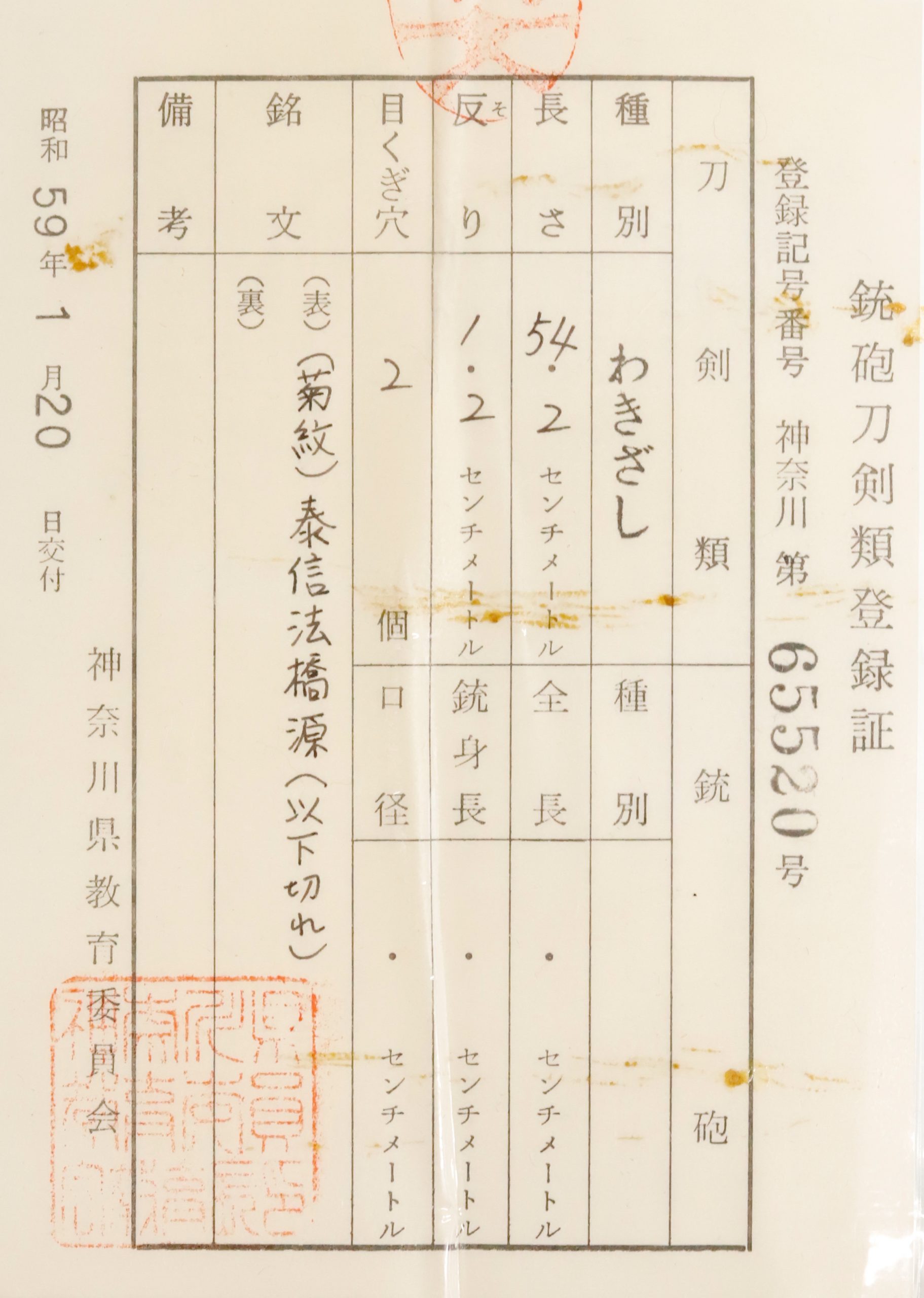
日本刀 脇差 銘 泰信法橋源光平(日本美術刀剣保存協会 保存刀剣鑑定書付) 【説明】 本作は、日本美術刀剣保存協会(NBTHK)により「泰信法橋源光平」の作と極められた一口です。磨上げのため銘の「光平」の部分は欠落しておりますが、その作域から光平の真作と認められています。源光平は、日置光平(へき みつひら)の名でも知られる名工です。 光平は近江国(現在の滋賀県)に生まれ、備前国(現在の岡山県)を本貫とする石堂派の門流に属しました。室町時代に備前から近江へ移住した石堂派の末裔と伝えられています。 正保年間(1645-1648年)頃、光平は同門の絵師や刀工らと共に近江から江戸へ移り、江戸石堂派の祖としてその地位を確立しました。 彼は江戸石堂派の中でも屈指の技量を誇り、当時主流であった相州伝に対し、華やかな備前一文字伝の作風を江戸の地で再興させました。特に備前一文字の最大の特徴である「丁子乱れ(ちょうじみだれ)」の焼刃を得意としています。丁子乱れとは、丁子の実を並べたような華やかな変化を見せる刃文のことです。 光平は承応元年(1652年)に出羽守を受領し、寛文3年(1663年)には法橋(ほっきょう)の位を授かりました。晩年には入道して「泰信」と号しています。本作には「泰信法橋」の銘が残されていることから、寛文3年以降の円熟期の作であることが分かります。 また、光平はその卓越した技量から、朝廷より菊紋を切ることを許された数少ない名工の一人であり、これは当時の刀工にとって極めて名誉なことでした。 本作には、日本美術刀剣保存協会が発行した「保存刀剣鑑定書」が付属しており、美術品として保存価値が高いことが公的に証明されています。 【刀身】 長さ(Nagasa):54.2 cm 反り(Sori):1.2 cm 刃文(Hamon):焼入れによって刃先に現れる結晶構造。本作は光平の特色である華やかな丁子乱れを焼いています。 地鉄(Jihada):鍛錬によって現れる鋼の表面模様。 茎(Nakago):刀身の柄に収まる部分。時の経過とともに生じた自然な錆色が、製作年代を特定する重要な指標となります。 鎺(Habaki):刀身を鞘の中に固定し、刀身が鞘の内側に触れるのを防ぐ金具。錆や傷から守る役割も果たします。 鑑定書:日本美術刀剣保存協会(NBTHK)保存刀剣鑑定書(第384136号) 平成21年(2009年)8月12日付で交付されたものです。ご購入者様にはこの原本をお渡しいたします。ご希望に応じて、鑑定内容の英訳PDFも作成可能です。 銃砲刀剣類登録証:神奈川県 第65520号 神奈川県教育委員会によって交付された登録証です。伝統的な鍛錬製法による本物の日本刀であることを証明するもので、日本国内で合法的に所有するために必要な書類です。海外輸出の際には教育委員会へ返納されますが、写しをお渡しいたします。
 NihontoWatch
在銘 · Edo Ishido · Genna 5 (1619), act. Jōō–Enpō · 長さ 54.2cm · 反り 1.2cm
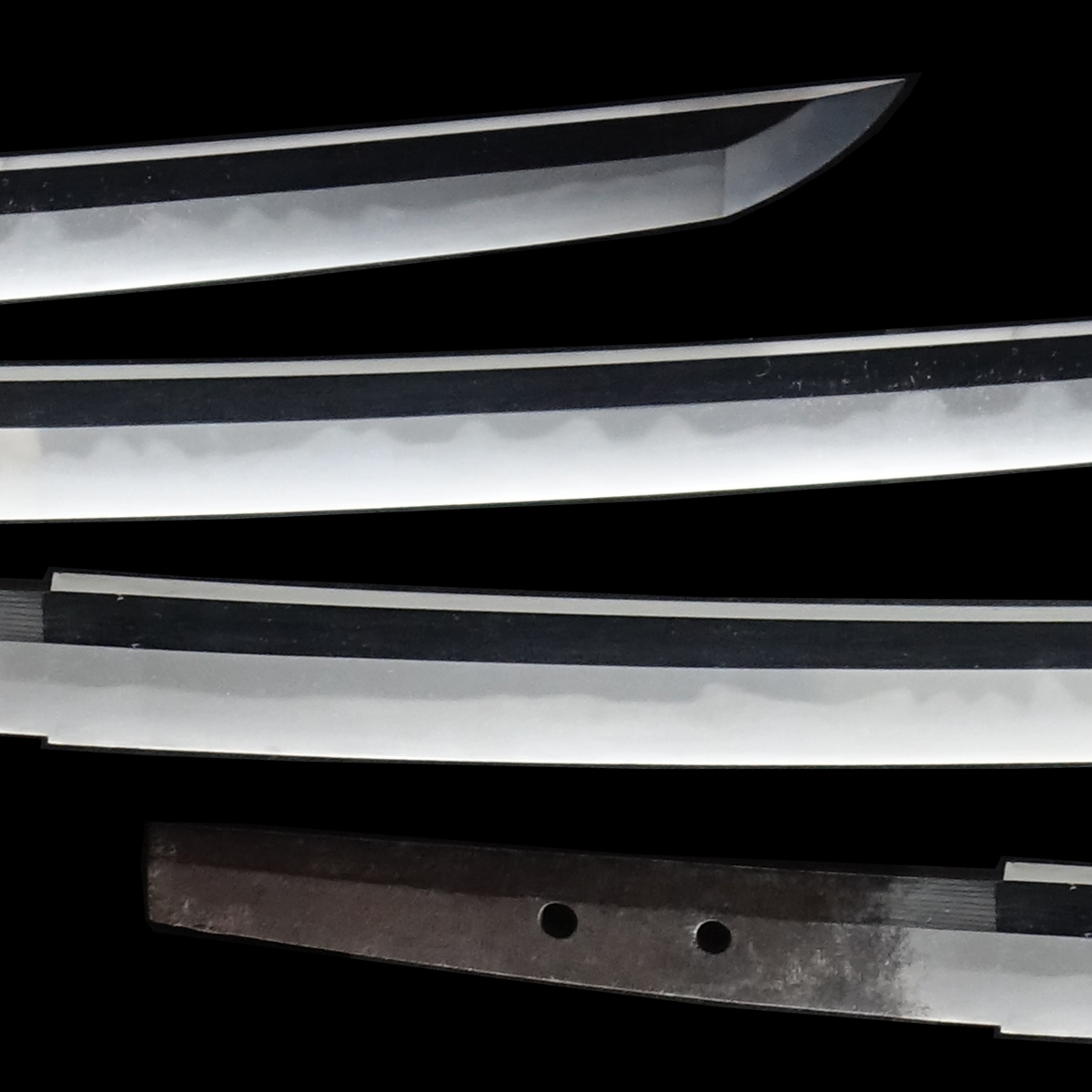
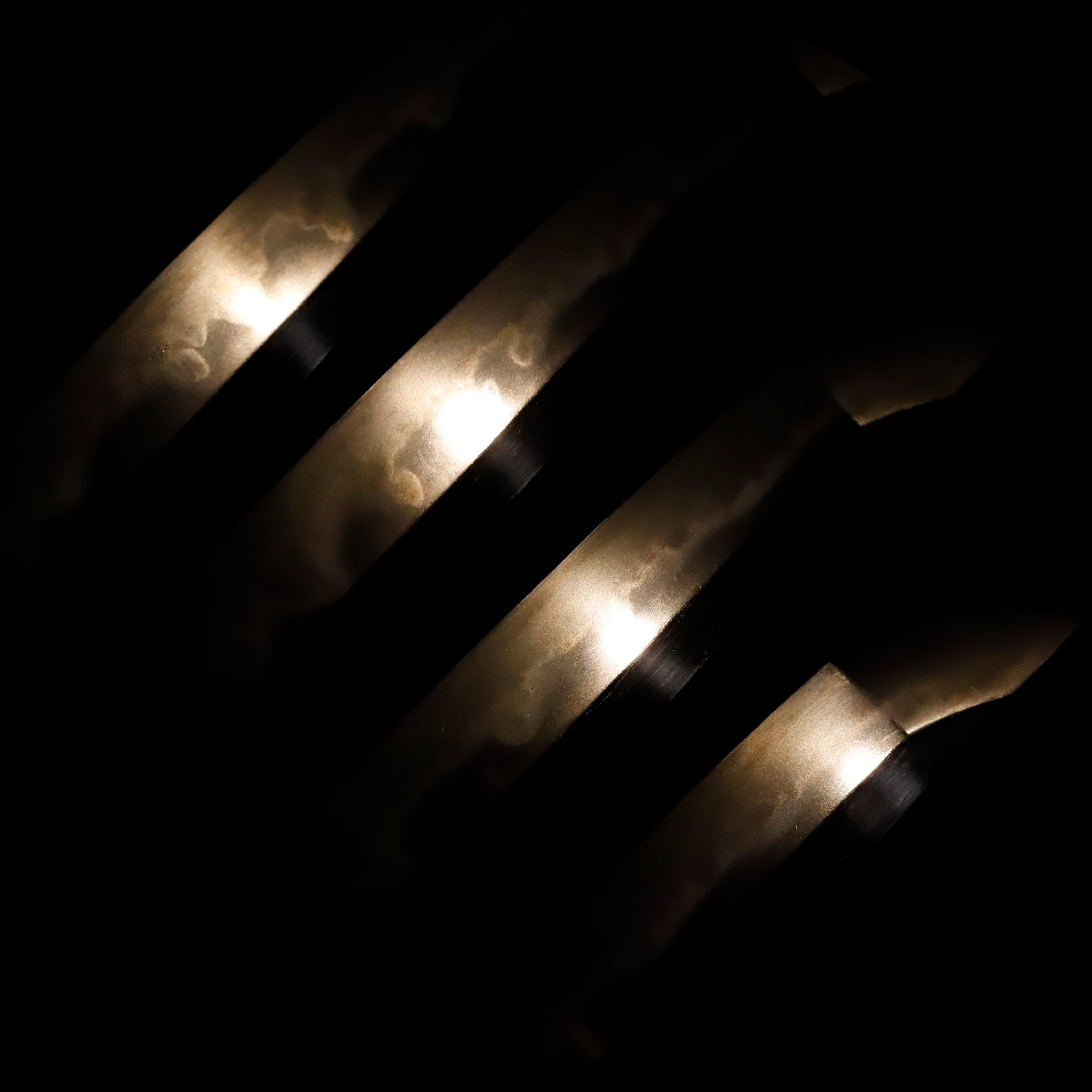

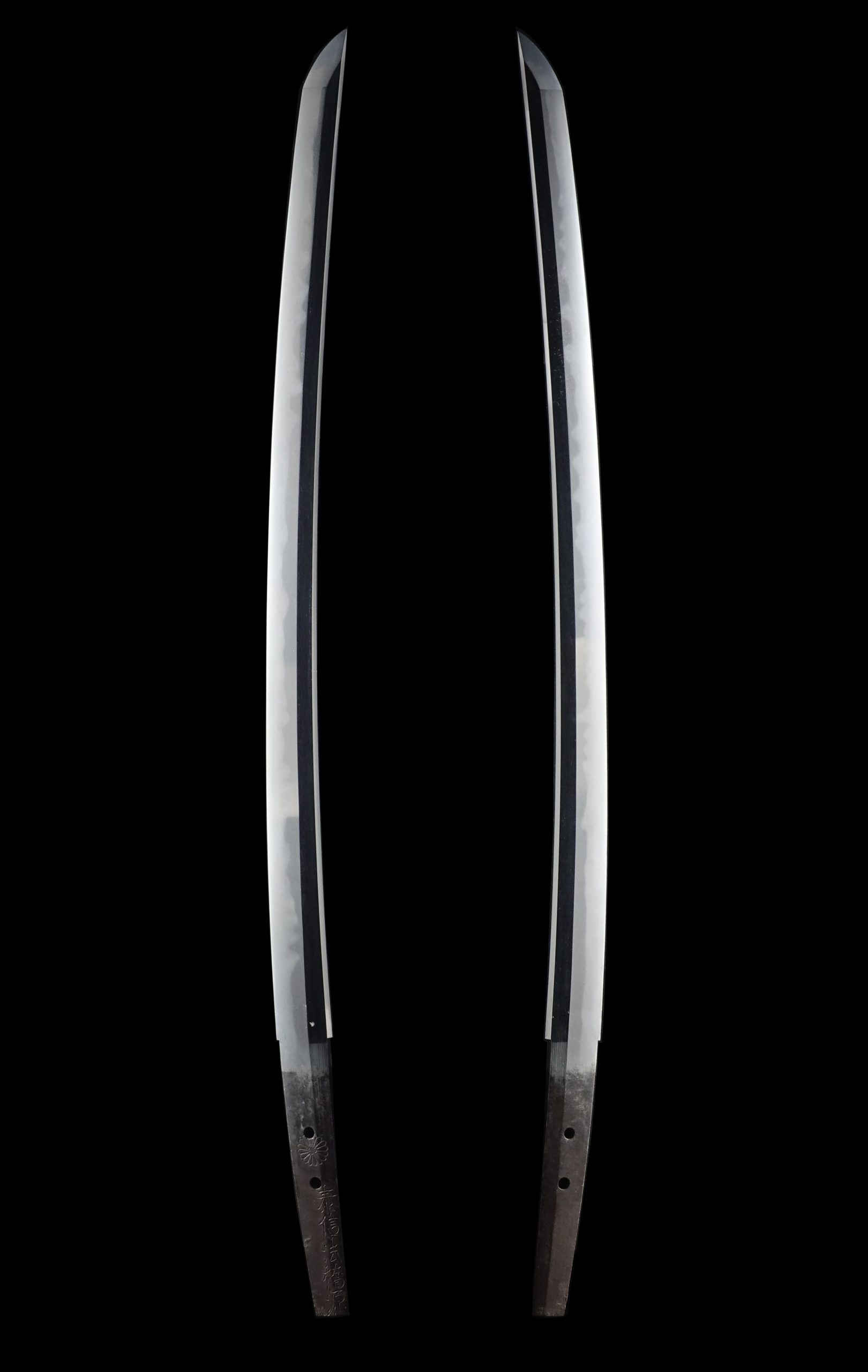
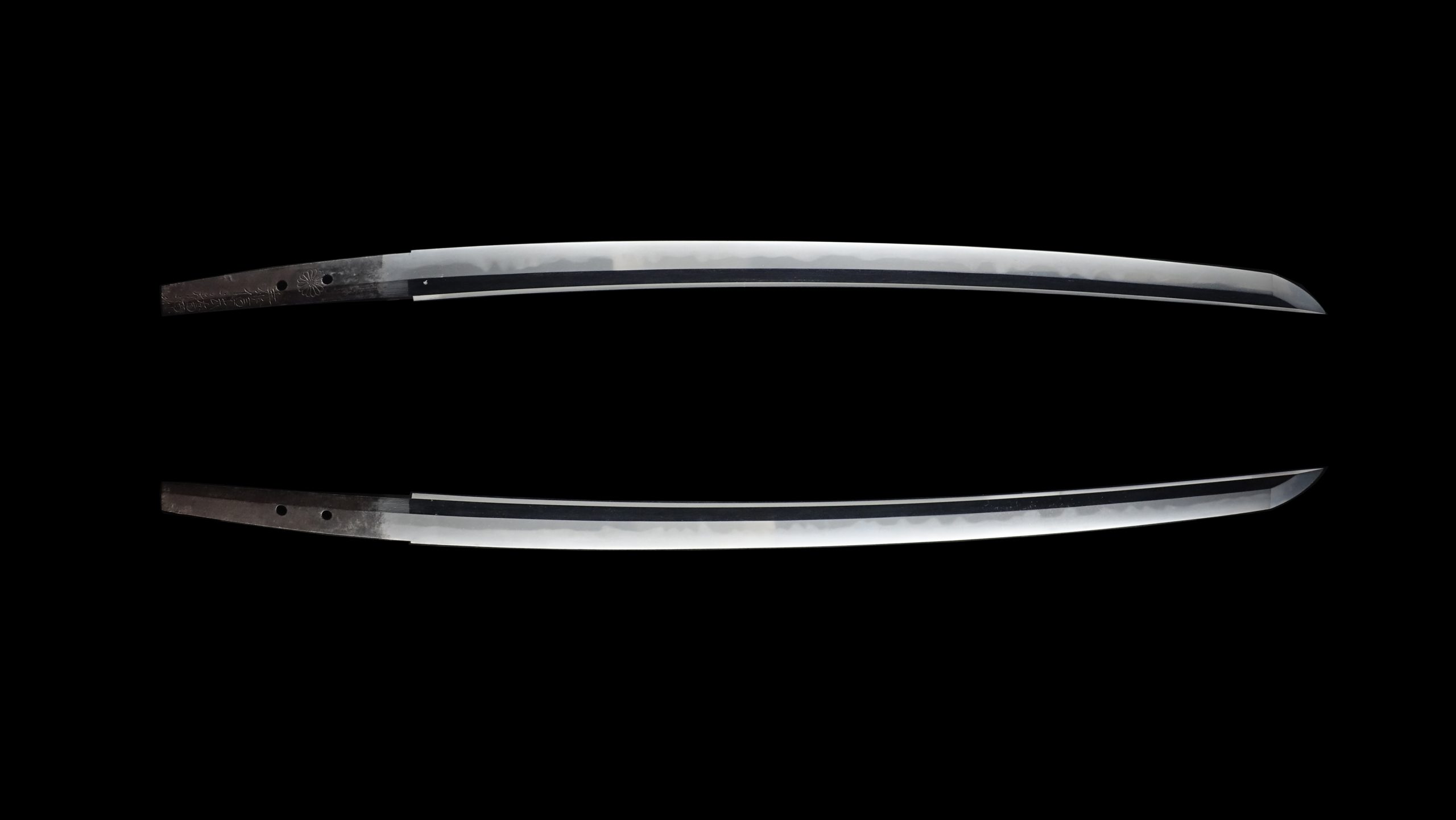
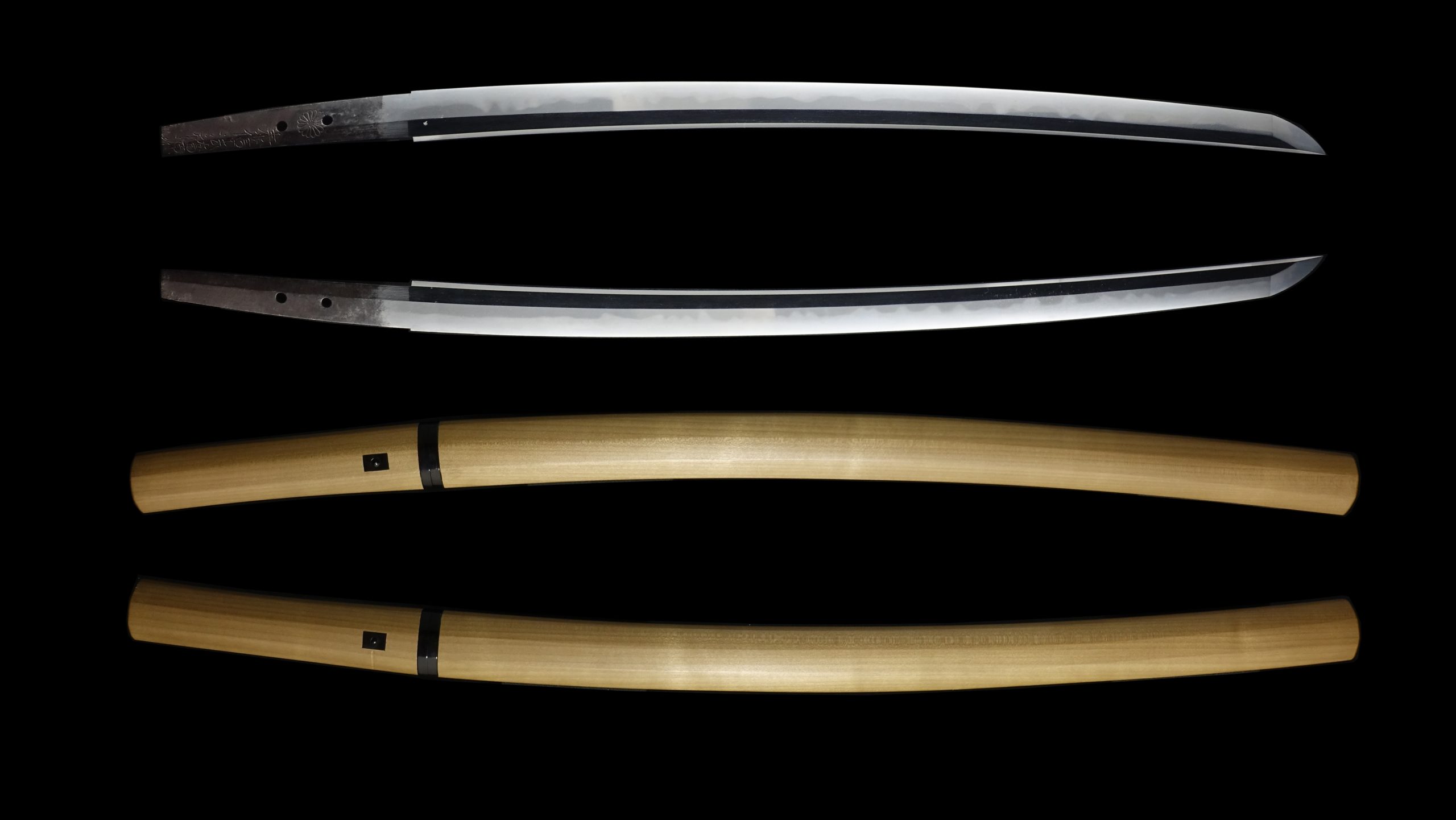
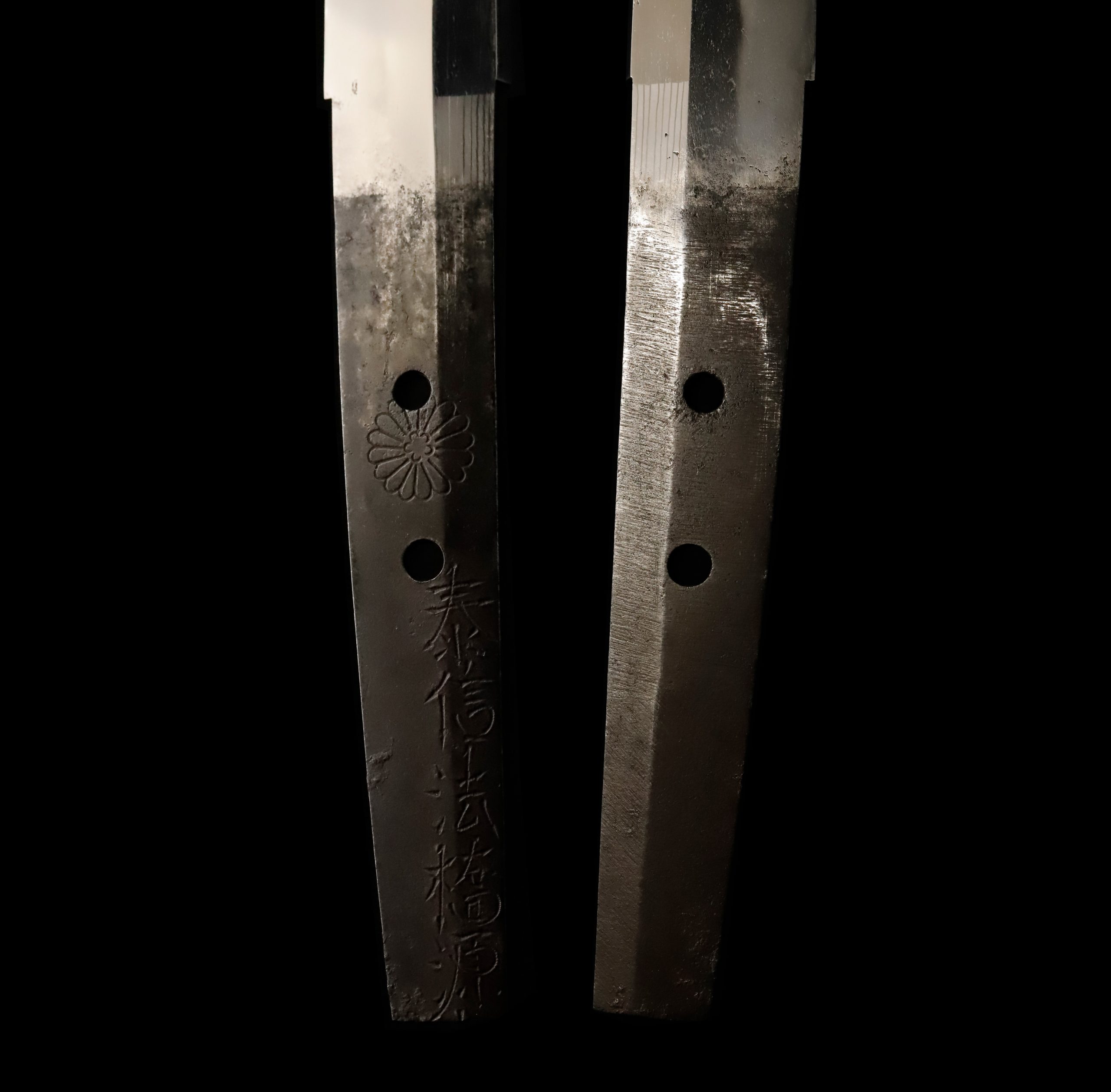
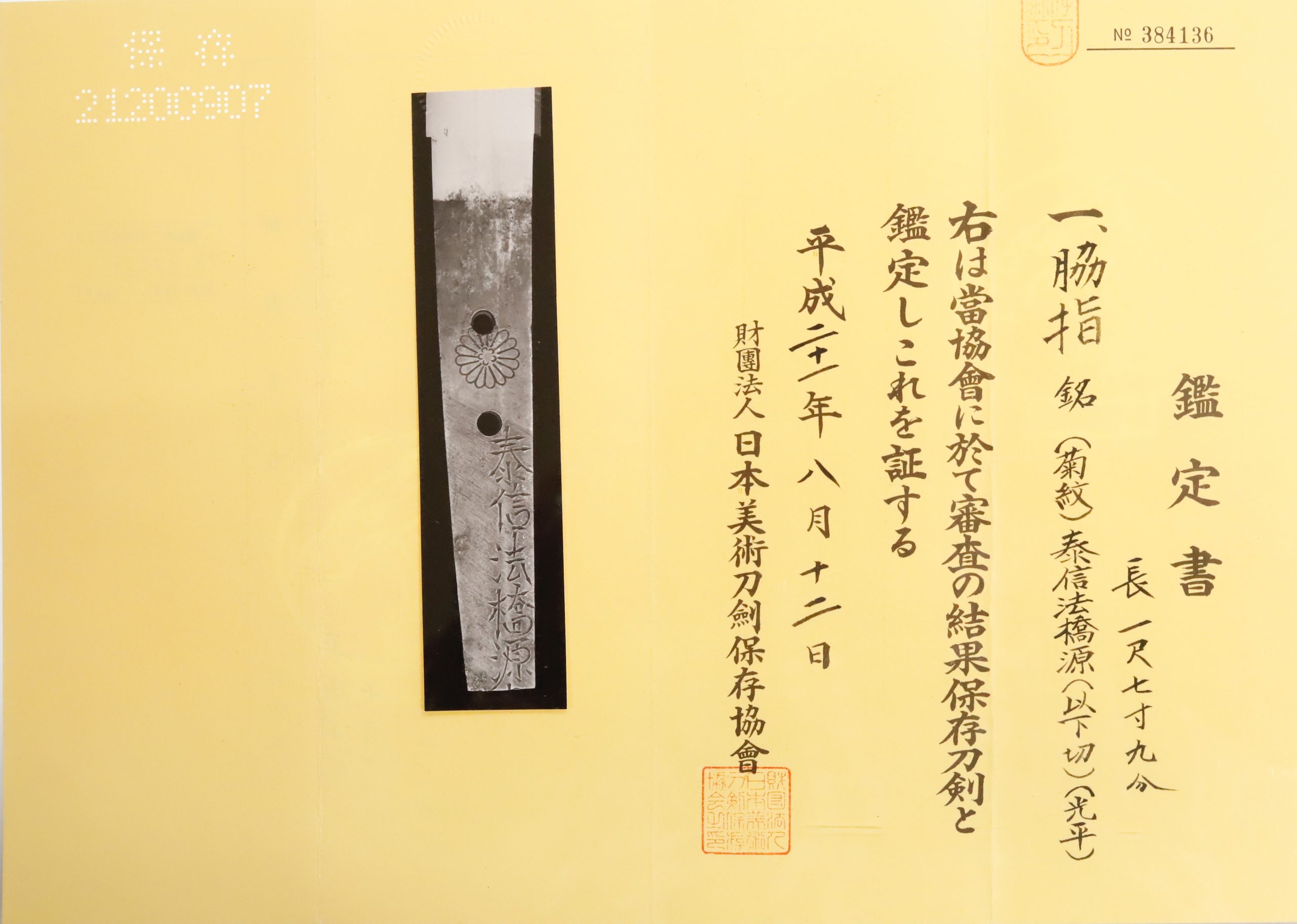
Edo Ishido, Musashi (Edo): Heki Mitsuhira, signing Minamoto, eldest son of Yamashiro-no-kami Ippo of the Kyo-Ishido, one of the two leading masters of the Edo Ishido beside Tsushima-no-kami Tsunemitsu · 武蔵 · 1619-1685頃
藤代 Jo-jo saku · 刀剣大鑑 上位21%
現在2点販売中
正保三年八月、刀の指表の鎬筋に太鏨大振りの五字銘を切り、裏に金象嵌の截断銘を添えたこの特別重要刀剣が、日置光平に遺る最も古い年紀作で、説明はこれを同作中最も時代の溯る年紀とし、同工研究の上で頗る貴重とする。光平は源光平、時に菊花紋の下に日置出羽守源光平と銘し、「近江国蒲生郡の生まれ」[[c:1]]、京石堂派山城守一法の長男で初め日置七郎兵衛尉と称した。説明は彼を「江戸石堂を代表する最も技量の卓抜した刀工」[[c:2]]の一人とし、対馬守常光と並ぶ双璧とする。その本領は再興にあり、古作備前福岡一文字の華麗な丁子乱れを、新刀の明るい匂で乱れ映りの地の上に焼き直すことであった。
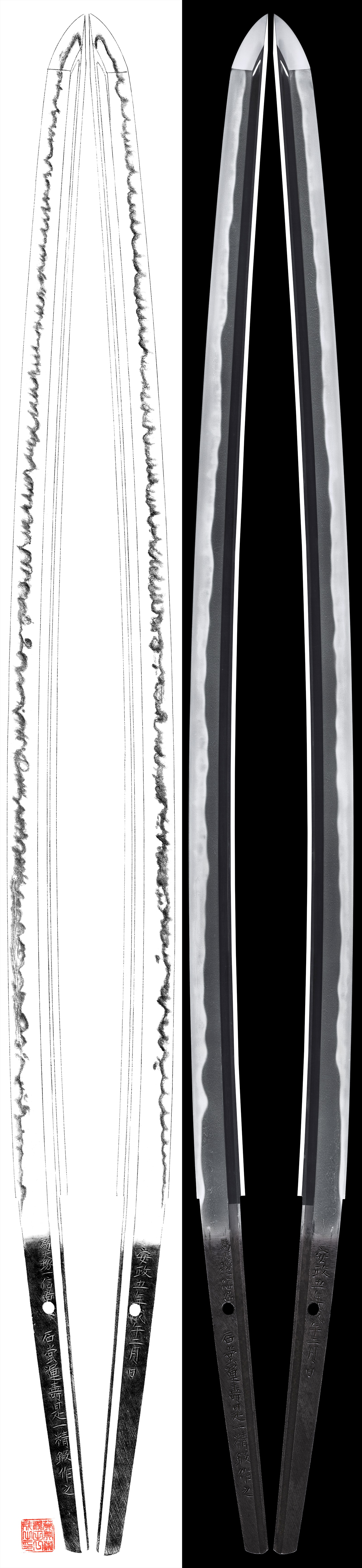
作を徴づけるのは丁子乱れそのもので、説明はこれを本領と読む。匂出来を主に、互の目・小互の目・頭の丸い丁子・小丁子・角がかった刃・尖りごころの刃など多種の刃を一線に交え、焼に高低が見られ、足・葉さかんに入り、匂口は明るく冴える。即ち「華麗な丁子乱れを焼いて古作の一文字を髣髴とさせる」[[c:3]]もので、各作にわたり説明は同じく「古作の一文字に私淑して成功した一口」[[c:4]]と評する。会心の刀では焼頭に小さな飛焼を交え、細かに砂流しがかかって、新刀の明るさに古色の趣を添える。
その刃を支える地が一文字の擬えを最後まで担う。杢・流れ肌を交えた小板目・板目を詰めて鍛え、地沸を微塵につけ、その上に乱れ映りを立てる。江戸の工中ほとんど随一にこれを成し、新刀の上に古備前の映りを再び挙げた、一文字再興を最も徴づける地の見どころである。帽子は華やかな刃に対して静かに、直ぐ又は小乱れに小丸へ入って浅く返り、先掃きかけ、幅広の刀では棟焼に繋がる。地刃ともに健全で、鋼は黒からず明るく、寛文の明るい光の中に見る備前の趣がある。
光平は年紀作が少なく、時代区分よりも一様の作風を二段の冴えで読み、当代の体配に据えて捉えるべき工である。一貫するのは映りの上の丁子乱れで、変化は匂口にある。会心の作で説明はしまりと一層の冴えを記し、特重の刀について「常々の彼の作に比して、匂口がしまり気味となり、一際明るく冴えわたっている」[[c:5]]、「同作中でも抜群の刃味のよさを示している」[[c:6]]とする。体配は幅広・重ね厚・中鋒つまりごころの寛文期のそれだが、説明は姿を慎重に過渡のものと読む。一見寛文新刀を想わせるが反りが比較的つき元に踏張りごころが残る、「慶長新刀より寛文新刀へ移行する過渡期の姿態」[[c:7]]で、寛永正保頃の工によく見られる。生ぶ茎に独特の書体の太鏨大振りの長銘を切り、時に菊花紋を添え、出羽守・出羽入道泰信法橋の受領銘を伴う。
同派の中で彼を分かつのは結局は銘で、説明は繰り返す経歴の中でその点を語る。通説では光平は常光・越前守宗弘・初代石堂是一らと共に近江から江戸へ移ったとされるが、説明は遺存銘から経路と続柄を正す。赤坂銘の作は江戸石堂の工が近江から京都へ、更に江戸へ移ったことを示して直接移住とせず、光平を常光の弟とする旧説も退けられる。年紀作を逆算すれば「光平の方が六歳年長であることが理解される」[[c:8]]。光平は源姓、常光は橘姓を名乗り、作風の共通は認めつつも兄弟説に疑問がもたれる。両者は江戸石堂の双璧で手は近く、名は銘においてのみ分かれ、一文字再興は光平の手に最もよく成ったとされる。
光平の指定は数こそ多くないが質が高く密度がある。指定作のうち十口が特別重要刀剣・重要刀剣に列なり、特重の一口は金象嵌三胴截断銘を持つ正保三年紀の刀、他は重要刀剣である。国宝・重要文化財はなく、作はすべて在銘で、無銘の極めではなく長銘から読み取れる開かれた一巻をなす。藤代は上々作とする。来歴は乏しく、自らの作のデータに大名家や美術館の名はなく、遺る作は私蔵・公蔵に静かに伝わる。蒐集家にとっては随時に出会う工で、在銘の江戸石堂の刀は折々市場に現れるに過ぎず、現れれば一事である。古備前の映りの上に立つ明るい丁子乱れによって一見で知られる、石堂一文字再興の頂として珍重される。
光平の位置づけを、日本刀全体および伝統・時代・時期ごとに示します。各位(随一・屈指・有数・著名)は、NBTHK および文化庁による指定に加え、三作や名物帳などの歴史的栄誉を加味したものです。
各項目を選ぶと評価方法が表示されます。
在銘年紀作が示す、確実に活動していた年代
新刀 · 武蔵
現在20点販売中
江戸石堂は、近江・京を経て武蔵江戸に根を下ろした石堂一門の分派であり、その本領は新刀の地に古一文字の丁子を再び挙げることにあった。石堂派はもともと近江に出て、福岡一文字の華麗な丁子乱れを範とした一統であるが、その一部の工が近江から京都へ、さらに江戸へと移って一派をなした。赤坂に残る銘がこの経路を示すとおり、これは近江からの直接移住ではなく、京を中継した段階的な江戸移住であった。江戸石堂を代表する工としては、日置光平、対馬守常光、越前守宗弘、そして運寿是一に至る石堂是一の系がある。彼らは寛永正保のころより筆を起こし、幕末新々刀期の是一に至るまで、都にあって備前丁子の伝統を一貫して保った。古作の写しを志向しつつ、その地刃は当代の明るい新刀のものであり、慶長新刀より寛文新刀へ移る過渡の体配を負う作も少なくない。 作風を貫くのは、意図して焼かれた備前丁子の乱れである。光平にあっては匂出来を主とし、互の目・小互の目・頭の丸い丁子・小丁子・尖りごころの刃を一線に交えて焼に高低をつけ、足・葉さかんに入り、匂口は明るく冴える。これを支えるのが、杢や流れ肌を交えた小板目をよく詰め、地沸を微塵につけた地の上に立つ乱れ映りであって、新刀の明るさのうちに古備前の趣を再び挙げたこの地こそ、一文字再興を最も徴づける見どころである。是一に至っては、同じ御家芸の丁子を匂出来ではなく沸出来で焼くところに独創を見せ、よく詰んだ小板目に丁子を主として互の目・小丁子・尖りごころの刃を交え、匂深く沸厚く、刃中を砂流しと長い金筋が走る。これは相州の地に運ばれた備前の刃であり、群がる新々刀の備前伝再興のなかで別格をなした。重花丁子の華やぎ、映りを伴う明るい地、沸づく丁子という三つの手は諸工に通じつつ、光平が映りの上の匂の丁子に最もよく成り、是一が沸の丁子に踏み出したように、同じ家の手が工ごとに分かれて働く。なお大和守安定のごとく、この一統に系を引きながらも、角張るのたれに互の目を交えて虎徹の傍らに立つ頑健な刀を本領とし、丁子の華麗には拠らぬ工も同じ江戸石堂の名のうちに数えられる。 鑑定の勘所は、新刀の明るい地に焼かれた復興丁子という一点に帰する。すなわち、よく詰んで地沸のついた小板目、ものによっては乱れ映りの立つ地の上に、足・葉のさかんに入る多種の丁子乱れが焼かれ、匂口が明るく冴えるところを見れば、まず江戸石堂を疑うべきである。匂出来か沸出来か、映りの有無、互の目の角張りの度合いによって工が分かれ、映りの上の冴えた丁子に光平を、沸出来の丁子に是一を読む。主要工のうち光平は江戸石堂を代表する最も技量の卓抜した工の一人とされて常光と双璧をなし、是一は幕末の上手の列に立って次郎太郎直勝・細川正義と肩を並べる。作はおおむね在銘で、銘より経歴と続柄を読み取れる開かれた記録をなし、無銘の極めに頼らぬ点も一派の特色である。伝来は概して私蔵・公蔵に静かに伝わるものが多く、なかには皇室の蔵する是一の一口も知られる。在銘の江戸石堂は折々市場に現れるに過ぎず、古備前の映りの上に立つ明るい丁子乱れを一見で知る者にとって、現れれば一事である。 詳しく見る →
江戸 将軍の御膝元
参勤交代が集めた日本最大の帯刀人口が江戸にあった。御用鍛冶康継は茎に葵紋を許され、虎徹の刀は截断銘の金象嵌を帯びる。この町では、証こそが物を言った。
銘が正しい、または無銘でも年代・国・系統を確実に指摘できる、保存に値する真正の作と鑑定されたものです。
日本美術刀剣保存協会(NBTHK)は、1948年に設立され、文化庁の監督を受ける公益財団法人で、東京・刀剣博物館に本部を置きます。専門の審査員が出品作を直接審査し、美術的・歴史的価値に応じた鑑定書を発行します。NBTHKの鑑定書は、日本刀および刀装具の真正性を示す最も広く認知された基準です。
NBTHK公式サイトReturns/exchanges limited to defects caused by shipping (except willful misconduct or gross negligence by the company); customers must contact within 72 hours of receiving the product.

![Wakizashi - Tokuho - 作 光平 - 脇差[大進法橋源光平(対馬守光平)(良業物)]日本美術刀剣保存協会 特別保存刀剣](/_next/image?url=https%3A%2F%2Fitbhfhyptogxcjbjfzwx.supabase.co%2Fstorage%2Fv1%2Fobject%2Fpublic%2Flisting-images%2Fworld-seiyudo%2FL31283%2F01.jpg&w=2560&q=90)


![Wakizashi - Tokuho - 作 光平 - 脇差[対馬守法橋源光平][日本美術刀剣保存協会]特別保存刀剣](/_next/image?url=https%3A%2F%2Fitbhfhyptogxcjbjfzwx.supabase.co%2Fstorage%2Fv1%2Fobject%2Fpublic%2Flisting-images%2Fworld-seiyudo%2FL31642%2F00.jpg&w=2560&q=90)