二世紀半の泰平のあいだ、刀は武器である以上に武士の身分の標章であった。江戸の実証と大坂の華やぎのように都市ごとの作風が育ち、時代の末には需要も細っていく。
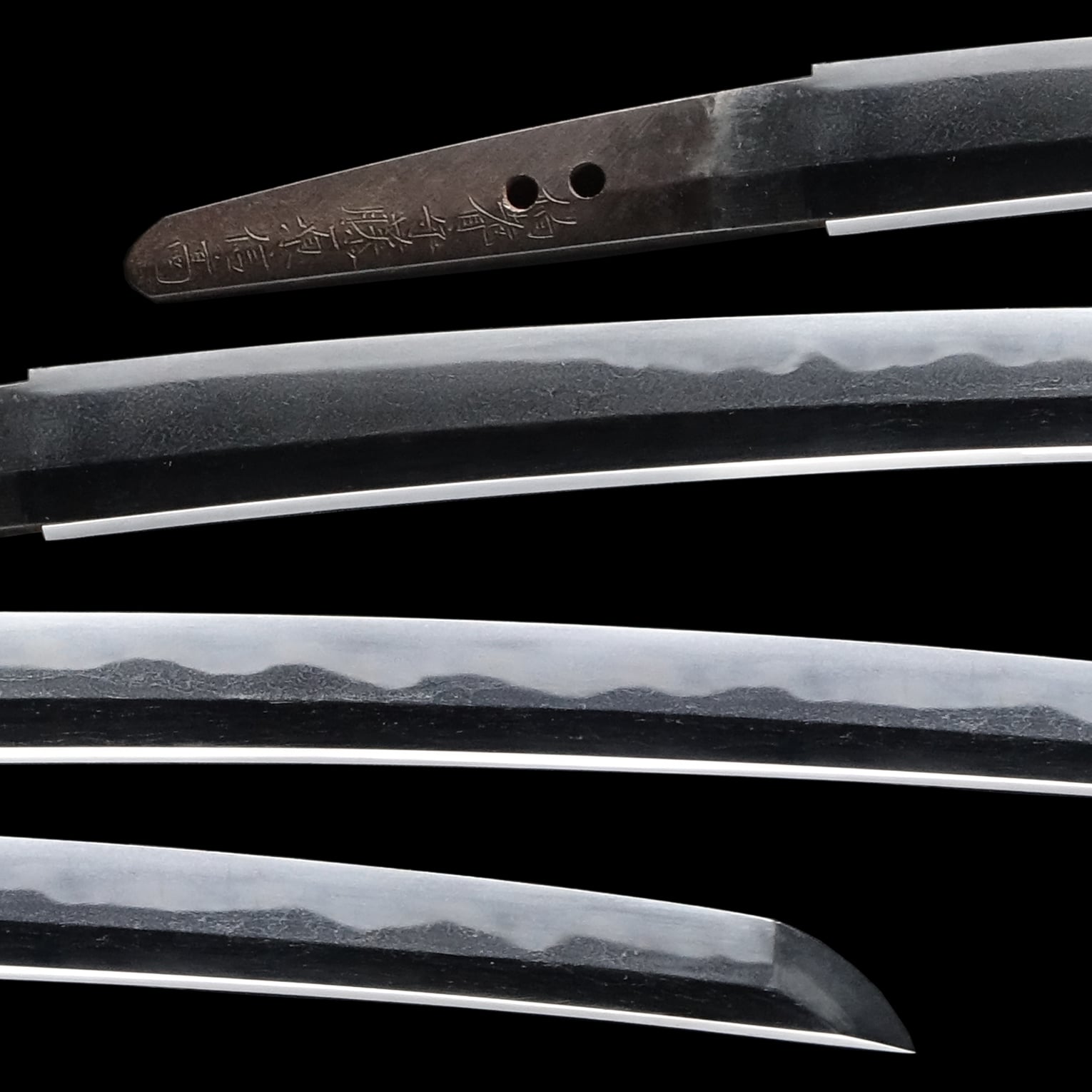
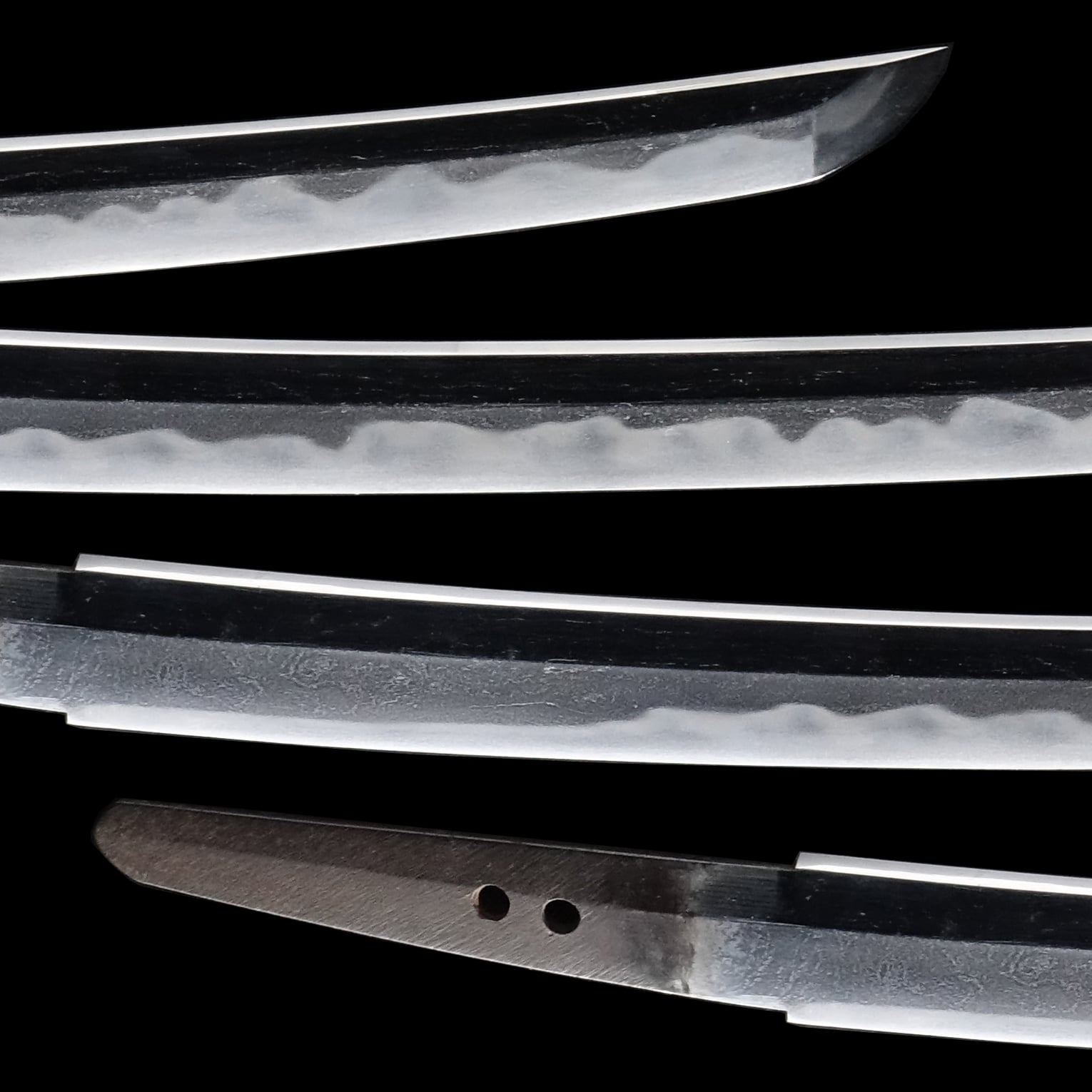
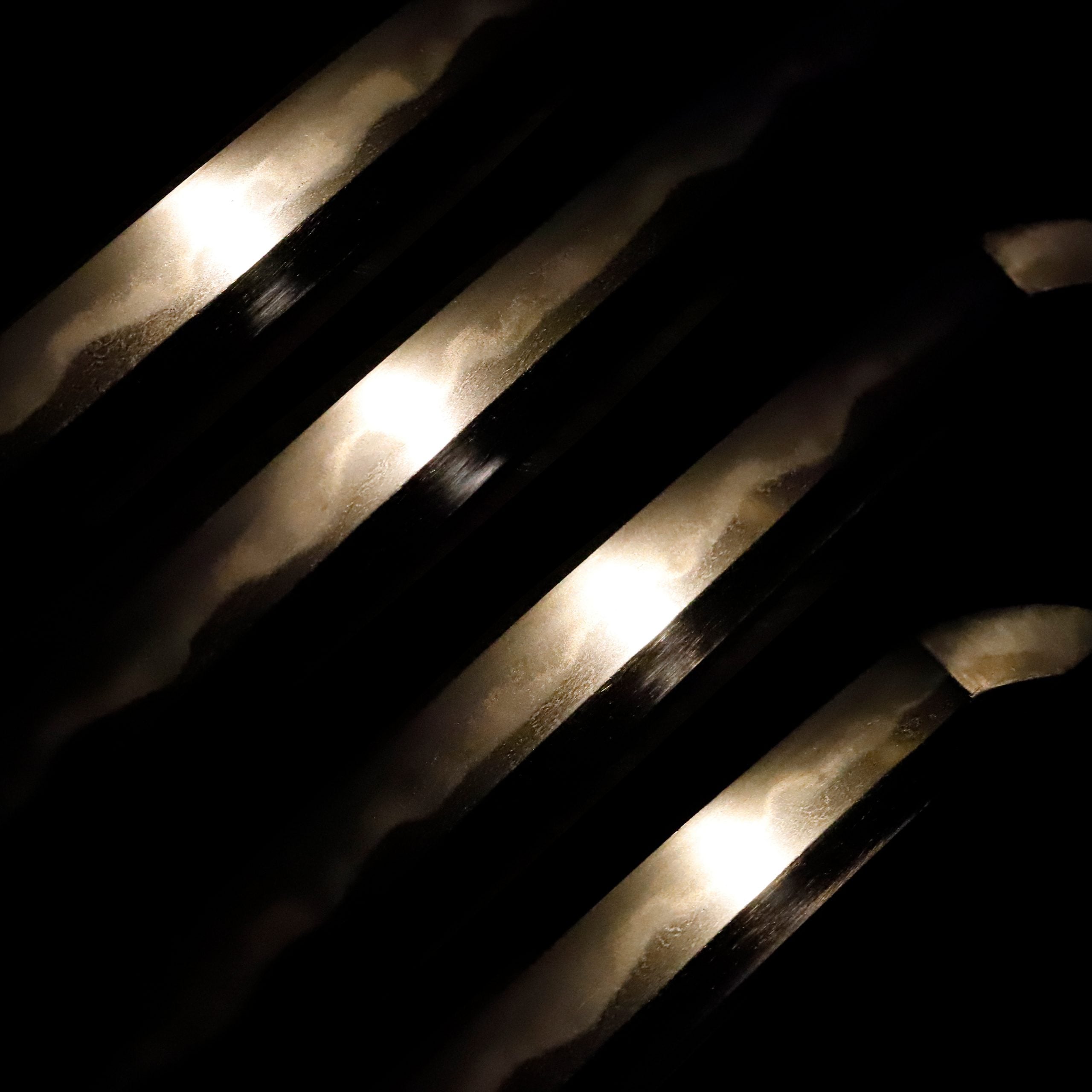
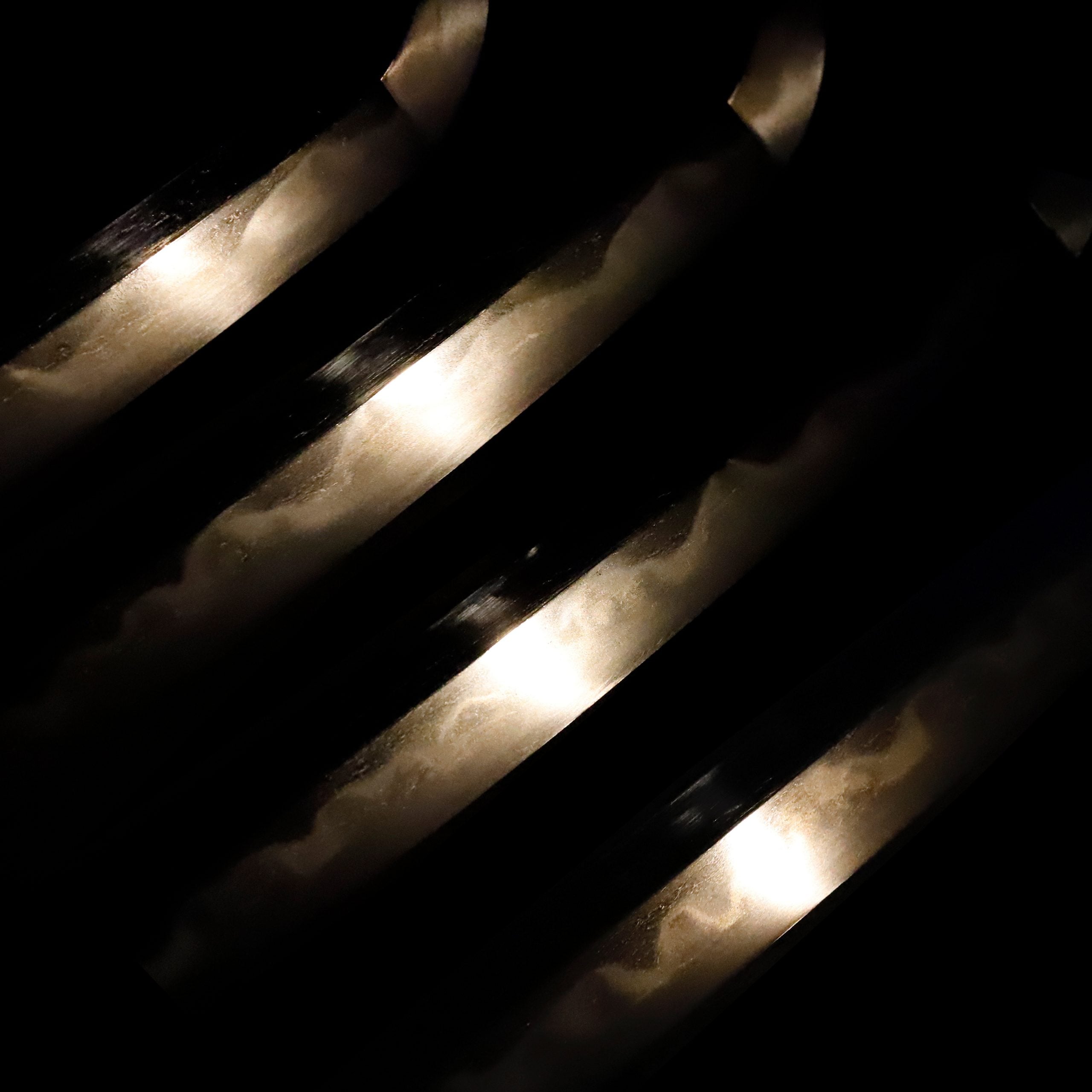
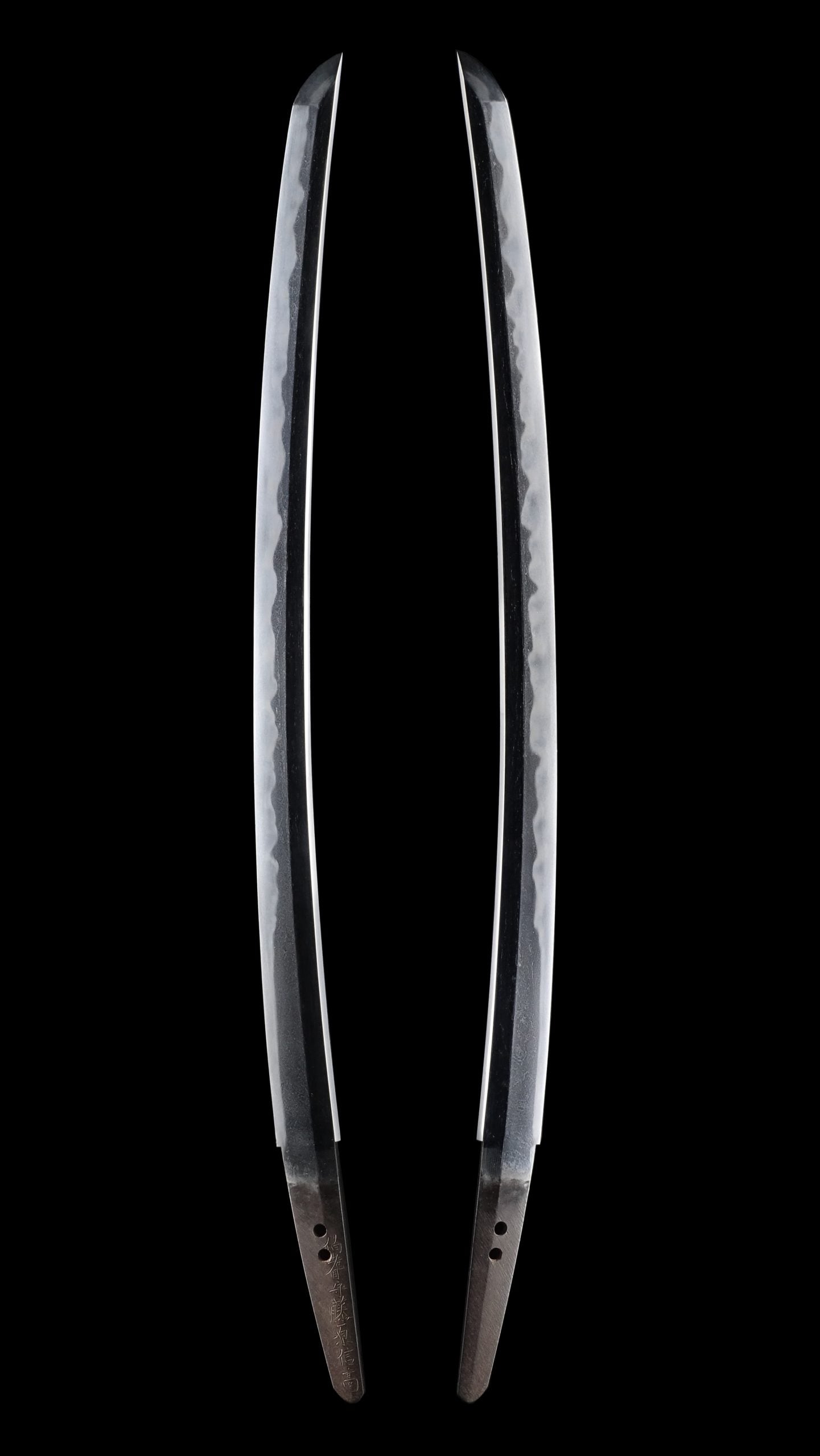
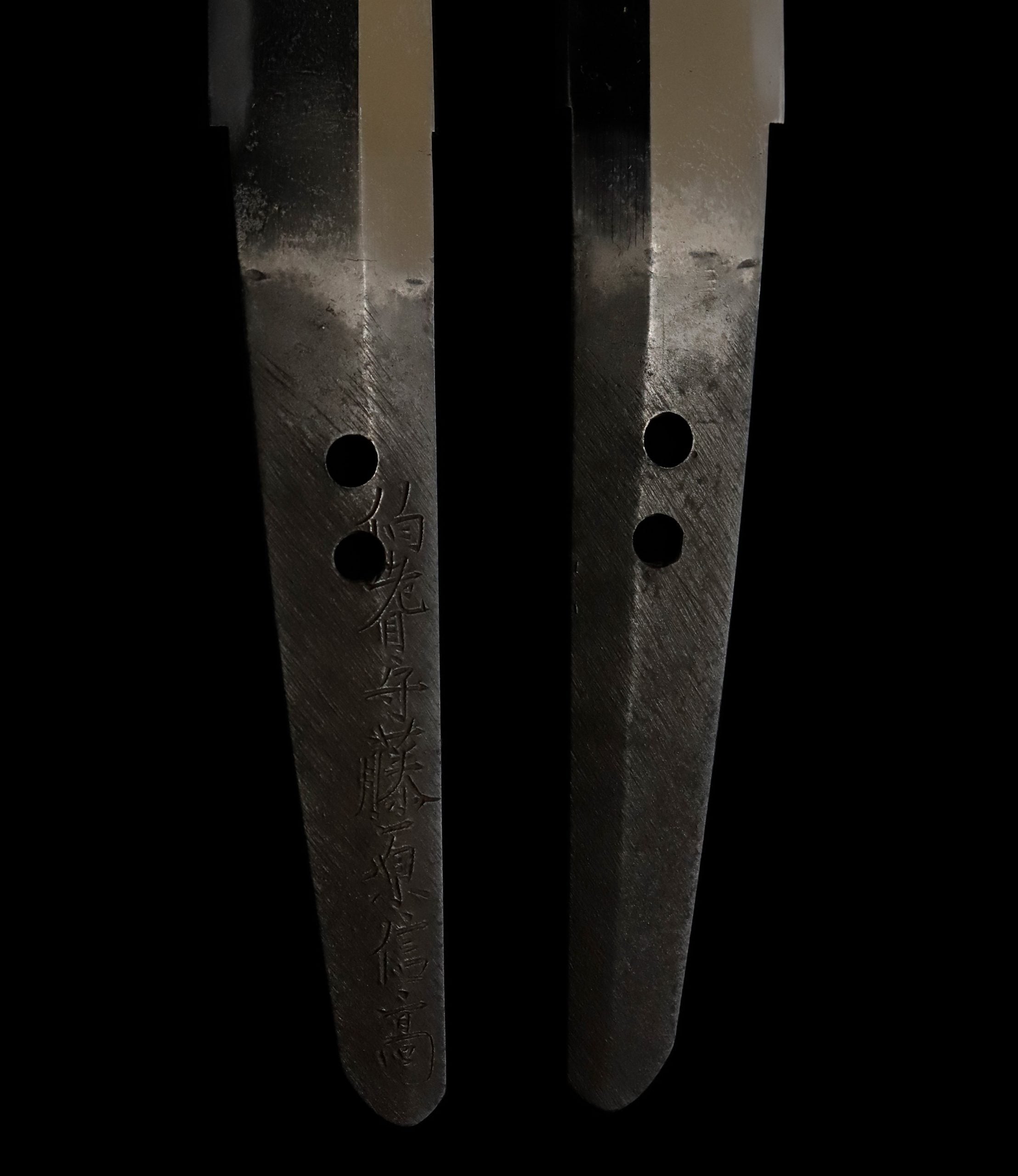
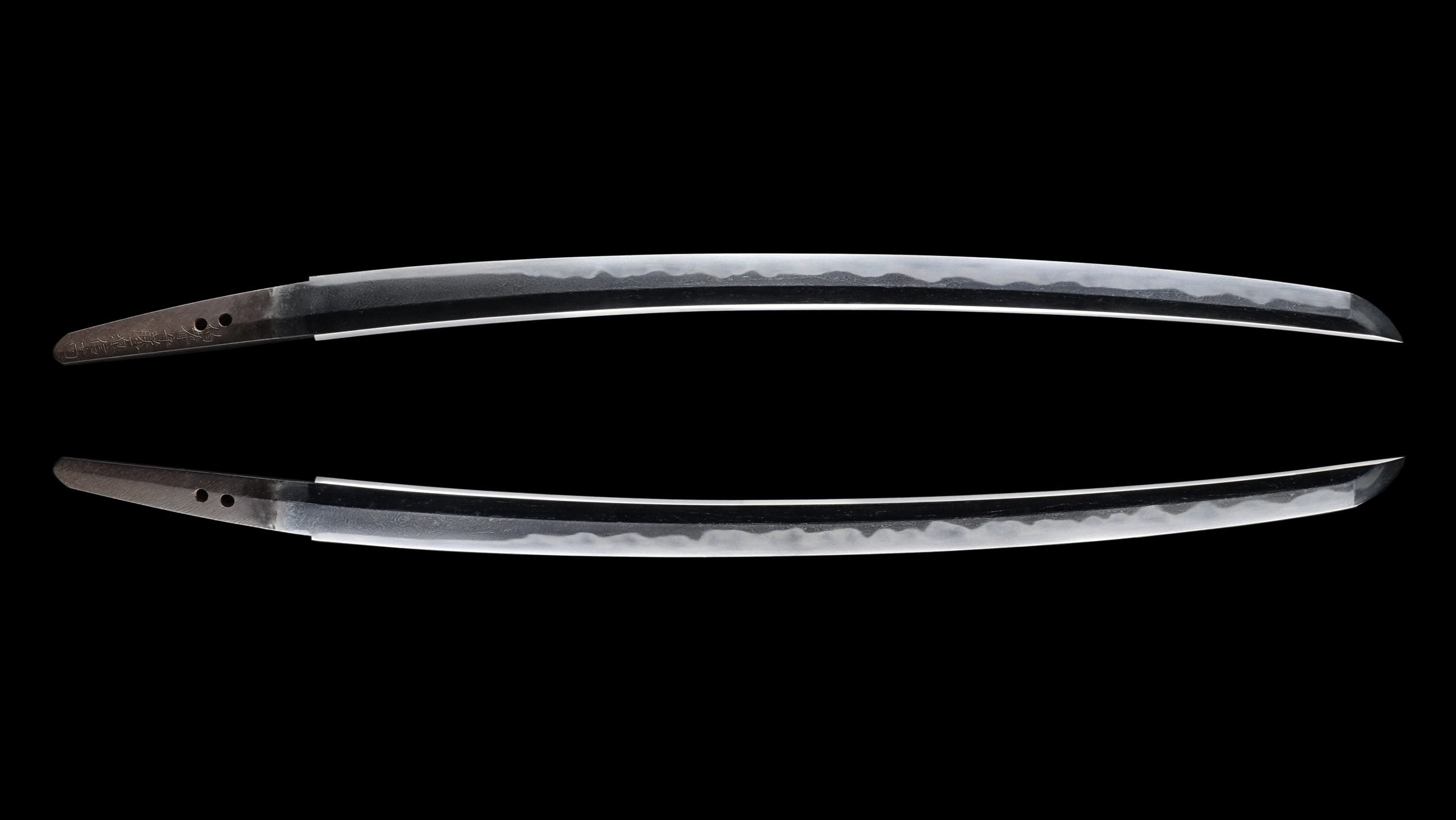
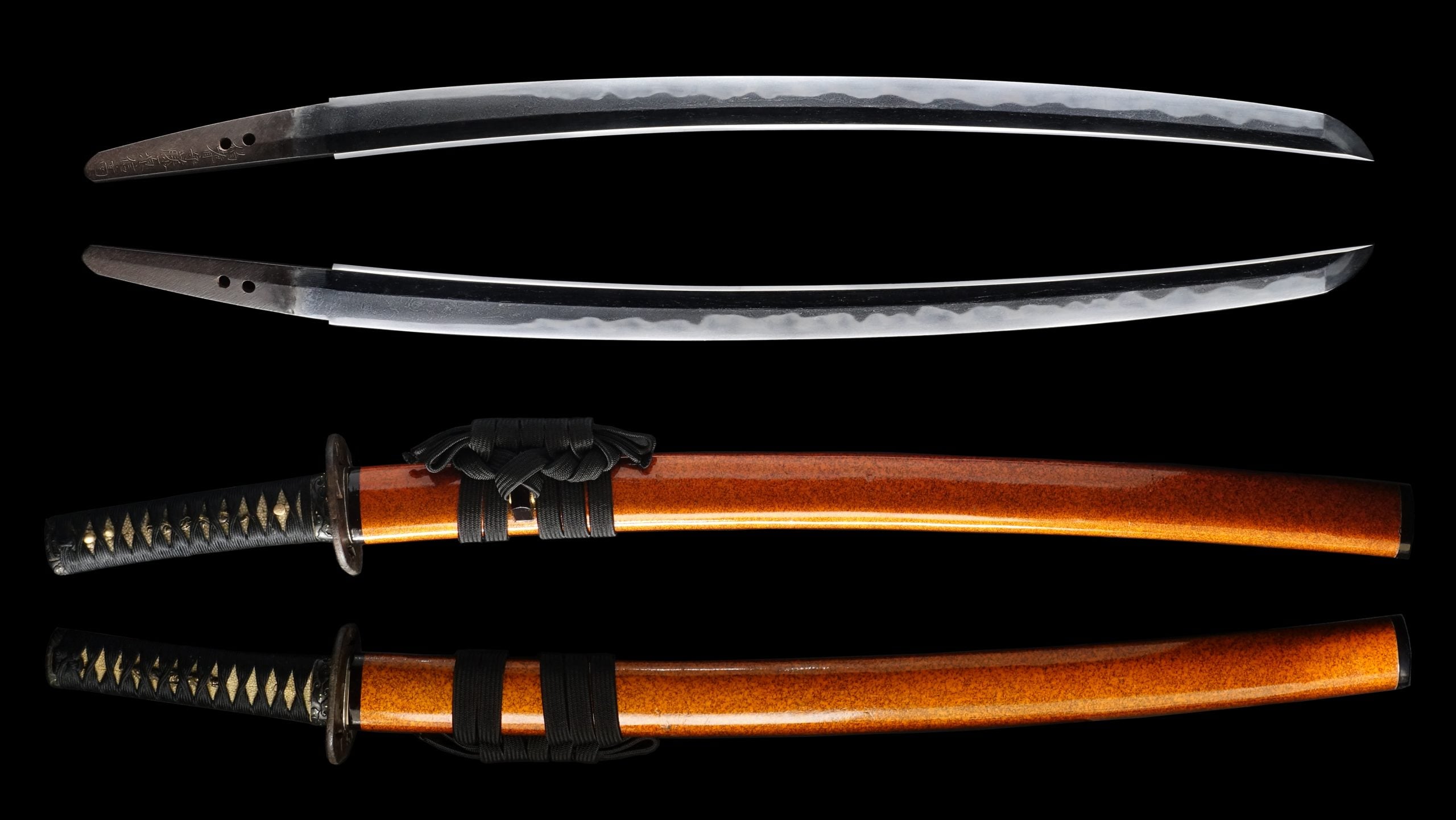
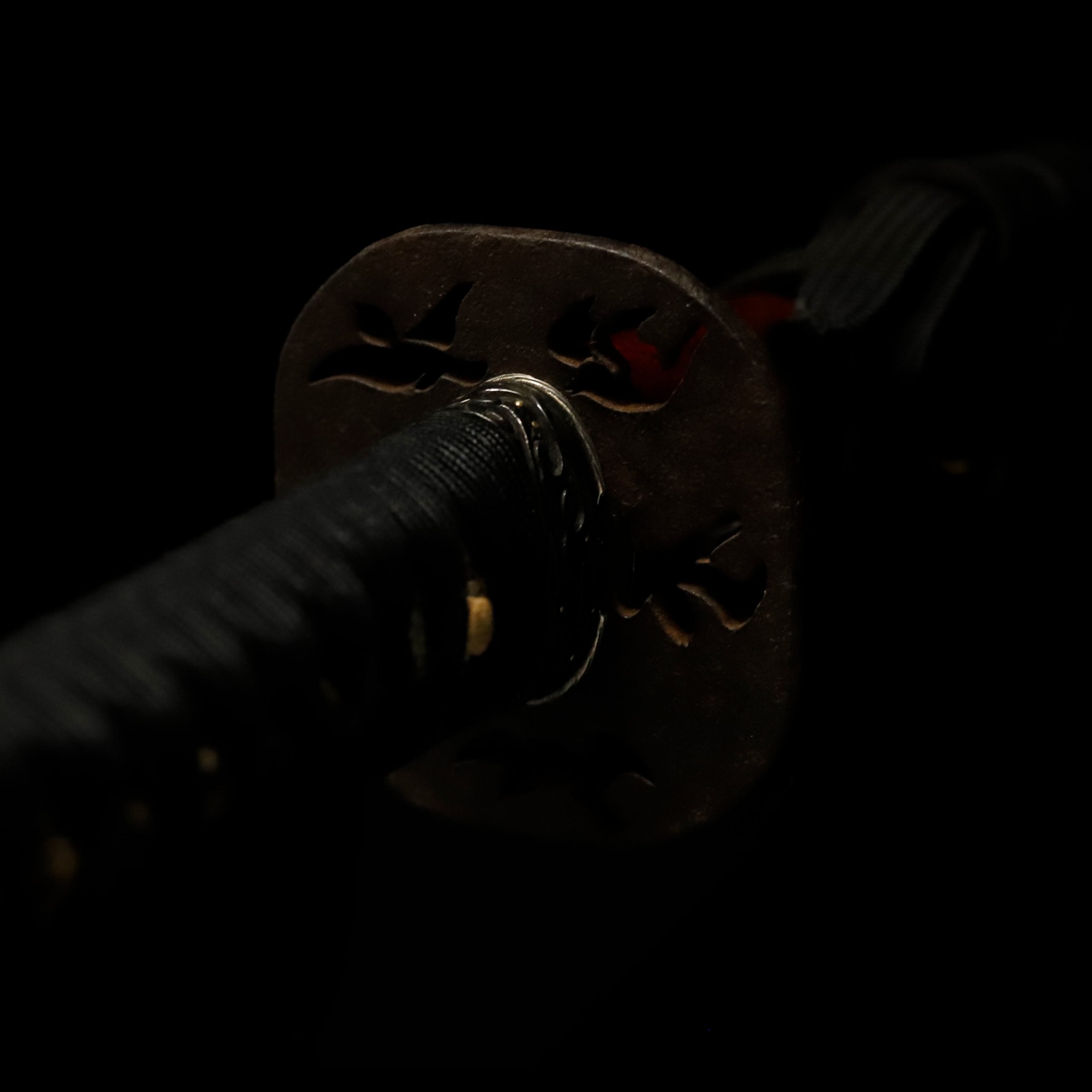
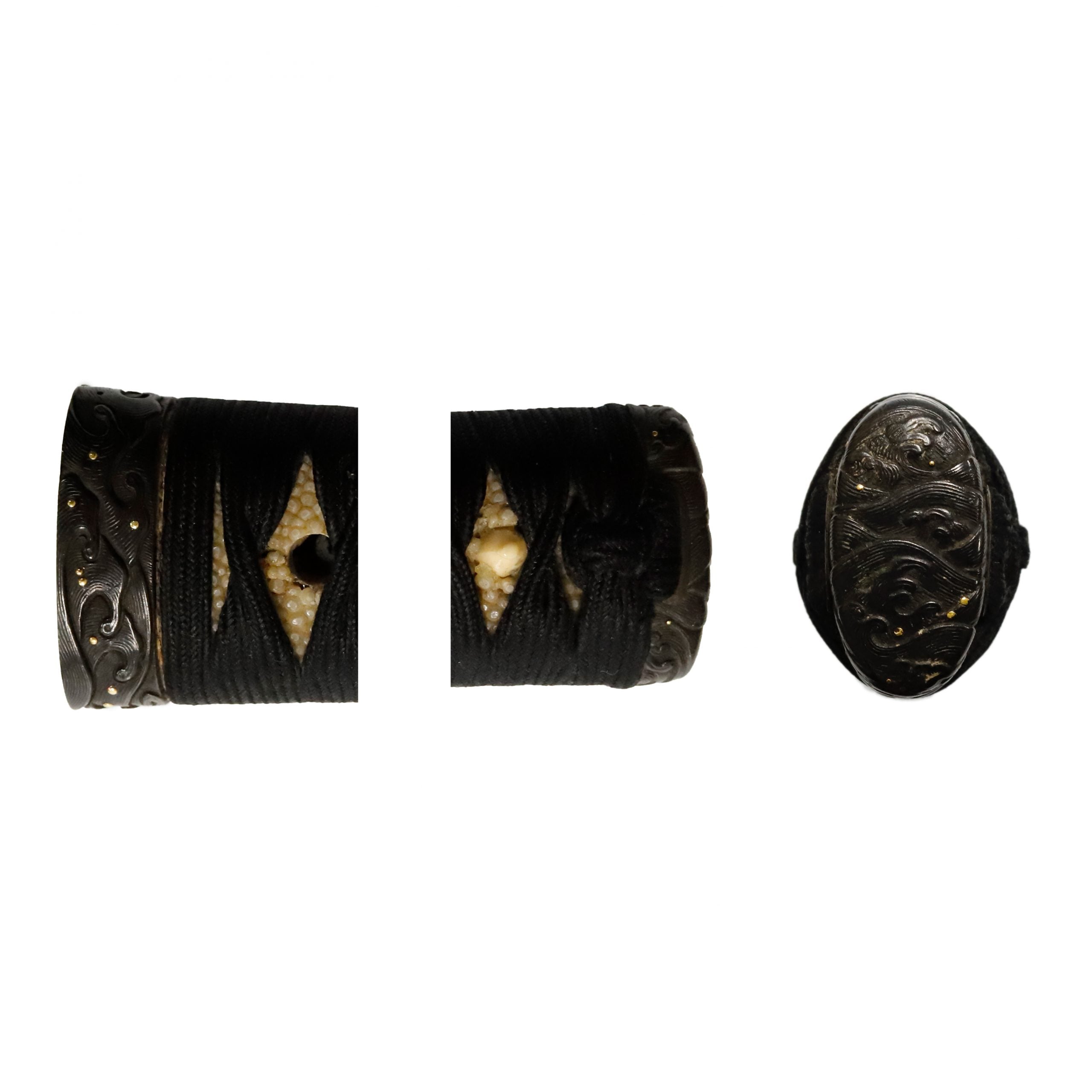
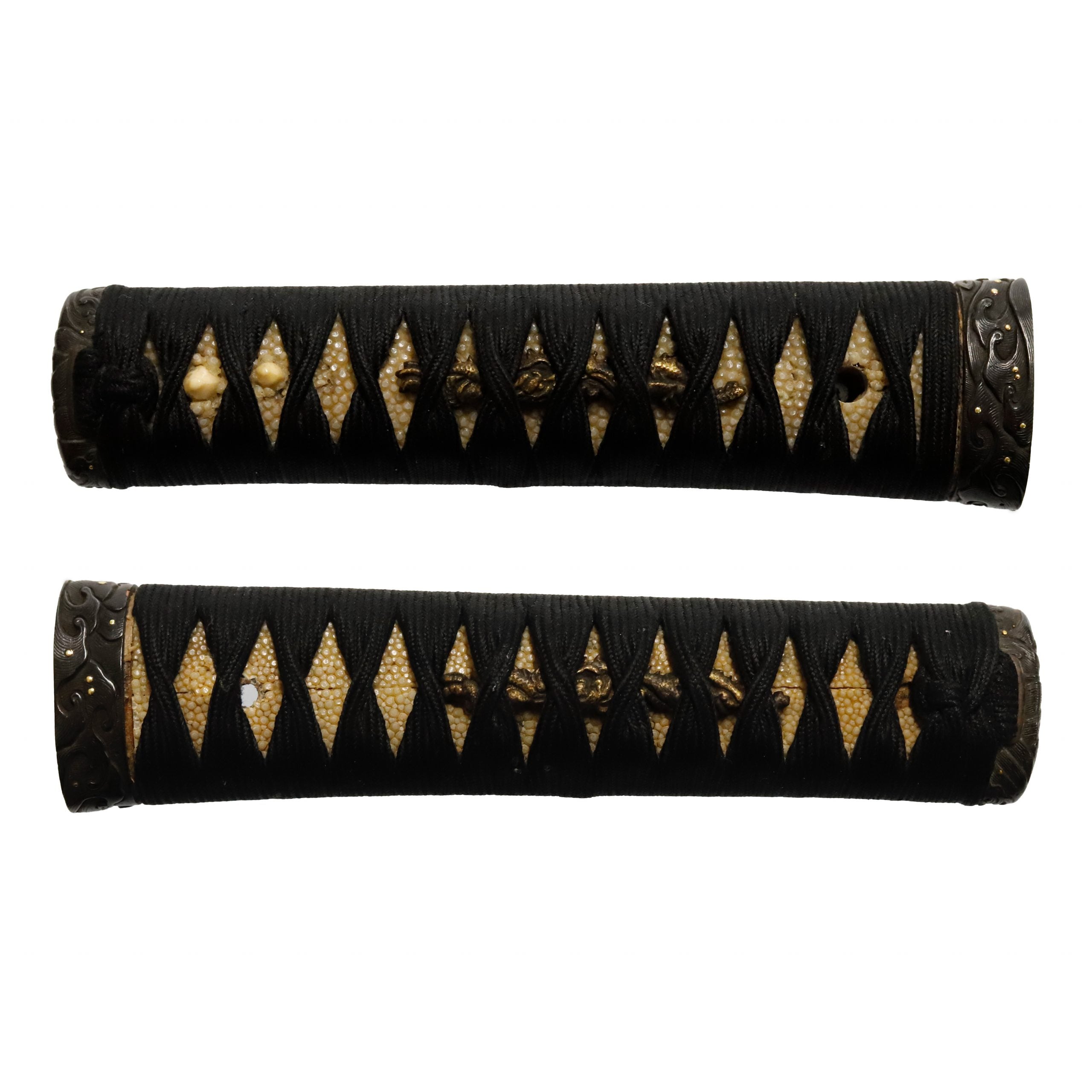
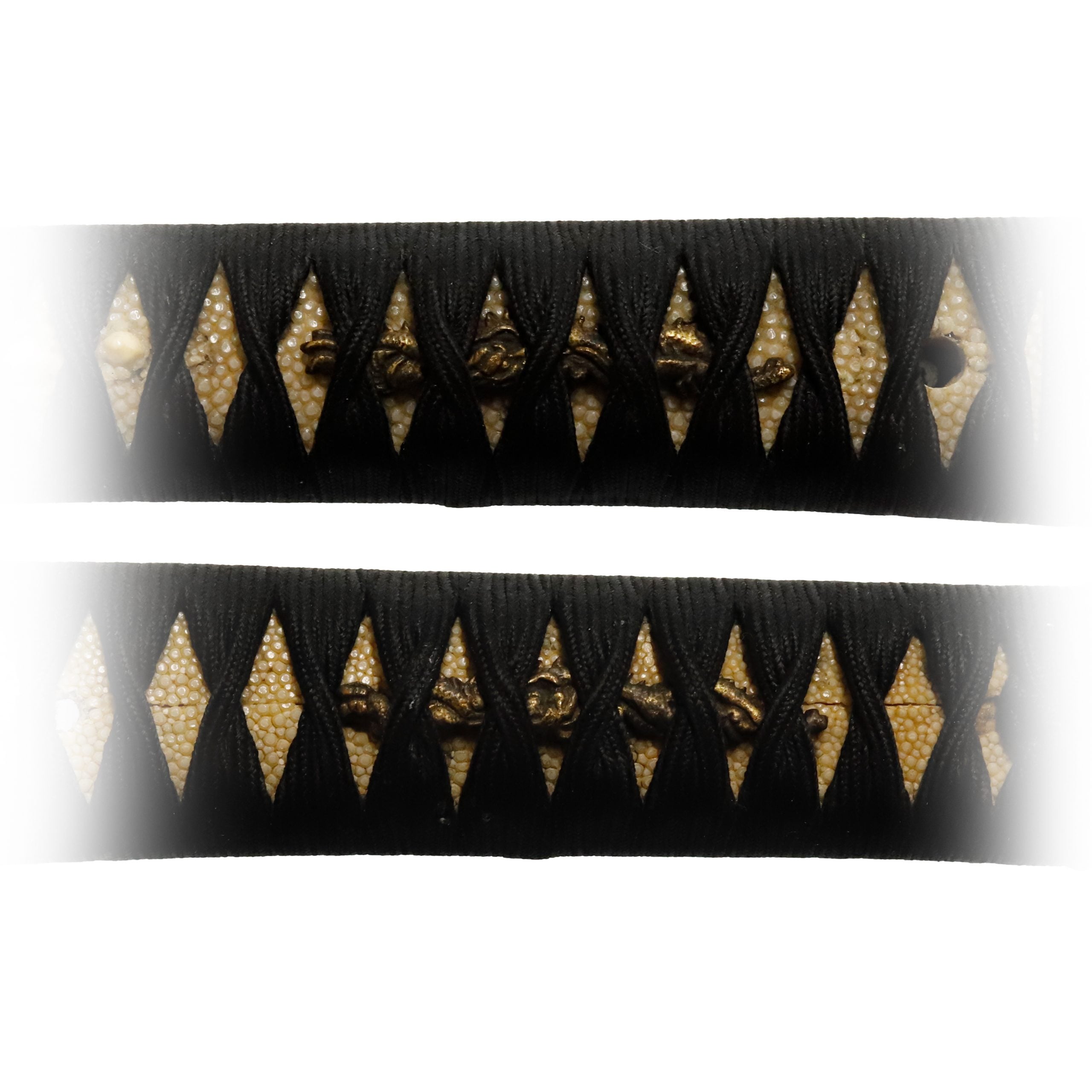
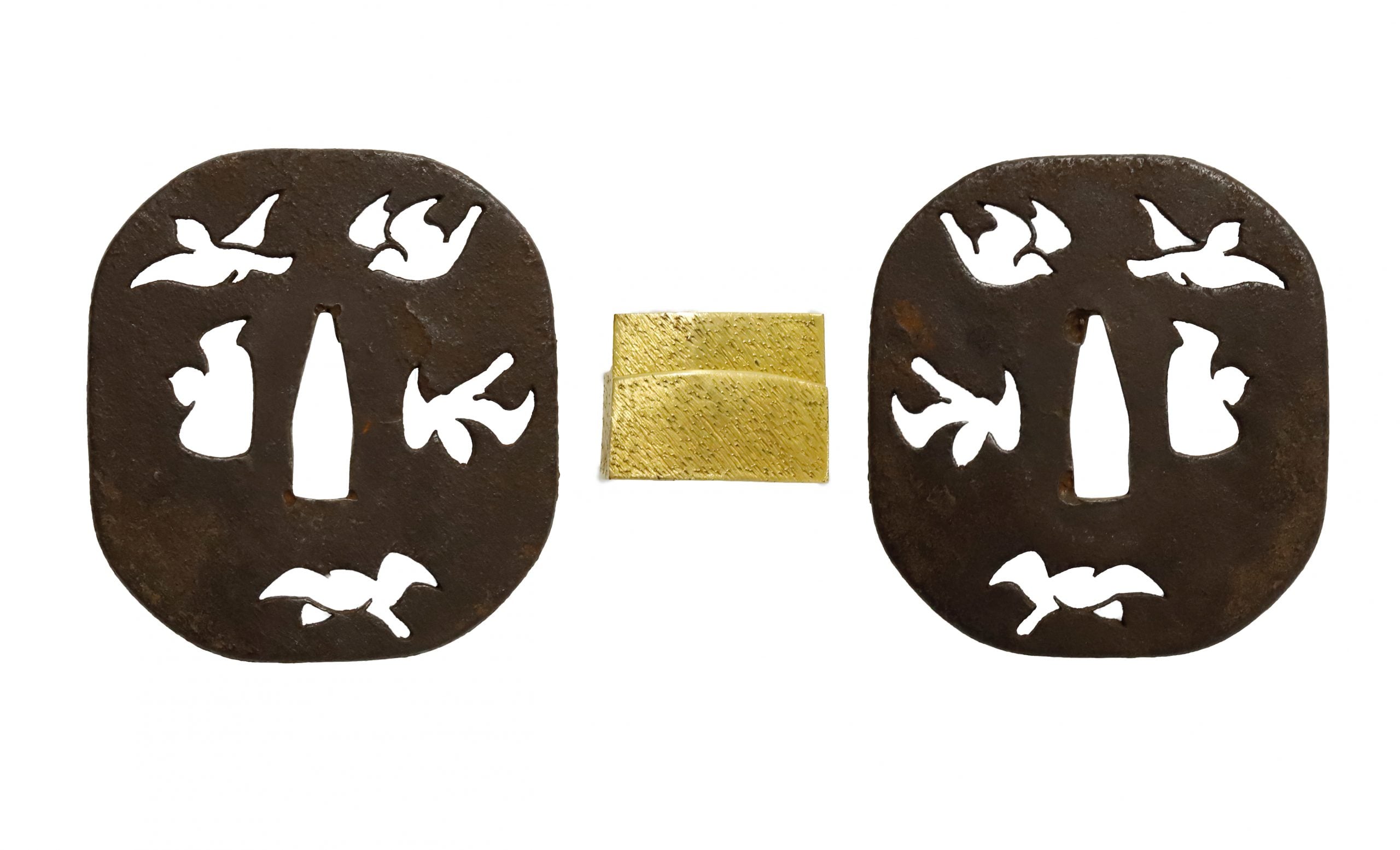
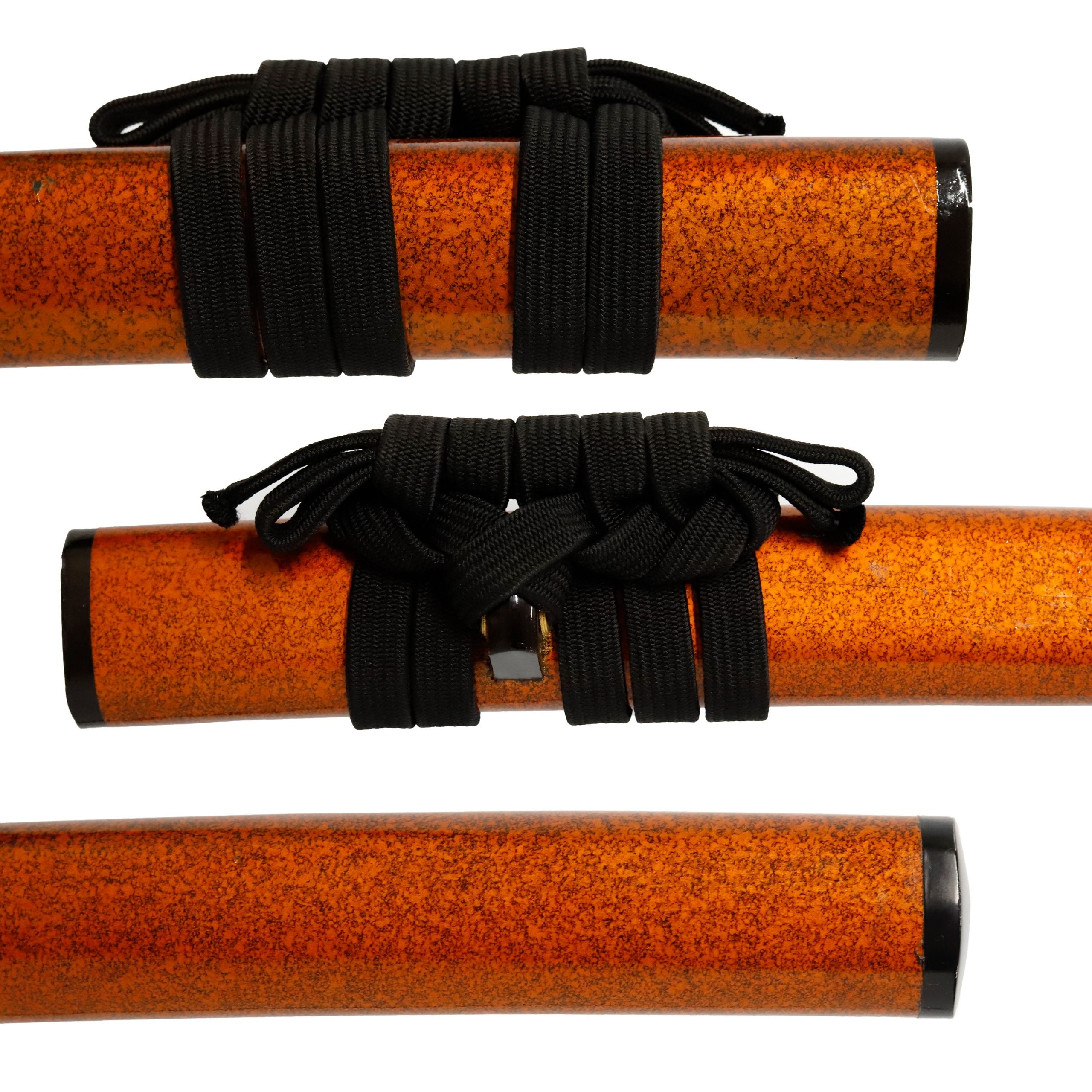
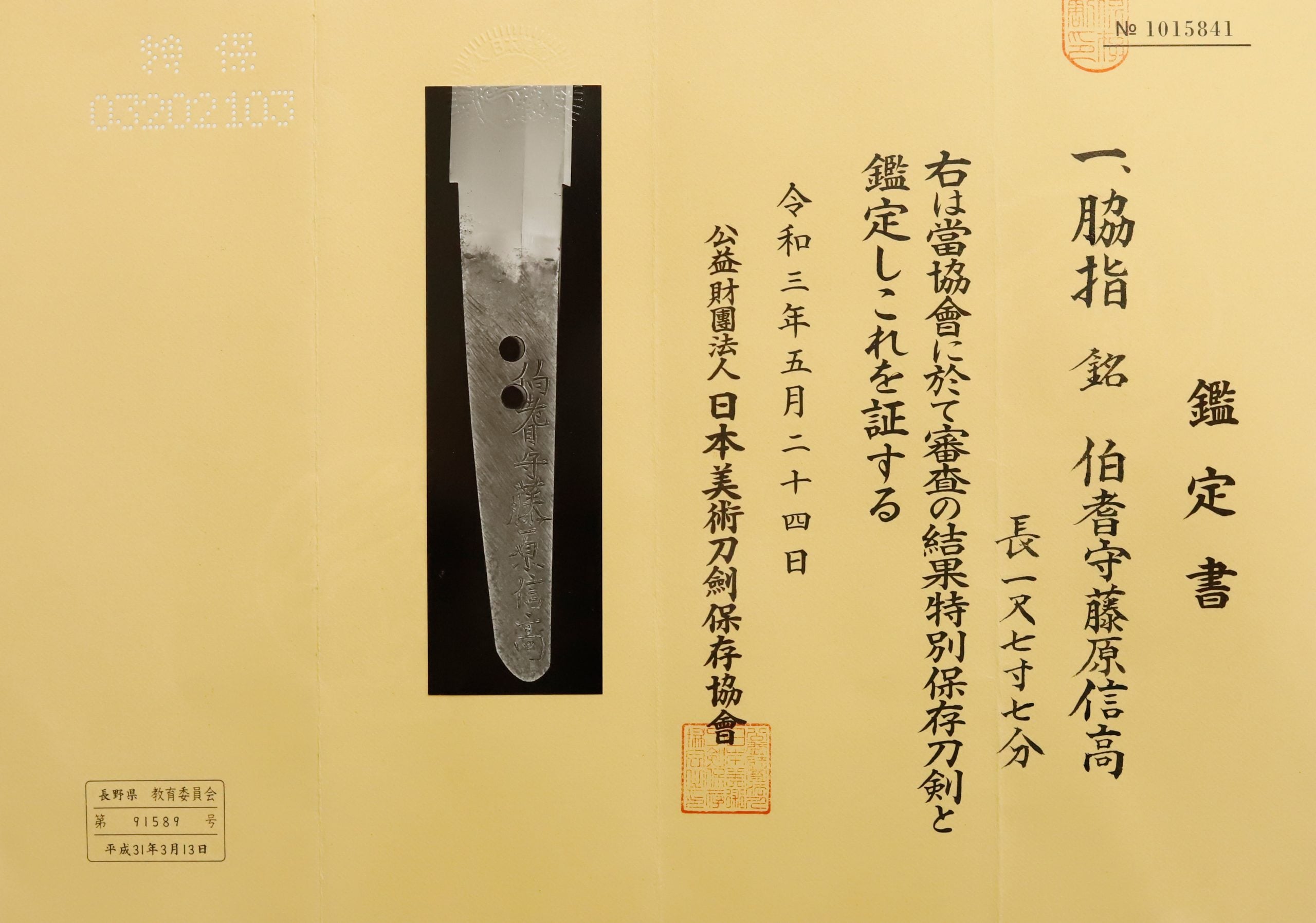
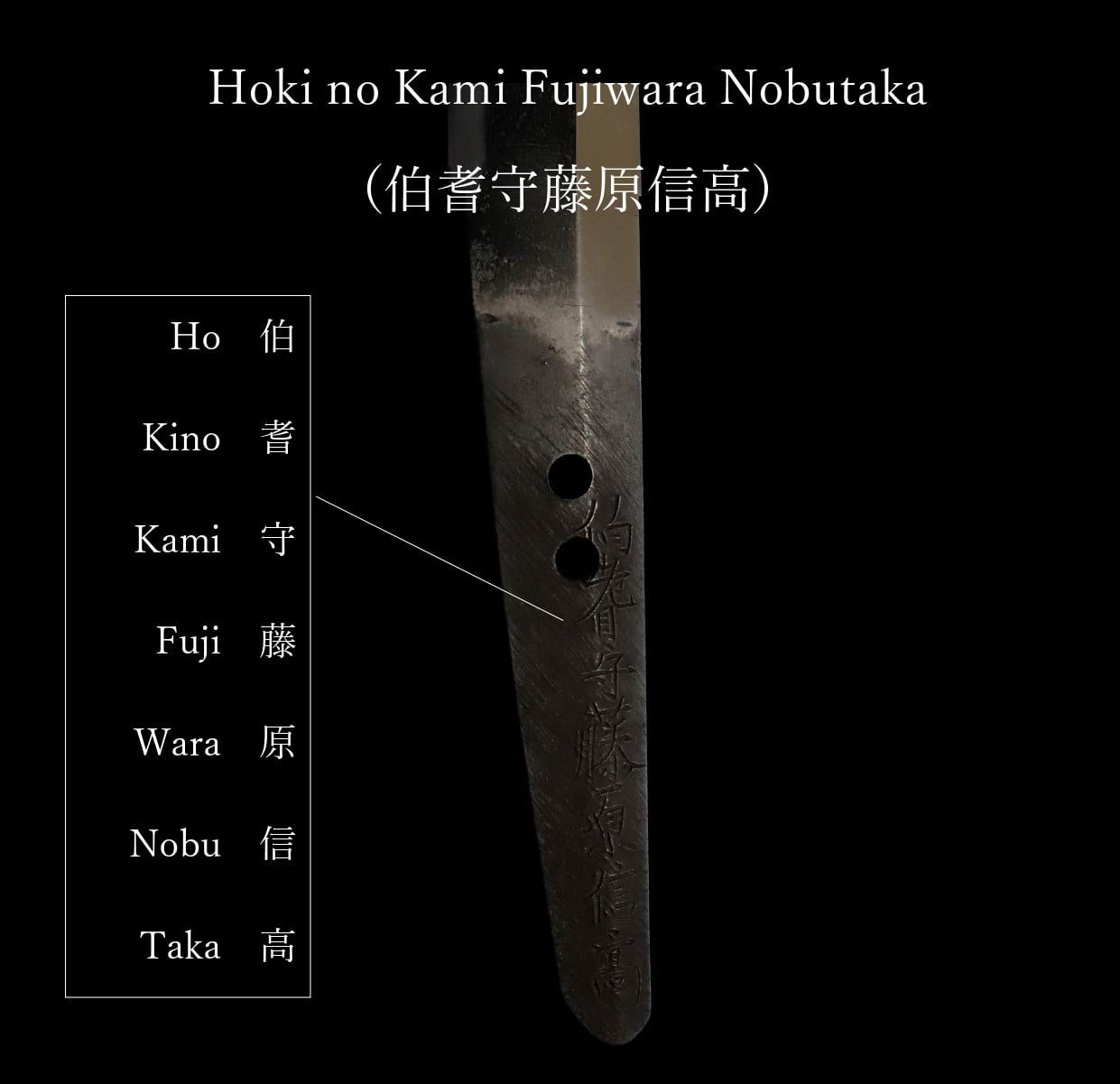
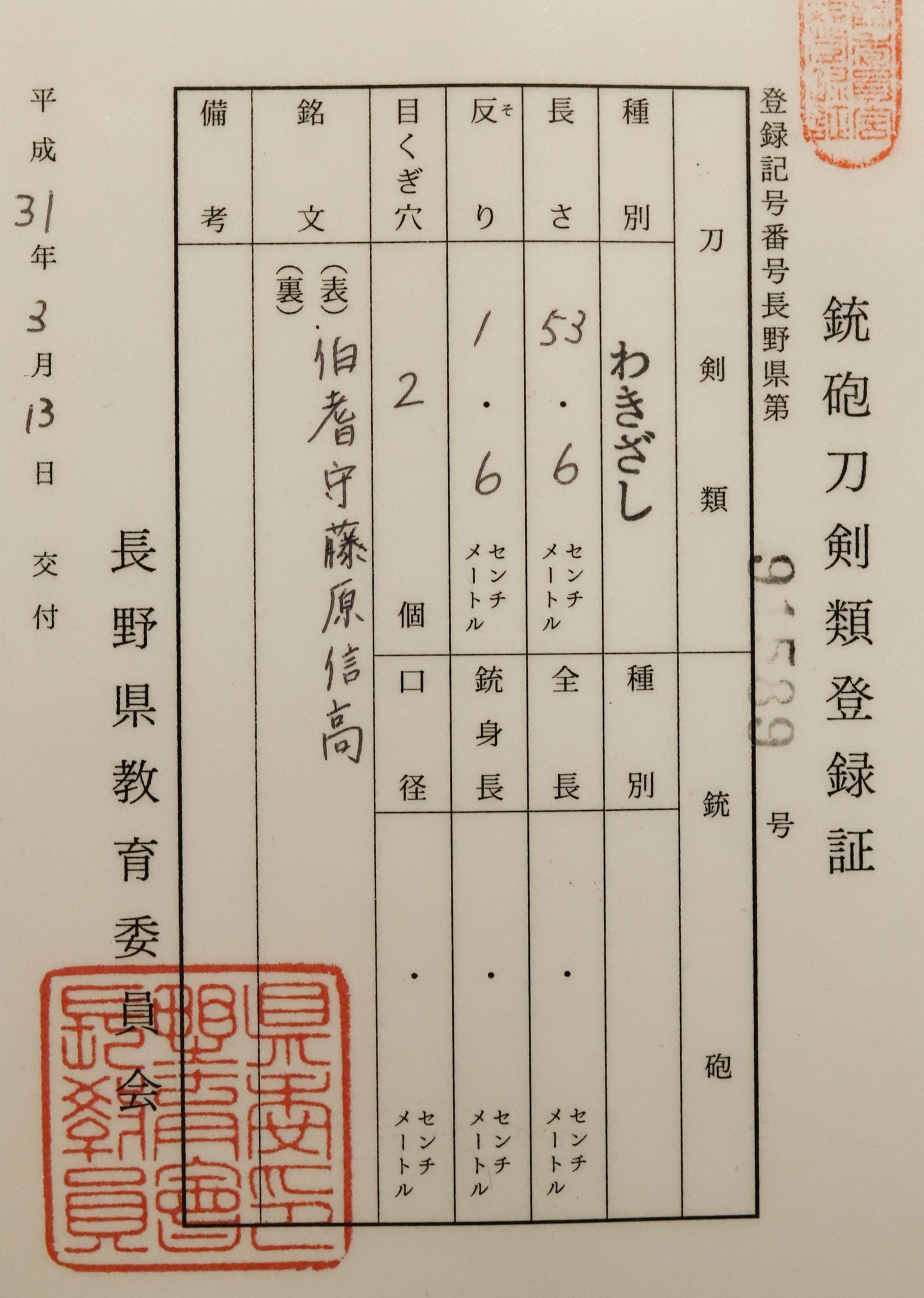
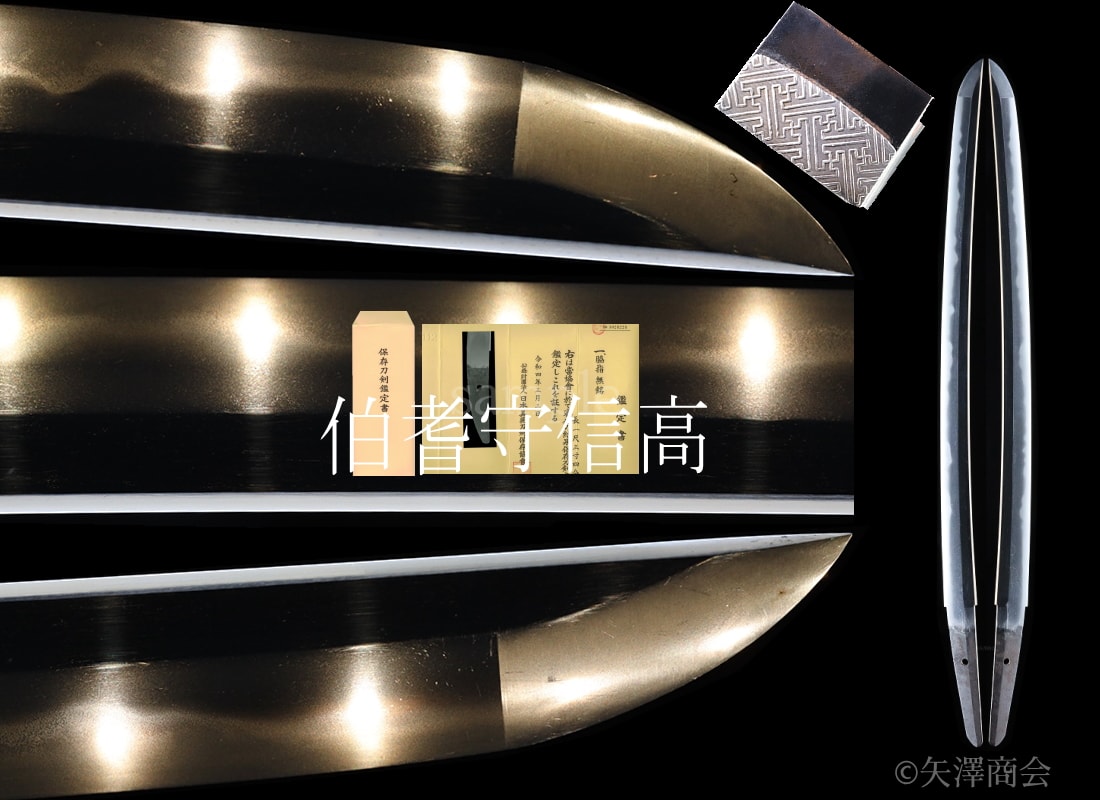
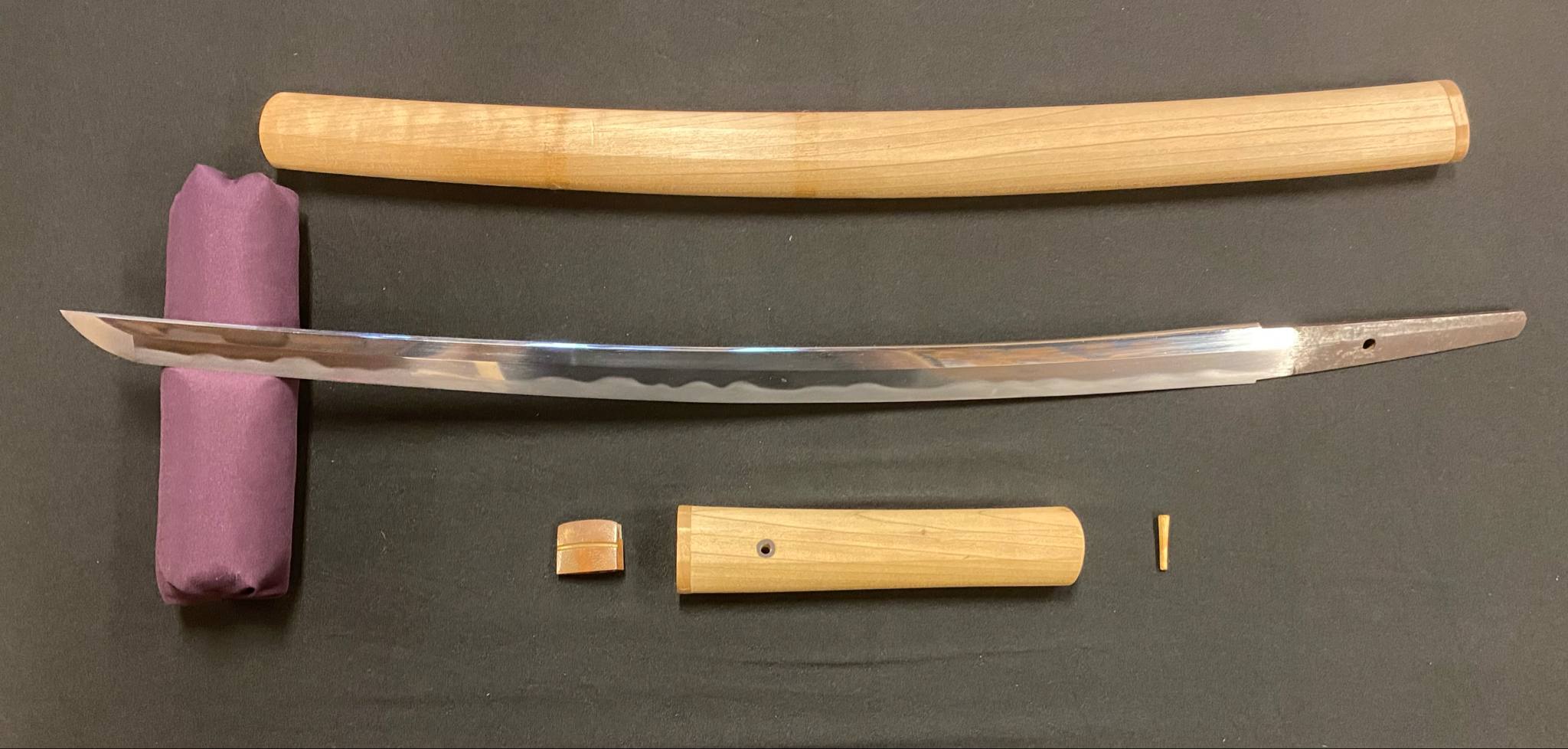
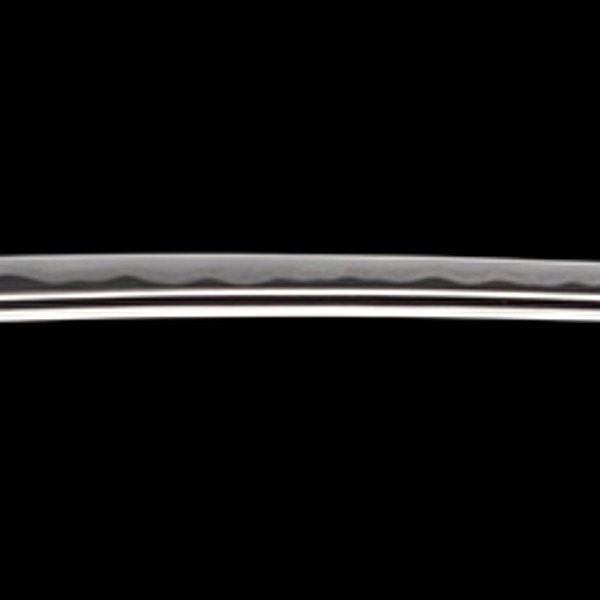
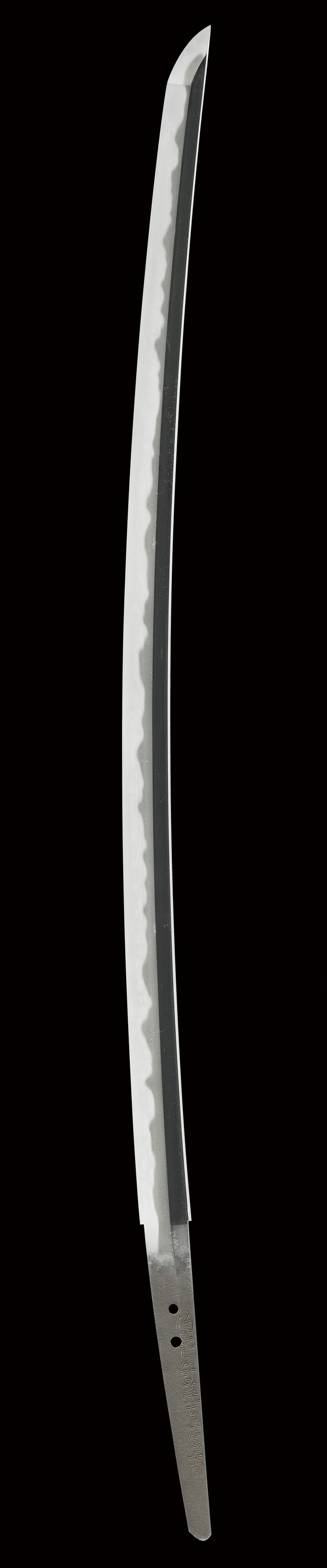
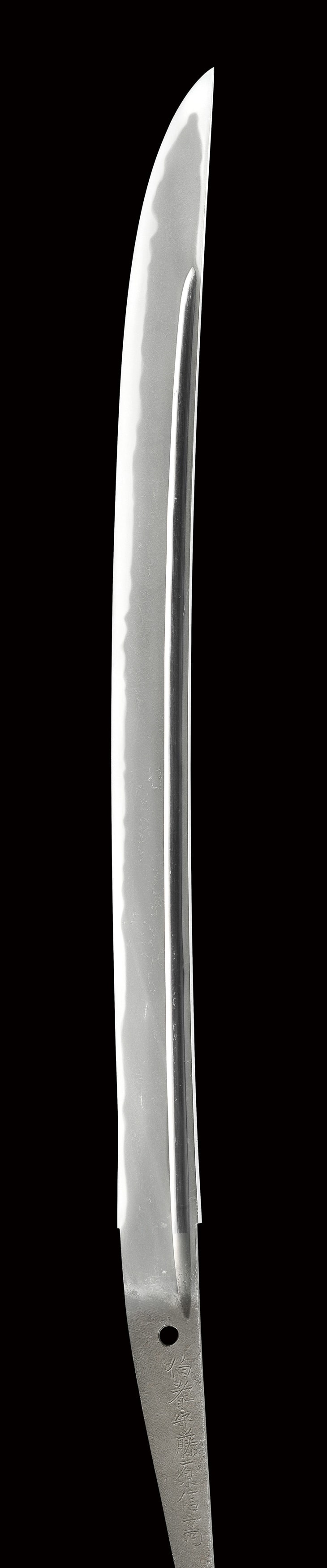
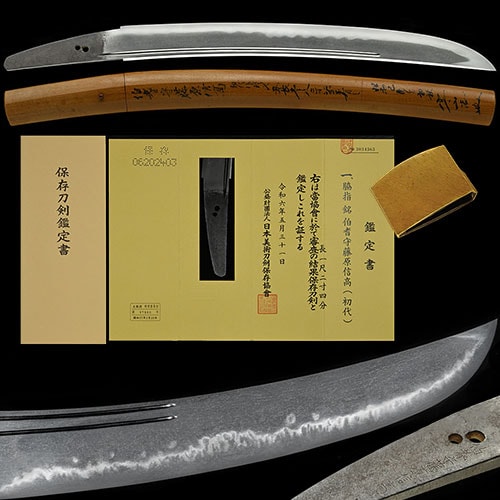
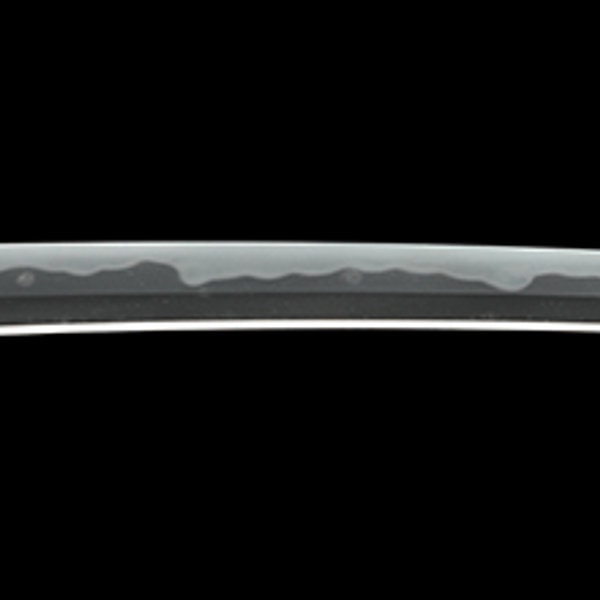
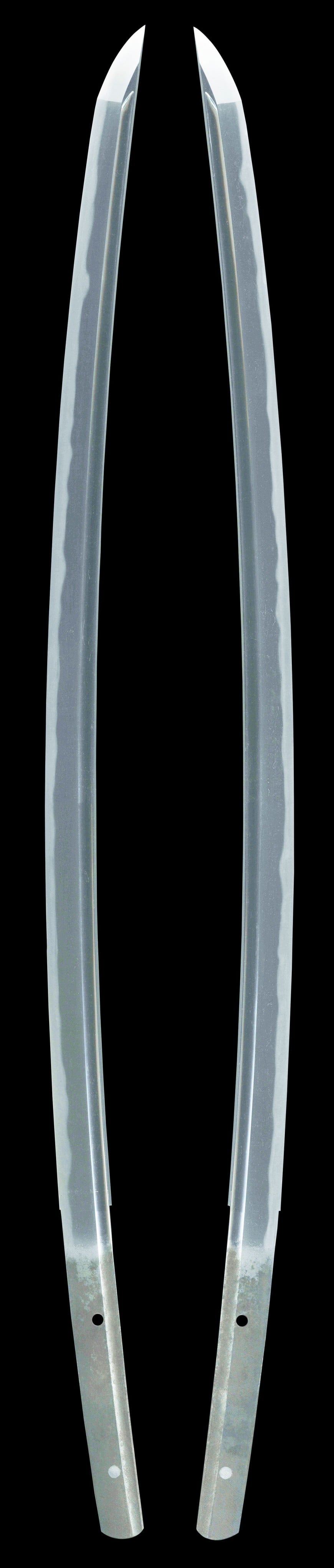
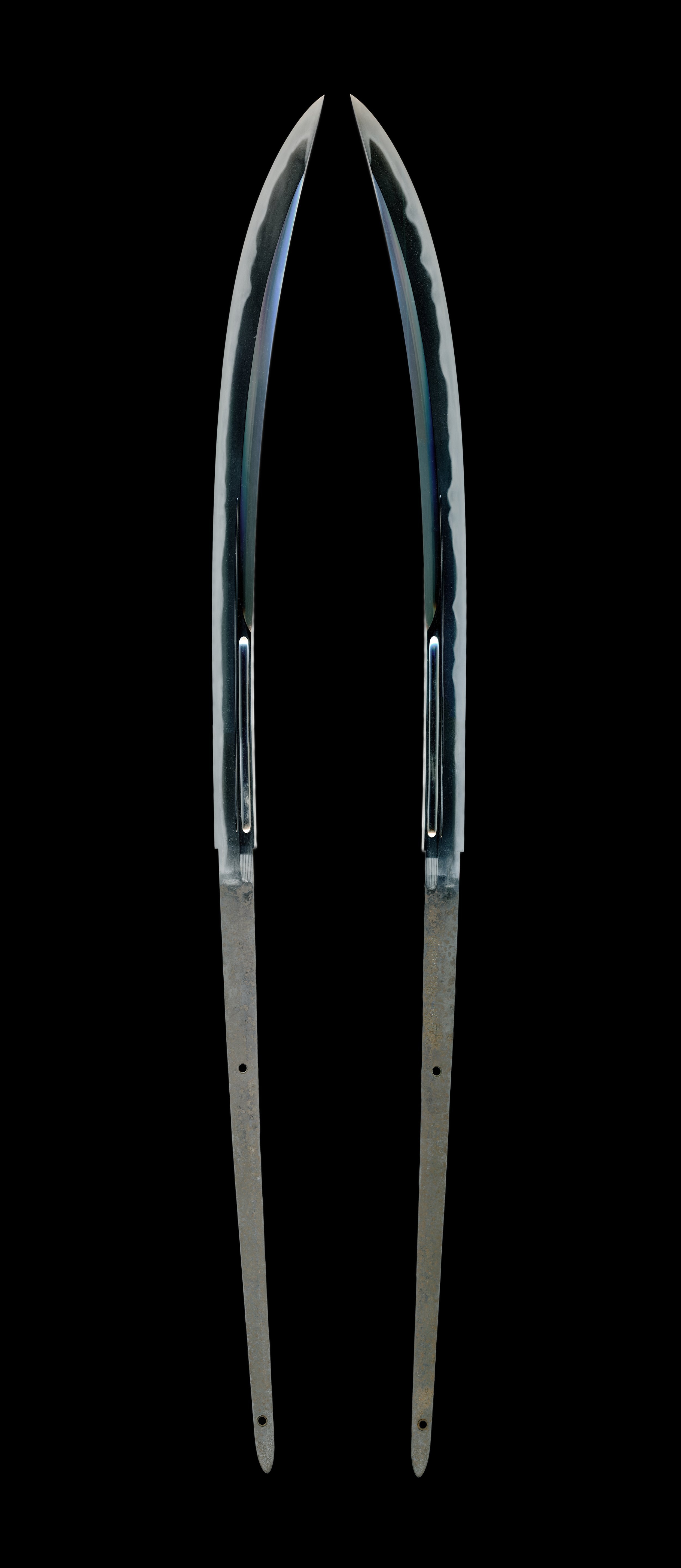
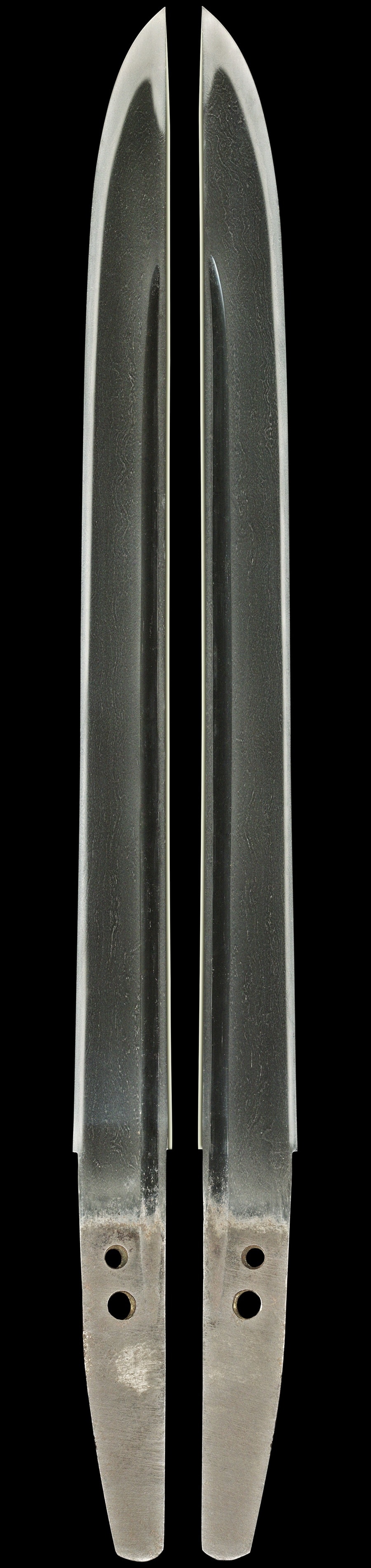
特別保存刀剣鑑定書付 伯耆守藤原信高(二代) 脇差 【解説】 本作は「伯耆守藤原信高」と銘があり、その銘振りから二代信高の手によるものと推察されます。 二代信高は、寛永年間(1624-1644年/江戸時代初期)に尾張国で活躍しました。「信高」の名は江戸時代を通じて六代まで続きましたが、なかでも「伯耆守」の受領名は初代から五代までが拝領した名誉ある称号です。 信高家は、美濃国三品派の兼国の末裔と伝えられています。 信高は尾張国を代表する名工であり、代々、徳川将軍家の親藩である尾張徳川家に仕えました。 二代信高(本名:河村伯耆)は、慶長8年(1603年)に初代信高の嫡男として尾張国(現在の愛知県)に生まれました。 寛永10年(1633年)、31歳の時に伯耆守を受領。尾張藩初代藩主・徳川義直の御抱え鍛冶として重用されました。御抱え鍛冶とは、特定の藩や大名に専属で仕える刀工を指します。 寛文2年(1662年)、60歳の時に家督を息子(三代信高)に譲り、自らは入道して「山月閉遊」と号しました。そのため、作中には「信高入道」と銘を切ったものも見受けられます。 その後、元禄2年(1689年)に87歳の高齢で没しました。 初代信高はもともと日本刀の五ヶ伝の一つ「美濃伝」で名高い美濃国の出身でしたが、慶長年間の初めに尾張清洲へ移り、名古屋城の築城に伴い名古屋へと移住しました。 当時、美濃から尾張へ移り住んだ刀工は多く、彼らは「尾張関」と呼ばれます。その代表格が、この初代伯耆守信高、飛騨守氏房、そして相模守政常の三名です。 初代が築き上げた洗練された鍛錬技術は二代へと見事に継承されており、本作においてもその卓越した技量を随所に見て取ることができます。 江戸初期の尾張国は武芸が盛んであったことから、上層武士の間で二代信高の刀は非常に重宝されました。また、息子である三代との合作銘の作品も現存しています。 本作は、日本美術刀剣保存協会(NBTHK)より「特別保存刀剣」に鑑定された一振りです。この鑑定書は、保存状態が極めて良く、かつ美術的価値の高い真作の日本刀にのみ与えられるものです。 【刀身】 刃長(長さ):53.6 cm 反り:1.6 cm 刃文:焼入れによって刃先に現れる結晶構造 地鉄(肌):鍛錬と折り返しによって現れる鋼の表面模様 茎(なかご):刀身の柄に収まる部分。 日本の刀工は、柄の中での赤錆を防ぐためにあえて「黒錆」を残します。この茎の錆色は時の経過とともに育つものであり、専門家が製作年代を推定する際の重要な指標となります。 【外装】 拵(こしらえ):鞘、柄、鍔など、日本刀の外装一式。 縁頭(ふちかしら):柄の両端を保護し装飾する一対の金具。 本作の縁頭は美しい光沢を放っており、特に縁の表面には繊細な「魚子地(ななこじ)」が施されています。
 NihontoWatch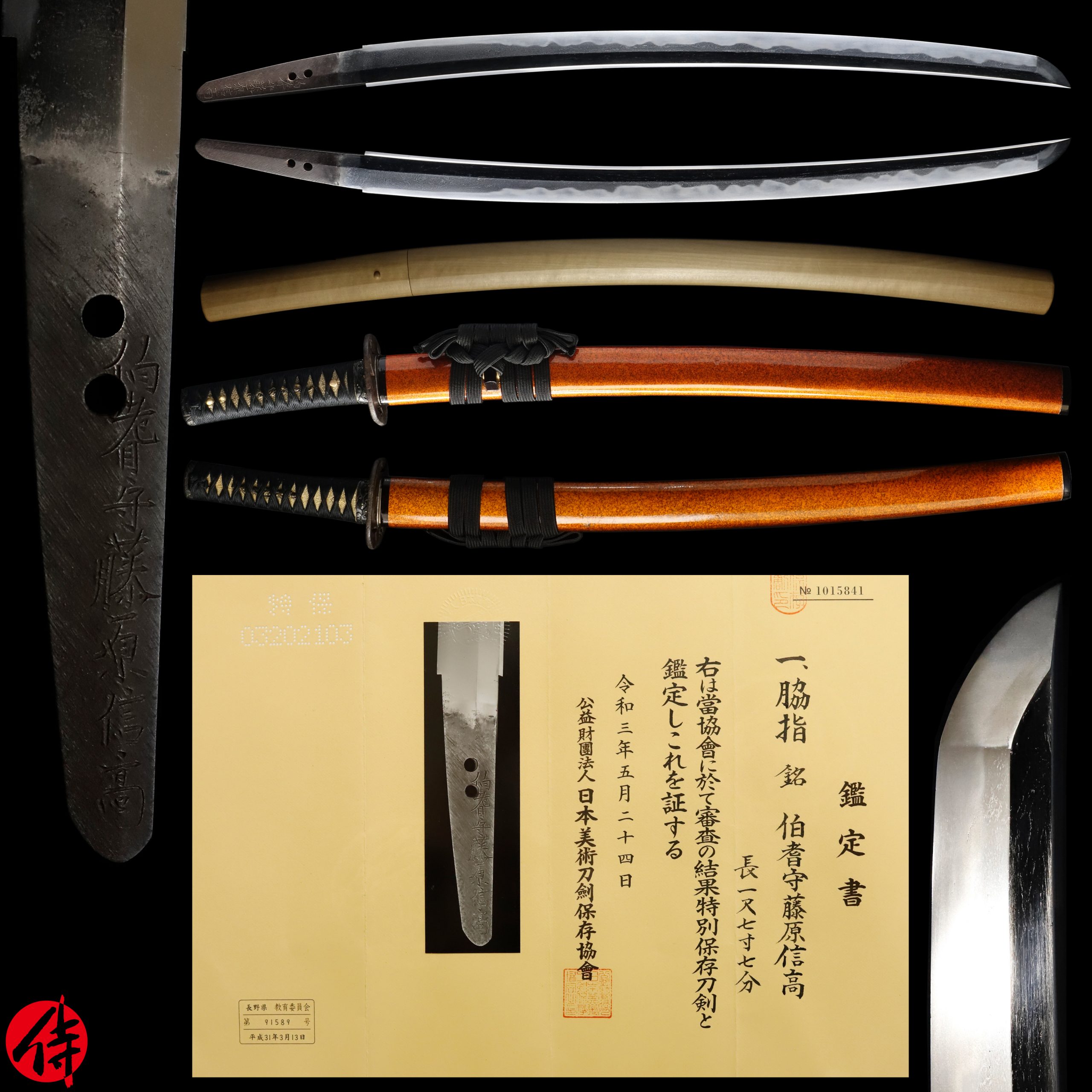
美濃伝 · 尾張 · 1624-1644頃
藤代 Jo saku · 刀剣大鑑 上位37%
現在4点販売中
信高の位置づけを、日本刀全体および伝統・時代・時期ごとに示します。各位(随一・屈指・有数・著名)は、NBTHK および文化庁による指定に加え、三作や名物帳などの歴史的栄誉を加味したものです。
各項目を選ぶと評価方法が表示されます。
美濃伝 · 美濃
現在11点販売中
三阿弥は美濃国に興った刀工の一派で、説示に拠れば関七流の一つに数えられ、その頭領が兼則であったと伝える。兼則は古伝書や銘鑑に南北朝末期から室町初期の応永にかけて存在したことが記され、現存する作例の最古とみられる太刀は作風と銘字の書風から応永を降らぬものと鑑せられている。同派の兼国は、その遠祖を南北朝時代の直江兼友門とも、大和兼国あるいは兼則の子ともいうが、そこまで時代の溯る作は未だ見られず、室町期に入って同銘数工におよび、末関に至るまで栄えた。兼則は兼元・兼定らと共に末関を代表する刀工に位置づけられる。下って桃山から江戸初期には、三阿弥兼国の子孫と伝える伯耆守藤原信高が出る。初代信高は永禄六年に美濃国上有知(現美濃町)に生まれ、河村左衛門と称し、天正九年十九歳で伯耆守を受領し、のち尾州清洲を経て徳川義直に従い慶長十五・六年頃に名古屋へ移った。寛永十年に隠居して入道銘を慶遊といい、同十三年に七十六歳で歿している。鍛えや帽子に美濃伝の見どころを残しつつ、活動の地は美濃から尾張へと移っている。 作風は時代と工により振幅が大きい。兼則・兼国ら室町期の作は、小板目あるいは板目がよくつみ、処々流れごころとなって地沸が細かにつき、白けごころをまじえる鍛えに、匂口の締まった直刃を基調とし、小互の目や角ばる刃、尖り刃を交え、足が入り、処々ほつれて飛焼がかかり、帽子は直ぐに小丸、あるいは尖りごころに返って掃きかけるものがある。兼国の優作は地鉄ともども冴えて明るく、一見善定兼吉の出来を思わせると評される。信高に至ると姿は一変し、室町最末期から桃山期にかけての幅広・大鋒の堂々たる豪壮な体配を示し、広直刃を基調に浅くのたれ、裏は小のたれに互の目ごころの刃を交え、匂深く沸がよくつき、部分的に荒めの沸をまじえて焼頭が沸崩れ、処々ほつれて喰違刃風となり、砂流し・金筋・湯走り・飛焼が鎬地にまたがって頻りにかかり、上半は皆焼風となる。帽子を焼き深く大胆に一枚風として長く返らせ、板目に流れ肌をまじえる鍛えや帽子の地蔵風に出身たる美濃伝の名残を窺わせる。見分けには、室町期の締まった直刃と冴えた地鉄、信高の沸づき変化に富む放胆な刃取りと豪壮な姿という時代差が手がかりとなる。 鑑定の要点は、兼則の「兼」の字の第四画目の鏨がしゃくれるところで、これは康応や応永年紀の兼吉にも見られ、南北朝末から応永にかけての銘の特徴とされる。信高には初代と二代があり、二代は初代の子で寛永十年に伯耆守を受領、寛文二年六十歳で入道し、元禄二年八十七歳で歿した。その技倆は父に劣らず、現存作中の優秀作は多くがこの二代の手になるという。伝来の明らかな作も多く、兼則には山之内家伝来の太刀、兼国には相模国小田原藩主大久保家の旧蔵で大久保忠成が九十三歳で指料とした旨を金象嵌に刻む一口があり、いずれも資料性が高い。信高には天正九年伯耆守受領直後の作で稲葉江写しとして名高い一口や、尾張刀工に多い槍のうちでも稀な長大作があって、その技を伝える。美濃に発し関七流の一角を占めた一派が、末関を経て尾張へ伝統を運んだ流れを、これらの作は示している。 詳しく見る →
江戸時代
二世紀半の泰平のあいだ、刀は武器である以上に武士の身分の標章であった。江戸の実証と大坂の華やぎのように都市ごとの作風が育ち、時代の末には需要も細っていく。
保存刀剣のうち、出来が一層優れ、保存状態も良好と認められたものです。再刃や、室町・江戸期の多くの無銘作は対象外となり、保存刀剣より高い基準が課されます。
日本美術刀剣保存協会(NBTHK)は、1948年に設立され、文化庁の監督を受ける公益財団法人で、東京・刀剣博物館に本部を置きます。専門の審査員が出品作を直接審査し、美術的・歴史的価値に応じた鑑定書を発行します。NBTHKの鑑定書は、日本刀および刀装具の真正性を示す最も広く認知された基準です。
NBTHK公式サイトReturns/exchanges limited to defects caused by shipping (except willful misconduct or gross negligence by the company); customers must contact within 72 hours of receiving the product.
特別保存刀剣鑑定書付 伯耆守藤原信高(二代) 脇差 【解説】 本作は「伯耆守藤原信高」と銘があり、その銘振りから二代信高の手によるものと推察されます。 二代信高は、寛永年間(1624-1644年/江戸時代初期)に尾張国で活躍しました。「信高」の名は江戸時代を通じて六代まで続きましたが、なかでも「伯耆守」の受領名は初代から五代までが拝領した名誉ある称号です。 信高家は、美濃国三品派の兼国の末裔と伝えられています。 信高は尾張国を代表する名工であり、代々、徳川将軍家の親藩である尾張徳川家に仕えました。 二代信高(本名:河村伯耆)は、慶長8年(1603年)に初代信高の嫡男として尾張国(現在の愛知県)に生まれました。 寛永10年(1633年)、31歳の時に伯耆守を受領。尾張藩初代藩主・徳川義直の御抱え鍛冶として重用されました。御抱え鍛冶とは、特定の藩や大名に専属で仕える刀工を指します。 寛文2年(1662年)、60歳の時に家督を息子(三代信高)に譲り、自らは入道して「山月閉遊」と号しました。そのため、作中には「信高入道」と銘を切ったものも見受けられます。 その後、元禄2年(1689年)に87歳の高齢で没しました。 初代信高はもともと日本刀の五ヶ伝の一つ「美濃伝」で名高い美濃国の出身でしたが、慶長年間の初めに尾張清洲へ移り、名古屋城の築城に伴い名古屋へと移住しました。 当時、美濃から尾張へ移り住んだ刀工は多く、彼らは「尾張関」と呼ばれます。その代表格が、この初代伯耆守信高、飛騨守氏房、そして相模守政常の三名です。 初代が築き上げた洗練された鍛錬技術は二代へと見事に継承されており、本作においてもその卓越した技量を随所に見て取ることができます。 江戸初期の尾張国は武芸が盛んであったことから、上層武士の間で二代信高の刀は非常に重宝されました。また、息子である三代との合作銘の作品も現存しています。 本作は、日本美術刀剣保存協会(NBTHK)より「特別保存刀剣」に鑑定された一振りです。この鑑定書は、保存状態が極めて良く、かつ美術的価値の高い真作の日本刀にのみ与えられるものです。 【刀身】 刃長(長さ):53.6 cm 反り:1.6 cm 刃文:焼入れによって刃先に現れる結晶構造 地鉄(肌):鍛錬と折り返しによって現れる鋼の表面模様 茎(なかご):刀身の柄に収まる部分。 日本の刀工は、柄の中での赤錆を防ぐためにあえて「黒錆」を残します。この茎の錆色は時の経過とともに育つものであり、専門家が製作年代を推定する際の重要な指標となります。 【外装】 拵(こしらえ):鞘、柄、鍔など、日本刀の外装一式。 縁頭(ふちかしら):柄の両端を保護し装飾する一対の金具。 本作の縁頭は美しい光沢を放っており、特に縁の表面には繊細な「魚子地(ななこじ)」が施されています。
NihontoWatch美濃伝 · 尾張 · 1624-1644頃
藤代 Jo saku · 刀剣大鑑 上位37%
現在4点販売中
信高の位置づけを、日本刀全体および伝統・時代・時期ごとに示します。各位(随一・屈指・有数・著名)は、NBTHK および文化庁による指定に加え、三作や名物帳などの歴史的栄誉を加味したものです。
各項目を選ぶと評価方法が表示されます。
美濃伝 · 美濃
現在11点販売中
三阿弥は美濃国に興った刀工の一派で、説示に拠れば関七流の一つに数えられ、その頭領が兼則であったと伝える。兼則は古伝書や銘鑑に南北朝末期から室町初期の応永にかけて存在したことが記され、現存する作例の最古とみられる太刀は作風と銘字の書風から応永を降らぬものと鑑せられている。同派の兼国は、その遠祖を南北朝時代の直江兼友門とも、大和兼国あるいは兼則の子ともいうが、そこまで時代の溯る作は未だ見られず、室町期に入って同銘数工におよび、末関に至るまで栄えた。兼則は兼元・兼定らと共に末関を代表する刀工に位置づけられる。下って桃山から江戸初期には、三阿弥兼国の子孫と伝える伯耆守藤原信高が出る。初代信高は永禄六年に美濃国上有知(現美濃町)に生まれ、河村左衛門と称し、天正九年十九歳で伯耆守を受領し、のち尾州清洲を経て徳川義直に従い慶長十五・六年頃に名古屋へ移った。寛永十年に隠居して入道銘を慶遊といい、同十三年に七十六歳で歿している。鍛えや帽子に美濃伝の見どころを残しつつ、活動の地は美濃から尾張へと移っている。 作風は時代と工により振幅が大きい。兼則・兼国ら室町期の作は、小板目あるいは板目がよくつみ、処々流れごころとなって地沸が細かにつき、白けごころをまじえる鍛えに、匂口の締まった直刃を基調とし、小互の目や角ばる刃、尖り刃を交え、足が入り、処々ほつれて飛焼がかかり、帽子は直ぐに小丸、あるいは尖りごころに返って掃きかけるものがある。兼国の優作は地鉄ともども冴えて明るく、一見善定兼吉の出来を思わせると評される。信高に至ると姿は一変し、室町最末期から桃山期にかけての幅広・大鋒の堂々たる豪壮な体配を示し、広直刃を基調に浅くのたれ、裏は小のたれに互の目ごころの刃を交え、匂深く沸がよくつき、部分的に荒めの沸をまじえて焼頭が沸崩れ、処々ほつれて喰違刃風となり、砂流し・金筋・湯走り・飛焼が鎬地にまたがって頻りにかかり、上半は皆焼風となる。帽子を焼き深く大胆に一枚風として長く返らせ、板目に流れ肌をまじえる鍛えや帽子の地蔵風に出身たる美濃伝の名残を窺わせる。見分けには、室町期の締まった直刃と冴えた地鉄、信高の沸づき変化に富む放胆な刃取りと豪壮な姿という時代差が手がかりとなる。 鑑定の要点は、兼則の「兼」の字の第四画目の鏨がしゃくれるところで、これは康応や応永年紀の兼吉にも見られ、南北朝末から応永にかけての銘の特徴とされる。信高には初代と二代があり、二代は初代の子で寛永十年に伯耆守を受領、寛文二年六十歳で入道し、元禄二年八十七歳で歿した。その技倆は父に劣らず、現存作中の優秀作は多くがこの二代の手になるという。伝来の明らかな作も多く、兼則には山之内家伝来の太刀、兼国には相模国小田原藩主大久保家の旧蔵で大久保忠成が九十三歳で指料とした旨を金象嵌に刻む一口があり、いずれも資料性が高い。信高には天正九年伯耆守受領直後の作で稲葉江写しとして名高い一口や、尾張刀工に多い槍のうちでも稀な長大作があって、その技を伝える。美濃に発し関七流の一角を占めた一派が、末関を経て尾張へ伝統を運んだ流れを、これらの作は示している。 詳しく見る →
江戸時代
二世紀半の泰平のあいだ、刀は武器である以上に武士の身分の標章であった。江戸の実証と大坂の華やぎのように都市ごとの作風が育ち、時代の末には需要も細っていく。
保存刀剣のうち、出来が一層優れ、保存状態も良好と認められたものです。再刃や、室町・江戸期の多くの無銘作は対象外となり、保存刀剣より高い基準が課されます。
日本美術刀剣保存協会(NBTHK)は、1948年に設立され、文化庁の監督を受ける公益財団法人で、東京・刀剣博物館に本部を置きます。専門の審査員が出品作を直接審査し、美術的・歴史的価値に応じた鑑定書を発行します。NBTHKの鑑定書は、日本刀および刀装具の真正性を示す最も広く認知された基準です。
NBTHK公式サイトReturns/exchanges limited to defects caused by shipping (except willful misconduct or gross negligence by the company); customers must contact within 72 hours of receiving the product.


![Katana - Tokuho - 作 信高 - 刀[前白州信高入道]日本美術刀剣保存協会 特別保存刀剣](/_next/image?url=https%3A%2F%2Fitbhfhyptogxcjbjfzwx.supabase.co%2Fstorage%2Fv1%2Fobject%2Fpublic%2Flisting-images%2Fworld-seiyudo%2FL31317%2F00.jpg&w=2560&q=90)










![Tanto - Hozon - 作 関派 - 短刀[氏房][日本美術刀剣保存協会]保存刀剣](/_next/image?url=https%3A%2F%2Fitbhfhyptogxcjbjfzwx.supabase.co%2Fstorage%2Fv1%2Fobject%2Fpublic%2Flisting-images%2Fworld-seiyudo%2FL747655%2F00.jpg&w=2560&q=90)