説明
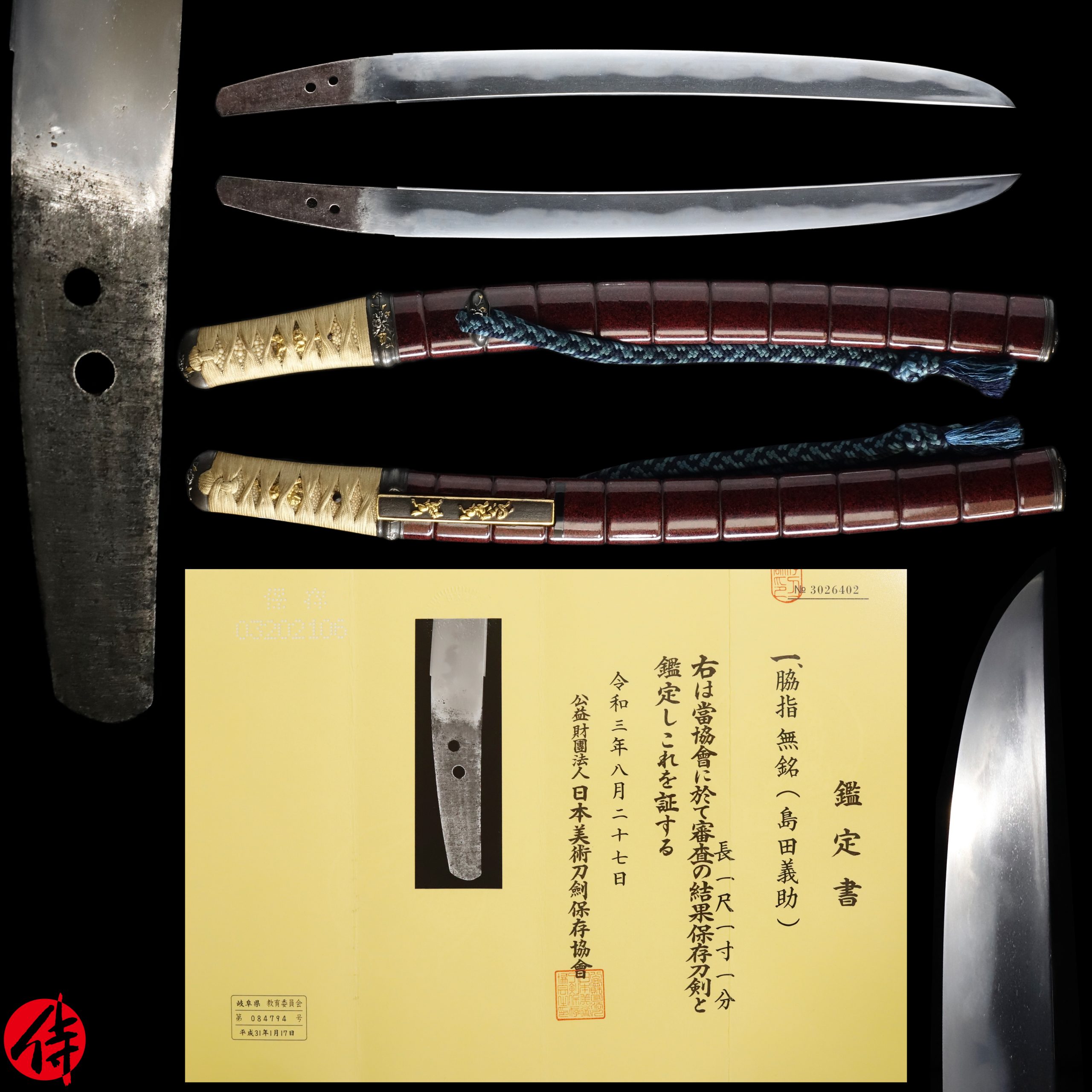
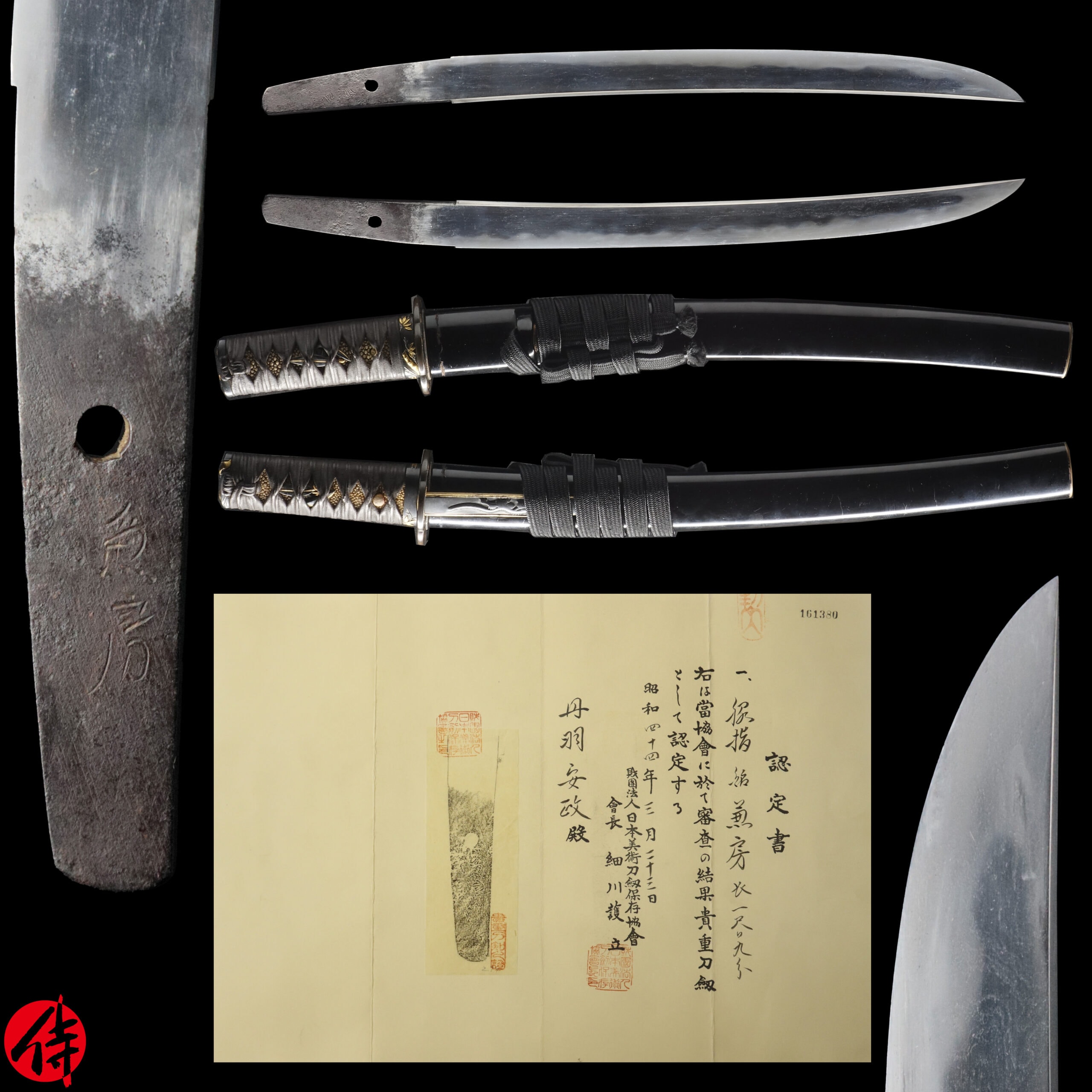
Antique Japanese Sword Wakizashi Attributed to Shimada Yoshisuke with NBTHK
Hozon
Certificate
【Description】
This blade is attributed to Shimada Yoshisuke(島田義助) by NBHTK that authenticated this blade.
Based on the appraisal, we believe it is attributed to a later-gen Yoshisuke during the late Muromachi period: mid-late 16th century. The maker’s name (Yoshisuke) lasted several generations. It started from the mid-Muromachi period and lasted until the late Edo period.
The first-gen Yoshisuke was active during the Kosho era(1455-57). He was the founder of Shimada school, located in the Suruga domain(today’s Shizuoka prefecture). It is said that the first-gen Yoshisuke was a descendant of Bizen Ichimonji Sukemune, one of the most famous swordsmiths in Japanese history.
The first-gen Yoshisuke served a powerful feudal family named Imagawa. It is said that he received his maker’s name 義 from Imagawa Yoshitada. Shimada school interacted with other schools in Soshu swordsmiths living near Odawa castle in Kanagawa prefecture. The Suruga domain was vital for strong feudal lords such as Takeda, Tokugawa, and Hojo clan during the Sengoku Jidai(Warring state period: Late Muromachi period). The swordsmiths in Shimada school received many orders from these strong feudal families. The excellent craftsmanship the first-gen Yoshisuke had mastered was passed down to the next generations. It comes with beautiful sword mounting.
This blade is appraised as a Hozon Token(保存刀剣) issued by NBTHK(Nihon Bijutsu Touken Hozon Kyokai:日本美術刀剣保存協会). This authentication paper was only given to authentic Japanese swords, well preserved with artistic value.
【Blade】
Cutting Edge Length(Nagasa)
:
33.5 cm(
13.2 inches)
Curvature(Sori)
:
0.6
cm(0.23 inches)
Hamon
:
The crystalline structure which forms along the cutting edge of a blade as a result of the hardening process
Jimon(Jihada)
:
visible steel surface pattern created by folding and hammering during forging process
Nakago
:
Nakago is the tang of the Japanese sword.
Japanese swordsmiths left the black rust on the tang because it prevents red rust while the tang is in its handle. And the discoloration of the tang was created over time, and it is a great indicator for a Japanese sword specialist to estimate when the sword was forged.
Koshirae:
Koshirae is the mounting of the Japanese sword. There are several parts that consist of Koshirae such as Saya(Scabbard), Tsuka(Handle), Tsuba(Handguard).
Fuchi-Kashira
:
A pair of matching sword fittings that cover the upper and bottom parts of its sword hilt.
The Botan (牡丹, peony) flowers are designed for this Fuchi Kashira. Silvery paint and golden paint were effectively applied to their petals and leaves, and these colorings give elegance to this Fuchi Kashira. The peony represents happiness, wealth, nobleness, and gorgeousness. This flower pattern has been treated as a kind of good-omen motif; people regarded it as a rich harvest sign. As mentioned above, the peony is called “Botan” in Japanese. When its name is written in Japanese, its second letter has the following meaning: mountain hermit medicine which gives us eternal youth. Based on this idea, some people thought this flower pattern symbolizes eternal youth and longevity.
Tsuka and Menuki
:
Tsuka is the handle of the Japanese sword and Menuki is its decoration.
You would find a golden animal from the gaps of the Tsukamaki thread. They look similar to dogs, and they have curly hair. This animal is the Kara-Jishi (唐獅子). The Shishi (獅子) means a lion in Japanese, and the Kara-Jishi is a lion brought from the Continent to Japan in the Toh period (唐, Tang dynasty, 618-907). The Kara-Jishi typically has curly hair for its head, neck, body, and tail, as you see in this work. In Buddhism, the Kara-Jishi is regarded as a symbol of wisdom, and the Monju Bosatu (文殊菩薩, Manjushri Bodhisattva) rides lions. According to a theory, the Kara-Jishi originates from the Komainu (狛犬, stone guardian dogs that exorcize evil spirits).
Now,