説明
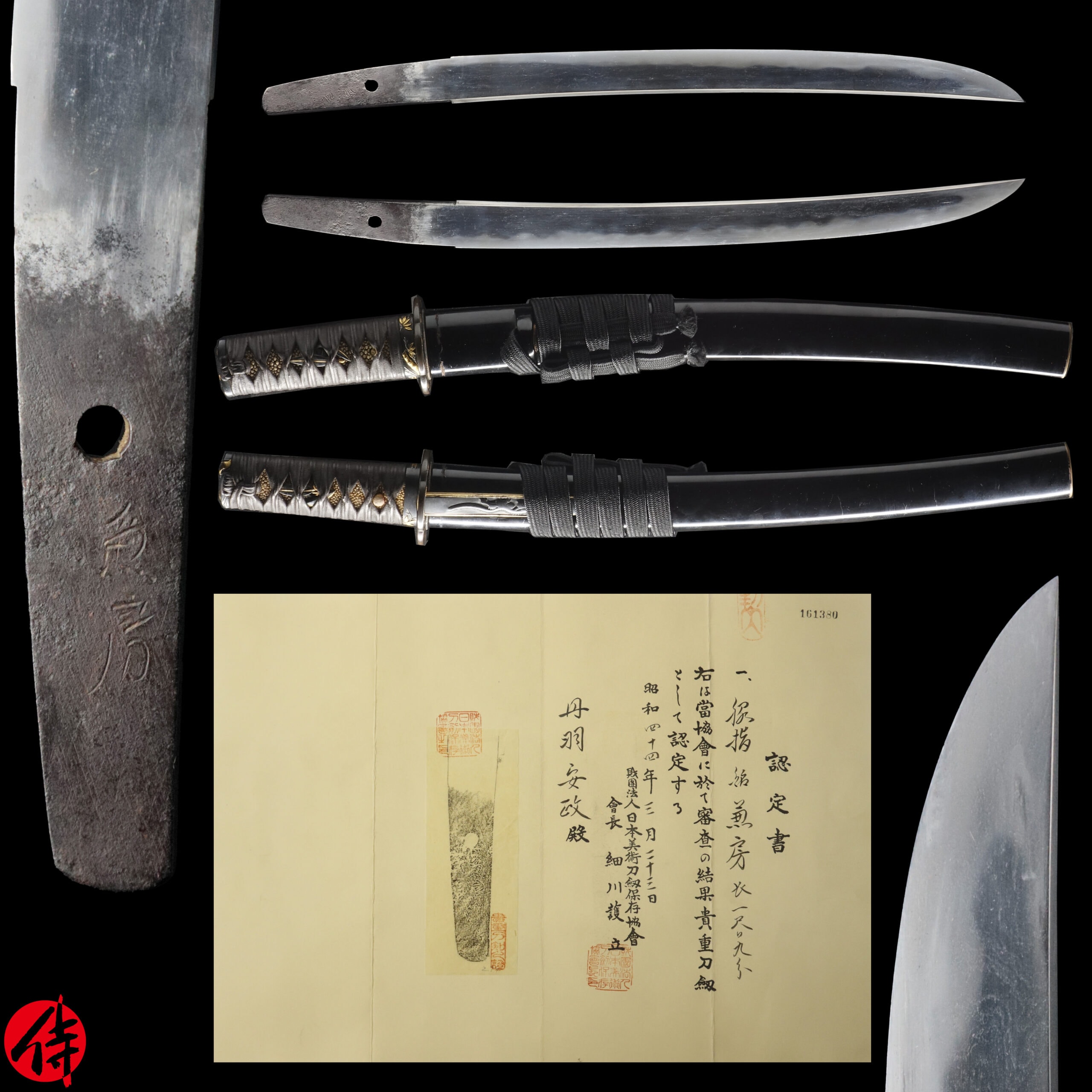
Antique Japanese Sword Wakizashi Attributed to Shimada Yoshisuke with NBTHK
Hozon
Certificate
【Description】
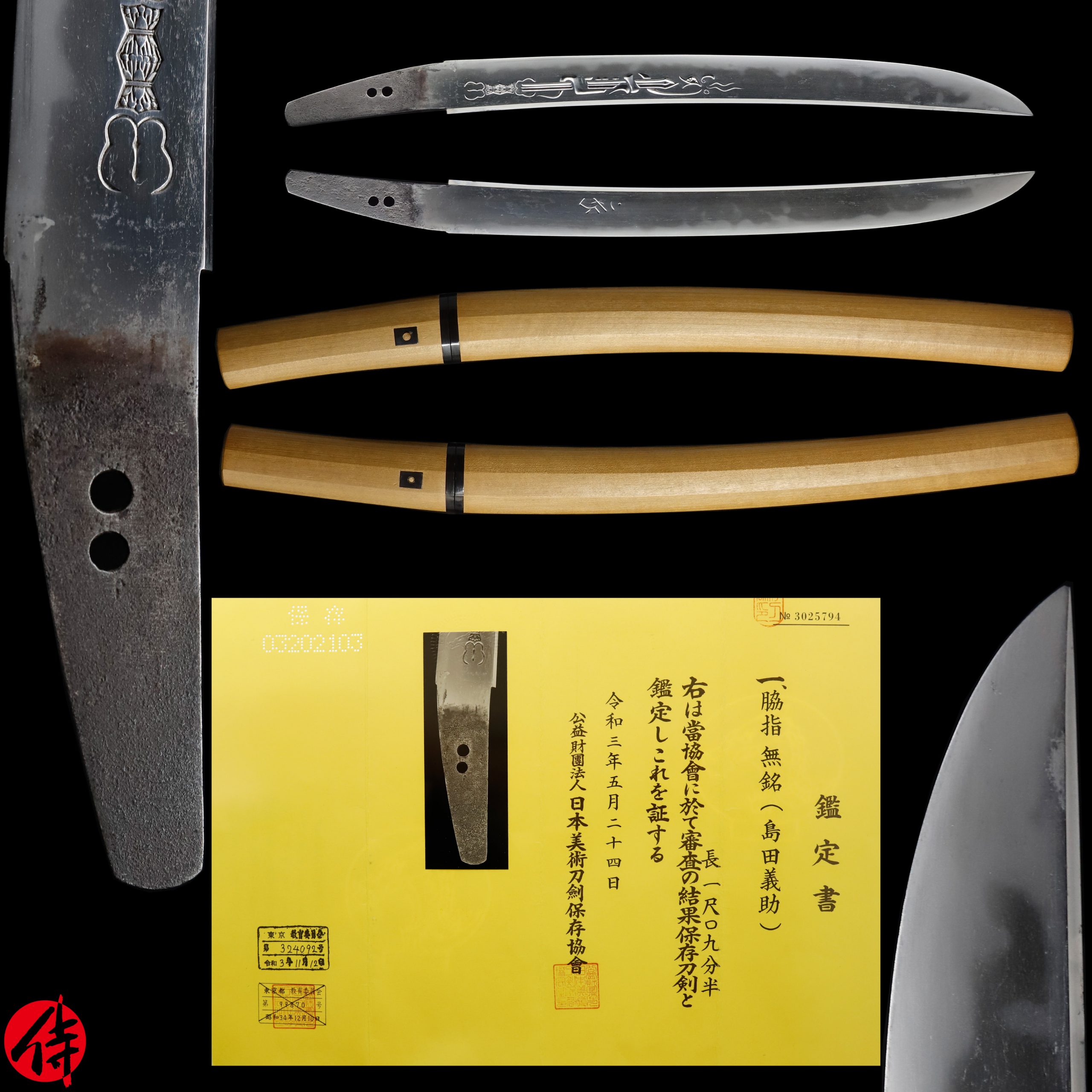
This blade is attributed to Shimada Yoshisuke(島田義助) by NBHTK that authenticated this blade.
Based on the appraisal, we believe it is attributed to a later-gen Yoshisuke during the late Muromachi period: mid-late 16th century. The maker’s name (Yoshisuke) lasted several generations. It started from the mid-Muromachi period and lasted until the late Edo period.
The first-gen Yoshisuke was active during the Kosho era(1455-57). He was the founder of Shimada school, located in the Suruga domain(today’s Shizuoka prefecture). It is said that the first-gen Yoshisuke was a descendant of Bizen Ichimonji Sukemune, one of the most famous swordsmiths in Japanese history.
The first-gen Yoshisuke served a powerful feudal family named Imagawa. It is said that he received his maker’s name 義 from Imagawa Yoshitada. Shimada school interacted with other schools in Soshu swordsmiths living near Odawa castle in Kanagawa prefecture. The Suruga domain was vital for strong feudal lords such as Takeda, Tokugawa, and Hojo clan during the Sengoku Jidai(Warring state period: Late Muromachi period). The swordsmiths in Shimada school received many orders from these strong feudal families. The excellent craftsmanship the first-gen Yoshisuke had mastered was passed down to the next generations.
This blade is appraised as a Hozon Token(保存刀剣) issued by NBTHK(Nihon Bijutsu Touken Hozon Kyokai:日本美術刀剣保存協会). This authentication paper was only given to authentic Japanese swords, well preserved with artistic value.
【 Blade】
Cutting Edge Length(Nagasa)
:
33.3
cm (13.1
inches)
Curvature(Sori)
:
0.7
cm (0.27 inches)
Hamon:
The crystalline structure which forms along the cutting edge of a blade as a result of the hardening process
Jimon(Jihada):
visible steel surface pattern created by folding and hammering during forging process
Nakago
:
Nakago is the tang of the Japanese sword.
Japanese swordsmiths left the black rust on the tang on purpose to prevent red rust while the tang is in its handle. And the discoloration of the tang was created over time, which is a great indicator for a Japanese sword specialist to estimate when the sword was forged.
Horimono
: Horimono is an engraving on the blade
This blade also has Horimono(engraving) of Sanscrit letter and Kurikara Ken. Kurikara-Ken (倶利伽羅剣) is the sword that Fudo Myo-O (不動明王, acalanātha) holds with his right hand(you can see it on the tang part). Fudo Myo-O is one of the objects of worship in Buddhism. According to a theory, it is the incarnation of Dainichi Nyorai (大日如来, Mahāvairocana, the principal image of esoteric Buddhism). Kurikara-ken was named due to its appearance that Kurikara Ryu-O (倶利伽羅龍王, dragon) is winding around the sword. It is believed Kurikara-Ken could cut off worldly desires: Sandoku (三毒). Sandoku is the three fundamental earthly desires; Ton (貪, greed), Jin (瞋, anger, grudge), Chi (癡, delusion, complaint).
Habaki
:
Habaki is the equipment to make the blade not touch its scabbard inside. It prevents the blade from getting rusty and chipped.
Authentication Paper
:
NBTHK Hozon Certificate for the blade (No. 3025794)
NBTHK
, also known as Nihon Bijutsu Touken Hozon Kyokai (the Society for the Preservation of the Japan Art Sword), is one of the oldest Japanese sword appraising organizations in modern-day Japan. They authenticated the blade on May 24th in the 3rd year of Reiwa(2021). They appraised it as Hozon Touken, the blade worth preserving for Japanese society. The purchaser will receive this original certificate as well. We can also translate what is written into English and make a
PDF file
for your record if you request.
Registration Number :
Tokyo 324092
The Board of Education in Tokyo prefecture issued a registration paper for this sword . It is called Jyu Token Rui Torokusho(銃刀剣類登録証). Bunkacho(The Agency for Cultural Affairs) acknowledges a Japanese sword with this paper as a work of art.
T