売切れ
Hozon売切れ
Antique Japanese Sword Wakizashi Signed by Nobukuni NBTHK Hozon Certificate and Hozon Tosogu
売却済
世界81社の刀剣商を横断追跡 · 価格履歴 · 売却アーカイブ
仕様
長さ
53 cm
反り
1.21 cm
Antique Japanese Sword Wakizashi Signed by Nobukuni with NBTHK Hozon Certificate and Hozon Tosogu 【Description】 Summary This blade was signed by Nobukuni (信国) during the early Muromachi period (early 15th century), according to its NBTHK appraisal. The maker’s name, Nobukuni, lasted six generations in Yamashiro province (today’s Kyoto prefecture) during the Gen-Ou~O-Ei era (1319-1428: Nanbokucho-Early Muromachi period). There were also branches of Nobukuni schools in other parts of Japan, such as Buzen, Chikuzen, and Echigo. The first-gen Nobukuni became an apprentice of Ryokai during the second year of the Gen-Ou era (1320), and he started to sign Nobukuni a few decades later. He was a grandson of Ryokai Hisanobu, who was a renowned maker in Ryokai school. Also, some records suggest that the first-gen Nobukuni also learned sword-forging techniques from Sadamune. Based on its appraisal, we believe the late-gen Nobukuni made this blade. Ryokai School Ryokai was a swordsmith from the late Kamakura period in Yamashiro Province(Today’s Kyoto). It is said that he was a son of Rai Kuniyuki (来国行) and a younger brother of Rai Kunitoshi (来国俊). Both of them are renowned swordsmiths throughout Samurai history. Ryokai founded his school, and the apprentices were allowed to use Ryokai in their maker’s names. Ryokai’s son was Ryokai Hisanobu, who took over the school. Yamashiro Den Yamashiro province was famous for its sword-making style called YAMASHIRO-DEN. YAMASHIRO-DEN’s origin dates back to the Heian period(794 A.D) when the capital city was moved from Nara to Kyoto. The swordsmiths in Yamashiro province initially prospered by forging swords for court nobles and imperial families. Later on, they also forged swords for feudal lords after the Samurai military government took control of Japan. There are so many renowned swordsmiths from this region. It is said that the founder of YAMASHIRO-DEN was Sanjo Munechika. And there are four prestigious main branches in this region. They are Sanjo, Rai, Nobukuni, and Awataguchi. One of the characteristics of YAMASHIRO-DEN is its elegant design and beautiful Jigane (steel surface pattern). Shobu Zukuri (菖蒲造り) You can see interesting Kissaki (tip of the blade) called Shobu Zukuri (菖蒲造り). There is no Yokote on this blade. Yokote is the borderline between the tip and cutting edge. We are confident you will appreciate the elegant look of this blade. This blade is appraised as a Hozon Token(保存刀剣) issued by NBTHK(Nihon Bijutsu Touken Hozon Kyokai:日本美術刀剣保存協会). This authentication paper was only given to authentic Japanese swords, well preserved with artistic value. 【 Blade】 Cutting Edge Length(Nagasa) : 53.0 cm ( 20.8 inches) Curvature(Sori) : 1.21 cm (0.47 inches) Hamon: The crystalline structure which forms along the cutting edge of a blade as a result of the hardening process Jimon(Jihada): visible steel surface pattern created by folding and hammering during forging process Nakago : Nakago is the tang of the Japanese sword. Japanese swordsmiths left the black rust on the tang on purpose to prevent red rust while the tang is in its handle. And the discoloration of the tang was created over time, which is a great indicator for a Japanese sword specialist to estimate when the sword was forged. Koshirae: Koshirae is the mounting of the Japanese sword. There are several parts that consist of Koshirae such as Saya(Scabbard), Tsuka( Handle), Tsuba(Handguard). Fuchi-Kashira : A pair of matching sword fittings that cover the upper and bottom parts of its sword hilt. The theme of this Fuchi Kashira is the Unkin Zu (雲錦図). It is the pattern that depicts cherry blossoms and maples together. It regards cherry blossoms are Kumo (雲, clouds) and maples are Nishiki (錦, brocade). In this design, We could see how Japanese people are emotionally moved by seasonal scenery, such as the feeling of loneliness from falling autumn leaves or the feeling of looking forward to spring when the cherry blossoms bloom. Both plants hav
 NihontoWatchBETA
売却済
世界81社の刀剣商を横断追跡 · 価格履歴 · 売却アーカイブ
53 cm
1.21 cm
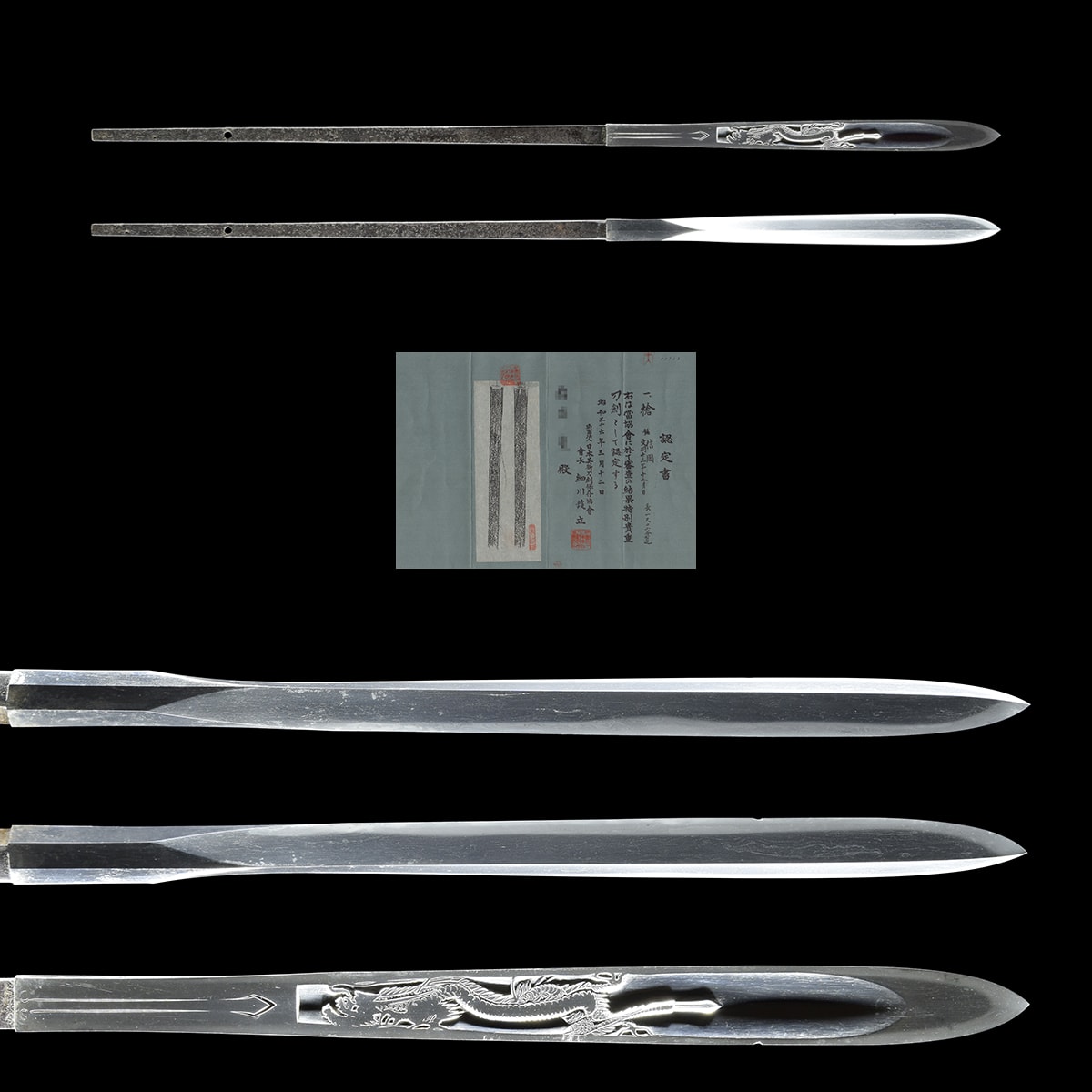
Antique Japanese Sword Wakizashi Attributed to Mihara NBTHK Hozon Certificate
$2,170
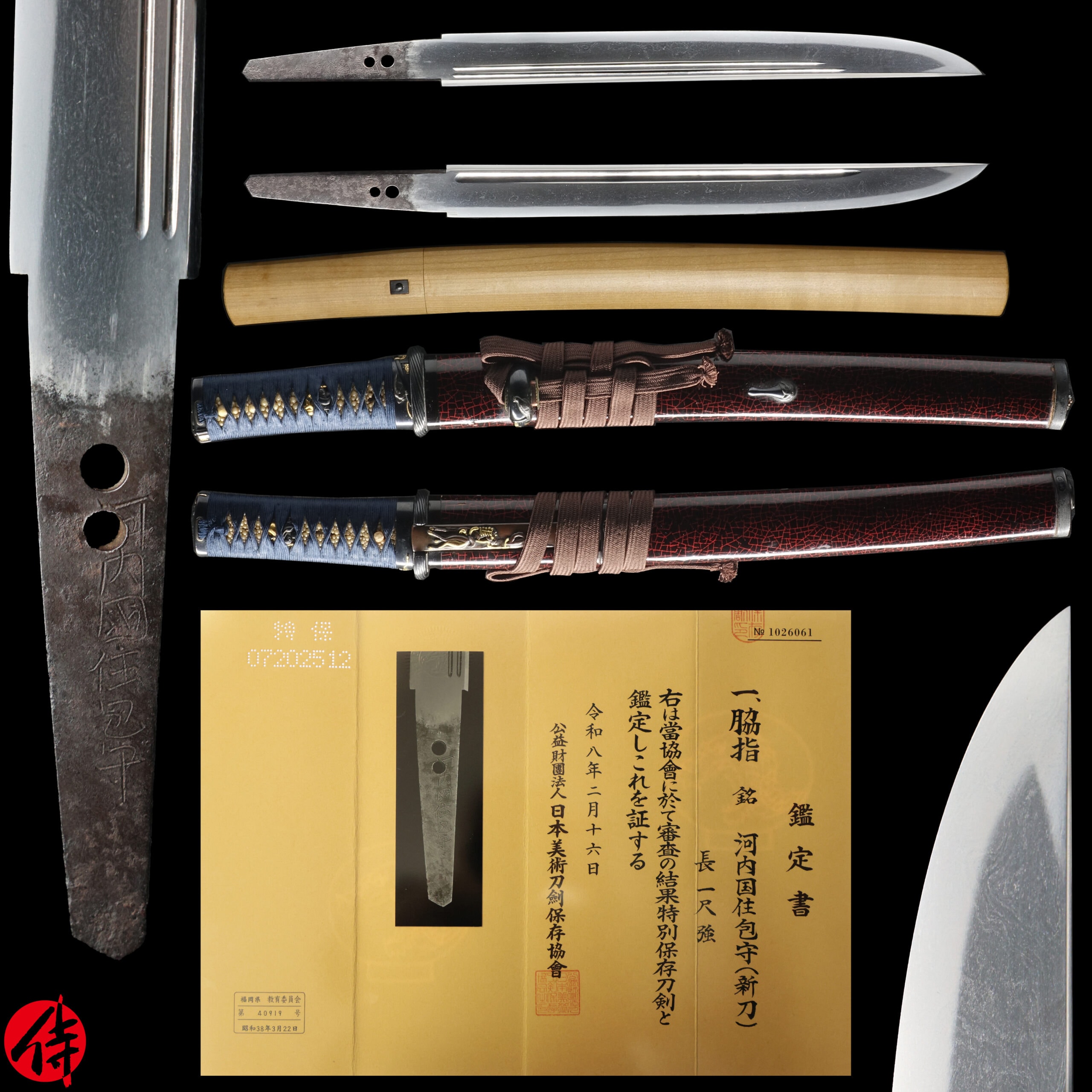
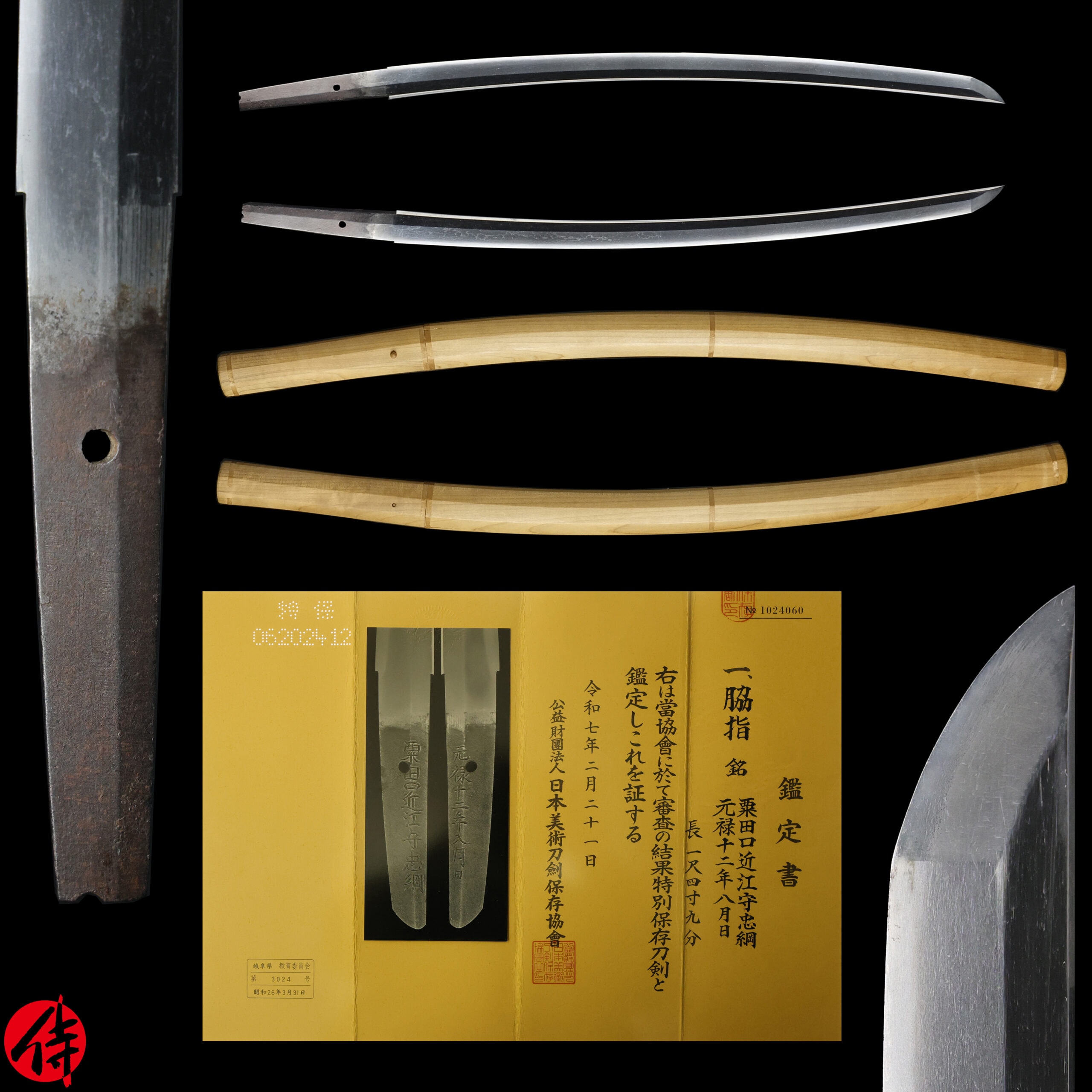
Antique Japanese Sword Wakizashi Signed by Kanemori NBTHK Tokubetsu Hozon Certificate
$5,881
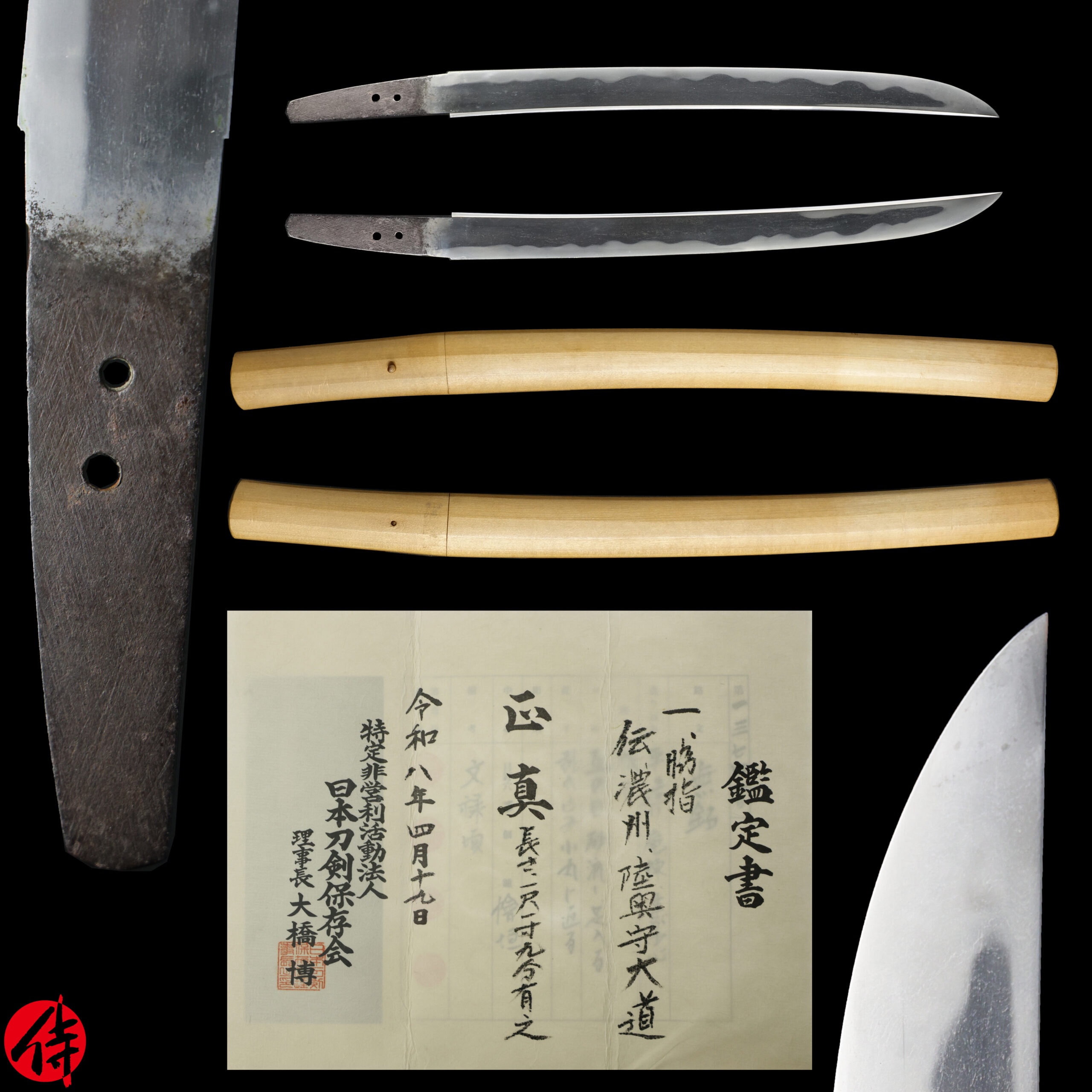
Antique Japanese Sword Wakizashi Attributed to Den Nohshu Daido NTHK Kanteisho for the blade
$1,984
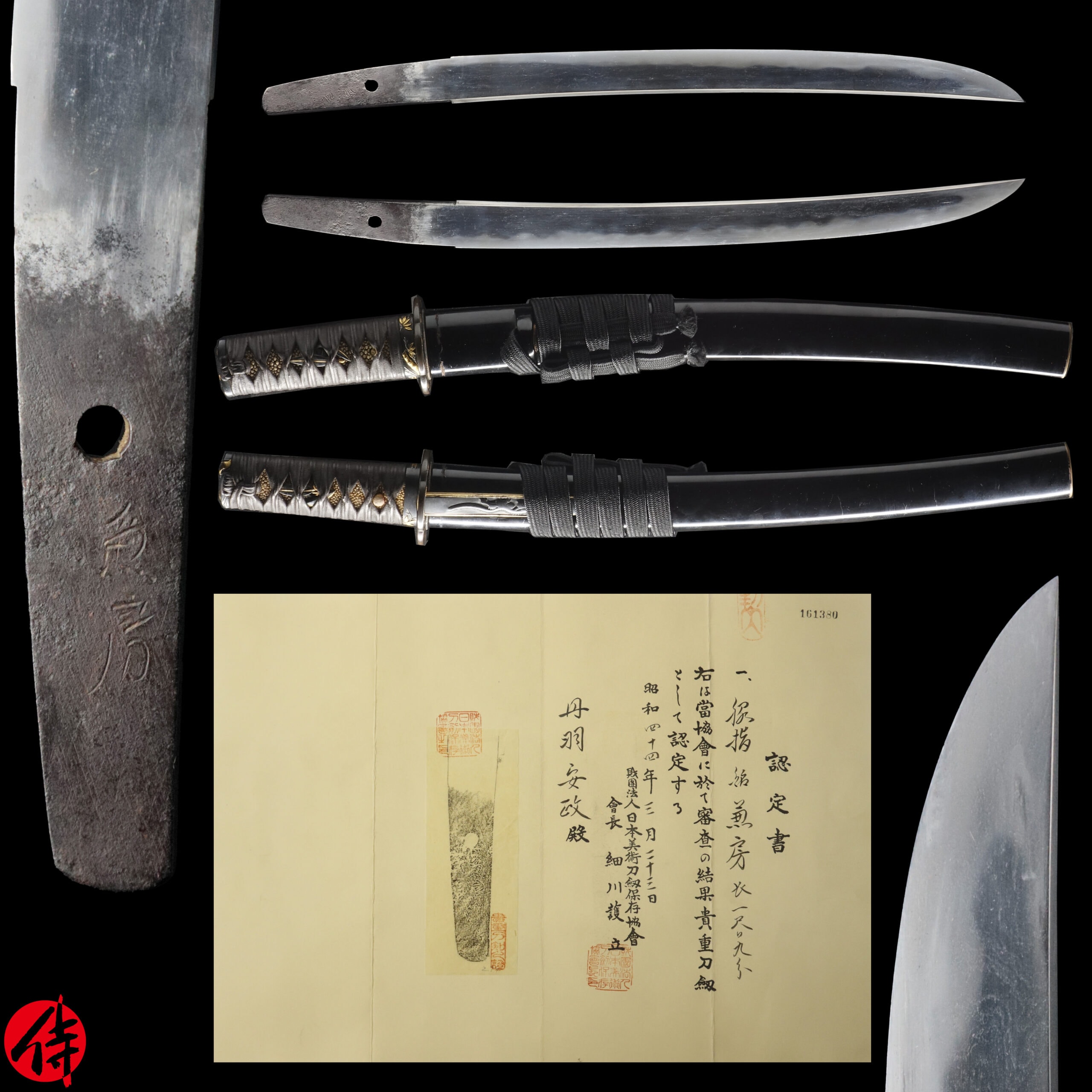
Antique Japanese Sword Wakizashi Signed by Kanefusa with NBTHK Kicho Certificate
$2,971
Antique Japanese Sword Wakizashi Signed by Nobukuni with NBTHK Hozon Certificate and Hozon Tosogu 【Description】 Summary This blade was signed by Nobukuni (信国) during the early Muromachi period (early 15th century), according to its NBTHK appraisal. The maker’s name, Nobukuni, lasted six generations in Yamashiro province (today’s Kyoto prefecture) during the Gen-Ou~O-Ei era (1319-1428: Nanbokucho-Early Muromachi period). There were also branches of Nobukuni schools in other parts of Japan, such as Buzen, Chikuzen, and Echigo. The first-gen Nobukuni became an apprentice of Ryokai during the second year of the Gen-Ou era (1320), and he started to sign Nobukuni a few decades later. He was a grandson of Ryokai Hisanobu, who was a renowned maker in Ryokai school. Also, some records suggest that the first-gen Nobukuni also learned sword-forging techniques from Sadamune. Based on its appraisal, we believe the late-gen Nobukuni made this blade. Ryokai School Ryokai was a swordsmith from the late Kamakura period in Yamashiro Province(Today’s Kyoto). It is said that he was a son of Rai Kuniyuki (来国行) and a younger brother of Rai Kunitoshi (来国俊). Both of them are renowned swordsmiths throughout Samurai history. Ryokai founded his school, and the apprentices were allowed to use Ryokai in their maker’s names. Ryokai’s son was Ryokai Hisanobu, who took over the school. Yamashiro Den Yamashiro province was famous for its sword-making style called YAMASHIRO-DEN. YAMASHIRO-DEN’s origin dates back to the Heian period(794 A.D) when the capital city was moved from Nara to Kyoto. The swordsmiths in Yamashiro province initially prospered by forging swords for court nobles and imperial families. Later on, they also forged swords for feudal lords after the Samurai military government took control of Japan. There are so many renowned swordsmiths from this region. It is said that the founder of YAMASHIRO-DEN was Sanjo Munechika. And there are four prestigious main branches in this region. They are Sanjo, Rai, Nobukuni, and Awataguchi. One of the characteristics of YAMASHIRO-DEN is its elegant design and beautiful Jigane (steel surface pattern). Shobu Zukuri (菖蒲造り) You can see interesting Kissaki (tip of the blade) called Shobu Zukuri (菖蒲造り). There is no Yokote on this blade. Yokote is the borderline between the tip and cutting edge. We are confident you will appreciate the elegant look of this blade. This blade is appraised as a Hozon Token(保存刀剣) issued by NBTHK(Nihon Bijutsu Touken Hozon Kyokai:日本美術刀剣保存協会). This authentication paper was only given to authentic Japanese swords, well preserved with artistic value. 【 Blade】 Cutting Edge Length(Nagasa) : 53.0 cm ( 20.8 inches) Curvature(Sori) : 1.21 cm (0.47 inches) Hamon: The crystalline structure which forms along the cutting edge of a blade as a result of the hardening process Jimon(Jihada): visible steel surface pattern created by folding and hammering during forging process Nakago : Nakago is the tang of the Japanese sword. Japanese swordsmiths left the black rust on the tang on purpose to prevent red rust while the tang is in its handle. And the discoloration of the tang was created over time, which is a great indicator for a Japanese sword specialist to estimate when the sword was forged. Koshirae: Koshirae is the mounting of the Japanese sword. There are several parts that consist of Koshirae such as Saya(Scabbard), Tsuka( Handle), Tsuba(Handguard). Fuchi-Kashira : A pair of matching sword fittings that cover the upper and bottom parts of its sword hilt. The theme of this Fuchi Kashira is the Unkin Zu (雲錦図). It is the pattern that depicts cherry blossoms and maples together. It regards cherry blossoms are Kumo (雲, clouds) and maples are Nishiki (錦, brocade). In this design, We could see how Japanese people are emotionally moved by seasonal scenery, such as the feeling of loneliness from falling autumn leaves or the feeling of looking forward to spring when the cherry blossoms bloom. Both plants hav
NihontoWatchBETA売却済
世界81社の刀剣商を横断追跡 · 価格履歴 · 売却アーカイブ
53 cm
1.21 cm
Antique Japanese Sword Wakizashi Attributed to Mihara NBTHK Hozon Certificate
$2,170
Antique Japanese Sword Wakizashi Signed by Kanemori NBTHK Tokubetsu Hozon Certificate
$5,881
Antique Japanese Sword Wakizashi Attributed to Den Nohshu Daido NTHK Kanteisho for the blade
$1,984
Antique Japanese Sword Wakizashi Signed by Kanefusa with NBTHK Kicho Certificate
$2,971