売切れ
Tokuho売切れ
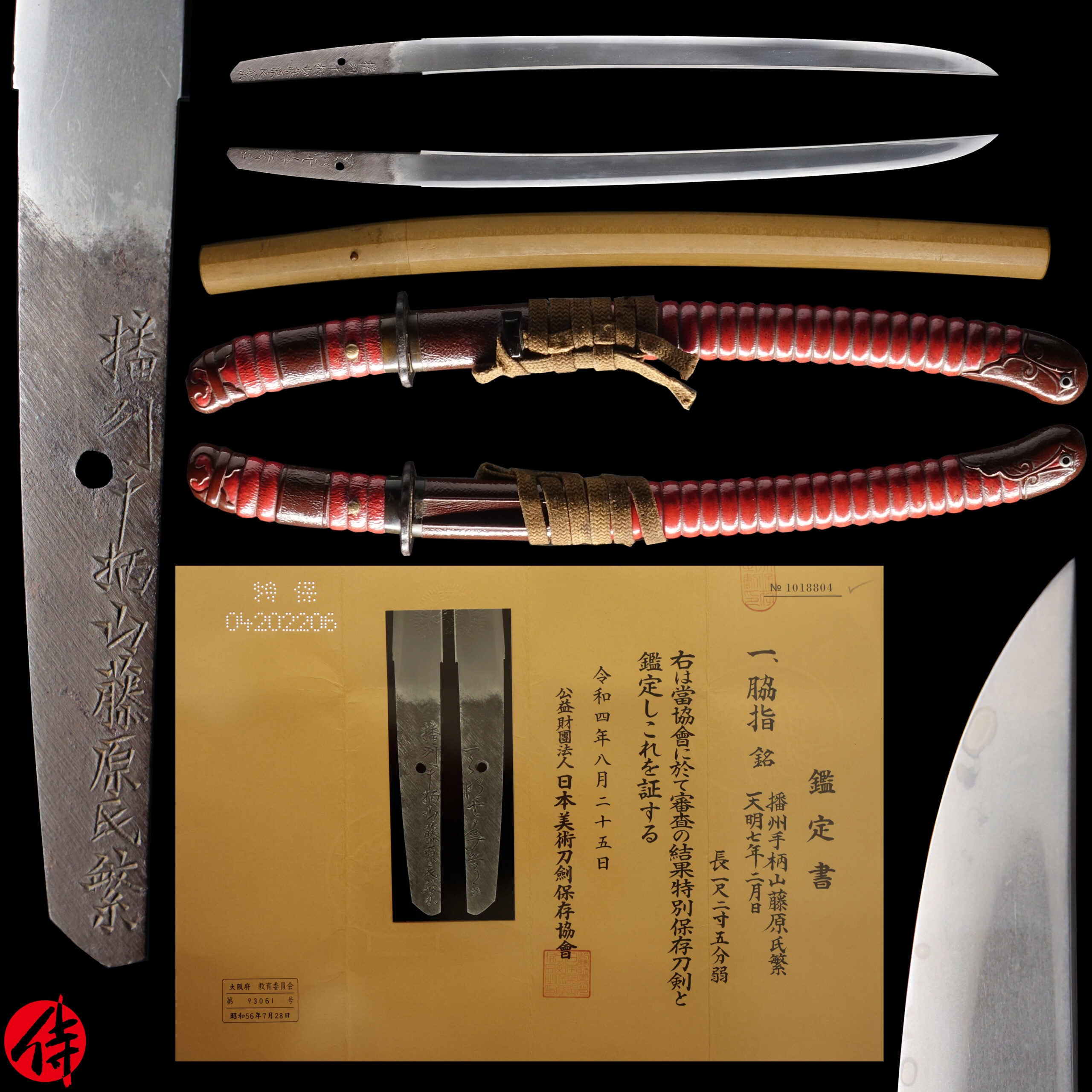
Antique Japanese Sword Wakizashi Signed by Ujishige NBTHK Tokubetsu Hozon Certificate
売却済
世界81社の刀剣商を横断追跡 · 価格履歴 · 売却アーカイブ
仕様
長さ
37.8 cm
反り
0.6 cm
Antique Japanese Sword Wakizashi Signed by Ujishige with NBTHK Tokubestsu Hozon Certificate 【Description】 This blade was signed by Banshu Tagarayama Fujiwara Ujishige (播州手柄山藤原氏繁) in the 7th year of the Tenmei era (1787: the late Edo period). Banshu is another name for Harima province in today’s Hyogo prefecture. Tegarayama is the school Ujishige belonged to. The maker’s name, Ujishige, lasted a few generations. First, Ujishige signed 氏重. While the name’s pronunciation was the same, a different Kanji character was used for the second letter. They used 氏重 as their maker’s name between the 1 -3 generations. And they received Yamato Daijo, an honorable official title from the imperial court, for their excellent craftsmanship. However, the fourth generation Ujishige had to change it to 氏繁 by the order made by Harima province. In 1788, the 4th-gen Ujishige was hired by Matsudaira Sadanobu, the third head of Shirakawa domain in Fukushima prefecture, as an Okakaekaji. Okakaekaji is a swordsmith exclusively serving one domain or lord. And the 4th-gen Ujishige was also forged in Edo city (Today’s Tokyo). He received Kai no Kami in 1803, being acknowledged by Matsudaira Sadanobu. It is said that one of the blades forged by the 4th-gen Ujishige was owned by Nagakura Shinpachi, a member of Shinsengumi (新選組), a military unit formed as guards or Shogun at the end of the Edo period. The school’s name Tagarama came from the fact that they forged blades near Tegarayama mountain. Tegara means achievement in Japanese, and because of this auspicious name, the blades made by members of Tegarama school were popular among high-class Samurai. This blade is appraised as a Tokubetsu Hozon Token (特別保存刀剣) issued by NBTHK (Nihon Bijutsu Touken Hozon Kyokai:日本美術刀剣保存協会). This authentication paper was only given to authentic Japanese swords, especially well preserved and high quality with artistic value. *Please keep in mind that there are a couple of visible Kitae Kizu and stains on this blade. If you like to know the detailed condition, please feel free to contact us. We will send you additional images. 【Blade】 Cutting Edge Length(Nagasa) : 37.8 cm (14.8 inches) Curvature(Sori) : 0.6 cm (0.23 inches) Hamon : The crystalline structure which forms along the cutting edge of a blade as a result of the hardening process Jimon(Jihada) : visible steel surface pattern created by folding and hammering during forging process Kissaki : Kissaki is the tip of the Japanese sword. Nakago : Nakago is the tang of the Japanese sword. Japanese swordsmiths left the black rust on the tang because it prevents red rust while the tang is in its handle. And the discoloration of the tang was created over time, and it is a great indicator for a Japanese sword specialist to estimate when the sword was forged. Koshirae : Koshirae is the mounting of the Japanese sword. There are several parts that consist of Koshirae such as Saya (Scabbard), Tsuka (Handle), Tsuba (Handguard). This sword mounting has a unique appearance, which is a red lacquered carved scabbard and considered to be auspicious. It is called the Ebi Saya maki Koshirae (海老鞘巻拵). This Saya (鞘, scabbard) is made to resemble the shape of a shrimp (海老, Ebi) with its chape carved. Also, the handle and scabbard are engraved like shrimp shells and lacquered in red lacquer. Fuchi-Kashira : A pair of matching sword fittings that cover the upper and bottom parts of its sword hilt. Tsuka : Tsuka is the handle of the Japanese sword. Tsuba and Habaki : Tsuba is the handguard for the Japanese Sword and Habaki is the equipment to make the blade not touch its scabbard inside. It prevents the blade from getting rusty and chipped. This Tsuba has a unique shape, and it depicts some kind of landscape. You would find the waning moon and a building under the trees painted gold, as if the trees were lit by the moonlight. The moon is often depicted in handguards for the Japanese sword. The sun and the moon have been treated as objects of worship si
 NihontoWatchBETA
売却済
世界81社の刀剣商を横断追跡 · 価格履歴 · 売却アーカイブ
37.8 cm
0.6 cm
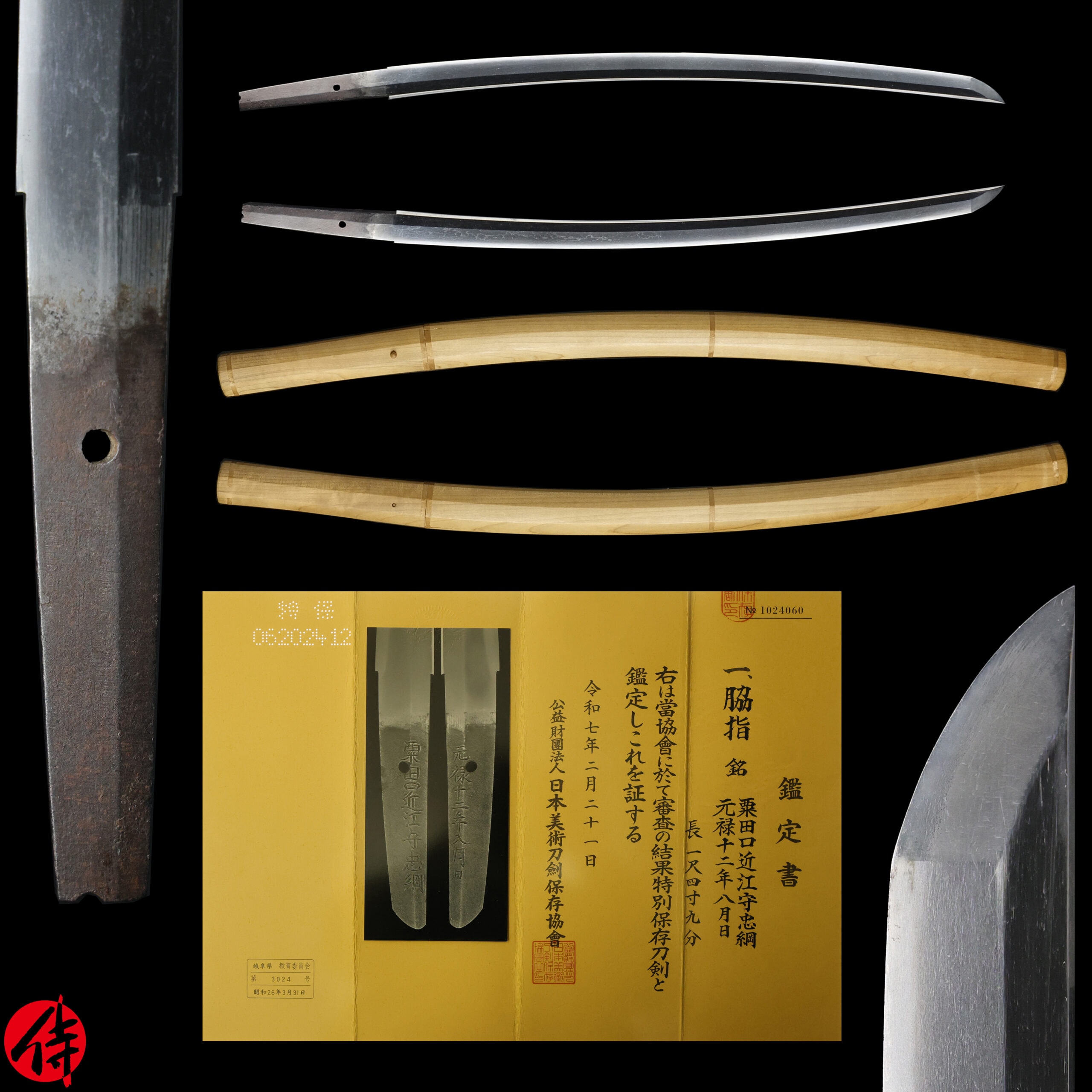
Antique Japanese Sword Wakizashi Attributed to Mihara NBTHK Hozon Certificate
$2,170
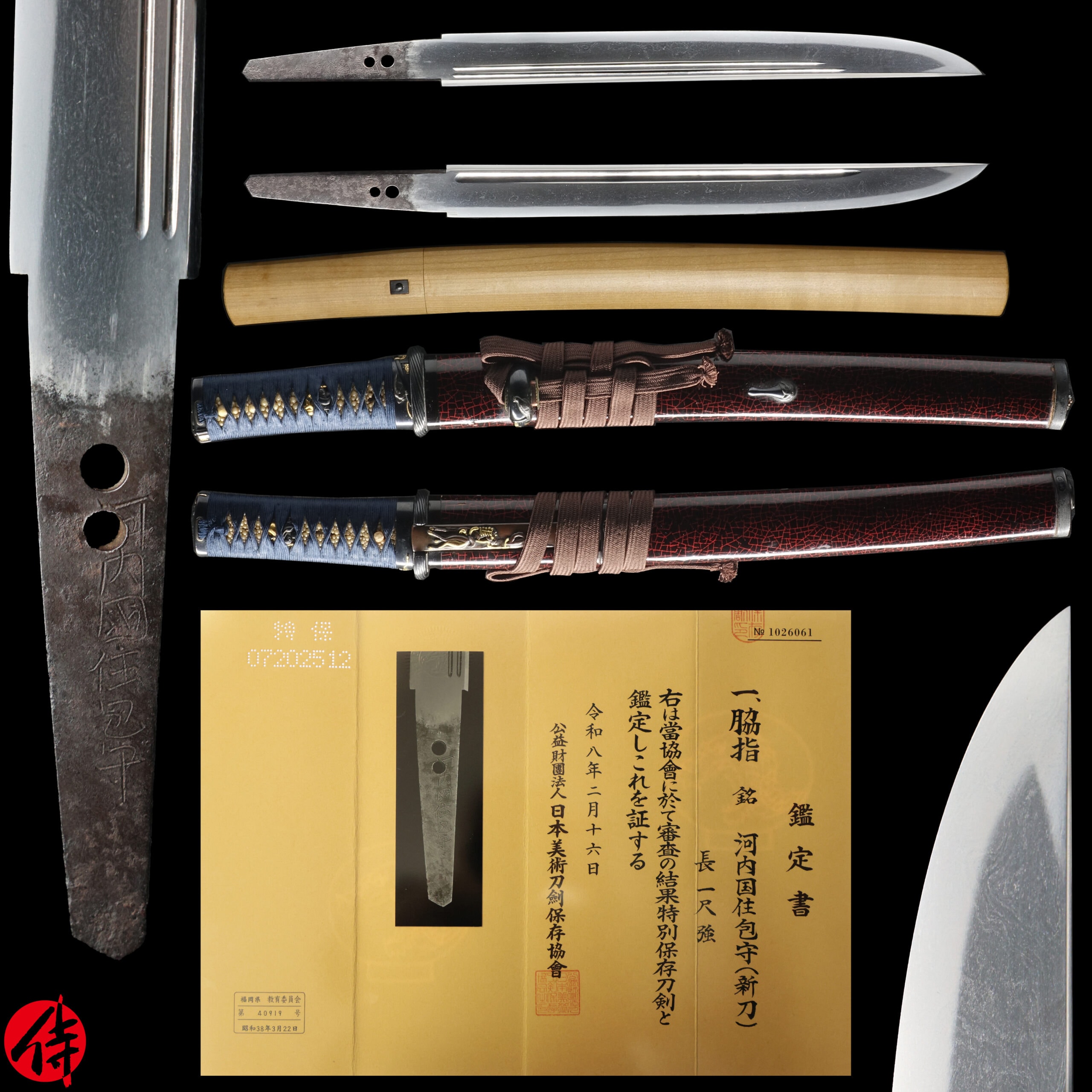
Antique Japanese Sword Wakizashi Signed by Kanemori NBTHK Tokubetsu Hozon Certificate
$5,881
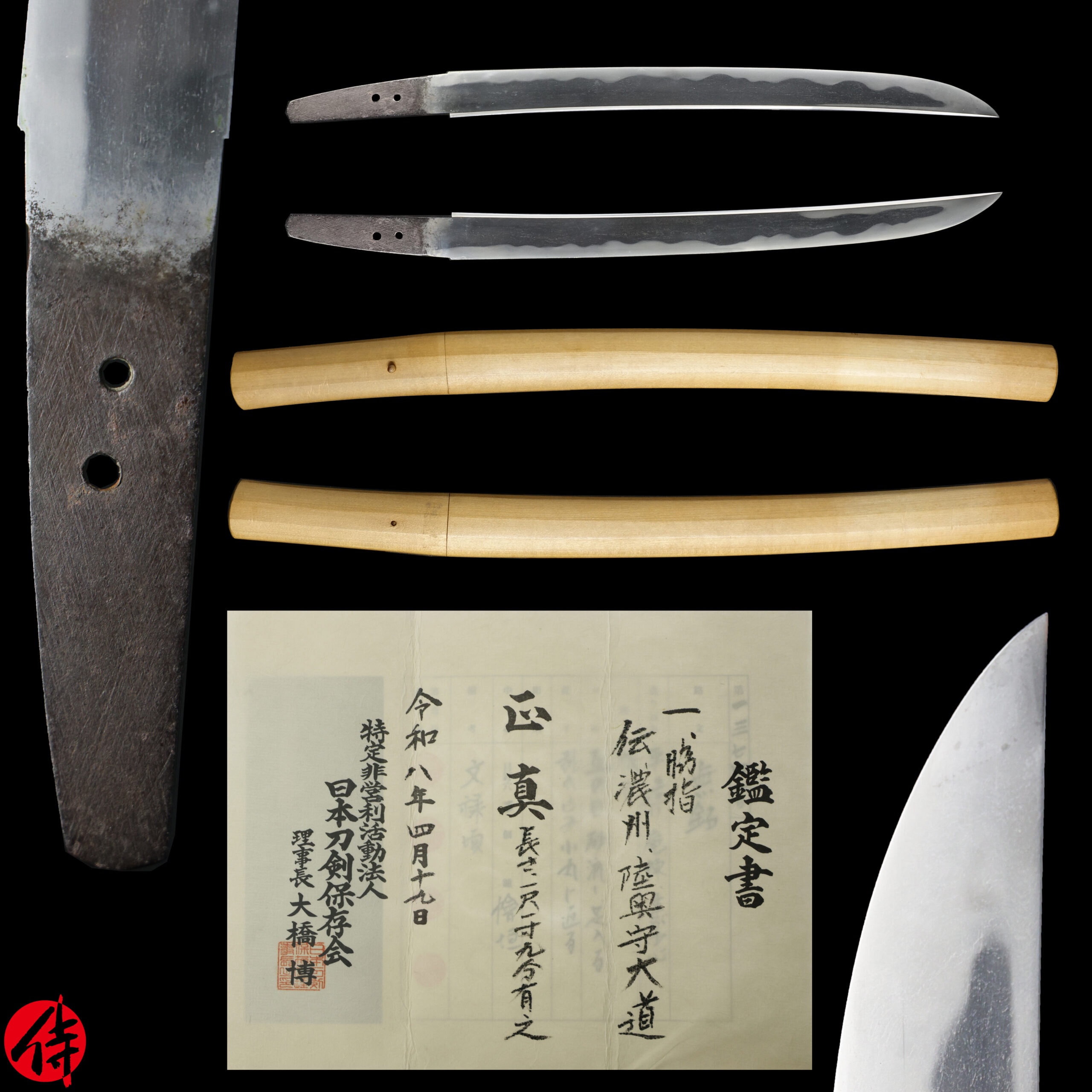
Antique Japanese Sword Wakizashi Attributed to Den Nohshu Daido NTHK Kanteisho for the blade
$1,984
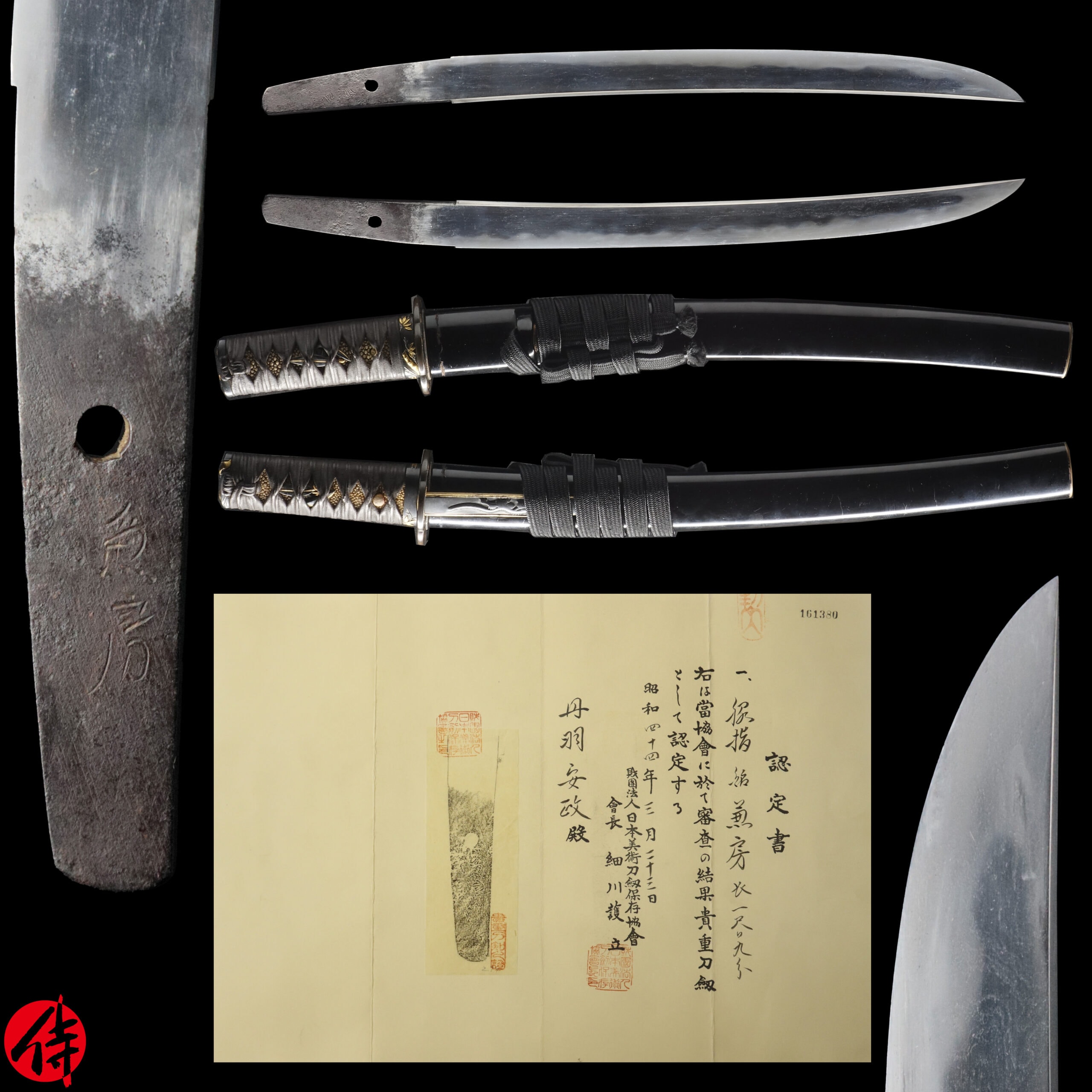
Antique Japanese Sword Wakizashi Signed by Kanefusa with NBTHK Kicho Certificate
$2,971
Antique Japanese Sword Wakizashi Signed by Ujishige with NBTHK Tokubestsu Hozon Certificate 【Description】 This blade was signed by Banshu Tagarayama Fujiwara Ujishige (播州手柄山藤原氏繁) in the 7th year of the Tenmei era (1787: the late Edo period). Banshu is another name for Harima province in today’s Hyogo prefecture. Tegarayama is the school Ujishige belonged to. The maker’s name, Ujishige, lasted a few generations. First, Ujishige signed 氏重. While the name’s pronunciation was the same, a different Kanji character was used for the second letter. They used 氏重 as their maker’s name between the 1 -3 generations. And they received Yamato Daijo, an honorable official title from the imperial court, for their excellent craftsmanship. However, the fourth generation Ujishige had to change it to 氏繁 by the order made by Harima province. In 1788, the 4th-gen Ujishige was hired by Matsudaira Sadanobu, the third head of Shirakawa domain in Fukushima prefecture, as an Okakaekaji. Okakaekaji is a swordsmith exclusively serving one domain or lord. And the 4th-gen Ujishige was also forged in Edo city (Today’s Tokyo). He received Kai no Kami in 1803, being acknowledged by Matsudaira Sadanobu. It is said that one of the blades forged by the 4th-gen Ujishige was owned by Nagakura Shinpachi, a member of Shinsengumi (新選組), a military unit formed as guards or Shogun at the end of the Edo period. The school’s name Tagarama came from the fact that they forged blades near Tegarayama mountain. Tegara means achievement in Japanese, and because of this auspicious name, the blades made by members of Tegarama school were popular among high-class Samurai. This blade is appraised as a Tokubetsu Hozon Token (特別保存刀剣) issued by NBTHK (Nihon Bijutsu Touken Hozon Kyokai:日本美術刀剣保存協会). This authentication paper was only given to authentic Japanese swords, especially well preserved and high quality with artistic value. *Please keep in mind that there are a couple of visible Kitae Kizu and stains on this blade. If you like to know the detailed condition, please feel free to contact us. We will send you additional images. 【Blade】 Cutting Edge Length(Nagasa) : 37.8 cm (14.8 inches) Curvature(Sori) : 0.6 cm (0.23 inches) Hamon : The crystalline structure which forms along the cutting edge of a blade as a result of the hardening process Jimon(Jihada) : visible steel surface pattern created by folding and hammering during forging process Kissaki : Kissaki is the tip of the Japanese sword. Nakago : Nakago is the tang of the Japanese sword. Japanese swordsmiths left the black rust on the tang because it prevents red rust while the tang is in its handle. And the discoloration of the tang was created over time, and it is a great indicator for a Japanese sword specialist to estimate when the sword was forged. Koshirae : Koshirae is the mounting of the Japanese sword. There are several parts that consist of Koshirae such as Saya (Scabbard), Tsuka (Handle), Tsuba (Handguard). This sword mounting has a unique appearance, which is a red lacquered carved scabbard and considered to be auspicious. It is called the Ebi Saya maki Koshirae (海老鞘巻拵). This Saya (鞘, scabbard) is made to resemble the shape of a shrimp (海老, Ebi) with its chape carved. Also, the handle and scabbard are engraved like shrimp shells and lacquered in red lacquer. Fuchi-Kashira : A pair of matching sword fittings that cover the upper and bottom parts of its sword hilt. Tsuka : Tsuka is the handle of the Japanese sword. Tsuba and Habaki : Tsuba is the handguard for the Japanese Sword and Habaki is the equipment to make the blade not touch its scabbard inside. It prevents the blade from getting rusty and chipped. This Tsuba has a unique shape, and it depicts some kind of landscape. You would find the waning moon and a building under the trees painted gold, as if the trees were lit by the moonlight. The moon is often depicted in handguards for the Japanese sword. The sun and the moon have been treated as objects of worship si
NihontoWatchBETA売却済
世界81社の刀剣商を横断追跡 · 価格履歴 · 売却アーカイブ
37.8 cm
0.6 cm
Antique Japanese Sword Wakizashi Attributed to Mihara NBTHK Hozon Certificate
$2,170
Antique Japanese Sword Wakizashi Signed by Kanemori NBTHK Tokubetsu Hozon Certificate
$5,881
Antique Japanese Sword Wakizashi Attributed to Den Nohshu Daido NTHK Kanteisho for the blade
$1,984
Antique Japanese Sword Wakizashi Signed by Kanefusa with NBTHK Kicho Certificate
$2,971