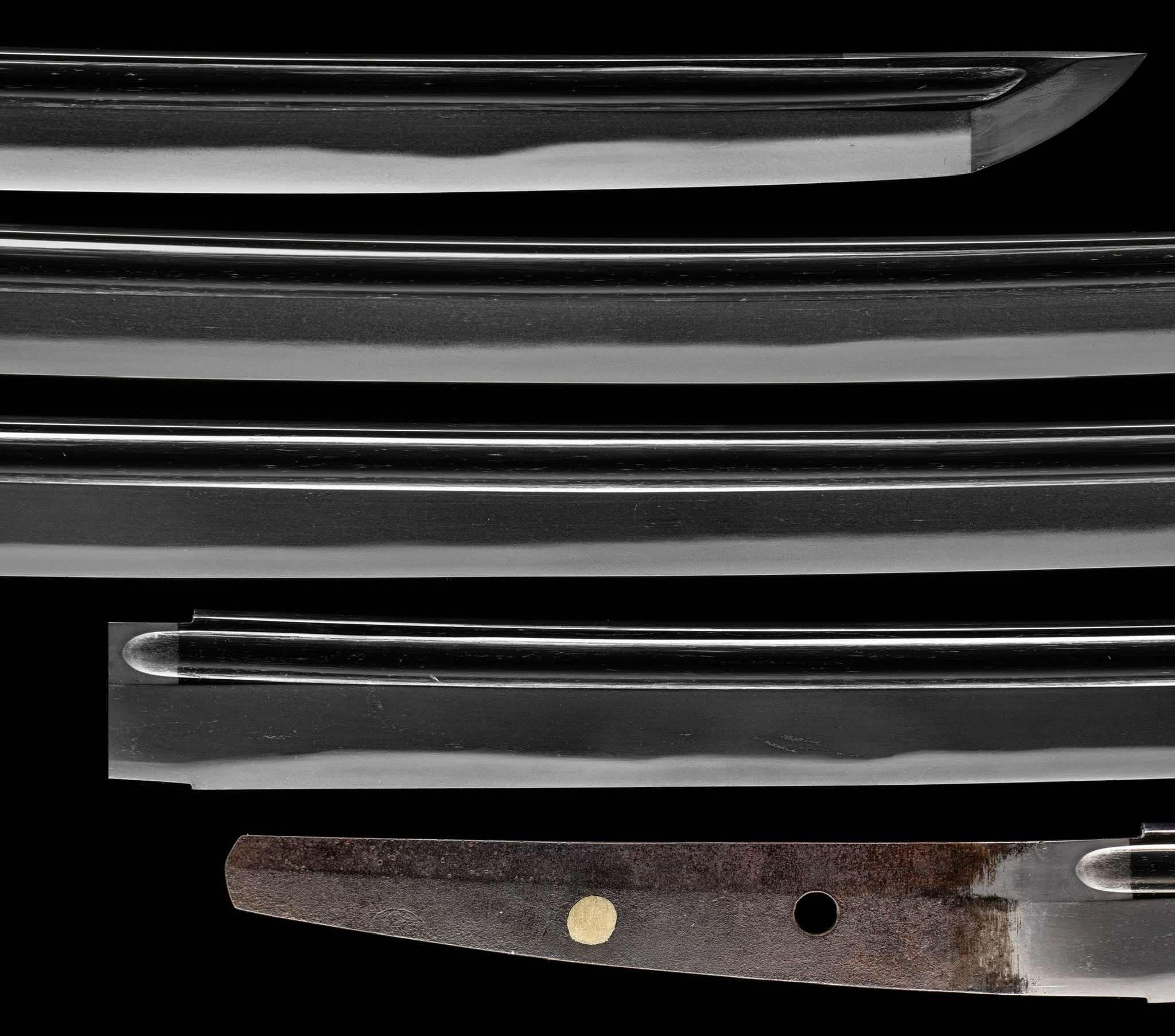
説明
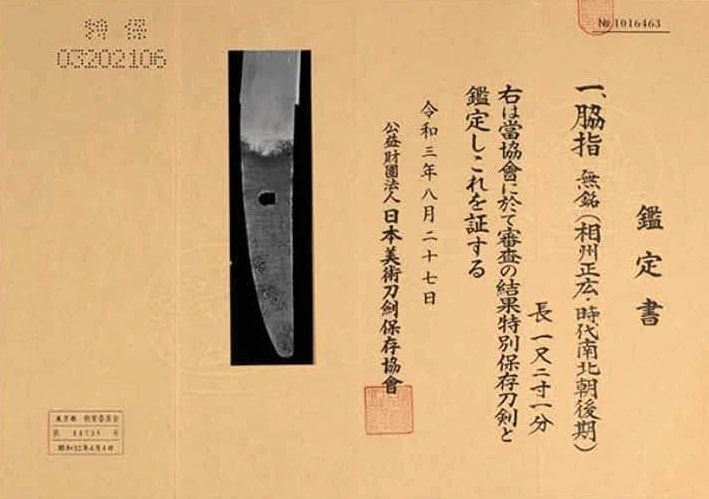
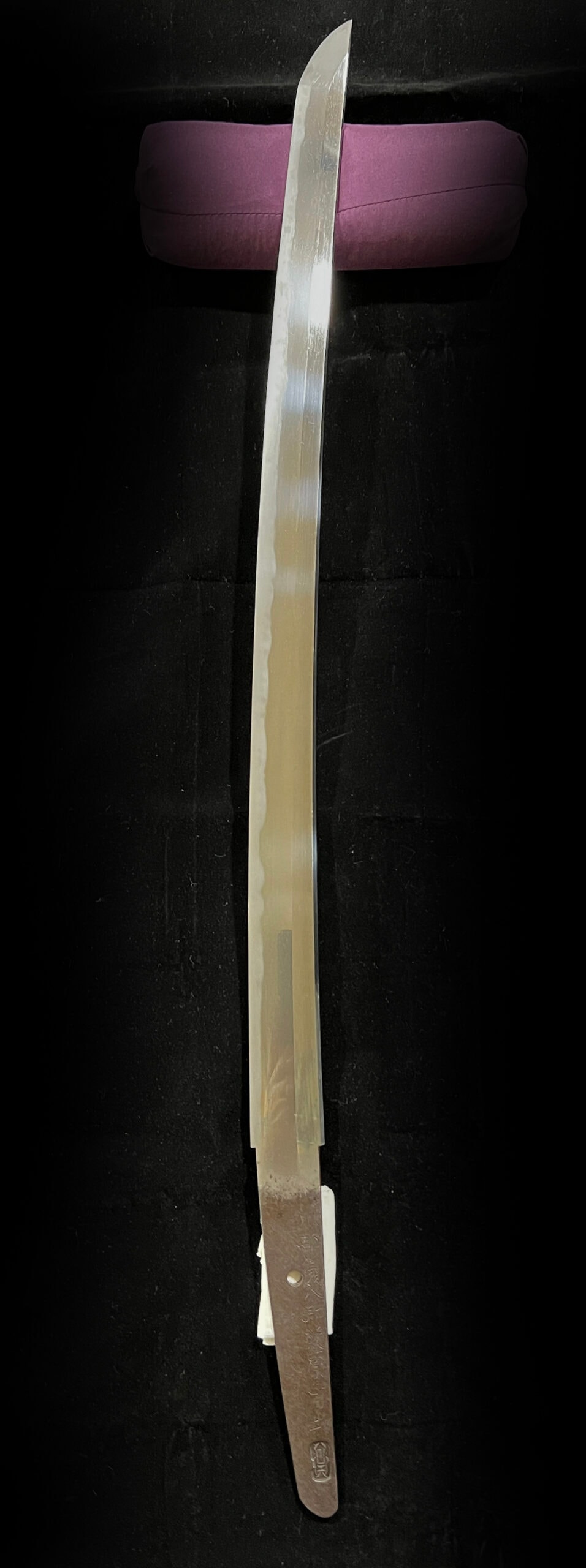
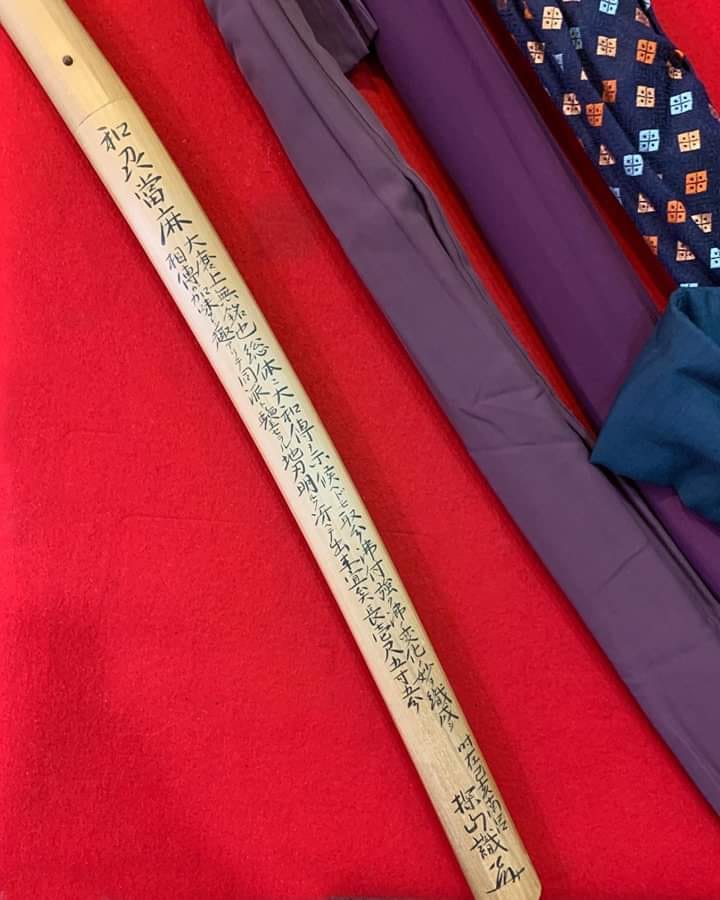
Soshu Masahiro ko-wakizashi Status: Sold Kanteisho: Tokubetsu Hozon 相刕正廣 生茎無銘也同工廣光門ト傳へ貞治年紀ガ古ク其ノ後明徳年紀ガアリ南北朝後期ニ活躍シタリ上半ガ盛ンナ皆焼刃状トナル優品而乱ガ稍小模様ヲ呈シ尖刃交ジル點ニ彼ノ極ハメ所有之 刃⻑壱尺弐寸二分時在壬寅玄英探山識「花押」 Sōshū Masahiro Ubu-nakago mumei nari. Dōkō Hiromitsu mon to tsutae Jōji nanki ga furuku sono go Meitoku nenki ga ari Nanbokuchō kōki ni katsuyaku-shitari jōhan ga sakan hitatsura hajō to naru yūhin shikamo midare ga yaya ko-moyō o teishi togariba majiru ten ni kare no kiwamedokoro kore ari. Hachō isshaku ni-sun ni-bu jizai mizunoe-tora gen’ei Tanzan shirusu + kaō Masahiro from Sagami Province This blade has an ubu-nakago and is mumei. It is said that Masahiro was a student of Hiromitsu. His earliest dated works are from the Jōji era (1362–1368), and later dated works from the Meitoku era (1390–1394) exist as well, which means the smith was active in the late Nanbokuchō period. This blade is a masterwork, which displays a vivid hamon that appears with plenty of hitatsura along the upper half. The ha is also mixed with smaller midare elements and with togariba, which are typical characteristic of Masahiro’s style. Blade length ~ 37.0 cm Written by Tanzan [Tanobe Michihiro] in winter of the year of the tiger of this era (2022) + monogram. Article below on Hiromitsu by Darcy Brockbank The Soshu tradition is the shortest lived of the five traditions of koto, yet in spite of its short life it generated some of the most talented and famous swordsmiths. The Soshu tradition developed the art of nie to its peak. It is founded by Shintogo Kunimitsu during the late Kamakura period, in Sagami province. He is a smith either of Awataguchi origin or else trained in Awataguchi technique by an Awataguchi master and possibly with some Bizen influence from another teacher. His blades done in Yamashiro style are very difficult to distinguish from the highest quality Awataguchi masterpieces. The sugata of his tanto though are somewhat more refined than his forebears as the earlier Awataguchi smiths experimented frequently with shape before the “traditional” elegant Kamakura shape we associate with smiths like Rai Kunitoshi and Shintogo seems to have been settled on. The students of Shintogo Kunimitsu together with their teacher represent the highest degree of sophistication in sword craft. Yukimitsu, Norishige and Masamune are considered to have studied under him in that order of seniority. Their work styles are varied but Yukimitsu’s work is closest to his teacher while Norishige’s is a style unique unto himself and Masamune is the one who develops the Soshu tradition to the next level of artistry. The most famous smith of all is of course Masamune, who remains a smith somewhat clouded in mystery in spite of his fame because of the lack of signed pieces. This lack of signed pieces is also a common curiosity of the Soshu tradition. The presence of a sizeable number of grand masterpieces from the Soshu tradition indicates the presence of smiths of the ultimate level of skill. Today these are gen