説明

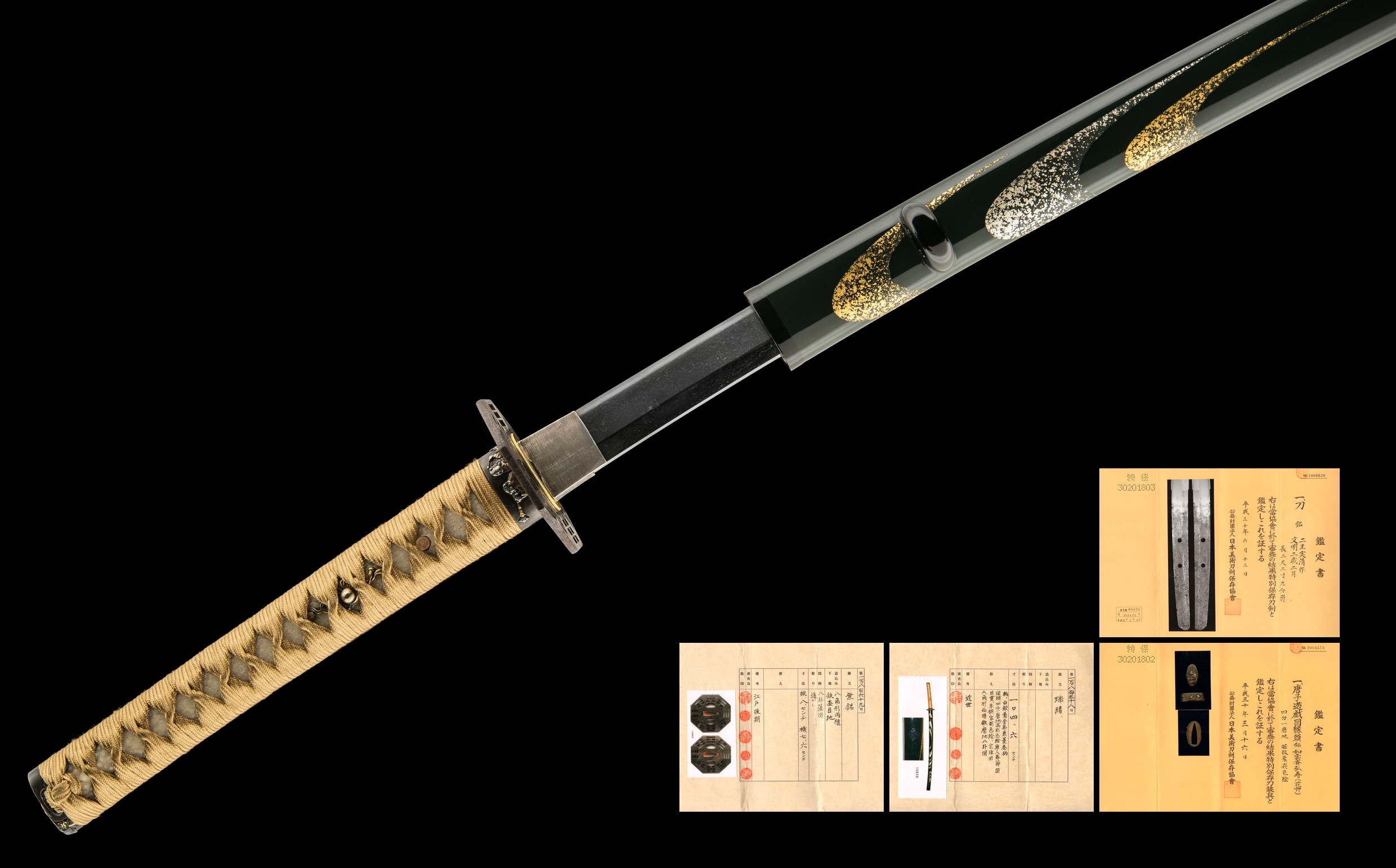
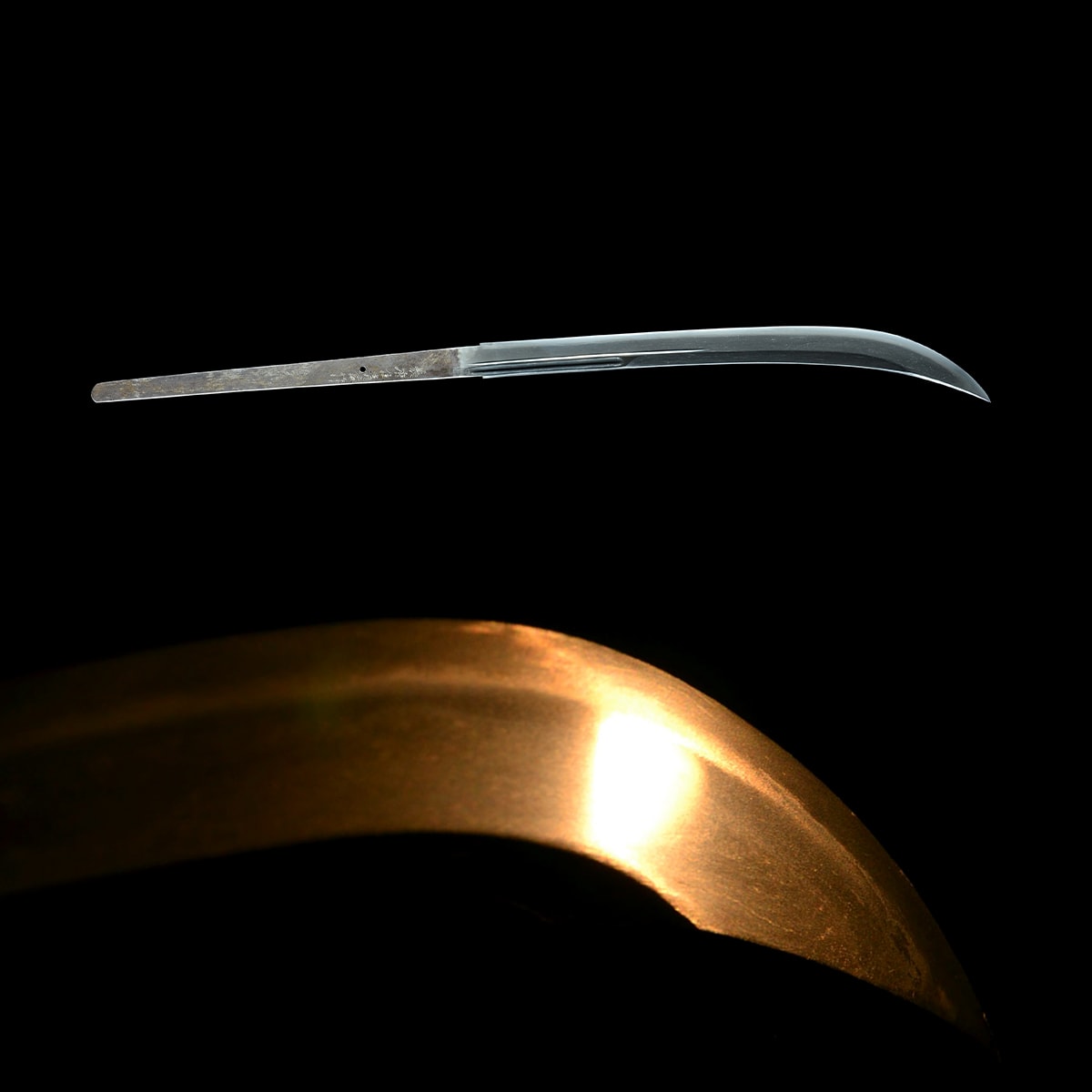
Skip to content ITEM# UJKA357 – Catalogue 35 – Sold A Niô Sanekiyo Katana (二王実清作) The Niô name is said to originate with the Niho manor of Suô province – a domain home to many properties owned by the Todaiji (Great Eastern Buddhist Temple) in Yamato (Nara), the former capital of Japan. As Niô School blades bear a strong resemblance to Yamato works, it is widely assumed that a meaningful technical exchange existed between the two regions. The school’s founder, Kiyotsuna , is represented by a tachi dated March 1265 preserved at the famous Itsukushima-jinja shrine. This rare katana by Niô Sanekiyo has been signed and dated to the second month of Bunmei 2 – February 1470 – and carries a palpable sense of 555 years of history. The nakago has been shortened via machi-okuri , a process that moves the notches upward to reduce cutting length while preserving the signature and date in full. The complex jihada is a sublime mixture of itame-hada, mokume-hada, and nagare-hada, enriched with chikei and a gorgeous shirake-utsuri that reveals itself as the blade is gently rotated under the light. The bright suguha hamon carries ko-ashi and the rarely seen uchinoke – small crescent-moon formations along the temper line – before resolving into a rounded komaru-boshi at the tip. The sword is complemented by an exquisite custom koshirae crafted and signed by Mizuo in the modern era. The deep green lacquered saya is adorned with a sweeping ripple design in gold and silver maki-e – a meditation on cause and effect, on the irreversible reach of wise and foolish actions alike. The Hakke-design iron tsuba, attributed to Shinano Tôshô and authenticated by NTHK-NPO Kanteisho, represents the eight trigrams of yin and yang, while the fuchi by Jounsai Hirotoshi captures two boys playing flute and drum. The menuki are hôju-no zu (precious orbs), and a young aristocratic boy gallops on a stick horse decorates the kashira. Silver habakiwith horizontal file marks completes the ensemble. This is a ge

A NIO SANEKIYO KATANA (二王実清作)
売切れ
Tokuho売切れ

A NIO SANEKIYO KATANA (二王実清作)

売却済

世界81社の刀剣商を横断追跡 · 価格履歴 · 売却アーカイブ

流派

Niô

時代

Kotô – middle Muromachi (bunmei era: 1469-1487)

仕様

長さ

69.4 cm

反り

1 cm

元幅

2.72 cm

流派について

Nio School二王派

2 重要文化財35 重要刀剣

周防国二王派は、山陽道の西端、大和より海路と陸路で結ばれたこの国に興った古刀の一派である。保延頃の清真または清平を祖と伝えるが、いずれにも確かな遺作を見ず、今日では鎌倉時代の清綱を事実上の祖と仰ぐ。同派の在銘作として最も古いのは「文永二年三月 清綱」と書き下しの銘をもつ太刀で、厳島神社に伝わり、初代を鑑する基準作とされる。次いで建武二年紀の「防州玖珂庄清綱」銘の短刀が知られ、清綱の名が鎌倉末より南北朝、室町を経て新刀期に至るまで代を重ねて続いたことを示す。二王の呼称は同国仁保庄に居住したことに由来するとの説が有力である。周防には東大寺をはじめとする寺領が多く存し、二王派の作風に大和色が濃いのは、この大和本国との交流に負うものと考えられている。 構成員がそろって記すのは、柾がかって肌立つ地と、湿りをふくんだ直刃調の刃である。鍛えは板目に杢や流れ肌を交え、処々強く流れて柾がかり、細かに肌立ち、地沸がつき、地景の入るものもある。刃文は細直刃を基調とし、小互の目、小乱れ、小のたれを交え、小足・葉が入り、刃縁にほつれ・打のけ・喰違刃を見せ、小沸つき、金筋・砂流しがかかる。そして地鉄には冴えた映りではなく白け映りが立ち、これと対をなして匂口がうるむ。この白け映りとうるみの取り合わせこそ、構成員が立ち返って同派の個性と名指すところである。帽子は直ぐに小丸へ返るものが多い。鎌倉末期の古二王、すなわち清綱の手は、太刀が細身で鎬高く腰反り高い姿を示し、短刀は平造でわずかに内反りつく。これに対し応永頃の清永ら後代の末二王は、小板目のよく約んだ地に流れ柾を交え、身幅広く反りの浅い平造短刀を多く遺し、櫃内に鶴亀や二王の彫を施す作も見せて、古二王の静けさからやや作域を広げる。 鑑定の勘所は、拠り所を同じくする大和や青江、山城来の直刃とどう分かつかにある。流れて柾がかる鍛えは大和の血脈を望ませ、細直刃の素地は来を望ませるが、来や手掻に見る冴えた匂口は、ここではより湿った沈みごころの態に替わる。白け映りとうるみの一方ではなく、その二つが地と刃に並び立つことが、同派を他と分かつ見どころである。在銘の太刀・短刀は棟寄りに細鏨の二字銘を切り、原鑢の鷹の羽を残すものがあり、これを古い手の清綱の典型として初代に充てる。無銘大磨上の刀は、流れて柾がかり肌立った鍛え、白け映り、うるみ刃文という同じ拠り所を裏から読んで極められる。主要工としては事実上の祖たる清綱が同派を測る代であり、末二王の清永がこれに次いで一派の継続を支える。遺例は確実なものこそ多くないが、最古手の在銘太刀をはじめ在銘・無銘の数口が基準作に列なり、地刃に緩みなく同派の特色をよくあらわす。来歴の遺るところには格があり、ある太刀は徳川宗家の手を経て後に美術館へ納まり、在銘の一口は大阪の旧蔵を経て伝来し、年紀の基準作は厳島神社に伝存する。鷹の羽の鑢目と古い二字銘を残した在銘の清綱は、西国の鎌倉作を集める者が出会い得る最も稀なもののひとつで、現れたときには一里塚となる。

刀剣商

Unique Japan

uniquejapan.com

売切れ