売切れ
Tokuho売切れ
A KUNISHIGE KATANA (備中国水田住国重作)
売却済
世界81社の刀剣商を横断追跡 · 価格履歴 · 売却アーカイブ
時代
Early Edo – kanbun Era (1661-1673)
仕様
長さ
74.2 cm
反り
1.4 cm
元幅
3.14 cm
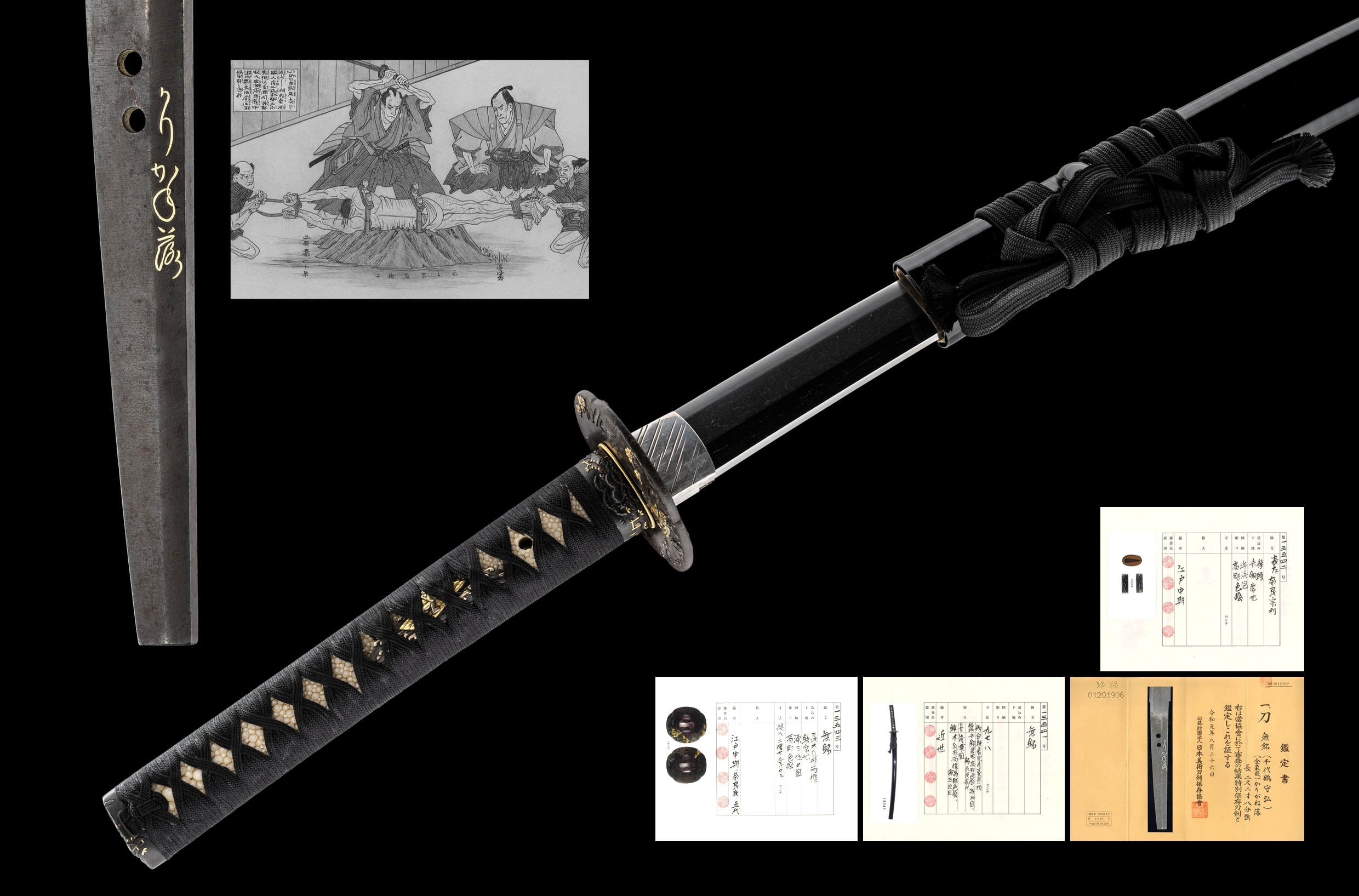
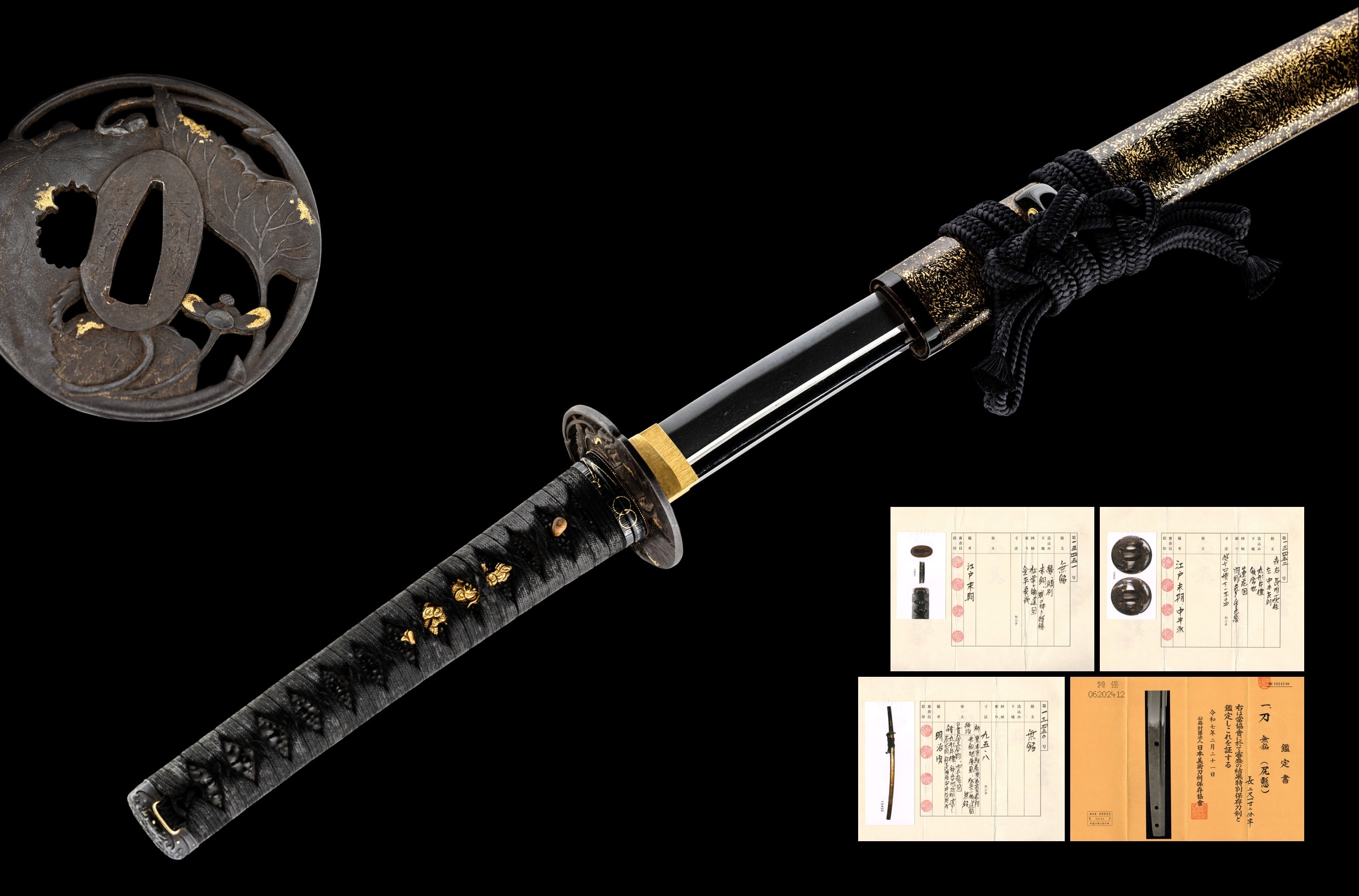
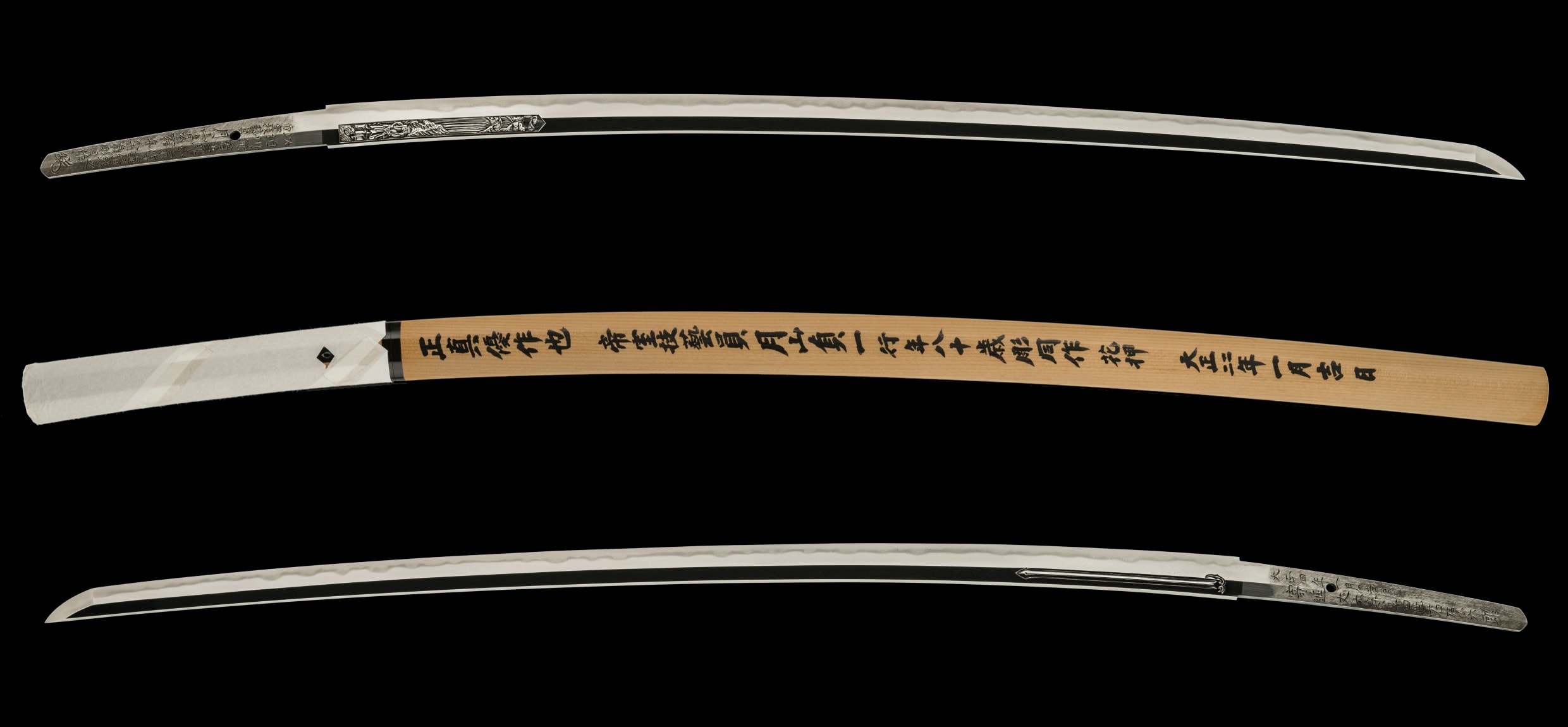
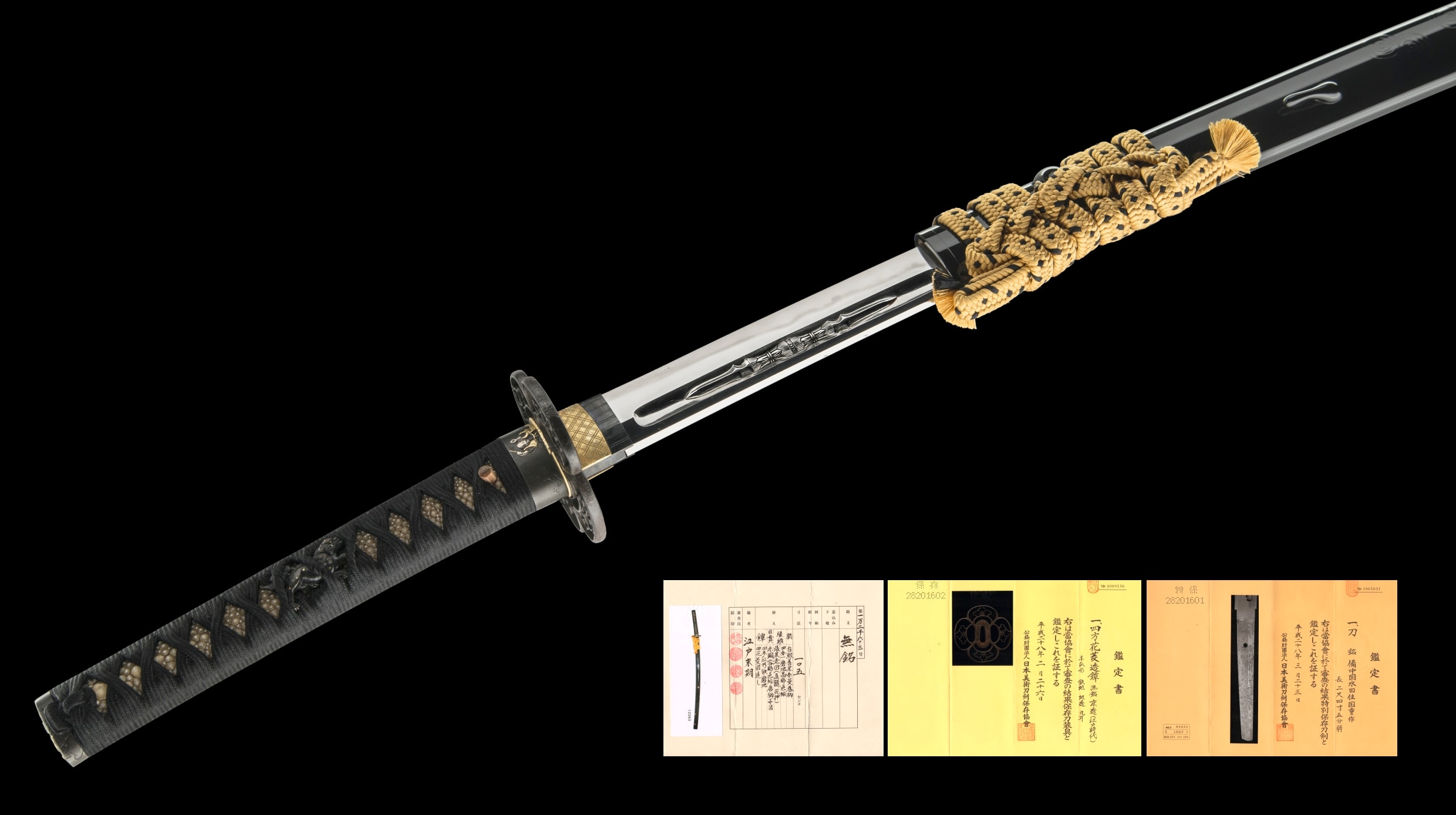
Skip to content ITEM# UJKA365 – Catalogue 39 – Sold A Kunishige ‘Horimono’ Katana (備中国水田住国重作) The Mizuta school traced its roots to a group of smiths living in Mizuta village , Bittchû province, said to be descendants of Ko-Aoe Tametsugu . In the Shintô period, the school’s character shifted dramatically – away from Sue-Bizen and Sue-Mihara traditions and towards a more electric Sôshû influence, with loads of visible nie crystals, a surging gunome-midare hamon , and plentiful hataraki that includes sunagashi and kinsuji. The most celebrated smith of the Shintô Mizuta school was Ôtsuki Yogoro Kunishige , also known as 5th generation Ôyogo Kunishige . He died young, leaving his son Katsubei – the 6th generation – in the care of his younger brother, swordsmith Ichizô . This long, muscular katana is the work of Katsubei, the final working smith of the Ôtsuki branch, who flourished during the Kanbun era (1661-1673). He was ranked chû-jôsaku and wazamono for the cutting ability of his blades. The spiritual dimension of this sword is immediate and striking. On the omote (front), a boldly carved tokkosho (独鈷杵) – a single-prong vajra – symbolises the indestructibility of the diamond and the irresistible force of the thunderbolt. The reverse carries a rare hatahoko , a banner spear associated with Vaisravana , the God of War and one of the Four Heavenly Kings – scholar Markus Sesko notes that such engravings are uncommon and align perfectly with the Sue-Sôshû character of this blade. Together the two horimono make this katana an object of both lethal purpose and profound Buddhist symbolism. The dazzling gunome-midare hamon surges with a deep, Sôshû -esque nioguchi , packed with sunagashi and kinsuji hataraki . The jihada is a gritty mokume with pronounced chikei, and the shinogi-ji displays a rare itame-hada more typical of Kamakura or Nambokuchô blades – a detail worth appreciating on a Shintô sword. A magnificent custom koshirae was built over two years around a theme of so
 NihontoWatchBETA
売却済
世界81社の刀剣商を横断追跡 · 価格履歴 · 売却アーカイブ
Early Edo – kanbun Era (1661-1673)
74.2 cm
1.4 cm
3.14 cm
Skip to content ITEM# UJKA365 – Catalogue 39 – Sold A Kunishige ‘Horimono’ Katana (備中国水田住国重作) The Mizuta school traced its roots to a group of smiths living in Mizuta village , Bittchû province, said to be descendants of Ko-Aoe Tametsugu . In the Shintô period, the school’s character shifted dramatically – away from Sue-Bizen and Sue-Mihara traditions and towards a more electric Sôshû influence, with loads of visible nie crystals, a surging gunome-midare hamon , and plentiful hataraki that includes sunagashi and kinsuji. The most celebrated smith of the Shintô Mizuta school was Ôtsuki Yogoro Kunishige , also known as 5th generation Ôyogo Kunishige . He died young, leaving his son Katsubei – the 6th generation – in the care of his younger brother, swordsmith Ichizô . This long, muscular katana is the work of Katsubei, the final working smith of the Ôtsuki branch, who flourished during the Kanbun era (1661-1673). He was ranked chû-jôsaku and wazamono for the cutting ability of his blades. The spiritual dimension of this sword is immediate and striking. On the omote (front), a boldly carved tokkosho (独鈷杵) – a single-prong vajra – symbolises the indestructibility of the diamond and the irresistible force of the thunderbolt. The reverse carries a rare hatahoko , a banner spear associated with Vaisravana , the God of War and one of the Four Heavenly Kings – scholar Markus Sesko notes that such engravings are uncommon and align perfectly with the Sue-Sôshû character of this blade. Together the two horimono make this katana an object of both lethal purpose and profound Buddhist symbolism. The dazzling gunome-midare hamon surges with a deep, Sôshû -esque nioguchi , packed with sunagashi and kinsuji hataraki . The jihada is a gritty mokume with pronounced chikei, and the shinogi-ji displays a rare itame-hada more typical of Kamakura or Nambokuchô blades – a detail worth appreciating on a Shintô sword. A magnificent custom koshirae was built over two years around a theme of so
NihontoWatchBETA売却済
世界81社の刀剣商を横断追跡 · 価格履歴 · 売却アーカイブ
Early Edo – kanbun Era (1661-1673)
74.2 cm
1.4 cm
3.14 cm