売切れ
Tokuho売切れ
A KUNISHIGE KATANA (山城大掾源国重)
売却済
世界81社の刀剣商を横断追跡 · 価格履歴 · 売却アーカイブ
時代
Shintô – jôkyô Era (1684~1688)
仕様
長さ
74.3 cm
反り
1.5 cm
元幅
2.98 cm
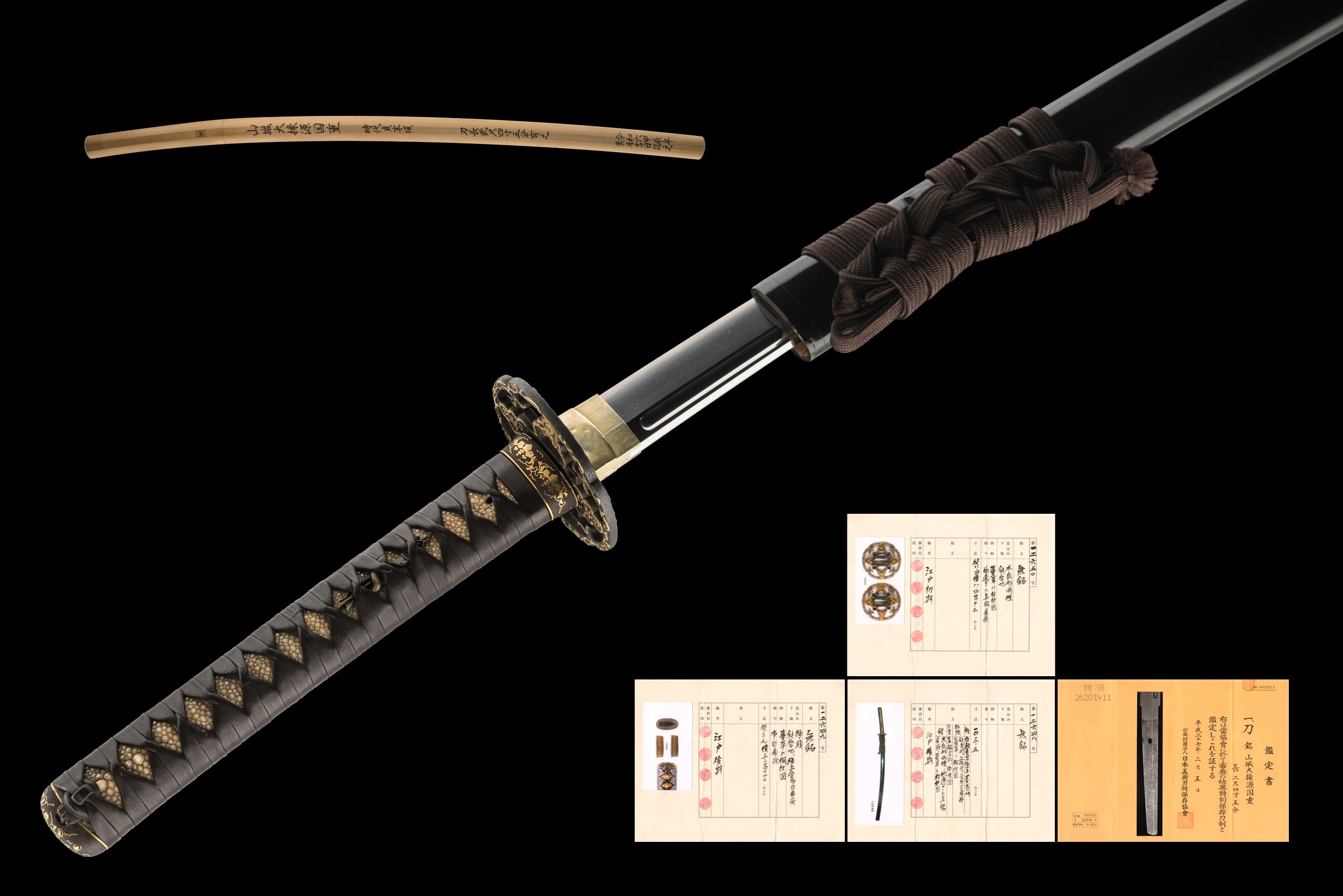
Skip to content ITEM# UJKA447 – Catalogue 42 – Sold A Kunishige Katana (山城大掾源国重) This outstanding katana is the work of nidai (2nd generation) Kunishige, born Ôtsuki Denshichirô, and student of Ichizô Kunishige – both of whom were known as Edo Mizuta . The Mizuta school derives its name from a group of swordsmiths that lived at Mizuta village in Bitchû province . Members of this school are said to be descendants of Ko-Aoe Tametsugu , with the smith Kunishige who lived during the Kyôroku era (1528~1532) known as Ko-Mizuta. In the Shintô period their craftsmanship shifted from Sue-Bizen and Sue-Mihara influences toward a more electric Soshû character, packed with visible nie crystals, vigorous gunome-midare hamon , and plentiful hataraki including sunagashi and kinsuji. For those looking for a sword with a pronounced hada (grain pattern), this katana has to be seriously shortlisted. The blade lights up under inspection with dazzling burl and plank-wood grain patterns – breathtaking whirlpools of ô-itame and mokume-hada that will delight each and every time the sword is unsheathed. Its thick nioguchi of suguha winds its way down the blade in classic Soshû tradition, with visible nie crystals glittering along the edge and a striking kaen-bôshi at the tip that resembles a candle flame. The ubu nakago is signed in the full title of Kunishige’s sensei – Yamashiro Daijô Minamoto Kunishige – and bears well-executed sujikai-yasurime diagonal file marks. Also of note are the deeply spiritual gomabashi grooves on the omote side – paired parallel grooves symbolic of chopsticks used in the Buddhist goma fire ceremony – and a short bo-hion the ura. Completing the package is a handsome set of late Edo period koshirae with a striking Heianjô-tsuba in polished iron with gold ivy and bellflower motifs (early Edo, early 1600s), an elegant fuchi-kashira attributed to the Edo-Higo school with gold ivy and kirimon paulownia crest (Late Edo, 1780~1867), and an antique leather-wrapped tsuka
 NihontoWatchBETA
売却済
世界81社の刀剣商を横断追跡 · 価格履歴 · 売却アーカイブ
Shintô – jôkyô Era (1684~1688)
74.3 cm
1.5 cm
2.98 cm
Skip to content ITEM# UJKA447 – Catalogue 42 – Sold A Kunishige Katana (山城大掾源国重) This outstanding katana is the work of nidai (2nd generation) Kunishige, born Ôtsuki Denshichirô, and student of Ichizô Kunishige – both of whom were known as Edo Mizuta . The Mizuta school derives its name from a group of swordsmiths that lived at Mizuta village in Bitchû province . Members of this school are said to be descendants of Ko-Aoe Tametsugu , with the smith Kunishige who lived during the Kyôroku era (1528~1532) known as Ko-Mizuta. In the Shintô period their craftsmanship shifted from Sue-Bizen and Sue-Mihara influences toward a more electric Soshû character, packed with visible nie crystals, vigorous gunome-midare hamon , and plentiful hataraki including sunagashi and kinsuji. For those looking for a sword with a pronounced hada (grain pattern), this katana has to be seriously shortlisted. The blade lights up under inspection with dazzling burl and plank-wood grain patterns – breathtaking whirlpools of ô-itame and mokume-hada that will delight each and every time the sword is unsheathed. Its thick nioguchi of suguha winds its way down the blade in classic Soshû tradition, with visible nie crystals glittering along the edge and a striking kaen-bôshi at the tip that resembles a candle flame. The ubu nakago is signed in the full title of Kunishige’s sensei – Yamashiro Daijô Minamoto Kunishige – and bears well-executed sujikai-yasurime diagonal file marks. Also of note are the deeply spiritual gomabashi grooves on the omote side – paired parallel grooves symbolic of chopsticks used in the Buddhist goma fire ceremony – and a short bo-hion the ura. Completing the package is a handsome set of late Edo period koshirae with a striking Heianjô-tsuba in polished iron with gold ivy and bellflower motifs (early Edo, early 1600s), an elegant fuchi-kashira attributed to the Edo-Higo school with gold ivy and kirimon paulownia crest (Late Edo, 1780~1867), and an antique leather-wrapped tsuka
NihontoWatchBETA売却済
世界81社の刀剣商を横断追跡 · 価格履歴 · 売却アーカイブ
Shintô – jôkyô Era (1684~1688)
74.3 cm
1.5 cm
2.98 cm