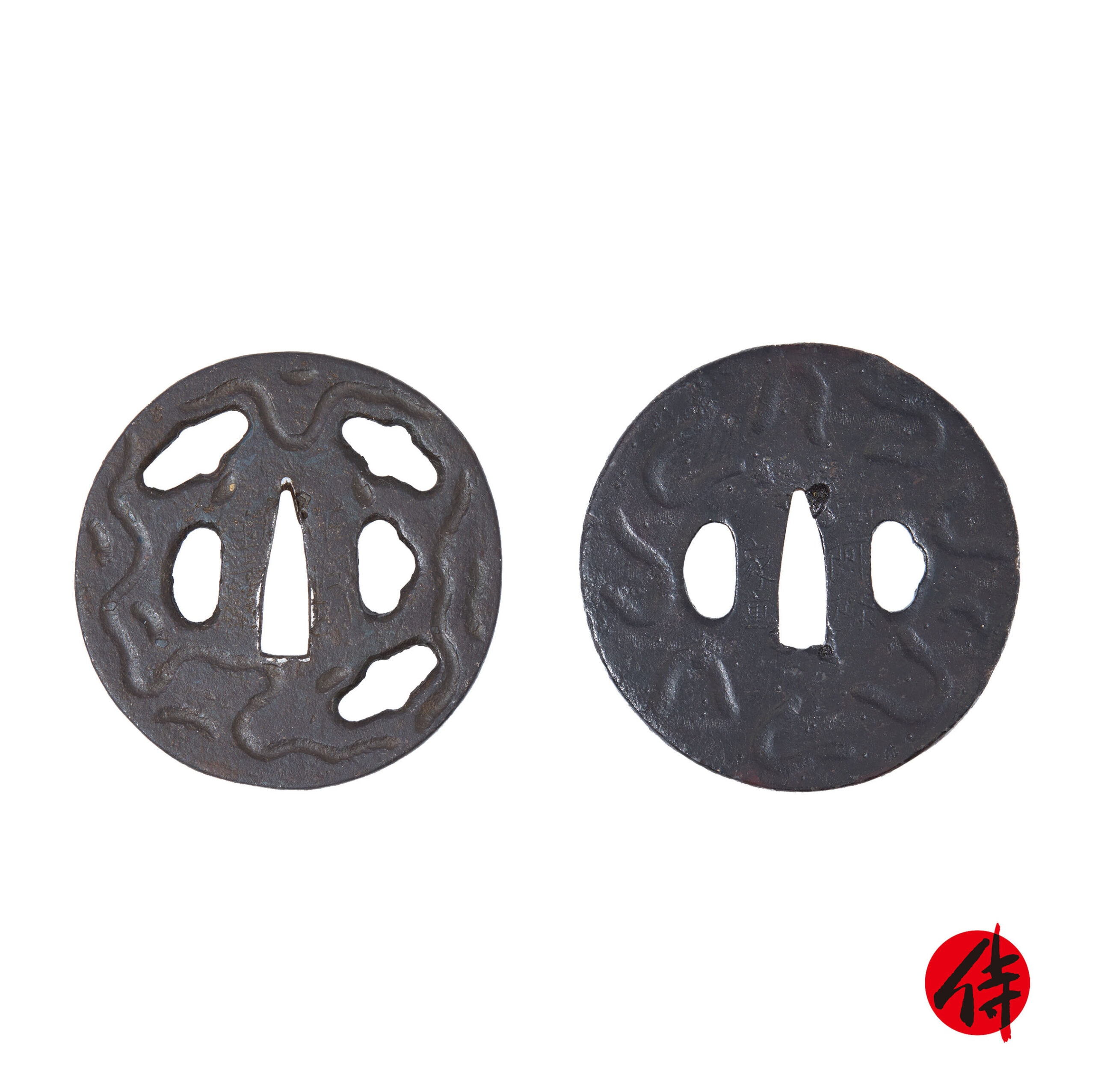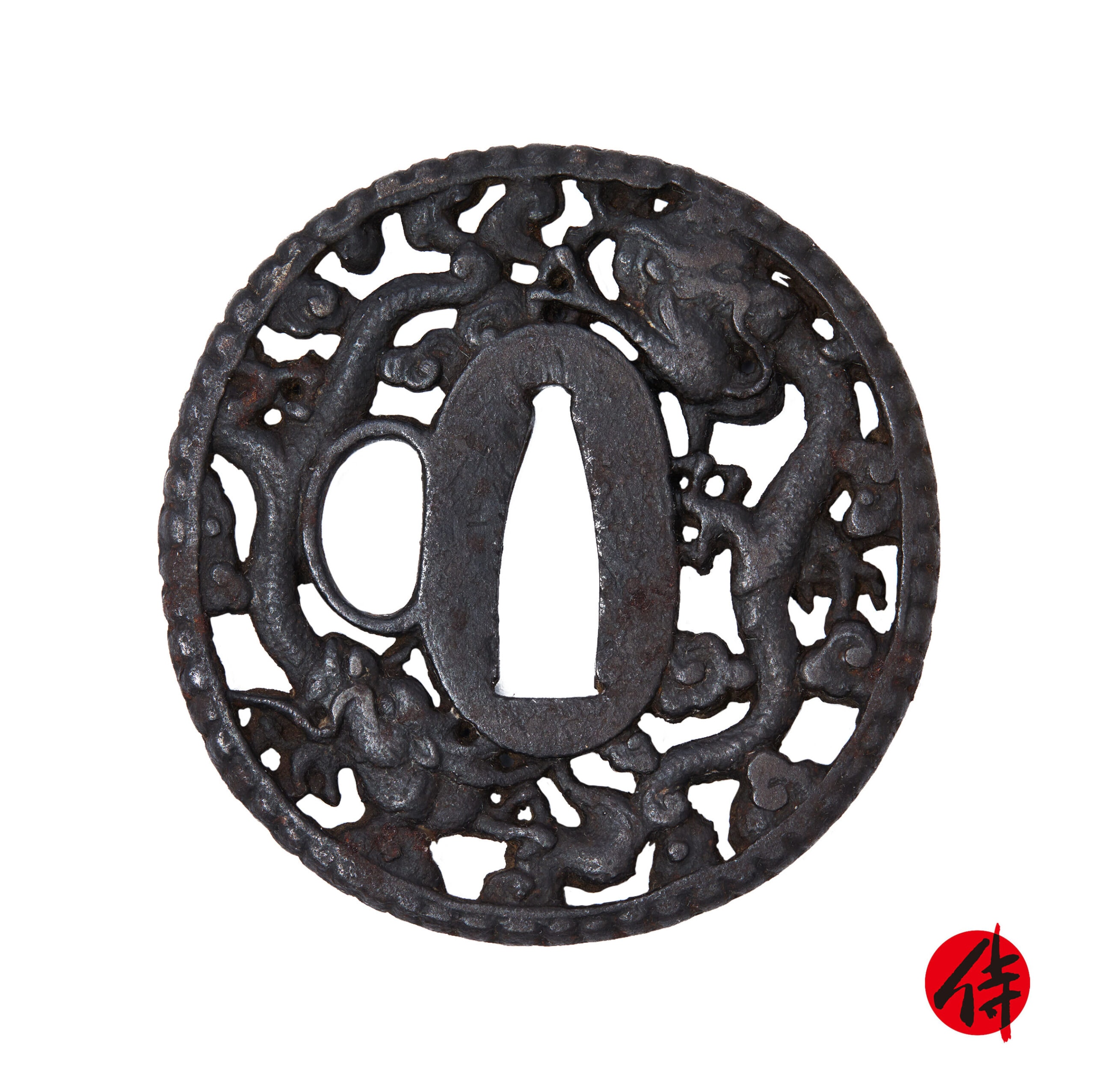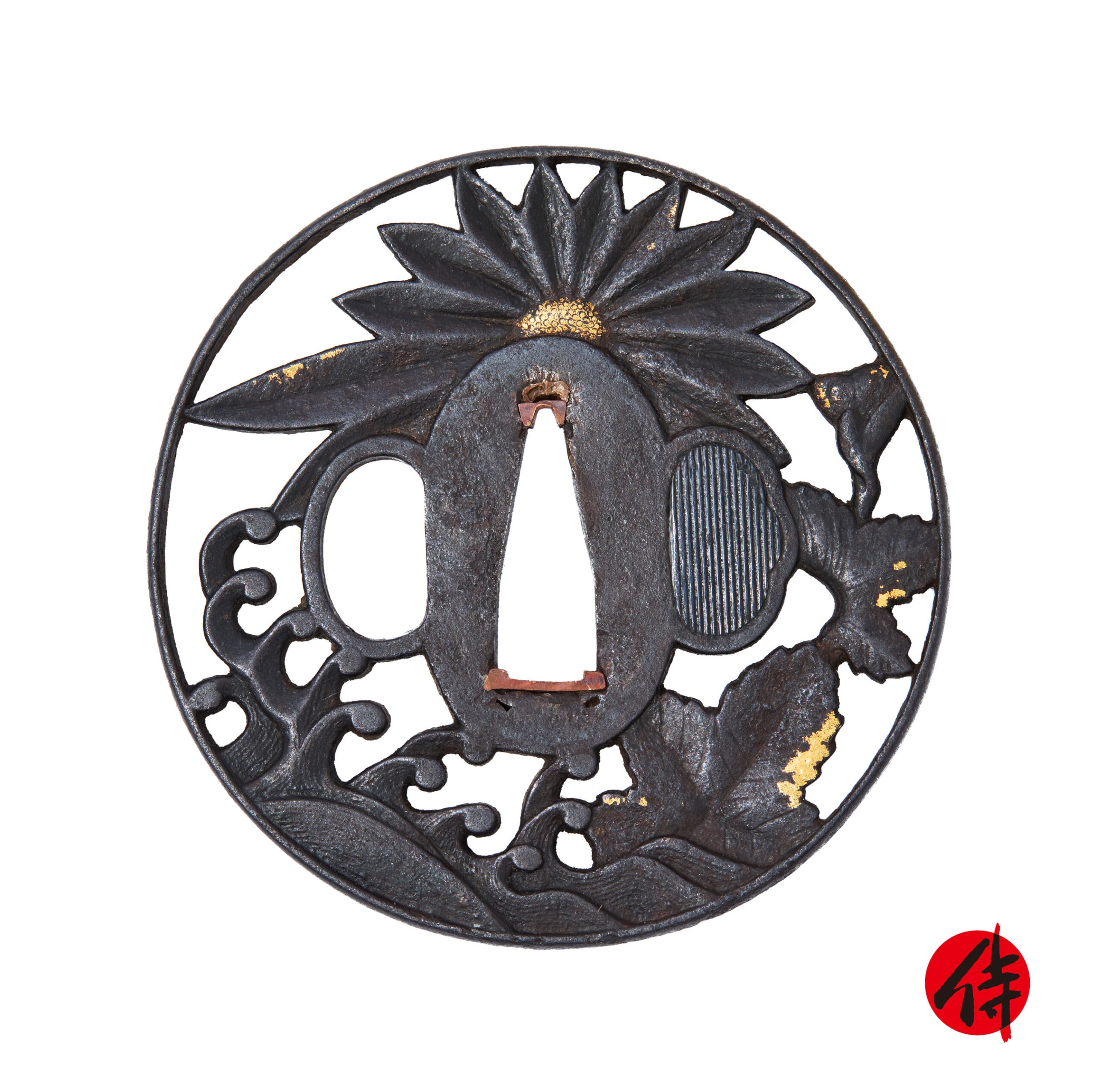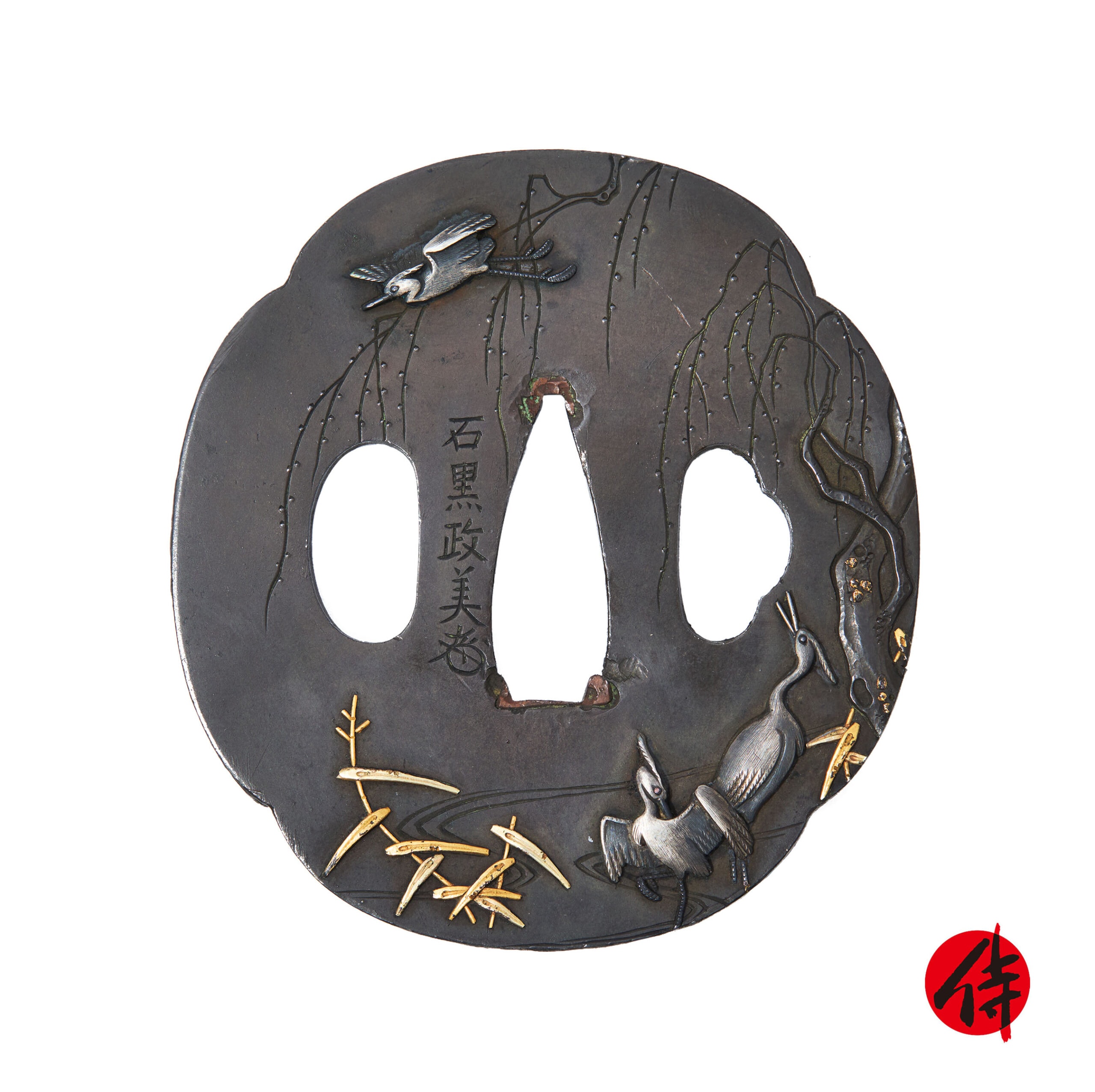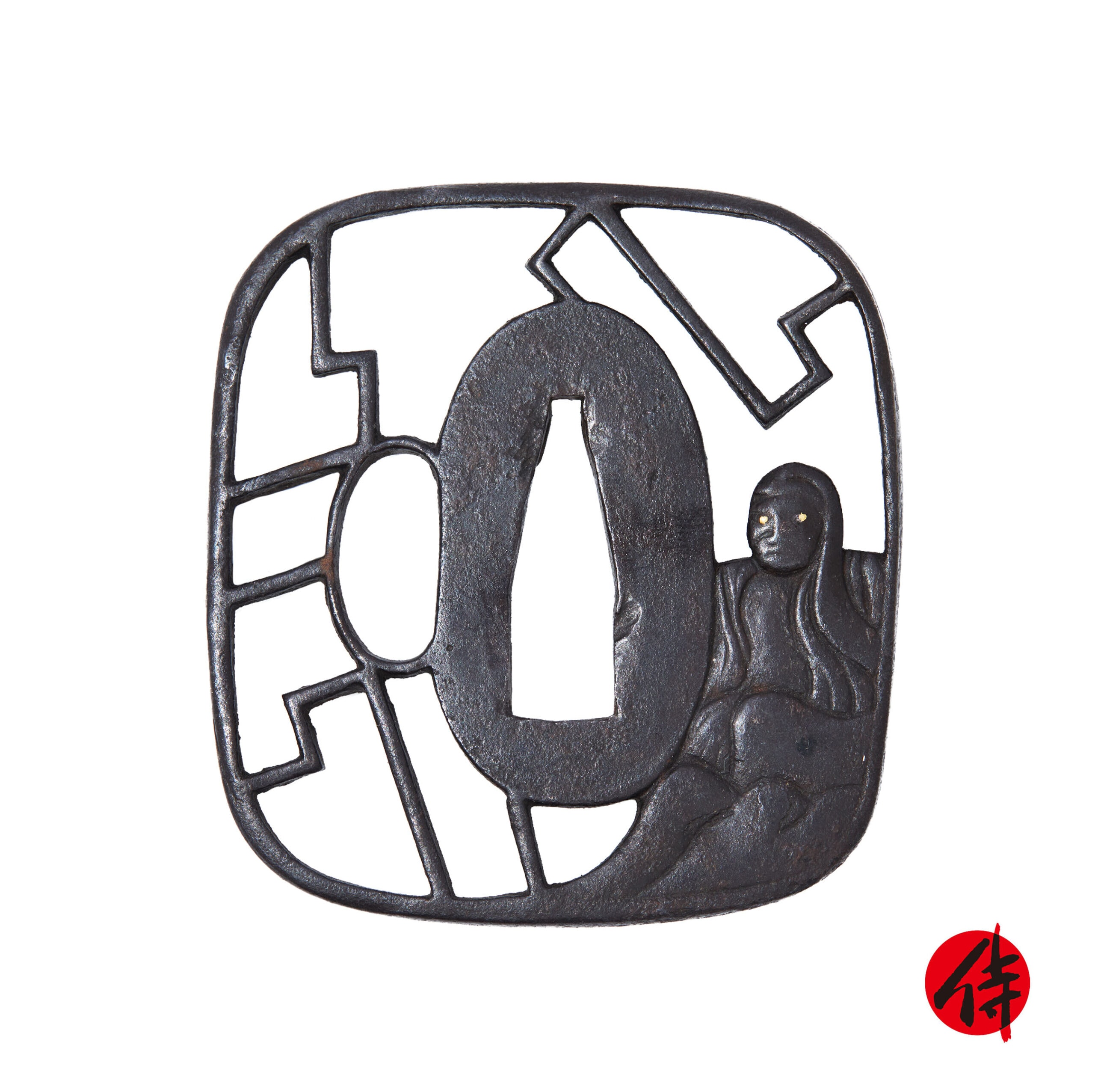
Edo period antique Daruma Daishi Zu Tsuba for Samurai Sword (T-913)
$285
世界81社の刀剣商を横断追跡 · 価格履歴 · 売却アーカイブ
時代
Edo
Title: Daruma Daishi Zu Description This iron tsuba features Daruma Daishi (達磨大師, c. 378–528), who is regarded as the founder of Zen Buddhism in China. Daruma is especially famous for his practice of seated meditation while facing a wall, known as menpeki (面壁). The geometric pattern seen on this tsuba is believed to be a traditional motif called raimon (雷文), a design symbolizing thunder and lightning. It may also be interpreted as representing Daruma’s unshakable spirit, continuing his severe meditation without moving even amid crashing thunder and violent storms. According to legend, Daruma’s training was so harsh that, after sitting in meditation for many years, his limbs eventually withered away. It is also said that people jealous of his fame attacked him and threw stones at him, yet he remained completely unmoved and continued his practice. One story tells that he was struck in the face by a stone and lost a front tooth. Even after being poisoned, Daruma is said to have continued his ascetic practice. His fierce expression is therefore not meant to glare at others, but rather to show him confronting his own wavering heart while enduring immense suffering and hardship. He is said to have meditated facing a wall for nine years, a famous episode known as Menpeki Kunen (面壁九年, “nine years of wall-facing meditation”). Daruma was born as the third son of a king in southern India and encountered Buddhist teachings at the age of seven. He later underwent strict ascetic training under his master and is said to have traveled to China after the age of one hundred. Until his death at around 150 years old, he devoted himself to spreading the teachings of Buddhism to countless people. Even today, Daruma remains a symbol of perseverance, endurance, good fortune, and unwavering determination. In Japan, he is also widely known through the famous Daruma dolls associated with luck and achieving one’s goals. What is Tsuba? Tsuba is the hand-guard of the Japanese sword. High-class Samurai wore his Katana sword with its beautiful sword mountings such as Tsuba. Tsuba’s front design tends to be more decorative as this part was often seen by other Samurais when he was walking on the streets. Why is it that the sword mounting was important for Samurai? The sword mountings of the Japanese sword have many kinds of decorations such as handguards (Tsuba), sword hilt (Menuki), pommel (Fuchi Kashira). The Japanese sword worked as a weapon and as an object to show who he was. For example, it shows their personalities and beliefs. You could say that it is like decorations for smartphones today. We recommend you zoom in on the pictures of the sword fittings. When you do so, you can see the skill of Japanese metal engraving techniques. They are mainly made of iron and copper with inlays of gold, silver, and bronze. When it comes to handguard (Tsuba), each one has a different outline and weight. These sword fittings that have lived with Japanese swords of the same age might be worth as much as the Japanese swords. They are inconspicuous parts of the Japanese sword. Nevertheless, if you are knowledgeable or particular about it, you will become a connoisseur of the Samurai. 【About us】 Samurai Museum is located in Tokyo, Japan, exhibiting antique artifacts related to the Samurai history. Samurai Museum Shop is the place for those who are interested in Japanese culture and craftsmanship. We deal with antique Samurai swords/armor, traditional crafts made in Japan and so on. 【Payment method】 We accept payment through Stripe (Credit card), PayPal , Apple Pay or ChromePay, all of which are secure payment methods. Also, you don’t need to make an account on Stripe for the checkout. If you prefer other payment method, please contact us. You may either pay in JPY , USD , AUD , CAD , EUR , CHF or GBP . The price is set in Japanese Yen. Prices in other currencies are automatically calculated based on the latest exchange rate. 【Shipping duration】 We normally ship via EMS (E
 NihontoWatchBETA
$285
世界81社の刀剣商を横断追跡 · 価格履歴 · 売却アーカイブ
Edo
$285
Title: Daruma Daishi Zu Description This iron tsuba features Daruma Daishi (達磨大師, c. 378–528), who is regarded as the founder of Zen Buddhism in China. Daruma is especially famous for his practice of seated meditation while facing a wall, known as menpeki (面壁). The geometric pattern seen on this tsuba is believed to be a traditional motif called raimon (雷文), a design symbolizing thunder and lightning. It may also be interpreted as representing Daruma’s unshakable spirit, continuing his severe meditation without moving even amid crashing thunder and violent storms. According to legend, Daruma’s training was so harsh that, after sitting in meditation for many years, his limbs eventually withered away. It is also said that people jealous of his fame attacked him and threw stones at him, yet he remained completely unmoved and continued his practice. One story tells that he was struck in the face by a stone and lost a front tooth. Even after being poisoned, Daruma is said to have continued his ascetic practice. His fierce expression is therefore not meant to glare at others, but rather to show him confronting his own wavering heart while enduring immense suffering and hardship. He is said to have meditated facing a wall for nine years, a famous episode known as Menpeki Kunen (面壁九年, “nine years of wall-facing meditation”). Daruma was born as the third son of a king in southern India and encountered Buddhist teachings at the age of seven. He later underwent strict ascetic training under his master and is said to have traveled to China after the age of one hundred. Until his death at around 150 years old, he devoted himself to spreading the teachings of Buddhism to countless people. Even today, Daruma remains a symbol of perseverance, endurance, good fortune, and unwavering determination. In Japan, he is also widely known through the famous Daruma dolls associated with luck and achieving one’s goals. What is Tsuba? Tsuba is the hand-guard of the Japanese sword. High-class Samurai wore his Katana sword with its beautiful sword mountings such as Tsuba. Tsuba’s front design tends to be more decorative as this part was often seen by other Samurais when he was walking on the streets. Why is it that the sword mounting was important for Samurai? The sword mountings of the Japanese sword have many kinds of decorations such as handguards (Tsuba), sword hilt (Menuki), pommel (Fuchi Kashira). The Japanese sword worked as a weapon and as an object to show who he was. For example, it shows their personalities and beliefs. You could say that it is like decorations for smartphones today. We recommend you zoom in on the pictures of the sword fittings. When you do so, you can see the skill of Japanese metal engraving techniques. They are mainly made of iron and copper with inlays of gold, silver, and bronze. When it comes to handguard (Tsuba), each one has a different outline and weight. These sword fittings that have lived with Japanese swords of the same age might be worth as much as the Japanese swords. They are inconspicuous parts of the Japanese sword. Nevertheless, if you are knowledgeable or particular about it, you will become a connoisseur of the Samurai. 【About us】 Samurai Museum is located in Tokyo, Japan, exhibiting antique artifacts related to the Samurai history. Samurai Museum Shop is the place for those who are interested in Japanese culture and craftsmanship. We deal with antique Samurai swords/armor, traditional crafts made in Japan and so on. 【Payment method】 We accept payment through Stripe (Credit card), PayPal , Apple Pay or ChromePay, all of which are secure payment methods. Also, you don’t need to make an account on Stripe for the checkout. If you prefer other payment method, please contact us. You may either pay in JPY , USD , AUD , CAD , EUR , CHF or GBP . The price is set in Japanese Yen. Prices in other currencies are automatically calculated based on the latest exchange rate. 【Shipping duration】 We normally ship via EMS (E
NihontoWatchBETA$285
世界81社の刀剣商を横断追跡 · 価格履歴 · 売却アーカイブ
Edo
$285