説明
Ishidô Unju Korekazu (fss-850)
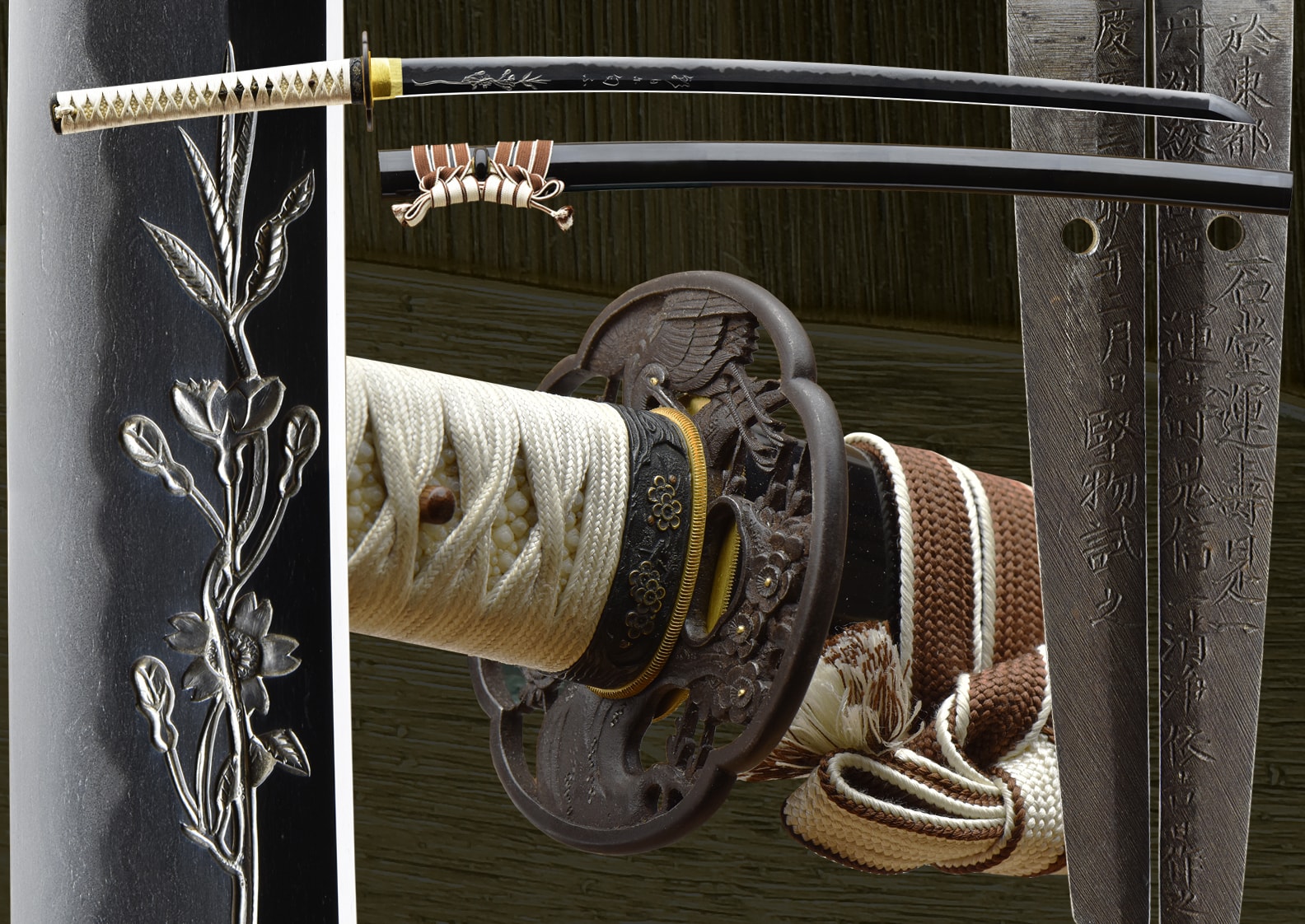
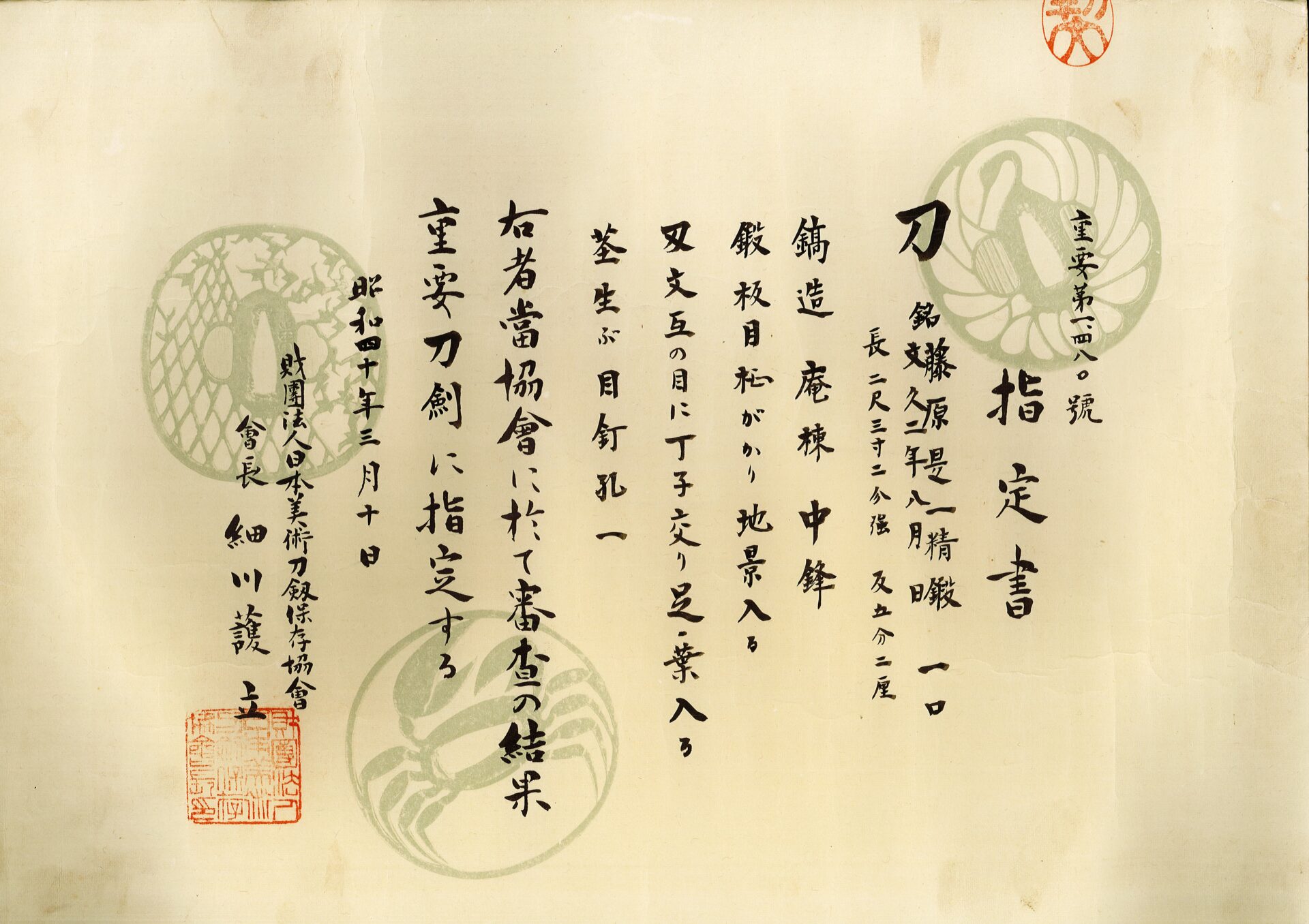
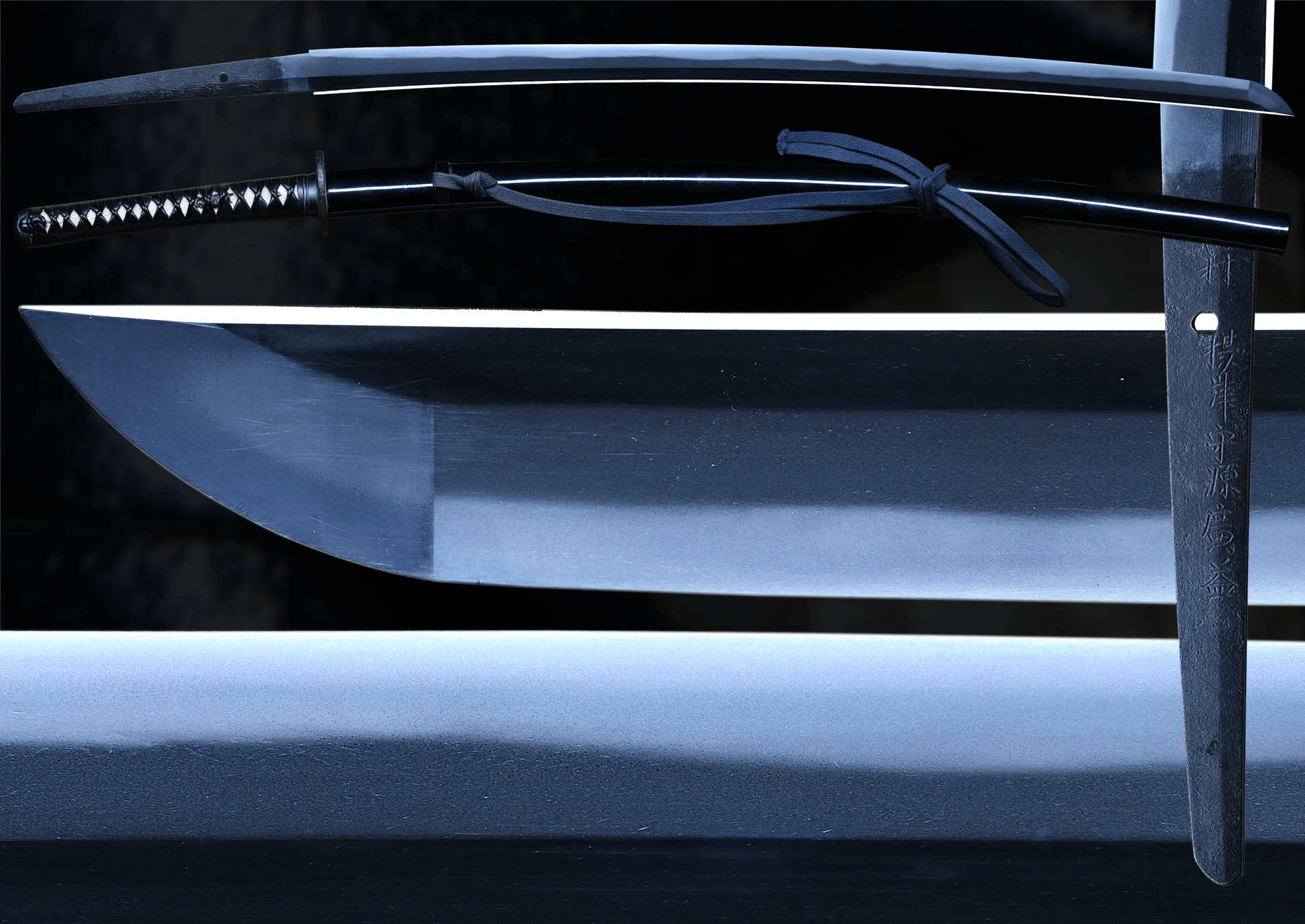
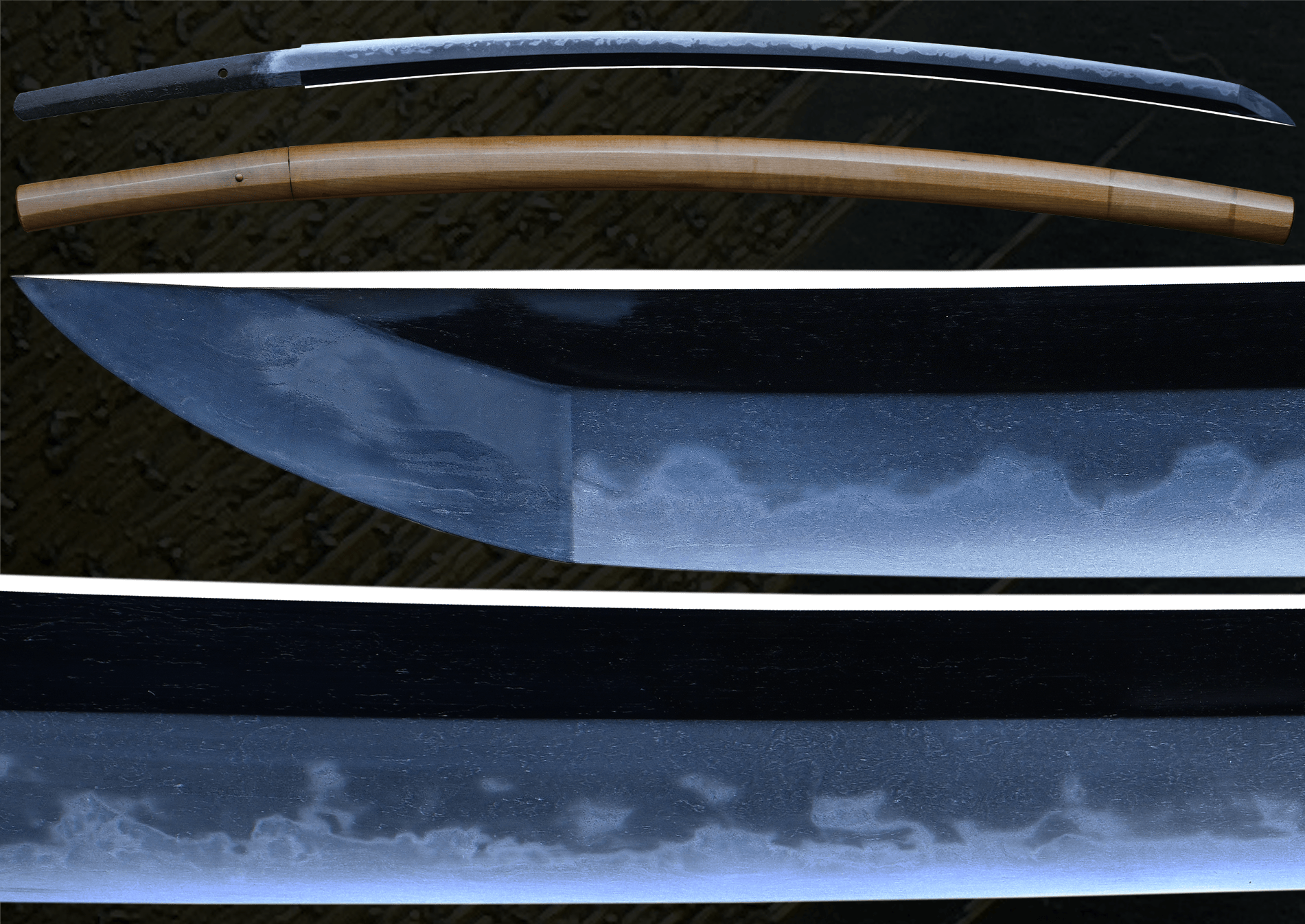
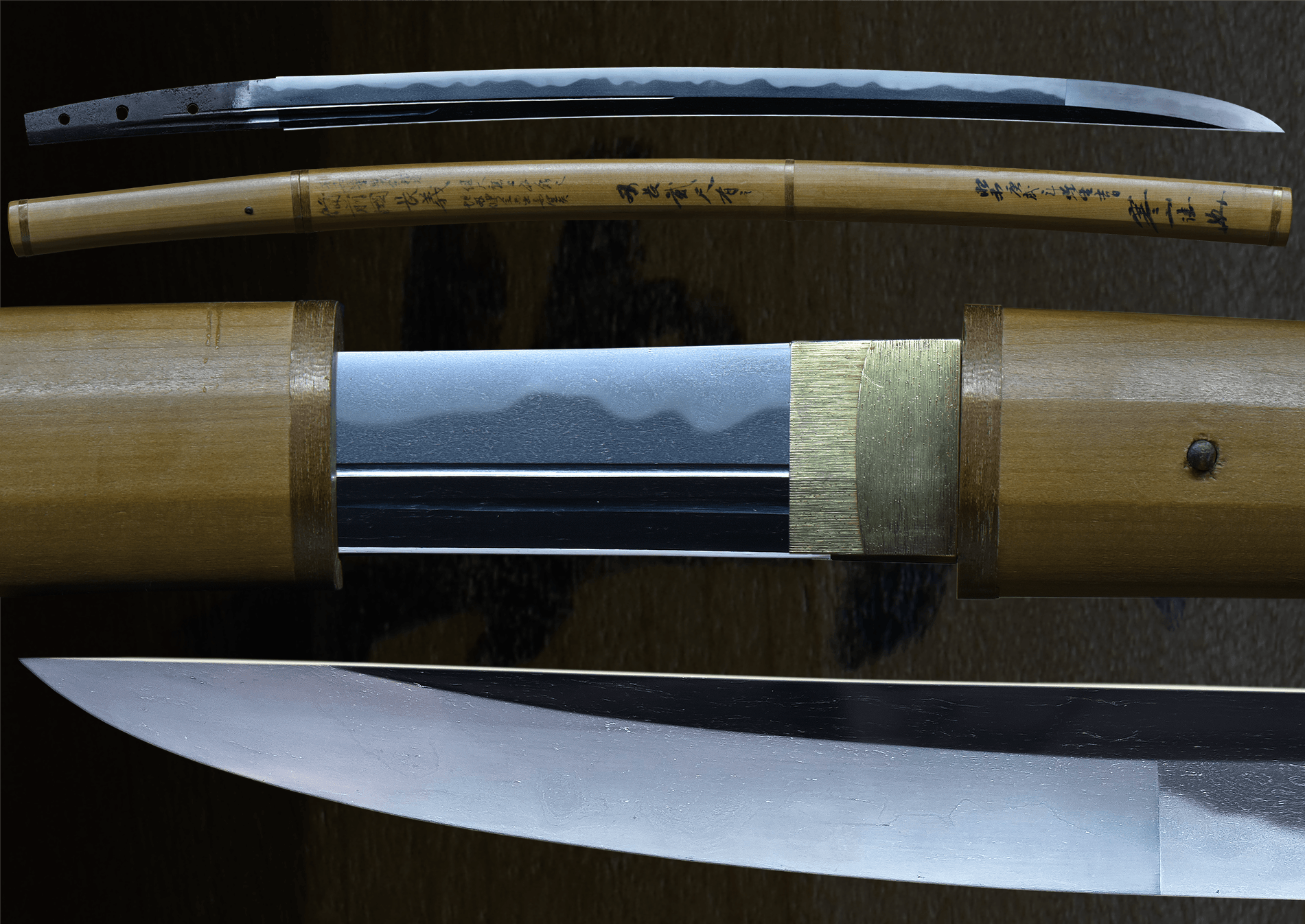
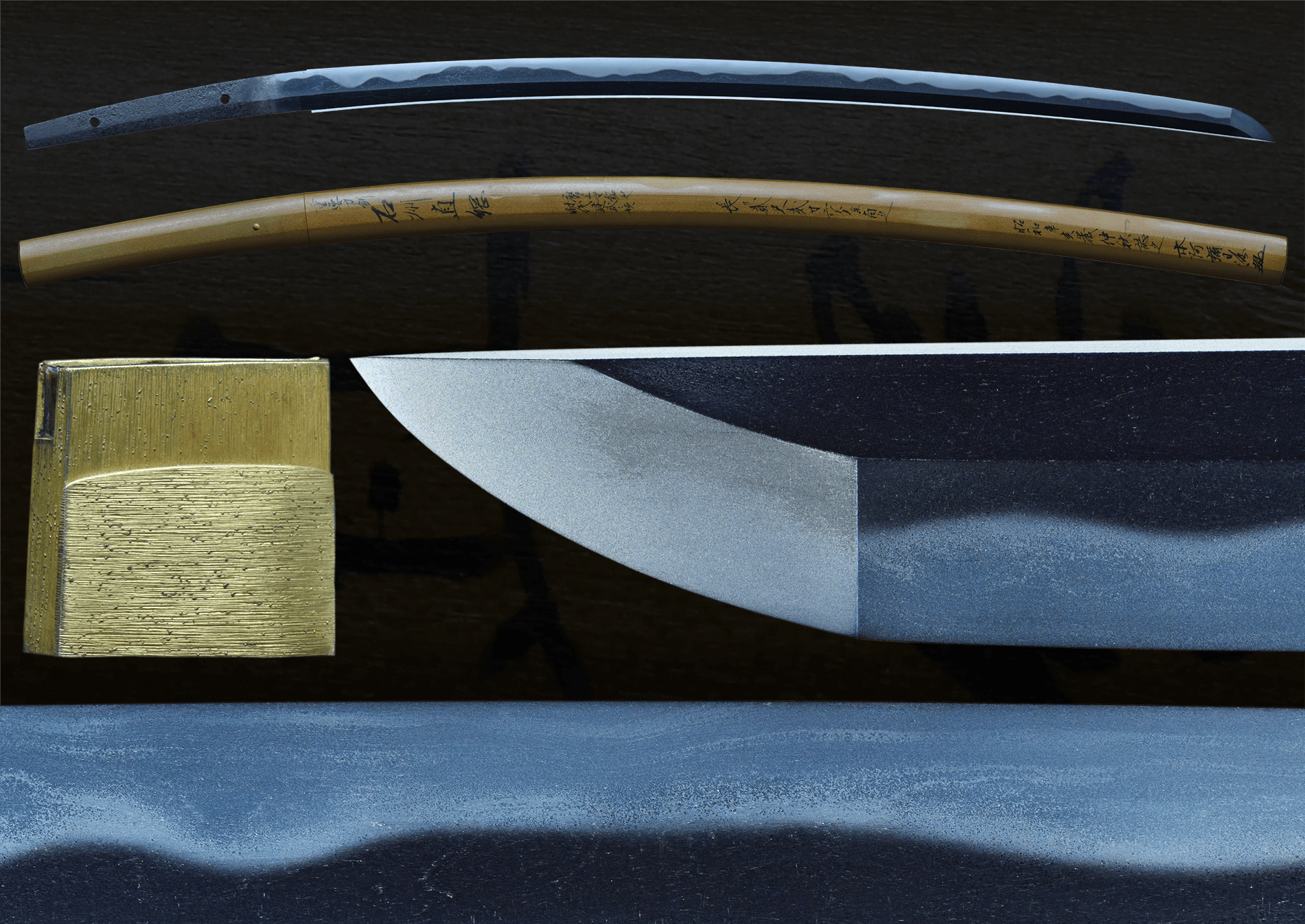
Ishido Korekazu was a nephew of Kato Chounsai Tsunatoshi, He was taught and learned from him and he succeeded the Ishido familyas the seventh generation, he passed away in 1894 at the age of 75.He made So-den bizen den style which is a combination of Bizen and Soshu den style.The First generation Korekazu was skilled in making Bizen den style with beautiful Utsuribut the7th generation Korekazu made swords in the Soshu style.This sword was made on a day in the second month Keiô three (1867), year of the hare.This sword is a combination of gunome/ choji midare within a notare blend hamon which is very rear bright and clear. The activity is amazuing and unusually clear with multitudes of hataraki such as sunagashi, kinsuji. Ko-nie and a wonderful frosting of nie can be seen on the habuchi. There are swirts of mokume as well as masame make up this eye catching hada.There is horimono on both sides odf the blade. A masterful carving of a cherry blossom tree as well as a poem in Buddhist calligraphy and Sanskrit bonji.The mounts keep in theme the advent of the cherry blossom. In Japan, cherry blossoms symbolize clouds due to their nature of blooming en masse, besides being an enduring metaphor for the ephemeral nature of life, an aspect of Japanese cultural tradition that is often associated with Buddhist influence,] and which is embodied in the concept mono no aware. The association of the cherry blossom with mono no aware dates back to 18th-century scholar Motoori Norinaga The transience of the blossoms, the exquisite beauty and volatility, has often been associated with mortality and graceful and readily acceptance of destiny and karma; for this reason, cherry blossoms are richly symbolic, and have been utilized often in Japanese art, and film, as well as at musical performances for ambient effect.SPECIAL NOTE ON THE SIGNATURE:This is how it reads:Made in the Eastern Capital (Edo) by Ishidô Unju Korekazu.Made on a lucky day and after the purification ritual by Unju Ki Nobukazu.retainer of the Ayabe family from Tanba province.On a day in the second month Keiô three (1867), year of the hare.Tested on a hard object.This is a very interesting signature with a cutting test!This is a beautiful sword with a lot of attention given to details. The sword was made by a very highly rated Smith. The two highest ratings are Sai-jo saku and Jo-jo saku, this smith is rated as Jo-jo saku. Even to an untrained eye the quality of this sword stands out!Many years ago this sword was taken to Japan for its papers by John Yamoto (author of ‘The Japanese sword”) for Mr. D. Douberly. The sayagaki is not signed but believed to be done by Yamoto-san himself. It was purchased later on by a well known collector and is being offered now for the first time in many years.
Mei:Tôto ni oite Ishidô Unju Korekazu (於東都石堂運寿是一)Tanshû Ayabe-shin Unju Ki Nobukazu shôjôe kichijitsu kore o saku(丹州綾部臣運寿鬼信一清浄依吉日作之)Keiô san hinoto-usagidoshi nigatsu hi (慶応三丁卯年二月日)Translation:katana, signed: Made in the Eastern Capital (Edo) by Ishidô Unju Korekazu.Made on a lucky day and after the purification ritual by Unju Ki Nobukazu.retainer of the Ayabe family from Tanba province.On a day in the second month Keiô three (1867), year of the hare.Tested on a hard object.Nagasa:27-7/8 inchesSori:10.5 mmWidth at the ha-machi:32.1 mmWidth at the yokote:22.2 mmThickness at the mune-machi:9.1 mmConstruction:Shinogi zukuriMune:IoriNakago:UbuKitae:Itame/mokumeHamon:Midare GunomeBoshi:MaruCondition:Good polish
KOREKAZU (是一), 7th gen., Ansei (安政, 1854-1860), Musashi – “Shichidai-me Ishidō Korekazu saku” (七代目石堂是一作, “made by the 7th gen. Ishidō Korekazu”), “Fujiwara Korekazu” (藤原是一), “Korekazu saku” (是一作), “Ishidō Fujiwara Korekazu kore o saku” (石堂藤原是一作之), “Ishidō Unjusai Korekazu” (石堂運寿斎是一), “Ryūsensai Ishidō Korekazu” (龍泉斎石堂是一), “Ishidō Unju Korekazu seitan kore o tsukuru” (石堂運寿是一精鍛造之, “carefully forged by Ishidō Unju Korekazu”), real name Kawakami Seitarō (川上政太郎, the first name also reads Masatarō), he also bore the first name Sukezaburō (助三郎), he was born on the 24th day of the first month Bunsei three (文政, 1820) as second son of Chōunsai Tsunatoshi (長運斎綱俊), another tradition says that he was the nephew of Tsunatoshi, later he was adopted by the 6th gen. Korekazu and took over the family in the twelfth month of the twelfth year of Tenpō (天保, 1841), he lived in Kita-Shinmonzen (北新門前) in Edo ́s Azabu district (麻布), first he used the gō Unjusai (運寿斎) but changed in the second year of Meiji (1869) to Ryūsensai (龍泉斎), he died on the 24th day of the eleventh month Meiji 24 (1891) at the age of 72, the 7th gen. Korekazu became famous for reviving the Ishidō-Bizen style and he trained many students, he also forged blades for the Ise Shrine and the Edo city magistrate Tōyama Saemon no Jō Kagemoto (遠山左衛門尉景元, 1793-1855), his blades have a rather shallow sori, a relative high shinogi, a narrow shinogi-ji, and a somewhat larger kissaki, the jigane is a d