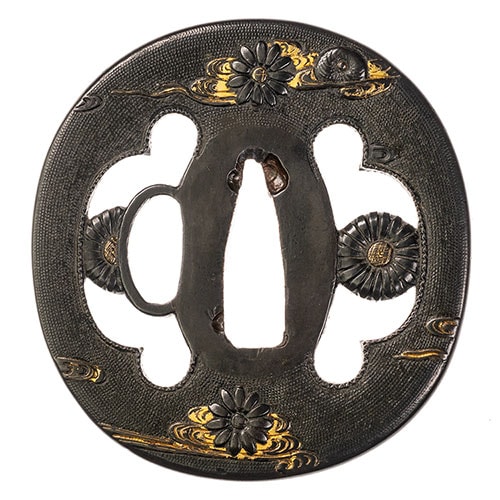
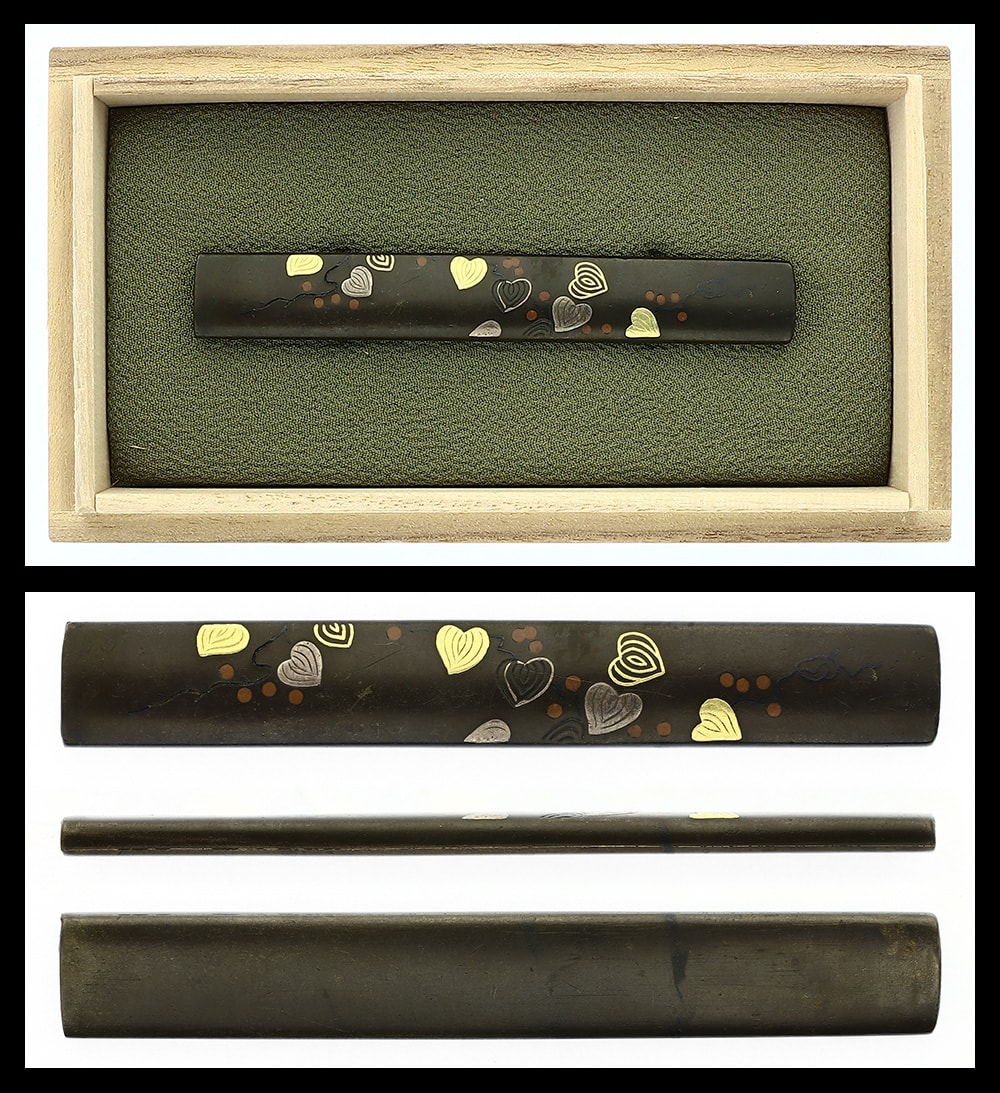
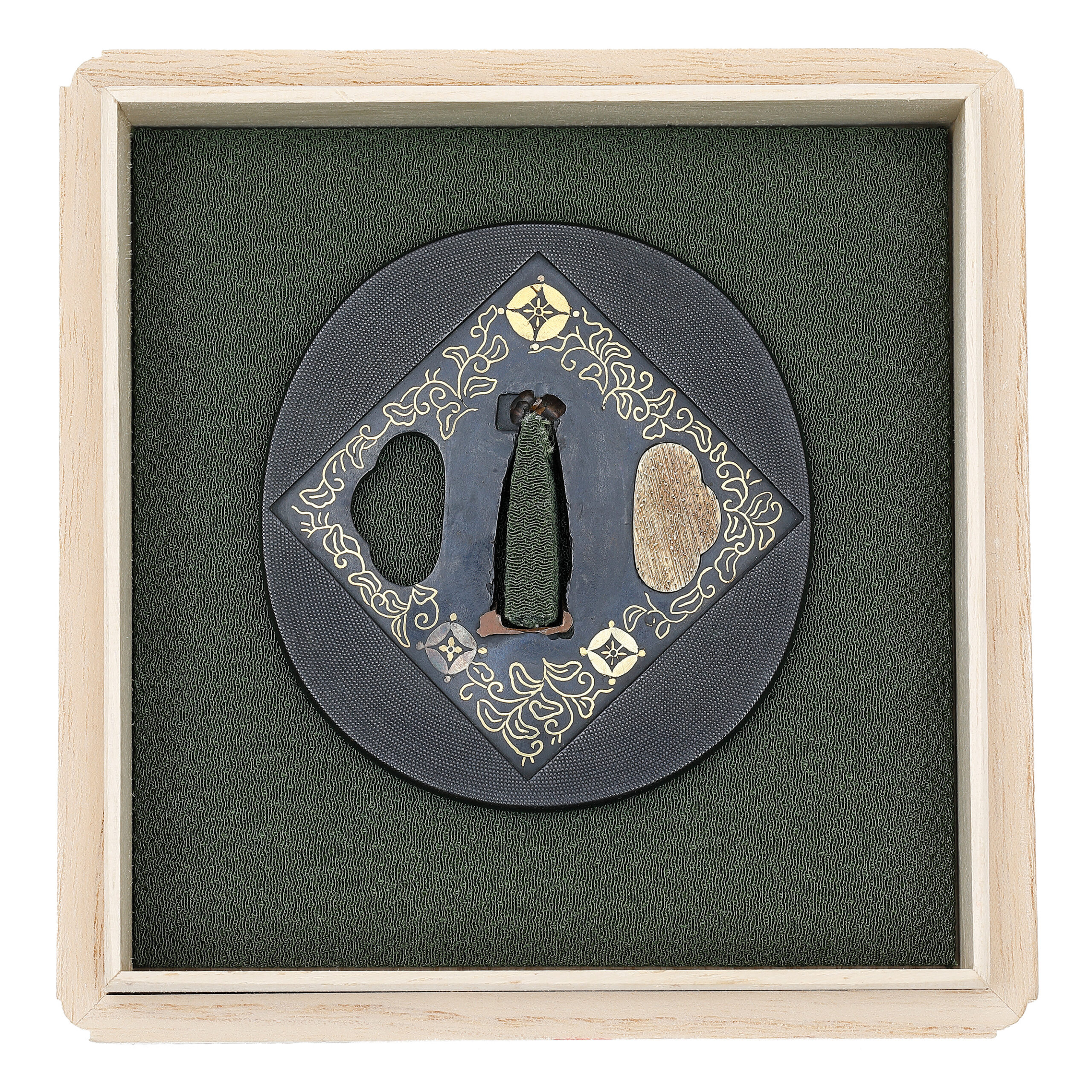
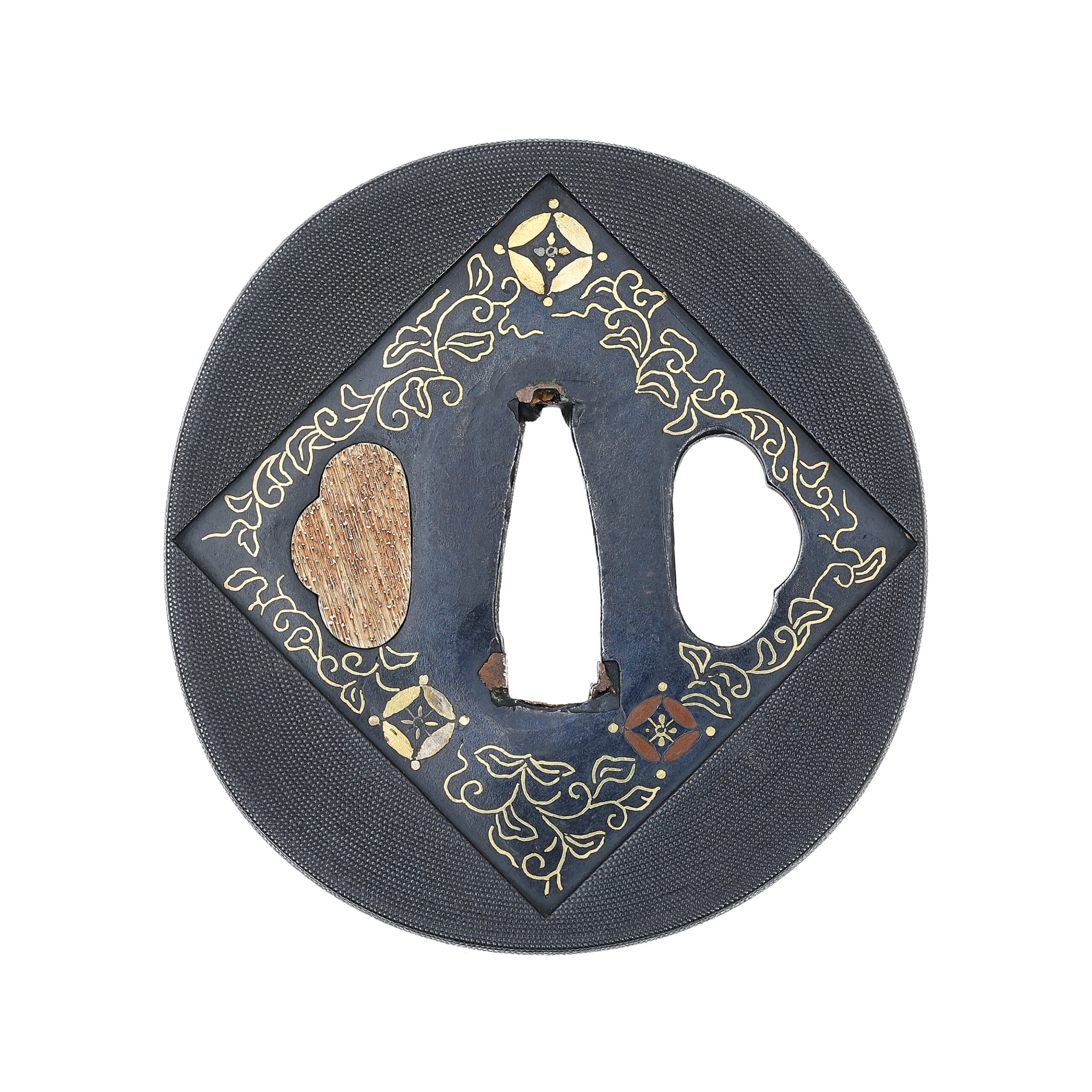
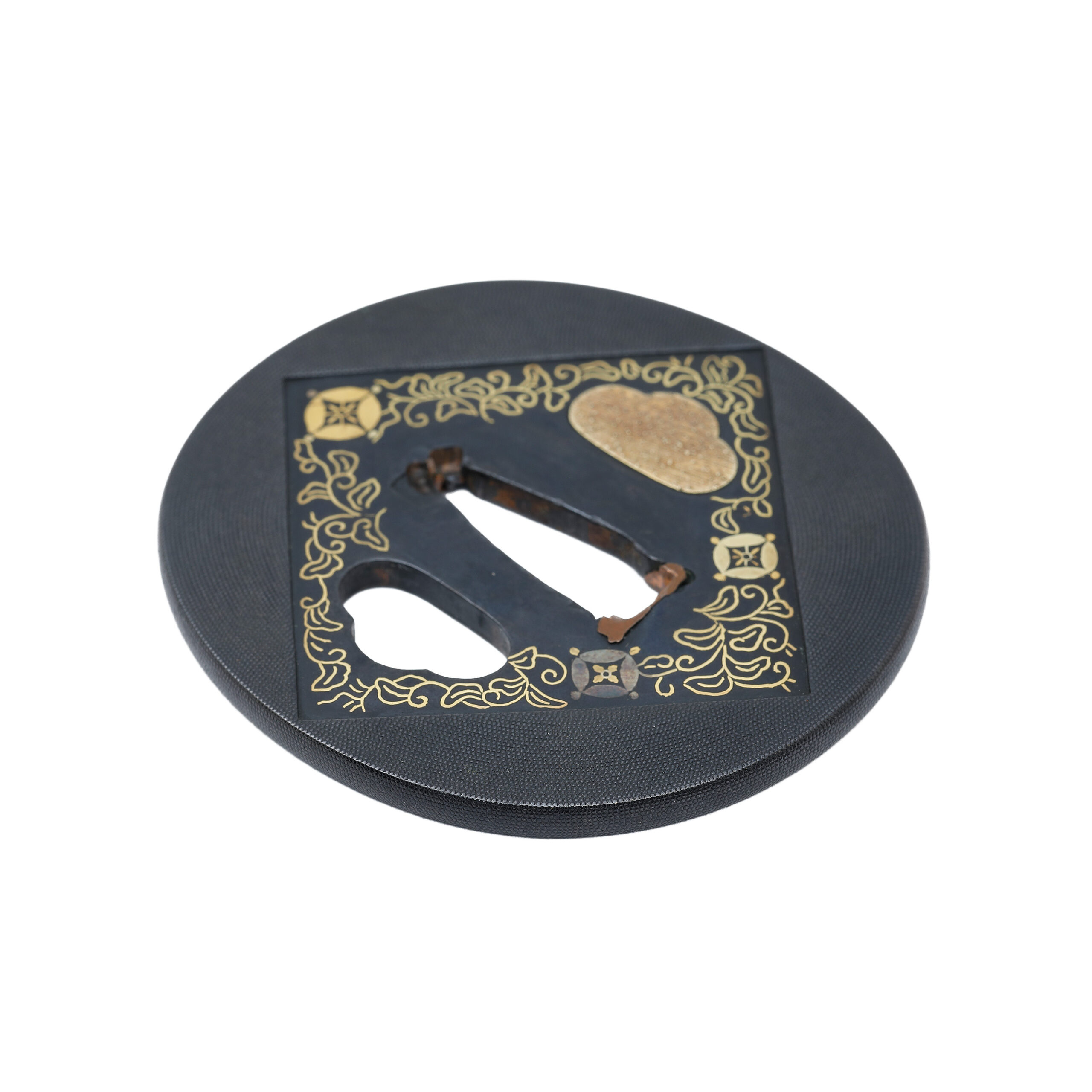
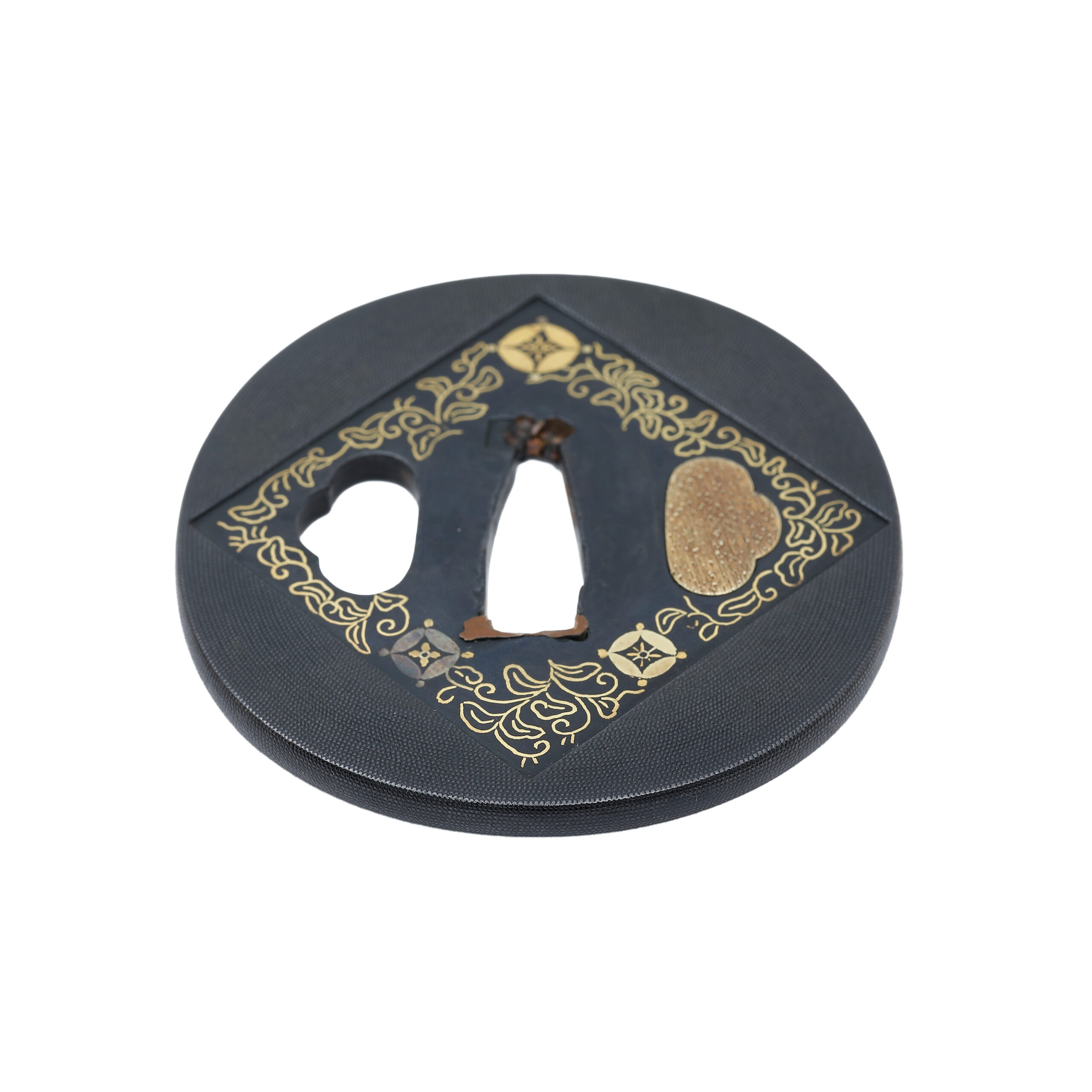
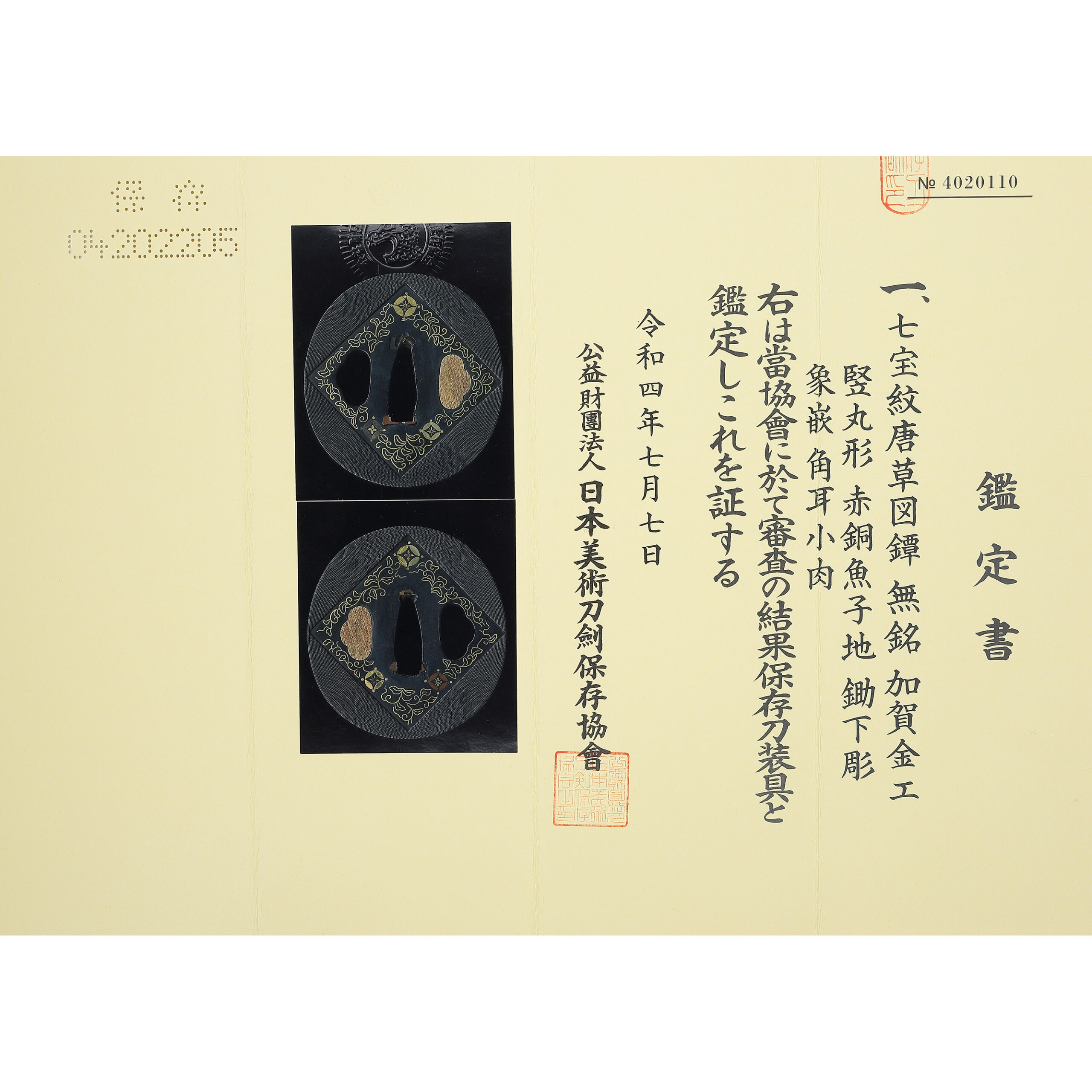
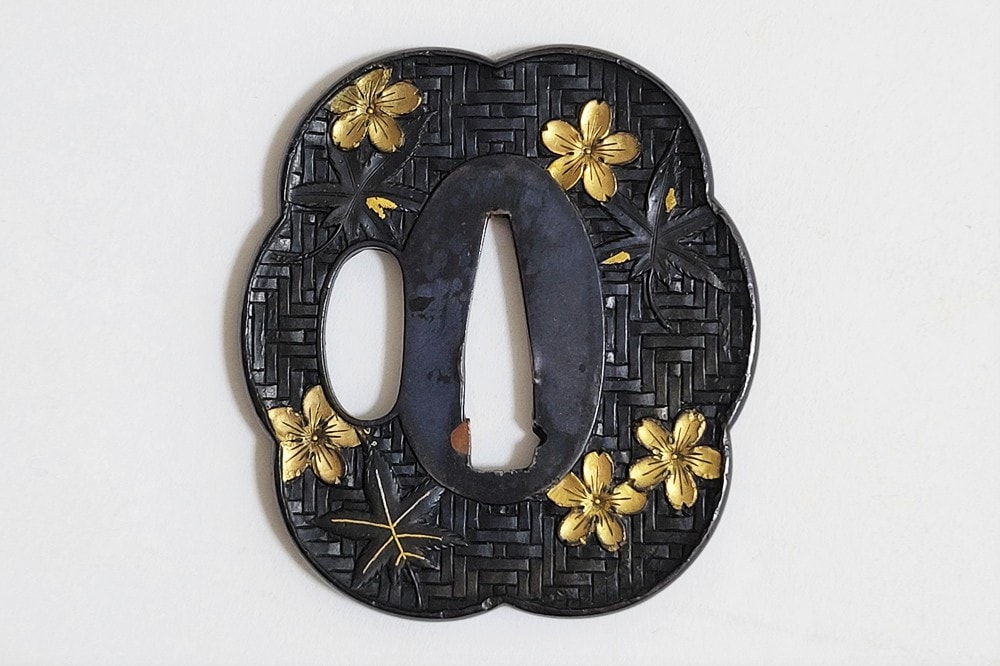
七宝紋唐草図 鐔 【解説】 本作は、日本美術刀剣保存協会(NBTHK)により「加賀金工」と極められた、保存刀剣鑑定書付の鉄地角形鐔です。無銘ではありますが、その作域から加賀金工の手によるものと認められています。加賀国(現在の石川県)は、名将・前田利家公の入国以来、金沢を中心に華麗な文化が花開きました。利家公は京文化を積極的に取り入れ、後藤家をはじめとする優れた金工師を招聘し、数々の名品を世に送り出しました。 技術面においては、「赤銅魚子地(しゃくどうななこじ)」、「鋤下げ彫(すきさげぼり)」、そして「金象嵌(きんぞうがん)」の技法が凝らされています。赤銅魚子地とは、銅と金の合金である赤銅の表面に、魚の卵のような微細な粒を整然と打ち出す技法です。本作の深い黒色は金含有量の高さを示しており、その美しさは「烏の濡れ羽色」とも形容されます。かつて名門の工房にはこの技法を専門とする職人がおり、乱れなく繊細に打ち込まれた粒の列は、まさに日本が誇る職人技の象徴といえるでしょう。 また、文様を立体的に浮き上がらせる「鋤下げ彫」が、赤銅魚子地と中央の菱形部分の間に施されており、二つの異なる美しさを際立たせています。中央の菱形部分には、贅沢に金象嵌が施されています。 意匠には「七宝(しっぽう)」と「唐草(からくさ)」が用いられています。七宝紋は、同じ大きさの円を四分の一ずつ重ねて繋げた文様で、金、銀、瑠璃、水晶、珊瑚、瑪瑙、真珠の七つの宝を表しています。その華やかさに加え、円が四方八方に広がることから、子孫繁栄や家運隆盛を願う吉祥文様として尊ばれてきました。 唐草は、蔓(つる)が伸びゆく様子を曲線で描いた文様です。蔓は生命力が強く、途切れることなく伸び続けることから、繁栄と長寿の象徴とされました。また、蔓(まん)と「万」、帯(たい)と「代」を掛け合わせ、一族の繁栄が「万代(ばんだい)」続くようにとの願いが込められています。 ※本品はアンティーク品のため、状態については写真にて詳細をご確認ください。 【鐔(つば)とは】 鐔は日本刀の拳を守る護具であると同時に、刀装具の中でも最も目立つ装飾品です。高位の武士は、意匠を凝らした美しい拵(こしらえ)を設え、自らの品格を示しました。特に鐔の表側は、街を歩く際などに他者の目に触れる機会が多いため、より装飾性の高い意匠が好まれました。 【武士にとっての刀装具】 日本刀には、鐔のほか、目貫(めぬき)、縁頭(ふちがしら)など、多彩な装飾具が備わっています。これらは武器としての機能だけでなく、持ち主の個性や信念、美意識を表現する役割も果たしていました。現代で例えるなら、スマートフォンの装飾のように、自らのアイデンティティを示す身近な存在であったといえます。 ぜひ細部まで拡大してご覧ください。鉄や銅を主体に、金銀を象嵌した緻密な彫金技術は、世界に類を見ない芸術性を備えています。刀と共に時代を生き抜いてきたこれらの刀装具は、刀本体に勝るとも劣らない価値を持つ、日本美術の精華なのです。
Certificate reading — 無銘(加賀金工)
 NihontoWatch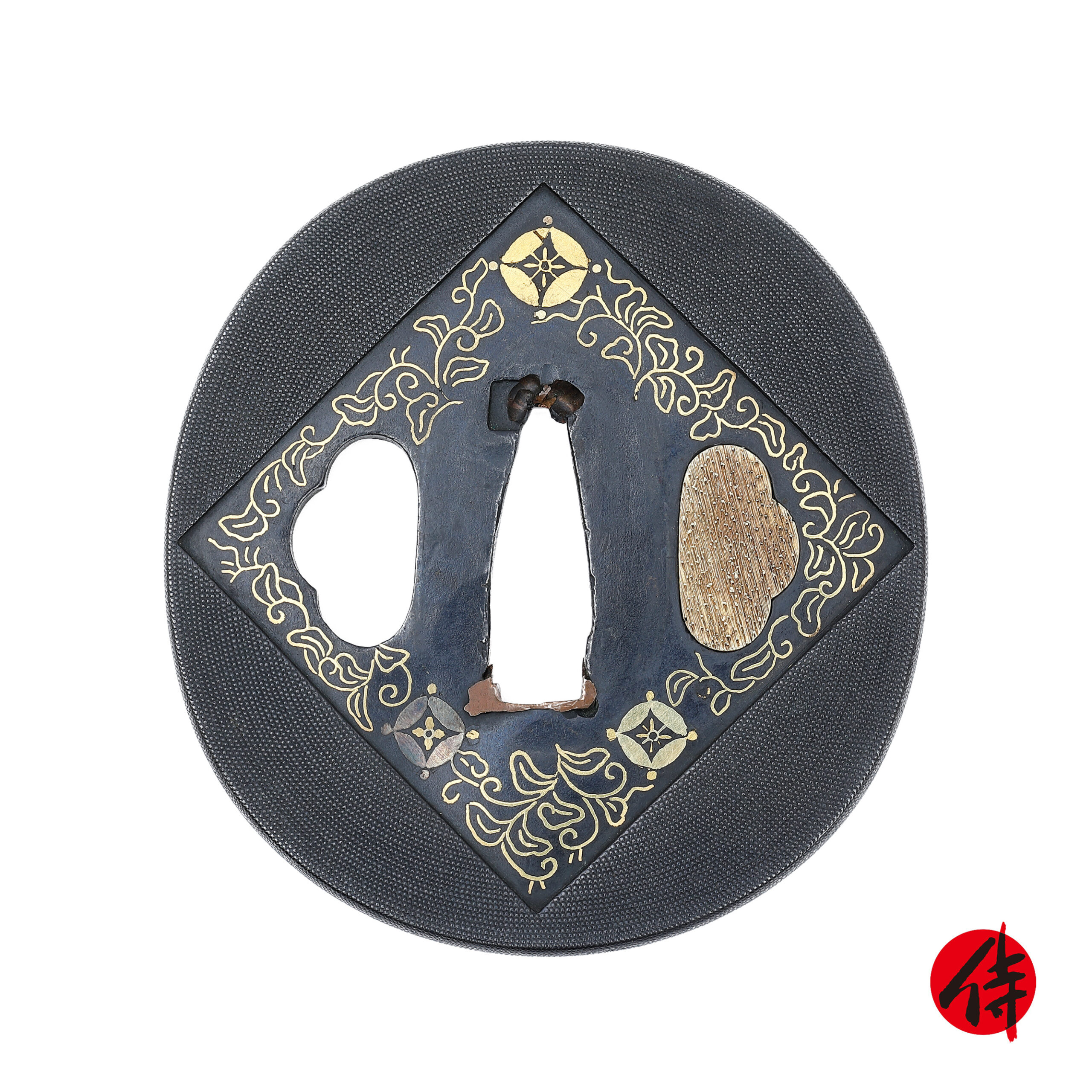
金工 · 加賀
現在19点販売中
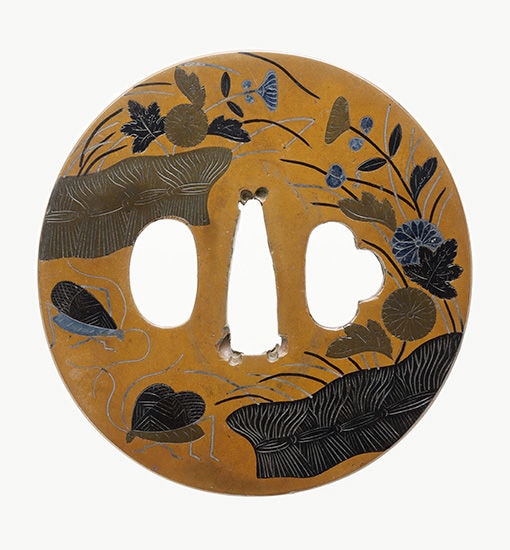
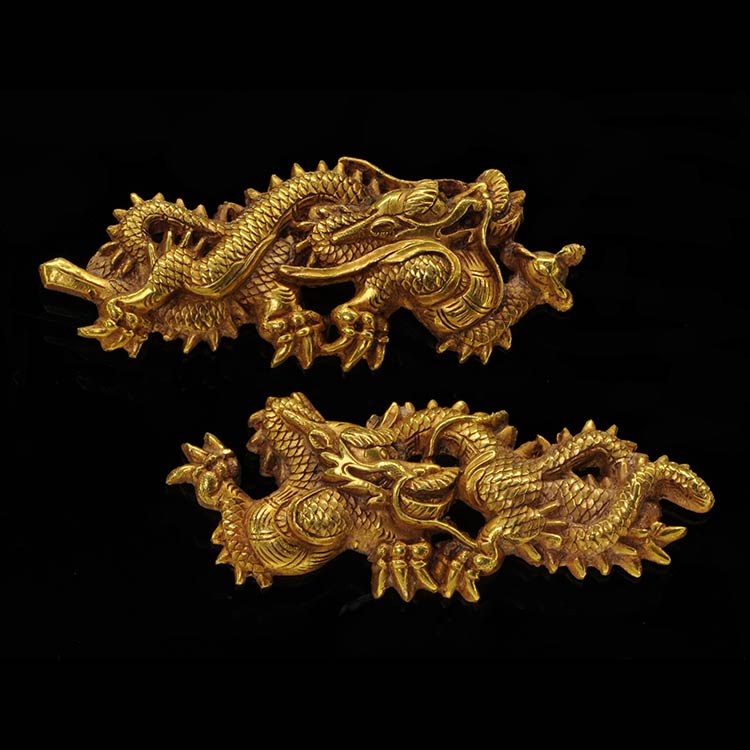
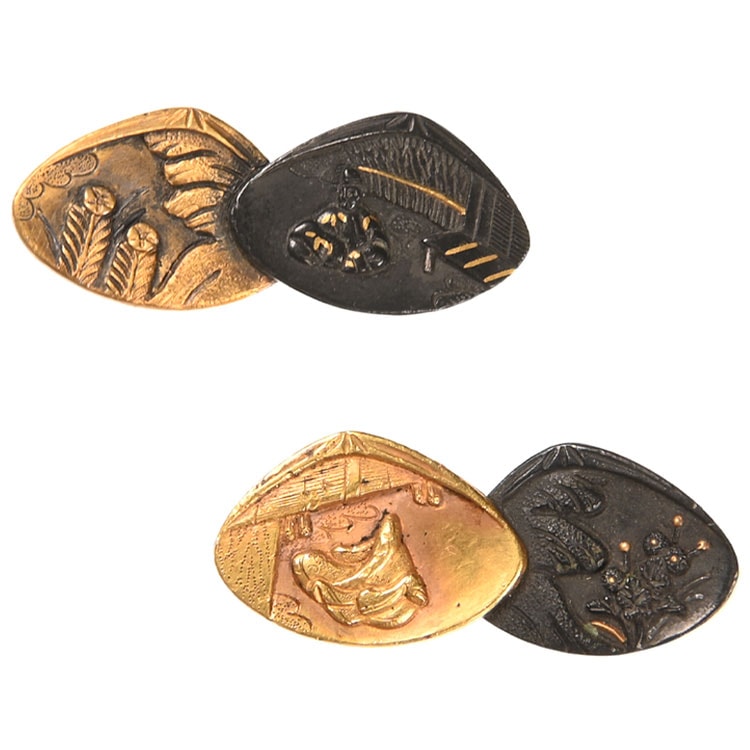
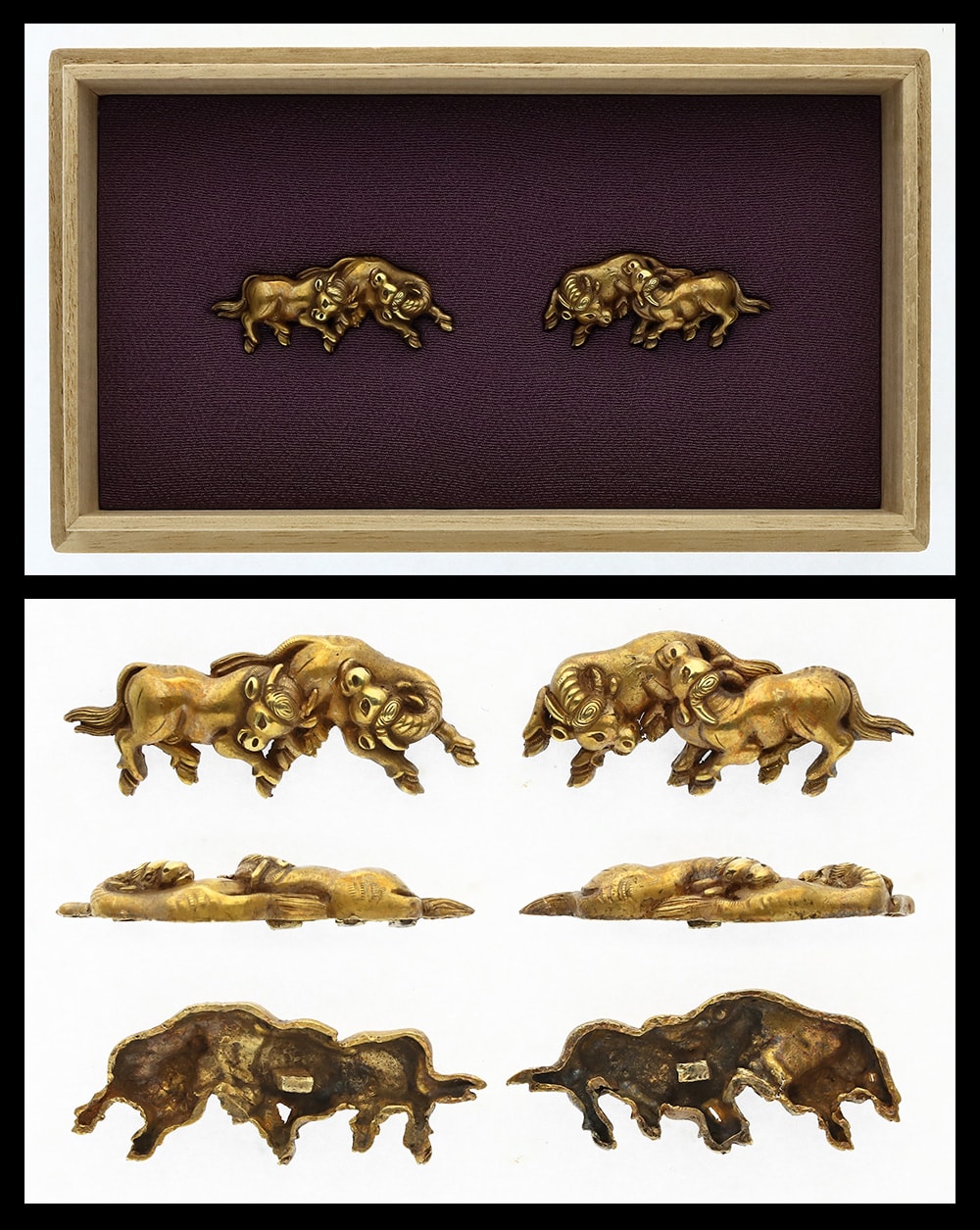
加賀金工は、加賀百万石前田家の庇護のもと、金沢を中心に花開いた地域的金工伝統の総称である。説示によれば、寛永・承応頃に京から桑村・辻・勝木・小市の諸家がこの地に移住して栄えたと伝えられる。なかでも加賀象嵌は、説示が繰り返し「江戸時代初期から享保頃にかけて、金沢を中心に加賀国で発達した独特の平象嵌の技術」と記す通り、当地を代表する技法として確立された。個別の工名としては、前田家十四代藩主前田慶寧所用と伝える拵に「加州住 鈴木嘉平義教」[[c:1]]銘の鐔を残す鈴木嘉平義教、また幕末期まで加賀金工の特色を伝える山尾春理(慶応二年に十八歳で没)が説示に見える。 加賀金工の作風を貫く核心は、磨地に多種の色金を駆使する平象嵌の技術にある。説示は一貫して「赤銅や四分一の磨地に金・銀・銅などの様々の色金を駆使しており、構図も実に巧みである」と評する。この技法は、鐙工が行う平象嵌を鐔や刀装具に応用して栄えたと伝えられる。地金は赤銅・四分一・朧銀・素銅の各磨地が用いられ、素銅地の作は「加賀象嵌としては比較的珍しい」とされて「古調な様相」を呈し、漆黒の赤銅磨地では色金が最も鮮明に映える。金についても配合の割合を変えた数種を使い分けて「画面に一層深い色調をもたらし」、ある鐔では「金も濃淡三色を使い分ける」洗練が指摘されている。また緋色銅や朧銀といった特殊な色金を効果的に配する点も特筆される。平象嵌に加え、毛彫が常に併用される技法であり、作域は高彫・金銀色絵・赤銅魚子地の縁頭や小柄・笄にも及ぶ。意匠は、秋草(薄・桔梗・萩)と群蝶の表裏構成、籬に撫子、柳下鴛鴦、源氏物語の御簾・屏風・扇面、陣中幔幕、さらに前田家の護神とされる白澤の総金具にまで展開し、献上品と目される大作も少なくない。 加賀金工は、平象嵌を至芸にまで高めた地方流派として刀装具史上に独自の位置を占める。説示は最高の評語を惜しまず、ある鐔について「加賀象嵌鐔の見せどころを十二分に披露しており、その真骨頂を遺憾なく発揮している」と述べ、また別の作には「平象嵌毛彫の妙技は非の打ち所がなく、見事という他はない」と記す。前田慶寧所用の拵は「作者が最高の技術をもって制作に臨んだ」[[c:2]]出来映えとされ、総金具の金無垢に卓越した鏨使い、鞘塗の多種の趣きと繊細な芸とが一体となって「実に見応えのある作」[[c:3]]に仕上がっている。また山尾春理銘の大小拵は「金具も塗も最高峰を求めた作品」[[c:4]]と評され、折金や栗形の丸彫、裏瓦にまで凝った意匠を採用するなど細部への徹底したこだわりが認められる。平象嵌の精緻さと構図の巧みさ、多彩な色金の効果、そして高彫・色絵・丸彫を含む総合的な金工技術の高さにおいて、加賀金工は大名文化の精華を体現する伝統として説示に位置づけられている。 詳しく見る →
銘が正しい、または無銘でも年代・流派を指摘でき、美術工芸的価値が認められる、保存に値する真正の刀装具と鑑定されたものです。
日本美術刀剣保存協会(NBTHK)は、1948年に設立され、文化庁の監督を受ける公益財団法人で、東京・刀剣博物館に本部を置きます。専門の審査員が出品作を直接審査し、美術的・歴史的価値に応じた鑑定書を発行します。NBTHKの鑑定書は、日本刀および刀装具の真正性を示す最も広く認知された基準です。
NBTHK公式サイトReturns/exchanges limited to defects caused by shipping (except willful misconduct or gross negligence by the company); customers must contact within 72 hours of receiving the product.
¥216,000
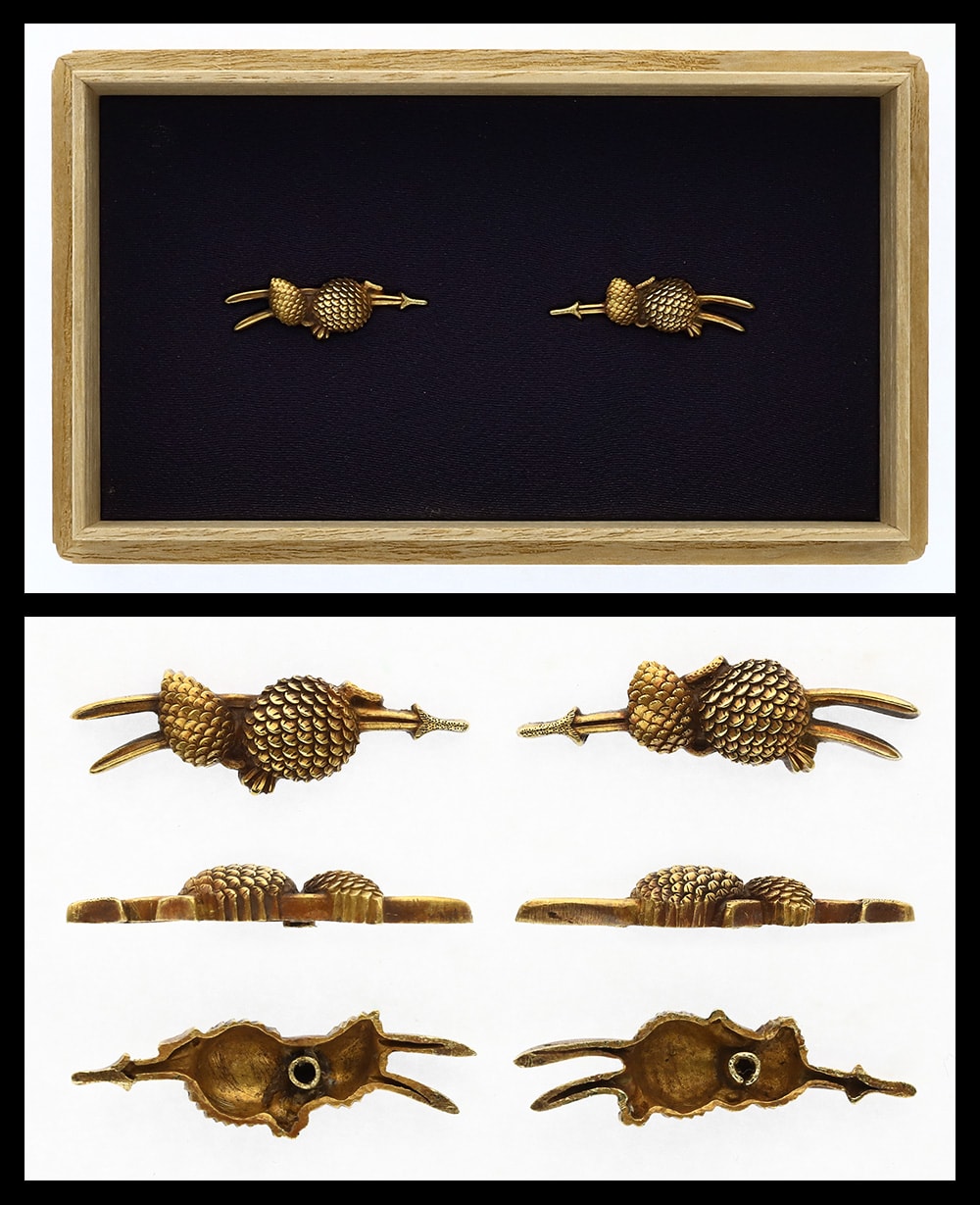
![Menuki - Tokuho - 作 加賀金工派 - 目貫[無銘 加賀金工 爬龍図目貫][日本美術刀剣保存協会]特別保存刀装具](/_next/image?url=https%3A%2F%2Fitbhfhyptogxcjbjfzwx.supabase.co%2Fstorage%2Fv1%2Fobject%2Fpublic%2Flisting-images%2Fworld-seiyudo%2FL165141%2F00.jpg&w=2560&q=90)