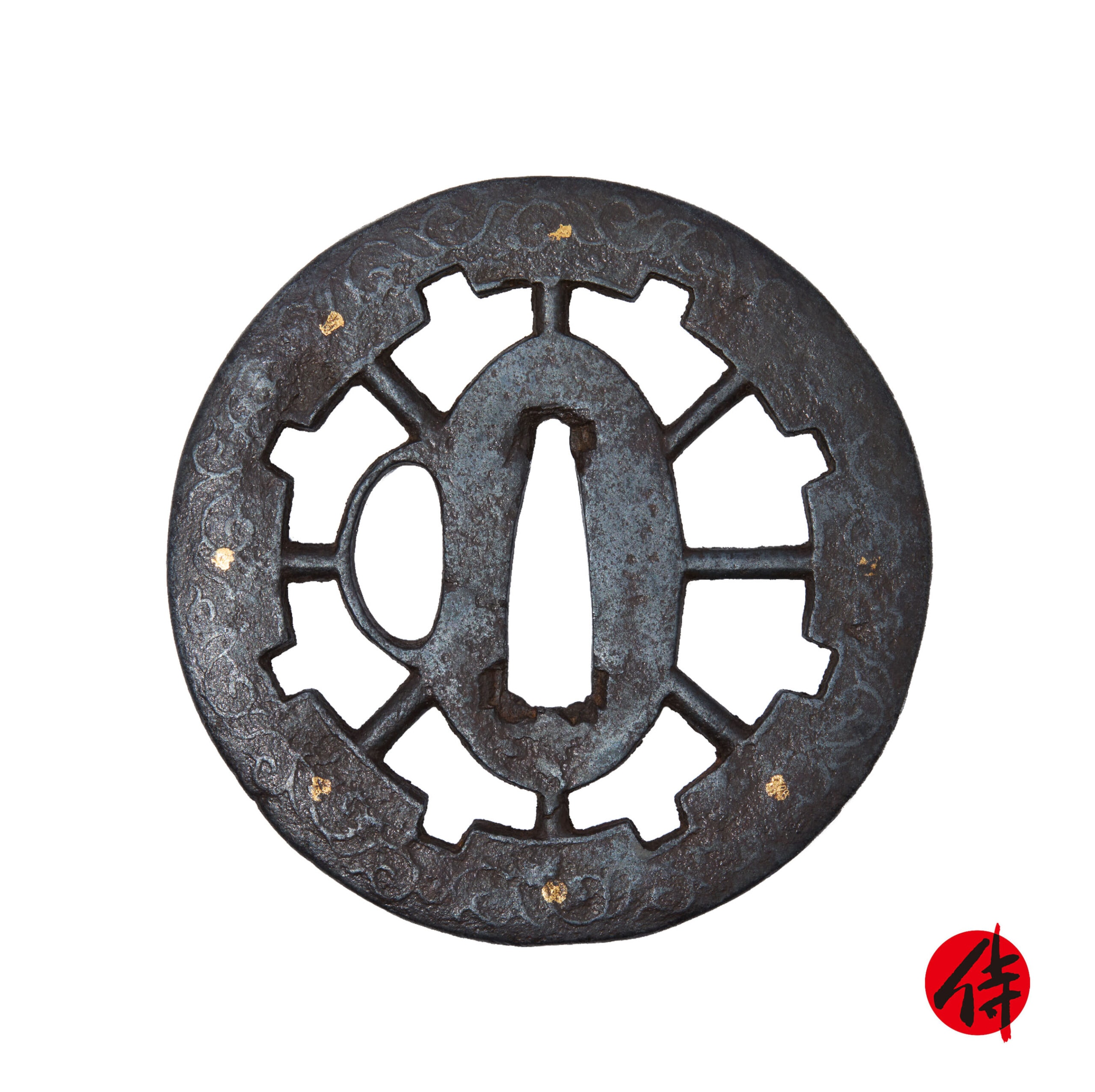
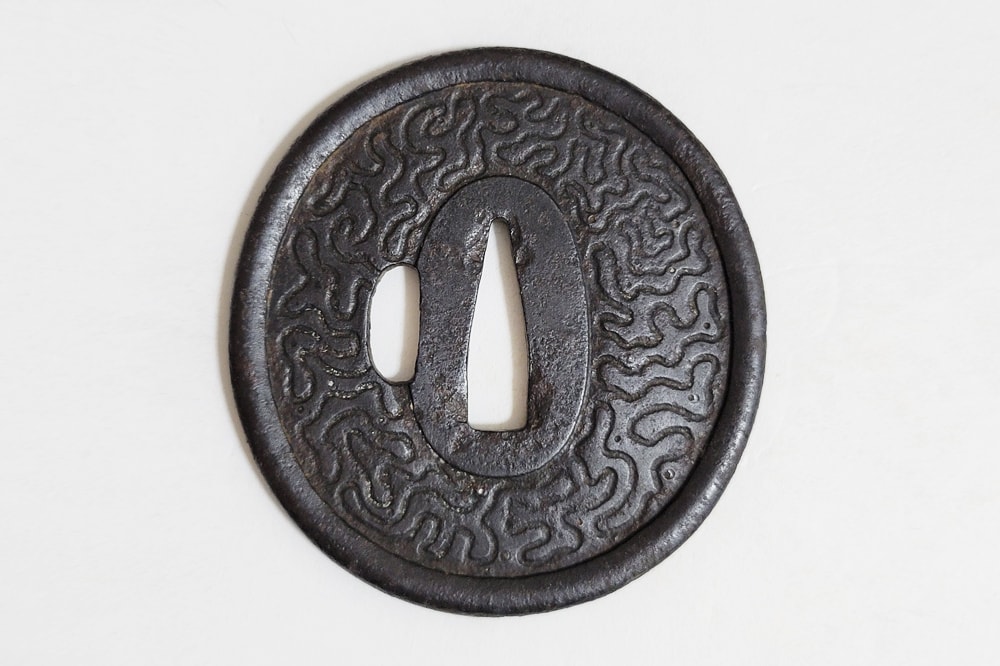
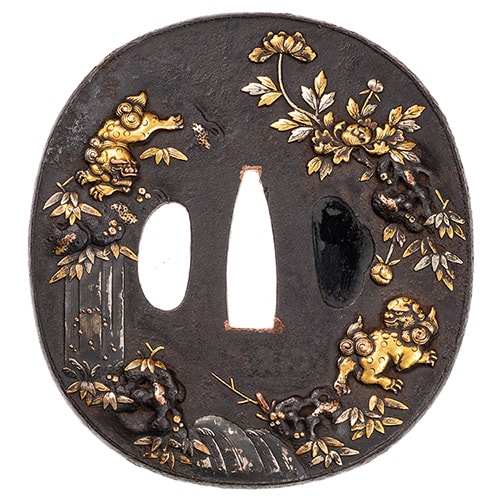
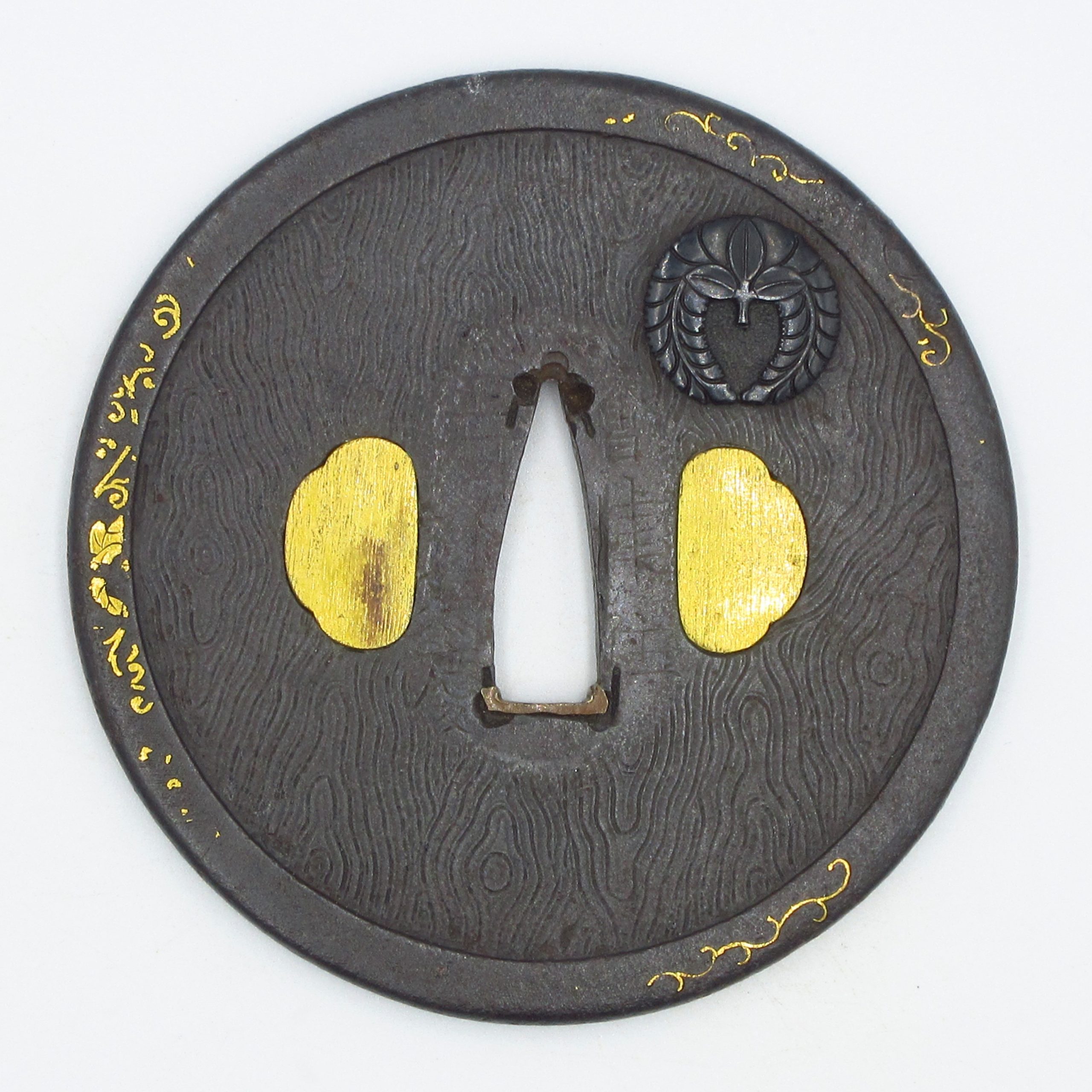
Antique Tsuba for Samurai Sword with NBTHK Hozon Certificate (T
売却済
世界81社の刀剣商を横断追跡 · 価格履歴 · 売却アーカイブ
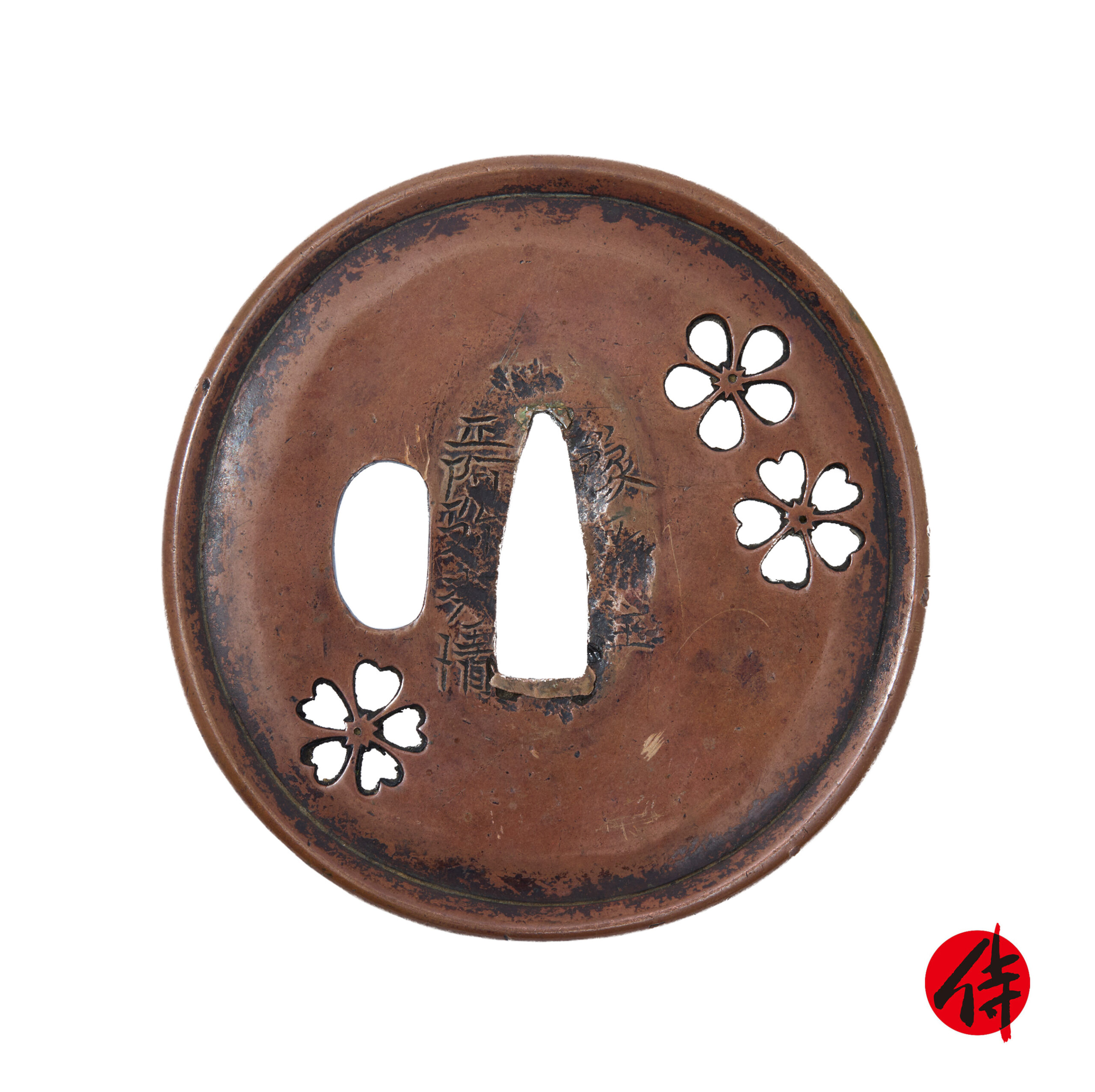
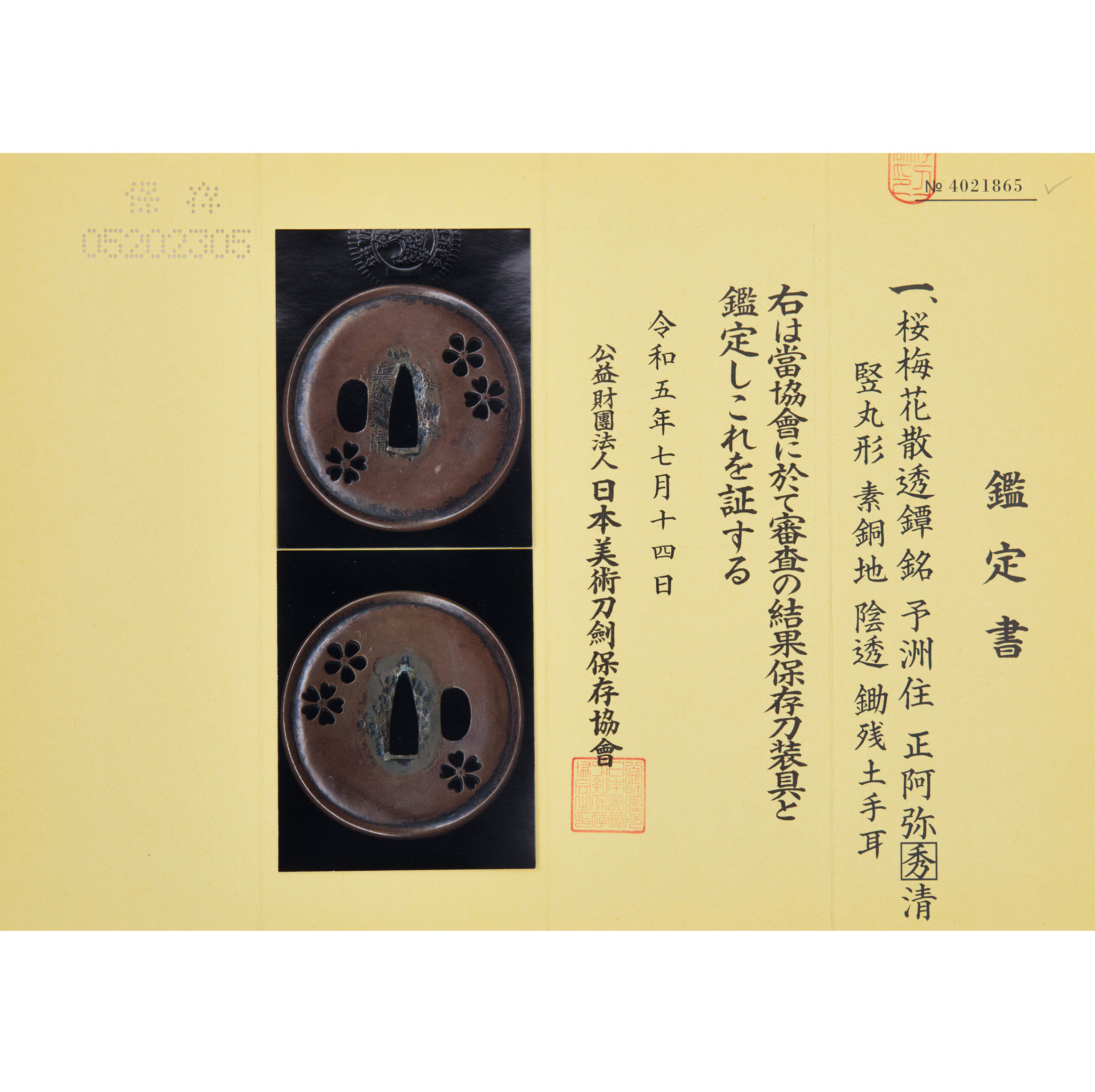
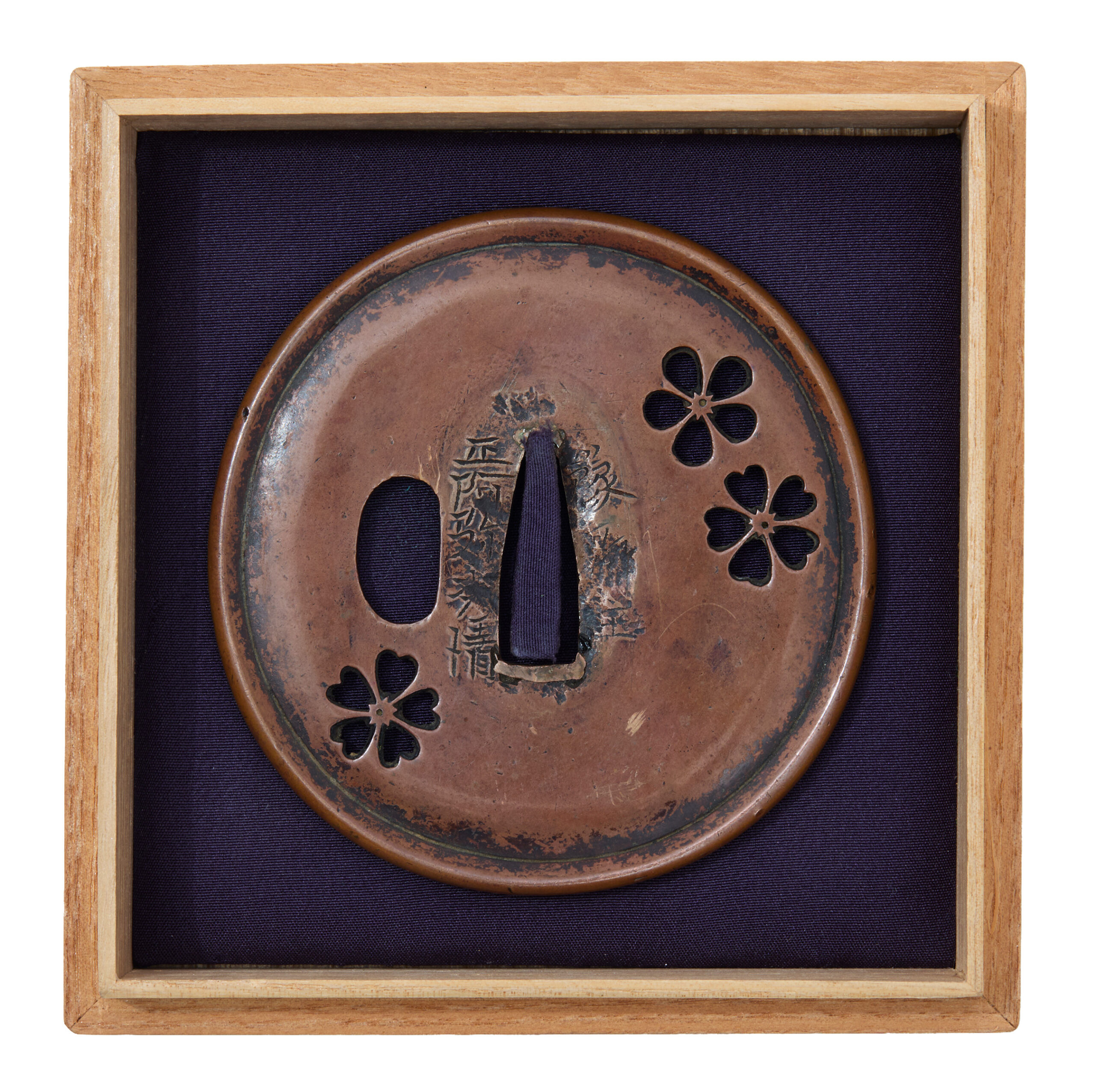
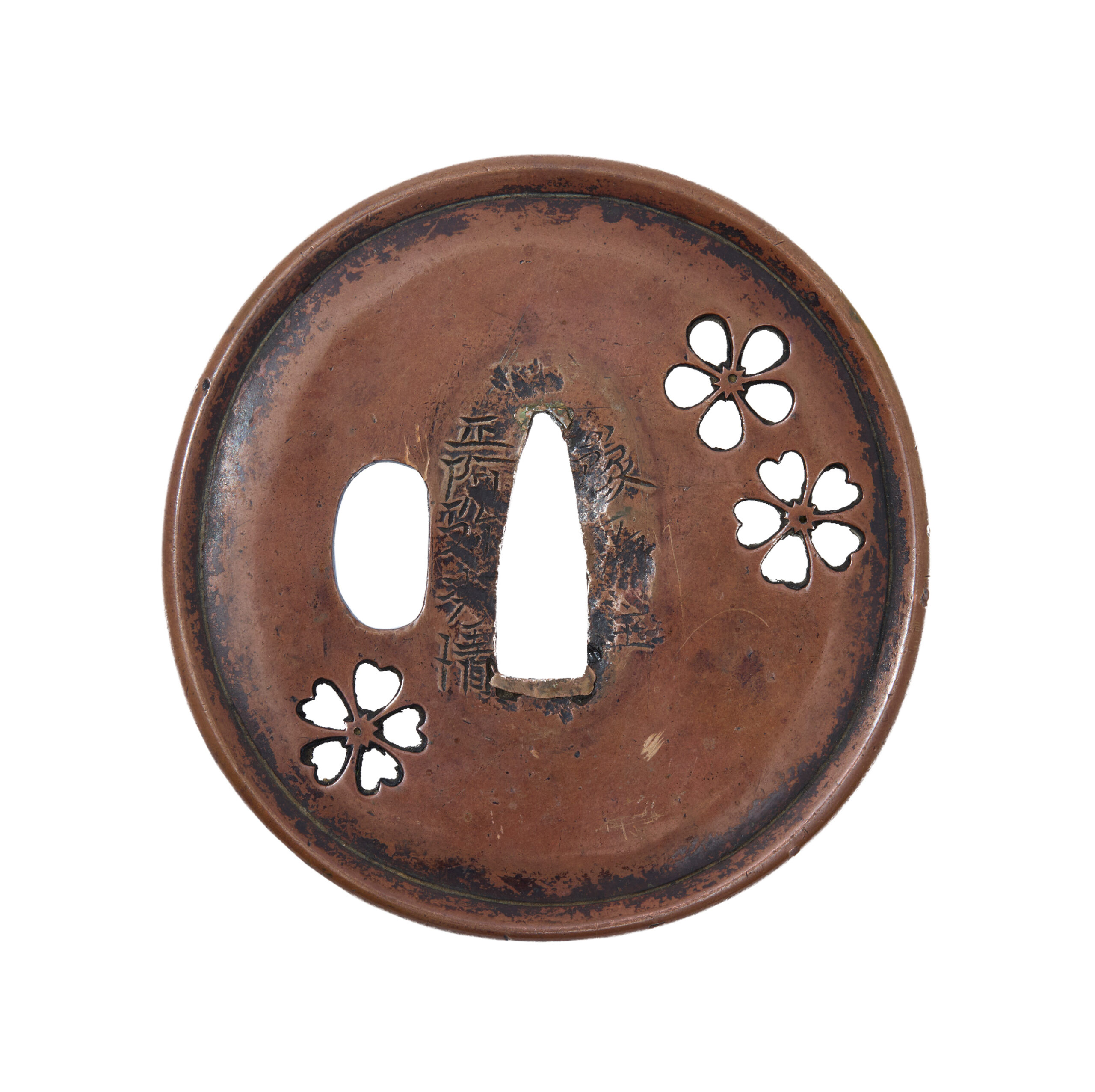
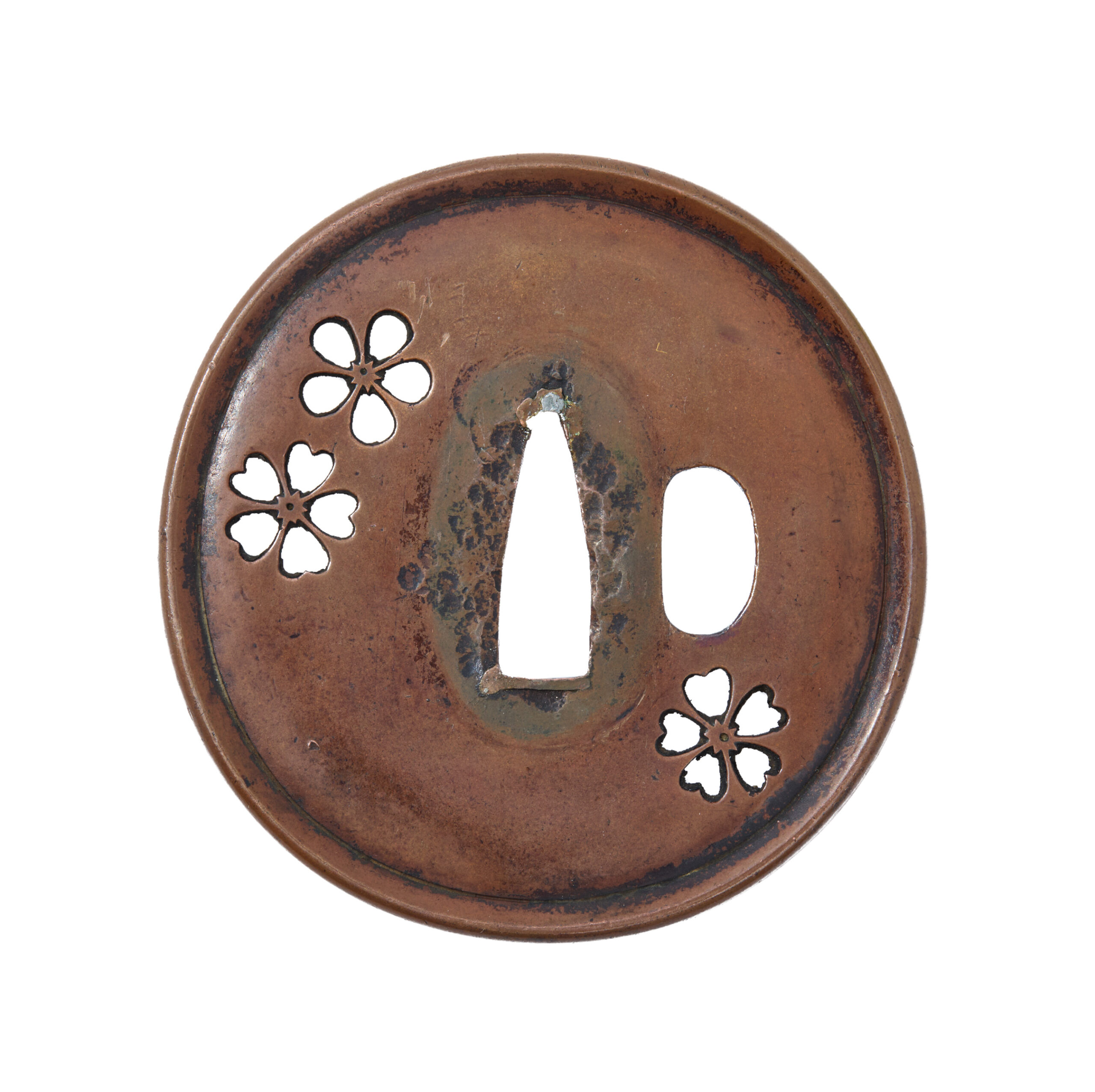
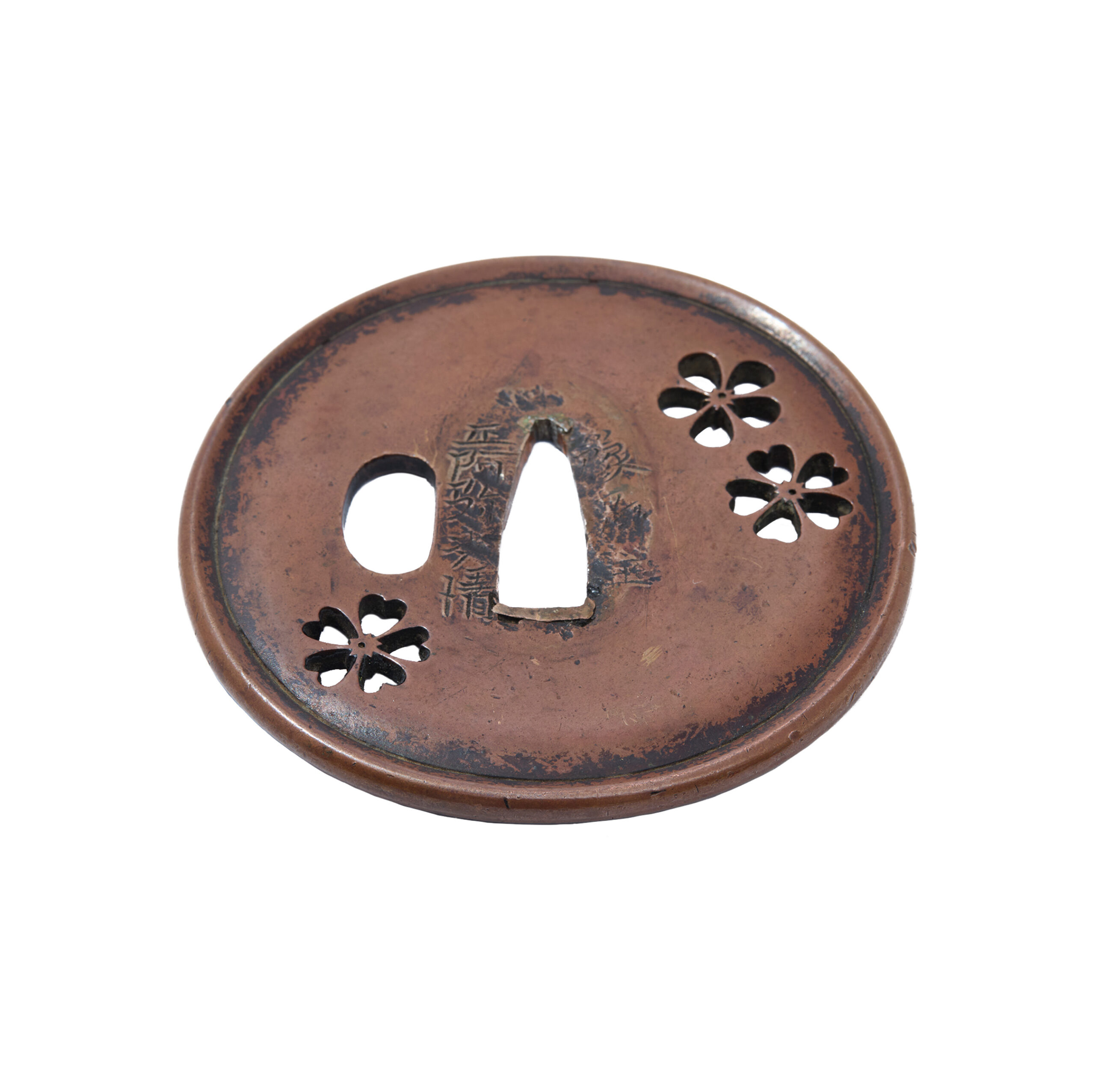
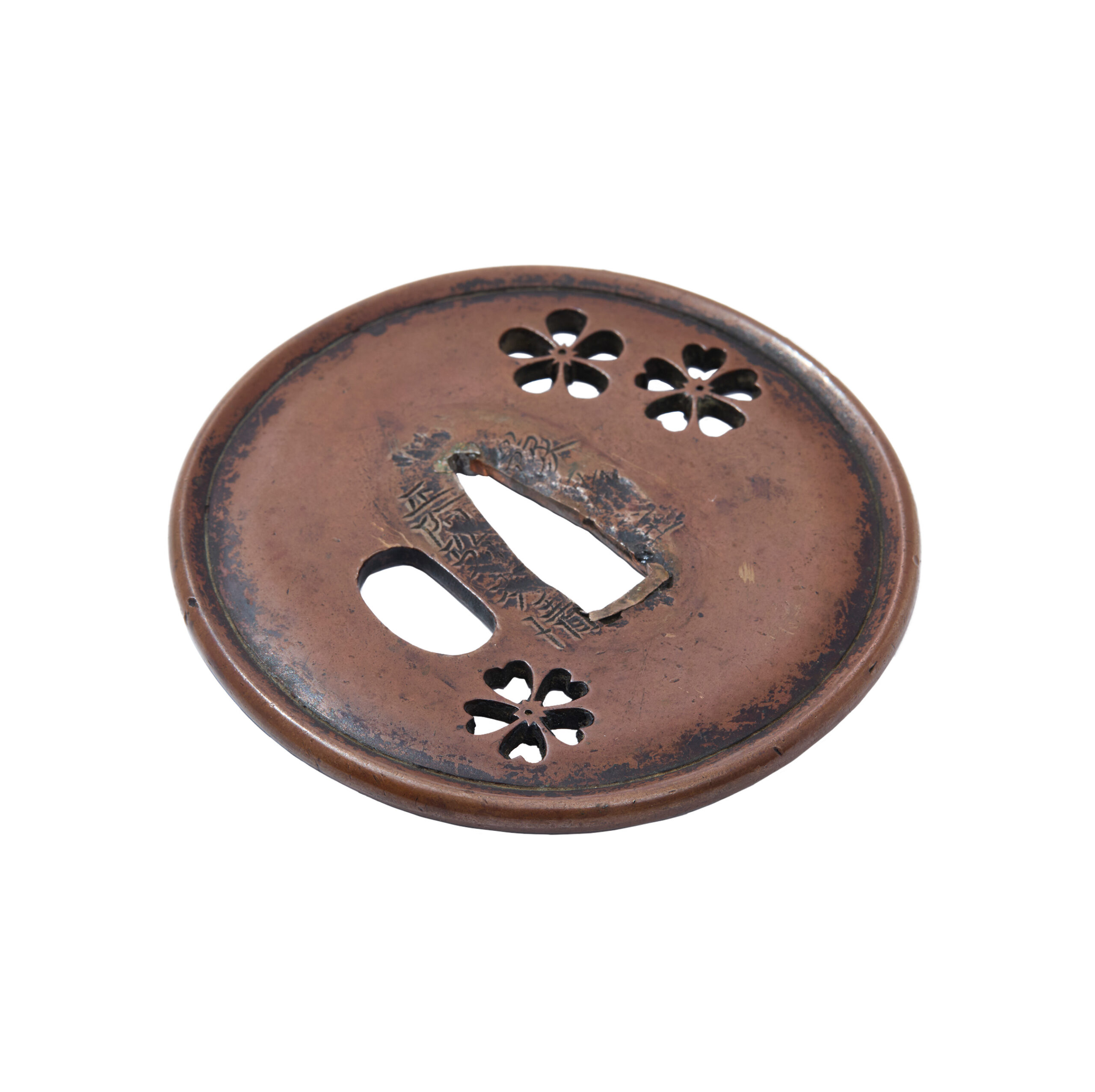
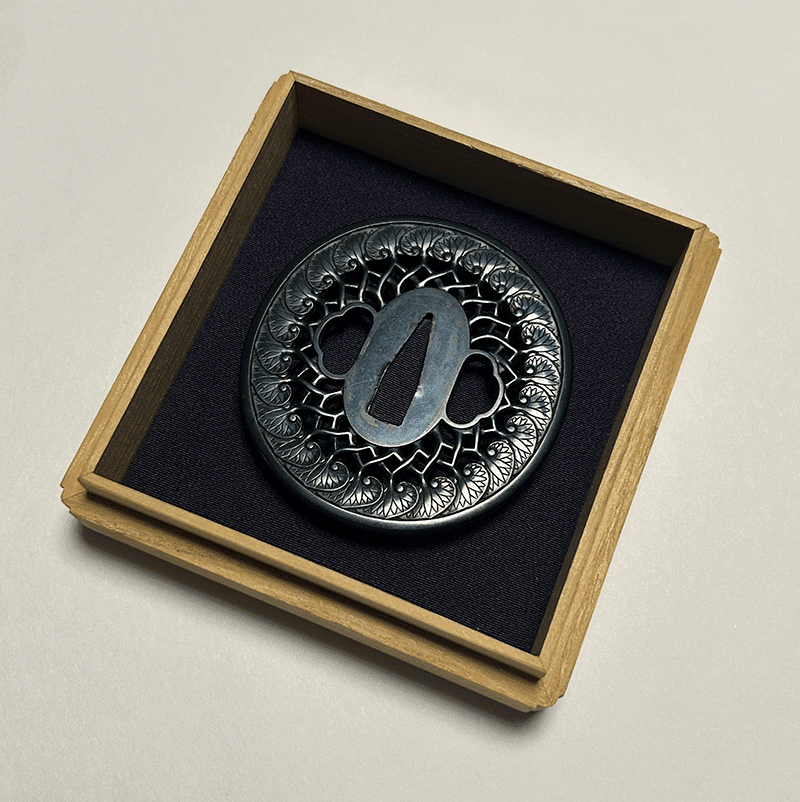
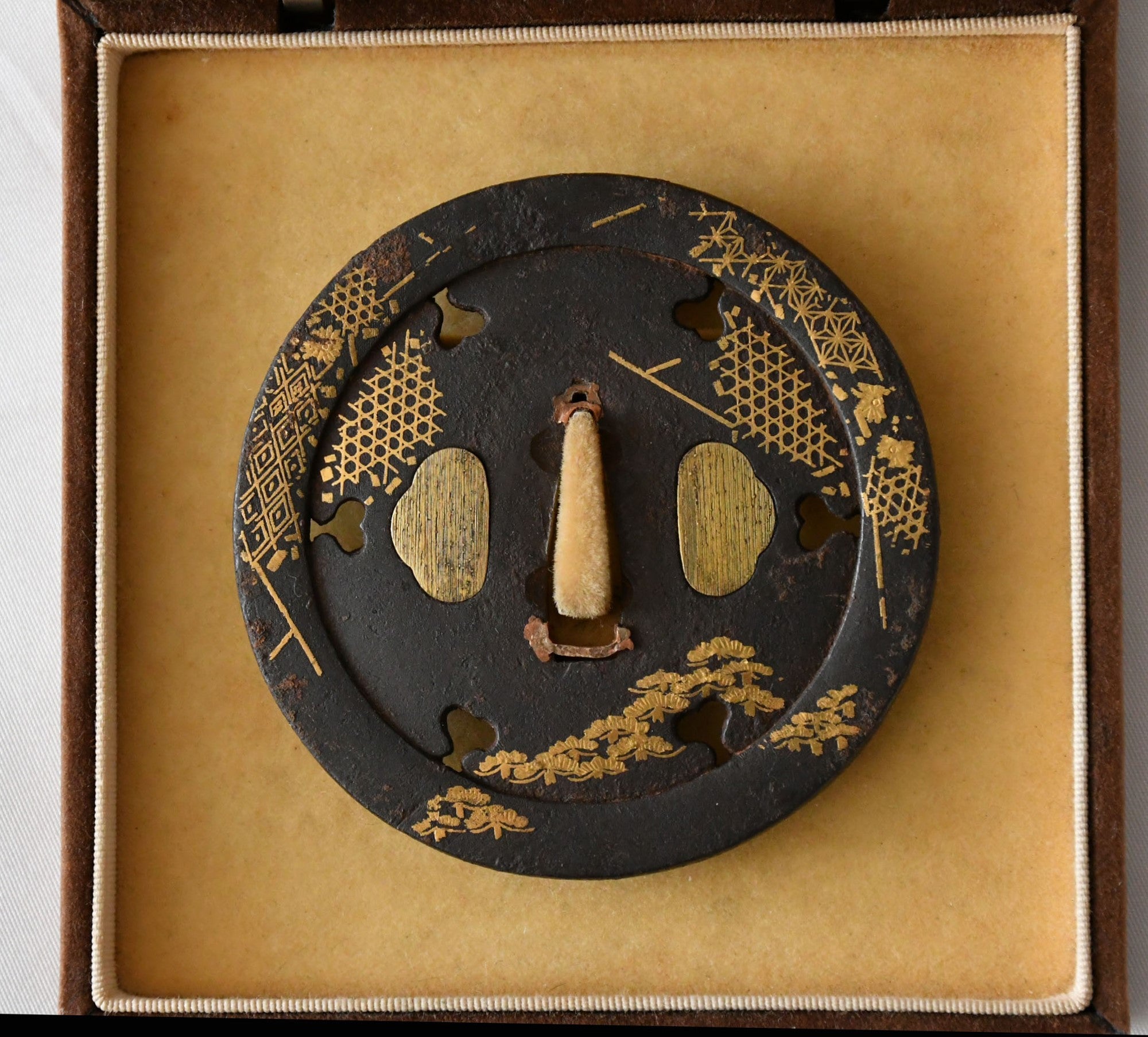
Title: Sakura and Ume Sukashi Tsuba Description This Tsuba features a delicate openwork design of scattered sakura (cherry blossoms) and ume (plum blossoms). According to the authentication certificate, it is attributed to “Yoshū-jū Shoami (予州住正阿弥),” a craftsman from the Shoami school, and is made of Suaka (素銅, a refined copper alloy) in a Kenmaru-gata (rounded-square) shape. The inscription “Yoshū-jū (予州住)” indicates that the artisan belonged to the Shoami school and lived in Iyo Province (伊予国, Iyo-no-Kuni), now known as Ehime Prefecture. The tsuba is crafted from Suaka, a high-purity copper alloy that develops a rich reddish patina over time, making it highly valued in Japanese sword fittings, tea utensils, and fine metalwork for its warm tone and elegant aging process. The design of scattered sakura and ume blossoms carries deep cultural significance in Japan. Cherry blossoms symbolize ephemerality, beauty, and the samurai spirit, reflecting the ideal warrior’s way of life—living with honor and accepting death gracefully. Plum blossoms, known for blooming in early spring after enduring harsh winters, represent resilience, nobility, and longevity, making them a symbol of vitality and prosperity. By incorporating these floral motifs into a refined openwork design, this tsuba not only reflects the Japanese aesthetic appreciation for nature and transience but also embodies the strength and protective symbolism cherished by samurai. What is Tsuba? Tsuba is the hand-guard of the Japanese sword. High-class Samurai wore his Katana sword with its beautiful sword mountings such as Tsuba. Tsuba’s front design tends to be more decorative as this part was often seen by other Samurais when he was walking on the streets. Why is it that the sword mounting was important for Samurai? The sword mountings of the Japanese sword have many kinds of decorations such as handguards (Tsuba), sword hilt (Menuki), pommel (Fuchi Kashira). The Japanese sword worked as a weapon and as an object to show who he was. For example, it shows their personalities and beliefs. You could say that it is like decorations for smartphones today. We recommend you zoom in on the pictures of the sword fittings. When you do so, you can see the skill of Japanese metal engraving techniques. They are mainly made of iron and copper with inlays of gold, silver, and bronze. When it comes to handguard (Tsuba), each one has a different outline and weight. These sword fittings that have lived with Japanese swords of the same age might be worth as much as the Japanese swords. They are inconspicuous parts of the Japanese sword. Nevertheless, if you are knowledgeable or particular about it, you will become a connoisseur of the Samurai. Authentication Paper : NBTHK Hozon Certificate (No. 4021865) NBTHK, also known as Nihon Bijutsu Touken Hozon Kyokai (the Society for the Preservation of the Japan Art Sword), is one of the oldest Japanese sword appraising organizations in modern-day Japan. They authenticated the Tsuba on July 14th in the 5th year of Reiwa (2023). They appraised it as Hozon Tousougu, the Tsuba worth preserving for Japanese society. The purchaser will receive this original certificate as well. We can also translate what is written into English and make a PDF file for your record if you request. 【About us】 Samurai Museum is located in Tokyo, Japan, exhibiting antique artifacts related to the Samurai history. Samurai Museum Shop is the place for those who are interested in Japanese culture and craftsmanship. We deal with antique Samurai swords/armor, traditional crafts made in Japan and so on. 【Payment method】 We accept payment through Stripe (Credit card), PayPal , Apple Pay or ChromePay, all of which are secure payment methods. Also, you don’t need to make an account on Stripe for the checkout. If you prefer other payment method, please contact us. You may either pay in JPY , USD , AUD , CAD , EUR , CHF or GBP . The price is set in Japanese Yen. Prices in other currencies

売却済
世界81社の刀剣商を横断追跡 · 価格履歴 · 売却アーカイブ
Title: Sakura and Ume Sukashi Tsuba Description This Tsuba features a delicate openwork design of scattered sakura (cherry blossoms) and ume (plum blossoms). According to the authentication certificate, it is attributed to “Yoshū-jū Shoami (予州住正阿弥),” a craftsman from the Shoami school, and is made of Suaka (素銅, a refined copper alloy) in a Kenmaru-gata (rounded-square) shape. The inscription “Yoshū-jū (予州住)” indicates that the artisan belonged to the Shoami school and lived in Iyo Province (伊予国, Iyo-no-Kuni), now known as Ehime Prefecture. The tsuba is crafted from Suaka, a high-purity copper alloy that develops a rich reddish patina over time, making it highly valued in Japanese sword fittings, tea utensils, and fine metalwork for its warm tone and elegant aging process. The design of scattered sakura and ume blossoms carries deep cultural significance in Japan. Cherry blossoms symbolize ephemerality, beauty, and the samurai spirit, reflecting the ideal warrior’s way of life—living with honor and accepting death gracefully. Plum blossoms, known for blooming in early spring after enduring harsh winters, represent resilience, nobility, and longevity, making them a symbol of vitality and prosperity. By incorporating these floral motifs into a refined openwork design, this tsuba not only reflects the Japanese aesthetic appreciation for nature and transience but also embodies the strength and protective symbolism cherished by samurai. What is Tsuba? Tsuba is the hand-guard of the Japanese sword. High-class Samurai wore his Katana sword with its beautiful sword mountings such as Tsuba. Tsuba’s front design tends to be more decorative as this part was often seen by other Samurais when he was walking on the streets. Why is it that the sword mounting was important for Samurai? The sword mountings of the Japanese sword have many kinds of decorations such as handguards (Tsuba), sword hilt (Menuki), pommel (Fuchi Kashira). The Japanese sword worked as a weapon and as an object to show who he was. For example, it shows their personalities and beliefs. You could say that it is like decorations for smartphones today. We recommend you zoom in on the pictures of the sword fittings. When you do so, you can see the skill of Japanese metal engraving techniques. They are mainly made of iron and copper with inlays of gold, silver, and bronze. When it comes to handguard (Tsuba), each one has a different outline and weight. These sword fittings that have lived with Japanese swords of the same age might be worth as much as the Japanese swords. They are inconspicuous parts of the Japanese sword. Nevertheless, if you are knowledgeable or particular about it, you will become a connoisseur of the Samurai. Authentication Paper : NBTHK Hozon Certificate (No. 4021865) NBTHK, also known as Nihon Bijutsu Touken Hozon Kyokai (the Society for the Preservation of the Japan Art Sword), is one of the oldest Japanese sword appraising organizations in modern-day Japan. They authenticated the Tsuba on July 14th in the 5th year of Reiwa (2023). They appraised it as Hozon Tousougu, the Tsuba worth preserving for Japanese society. The purchaser will receive this original certificate as well. We can also translate what is written into English and make a PDF file for your record if you request. 【About us】 Samurai Museum is located in Tokyo, Japan, exhibiting antique artifacts related to the Samurai history. Samurai Museum Shop is the place for those who are interested in Japanese culture and craftsmanship. We deal with antique Samurai swords/armor, traditional crafts made in Japan and so on. 【Payment method】 We accept payment through Stripe (Credit card), PayPal , Apple Pay or ChromePay, all of which are secure payment methods. Also, you don’t need to make an account on Stripe for the checkout. If you prefer other payment method, please contact us. You may either pay in JPY , USD , AUD , CAD , EUR , CHF or GBP . The price is set in Japanese Yen. Prices in other currencies

売却済
世界81社の刀剣商を横断追跡 · 価格履歴 · 売却アーカイブ