売切れ
Hozon売切れ
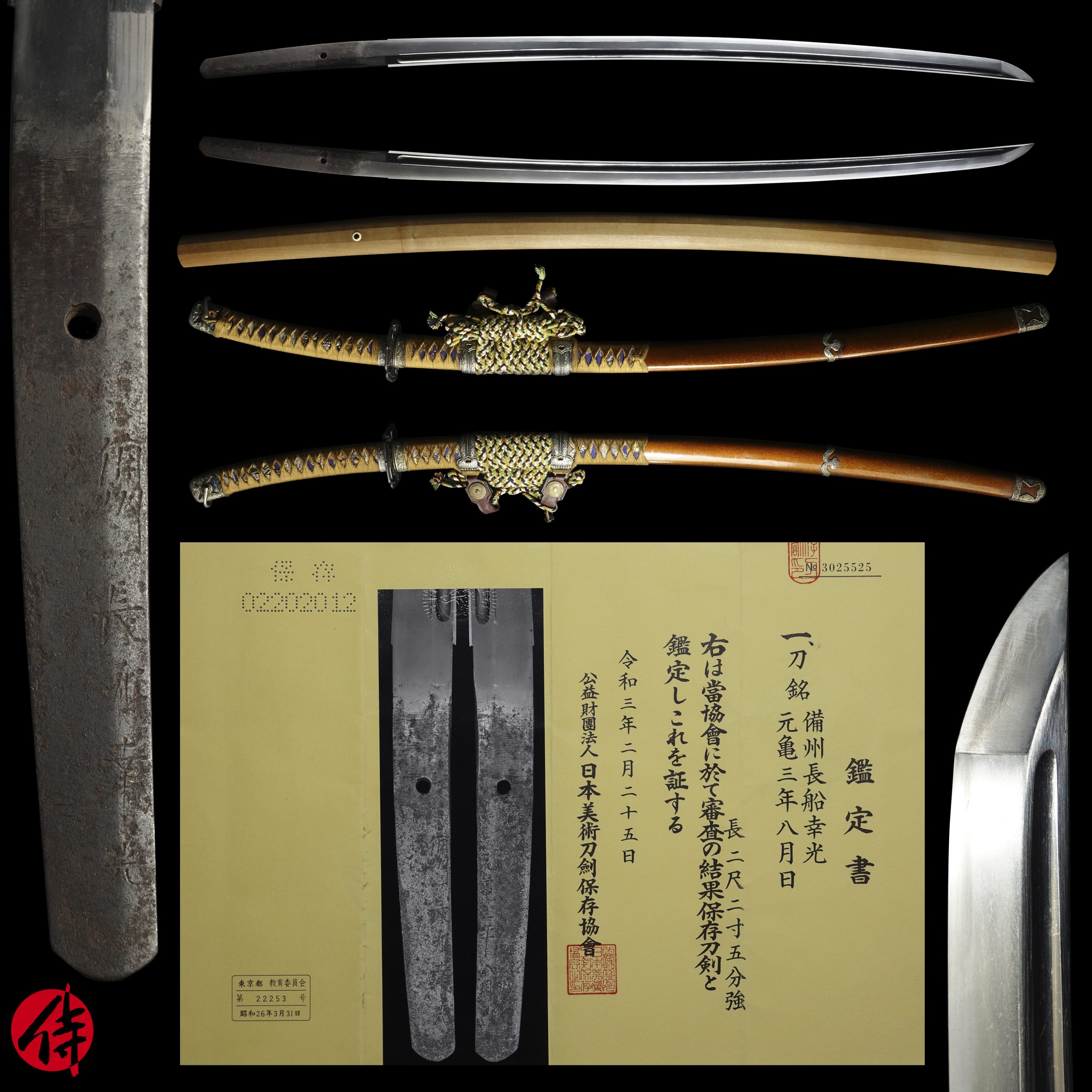
Antique Japanese Sword Katana Signed by Yukimitsu NBTHK Hozon Certificate
売却済
世界76社の刀剣商を横断追跡 · 価格履歴 · 売却アーカイブ
仕様
長さ
68.2 cm
反り
1.66 cm
Antique Japanese Sword Katana Signed by Bizen Osafune Yukimitsu with Hozon Certificate 【Description】 This blade was signed by Bizen Osafune Yukimitsu(備前長船幸光) in August in the third year of Genki era( 1572 ), judging from the signature. Bizen is the name of the province located in Okayama prefecture today and Osafune is the school he belonged. The swordsmith name Yukimitsu lasted 9th generations and its foundation dates back to O-EI era(Mid-Nanbokucho era:1368-1428). Based on the signature, we believe it was forged by either 8th or 9th generations. There are so many prestigious schools in Bizen province and Yukimitsu school was one of the most famous ones, having such long history. The swordsmiths in Bizen produced many swords during the Muromachi period-Azuchi Momoyama period as it was in the middle of the Sengoku period(Warring state period). The demand for swords increased among strong feudal lords. It would be nice to have a piece forged in the warring state period when there was so much rivalry between warlords. Bizen is the birthplace of Bizen Den, one of the most famous Japanese sword traditions, along with Yamashiro Den, Soshu Den, Mino Den, and Yamato Den. They are called Gokaden. BIZEN is located near the Chugoku Mountains, where iron sands, one of the essential materials for making Japanese swords, were abundant. Furthermore, BIZEN swordsmiths had close access to Yoshi River, where they could find water and charcoal. This geological location contributed to the swordsmiths to forge high-quality refined blades. We presume BIZEN was quite active in sword-forging from ancient times. It is said that BIZEN DEN was created by groups of swordsmiths there after the late Heian era(Late 12th century ). This blade is stored in Tachi(太刀) Koshirae. Tachi was mainly used by an armored Samurai with one hand on horseback from the Heian period (794-1185 A.D.) until the early Muromachi period. TACHI was suspended loosely on the left waist with its edge facing the ground so that you could draw it faster to cut down soldiers on the ground. Because of its gorgeous looking, having a Tachi-style sword mounting became a social status among Samurai. This blade is appraised as a Hozon Token(保存刀剣) issued by NBTHK(Nihon Bijutsu Touken Hozon Kyokai:日本美術刀剣保存協会). This authentication paper was only given to authentic Japanese swords, well preserved with artistic value. 【 Blade】 Cutting Edge Length(Nagasa) : 68.2 cm(26.85 inches) Curvature(Sori) : 1.66 cm(0.65 inches) For more detailed measurement of the blade/sword mounting Hamon : The crystalline structure which forms along the cutting edge of a blade as a result of the hardening process Jimon(Jihada) : visible steel surface pattern created by folding and hammering during forging process Nakago : Nakago is the tang of the Japanese sword. Japanese swordsmiths left the black rust on the tang because it prevents red rust while the tang is in its handle. And the discoloration of the tang was created over time, and it is a great indicator for a Japanese sword specialist to estimate when the sword was forged. Koshirae: Koshirae is the mounting of the Japanese sword. There are several parts that consist of Koshirae such as Saya(Scabbard), Tsuka( Handle), Tsuba(Handguard). Fuchi-Kashira : A pair of matching sword fittings that cover the upper and bottom parts of its sword hilt. The plant pattern is engraved on this Fuchi Kashira. From the appearance of undulating vines, it seems to be a kind of the Karakusa (唐草, arabesque) pattern. It is a design in which stems and leaves of vines are twined and make curves. Since ivy has a strong vitality and grows up without interruption, some people regarded this design as a symbol of prosperity and longevity. Vine is called Tsuru (蔓) in Japanese, and this letter has another pronunciation; “Man.” There is a word 万 (it is also read Man), which means thousand. In the Karakusa pattern, leaves and vines are connected like Obi (帯, belt). The word “帯” can also be read “Tai.”
 NihontoWatchBETA
売却済
世界76社の刀剣商を横断追跡 · 価格履歴 · 売却アーカイブ
68.2 cm
1.66 cm
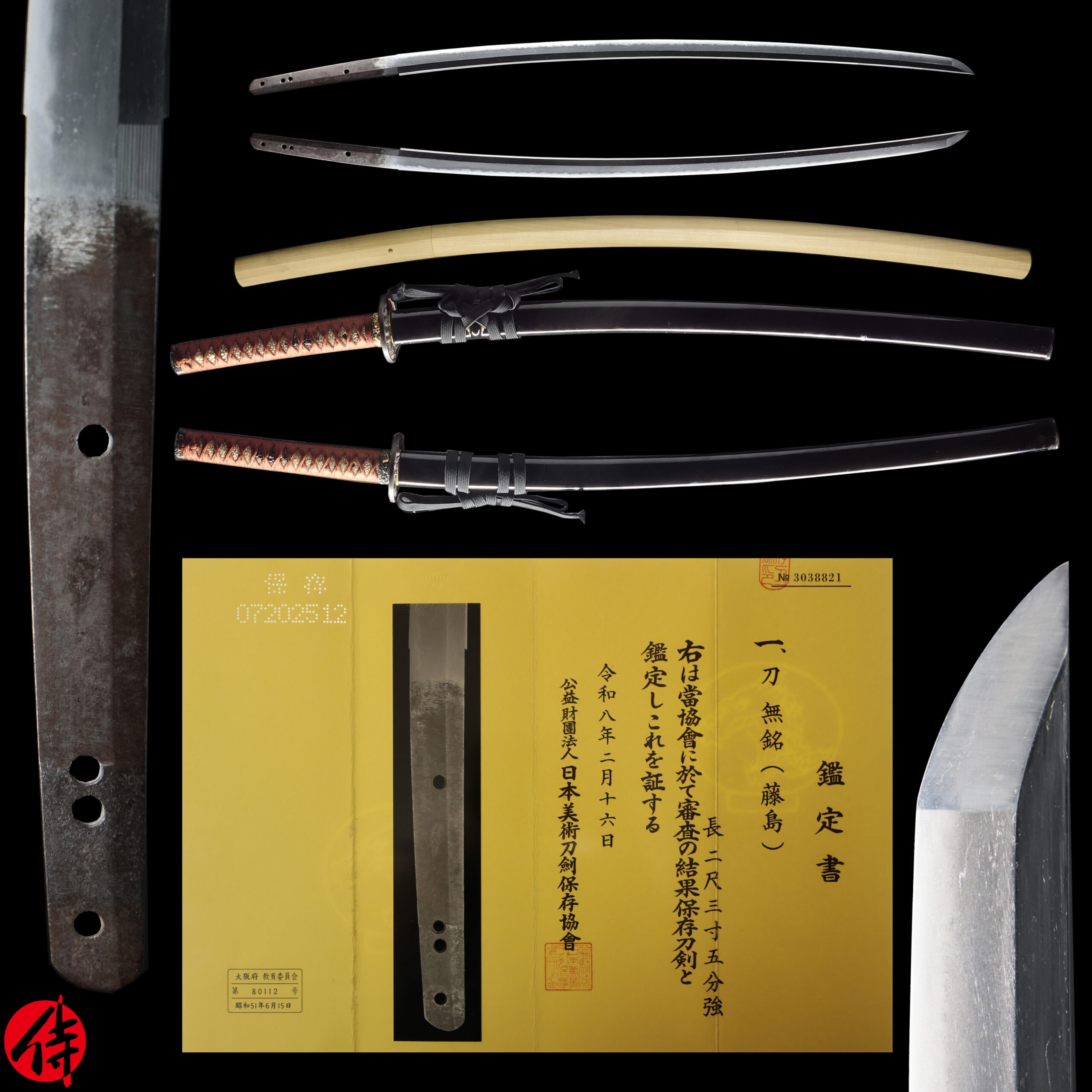
Muromachi Katana attributed to Fujishima for sale| Samurai Museum Shop E-mail FB Messenger Skip to content Menu Close Samurai Museum Shop Products Antique Japanese Sword Katana attributed to Fujishima NBTHK Hozon Certificate Updated: 16 Jun 2026 Antique Japanese Sword Katana attributed to Fujishima NBTHK Hozon Certificate
$5,302
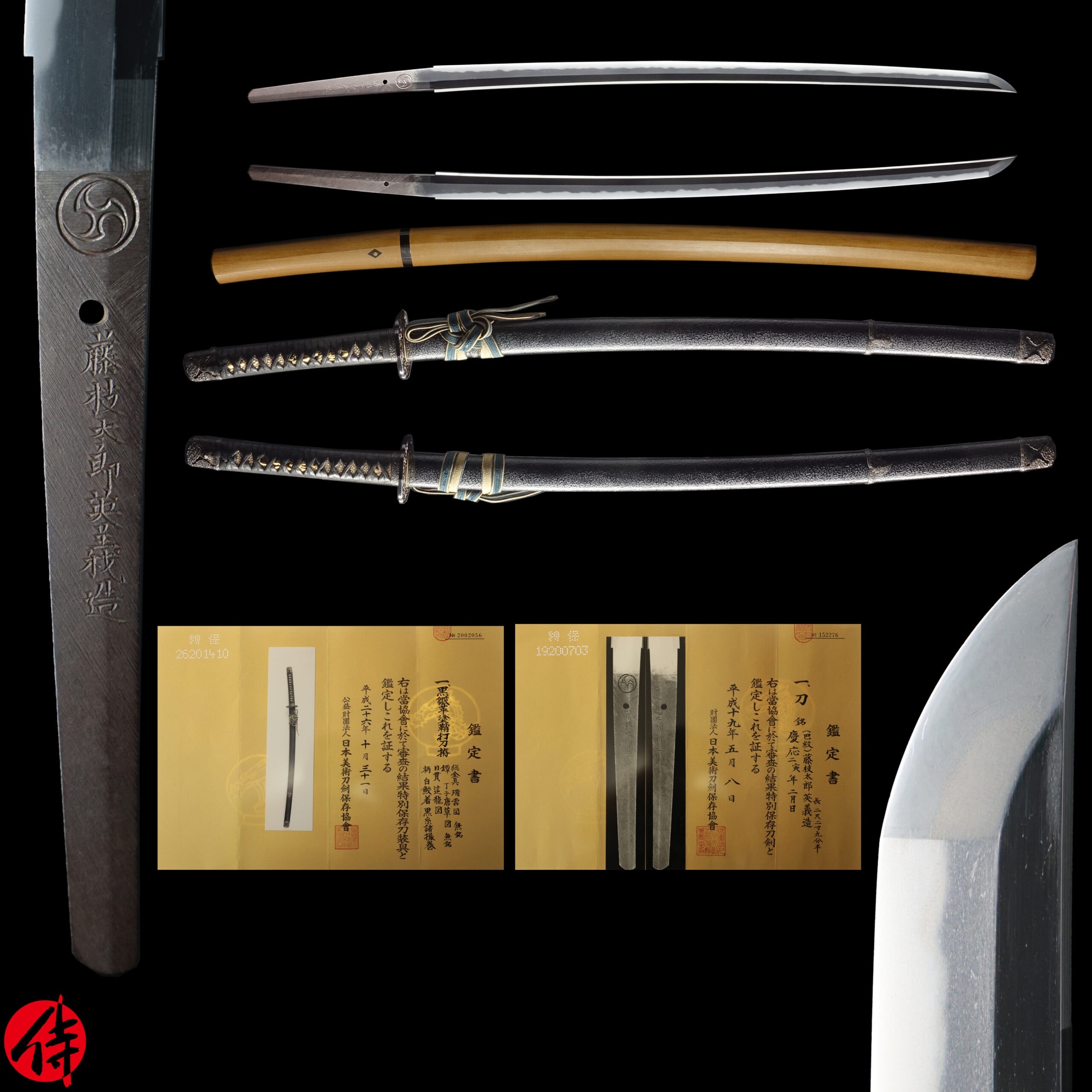
Antique Japanese Sword Katana Signed by Fujieda Teruyoshi NBTHK Tokubetsu Hozon for the blade and Koshirae
$23,701
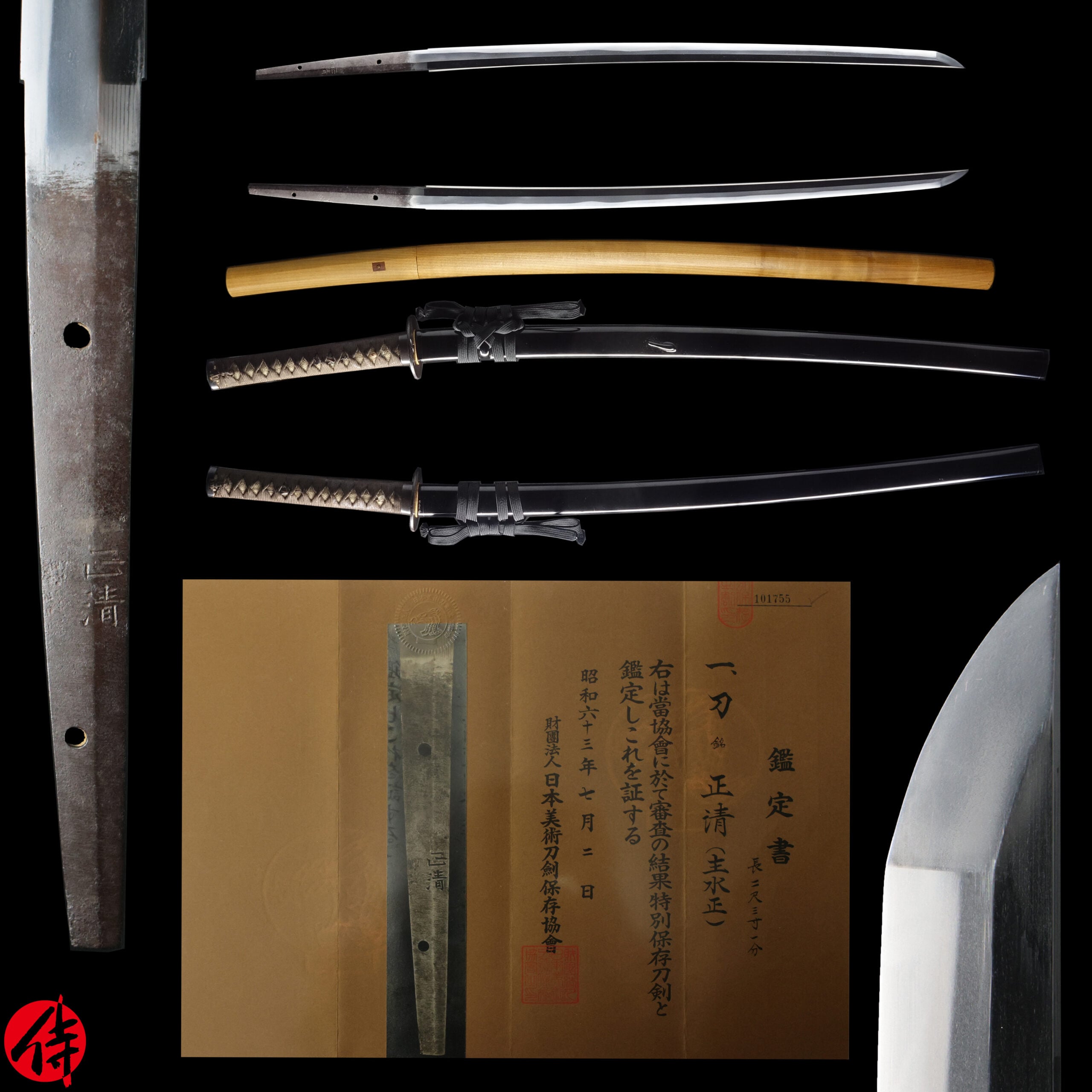
Antique Japanese Sword Katana Signed by Masakiyo NBTHK Tokubetsu Hozon Certificate
$17,464
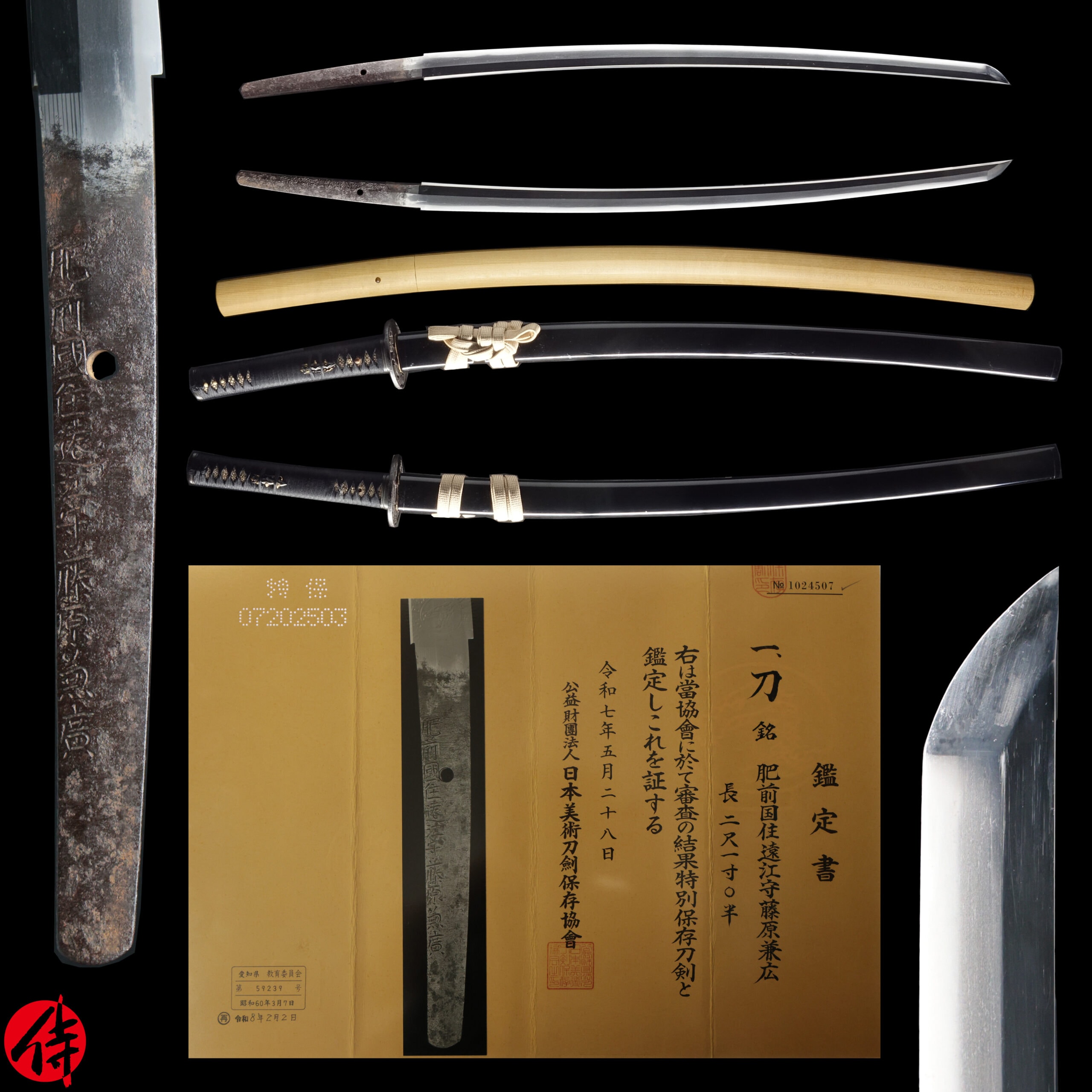
Antique Japanese Sword Katana Signed by Kanehiro NBTHK Tokubetsu Hozon Certificate
$6,112
Antique Japanese Sword Katana Signed by Bizen Osafune Yukimitsu with Hozon Certificate 【Description】 This blade was signed by Bizen Osafune Yukimitsu(備前長船幸光) in August in the third year of Genki era( 1572 ), judging from the signature. Bizen is the name of the province located in Okayama prefecture today and Osafune is the school he belonged. The swordsmith name Yukimitsu lasted 9th generations and its foundation dates back to O-EI era(Mid-Nanbokucho era:1368-1428). Based on the signature, we believe it was forged by either 8th or 9th generations. There are so many prestigious schools in Bizen province and Yukimitsu school was one of the most famous ones, having such long history. The swordsmiths in Bizen produced many swords during the Muromachi period-Azuchi Momoyama period as it was in the middle of the Sengoku period(Warring state period). The demand for swords increased among strong feudal lords. It would be nice to have a piece forged in the warring state period when there was so much rivalry between warlords. Bizen is the birthplace of Bizen Den, one of the most famous Japanese sword traditions, along with Yamashiro Den, Soshu Den, Mino Den, and Yamato Den. They are called Gokaden. BIZEN is located near the Chugoku Mountains, where iron sands, one of the essential materials for making Japanese swords, were abundant. Furthermore, BIZEN swordsmiths had close access to Yoshi River, where they could find water and charcoal. This geological location contributed to the swordsmiths to forge high-quality refined blades. We presume BIZEN was quite active in sword-forging from ancient times. It is said that BIZEN DEN was created by groups of swordsmiths there after the late Heian era(Late 12th century ). This blade is stored in Tachi(太刀) Koshirae. Tachi was mainly used by an armored Samurai with one hand on horseback from the Heian period (794-1185 A.D.) until the early Muromachi period. TACHI was suspended loosely on the left waist with its edge facing the ground so that you could draw it faster to cut down soldiers on the ground. Because of its gorgeous looking, having a Tachi-style sword mounting became a social status among Samurai. This blade is appraised as a Hozon Token(保存刀剣) issued by NBTHK(Nihon Bijutsu Touken Hozon Kyokai:日本美術刀剣保存協会). This authentication paper was only given to authentic Japanese swords, well preserved with artistic value. 【 Blade】 Cutting Edge Length(Nagasa) : 68.2 cm(26.85 inches) Curvature(Sori) : 1.66 cm(0.65 inches) For more detailed measurement of the blade/sword mounting Hamon : The crystalline structure which forms along the cutting edge of a blade as a result of the hardening process Jimon(Jihada) : visible steel surface pattern created by folding and hammering during forging process Nakago : Nakago is the tang of the Japanese sword. Japanese swordsmiths left the black rust on the tang because it prevents red rust while the tang is in its handle. And the discoloration of the tang was created over time, and it is a great indicator for a Japanese sword specialist to estimate when the sword was forged. Koshirae: Koshirae is the mounting of the Japanese sword. There are several parts that consist of Koshirae such as Saya(Scabbard), Tsuka( Handle), Tsuba(Handguard). Fuchi-Kashira : A pair of matching sword fittings that cover the upper and bottom parts of its sword hilt. The plant pattern is engraved on this Fuchi Kashira. From the appearance of undulating vines, it seems to be a kind of the Karakusa (唐草, arabesque) pattern. It is a design in which stems and leaves of vines are twined and make curves. Since ivy has a strong vitality and grows up without interruption, some people regarded this design as a symbol of prosperity and longevity. Vine is called Tsuru (蔓) in Japanese, and this letter has another pronunciation; “Man.” There is a word 万 (it is also read Man), which means thousand. In the Karakusa pattern, leaves and vines are connected like Obi (帯, belt). The word “帯” can also be read “Tai.”
NihontoWatchBETA売却済
世界76社の刀剣商を横断追跡 · 価格履歴 · 売却アーカイブ
68.2 cm
1.66 cm
Muromachi Katana attributed to Fujishima for sale| Samurai Museum Shop E-mail FB Messenger Skip to content Menu Close Samurai Museum Shop Products Antique Japanese Sword Katana attributed to Fujishima NBTHK Hozon Certificate Updated: 16 Jun 2026 Antique Japanese Sword Katana attributed to Fujishima NBTHK Hozon Certificate
$5,302
Antique Japanese Sword Katana Signed by Fujieda Teruyoshi NBTHK Tokubetsu Hozon for the blade and Koshirae
$23,701
Antique Japanese Sword Katana Signed by Masakiyo NBTHK Tokubetsu Hozon Certificate
$17,464
Antique Japanese Sword Katana Signed by Kanehiro NBTHK Tokubetsu Hozon Certificate
$6,112
