売切れ
Tokuho売切れ
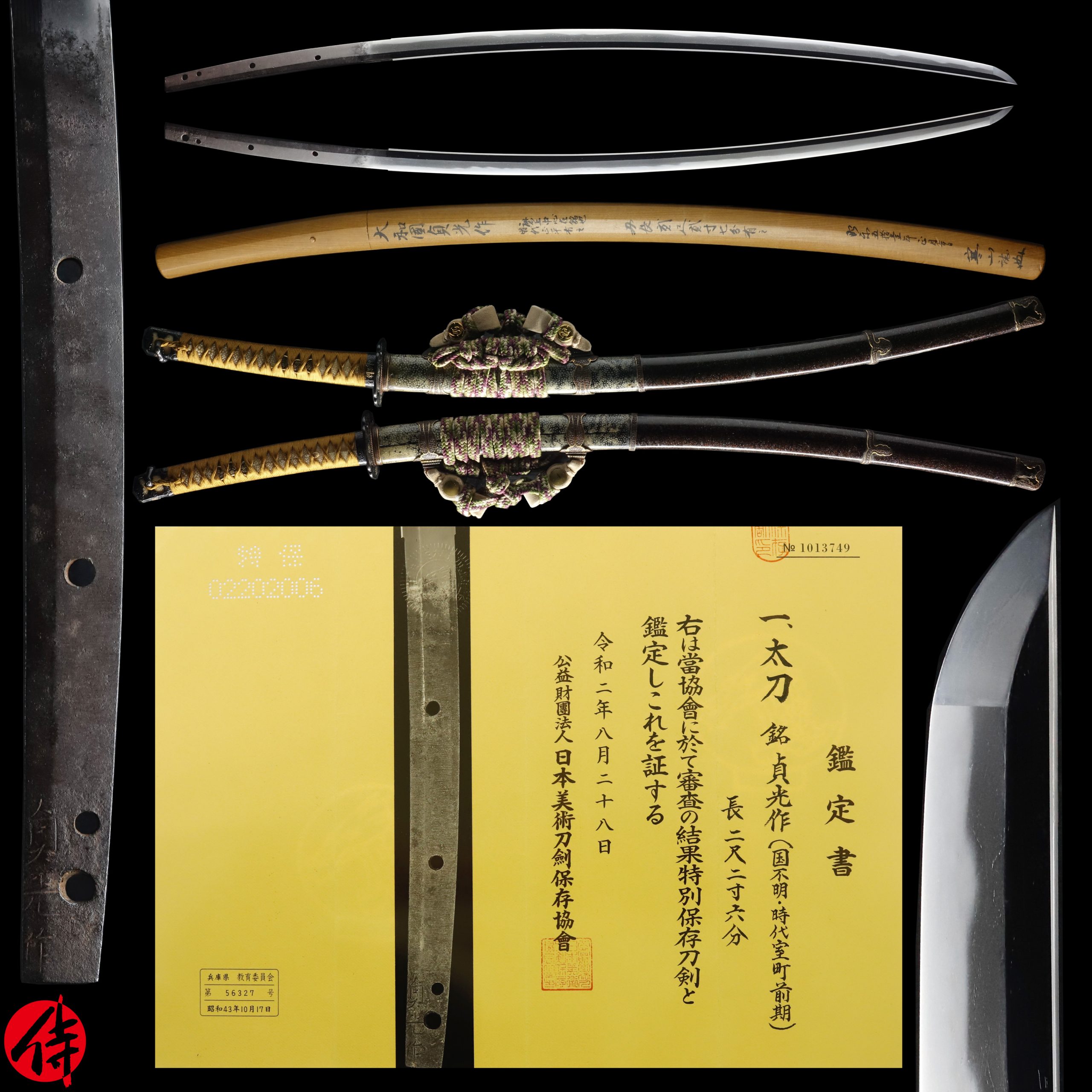
Antique Japanese Sword Tachi Signed by Sadamitsu NBTHK Tokubetsu Hozon Certificate
売却済
世界81社の刀剣商を横断追跡 · 価格履歴 · 売却アーカイブ
仕様
長さ
68.6 cm
反り
2.5 cm
Antique Japanese Sword Katana Signed by Sadamitsu with Tokubetsu Hozon Certificate 【Description】 Summary This blade was signed by Sadamitsu (貞光) during the early Muromachi period (Mid-Late 14th century), according to its NBTHK appraisal. NBTHK Tokubetsu Hozon certificate doesn’t specify which Sadamitsu forged this blade as there were more than one swordsmiths who used Sadamitsu as their maker’s name back then. Based on the characteristic of the blade, such as Jigane(Surface Pattern on the steel), Hamon(tempering line), and the shape of Nakago(tang), they estimated the period this blade was created. Based on the Nakago shape and the number of holes, this blade was shortened a few times in the past. We assume this blade used to be quite long but got shortened due to the regulations back then or its owner’s preferences. Tachi blade&Tachi Koshirae Based on which side the signature is on and the authentication paper, this blade was created as a Tachi sword. It comes with a Tachi(太刀) Koshirae. Tachi was mainly used by an armored Samurai with one hand on horseback from the Heian period (794-1185 A.D.) until the early Muromachi period. TACHI was suspended loosely on the left waist with its edge facing the ground so that you could draw it faster to cut down soldiers on the ground. Because of its gorgeous looking, having a Tachi-style sword mounting became a social status among Samurai. We presume this blade was owned by a high-ranked Samurai who was wealthy enough to own a blade forged by a famous swordsmith with the Tachi-style sword mounting. Reference There is a Saya Gaki, an appraisal written on a Shirasaya. It was appraised by Kanzan (寒山), a reputable Japanese sword expert (1907-1978). The Saya Gaki was done in 1976. According to this appraisal, this blade was signed by Yamato Koku Sadamitsu (大和国貞光). As a reference, we will write the description about this swordsmith. Yamato Sadamitsu was active during 1346-1370 (early Muromachi period), based on available records. He belonged to Hosho (保昌) school in Yamato province (Today’s Nara prefecture). There were five prestigious schools, including Hosho school, during the Kamakura-early Muromachi period in Yamato province. They are called Yamato Goha(大和五派); Senjyuin(千手院), Shikkake (尻懸), Taima(当麻), Hosho(保昌) and Tegai(手掻) school. They served politically powerful monks and temples in Nara, such as Todaiji temples. They were initially forging swords for military monks who became powerful due to the government’s policy back then. Monks needed many weapons as there were many political rivalries between influential temples. They required strong weapons like swords to protect themselves. During this time, Tegai school or other Yamato sword schools met the requests from monks. They also forged blades for Samurai during their heyday. It is appraised as a Tokubetsu Hozon Token (特別保存刀剣) issued by NBTHK(Nihon Bijutsu Touken Hozon Kyokai:日本美術刀剣保存協会). This authentication paper was only given to authentic Japanese swords, especially well preserved and high quality with artistic value. 【 Blade】 Cutting Edge Length(Nagasa) : 68.6 cm(27.0 inches) Curvature(Sori) : 2.5 cm (0.98 inches) Hamon : The crystalline structure which forms along the cutting edge of a blade as a result of the hardening process Jimon(Jihada) : visible steel surface pattern created by folding and hammering during forging process Nakago : Nakago is the tang of the Japanese sword. Japanese swordsmiths left the black rust on the tang because it prevents red rust while the tang is in its handle. And the discoloration of the tang was created over time, and it is a great indicator for a Japanese sword specialist to estimate when the sword was forged. Koshirae: Koshirae is the mounting of the Japanese sword. There are several parts that consist of Koshirae such as Saya(Scabbard), Tsuka(Handle), Tsuba(Handguard). If you focus on each part of this Koshirae, you will find that all the sword mountings are decorated with the Kiri (桐, paulownia) mot
 NihontoWatchBETA
売却済
世界81社の刀剣商を横断追跡 · 価格履歴 · 売却アーカイブ
68.6 cm
2.5 cm
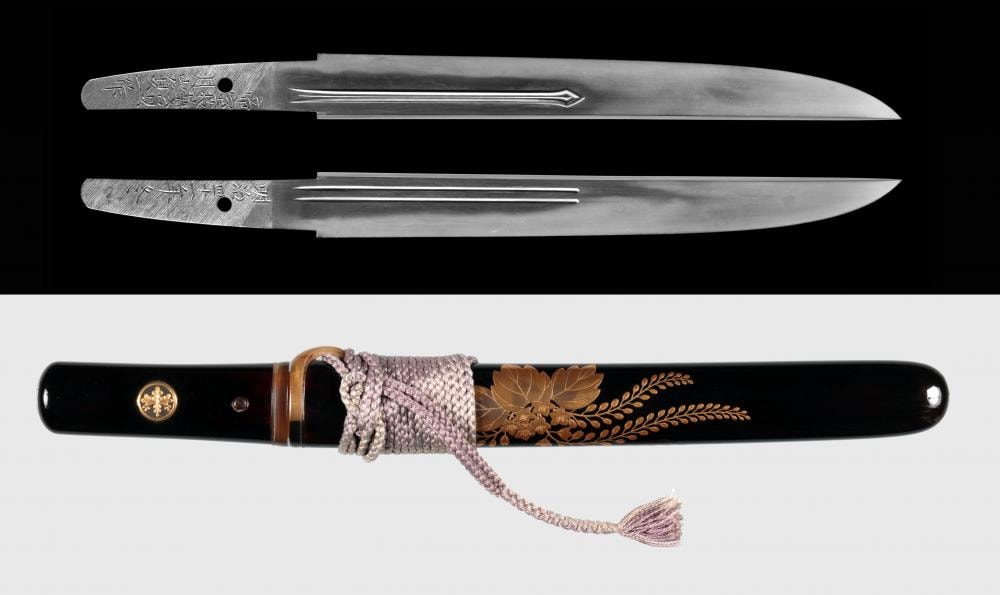
短刀 帝室技芸員月山貞一作 明治四十一年冬 / Tanato Teisitsugigeiin Gassan Sadakazu saku A.D.1908
¥1,000,000
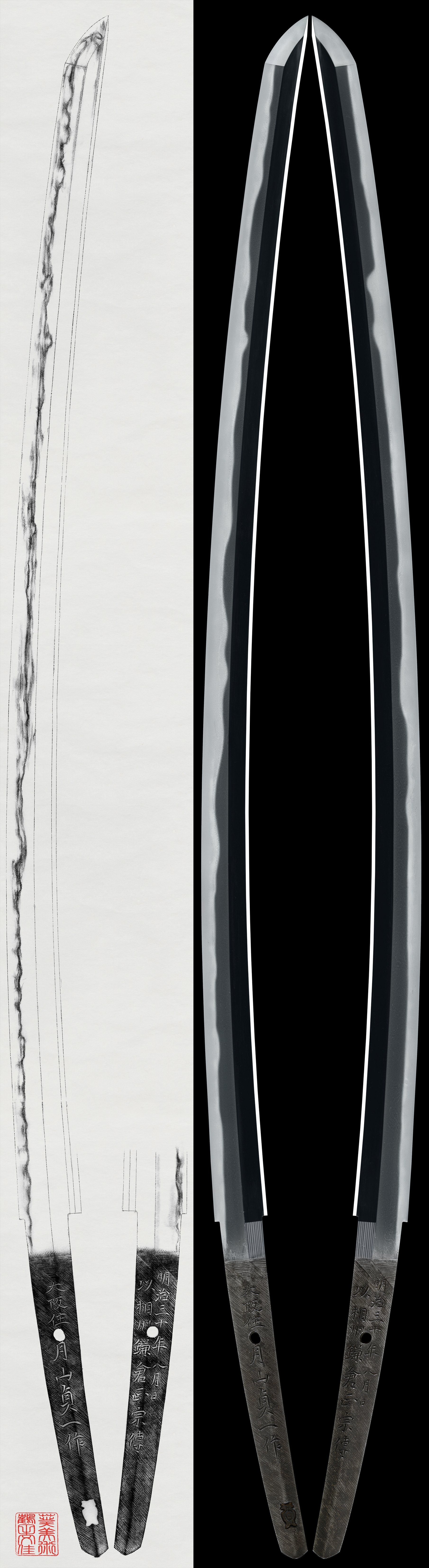
Katana:Osaka Gassan Sadakazu Saku(stamped) Meiji 30 Nen 8 Gatsu Hi Motte Soushu Kamakura Masamune Den(NBTHK Tokubetsu Hozon Token)
¥2,500,000
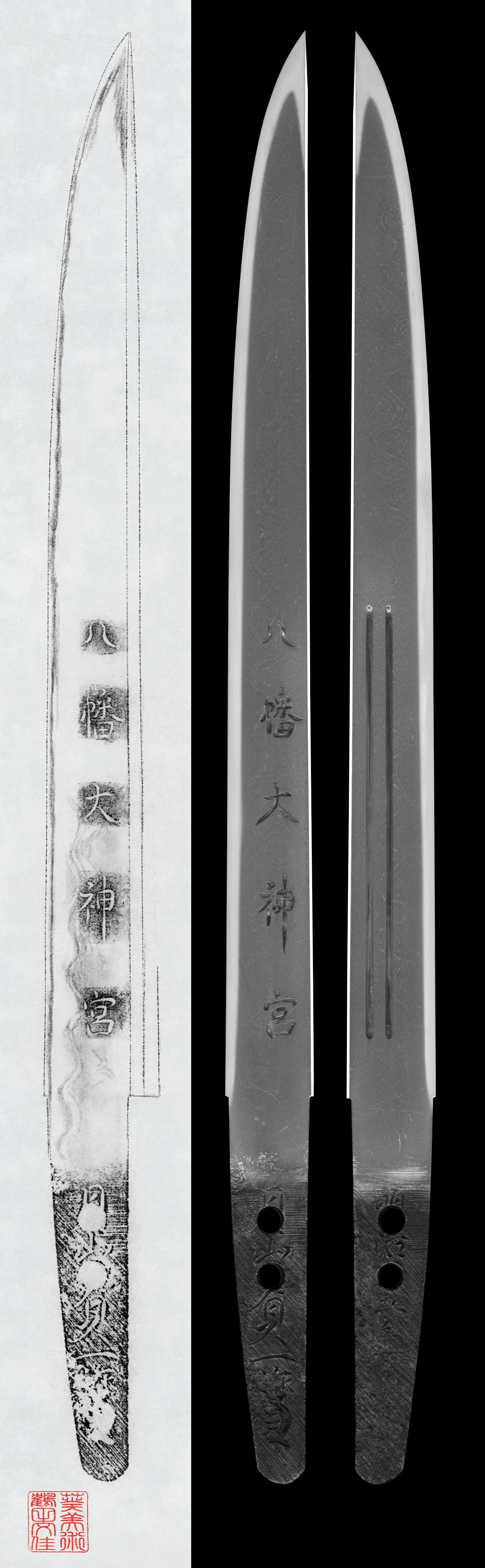
Tanto:Gassan Sadakazu (Kao) Meiji 5 (1872)(NBTHK Hozon Token)
¥800,000

和州三輪山狭井河之上月山貞一作(花押) 昭和己酉年十一月吉日(人間国宝)(昭和44年) Washu Miwayama Saigawanohotori Gassan Minamoto Sadaichi
Price on request
Antique Japanese Sword Katana Signed by Sadamitsu with Tokubetsu Hozon Certificate 【Description】 Summary This blade was signed by Sadamitsu (貞光) during the early Muromachi period (Mid-Late 14th century), according to its NBTHK appraisal. NBTHK Tokubetsu Hozon certificate doesn’t specify which Sadamitsu forged this blade as there were more than one swordsmiths who used Sadamitsu as their maker’s name back then. Based on the characteristic of the blade, such as Jigane(Surface Pattern on the steel), Hamon(tempering line), and the shape of Nakago(tang), they estimated the period this blade was created. Based on the Nakago shape and the number of holes, this blade was shortened a few times in the past. We assume this blade used to be quite long but got shortened due to the regulations back then or its owner’s preferences. Tachi blade&Tachi Koshirae Based on which side the signature is on and the authentication paper, this blade was created as a Tachi sword. It comes with a Tachi(太刀) Koshirae. Tachi was mainly used by an armored Samurai with one hand on horseback from the Heian period (794-1185 A.D.) until the early Muromachi period. TACHI was suspended loosely on the left waist with its edge facing the ground so that you could draw it faster to cut down soldiers on the ground. Because of its gorgeous looking, having a Tachi-style sword mounting became a social status among Samurai. We presume this blade was owned by a high-ranked Samurai who was wealthy enough to own a blade forged by a famous swordsmith with the Tachi-style sword mounting. Reference There is a Saya Gaki, an appraisal written on a Shirasaya. It was appraised by Kanzan (寒山), a reputable Japanese sword expert (1907-1978). The Saya Gaki was done in 1976. According to this appraisal, this blade was signed by Yamato Koku Sadamitsu (大和国貞光). As a reference, we will write the description about this swordsmith. Yamato Sadamitsu was active during 1346-1370 (early Muromachi period), based on available records. He belonged to Hosho (保昌) school in Yamato province (Today’s Nara prefecture). There were five prestigious schools, including Hosho school, during the Kamakura-early Muromachi period in Yamato province. They are called Yamato Goha(大和五派); Senjyuin(千手院), Shikkake (尻懸), Taima(当麻), Hosho(保昌) and Tegai(手掻) school. They served politically powerful monks and temples in Nara, such as Todaiji temples. They were initially forging swords for military monks who became powerful due to the government’s policy back then. Monks needed many weapons as there were many political rivalries between influential temples. They required strong weapons like swords to protect themselves. During this time, Tegai school or other Yamato sword schools met the requests from monks. They also forged blades for Samurai during their heyday. It is appraised as a Tokubetsu Hozon Token (特別保存刀剣) issued by NBTHK(Nihon Bijutsu Touken Hozon Kyokai:日本美術刀剣保存協会). This authentication paper was only given to authentic Japanese swords, especially well preserved and high quality with artistic value. 【 Blade】 Cutting Edge Length(Nagasa) : 68.6 cm(27.0 inches) Curvature(Sori) : 2.5 cm (0.98 inches) Hamon : The crystalline structure which forms along the cutting edge of a blade as a result of the hardening process Jimon(Jihada) : visible steel surface pattern created by folding and hammering during forging process Nakago : Nakago is the tang of the Japanese sword. Japanese swordsmiths left the black rust on the tang because it prevents red rust while the tang is in its handle. And the discoloration of the tang was created over time, and it is a great indicator for a Japanese sword specialist to estimate when the sword was forged. Koshirae: Koshirae is the mounting of the Japanese sword. There are several parts that consist of Koshirae such as Saya(Scabbard), Tsuka(Handle), Tsuba(Handguard). If you focus on each part of this Koshirae, you will find that all the sword mountings are decorated with the Kiri (桐, paulownia) mot
NihontoWatchBETA売却済
世界81社の刀剣商を横断追跡 · 価格履歴 · 売却アーカイブ
68.6 cm
2.5 cm
短刀 帝室技芸員月山貞一作 明治四十一年冬 / Tanato Teisitsugigeiin Gassan Sadakazu saku A.D.1908
¥1,000,000
Katana:Osaka Gassan Sadakazu Saku(stamped) Meiji 30 Nen 8 Gatsu Hi Motte Soushu Kamakura Masamune Den(NBTHK Tokubetsu Hozon Token)
¥2,500,000
Tanto:Gassan Sadakazu (Kao) Meiji 5 (1872)(NBTHK Hozon Token)
¥800,000
和州三輪山狭井河之上月山貞一作(花押) 昭和己酉年十一月吉日(人間国宝)(昭和44年) Washu Miwayama Saigawanohotori Gassan Minamoto Sadaichi
Price on request