売切れ
Hozon売切れ
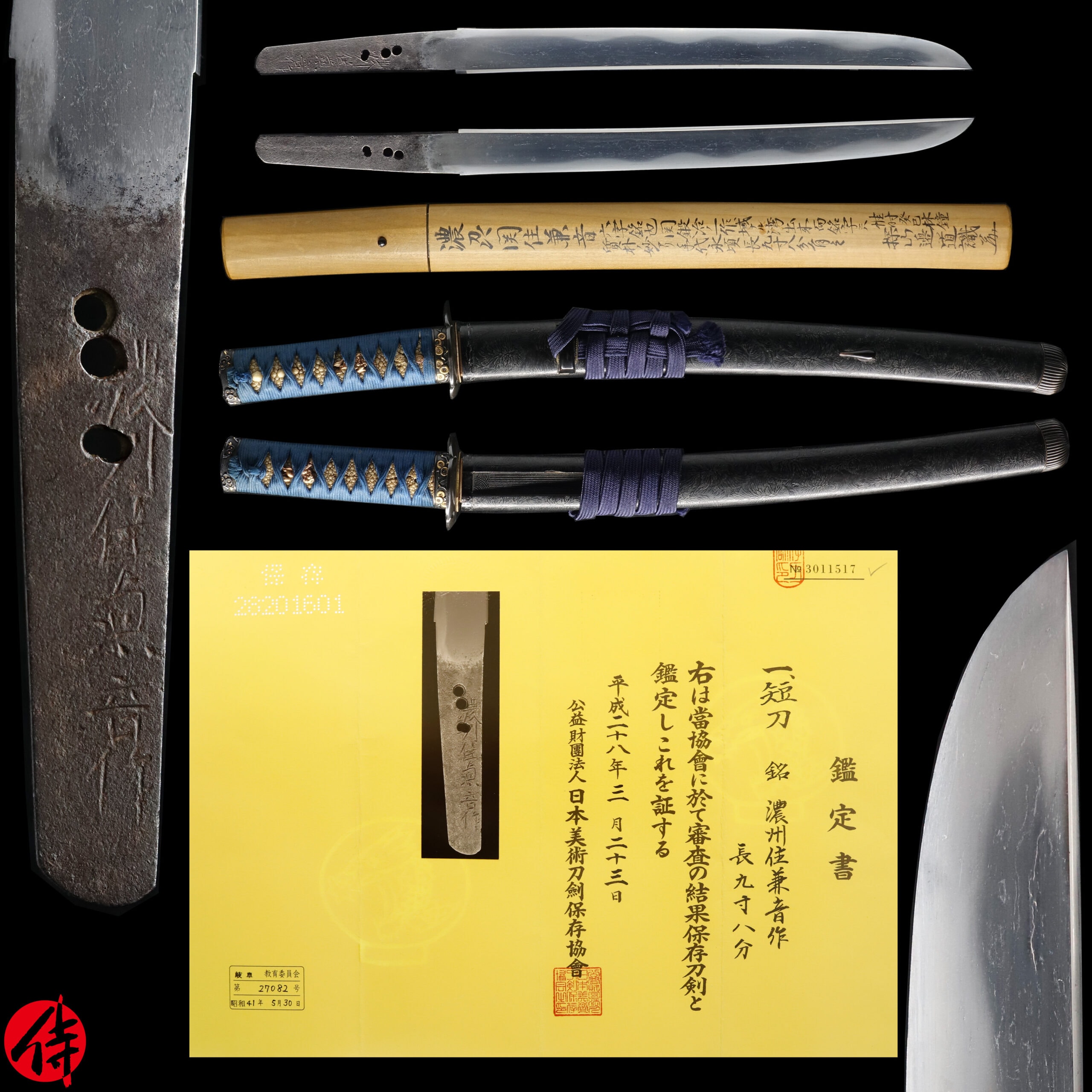
Antique Japanese Sword Tanto Signed by Kaneoto NBTHK Hozon Certificate
売却済
世界81社の刀剣商を横断追跡 · 価格履歴 · 売却アーカイブ
時代
Muromachi
仕様
長さ
29.8 cm
反り
0.1 cm
Antique Japanese Sword Tanto Signed by Kaneoto with NBTHK Hozon Certificate 【Description】 This blade was signed by Kaneoto(兼音) during the late Muromachi period(1469-1487) in Mino province(today’s Gifu prefecture). There are two generations of Kaneoto. The first gen was active in sword forging during the Bunmei era(1469-1487) while the second’s prime time was in the Oei era(1521-1528). We believe it was forged by the first-gen because of its characteristic and the grade of NBTHK authentication paper. The MINO swordsmiths style, also known as MINO-DEN, basically has the TOGARI(Pointed shapes protruding from the Hamon )in a classic straight line and random temper line with some white Utsuri. MINO-DEN had its origin from YAMATO-DEN in the late KAMAKURA period(1280-1330). It flourished in the MUROMACHI period(1333-1573) and continued until the EDO period(1603-1868). MINO-DEN especially prospered during Sengoku Jidai(Warring State period) due to the high demand for weapons. And the location of Mino province beat others. Akechi Mitsuhide controlled Mino province, and Nobunaga Oda ruled Owari province, and Tokugawa Ieyasu was the lord of Suruga (Neighboring areas). There was high demand from those powerful feudal lords and their retainers. Furthermore, so many wars occurred between the Kanto region and the Kyoto area, and Mino is located in the middle, making feudal lords feel convenient to order swords from MINO-DEN. The blades forged in MINO provinces also had the reputation of their practical design and sharpness. Many feudal lords demanded swords forged in the Mino province. This blade is appraised as a Hozon Touken (保存刀剣) issued by NBTHK (Nihon Bijutsu Touken Hozon Kyokai: 日本美術刀剣保存協会). This authentication paper was only given to authentic Japanese swords, especially well preserved and high quality with artistic value. 【Blade】 Cutting Edge Length (Nagasa) : 29.8 cm (11.7 inches) Curvature (Sori) : 0.1 cm (0.04 inches) Hamon : The crystalline structure which forms along the cutting edge of a blade as a result of the hardening process. Jimon (Jihada) : Visible steel surface pattern created by folding and hammering during forging process. Nakago : Nakago is the tang of the Japanese sword. Japanese swordsmiths left the black rust on the tang because it prevents red rust while the tang is in its handle. And the discoloration of the tang was created over time, and it is a great indicator for a Japanese sword specialist to estimate when the sword was forged. Koshirae : Koshirae is the mounting of the Japanese sword. There are several parts that consist of Koshirae such as Saya (Scabbard), Tsuka (Handle), Tsuba (Handguard). Fuchi-Kashira : A pair of matching sword fittings that cover the upper and bottom parts of its sword hilt. The surface of this Fuchi Kashira is decorated with the Nanako-Ji (魚子地) technique. This process makes a uniform minimal protrusions pattern by hitting the Nanako-Ji Tagane (魚子地鏨, a chisel for this technique) on a metal surface. This decorative technique is often seen on sword mountings. About the design, pine trees are engraved on both Fuchi and Kashira. Golden paint is applied to some parts and remains relatively in good condition. This gold coloring makes an elegant contrast with Fuchi Kashira’s black metal color. The pine needles and the tree’s shape are depicted in a design rather than a realistic manner, and the movements of the tree’s trunk and branches are especially rhythmic. Since pine trees keep their green color throughout the years by withstanding severe heat and cold, people thought this plant pattern represents eternal youth. Furthermore, its color is called Tokiwa-Iro (常盤色, evergreen trees’ dark green color with brown), and pine trees have another name “Tokiwa-Gi (常盤木).” Tokiwa means immutability, so Tokiwa-Iro is a color that praises green with a wish for longevity and prosperity. These meanings might be the reasons why this plant motif has been popular among Japanese people for a long time, includ
 NihontoWatchBETA
売却済
世界81社の刀剣商を横断追跡 · 価格履歴 · 売却アーカイブ
Muromachi
29.8 cm
0.1 cm

Antique Japanese Sword Tanto Signed by Yokoyama Sukenaga NBTHK Tokubetsu Hozon Certificate
$7,441

Antique Japanese Sword Tanto Signed by Osafune Kiyomitsu NBTHK Hozon Certificate
$4,829
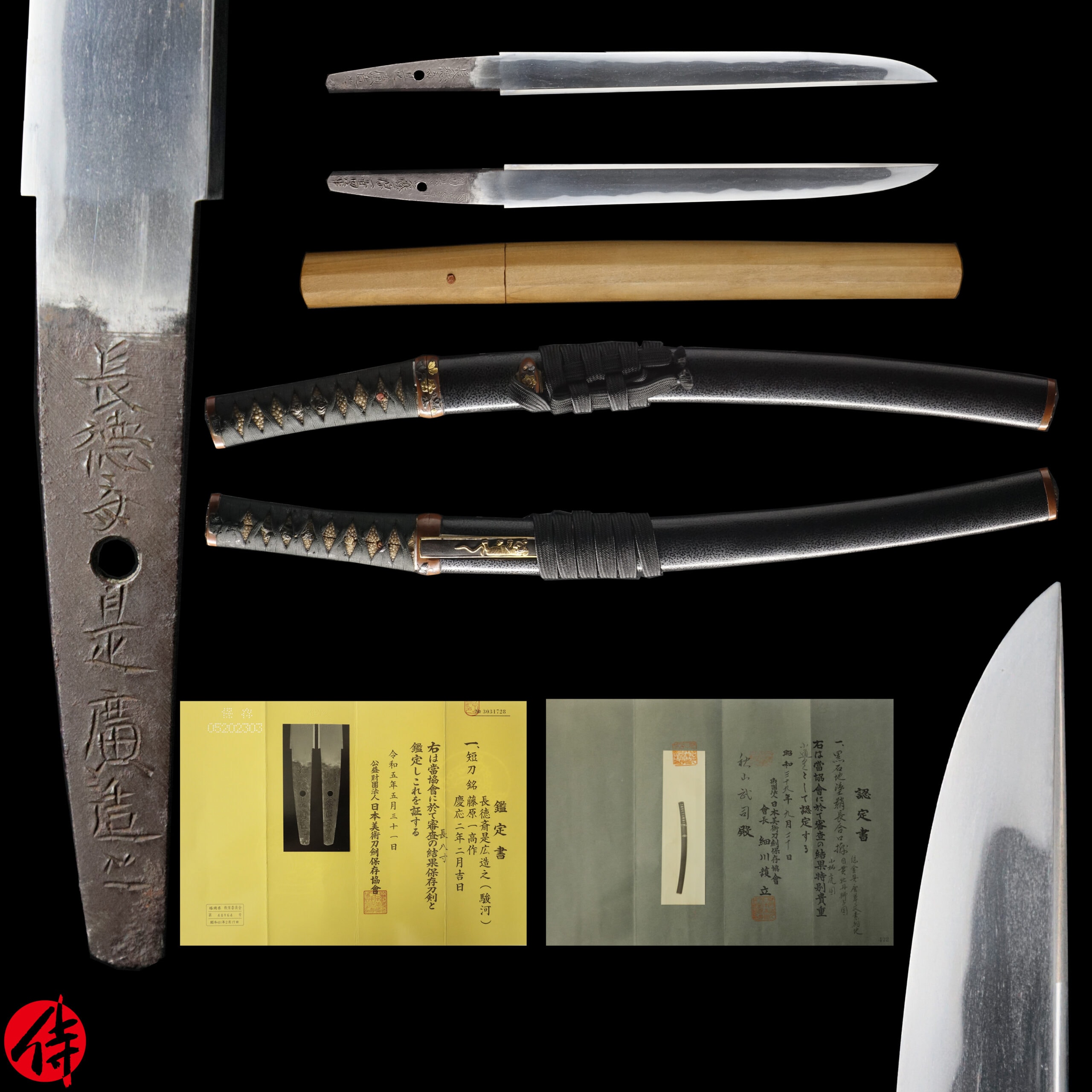
Antique Japanese Sword Tanto Signed by Korehiro NBTHK Hozon Certificate and Tokubetsu Kicho for the Koshirae
$4,333
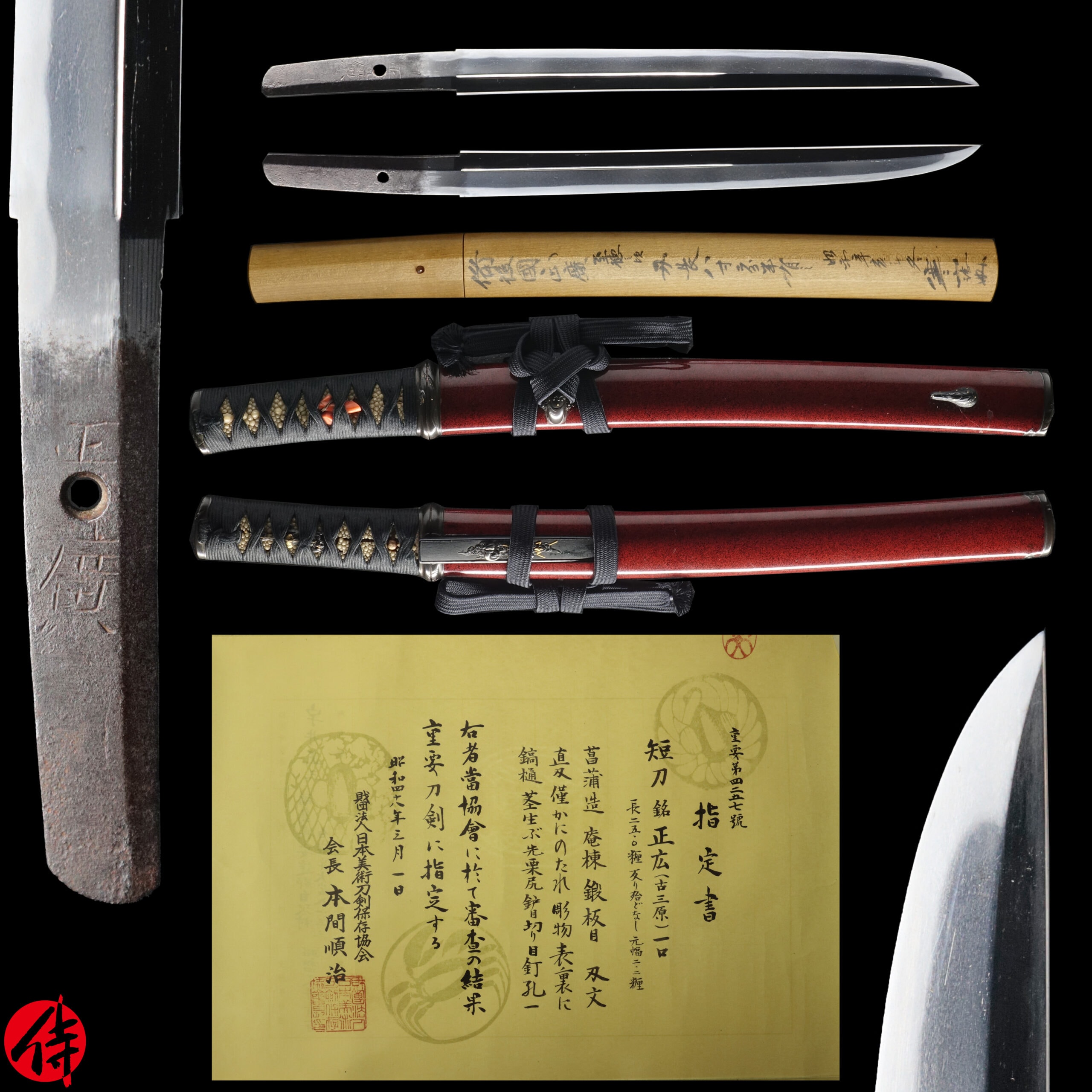
Antique Japanese Sword Tanto Signed by Masahiro NBTHK JUYO TOKEN Certificate
$23,524
Antique Japanese Sword Tanto Signed by Kaneoto with NBTHK Hozon Certificate 【Description】 This blade was signed by Kaneoto(兼音) during the late Muromachi period(1469-1487) in Mino province(today’s Gifu prefecture). There are two generations of Kaneoto. The first gen was active in sword forging during the Bunmei era(1469-1487) while the second’s prime time was in the Oei era(1521-1528). We believe it was forged by the first-gen because of its characteristic and the grade of NBTHK authentication paper. The MINO swordsmiths style, also known as MINO-DEN, basically has the TOGARI(Pointed shapes protruding from the Hamon )in a classic straight line and random temper line with some white Utsuri. MINO-DEN had its origin from YAMATO-DEN in the late KAMAKURA period(1280-1330). It flourished in the MUROMACHI period(1333-1573) and continued until the EDO period(1603-1868). MINO-DEN especially prospered during Sengoku Jidai(Warring State period) due to the high demand for weapons. And the location of Mino province beat others. Akechi Mitsuhide controlled Mino province, and Nobunaga Oda ruled Owari province, and Tokugawa Ieyasu was the lord of Suruga (Neighboring areas). There was high demand from those powerful feudal lords and their retainers. Furthermore, so many wars occurred between the Kanto region and the Kyoto area, and Mino is located in the middle, making feudal lords feel convenient to order swords from MINO-DEN. The blades forged in MINO provinces also had the reputation of their practical design and sharpness. Many feudal lords demanded swords forged in the Mino province. This blade is appraised as a Hozon Touken (保存刀剣) issued by NBTHK (Nihon Bijutsu Touken Hozon Kyokai: 日本美術刀剣保存協会). This authentication paper was only given to authentic Japanese swords, especially well preserved and high quality with artistic value. 【Blade】 Cutting Edge Length (Nagasa) : 29.8 cm (11.7 inches) Curvature (Sori) : 0.1 cm (0.04 inches) Hamon : The crystalline structure which forms along the cutting edge of a blade as a result of the hardening process. Jimon (Jihada) : Visible steel surface pattern created by folding and hammering during forging process. Nakago : Nakago is the tang of the Japanese sword. Japanese swordsmiths left the black rust on the tang because it prevents red rust while the tang is in its handle. And the discoloration of the tang was created over time, and it is a great indicator for a Japanese sword specialist to estimate when the sword was forged. Koshirae : Koshirae is the mounting of the Japanese sword. There are several parts that consist of Koshirae such as Saya (Scabbard), Tsuka (Handle), Tsuba (Handguard). Fuchi-Kashira : A pair of matching sword fittings that cover the upper and bottom parts of its sword hilt. The surface of this Fuchi Kashira is decorated with the Nanako-Ji (魚子地) technique. This process makes a uniform minimal protrusions pattern by hitting the Nanako-Ji Tagane (魚子地鏨, a chisel for this technique) on a metal surface. This decorative technique is often seen on sword mountings. About the design, pine trees are engraved on both Fuchi and Kashira. Golden paint is applied to some parts and remains relatively in good condition. This gold coloring makes an elegant contrast with Fuchi Kashira’s black metal color. The pine needles and the tree’s shape are depicted in a design rather than a realistic manner, and the movements of the tree’s trunk and branches are especially rhythmic. Since pine trees keep their green color throughout the years by withstanding severe heat and cold, people thought this plant pattern represents eternal youth. Furthermore, its color is called Tokiwa-Iro (常盤色, evergreen trees’ dark green color with brown), and pine trees have another name “Tokiwa-Gi (常盤木).” Tokiwa means immutability, so Tokiwa-Iro is a color that praises green with a wish for longevity and prosperity. These meanings might be the reasons why this plant motif has been popular among Japanese people for a long time, includ
NihontoWatchBETA売却済
世界81社の刀剣商を横断追跡 · 価格履歴 · 売却アーカイブ
Muromachi
29.8 cm
0.1 cm
Antique Japanese Sword Tanto Signed by Yokoyama Sukenaga NBTHK Tokubetsu Hozon Certificate
$7,441
Antique Japanese Sword Tanto Signed by Osafune Kiyomitsu NBTHK Hozon Certificate
$4,829
Antique Japanese Sword Tanto Signed by Korehiro NBTHK Hozon Certificate and Tokubetsu Kicho for the Koshirae
$4,333
Antique Japanese Sword Tanto Signed by Masahiro NBTHK JUYO TOKEN Certificate
$23,524