売切れ
Hozon売切れ
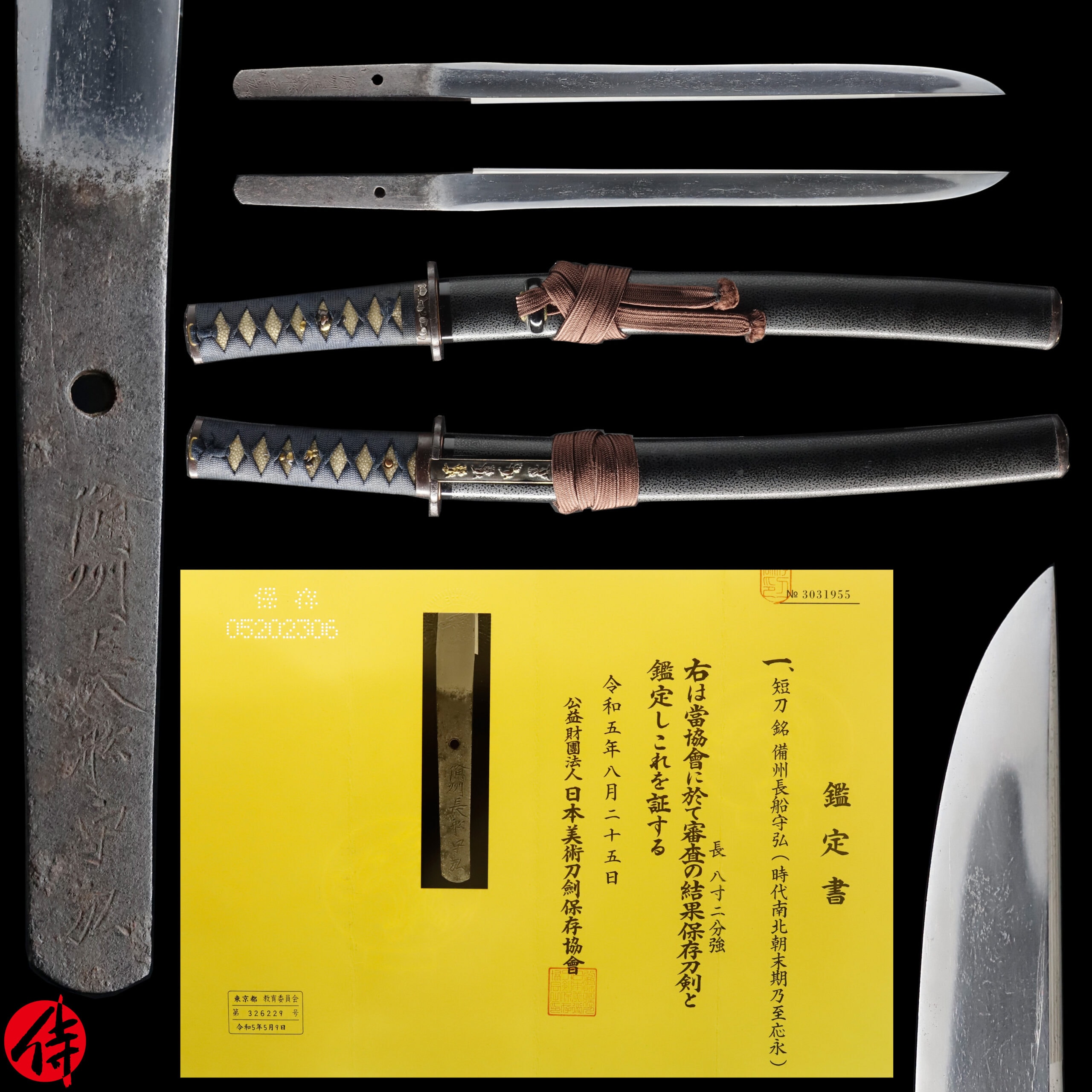
Antique Japanese Sword Tanto Signed by Bizen Osafune Morihiro NBTHK Hozon Certificate
売却済
世界81社の刀剣商を横断追跡 · 価格履歴 · 売却アーカイブ
仕様
長さ
25 cm
Antique Japanese Sword Tanto Signed by Bizen Osafune Morihiro with Hozon Certificate 【Description】 This blade was signed by Bishu Osafune Morihiro (備州長船守弘) during late 14th- Early 15th century. The maker’s name, Morihiro, lasted three generations from the Nanbokucho- Muromachi period. Bishu(備州)is a larger area in today’s Okayama&Hiroshima prefecture. Bishu consists of Bizen(備前), Bitchu(備中), and Bingo (備後). Osafune is the name of the prestigious school located in Bizen province. Morihiro is categorized as a Kozori swordsmith. Kozori is a group of swordsmiths who belonged to Osafune school in Bizen during the Nanbokucho Period but weren’t part of major branches such as Kanemitsu school. When the first-gen Morihiro was active in the Nanbokucho period, Japan was tumultuous because the imperial court was split into two sides(south and north). There were many conflicts, and many Samurai were deployed. And Moromitsu and Kozori school must have dedicated themselves to forging high-quality blades for those Samurai who fought in battles. This History of Bizen Osafune School It is said that Osafune school was founded by Mitsutada (光忠), who was active during the mid-Kamakura period. Bizen Osafune school was the biggest one of all other schools in Bizen province, and they received many orders from feudal lords or renowned Samurai. They were called Osafunemono and beloved by Samurai warriors. Among the swordsmiths who belonged to this school, Nagamitsu, Sanenaga, and Kagemitsu are known as Osafune Sansaku, the three renowned Osafune swordsmiths. There are also four other prominent swordsmiths who were from Bizen Osafune school. They are called Osafune Shiten-no, the four masters of Osafune school. Their names are Nagamitsu, Kanemitsu, Nagayoshi, and Motoshige. BIZEN is located near the Chugoku Mountains, where iron sands, one of the essential materials for making Japanese swords, were abundant. Furthermore, BIZEN swordsmiths had close access to Yoshi River, where they could find water and charcoal. This geological location contributed to the swordsmiths forging high-quality refined blades. We presume BIZEN was quite active in sword-forging from ancient times. It is said that BIZEN DEN was created by groups of swordsmiths there during the late Heian era (Late 12th century ). These ancient swordsmiths in Bizen province are called Ko-Bizen (Old Bizen) swordsmiths. By inheriting the sword forging techniques from Ko-Bizen swordsmiths, the Bizen Osafune school flourished from the mid-Kamakura period. This blade is appraised as a Hozon Token(保存刀剣) issued by NBTHK(Nihon Bijutsu Touken Hozon Kyokai:日本美術刀剣保存協会). This authentication paper was only given to authentic Japanese swords, well preserved and high quality with artistic value. *Please be noted that the width of this blade is much thinner than that of Koshirae. If you like to see the size difference from a photo please feel free to contact us. 【 Blade】 Cutting Edge Length(Nagasa) : 25.0 cm (9.84 inches) Curvature(Sori) : 0 cm (0 inches) Hamon : The crystalline structure which forms along the cutting edge of a blade as a result of the hardening process Jimon(Jihada) : visible steel surface pattern created by folding and hammering during forging process Nakago : Nakago is the tang of the Japanese sword. Japanese swordsmiths left the black rust on the tang because it prevents red rust while the tang is in its handle. And the discoloration of the tang was created over time, and it is a great indicator for a Japanese sword specialist to estimate when the sword was forged. Koshirae: Koshirae is the mounting of the Japanese sword. There are several parts that consist of Koshirae such as Saya(Scabbard), Tsuka(Handle), Kozuka. Fuchi-Kashira : A pair of matching sword fittings that cover the upper and bottom parts of its sword hilt. The Aoi (葵) leaves are designed on this Fuchi Kashira. It seems silvery metal is applied to these leaf parts. Since its leaves have a habit of always facing the sun, and the
 NihontoWatchBETA
売却済
世界81社の刀剣商を横断追跡 · 価格履歴 · 売却アーカイブ
25 cm

Antique Japanese Sword Tanto Signed by Yokoyama Sukenaga NBTHK Tokubetsu Hozon Certificate
$7,441

Antique Japanese Sword Tanto Signed by Osafune Kiyomitsu NBTHK Hozon Certificate
$4,829
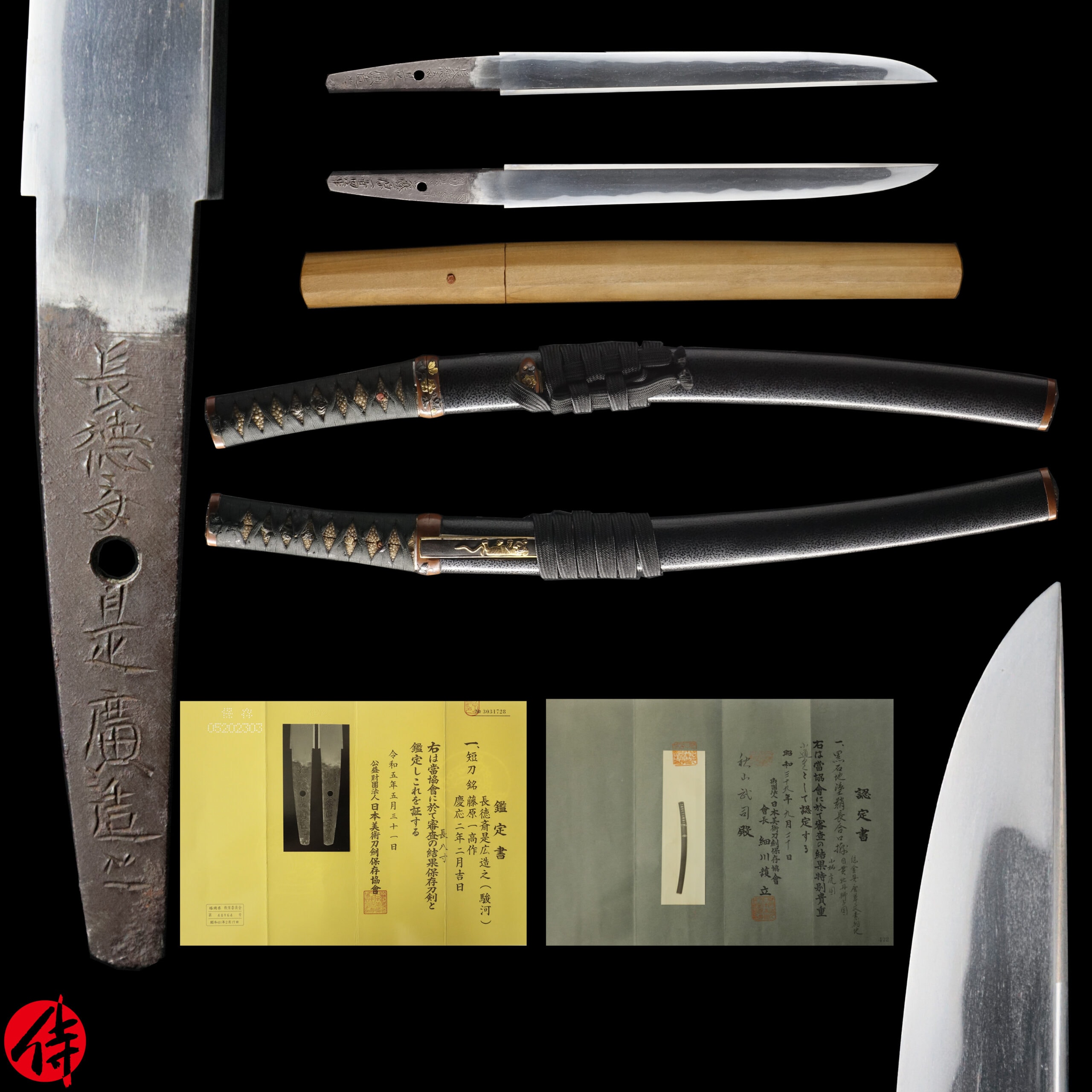
Antique Japanese Sword Tanto Signed by Korehiro NBTHK Hozon Certificate and Tokubetsu Kicho for the Koshirae
$4,333
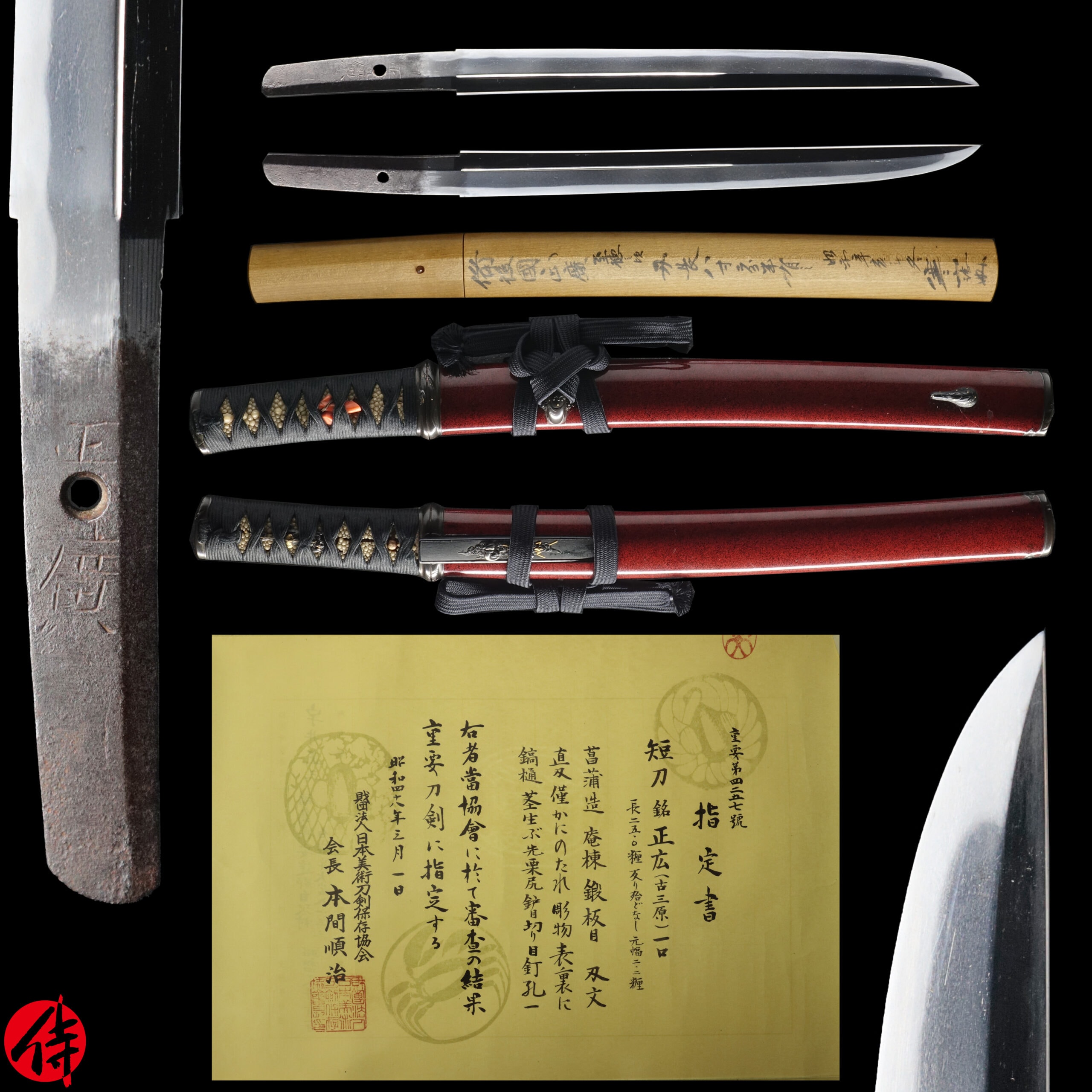
Antique Japanese Sword Tanto Signed by Masahiro NBTHK JUYO TOKEN Certificate
$23,524
Antique Japanese Sword Tanto Signed by Bizen Osafune Morihiro with Hozon Certificate 【Description】 This blade was signed by Bishu Osafune Morihiro (備州長船守弘) during late 14th- Early 15th century. The maker’s name, Morihiro, lasted three generations from the Nanbokucho- Muromachi period. Bishu(備州)is a larger area in today’s Okayama&Hiroshima prefecture. Bishu consists of Bizen(備前), Bitchu(備中), and Bingo (備後). Osafune is the name of the prestigious school located in Bizen province. Morihiro is categorized as a Kozori swordsmith. Kozori is a group of swordsmiths who belonged to Osafune school in Bizen during the Nanbokucho Period but weren’t part of major branches such as Kanemitsu school. When the first-gen Morihiro was active in the Nanbokucho period, Japan was tumultuous because the imperial court was split into two sides(south and north). There were many conflicts, and many Samurai were deployed. And Moromitsu and Kozori school must have dedicated themselves to forging high-quality blades for those Samurai who fought in battles. This History of Bizen Osafune School It is said that Osafune school was founded by Mitsutada (光忠), who was active during the mid-Kamakura period. Bizen Osafune school was the biggest one of all other schools in Bizen province, and they received many orders from feudal lords or renowned Samurai. They were called Osafunemono and beloved by Samurai warriors. Among the swordsmiths who belonged to this school, Nagamitsu, Sanenaga, and Kagemitsu are known as Osafune Sansaku, the three renowned Osafune swordsmiths. There are also four other prominent swordsmiths who were from Bizen Osafune school. They are called Osafune Shiten-no, the four masters of Osafune school. Their names are Nagamitsu, Kanemitsu, Nagayoshi, and Motoshige. BIZEN is located near the Chugoku Mountains, where iron sands, one of the essential materials for making Japanese swords, were abundant. Furthermore, BIZEN swordsmiths had close access to Yoshi River, where they could find water and charcoal. This geological location contributed to the swordsmiths forging high-quality refined blades. We presume BIZEN was quite active in sword-forging from ancient times. It is said that BIZEN DEN was created by groups of swordsmiths there during the late Heian era (Late 12th century ). These ancient swordsmiths in Bizen province are called Ko-Bizen (Old Bizen) swordsmiths. By inheriting the sword forging techniques from Ko-Bizen swordsmiths, the Bizen Osafune school flourished from the mid-Kamakura period. This blade is appraised as a Hozon Token(保存刀剣) issued by NBTHK(Nihon Bijutsu Touken Hozon Kyokai:日本美術刀剣保存協会). This authentication paper was only given to authentic Japanese swords, well preserved and high quality with artistic value. *Please be noted that the width of this blade is much thinner than that of Koshirae. If you like to see the size difference from a photo please feel free to contact us. 【 Blade】 Cutting Edge Length(Nagasa) : 25.0 cm (9.84 inches) Curvature(Sori) : 0 cm (0 inches) Hamon : The crystalline structure which forms along the cutting edge of a blade as a result of the hardening process Jimon(Jihada) : visible steel surface pattern created by folding and hammering during forging process Nakago : Nakago is the tang of the Japanese sword. Japanese swordsmiths left the black rust on the tang because it prevents red rust while the tang is in its handle. And the discoloration of the tang was created over time, and it is a great indicator for a Japanese sword specialist to estimate when the sword was forged. Koshirae: Koshirae is the mounting of the Japanese sword. There are several parts that consist of Koshirae such as Saya(Scabbard), Tsuka(Handle), Kozuka. Fuchi-Kashira : A pair of matching sword fittings that cover the upper and bottom parts of its sword hilt. The Aoi (葵) leaves are designed on this Fuchi Kashira. It seems silvery metal is applied to these leaf parts. Since its leaves have a habit of always facing the sun, and the
NihontoWatchBETA売却済
世界81社の刀剣商を横断追跡 · 価格履歴 · 売却アーカイブ
25 cm
Antique Japanese Sword Tanto Signed by Yokoyama Sukenaga NBTHK Tokubetsu Hozon Certificate
$7,441
Antique Japanese Sword Tanto Signed by Osafune Kiyomitsu NBTHK Hozon Certificate
$4,829
Antique Japanese Sword Tanto Signed by Korehiro NBTHK Hozon Certificate and Tokubetsu Kicho for the Koshirae
$4,333
Antique Japanese Sword Tanto Signed by Masahiro NBTHK JUYO TOKEN Certificate
$23,524