売切れ
Hozon売切れ
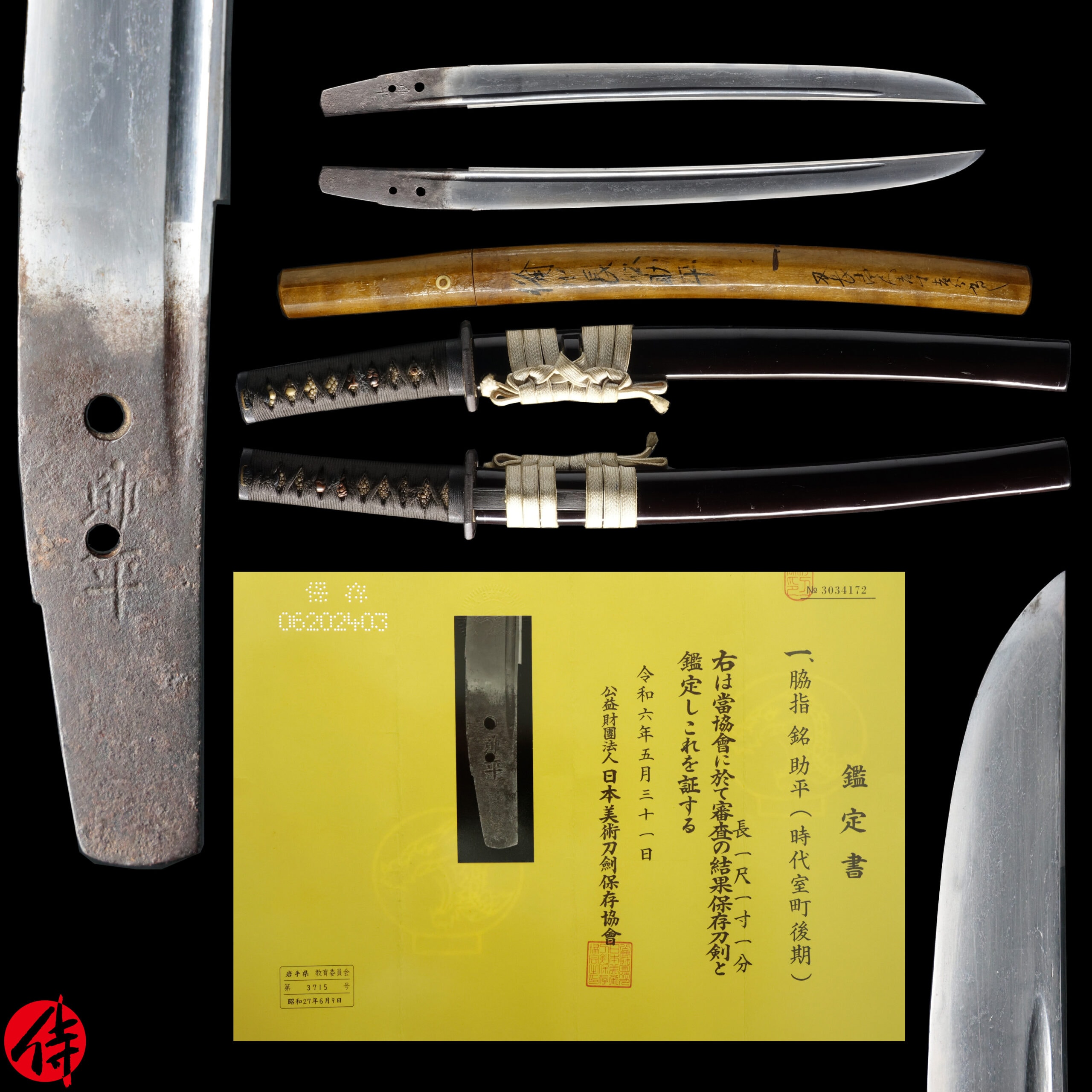
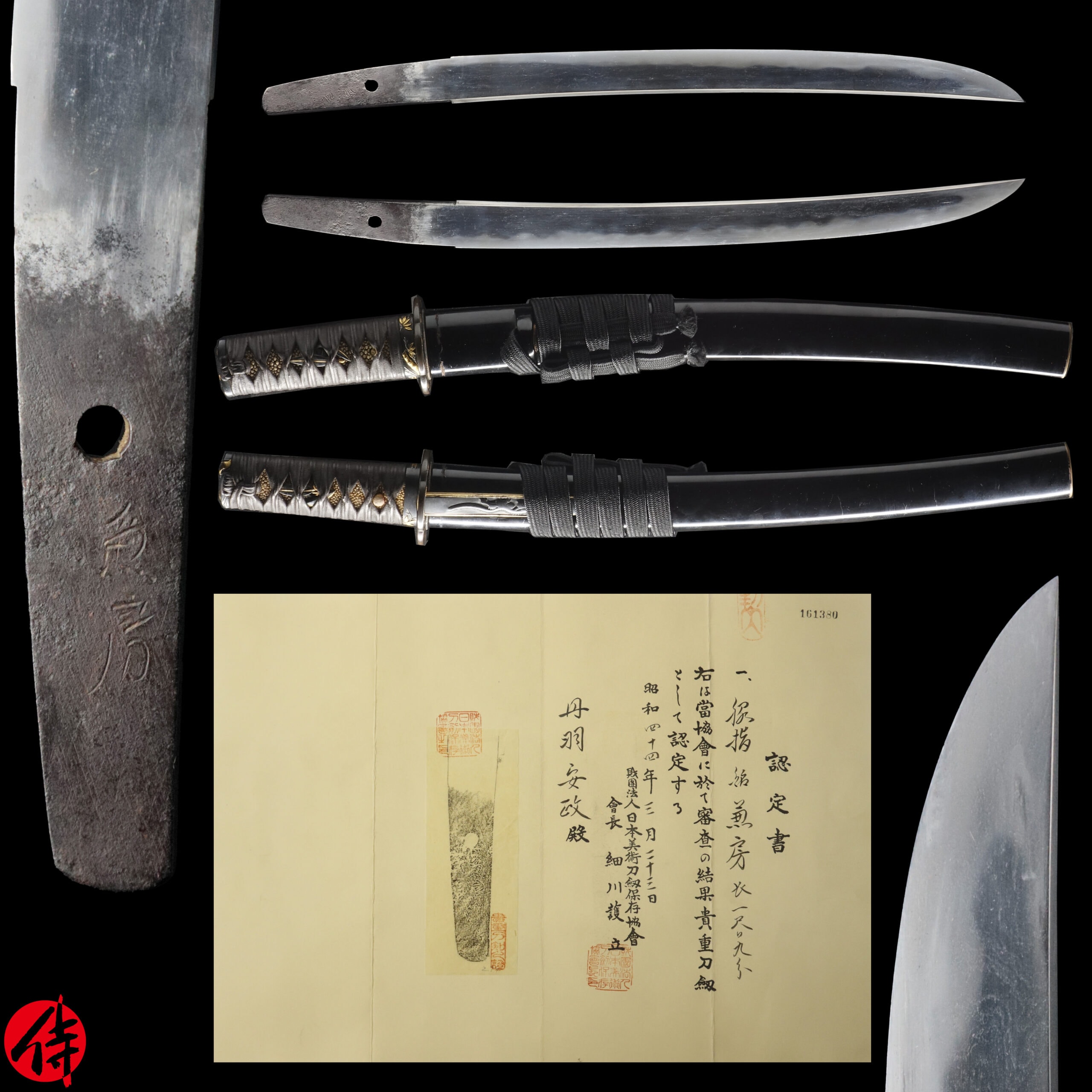
Antique Japanese Sword Wakizashi Signed by Sukehira NBTHK Hozon Certificate
売却済
世界81社の刀剣商を横断追跡 · 価格履歴 · 売却アーカイブ
時代
Muromachi
仕様
長さ
33.6 cm
反り
0.3 cm
Antique Japanese Sword Wakizashi Signed by Sukehira with NBTHK Hozon Certificate 【Description】 This blade was signed by Sukehira (助平). According to its NBTHK certificate, it was made during the late Muromachi period (Late 15th- Early 16th century) . Since this blade was made during late Muromachi period, this blade is catogorized as KOTO (古刀: Old-Sword). KOTO is the swords made between the Late Heian Period towards the end of the Warring States (930-1595 A.D.). Those swords were likely to be used in real lives of Samurai, so their designs had to fit the way they used the sword. It is hard to generalize Koto but they typically have a more aesthetically masculine look than those of the other eras. The blacksmithing technique wasn’t fully developed yet in this era, so the KO-TO blades contain gold, silver, and other metals, making the surface pattern of Koto intricate and beautiful. During Muromachi period, soldiers began to fight on the ground, so UCHI-GATANA(Katana) was made for the first time. They are shorter, and typically have the strong curvature from the middle to the edge. Since it was also in the middle of the Warring States period (Sengoku Jidai), some swords were relatively low-quality to cater to the clan’s high demands for weapons to provide foot soldiers with. The high-quality swords forged during the Warring States are called CHUMON-UCHI (注文打; custom-made). There were also popular sword forging schools which often had orders from high-class Samurai, such as Bizen Osafune school. It is appraised as a Hozon Token (保存刀剣) issued by NBTHK (Nihon Bijutsu Touken Hozon Kyokai: 日本美術刀剣保存協会). This authentication paper was only given to authentic Japanese swords, especially well preserved and high quality with artistic value. 【Blade】 Cutting Edge Length (Nagasa) : 33.6 cm (13.2inches) Curvature (Sori) : 0.30 cm (0.12 inches) Hamon : The crystalline structure which forms along the cutting edge of a blade as a result of the hardening process. Jimon(Jihada) : visible steel surface pattern created by folding and hammering during forging process Kissaki : Kissaki is the tip of the Japanese sword. Nakago : Nakago is the tang of the Japanese sword. Japanese swordsmiths left the black rust on the tang because it prevents red rust while the tang is in its handle. And the discoloration of the tang was created over time, and it is a great indicator for a Japanese sword specialist to estimate when the sword was forged. Koshirae: Koshirae is the mounting of the Japanese sword. There are several parts that consist of Koshirae such as Saya(Scabbard), Tsuka(Handle), Tsuba(Handguard). Fuchi-Kashira : A pair of matching sword fittings that cover the upper and bottom parts of its sword hilt. Nanakoji technique is applied on this Fuchi Kashira. This process makes a uniform minimal protrusions pattern by hitting the Nanako-Ji Tagane (魚子地鏨, a chisel for this technique) on a metal surface. This decorative technique is often seen on sword mountings. Tsuka and Menuki : Tsuka is the handle of the Japanese sword and Menuki is its decoration. The horse is the theme of this Menuki. Horses have been around human life for a long time, not only as our food but also for transportation or carriage of luggage. In Japan, horses were thought of as vehicles for gods to be dedicated to shrines in ancient times. It is said it is the origin of Ema (絵馬, picture tablet used as an offering at a shrine) today. Horses had been used as a tool for rituals and festivals. After the age that Samurai appeared, wearing large armor or performing archery riding a hose became martial arts. Equestrian tactics became the pillar of military action and security activities. According to a theory, that is why the Japanese sword began to have a curve to make it suitable for slashing (the Japanese sword was straight in the beginning). Tsuba and Habaki : Tsuba is the handguard for the Japanese Sword and Habaki is the equipment to make the blade not touch its scabbard inside. It prev
 NihontoWatchBETA
売却済
世界81社の刀剣商を横断追跡 · 価格履歴 · 売却アーカイブ
Muromachi
33.6 cm
0.3 cm
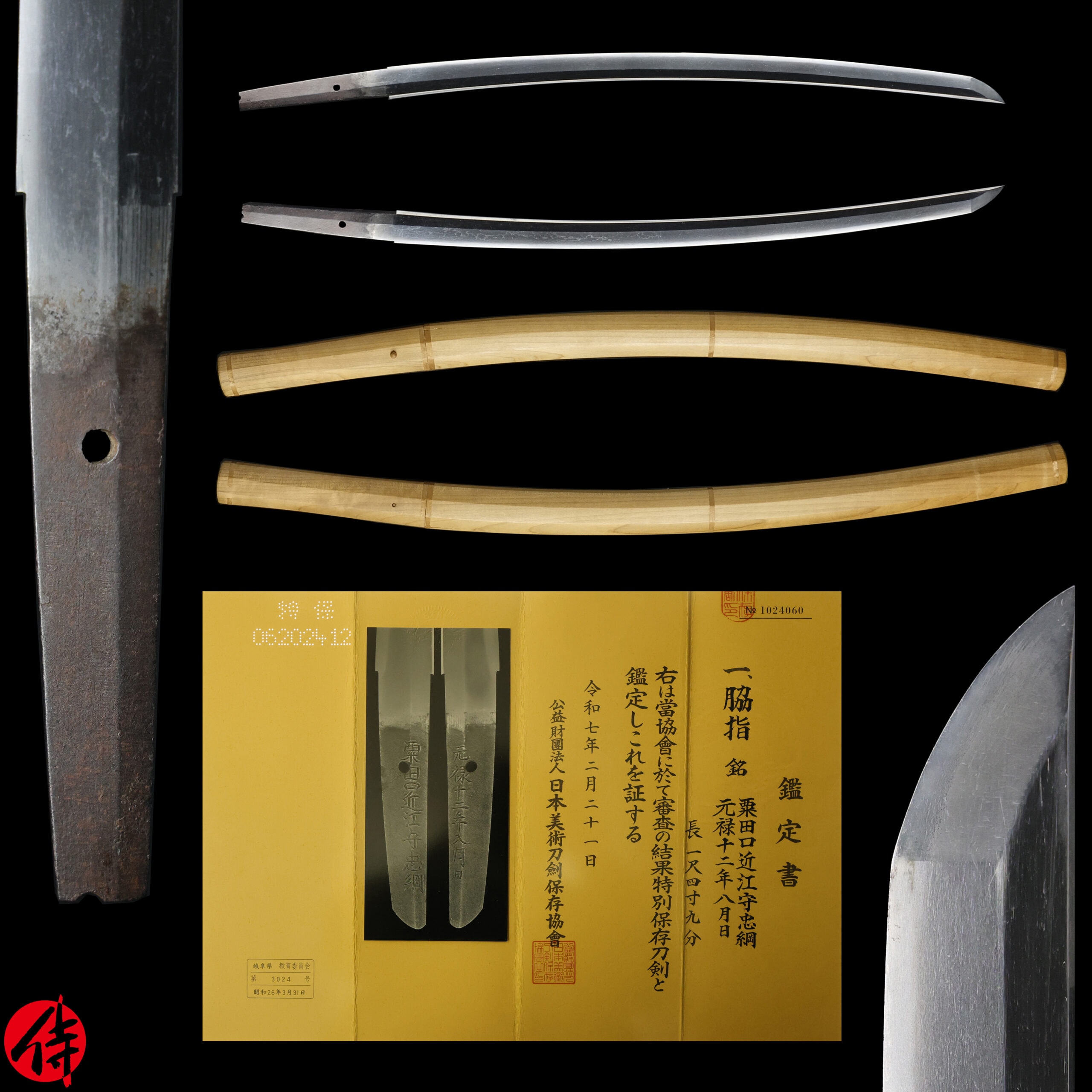
Antique Japanese Sword Wakizashi Attributed to Mihara NBTHK Hozon Certificate
$2,170
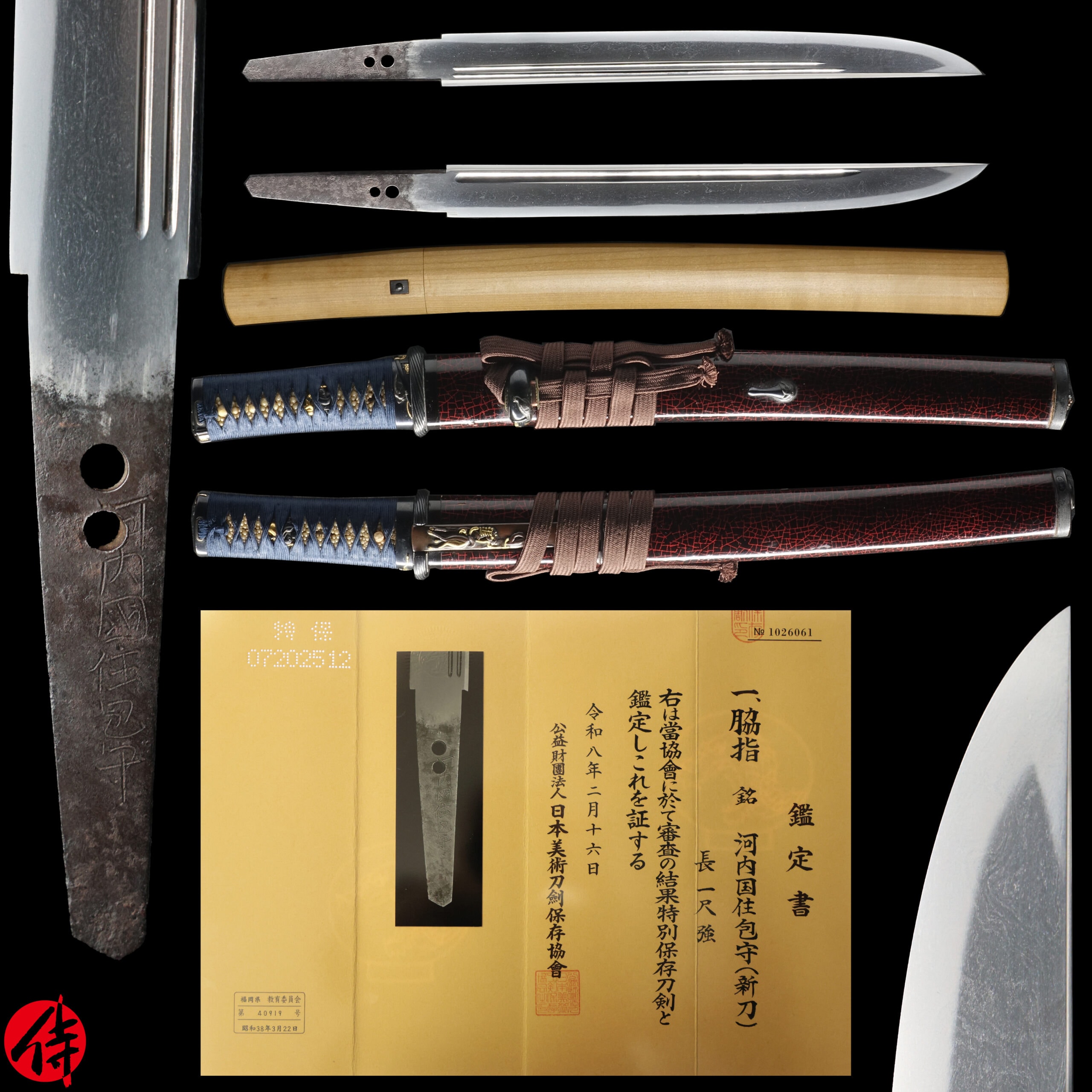
Antique Japanese Sword Wakizashi Signed by Kanemori NBTHK Tokubetsu Hozon Certificate
$5,881
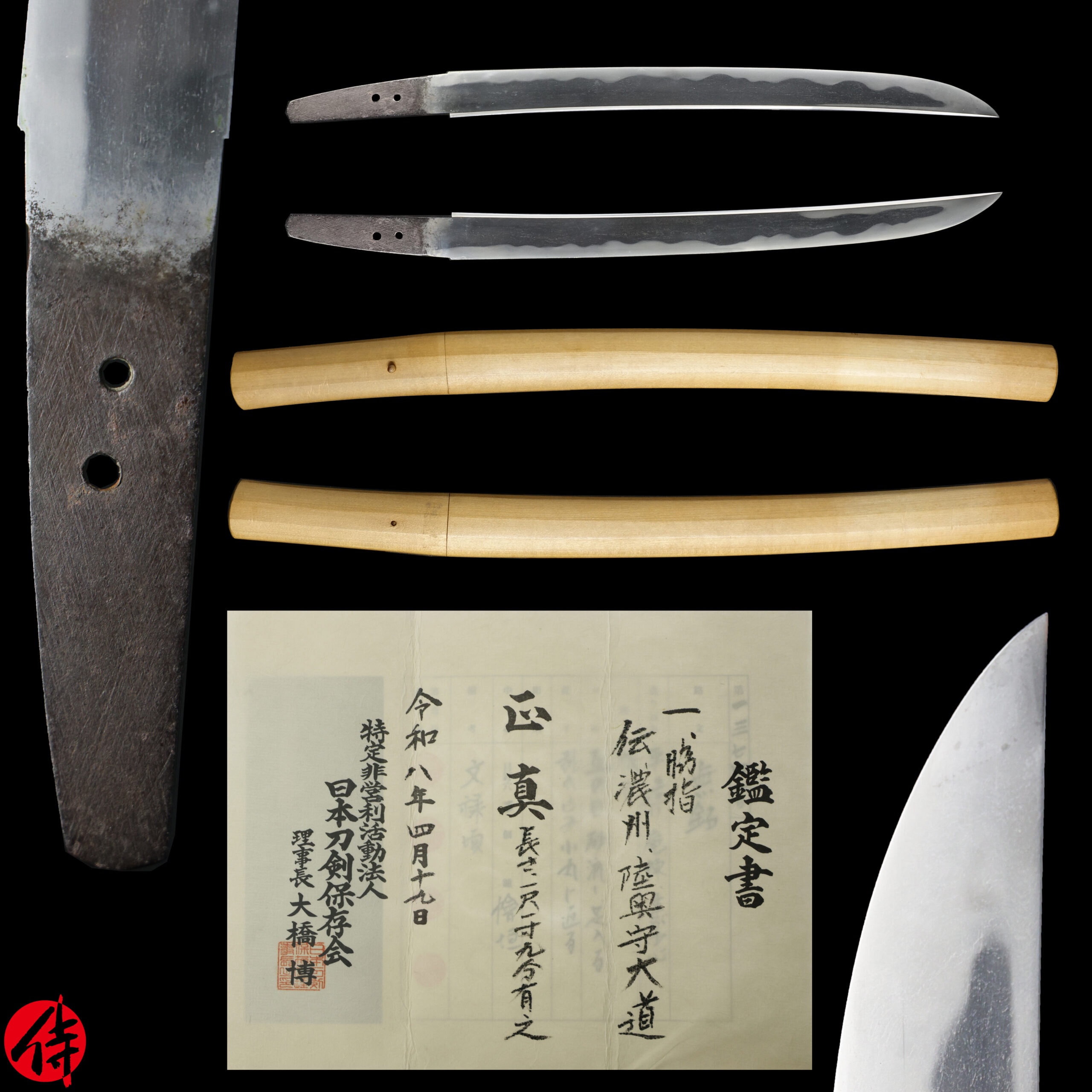
Antique Japanese Sword Wakizashi Attributed to Den Nohshu Daido NTHK Kanteisho for the blade
$1,984
Antique Japanese Sword Wakizashi Signed by Kanefusa with NBTHK Kicho Certificate
$2,971
Antique Japanese Sword Wakizashi Signed by Sukehira with NBTHK Hozon Certificate 【Description】 This blade was signed by Sukehira (助平). According to its NBTHK certificate, it was made during the late Muromachi period (Late 15th- Early 16th century) . Since this blade was made during late Muromachi period, this blade is catogorized as KOTO (古刀: Old-Sword). KOTO is the swords made between the Late Heian Period towards the end of the Warring States (930-1595 A.D.). Those swords were likely to be used in real lives of Samurai, so their designs had to fit the way they used the sword. It is hard to generalize Koto but they typically have a more aesthetically masculine look than those of the other eras. The blacksmithing technique wasn’t fully developed yet in this era, so the KO-TO blades contain gold, silver, and other metals, making the surface pattern of Koto intricate and beautiful. During Muromachi period, soldiers began to fight on the ground, so UCHI-GATANA(Katana) was made for the first time. They are shorter, and typically have the strong curvature from the middle to the edge. Since it was also in the middle of the Warring States period (Sengoku Jidai), some swords were relatively low-quality to cater to the clan’s high demands for weapons to provide foot soldiers with. The high-quality swords forged during the Warring States are called CHUMON-UCHI (注文打; custom-made). There were also popular sword forging schools which often had orders from high-class Samurai, such as Bizen Osafune school. It is appraised as a Hozon Token (保存刀剣) issued by NBTHK (Nihon Bijutsu Touken Hozon Kyokai: 日本美術刀剣保存協会). This authentication paper was only given to authentic Japanese swords, especially well preserved and high quality with artistic value. 【Blade】 Cutting Edge Length (Nagasa) : 33.6 cm (13.2inches) Curvature (Sori) : 0.30 cm (0.12 inches) Hamon : The crystalline structure which forms along the cutting edge of a blade as a result of the hardening process. Jimon(Jihada) : visible steel surface pattern created by folding and hammering during forging process Kissaki : Kissaki is the tip of the Japanese sword. Nakago : Nakago is the tang of the Japanese sword. Japanese swordsmiths left the black rust on the tang because it prevents red rust while the tang is in its handle. And the discoloration of the tang was created over time, and it is a great indicator for a Japanese sword specialist to estimate when the sword was forged. Koshirae: Koshirae is the mounting of the Japanese sword. There are several parts that consist of Koshirae such as Saya(Scabbard), Tsuka(Handle), Tsuba(Handguard). Fuchi-Kashira : A pair of matching sword fittings that cover the upper and bottom parts of its sword hilt. Nanakoji technique is applied on this Fuchi Kashira. This process makes a uniform minimal protrusions pattern by hitting the Nanako-Ji Tagane (魚子地鏨, a chisel for this technique) on a metal surface. This decorative technique is often seen on sword mountings. Tsuka and Menuki : Tsuka is the handle of the Japanese sword and Menuki is its decoration. The horse is the theme of this Menuki. Horses have been around human life for a long time, not only as our food but also for transportation or carriage of luggage. In Japan, horses were thought of as vehicles for gods to be dedicated to shrines in ancient times. It is said it is the origin of Ema (絵馬, picture tablet used as an offering at a shrine) today. Horses had been used as a tool for rituals and festivals. After the age that Samurai appeared, wearing large armor or performing archery riding a hose became martial arts. Equestrian tactics became the pillar of military action and security activities. According to a theory, that is why the Japanese sword began to have a curve to make it suitable for slashing (the Japanese sword was straight in the beginning). Tsuba and Habaki : Tsuba is the handguard for the Japanese Sword and Habaki is the equipment to make the blade not touch its scabbard inside. It prev
NihontoWatchBETA売却済
世界81社の刀剣商を横断追跡 · 価格履歴 · 売却アーカイブ
Muromachi
33.6 cm
0.3 cm
Antique Japanese Sword Wakizashi Attributed to Mihara NBTHK Hozon Certificate
$2,170
Antique Japanese Sword Wakizashi Signed by Kanemori NBTHK Tokubetsu Hozon Certificate
$5,881
Antique Japanese Sword Wakizashi Attributed to Den Nohshu Daido NTHK Kanteisho for the blade
$1,984
Antique Japanese Sword Wakizashi Signed by Kanefusa with NBTHK Kicho Certificate
$2,971